The guidebook says: “Often dubbed the ‘Paris of South America’, Buenos Aires is the world capital of Tango, the birthplace of dulce de leche and gaucho cuisine and combines European elegance in Recoleta with Latin American flair”.
Back in the 1970s I saw the stage show ‘Evita’, with its famous song ‘Don’t Cry for me Argentina’ still performed all over the world. Andrew Lloyd Webber wrote the music, Tim Rice the lyrics, and it covered the early life, rise to power and charity work of Maria Eva Duarte de Perón (1919 – 1952), the second wife of the Argentine President Juan Perón. She died of cancer aged 33 and is buried, since 1976, in Recoleta Cemetery in Buenos Aires.
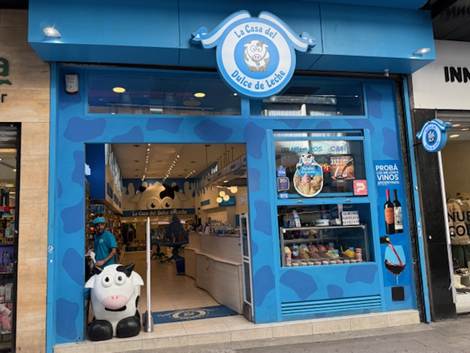
Did someone mention Dulce de Leche? This incredibly sweet Latin American ‘sauce’ is made by heating sugar and milk for several hours. You can make a very simple version by simmering an unopened tin of condensed milk for 2-3 hours to caramelize the milk sugars. As its birthplace, it was inevitable we would find a shop in Buenos Aires devoted entirely to selling every conceivable variation.
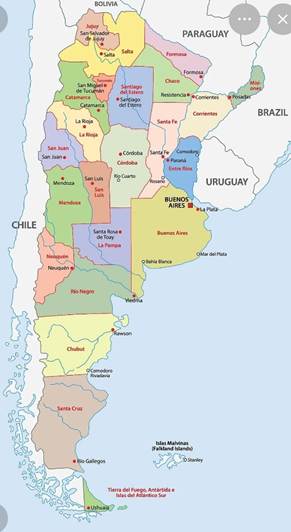
My own internal guidebook says: ‘Beef, in the UK synonymous with Dewhurst the High Street butchers, Eva Peron, the Battle of the River Plate in 1939, the Tango, the Pampas and Patagonia, The Disappeared, and the Argentine invasion of the Falkland Islands, 300 miles off the east Argentinian coast, in 1982.’ I realise I know more about Argentina than any other South American country, apart from Brazil.
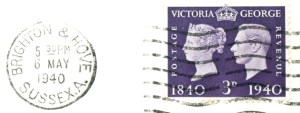
Let’s get ‘beef’ out of the way. Argentina today is one of the top five beef exporters in the world; the others might surprise you – Uruguay, Brazil, Mexico and Kazakhstan. The biggest producer is the Unites States but they like their meat in the USA and most is reared for domestic consumption. Britain’s link to the Argentinian meat market go back to 1915. Two brothers, William and Edmund Vestey, had started a butchery business in Liverpool in 1897, grew it exponentially through the first refrigerated shipments of beef from the USA, creating their own shipping line, the Blue Star, expanding into Australia and New Zealand and developing the Dewhurst butchers’ shops throughout the UK. To avoid tax here, the two brothers moved to Buenos Aires in 1915; by 1940 the Vestey family were estimated to be the second wealthiest family in Britain, after the King! (Note 1)
Eva Duarte was born into poverty in 1919, moved to Buenos Aires in 1934, aged 15, to become an actress, and married an army colonel, Juan Perón, in 1945. He became President of Argentina the following year and so started six years when Eva established her legacy. She championed labour rights, ran a charitable foundation, and formed the first large-scale female political party. A few months before her death from cancer at the age of 33, the Argentine Congress bestowed on her the title of the ‘Spiritual Leader of the Nation of Argentina’. I haven’t space to describe all the twists and turns of where her body was between her death and 1976; for instance, from 1971 to 1973, the corpse was on a platform near the dining table of Juan Peron and his third wife Isabel in their Spanish home, before they returned to Argentina when he became president for the third time! Since 1976 her body and that of her husband have been interned in the Duarte family tomb in La Recoleta Cemetery.
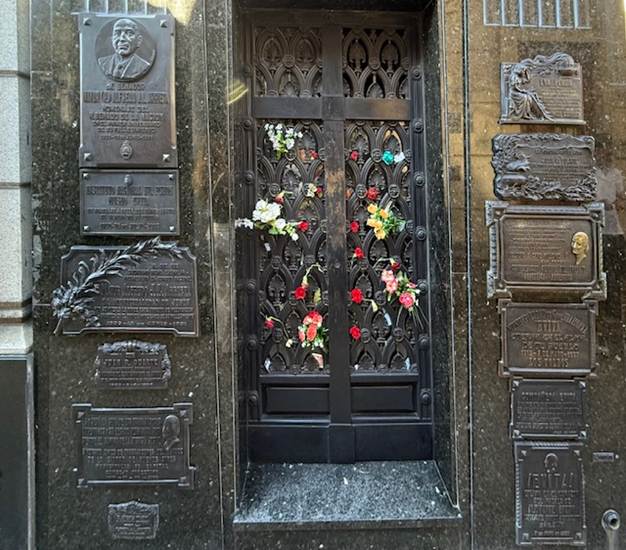
We visited it, for it’s one of the top tourist attractions in Buenos Aires; what a weird and slightly discombobulating place. Inaugurated in 1822, it holds more than 4800 vaults and mausoleums containing the coffins of the great and the good, well, those whose families could afford the architect and sculptor’s fees. One guide says: “More than a cemetery, it’s a place where art, architecture and time intertwine, offering a deeply intimate glimpse into the soul of Buenos Aires.”
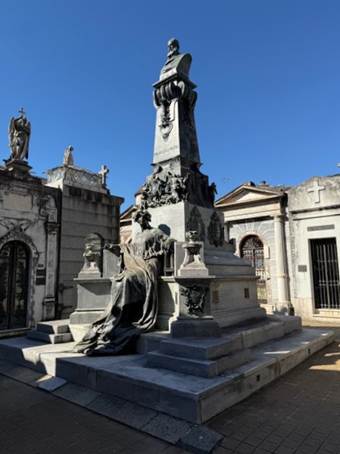
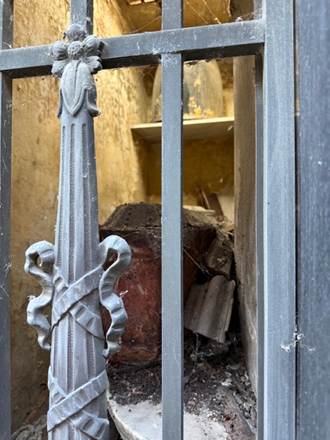
Rather ominous, a ‘dead’ soul and for us, not a place to linger. And when no descendants of the great and the good exist, who pays for the upkeep?
As schoolboys we lapped up the portrayal, in our comics and in the1956 film, of the David and Goliath fight between the Royal and German Navies off the coast of Uruguay and Argentina in December 1939, in what become known as the Battle of the River Plate, the first major naval battle of World War II. Naval intelligence had reported that the pocket battleship Admiral Graf Spee, under the command of Captain Hans Langsdorff, was operating off the Rio de La Plata; the British heavy cruiser, HMS Exeter and two light cruisers, HMS Ajax and HMNZS Achilles, went to find her.
In the ensuing battle, HMS Exeter was severely damaged and limped to The Falkland Islands; the Admiral Graf Spee’s fuel system became inoperable and she put into Montevideo for repairs. The ‘rules of war’ allowed the German ship to stay in neutral Uruguay’s capital for up to 72 hours. Naval intelligence created a deception campaign, so effective that Langsdorff believed a superior Royal Navy fleet awaited his departure. With his time in Montevideo up, he sailed out into the estuary of the Rio de La Plata, ordered his sailors to lay explosives, and about 7 miles offshore scuttled his ship. After the funerals of those of his crew who’d been killed in the action, Langsdorff shot himself. Many of the 1000 strong crew of the Admiral Graf Spee were interned but after the war settled in Montevideo or across the river in Buenos Aires. Today the wreck continues to be a hazard to navigation and is under Uruguayan jurisdiction.
I almost wrote ‘Cape Horn’ on my list of Argentine knowledge, then remembered that, in the complicated geography of the southern tip of South America, this cape, revered of sailors for hundreds of years, is Chilean! It is the southern tip of Hornos Island within the archipelago of Tierra del Fuego.
(To be continued)
Richard 1st May 2026
Rio de Janeiro
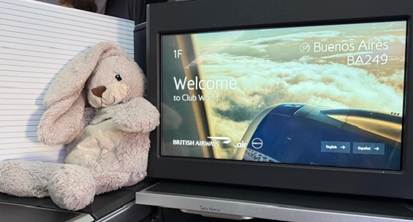
PS On the flight from Rio to Buenos Aires, the film choice was poor, so I watched Julia Roberts in the 2010 film ‘Eat Pray Love’ again! At some time, she reaches for her cardboard box containing ideas, things to do, places to go. The very first thing was a travel article – about Buenos Aires. Love coincidences!
Note 1 Dewhurst couldn’t survive the growth and convenience of supermarket shopping and in 2006 closed its remaining shops.
 postcards
A particularly good history lesson, thanks Eddie
LikeLike