PC 489 Argentina and Buenos Aires

The guidebook says: “Often dubbed the ‘Paris of South America’, Buenos Aires is the world capital of Tango, the birthplace of dulce de leche and gaucho cuisine and combines European elegance in Recoleta with Latin American flair”.
Back in the 1970s I saw the stage show ‘Evita’, with its famous song ‘Don’t Cry for me Argentina’ still performed all over the world. Andrew Lloyd Webber wrote the music, Tim Rice the lyrics, and it covered the early life, rise to power and charity work of Maria Eva Duarte de Perón (1919 – 1952), the second wife of the Argentine President Juan Perón. She died of cancer aged 33 and is buried, since 1976, in Recoleta Cemetery in Buenos Aires.
Did someone mention Dulce de Leche? This incredibly sweet Latin American ‘sauce’ is made by heating sugar and milk for several hours. You can make a very simple version by simmering an unopened tin of condensed milk for 2-3 hours to caramelize the milk sugars. As its birthplace, it was inevitable we would find a shop in Buenos Aires devoted entirely to selling every conceivable variation.
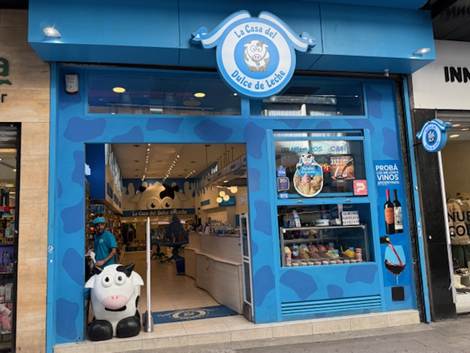
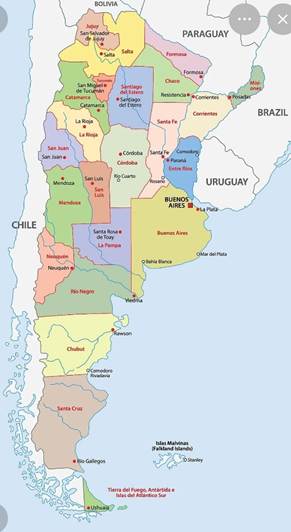
My own internal guidebook says: ‘Beef, in the UK synonymous with Dewhurst the High Street butchers, Eva Peron, the Battle of the River Plate in 1939, the Tango, the Pampas and Patagonia, The Disappeared, and the Argentine invasion of the Falkland Islands, 300 miles off the east Argentinian coast, in 1982.’ I realise I know more about Argentina than any other South American country, apart from Brazil.

Let’s get ‘beef’ out of the way. Argentina today is one of the top five beef exporters in the world; the others might surprise you – Uruguay, Brazil, Mexico and Kazakhstan. The biggest producer is the Unites States but they like their meat in the USA and most is reared for domestic consumption. Britain’s link to the Argentinian meat market go back to 1915. Two brothers, William and Edmund Vestey, had started a butchery business in Liverpool in 1897, grew it exponentially through the first refrigerated shipments of beef from the USA, creating their own shipping line, the Blue Star, expanding into Australia and New Zealand and developing the Dewhurst butchers’ shops throughout the UK. To avoid tax here, the two brothers moved to Buenos Aires in 1915; by 1940 the Vestey family were estimated to be the second wealthiest family in Britain, after the King!  (Note 1)

Eva Duarte was born into poverty in 1919, moved to Buenos Aires in 1934, aged 15, to become an actress, and married an army colonel, Juan Perón, in 1945. He became President of Argentina the following year and so started six years when Eva established her legacy. She championed labour rights, ran a charitable foundation, and formed the first large-scale female political party. A few months before her death from cancer at the age of 33, the Argentine Congress bestowed on her the title of the ‘Spiritual Leader of the Nation of Argentina’. I haven’t space to describe all the twists and turns of where her body was between her death and 1976; for instance, from 1971 to 1973, the corpse was on a platform near the dining table of Juan Peron and his third wife Isabel in their Spanish home, before they returned to Argentina when he became president for the third time! Since 1976 her body and that of her husband have been interned in the Duarte family tomb in La Recoleta Cemetery.
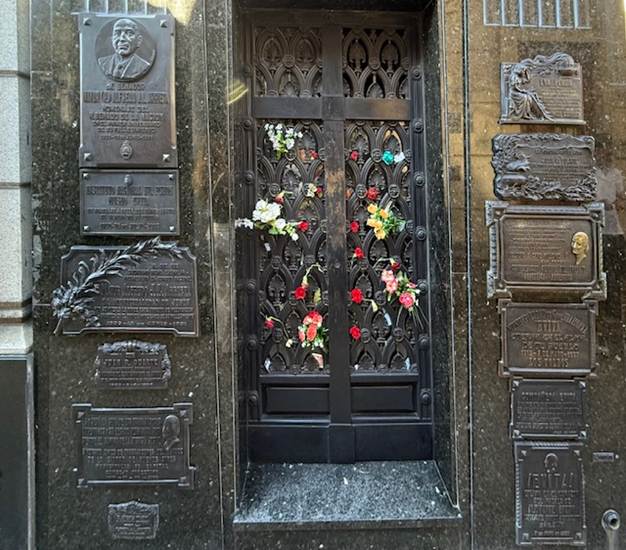
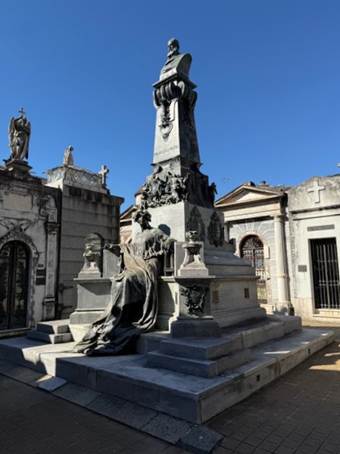
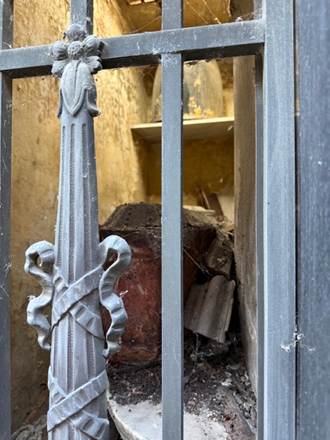
We visited it, for it’s one of the top tourist attractions in Buenos Aires; what a weird and slightly discombobulating place. Inaugurated in 1822, it holds more than 4800 vaults and mausoleums containing the coffins of the great and the good, well, those whose families could afford the architect and sculptor’s fees. One guide says: “More than a cemetery, it’s a place where art, architecture and time intertwine, offering a deeply intimate glimpse into the soul of Buenos Aires.

Rather ominous, a ‘dead’ soul and for us, not a place to linger. And when no descendants of the great and the good exist, who pays for the upkeep?
As schoolboys we lapped up the portrayal, in our comics and in the1956 film, of the David and Goliath fight between the Royal and German Navies off the coast of Uruguay and Argentina in December 1939, in what become known as the Battle of the River Plate, the first major naval battle of World War II. Naval intelligence had reported that the pocket battleship Admiral Graf Spee, under the command of Captain Hans Langsdorff, was operating off the Rio de La Plata; the British heavy cruiser, HMS Exeter and two light cruisers, HMS Ajax and HMNZS Achilles, went to find her.

In the ensuing battle, HMS Exeter was severely damaged and limped to The Falkland Islands; the Admiral Graf Spee’s fuel system became inoperable and she put into Montevideo for repairs. The ‘rules of war’ allowed the German ship to stay in neutral Uruguay’s capital for up to 72 hours. Naval intelligence created a deception campaign, so effective that Langsdorff believed a superior Royal Navy fleet awaited his departure. With his time in Montevideo up, he sailed out into the estuary of the Rio de La Plata, ordered his sailors to lay explosives, and about 7 miles offshore scuttled his ship. After the funerals of those of his crew who’d been killed in the action, Langsdorff shot himself. Many of the 1000 strong crew of the Admiral Graf Spee were interned but after the war settled in Montevideo or across the river in Buenos Aires. Today the wreck continues to be a hazard to navigation and is under Uruguayan jurisdiction.

I almost wrote ‘Cape Horn’ on my list of Argentine knowledge, then remembered that, in the complicated geography of the southern tip of South America, this cape, revered of sailors for hundreds of years, is Chilean! It is the southern tip of Hornos Island within the archipelago of Tierra del Fuego.

(To be continued)

Richard 1st May 2026

Rio de Janeiro

www.postcardscribbles.co.uk

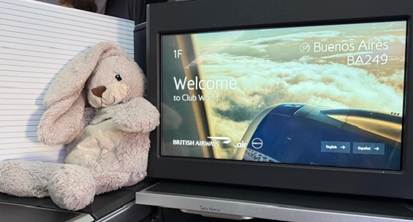
PS On the flight from Rio to Buenos Aires, the film choice was poor, so I watched Julia Roberts in the 2010 film ‘Eat Pray Love’ again! At some time, she reaches for her cardboard box containing ideas, things to do, places to go. The very first thing was a travel article – about Buenos Aires. Love coincidences!

Note 1 Dewhurst couldn’t survive the growth and convenience of supermarket shopping and in 2006 closed its remaining shops.
PC 436 Where’s the Girl from Ipanema? (Continued)

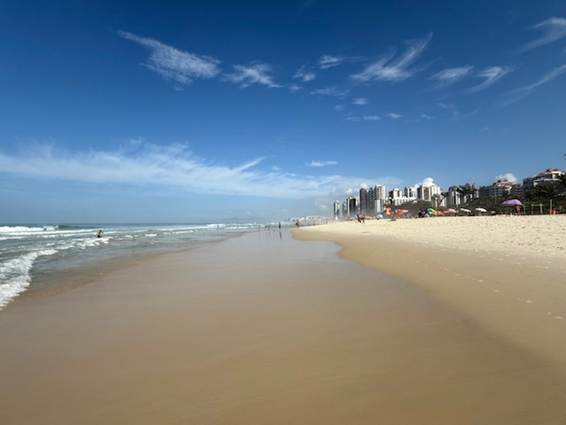
On this visit we rented an AirBnB in the Lanai Condominio, around the corner from an apartment owned by Celina’s bother, in Barra da Tijuca. The suburb lies to the west of Ipanema and Barra’s beach, just across the road, is even better than Ipanema’s; the girls probably are the same. 

I’ve written about this long stretch of sand before, collecting thoughts in PC 08 ‘Beach Life in Brazil’, which has a short postscript concerning dental floss. (See PS) On another visit in September 2014, almost eleven years ago, I wrote PC 21, questioning happenings in the world; I think the first two paragraphs are worth repeating:

“We walked along the line of the surf of the crowded beach on a Sunday in September in Barra da Tijuca; the sun was warm on our backs. I looked at the carefree groups of families and friends, at children playing either in the surf or with a football, this is Brazil after all (!), and at other adults, just splashing in the shallows. It was totally divorced from the obscene photograph of a black figure brandishing a knife in front of a kneeling, orange-suited human that had appeared on the front page of my digital Times that morning.

I had looked at the photo of the latest British hostage, a 44-year-old man with a family, with friends, with loved ones. It was so surreal. I knew from the news report that, moments after the photo had been, he would be murdered, in cold blood, in the most barbaric and inhuman way.”

‘Plus ça change, plus c’est la même chose.’ Then it was ISIS, trying to bring about a C7th Caliphate in the Middle East; today for example it’s the slaughter in Ukraine. A poem by Robert Burns in 1786 included the line – ‘man’s inhumanity to man’; we don’t learn, and some of those who profess to lead don’t care.

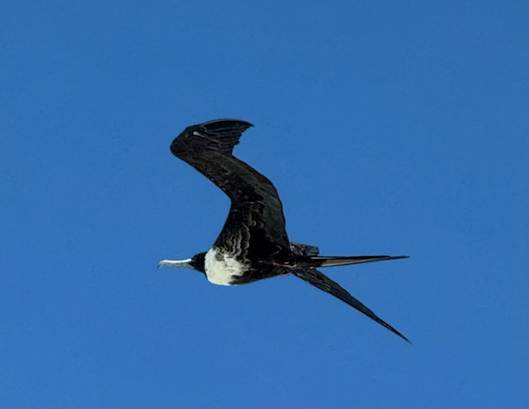
I am no ornithologist but am mesmerised by one particular bird that populates the Brazilian coast; it looks almost prehistoric, like a pterodactyl perhaps.

With the aid of Google I learned it’s called a Frigate bird. They are apparently found across all the tropical and subtropical oceans. Characterised by black plumage, deeply forked tails and long hooked bills, there are five extant species. Wonderful!

Currently the temperature of the sea at Barra is fine but, surprisingly as the littoral current moves in a southerly direction from the equator, it can be very cold. Additionally, the underwater profiles of the seabed mean it’s not a particularly safe beach. Undercurrents, fierce draw-backs and constant breaking waves mean those wanting a dip do just that, have a dip. The only swimming going on is by those on surf or bodyboards, making their way beyond the breakers. Every 400m or so is a manned lifeguard station and if someone thinks it’s safe further out, the warning whistles start and they are encouraged to come back to the shore.

It’s always interesting going to other countries and engaging with those people who live there on a permanent basis. The moans I hear today in Rio are an echo of those I hear in Hove; distrust in politicians, the cost of living, the energy/climate crisis, streets unsafe at night and more frequently in some areas during the day, the pervasiveness of social media, the lack of acceptance of opposing views, the lack of common sense etc etc. The locals complain of the traffic, especially at rush hour along the coast road that leads from Barra da Tijuca, past São Conrado and into Lebon and Ipanema. I remind them that in the UK the normal commute is at least 90 minutes.

The southeast corner of the UK is fairly prosperous; relative poverty rarer here that further north. In Brazil poverty is never far from the surface, that and the insidious drugs, their peddling and their use. Surprisingly the city administration clears the streets of those with nowhere to live, ensuring they get shelter and food. (Note 1) The rich here would hope that Rio de Janeiro remains globally famous for its Christ the Redeemer statue, Sugar Loaf Mountain, carnival and its beaches, and maybe for the girl walking along Ipanema beach. But in the last thirty years its favelas have been making the news; some are more famous than others, some more dangerous than others, and the nearest one to Celina’s mother’s house is Rocinha.

Rochinha houses cling to the mountainside in all directions

Times change and its residents have benefitted from the provision of a new tube line and station in 2016, part of the Olympic infrastructure, and lately by a Tourist Office opening within the favela. This is creating more money for the inhabitants, which can only be a good thing.

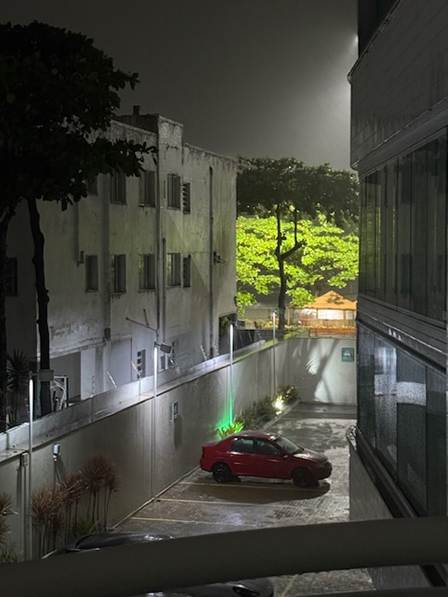
We had little rain during our visit and what we had was tropical.

Downpour at 0300!

Our AirBnB had air conditioning, essential if you want a good night’s sleep, but the pouring of water onto the external metal box made such an horrendous noise that sleep was impossible. Being a practical sort of chap, I wondered why no one had glued a thick piece of insulation material or rubber matting to its top. Think it would have worked! Of course, electricity failures are common here and then there is no air conditioning! And if you didn’t, read ‘PC 145 Extreme Weather’ from February 2019 about the floods in Rio de Janeiro.

So that girl, that ‘tall and tanned and young and lovely’ woman from the 1960s, is no longer visible. There seemed something innocent about her and I don’t think that’s true of the woman on Ipanema beach today!

Back in Hove, we miss the warmth, we miss the constant noise, we miss the friendly carefree Brazilian people; I don’t miss the mosquitoes!

Richard 25th April 2025

Hove

www.postcardscribbles.co.uk

PS For those of you who might like to read more of my Brazilian scribbles, look at: PC 01 Bahia, PCs 3&4 Rio de Janeiro, PC 5 São Paulo & Cananeia, PC 6 Petropolis, PC 8 Brazilian beach life and PS PC 09, PC 10 Paraty, PC 11 Reflections on São Conrado, PCs 17 & 20 The Pantanal, PC 34 Recife, PC 37 A Small Town in Brazil, PC 51 Foz, PC 63 Santa Catarina and PC 91 Japanese São Paulo.

Note 1 Pricilla Goslin, author of ‘How to be a Carioca’, told me that some streets in Seattle, near her Portland, Oregon home, are a permanent ‘tent city. Echoes of San Francisco perhaps?

PC 435 Where’s the Girl from Ipanema?

In June 2023 I wrote a postcard entitled Serendipity (PC 340), initially prompted by the obituary of Astrud Gilberto, the young woman who serendipitously was asked to sing the English version of ‘Da Garota de Ipanema’ (The Girl from Ipanema). The wonderful opening lines will be familiar to many: “Tall and tanned and young and lovely/the girl from Ipanema goes walking/and when she passes, each one she passes goes, ‘ahhh’.” (Note 1)

Heloisa Pinheiro Born 7th July 1943

In 2025, over 60 years later, is the modern-day equivalent of Heloisa Pinheiro still visible, walking along the promenade of one of Rio de Janeiro’s iconic beaches? I sense the 1960s were a more tranquil, more relaxed era, no more so than along Ipanema’s beach.

Today there’s a constant effort to get fit, be seen, wear the right gear and hundreds of people are in constant motion on Ipanema’s beach; not many seem to have the time to sit and stare at others. We were lucky enough to stay two nights in the Fasano Hotel, situated just before the little promontories of Pedra do Arpoador and Forte de Copacabana that separate Ipanema and Copacabana beaches.

Pedra do Arpoador

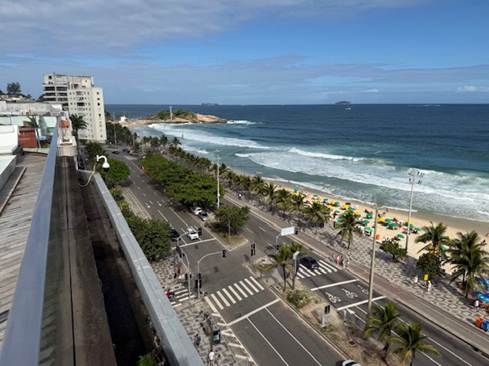
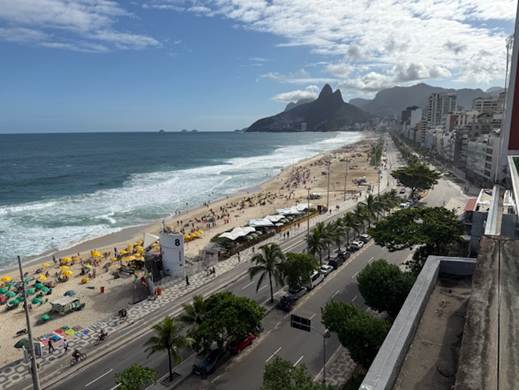
From the rooftop swimming pool there’s a good view west down the road ……

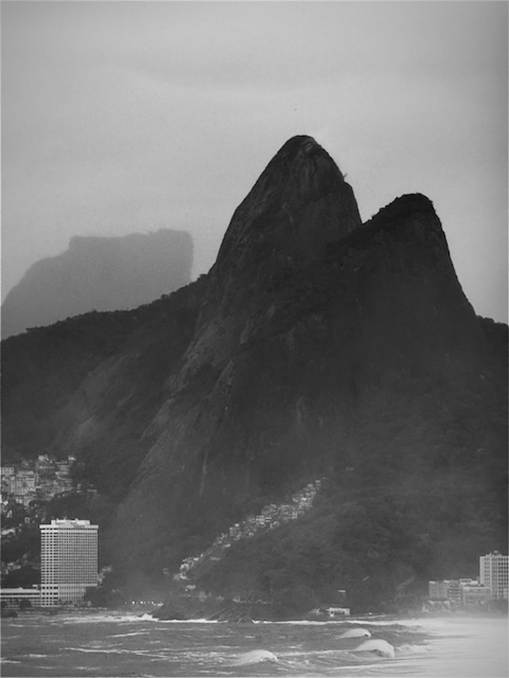
and, at the far end, the favela of Vidigal cheek-by-jowl with the Sheraton Grand Rio Hotel & Resort and both overshadowed by the two peaks known as Dois Irmãos. We arrived in the rain on a Sunday afternoon and those two mountains seemed extremely mysterious.

On our second morning rather than walk along the sand as we had the first day, we walked on the promenade the length of both Ipanema and Leblon beaches, about 5kms. Maybe I could identify a modern ‘girl from Ipanema’? No one seems as carefree as Heloisa Pinheiro must have seemed; a little too much filler in the lips, eyelashes so long they could be used as a paintbrush, small or large tattoos in abundance, the smallest bikini bottoms requiring Brazilian waxing, and possibly stopping every few moments to take a Selfie! (Note 2) Towards the end of the pavement, with its characteristic black & white swirling patterns, suddenly someone yells: ‘Celina!’; I turn around and there’s a friend we hadn’t seen since 2019, Alessandra, getting fit on the beach. She doesn’t speak English so I left her to catch up with Celina and walked to the end, reengaging with Celina on the way back. Six years – in the same time, in the same place – a lovely coincidence!

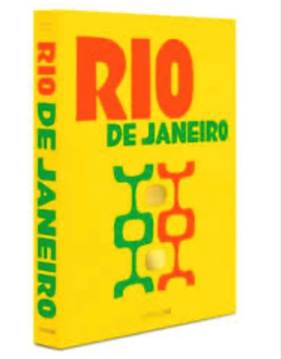
There was a wonderful observation from Letitia, one of the delightful managers in the Fasano Hotel. The hotel was hosting a book launch on our second night. Assouline Publishing, founded in 1994 in New York, has published over 1700 titles on subjects including architecture, art, design, fashion, gastronomy, photography and travel. In amongst these coffee table book titles are, for instance, ‘Napoli Amore’, ‘Bangkok Spirit’ and ‘Paris Paris’. The book for the launch was obviously about Rio de Janeiro (Note 3), by Bruno Astuto. 

Letitia told us the book costs about R$ 1300 per copy (£170) and ‘that is about the same as Brazil’s minimum wage’! Maybe small change for those who can afford to stay at the Fasano and who might say: ‘Cost of living crisis? What crisis?’ but a good example of the gulf between rich and poor.

Since my first visit to Brazil in April 2012, the Brazilian Real has gone from R$3.2 to the pound to R$7.5. This is great for tourists from Europe like me, but not for instance for Celina’s cousin Bel Gasparian, whose recent week in Florence cost her an arm, a leg, and the bag off her back!

On the subject of finance, here in Brazil, forget ‘contactless’, forget cash; everyone is using a system called Pix (Instant Payment Ecosystem). Created and managed by the Banco Central do Brazil, its aim is to reduce cash transactions and offers an alternative to existing payment instructions. It was fully operational in 2020; all you need is to have a Brazilian bank account. Here credit card transaction fees can reach up to 2.2%, whereas Pix charges retailers about 0.2% and is free to individuals. Naturally everyone is using it, the hotels and restaurants, supermarkets and our taxi drivers, even the street artist making a meagre living selling souvenirs or the chap on the beach offering chairs and a sun umbrella to rent. It aims to achieve the transaction in under 10 seconds, although there is an individual payment limit of R$1000 between 2000 and 0600. (Note 4)

I suspect that most decent human beings are sadden by the way in which the new president of the United States goes about dealing with people. The bullying, the threatening manner; “Do as I say or else …. I’ll throw your toys out of my pram.” But we encountered a couple of instances where international hotel guests completely disregarded anyone but themselves, with no ‘Thank you’, no ‘excuse me!’, certainly no ‘please’. I imagine they hadn’t read ‘manners maketh man.’

To be continued …….

Richard 18 April 2025

Hove

www.postcardscribbles.co.uk

Note 1 The rhythm of Brazil is of course Samba. Sadly today you’re more likely to hear some repetitive techno stuff.

Note 2 These days filler in one’s buttocks (The Brazilian Lift) is popular globally among some, but I don’t think it’s something the Brazilians want to be associated with.

Note 3 R is pronounced H in Brazilian Portuguese. On one visit there was an advertisement for a rock concert called ‘Rock in Rio’ …. Pronounced ‘Hockinghio’!

Note 4 In England the use of contactless cards is widespread, but the retailer pays a percentage for every transaction. On my way back from hot yoga I often buy a drink from Hanan who runs a 7/11. The bottle cost £1.85; I pay cash. Recently it went up to £2 as he makes a loss if the customer pays by contactless; I pay cash and he charges me £1.85.