PC 154 The Fosbery Connection – Shipwrecked!

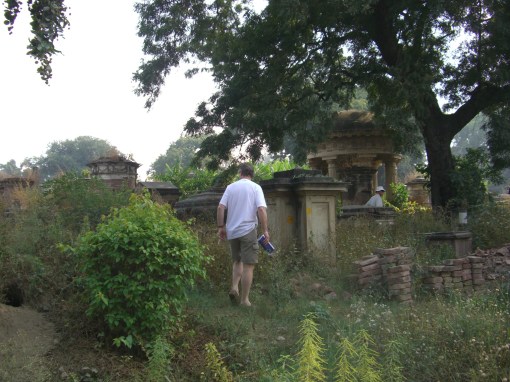
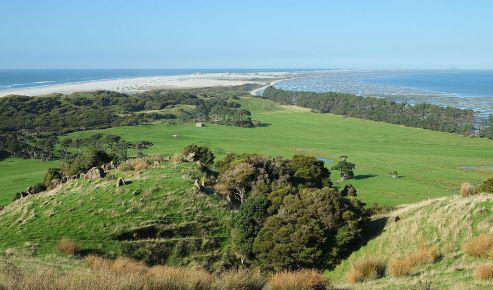
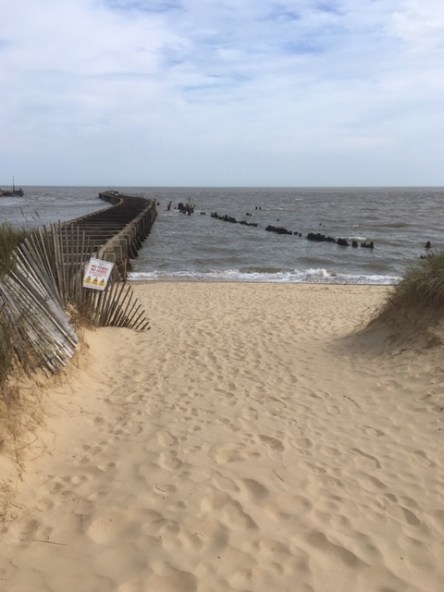
PC 154 1 Farewell Spit from Puponga

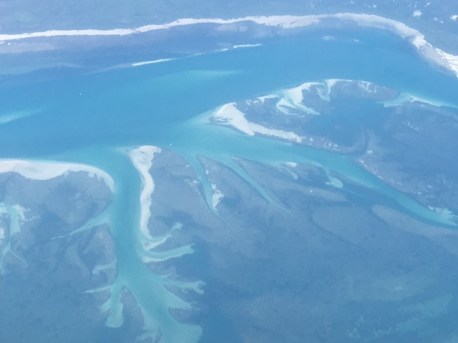
Farewell Spit in 2010 – getting longer every year

“Sorry, dear Papa. Needed to go to the powder room! Now, where was I? Oh! Yes. The second mate left to find a telegraph station and raise the alarm at Nelson. Meanwhile everyone I spoke to imagined we would somehow get off the sand bar, but we were stuck fast and I could see the captain and the gentleman passengers talking about what to do. By 8am, after an anxious night and having had some biscuits for breakfast, it was decided that we passengers would be split between the two boats, the lifeboat and the cutter. Henry, Mary, little Caroline, baby Emily, Emma and me were slung in a chair onto the cutter, along with eleven other passengers and four of the crew. One was a stowaway called Furness, a frightened young man who kept himself to himself.

I think the Captain wanted us and the others in the lifeboat to stay together, but no sooner had we got on board the crew cast off and we drifted away; we should have had the Chief Officer and some food and water with us! I could hear the Captain yelling for us to come back but the crew seemed resolute in their actions. I was told later that those left on board constructed a raft but we lost sight of the Queen Bee after about seven hours so at the time imagined we were on our own. The wind started blowing stronger and the waves began to break into the boat. We all took turns at bailing but we weren’t very successful; my dress was horribly wet and is completely ruined.

PC 154 2 QueenBee on Farewell Spit (2)

The Queen Bee stuck on the sand of Farewell Spit

I’ve enclosed an extract from the report into the sinking, as it sums up nicely what we endured:

“Left the Queen Bee (in the cutter) on Tuesday morning at 8 am, with 21 on board. The boat had only three oars, which were almost useless, no sails, rudder or mast, and no water, excepting one bottle, which a passenger happened to have, and three tins of preserved meat. We tried to stay alongside the ship, to get rid of some of the passengers (??) as the boat was over-loaded, but could not, the wind and sea being very high from the west. After struggling for an hour we had to run before it; when two-thirds across the bay we found we were making no southing, and we expected to be blown seaward, the boat filling three times.

PC 154 3

(Ed: You will see that if the wind hadn’t shifted they could have drifted north of D’Urville Island and maybe lost completely!)

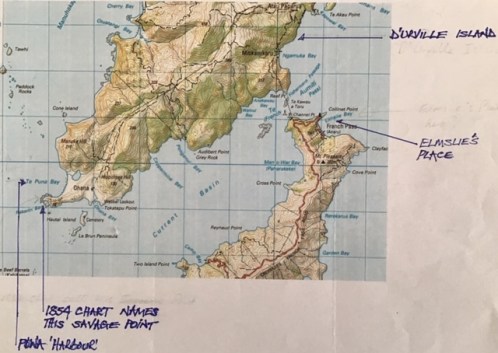
Fortunately the wind shifted north-west and by means of a rug held on to a brass rod, we made a little southing. At eight o’clock we sighted Savage Point above French Pass, when the wind shifted west again, which blew us to the mouth of Te Puna Bay, where we held on to our oars all night, but had hard work to keep off the shore. (Ed: They thought it better to attempt a beach landing in daylight!)

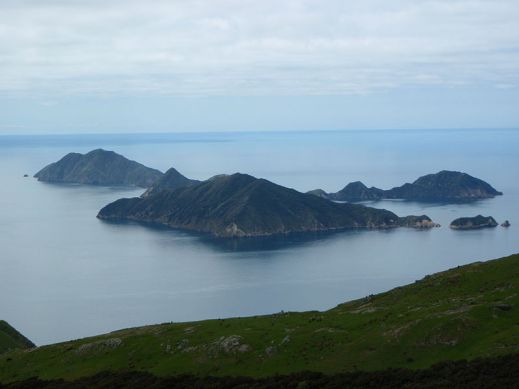
PC 154 4 Islands near Frenchman Pass

 At daybreak we rowed into Te Puna Bay and landed on the beach, where we made fires, boiled some water, while some of the crew went over the hill to look for habitation and fell in with a Maori settlement, where they were treated with great hospitality. We remained in Puna ‘Harbour’ until the following day, when we rowed into Elmslie’s Place where we were picked up by the Aurora. Ten of us come on in the Aurora and the remaining eleven on a Maori boat.’

PC 154 5

And to think, Papa, we imagined that the Maori might eat us, such was our ignorance. So the Aurora took us into Nelson and at the quayside were several thousands of people congregated, who thronged the road and beach from the Pilot Station to the entrance. As we entered the harbour, ringing cheers went up from the crowd of people who were assembled on The Rocks, and were taken by one little knot after another the whole way up the harbour. There was a band which started playing the particularly appropriate air ‘Home Sweet Home’; it was so exciting. We came alongside the harbour wall and Lieutenant Gully lifted up Caroline into outstretched arms, then Emily, not 10 days old, (See Note 1) and then he helped Mary, Emma and me to climb ashore. It never felt so good to be on dry land. To the sound of louder and heartier cheers, we made our way to the shed where, to our surprise, were Philippa and Eleanor. (Ed: Two of Eva’s sisters who were already living in NZ) We clung to each other, wept with happiness and joy, as the band, at the request of the Bishop of Nelson and other clergy who were present, struck up the well-known doxology ‘Praise God from Whom all blessings flow’, which was warmly joined in by the enthusiastic crowd.

We’re going to stay in Nelson for a few weeks to recover from our ordeal and then maybe sail to Wellington. Will write soon. Love Eva.” (See note 2)

And all because someone kept the front page of a newspaper!

Richard 14th June 2019

Note 1. Emily’s health never recovered from the hash exposure of being in an open boat for three days and she died in 1880 aged 3.

Note 2. Eva Constance Fosbery went on to marry George Nation, my great grandfather, in Dunedin in May 1884, moved to California, bore three children; moved to London in 1898 and is buried with George and her second son Cecil in the cemetery of St Stephens’ Church in Shottermill, Hampshire.

PC 154 6

Note 3. The Queen Bee was uninsured and a total loss. There is no record of what happened to the 30 tons of cargo, for instance the 4 bales flour bags, 10 cases Van Houten cocoa, 30 bundle spades, 42 cases galvanised corrugated iron, 1 bale seaming twine, 150 cases Hennessy’s brandy, 2 crates brownware, 3 casks china, 15 cases marmalade, 10 kegs split peas, etc etc – or indeed all the passengers’ possessions.

Note 4. The lifeboat and Captain’s raft were also found, although when the raft had attempted to land on Puna beach, the waves smashed it to smithereens and the carpenter drowned. He was the only fatality out of the 30 passengers and 24 crew. The two boats and raft drifted about 100kms before coming ashore.

Note 5. At the subsequent Court of Inquiry Captain Davis was “adjudged guilty of the grave default in not using lead and other means of ascertaining his position when so near the shore and on a strange coast. The Master’s certificate suspended for three years. The certificate of John Going, second mate, was suspended for six months, as he was the officer of the watch at the time of the stranding, and did not use proper precautions to keep the vessel off the shore.”

PC 153 Courgette-Neutral?

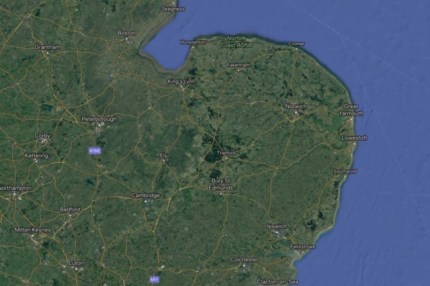
Out on the right hand side of England, that’s the bump on the eastern North Sea coast, lies ‘East Anglia’. The name derives from the Anglo-Saxon ‘Kingdom of East Angles’. Officially Essex in the south was the ‘Kingdom of Essex’ and so not part of East Anglia, but I suspect most of us think it’s all ‘East Anglia’.  On the south side is the estuary of the River Thames and to the north The Wash, the land here so flat that on the change of the tide the seawater rushes in at an alarming rate. History relates that King John (1199-1216) was crossing The Wash on his way from Spalding, Lincolnshire to Bishop’s Lynn in Norfolk when his staff mistimed the tide and they had to scramble to safety, losing some of the Crown Jewels in the process.

PC 153 1

Within East Anglia the cathedral cities of Norwich, Bury St Edmunds and Ely vie for visitors with the university city of Cambridge. The Norfolk Broads, an area of navigable rivers and lakes covering some 300 sq kms, lie between Norwich and the coast. If you want to unwind and relax on the water, this is the place to go. And if you want to understand the impact of EU Fishing Policies you go to the run-down ports of Lowestoft and Great Yarmouth.

And it’s flat. Not quite as flat as Lincolnshire but flat enough for its coast to be at risk from rising sea levels. There is a belief that the landmass of Wales is rising in the west and England sinking in the east, possibly on an axis of the M1 motorway (actually I made this last bit up!). A good example of the loss of the coast is at Covehithe, six miles north of Walberswick, where some 24 acres (about 10 hectares) of farmland fall into the sea, every year! At this point you might be forgiven for thinking I’ve won an assignment from The East Anglia Tourist Board to encourage more visitors? Not true!

But we did go to Walberswick for a couple of nights after Celina’s birthday. Everyone we told immediately asked: “Where? Wallburswick?” It’s one of those delightful English village names you have never heard of and never know how to pronounce. You need to get your tongue around the letter ‘l’ before sounding the ‘ers’!

PC 153 2

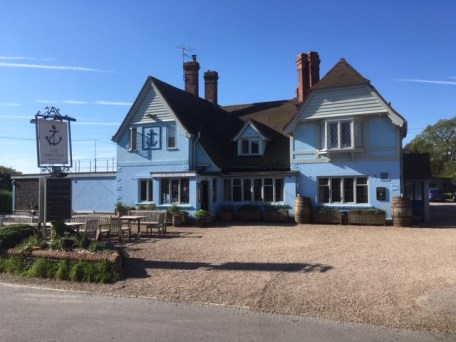
I’ve known the woman who runs The Anchor, a ‘pub with grub’, an Inn in the old-fashioned sense, for some 27 years, so it was a visit to catch up with her and her family, to walk and to enjoy the peace and quiet of this beautiful stretch of the coast. Walberswick lies just south of Southwold; the River Blyth flowing out to the sea between the two.

PC 153 3

If you still need a geography refresher, the well-known town of Aldeborough lies to the south with Snape, the location of an international music festival started by the local composer Benjamin Britten (1913-1976) lying a few miles inland. To get there from Hove, after getting around London, you simply follow the A12 road until it almost runs out, then turn right.

PC 153 4

The Anchor has been in Sophie and husband Mark’s hands for some 12 years; she runs the kitchens and front of house, he focuses on the range of beers and wine, about which he is extremely knowledgeable. On a busy weekend they might do 150 ‘covers’ for lunch and all their ten rooms are normally fully booked in the hectic summer periods. This year in particular, with the uncertainties about Brexit causing people to holiday in the UK (a new word: a ‘staycation’ – as in ‘stay’ at home ‘vacation’ – an ugly word if ever there was one!) they have noticed an increase in bookings. Through conversations with Sophie I know how difficult it is to recruit and retain staff although currently a number of Romanians are employed. At breakfast we chatted with Doru whose two sisters and their families had just been to stay; he looked as though he was glad to be back at work!

Wireless and internet connections were fickle at the best of times but everyone who comes here has probably come for peace and quiet and can do without for a couple of days ?? We walked and talked, walked with some chums and their dogs to Southwold; had a coffee and came back. We ate in The Anchor at lunchtime and in the evenings, the early summer log fire sending a delicious smell and warmth into the room. Eavesdropping on the other clientele, above the background murmur of congenial conversations, you could hear an amusing range of chat:

I’m coming to the Latitude Festival (Ed: 18th -22nd July 2019) and wondered whether you have a room for four?”

Mum! I need help with a Physics question?” This from Sophie’s daughter Rose in the middle of her GCSE exams. “Go and ask your father ……!”

The Bank Holiday BBQ; is that open to everyone, Harry, or do we have to book?”

“My Ceanothus is dying, Barbara” “Oh! I don’t think they last longer than 10 years!”

“I’ve just cycled to Bury St Edmunds in preparation for a 200 miler in a fortnight’s time – God! My legs are killing me. I need a pint of something cooling.”
“Coming outside for a fag Mike?”

“Can I order the battered cod and double cooked chips?”

“Do you have a loo I can use?”

Harry (Ed:Sophie’s delightful son who works behind the bar) can I have another one of these?

PC 153 5

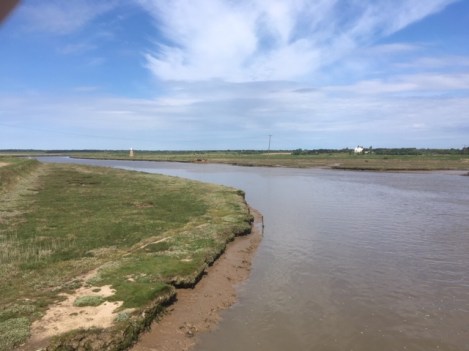
The River Blyth

You may be wondering at this point whether the title of this PC has any relevance. Between The Anchor and the sea is a patch of allotments. I don’t think this is a particularly English thing, but for those who haven’t heard of the word, individuals rent, are ‘allotted’, small plots of council-owned land on which to cultivate flowers, fruit and vegetables for their own use. Sophie’s plot is about 30m by 15m and she grows as many vegetables as she can, all for use in The Anchor kitchen. She proudly showed me the seeds beginning to show, the runner bean canes and where the rows of courgettes will come up; with a delightful take on the phrase ‘Carbon Neutral’ said: “Last year we had enough courgettes from here to be ‘courgette-neutral’ for a few weeks.” So all the courgettes they used in the pub for those weeks came from her allotment; a delightfully modern country description – must be a postcard title I thought!

Richard 6th June 2019

PS Look them up at http://www.anchoratwalberswick.com and go and stay!

PC 152 The Fosbery Connection

During 2007 I became curious as to where my family roots were. My mother had been very vague and disinterested, whereas her mother had corresponded with relatives in Brazil, for her father had been born in Recife in 1850. A couple of telephone calls and I found a cousin of my mother still alive, and invited myself for tea. Trevor rummaged in an old box and produced a very sketchy MS family tree. It was a start.

Somehow I also came upon a little blue envelope ……. inside was a creased yellowing page from The Nelson Evening Mail of Saturday 11th  August 1877 ……… and I wondered why someone had kept it.

PC 152 1 Fosbery envelope

My imagination runs ….

It was the end of 1876 and in Curraghbridge House to the west of the Irish town of Adare, Eva sat with her youngest sister Emma and devoured the latest letter from sister Philippa, who had followed the eldest, Eleanor, and emigrated to New Zealand a few years previously. In March she had married a fine chap, Richard Nancarrow, in Hokitika on the west coast of New Zealand’s South Island. The remaining seven girls were still trying to adapt to their father Francis’s marriage to Anna, their step-mother. Their own dearest Mama, Eleanor, had died exhausted a year after the arrival of her ninth daughter – she was only 39! Together Francis and Anna produced four children and their third, George, being a male, would inherit the family estates. The girls couldn’t delay their own urgent search for a husband.

PC 152 2 The Fosbery Sisters

Five of the Fosbery sisters in 1877. Left to right Emma (18), Florence (26), Sarah (21), Eva (19), Ethyl (12) and Mary Maunsell née Fosbery (25)

“She says it’s very peaceful now, Emma. I quote: ‘The fighting between us,” I think she means us British, “and the natives, they’re called Maori, which had blighted the islands, finished four years ago. We’re now getting on with building a real community, safe from conflict. Hokitika’s been booming as they have discovered a small quantity of gold inland and all the boarding houses are full with a wide variety of men; most are hard-working miners but there are some  con-merchants waiting to take the dust off them. I get the occasional letter from sister Eleanor in Auckland; amazing to think she’s been here 10 years.

The mountains and glaciers, particularly the Franz Joseph, are something to behold. Last month we took a stagecoach north and went right up to its edge. In the distance on a clear day you can see a snow-capped peak; I think it is Mount Cook.”

“And then she asks why aren’t we coming too; going to New Zealand?”

“Oh! Emma, wouldn’t that be an adventure!” Eva shrieked. “Away from the incessant rain by the Shannon …… and Anna! Father wouldn’t miss us and there’s nothing for us here! Why aren’t we going too?”

“I spoke with Mary this afternoon. She and Henry are trying for another child and they too are thinking of emigrating. Why don’t we all go together?”

(The NZ Government ran an Assisted Immigration Scheme between 1871 and 1888 to encourage European settlers.)

And so it was that in early April 1877 they loaded their luggage onto the Dublin carriage and thence the packet boat to Liverpool. After an overnight stay in the Grand Hotel they caught the steam train to London and made their way to Tilbury Docks.

PC 152 3 The Queen Bee

The Queen Bee.

Their passage to New Zealand had been booked on The Queen Bee, a wooden, comfortable barque of some 725 tons that had made several voyages to The Antipodes. With the hold full to the brim of cargo, 30 passengers and 24 crew embarked, Captain Davies slipped the mooring lines and may his way down the River Thames on 20th April. He cleared the Dover Straits by the 24th and set course for Cape Town.

Months later, a letter from Eva to her father Francis arrived in Curraghbridge House; it had been posted in Nelson on 18th August 1877 and enclosed a much folded front page of the Nelson Evening Times.

PC 152 4 Nelson Evening Times Queen Bee photo

“Dear Papa

You will have heard by now that Mary gave birth to another girl in the last week of July; they’ve called her Eily and she is well, although the first few days of her life were extremely eventful. Let me tell you …..

I’d never been on a large sailing ship before so it really was quite an adventure. We had light winds all the way south to the Cape of Good Hope and we stopped at Cape Town. Well! What a sight! The docks; the bustle; the heat; the humidity. The Queen Bee got re-provisioned so all us passengers stayed in a hotel for two days. Our heavy clothes made it insufferable and we were glad to leave the city behind and make course for Australia and beyond to New Zealand. I know we sailed south of the continent of Australia where our English countrymen are making such a success of a tough and unforgiving land. The wind blew very strongly and everyone was seasick; the Captain told me when we reached Tasmania we met northerly winds so our progress towards New Zealand was slow but steady. Captain Davies was gracious enough to regularly show us on the chart where we were and where we were headed. Our destination was the port of Nelson tucked inside a great hooked peninsula which protected the Marlborough Sounds from the South Atlantic.

On the night of 2nd August we sighted New Zealand, being then a little to the north of Milford Sound. We sailed towards Cape Farewell all Monday afternoon but just before we sat down to dinner the ship altered course towards Nelson and, no sooner had we started thinking about getting ashore, the ship hit something and shuddered to a halt. I had noticed on the chart a long piece of land that jutted out eastwards – a split of sand that was constantly shifting and growing. We must have hit this!”

Captain Davies later told the inquiry: “We rounded Spit Light and sailed along until it bore West by South, distance about seven miles. I then shaped the course and told them to steer SSE to ½ E for a certain distance. Almost immediately afterwards, at about 11 o’clock, we struck the inside edge of the bank. The ship at once commenced to bump heavily and although I backed the yards and used every effort to get her off it was to no avail. There was not the slightest confusion on board, all behaving admirably and after firing guns and rockets and getting no answer from anywhere, I ordered all the boats to be got out.”

PC 152 5 Farewell Spit

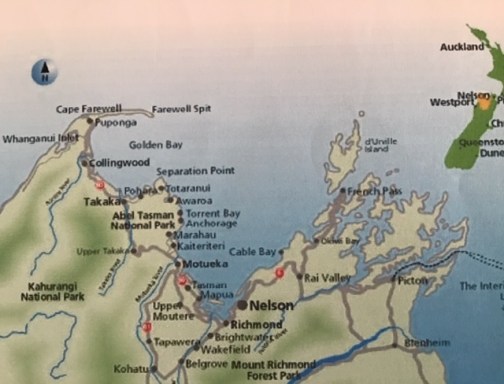
New Zealand’s South Island on the left, the south of its North Island on the right. Farewell Spit lies on the top left hand corner of South Island and Nelson at the bottom of the V-shaped bay (Tasman Bay)

With the hold filling with water, and the ship lying in 5 feet of water, it didn’t look good for either passengers or crew. To read what happened next, stay in touch with postcardscribbles!

Richard 24th May 2019

PS And all this because someone kept a piece of an old newspaper!

PPS Eva Fosbery became my great grandmother.

PC 151 A Human Circus

A couple of years ago a circus came to town; the ‘big top’ was erected, the caravans and trailers were a hive of activity and the sales booth almost cried ‘Roll Up! Roll Up!’ I dropped in to see what a modern circus had as its acts but the booth didn’t have a little free flier, only a big glossy brochure for which they wanted £10! Someone lent me theirs: we didn’t go! In the western world the circus had been a huge entertainment venue …….. when we didn’t think too much about the damage we did to the performers, when we humans didn’t care too much.

Illusions

In ‘Illusions – The Adventures of a Reluctant Messiah’ Richard Bach recounts the activities of two pilots known as barnstormers who brought entertainment to rural communities across America; a sort of cheap circus! Here in the UK the annual visit of Billy Smart’s travelling circus was a memorable part of my childhood. Today it’s different, thank God, and it’s rare for a circus to have anything other than human acts. We have become more civilised in our treatment of animals. But the whole idea of an entertainment venue where some audience participation is essential prompted the following observations of real life events, if only in a parallel universe; an analogous tale if you like.

Once upon a time there was a chap who was extremely confident about doing anything, had enormous self-belief, a super ego. He thought he could create a circus of some sort, that would put on the most popular and challenging acts and that everyone would want to come and marvel at his skill and business acumen. In a nod to the times, no animals were to be involved. He found the perfect site in a run-down part of town, where most people wouldn’t dream of going and set about it. Despite having no knowledge of the basics of building, he decided to have a central support and pillars around its side; he saw himself metaphorically as that central support, the only one that really mattered. He thought he could wing the other supporting structures and was deaf to advice. He didn’t listen and went ahead and built his theatre.

Circus 1

Initially it was successful and people flocked, as he had hoped, to participate in his productions, either as actors, acrobats or as members of the audience, as no ‘play’ was performed without audience participation. He acted as Ringmaster, exerting maximum control over every aspect of the performances; now and again he cracked his whip to show who was boss and bullied his staff! Sometimes he even played his part as an actor, for he was good! The audience, a mixture of the normal and the abnormal, the cranks, the introverts, the extroverts, the young and the old, all got involved in their own way. Then a female actor refused to perform, siting the extra requirements of the job that hadn’t been apparent when they’d signed up. The owner shrugged; there were plenty more who would die to work for him, or so he thought. When interviewed by the Performers Guild, the actor said she had been asked, for instance, to clean the loos, something the Academy of Circus Performers had not trained her to do. The audience sighed …… and missed her; social media started buzzing at what was going on, someone started a Facebook page to collate the stories. A reputation was developing; a Twitter account was created.

As the area became less run-down, another venue opened within a mile, offering cheaper and more attractive packages for those who wanted to attend regularly, rewarding their loyalty. The actors they hired were looked after, valued, developed, consulted and included in the management decisions. Still the circus owner believed their personality and reputation would continue to be a big draw, becoming deaf to the obvious criticism levelled at them by those who dared.

Circus 2

Then one day a support pillar cracked, causing the canvas roof to sag and let rain in. It was repaired as cheaply as possible but it was clear to the actors and audience that maintenance spend was a minimum; paint peeled, water stains weren’t fixed, wood rotted.

A month later a rumour started that the Performers Guild was investigating the way one actor had been treated. It was all hush-hush and whispered conversations but eventually the Facebook entry suggested that attendance at a life changing family event had not been allowed. Other actors and even members of the audience began to search their souls as to whether they could continue, especially as other peoples’ theatres had better offers. A week later, one of the star actors was dismissed. Again the rumour mill swung into action; Facebook couldn’t decide whether it was because they had been such a star performer, that their music-accompanied performance was always a sell-out, and that the owner was jealous, or that the actor had had to start going to the local Soup Kitchen to survive. The owner haughtily ignored the clamour for a change of style and substance.

The final straw seemed to be the booking of plays that few members of the regular audience wanted to watch and be involved in. Bit part actors performed in the empty, round space. Another pillar showed cracks, which were hastily papered over. And then a pillar collapsed, weighed down by the pressure of responsibility without adequate recognition; it had simply had enough. Fortunately no one was hurt but the damage was irreparable and within two months the theatre closed. For those who drove past a week later, there was a sorry sight on the steps outside. The owner, still wondering why no one came, still not getting what had happened, wondering whose fault it was, because it certainly wasn’t theirs, sat with their head in their hands.

Every story that has a ‘Once upon a time ……’ beginning should have ‘…… and the moral of this story is …….’ ending. Well, the moral of this one is that if you run a business and treat individuals with respect, are interested in them, their lives and their welfare, develop their potential without being selfish, and reward them appropriately, they will go the extra mile for you. If you don’t, you will end up lonely.


Richard 9th May 2019

PC 150 These little things

Living in a city gives one access to a wider range of unique shops unavailable in smaller conurbations. You may recall PC 72 about Edwards & Hope, the family-run North Laines, Brighton purveyor of all things electrical, established in 1935? More recently I found a shop on Portland Road here in Hove called Nuts & Bolts. If you are into fittings and fixtures, and I appreciate that this may not be your thing, this is the place. I only wanted a particular length of small nuts and bolt but, having made my purchase, wandered around the shelves, marvelling at what humans have designed to meet a particular need.  Fifteen minutes later I emerged into the bright sunlight with a large smile on my face.

On Wednesday last week, as per normal for this obsessive, I practised the Bikram series of hot yoga, the 90 minute class taught by Marcin, a tall Polish chap whose day job is driving trains. His gentle recital of the dialogue is heavily accented and amusing.

PC 150 4

Returning home, I had a little list of things to do before lunch. Having bought some eggs from Dean’s stall on George Street, I made my way along Blatchington Road to DL Jones & Son to collect a watch that was having its bracelet strap adjusted. There aren’t many places where you can get a new battery for a watch, or indeed a watch repaired but this is one; unique in its way!

PC 150 5

It is also a store for second hand watches, jewellery of all ages, shapes, sizes and some of dubious artistic merit, old silver cigarette boxes, pewter mugs, small sporting cups, and even, inter alia, a rather battered copy of a Maintenance Guide for a Triumph Herald car (circa 1970). David Jones the owner must be just under 90 if my maths is still accurate. Some months ago I asked him how long he had been running his shop – “Well we opened here in 1950 and I was just 18.” David has those large bushy eyebrows that cry out for a trim and his body is rather bent from arthritis so it’s hard to see the twinkle in his eyes as he silently reminisces. I had gently suggested that he needed to take it easy but his look said “And what would I do with my time?” He lives in the upstairs flat, cared for by his son Michael, tall with equally large eyebrows but with a more lugubrious manner, who helps run the shop.

It was Michael behind the counter when I entered, the little bell so beloved of similar establishments announcing my arrival. You need a strong constitution to leave the fresh air behind as the atmosphere is rather damp, musty, chewy – almost fetid; it looks as though most of the items for sale have been on the shelves for a decade or two and there is a lack of breathable air. Those who have a dust allergy could not survive in here.

PC 150 2

Nothing happens very quickly in D Jones & Son but in some way that’s its charm; you just have to relax and accept it. My heart sinks a little as I notice three people up against the counter at the back of the shop, two women, and a mountain of a man who is receiving Michael’s attention. Ivan must be about 1.9m tall and probably around 120kgs, most of the latter seemingly to concentrate in his stomach area, his rather grubby black T shirt failing in its task to hide the flesh! Whatever he was discussing with Michael didn’t end satisfactorily and he left. Next up was Sonia, a middle-aged woman who looked up and then down to her mobile phone. Michael looked up at me; I interpreted his glance to mean ‘this might take a while!’

PC 150 3

I suddenly worked out what Sonia was doing; she held her phone up and in large type we all read: ‘I WANT TO SEE A COUPLE OF RINGS IN THE WINDOW.’ So we waited while she and Michael went to the window display, identified the rings and came back to the counter. She’d probably spied them before, had the cash ready and, satisfied they were what she wanted, paid for both and left. I thought later she was either dumb or lacked enough English to explain what she wanted; what a God-send a mobile can be!

Michael’s attention now turned to the white haired lady in front of me, whose friend’s watch’s winder had come off. As she brought it out of a little freezer bag to show him, the loose winder fell on the floor. “Oh! Dear!” Dorothy remarked in a rather resigned way. I looked down to see if it was visible on the red carpet. Given the state of cleanliness of the rest of the shop I didn’t relish getting down to search for it, but I thought I should try …… and in a ruck near the counter, nestling among the detritus of years of neglect, was the little metal piece.

“Oh! You’re so kind. Couldn’t have done that ….. no glasses …… and wonky knees!”

‘Contact lenses and Yoga’ I thought but, wanting to keep the transaction moving, didn’t actually say so.

The watch plus broken winder were put into a brown envelope, notes were written on the outside and it was placed into whatever system they managed for repairs; a deposit was handed over and Dorothy left. It was my turn. Well! I thought it was but Ivan breezed back through the door and up to the counter. Before he was able to interject, I reminded Michael what I had come in for and the watch with the adjusted bracelet was retrieved from a box in the workroom. I tried to put it on but I have big hands and it wouldn’t go over the knuckles. It was taken back to be adjusted, as Ivan nudged me to show his hands were so much larger. And they were; on the end of his arms his hands had these great sausage fingers. He smiled; we had a connection, if somewhat disproportionate!

I left, to gulp in some fresh air and head off to the ironmongers.

Richard 25th April 2019

PS This is my 150th postcard …………

PC 149 Relationships

Establishing a relationship with someone, however superficial or deep, is an essential part of our interaction with others, of life itself. Most of us grow up in a family environment and then met and learn to interact with others outside of this group.

People often say when they hear how awful someone’s relationship with their mother/father/brother/sister is/was, “But we don’t choose our families!” Well, that’s true …… and there are numerous books on this subject. In ‘Families – and how to survive them’, Robin Skinner and John Cleese look at some of the theories of ‘attachment’; why do we want to attach ourselves to some people and not to others. I never really thought about how I was attracted to other people, to those who became friends or lovers, so was fascinated to read something about this. Apparently at a deep psychological level we look for those who are like us. What really draws people together is their similarities and moreover their similarity in one of the most fundamental aspects of all – that of their family background. This has been demonstrated time and time again in the “Family Systems Exercise”, which is used as part of the training at The Institute of Family Therapy.

Jerry McJigsaw: 'You complete me!'

The exercise’s purpose is to show what lies behind, for instance, the way that individuals will pick each other ‘across a crowded room’; it demonstrates very neatly how unconscious attractions work and what they are about. Trainees are put together in a group and asked to choose another person from the group who either makes them think of someone in their family or, alternatively, gives them a feeling that they would have filled a ‘gap’ in their family. No talking is allowed! After pairings are made, each pair chooses another. In summary, each person will somehow pick out people whose families functioned in similar ways; for instance, perhaps there was a difficulty in sharing affection, perhaps a difficulty in expressing anger, or where there had been a lot of incestuous relationships, or where people had always been expected to be optimistic or cheerful, or they might discover that all four had fathers who were away from home during the years that mattered; or that their families suffered a big loss or change of a similar kind when they were all similar ages. Those who don’t naturally pair discover that they’ve all been fostered, or adopted, or brought up in children’s homes – they had all felt rejected early in their lives and the exercise picks them out.

Trying to understand why people partner someone, three main categories have been identified. Firstly, social pressures like, class, religion and money; second, conscious personal reasons like good looks, shared interests, things you know you’re picking someone for, and thirdly, these unconscious attractions that everybody calls ‘chemistry.’ John Cleese asks: “So the exercise demonstrates this third group, the unconscious attractions, and it tells us that people unconsciously choose each other because of similarities in the way their families functioned?” and Robert Skinner replies: “Exactly – the trainees are all strangers – so just by looking, people choose others who have astonishing similarities in childhood experiences and specific family problems.” I find the results of this exercise truly amazing!

Relationships

A portrayal of the rather dated concept of a ‘nuclear’ family

The other day a dear friend told me they were in such a destructive relationship that they will have to get out of it; it has to end. When we fall into a relationship we always dream it will go on for ever, despite our personal experience that that is often a fantasy. Of course, some people find their soul mate at 18 and at 98 they are still together …… but that’s sadly not the norm. This particular person had had previous bad luck with relationships and I wonder whether they had ever analysed how they were attracted to someone.

After the initial attraction we move into some form of development phase when differences in the other are often dismissed – the optimist’s inner voice crying ‘It’s not a big deal/she’ll change/he’ll change!’. Even in mature relationships we believe we can manage the differences, but they generally fester, growing mouldy like some cancerous tumour. Only the saintly cherish the differences.

Most of us survive the ups and downs, until you get to that point when you think, either individually or collectively, enough is enough; staying together is too destructive. Fortunately these days there seems to be more honesty within relationships and we feel freer to express our thoughts and fears, hopes and concerns; the preservation of one’s ‘self’ must be the primary objective.

The trend to openness has led to a greater understanding of the effects of abuse, physical and psychological, suffered by individuals; these victims are no longer afraid to speak out, and act, and the law is reflecting this. An example is the hugely sad story of Sally and Richard Challen. After 30 years of marriage, during which Richard ‘controlled and humiliated’ his wife, one morning she made him breakfast, then cracked open his skull with a hammer. Writing: “I love you. Sally” on a piece of paper, she calmly pinned it to his body then called the police. Nine years ago she was convicted of his murder and sentenced to a minimum of 18 years in prison.

On 28th February 2019 her conviction for murder was quashed on the grounds that the original trial failed to take into account her husband’s coercive and controlling behaviour. The appeal recognised that here in the UK in 2015, five years after the killing, we created an offence under the Serious Crime Act of ‘controlling or coercive behaviour in an intimate or family relationship’. A retrial of Sally Challen will take this new law into account.

I have chums who have gone to internet dating sites to ‘find’ a soul mate, or whatever they’re looking for. I am sure some of these relationships are eventually successful but I personally think there is no substitute for a physical meeting at the very start. Celina and I practised in the same Hot Yoga studio in Balham for over a year before even saying ‘good morning’ and then we began to chat in the corridor waiting for the session to begin; talk about a slow burn! Another six months went by before we had a date; funny to see her with clothes on!! (In Hot yoga the studio is at 40 deg C and with 60% humidity you sweat – so men wear shorts and women shorts/leggings and sports tops)

Love

There can of course be no substitute for love.

Richard 12th April 2019

PS You can always have a relationship with a four legged friend, if human ones are too much! With our four-legged friends we develop our own language and enjoy their unconditional love and affection. The dogs in my life (PC 122) have been a joy; so much love, so much fun.


PC 148 The Common Cold

Having had the ‘Flu Jab’ (ie influenza injection!) before Christmas I have missed contacting any real nasties, but a few weeks ago I had my first cold for 14 months. It starts innocently enough, doesn’t it? A slight tickle in the nasal passage that requires an itch with one’s finger. Later you feel a little dribble in one nostril and you pull out your handkerchief to wipe it away. It’s the repetition that’s boring, the familiar feeling you have felt so often before …. and despite what you may wish, you know what’s coming. A sense of something at the back of the throat? A slight blocking of the sinuses ….. been here, done that!

The common cold is a feature of our existence; you see it afflicting the young, the old and all those of us in between. I never quite understand how the body can manufacture all this revolting gunk in such a very short time, and continues to do so! You blow your nose, think you have emptied all the little nooks and crannies, put your damp handkerchief back in your pocket and within a minute you are full again, the pressure builds and you sneeze. They call being violently sick ‘projectile vomiting’ well I think ‘projectile sneezing’ should be part of our vocabulary. I am amazed just how many people don’t bother to use anything to block the outward spray. They sneeze into their hands, then wipe those same hands on their jeans/sweater; disgusting!

In the UK there have been some very graphic advertisements to try and educate us as to what happened when we sneeze – to the stuff, that gunk and liquid that exit both nostrils. It seems to get everywhere.

'Is that shredded carrots on the front of your jacket?'

The Government used to run cold trials where paid volunteers were infected with some form of the common cold virus and then various treatments applied. I don’t know if they happen anymore, if not it probably reflects are inability to understand these viruses. I’m often told that the infection ‘will run its course’ irrespective of what I do, so I simply try to relieve the debilitating effects of having a cold.

I look at my pile of used tissues and put them in the bin. Time to go and see the pharmacist; these days these purveyors of medicines are the recommended first port of call – rather than trying to see a doctor. The one we go to is run by a lovely chap called Andrew. Andrew is a real doomsayer, so every conversation I have ever had with him is a negative; the world’s going to end tomorrow, if not today, a real Eeyore, but he’s amusing if nothing else. He is also cross-eyed; this always presents a dilemma, just which eye do you look at? Or do you sort-of focus somewhere in the middle? Added to which Andrew is taller than most so is stooped, the result of talking to customers over the years shorter than himself, so his own gaze is downwards! “Lemsip’s best, Richard ….  time being the healer.”

You walk your aching body home and resist the Paracetamol or other headache relieving pills. Once upon a time, if I had a really bad cold, I used to heat up some milk, mix 50/50 with whisky, get into bed and drink a large tumbler-full. I thought it worked quite well.

Here in England the majority of us poo poo the use of herbal and Chinese medicine for curing physical conditions – part of me is curious but not curious enough to lie for instance in a warm bath infused with kelp, or ginseng, in the hope, for instance, the swelling on my arm will reduce. I was reminded of this, the way western medicine has become so science-based despite the fact that most of us probably benefit from taking supplements or a fad, for example Turmeric, when I watched a television programme.

Julia Bradbury, a UK TV presenter and lover of the outdoors, is currently doing a tour of Australia. Given that continent’s vastness her little 30 minute episodes are mere sound bites – but her’s on Western Australia caught my attention. Not for the brief overview of Perth, the world’s remotest Capital city, or for the footage of horse races at Broome, over 2200 kms north, but for the ten minutes with Neville Polemo an Aboriginal chap and his two children. Their weekend place was out in the sticks, on a river and surrounded, as he said, ‘by our medical needs.’ For instance, he showed Bradbury a particular vine on a tree. ‘Find one that’s young and juicy, scrape the bark off with your fingernail so that the juice starts to ooze out, and wrap the vine around your forehead. It’ll cure a migraine in 90 seconds” Later he suggested that if you weren’t sure whether a fruit in the outback or jungle was edible, put it under your armpit. If there is a reaction on the skin, don’t eat it! It makes for good television and you wonder whether there is really any truth in it. So much stuff I don’t know about, the treasures this earth contains; what we’ve lost and what we haven’t found.

You may recall a joke from many decades ago, about a hospital full of wounded soldiers. A general visits to raise morale and talks to one or two of the patients. Jake sits up as the general approaches.

“So what’s wrong with you?”

“Well I have an open wound around my groin.”

“And what’s the treatment?”

“Well, they have a pot of gentian violet solution which is applied by a brush, Sir!”

“And what’s your goal, lad?”

“To get out of here as soon as possible and get back to the fighting Sir.”

This scene is repeated beside another couple of beds further down the ward. Eventually the general stops at the bed of James.

“And what’s wrong with you, young man?”

“I got hit in the tonsils but it’s healing well.”

“And how do the nurses treat this?”

“It gets a brushing with gentian violet daily.”

“And so what’s your goal son, get back to the fighting huh?”

“No Sir. To get that brush before the chap who needs it on his groin.”

Richard 29th March 2019

Note: Gentian Violet has antibacterial, antifungal and anthelmintic properties and was formerly important as a tropical antiseptic.

PC 147 Ferries (Continued)


Having used the cross-channel services on numerous occasions, it was funny to find myself, years later, working with the executive team of Hoverspeed, who operated a large Mk3 SRN4 hovercraft and a SeaCat Rapide out of Dover, to Calais and Boulogne. Their owner, Sea Containers, also owned Wightlink who provide travel links across The Solent to the Isle of Wight with a small hovercraft and two ships. Some of my sessions with the individuals of the management teams were afloat. Sure as hell beat an office environment!

Then last year we took the Brittany Ferry from Portsmouth to Santander in northern Spain, and returned 5 weeks later. On our return the incoming ferry, the Pont Aven, was delayed by bad weather.

409 Pont Aven

The Pont Aven alongside in Santander (The name comes from a commune in the Finistère department of Brittany)

I started scribbling my observations and thoughts as we waited. The harbour area of Santander is typical of many port cities; business-like warehouses and customs sheds abound with their attendant lorries delivering and collecting, the lazy eyes of the port officials keep a wary lookout for anything suspicious, the sun harsh, its heat reflected off the acres of concrete. In town the shops shut at 2 o’clock for over two hours; northern Europeans, used to being able to shop from breakfast to suppertime, on every day of the week, think this a throwback to a different age, one less time driven, less focused, more relaxed; the Catholic versus the Protestant?

The dockside’s a sight: the old-and-bold with a rather gone-to-seed look but whose car is their pride and joy; the convertibles with their ‘look at me’ drivers mingle amongst the normal utilitarian ones that form the majority. There are caravans, some being towed by a car and others under their own steam (well petrol or diesel not steam). And there was obviously a rally somewhere for off-road quad bikes as a number, all muddy and tired, bit like their owners, sit on trailers behind …. the caravan. There is a large group of motorcyclists, probably all unknown to each other but joined by their love of their bikes. There are bikes of all sorts, bikers of all sorts- most look grubby, all leather and boots in the heat, the tattoos de rigeur and the hair making a statement too; worn long, worn short, a muppet look, wigs black and blonde and the atypical ponytail; and all podgey! We all sit aligned in our lanes on the tarmac in the hot sun. The cars get hot; blankets shield pets and humans as we wait ….. and wait. Some sit in their cars with the air conditioning on …… for an hour or so …. global warming??? We load eventually, hard on the heels of the poor cleaners who are trying to turn around the cabins for the new passengers. After the long hot wait on the quay everyone is anxious to occupy theirs, unpack and join the queue to pre-book a table for supper. This queue reflects both eating habits and the social importance of eating! The ferry shudders as the propellers work to turn the ship away from the dockside and into the narrow navigation channel. Slipping out, we leave the green starboard-hand buoys to port; the convention being port-hand markers are on the left coming in from the sea.

418

The bar is already busy – it seems part and parcel of the sea-going experience – beer in hand, queuing. Mind you these days as many stand with Kindle in hand, free thumb ready to ‘turn the page’. The average age seems 50 plus, with few children, as the schools only broke up a week ago. I realise this is rather like an airport terminal – busy every day, in this case three times a week, hundreds of people are in one place, at once, from all points of compass, from all walks of life.

The tannoy announces a demonstration of how to put a life jacket on – “andibetavmkgdu will be on B D…k at 1700″ – no one moves in its direction, imagining that disasters happen to other people. Mind you the loudspeaker volume is such that you only discern every second or third word and it could have been a demonstration of life drawing or some such. During the night we pass close to Ushant at the north western tip of France; it’s a calm and uneventful crossing. At breakfast I spy an oldish chap in a light blue polo shirt – it obviously has been sitting in his suitcase and is woefully creased, except where his large stomach presses against the material, producing a smooth area. Life huh!

You will know I love coincidences. You may not know that as part of my homework for my creative writing sessions I had to dream up a script for a Soap Opera, one that had individual stories and continuing themes and characters. I wrote mine after our outward trip on the Pont Aven in June. I had imagined the restaurant staff was run by Sabine: “The other main character is Sabine, tall, willowy and very French, whose responsibility is the waiting staff, of which there are 40. Some have been there for ever, some are taken on for the High Season, and some are apprentices seconded from the L’école de Cuisine de Belle France in Lyon.” And here was Sabine, exactly as I had imagined her, in real life. Tall, rather haughty, very short hair – and running her staff with enthusiasm and efficiency. So weird; so lovely!

420

We dock in Portsmouth, locate the correct staircase and lift to ensure we enter the right car deck, on the right side. We sit and wait; eventually, we disembark, drive through passport control and join the M27/A27 for the slow run home.

Memories huh!

Richard 16th March 2019


PC 146 Ferries

Living on an island, a ‘small island’ according to author Bill Bryson (see note 1), before the advent of flying one was reliant on boats and ships if you wanted to leave! My great great great grandfather Stephen Nation would have taken a ship to India in 1798 to join the East India Company, his grandson George’s wife-to-be sailed to New Zealand on the Queen Bee in 1877, and George himself crossed the Atlantic on ocean-going liners, twice using the US Mail Ship St Paul, on his journeys to Alaska at the very beginning of the C20th century.

Since then air travel has fortunately become commonplace but occasionally it is necessary to take a boat of some sort, for instance if you want to have your own car at the other end. I guess we’ve all experienced ferry travel at some point, whether across harbours, up rivers, down estuaries, or in larger ships across seas and oceans. Our June 2018 use of Brittany Ferries to travel from England to Spain, and back in July got me thinking of other times in my life when I’ve taken a ferry.

My first trip was to the Isle of Man for the Christmas of 1953; my father, divorced, took my brother and me to stay with a rich friend. I remember being sick, having had Tomato soup for lunch as we sailed across the Irish Sea, and little else of the week, except that I saw a hamper with fresh oranges and other strange fruits – extremely rare in mainland Britain still recovering from the cost of WWII! A year later our grandparents took us to visit their son and family in Mönchengladbach, in what was then West Germany. I don’t remember the ferry itself and sadly have mislaid a black & white photograph, taken at the dockside, of their car being craned onto the ferry’s deck at Harwich, but have this other one of passengers disembarking from the same ferry.

Harwich Docks

The abiding memory of that visit was persuading my grandmother to buy us some biscuits to eat under the bedclothes, as we were perpetually hungry!! Funny how these things matter to an eight year old!

By the mid-1970s roll-on/roll-off ferries were the norm, but on the ferry that sailed between Civitavecchia, on mainland Italy just west of Rome, to Olbia in Sardinia, they obligingly craned my car, a Lancia Fulvia, onto the open deck for the overnight crossing. It was 1975 and I was going to Sardinia for a couple of weeks to crew a yacht. It had been a long drive from northern West Germany and the first thing I did, once on board, was find the bar and  order a gin & tonic. The second thing? Order another gin & tonic! I can still smell and taste it; perfect! I slept the night in the car on the deck.

Aust Ferry 1958

Before Wales and England were connected by a modern bridge across the River Severn, there was a little car and passenger ferry that crossed the river at Aust, so saving a long detour north to the first bridge at the city of Gloucester. I remember taking this ferry as a teenager, in 1958, although the reason for the journey is in that brown mush of un-recallable memories!

I have crossed the harbour in the Dorset town of Weymouth in a little dingy rowed by ‘arry, “That’ll be a pound please.”, crossed the Medina River on the chain ferry from West to East Cowes on the Isle of Wight, experienced the Star Ferry from Kowloon to Hong Kong Island and have on many occasions been a passenger on the Sydney Harbour ferries; the last time was from Central Quay to Manley in January 2017. Another short ferry crossing that comes to mind is the one across the River Dart, between Dartmouth to Kingswear in Devon. My brother had started his Royal Navy career at the Naval College and this cross-river trip must have been associated with his commissioning parade in 1966 – the year England won the Football World Cup.

Dartmouth Ferry

Note the dingy sailing on the river away to starboard.

 During my Army service I had some troops stationed in Belize, in Central America, on a six month rotational tour. Naturally I had to visit them; this is me on some ferry in the middle of nowhere in Belize.

m169

Then there are those that ply San Francisco Bay and the inter-island ferries of Seattle in Washington State. Larger boats have carried me between the Canadian city of Vancouver and Nanaimo on Vancouver Island, and between Picton, on New Zealand’s South Island, and Wellington on its North Island. For a greater adventure in February one year, looking for the Aurora Borealis (Northern Lights), I travelled on the MV Polarlys of the Hurtigruten Company from Tromsø near the northern tip of Norway down the coast to Bergen.

Hurtegreuten 5

Docked alongside at one of the numerous stops

Hurtegreuten 3

This before a storm; note the snow on the deck!

 The Norwegians treat this coastal service rather like a marine bus; there were numerous stops and people got off and people got on.

CIMG0002

MV Columbia in Juneau

  If you read PCs 44 & 45 you will know that we took the MV Columbia north up the Alaskan Marine Highway from Seattle to Skagway in 2015, a journey of some 1600 miles. It took 36 hours to get to Ketchikan, the most southern of the Alaskan cities; the next port of call was the Alaskan capital Juneau, only accessible by air and sea, although there are 16 miles of roads for the petrolheads to enjoy!! Four days out of Seattle we arrived in Skagway. Later on that trip we took a ferry across the Yukon on our way from Dawson City to Eagle.

CIMG0313

The Yukon Ferry

This was a classic river ferry that used the strong current to its advantage; rudders kept the boat at 45º to the stream to produce a cross-river force. Ahead of us we had a 240 mile dirt road drive, the last 65 along the Taylor Highway during which we didn’t see another human being!

During my time in Germany 1972 -1976 we got very familiar with the cross channel ferries from Calais, Ostend, Dunkirk, or Zeebrugge to Dover – and if I am honest I always opted for a French-operated service as the coffee was better. Of course Zeebrugge, a Belgian port, became forever associated with the capsizing of the car ferry MS Herald of Free Enterprise, operated by Townsend Thoresen, in 1987.

Herald_of_Free_Enterprise_capsized

The vessel, a roll-on/roll-off ship, turned over just after leaving the harbour one cold March evening; the bow doors had not been properly closed, allowing the sea to surge in. One hundred and ninety three people died.

Richard 2nd March 2019 (to be continued)

Note. Bill Bryson – ‘Notes from a Small Island’ – a brilliant highly amusing book!!

PC 145 Extreme Weather Wednesday 6th February Rio de Janeiro

We’d been out to dinner, Celina, her mother, cousin Toni and me. Luckily Toni is a member of The Rio de Janeiro Country Club in Ipanema and had invited us there. The club was established in 1919 by English ex-pats and their Brazilian chums and still retains its early English influence.

During dinner it starts raining; for those of you familiar with a tropical deluge, multiple by three! Sheets of water drop vertically from the night sky; torrents run off the outside awnings, designed to keep the club members shaded from the hot sun. It is still pouring when we leave the table around 2130 but by now the wind has increased and, outside the solidity of the clubhouse, the night takes on a very different feeling. Lakes of brown dirty water are forming on the streets; trees bend to the wind.
We have two options to return to São Conrado. One via Niemeyer, a narrow twisty-windy road that hugs the sea, along the side of the Two Brothers mountain and the other via the tunnels slightly further inland. The trouble with the former is the run-off from the mountain can be like a waterfall, washing across the road and potentially causing a dangerous situation.
We choose the other route. Sloshing through the streets, the car wipers hardly keeping pace with the volumes of water, we arrive by the Rio Jockey Club. Chaos! Clearly Rio is suffering a catastrophic extreme tropical storm. It was later reported that wind speeds of over 110 kms per hour (70 mph) were recorded. Traffic backs up in all directions. We creep along, the vision forward blurred by others’ hazard warning lights.

m36

A tree has come down; we give the branches a wide berth. A traffic sign hangs drunkenly across the street. Over an hour we travel half a mile. Another green-and-white directional sign is propped up by the road: ‘Barra’ and ‘São Conrado’ suddenly are heavenwards! I think we all silently pray a tree or sign would not fall on us, but don’t voice our concerns. We press on, trying to get some news on the radio. At 2300 we learn that some parts of the Rocinha favela, home to some 80,000 people, are in danger of landslips and are being evacuated. Between the two tunnels the dual carriageway is severely restricted by deep puddles of water and collapsed sapling-like trees which have given up their struggle against the wind. Into the second tunnel; by this time everyone is silently beginning to think about a pee. Easy for us men, not so for the two women! I succumb and, mindful of the way motorcyclists weave in and out of the traffic lanes at will, relieve myself against the tunnel wall. I make the mistake of putting out my hand to steady myself …. and end up with the tips of my fingers black with diesel fume extract and brake lining powder!

People start walking towards the open end of the tunnel, maybe wanting to see what’s going on or maybe just going up into Rocinha which lies on the right at the end. We edge another few metres forward …. another 200 metres …….. and stop. We still can’t see the night sky and I feel like a rat trapped in a drainpipe.

We eventually emerge. The midnight news headlines reports that a tree has fallen onto a bus on that Niemeyer coastal road; one person has been killed. We shudder, sad for everyone concerned but glad we didn’t go that way. We reach the turn-off to Rua Joa and see it’s a river of mud, floating vehicles and stone blocks; we try a little slip road further on but a bus has skewed across the mud and it’s blocked. It’s stopped raining and Celina and I decide to make the rest of the journey on foot, leaving her mother and Toni to find a hotel in Barra.

We slip and slide, using the torch on my iPhone, wishing we had recharged it fully earlier (!), up over the grassy bank on to Rua Joa; this part is clear of the mud, just covered in fast flowing water. Three hundred metres uphill and we turn into Rua Iposeria; what happened in January last year has been repeated. Now, as then, so much water has come off the Pedra da Gavea mountain that its force has lifted hundreds of the 20cm granite blocks that form the road surface and thrown them aside. The 150 kg side stones are also unable to withstand the force of the water; once one has moved, its neighbour has also slipped.

m43

This hadn’t happened once since Celina’s parents bought the house in 1969 – confirmation that extreme weather is becoming more common as the planet warms.

We find the security guards; one offers to escort us, with his large torch, up to Celina’s mother’s house as there are power cables hanging loose! Thirty minutes later we have negotiated the mud and rock strewn road, missed the gaping drop into a destroyed sewer, slipped past a landslip almost blocking the road, ducked under and over cables hanging from a collapsed electricity pylon, and arrive.

m40

 In the cold light of day!

We shove hard against the pedestrian door and squeeze through; on the other side bricks, tree branches and mud have collected. Everywhere underfoot is covered with slippery mud. Carefully we climb the steps to the front door and unlock it. It’s obvious from our first steps that the floor is covered in water but without much light it’s difficult to establish how much damage has been done or indeed whether any sewerage or snakes have come in. We struggle to find some candles and some dry matches as there is no power; we wonder why the loo wouldn’t flush properly and go to bed; it was 0245.

m38

Four hours later we are beginning the clean up in the pale light of dawn. Aguinaldo the gardener and handyman arrives at 0700 and we survey the damage. One of the large water tanks has been destroyed when a large retaining wall collapsed; the house immediately above us has had a sewer pipe rupture; a water mark on the wall outside the glass rear door in the sitting room shows that a metre of water had built up then, nowhere to go, it had simply seeped under the door into the house. Outside a large electricity concrete pylon has buckled under the weight of a reinforced stone wall’s collapse and the cables snake down the street.

m37

Two days later, the access road is still unusable, there’s no power or water and no forecast of their return; we’ve emptied both fridges and freezers, decamped to a hotel, and left Aguinaldo to feed Ze the green parakeet.

On Friday we go to the Gavea Golf & Country Club to have a shower and lunch. The hundred acres of the golf course had not been spared from the mud and the army of the Gavea workforce were working to restore the pristine green conditions. Outside, the road, that two nights before had been under a metre of mud and sludge, was being cleaned by a municipal task force. The socialist in me wondered whether it had occurred to anyone in the club management that their equipment and manpower could have been used outside, for the betterment of the city, even for a day, than trying to restore the fairways so the members could play. Sitting by the pool I realise the irony of my thoughts!

Richard ……. written 9th February 2019               richardyates24@gmail.com

PS Ten days after the storm, the power and water are back on, but earth slips and dangerous looking walls dictate we will not return to the house for a while. (15th February 2019)