PC 158 Airbnb

One of the greatest expansions of ‘holiday rental space’ has come about through a company called Airbnb (such a clever name huh?). There are others but this one, started in 2008 in San Francisco and now with an annual turnover of $2.6 billion, is the sort of go-to when you need someone to stay, whether at home or overseas. Some of my readers may of course be on the other end of this, providing their accommodation for others to use. We have chums in our street who have very successfully let out their duplex to enable them to travel; this year’s renters have all been cricketers, here in Hove for the summer season of county cricket.

My daughter had jumped at the chance of a week or more in Estoril at the end of the academic year and rapidly did her research for Airbnbs within 500 m of Celina’s mother’s apartment. I should add that Celina’s brother’s apartment is below, and he has two sons, so good for all the boys to meet up occasionally. Always difficult juggling the costs versus the distance from the beach and everywhere is at its most expensive in this holiday period. Eventually they found a top floor apartment 7 minutes’ walk away on Avenida Dom Alvares Pereira, for £1400 for 11 nights.

PC 158 1j

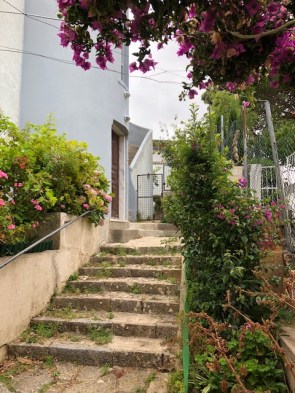
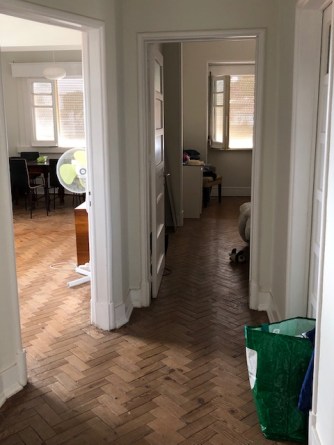
The email exchange answered her various questions and at the end of the School Year they duly picked up an early morning TAP Portugal flight from London’s Heathrow and some 4 hours later arrived in Estoril. The apartment is accessed through a little metal gate and a climb up some outside steps. It’s advertised as four bedded, one double and three singles … so for a family of two plus three boys under 8 ideal …… so why are there only four modern Ikea dining room chairs up against someone’s grandmother’s old mahogany polished table? It has that ‘clean but worn’ look, the worn look mirrored in the parquet flooring, with its glorious patina and smooth from decades of use. The sort of thing you would covet back home!

PC 158 2

Two large windows face west and the setting sun streams in. Both opened with one of those old-fashioned central long bars with a handle; turn the handle 90° and the top and bottom slot into place –providing they haven’t been too enthusiastically painted over – nothing that a bash with a hammer didn’t fix! You might think that you would have them open in Estoril at the height of the summer but there’s often a strong onshore wind and that necessitated them closed sometimes.

The old stone chimney mantle in the kitchen now covers the gas hob, but its height, and of course the Portuguese are not famous for their tallness, is perfect for head banging. The fridge/freezer is placed against the wall in a corner; no one has bothered to change the direction in which the doors open so it’s a faff to take out, for instance, the milk. These little things!

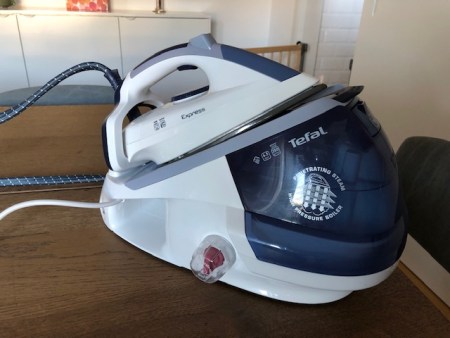
There is an odd selection of plates, bowls and cutlery, suggesting that every now and again something gets broken and is replaced, but all miss match; doesn’t take a lot to go to Ikea and replace in sets, surely? And after two nights we took around a couple of spare mattresses as the thinness of those supplied didn’t encourage a comfortable night’s sleep. To be fair, it was very clean and did what it said on the tin. And if you have every trudged to the laundrette on holiday with a large bag of washing, you will think my daughter spoilt. There was no washing machine but yours truly picked up the bags of dirty clothes every two days…… and miraculously returned them the following day all washed and folded; ironed? No ….. too much love!

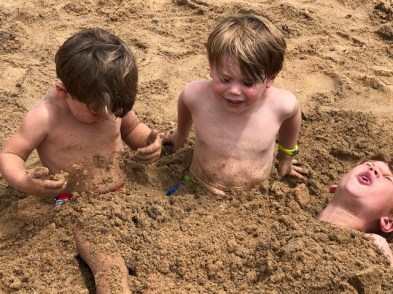
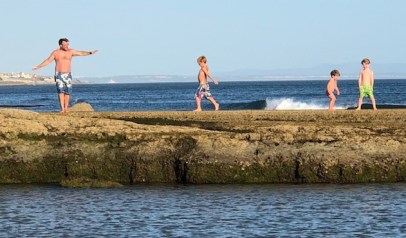
The occasional sun burn, the odd insect bite or ten (bed bugs? No!), a visit to A&E for a flare-up of an on-going burst eardrum, but all these pale into insignificance with the option of either the swimming pool or the sea. The former has inflatable rings and pump-action water guns, the latter the ability to dig a hole and wait for the tide to come in. Fortunately my techie son-in-law has a watch which does everything, from paying the bills and keeping a tally of the daily expenditure (Ed: Who would want to know?), to telling him the state of the tide. The timeless pleasure of digging a hole in the sand for the sea water to eventually fill it can be disappointing if the tide just keeps on going out!

PC 158 3

Sometimes burying oneself and one’s brothers can be equally amusing!

The family’s only nod to culture was a train ride to Lisbon; the subsequent appraisal? “Absolutely Amazing”! To be fair I think this was probably the sights in the aquarium rather than some mouldy old ruin or the castle overlooking the city, as when you are 7 or 6 or even 3, fish can be absolutely amazing up close.

PC 158 4

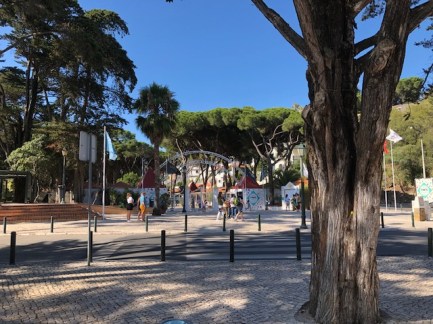
Just to the north east of the Estoril Casino is an Arts & Crafts Fair, open in the evenings in the summer months. One evening was spent drifting around, eating, drinking, staying up late! In the past I have bought two dark navy blue Hoodies here for the boys, and this year was no exception. And the youngest Theo, bless him, has to make do with hand-me-downs!

PC 158 5

We met the mother of the owner of the Airbnb after Jade has left, returning a borrowed bowl! She spoke English fluently and one could have assumed she was English, as we have been coming to Portugal for decades; buying second homes or holidaying, particularly down south in the Algarve. But she was Portuguese and had taught English in Primary school; what better way to supplement your income than placing a few self-contained rooms on an international market place website.

PC 158 6

Richard 8th August 2019

PS If you want to know more about Portugal and its people, you couldn’t go far wrong with Barry Hatton’s The Portuguese.


PC 157 Does it Matter if No One Knows?

Somehow I associate life with sunshine and death with winter gloom, so it’s odd to post something about the end of life in a gloriously warm summer’s week. But that’s how it goes sometimes; just scribbles!

There’s an old Latin saying from the days of Socrates, ‘Memento Mori’, which I came across the other day in a novel by Victoria Hislop about the Spanish Civil War (1936-1939). I don’t know much about the latter, apart from the fact it ripped Spain apart, and hadn’t heard the former before. It means ‘Remember you must die’ and before you think it’s the sort of thing Bruce Willis or Clint Eastwood might have said, the point of this reminder is not to be morbid or promote fear, but to inspire, motivate and clarify ……. and I like that …….. get on and live life to the full.

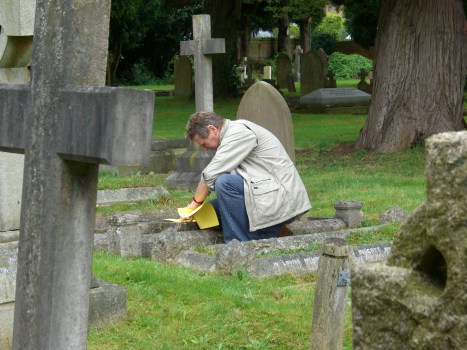
A couple of months we were driving through deepest Surrey and I suddenly realised we were in Shottermill, passing St Stephen’s Church. A decade ago this would have meant nothing to me, this little church on a triangle of land surrounded by busy roads; but then, in the process of researching family history, I found that somewhere in their cemetery were the graves of my great grandparents and their second son who had died aged 48 in the 1936 TB epidemic.

I had been. Eventually I found my great grandparents in one grave and looked around for the other, for their son Cecil. Then I realised that Cecil had joined his parents in the same grave. I could just about make out the names on the stone slab and side bars.

PC 157 1

Shottermill 2007

Various methods have been used down the ages to mark the ‘end-of-life’. The Anglo-Saxons built earth and stone burial barrows; you can still see them particularly across the county of Wiltshire. We’ve all seen footage of the cremation of Hindus in Varanasi, India’s oldest city, where they come to die, believing that cremation on its funeral pyres on the ghat will release them from the cycle of reincarnation and allow them to progress to nirvana. The way the Vikings laid their dead to rest on their ship and set it alight feels romantic and spiritual; although if you feel this is for you, in the UK it’s not currently legal and you have to be cremated first, then sent off to sea!!

Christian graveyards in the UK, Protestant ones in particular, are very sombre, boring affairs. Rows of small head stones, atop a space a coffin’s width and length, cover a few acres. If you’re lucky the grass in between is mowed; but there are few benches as though neither contemplation and nor remembrance is encouraged. Those of you who read PC 60 following the death of my father-in-law Carlos Rocha Miranda, a Catholic, in January 2016 may recall: “The crematorium is surrounded by the graves of the departed. Some huge edifices have been erected ….  the artist obviously having been given free reign  …… winged angels stand guard  …..  women lie draped in distress across the cold stone  bust  …. Mausoleums, large and frankly ridiculous, dot the landscape. Is this glorifying death …… or life? Not sure! Maybe just highlights our awkwardness about what to do and how to do it??”

Religions differ in how they see the passage from life into death, into heaven or into the after-life vary. Muslims commonly believe that the present life is a trial in preparation for the eternal life. If they’ve done good, they go to Paradise. The body is buried as soon as possible and placed in a grave oriented towards Mecca. Muslims cannot be cremated and neither can Jews. The Jewish funeral consists of a burial as soon as possible after death. No flowers are allowed in a Jewish Cemetery but there is a lovely tradition of visitors placing a stone or pebble on the grave. Burial was normal for Christians in the UK, whether Protestant or Catholic, although now cremation is quite common. No one seems to be in a hurry and it can be a fortnight or more before the funeral takes place!

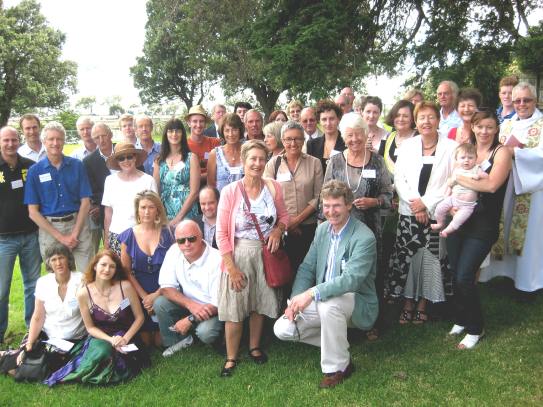
Back to Shottermill. We pulled into the car park and went and stood; the ravages of 10 years have made it almost impossible to read anything. Talk about death and decay! Stone is not immune! So I wrote to the Protestant Church of England church to ask whether I could place a brass plaque of some sort, to some agreed design, to make it easier for future generations to locate their ancestors, otherwise no one will know. Their initial response suggests I could replace the stonework or have the letters recut! Both these options are very expensive and I may have to argue for something more affordable. George’s father was buried in another St Stephen’s cemetery, (there’s a coincidence!) this one in the Auckland suburb of Parnell in New Zealand, where he’d been the mayor. At the time, 1891, a family financial crisis meant they could not afford any form of headstone or grave marker, and it was only by looking at the cemetery plan was I able to determine where he was buried. In 2011 some 40 of his descendants gathered to dedicate an appropriate plaque; otherwise no one will know. (This is what I have in mind for his son George’s grave here in the UK.)

PC 157 2

PC 157 3


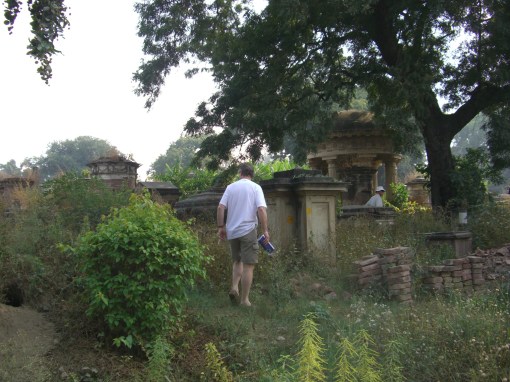
His father, another Stephen but no Saint, is buried in the Christian Cemetery in Cawnpore, India, where he succumbed to Cholera in 1828 aged 49. Sadly the ravages of time, of heat, of climate have mean the large tombstone, with a huge inscription from his fellow officers, has crumbled and disintegrated. I saw where the spot should have been, well, within 10 feet, such was the unkempt nature of the cemetery.

Stephen Nation's here somewhere

Searching for Stephen Nation in Cawnpore, India

My own father was cremated and his ashes scattered on the River Clyde on the west coast of Scotland, so no physical place to go to, should I have ever wanted to. My stepfather and mother were cremated and their ashes were scattered together in Worth Crematorium north of Brighton. I am sure there’s a little plaque on a wall somewhere but I’ve never been. But I was excited by finding George and Eva; the idea that their skeletons rest beneath the gravestone attracts me more than a place where ashes were scattered. But to recognise the place you need to be able to read the carved words!

And if you can’t read the words, you won’t know. If no one knows, does it matter?

Richard Estoril, Portugal 26th July 2019

PS Katrina Spade, an appropriate surname for the CEO of Recompose (!), has just been granted a licence in Seattle, Washington State, to turn human cadavers into compost. Great idea but would you want to know if the food you’re eating had been grown using this compost, I wonder?


PC 156 Time to Stand and Stare?

Travel and time seem to be a theme that I keep mulling over, keep coming back to; sometimes it comes out in the written word. My last scribbles about having some overseas experience prompted a number of readers to comment. “I was posted to New York with my company two decades ago. Changed my perspective on those pesky American cousins.” and “Teaching for two years in China in my early thirties was life changing, and life affirming.” and “I was reluctant to leave my parents when we went to Singapore on posting …..” (This from a chap who worked for a law firm) “ …… but they visited us and our children, who went to the local schools, now have some great experiences of Malaysia and Borneo. Never regretted it for a moment.” Whilst these are all positive, go-and-do-it sort of comments, I recognise that there will be some for whom my postcard brought back negative thoughts!! Hey! Ho! You never know ……. unless you try it?

Last December we flew to Portugal, just before some numskull decided to operate a drone within London Gatwick airport’s airspace. Flights were cancelled and the airport effectively closed for three days, so ruining a few thousands’ people’s holidays. Personally I thought they should have caught the bastard(s) and left them in the terminal building with all the disgruntled passengers – maybe with a note around their necks saying something like “It was us wot done it” or words to that effect. It would have been cheaper than putting them in prison!

As we descended into Lisbon’s Portela Airport I reflected how the last time we had travelled to Portugal we had taken the overnight ferry from Portsmouth to Santander in Northern Spain and driven. Five slowish days, west towards Santiago de Compostela and then south to Porto and on to our destination of Estoril, compared with seven hours door to door. Time to experience ….. we hear that saying ‘travelling is a journey not a destination’ so often these days it’s become a cliché but we all understand the sentiment; it broadens our outlook, our knowledge. Throughout our limited time on the planet, we need to suck as much as we can from every day!

The daily chore


Whilst we haven’t developed the ability to tele-transport yet (aka Startrek and ‘Beam me up Scotty’!), fairly instant travel over long distances by airplane is something our forebears may have envisaged but not experienced. Jumping from one place to another, from one continent to another; no time for reflection or for acclimatisation – in, bang! George Nation, my great grandfather, went to Alaska as fast as he could in 1900. Firstly on the US Mail Ship St Paul; five days across the pond, days of sea air, of formal dinners, of gambling and of conversation. (Round trip on Queen Mary 2 in 2019 would cost £2650!) Tired out by the time he arrived in New York he spent two days in the Grand Union hotel. If you’d never been to NY, you’d probably have a look around, walk in Central Park. He left by train from Grand Central Station for Montreal in Canada, took the train to Winnipeg, where it was 15°below zero, passed through Calgary and arrived in Vancouver some 8 days later. (Today the train journey would take around 4 days and six hours and cost £275). Flying Air Canada from London’s Heathrow will get you there in ten hours and cost £470. In 2015 we followed in his footsteps, his letters to his wife Eva in London being the inspiration, but we flew to Seattle. We both caught the ferry up the Alaskan Marine Highway (See PCs 44-46) to Skagway, although George’s ferry was an old river steamer and very crowded compared with ours.

He then took the train to Whitehorse; we drove. On to Dawson City by horse-drawn sleigh; we drove our rental car. George stayed in basic roadhouses; we did it in a day. In a romantic sort of way it would be wonderful to experience a horse-drawn sleigh, but for five days in the snow?

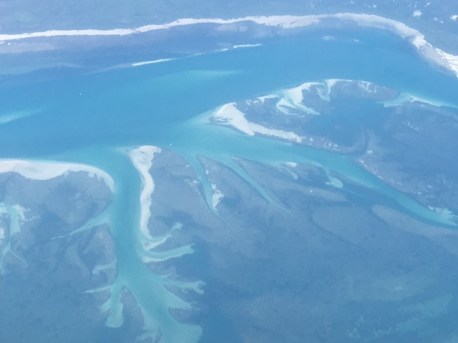
Some moons ago I drove from Sydney to Coffs Harbour on Australia’s East coast. Whilst the view from 30,000 feet might be dramatic ……..

PC 156 2 Sydney to the north

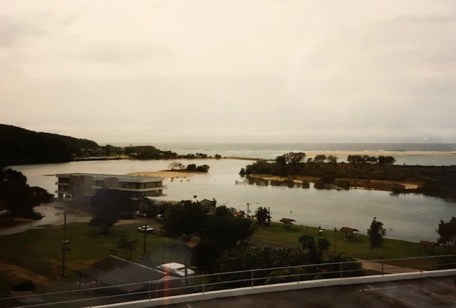
……… you can’t feel the heat, smell the dust, get bitten by the mosquitoes or put your toes in the Pacific!

PC 156 3

Nambucca Heads

Walking from home to Hove station you pick up the street vibe, amuse yourself with observations and judgments, up George Street then past Dean’s fresh fruit and veg stall with a ‘How’s it going?’ sort of exchange, past the gentlemen who like to spend their day on the bench on the corner and up Goldstone Villas towards the station. Past Osman’s new 24/7, past the Small Batch Coffee café, which gives you an instant whiff of coffee beans being ground, and arrive at the station in touch with your surroundings. If you get in the car drive there and drive back, insulated and isolated from other people, you get none of that.

Working for Short Brothers, after a year of sale’s trips around Europe, my first venture out East was to Singapore. As we disembarked, I remember exiting the aircraft door and being overwhelmed by the smell, the warmth, the humidity, the excitement of a Singaporean evening, the essence of the Orient. That particular memory, that particular moment, will stay with me forever.

A reality TV programme a few months ago offered £20,000 to the first couple to reach Singapore from London – without using an aircraft. Credit cards and mobile telephones were taken off them and they were given the cash-equivalent of the airfare (economy I suspect!). With this limited budget it was clear they would have to work somewhere, somewhen (A delightful English word from 1300 or there abouts; originally spelled sumwhanne and meaning exactly what it says!!). Of course there was a sameness of the cheap rail or coach travel, one long distance train or bus as uncomfortable as the next, but instead of hopping Europe to South East Asia by air, they saw Delphi, made their way to Baku in Azerbaijan, then through the Stans – Turkmenistan, Uzbekistan, Kazakhstan and Kyrgyzstan, and into China. South to Cambodia and on to Singapore. Now there’s a journey with time to stand and time to stare!!

Last month in a Yin yoga session with the brilliant Sam Goddard, she finished with a wonderful quotation from Pico Iyer.

“In an age of speed, nothing could be more invigorating than going slow. In an age of distraction, nothing can feel more luxurious than paying attention. In an age of constant movement, nothing is more urgent than sitting still.”

Twiddling your thumbs? Travel ……. quickly or slowly! Or simply enjoying twiddling your thumbs. Always your choice!

Richard 11th July 2019

PC 155 OE (Overseas Experience)


The New Zealanders among my readers will immediately recognise the two letters OE – something everyone tried to do after school, to travel, to broaden their horizons and see something of the world. These days I gather Millennials and Generation Z believe it is less of a necessity, less of a need, more a want. Mind you, an ex-sister-in-law left NZ for her OE and never got further than Queensland in Australia! A year travelling, living in another culture, in another country, working in a different environment, and then back to New Zealand with all its delights and opportunities – or not. Some of course never return to the Land of the Long White Shroud, as the inhabitants irreverently refer to their country!

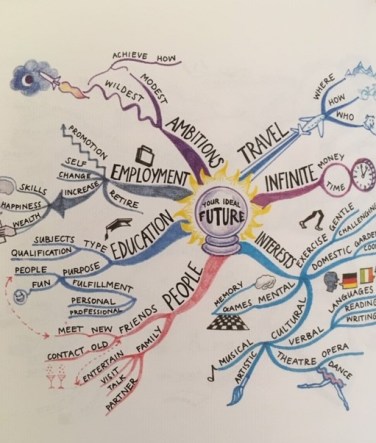
Two months ago Tony Buzan died. Some of you will never have heard of him, but for those who want to draw out the thoughts that run around inside your skull, his simple ‘Mind Mapping’ technique is brilliant. You can make these maps/diagrams as simple or as complicated as you want. They assist you to determine what’s important and what’s dross!

PC 155 1

I come back to this term OE. Many decades ago our Duke of Edinburgh suggested that, as a way of having some OE, anyone should be able to go around the world on £5. Let’s say it was at a time when a day’s pay was twenty pounds: clearly you were not going to get around the earth without working, using your wits, charm, having some luck etc. I am sure many people acted on his idea; certainly one took up the challenge and, having come back after 10 months overseas with £25 and a diary full of good experiences and adventures, wrote a book “Around the World on a Fiver”.

My own Nation ancestors lived in Somerset; then Stephen travelled to India, his eldest son to NZ, his second son to America and thence to London some one hundred years later; travelling is in my DNA. In the same time period the Everets, a family of Yorkshire solicitors, lived in Beverley, and travelled to York, Scarborough, Wetherby and Thirsk. For them the confines of the county of Yorkshire gave them a very fulfilling and rewarding life, but I would suggest that in 2019 OE could give you a greater, richer, more educational perspective. You may remember that wonderfully time-frozen comment by the father of Billy Elliot, the 11 year old given the unlikely chance of an audition for the Royal Ballet School in London. On the coach from Durham, Billy asks his father: “What’s London like, Dad?” “Don’t know, son, never been!” “But it’s the capital city, Dad!” Billy exclaims! “So! I have everything I need in Durham.” (And this is 1984)

These days I thought this would be unusual; we move around more and now overseas travel is commonplace. Then I had lunch with a chum last week who lives in Upper Wield in deepest Hampshire. He, like me, had worked for Her Majesty so the peripatetic life was the norm, but he told me of friends in the village who had lived there for 30 years, yet had never been to their sister village of Lower Wield, some 1.5 miles away, a thirty minute walk across the cornfields. Takes all sorts, I guess!

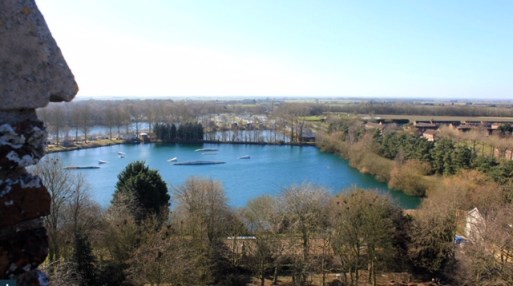
I have used the latter part of William Penn (1644-1718)’s prayer: “Life is eternal; and love is immortal; and death is only a horizon; and a horizon is nothing save the limit of our sight.” with clients, for too often I found that their outlook was quite parochial. Due to the curvature of the earth, at sea level we can only see just over 3 miles (5kms); climb a 30 metre tower and you can see almost 13 miles (20kms). From the battlements of Tattershall Castle in Lincolnshire you can see 20 miles. In 1434, the Lord Treasurer to King Henry VI, a Ralph Cromwell, famously exclaimed that all the land you could see from the top was his!! (some 1260 square miles)

PC 155 2

The view from Tattershall Castle

Are you intrigued by what’s over the horizon, do you need to lift your eyes, to explore, to experience? Do you really know what’s out there? We can see everything on the internet, through other people’s eyes, but you don’t get the smell, the heat, the cold, the sounds, the emotions, the tangible cultural stuff without actually going and doing and experiencing. Somehow the physical limitations of our sight become our mental and emotional ones, except for those who acknowledge that travel and OE can be so enriching and rewarding. It doesn’t always end well, however.

PC 155 3

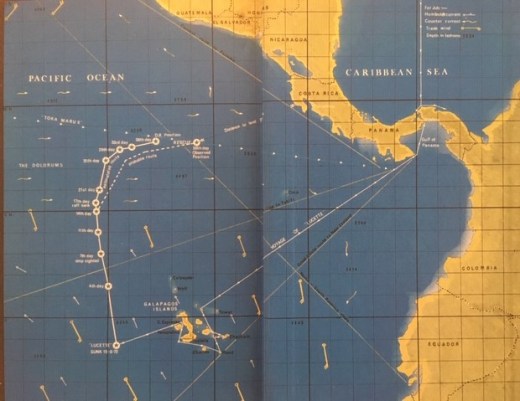
In 1972 Douglas Robertson took his family (his wife, their 18 year old son and twin 11 year old boys) on an ‘educational around the world trip’ in his 43ft schooner. Having crossed the Atlantic and transited the Panama Canal, they set out into the Pacific. West of the Galapagos Islands the yacht was attacked by killer whales and sunk. Confined to an inflatable raft, the family ‘Survived The Savage Sea’ (the title of his subsequent book) and was eventually picked up by a Japanese fishing vessel after 37 days adrift. Some OE huh?

This illustration may alarm some people, particularly those who don’t like sailing, but there are hundreds of other ways of gaining OE, dovetailing the adventures into the educational needs of one’s family. Some of course home-educate whilst away and these days the internet has made this so much easier. But most of us who live overseas for a while survive easily, assimilate the cultural differences and gain from the experience. And of course the only sure thing about life is that plans you make will have to change, to adapt. Too often external forces over which you have no control force a change; what’s that saying – ‘Nothing changes but the reasons for change’?

The Roman Emperor Marcus Aurelius (121-180) was a well-known philosopher. Here’s his take on change:

“Is any man afraid of change? What can take place without change? What then is more pleasing or more suitable to the universal nature? Can you take a hot bath without the wood for the fire undergoing a change? Can you be nourished unless the food you eat undergoes a change? Can anything else that is useful be accomplished without change? Do you not see then that for yourself also to change is just the same?”

Couldn’t have put it better myself. Whenever, wherever, get some OE before change comes and bites you in the bum!

Richard 27th June 2019


PC 154 The Fosbery Connection – Shipwrecked!

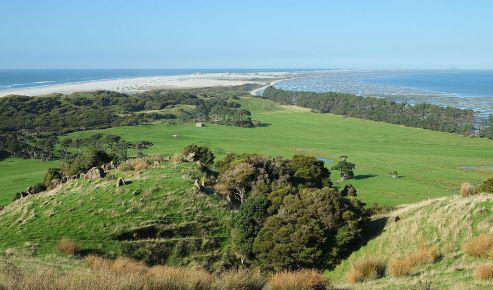
PC 154 1 Farewell Spit from Puponga

Farewell Spit in 2010 – getting longer every year

“Sorry, dear Papa. Needed to go to the powder room! Now, where was I? Oh! Yes. The second mate left to find a telegraph station and raise the alarm at Nelson. Meanwhile everyone I spoke to imagined we would somehow get off the sand bar, but we were stuck fast and I could see the captain and the gentleman passengers talking about what to do. By 8am, after an anxious night and having had some biscuits for breakfast, it was decided that we passengers would be split between the two boats, the lifeboat and the cutter. Henry, Mary, little Caroline, baby Emily, Emma and me were slung in a chair onto the cutter, along with eleven other passengers and four of the crew. One was a stowaway called Furness, a frightened young man who kept himself to himself.

I think the Captain wanted us and the others in the lifeboat to stay together, but no sooner had we got on board the crew cast off and we drifted away; we should have had the Chief Officer and some food and water with us! I could hear the Captain yelling for us to come back but the crew seemed resolute in their actions. I was told later that those left on board constructed a raft but we lost sight of the Queen Bee after about seven hours so at the time imagined we were on our own. The wind started blowing stronger and the waves began to break into the boat. We all took turns at bailing but we weren’t very successful; my dress was horribly wet and is completely ruined.

PC 154 2 QueenBee on Farewell Spit (2)

The Queen Bee stuck on the sand of Farewell Spit

I’ve enclosed an extract from the report into the sinking, as it sums up nicely what we endured:

“Left the Queen Bee (in the cutter) on Tuesday morning at 8 am, with 21 on board. The boat had only three oars, which were almost useless, no sails, rudder or mast, and no water, excepting one bottle, which a passenger happened to have, and three tins of preserved meat. We tried to stay alongside the ship, to get rid of some of the passengers (??) as the boat was over-loaded, but could not, the wind and sea being very high from the west. After struggling for an hour we had to run before it; when two-thirds across the bay we found we were making no southing, and we expected to be blown seaward, the boat filling three times.

PC 154 3

(Ed: You will see that if the wind hadn’t shifted they could have drifted north of D’Urville Island and maybe lost completely!)

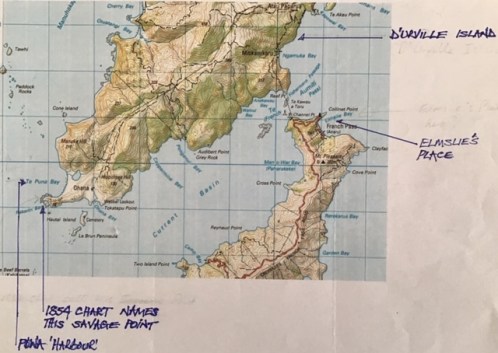
Fortunately the wind shifted north-west and by means of a rug held on to a brass rod, we made a little southing. At eight o’clock we sighted Savage Point above French Pass, when the wind shifted west again, which blew us to the mouth of Te Puna Bay, where we held on to our oars all night, but had hard work to keep off the shore. (Ed: They thought it better to attempt a beach landing in daylight!)

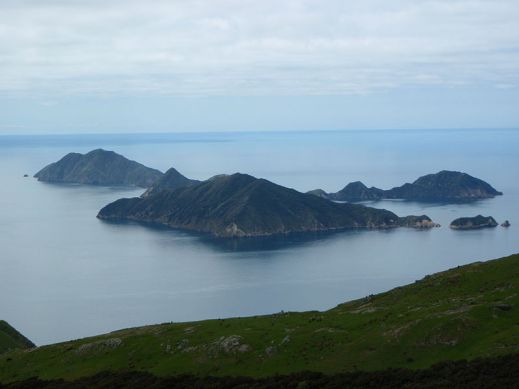
PC 154 4 Islands near Frenchman Pass

 At daybreak we rowed into Te Puna Bay and landed on the beach, where we made fires, boiled some water, while some of the crew went over the hill to look for habitation and fell in with a Maori settlement, where they were treated with great hospitality. We remained in Puna ‘Harbour’ until the following day, when we rowed into Elmslie’s Place where we were picked up by the Aurora. Ten of us come on in the Aurora and the remaining eleven on a Maori boat.’

PC 154 5

And to think, Papa, we imagined that the Maori might eat us, such was our ignorance. So the Aurora took us into Nelson and at the quayside were several thousands of people congregated, who thronged the road and beach from the Pilot Station to the entrance. As we entered the harbour, ringing cheers went up from the crowd of people who were assembled on The Rocks, and were taken by one little knot after another the whole way up the harbour. There was a band which started playing the particularly appropriate air ‘Home Sweet Home’; it was so exciting. We came alongside the harbour wall and Lieutenant Gully lifted up Caroline into outstretched arms, then Emily, not 10 days old, (See Note 1) and then he helped Mary, Emma and me to climb ashore. It never felt so good to be on dry land. To the sound of louder and heartier cheers, we made our way to the shed where, to our surprise, were Philippa and Eleanor. (Ed: Two of Eva’s sisters who were already living in NZ) We clung to each other, wept with happiness and joy, as the band, at the request of the Bishop of Nelson and other clergy who were present, struck up the well-known doxology ‘Praise God from Whom all blessings flow’, which was warmly joined in by the enthusiastic crowd.

We’re going to stay in Nelson for a few weeks to recover from our ordeal and then maybe sail to Wellington. Will write soon. Love Eva.” (See note 2)

And all because someone kept the front page of a newspaper!

Richard 14th June 2019

Note 1. Emily’s health never recovered from the hash exposure of being in an open boat for three days and she died in 1880 aged 3.

Note 2. Eva Constance Fosbery went on to marry George Nation, my great grandfather, in Dunedin in May 1884, moved to California, bore three children; moved to London in 1898 and is buried with George and her second son Cecil in the cemetery of St Stephens’ Church in Shottermill, Hampshire.

PC 154 6

Note 3. The Queen Bee was uninsured and a total loss. There is no record of what happened to the 30 tons of cargo, for instance the 4 bales flour bags, 10 cases Van Houten cocoa, 30 bundle spades, 42 cases galvanised corrugated iron, 1 bale seaming twine, 150 cases Hennessy’s brandy, 2 crates brownware, 3 casks china, 15 cases marmalade, 10 kegs split peas, etc etc – or indeed all the passengers’ possessions.

Note 4. The lifeboat and Captain’s raft were also found, although when the raft had attempted to land on Puna beach, the waves smashed it to smithereens and the carpenter drowned. He was the only fatality out of the 30 passengers and 24 crew. The two boats and raft drifted about 100kms before coming ashore.

Note 5. At the subsequent Court of Inquiry Captain Davis was “adjudged guilty of the grave default in not using lead and other means of ascertaining his position when so near the shore and on a strange coast. The Master’s certificate suspended for three years. The certificate of John Going, second mate, was suspended for six months, as he was the officer of the watch at the time of the stranding, and did not use proper precautions to keep the vessel off the shore.”

PC 153 Courgette-Neutral?

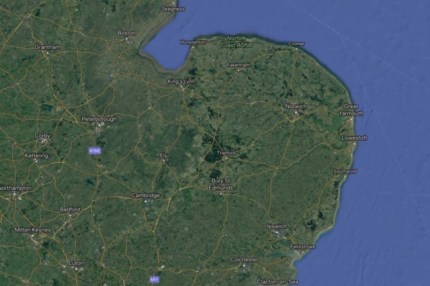
Out on the right hand side of England, that’s the bump on the eastern North Sea coast, lies ‘East Anglia’. The name derives from the Anglo-Saxon ‘Kingdom of East Angles’. Officially Essex in the south was the ‘Kingdom of Essex’ and so not part of East Anglia, but I suspect most of us think it’s all ‘East Anglia’.  On the south side is the estuary of the River Thames and to the north The Wash, the land here so flat that on the change of the tide the seawater rushes in at an alarming rate. History relates that King John (1199-1216) was crossing The Wash on his way from Spalding, Lincolnshire to Bishop’s Lynn in Norfolk when his staff mistimed the tide and they had to scramble to safety, losing some of the Crown Jewels in the process.

PC 153 1

Within East Anglia the cathedral cities of Norwich, Bury St Edmunds and Ely vie for visitors with the university city of Cambridge. The Norfolk Broads, an area of navigable rivers and lakes covering some 300 sq kms, lie between Norwich and the coast. If you want to unwind and relax on the water, this is the place to go. And if you want to understand the impact of EU Fishing Policies you go to the run-down ports of Lowestoft and Great Yarmouth.

And it’s flat. Not quite as flat as Lincolnshire but flat enough for its coast to be at risk from rising sea levels. There is a belief that the landmass of Wales is rising in the west and England sinking in the east, possibly on an axis of the M1 motorway (actually I made this last bit up!). A good example of the loss of the coast is at Covehithe, six miles north of Walberswick, where some 24 acres (about 10 hectares) of farmland fall into the sea, every year! At this point you might be forgiven for thinking I’ve won an assignment from The East Anglia Tourist Board to encourage more visitors? Not true!

But we did go to Walberswick for a couple of nights after Celina’s birthday. Everyone we told immediately asked: “Where? Wallburswick?” It’s one of those delightful English village names you have never heard of and never know how to pronounce. You need to get your tongue around the letter ‘l’ before sounding the ‘ers’!

PC 153 2

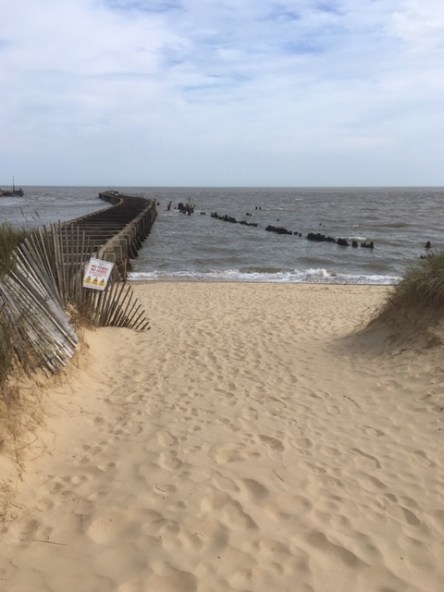
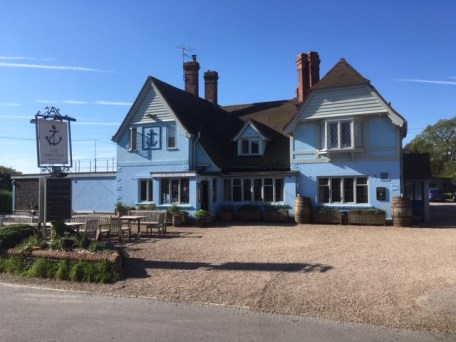
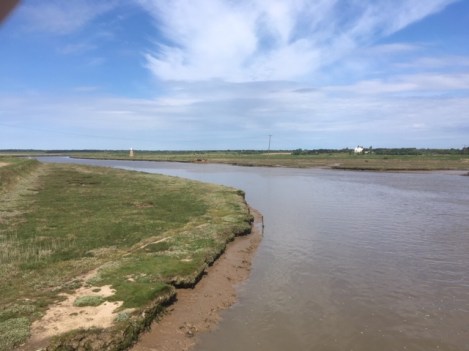
I’ve known the woman who runs The Anchor, a ‘pub with grub’, an Inn in the old-fashioned sense, for some 27 years, so it was a visit to catch up with her and her family, to walk and to enjoy the peace and quiet of this beautiful stretch of the coast. Walberswick lies just south of Southwold; the River Blyth flowing out to the sea between the two.

PC 153 3

If you still need a geography refresher, the well-known town of Aldeborough lies to the south with Snape, the location of an international music festival started by the local composer Benjamin Britten (1913-1976) lying a few miles inland. To get there from Hove, after getting around London, you simply follow the A12 road until it almost runs out, then turn right.

PC 153 4

The Anchor has been in Sophie and husband Mark’s hands for some 12 years; she runs the kitchens and front of house, he focuses on the range of beers and wine, about which he is extremely knowledgeable. On a busy weekend they might do 150 ‘covers’ for lunch and all their ten rooms are normally fully booked in the hectic summer periods. This year in particular, with the uncertainties about Brexit causing people to holiday in the UK (a new word: a ‘staycation’ – as in ‘stay’ at home ‘vacation’ – an ugly word if ever there was one!) they have noticed an increase in bookings. Through conversations with Sophie I know how difficult it is to recruit and retain staff although currently a number of Romanians are employed. At breakfast we chatted with Doru whose two sisters and their families had just been to stay; he looked as though he was glad to be back at work!

Wireless and internet connections were fickle at the best of times but everyone who comes here has probably come for peace and quiet and can do without for a couple of days ?? We walked and talked, walked with some chums and their dogs to Southwold; had a coffee and came back. We ate in The Anchor at lunchtime and in the evenings, the early summer log fire sending a delicious smell and warmth into the room. Eavesdropping on the other clientele, above the background murmur of congenial conversations, you could hear an amusing range of chat:

I’m coming to the Latitude Festival (Ed: 18th -22nd July 2019) and wondered whether you have a room for four?”

Mum! I need help with a Physics question?” This from Sophie’s daughter Rose in the middle of her GCSE exams. “Go and ask your father ……!”

The Bank Holiday BBQ; is that open to everyone, Harry, or do we have to book?”

“My Ceanothus is dying, Barbara” “Oh! I don’t think they last longer than 10 years!”

“I’ve just cycled to Bury St Edmunds in preparation for a 200 miler in a fortnight’s time – God! My legs are killing me. I need a pint of something cooling.”
“Coming outside for a fag Mike?”

“Can I order the battered cod and double cooked chips?”

“Do you have a loo I can use?”

Harry (Ed:Sophie’s delightful son who works behind the bar) can I have another one of these?

PC 153 5

The River Blyth

You may be wondering at this point whether the title of this PC has any relevance. Between The Anchor and the sea is a patch of allotments. I don’t think this is a particularly English thing, but for those who haven’t heard of the word, individuals rent, are ‘allotted’, small plots of council-owned land on which to cultivate flowers, fruit and vegetables for their own use. Sophie’s plot is about 30m by 15m and she grows as many vegetables as she can, all for use in The Anchor kitchen. She proudly showed me the seeds beginning to show, the runner bean canes and where the rows of courgettes will come up; with a delightful take on the phrase ‘Carbon Neutral’ said: “Last year we had enough courgettes from here to be ‘courgette-neutral’ for a few weeks.” So all the courgettes they used in the pub for those weeks came from her allotment; a delightfully modern country description – must be a postcard title I thought!

Richard 6th June 2019

PS Look them up at http://www.anchoratwalberswick.com and go and stay!

PC 152 The Fosbery Connection

During 2007 I became curious as to where my family roots were. My mother had been very vague and disinterested, whereas her mother had corresponded with relatives in Brazil, for her father had been born in Recife in 1850. A couple of telephone calls and I found a cousin of my mother still alive, and invited myself for tea. Trevor rummaged in an old box and produced a very sketchy MS family tree. It was a start.

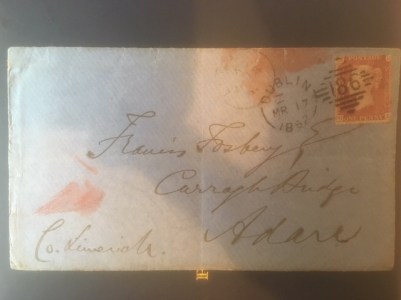
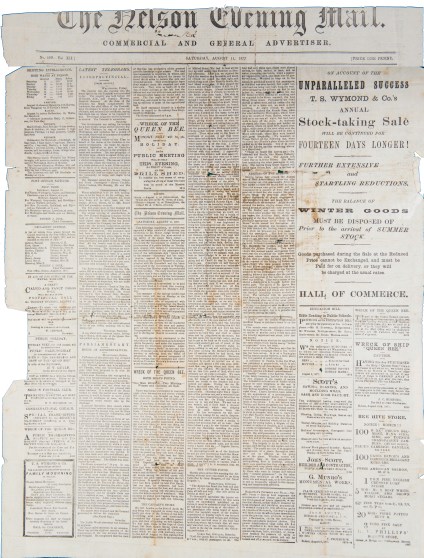
Somehow I also came upon a little blue envelope ……. inside was a creased yellowing page from The Nelson Evening Mail of Saturday 11th  August 1877 ……… and I wondered why someone had kept it.

PC 152 1 Fosbery envelope

My imagination runs ….

It was the end of 1876 and in Curraghbridge House to the west of the Irish town of Adare, Eva sat with her youngest sister Emma and devoured the latest letter from sister Philippa, who had followed the eldest, Eleanor, and emigrated to New Zealand a few years previously. In March she had married a fine chap, Richard Nancarrow, in Hokitika on the west coast of New Zealand’s South Island. The remaining seven girls were still trying to adapt to their father Francis’s marriage to Anna, their step-mother. Their own dearest Mama, Eleanor, had died exhausted a year after the arrival of her ninth daughter – she was only 39! Together Francis and Anna produced four children and their third, George, being a male, would inherit the family estates. The girls couldn’t delay their own urgent search for a husband.

PC 152 2 The Fosbery Sisters

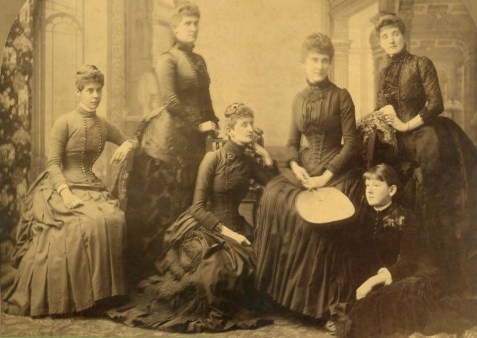
Five of the Fosbery sisters in 1877. Left to right Emma (18), Florence (26), Sarah (21), Eva (19), Ethyl (12) and Mary Maunsell née Fosbery (25)

“She says it’s very peaceful now, Emma. I quote: ‘The fighting between us,” I think she means us British, “and the natives, they’re called Maori, which had blighted the islands, finished four years ago. We’re now getting on with building a real community, safe from conflict. Hokitika’s been booming as they have discovered a small quantity of gold inland and all the boarding houses are full with a wide variety of men; most are hard-working miners but there are some  con-merchants waiting to take the dust off them. I get the occasional letter from sister Eleanor in Auckland; amazing to think she’s been here 10 years.

The mountains and glaciers, particularly the Franz Joseph, are something to behold. Last month we took a stagecoach north and went right up to its edge. In the distance on a clear day you can see a snow-capped peak; I think it is Mount Cook.”

“And then she asks why aren’t we coming too; going to New Zealand?”

“Oh! Emma, wouldn’t that be an adventure!” Eva shrieked. “Away from the incessant rain by the Shannon …… and Anna! Father wouldn’t miss us and there’s nothing for us here! Why aren’t we going too?”

“I spoke with Mary this afternoon. She and Henry are trying for another child and they too are thinking of emigrating. Why don’t we all go together?”

(The NZ Government ran an Assisted Immigration Scheme between 1871 and 1888 to encourage European settlers.)

And so it was that in early April 1877 they loaded their luggage onto the Dublin carriage and thence the packet boat to Liverpool. After an overnight stay in the Grand Hotel they caught the steam train to London and made their way to Tilbury Docks.

PC 152 3 The Queen Bee

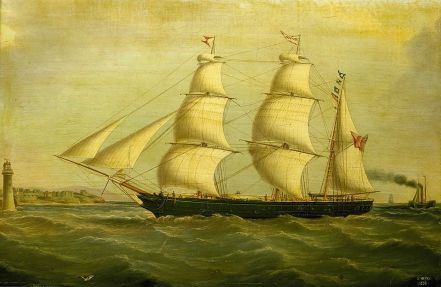
The Queen Bee.

Their passage to New Zealand had been booked on The Queen Bee, a wooden, comfortable barque of some 725 tons that had made several voyages to The Antipodes. With the hold full to the brim of cargo, 30 passengers and 24 crew embarked, Captain Davies slipped the mooring lines and may his way down the River Thames on 20th April. He cleared the Dover Straits by the 24th and set course for Cape Town.

Months later, a letter from Eva to her father Francis arrived in Curraghbridge House; it had been posted in Nelson on 18th August 1877 and enclosed a much folded front page of the Nelson Evening Times.

PC 152 4 Nelson Evening Times Queen Bee photo

“Dear Papa

You will have heard by now that Mary gave birth to another girl in the last week of July; they’ve called her Eily and she is well, although the first few days of her life were extremely eventful. Let me tell you …..

I’d never been on a large sailing ship before so it really was quite an adventure. We had light winds all the way south to the Cape of Good Hope and we stopped at Cape Town. Well! What a sight! The docks; the bustle; the heat; the humidity. The Queen Bee got re-provisioned so all us passengers stayed in a hotel for two days. Our heavy clothes made it insufferable and we were glad to leave the city behind and make course for Australia and beyond to New Zealand. I know we sailed south of the continent of Australia where our English countrymen are making such a success of a tough and unforgiving land. The wind blew very strongly and everyone was seasick; the Captain told me when we reached Tasmania we met northerly winds so our progress towards New Zealand was slow but steady. Captain Davies was gracious enough to regularly show us on the chart where we were and where we were headed. Our destination was the port of Nelson tucked inside a great hooked peninsula which protected the Marlborough Sounds from the South Atlantic.

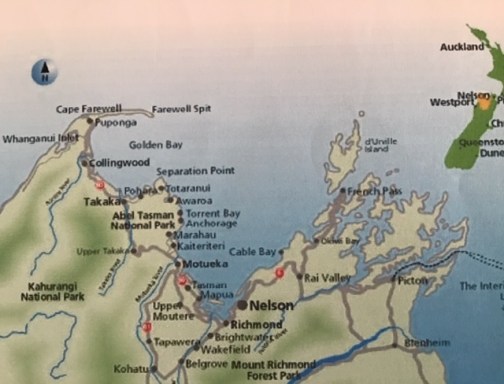
On the night of 2nd August we sighted New Zealand, being then a little to the north of Milford Sound. We sailed towards Cape Farewell all Monday afternoon but just before we sat down to dinner the ship altered course towards Nelson and, no sooner had we started thinking about getting ashore, the ship hit something and shuddered to a halt. I had noticed on the chart a long piece of land that jutted out eastwards – a split of sand that was constantly shifting and growing. We must have hit this!”

Captain Davies later told the inquiry: “We rounded Spit Light and sailed along until it bore West by South, distance about seven miles. I then shaped the course and told them to steer SSE to ½ E for a certain distance. Almost immediately afterwards, at about 11 o’clock, we struck the inside edge of the bank. The ship at once commenced to bump heavily and although I backed the yards and used every effort to get her off it was to no avail. There was not the slightest confusion on board, all behaving admirably and after firing guns and rockets and getting no answer from anywhere, I ordered all the boats to be got out.”

PC 152 5 Farewell Spit

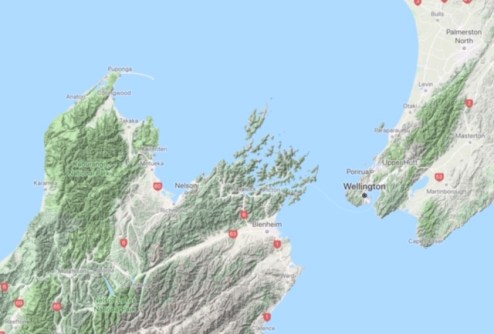
New Zealand’s South Island on the left, the south of its North Island on the right. Farewell Spit lies on the top left hand corner of South Island and Nelson at the bottom of the V-shaped bay (Tasman Bay)

With the hold filling with water, and the ship lying in 5 feet of water, it didn’t look good for either passengers or crew. To read what happened next, stay in touch with postcardscribbles!

Richard 24th May 2019

PS And all this because someone kept a piece of an old newspaper!

PPS Eva Fosbery became my great grandmother.

PC 151 A Human Circus

A couple of years ago a circus came to town; the ‘big top’ was erected, the caravans and trailers were a hive of activity and the sales booth almost cried ‘Roll Up! Roll Up!’ I dropped in to see what a modern circus had as its acts but the booth didn’t have a little free flier, only a big glossy brochure for which they wanted £10! Someone lent me theirs: we didn’t go! In the western world the circus had been a huge entertainment venue …….. when we didn’t think too much about the damage we did to the performers, when we humans didn’t care too much.

Illusions

In ‘Illusions – The Adventures of a Reluctant Messiah’ Richard Bach recounts the activities of two pilots known as barnstormers who brought entertainment to rural communities across America; a sort of cheap circus! Here in the UK the annual visit of Billy Smart’s travelling circus was a memorable part of my childhood. Today it’s different, thank God, and it’s rare for a circus to have anything other than human acts. We have become more civilised in our treatment of animals. But the whole idea of an entertainment venue where some audience participation is essential prompted the following observations of real life events, if only in a parallel universe; an analogous tale if you like.

Once upon a time there was a chap who was extremely confident about doing anything, had enormous self-belief, a super ego. He thought he could create a circus of some sort, that would put on the most popular and challenging acts and that everyone would want to come and marvel at his skill and business acumen. In a nod to the times, no animals were to be involved. He found the perfect site in a run-down part of town, where most people wouldn’t dream of going and set about it. Despite having no knowledge of the basics of building, he decided to have a central support and pillars around its side; he saw himself metaphorically as that central support, the only one that really mattered. He thought he could wing the other supporting structures and was deaf to advice. He didn’t listen and went ahead and built his theatre.

Circus 1

Initially it was successful and people flocked, as he had hoped, to participate in his productions, either as actors, acrobats or as members of the audience, as no ‘play’ was performed without audience participation. He acted as Ringmaster, exerting maximum control over every aspect of the performances; now and again he cracked his whip to show who was boss and bullied his staff! Sometimes he even played his part as an actor, for he was good! The audience, a mixture of the normal and the abnormal, the cranks, the introverts, the extroverts, the young and the old, all got involved in their own way. Then a female actor refused to perform, siting the extra requirements of the job that hadn’t been apparent when they’d signed up. The owner shrugged; there were plenty more who would die to work for him, or so he thought. When interviewed by the Performers Guild, the actor said she had been asked, for instance, to clean the loos, something the Academy of Circus Performers had not trained her to do. The audience sighed …… and missed her; social media started buzzing at what was going on, someone started a Facebook page to collate the stories. A reputation was developing; a Twitter account was created.

As the area became less run-down, another venue opened within a mile, offering cheaper and more attractive packages for those who wanted to attend regularly, rewarding their loyalty. The actors they hired were looked after, valued, developed, consulted and included in the management decisions. Still the circus owner believed their personality and reputation would continue to be a big draw, becoming deaf to the obvious criticism levelled at them by those who dared.

Circus 2

Then one day a support pillar cracked, causing the canvas roof to sag and let rain in. It was repaired as cheaply as possible but it was clear to the actors and audience that maintenance spend was a minimum; paint peeled, water stains weren’t fixed, wood rotted.

A month later a rumour started that the Performers Guild was investigating the way one actor had been treated. It was all hush-hush and whispered conversations but eventually the Facebook entry suggested that attendance at a life changing family event had not been allowed. Other actors and even members of the audience began to search their souls as to whether they could continue, especially as other peoples’ theatres had better offers. A week later, one of the star actors was dismissed. Again the rumour mill swung into action; Facebook couldn’t decide whether it was because they had been such a star performer, that their music-accompanied performance was always a sell-out, and that the owner was jealous, or that the actor had had to start going to the local Soup Kitchen to survive. The owner haughtily ignored the clamour for a change of style and substance.

The final straw seemed to be the booking of plays that few members of the regular audience wanted to watch and be involved in. Bit part actors performed in the empty, round space. Another pillar showed cracks, which were hastily papered over. And then a pillar collapsed, weighed down by the pressure of responsibility without adequate recognition; it had simply had enough. Fortunately no one was hurt but the damage was irreparable and within two months the theatre closed. For those who drove past a week later, there was a sorry sight on the steps outside. The owner, still wondering why no one came, still not getting what had happened, wondering whose fault it was, because it certainly wasn’t theirs, sat with their head in their hands.

Every story that has a ‘Once upon a time ……’ beginning should have ‘…… and the moral of this story is …….’ ending. Well, the moral of this one is that if you run a business and treat individuals with respect, are interested in them, their lives and their welfare, develop their potential without being selfish, and reward them appropriately, they will go the extra mile for you. If you don’t, you will end up lonely.


Richard 9th May 2019

PC 150 These little things

Living in a city gives one access to a wider range of unique shops unavailable in smaller conurbations. You may recall PC 72 about Edwards & Hope, the family-run North Laines, Brighton purveyor of all things electrical, established in 1935? More recently I found a shop on Portland Road here in Hove called Nuts & Bolts. If you are into fittings and fixtures, and I appreciate that this may not be your thing, this is the place. I only wanted a particular length of small nuts and bolt but, having made my purchase, wandered around the shelves, marvelling at what humans have designed to meet a particular need.  Fifteen minutes later I emerged into the bright sunlight with a large smile on my face.

On Wednesday last week, as per normal for this obsessive, I practised the Bikram series of hot yoga, the 90 minute class taught by Marcin, a tall Polish chap whose day job is driving trains. His gentle recital of the dialogue is heavily accented and amusing.

PC 150 4

Returning home, I had a little list of things to do before lunch. Having bought some eggs from Dean’s stall on George Street, I made my way along Blatchington Road to DL Jones & Son to collect a watch that was having its bracelet strap adjusted. There aren’t many places where you can get a new battery for a watch, or indeed a watch repaired but this is one; unique in its way!

PC 150 5

It is also a store for second hand watches, jewellery of all ages, shapes, sizes and some of dubious artistic merit, old silver cigarette boxes, pewter mugs, small sporting cups, and even, inter alia, a rather battered copy of a Maintenance Guide for a Triumph Herald car (circa 1970). David Jones the owner must be just under 90 if my maths is still accurate. Some months ago I asked him how long he had been running his shop – “Well we opened here in 1950 and I was just 18.” David has those large bushy eyebrows that cry out for a trim and his body is rather bent from arthritis so it’s hard to see the twinkle in his eyes as he silently reminisces. I had gently suggested that he needed to take it easy but his look said “And what would I do with my time?” He lives in the upstairs flat, cared for by his son Michael, tall with equally large eyebrows but with a more lugubrious manner, who helps run the shop.

It was Michael behind the counter when I entered, the little bell so beloved of similar establishments announcing my arrival. You need a strong constitution to leave the fresh air behind as the atmosphere is rather damp, musty, chewy – almost fetid; it looks as though most of the items for sale have been on the shelves for a decade or two and there is a lack of breathable air. Those who have a dust allergy could not survive in here.

PC 150 2

Nothing happens very quickly in D Jones & Son but in some way that’s its charm; you just have to relax and accept it. My heart sinks a little as I notice three people up against the counter at the back of the shop, two women, and a mountain of a man who is receiving Michael’s attention. Ivan must be about 1.9m tall and probably around 120kgs, most of the latter seemingly to concentrate in his stomach area, his rather grubby black T shirt failing in its task to hide the flesh! Whatever he was discussing with Michael didn’t end satisfactorily and he left. Next up was Sonia, a middle-aged woman who looked up and then down to her mobile phone. Michael looked up at me; I interpreted his glance to mean ‘this might take a while!’

PC 150 3

I suddenly worked out what Sonia was doing; she held her phone up and in large type we all read: ‘I WANT TO SEE A COUPLE OF RINGS IN THE WINDOW.’ So we waited while she and Michael went to the window display, identified the rings and came back to the counter. She’d probably spied them before, had the cash ready and, satisfied they were what she wanted, paid for both and left. I thought later she was either dumb or lacked enough English to explain what she wanted; what a God-send a mobile can be!

Michael’s attention now turned to the white haired lady in front of me, whose friend’s watch’s winder had come off. As she brought it out of a little freezer bag to show him, the loose winder fell on the floor. “Oh! Dear!” Dorothy remarked in a rather resigned way. I looked down to see if it was visible on the red carpet. Given the state of cleanliness of the rest of the shop I didn’t relish getting down to search for it, but I thought I should try …… and in a ruck near the counter, nestling among the detritus of years of neglect, was the little metal piece.

“Oh! You’re so kind. Couldn’t have done that ….. no glasses …… and wonky knees!”

‘Contact lenses and Yoga’ I thought but, wanting to keep the transaction moving, didn’t actually say so.

The watch plus broken winder were put into a brown envelope, notes were written on the outside and it was placed into whatever system they managed for repairs; a deposit was handed over and Dorothy left. It was my turn. Well! I thought it was but Ivan breezed back through the door and up to the counter. Before he was able to interject, I reminded Michael what I had come in for and the watch with the adjusted bracelet was retrieved from a box in the workroom. I tried to put it on but I have big hands and it wouldn’t go over the knuckles. It was taken back to be adjusted, as Ivan nudged me to show his hands were so much larger. And they were; on the end of his arms his hands had these great sausage fingers. He smiled; we had a connection, if somewhat disproportionate!

I left, to gulp in some fresh air and head off to the ironmongers.

Richard 25th April 2019

PS This is my 150th postcard …………

PC 149 Relationships

Establishing a relationship with someone, however superficial or deep, is an essential part of our interaction with others, of life itself. Most of us grow up in a family environment and then met and learn to interact with others outside of this group.

People often say when they hear how awful someone’s relationship with their mother/father/brother/sister is/was, “But we don’t choose our families!” Well, that’s true …… and there are numerous books on this subject. In ‘Families – and how to survive them’, Robin Skinner and John Cleese look at some of the theories of ‘attachment’; why do we want to attach ourselves to some people and not to others. I never really thought about how I was attracted to other people, to those who became friends or lovers, so was fascinated to read something about this. Apparently at a deep psychological level we look for those who are like us. What really draws people together is their similarities and moreover their similarity in one of the most fundamental aspects of all – that of their family background. This has been demonstrated time and time again in the “Family Systems Exercise”, which is used as part of the training at The Institute of Family Therapy.

Jerry McJigsaw: 'You complete me!'

The exercise’s purpose is to show what lies behind, for instance, the way that individuals will pick each other ‘across a crowded room’; it demonstrates very neatly how unconscious attractions work and what they are about. Trainees are put together in a group and asked to choose another person from the group who either makes them think of someone in their family or, alternatively, gives them a feeling that they would have filled a ‘gap’ in their family. No talking is allowed! After pairings are made, each pair chooses another. In summary, each person will somehow pick out people whose families functioned in similar ways; for instance, perhaps there was a difficulty in sharing affection, perhaps a difficulty in expressing anger, or where there had been a lot of incestuous relationships, or where people had always been expected to be optimistic or cheerful, or they might discover that all four had fathers who were away from home during the years that mattered; or that their families suffered a big loss or change of a similar kind when they were all similar ages. Those who don’t naturally pair discover that they’ve all been fostered, or adopted, or brought up in children’s homes – they had all felt rejected early in their lives and the exercise picks them out.

Trying to understand why people partner someone, three main categories have been identified. Firstly, social pressures like, class, religion and money; second, conscious personal reasons like good looks, shared interests, things you know you’re picking someone for, and thirdly, these unconscious attractions that everybody calls ‘chemistry.’ John Cleese asks: “So the exercise demonstrates this third group, the unconscious attractions, and it tells us that people unconsciously choose each other because of similarities in the way their families functioned?” and Robert Skinner replies: “Exactly – the trainees are all strangers – so just by looking, people choose others who have astonishing similarities in childhood experiences and specific family problems.” I find the results of this exercise truly amazing!

Relationships

A portrayal of the rather dated concept of a ‘nuclear’ family

The other day a dear friend told me they were in such a destructive relationship that they will have to get out of it; it has to end. When we fall into a relationship we always dream it will go on for ever, despite our personal experience that that is often a fantasy. Of course, some people find their soul mate at 18 and at 98 they are still together …… but that’s sadly not the norm. This particular person had had previous bad luck with relationships and I wonder whether they had ever analysed how they were attracted to someone.

After the initial attraction we move into some form of development phase when differences in the other are often dismissed – the optimist’s inner voice crying ‘It’s not a big deal/she’ll change/he’ll change!’. Even in mature relationships we believe we can manage the differences, but they generally fester, growing mouldy like some cancerous tumour. Only the saintly cherish the differences.

Most of us survive the ups and downs, until you get to that point when you think, either individually or collectively, enough is enough; staying together is too destructive. Fortunately these days there seems to be more honesty within relationships and we feel freer to express our thoughts and fears, hopes and concerns; the preservation of one’s ‘self’ must be the primary objective.

The trend to openness has led to a greater understanding of the effects of abuse, physical and psychological, suffered by individuals; these victims are no longer afraid to speak out, and act, and the law is reflecting this. An example is the hugely sad story of Sally and Richard Challen. After 30 years of marriage, during which Richard ‘controlled and humiliated’ his wife, one morning she made him breakfast, then cracked open his skull with a hammer. Writing: “I love you. Sally” on a piece of paper, she calmly pinned it to his body then called the police. Nine years ago she was convicted of his murder and sentenced to a minimum of 18 years in prison.

On 28th February 2019 her conviction for murder was quashed on the grounds that the original trial failed to take into account her husband’s coercive and controlling behaviour. The appeal recognised that here in the UK in 2015, five years after the killing, we created an offence under the Serious Crime Act of ‘controlling or coercive behaviour in an intimate or family relationship’. A retrial of Sally Challen will take this new law into account.

I have chums who have gone to internet dating sites to ‘find’ a soul mate, or whatever they’re looking for. I am sure some of these relationships are eventually successful but I personally think there is no substitute for a physical meeting at the very start. Celina and I practised in the same Hot Yoga studio in Balham for over a year before even saying ‘good morning’ and then we began to chat in the corridor waiting for the session to begin; talk about a slow burn! Another six months went by before we had a date; funny to see her with clothes on!! (In Hot yoga the studio is at 40 deg C and with 60% humidity you sweat – so men wear shorts and women shorts/leggings and sports tops)

Love

There can of course be no substitute for love.

Richard 12th April 2019

PS You can always have a relationship with a four legged friend, if human ones are too much! With our four-legged friends we develop our own language and enjoy their unconditional love and affection. The dogs in my life (PC 122) have been a joy; so much love, so much fun.