PC 220 Soleful Tales

On one of my many trips to Portugal I learned of Fado, the music genre that became popular in Lisbon in the 1820s. It’s characterised by mournful tunes and lyrics ….. “infused with a sentiment of resignation, fate and melancholia” ……… loosely captured by the Portuguese word saudade meaning ‘longing’ or ‘yearning’; barrel of laughs huh?

Moving to Hove in 2012, we invested in a Brennan JB7 music box on which to store, and play, our large collection of CDs. The aim was to get rid of some clutter; we failed, and simply stored the 300 odd CDs in a box! Fortuitously in retrospect! Easy for me to then search for the ‘Simply the Best Platinum Soul’ and ‘Sad Songs’ two-CD collections; the latter resonates with me more than the former.
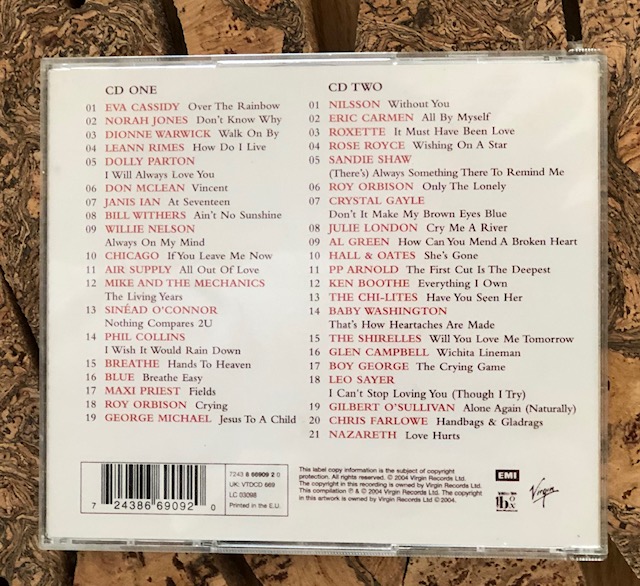
The soulful songs of Canadian singer Leonard Cohen resonated across the ‘60s and ‘70s, but I became a greater fan of Neil Diamond and prefer his version of Suzanne, together with ‘Stones’ and ‘Love on the Rocks’. Of the classical genre, Sibelius’s Valse Triste, Max Bruch’s Violin Concerto and of course Edward Elgar’s Cello concerto raise the hairs on the back of my neck. I am of a generation that will forever link this last work to the virtuoso Jacqueline D Pré, an extremely gifted player who was diagnosed with MS aged 28, and died in 1987 aged 42.

The eagle-eyed among my readers, well, certainly Colin (!), might have noticed that these scribbles are entitled soleful – which if it had been spelt soulful would have meant expressing deep and often sorrowful feeling. It may be considered a cliché but I love the idea that you can see someone’s soul through their eyes, particularly when, with face coverings over the nose and mouth, we are all looking for other indicators to read another’s empathy.

But if you had simply said soleful most people would have understood. The English language has many words which sound the same but mean something completely different. PC 33, way back in January 2015, was titled Pause, Pours and Paws; three words which sound the same but whose meaning is very different. Like whether and weather, sow and sew, there and their, draft and draught, course and coarse, patience and patients, current and currant, two and too and to and many more; others depend on how clearly you annunciate your words, like weir and where, or pier and peer and pear!

In some parts of the world the throwing of shoes is considered a form of protest. In the Arab world they are considered unclean and it’s customary not to show the sole of your own shoe when sitting down. At the Royal Military Academy we learnt how to clean shoes to perfection, including of course the underneath of the instep, so if you inadvertently showed it it was highly polished!

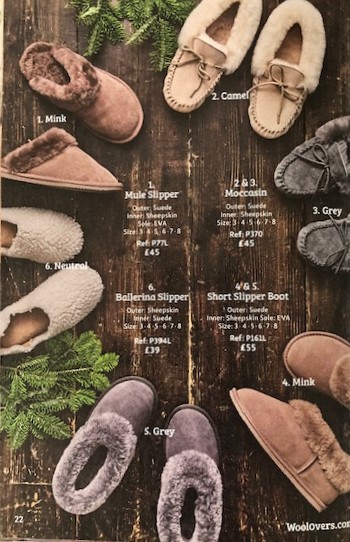
My mother-in-law flew to Portugal from Rio de Janiero last August and would normally have returned home to miss the European winter. Nothing is normal at the moment and she is still there, in Estoril. Recognising how difficult it can be to live in a cold climate when used to a hot one, I sent her some sheepskin-lined slippers on 8th December, innocently imagining they would get there for Christmas .…….. and before the end of the Brexit Transition Period which would end on 31st December. I used our local post office and even paid a little extra for them to be ‘signed for’.
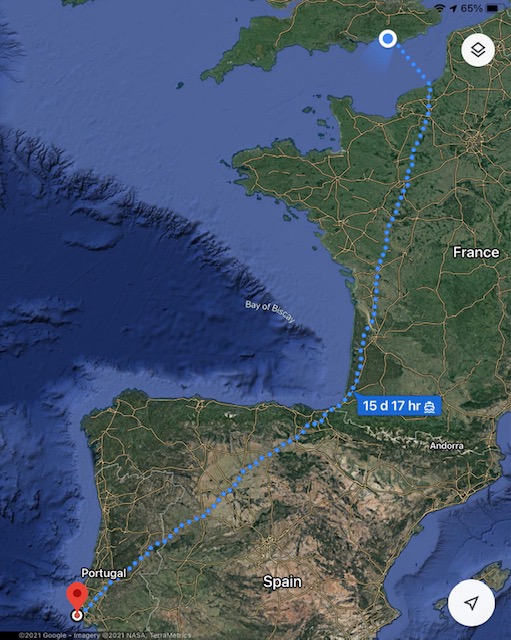
You can fly from London to Lisbon in one hour and 40 minutes (when we are allowed to!). Goggle Maps tells me I could drive it in just under 24 hours, without stops …… and they also suggest I could walk it in 15 ½ days. Personally I think this is a bit fanciful as it’s 1125 miles. Walking continually at 3mph you would cover 72 miles in a 24 hour period, so just over a fortnight would get you there – but one has to sleep!! Twenty five miles a day would be more sensible – so about six weeks (What an adventure that would be?)
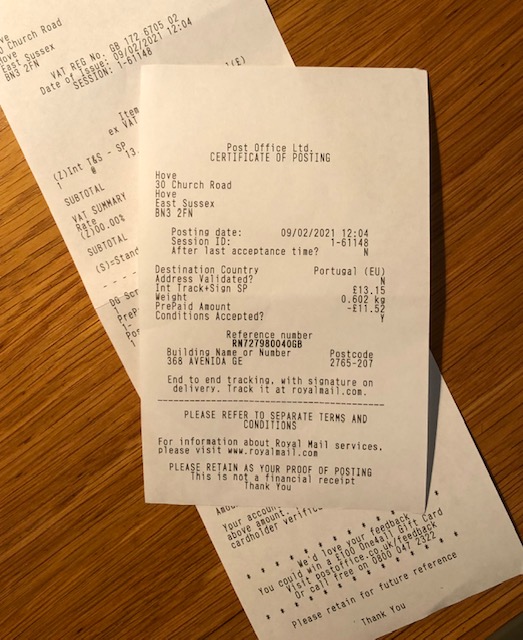
By the end of the year, there was no sign of them, or for that matter any other Christmas gifts that Celina had sent to her mother, brother and sister. A form obtained from the post office says you can claim – but they only pay 50%! We tracked the slippers; they arrived in Lisbon and delivery was attempted (?) on 20 January 2021. No card was left, no second attempt (unlike our local postie Steve!) …….. and the parcel was returned here to Hove. Back to square one; bit like snakes and ladders! After a degree of umming and ahhing I decided to send them back, for who knows when we might physically meet. So on 9th February off they went again.
Now of course they are caught in the post-Brexit nightmare that seems to be inflicting everything from British shellfish to our Performing Arts industry to the just-in-time import/export systems that had become second-place – so so sad that the UK voted to leave the European Union. My sister-in-law Camilla makes gorgeous cakes in Estoril and while we were part of the EU imported ingredients from the UK. Last week the local customs wanted to charge over 100% duty on her most recent order; it was returned.

We know the slippers have arrived in Lisbon: “Fill out the customs form and you might have to pay this or that but we are not sure so we can’t release them yet”. The weather is warming up so soon the need will dissipate ….. until October or November. I will keep you posted!

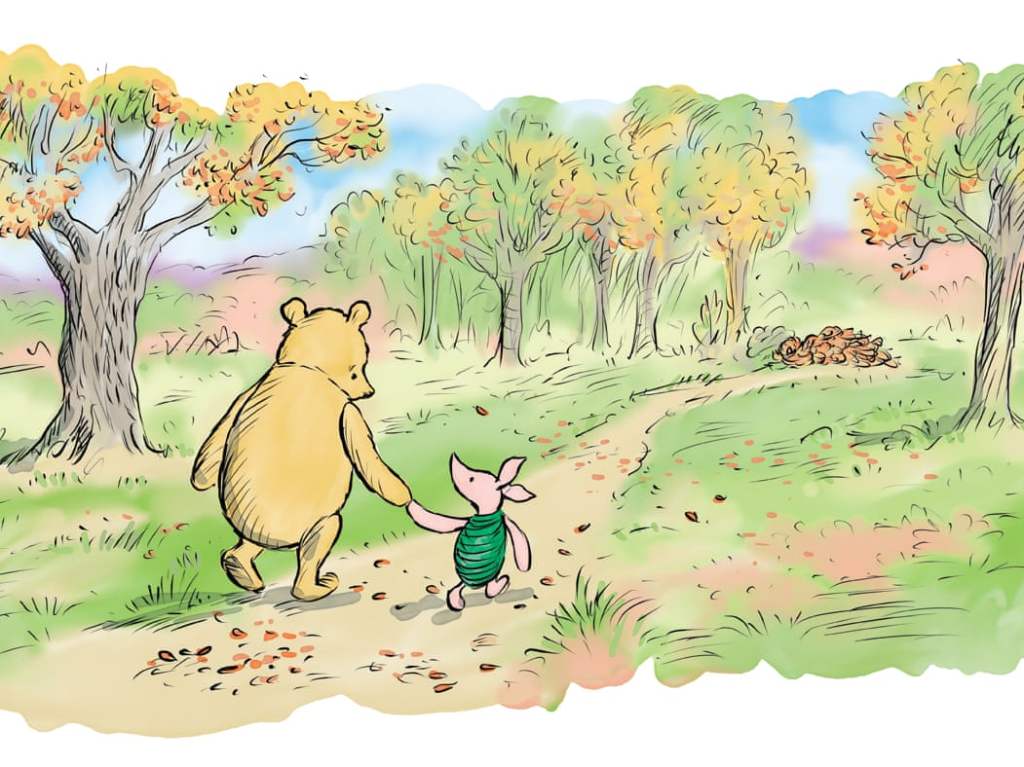
On the topic of footwear and feet, I was reminded of Pooh’s little ditty when I found I have ‘Covid Toes’:

“The more it snows, (tiddely pom) the more it goes (tiddely pom), the more it goes (tiddely pom), on snowing.

And nobody knows (tiddely pom) How cold my toes (tiddely pom) How cold my toes (tiddely pom) are growing.”
Sure as eggs are eggs these cold toes make the second part of the yoga pose Utkatasana, or Awkward Pose, even more difficult, getting up on one’s points when they feel cold and tingly!!
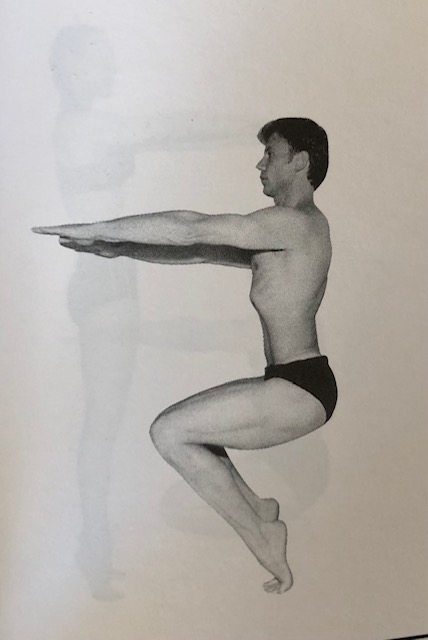
This taken from a book – I am not this good!!

Rereading the above, if I had walked to Estoril I would have probably worn out some soles but I could have personally delivered the slippers, and been able to have some lovely hugs that would have lifted my soul (sole?).

Richard 5th March 2021

PS I note that high heels (for women) are back in fashion. So good for your feet – not!

PC 219 It Doesn’t Take Much

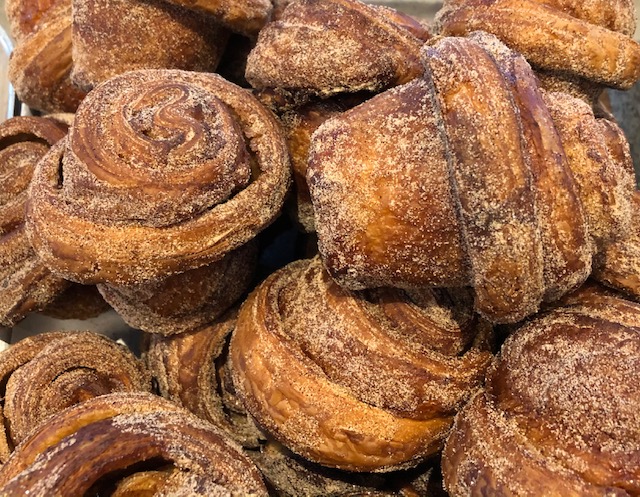
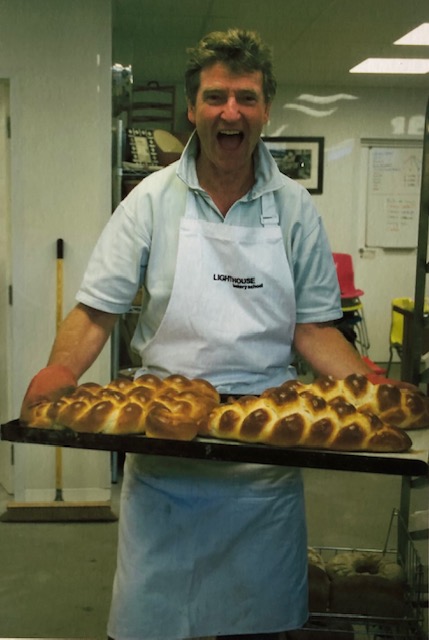
I have a very sweet tooth and find it easy to get into habits and repetitive behaviour without a thought. Whilst living just off Northcote Road in Battersea the local Lighthouse Bakery (Note 1) offered a little bun filled with Crème Anglaise – called a Dewy Bun, one on its own was not enough! It became a daily visit. Down here in Hove I have recently discovered a Cinnamon Bun (Note 2) in Gail’s, a successful purveyor of coffee, artisan breads, stickies and the like. They are soft in the centre with a crisp sugary cinnamon skin; a must as a morning coffee accompaniment.

Having a somewhat addictive personality, it didn’t take long for the Cinnamon bun to become a daily indulgence! Not immune to Lockdown Spread, I realised something had to change. The nudge of the arrival of the Christian festival of Lent last Wednesday provided that impetus. No more Cinnamon buns – well, at least not until 40 days have passed – it doesn’t take much, huh! Lent lasts for 40 days, the time Christ spent in the wilderness finding and testing himself; today many go on retreats to recharge, rethink or recover, although forty days would be too long. (Note 3) Today I sense many feel they have been forced to ‘find themselves’ during enforced periods of lockdown!

All sorts of thoughts flash through our minds, a million times a second, in the blink of an eye; if we are awake we may focus on one or two until one becomes dominant. Doesn’t take much for the thought to develop into a feeling, an emotion and sometimes that emotion is translated into action. In PC 214 ‘Saints and Sinners’, I wrote that it’s the translation of these emotions into acts that sometimes causes a problem. Clearly this was uppermost in the mind of Ayatollah Khamenei when he said this week that looking at an ‘uncovered’ (ie no hijab) woman in a film was fine as long as the viewer’s thoughts were not lustful. In the same breath he recommended that female cartoon characters should be depicted wearing the hijab as he was worried about the consequences of them not being so depicted. Who would have thought it?

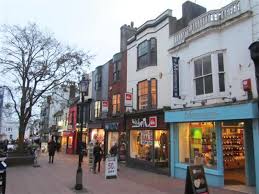
Closer to home, when our yoga studio was open Celina and I would take the bus into Brighton and walk down through the little lanes to Middle Street. Outside one of the shops was a homeless chap, there most days, week in, week out. Recognition of this chap, thoughts filtered through one’s own experiences, created a feeling of sympathy, of wanting to do something, wanting to be human. One could not not act! Into the nearest ‘take-away’: “Coffee, milk, three sugars and two sausage rolls please”. “That for the chap outside? He prefers semi-skimmed!” Always grateful, always polite. Doesn’t take much huh!

Duke Street in Brighton

I think for the most part our penal system works well, although I don’t believe that the automatic 50% reduction in one’s sentence with the remainder being spent on parole, is right. Fortunately HMG has recognised this and in the last Queen’s Speech said it would toughen sentences. In January 2016 I wrote a postcard titled Incarceration (PC 59) about someone we knew who had been sentenced in December 2014 to six years in prison. He came out in December 2017; we had dinner at The Ginger Pig and caught up with his plans, living within the restrictions of parole. Sadly it didn’t take long for him to be caught violating those conditions and he went back inside for another three years. Didn’t take much!!

Exaggeration seems to be apparent in much of life, in those who want to suggest a better/more wonderful/further than ever/beyond belief story that focuses on them. The feeding of the ‘Five Thousand’ is a good example. The idea that many many people were fed from an extremely small quantity of food is remarkable, although cynics might suggest that the atmosphere of excitement put off people’s hunger. But why 5000? Three thousand would surely have been enough to make the point? Was someone counting?

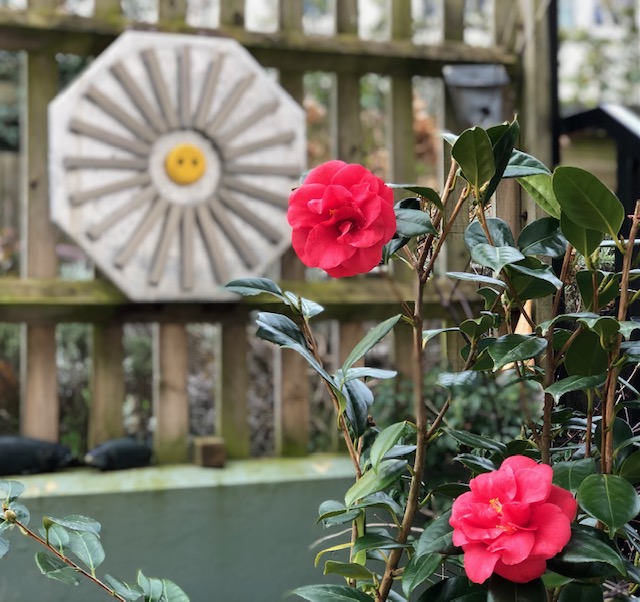
Here in the Northern Hemisphere we have passed the official start of Spring and are only a month away from when the sun is directly over the Equator. It doesn’t take much, longer daylight and milder temperatures, in daytime at least, for the Camellia to flower ……

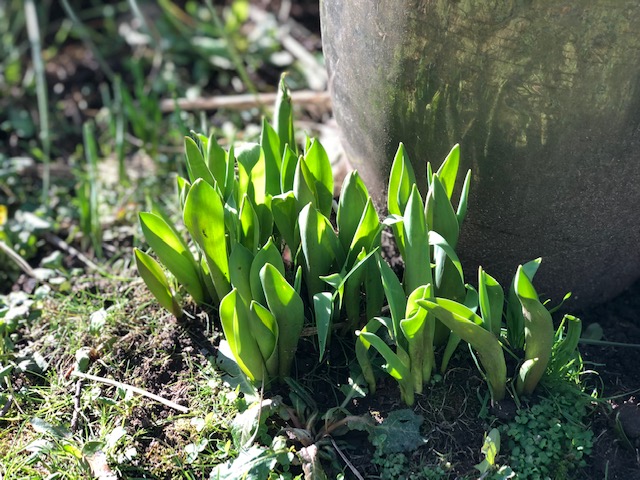
…… and for the Tulip bulbs to start pushing upwards into the light.

A couple of weeks ago I was putting the finishing touches to one of my postcards, adding a little here, rephrasing something there. I am really not sure what happened or what key I inadvertently pressed but the screen went blank. Doesn’t take much to think ‘Oh! No!’ (or other, more choice words!)  etc …… and when I switched the laptop back on and retrieved my draft postcard those most recent changes had disappeared into the ether. Watching TV crime dramas it now seems possible to retrieve virtually anything you have deleted, inadvertently or not, but I have only a surface knowledge of my laptop and its inner workings are like, oh! I don’t know, the surface of Mars! Maybe with Perseverance’s help I will know more in future.

Richard 26th February 2021

Note 1 Rachel and Liz ran this bakery with a passion and that showed in their produce. Sometime around 2005 they sold up and opened The Lighthouse Bakery & School near Bodium Castle. I went for a birthday treat one year. For health reasons, combined with the pandemic’s decimation of the hospitality industry and their customer base, they have sadly had to close.

Note 2 Started a new book this week, The Last Snow by Swedish author Stine Jackson. A few pages in and a lorry driver asks a girl: “Would you like a Cinnamon bun?”!!! Another of those coincidences!

Note 3 ‘Forty days’ was a common period in biblical stories; the time Moses spent on Mount Sinai, the time Elijah spent wandering around Mount Horeb and the length of the rainstorm that produced the great flood. And the Hebrew people ‘wandered’ for 40 years before reaching ‘the Promised Land’. Who chose that number?

PC 218 The Corner Shop

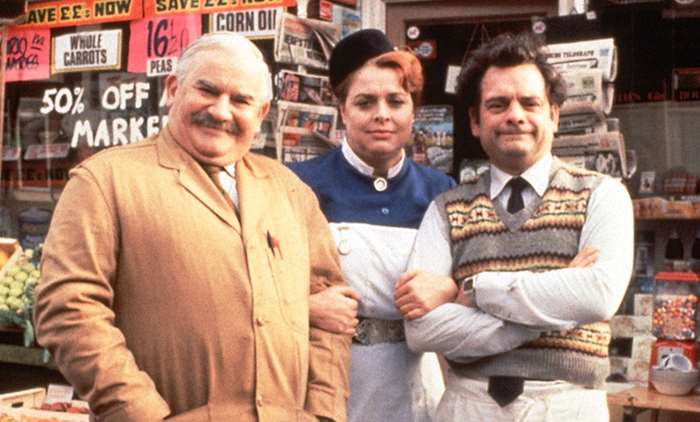
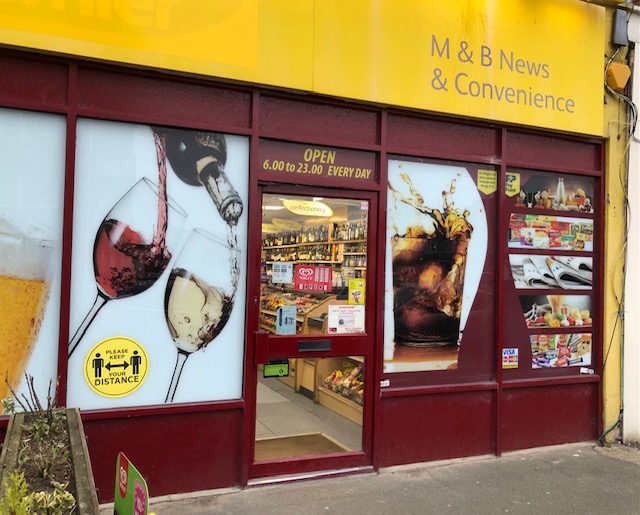
I don’t think this country is any different from anywhere else in terms of the availability of small convenience shops, the ‘7-11’s, signifying their opening hours from 7am to 11pm. We have some 46 thousand of them, accounting for turnover of about £40billion, about one-fifth of all grocery sales. Such is their popularity we even had a British TV sitcom called ‘Open All Hours’ which was broadcast for 12 years, from 1973 to 1985. The owner, Arkwright, played by Ronnie Barker, was a middle-aged miser with a stammer and a knack for selling. David Jason played his nephew Granville, the put-upon errand boy, who blamed his work schedule for his lacklustre social life. The setting was a small grocer’s shop in Balby, a suburb of Doncaster in South Yorkshire.

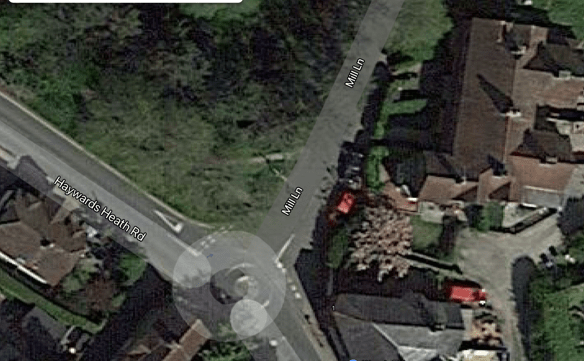
I thought for this PC I could trawl through a few memories of the ubiquitous ‘corner shop’. You may have read my postcard about going to visit the house my parents had owned in Balcombe, 18 miles north of Brighton from 1956-1989 (PC 58 Going Home)? The house lay on the edge of the village, down Mill Lane. At the top of the lane was Mrs Malthouse’s corner shop; it was actually on the corner so deserves the moniker!!

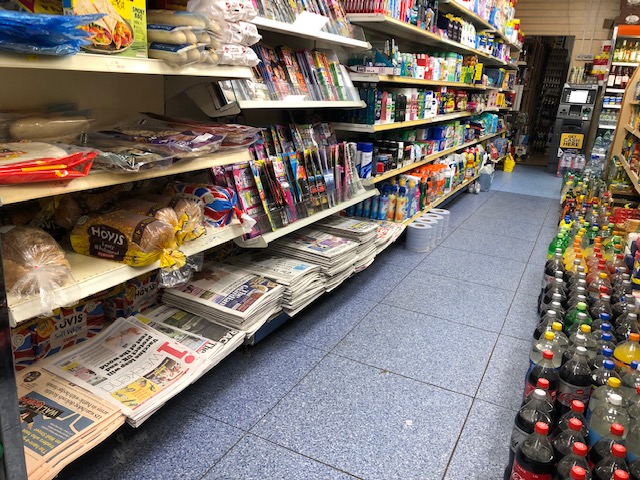
To a teenager Mrs Malthouse was old but in all probability under 60! She sold fruit and vegetables, both openly displayed in wooded slated crates, dry earth from potatoes dusting the floor beneath, confectionery of every sort, the staples like white bread, full fat milk and eggs, newspapers and magazines and of course cigarettes and alcohol. Additionally there was a chest freezer containing, among the frozen peas and fish fingers, ice creams. But like everyone who runs a convenience store, the real gem that had no price was the gossip. A simple “Morning Mrs Malthouse. How are you?” pressed the imaginary start button to the flow of gentle local news items.

On operation in Londonderry in Northern Ireland, we had our own ‘convenience store’ within the regimental compound – see PC 196.  Incongruously, between the Nissen huts that were used for accommodation was a caravan that sold everything you needed; they were run by a chap of Pakistani or Indian descent known as a Chogie Wallah.

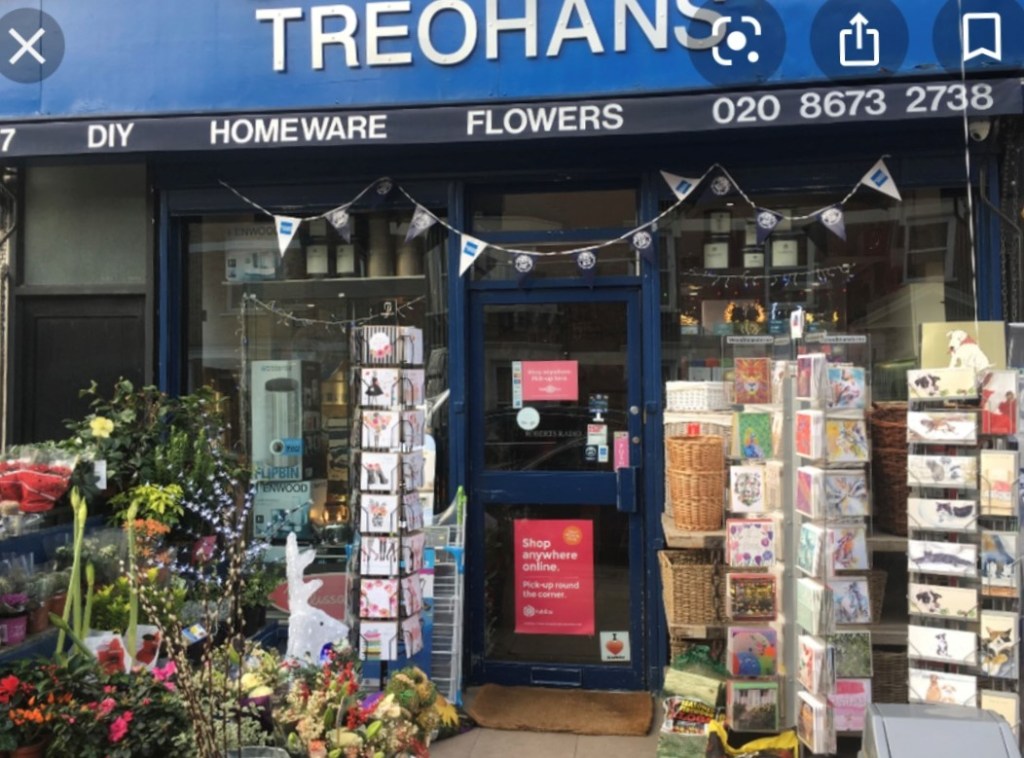
Moving to south London in 1987, around the corner from my flat in Cavendish Road, SW12 was the glorious little ‘village’, Abbeville Road (note 1). Whilst the ‘convenience store’ was only some 150m away, further down was Treohans. This was a real emporium that sold everything you might want, right then ……. and if they didn’t have some food ingredient you needed for a particular recipe, they always promised to get it the next day. Three generations of a Pakistani family ran it, and ran it very well, although the patriarch did little more than sit on a stool, leaning on his stick, and let his sons and daughters and their children do the running around. (Note 2)

Moving across Clapham Common to a house just off Northcote Road gave me access to another convenience store, this one run by Raj. Daily chit-chat was amusing, repetitive and often of a sparing nature – but I will remember him particularly for his advice on where to go for a good curry. “Don’t bother with these fancy expensive places on Northcote Road; go to Mirch Masala on Upper Tooting Road.” And he was right – Formica tables and little atmosphere but great food and cheap!!

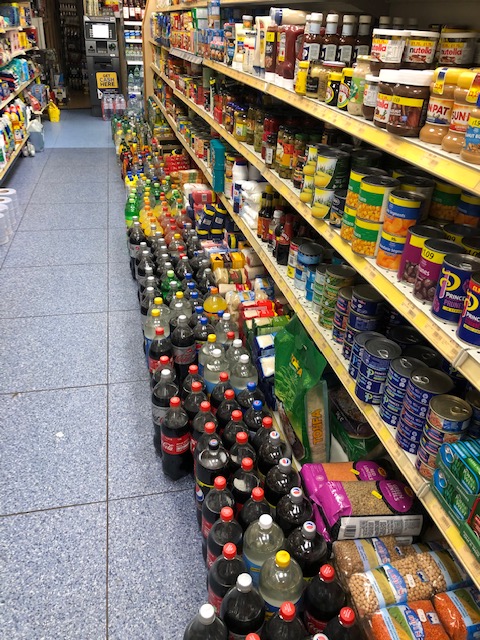
Down here in Hove there are less Indians and Pakistanis, more Syrians or Ethiopians or Turks running the convenience stores. Sam, a Coptic Christian originally from Ethiopia, ran the nearest store when we first moved here. Now he drives a taxi and is proud of his university-educated children. Fattey, the current owner, does both, that is runs the shop and drives a taxi but he’s opened later during lockdown and I now go to Rami’s.

The other morning I was in Rami’s collecting my daily copy of The Times when a grey-faced, grey-clothed thin woman dashed in. “Oi!” she shouted with a throaty voice that gave one a clue as to her addiction, “Have you got any B&H? (Benson & Hedges cigarettes). Rami had a quick look behind the cover of the cigarette cabinet (Note 3) and replied: “Sorry, sadly we have run out but we’ve got …..” and the woman legged it, muttering ‘f**k f**k f**k’!! Must have been desperate?

We have all got accustomed to being able to access any sort of video clip, mainly through YouTube. A recent video clip from a convenience shop of a woman who had some issues – about entitlement, about not wanting to wear a mask, about the price of alcohol, about a complete lack of respect for the shopkeeper, suffering the effects of lockdown and anything else that might have explained her behaviour, went viral.

In this still from a grainy in-store CCTV recording, you can just make out the red sweater and blue trousers of the woman on the right hand side, using her hands to sweep bottles of alcohol from the shelf – you can see the red wine lake on the floor!!

I was in Rami’s when Jim came up to the counter (he could have been Andy, Pete or Simon for all I knew). He’d bought a few things, sliced white bread, some margarine, a packet of sugar and a couple of bottles of spirits, and emptied a bag of loose coins that he must have raided from his coffee jar and said that’s £10 and you had better check it and here’s my card for the rest! I was surprised that he expected Rami to count it, or trust him; there must have been two hundred coins, shrapnel in some language, and Jim had made no effort to bag it! I didn’t want to appear nosy and simply glanced at Rami; he gave me a look and above his head I imagined a speech bubble: “geri zekali” – which I translated from his Turkish to be ‘retarded?’!  

All of the above are simple superficial observations. Dig a little deeper and you open the floodgates to supermarket competition, squeezed margins, very long hours for little reward and stuck with 25 year leases with no opt-out clauses. I have a genuine affection for these little shopkeepers, for without them the high street would be a dull place.    

Richard 19th February 2021

PS     Francisquinha should have been in rehab this week (see PC 217) but instead decided to start a vigil outside the King Edward VII hospital in London where the 99 year old Duke of Edinburgh is ‘under observation’.

Note 1. The local streets must have been named by someone French – Abbeville Road, Bonneville Gardens, Narbonne Avenue, Deauville Court, Trouville Road!!

Note 2. Treohan is an Irish name but you find thousands of English, Scottish and Irish names woven into the EuroAsian fabric of both India and Pakistan. For example Alistair McGowan, the UK impressionist and comedian, thought he had Scottish or Irish roots, but researchers for the BBC Programme ‘Who Do You Think You Are?’ found his roots in India …… and in one village over fifteen families with the surname McGowan.

Note 3. From April 2012 all cigarettes for sale must be hidden from view, in an effort to discourage under-age smoking.

PC 217 My Week Francisquinha*

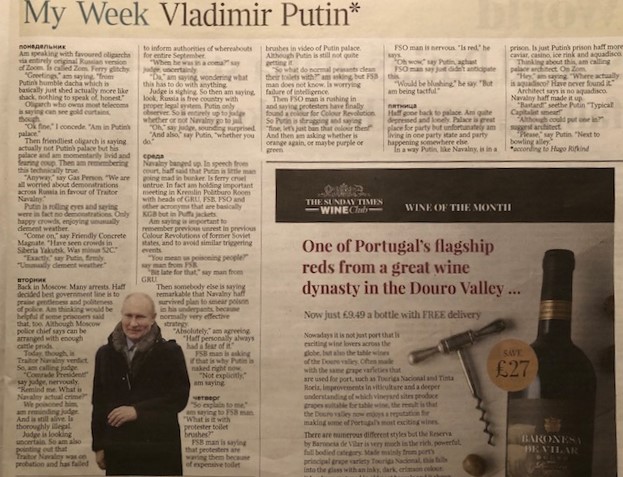
There’s a regular feature in the Saturday edition of The Times called “My Week …….” with an asterisk saying the article is ‘written according to Hugo Rifkind’ and is a parody of the particular individual’s week. Those politicians who have been lucky enough to have been lampooned by Rifkind recently include Joe Biden (23 Jan 21) Boris Johnson (30 Jan 21) and Vladimir Putin (06 Feb 21).

For example, Putin’s Monday (in this case the word is written in Cyrillic script!) starts ‘Am speaking with favourite oligarchs via entirely original Russian version of Zoom. Is called Zom. Ferry glitch.’ For those of you unfamiliar with the word ‘lampoon’ – it’s a verb meaning to publically criticise someone or something by using ridicule, irony or sarcasm. In a world where currently the news is all too serious, it’s a welcome levity.

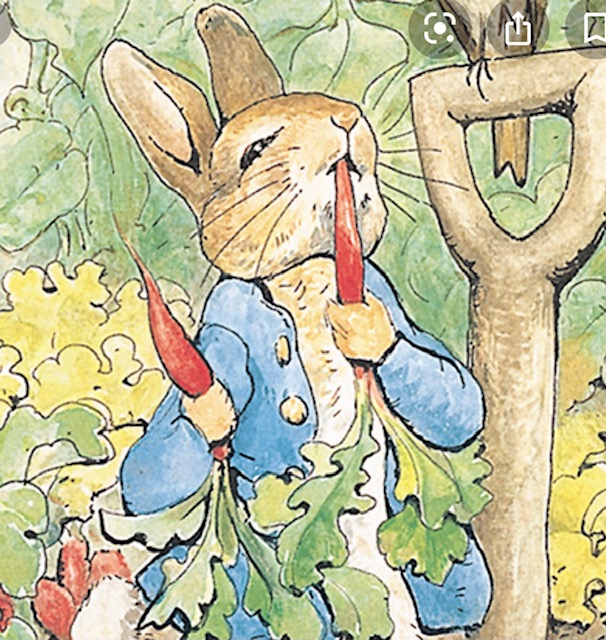
During these days of vaguely enforced lockdown my imagination goes into overdrive (Note 1) and this week it’s all about giving life to an inanimate object; a little like Shirley Valentine talking to the wall in the film of the same name. In my case I think it’s easier to think of a bunny rabbit talking back than a wall ….. but maybe I am biased?

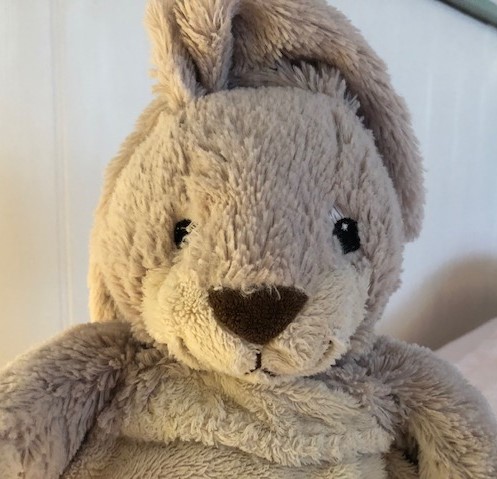
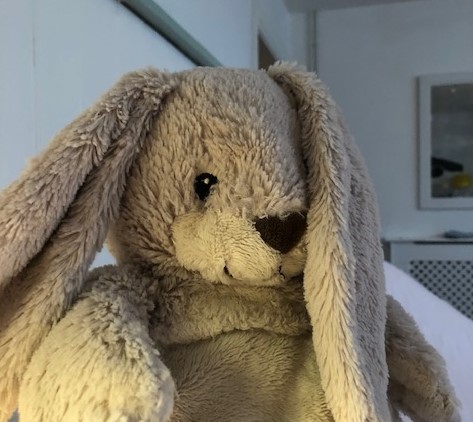
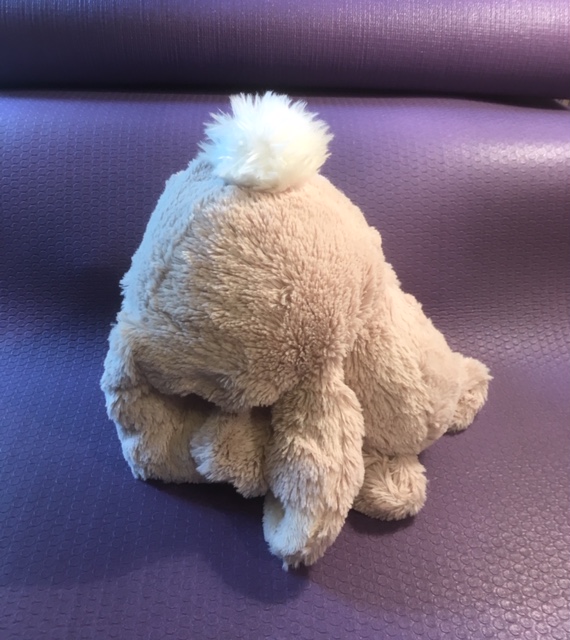
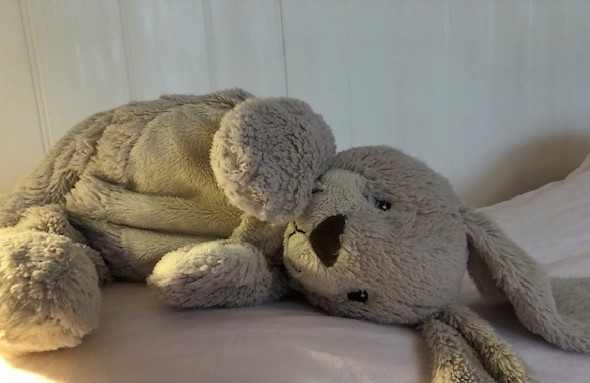
My regular readers may recognise the name Francisquinha, the subject of PC 172. I scribbled about our relationships with stuffed animals over the decades and today is no different. In fact she was reading over my shoulder the “My Week …..” piece last Saturday and suggested she could be the subject. Within a second she had twitted Hugo Rifkind and agreed a price; she didn’t tell me what it was as she knows I know she has a number of debts to clear.

Monday     “Je m’appelle Francisquinha Chantelet. À l’origine mes ancêtres venaient de la region de Pau dans le sud oust de la France. Ah! Excusez moi! Je dois parler en anglais …….mais we ended up here God knows when, certainly over two hundred years ago. It was probably during the French Revolution; think some stowed away on a ship to England. ‘God Save The Queen’ I say rather than ‘Vive La Republique!’Particularly with that Macron in charge – reminds me of macaroni cheese. I know it’s not done to let you know my age, but I am a proud 6 – about 60 in your years. It’s the start of the week so I get my claws done – currently I am into glossy pink shellac, goes well with my complexion.

I was looking over an article The Boss was reading about Myxomatosis and I could feel my little body begin to shake. It says in 1953 the viral disease Myxomatosis broke out here for the first time. It killed tens of millions of my families – we are all interrelated so that’s how I think of them – family. It’s written in a cruel way “Would the authorities allow the disease to exterminate such a destructive animal?” Moi! Destructive? Non! I am sweet and endearing and used the world over as a symbol of cuddleness, tenderness, cuteness and any other ‘ness’s you want to add. Bring them on.

Fortunately the boss sensed my discomfort and held me close to his chest. By the way I do recognise that you humans are going through a similar pandemic as we did in the 1950s; you have my sympathy.

It’s Tuesday so I get the weekly edition of The Warren, a glossy magazine full of salacious gossip and untrue stories about those of my race who think they are celebrities. Huh! Nothing famous about them, save for the odd nip and tuck to lift an ear or make a bobtail more appealing. Of course no one can match my beauty, so I read these tales with a smug expression and if they knew I have a removable tummy I can microwave, which gives me a very warm tummy, I would be even more popular. Big headed? Moi? Non!

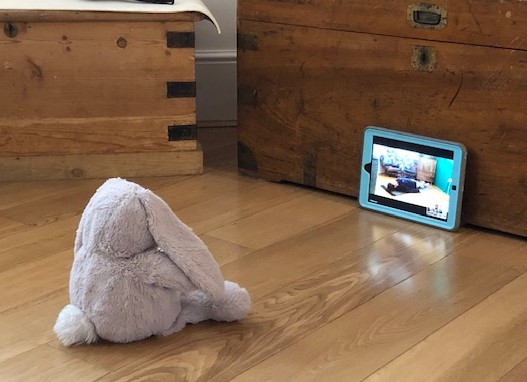
Wednesday French toast for breakfast. I am with my owners for the 1000 yoga class. I still can’t do many of the asansas but I sit watching the screen and try to look interested.

I am getting quite a fan club as my cute smile and bright eyes warm the participants’ hearts. My Sasangasana (Note 2) posture is of course my favourite so I will demonstrate it pour vous.

Thursday I get stuck into the daily soap opera on Rabbit TV. You probably don’t know, why should you, that I have a mini iPad. It’s pink! I can hop about between the three channels – one is a serious one showing educational programmes, about reproduction for instance; we all love sex but no one I know watches it, hence that saying “breeding like rabbits” (Note 3). The one I watch has wall-to-wall soaps  ……. endless mindless drivel, which I love.

Friday is an exciting day as I am allowed bucks fizz for breakfast; this accompanies croissant with confiture – jam to you English but I love the word confiture as it’s a nod to my heritage. Very occasionally the champagne is not Tattinger. Zut Alors! Don’t they realise there are standards? I normally go out for the evening with Mumu, a real, live, large Black & White cat who lives next door. Mumu is female so we do a little mindless vagina rubbing, knowing nothing serious will come of it – oh! and we sink a few cocktails; I do love her. (Note 4)

Saturday

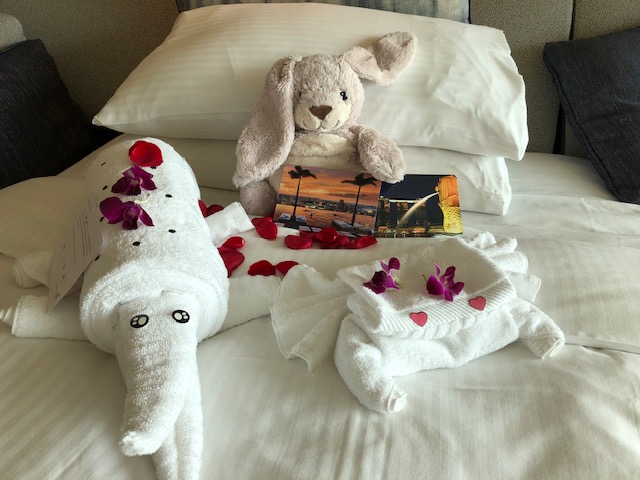
Lockdown has meant my travels have been really curtailed so far this year. You may remember I went to Singapore (PC 168) at the end of 2019 and stayed in the Marina Bay Sands Hotel. Flashed my eyes, spun my ears around, and got an upgrade!!

Sunday

Last night I had food which makes me fart; there seemed to be lots of kale and cauliflower. It’s a myth that rabbits only eat carrots, you know. Anyway my farts are rather silent and sound like a gentle ‘Poof!  Poof!’Sadly they are deadly! Not popular as I sleep between my owners.

A Bientot. Adieu!”

Then it’s the start of a new week, with all the excitement that that currently holds? For Francisquinha – see PPS below.

Richard 12th February 2021

PS Thanks to Hugo Rifkind for the inspiration for this PC.

PPS Francisquinha will be away next week in rehab.

PPPS I was sixteen when I met a girl living near boarding school, whose father breed rabbits. They were enormous and expensive– and for about nine months two of us had some hutches behind the Biology Laboratories – looking after about five.

Note 1 A expensive car’s manual gearbox might have an ‘extra’ gear, an overdrive, which you could select for motorway driving, for instance.

Note 2 Sasangasana posture is known as Rabbit Pose.

Note 3 To reproduce …… ‘they drank like fishes and bred like rabbits’. A further extension is ‘breeding like Catholic rabbits’. As the Catholic Church forbids any form of birth control, the ‘joke’ implied is that Catholic rabbits will breed more than non-Catholic ones.

Note 4. I think Francisquinha had read that birds simply rub their sexual areas together to mate!!

PC 216 Spreading and Sharing

I suspect we have all read or heard the lines about ‘spreading my dreams’ and ‘treading softly’? They come from the second part of the Irish poet WB Yeats’ poem “Aedh Wishes for the Cloths of Heaven” and are:

“I have spread my dreams under your feet; tread softly because you tread on my dreams.”

What I hadn’t understood was that the speaker was only able to imagine his dreams as “heavens’ embroidered cloths, enwrought with golden and silver light, the blue and the dim and the dark cloths of night and light and the half-light” were out of reach as they, he or she, were poor. Personally I think the symbolism of spreading dreams works better than spreading an actual article like a cloth.

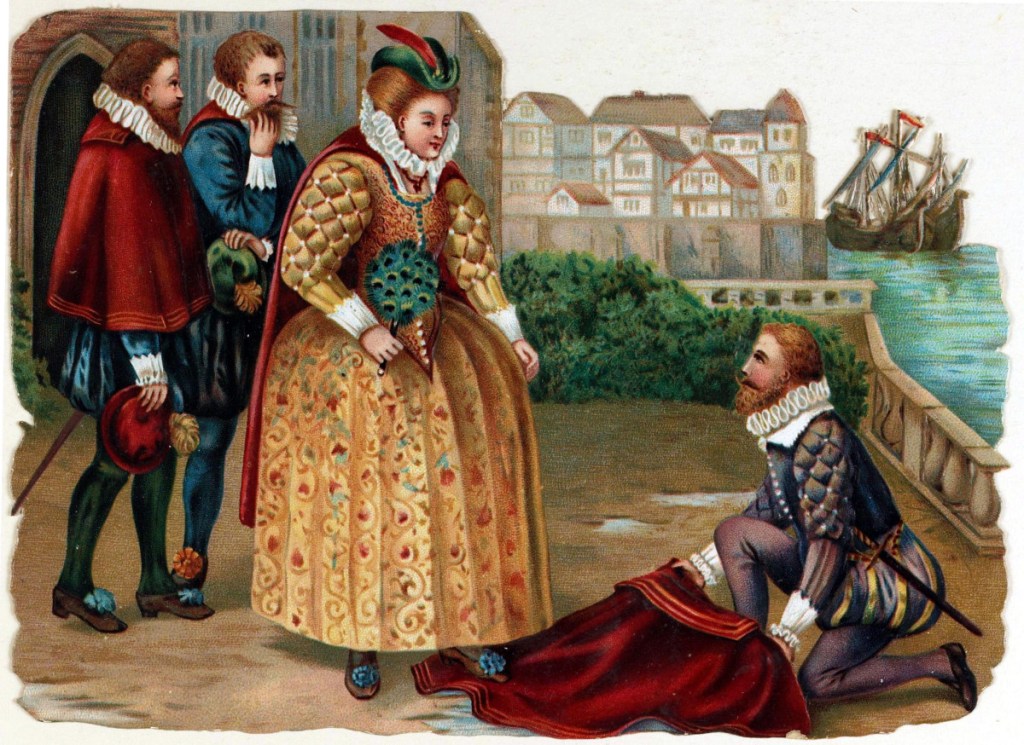
…….. but then my little brain goes ‘ping’ and ‘What about Sir Walter Raleigh spreading his cloak over a puddle so that Queen Elizabeth 1 wouldn’t get her feet wet?’ The image is probably one from a child’s history book!! As with much of exhibitionists’ behaviour, truth sometimes gets bulldozed for the story (Note 1)

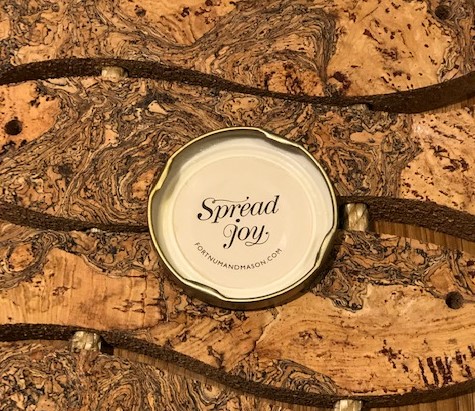
I was scribbling bits of this PC around teatime one afternoon this week and beside my laptop was a cup of tea, a couple of pieces of toast and an open jar of Fortnum & Mason’s Lemon Curd (Note 2) from the ‘fridge. You know how it is; you open a new jar of jam, or marmalade, or chutney or some other goody and read ‘consume within 4 weeks’ – so that forces you to have tea and toast until the jar’s contents are finished! But in this case, imagine my surprise when, inside the lid lying upturned on the table, it says ‘Spread Joy’ and I am writing a PC about spreading!!

Of course spreading in a confitural sense is more often associated with either Peanut Butter or Nutella – neither a favourite of mine but for some an essential daily ingestion. My habit of tea & toast had given me, naturally, Lockdown Spread (my waist measurement’s going up weekly!!)

Since the advent of the internet and development of social media, the pressure to ‘share’ one’s thoughts, one’s experiences, one’s photographs, one’s bling, one’s view about this or that, as that view’s the right view, for some is constant and addictive. Some years ago I suggestion to a friend over lunch she was addicted to Facebook. Wow! If I had put my hand in a wasp’s nest I might have got less of a reaction; observations can often be true no matter how unpalatable they are.

When you use the word ‘spread’ it’s a simple extrapolation to spreader and then the association with muck! And these days you might argue that a lot of disinformation is just that, muck. Today I read that Majorie Taylor Greene has been stripped of her committee appointments in the American House of Representatives after numerous posts about QAnon, the Pentagon 9/11 attack and for suggesting some school shootings were hoaxes. “I was allowed to believe things that weren’t true.” she said in an apology. Sadly muck sticks!

I thought I could share the following, printed in a serious newspaper, and quoting a 30-something PR Executive of ‘Caribbean heritage’: “Too little is known about the side effects of covid vaccines (for me) to take the risk?” So she’s happy to cross the road, having no idea of the mental or physical state of vehicles’ drivers but not happy to take a vaccine that statistically is safe? She went on: “Since the start of the pandemic we’ve seen the news that Covid is higher amongst black people but nothing was done about it.” I read this a number of times, this claim that ‘nothing was done about it’ and now could write a postcard particularly about what could and should have been done!

Observing the internal conflicts across the USA over the last three months, there were news stories, true or not, that one was able to share, often at the click of a mouse, without honestly wondering whether what you are sharing is real or not. A good example was ex-President Trump, who claimed that the election was stolen from him, spreading muck, without any attempt or need to explain or produce evidence.

The spreaders of misinformation have a lot to answer. These idiots claim that some of the Covid vaccines contain alcohol, or even porcine substances or beef, leaving those in South Asian or Islamic communities wary. (Note 3) Oh! And that the vaccine can change your DNA. Here in the UK there is a distrust of Government in BAME communities, exemplified by the comments about vaccine side effects above. As an oft-quoted recent example is the Grenfell Tower fire disaster of 2017, when 72 individuals, mainly BAME, died when fire swept through the 24 storey block of flats. ‘The Government’, in this case the London Fire Brigade, told residents to ‘stay put; we will rescue you’; they couldn’t! So now the NHS and its vaccine programme are tainted by association!

During the Second World War there was a growing awareness that talking too much or too freely, passing on gossip, was potentially dangerous ….. “Walls have ears!” Communications were very basic and radio traffic prone to interference and distortions. Often information was relayed; in one oft-quoted apocryphal example the original message “Send reinforcements! We’re going to advance.” was eventually received as “Send three and fourpence; we’re going to a dance.” (Three (shillings) and four pence 3s 4d)

The other day a doctor was ranting and raving on Facebook about some aspect of the current government’s policy that they thought had been a complete failure and for some reason tied the policy to the wealthy and privileged. For whatever reason they then asked for someone to develop a vaccine that would kill white, heterosexual wealthy males over 60. I said that I was almost in that category (define wealthy?!) so asked her whether she meant me. Oh! No! Just the politicians. But Mr Dimwitt or Ms Not-So-Bright would have taken it as gospel, particularly as a doctor was writing it and started banging the dustbin lids to encourage its development.

And there’s me writing the word ‘gospel’ as in ‘it must be true’ …….. ‘to believe something without doubting it at all’ …….. when we all know that the Christian gospels were written some forty years after Christ’s death and so aren’t necessarily true in their exact meaning!

Just needed to share these thoughts …….

Richard 5th February 2021

Note 1 Was it Sir Walter Raleigh, or Sir Francis Drake? Both seem to have made the gesture. For the latter, his ship The Golden Hind was moored on The Thames at Deptford so he could receive his knighthood in 1581from his queen. She arrived at the top of some steps where there were large puddles. Drake spread his cloak over the rainwater so Queen Elizabeth’s feet would remain dry; in doing so he marked his place in history as a gentleman. Those steps are now known as Drake’s Steps.  ….. and not Raleigh Steps!!

Note 2 Fortnum & Mason on London’s Piccadilly is known as The Queen’s Grocer

Note 3 One of the quoted reasons for the 1857 Indian Mutiny was that the grease used for the cartridges in a new rifle was either of pork origin, offensive to Muslims, or tallow (cow fat), offensive to Hindus.

PC 215 Almost A Disaster – 1970 something!

This sailing story has no names, neither the skipper nor of the four other crew members, apart from me, obviously, and not the name of the yacht. I think what happened, and what might have happened, was something everyone wanted to put behind them. How could we have …..?

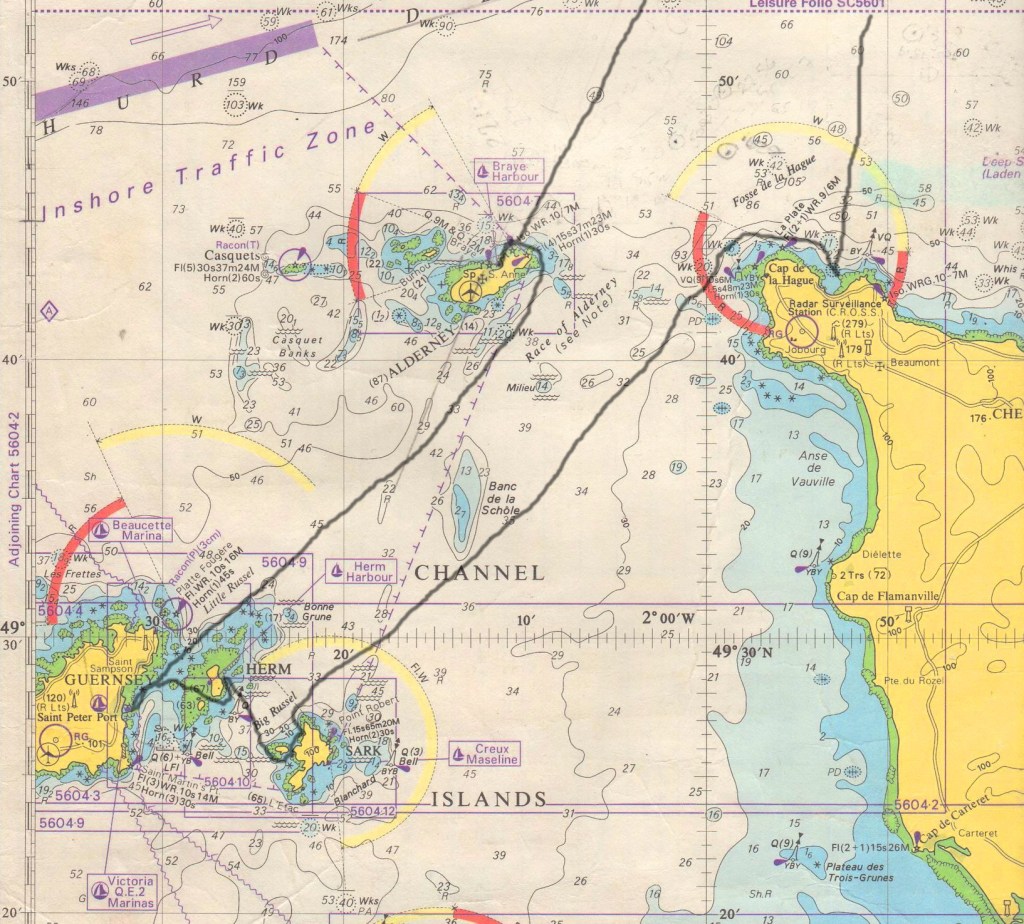
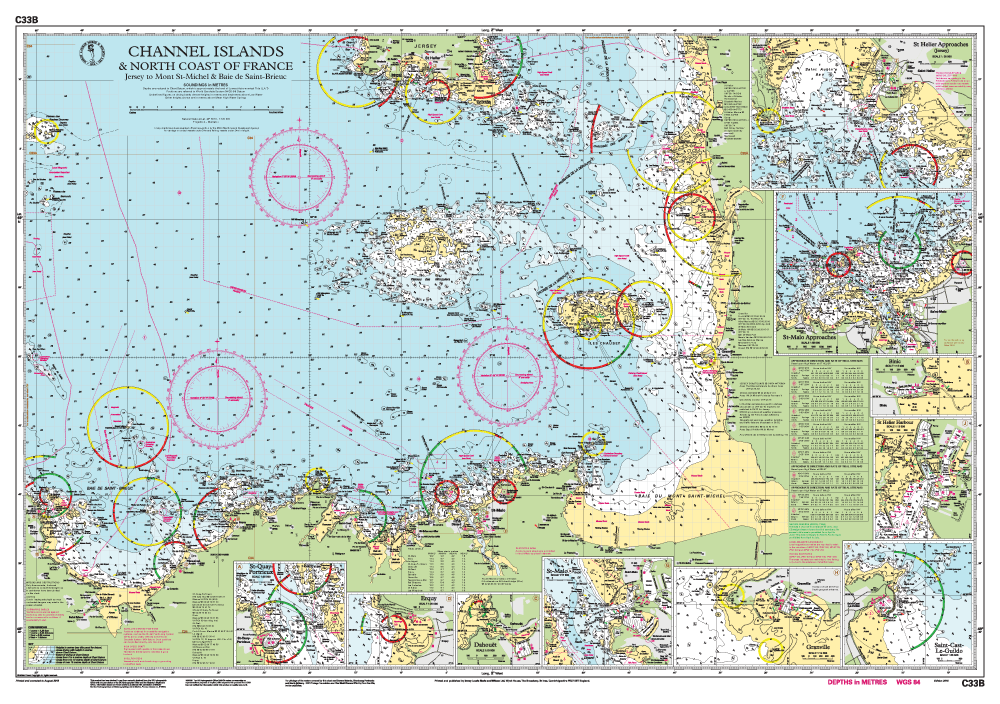
The seas around The Channel Islands are a great cruising area within easy reach of the English shores; Cherbourg for instance is about 12 hours sailing from Portsmouth. The islands lie around the north west corner of the Cherbourg Peninsula – the large islands of Guernsey and Jersey and the smaller Alderney, Sark and Herm. They are Crown Dependencies, not part of the United Kingdom and with their own independent administrations; their inhabitants are British.

From west to east, Guernsey, Herm, Sark and Alderney. Jersey is just off this chart to the south. The Cherbourg Peninsula lies to the east.

After an uneventful sail to Cherbourg from the Solent and an overnight stay to enjoy the moule mariniere, we set off for Guernsey. Between the Cherbourg Peninsula and Alderney the tides run extremely quickly due to the shape and depth of the seabed. This ‘Race’ can run at over 9 knots in a northerly direction, slightly less for a southerly set; breaking waves and fierce currents are normal characteristics. If your yacht has a theoretical hull speed of 6-7 knots, you could be sailing forward but going backwards relative to the ground!! 

Overfalls make for a rough passage through The Alderney Race

We left Guernsey for a day’s sail to St Malo on the French coast; the weather forecast was good but with light winds and low visibility.

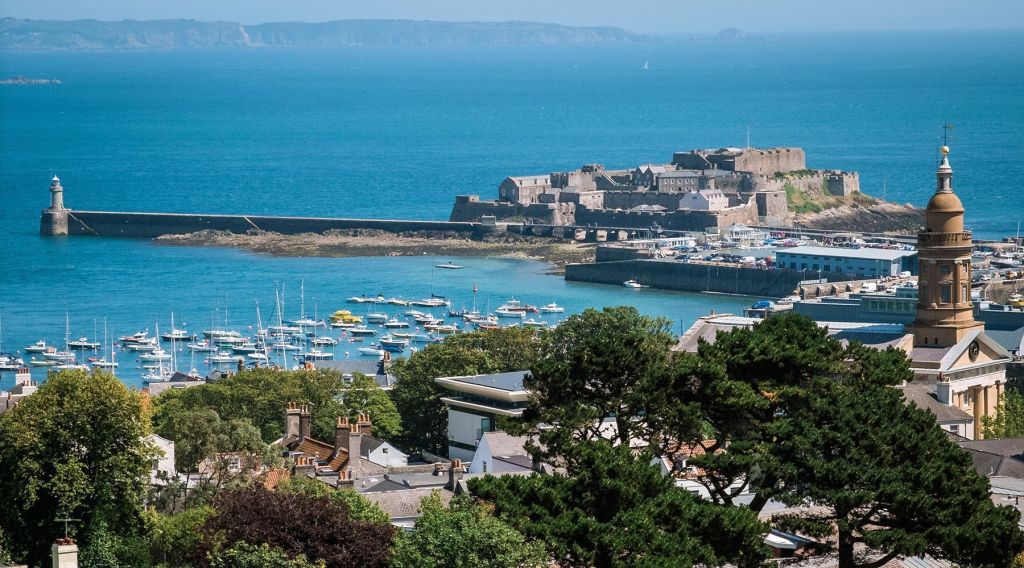
St Peter’s Port Guernsey

Our course would take us to the west of both the island of Jersey and also a large patch of rocks that dried out at low water to its south, The Minquiers. This was marked by a number of buoys.

The Minquiers at low water

We had set a full main and the yacht’s large Genoa. The issue we all realise with large headsails is that forward vision is blanked by the canvas. In this case the clew of the Genoa came aft, almost to the cockpit winches. The wind was blowing from the south east so the sails were set over the starboard side and winched in tight ….. but not too tight!

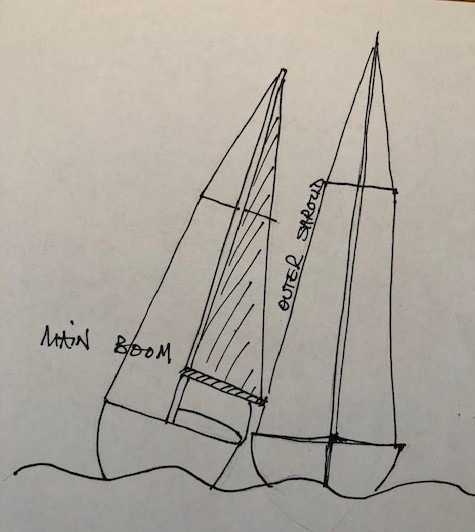
For those not that knowledgeable about yacht rigging, the mast is generally stepped through the deck to the keel. Above deck wires run from the masthead fore and aft (forestay and backstay) to the deck and sidewards to the widest part of the hull. These latter stays are called shrouds and are kept away from the mast by spreaders. I haven’t been able to determine why they are called shrouds as they are far removed from a cloth in which to wrap a corpse!!

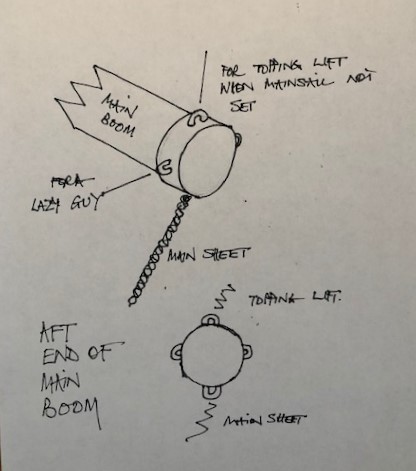
The mainsail runs from a horizontal boom to the masthead, the sail attached to the mast with moveable runners. The aft end of the boom can be supported when not under sail by a topping lift, clipped into an alloy forged-ring. The sheets that control the mainsail are also clipped onto this fitting.

The morning progressed …….

An example of poor visibility

Sailing in poor visibility can be tricky! Often during racing a crewman is positioned up in the pulpit (on the bow) scanning the sea for other yachts but generally when cruising an occasional glimpse under the sails or from the bow is deemed adequate. Looking for a small buoy or another yacht in misty conditions can be tiring on the eye, particularly when there’s a weak sun reflecting off the sea. The trend to larger and larger, and lower cut, foresails has increased the need for greater vigilance.

So often in life a chance ‘wrong place – wrong time’ type of event determine one’s future …… or by the slenderest of margins you realise that today it’s not your time! (Note 1)

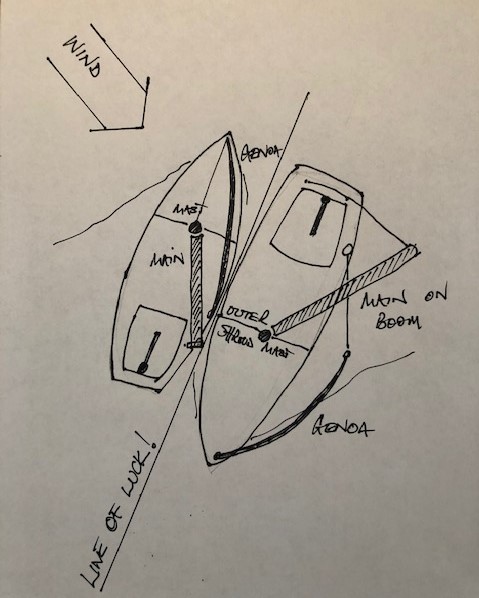
The yacht’s Genoa is blanking off the view to starboard and the mainsail’s winched in so that the aft end of the boom is just over the side of the boat, maybe by a metre or so. We must have been doing 4 knots – so covering about 125m every minute; visibility was probably about 500m. The yacht has a slight cant to leeward. I join the skipper below to make some coffees and mid-morning snacks, leaving the other three sailing the yacht.

Suddenly there’s a crack/thump ……. I look up through the companionway to see another yacht metres away sailing in the opposite direction …….. the man on the tiller shouting something like “You fool! You bloody fool!” I still remember him today, stunned by what had just not happened/happened, showing typical British sangfroid.

Rushing up on deck with the skipper close on my heels it was very clear how lucky we had been. In the middle of the sea to the west of The Minquiers, some ten miles south of Jersey, with acres of open water around us, the course of our yacht has intersected with someone else’s. But just how close our hulls had come to smashing in to one other became clear when we determined what had touched exactly. (Note 2)

The wire forming his starboard lower shroud had hit the right hand little ringlet on the outside of the metal cap on the aft end of our mainsail boom. Being an aluminium casting, the force had taken it clean off and with it the whole cap and the mainsheet block.

It took us no time to replace the end cap and continue towards St Malo; the little ring that was broken was not essential. We tried in the city to get another one made but soon realised this would need to be ordered from a boatyard in the UK. After two days in St Malo …….

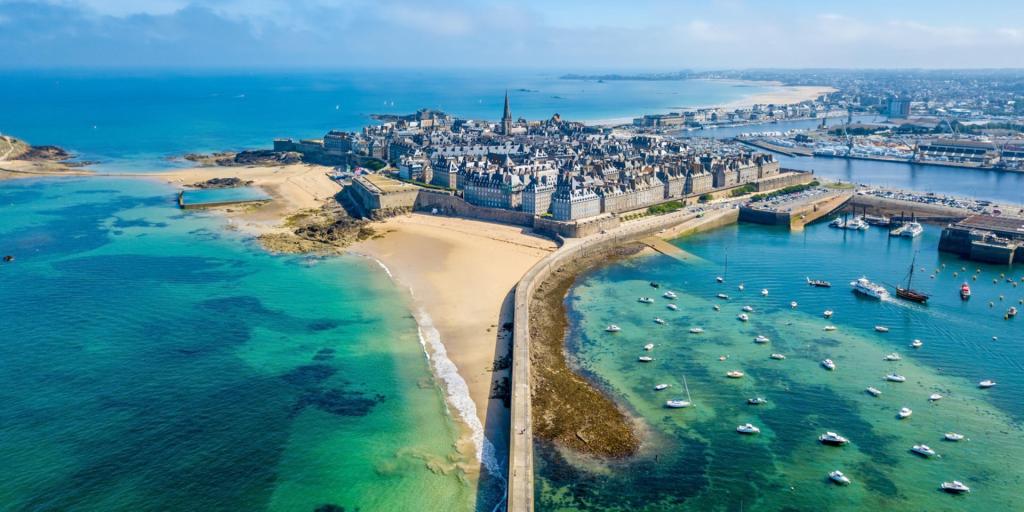
Aerial view of the beautiful city of Saint Malo in Brittany, France

………. made our way back to The Solent. We caught the edge of a gale off The Needles and came creaming in through the narrows by Hurst Castle under a storm Jib and no mainsail and sailed up to Bosham. A few days later we tied up in our home marina after an eventful cruise!

Richard 29th January 2021

PS If you are in the area, visiting Mount St Michael for instance, go and see St Malo

This chart show Jersey at the top, The Minquiers and St Malo at the bottom. Mount St Michael is in the right hand bottom corner.

If you can’t go, read the very atmospheric novel ‘All the Light We Cannot See’ by Anthony Doerr, about a blind French girl and a young German boy; set in World War Two in St Malo.

Note 1 In 1991 I was a passenger in a car in rush hour traffic in Canberra, Australia. Ahead an overtaking car was approaching at speed; a head-on collision seemed inevitable. We went one way, they chose the other and the only damage was our passenger-side mirror which was ripped off.

Note 2 The ‘right of way’ when sailing is given to the yacht whose sails are over the port side ie with the wind over the starboard side. We were completely at fault – although the other yacht didn’t see us either!

PC 214 Saints & Sinners

In the United States on November 5th last year, the results of their Presidential Election became clear. Most Americans believe they are the focus of the world, so some news channels factually reported that the BBC Evening News showed fireworks displays over London. Surely this was a little over the top in recognition of the Presidential Election result? Fortunately viewers flooded the switchboards with comments that in the UK we celebrate Guy Fawkes’ Night on 5th November ….. with fireworks. Whilst there is no reason to export this particular festival, we do seem to have imported an American one, Halloween, with all its attendant party-focus, ‘trick or treat?’ and the association with summoning the dead.

In fact Halloween is short for All Hallows’ Eve and a ‘hallow’ is a saint. So it should be considered as a time of remembrance of individuals whose life or actions were an inspiration and who ‘made a difference’. But all individuals are flawed and have times of both greatness and lapses; what counts is being honest about both – ‘so on balance he or she was ….. ?’ Got me thinking about saints and the opposite pairing, sinners. Bit like those themed parties in the 70s Saints & Sinners, Vicars & Tarts etc.

Sadly, fundamental Christians are taught to believe that all of humanity is born with a built-in urge to do bad things! They believe that ‘original sin’ stems from Adam & Eve’s disobedience to God. The idea of the poor innocent baby ‘born with original sin’? Give me a break! The little mite’s taken its first breath and already it has been infected by the sins of previous generations; if it develops a tendency to commit sinful acts so be it, but give it a chance!

Ah! ‘Sinful Acts’! My last PC focused in part on the number 7 and Simon reminded me there are seven deadly sins. Reading them today you wonder how they could have become such an important part of Christian belief; pride, greed, lust, envy, gluttony, wrath and sloth. I guess the problem lies in the translation of these feelings into inappropriate actions. Or do they really believe that thinking in an envious way, for instance, is in itself a sinful act? Only if you tell someone what you’re thinking maybe? Of course Christians have their own set of guidelines in the Ten Commandments, the urging ‘Thou shalt not ……’. So if you can’t ……. what could you do to be saintly?

A Biblical saintly group

I read that if you live in the following way – putting God first, forming a plan for your life, clearing out distractions, living modestly, being humble, avoiding temptation, leaning on friends and family and living in the moment – you could be on the right path! A recent example of the making of a saint is Cardinal John Newman 1801-1890 who, after a period as an Anglican priest, at the age of 44 joined the Catholic Church. He became a cardinal and in October 2019 was declared a saint by Pope Francis; the first ‘saint’ who wasn’t martyred in 500 years. So Catholics have made him a saint, but he admitted to being gay, something the church doesn’t accept! So does that make him a sinner as well? Certainly some Protestants labelled him a sinner for having joined the other side! I think it makes him human. Having never written about saints before, they are obviously a bit like buses, definitely in vogue! (Note 2)

Neither the Catholics nor Protestant churches have an unblemished record, a saintly history. Most recently the Irish State’s report on the way children of unmarried woman were treated over decades is an absolute sin. There are no saints here: how can you hide under the cloth of religion and believe sincerely you are doing good, when it’s obvious to anyone with a degree of common sense and decency you are not?

I said earlier that it’s the translation of emotion into acts that cause the problem. Islam teaches that sin is an act and not a state of being and that God weighs an individual’s good deeds against their sins to see which direction you go at the end! (Note 1)

In the run up to Christmas there was a huge effort on a radio station Classic FM to find by popular vote the most loved carol. For most it’s a mixture of memory, of tune, of ability to sing (too high, too low), of words that resonate and are memorable. Drawn to the predictability of the well-known, whether you necessarily agree with the words, the whole experience can be uplifting. For me, “For All the saints, who from their labours rest, who thee by faith before the world confess” to the tune Sine Nomine by Ralph Vaughan Williams ticks all the boxes.

It was recommended we should watch a Netflix series called Fauda; so being an obliging couple we have started Series One and are now midway through series two. Made in the Middle East it’s a story of conflict as old as the sand; the fight by Palestinians for a ‘homeland’ and of Israeli resistance. It’s badly dubbed from its original Hebrew and Arabic – but you get used to that. What I find amazing is, if the translation in the subtitles is reasonably accurate, the constant evoking of God to help whoever is making the plea. I am beginning to wonder whether this is a cop-out for personal responsibility.

You want to get hold of this man and ……?.

And in the fight against the pandemic, today’s saints must be those health workers, the doctors and nurses, the care workers and ward cleaners who work on our behalf. Conversely the sinners must be those who protest, who create and broadcast conspiracy theories and argue against vaccinations; particularly those who harass and abuse those NHS workers as they come into the hospital. They need to be taken in to the ICU ……. and have their faces shoved into the exposed virus fight.

I read the other day that there are no saints in Judaism but a similar recognition of special individuals. These 36 special people, the lammed vavniks (literally ‘the thirty six’), sustain the world through their righteousness. What I adore about this tradition is the fact that no one knows who they are, not even those who belong to this elite group, and when one of them passes away, another arises to take their place and keep the number at 36. (Why 36? Why not?). So you could be one of ‘the 36’, given that those who are don’t know they are and don’t recognise others of this select band. All very magical and delightfully intangible; almost saintly!

Richard 22nd January 2021

Note 1 After PC 213’s focus on the number 7, Meryl told me that Muslim pilgrims completing the Hajj must circle the Ka’aba seven times in a sign of completeness.

Note 2 In TODAY’s Times, two stories about saints!! First the announcement that Elizabeth Prout, a Manchurian Victorian nun, has been given the title ‘venerable’; this is the third step out of five on the road to sainthood. Another chap being made venerable today is Jérôme Lejeune for his work on the genetic basis for Down’s syndrome and especially for his anti-abortion stance. He died in 1994.

PC 213 7 Up!

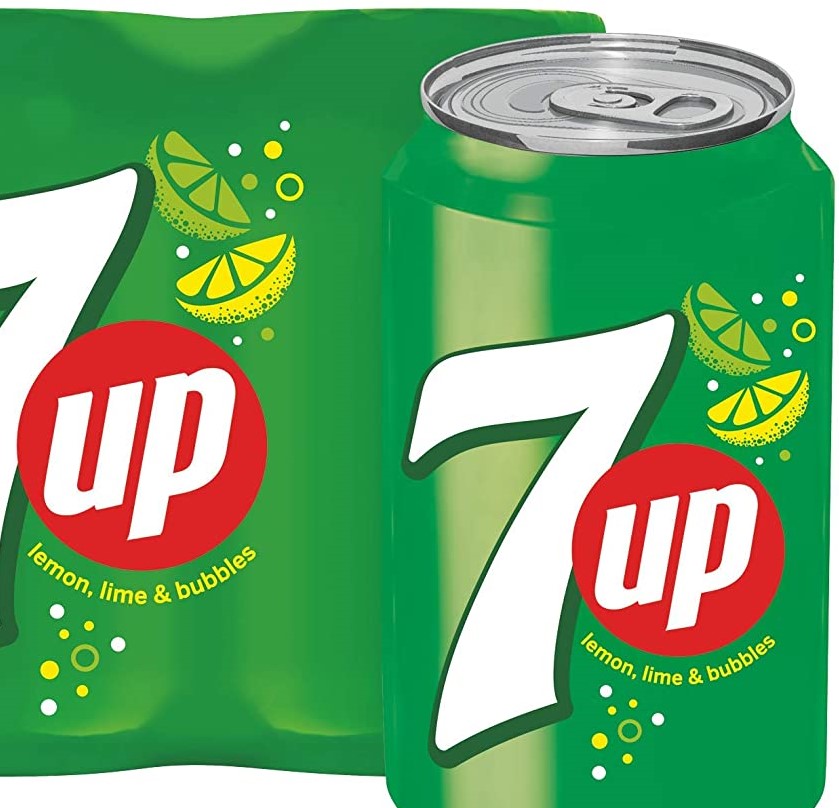
Just to get it out of the way, this PC is not about a carbonated drink popular in the last century, 7 Up! First marketed in 1919, this lemon-lime-flavoured non-caffeinated drink became a staple for the soft drinks industry.

The easily recognised green can

It’s thought the name referred to the seven ingredients, namely carbonated water, sugar, citrus oils, citric acid, sodium citrate and lithium citrate. The brand’s owner, Keurig Dr Pepper, announced in May 2020 they would no longer produce the drink due to falling demand; interesting, as fizzy drinks account for some 34% of the UK soft drinks market – the market leader Coca-Cola had sales of £176m in 2018.

There is a theme though, around the number 7. A Prime Number, Seven is a favourite digit: ‘The Seven Wonders of the World’ for instance (why 7?); God worked for 6 days to create the world and rested on the 7th; the business guide chose ‘7 Habits of Highly Effective People’ – why not 6 or 8? In ‘As You like It.’ William Shakespeare wrote about the seven ages of man (and woman); “All the world’s a stage” and “One man in his lifetime plays many parts – his acts being seven.” Shakespeare was born in 1564, some 30 years after the foundation of the Jesuits, which today is the largest Catholic Order of Man and has its first Jesuit Pope, Francis. A well-known Jesuit saying is “Give me a child until he is seven, and I will give you the man.” And it may have been this that was the inspiration of one of the first reality TV programmes.

In 1964 an Australian TV Producer working in London, Tim Hewat, tasked Michael Apted to find a set of children that reflected the class make-up of Britain and interview them about their hopes and fears, their aspirations and ambitions ……. and of course uncover what actually happens! It’s been suggested this was almost the first Reality TV Show.

Michael Apted 1941 – 2021

The programme, Seven Up, made such an impact that it was decided to re-interview the group every seven years. ‘Sixty Three Up’ was broadcast in 2019 and featured the remaining 11 active cast members. Last week Michael Apted died aged 79. He apparently regretted he only had 4 girls in his original cast of 14, acknowledging that “The biggest social revolution in my life has been the change of the role of women in society.”

Some of the participants in 63 Up! with their 1964 photographs

For those who avidly followed the series, there were some surprises as well as some predictability about the way the fourteen lives unfolded. I suspect you my readers collectively cover those Shakespearean seven ages and, as you read my little notes, will no doubt reflect where you are on these seven year steps; what you were doing when you were 7, or 21, or 42 or what you are doing now? Did it feature in your thoughts as a seven year old?

My own life could compress into these stages somehow, inevitably in an extremely sketchy outline. I predated the first Seven Up programme by 11 years; my first 7 Up would have been in 1953.  I was living with my mother and brother in the servants’ accommodation in the top of 15 Royal Crescent in Bath, a glorious Roman and Georgian city. (See PCs 164 & 165) My grandmother played the piano …….

…….. and her husband was an Ophthalmic Optician who had a practice on the ground floor. My parents had divorced and my mother made hats to make ends meet. I came back from school one afternoon to find a goldfish had jumped out of the tank and my mother was too squeamish to pick it up!

14 Up – 1960 I remember a romantic notion of wanting to be a farmer, although I knew no one who farmed! Boarding schools in Somerset and Wiltshire. Found difficulty finding my feet. My brother was at the same school and I was naturally ‘minor’! Athletics in the summer; the CCF; “A from Andromeda” on a black and white TV the highlight of a Saturday night;  a school swimming pool fed from a spring; Elvis on the record player.

The seven years from 14 to 21 are quite naturally the most interesting to look back on from a developmental point of view. Growing physically, growing emotionally and growing mentally! But in one hundred words?

21 up – 1967 Growing in confidence as a person, although always finding academic life challenging. Played and enjoyed Rugby; played and enjoyed the trumpet. O and A levels – What to do? I wanted to be an architect but that profession was going through one of its cyclical downturns so got selected for Officer Training. Hitchhiked through Europe one summer. Drove to Greece with 5 others in 1965 before joining Sandhurst. Pushed from pillar to post; grew from schoolboy into young adult. Commissioned in July 1967.

28 Up – 1974 Periods in the Army in Germany interspersed with three years at University. Sailing in The Baltic and in Sardinia. 

Racing to Bermuda 1976

35 Up – 1981 Married. Daughter Jade born 1980. Raced from Tenerife to Bermuda. Operational tours in Northern Ireland. Bought first house.

Commanded 43 Air Defence Battery (Lloyd’s Company) RA 1982-1984

42 Up – 1988 Left the Army after 20 years. Divorced. Living in London. Working for Short Brothers. Two weeks out of four abroad. Read Florence Scovel-Shinn’s The Game of Life and How to Play it.

Such an inspiring book

49 Up – 1995 Redundancy in 1991 very cathartic. Lived in Canberra Australia for four months. Worked for Morgan &Banks, a Recruitment and Outplacement Company in London.

56 Up – 2002 Started my own business coaching company The Yellow Palette in 1996

63 Up 2009 Had a rescue Labrador, my beautiful Tom. March 2009 started hot yoga

70 Up 2016 Married again; moved to Hove in 2012. Hot Yoga becomes a daily ritual. Started writing what became Post Card Scribbles in 2014.

Back to ‘Seven Up’. The assumption driving the episodes was that the social class into which the children was born would create obvious winners and losers. In fact they have showed that achievement, fortune and contentment are influenced by more fundamental things than class. They showed that our lives unfold through both circumstance and our own choices and it’s up to us what we make of them. We all have a choice!

Richard 15th January 2021

PC 212 Gardening – Evolutions

Growing up as a teenager, my abiding memory of my step-father Philip was him sitting on his Atco mower, virtually every weekend in the summer, both Saturday afternoon and Sunday morning, mowing, his pipe clenched between his teeth and a white hat to prevent sunburn. There was a great deal of lawn at Orchards, a white house in Balcombe just 30 minutes north of here (see PC 58 Going Home) and it required a great deal of time and effort to look stunning. A huge labour of love if ever there was one but I vowed never to find myself in a similar situation!

My own first house was a Victorian cottage in Fleet, Hampshire. The garden was no gem; my only contribution was collecting lots of stone from a quarry on the road to Gloucester which I formed into a rockery. My green fingers didn’t stretch too far and, after a couple of years, it still looked like a pile of stones dropped by some alien. It might have looked better if I had fashioned a little sign: “Alas! Here Lies Poor Fido.”

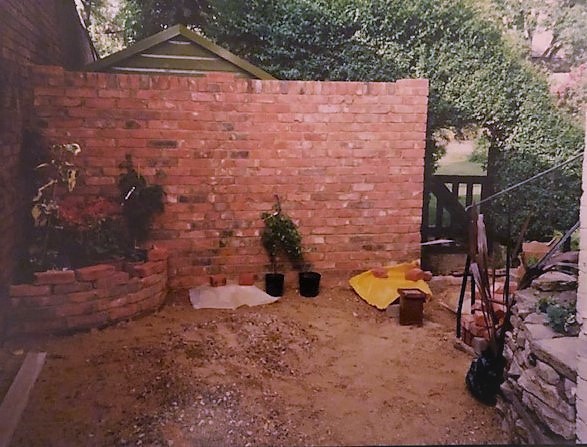
I became more creative when I moved into a lower-ground flat near Clapham Common, London in 1987. There was no garden in the traditional sense but I ‘owned’ the extremely narrow space between the enormous house and a very tall wall, over which lay the Cavendish Road Police Station. The previous occupant had planted a couple of shrubs and left a dilapidated rotten old shed; the owner of the large rear garden had right of access. Sunlight was at a premium given the shade produced by the towering brickwork and on a good day it only got about four hours.

The first and only time I have built a wall!!

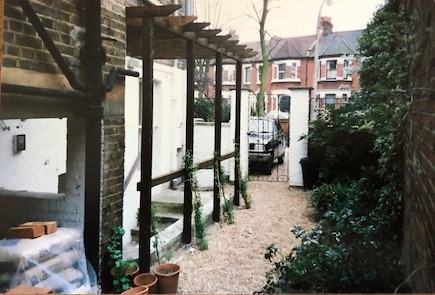
Lacking the money to get someone else, I built a six foot wall of old brick at the rear. Every evening I came back from work and mixed some mortar and cement, and laid a course or two; it often rained! A proper bricklayer would have taken a day; I took ages but it’s still standing 40 years later! I completed the space with some raised flower beds, laid a brick floor and built a pergola that soon became covered in Passion Flower, whose fruits were delicious.

The new pergola with Passion Flower plants.

I love the sound of running water so created a cascade down some steps that led from a blocked-in door; at the bottom was a little pond with a pump. What I hadn’t factored in was the amount of evaporation the flow over nine steps would create. On a hot day I needed to have a hose constantly topping up the pond!!

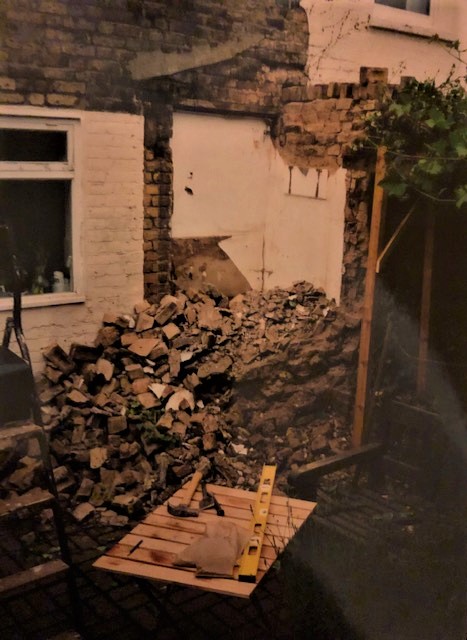
The outside privy reduced to rubble

My Victorian terrace house in Bramfield Road, Battersea, had a 16ft x 16ft south facing space. When I bought it, the outside privy a previous owner had used as a space for their washing machine was still standing and, in another corner, stood a leaky world war two air-raid shelter, built of reinforced concrete and engineering bricks.

Having demolished both structures, I created a pond for Wanda, and planted a vigorous climbing Clematis Apple Blossum against the back wall. Along a side wall some embedded Tracheospermum Jasminoides, once established, produced lovely small white flowers with a heavenly scent.

Conversion complete! Our Amber House rear patio with steps up to the communal grass (Oct 2012)

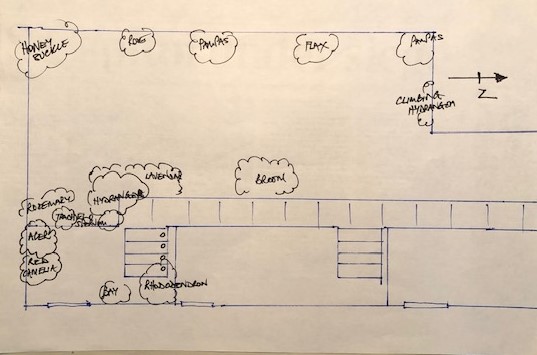
The west-facing garden of Amber House is ‘communal’ – ie owned by the freeholder (Southern Housing Group (SHG)) but available for use by the twelve apartment owners. It didn’t take me long to realise that the wind off the sea carries a lot of salt and plants which would normally have thrived, shrivel and die. We have a little patio space so started with pots on the steps and, at the same time, planted some Tracheospermum Jasminoides and some Apple Blossom Clematis alongside the fence. The Clematis lasted10 months before giving up!

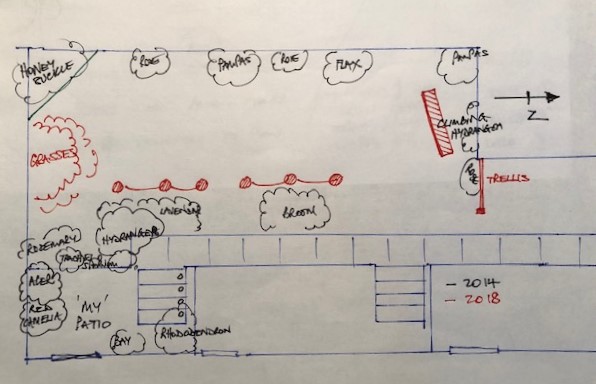
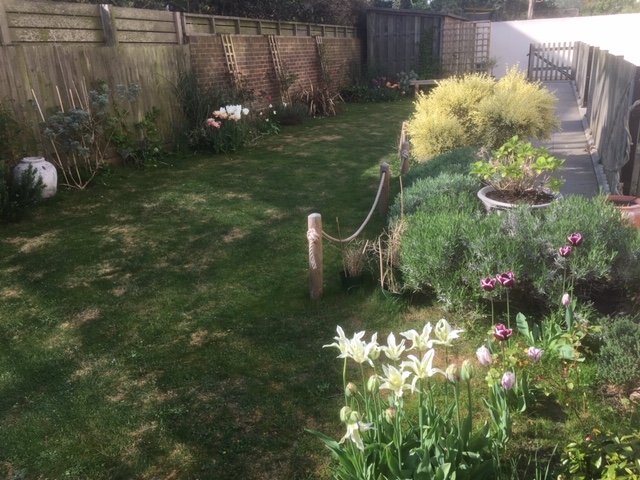
Our lease is covered in ‘catch-all’ clauses, including ‘no gardening’!! Hoping the landlord wouldn’t object. I tried my luck, putting in some roses, a hydrangea, planting a row of lavender and a broom which has gorgeous yellow flowers in the spring. The deafening silence from the landlord encouraged me to be bolder with this garden evolution, for next door in an exact mirror image, Gilmour House’s garden remains, to this day, a bare stretch of grass. For the first three years a contractor cut the grass – often with a strimmer! Then the chap took most of a little Ceanothus shrub off! Strimmed to an inch of its life, it needed A&E! I took the bottom off a plastic pot and placed it over the stub and packed some compost around it, a sort of temporary ICU! Eventually it got big enough to move and now is a well-established shrub.

Beginning to take shape (2014)

In discussions with the landlord’s estate manager I suggested I could mow the lawn myself. “No you can’t, because the lawn is owned by us and you would not be covered by our insurance!” Then he had a brilliant idea; I could become a ‘volunteer’ for SHG – so I went through the endless form-filling required, completed a risk-assessment and, having had suitable training to use a mower, with the appropriate protective clothing, we have ditched the contractor and I do it. Yes! I know, why would I volunteer to mow the lawn after my teenage memories of Philip?

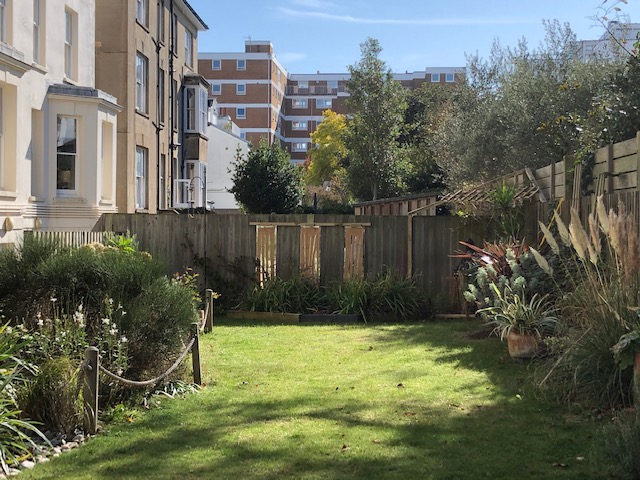
Circa 2018

Reasonably confident now that the landlord will no longer object, I have added some trellis in one corner for a honeysuckle and another for roses at the far end. It’s rare for the other occupants of Amber House to use the garden as the sea is a mere two hundred metres away and most people head that way; however I have put up a little bench for those who wish to sit.

A passion flower bloomed and then died and the climbing hydrangea over the Bicycle shed struggles. I have come to appreciate that grey leafed plants and grasses do well in this marine environment. The latest evolution of the Amber House garden was to install three vertical mirrors partly covered in hessian.

Philip would have been amused.

Richard 8th January 2021

PS If Dave the electrician comes back to me (?) I hope to have a few garden lights by the end of this month.

PC 211 Off Arromanches (……. continued …. see PC 209)

Asking Kevin, both mate and the yacht’s mate and the most competent of my crew, to take the wheel I headed below. Sure enough there was about two inches of sea water washing around; lifting a board confirmed the bilges were full and it wasn’t simply water off crew oilskins. (Note 1). My heart started to beat faster as the crew expected me to sort it out!

I turned on the electric bilge pump; nothing happened. I shouted to John in the cockpit to find the manual pump, to make sure the tube was out of the locker and to start pumping. My mind began to fill with a thousand things I should do …… and they were all ‘NOW’! Where’s the pump? Saucepans please! Put a position on the chart, note in the log. Where are the flares? Is the life raft easily ready? What about life jackets? I had never felt the necessity of always wearing a life jacket on a yacht – but sense these days with smaller less-bulky ones available that might be an out-dated practice. But I knew down over the lee rail was the coast of Arromanches, with its rocky shallow foreshore extending far from the beach and we were on a falling tide. (Note 2) “Oh! Shit! The club’s flagship might go aground! Explain that to the Committee!” Then at last the first and only important question: “Why was there water inside?”

The crew formed a saucepan chain (you know what I mean!) and bailing began. Waves were breaking over the bow and it was unpleasant below and on deck. I needed to get the yacht in a more stable state so took the helm, brought the bow through the wind without changing the jib sheets and hove to. Wonderful! Suddenly the movements lessened and there was less noise.

Rudder tries to turn the yacht towards the wind; wind on the foresail resists

I hope none of you have had to heave to in an emergency; I certainly hadn’t before but had demonstrated the technique to those learning to sail. I had likened the sails to two hands around a bar of soap. Squeeze – tighten the sails and the wind has to accelerate through the narrower slot – the soap and it shoots out – and the boat moves forward. When you take the bow through the direction of the wind, and leave the foresail untouched, the mainsail and rudder try to move the boat forward and the headsail resists. The yacht simply sits, slightly head to wind, and if the sail areas are well balanced, hardly moves.

I have sailed on many wooden yachts that let water in, as the planking opened a millimetre or two beating hard to wind. The 30 sqm and 50 sqm yachts at the British Kiel Yacht Club (see PC 106) were particularly wet below and it was essential to have all your spare clothes and sleeping bag wrapped in black rubbish bags to keep them dry! But St Barbara III’s hull was made of GRP (Glass Reinforced Plastic) – God help us if we had somehow cracked the hull on some high bounce as we left the harbour!

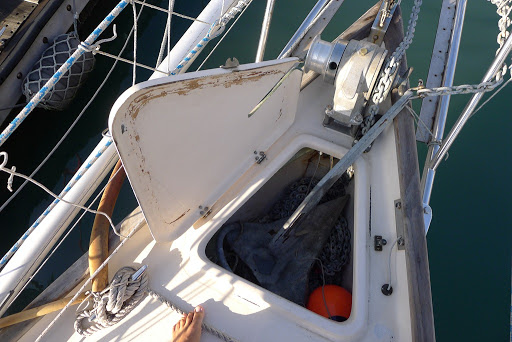
Dismissing this nasty idea, my thoughts then turned to the anchor stowage. A more stable yacht meant less water was breaking over the bow ….. and finding its way below! I knew from experience that if the Kedge Anchor was not exactly positioned in its locker, with even a centimetre proud, the hatch cover would not fit and lock properly and water would seep in, and in rough conditions flood in. Turning on the foredeck lights, I took Hew with me and, clipping on at each stage, we made our way up to the bow.

Generic ‘anchor stowage’

Sure enough, we could make out the anchor locker lid was not flush with the deck. In their haste and in the pouring rain, coping with a pitching deck as we motored out through the harbour entrance, the foredeck crew hadn’t got the anchor properly stowed. It took Hew and I about 5 minutes to get it fitted properly and, as we made our way back to the cockpit, we hoped that the level of water on board would begin to reduce. After ten minutes that was noticeable and there was much relief all around.

I was a bit of a stickler for writing up both the daily log and the journal so, as we set a revised course for The Solent and Gosport, wrote up both whilst the emotion was running! Somewhere in the archives of the Royal Artillery Yacht Club are that log and the journal entries.

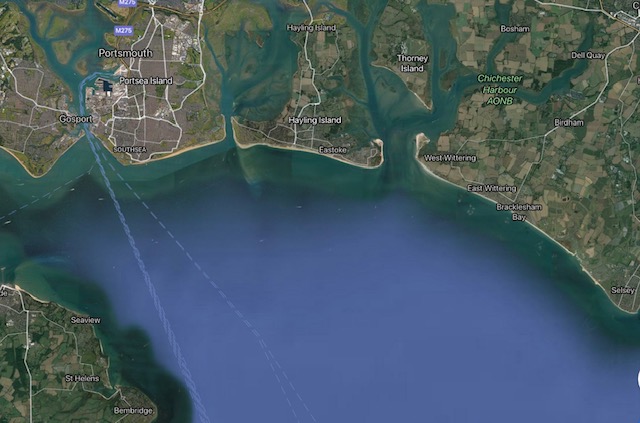
Google Earth showing The Solent, with the Isle of Wight on the bottom left and the entrance to Portsmouth top left

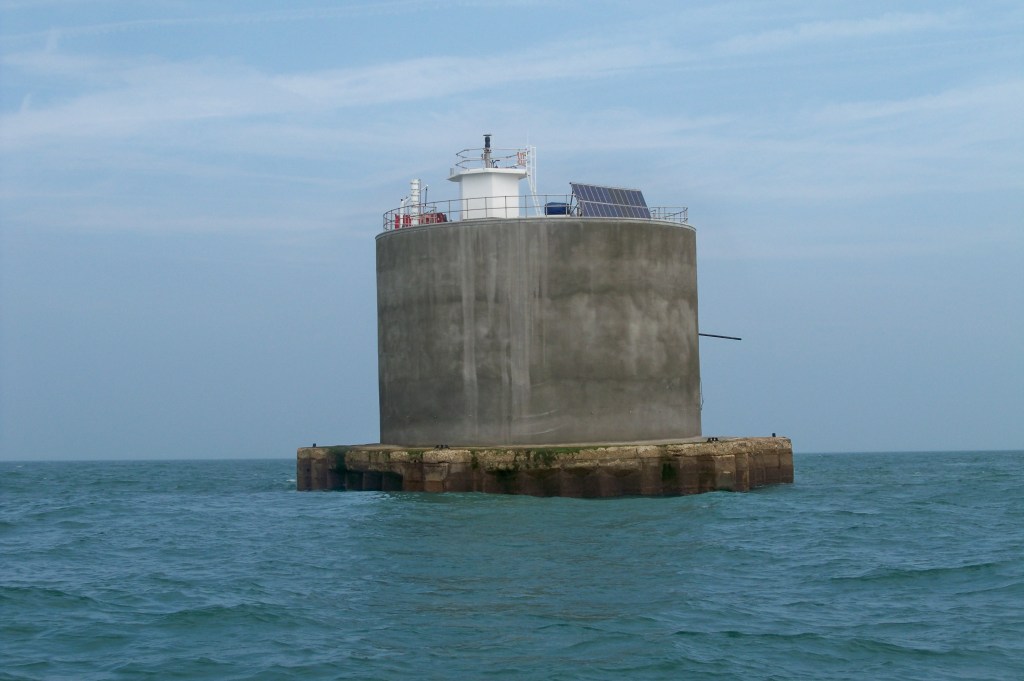
As is often the case when sailing, conditions can change quite rapidly. From our rough start from Trouville in a Force 7, the wind had gradually decreased as we crossed The Channel. We shook the rolls out of the mainsail and changed up to the No 1 Jib.  Abeam of the Nab Tower, the wind dropped completely, the sea strangely calm and the last few miles were made under engine. 

The Nab Tower at the entrance to The Solent

It was quite a relief to tie up alongside the pontoon in the Gosport Marina mid-afternoon and switch off – in every sense!

Richard New Year’s Day 2021

PS A Very Happy New Year to all my readers

Note 1 Gallows Humour is often part of a crisis and this was no exception!  I was reminded of part of Tales of Old Dartmoor, a radio sketch from The Goon Show (February 1956). To cut to the chase (It’s all on You Tube so if you have never listened to it, do so!) Dartmoor prison had somehow become HMS Dartmoor, a floating prison ship (!), and the crew were looking for the ‘treasure of the Count of Monte Cristo’. Rumour had it it lay under the floor of Cell 626. They lifted a flagstone.

“Ah! Look! Water.”

 “Salt Water!”

 “Look! There’s more of it! It’s coming in.”

Note 2. After reading PC 209 Jonathan sent me this photograph of his great uncle Harold Hickling briefing Churchill at the Mulbery Harbours off Arromanches. June 1944