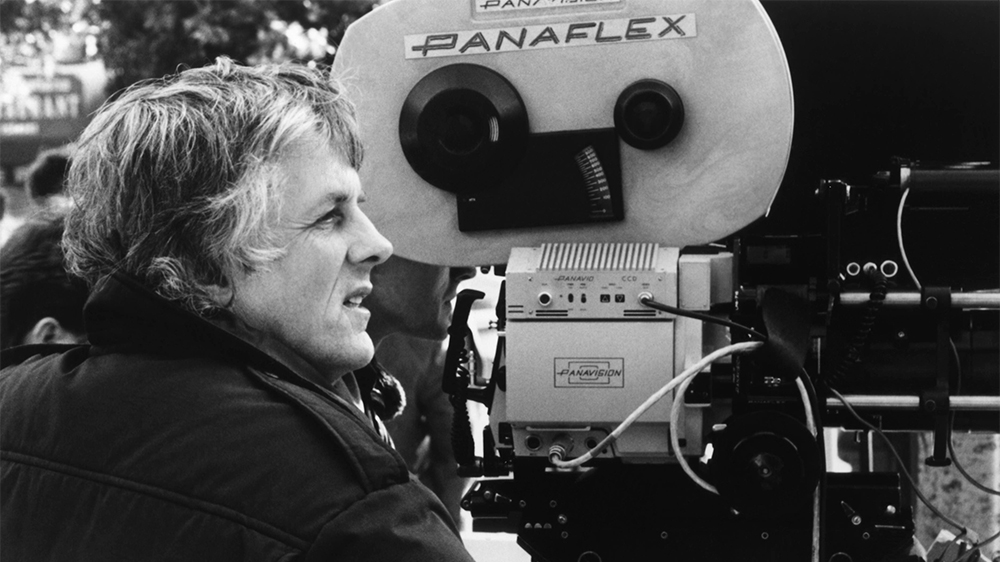
PC 213 7 Up!

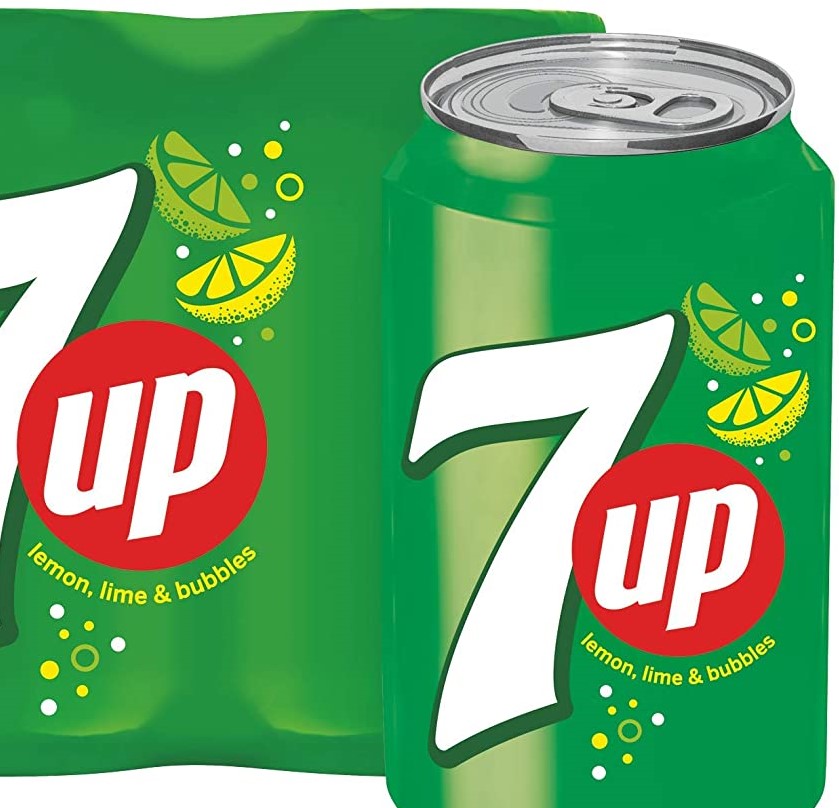
Just to get it out of the way, this PC is not about a carbonated drink popular in the last century, 7 Up! First marketed in 1919, this lemon-lime-flavoured non-caffeinated drink became a staple for the soft drinks industry.

The easily recognised green can

It’s thought the name referred to the seven ingredients, namely carbonated water, sugar, citrus oils, citric acid, sodium citrate and lithium citrate. The brand’s owner, Keurig Dr Pepper, announced in May 2020 they would no longer produce the drink due to falling demand; interesting, as fizzy drinks account for some 34% of the UK soft drinks market – the market leader Coca-Cola had sales of £176m in 2018.

There is a theme though, around the number 7. A Prime Number, Seven is a favourite digit: ‘The Seven Wonders of the World’ for instance (why 7?); God worked for 6 days to create the world and rested on the 7th; the business guide chose ‘7 Habits of Highly Effective People’ – why not 6 or 8? In ‘As You like It.’ William Shakespeare wrote about the seven ages of man (and woman); “All the world’s a stage” and “One man in his lifetime plays many parts – his acts being seven.” Shakespeare was born in 1564, some 30 years after the foundation of the Jesuits, which today is the largest Catholic Order of Man and has its first Jesuit Pope, Francis. A well-known Jesuit saying is “Give me a child until he is seven, and I will give you the man.” And it may have been this that was the inspiration of one of the first reality TV programmes.

In 1964 an Australian TV Producer working in London, Tim Hewat, tasked Michael Apted to find a set of children that reflected the class make-up of Britain and interview them about their hopes and fears, their aspirations and ambitions ……. and of course uncover what actually happens! It’s been suggested this was almost the first Reality TV Show.

Michael Apted 1941 – 2021

The programme, Seven Up, made such an impact that it was decided to re-interview the group every seven years. ‘Sixty Three Up’ was broadcast in 2019 and featured the remaining 11 active cast members. Last week Michael Apted died aged 79. He apparently regretted he only had 4 girls in his original cast of 14, acknowledging that “The biggest social revolution in my life has been the change of the role of women in society.”

Some of the participants in 63 Up! with their 1964 photographs

For those who avidly followed the series, there were some surprises as well as some predictability about the way the fourteen lives unfolded. I suspect you my readers collectively cover those Shakespearean seven ages and, as you read my little notes, will no doubt reflect where you are on these seven year steps; what you were doing when you were 7, or 21, or 42 or what you are doing now? Did it feature in your thoughts as a seven year old?

My own life could compress into these stages somehow, inevitably in an extremely sketchy outline. I predated the first Seven Up programme by 11 years; my first 7 Up would have been in 1953.  I was living with my mother and brother in the servants’ accommodation in the top of 15 Royal Crescent in Bath, a glorious Roman and Georgian city. (See PCs 164 & 165) My grandmother played the piano …….

…….. and her husband was an Ophthalmic Optician who had a practice on the ground floor. My parents had divorced and my mother made hats to make ends meet. I came back from school one afternoon to find a goldfish had jumped out of the tank and my mother was too squeamish to pick it up!

14 Up – 1960 I remember a romantic notion of wanting to be a farmer, although I knew no one who farmed! Boarding schools in Somerset and Wiltshire. Found difficulty finding my feet. My brother was at the same school and I was naturally ‘minor’! Athletics in the summer; the CCF; “A from Andromeda” on a black and white TV the highlight of a Saturday night;  a school swimming pool fed from a spring; Elvis on the record player.

The seven years from 14 to 21 are quite naturally the most interesting to look back on from a developmental point of view. Growing physically, growing emotionally and growing mentally! But in one hundred words?

21 up – 1967 Growing in confidence as a person, although always finding academic life challenging. Played and enjoyed Rugby; played and enjoyed the trumpet. O and A levels – What to do? I wanted to be an architect but that profession was going through one of its cyclical downturns so got selected for Officer Training. Hitchhiked through Europe one summer. Drove to Greece with 5 others in 1965 before joining Sandhurst. Pushed from pillar to post; grew from schoolboy into young adult. Commissioned in July 1967.

28 Up – 1974 Periods in the Army in Germany interspersed with three years at University. Sailing in The Baltic and in Sardinia. 

Racing to Bermuda 1976

35 Up – 1981 Married. Daughter Jade born 1980. Raced from Tenerife to Bermuda. Operational tours in Northern Ireland. Bought first house.

Commanded 43 Air Defence Battery (Lloyd’s Company) RA 1982-1984

42 Up – 1988 Left the Army after 20 years. Divorced. Living in London. Working for Short Brothers. Two weeks out of four abroad. Read Florence Scovel-Shinn’s The Game of Life and How to Play it.

Such an inspiring book

49 Up – 1995 Redundancy in 1991 very cathartic. Lived in Canberra Australia for four months. Worked for Morgan &Banks, a Recruitment and Outplacement Company in London.

56 Up – 2002 Started my own business coaching company The Yellow Palette in 1996

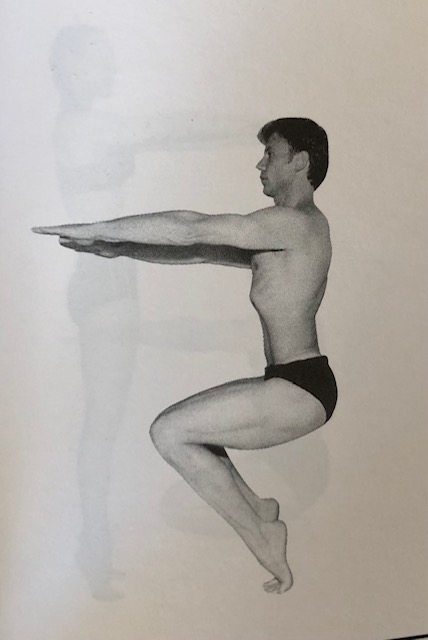
63 Up 2009 Had a rescue Labrador, my beautiful Tom. March 2009 started hot yoga

70 Up 2016 Married again; moved to Hove in 2012. Hot Yoga becomes a daily ritual. Started writing what became Post Card Scribbles in 2014.

Back to ‘Seven Up’. The assumption driving the episodes was that the social class into which the children was born would create obvious winners and losers. In fact they have showed that achievement, fortune and contentment are influenced by more fundamental things than class. They showed that our lives unfold through both circumstance and our own choices and it’s up to us what we make of them. We all have a choice!

Richard 15th January 2021

PC 212 Gardening – Evolutions

Growing up as a teenager, my abiding memory of my step-father Philip was him sitting on his Atco mower, virtually every weekend in the summer, both Saturday afternoon and Sunday morning, mowing, his pipe clenched between his teeth and a white hat to prevent sunburn. There was a great deal of lawn at Orchards, a white house in Balcombe just 30 minutes north of here (see PC 58 Going Home) and it required a great deal of time and effort to look stunning. A huge labour of love if ever there was one but I vowed never to find myself in a similar situation!

My own first house was a Victorian cottage in Fleet, Hampshire. The garden was no gem; my only contribution was collecting lots of stone from a quarry on the road to Gloucester which I formed into a rockery. My green fingers didn’t stretch too far and, after a couple of years, it still looked like a pile of stones dropped by some alien. It might have looked better if I had fashioned a little sign: “Alas! Here Lies Poor Fido.”

I became more creative when I moved into a lower-ground flat near Clapham Common, London in 1987. There was no garden in the traditional sense but I ‘owned’ the extremely narrow space between the enormous house and a very tall wall, over which lay the Cavendish Road Police Station. The previous occupant had planted a couple of shrubs and left a dilapidated rotten old shed; the owner of the large rear garden had right of access. Sunlight was at a premium given the shade produced by the towering brickwork and on a good day it only got about four hours.

The first and only time I have built a wall!!

Lacking the money to get someone else, I built a six foot wall of old brick at the rear. Every evening I came back from work and mixed some mortar and cement, and laid a course or two; it often rained! A proper bricklayer would have taken a day; I took ages but it’s still standing 40 years later! I completed the space with some raised flower beds, laid a brick floor and built a pergola that soon became covered in Passion Flower, whose fruits were delicious.

The new pergola with Passion Flower plants.

I love the sound of running water so created a cascade down some steps that led from a blocked-in door; at the bottom was a little pond with a pump. What I hadn’t factored in was the amount of evaporation the flow over nine steps would create. On a hot day I needed to have a hose constantly topping up the pond!!

The outside privy reduced to rubble

My Victorian terrace house in Bramfield Road, Battersea, had a 16ft x 16ft south facing space. When I bought it, the outside privy a previous owner had used as a space for their washing machine was still standing and, in another corner, stood a leaky world war two air-raid shelter, built of reinforced concrete and engineering bricks.

Having demolished both structures, I created a pond for Wanda, and planted a vigorous climbing Clematis Apple Blossum against the back wall. Along a side wall some embedded Tracheospermum Jasminoides, once established, produced lovely small white flowers with a heavenly scent.

Conversion complete! Our Amber House rear patio with steps up to the communal grass (Oct 2012)

The west-facing garden of Amber House is ‘communal’ – ie owned by the freeholder (Southern Housing Group (SHG)) but available for use by the twelve apartment owners. It didn’t take me long to realise that the wind off the sea carries a lot of salt and plants which would normally have thrived, shrivel and die. We have a little patio space so started with pots on the steps and, at the same time, planted some Tracheospermum Jasminoides and some Apple Blossom Clematis alongside the fence. The Clematis lasted10 months before giving up!

Our lease is covered in ‘catch-all’ clauses, including ‘no gardening’!! Hoping the landlord wouldn’t object. I tried my luck, putting in some roses, a hydrangea, planting a row of lavender and a broom which has gorgeous yellow flowers in the spring. The deafening silence from the landlord encouraged me to be bolder with this garden evolution, for next door in an exact mirror image, Gilmour House’s garden remains, to this day, a bare stretch of grass. For the first three years a contractor cut the grass – often with a strimmer! Then the chap took most of a little Ceanothus shrub off! Strimmed to an inch of its life, it needed A&E! I took the bottom off a plastic pot and placed it over the stub and packed some compost around it, a sort of temporary ICU! Eventually it got big enough to move and now is a well-established shrub.

Beginning to take shape (2014)

In discussions with the landlord’s estate manager I suggested I could mow the lawn myself. “No you can’t, because the lawn is owned by us and you would not be covered by our insurance!” Then he had a brilliant idea; I could become a ‘volunteer’ for SHG – so I went through the endless form-filling required, completed a risk-assessment and, having had suitable training to use a mower, with the appropriate protective clothing, we have ditched the contractor and I do it. Yes! I know, why would I volunteer to mow the lawn after my teenage memories of Philip?

Circa 2018

Reasonably confident now that the landlord will no longer object, I have added some trellis in one corner for a honeysuckle and another for roses at the far end. It’s rare for the other occupants of Amber House to use the garden as the sea is a mere two hundred metres away and most people head that way; however I have put up a little bench for those who wish to sit.

A passion flower bloomed and then died and the climbing hydrangea over the Bicycle shed struggles. I have come to appreciate that grey leafed plants and grasses do well in this marine environment. The latest evolution of the Amber House garden was to install three vertical mirrors partly covered in hessian.

Philip would have been amused.

Richard 8th January 2021

PS If Dave the electrician comes back to me (?) I hope to have a few garden lights by the end of this month.

PC 211 Off Arromanches (……. continued …. see PC 209)

Asking Kevin, both mate and the yacht’s mate and the most competent of my crew, to take the wheel I headed below. Sure enough there was about two inches of sea water washing around; lifting a board confirmed the bilges were full and it wasn’t simply water off crew oilskins. (Note 1). My heart started to beat faster as the crew expected me to sort it out!

I turned on the electric bilge pump; nothing happened. I shouted to John in the cockpit to find the manual pump, to make sure the tube was out of the locker and to start pumping. My mind began to fill with a thousand things I should do …… and they were all ‘NOW’! Where’s the pump? Saucepans please! Put a position on the chart, note in the log. Where are the flares? Is the life raft easily ready? What about life jackets? I had never felt the necessity of always wearing a life jacket on a yacht – but sense these days with smaller less-bulky ones available that might be an out-dated practice. But I knew down over the lee rail was the coast of Arromanches, with its rocky shallow foreshore extending far from the beach and we were on a falling tide. (Note 2) “Oh! Shit! The club’s flagship might go aground! Explain that to the Committee!” Then at last the first and only important question: “Why was there water inside?”

The crew formed a saucepan chain (you know what I mean!) and bailing began. Waves were breaking over the bow and it was unpleasant below and on deck. I needed to get the yacht in a more stable state so took the helm, brought the bow through the wind without changing the jib sheets and hove to. Wonderful! Suddenly the movements lessened and there was less noise.
Rudder tries to turn the yacht towards the wind; wind on the foresail resists

I hope none of you have had to heave to in an emergency; I certainly hadn’t before but had demonstrated the technique to those learning to sail. I had likened the sails to two hands around a bar of soap. Squeeze – tighten the sails and the wind has to accelerate through the narrower slot – the soap and it shoots out – and the boat moves forward. When you take the bow through the direction of the wind, and leave the foresail untouched, the mainsail and rudder try to move the boat forward and the headsail resists. The yacht simply sits, slightly head to wind, and if the sail areas are well balanced, hardly moves.

I have sailed on many wooden yachts that let water in, as the planking opened a millimetre or two beating hard to wind. The 30 sqm and 50 sqm yachts at the British Kiel Yacht Club (see PC 106) were particularly wet below and it was essential to have all your spare clothes and sleeping bag wrapped in black rubbish bags to keep them dry! But St Barbara III’s hull was made of GRP (Glass Reinforced Plastic) – God help us if we had somehow cracked the hull on some high bounce as we left the harbour!

Dismissing this nasty idea, my thoughts then turned to the anchor stowage. A more stable yacht meant less water was breaking over the bow ….. and finding its way below! I knew from experience that if the Kedge Anchor was not exactly positioned in its locker, with even a centimetre proud, the hatch cover would not fit and lock properly and water would seep in, and in rough conditions flood in. Turning on the foredeck lights, I took Hew with me and, clipping on at each stage, we made our way up to the bow.

Generic ‘anchor stowage’

Sure enough, we could make out the anchor locker lid was not flush with the deck. In their haste and in the pouring rain, coping with a pitching deck as we motored out through the harbour entrance, the foredeck crew hadn’t got the anchor properly stowed. It took Hew and I about 5 minutes to get it fitted properly and, as we made our way back to the cockpit, we hoped that the level of water on board would begin to reduce. After ten minutes that was noticeable and there was much relief all around.

I was a bit of a stickler for writing up both the daily log and the journal so, as we set a revised course for The Solent and Gosport, wrote up both whilst the emotion was running! Somewhere in the archives of the Royal Artillery Yacht Club are that log and the journal entries.

Google Earth showing The Solent, with the Isle of Wight on the bottom left and the entrance to Portsmouth top left

As is often the case when sailing, conditions can change quite rapidly. From our rough start from Trouville in a Force 7, the wind had gradually decreased as we crossed The Channel. We shook the rolls out of the mainsail and changed up to the No 1 Jib.  Abeam of the Nab Tower, the wind dropped completely, the sea strangely calm and the last few miles were made under engine. 

The Nab Tower at the entrance to The Solent

It was quite a relief to tie up alongside the pontoon in the Gosport Marina mid-afternoon and switch off – in every sense!

Richard New Year’s Day 2021

PS A Very Happy New Year to all my readers

Note 1 Gallows Humour is often part of a crisis and this was no exception!  I was reminded of part of Tales of Old Dartmoor, a radio sketch from The Goon Show (February 1956). To cut to the chase (It’s all on You Tube so if you have never listened to it, do so!) Dartmoor prison had somehow become HMS Dartmoor, a floating prison ship (!), and the crew were looking for the ‘treasure of the Count of Monte Cristo’. Rumour had it it lay under the floor of Cell 626. They lifted a flagstone.

“Ah! Look! Water.”

 “Salt Water!”

 “Look! There’s more of it! It’s coming in.”

Note 2. After reading PC 209 Jonathan sent me this photograph of his great uncle Harold Hickling briefing Churchill at the Mulbery Harbours off Arromanches. June 1944

PC 210 Christmas Lights

If you are a regular reader of my scribbles. you may have been expecting to read whether we sorted out the ingress of sea water into St Barbara III or took to the life raft! However today is Christmas Day (Note 1) …… for Christians of course ……. I know many for whom this particular day doesn’t have any meaning ….. but the United Kingdom is essentially a Christian country, with an established church.
Our front door decoration

I wrote about Christmas in PC 27, way back in December 2014 when I wasn’t thinking I was going to write a ‘blog’. Rereading it now I find it covered my own Christmas experiences and the Irish comedian Dave Allen’s take on it. I returned to the festive theme in PC 86 in 2016, scribbling about a particularly British tradition – ‘Boxing Day’. My PC 113, ‘Extra! Extra!’ had an imagined conversation between Santa Claus and his wife, Mrs Claus (?)

‘Uncle Tommy’ a papier-mâché Father Christmas from 1963

My ‘Creative Writing’ evening class at Brighton Met was encouraging and I even liked a few things that came from the challenging homework. 2018’s PC 140 was another ‘Extra! Extra!’; it covered a couple of homework scripts, one Christmas-themed about carol writing. Facebook asked whether I wanted to repost this last one earlier this week, so you may have already seen it.

Our 2018 Christmas lights

In Christmases past I have had proper Christmas trees and some have survived with more than 50% of their needles intact until Twelfth Night, when we traditionally take down the decorations. In fact I was always told it was bad luck to remove your Christmas decorations before the appointed hour. You might remember those trees that were shedding their pine needles as you wrestled it from the car, before you put it inside in the warmth; you were lucky it made it to Boxing Day. I have always resisted the artificial ones preferring to carry on the Victorian Christmas tradition. The breeders of trees have been successful in making some varieties more robust.

Growing up, the choice of Christmas tree lights were very much class-driven! ‘White is best’ and then some coloured bulbs were allowed, providing they didn’t flash. Out and about the domestic displays have became competitive!

 I spent one Christmas in Kitzbuhel in Austria. The tree was about 2 metres tall and decorated with lots of red ribbon and real candles! Yes! Real candles that you could light. And we did and there is nothing like the soft glow of candle light – until one night the draft from an open window blew a flame onto a by-now-dry branch and the tree very quickly was aflame ……. the biblical connection of a burning bush comes to mind ……. not consumed but simply burning as God seemingly spoke to Moses! Well in this case the Christmas tree very quickly ended up on the balcony being doused with water!!

Rummaging around in the dusty cardboard box here, I detected the wires of the Christmas lights in one old supermarket plastic bag and gently pulled it out. Time for the baubles, bangles and beads ….. and tinsel later. But first I had to check that the lights are working.

One set OK! Second set? Nothing! This particular set comprised 40 white lights, simple, effective and classy. The manufacturers had thoughtfully provided a few spare bulbs and a little green plastic tool to extract the individual defunct bulbs, But which one out of the 40? In the old days the bulbs would have had a screw fitting and were often loose, so the IA (Immediate Action – an old military expression particularly relating to small arms handling) was to check the tightness of the individual bulbs. These little plastic-housed bulbs were just pushed in, the bulbs themselves too thick to see whether the wire had broken. Pulling one out showed a little copper wire on each side, making contact with connectors deep inside. I pulled them all out, discarding ones which looked dodgy ……. finding new ones …… and replaced them all in their little housing. Expectantly I plugged them back in and switched the circuit on. Nothing! OK! Replaced the plug’s fuse. Nothing! …… Amazon delivered another set during our ‘Prime’ trial and the result – fashioned into a heart shape with Uncle Tommy flying around in the middle – does the business I think.

At this time of year there are many biblical reminders, if only through the festive carols which have been broadcast on the various radio stations since the beginning of the month. We all have our favourites, each bringing back memories of special occasions. And the Christian bible is littered with stories of pestilence and plague, be it an invasion of locust which this year has been particularly troublesome in Africa ……. or famine ……. or pandemics. Those interested in our Nation’s story will recall the 1665 Great Plague of London; by the time a fire in a bakery in Pudding Lane started an inferno which destroyed most of the city in the following year and killed off the Yersina Pestic bacteria in the process, some 70,000 had died (Note 2). In the C14th in Europe the Black Death ravaged communities over 7 years.

So with all the sad and negative aspects of the last few days of 2020 maybe making us feel gloomy and doomy, we should all ponder on the recent alignment of the planets Jupiter and Saturn. It’s not impossible that the Star of Bethlehem was another instance of this bright sight in the night sky.

Richard Christmas Day 2020

Note 1 There is little evidence Jesus was born on 25th December. The earliest mention of this day was AD 354. Early Christians preferred January 6th, nine months after the Passover; for Coptic Christians this year (or next!), their ‘Day’ is 7th January 2021. In the original Julian calendar 25th December was the Winter Solstice, the date of which moved to 21st December with the introduction of the Gregorian calendar. “Here endeth the lesson!”

Note 2 The population of London was about 460,000 at the time. (Compare with today’s 9 million.

PS A Jamie Oliver retro Christmas trifle I made some years ago

PC 209 Off Arromanches; at night; in a gale!

This is a page from my Royal Yachting Association Log Book. Note the entry for 10th – 17th June 1979:

…… doesn’t say more than the very basic headlines but the memories from those few days, in fact one particular two hour period, linger on over forty years later. I attended the two year Army Staff Course at the end of the seventies: Division 1 at RMCS in 1978 and then a year at The Staff College Camberley 1979. In the summer of that second year we were fortunate enough to tour the Normandy beaches and hinterland used in D Day 1944. The Battlefield Tour was a welcome relief to classroom discussions and it lived up to its colloquial name, The Bottlefield Tour!

The battlefield tour was unique in that soldiers who had attacked and defended this part of northern France came and talked about their experiences and memories. I think it was the last, given the increasing age of our guest speakers; we were blessed. The administrative part of the tour was centred around Deauville but by tradition a number of us sailed across on service yachts to Trouville, the next-door harbour. I was lucky enough to skipper the RAYC flagship St Barbara III, a Nicholson 43.

The crew with St B on the left

After all the normal pre-voyage activity we assembled at Gosport opposite Portsmouth on 9th June. The weather forecast for the week was mixed, a bit like the weather of early June 1944, but for our outward trip was set fair. From memory a north-easterly F4 allowed us to clear the Solent forts and set a course for Trouville. Trouville, in keeping with a number of ports on the northern coast of France, could only be entered some two hours either side of high water.

We found the harbour entrance on the bow after some 65 miles of uneventful sailing and tied up stern-to on the harbour wall, bow to anchor, not a method I was well practised in but fortunately there weren’t too many rubberneckers!

When I was doing my military service or sailing offshore, the mnemonic ‘grid to mag add, mag to grid get rid’ served us well as the variation was some 4 degrees ……. and mistakes happened! An hour after our arrival one of the other skippers, who I knew well, took me aside up on the quay and quietly questioned whether you added the magnetic variation or not, as they had missed the channel entrance!! (Note 1)

Some left for the on shore accommodation, others stayed on board; we had a chance to have a party on Gladeye, skippered by Robin Duchesne.   

Of the tour itself, out of all the stands where a veteran, of whatever nationality or rank, told us of their experience, one particular talk stays in my memory. A grey-haired rather rotund Yeoman Officer told us he had been in command of a troop of three tanks and that they had come under fire from some Germany artillery on top of a ridge to his front. His leading tank was hit and he had watched in horror as his troop sergeant had emerged from the hatch in a ball of flame. We stood exactly where his tank had been 41 years before; on the horizon we could see the escarpment.

This lovely chap told us how it was. “I hadn’t really listened to much of the training about radio procedures and artillery cooperation and stuff, I just knew I wanted to get hold of some artillery fire to neutralise the enemy, and bloody quickly. I picked up my radio mic and yelled: “Hello Gunners, this is Tony! I need your help.” (Note 2) “Hello Tony, Gunners here!” a voice crackled in his headset “Where do you need us?” Tony admitted he wasn’t very good at map reading but after some discussion eventually the gunners put a round on the ground somewhere towards the ridge. From there Tony was able to say “Further on” “Right a bit” until he was satisfied that three rounds fire-for-effect would sort out Jerry. And it did!

The tour eventually ended and some of the participants left for the ferries whilst us sailors returned to the harbour basin in preparation for our trip back across the Channel. In an ideal world we would have time to wait for favourable weather but so often work commitments squeeze that window. The forecast was a squally Force 8 gusting 9 out of the North East …… so prudence suggested waiting a while. Just after midnight on 17th June, with the gale forecast to blow itself out, we hoisted the mainsail with its four rolls, tacked on the No2 Jib,

Bottom right shows the crew putting the reefs in. Bottom left happens to have the late Robin Duchesne.

…….. slipped our moorings and headed down the sheltered harbour entrance towards the sea. I sensed it was going to be a bit bumpy and ensured the fenders and warps were safely stored in their lockers and all the crew had well-fitted safety harnesses; I reminded myself the crew were not particularly experienced. Two of them worked on the foredeck, under the lights and in the torrential rain, to stow the anchor in its bow locker. Their stance was made difficult by the sea rolling in, and St Barbara rose and pitched as we motored out; every now and again there was a loud bang as she smashed into a large wave. By the time we cleared the entrance pilings they had returned to the safety of the cockpit. We could just about make our bearing to the Solent and, having hoisted the Jib, after about 30 minutes I switched off the engine; Tony went below to put the kettle on.

“Hey! Skipper! There’s lots of water on the cabin floor” (‘cabin sole’ for whom this sort of thing is important!)

To be continued …..

Richard 18th December 2020

Note 1 Each degree of variation over a distance of 60 miles will result in one nautical mile off course. A 4 degree variation would give you 4 nautical miles off course …… and the entrance to Trouville was a narrow dredged channel you approached on a transit!

Note 2 I was a Gunner so knew it should have been something like ‘Hello G31 this is Tango 23A over’

PC 208 Wills and Pens

There was a well-balanced but stark documentary on UK’s Channel Four TV station entitled “Surviving Covid” the other week. It followed the fights for survival of four Covid patients in King’s College Hospital in Camberwell, London this year. This PC was partly prompted by a scene towards the end of the documentary which showed the scribe, for the word is perfect here, recording the names of those who had died. She was adding the names extremely carefully in Italic script; it was beautiful and it was surprising and it was delightful – a somewhat old-fashioned tradition that added something to the record, more than if it had been typed. How long would this sort of thing last I wonder?

I tried to take a photo of the scribe, but the documentary has now been shortened, and that piece deleted! This is a simple example of italic script.

If you haven’t made a will it’s probably because you are under 30 and without children. If you are over 30 and want to make life easier in the event of your demise, make a will. Doesn’t cost a great deal and they are not written in stone; you can alter it as often as you like. Always surprises me that a court will accept a challenge to a will by a discontented relative as, in theory, a will is you last will and testament, your choice how you leave your assets, however small they may be. I should add that here in England you can leave your possessions entirely as you wish, not constrained as I might see it by diktats of The State (Note 1)

I needed to sign the latest alterations to mine and that signature needed to be witnessed. In these constrained times finding two people who could do that is bound to break the UK Covid guidelines. However within my part of Amber House are six other apartments, two occupied by their owners and the others rented out. We meet in the hallway and on stairs, on the external flight leading to the large old front door, we take in each other’s Amazon parcels and I argued with myself that we form a support bubble, so asked Ellie and Charlie in Apartment 8. Ellie is an art teacher in a secondary school and her partner runs his own landscaping business, so both are mixing with potentially infected people all the time. However, Covid rates in Brighton & Hove are much lower that the UK average so when they arrived on Saturday morning to witness my signature, I dismissed their ‘Do you want us to wear masks?’

I didn’t need to expose Ellie & Charlie to any details of my will so no explanation why I was leaving 50% to crofters on the Isle of Mull, who knit sweaters from the hair of island rats, was needed. The last page just covered the signatures, mine and theirs as witnesses. I had thoughtfully provided a pen, in this case a green Lamy fountain pen with green ink – my favourite ink colour at the moment.

“Goodness!” exclaims Ellie, “I haven’t used a fountain pen since I was at school.” (She’s just turned 30). Charlie added that he got fed up with getting ink on his fingers, which we all acknowledged was a constant problem. Ellie signed whilst Charlie practised, then applied himself to his task.

My affaire with a fountain pen goes back to school days I guess. At that time it was deemed an essential skill, being able to write well and legibly …. and that meant with a fountain pen, when you could impart character into your cursive script. I could not get into the habit of resting my right forearm on my desk as I wrote; apparently you couldn’t form your letters if you didn’t and Mr Adams, both headmaster and English teacher, took a dim view of such deviant behaviour! Eventually he thought he could beat the habit into me so gave me ‘six of the best’!

My step-father’s mother Isabella gave me a Conway Stewart pen for my 12th birthday; I lost it twenty years later during a weekend at Wield Farm where my chum Alwin was wooing the eldest daughter Claire. I went along in some capacity, certainly not a chaperon! So then I bought myself a Sheaffer which took an ink cartridge, as opposed to putting the nib into a bottle of Quink and letting it suck it up. I still have my Sheaffer, now almost 50 years old; the barrel is a little battered and worn but it writes beautifully.

The signature white ball in the top’s gone and the barrel’s metal casing is very worn!

During my period of unemployment after leaving Short Brothers in 1991 I applied for a sales role with an Israeli firm. After two interviews I was asked to do a graphology test. This was before personal computers and my CV and its covering letter was in my cursive script, in dark blue ink (safe!!). So I asked whether that was sufficient for the expert to analyse. “Could you write something with a biro?” I almost threw my toys out of the pram, imaging that my biro-created words were going to be used to determine my success or failure.

My final degree exams and the Staff College entrance exams all came out of the nib of this pen, as if the answers were all in the barrel or locked into the ink, or flowing down my arm from my brain and out across the paper. There were more figures than letters in engineering examinations, more letters in writing an essay on contemporary international affairs.

Constant use of a pen, whether fountain, cartridge, felt tip or biro is always going to cause a little piece of hard skin on the left hand side of the second finger. As I write this I look down and run my thumb along the finger, for sure enough it’s still there despite less and less use of any writing instrument in this digital world.

I have a collection of fountain pens now, including a MontBlanc given some years ago for some milestone birthday by Stewart, as well as lots of biros, felt tips, fibre pens, Staedtler Lumocolor fine permanents and dozens of pencils. But I do love my fountain pen.

Richard 11th December 2020

Note 1 For instance in Brazil when one parent dies 50% of the value of the house goes to the survivor, the other 50% split equally between any children. In Scotland children are legally able to claim 33% of a parent’s will, divided equally between them.

PC 207 I’ll eat my hat! **

My good friend Jonathan lives in the glorious little village of Bratton, tucked under the northern slopes of Salisbury plain in Wiltshire, and is gradually getting back to full health having suffered from Long Covid for 9 months. The latest round of Tier 2 restrictions that came into effect this week preclude him having a planned small supper party indoors but not put off, he was trying out his garden brazier to see whether (up to 6) people could gather around that one evening – in December??

For some reason we got talking about hats and the ubiquitous ‘flat cap’ so loved of the military and those who indulge in country pursuits. Jonathan messaged later to say he felt ‘a postcard’ coming on! So what follows was prompted by our chat, our ‘chewing the fat’!

My flat cap; sadly no longer, but here in 1976 on a Northern Ireland tour as PRO

Not being sexist but this PC is exclusively about male headgear, as I know something about this and little about female attire for the head.

My military service ensures I have some experience with many different forms of headgear; the Service Dress hat, the ceremonial Forage Cap, berets, the helmet and the Cap Comforter, a knitted hat that you could pull down around your neck if you needed to.

When the army was called upon to deploy troops to Northern Ireland in 1969, ‘in aid to the civil power’, regiments were initially welcomed by the catholic community as they would surely act as a buffer with the protestant one. Most troops wore their regimental beret – a softer look or so it was believed. Sadly it didn’t take long before the hail of bricks and bottles directed a more sensible alternative in the form of the helmet!

On a break on exercise in Germany, wearing my Royal Artillery cap-badged beret, with a glass of red wine and a cheroot.

The service beret was a comfortable form of headgear; the civilian equivalent is the beret so loved by our neighbours across the Channel. Mine, made by Kangol, I use occasionally; when not in use, it keeps Fredrick happy.

When I left the army in 1985 my father, with whom I had little contact, sent me his bowler hat in the mistaken belief that anyone who worked in London would need one. Fortunately that wasn’t the case but in the early part of the C20th every male wore a hat!

The success of the radio series The Archers, when it first aired in 1951 ‘an everyday story of country folk’ which morphed into ‘a contemporary drama in a rural setting’ and still broadcast today, led to television soaps like Coronation Street, Emmerdale, East Enders, Neighbours and Crossroads developing a huge following. For a decade from 1975 one of Crossroads’ characters was a chap called Beeny Hawkins who was not the sharpest pencil in the case. His trademark piece of clothing was a woolly hat.

After the 1982 Falklands War the military garrison was naturally strengthened and relationships with the small civilian population became paramount. Our armed forces are known for their wit and humour, often at someone’s expense. One morning the garrison commander asked his staff at their weekly meeting why the soldiers referred to the islanders as Beenys. Once his staff had educated him as to the character in the Crossroads TV soap, he asked that this habit stopped as it was disrespectful. A fortnight later he congratulated his staff; apparently the soldiers no longer referred to the locals as Beenys. “But why” he asked, “are they now referring to them as Stills?” “Still Beenys Sir!” came a quick retort.  

We have experienced a number of ‘firsts’ since settling in Hove in 2012, but one that has stayed quite prominently in my memory – someone wearing a hat at dinner! When you don’t know people that well, as hosts it’s our role to make them feel comfortable, and not necessarily comment on individual idiosyncrasies!! The couple came, we took their coats and scarves, introduced them to the others and got them a drink. The black flat cap stayed on; it stayed on throughout dinner and was still there as the owner departed. Does he have a huge scar on his skull or a birthmark he’s not happy about, is he bald or does he suffer from a cold bonce? We will never know but he certainly felt comfortable wearing a hat having his salmon and roasted vegetables …… and that’s OK!

I own a yellow cap in the style of a baseball one, although have never played the game. What I do not understand are those who wear it with the peak at the back! Maybe someone could explain this trend?

Dog walking requires the right clothing for any weather; when my Labrador Tom arrived in 2002 I realised my wardrobe required some extra gear. I am not one for an umbrella so, during a break in a coaching session in the Institute of Directors, went across Pall Mall to Farlows, a ‘Huntin’, Shootin’ & Fishin’ emporium. I came away with an Aigle jacket and a wide-brimmed hat that was, when first purchased, vaguely waterproof. It’s been through the washing machine a few times so probably has lost some of the rain-proofing but has developed some character; well, I think it has!

After the first six weeks of our Officer Training at Sandhurst in October 1965, we cadets were allowed to venture into Camberley, the local town. In a sign of how rigid and formal our training was, our civilian clothes, our mufti, had to include a Trilby hat, made of course by Herbert Johnson. If we were seen in town without one all hell broke out!!

Fortunately I still have a full head of hair but those who are follicly challenged used to believe that 40% of body heat was lost through the top of the head – so wore a hat. We now know it was a myth and that the head suffers no more heat loss than any other part of the body.

So, thanks to Jonathan for an idea for a postcard; always fun to look at something like a hat!

Richard 4th December 2020

** ‘I’ll eat my hat’ a phrase suggesting an event is extremely unlikely to happen so offering to do something silly.

A sun hat finds another use

A place for hats – a rack!

A fun hat after James Dennison’s 2018 wedding

Another use for ex-army stuff

PC 206 Chewing The Fat

I caught up with Celina’s cousin Toni in Estoril, Portugal on Saturday and spent some time just ‘chewing the fat’ (Note 1). In Brazilian or Portuguese I am told the equivalent is ‘passar o tempo’ but that sounds like ‘passing the time’ and I sense our saying has greater depth. There was an old-fashioned phrase ‘chewing the rag’ where the word ‘chew’ meant simply ‘to say’ and ‘rag’ was slang for tongue. ‘Chewing the fat’ I can understand, maybe getting my teeth into some delicious pork scratchings; no good if you are vegetarian or vegan!! My mother used to ‘chew the cud’ when she was concentrating on some sewing job; exactly like a cow seems to chew the inside of its cheek, although this is actually ruminating. (Note 2)

I digress. We had called Toni on WhapsApp as it was his birthday. I brought him up to date about life here in the UK and mentioned that I had just read the obituary of Eric Mark (Jun 1922 – Nov 2020), a German-born Jew who had worked as a ‘listener’ at high-ranking German Officer POW camps in England during WWII. It was Mark who, through listening to bugged conversations of the inmates, identified the existence of a secret rocket programme, the Nazi ‘vergeltungswaffen’, that became known to us as the V1, colloquially the doodlebug, and V2. Completely coincidently the British author Robert Harris’s new thriller is called V2.

En passant, Toni asked whether I would have an anti-Covid vaccine when it became available. “Of course!” I answered immediately and went on to extoll the professionalism and standards of our regulatory system, the ‘checks and balances’ and the confidence I had in it. I imagined that any trials would fit all the required parameters ie the majority of people would show no adverse reaction (Doomsayers would jump on this and say but they are risking people’s lives and bleat about the Draconian State and …….) but common sense prevails. If it works for the majority, I’ll have it! Don’t forget I spent the first three decades of my life institutionalised – first at boarding school then in the military – and survived, not as an automaton, but someone who works within some boundaries, within some framework of values and rules. I have an inbuilt ‘acceptance’ switch; I trust the system.

We have had a hideous year by any measure; reminds me of our Queen’s annus horribilis of 1992: “not a year on which I shall look back with undiluted pleasure.” That year three royal marriages collapsed, a fire destroyed more than a hundred rooms in Windsor Castle and a toe-sucking scandal involving Sarah Ferguson, Duchess of York, rocked Britain and the monarchy. Last year could have been another bad year for her but I leave that for you to research!

Celina and I have ducked and weaved and somehow remain physically and mentally in good shape. We left Singapore in early December last year (phew!), had our lovely time on South Island and our three weeks in Rio in January were just wet but free of Covid. We obviously got caught up in the first lockdown, had a glorious if constrained six weeks in Portugal in the summer and slipped back to Hove before we were required to self-isolate. We have adapted to yoga online and now with a room heater and humidifier practise our daily 26/2 sequence in a warm and cosy atmosphere. We have been lucky. Some people we know have not made it or are still suffering from Long Covid; being vulnerable I take care when out and about and have shunned the local buses!

There is always an upside to any crisis and it’s worth just thinking about some of the positives! The other evening I happened to look up into the night sky and saw some moving lights. Ah! Yes! I thought: an aeroplane; so unusual. (London Gatwick flights are down from over 900 to about 77 per day). Less pollution in the skies and around our major roads has cleaned our air and water, both fresh and sea. 

Some of us have been reacquainted with more simple pleasures like jigsaw puzzles, like Marvel’s Super Heroes, and Lego. My daughter has had world-wide quizzes with far flung cousins over Zoom.

After twenty years of argument, NHS’s patient records suddenly became available to doctors online in a few weeks. And instead of going to the surgery and sitting in the waiting area with people who were ill, we now have online consultations, saving time and efforts for patients and doctors alike. Granted it’s not for everyone but it’s working.

We should also now have a greater awareness of what makes one vulnerable to this virus. We have known for years that the UK population is getting fatter and that makes us susceptible to all sorts of things, but most of us ignore the signals – “it’ll happen to someone else!” But Covid is indiscriminate and slowly that fact is sinking in, through the subcutaneous layers. Initially we had the old, bold and overweight men ending up in ICU and heading to an early grave. Then we saw individuals in the forties and fifties suffering and the penny began to drop – “It could be me”. So hopefully all of us are using this period for a real sensible self-assessment of our physical being; this is your life and you can live it and live it well – or not – but it’s never too late to change.

You may have heard that those who caught the virus lacked Vitamin D or were of a BAME origin? An investigation on TV’s Channel 4 the other night aimed to determine whether Covid is racist and was presented by a medic described as a ‘gay, black, androgynous intersectional’ feminist – whatever ‘intersectional’ means. So not biased then? But there is a serious element here, as BAME (Note 3) groups have been disproportionally affected by the pandemic.

The pandemic has flushed out the vaccine deniers, those who try to link Covid with 5G, voting illegalities, worries about ‘the army on the streets’ and the mindless people who stand up and spout drivel. Poor misguided souls. Whenever the vaccine is available, if you’ve nailed your colours to the mast and said you will not have it ….. go and self-isolate for a year or two, please. (Note 4)  The shenanigans by President Trump over the US election results remind me of President Lukashenko’s continuing attempt to insist that Belarus’ August 2020 election was fair and that he won – again! In the west I suspect we all believe it was rigged – different country, same reluctance to accept they’ve lost.

Finally, above all, let’s not forget what we see as disgusting scenes in the Wuhan wet markets that beggar belief – and I then read they are going to ignore the connection! (I tried to post another photograph here but was prevented for ‘security reasons’???)

Just chewing the fat ……..

Richard 27th November 2020

Note 1 To talk to someone in an informal and friendly way

Note 2 Ruminating actually is the process of bringing back half-digested food into the mouth for further chewing (yuk!)

Note 3 BAME – Black, Asian and Minority Ethnic. About two thirds of NHS key workers are from BAME groups.

Note 4 Another suggestion from a chum is to use the unused cruise ships to accommodate them – somewhere – anywhere – far away!

PC 205 ….. A First Step (continued)

Scribbling about that ‘Wants’ list (see PC 204) and sowing seeds brought another connection to mind, my good friend Jon becoming a grandfather for the first time. I wrote to him saying that I had found something extremely special about cradling my first grandchild in my arms, in my case Jasper in November 2011, and realising he contained some of my DNA. These scribbles are about more first steps but I suspect Otis’s are some way off, as he was only born in late October!

I caught up with Jonathan & Deborah earlier in the month. He’s been struggling to return to full health following a bout of Covid back in February and then Long Covid for five months; pleased to hear slowly but surely he’s getting better, but this ‘Long Covid’ is a real bummer. Deborah is a talented pianist and she told me that recently she’s ‘been hearing new tunes, passages and musical sequences in my head’ whilst gardening. The first step I guess to composing something, like a novelist looking at a blank sheet of paper and waiting for inspiration. We wait, we start …… with a first word, with a first note, with a first brush stroke.

In a note to PC 200 I mentioned that Simon & Benedicte have very kindly lent us a 4000-piece of Lego Techic – a Porche 911 GT3 RS. We saw it on their table completed; from memory it’s probably about 65cms long! Then they took it apart and gave it to us in a number of plastic bags. It comes with a book that’s 2cms thick and contains 856 individual instructions. Like so many things in life, building the model Porsche starts with the first step; take A and B and fit them together.

And some weeks on, after a false start and the need to go back to the first instruction, we are making progress!

I have sailed in dinghies and in keel boats all my life; sometimes around buoys or lightships, both inshore and offshore, in a race and sometimes cruising long distances to other countries (For instance the STA Transatlantic Race 1996 to Bermuda (PC 161)). No matter how often I have doubled up the warps in preparation for casting off from the mooring or jetty, the actual instant of feeling the yacht moving with the wind, taking that metaphorical ‘first step’, with all the anticipation that adventure brings, never ceases to thrill me.

The warp doubled up, ready to leave ……

Of course there is hesitation with anything unknown – with the analogous darkness if you like. But like the chap who wanted to walk to a far-off town, all you need is a little light. Sometimes that light has a religious feel.

Like a lot of people of my generation I read Nelson Mandela’s inspirational autobiographical book “Long Walk to Freedom”; now he took a huge number of ‘first steps’!! Somewhere in his Presidential inauguration speech he said:

Our deepest fear is not that we are inadequate. Our deepest fear is that we are powerful beyond measure. It is our light, not our darkness, that most frightens us. We ask ourselves, “Who am I to be brilliant, gorgeous, talented and fabulous?” Actually, who are you not to be? Your playing small doesn’t serve the world. There’s nothing enlightened about shrinking so that other people won’t feel insecure around you. 

We are all meant to shine as children do. We are born to manifest the glory of God that is within us. It’s not just in some of us; it’s in everyone. And as we let our own light shine, we unconsciously give other people permission to do the same. As we are liberated from our own fear, our presence automatically liberates others.”

I get that, letting our light shine, the light of our life. So it was sort of disappointing to learn some years later that he hadn’t actually written this, that he had been guided by the American Marianne Williamson. Ah! Yes! I thought, I have read her book “A Return To Love: A Course in Miracles”, about her journey from drug addict to someone with purpose and ambition. I reached for the book on my bookshelf; somewhere in here I thought, in this course of miracles, she will have written those words, but where exactly? I closed my eyes, thought about this quotation, and opened the book at random, finding myself at page 165. The first paragraph started: “Our deepest fear is not that we are inadequate. …” I kid you not; there it was! SPOOKY or what? Possibly a miracle?

Next to Rami’s there’s a café which acts as a venue for an AA Meeting (Note 1). I make no judgment as to its popularity but pleased that each individual, young and old, man and woman, has taken the vital first step, possibly one of the most difficult they have ever taken. Whilst I acknowledge that alcohol can act in all sorts of ways to enhance one’s experience of life, in excess it destroys both the individual and those who love them. I don’t know anyone who has engaged in the AA’s Twelve Step programme, although I have known some who should have! As I understand it, the first step is to admit one’s powerlessness over alcohol; the second to believe some ‘greater power’ could help restore one’s control and the third step is deciding to commit to the programme. The fact these meetings are still allowed during our second UK lockdown emphasises their essential nature.

And being an ex-military man, you would expect me to write something about marching, that first step, that initial lift of the foot forward. A military pace is 30 inches, measured by the drill sergeant with his Pace Stick. You start off with your left foot. Why? Well, when the Greeks developed the phalanx formation, the soldiers’ shields interlocked, and their weight was transferred to the left foot in a fighting stance. We have all heard it somewhere, sometime: “By the right! Quick March! Left, right, left, right, left …..” (Note 2)

Intake 39 Commissioning Parade July 1967 Slow March – that’s me on the right of the line!

Neil Armstrong was the first human to set foot on the moon, on 20th July 1969, famously declaring: “That’s one small step for man, one giant leap for mankind.” Now that was a very famous ‘first step’ ….. onto the moon’s surface.

And finally when you step forward you step into a virgin idea, onto a clean sheet of paper and as you do so you make memories. So go on, take a first step, whatever it is?

Richard 20th November 2020

Note 1. Alcoholics Anonymous

Note 2 ‘By the right’ simply indicated that you line up with the person on your right. When recruits were uneducated chaps from the countryside, they didn’t know left from right. Drill sergeants tied a wisp of hay to the left foot and a piece of straw to the right one; instead of ‘left, right’ it was ‘hay foot, straw foot’!

PC 204 A First Step (part one)

Actioning something new, anything to stretch and give sense and structure to your day during enforced (UK) lockdown restrictions, always starts with a first step.

But how do you see where you might want to go, what you need to do? In PC 124 I scribbled about darkness. “….. My friends lived in a little village in the middle of nowhere five miles outside Barnard Castle in Northumberland. It was night-time when I was ready to go home. I opened the front door to walk to the car which I’d parked about 50 metres away. Wow! Couldn’t see a thing, nothing to differentiate shapes, one from another! Hesitatingly I edged forward, arms outstretched, towards where I thought the car was parked ….” What I needed was a lamp or torch; there was one in the car, so that was no use, and this was before the answer would have been the torch app on my mobile ie before mobile phones!

Another story comes to mind, one heard during my Philosophy Course in 1995 at the London School of Economic Sciences (Note 1) This was recorded from conversations with Adi Shankaracharya. He was born in 700AD in Kalady, India and consolidated the Advaita Vedanta, a school of Hindu philosophy.

A certain man had to go out to another town nearly ten miles away. It was pitch dark and all he had was a tiny little lamp, which could at most light a couple of steps. Since the journey was long he became depressed and was not sure of reaching his destination with the help of his little lamp. He stood by the door in utter disgust and helplessness.

A holyman happened to appear (Ed: As they have a habit of doing!!) and asked him why he was standing by the door with his ridiculous looking lamp. The man replied he did not know what to do; he was all set for his journey but it was a long journey and the lamp was so small.

The holyman then said it was not necessary to have a light stretching all over the way. “As you proceed the light will also proceed and the way will always be clear for you. All you need do is to hold on to this light and keep walking.  You will reach your destination in full light.”

Illuminates the issue quite well, I think! Maybe at the start of the first UK lockdown you had a bucket list? Well, not a bucket list as that’s a bit of a cliché, but a list, in your head, on paper, rocking around inside your mind: “I must try and …., I wonder if I could ……, I’ve got time to focus on ……, maybe now’s the time to complete/revisit/restart ……”. And now, here we are again! When I was working with those who were looking for another role in the 1990s, I asked them to write down 30 things they wanted to do, wanted to be, wanted to accomplish. Often the result did nothing more than sow a seed or two, that over time they fed, watered and warmed with their zest for life.

Some of us will tell our friends and loved ones: “Oh! I am planning to walk every day/run every day/work out in that little gym in the spare bedroom every day” and often in the telling one sets oneself up to fail. Others just commit themselves silently ……. to read more, to walk twice a day, to research a local choir to see if that long held personal belief in one’s voice has traction, to write something every day. You shouldn’t be surprised that successful writers and artists and musicians practise, practise, practise every day.

For some of you the prospect of a lockdown might suggest more laziness in the morning. I use the word laziness as I am a morning person and simply love the first light of day, the freshness of the time of sunrise; staying in bed is just a waste of everything that’s out there, so a first step is actually putting your feet onto the bedroom floor.

 For some only a little light, our own light, on actioning something is necessary, certainly not a spotlight, and as we fulfil our own personal commitment so we become more confident about sharing the achievements. “I have been drawing/painting/sketching a bit and wondered whether you’d like to see what I’ve done?”

My first London flat was ‘below stairs’ on Cavendish Road SW12

I have dabbled with pencils, pen & ink and with oil paints at various times in my life. With the former I even took a few commissions to draw others’ houses. As with everything, they started with a first pencil stroke, a tentative line, a curve.

My side entrance. The Yellow Palette was my business coaching company

 I was reminded of this the other day on my way back from Rami’s, a newsagent where I buy my paper copy of The Times first thing in the morning. There on Kingsway, a main thoroughfare into Brighton, on a cold, sharp morning and in the rays of the rising sun, sat Stephen (Note 2), on an old milk crate, pencil in hand, drawing the beautiful building opposite. He told me he had drawn every building from the statue of Queen Victoria up to the King Alfred Leisure Centre (Ed. Some 500m) and was on his way back. Why? Because he loved the challenge, loved being alive, in that moment, focused. He did it for pleasure, pure and simple. Nice, that!

One of the houses on Kingsway Hove Stephen drew

Back in March 2009 I asked a neighbour whether she knew anything about ‘yoga in the heat’. “Oh! That’s Bikram Yoga. Do you want to go? Come with me on Wednesday to the Balham Studio?” So on the 12th March, eleven years ago, I took my first step into the hot class; been a few steps since then huh!

…… to be continued

Richard 13th November 2020

Note 1. Delightfully I remain in touch with my facilitator Robin Mukherjee.

Note 2. Not sure of the spelling; could have been Stephen or Steven?