PC 423 There Are Standards, Carruthers (PS)

There are standards, there are passing fads and there are habits. But even the standards that you grew up with, understood them to be sacrosanct and embedded in your DNA, can and should be challenged sometimes. Take men’s shoes; I am using them as an example as to comment on women’s would be like me commenting on whether wedges are more comfortable than stilettos, and I am not qualified to do so!

I grew up in the days of leather, leather shoes and leather soles. I think I had a pair of suede shoes, not Hush puppies, but it was the leather polished ones which defined my upbringing. At Sandhurst we were taught how to polish one’s brown shoes, getting the wax into the welts, and one’s parade ground Drill Boots, with their steel quarters on the heels and the studs on the sole. We were even told that one should polish the instep of the shoes so that, when you were sitting down, if you crossed one leg over the other, exposing the instep, it looked cared for and polished. These habits became part of the collection of one’s standards. Like having a crease down the length of one’s trousers.

Then I got into suede boots and the number of shoes requiring polishing diminished. Back then trainers were what you wore if you were training, obviously; in the gym, on the running track, playing squash or going for a jog. They went with track suits, not an item of clothing for everyday wear, surely, Caruthers. Now I have more trainer-type footwear than leather shoes, the latter growing Mold at the back of the wardrobe. But if I do wear leather ones, they have to be polished beforehand.

Table manners are another ‘standards’ issue. In one of my PCs I mentioned I went to be interviewed by the C-in-C BAOR for a role. The first test would be over luncheon (Note 1), the unspoken ‘knife-and-fork test’; how did I hold my knife and fork, what did I do with them when I wasn’t eating, did I speak when I had food in my mouth and was still masticating etc. I was brought up to believe that these things mattered and still do. I try not to show how sad I am when others stab their food as if it will jump off the plate, hold their knife and fork vertically as if to indicate no one should try to take something off their plate or just speak with an open mouth showing the half-digested potato or sausage. Just so gross!

Writing about individuals eating with their mouth open reminded me that, many years ago, a new client sat down at my table in the Institute of Directors in Pall Mall, the start of some coaching sessions, expecting us to get straight into it. We did, after he had disappeared to the Men’s Room to remove his chewing gum. There are standards, Carruthers!

And if you are wondering, puddings should be eaten with a fork or a spoon and fork, not a spoon on its own!

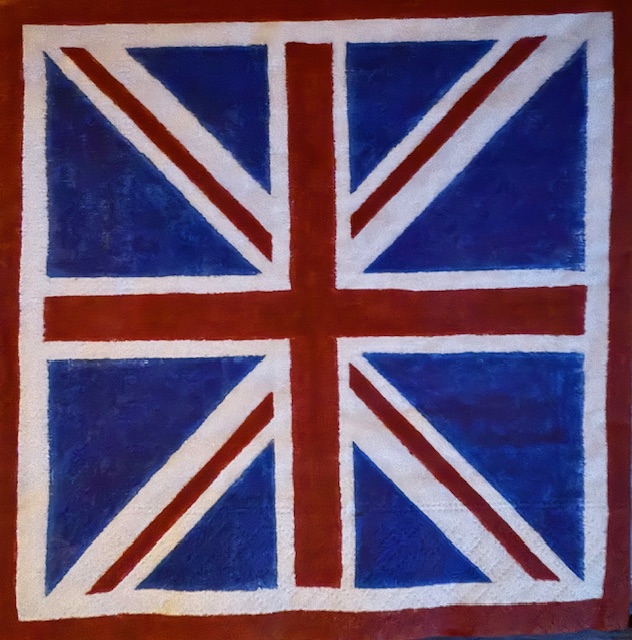
Napkins or serviettes, call them what you will, are another essential when eating. Because I like ironing, I am happy we use proper napkins, linen or cotton and not some paper replica, unless it’s for a party, like these:
And if you use a napkin, it’s good to have your own napkin ring in which to put it. There are standards after all.

I am not sure when it started but it has for me become one of the most annoying habits to witness and it’s mainly actioned by, I think, under-thirties women. Although in this age of equality I wouldn’t want to exclude some members of the opposite sex and anyone in between. For any multitude of reasons, the individual is feeling anxious and that anxious emotion brings a certain wetness to their eyes. Whether in disbelief that they’re going to cry or pleased that they’re showing their feelings, they move their hands towards their cheeks, fingers extended, nails prominent …. and shake their fingers, brow creased ….. mumbling ‘I don’t want to cry’ or somesuch. Someone could choreograph a little ballet with each finger having its own independent part to play. Any tears are carefully wiped away with the finger-print part of the finger; otherwise, their fashionable nails would stab them in the eye. (Note 2) I know we’re encouraging everyone to show their feelings more, especially young men, but this is absolutely ridiculous. And it goes on and on and no one says: “Oh! For God’s sake, Emma, get a f**king grip!” because that would breech their human rights.  

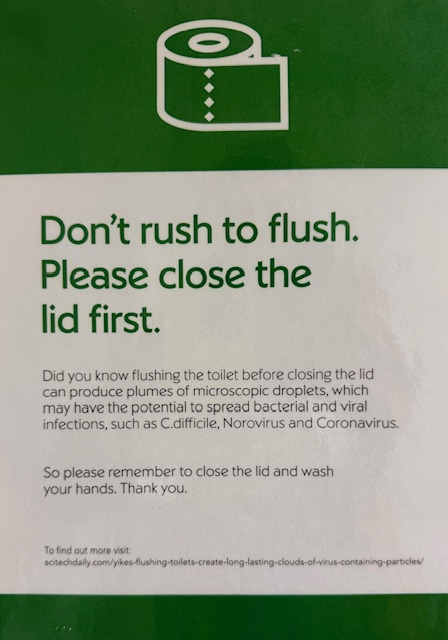
I have written before about ‘Loo Paper’ (PC 47 Aug 2015) and ‘The Loo’ (PC 54 November 2015). After using the loo, I think it’s important to close the lid, but I hadn’t factored in the latest advice. Close the lid then flush and not the other way around:
And finally, if you go to someone’s house and use a knife & fork, ie having something to eat, you should write a Thank You letter. With the cost of postage sky high, I write mine in cursive script with a fountain pen, take a photo then send it via WhatsApp. A rather modern take on old-fashioned standards; Carruthers would smile.

Richard 24th January 2025

Hove

www.postcardscribbles.co.uk

PS Carruthers is an old Scottish surname which reeks of upper-class aloofness. Inter alia, the main protagonist of Erskine Childers’ novel ‘The Riddle of The Sands’.

Note 1 Another word that defines a class and an age …. and an indefinable ‘meat’! Actually ‘fine-particle meat products enriched with pork fat and flavouring additives.’ Sounds very healthy.

Note 2 Nail extensions have become longer and longer, so much so that some should be registered as dangerous weapons and the owners of others will have problems in the future as in order to use a keyboard today, they have to hold their fingers in a convex manner.
PC 416 Catch up in The Hope

I use my Notes function in my iPhone to write down thoughts that occur to me, reminders to do this or that, or email myself if I need to take quicker action. The result is that some of these thoughts end up in my ‘More Thoughts for Postcards’ dump file. Always amused by coincidences, earlier this year I was reading Jo Nesbo’s latest novel, ‘Killing Moon’, some weeks after the removal of a haemorrhoid in January (see PC 373 Anally Focused February 2024). Nesbo wrote that ‘the Custody Officer at the local nick had a temper …. due to the presence of haemorrhoids.’, and this issue rarely makes it to the pages of a novel. Enough said!

I popped into The Hope Café on Tuesday and found Sami, head down in some new thriller, as is his wont. He looked up, smiled and suggested I join him. After getting a double espresso from Libby, I pulled up a chair and sat down. The chit-chat began soon enough.

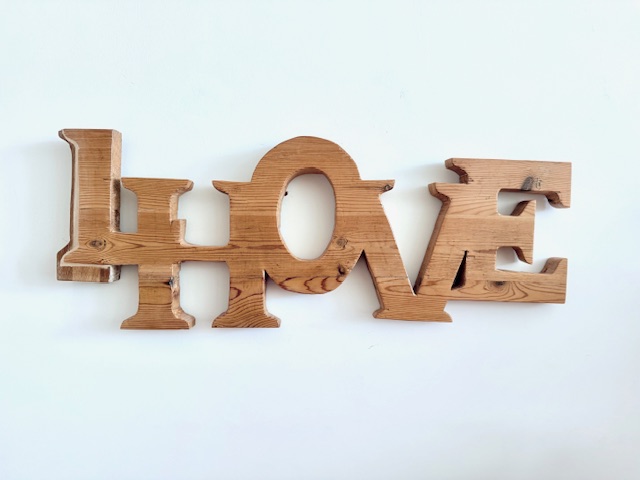
“You remember Sami that, after reading Sweet Tooth by Ian McEwen and his reference to the awkward rhyme of Hove and Love, I had sat on the beach in Rio and sketched out an intertwining of the two words.”

Yes, and you created some wooden piece.”

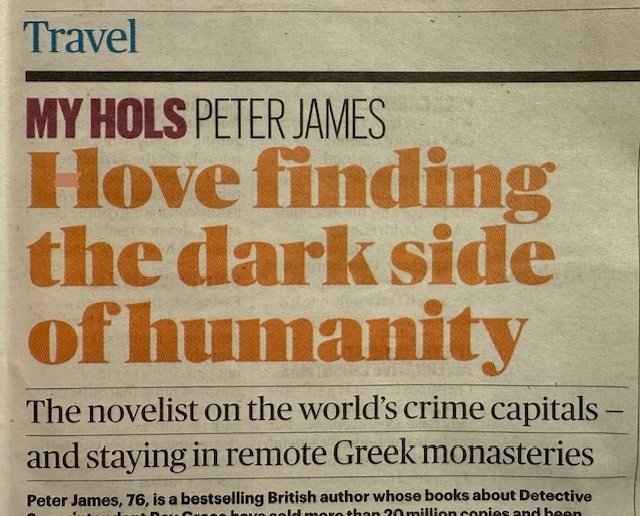
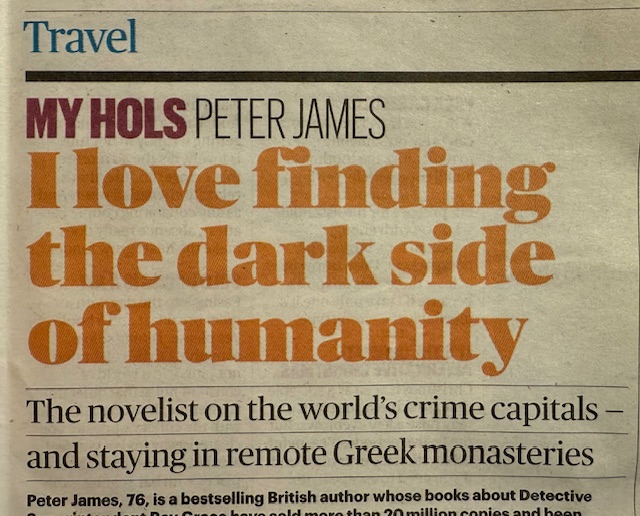
“Well remembered! It’s up on a wall in our living room. The other Sunday there was a short interview in the newspaper with Peter James, our local author who’s made a name for himself with his Detective Roy Grace series, based in Brighton.”

“Probably, like you Richard, I think I have read every one of them, including the one about Grace’s wife, who had been declared dead. Was the interview interesting?”

“Actually it was, if not a little predictable. But it was the headline that caught my attention:

I thought, here we go again. Just add a little line between the ‘I’ and ‘Love’ and we have ‘Hove’!”

“Think you need to get out more, Richard; becoming too introverted! Seriously, what else have you got in those notes for future PCs?

“You will know from my last PC that I am an avid Times reader. The other day there was a caption for an Italian church in the town of Rimini: “Rimini’s Duomo cathedral.” Rather like saying “Nimes’ eglise church”; bit sloppy!”

“What’s that good descriptive word: – ‘pedant’? ‘A person who is excessively concerned with minor details and words.’”

“That’s me! And a fully paid-up member of the Apostrophe Protection Society. Like when I shouted at a past Masterchef Professionals episode when it stated that one of the finalists, an Australian called Kasae, was working in Gloucestershire. A minute earlier it said she was currently working in the Roman city of Bath, which is in the county of Somerset.” 

“Ah! MasterChef! Which brings us on to Greg Wallace and the allegations of sexual harassing behaviour. (Note 1) Sad to say, he’s a wonderful example of ‘give a man a spade and he’ll dig a deeper hole’.

Marcus Wareing, Monica Galetti and Greg Wallace, co-presenters of the MasterChef series in the UK

“You mean his retort that those making the allegations were mainly middle-class and women of a certain age? One of his accusers said he seemed to be claiming to be a victim of classism. Deborah Ross, writing a spoof story about him in The Times, suggested he would have said: “I’m an old-school geezer just having a laugh: what’s the harm in that?”

“I read that Ulrika Jonsson felt his response showed the arrogance of a man who has zero introspection or self-awareness.”

“I wrote to The Times …”

“Of course you did! What did you say?

“Let me have a look in my Sent box of emails; here it is:

‘Sir. I suspect the recent allegations about Greg Wallace and his sexist behaviour are the tip of an iceberg that’s based on traditional male banter, now outdated and unacceptable. I wonder, for example, how long The Great British Bake-Off will continue, given the sexual innuendo so often woven into its script.’

I feel there’s a wider issue here. Most of society has moved on from male banter although it’s still heard in the pub or in a sports’ hall locker room. But I cringe at some of the scripted or unscripted exchanges during each episode of The Great British Bake Off (Note 1).”

“Not a fan, Richard! The issue becomes one of judgement, whether a comment is amusing or risqué, endearing or crass; that fine line between what’s acceptable and what’s not. The trouble is that the line has moved for society as a whole but some, like Wallace, haven’t realised it. What happens on The Great British Bake Off?”

“There’s lots of sniggering when someone for example talks suggestively about ‘cream’ or the word ‘bun’ and one has to assume that everyone is either happy with it or won’t complain. Sometimes it’s so obvious it’s childish; maybe that’s the progamme maker’s intent and of course traditionally the public has liked ‘saucy’ stuff. Changing ways and what’s acceptable in society takes years.”

Suddenly we both realise we’d been chatting for over an hour and need to get on with the day. As Sami gets up, Mo puts her head around the door and I almost have a change of plan, as I like talking to her. Then the ‘To Do List’ interposes in my mind:

“Hi! Mo! Look, love to see you but I need to go. You coming to the pre-Christmas mulled wine and mince pies early evening do here on that Friday, 20th December? Can we catch up then?”

“Of course! Bye Sami, bye Richard.”

So until the Friday before Christmas …….   

Richard 6th December 2024

Hove

www.postcardscribbles.co.uk

Note 1. MasterChef, MasterChef Celebrity and MasterChef The Professionals have now been running for over twenty years and its format sold around the globe. The current series of MasterChef The Professionals is co-hosted by Monica Galetti, Marcus Wareing and Greg Wallace.    

Note 2 Another television series, this hosted by Channel Four, where twelve amateur bakers compete to be crowned Finalist of the Great British Bake Off.

PC 415 More thoughts for The Times’ Letters

I have been an avid reader of The Times ever since they offered a discount to schoolboys back in the 1960s. During my military career the mid-morning coffee break in the Officers Mess was an opportunity to skim other papers, for example The Telegraph or Guardian, or those known as the Red Tops, like The Sun and The Mirror, which did indeed have a red banner headline for more salacious gossip. But I have always enjoyed The Times for its balanced views and now read it digitally. ‘Letters to The Editor’ have featured in my postcards, firstly in July 2022 (PC 292 Dear Sir (1)) and secondly PC 317 Dear Sir (2) in January 2023.

Other attempts to get published have all met with disappointment, although the comments might amuse you and, in an uncharacteristic moment of not having many postcards in draft form, I hope that these will suffice.

Twenty years ago, in the month of May, I wrote:

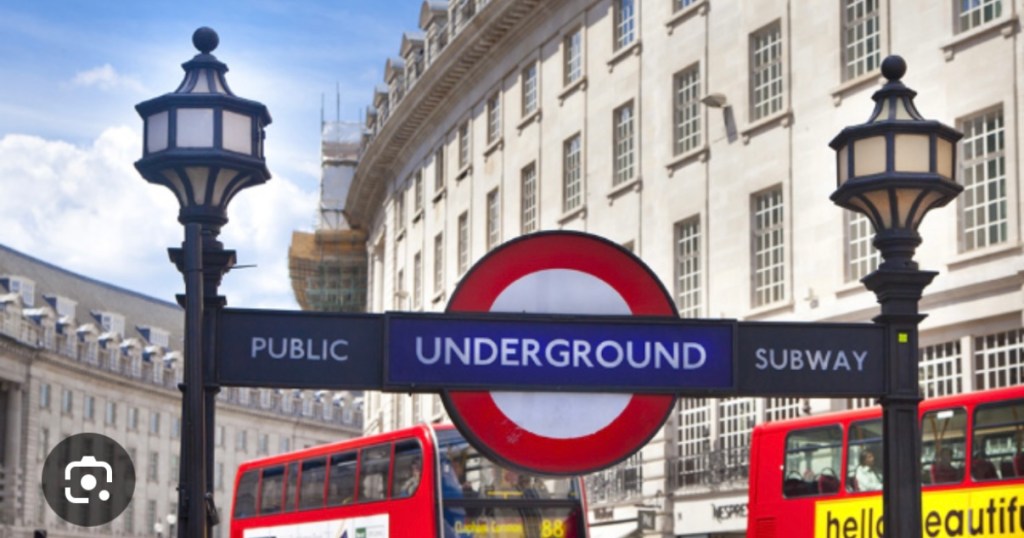
I hope I am not alone in being flabbergasted by the clearance yesterday of the tube driver for playing squash whilst on sick leave. Even before his dismissal by London Underground, his appalling employment record, a day off every week for 5 years, suggests he will milk the ‘system’ as much as he can. Yesterday was a victory for the workshy, the uncommitted, the jokers – and sadly says a great deal about the culture of our Public Services.”

In 2013, I wrote about the NHS Health Check and its validity:

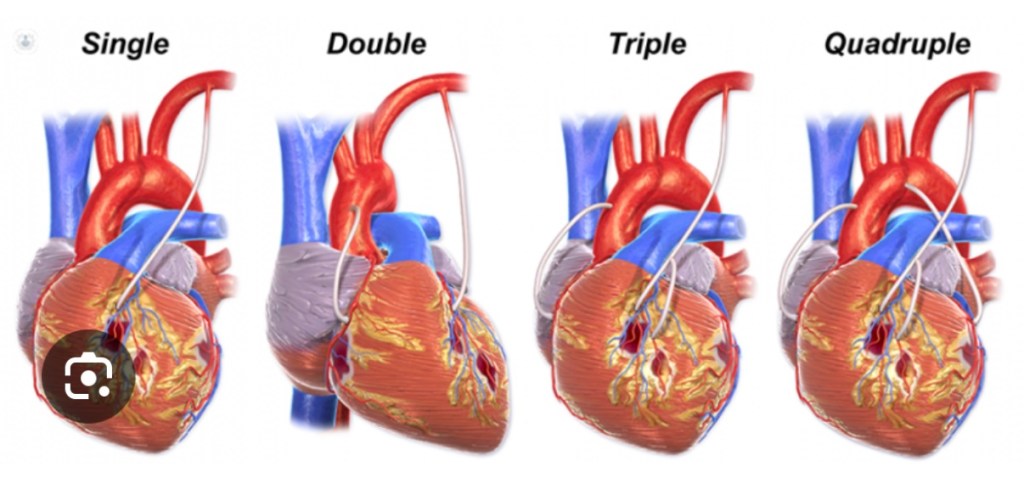
“Three months ago, in June, my local GP surgery suggested by text I had a free NHS Health Check Up and I duly booked an appointment. Although surprised that this health MOT didn’t inspect my eyes or my teeth, I was more than pleased to be told, after being checked for this and that, that I was fit and healthy with an 83% chance of not having a heart attack. Now, two months after a triple heart Bypass, I muse that someone must be in the 17%!”

In November 2014, an observation about business:

“Sir. One of the marks of a great leader is their ability to develop talent in both breadth and depth in their organisation, so much so that when they depart, there is no lasting ripple on the surface. Despite being awarded Veuve Clicquot Businesswoman of the Year, Harriet Green is clearly not in the category of a great leader, as the share price of Thomas Cook dropped 18% on the announcement of her departure.

Suranne Jones

In May 2016 I was prompted to put pen-to-paper, well not literally these days, but fingertips-to-keyboard doesn’t have the same ring:

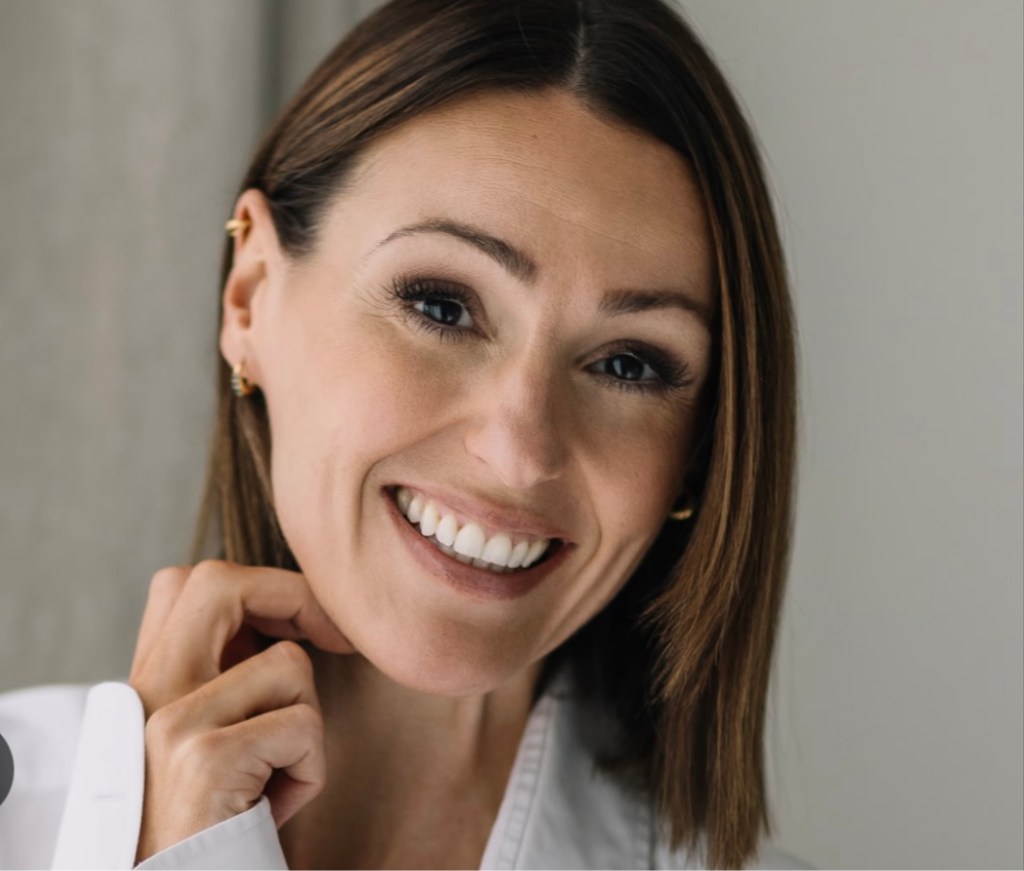
“Sir. On the front page of Monday’s Times (9th May) you carried a photograph of Mark Rylance who had been given the BAFTA (Note 1) for the leading actor. Inside you showed a photograph of Suranne Jones, who was BAFTA’s leading actress. Did someone toss a coin to determine who went on the front page or was it yet another example of continuing sexism throughout our society?

28 April 2017

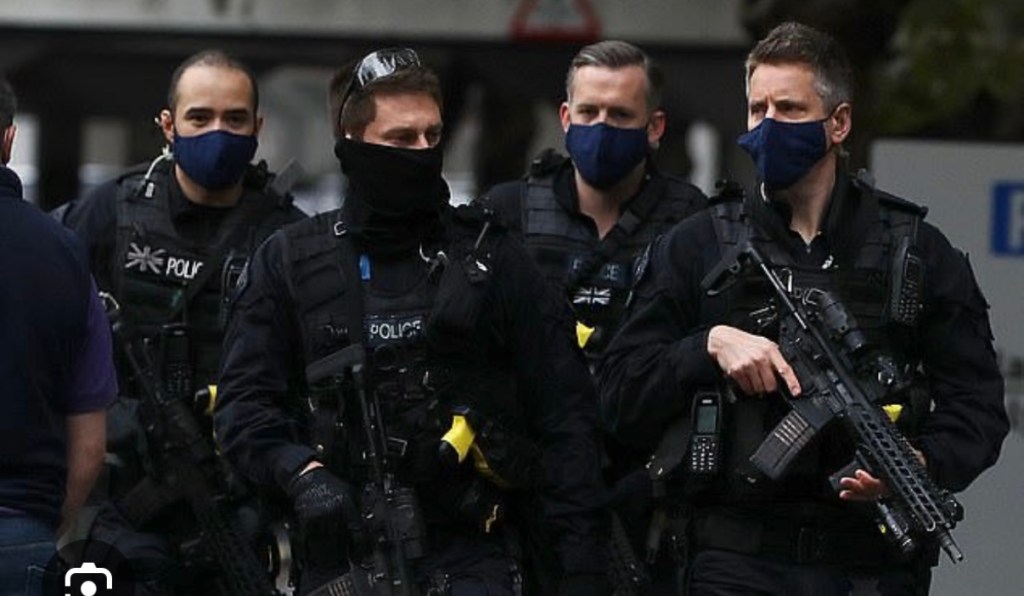
Appearance is everything. We have got used in recent years to seeing both terrorists and anti-terrorist forces hiding their faces with balaclavas or headdresses of some sort. A rather sinister frightening impression is given by this tendency, understandable for those perpetrating the terror but not for those acting to stop it. So it’s hugely refreshing to see those anti-terrorist police in Whitehall yesterday, bare headed and unmasked ……. proud of the role they undertake on our behalf.”

Couldn’t find the exact photograph but you take my point?

In the same year I wrote about ‘Modern Times’, prompted by a visit to a GP’s surgery.

“Sir, I secured an appointment with a doctor in a different surgery yesterday evening, my own being completely booked. In the waiting room I checked my mobile phone was switched to ‘silent’, popping it into my trouser pocket as I was called. The doctor stood, asking about my symptoms, then suddenly stopped talking. He looked at me intently, obviously expecting me to say something. I was not sure what, so I stared back! “Aren’t you going to answer your phone?” he asked in a rather irritated voice. I hadn’t recognised the sound and had assumed it was his!! Sure enough my phone was ringing. I hauled it out of my pocket, mightily embarrassed. I hadn’t locked the screen and inadvertent contact with my thigh had opened a coincidental sequence of ‘settings’, ‘sounds’, ‘ring tone’, and was offering me ‘ripples’ as an alternative to my normal ‘crickets’. I think the GP thought I was beginning to show signs of early dementia or some such and not seeking simple treatment for a chesty cough!”

April 2020

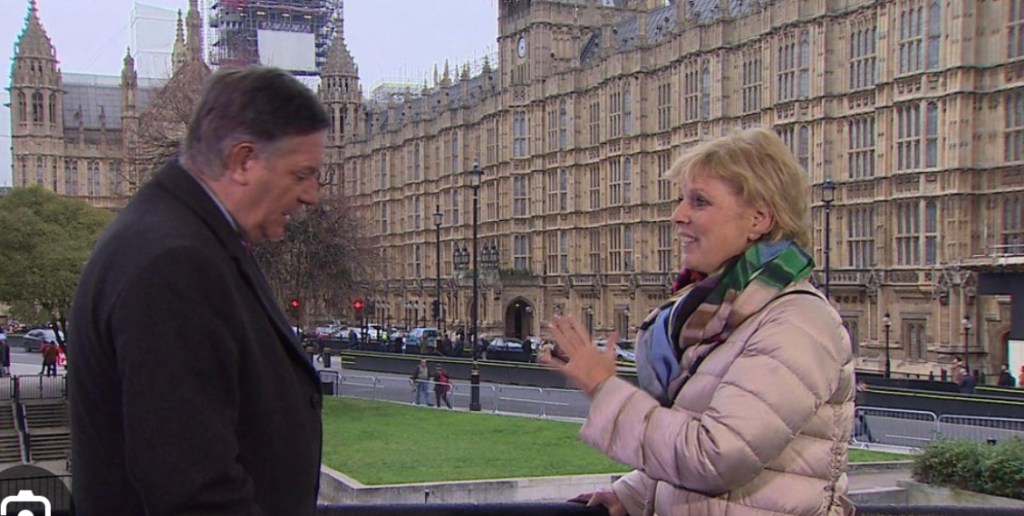
Sir. Am I the only person fed up with watching the BBC news spokesperson reporting from the outside platform near the Houses of Parliament, constantly trying the keep their hair away from their face? It distracts from their message and it can’t be beyond the resources of the BBC to find a wind-proof place.”

And finally a comment on society today:

“Sir. A recent television documentary concerned the Coventry forensic team’s work in trying to identify who stabbed a 15-year-old teenager. Their success was commendable. What was missing was any mention of parents, either of the innocent victim or of the three teenagers who committed the crime. As a society more needs to be done to ensure those who become parents understand the responsibilities that this entails.”

It’s fun to write to The Times, not only from the point of view of seeing one’s thoughts in print, but also to try to construct one’s letter in such a way as to appeal to the editors over the hundreds of others!

Richard 29th November 2024

Hove

www.postcardscribbles.co.uk

Note 1 BAFTA is an abbreviation for the British Academy of Film and Television Arts

PC 408 Memories of Sandhurst – The United Kingdom’s Royal Military Academy

Towards the end of my teenage years, I wanted to be an architect …… but architecture was going through a difficult time and my stepfather suggested I join the British Army. He thought was that by the time I had spent three years or so serving Her Majesty, architectural opportunities might be better; I did 20 years!

To gain entry to the Royal Military Academy Sandhurst (RMAS) I had to attend the Regular Commissions Board, then located in Westbury, Wiltshire, to be assessed!

Fortunately I passed the various physical and mental tests, including the ‘speak for 5 minutes about … a milk bottle’!

The transition from boy to man, girl to woman, is, for some, complex and unnerving, for others it’s like water off the proverbial duck’s back. Everyone’s experience is unique, can never be otherwise and it could be forced upon one through the diktats of family life, the loss of a parent for instance, or tribal customs very early, but for most it happened after one’s 16th birthday; nowadays I sense it’s much earlier – more’s the shame! Of course there are those who never really grow up, still maintaining a childish outlook on life, the Peter Pans. The syndrome, used to describe those adults who are socially immature, refers to people who have reached an adult age but cannot face their adult sensations and responsibilities.

The Royal Military Academy (Note 1) turns boys into young men, girls into young women, ready to be deployed into combat should that be necessary, ready to lead. Nowadays the course is a year (Note 2) but in 1965 it was a two-year course mirroring and, in some respects, equalling the first-degree courses at many universities. The Academy had four intakes of Officer Cadets at any one time; commissioning took place in December and July. Some 60% of our time was spent on academics, the rest on learning our new craft, the military and the art of warfare (Note 3).

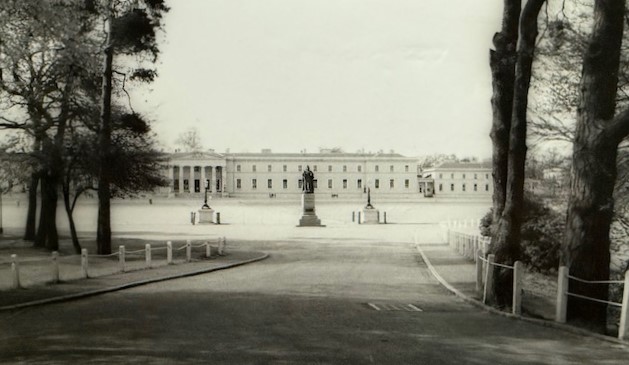
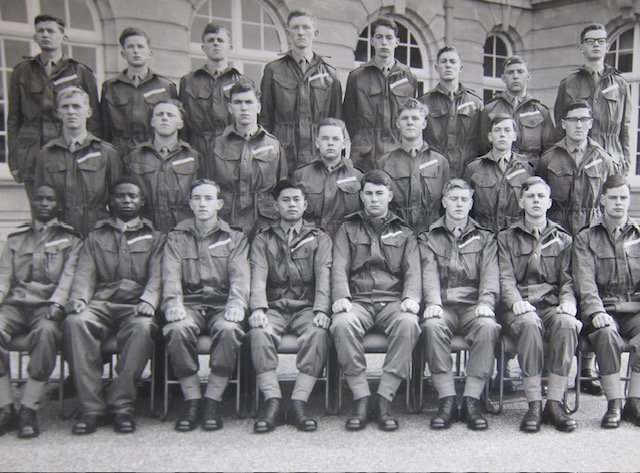
Our neighbour Meryl, an avid reader of my postcards, suggested I wrote something about my memories of the two years I spent at RMAS. Why, I am not quite sure; maybe she wanted to find out why I am how I am (?) but I doubted whether, in 1000 words or less, I could encapsulate my time growing, from teenager to adult, from schoolboy to Army Officer. Maybe I would need two or even three PCs? It was a disparate bunch of teenagers who formed up on the Victory College square as Burma Company Intake 39 in September 1965 and included three from overseas, Sid Sonsomsouk from Thailand, Ngambi from Uganda and Jo Nakamet from Kenya. No one was sure what we had let ourselves in for. It didn’t take long to find out!

How would I describe the first six weeks, when the days began very early and ended very late, when others dictated what you did? Challenging? Draining? Character building? Probably all of the above and more besides. A good example was ‘Changing Parades’, when we had to appear in the corridor outside our room in one form of dress, be inspected with infringements resulting in press-ups, before going back and changing into another form of dress – from full combat gear, to Service Dress, to PT Kit (Blue Blazer, Blue shorts, White T-Shirt, White ‘plimsols’ (Does anyone know what these are?)) to Parade Ground Uniform. Our rooms had, during the whole process, to remain immaculate. The instructors would scream and shout at any visible laziness or inattention. Faced with an external threat (the instructors!) we all began to coalesce into a group, safety in numbers and focusing our hate on our instructors. I think this was where the military saying ‘Kit on! Kit off!’ comes from.

Within the first month one of the platoon was suddenly diagnosed with leukaemia, disappeared to the Military Hospital in Aldershot ….. and died two months later. 

I have written before how the experience of becoming proficient at drill, in marching in time, swinging the appropriate arm, showing off our skills and being part of something, belonging, wanting, gets imbedded within one. Imagine being on parade with another 889 officer cadets, moving in formation to the familiar marching tunes, bursting with pride. That’s a great memory, acknowledging the hard work that preceded it, to get to the required standard. For those who have never had the privilege and opportunity, your life is missing something!

The main Sandhurst parades started at 1100. There were always little niggles, so the Academy Sergeant Major, a chap called Phillips, the most senior non-commissioned officer and otherwise known as ‘God’, would insist we would be lined up on Old College Square at 1030, to ensure there was no last-minute panic. Old College Square was a 10-minute march from New College Square, so College Sergeant Major Murphy, Irish Guards, (‘Spud’ behind his back, but never to his face!) insisted we were ready to leave at 1000, as there were always little niggles. Burma Company Sergeant Major Hewlett, Coldstream Guards, insisted we formed up for him at 0930, as there were always little niggles. Staff Sergeant Rooney, a Welsh Fusilier, insisted the platoon for which he was responsible formed up at 0900, as there were always little niggles. This is probably where the phrase ‘5 minutes before 5 minutes before …..’ originates.

(to be continued)

Richard 11th October 2024

Hove

http://www.postcardscribbles.co.uk

Note 1 Naval Officers are trained at the Royal Navy College Dartmouth and Air Force Officers at Cranwell

Note 2 A new term started last month with 288 Officer Cadets joining CC 243 for the 44-week course. There are 40 international cadets from 23 countries as diverse as Columbia and Kazakhstan. Of the 248 British cadets, just over half were educated in the state sector, 80% are university graduates and the average age is 22.

Note 3 The War Studies Department was run by John Keegan. The recent obituary of Duncan Anderson, who took over as its head in 1997, had an interesting snippet!  Keegan’s successor was a chap called John Pimlott, who had died after two grenades he picked up during a battlefield tour in France exploded in his study at home.