PC 478 Eating Habits

I have to assume that none of my readers have actually ever been starving, although they may have screamed something to that effect at some moment. Starving is a horrible situation to be in and for some parts of the world starvation stalks people too readily. You may remember Stalin confiscated Ukraine’s wheat harvest in 1932; in the year that followed some 3.9 million, 13% of the population, starved to death. (See PC 273 ‘Stories to Tell’ March 2022)
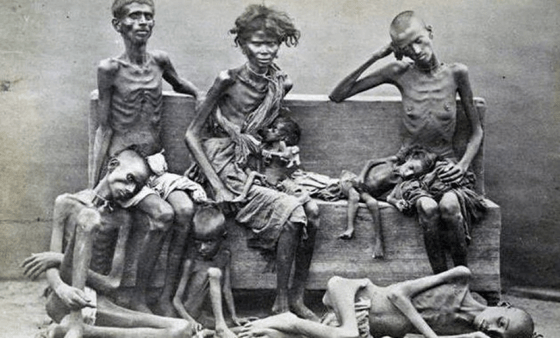
Extreme starvation in Ukraine in 1932

Malnutrition follows and, unless there’s a slow reintroduction to energy-giving food, the physical effects become irreversible. That is life limiting.

In developed countries we seem to get into fixed routines when it comes to eating. Breakfast starts the day, something in the middle, called lunch in the southern half of England but often ‘dinner’ in the North, then supper/tea/dinner after you’ve stopped working. Other opportunities to put food in your mouth might be mid-morning, traditionally called ‘elevenses’ in Britain or simply ‘coffee’. In my Army service, in barracks most things stopped for ‘coffee’; down to the various messes or canteen, a quick peruse of the morning papers, a chance to talk to others not in your sub-unit, and then back to work. Afternoon tea for the middle and upper classes would have been tea, sandwiches and maybe a slice of cook’s latest cake; for the workers it was their main meal of the day. Who can forget Shirley Valentine’s husband Joe, in the film of the same name, arriving back from work, expecting steak for his tea, only to find that she’s fed it to a friend’s Bloodhound; ‘But it’s Tuesday. I always have steak on Tuesday!’  

Fortunately you have a choice, to find some food and put it into your mouth …. and no one is forced-fed!

When I started my executive coaching career, I became a member of The Institute of Directors on Pall Mall in central London, so I could use the meeting rooms to engage with my clients. The huge oil paintings of the great and the good of the C19th that hung around the large rooms communicated a sense of ‘anything is possible’; that’s how I saw them, although I never asked a client their take! Sometimes for lunch I had a sandwich at my table, but more often-than-not I walked across Pall Mall and up the Royal Opera Arcade to an Italian-run Deli.
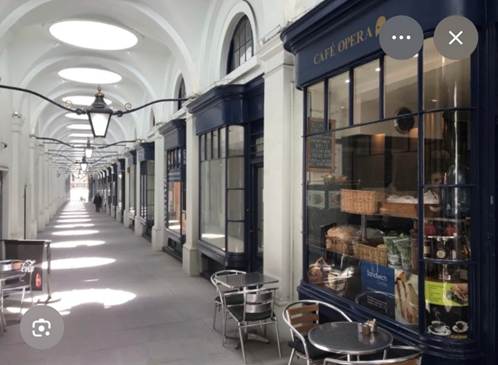
The arcade itself had a curious mix of tenants; today it lists an art gallery, a ‘Synergy Chinese Medical Centre’, a stationers and bookshop, a diamond merchant and the back door to the New Zealand High Commission, as well as the sandwich centre. This was a busy place at lunchtime, and the energised staff recognised their regulars with a big smile and wave: “The usual?” It was gloriously theatrical! Then my ‘usual’ was slices of rare roast beef in a granary bap with some horseradish sauce and masses of fresh black pepper; I can taste it now ….. to die for!

Another London lunchtime favourite was egg mayonnaise in a brown bap with masses of black pepper, and an apple, when I worked for Short Brothers in Glen House in Victoria. The usual? We do get into habits about food, don’t we.

My body screams ‘sugar please’ when I come back from hot yoga, where I’ve lost over a litre of sweat ….. so need liquid and sugar. I got into the habit of having a large bowl of cornflakes, with granulated sugar, full fat milk and an apple or banana; then some Cadbury’s Whole Nut! Over the months my weight gradually increased; not surprising! Then last year I got quite severe food poisoning on our TAP flight from Rio de Janeiro, took ten days to recover completely, lost weight and recognised here was an opportunity to change my habits. So now my ‘usual’ is a salad of crayfish tails, anchovies, tomatoes and cucumber.

A yoga chum passed me Chris van Tulleken’s paperback ‘Ultra-Processed People – Why Do We All Eat Stuff That Isn’t Food …. And Why Can’t We stop?’, as he thought I might like to read it. He had absorbed its contents lying in his evening bath and the back cover had clearly had alternating periods of being wet and drying out. In some strange way it made me want to read it more!
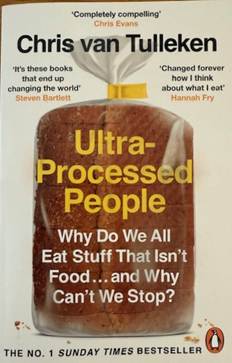
If you think van Tulleken’s name’s familiar, it’s probably because his ideas were popular with the late Michael Mosely, whose television series about food, particularly about intermittent fasting, low-carbohydrate and the ketogenic diets, made him a household name. 

In 2017 British consumers spent just 8% of their household budget on food; this compares with only 6% in the USA, but 11-14% in Germany, Norway, France and Italy for example. Research by the Food Foundation shows that the poorest 50% of households would need to spend almost 30% of their disposable income if they wanted to eat a diet that adheres to national ‘healthy eating guidelines’; the poorest 10% would need to spend 75%. UPF is almost universally cheaper, quicker and supposedly just as nutritious than foods and meals that need home preparation. For some it’s a no brainer.

I haven’t read more than a third of the book yet, but already like the statement: “Fish oil is bad for you; oily fish is good for you.”, although I accept that for some, ‘cod liver oil tablets’, for instance, might be more available than a couple of mackerel fillets. Van Tulleken uses Palm Oil to illustrate his point: “When freshly pressed, it’s an almost luminous, crimson, highly aromatic, spicy and flavourful, full of antioxidants like palm tocotrienol.”

Not sure whether you’re a fan of Nutella but this spread uses oil, and that can’t be crimson and spicy! So, the palm oil is refined by heating, has phosphoric acid added to remove gums and waxes, is neutralised by caustic soda, bleached with bentonite clay (!) and finally deodorised using high-pressure steam. The process is known as RBD – refined, bleached and deodorised. And it’s this process which is used to make soybean, palm, canola (rapeseed) and sunflower oils.

I wonder what other nuggets I will uncover as I read more of the book. It might make me question further: “The usual?”

Richard 13th February 2026

Hove
http://www.postcardscribbles.co.uk

PC 461 Bumped into Sami

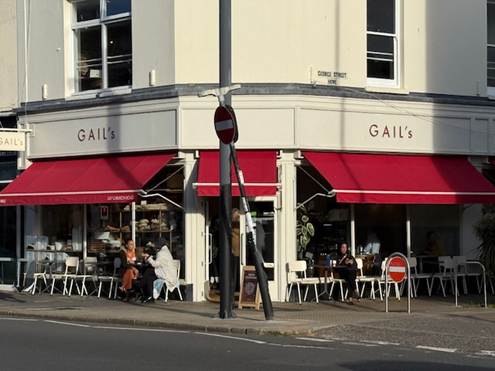
There’s been so much to write about from our time in Singapore, Australia and New Zealand that I wondered whether I should pause this week and scribble about something else. Coincidentally I bumped into Sami outside Gail’s at the bottom of George Street here in central Hove the other afternoon, so we popped in for a small cake and a coffee; walking to The Hope Café would take too long!

Luana, a Brazilian living in Hove, was not on shift; they have a high turnover of staff and I don’t recognise anyone, then the local manager Steve comes down from upstairs. It’s quieter on the first floor so we go up there!

Sami starts the chit-chat.

“Good to get a fresh perspective on life through travelling, isn’t it? I know I certainly do and you know what, people moan about the state of the United Kingdom, but every country has issues, often exactly the same as ours!”.

“You’re right, Sami. Talking to a relative who works in the health care system in Rotorua in New Zealand, about the crisis in the young and their ‘mental health’, she says it’s exactly the same there. Most have been allowed to opt out of working, whereas they should be encouraged to opt in! Whilst I was in New Zealand I read of the very interesting developments here with regard to the use of weight-loss drugs to combat obesity.”

“You thinking of our gallant Secretary of State for Health and Social Care, Wes Streeting?”

“Indeed. He wants to make these weight-loss drugs more freely available through the NHS. Personally, I think this is absolutely the wrong approach to tackling the country’s fat-verging-on-obesity crisis. Then I read Emma Duncan’s column in The Times ‘The UK’s Addiction to State benefits can be broken’. Think she’s bang on when she writes: “Although genes play a role, the primary determinants of obesity are what you eat, how much you eat and how much you exercise. Obesity is thus largely a matter of personal choice. Unfortunately, the government is reluctant to conduct a campaign like the one on the dangers of smoking, because it fears that fat people would be offended by the implication that they are responsible for their excess weight.” And you’ve heard my views before. Unless you are force-fed, you alone are responsible for putting food into your mouth!”

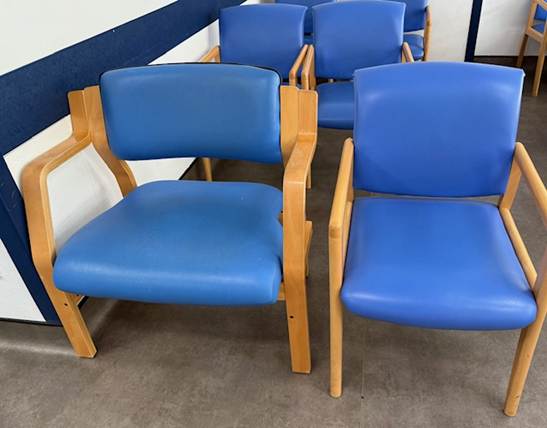
“I saw this the other morning in an NHS hospital waiting room; the left hand one stopped me in my tracks! Sign of the times huh!”

“OMG! No way?”

“Ah! Yes! ‘Personal Choice’. Isn’t that the one of the very basic differences between socialism and conservatism? Socialism regards people as the victims of impersonal economic forces. Conservatism sees them as individuals in charge of their own destiny. Labour voters are much likelier to believe that “people’s success in life depends mostly on factors beyond their control”; Conservatives that it is the consequence of “their own merit and efforts”. Then we have this ridiculous nonsense about ‘mental health’. Because political parties need voters’ approval, they are unwilling to tell people uncomfortable truths — such as that feeling anxious and stressed is a normal part of working life! Have you written any letters to The Times recently Richard?”

“Funnily enough …… being married to a Brazilian encourages me to keep up-to-date about their macro issues, like the trial of ex-President Bolsonaro. I read this in The Times on the 12th September: “Bolsonaro will not be jailed immediately. He will remain under house arrest at his apartment within a gated compound in the capital, Brasilia. ­According to Brazilian law, a full appeal against the conviction is not possible because only one judge disagreed with the unanimous decision.”

“And you immediately thought it wasn’t a unanimous decision if one judge disagreed?

“Exactly! Sadly, The Times didn’t publish my short letter. Then I realised that when you pronounce ‘unanimous’, it starts with a ‘you’ sound, whereas for instance ‘unambiguous’ starts with a ‘un’ sound. This is the English language, in all its complexity of pronunciation; then I thought of usual (you!) or unusual (un). Fascinating!”

“Whatever floats your boat!”

“Incidentally, Sami, do you have a will, outlining what should happen to your assets when you die?”

“Oh! Yes. Doesn’t take long and it makes sense, helping your executor sort out your estate. Why do you ask?”

“Families become complicated sometimes. We know of someone who settled in another country and told their father they didn’t want any share in his estate. For whatever reason, he either didn’t believe them, wanted to show his generosity, however misplaced, or didn’t make a will. Now they are continually being drawn back to sort out some legal tangle. There’s a lesson here; a will makes matters easier for those you leave behind.”

“Richard, have been meaning to ask you; when did you I start adding the geographic location of where your postcards are sent from, which, if it’s one about travel, maybe completely different?”

“I guess trying to be accurate! In years gone by I remember buying postcards abroad and, if the shop didn’t have sell stamps, forget to buy them somewhere else. I would find them in my suitcase when I got home and post them using a British stamp. Then I wondered what the recipient would have preferred, the photograph showing some exotic location, the foreign stamp or the simple message ‘thinking of you/wish you were here’.

“You still obsessed with your hot yoga?”

“Actually, I am and it’s one obsession I am happy to be controlled by. Great for staying reasonably fit, good for its mental challenge and I need a regular routine. On Friday it’s something of a milestone; it’ll be my 4000th session. I started in March 2009 so have averaged 250 per year for 16 years! Never too late, never too old to start; you thinking of joining Celina and me, Sami?”

“Er! Got to go, Richard. Good to see you and we’ll get together in The Hope Café shortly.”

And off he went, down the stairs, muttering to himself …. ‘If he thinks I’m going to ……’ then he was out of earshot!

Richard 17th October 2025

Hove

http://www.postcardscribbles.co.uk

PS I have an Excel spreadsheet that tracks my sessions …..

20096520163162023174
201022220171802024144
201133920183132025124
20123432019287
20132492020288
20142702021218
20152792022189