PC 413 Hope in The Autumn (continues from PC 411)

“That was a long break, Richard!”

“Yes. Sorry! Got caught by Libby who wanted to give me an update on Susie.”

“How’s she doing?”

“Libby thinks she’s enjoying her course which should finish before Christmas. Obviously now looking where she can apply new-found her skills.” (Note 1)

“Unlikely we will see her back behind the counter! Sad but life moves on and so it should. We were talking about what The Times’ obituary writers had said about General Sir Mike Jackson. Always interesting to read the obituaries of others, not that I imagine for one second that mine will feature in a national newspaper.”

“Maybe, maybe not! The obituary writers must have a fun if not conflicting time deciding who to include. Did you see that one last month about possibly the last ‘ice harvester’?”

“No ….”

“In an age when a refrigerator and freezer are considered essential gadgets, we forget some of the ingenious ways our forebears used to keep food fresh. One such device was an ice box, made of wood or metal. Food was placed in the bottom and an ice block in the top compartment. Cold air falls so keeping the food fresh.”

“OK. I’ve seen some on visits to National Trust properties, but who was this ice harvester?”

“Actually an Ecuadorian named Baltazar Ushca, who for more than 60 years climbed the slopes of Mount Chimborazo, the tallest mountain in Ecuador, to harvest the ice that covers the dormant volcano. “It’s the tastiest and the sweetest, full of vitamins for your bones,” he explained of the frozen water, which glistens in the sunlight like a huge diamond.”

“Now I know something about Mount Chimborazo. Its summit, over 6000m if I remember correctly (Note 2), is the point on earth closest to the sun, as it sits just one degree south of the Equator, where the Earth’s bulge is at its greatest. But why did The Times decide his life was worth remembering?”
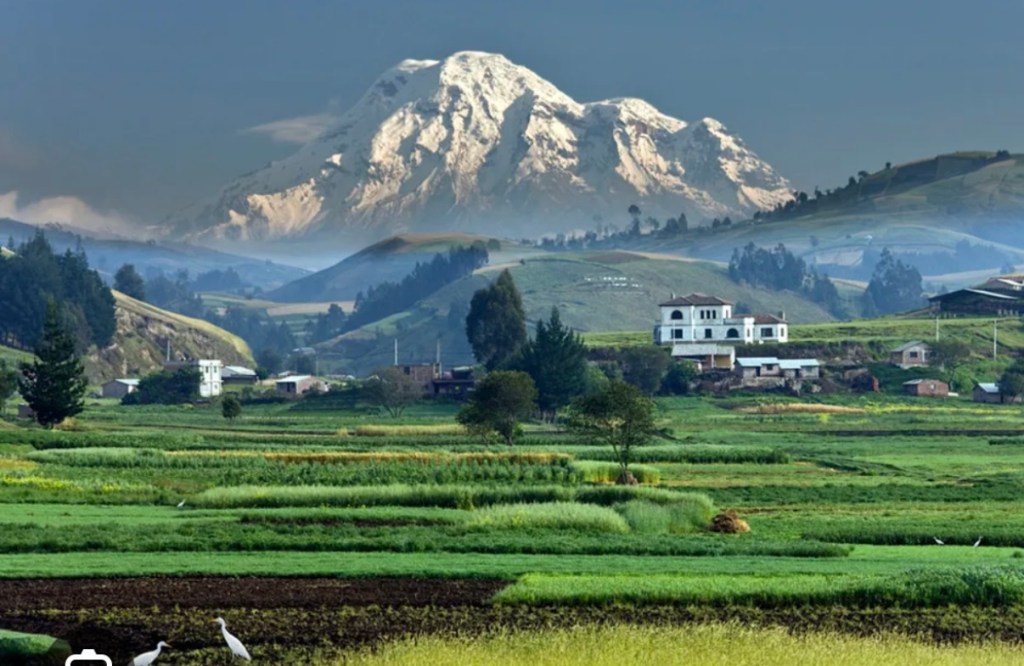
Mount Chimborazo

“Probably to mark the end of a traditional way of life. At one time there were up to 40 ice harvesters, known as hieleros, including his brothers Gregorio and Juan. “We would go out in a group of friends, four or six groups, twice a week,” he explained in his native Quechua language. “I would go with my mother and father, with my brothers and sisters.” Gradually their number dwindled. Ushca, who was born in 1944 and started the five-hour trek to the top of the mountain aged 15, was believed to be the last one.”
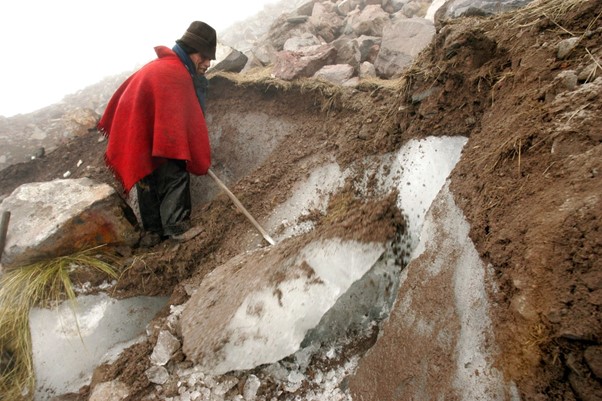
Baltazar at work

“Ah! That’s both fascinating and sad. I haven’t been anywhere in South America, let alone Ecuador, although Rio and Machu Picchu are on my bucket list. And now, Richard, I need to get going as I promised my mother we’d meet in M&S in Brighton. She wants to buy some clothing staples and M&S’s very good for these. See you ……”

I sat back, relishing the agreeable atmosphere in the café, and was thinking of getting my iPad out to read the day’s news when I saw Sami coming through the left hand door.

“Hey Sami! A belated Happy Birthday for the 24th. Us Scorpios must stick together!”

“Afternoon Richard. How was your birthday?”

“Actually lovely and rather drawn out. The week after we went to Chichester for lunch with my brother and then had Jade and the boys down. They just LOVE Brighton; Lego shop, VR business, lunch down on the pebbles at Captain’s, then an hour on the pier. For some strange reason they had never been on it, so the excitement levels were sky high. And Candyfloss is a favourite – on a stick of course.”

“I bet they went for a swim before going home?”

“They did indeed …… and had a slice of cake. Actually it was a very drawn out birthday as my mother-in-law made me a cake when we were in Estoril last week!”

“And have they moved yet? I remember your daughter was buying a derelict house that her maternal grandmother had lived in. How’s that going?”

“Water under the bridge! A very stressful two months but they completed a week ago and have moved into a rented house until Christmas. They have replumbed and rewired, fitted a new bathroom and now have six weeks to fit the kitchen and windows. Certainly doable!”

“Thank you for the update. Good luck to them. You know Paul Simons, who writes a column in The Times about weather?”

“Yes. He digs up really interesting information. What’s piqued your interest this week?”

“A place in Australia called Coober Pedy. Australia is expected to face one of its hottest summers on record and, even though it’s spring in the southern hemisphere, a couple of weeks ago South Australia had its highest temperature for 29 years when the outback town of Coober Pedy recorded 43.7C.”
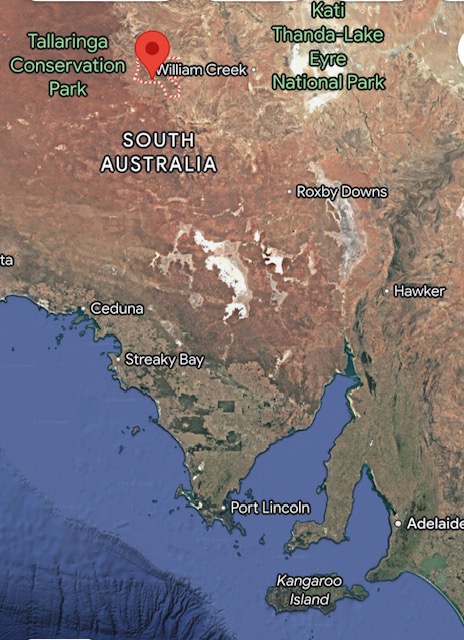
Red marks Coober Pedy

“Never heard of Coober Pedy. Tell me more?” (Note 3)

“Well, Coober Pedy is a remote mining town in the South Australian desert and has the largest opal mine in the world. When miners arrived in 1915 they soon found life was far more bearable underground, inside disused mine shafts, than above ground in the heat. So they began digging out their own subterranean homes and today it’s a grand subterranean town with restaurants, bars, art galleries, a bookshop, churches and even a four-star luxury hotel, all built to escape the desert heat. Temperatures below ground stay at a surprisingly pleasant 23C-25C throughout the year without any need for air conditioning. How about that!”

An underground Air BnB in Coober Pedy

“Never been to South Australia; maybe I should put it on my list. Incidentally you read my postcard entitled ‘The Snail aka Brian’ (PC 406 Sep 2024)? Well, there was a lovely little cartoon on Facebook the other day which certainly made me smile.
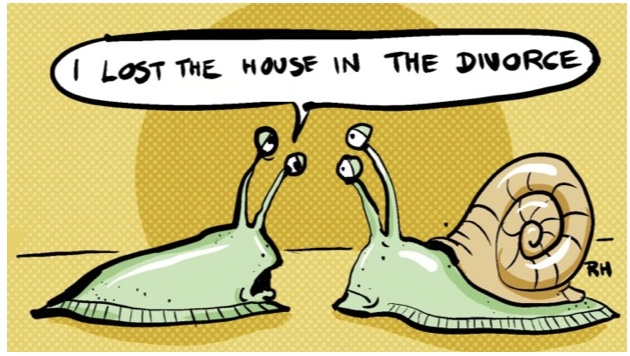
And now we need to get going as I see Duncan wants to close. Love to Lisa and see you soon.”

“Great cartoon! Love to Celina. Good to see you. Take care.”

Richard 15th November 2024

Hove

www.postcardscribbles.co.uk

Note 1 After her late ‘Gap Year’, when Susie spent some time in New Zealand and Australia, she started a course on Logistics, with the intention of getting involved in the wholesale side of commerce.  

Note 2 Mount Everest, for comparison, is 8849m above sea level.

Note 3 Unbelievably Kay, our masseuse, had a one-year dance contract Australian tour that included a performance in Coober Pedy in 1988. ‘Very Red-neck!’

PC 412 Memories of Sandhurst (part 3)

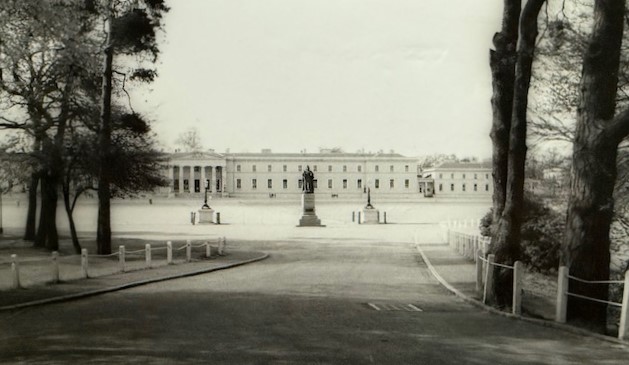
The link between mental fitness and physical fitness is well researched. Thankfully we got physically fit, through sessions of PT, time in the swimming pool, ‘Battle PT’ runs, wearing kit and carrying one’s rifle, and undertaking long treks, particularly in the Brecon Beacons in South Wales. One evening towards the end of our first term, so probably early December, we got dropped off, at night, in the middle of nowhere! The first checkpoint was at the top of Pen y Fan, the highest mountain in this National Park, with a notoriously steep ascent to start; hard work, particularly carry full kit. Don’t forget this was light years before GPS and mobile phones; we had learned the basics of land navigation and worked with paper maps and old-fashioned compasses.

Pen y Fan

It was probably midnight when we got to the top and were given our next  checkpoint, some 16kms away. There we had to inflate a rubber boat and paddle some 10 kms to the next point. Oh! I think there was a stretcher race in there somewhere. Sometime the following evening we gathered in a pub carpark, without any permission to enter so psychological torture (!) and were given our next task, a four-point speed-march over the Sennybridge Impact Area. Sleep deprived and mentally and physically exhausted, I remember distinctly seeing a three-masted sailing ship slide across the face of the full moon, as we laboured from one water-filled hole to another.

Once I realised sleep deprivation was something one had to deal with, I learned how to catnap. The memory of hallucinating that wonderful sailing ship triggered another, sleeping standing up! It was before dawn on day three of an exercise on the local training area known as Barossa. My platoon was to be the assault unit for a company attack at daybreak.

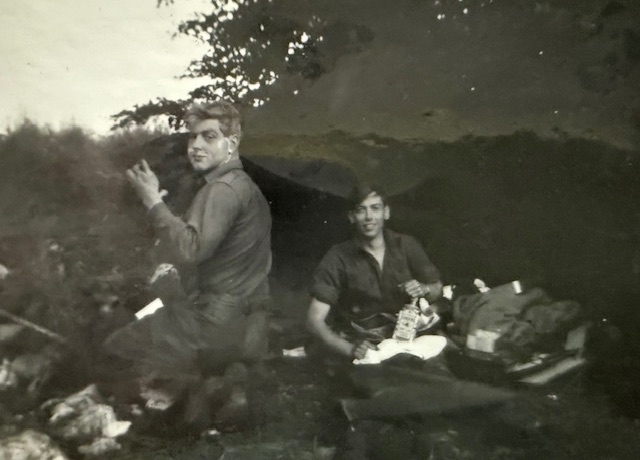
John Thewlis and Martin Ward-Harrison – somewhere

After a night in trenches, with patrols and sentry duty, everyone was knackered but, fortified by breakfast cooked over ‘hexy’ burners and a hot coffee, we formed up in our sections and silently made our way to the FUP (forming up point), some 1000 metres away (actually it was probably 1093 yards as this was pre-metric UK!). We tried to move quietly through the darkness, every now and again stopping to ensure everyone was together. I fell asleep upright and only woke because John Webster, who was behind me and who had expected me to move, had shuffled into me!

As our understanding of military tactics, albeit at a low level, grew, so did the opportunities to show how much we had learned. The gathering of intelligence is often achieved by patrolling and the memory of one night patrol exercise has stayed with me. I am not sure who the platoon commander was, but I was his radio operator, equipped with an A41 radio set, about the size of a ream of A4 paper and weighed as much; its aerial was about 5 feet long. My task was to keep in touch with the controlling station, callsign Zero, and relay information as necessary. The problem was I had Laryngitis, so all my communications were barely audible, irrespective of how loud I wanted them to be! In the exercise debrief, the Directing Staff praised the quietness of the patrol; there are some benefits of being ill!

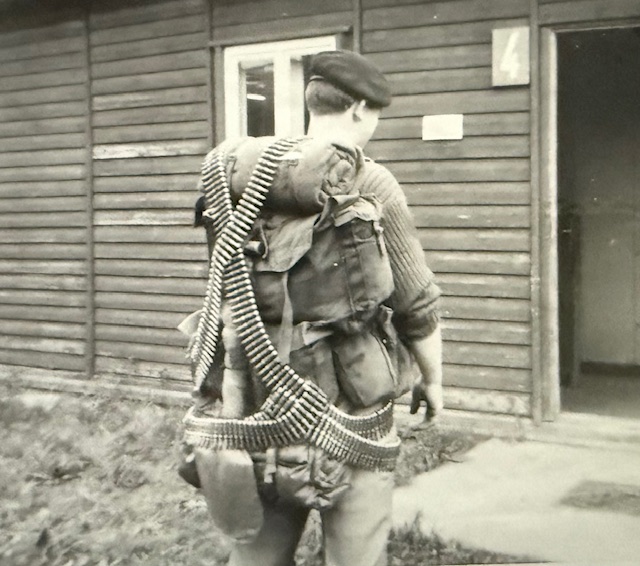
Sometimes we had to carry a lot of equipment. Preparing for an exercise in Belgium.

One aim of our training at Sandhurst was to teach us how to work as a team, both as a team member and as a team leader. Seems obvious, doesn’t it, but it is potentially one of the most difficult things confronting a leader. In each of the six Sandhurst terms, there was some Academy competition, be it the inter-company Drill Competition or the dreaded Assault Course, the winner the quickest team over a number of obstacles. The latter loomed at the start of the term in which it was placed as some mountain to climb. Actually that isn’t far from the truth as the ‘mountain’ was a ten foot wall. We were used to six-foot walls and one’s ability to climb up and over on one’s own. The 10ft wall required teamwork, technique and belief, particularly for the first and last person. To get the first person (A) on to the top of the wall, the tallest in the squad would stand with his back to the wall, with his hands cupped in front. Running from 10 metres or so, the second person (B – lightest and strong!) then placed his boot into the cupped hands of (A) and lifted himself up towards the top of the wall. His ascent was aided by (A) twisting his body and extending his arms upwards. Once on top, (B) could lean down and grab the next person (C), who was aided by (A). After the other five members of the section were over, this left (A) on his own at the bottom! (B) and (C) would both lean down, grab one of (A)’s arms, haul him up and over they all went. All this with the timekeeper’s stopwatch clicking away the minutes and seconds.

I am not sure the current training includes Bicycle Drill. Back in 1966 we were instructed how to stand next to a bicycle, how to mount, how to move off and how to stop. Saluting an officer whilst on a bicycle was not encouraged; we simply had to brace our arms, keeping looking forward! No helmets!

Sandhurst offered a full career to a pensionable age of 55. One loses contact with people, so I have little idea of how others’ careers developed. But I do know that my dear friend Martin Ward-Harrison was killed in Oman, that Sid Sonsomsouk retired as a general in his home country of Thailand and that Crichton Wakelin retired at 55, then took on a retired officer’s role for another ten years.  

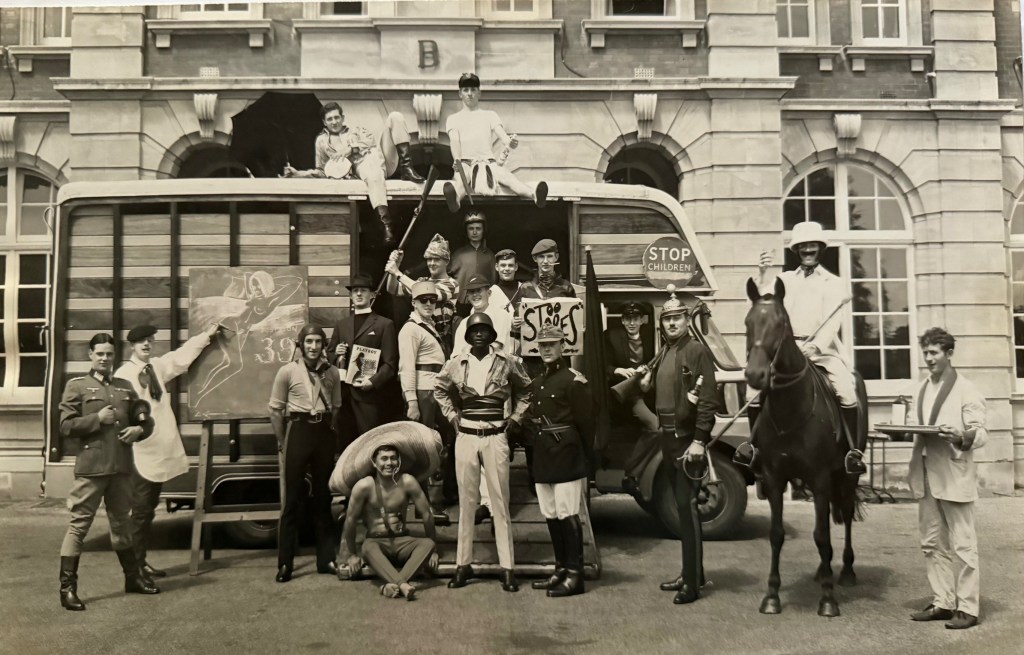
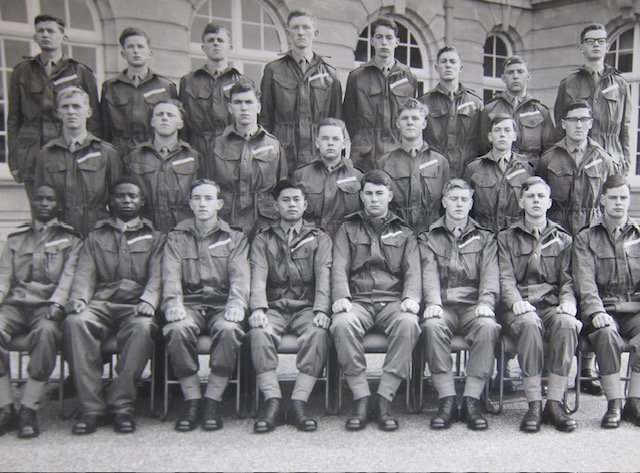
The lighter side of Burma 39. I spent two years with these guys – apart from the chap on the far right, Martin Ward-Harrison’s groom.

There have been many television programmes following recruits, from the time they cross the threshold of various training establishments, to when they ‘pass out’, get their commission. Some have followed Marine recruits at their school in Lympstone, some Police Cadets at their Hendon training establishment, some recruits at the Army Foundation College at Harrogate and there was one for those going through RMAS – ‘Sandhurst’ (ITV 2011). All have shown that given the right fertiliser, anyone can grow from boy to man, from girl to woman.

Richard 8th November 2024

Estoril Portugal

www.postcardscribbles.co.uk

PS I did well at Sandhurst, becoming a Company Junior Under Officer and winning the Benson Award. This was awarded ‘to the cadet commissioned into the Royal Artillery who has shown himself most deserving on grounds of general efficiency and character at Sandhurst’. ‘From little acorns, mighty oak trees grow!

PC 411 Hope in The Autumn

As the afternoons draw in and in most Northern Hemisphere countries the clocks were wound back one hour last Sunday, cafés emit a warm welcoming glow, encouraging one to drop in for a coffee and a slice of cake! And why not? I need no encouragement, however, to drop into The Hope Café, such is my familiarity with and love of its regulars and its offering.  

I haven’t seen Mo in The Hope Café for a while, so delighted to spy her in a corner and, grabbing a double espresso from Libby, make my way over to her table.

“Hello stranger!” says Mo, as she sees me coming. “You OK?”

“Absolutely. Had my birthday last week; actually the same day as Sami’s. A friend called James, who obviously likes numbers, said if you were born in 1978 – I wish – I would have been 46. As it is, I was born in 1946 and am 78! Good to see you; you got time for a catch up?”

“Yes! And I’m pleased to see you too, as I’ve been enjoying your postcards about your time at Sandhurst. It would have been an alien world to me, so fascinating reading of your memories and just what has stayed with you over fifty-five years. There’s one more postcard on the subject, I think. My own experience has parallels in that within secondary education one’s developing young minds and instilling values in teenagers …. so come to think of it there are similarities, albeit dealing with a younger individual. You mentioned military law. I guess the civilian world doesn’t really grasp the concept of an organisation having its own judicial system.”

“Do you know, Mo, I found studying military law at Sandhurst really interesting; learning about it, how it works and then using its provisions to deal with minor offences like losing kit, which could be dealt with by a fine, or stoppages of the individual’s pay. The interesting aspect was to find the right section to apply, rather than use the catch-all lazy one, Section 69. This section’s provisions covered those ‘guilty of any conduct or neglect to the prejudice of good order and military discipline’. Major offences, for instance when one of my sergeants smashed a pint glass into someone’s face, were dealt with by a Court Martial. The Military Law Manuals themselves are extremely detailed as you might imagine, covering every aspect of minor and major offences. Every soldier had the option to be tried by a civilian court.

Another part soon. Probably could have written a fourth part but recognise one’s own memories are not always interesting to others. To reinforce the issue about being on time for parade (See PC 408 Memories of Sandhurst) Jim Longfield, an ex-Army chum who was in Intake 40, wrote: “I recall Day One and being told to be 10 minutes early for the following morning’s parade; the final reminder was ‘remember gentlemen, 5 minutes early is late’. For Jim those words became his platoon’s mantra. I’ve been doing a lot of ‘looking back’ recently as I had those two celebrations of life to go to; for obvious reasons personal memories of the two individuals surfaced.”

“I enjoyed Saying Adieu (PC 409) as it’s something we will all experience, although one won’t know much about one’s final adieu!”

“Ana Ronchi, who tried to teach me some basic Portuguese, wrote:

‘Refletir sobre a morte e os adeuses nos faz lembrar da transitoriedade da vida e da importância de valorizar os momentos com aqueles que amamos. Que possamos sorrir ao recordar, como escreveu Christina Rossetti, e encontrar consolo em nossas memórias compartilhadas.” ….. which translates as ‘Reflecting on death and goodbyes reminds us of the transience of life and the importance of cherishing moments with those we love. May we smile as we remember, as Christina Rossetti wrote, and find solace in our shared memories.

She’s spot on. Jonathan, who had also been at Carol’s funeral, attended another the other day and remarked: ‘Fantastic tributes to Hugh, but everyone attending had hours of their own stories and memories which would never be heard. And there they go ….. leaving the car park!’ The analogy is quite apt. Jonathan will be going to the memorial service for General Sir Mike Jackson.”

“Jackson? Funnily enough I read his obituary in The Times and now remember that incident during the Balkans War.”

“Where he disobeyed an American four-star general?

“Exactly. Had to be reminded of the details; the obituary was very well written. He was in command of the Kosovo Force (KFOR), the 40,000-strong NATO multinational force assembled in Macedonia to implement the peace agreement in neighbouring Kosovo.”

“It was 1999 wasn’t it?”

Yes. By God those Balkan nations have a very individualistic parochial outlook. One only has to think of that siege of Sarajevo in 1992/93 and the atrocities committed by the Serbs. In 1999 that scumbag President Milosevic was very friendly with the Russians and encouraged their leader Yeltsin to contribute some forces.”

“Yeltsin! There’s a blast from the past. Not sure how good he was as President but my abiding memories are of him regularly drunk and at some time standing on top of a tank somewhere.”

“Mischievous! He sent some troops, inaccurately marked KFOR, to secure the Kosovan capital Pristina’s airport, in order to fly in more troops from Russia.”

“Yes. I remember this bit. General Clark, the American senior NATO commander, flew to Macedonia to talk to Jackson. Clark suggested a couple of things Jackson should do and Jackson declined to agree to either, saying they were too dangerous. Accounts differ, but Clark has not directly challenged the version in Jackson’s Soldier (2007), in which Jackson told Clark: ‘Sir, I’m not going to start World War Three for you.’ Clark, a four-star, full general, insisted that he had the authority and repeated the order. Jackson replied: “Sir, I’m a three-star general, you can’t give me orders like this. I have my own judgment of the situation, and I believe that this order is outside our mandate.” (Note 1)

“And Mike Jackson not only survived but some six years later became Chief of the General Staff.”

“Wonderful stuff. Mo, must go and have a pee! Be right back.”

(To be continued)

Richard 1st November 2024

Hove

www.postcardscribbles.co.uk

Note 1 Jackson agree with the Russians that he would provide a security cordon around the airfield, effectively blunting the ability of the Russians to do anything.

PC 410 Memories of Sandhurst (Continued from PC 408)

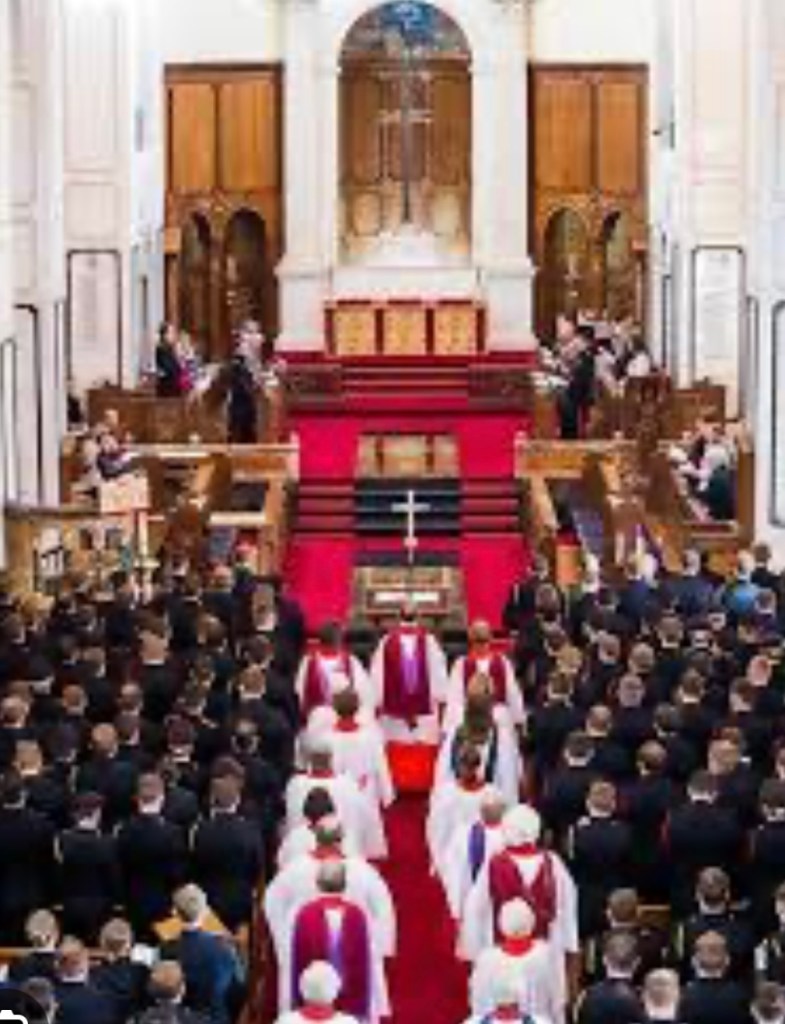
Britain has been a Christian country seemingly for ever and religion plays a crucial if understated role in the conduct of war, both at a personal level but also at an organisational one. One of our Captain instructors was a lay preacher and, on a weekend’s adventurous training exercise, led a small Sunday morning service – in the middle of a wood, in the rain. One comment has always stayed with me: “There are no atheists in a slit trench”. Fortunately I have never been in an operational slit trench, waiting to go ‘over the top’, but understand how those who were might have prayed to some higher being. At Sandhurst every Sunday we paraded in front of the Commandant and then marched off across the square to the chapel.

Nine hundred male voices singing hymns would lift anyone’s spirits and the memory of kneeling in the pew in the final minutes, quietly murmuring ‘Eternal Father, Strong To Save’ to the tune Melita by John Dykes, still brings goose pimples to my neck!

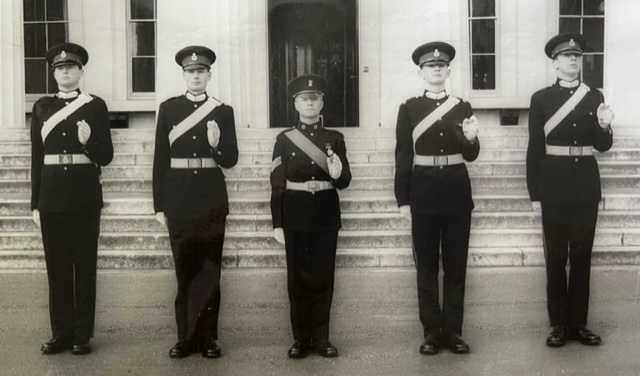
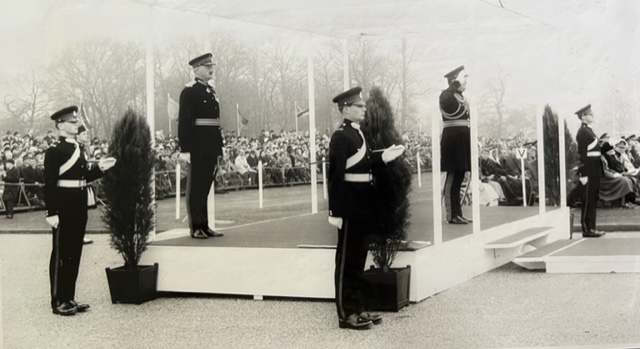
If you were tall and reasonably good at drill, you might be picked to be a Stick Orderly, as were Charlie Wilson, Edward Armitage, William Burrell and myself; four of us out of the 225 officer cadets in our intake, Number 39. (See PC 341 Tradition June 2023) On ceremonial occasions we stood on the corners the Inspection Dias, although I am not sure how effective my stick would have been in protecting the Commandant!

Prior to the Commandant’s Parade on a Sunday morning, the four Stick Orderlies would join him and his family for breakfast in the extremely large house which went with the job. I was a Stick Orderly for a year and recall that, after breakfast and before we needed to get moving, we would gather in the Games Room in his basement and compete on his Scalextric set. Such fun and far removed from our next task, the tradition of escorting him and the Adjutant to where the other 886 cadets were lined up for inspection.

I was assigned to Burma Company in Victory College, one of three colleges making up the Academy. The other company names in Victory were Alamein (North Africa 1942), Rhine (1944) and Normandy (1944). Old College represented the past glories of Dettingen (1743 War of Austrian Succession), Waterloo (1815), Inkerman (1854 Crimea) and Blenheim (1704 War of the Spanish Succession). New College companies reflected the First World War with Ypres (1914), Somme (1916), Gaza (1916) (Note 1) and Marne (1914). The organisational structure today is different, the number of companies reflecting the total number of officer cadets under training. Company names now include ‘Falklands’ and ‘Borneo’.

There is something fundamental to being a soldier, being capable of using weapons in times of war. Later I would serve in artillery regiments equipped with ‘medium’ artillery, the 5.5in howitzer and subsequently the 155mm Self Propelled M109, but at RMAS it was the self-loading rifle (SLR) and the general-purpose machine gun (GPMG), both using 7.62mm ammunition. I gained my marksman badge for the GPMG, taking in the instruction like a duck to water …… and it’s all about the breath! We were tested at various times, for instance after a 10-mile speed-march, and we developed the habit of keeping one’s small arm (aka personal weapon) close and clean. Obviously out on exercise or on the firing ranges, not in a classroom learning about Chemistry for instance. I highlight chemistry, as I had failed it twice at ‘O’ level and I needed to pass it. The lecturer was more interested in teaching us about his passion, seeking out the runners and their form in some horse race! We learned his techniques, lost a lot of money and I passed my Chemistry examination!

I have written that academic studies took up more than 50% of our working day. Having followed the science route in my choice of A Levels, I joined the ‘Special Maths and Science’ set, a pass ensuring my place at university a couple of years after commissioning. Non-science subjects covered International Relations, War Studies and Military Law. The latter is designed to “maintain order and discipline within the armed forces, and to ensure they can carry out their duties effectively. It covers a wide range of offences, from minor breaches of discipline to more serious crimes such as murder and rape.” As a commissioned officer, for minor offences I was ‘judge and jury’; for more serious ones there’s a Courts Martial system, run by the Judge Advocate General’s Department.

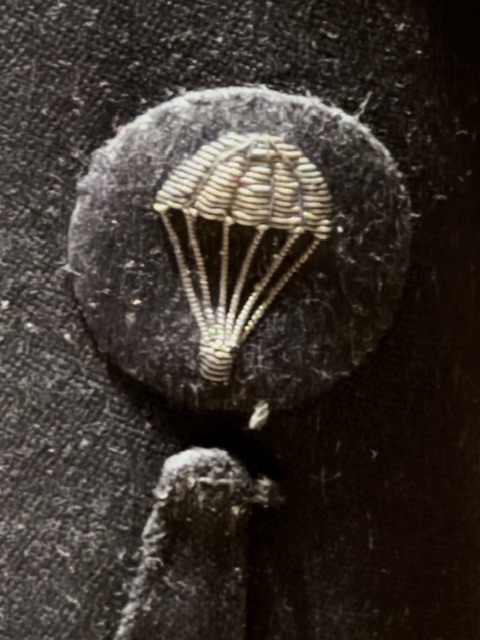
One Easter holidays some of us volunteered to become military parachutists. I asked Crichton, who was also in Burma 39 and with whom I have kept in touch, who else was there, apart from him. “Sorry! I suffer from old git syndrome and simply can’t remember who was with us. Pity!” Anyway, twenty or thirty of us went off to some RAF Base, I think Brize Norton as that’s where they’re trained today, for three weeks. During that time we learned exit, flight and landing techniques in large hangers with mock-up fuselages, completed three jumps from a balloon tethered at 800ft and a further five from a DC8/9 aircraft, the last one at night. Back at Sandhurst we wore a little light-bulb badge on our uniform to signify our proficiency, joined The Edward Bear Club (See PC 28 Balloons, Bacteria & Bloating December 2014) and jumped out of an aeroplane over Hankley Common near Aldershot for a summer picnic – called ‘the Teddy Bears’ Picnic’ obviously!

There will be a Part 3!

Richard 25th October 2024

Hove

www.postcardscribbles.co.uk

Note 1 The Middle East was fought over during the First World War and that arena of conflict was recognised by Gaza Company. The land borders one sees today were laid out in the Sykes-Picot agreement of 1916, created by the French and British, with tacit assent from Russia and Italy. It defined their mutually agreed spheres of influence and control. Over 100 hundred years later it remains a troubled and unsettled part of the world. (See PC 286 I’ve Read That …. June 2022)

PC 409 Saying Adieu

Things come in threes, right? It was in Estoril in September when I took a telephone call that told me my dear chum Bill had died. Two days earlier a WhatsApp message imparted the news that Carol, the wife of an Army colleague whom I had first met in 1973, had died and gave information about her funeral. Three week’s ago my brother-in-law’s elderly little Yorkshire Terrier Buddy left for a different place. Each piece of news brought a flood of pertinent, personal memories but it wasn’t until I started Peter James’ latest novel, ‘One of Us is Dead’, that I thought I would scribble something on the subject of saying goodbye.

It wasn’t James’ description of a funeral service that brought me up short but his observations of a wake, for three days before I had been to Bill’s ‘Celebration of Life’, a ‘wake’ by any other name! It was as if James had been looking over my shoulder, down to the ‘….. and on tables bottles of Red and White wine, with no effort for the latter to be chilled.’

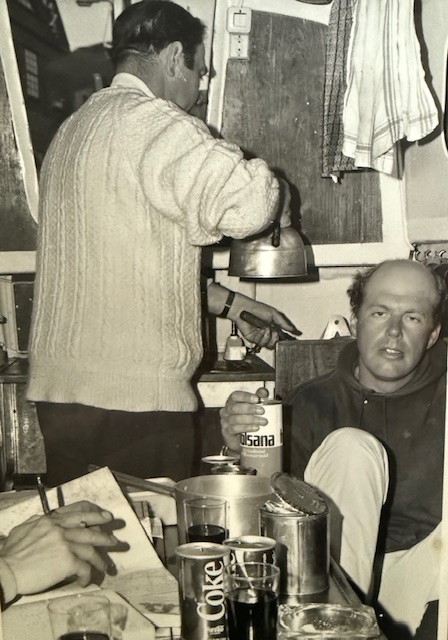
‘Sailing in The Baltic’! Alongside in Faaborg, Denmark 1972

Dear Bill! I had met him in Lippstadt, Germany in August 1972 when he was my Troop Commander in 27 Medium Regiment Royal Artillery. The Cold War was at its height and NATO faced the might of the Warsaw Pact across the Inner German Border. Additionally, in August 1969, Her Majesty’s Government had committed the military to assist the local police in Northern Ireland; so serious times. (Note 1) But it was also the time of Idi Amin, the President of Uganda, whose rule was characterized by political repression, ethnic persecution and rampant corruption. The British magazine Punch had a column devoted to Idi Amin’s week. Bill and David Morley, another Captain and great raconteur, had those of us taking morning coffee in the Officers’ Mess in fits, as they read the column out loud, taking on the voices and appropriate accents. Probably frowned upon now, certainly racist, but this was 1972! I was only in 27 Regiment for a year before moving down the road to Sennelager in preparation for 39 Medium Regiment’s first Northern Ireland tour in 1973.    

Then we just kept in touch, met up now and again, that delightful result of good times and shared experiences remaining the glue to our friendship. Bill eventually retired from the Army as a colonel and got a job in the Ministry of Defence (MOD) as a Watchkeeper. Deep below the MOD building in Whitehall is an operations room, manned 24/7, that manages the Government’s overseas military operations. The Watchkeeper’s main role seemed to be preparing the morning brief for the Chief of Defence Staff, a task Bill would have been exemplary at. This Watchkeeper duty came round every few weeks, so not onerous and, after he was free, we’d try and meet for lunch in the Crusting Pie in Covent Garden. Bill was good at ‘chewing the fat’, although occasionally he would lean across the table and, fixing me with his beady eye, ask: ‘Now Richard, what do you think of the current situation in Timbuktu (or wherever)?’.

Bill developed Prostate Cancer. In April I met David Morley for lunch in Winchester and we had tried to entice Bill to join us ….. but he obviously didn’t feel up to it  ….. so months later we came together to celebrate his life; no funeral, just a celebration, a chance to say goodbye and to thank him for his friendship.

A wake of sorts, but uncoloured by a prior service, and attended by those touched by Bill down the decades, from school friends, through Army service, to golf and tennis chums. The Royal Regiment of Artillery has a very distinctive tie so those who had served with Bill were very evident.

I am always curious about what are now called people’s ‘backstories’ and enjoyed talking to Jerry, one of his two schoolmates and subsequently British Airways Concorde pilot. Another chap, Martin, had served in The Gunners then became a Practice Manager in a law firm, retiring to the Salisbury suburb of Harnham, where he sculpts in his garden shed. His wife said they’d moved 18 times in their life together! Then there was John someone, who spoke to us all of Bill’s time in the Army. He knew me but couldn’t place me; I vaguely knew him, and we dodged around the question of when and where and even why. Memory fades! Bill and Lynne’s daughter Georgina spoke of Bill as her father, a family man through and through.

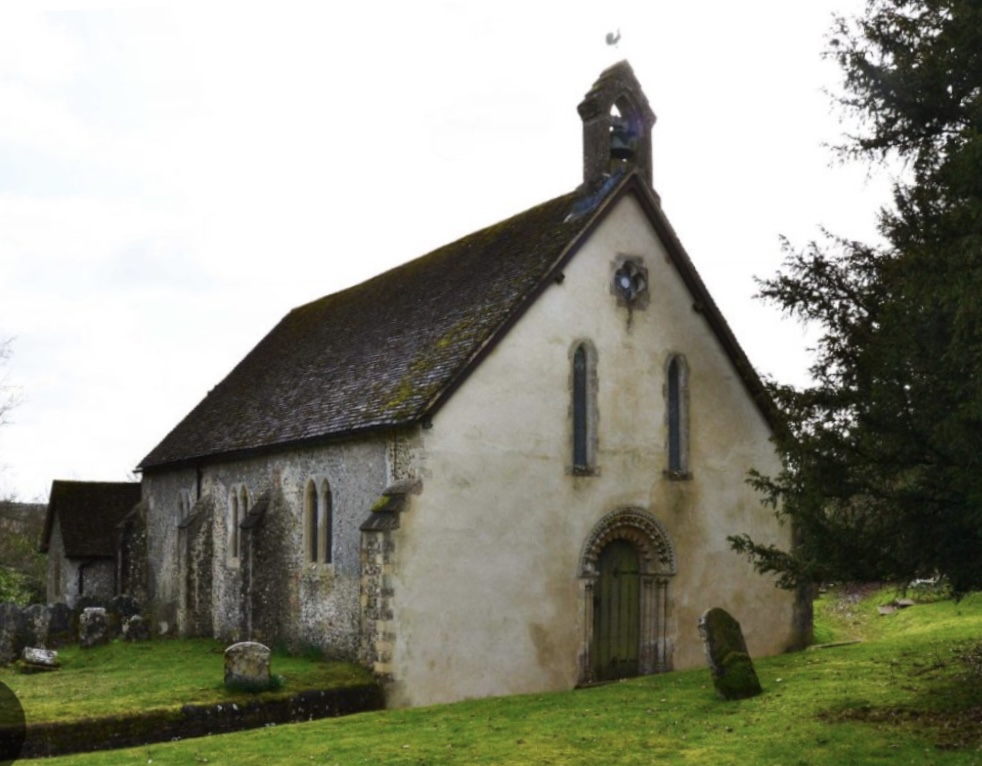
When I told Celina’s family the date of Carol’s funeral which then was to be in three weeks’ time, there was a sharp intake of breath, as Brazilians bury their dead within a day or two, as do many religions. I am a fan of a slight delay if only to allow those who might wish to attend but live far away to make the necessary arrangements. The funeral took place in the tiny parish church of St Mary’s The Virgin in Vernham Dean in deepest Hampshire and was extremely well attended.

We sang the appropriate hymns, listened to the eulogies, smiled at the oration of the popular poems regarding our departure from this earth …. and as the wicker casket was taken out for its committal, the heavens opened with a downpour of biblical proportions. Seemed apposite! Later, standing in the widower’s home for drinks and canapés, our wet clothes steamed …..! I later thought of how Covid was spread and how quickly we forget. One hundred people crammed into three rooms, 50% slightly deaf, bending an ear to hear!

One’s pets are all characters and Buddy was no different, but like us humans, their lives are finite.

Attendance at the funerals of family members is a duty, something expected of us. To go to those of friends is something different, a reflection of love and affection, of respect and humanity. As Christina Rossetti wrote:

“Better by far you should forget and smile, than that you should remember and be sad.”

Adieu Bill. Farewell Carol. Thank you Buddy. You lived your lives to the full.

Richard 18th October 2024

Hove

www.postcardscribbles.co.uk

PS I hope things don’t come in fours!

Note 1 No one imagined this embryonic conflict would smoulder for almost thirty years, with the occasional period of more intense mayhem.

PC 408 Memories of Sandhurst – The United Kingdom’s Royal Military Academy

Towards the end of my teenage years, I wanted to be an architect …… but architecture was going through a difficult time and my stepfather suggested I join the British Army. He thought was that by the time I had spent three years or so serving Her Majesty, architectural opportunities might be better; I did 20 years!

To gain entry to the Royal Military Academy Sandhurst (RMAS) I had to attend the Regular Commissions Board, then located in Westbury, Wiltshire, to be assessed!

Fortunately I passed the various physical and mental tests, including the ‘speak for 5 minutes about … a milk bottle’!

The transition from boy to man, girl to woman, is, for some, complex and unnerving, for others it’s like water off the proverbial duck’s back. Everyone’s experience is unique, can never be otherwise and it could be forced upon one through the diktats of family life, the loss of a parent for instance, or tribal customs very early, but for most it happened after one’s 16th birthday; nowadays I sense it’s much earlier – more’s the shame! Of course there are those who never really grow up, still maintaining a childish outlook on life, the Peter Pans. The syndrome, used to describe those adults who are socially immature, refers to people who have reached an adult age but cannot face their adult sensations and responsibilities.

The Royal Military Academy (Note 1) turns boys into young men, girls into young women, ready to be deployed into combat should that be necessary, ready to lead. Nowadays the course is a year (Note 2) but in 1965 it was a two-year course mirroring and, in some respects, equalling the first-degree courses at many universities. The Academy had four intakes of Officer Cadets at any one time; commissioning took place in December and July. Some 60% of our time was spent on academics, the rest on learning our new craft, the military and the art of warfare (Note 3).

Our neighbour Meryl, an avid reader of my postcards, suggested I wrote something about my memories of the two years I spent at RMAS. Why, I am not quite sure; maybe she wanted to find out why I am how I am (?) but I doubted whether, in 1000 words or less, I could encapsulate my time growing, from teenager to adult, from schoolboy to Army Officer. Maybe I would need two or even three PCs? It was a disparate bunch of teenagers who formed up on the Victory College square as Burma Company Intake 39 in September 1965 and included three from overseas, Sid Sonsomsouk from Thailand, Ngambi from Uganda and Jo Nakamet from Kenya. No one was sure what we had let ourselves in for. It didn’t take long to find out!

How would I describe the first six weeks, when the days began very early and ended very late, when others dictated what you did? Challenging? Draining? Character building? Probably all of the above and more besides. A good example was ‘Changing Parades’, when we had to appear in the corridor outside our room in one form of dress, be inspected with infringements resulting in press-ups, before going back and changing into another form of dress – from full combat gear, to Service Dress, to PT Kit (Blue Blazer, Blue shorts, White T-Shirt, White ‘plimsols’ (Does anyone know what these are?)) to Parade Ground Uniform. Our rooms had, during the whole process, to remain immaculate. The instructors would scream and shout at any visible laziness or inattention. Faced with an external threat (the instructors!) we all began to coalesce into a group, safety in numbers and focusing our hate on our instructors. I think this was where the military saying ‘Kit on! Kit off!’ comes from.

Within the first month one of the platoon was suddenly diagnosed with leukaemia, disappeared to the Military Hospital in Aldershot ….. and died two months later. 

I have written before how the experience of becoming proficient at drill, in marching in time, swinging the appropriate arm, showing off our skills and being part of something, belonging, wanting, gets imbedded within one. Imagine being on parade with another 889 officer cadets, moving in formation to the familiar marching tunes, bursting with pride. That’s a great memory, acknowledging the hard work that preceded it, to get to the required standard. For those who have never had the privilege and opportunity, your life is missing something!

The main Sandhurst parades started at 1100. There were always little niggles, so the Academy Sergeant Major, a chap called Phillips, the most senior non-commissioned officer and otherwise known as ‘God’, would insist we would be lined up on Old College Square at 1030, to ensure there was no last-minute panic. Old College Square was a 10-minute march from New College Square, so College Sergeant Major Murphy, Irish Guards, (‘Spud’ behind his back, but never to his face!) insisted we were ready to leave at 1000, as there were always little niggles. Burma Company Sergeant Major Hewlett, Coldstream Guards, insisted we formed up for him at 0930, as there were always little niggles. Staff Sergeant Rooney, a Welsh Fusilier, insisted the platoon for which he was responsible formed up at 0900, as there were always little niggles. This is probably where the phrase ‘5 minutes before 5 minutes before …..’ originates.

(to be continued)

Richard 11th October 2024

Hove

http://www.postcardscribbles.co.uk

Note 1 Naval Officers are trained at the Royal Navy College Dartmouth and Air Force Officers at Cranwell

Note 2 A new term started last month with 288 Officer Cadets joining CC 243 for the 44-week course. There are 40 international cadets from 23 countries as diverse as Columbia and Kazakhstan. Of the 248 British cadets, just over half were educated in the state sector, 80% are university graduates and the average age is 22.

Note 3 The War Studies Department was run by John Keegan. The recent obituary of Duncan Anderson, who took over as its head in 1997, had an interesting snippet!  Keegan’s successor was a chap called John Pimlott, who had died after two grenades he picked up during a battlefield tour in France exploded in his study at home. 

PC 407 Catch up in The Hope

I love familiar places as much as I love the adventure of travelling somewhere new; something reassuring that there is continuity of activity even if you yourself are absent. I hadn’t made it to The Hope Café since we got back from Estoril, so it was a little potluck as to who was there on Tuesday afternoon. ‘Ah!’ I thought, ‘Josh has gone back to Israel’, as he was not behind the counter and the candle was back, a testament that our thoughts go with him. Despite him being wounded when he was last with the IDF (see PCs 361, 368 and 378), he recovered very quickly and there was a lasting legacy of action, of tension, of excitement; no wonder he’s gone back. I imagine he’ll be used in some support role.

A quick scan of the occupied tables and I recognise Sami, Anna and Robert. The latter has his head down into his laptop on the window counter, hopefully being creative, so I decide not to disturb him.  

Sami looks up. “You look as though you’ve a lot on your mind, Richard!”

“Hi! Sami. How are you? Sorry! Am I wearing some underlying tension on my face?”

Yes. Not usual for you; you’re normally fairly laid back, unstressed, calm. Where were you yesterday? Had hoped to see you.”

“A very good chum of mine, a Canadian called Bill Pender, had died of cancer. Never one to make a fuss, he didn’t want the mawkishness of a funeral, rather a ‘Celebration of (his) Life’. That was yesterday in Salisbury; he had a very good turnout, despite the weather, and good to exchange memories of Bill with others. But the slight stressful look? Actually, it’s not about me but my daughter and her family. They are buying her grandmother’s house and frankly it reminds me of that film with Tom Hanks and someone ……”

The Money Pit? With Shelley Long ……”

“Exactly. This is a house that’s been allowed to become decrepit through lack of maintenance, doesn’t have a kitchen or working bathroom, has a hole in the roof but with lots of TLC could be a wonderful family home for her, Sam and their three boys.”

So why are you looking so concerned, it’s not you buying it?”

“For all sorts of reasons, they exchanged on the house without exchanging on their own ….. although their purchaser says he’s firmly committed to buying it!”

Woah! Now that’s risky but ….”

“Funny how purchasing a house, possibly the most expensive item you will ever own, is never straight forward and one of those four ‘most stressful things in life’; divorce being another! But, Sami, you became bankrupt after the Post Office wrongly accused you of fraud ….. and you lost your home.”

“Indeed. I lost everything and went back to square one. The Post Office eventually made an acceptable compensation offer and Lisa and I have found somewhere together down here in Hove. She’ll keep her house in Folding-over-Sheet and enjoy the rental income. Did you personally do something so risky as your daughter?”

“No, although her situation has brought back some memories of house purchases. I bought my first for £29,500 and four years later my second, which we couldn’t afford but you kid yourself somehow you will. Fortunately I was never in a negative-equity situation with a large mortgage! A decade or two later I bought a terraced house in Battersea and, after we’d exchanged, someone offered an extra £10,000. I had written to the owner to say how much I was going to love living in her house, la-di-dah-di-dah, and she turned down the bigger offer (phew!). And I almost lost our large apartment in Amber House here in Hove …..

“It is big, isn’t it Richard. I remember when Lisa and I came to supper (See PCs 329 and 330) we were in love with the tall ceilings and gorgeous proportions.”

“….. as my now ex wouldn’t commit to somewhere for herself. We exchanged three days before it was to go back on the open market! Seems a long time ago! I noticed the candle’s back up on the counter. You surprised Josh has gone back?”

“No, not really. He’s young and he got so fired up the last time. I feel sorry for Luke, left behind and always going to dread an unexpected telephone call. Libby said they have bought a dog, a Norfolk Terrier, to keep Luke busy!”

“Great idea! Hey! Listen. Must go and speak to Anna. (See PCs 358 and 365). Been good to catch up; love to Lisa and see you anon.”

And with that, and a squeeze of my hand on his shoulder, I got up and moved across to Anna. I don’t know her at all well but had noticed she’d been away during the Paralympics in Paris (28 Aug – 8 Sep).

“Hi! Anna. Hadn’t seen you and assumed you’d gone to Paris. Were you competing or simply in some support role?”

“I didn’t make the wheelchair basketball team as here in the UK we have too many extraordinarily gifted players, but I went to the Bercy Arena to support them. The Netherlands won gold, the USA silver and China bronze; we came fifth, although I am pleased our men’s team won silver.”

“You’ll try for the Los Angeles Olympics in 2028?”

“I’ll see! Working full time restricts the amount of time I can dedicate to training …… and you need to be extremely dedicated! Listen, need to finish this report but good to see you.”

On my way out, I pass by Sami’s table. “Forgot to say, Sami, I’ve shrunk!”

“Sorry?”

“I have always been 6ft 2̋ which equates to 187cms. In a recent medical, I confidently replied ‘187’ to the obvious question, to be told that I was now 183. I’ve lost four centimetres Sami! Where did they go?”

“Where indeed …….”

Richard 4th October 2024

Hove

http://www.postcardscribbles.co.uk

PC 406 The Snail aka Brian

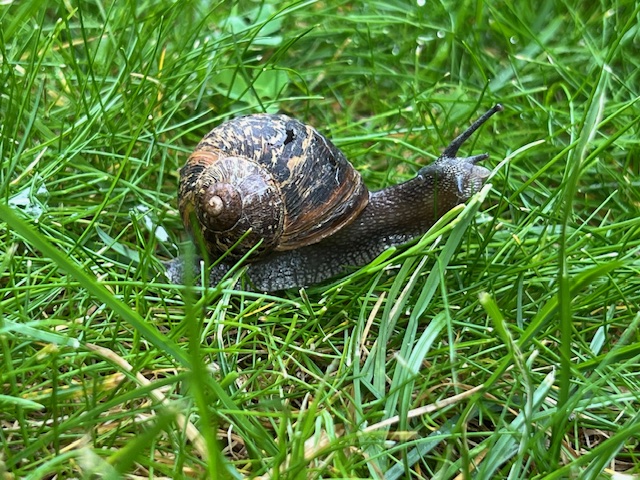
If you walk down a pavement in any town after overnight rain, you’ve probably noticed a snail or three, making their way slowly across the paving stones. Sadly some get crushed by people’s shoes and a gooey mess and broken shell are all that remains. But I don’t think anyone does this on purpose, extinguishing life just for the hell of it. I certainly don’t, carefully side-stepping the little creature and wondering what urges it to travel in a certain direction. And if you ever wondered, on the ends of a snail’s tentacles are its eyes, which can’t focus or see colour but can discern different intensities of light, helping it to navigate towards dark places.

When I put my small gardening hat on, it’s a different matter.

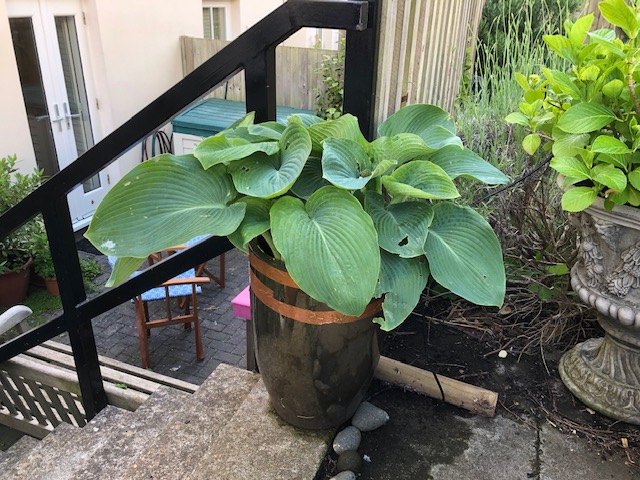
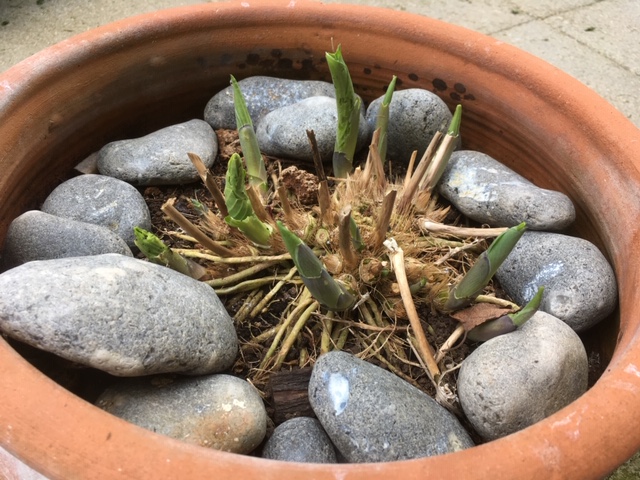
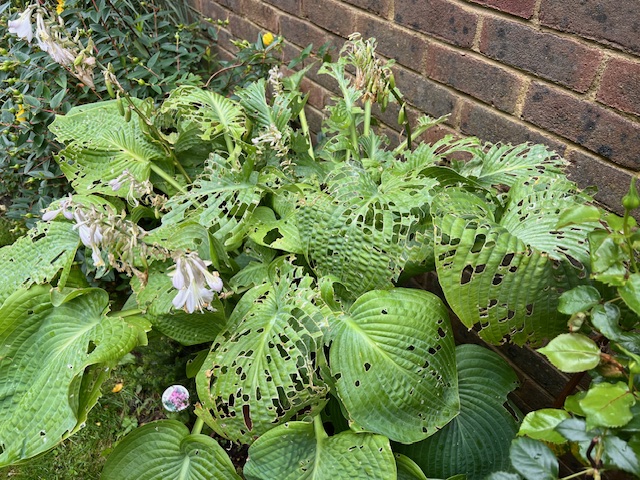
I love the Hosta, a large-leaved plant that produces white flowers around July time. In the winter months it hibernates under the soil, then in the spring little shoots appear and the cycle begins all over again.

Snails love Hostas! Not wishing to use pesticides, I have tried a number of different things to discourage them from eating my plants. Placing the pot in water sort of works for small pots, as snails are not good swimmers, but that’s impractical for a large pot of Hostas. I read that applying some grease around the rim of the pot creates an uncrossable boundary; it works for a week or so then the little buggers wade through it or jump it or …… I bought a roll of copper tape, well, three actually as it was on offer, and stuck it in a thick band around the top, having first got rid of any grease! The pot looks nice with a copper-coloured band around it but, contrary to the advertising blurb, the snails still got across.

Now I have resigned myself to thinking I grow Hostas as a food for snails.

I love watching them slide across the grass, I hate them munching through my juicy Hosta leaves, and I loved eating them, although I haven’t for over 15 years as my tastes have changed. You used to be able to buy them in little plastic tubes, complete with garlic butter and parsley; pop them into the oven for the requisite number of minutes and ….. yum! yum! …. But you have to like garlic.

The Portuguese eat an estimated 4000 tonnes of Caracóis a year. Some are of the tiny variety, usually about 1cm in diameter. Cooked in a broth with lots of Rosemary and not swimming in melted garlic butter, normally you’re presented with about 100 in a small bowl and enjoy them with a cold beer. Or if you visit a cheap tasca bar they come as grilled appetizers. Helix Pomatia is often referred to as the land lobster for its superior flavour and texture. The French eat about 25,000 tonnes of snails a year; about 6.5 per person per year, normally cooked in garlic butter or chicken stock. I remember whenever I sailed across the English Chanel to Cherbourg, supper was at a bistro that specialised in snails and mussels; it could have been called Madame Escargot?

In Britain snails are available in supermarkets or delicatessens but I am reminded how on The Continent you can buy live ones. Many years ago I was on holiday with my daughter near Estepona in southern Spain, staying with cousin Susie and husband Robin. Tasked with foraging for things for lunch, we went to the local market. Jade, aged 8, saw a large cardboard box and sensed it was moving. Closer inspection revealed it was full of live snails. After the screams and tears subsided, she was placated with buying a dozen ….. which she set free in Susie’s garden; we didn’t tell Susie!

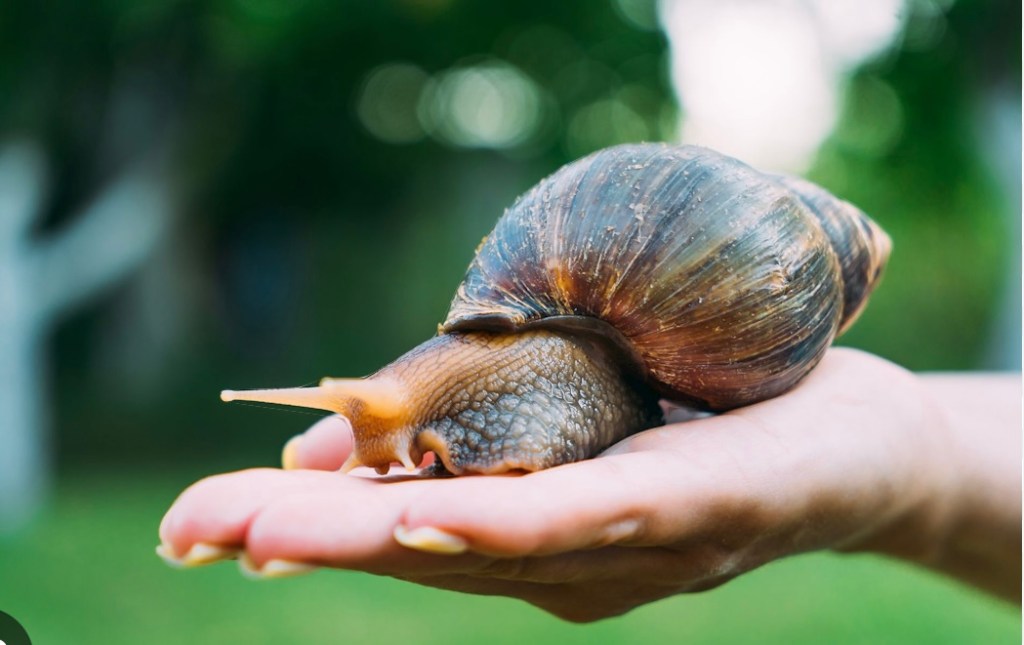
Used to small snails, I saw a photograph of a giant one. It turns out to be the Giant African land snail (Lissachatina fulica) which can weigh nearly a kilo and whose shell is some 20cms long. Celina tells me they also live in Brazil.

Sadly it really is a pest; it feeds voraciously and causes severe damage to agricultural crops and native plants.

In my postcards from our time in Croatia this summer (PCs 390 & 391 Tales of Croatia) I wrote that our guide in the seaside town of Split was a very tall chap called Pero Ugarković and he’d written a book about the sea snail. Sea snails breathe with gills whereas land snails with lungs. There is another type, the freshwater snail which use either gills or lungs.

I think we could call snails nomads for they take their home with them! The shell is created from calcium carbonate and has a protein outer coating. Other creatures consume the shells to obtain the nutrient calcium. There’s something very practical and endearing about carrying your home with you, self-contained and all that, and snails often feature in stories written for children.  

“Soon, which in cosmic time means millions and millions of years, they crawled out of the ocean and onto the land. Not knowing whether they would find a home, some of these brave early explorers carried their homes on their backs. So snails took to the earth!” extracted from ‘The Snail with the Right Heart: a True Story’ by Maria Popova     

Still wondering why I have titled this postcard ‘… aka Brian’? In 1965 the BBC bought a French children’s programme ‘Le Manège Enchanté’, created by Serge Danot, and used the footage with new English-language scripts unrelated to the original story lines to produce ‘The Magic Roundabout’. It proved a great success and achieved cult status. Its characters included Dougal, a drop-eared variety of a Skye Terrier, Zebedee, a talking jack-in-a-box who kept crying “time for bed”, Ermintrude the cow, Dylan a hippy rabbit and a cheerful, bashful and intelligent snail called ……. Brian. (Note 2)

Richard 27th September 2024

Hove
www.postcardscribbles.co.uk

Note 1 There are three main species of helix snails that are edible: Roman or Burgandy snails (Helix Pomatia), Garden snails (Helix Aspersa and the European Snail (Helix Lucorum)

Note 2 Who knows why the writers called the snail Brian. But if you’re called Brian, I hope you’re cheerful, bashful and intelligent!

PC 405 I was musing about ……

Towards the end of last year, I decided I needed a couple of medical referrals (see PC 366 Medical Decluttering December 2023) and the quickest way was to see a private doctor. Fortunately, Celina has a good one, one whose opinion and professionalism she values, so I fixed myself an appointment. After some 50 minutes of inspection and chat, I left with three, not two, referrals and a personal endorsement as to his efficacy. Wind the clock forward six months and it occurs to me it would be nice to have the doctor and his wife to supper one evening in the autumn. Not sure of the modern etiquette, I email him at his practice, tentatively outlining my thoughts, looking for agreement before trying to pin him down to a date.

His reply was disappointing, wishing to maintain the boundaries of the doctor-patient relationship, so declining. I think this is a rather sad reflection on modern life, for as a teenager I remember the local doctor, an Ivor Haire, coming to supper with my parents when they lived in the village of Balcombe, some twenty miles north of Brighton. And some of the individuals who went through my coaching sessions became good friends and sometimes came to supper. There was of course an implicit understanding that what had been discussed in the coaching sessions stayed there. It gave a little more colour to my life and I had rather hoped that Celina’s doctor could have accepted the invitation.

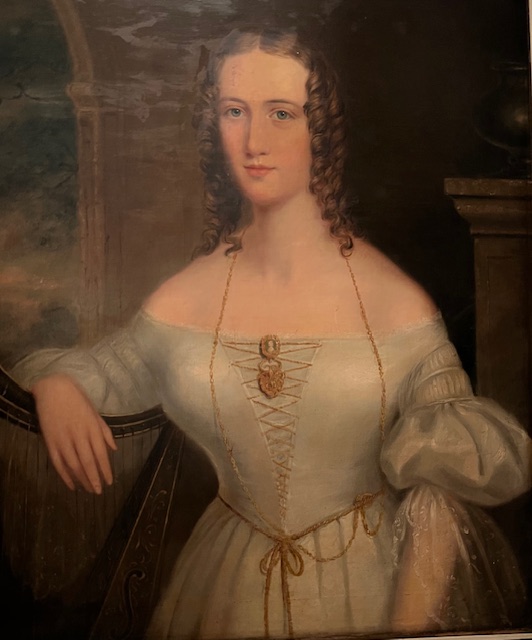
I am lucky enough to be the current guardian of an oil painting of my great great grandmother. Sarah Fosbery (née Smith) was born in 1822, aged 17 married Francis Fosbery in Adare Ireland (see PC 127 I Went Looking For a Family Seat – September 2022), delivered nine daughters and died, presumably exhausted, in 1861 aged 39. Her 8th daughter, Eva Constance Fosbery, emigrated with seven of her siblings to New Zealand. (see PC 169 Shifting Sands and PC 170 100% New Zealand January 2020). Varnish yellows with age so it needed a clean, which was professionally carried out by Stig Evans here in Brighton. Those of us lucky enough to own these historical heirlooms have a responsibility to keep them in good shape.

In Portugal I finished Simon Winchester’s book ‘Atlantic’, chock full of information and well researched. I was so taken by Simon making a fascinating link between problems in Britain during World War One and the founding of the State of Israel in 1948 that I thought I could share it. Stay with this story, even if it’s a little convoluted! Back in 1915 there was a shortage of cordite, a smokeless explosive, for shells that were used to attack surfaced German submarines. For the non-chemists, cordite is made from a mixture of nitro-glycerine, guncotton, acetone and petroleum jelly; it was the acetone that was in short supply. CP Scott, the editor of the Manchester Guardian, by chance had lunch with a White Russian émigré and science professor at the University of Manchester in early summer of 1916; his name was Chaim Weizmann. Sometime during the main course Weizmann said he had developed a new bacterial method for producing acetone.

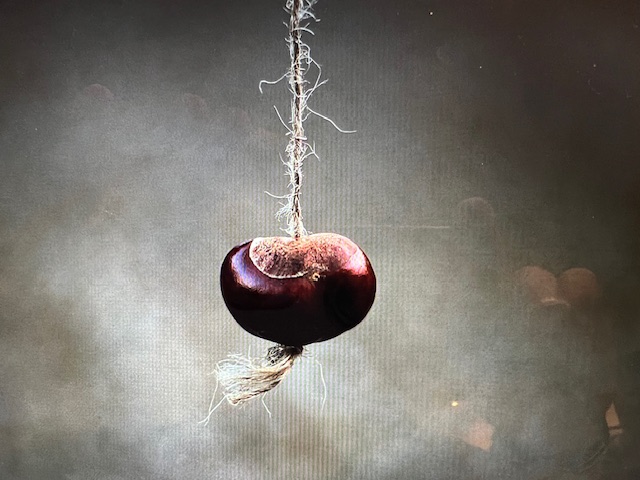
Scott told his friend David Lloyd George, then Minister of Munitions and soon to be Prime Minister, about Weizmann and the latter was invited to London. Within a few weeks, Weizmann had an industrial space to start production, but needed a ready supply of cellulose, found in maize and surprisingly in chestnuts. Horse chestnuts are normally used by schoolboys (Note 1) for the very traditional game of ‘conkers’, but in the autumn of 1916 thousands of tons were brought to the factory and, after various chemical reactions, acetone was produced in sufficient quantities. Eventually the Royal Navy destroyed enough German submarines in surface engagements to tip the balance in Britain’s favour. Such a good story, but how does this relate to Israel you might well ask?

Prime Minister Lloyd George asked his foreign secretary, a chap by the name of Arthur Balfour, to suggest an honour for Weizmann, who was also the leader of the British Zionist League. Chaim Weizmann desired no official recognition but his closeness to those in power enabled him to push for some form of government recognition of the Zionist’s aims. In November 1917 The Balfour Declaration formalised the British Government’s support for the birth of a Jewish State in Palestine, something that was achieved in 1948.

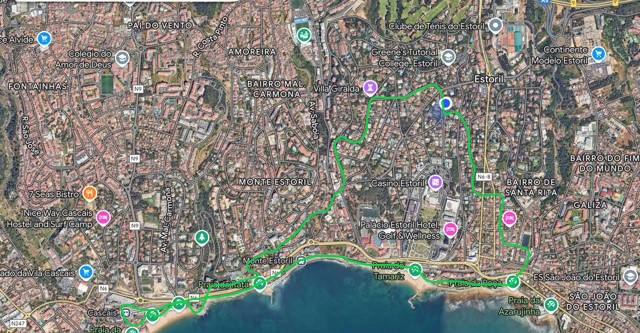
In PC 402 Connected Thoughts August 2024 I mentioned that I was doing a morning walk, leaving the Estoril apartment at 0700, then down to the sea, west to Cascais and back through the residential areas of Cascais, Monte Estoril and Estoril; in all about 7kms. Most people’s morning routines are intentionally timed to the minute, Monday to Friday, to catch a train, drive to work, take the children to school; for example, Celina and I leave our apartment at 0915, give or take a minute, to go to yoga.

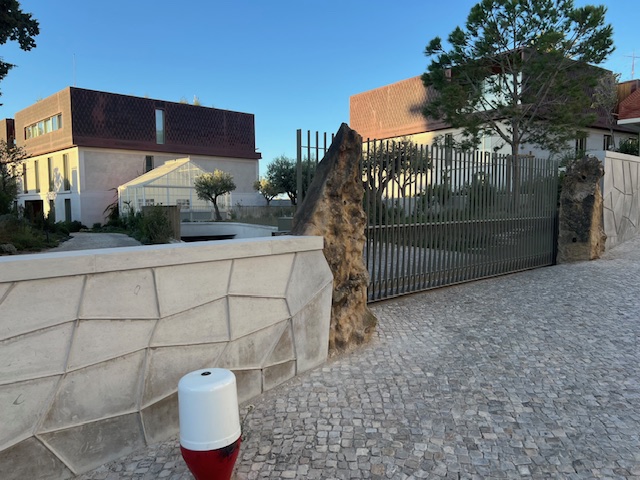
So it is in Portugal. Just before I get to Jardim dos Passarihos, I pass an apartment block with beautifully landscaped gardens and an underground car park.

The driver of a green Mini wouldn’t have recognised me on the Monday or even on the Tuesday, but by the Thursday, as she triggered the sliding gate onto the road to open, she might have thought: “I’ve seen that chap before!” I have generally got there a second or two before her, so she’s let me get clear!! Given that my own walking speed varies and I occasionally stop to take a photograph or have some water, it’s strange that I have been in exactly the same place as the Mini driver on 4 out of 5 days in a week!

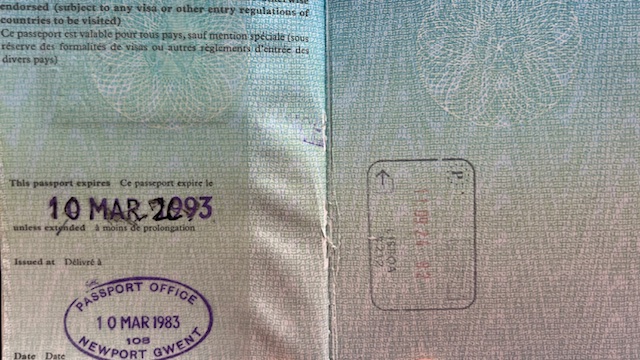
Finally, Francisquinha’s new passport (See PC 403 Idle Thoughts September 2024) is no longer virginal. Leaving Lisbon on the 11th, an understanding officer stamped it … with a little bit of encouragement!

Richard 20th September 2024

Hove

www.postcardscribbles.co.uk

Note 1. I had a tuck box full during the autumn term. To harden a horse chestnut (conker) you popped it vinegar. The harder the conker, the more difficult to break.

PC 404 Destiny

Our French friend Benedicte was supposed to visit her mother in France one Saturday last month. When she found she couldn’t check-in at home with EasyJet for her flight from London Gatwick, she drove to the airport, about 40 minutes from Hove. EasyJet had overbooked her flight and offered her one on the Monday. She texted me:

I had to cancel the trip. It’s fate ….”

“Fate can play a funny part – is that why fate’s feminine?”

La destinée.”

“Exactly!”

Yes but we also have ‘le destin’. I wonder why we have those two words; there must be a slight difference in meaning. I think ‘destin’ is what you are born with. What is written for you at birth, influenced by your place of birth, your family economic status, your race… you can’t do anything about it. Destinée is more something you can influence. You take your journey in life into your hands. But the difference between the two is also a big philosophical conversation that can vary according to religious beliefs.”

It’s clear that ‘la destinée’ is actually ‘destiny’ in English and ‘le destin’ is Fate. I turned to a dictionary to find some definition. … of destiny:

A noun. The events that will necessarily happen to a particular person or thing in the future. For example: She was unable to control her own destiny’. Or ‘The hidden power believed to control future events.” (Which is confusing!)

…. and ‘fate’:

A noun: the development of events outside a person’s control, regarded by some as predetermined by some supernatural power. In Greek and Roman mythology, there were three Goddesses who presided over the birth and life of humans. Each person’s fate was thought of as a thread spun, measured, and cut by the three Fates, Clotho, Lachesis and Atropos.”

There’s a phrase in English ‘It’s all Greek to me!’, meaning I have no idea what you’re talking about. (Note 1) It appears in Shakespeare’s Julius Caesar (1599) so it’s not modern, but it sums up my knowledge of Greek mythology and stories of Icarus and Hades and Odysseus and Achilles and ……. However, they had an interesting take on fate, those ancient Greeks.

The ‘Fates’, otherwise known as the Moirai, were the personifications of destiny. They were three sisters: Clotho (Note 2) aka The Spinner, Lachesis, the allotter, and Atropos who was ‘the inevitable’, the metaphor for death. You can see where this is going, can’t you?

Their role was to ensure that every being, mortal and divine, lived out their destiny as it was assigned to them by the laws of the universe. For us mere mortals, this destiny spans our entire lives and is represented by a thread spun from a spindle. I only hope that when Clotho was spinning my life, she didn’t run out of thread too early, and that Lachesis was generous in her use of her measuring rod! These female fates were considered to be above even the gods in their role as enforcers of fate, although they did acknowledge orders from the chief of the gods, Zeus. (Note 3)

The Ancient Greeks were not alone in their beliefs about Fate. In Norse mythology the Norns were a trio of female beings who ruled the destiny of gods and men, twinning the thread of life. One was called Urḋr, from Old English wyrd from which comes the modern English weird.

One source suggests that ‘although they are used in similar contexts, they cannot be used interchangeably’; that’s an ugly word! Fate implies a lack of control or inevitability, like the situation that Benedicte found herself in, no personal control when EasyJet’s overbooked her flight; destiny suggests a sense of purpose or direction that can be within one’s control.

The composer Guiseppe Verdi wrote the opera ‘La Forza del Destino’ (The Power of Destiny). As Shakespeare and the Greek dramatists have taught us, man is not always in control of his own destiny. In Verdi’s opera, based on a Spanish drama, the power of destiny contrives at every turn to frustrate the happiness of Leonora and Alvaro. In 1960 at the Metropolitan Opera, the famous baritone Leonard Warren collapsed and died during a performance of the opera in New York. The supposed curse reportedly kept Luciano Pavarotti from ever performing the opera and the tenor Franco Corelli used to follow small rituals during a performance to avoid bad luck.

You can imagine William Shakespeare had something to say about destiny, and you’d be right. For instance – “This above all; to thine own self be true. And this must follow, as the night the day. Thou canst not then be false to any man. It is not in the stars to hold our destiny but in ourselves.” This was from ‘Hamlet’ and then we have: “We know what we are but know not what we may be.” Knowing what we are, who we are, is essential to knowing how to be oneself (PC 399 Why Can’t I just be Me? July 2024)

And who could forget Destiny’s Child, the name of an R&B/Soul Quartet that formed in 1990? Its most famous member was Beyoncé Knowles and I’m told its hits included ‘Say My Name’ and ‘Survivor’.  I am more likely to remember the hits of Paul Anka, a Canadian singer born in 1941, particularly ‘You Are My Destiny’, the first line of which goes “You are my destiny, you share my reverie, you are my dream come true, that’s what you are.”

Finally John Dryden, England’s first Poet Laureate (1631 – 1700), wrote of fate:

“Tis fate that flings the dice,

And as she flings

Of kings makes peasants,

And of peasants kings.”

So was it fate that caused you to read this postcard ….. or destiny?

Richard 13th September 2024

Hove

www.postcardscribbles.co.uk

Note 1 Other nations have the same saying. For instance the Czechs think it’s all Spanish and the Dutch ‘That’s Chinese to me’ (Dat is Chinees voor mij)!

Note 2 Clotho’s Roman equivalent was Nona, a goddess called upon during the 9th month of pregnancy.

Note 3 In Shakespeare’s Macbeth the weird sisters were prophetesses, but also known as the three witches.