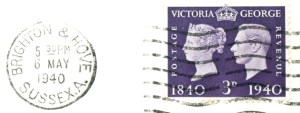
PC 19 Coincidences

I rushed around, a little like a headless chicken, not sure what I was looking for. I saw flashes of the familiar and the unfamiliar, of roads that ran nowhere and paths that went on for ever. A bottle of ‘Stohl’ rum came into focus, completely divorced from its surrounding. Some stranger held the bottle and laughed and asked: “What are you looking for?” It seemed such an obvious question and required no thought to answer: “I’m looking for the Pink Panther.” The stranger turned the bottle and there on the label was a cartoon drawing of The Pink Panther. So there it was; I’d found it!”

Suddenly I awoke from this collection of random thoughts, the dream so vivid and real. Most of you will remember The Pink Panther, but for those of you too young, the actor Peter Sellers made a series of films in the late ‘60s about an incompetent French police inspector named Clouseau. It featured an animated cartoon panther, which happened to be pink! I had experienced this dream way back in 2001 whilst staying with my brother and his family and, on appearing for breakfast, was asked: “Sleep well?” The dream and its Pink Panther hadn’t yet drifted into my subconscious and I was able to recount some of the detail, over my three boiled eggs and coffee.

I didn’t know much about the stages of our sleep, so was fascinated to be told at the wedding of chums that there are five stages that the body cycles through, roughly every 90 minutes. What a strange coincidence therefore to read exactly the same thing two weeks later in the Delancey Place daily news email, which I had just signed up to. So then I got thinking of other coincidences which I have experienced, some quite recent, some so bizarre to be unexplainable. Why should one have periods when ‘coincidences’ are more frequent than at other times? Is it that we are sometimes more open, more aware, more observant, more ready to accept? The question hangs in the air!

My favourite Australian author is Tim Winton (Cloudstreet, Dirt Music etc) and I ordered his latest book, Eyrie, in July this year. It’s a social tale of life in the raw in the suburbs of Freemantle, Western Australia from where Tim Winton hails. Somewhere in the book the narrator goes into a friend’s flat and sees a postcard showing Rio de Janeiro’s ‘Christ the Redeemer’ on the mantelpiece. I did a double take! The postcard could have been from anywhere; its origin had no bearing on the story, but it happened to be from …… Rio, a city I am now so so familiar with! Weird I thought.

A few days later I’m reading another book and, in the description of a scene, read: “…… the woman pulled open the café door, and came in, leaving the door to slam shut. Startled, I looked up from my Expresso, and immediately noticed her brown sweatshirt with the words ‘Thief River Falls is Paradise’ emblazoned across her chest. ……..” Some minutes later, Celina and I go for a walk along the seafront at Hove. On our return, I see a piece of junk mail in the front hall advertising “Blue River Falls.” “Weird! “River Falls” twice in a couple of hours?” I thought …..  but just a coincidence? Surely?

At the beginning of last month, my daughter Jade and husband Sam go off to Jersey for a family wedding, the same weekend that we have a small supper party. Chatting to one of our guests, I find out that she originates from ……. Jersey, but that now her mother is living in Weymouth ……. where my brother and sister-in-law live. Is this just random chance?

Some years ago I went to Osbourne House, the summer house of Queen Victoria and Prince Albert, built on the Isle of Wight. It’s a rather Italianate palace, with towers at various corners. In one of the state rooms there are wonderfully proportioned floor-to-ceiling windows; the detail I particularly remembered was that the shutters had mirrors attached to their internal faces. It was easy to imagine a candle-lit formal party, the room full of uniforms, white tie & tails and long dresses, everything reflected in the mirrored shutters.  I don’t like curtains too much so when we bought the apartment in Amber House in 2012, I got the local House of Shutters company to come and measure up for some shutters. I will always remember the salesman Dean’s face when I said: “Oh! And I want some antiqued mirrors on the inside of the main ones.” I think he thought I was mad, but they work well and he’s even been back to take some photographs. So the connection is made to Osbourne House. Only a couple of months ago I found out that Amber House used to be part of an old people’s home (appropriate you might say!) called Dresden House. And if you google ‘Dresden House’ you read it was in a street named Albany Villas, “where many houses reflect the architecture of …. Osbourne House”. Full circle? Weird or what?

Is it such a coincidence that my daughter’s step-father-in-law Richard was born on the same day, in the same month, in the same year as my sister-in-law Jane – 10th January 1953? Weird?

After the boiled eggs and coffee, we all went off to Portland near Weymouth, to sail with my late nephew in his dinghy. We trailered the boat down to the dinghy park and started the process of rigging the mast and generally preparing to sail. Unfamiliar with the particular rig, I helped where I could, but found myself looking out over the other boats on the hard-standing to the waters of Portland Harbour. In the immediate foreground amongst all the other craft was a small catamaran dinghy. Very visible on the starboard keel was a cartoon character – The Pink Panther. I did a double take, not believing what I was seeing, for here amongst the gravel and the fibreglass was the subject of my dream early in the day. Weird? Spooky more like!!

Just a few random thoughts!

Richard Yates – richardyates24@gmail.com
P.S. I hadn’t thought about The Pink Panther of my dream much in the last thirteen years, although last night when I was pulling together thoughts about life’s coincidences I sort of relived it. This morning, after a session of Bikram Yoga in Ipanema, Celina and I walk in the direction of the local Zona Sul supermarket. At the intersection of two busy streets there’s a flower stall, and sitting next to it is a Saxophonist, lost in the tune he’s playing and hoping for a generous donation. That tune – the theme from the film The Pink Panther! Now that really is weird!


PC 18 Memories of ……. Quercy!

Well, it could have been “A year in Provence” but then my name is not Peter Mayne and it was only 4 days! Still, I thought you might like to hear of our latest trip in the middle of nowhere, some 60kms north north east of Toulouse. The city of Toulouse is the home of French rugby, of Airbus Industries, famous for its sausages and the surrounding region lives on Foie Gras!! I liked Foie Gras until I learned more about how it is produced and the idea of eating it got rather ‘stuck in my throat’!

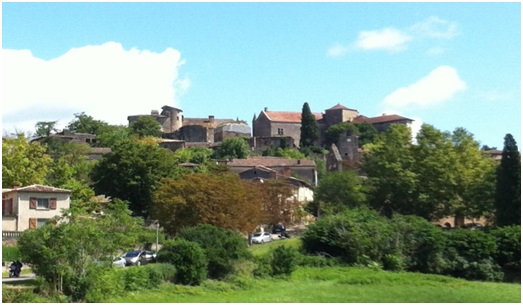
The historic village of Brunequel stands on a rocky outcrop overlooking the confluence of the Averyon and Vere rivers, in the southern part of the Quercy region. Occupied for its geographical importance since the early C9th, two castles were eventually built on the top, one by a Protestant family and one by a Catholic family.

pc18 - 1

The crusade against the Cathars in the early C13th was focused further south around Carcassonne and bypassed Brunequel, but the village was not immune to the various religious wars that washed through this nation and these castles, being only about 20 metres apart, were often in conflict! The guidebook says that the village ‘went to sleep’ in the C17th and it’s only today that the village is being restored, with tourists flocking to see Les Châteaux de Brunequel.

The English love France and many buy property here, so much so that some parts of southern France, the Dordogne for instance, are very ‘English’. The French are happy to leave rundown country properties and head for the towns; the English like nothing more that renovating some centuries old ‘ruin’ for their holiday home. David, our host with experience of renovations in England, bought La Verrouille near Brunequel some nine years ago. A part of the place was so run down that someone christened it ‘Beirut’ – reflecting on the similarity with that Lebanese city during its civil war! Today it is a glorious country mansion, with a huge guest wing, swimming pool, deconsecrated chapel, boule pitch and lake where, in the warm sunshine, bright blue and scarlet dragonflies flit across the surface. The house encourages David to have guests; two other couples, the men old Army chums of David, joined us.

The main thread running through the couples was that all the men had served in the British Army, some for more years than they cared to remember, or could actually remember! Ah! Not the only thread – we are/were all sailors of some sort. These factors alone ensured that everyone mucked in, helped prepare food, uncorked the wine, cleared the table, and generally made our stay run smoothly, with David overseeing everything.

We need some chopped chives to put on the freshly-picked Girolle mushrooms that Henri the gardener had suddenly produced from his wanderings in the nearby woods, and Dominique had taken charge of cooking. “Oh! It’s so much easier to cut them with scissors” says Isabella, watching Dominique start to cut them with a knife. Dominique, a native of Provence, looked over her glasses: “But surely” she says with her wonderful French-accented English “a knife is better, non?”, rather surprised that someone had challenged a Frenchwoman in the kitchen! A discussion ensued about how a really sharp knife is the absolute must in a kitchen, either in France or indeed in Northern Ireland!

If you live in a part of the country where a certain fruit or vegetable is in abundance, someone invents a device to aid its preparation for eating or cooking – think mandolin or mezzaluna for instance. Well, I thought I had seen most gadgets but David’s apple skin remover/corer/slicer was something else. Perfectly uniform sliced apples are needed for the French Apple Tart, so someone invented the right device. Looking rather like a design by William Heath Robinson (Google him if you’ve never heard of him!), it is so ingenious. You simply place the apple on a three-pronged fork on a spindle, and turn a handle. The apple meets a skin-removing blade, is cored and then sliced by another blade. All you have to do is cut it in half – with a sharp knife!

And no home is complete without a dog and/or a cat. Magic, a 6 year old Labrador, would immediately fall in love with you, provided you gave her a tasty morsel or threw her ball, or stick, ……. or flowerpot! Don’t you just love that trait in a dog? On the other hand, the cats, three in all and rather outdoor than indoor cats, loved playing with each other but with us mere humans would remain rather aloof.

The C21st has arrived in France like everywhere, but country internet speeds and coverage are not wonderful in La Verrouille. There was an amusing sight in the morning, outside David’s office where his router was sited. Three of us would arrive, brandishing our iPads, and, having got connected, would sit on the floor and check our emails or download our digital copy of The Times. It was a little like a doctor’s waiting room! I half expected David to open the door and shout: “Next!”

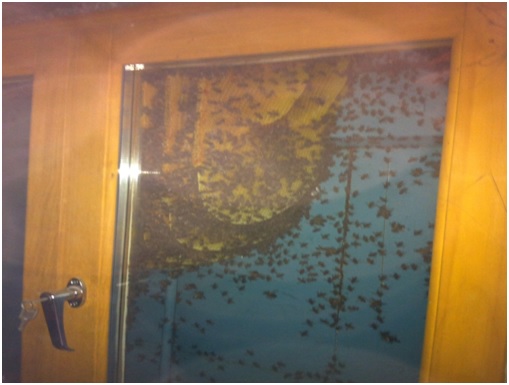
David is the most wonderful raconteur. He possesses that gift of making any story amusing, holding your attention even if, occasionally, the subject is very mundane. He told how a local priest and his young boy came to collect some bees that had nested in the attic of the main house. The removal of the nest and its queen bee, and her accompanying workers, was a delicate affair, although it eventually involved a winch, a length of rope and some luck ……. before the nest and its bees were in the back of the priest’s car. “How many bees are we talking about, David?” asked Bill. “The priest reckoned about 14,000. There’s another one up there. Do you want to take a look?” So we all climbed up into the attic expecting at any moment to hear the buzzing of some bees. Actually they nest in between the windows and the shutters, so you could see them easily but safely – maybe another few thousand! Up close, what an amazing sight!

p18 - 02

Dinner in the evening was on a terrace of the old chapel. A round dining table encourages all sorts of chat and yes, as the evening wore on and the sun set, the stories got longer and more elaborate: “Do you remember Caruthers? God! Haven’t heard from him for thirty years; pinched my drill boots at Sandhurst. Well, let me tell you ……….” I don’t think anyone else knew Caruthers, but it didn’t really matter as the story unfolded and the wine flowed! Magic put his head on the lap of someone whom she knew would be seduced by the doleful eyes, and a cat rummaged amongst the cooling coals of the BBQ. The sound of a tree frog competed with David’s mellifluous tones ….. “Ah! Yes, that reminds me ……..”.

Life can be so so good!

Just some scribbles …….

Richard Yates – richardyates24@gmail.com
P.S. La Verrouille is up for sale, as David looks to return to the west country in England. If you want to see the beautiful mansion we stayed in …….  and/or would like to buy it, go to www.french-property.com/vp/nv/id/12767 or go onto the internet and search for La Verrouille, Brunequel.

PC 17 (Pre Card!) The Pantanal

My dictionary tells me that the word ‘postcard’ was originally used to describe a regulation size of card that could be sent by post. I had thought it was connected with the prefix ‘post’ meaning after or behind ie something you sent having been somewhere!! It’s a pity because I wanted to call PC 17 a ‘pre’ card; something you sent before going somewhere!

In 1996 I read the latest John Grisham novel called The Testament. I always enjoy his stories, for they are good stories, not heavy and ponderous ….. and a very satisfying  read. This particular book centres around the last ‘will and testament’ of an extremely rich American, who leaves all his money to an illegitimate daughter ….. whom no one in his large family of ex-wives and squabbling children has ever heard of. “Rachel Lane” works for the World Tribes Missionary and is somewhere on the Brazilian/Bolivian border in a region known as The Pantanal.

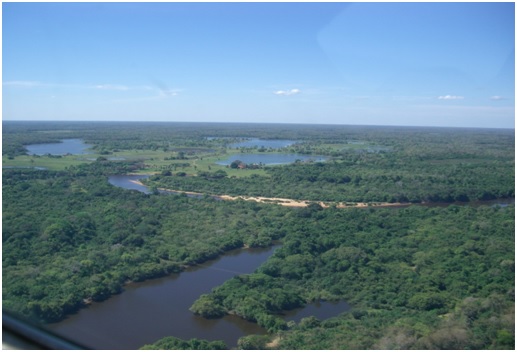
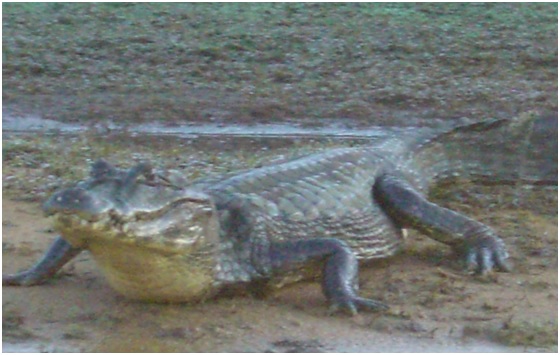
The what? I had never heard of it! As the story progresses, my knowledge of The Pantanal increased. There was no reason for Grisham to invent things about it to fit his story, as the place naturally exudes superlatives. The memory of that book and the pivotal part The Pantanal plays in the story have stayed with me. What I didn’t imagine was that fifteen years later I would have the opportunity to visit this vast and extraordinary place. I’m no latent naturalist but the idea of maybe seeing jaguar, caiman or an eagle in the wild is appealing.

The statistics are somewhat amazing! With a total area of almost 75,000 square miles (compared with the overall size of the United Kingdom at 94,000 square miles), The Pantanal is the largest wetland in the world. The vast majority of it is in Brazil but it also extends into Paraguay and Bolivia. As such an enormous tropical wetland, The Pantanal is a very precious resource for Brazil, and home to an array of plant and animal species. It is estimated to contain some 1000 bird species, 300 mammals and 9000 invertebrates. Because about 80% of The Pantanal is submerged during the wet season, the species here include aquatic ones, making it an even more diverse and fascinating destination.

As Grisham describes it:

At 4000ft the majesty of the Pantanal suddenly appeared as they passed through a large ominous cloud. To the east and north, a dozen small rivers spun circles around and through themselves, going nowhere, linking each marsh to a hundred others. Because of the floods the rivers were full and in many places ran together. The water had differing shades. The stagnant marshes were dark blue, almost black in some places where the weeds were thick. The deeper ponds were green. The smaller tributaries carried a reddish dirt and the great Paraguay river was full and as brown as malted chocolate. On the horizon, as far as the eye could see, all the water was blue and the earth green.”

Being an electronic card, I thought I could add this wonderful photograph from space showing where The Pantanal is, and its size in relation to Brazil, Bolivia and Paraguay.

Earlier this year we were sitting in Rio, contemplating coming back in September and what we might do during a 5 week trip. We had thought Celina’s parents would have come to England to escape the football World Cup but the flights proved just ridiculously expensive, so that idea was canned. Then we thought we could all go on a trip to The Pantanal! There was a ‘coffee table’ book showing the most amazing photographs of The Pantanal and one evening we looked through it, rather spellbound! In the end we couldn’t persuade Celina’s parents to join us, put off possibly by the difficulties to actually getting there.

Grisham: “Hundreds of rivers and streams like veins through the swampland. No towns or cities in The Pantanal. No roads. A hundred thousand square miles of swamp.”

In addition to the enormous variety of wildlife, The Pantanal is home to large herds of domestic cattle. First developed 200 years ago, they are raised on farmsteads called fazendas by pantaneiros (not the same ones of course!). Some of the owners of the fazendas have realised there is money to be made from ecotourism and now there are many centres for excursions into the wetlands. Some are only accessible by boat, all by light aircraft.

One particular one was recommended by a chum, and we leave Rio on 18th September 2014 for a few days on the Barranco Alto fazenda……. and no doubt there will be a real postcard for those of you interested!

Richard Yates – richardyates24@gmail.com
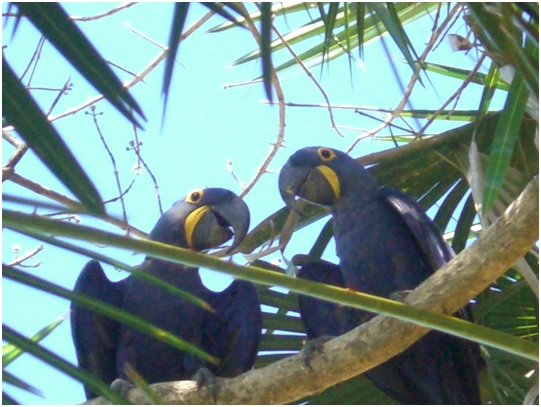
P.S. “Rachel Lane” was eventually found deep in The Pantanal, administering to a tribe. For those of you who haven’t read this particular John Grisham novel, it’s the only way you’ll find out what transpires in the end!!


PC 16 Reflections and Afterthoughts

I often get comments about my electronic postcards, mostly of the “Good read!” variety. Some addressees do, in the words of that ancient quote, “read, mark, learn and inwardly digest” (*) …. but nothing comes out the other end! Maybe they find them indigestible but they’re just scribbles – really! Silence may be golden, but PC16 has generated more comments than any other. Doesn’t that tell you something, of the central role alcohol and other drugs play in our lives?

A chum who’s had a particularly difficult twelve months admitted he was “back on the nicotine” and drinking recreationally! His “they (alcohol and cigarettes) are both addictive and at other times hugely destructive” I am sure rings bells; well, they do with me. Celina’s dear dear father congratulated me on ‘a beautiful confession.’! Did I really confess? Did it really come across like I was in a confessional? I had hoped simply to relate some of my experiences without attaching any guilt or other emotion! They are simply my experiences, neither right nor wrong, neither good nor bad …. they just are! We can all read the same thing and get a different understanding!

Oh! And I didn’t tell you in PC16 about what happened in Marstrand on the west coast of Sweden, many years ago. I was sailing a 42ft sloop from Oslo back to its home port of Kiel, Germany and stopped at this lovely little Swedish sailing town for an overnight stay. It had been an eventful trip as the yacht’s engine was ashore back at its home port being overhauled and getting into small harbours without an engine was consequently quite tricky. We had already had a scary moment on the passage into Marstrand, sliding between rocks so close I felt I could have touched them, trying to sail along a transit, so it was with some relief that we were safely tied up alongside the harbour wall. Picturesque harbours always attract pedestrian attention and when a local carrying a bottle of schnapps asked to come aboard, how could one refuse? We had a drink, as you do on a warm summer’s evening; maybe more than one! He told me that alcohol was so expensive in Sweden that most people distilled their own schnapps. He had an old enamelled bath in a corrugated-roofed shed he used for this purpose. I asked him how he knew when it was ready to drink. “It was a bit trial and error at the beginning.” He held up a hand. “I used the finger test. I dipped my finger in; if it was too strong the tip fell off and I needed to dilute it.” He only had lost a couple of fingertips so I guessed he got more proficient quite quickly!

This from a chum in the Gulf: “ …….its the norm, as you say, to drink. A lot is almost inbuilt into our social psyche and it makes people very uncomfortable when one doesnt partake.” Rather ironic, eh?, when they are writing from somewhere where the drinking of alcohol is not part of the social and religious culture – yet people still do. A cousin sadly felt “slightly ill” having read PC 16; maybe they read it in the morning when a coffee might have helped, or in the evening when a good glass of Oyster Bay, or indeed a small measure of Famous Grouse whisky should have been to hand! Another cousin wrote my observations were “very acute but I wont show it to . for the topic is personally too close.

Those of us who love writing often look for the innuendo/pun/clever metaphor to bring one’s piece alive and I certainly acknowledge other people’s skill here too. Thanks to one reader for “Nice punch line!” (If you don’t remember the last paragraph of PC 16, reread it!)

My PCs are often shared with friends and family, but it’s good to hear …….. “I sent it onto my dad, by the way, who also enjoys your writing and for whom the last half a page was clearly recognisable.” And for some, it rekindled their own memory ….. “We all have our stories of smoking and drinking and drugs.” Don’t we just!

We went to my younger grandson’s first birthday party at the weekend – cake and all! His paternal grandmother let slip it was just a year since she had stopped drinking alcohol … and admitted feeling better ….. although still missed it! On the way home, we came over the South Downs just north of the Brighton & Hove conurbation ….. and there was the sea, shimmering in the distance, all sparkly in the early evening sunshine. Closer to home one could see more detail, numerous white horses on its surface. (**) Such a glorious sight …..  and sound.

And hot off the press, this week we’re told that the idea a daily glass of red wine prevents heart disease is deeply ingrained and often appealing. …… “But sadly its too good to be true. Youre better off walking to the green grocer than driving to your off-licence. These ‘health warnings’ come and go! “Butter’s bad …. butter’s good! Eggs are good …. eggs are bad” Everything in moderation seems to do it – including alcohol?! We had chums to supper the other night and ‘drinking and non-drinking’ inevitably came up. I sniffed someone else’s glass of cool white Villa Maria (I did ask first!); even if you don’t drink and I’m no advocate of abstinence, you can still appreciate the smell of fermented grape juice. Just a thought!

Richard Yates – richardyates24@gmail.com
*From the Book of Common Prayer

** Sorry! This is a sailing/nautical term used to describe the sea state!! As the wave breaks, the water foams and appears white, rather like a horse’s mane. The more ‘white horses’, the stronger the wind. They don’t normally appear below Force 3

PC 15 Alcohol and other drugs

The afternoon drinkers on George Street here in Hove are a rum lot, a glorious mix of ages and gender, most seemingly down on their luck, others lost in their personal reverie. Makes me sieve the memories of my own life and my relationship with alcohol and other drugs ….. although I am certainly not ‘down on my luck’ and probably never have been!

At one point in my teenage days, I vowed not to drink ….. but that didn’t last long. After ‘prep’ at boarding school one evening, we went off on bikes to The Owl, probably the smallest, grottiest village pub imaginable. I should add here that ‘pubs’ were out of bounds! My chums suggested a half pint of the basic draught beer, probably Wadsworths from the local brewery. I remember lifting it to my lips; bitter, watery, my face wrinkles even now at the thought of it. Somehow I drank it, not relishing the taste. And then I was persuaded to have another! Didn’t take much for my vow to lie shattered on the straw-strewn floor. Besides, alcohol plays a huge part of the fabric of our Western society, a lubricant for work, love and play, so why not just do what’s expected?

And everyone smoked!! Silk Cut, Passing Cloud, Gauloise, B&H, Dunhill, Marlborough; you name it, I probably smoked it! My grandparents lived in Bath and on a day off school I would take the bus to see them. My grandfather smoked unfiltered cigarettes and the ash would drop onto his waistcoat; the butts went into the wastepaper basket and then Granny, before retiring for the night, poured in some water to ensure there were no live embers!!! Once, on my way back to school on the Sunday evening, I got off the bus in Devizes to stretch my legs, with a cigarette in my mouth. Down the steps, straight into one of the school prefects! Oops! That earned me 6 strokes of the cane and much street cred! We got rather blasé about it as we got more senior. Ray and I would have a cigarette after breakfast ……. and then go off to the Applied Maths lesson; it took Mr Hiscock the teacher to remind us that cigarette smoke sticks to both breath and clothing!

At home as a family, my parents, brother and I would watch Saturday night television – smoking; on some occasions you could hardly see the screen through all the smoke! And to think it was permissible to smoke on the London Underground, on aeroplanes and in the cinema; I think we’ve moved in the right direction here, banning it from all public places! You remember that wonderful Nina Simone song “Don’t smoke in bed!”? Well, I think I used to start and finish the day with a cigarette; such is the addiction, the craving for nicotine. There were long periods in my life when I didn’t smoke and long periods when I did, but I had my last cigarette in 1994, well on Tuesday 21st April at 9pm if you were wondering! Do I miss it? Sometimes, if I’m honest, yet smelling second-hand smoke is …. revolting!

Attitudes to alcohol and other drugs in the British Army simply reflected what was going on in civilian life, although thankfully the use of drugs other than nicotine, soft or hard, was rare. We smoked and we drank, both often to excess. My step-father gave me a silver cigarette case when I graduated from The Royal Military Academy; I still have it ……. and his father’s pewter hip flask circa 1890. I was posted to Germany, to a small town called Lippstadt, to help deter the Russians, for the Cold War was at its height. The hip flask came into its own filled with ‘ferrets’, a 50/50 mix of brandy and cherry brandy, on the bare-arsed live-firing ranges of Bergen-Hohne when the temperature dropped to minus 10 deg C.

We drank at lunchtime and in the evening. We ate in dinner jackets once a week and had formal ‘dinner nights’ once a month; we drank, often to excess! In the old Luftwaffe Officers Mess where we single officers lived, there was an interesting addition to the fittings in the ‘Gentlemen’s’. Made of good quality porcelain were two objects which looked like urinals, but were in fact receptacles for …… vomit! Yes! Truly; complete with long vertical side bars, brass and polished daily, to grip on to. Can you imagine? Even today I think how simply awful …… but so practical if alcohol had got the better of you! By the way, I don’t want to give the impression that we were always pissed! When we were out of barracks training, often for weeks on end, we were dry! We simply worked hard and played hard!

When I first started giving blood, the National Blood Transfusion service offered tea & biscuits afterwards; and still does I guess. But men were also asked whether they would like a bottle of Guinness, on the basis that this famous Irish stout would replace some of the iron that was contained in your donated pint of blood. Seemed madness to say ‘no’! So The State encouraged you to drink!

Not a great fan of beer, I developed a taste for wine, which when I was growing up was still a bit of a celebratory drink. The white wines were dominated by Liebfraumilch and Black Tower, cheap German imports – about the only good thing about them, in my opinion, was the name! I loved red wine, the gutsier the better. In my youth it was generally French although you could get decent German reds if you happened to be in that country. Gradually wine from the Antipodes made its way to England and Shiraz and Grenache became a favourite tipple. It was fine to drink as the advice at the time was “Red wine is good for you!”

Sailing and drinking seemed to go together too. There was one occasion when my hired yacht was tied up alongside a German one in the port of Soenderborg in Denmark; the crew had gone ashore – probably for a drink! The skipper of the German one asked whether I wanted to join him for a gin; my mind immediately imagined good gin, lovely tonic, a slice of lemon and lots of ice. Belong decks he opened a bottle of Gordon’s, and poured a generous amount into a glass …… and that was it; after a while neat gin isn’t that bad, but it does give you a headache!

I won’t recount how we felt the following morning after a few of us tried every drink on the bar list of the local teachers’ mess; or tell you at what time I had a first beer at the start of a yacht race in The Baltic. I will however offer my rather untutored observation after a Wine/Food Tasting event ……. that dessert wine will go with any type of food and I’ll advise you against drinking too much Pimms, with little lemonade and in strong sunshine.

Twelve years ago, I completed an ordinary detox of food and drink for the month of January; you know the sort of thing, no red meat, chicken, coffee, alcohol, wheat etc. Being quite an obsessive character, for me it’s often all or nothing. I couldn’t, for instance, just have one cigarette a day or a week, as some people can; it’s nothing or 20. I recognised that this was almost the case with alcohol. Was there a day in the week when I didn’t have a glass of wine with supper? Or could I not really remember??!!  Ha! Ha! So whilst I happily went back to drinking coffee and eating red meat, I sort of delayed drinking alcohol again. And that’s where I am today, looking for good non-alcoholic beers, and there are some, and coping in a society where it’s normal to drink. “Still not drinking then?” the husband of a friend asks. “No!” “Oh! Go on, just one won’t hurt!” For some drinkers it’s impossible to see that you can survive without alcohol, for it makes us more relaxed, less inhibited, so surely you would, wouldn’t you?

There was a discussion on the radio about alcohol some time ago and someone suggested that 99.9% of all human relationships in our Western culture generally started over a bottle of wine or a pint of beer. Celina and I had our first supper almost three years ago; she had some wine, I had some water. Someone said one drinks alcohol to make other people more interesting!! If this is the case, I leave you to draw your own conclusions!

Richard Yates – richardyates24@gmail.com
PC 14 Hove can’t be the centre of the universe – can it? (Or should that be ‘Hove Actually?)

It’s funny being back here in Hove after so long in Rio de Janeiro, but at least we had some relatively warm local weather to welcome us back. Even places familiar to one seem strange at first but you soon get back into the grove …… and you notice what’s new, what’s changed and what’s stayed the same …… if you keep your eyes open. There are those lovely lines from TS Eliot’s poem “The Four Giddings”:  “….. the end of all our exploring, will be to arrive where we started ….. and to know the place for the first time.” To know the place for the first time, huh! So we walk, looking, observing, finding the familiar and the new, unconsciously remembering and realigning.

Our neighbours had said that the sea had been extremely rough in January and February; we walked the 200 metres down to the shore. We looked; it looked at us, benign and calm at low water with relentless small waves lapping the sand. Had it really been rough? Had tons and tons of pebbles been hurled up off the beach, up onto the Victorian promenade, up against the beach huts? It looked so innocent, this sea that lapped the beach, as though it was teasing …. as though it was disclaiming all knowledge of its power.  Woes betide us when we forget, when we disregard the power of nature.

A photograph from February shows the whole promenade, some 20 metres wide, covered with pebbles to a depth of 50 centimetres or so ….. and the ‘beach’ only sand. I suspect the council shovelled it back, and the sea threw it back on a few more occasions before those winter storms finally abated. Can the sea have a sense of humour? Although it’s not alive as such, it acts, in cahoots with the moon and the wind, as if it is, doesn’t it? I bet a few council staff looked at the sea and said: “OK! Don’t do that again!” And of course it did, like some naughty boy, testing, teasing. Looking at the calm water shimmering in the afternoon sunshine, it’s easy to forget its power.

But I’ve experienced the same sea, turned malevolent and churned into turmoil by gale-force winds, when I’ve been sailing. Storming into The Solent past the Needles on an overnight trip from The Channel Islands many years ago, it doesn’t take a moment today to feel the lurching of the boat, the torrential rain and the sound of the screeching of the wind on the rigging; it was gusting severe gale force 9. Sure, I shouted at the sea: “Enough! Enough!” ……. and it ignored me! I never forget that power, that power of the natural forces on this planet; one is safe at sea because you develop a very healthy respect for the sea and understanding that makes sailing such an exhilarating sport. But I digress! Hove, Oh! Yes!

Further along the beach that destructive power has wreaked further havoc on the old West Pier, one of only two ‘listed’ piers in the United Kingdom. Closed since 1975, it was always going to be refurbished. Sadly, in 2003, just as money was allocated for its rebuilding, a fire completely consumed that which could be consumed. The Victorian ironworks have stood, twisted, bent and actually rather beautiful, abandoned in the shallows off the beach since then; a red buoy sits to seaward, warning of the danger. And now the power of the sea has reduced the remnants still further, large pieces having given up the survival battle and surrendered to the elements. I sense it’s time for the council to remove it completely, if only to save this magnificent Victorian structure further embarrassment.

Funnily enough this gaunt skeleton of past glories reminds me of some of the regular daytime drinkers at The Clifftonville Inn in nearby George Street!! (“Oh! God” Where’s he off to with this PC?”). Pedestrianised George Street is one of those streets that seems to attract certain types, and Hove is full of ‘certain types’!! In nearby Tesco’s you occasionally see Elvis, but it’s George Street which has the full panoply of life, in all its rich pageantry!! There are Goths galore and then those delightful old men and women who insist on dressing up before they venture out, never mind the hat, scarf, lamé suit and brogues or the smudged lipstick. Turkish men smoke and drink coffee at the outdoor tables of the café, the busker tries his luck with boxed musak accompanying his songs, at another café a regular has animated conversations …. with herself (!) and then there are those who congregate for a snifter. For them a drink or two and a smoke are essential elements of the day. Of course the stereotypical black clothes, the gaunt face, the odd pony tail and numerous tattoos don’t help to challenge my prejudicial and judgemental observations! The men look as though their ‘food’ is in a glass, the women exhibiting that rather ‘smoked’ look, taut paper-thin skin and wrinkled, from too many cigarettes … and their voices betray the smoker’s cough! If you’re feeling a little low, go and walk up George Street; you’ll soon feel better! Here the cry “Don’t forget your ‘5 a day’!” has a different meaning; more likely 5 pints and 25 cigarettes (roll-ups in this case) and not a piece of fruit or a carrot in sight! I wonder how they got to be the way they are, for surely it’s not healthy; maybe they don’t care, just enjoying the lift of alcohol and nicotine ….. I know I did!! But that’s another story!

Richard Yates – richardyates24@gmail.com

PC 13 The Tale of a Visa Extension – not!

If you’re a tourist going to Brazil you need, not surprisingly, a tourist visa.  There are plenty of other categories of course, catering for every type of visit or sexual persuasion! According to the Brazilian Consulate website the tourist visa is valid for 90 days and can be renewed for another 90 if necessary. You simply fill out the form on your flight and hand it to the person manning the Passport desk when you arrive. Sounds good, huh? Having cancelled our planned trip out to Rio de Janeiro in September last year, we looked at dates for the end of the year, 2013 that is. We knew we had to be out for Celina’s father’s 80th birthday on the 1st January 2014 and then thought about when we’d come back. February? Nah!  March? Well! OK! The end of March. That sounds about right; come back as the UK changes its clocks to British Summer Time. So we duly book our flights.

Looking at travel insurance, we began to realise we have, somewhat inadvertently, booked to be in Brazil for 92 days. And believe me, being older than 60 and wanting to stay somewhere for more than 90 days, getting travel insurance is NOT easy. Rather than change our flights by a couple of days, we plough on with our arrangements, succeed in getting some insurance, knowing of course …… we could extend my visa.

We arrive in Rio de Janeiro International airport, which in my opinion ranks way below, say, Delhi, around 2100 (midnight UK time) on the 27th December last year. Our BA chum, Jorge San, welcomes us, well me (!), with flowers; maybe he thought my heart surgery would have finished me off and he wouldn’t see me again? We queue up to clear our passports; secretly I hope that they would give me a visa for 92 days and not simply 90. “Ē possivel estender o visto por 92 dias?”  (“Is it possible to have one for 92 days?”)  “Nao!” But the lady said we could simply extend it at any Policia Federal station/office, in fact the piece of paper stuffed into my passport reiterates this; there would be a charge (about Rs70 – almost £17). We are through.

Now I should explain at this point that I like obeying the law. Hey! I spent 20 years being paid by Her Majesty (God Bless Her) to protect the Kingdom, its laws and way of life, so it’s as ingrained in my DNA as the annual rings are in a tree. Surely my attitude towards Brazilian law should be no different. I put a note in my electronic diary to make sure we have got the extension way before the visa runs out …. and relax into the way of life in the tropics. Celina, who lets these things bother her, drops into a nearby Policia Federal office in Leblon when she’s finished at her dentist, during our first week. “Oh! No! Not us.” “ Eu nāo sei!” (Don’t know!) Try the British Consulate.” “But it’s not a British visa, it’s a Brazilian visa!” Eu nāo sei!”

We are flying down to Sāo Paulo from Santos Dumont, the ‘city’ airport in central Rio. We take the opportunity to see the Policia Federal there. “ Eu nāo sei!” The computer sits on his desk and I assume he could have found out what he should do by going onto a website, or even picking up the telephone; but no, a shrug of the shoulders and a “Try the Policia Federal in Sāo Paulo.”. Talk about passing the buck! This we do on arrival, not pass the buck, but try another Policia Federal and meet the same response! “ Eu nāo sei!” Later we have dinner with some Belgium chums, working in Sāo Paulo. They have had a nightmare trying to get extensions to work permits; sometimes they have paid a fine, and sometimes immigration passport control hadn’t noticed. “Don’t spend any more time on this; pay the fine!” I feel so uncomfortable doing this, against the grain so to speak, that I ignore this useful advice. In retrospect, stupid!

Back in Rio de Janeiro, we get in contact with our BA man, Jorge San. He would ask his chums at the airport. “Come out on Friday; I’ll introduce you to the Policia Federal and they will extend your visa.” By this time the visa has two weeks to run. Rio de Janeiro International airport is not the best place to be on a Friday afternoon, actually on any afternoon, as travelling back into the city takes forever; the traffic is horrendous. Jorge San is being kind, so we accept and spend two hours travelling out to the airport in a taxi (Rs60). We go up to the Department of Immigration. The world and his wife are ahead of us! Some have clearly camped out for days; others have that resigned look that one develops when confronted by bureaucracy. Jorge San disappears into the melee, re-emerging minutes later and waving us in. We sheepishly jump the queue and go into an inner office. I do not understand much Portuguese yet, but I’m good at reading body language and facial expressions. After the initial pleasantries ….  “Tudo Bem?” .. “ Bem! Voce?” …. “Bem!” there’s a serious conversation between a policeman and Jorge San. After a few minutes Jorge starts looking ‘worried’ and Celina blushes. It transpires that yes, he could extend it but …….. wait for it …… the computer wouldn’t connect to the printer, which anyway was out of ink, and so he couldn’t give me a receipt for my R$70. (And of course public officials in Brazil are not able to take cash without giving a receipt. Er! Is that right?)  His suggestion, and ‘he’ being a public servant and member of the Policia Federal, was to turn up for the flight and pay the fine for the 2 days – ie become illegal! Celina had blushed I suspect out of embarrassment for her country and the way things don’t work. We said: “Thanks.” and left; 2½ hours later we were home, having achieved absolutely zilch/niente/nothing/nada!

On Thursday 27th March 2014 I become an illegal ‘estrangeiro’ (foreigner) in Brazil. Do people notice? I think initially I have some sign over my head; “I’m not legal! Arrest me! Deport me!”. But then I gradually relax …… as no one notices ….. and if they do they don’t care. On the Saturday, our BA Jorge San, who by this time was probably as embarrassed as Celina about the state of the Brazilian civil service, has helpfully said he would ensure our departure is as painless as possible, so we turn up for our flight in good time. Within minutes our suitcases are on their way and we make our way to ……. the Policia Federal, full of hope that I could admit my guilt and pay my fine (two days at R$8 per day – I have it in change in my sticky little hand). The chap is really really nice ……. and once he understands the issue ….. he smiles and starts interacting with his PC. A frown crosses his forehead; he slides his chair across the office to another PC at another desk. I look over his shoulder at the PC. It shows a box with a large red cross in it; he can’t interact with the office in Brazilia ……. and can’t print the receipt. I CAN’T PAY THE FINE. I want to scream, I want to shout, …… but actually it’s more appropriate to laugh, to laugh at the ridiculous nature of the situation, stymied at every turn, wanting to be ‘legal’ but not allowed to be …… by the police!! There is more discussion, a date stamp is found in a bottom drawer ….. somehow he finds an ink pad that actually has not dried out …… and my passport is stamped; I’m, er, legal! I press my damp notes and coin into Jorge San’s hand as he volunteers to pay the fine on the Monday. We leave, go through Passport Control to get ‘airside’ and relax.

This is Latin America. The middle class criticise and rail against corruption, the poor queue. If you live in a country such as England where the administration of the law works, it’s extremely difficult to understand just how this continent and in particular this country works … when it doesn’t work. But it does …. “Amanha”!! Living in the tropics will never be easy for those of us northern Europeans where respect for the law is in the DNA, because it works. But here, it’s the way it is ….. so why bother to get steamed up about it? You need to resign yourself to waiting, maybe in the queue, like the people in the airport, or not. Turn up and pay the fine!!??

Richard Yates – richardyates24@gmail.com

P.S. The irony is that Policia Federal in Brazil will have made a note that I overstayed my visa and that I paid a fine (I have a scanned and emailed receipt to prove it!) But actually the next time we fly to Rio, I’ll be on a new passport, with a different number ……. and there will be no record of me ever being in Brazil. I can imagine being told: “Enjoy your stay with us!” as I’m handed back my passport!

PC 12 At this moment in time!

Do you ever think when you go, say, to a huge airport like London’s  Heathrow, and check in for a flight somewhere, or even go to a busy railway station ..… and stand and watch the frenetic pace of life going on around you …… that this is how it normally is, every hour, every day, every week …… without it impacting your own world one little bit? We visit it briefly, fleetingly; people all over the world doing their own thing, living … just as you are living your life.

I’m lucky enough to have ancestors who travelled widely in the C18th and C19th; as a consequence I have a large family global diaspora, not to mention friends all over the world. It’s really fun to wonder, to imagine, what others are doing, when it’s lunchtime, in the sunshine in Hove ……..

Over in New Zealand there are relatives galore as Great Great Grandfather Henry moved his large family from India to Auckland in 1860, so I can take my pick. Here their day is over, it’s midnight and almost mid-winter and one could imagine everyone is safely tucked up in bed, in this “Land of The Long White Shroud” as it’s affectionately known. In Auckland Cousin Angela is probably dreaming about her latest Square Dancing exploits and her husband Michael of his next trip to England. In Tauranga cousin Peter and Gwenda are certainly tucked up in bed and near Napier Brian and Nicola should be in bed, but their dining room table is probably covered with maps and paperwork, as they put the finishing touches to their trip to North America. New Zealanders love to travel; they call it ‘Overseas Experience’ or OE, irrespective of age. They will be in Edmonton, Canada in August for the ITU World Triathlon Events for which their son William has qualified.

On South Island, Deb Nation, Nicola’s sister, is not one for an early bed; she lives in Lyttleton near Christchurch and worked for Radio New Zealand’s ‘Spectrum’ programme. I suspect she developed a habit of working late to meet deadlines and now, with no ‘work’ deadlines, she is simply reflecting on her day. Across the Tasman Sea, the evening is younger by a couple of hours. In the Merewether suburb of Newcastle cousin Libby Laery, who was born one day before me (!), has had a lovely day at her local sea-water swimming pool, and then probably chatted with her chums at the local café; now it’s time to get ready for bed.

In Cawnpore, India, it’s 6 o’clock in the evening, a hot and dusty evening, and the sounds of this busy town are clear over the Christian cemetery wall. Within, it’s a peaceful scene with its long dead inhabitants resting in the dry earth. Great great grandfather Henry’s father Stephen Nation lies here, where he succumbed to Cholera in August 1828 at the age of 48.The location of his grave is marked on the cemetery map, but time and weather have caused the tomb to crumble and the weeds are abundant; the exact location is impossible to find. He was born in Dulverton in Somerset, educated at Blundells, a minor Public School which is still open for business (!), joined the East India Company aged 16 and had had a very successful military career.

Here in England, it’s lunchtime and Celina and I, having been to our daily Bikram Yoga session, are just getting lunch organised. We ‘found’ another cousin of mine a couple of months ago, Sarah Kelen (née Corbett), and, as she lives in England, I imagine she’s lunching too! We hope our geographical closeness will enable us to uncover more of what the Corbetts were doing, are doing in Brazil.

Corbetts went to Brazil in 1830 and so here there are many relatives; you don’t get icebergs in the tropics but if you did, I’ve only found the tip! The generic Victorian era family had large numbers of children to offset the high incidence of infant mortality and Augustus Corbett and his descendants are no exception. We are in contact with Cecilia Corbett Moreira, who lives an hour from downtown Sao Paulo, but despite efforts on both sides to meet, we have yet to do so. There it’s 9 o’clock in the morning and probably cool, as they move into winter. In late May they had a huge hailstorm which left the city covered in white stuff!

The city that’s holding the 2014 International Triathlon in August is Edmonton, and that city has been the home for Caroline Carrol, a first cousin, for many many years. Here it’s 6 o’clock in the morning and I suspect she’s asleep, although I know her house is on the market ….. so she may not even be there! Oh! Well!!

In Victoria, British Columbia, it’s 5 o’clock in the morning and Michael Nation is up early. Well! I can only imagine he is huh!!? I look up the time of sunrise in Victoria at this time of year. It’s around 0515, rising almost in the North East (well, on a bearing of 52°), so Michael will see the sky lightening and maybe reddening. His great grandfather and mine were brothers and he’s been doing a huge amount of family research over the years. Recently he found some papers relating to Stephen Nation. Not expecting to die (!) Stephen hadn’t made a will and his widow Mary Ann simply auctioned all of his ‘stuff’ before returning to England with the five youngest children; the minutiae of the ‘stuff’ is amazing! Michael’s due in Europe later this summer, continuing to uncover more family connections. “Good morning Michael!”

So as you sit and live and love and work where you are, imagine people you know, family and friends, sitting, sleeping, working, living and loving where they are ………… across the world, at this time, at this moment. Just a thought!

Richard Yates – richardyates24@gmail.com


PC 11 Reflections of Sāo Conrado

When I first went to Brazil in 2012 I went to meet, and stay with, Celina’s parents, who have lived for forty years in a suburb of Rio de Janeiro called Sāo Conrado. It wasn’t until my second trip that I realised that this is actually pronounced “Sock Ohardo.”; well, something like that! Now my fifth trip has come to an end and I feel compelled to describe this very unique place.

Sāo Conrado is west of Ipanema and Copacabana, and is physically separated from them by a mountain on the east side called Os Dois Irmāos (The Two Brothers) and on the west side by a larger mountain called Pedra da Gavea. To the north the Parque Nacional da Tijuca is a wonderland of trails, steep ravines and the usual flora and fauna. Until the late 1970s the only way to travel into the city was either along a narrow coast road that hugged one of the brothers (!) or through a shanty town called Rocinha. As the government’s house building programme failed to keep pace with the growing need, the people built their own shacks and so these ‘favelas’ grew, higgledy pigeldy, cheek by jowl, but the vehicular traffic through the area ensured public visibility. In 1978 the city engineers tunnelled through the Two Brothers (ouch!) and built a dual carriageway all the way through to Barra on the other side of Pedra da Gavea. Rocinha was bypassed and the only traffic that continued was the one concerning drugs! It became a dangerous place, dangerous for those who lived there and for those from outside. Nowadays the programme to clear the favelas of criminals is having an effect; visit Rocinha on an officially-sanctioned tour and you find a bustling suburb of 90,000 inhabitants, with fast-food outlets, banks, churches and all the normal commercial activity that’s needed to support a large population. They even have their own internal postal service; the government delivers mail to a sorting office and Rocinha does the delivery! It’s not perfect by a long shot and it’s not completely cleared of the insidious drugs, but it’s getting better. Sadly the wealthy residents of Sao Conrado still hang on to their memories of the dangerous times and this distorts their view of the place, blaming it for everything bad; apparently Rocinha in 2014 is very different to that 20 years ago.

From the top of Rocinha, the view across Sāo Conrado is stunning. Ignore the roofs of the favela, these days tiled and painted, in the foreground, and the ground drops away towards the coast, with tall blocks of apartments nestling near the beach and a large golf course split by the main road. And here’s one of the biggest visible sights of contrasting wealth in Brazil. From Rocinha, a poor crowded favela, you not only look at the swimming pools and expensive shopping ‘mall’, but also at one of the most exclusive clubs in the country, the Gavea Golf & Country Club (GGCC aka Gavea). The irony is that some of the people who live in Rocinha work at Gavea; others work in the up-market shops or as domestics in the large houses and apartments that proliferate. Is this a pure example of a symbiotic relationship? I’ve got to know this area well and it’s off the tourist routes, unless they want to launch themselves off Pedra da Gavea on hang gliders or parafoils.

The Gavea Golf Club started in the early 1900s; Celina’s grandfather was one of the founder members and lived in a house overlooking the golf course, so I am amazingly lucky, very privileged, to be able to experience life within the club. I hope I’m not being too hypocritical in saying I really enjoy this but at the same time understand its juxtaposition with Rocinha. This is a very very exclusive club …… but I can tell you …..

During the week it’s the old & bold generation who play golf, assisted by caddies in white uniforms and electric golf carts. Afterwards they sit in wicker chairs, drink Chopp (a light Brazilian beer), smoke cigars under the sun umbrellas and talk about that missed putt, that hole-in-one! In the early evenings and at weekends the younger members practise their swings and putts.  I’m not a golfer but there is nothing so wonderful as the sound of a perfectly hit golf ball, the sound of metal striking the hard case of the little ball; it’s a sound one occasionally hears here! When you’ve completed 9 holes you have to cross a road and through an underpass to the next five. Golf carts are not known for their acceleration and watching them wait for a break in the fast-moving traffic to cross to the underpass is slightly unnerving.

The course is beautiful, mown fairways and manicured ‘greens’, all tended by an army of groundsmen. Eighty foot palm trees stand sentinel across the course; monkeys chatter in the trees; and yet you can look up …… and see Rocinha, ……. and maybe on a Friday hear the fireworks that supposedly celebrate a delivery of drugs. I wonder what members think when they see Rocinha, sitting like a boil on the hillside, needing to be lanced, maybe? Maybe they don’t ‘see’ it, see it for what it is, maybe they’re just inured to the way life is here.

In addition to the golf course, there’s a swimming pool where members swim laps, play with their children, cool off or even take some exercise in an AquaAerobics class. In fact it’s only members who can use the extra facilities, of the gym for instance, but we managed to join the pool exercise class for a couple of months until we were spotted …. and banned! There’s always someone who wants to enforce club rules in a very petty way and Gavea is no exception. Maybe because its exclusivity is so jealously guarded they are needed, but The Toad and her deputy, a retired Head Mistress- type, take their self-appointed role extremely seriously. Woe betide anyone who stretches the rules. I did sneak a haircut in the members-only area and hoped that The Toad was snoozing under an umbrella. In the old-fashioned chair Ferdinand cut my hair well, offering well-thumbed copies of either Playboy or an International Yachting Magazine – I certainly couldn’t afford any of  the yachts and as for what was on offer in the Playboy Magazine ….?

I titled this PC “Reflections of Sāo Conrado” and I am reminded of the old adage “Treat people as you expect to be treated” when I observe people at Gavea. The staff here are unfailingly courteous, whether they are the security detail on the gate, the pool staff or the waiters. Nothing seems too much trouble – I guess being employed at Gavea is considered quite a bonus. No one yells “Sanduiche Natural” or “Biscuito Globo” here by the pool! Santos or Clovis appear as if from nowhere and dispense coffee, drinks, and refreshing food; the Japanese sashimi is to die for. One young pool attendant has an alarm call at 0330 so she can make the commute and be on time. Yet I watch the way some people interact with the staff and I think: “Come the Revolution …….!” And of course the current president of Brazil is an ex-Marxist guerrilla so it’s not such a wild thought!!

If you have young children in Brazil and you can afford it, you have a nanny. In fact the Brazilians I’ve met find it really strange that, for instance, my daughter Jade doesn’t. “How does she cope?” “She has two children and she doesn’t have help?” So at Gavea the nanny, dressed in a white T shirt, white shorts and white Havianas, (the ubiquitous ‘flip flop’) is a common sight.

The real irony of this area of Rio de Janeiro is that it is named after a saint who had a reputation for caring for the poor and disadvantaged. Maybe he shakes his head in disbelief when he walks the fairways of Gavea during the night, and looks up and sees Rocinha, its lights twinkling up the hillside. Edgy, incongruous, this is Sāo Conrado.

Richard Yates – richardyates24@gmail.com

Note: If you know absolutely nothing about golf, this is my brief explanation …. and I do not know much!!

You have to hit a ridiculously small ball as far as you can towards a distant hole, and try and get the ball into the hole. To make it easy they plant a colourful flag in the hole. Can’t miss huh?  You hit it with a club which is very special, a stick with a weight on the end, and they costs a fortune. There is no correlation between the cost of the club and the distance you can hit a ball. On most ‘holes’ you need to hit the ball more than once. The longest distance anyone anywhere has hit a ball is 515 yards, but normally 250 yards would be considered a good distance. It’s very competitive; the person who puts the ball into the hole with the least number of hits wins. Simple huh?


PC 10 Paraty

Paraty or Picinguaba? Such a difficult choice; by reputation two of the most beautiful locations on the coast between Rio de Janeiro and São Paulo, and certainly two wonderfully exotic-sounding places!! Picinguaba is to the west of Paraty, and is a beach resort guaranteed to provide a place to unwind, a place to watch men fish and maybe to eat their catch; they’ve named the village after the indigenous tribe that lived here in the C16th. Paraty (pronounced Parachee) is closer to Rio by 40 minutes and has centuries of history – sounded perfect! Dear Brazilian chums of Celina in London had stayed at the Pousada Porto Imperial and had enjoyed it enormously. We booked online; it took a phone call to persuade them not to insist on my photocopying my passport and both sides of the credit card, scanning and sending them!! Accommodation in good hotels in Brazil is not cheap but the Porto Imperial did not disappoint in any respect and its location was excellent.

The commercial development of São Paulo and Minas Gerais during the C17th and C18th relied heavily on the development of Paraty as a port, an outlet for their exports, sugar, gold and coffee, to Portugal; in fact the road from São Paulo became known as the Caminho do Ouro (Gold Way). Latterly, as the drinks industry developed, casks of the Brazilian liquor Cachaça, distilled from sugar cane, joined the trail. Paraty was one of the most important ports in Brazil before Port Santos was built, closer to São Paulo, and loved by the Imperial family. Now it’s one of the best preserved Portuguese colonial towns, and may eventually become a World Heritage site.

With the hotel on the eastern edge of the old town, you can walk out of the front door ….. and into the C17th. Well! Almost! It’s easy to sense the ghosts of townspeople past, the traders, the fishermen, the sailors, their feet on the old cobbled streets. Half close your eyes and the throng, noise and bustle of this past life becomes imaginable. The buildings may have been turned into restaurants and bijoux shops selling locally-made arts and crafts, but the structure hasn’t changed. Well-proportioned single storey buildings, with only the odd church, such as the church of Igreja da Matriz Nossa Senhora dos Remedios standing in the main square, and larger mansions, boasting a second level. This was a small town, the old part no bigger than 200m wide and 300m long.

The streets are paved with an uneven collection of stones, the forerunner of the uniform cobble. The centre of the street has a more level line, well, comparatively (!!), probably for the  wheel of a hand cart. If you’re unsteady on your feet, this is not the place for you; but you do get used to it and tread carefully. The only disadvantage is you tend to be looking down at where your feet might go next, and not up at the architecture. One of the tour guides said that physiotherapists did a roaring trade tending sprained and twisted ankles. On the seafront the church of Igreja de Santa Rita Postal de Paraty has become the iconic pinup of Paraty. Fish is plentiful and fresh here, and we ate at Batholomew’s and at the Banana Da Terra. Both restaurants would do well in London; wonderful food but sadly comparable prices!

We had two complete days so decided to spend one on the sea and one in the hinterland. Like all coastal towns that depend on tourism, there are plenty of options. Neptun II, a 30m yellow schooner, provided exactly what it said on the tin. In the company of some 50 others from all around the world, we sailed off into the bay, to anchor off a beach to swim, to watch the colourful fish and dolphins, to visit other islands in the bay, and to have lunch on board. The canned music was tolerable, drinks were available, and the crew did everything they could to ensure we had a fun and safe time.

Fabio drove the truck the next day and was our guide for our trip into the Atlantic Forest, part of the National Park of Bocaina Mountain. A teacher of Capoeira (see note below) and a boat skipper, he took us to the obligatory Cachaça distillery where at 1100 in the morning you are invited to taste this very Brazilian drink – and of course make a purchase in the shop. The sugar cane takes 6 months to grow and develop its juice; the cropping and manufacturing process starts in May and runs until November. Then on to Pedra Branca, a large waterfall with swimming pools and roaring cascades. Strange to swim in natural water that’s not salty! Absolutely beautiful; miles from anywhere, floating in a rock pool, I could easily have imagined I was in paradise – if I could have shut out the noise of all the other tourists, that is!

Another Cachaça distillery, another torrent of water tumbling over smooth rocks, bumping along jungle trails, Avocados hanging from the trees, wild Banana plants growing by the roadside; a nice change from the beach …. and the sea!

Paraty has a more modern commercial part, stretching further inland, but it’s the old town which attracted me so much. No cars, no bright street lights, the houses all painted white with colourful shutters and doors often of differing colours; and I even got to love the strange ‘cobbles’.

Richard Yates – richardyates24@gmail.com

P.S. Incidentally, in the UK if we think ‘international book festivals?’ we think of Hay-on-Wye; here Brazilians think of Paraty, where there is a huge festival during the winter!

Note: Capoeria

Capoeira is a Brazilian form of Martial Arts, combining elements of dance, acrobatics and music. It was developed by the slaves who came from Africa to labour in the sugar cane plantations. Through Capoeira they learned how to fight and defend themselves, but disguised this as a dance, thus escaping punishment. With the abolition of slavery in 1888 those trained in Capoeira became a nuisance in the cities. As a consequence, the teaching of it was banned in 1890 and that ban not lifted until 1941. Today masters of Capoeira, Capoeiristas, teach all over the world and the Martial Art has a huge following.