PC 62 Retirement, Retired, Retiring and Retire

Eek! What awful words ….. so many connotations of the end of life, finished, the scrapheap!! But actually we shouldn’t read them as such, should we?

Some years ago at a post-theatre supper party (sounds grander than it was!!) a guest asked a close relative of mine what he did. “Oh! I’m retired!” he responded, effectively ending any further conversation. I was reminded of this exchange the other evening, when a long-established friend of Celina’s family came to supper. “And what do you do?” he asked after the initial pleasantries were out of the way. I accept that youthful looks belie my actual advancing years; I fell into the trap and replied: “Oh! I’m retired!” I later apologised to him, saying that my response was very lame, and went on to tell him what I had done in my three careers, so as to encourage conversation. He is a dentist and conversations with dentists are often completely one-sided. You sit in that chair: they talk to you; your mouth’s open and the gums are numb; the suction device struggles to clear the saliva; and he (or she as I have been treated by a number of female ones) asks “Oh! And how’s so-and-so?” ….. and blah blah ….. and all you can do is mumble and look appealingly into their eyes as if to say: “Please stop asking questions!”. But I digress!

My first ‘retirement’ was from the British Army in 1985, on a pension large enough to buy one glass of wine a day! After twenty years’ service I was still under 40 and another career beckoned. It seems to me that my step-father’s generation had made the long career in one company or organisation their ‘goal’, one you started after school or university and left when you were 65; the gold watch in your pocket and the grateful thanks or otherwise of your colleagues ringing in your ears. It was the aspiration of the middle classes (actually when I was typing this I missed the letters ‘m’ and ‘d’ and typed ‘idle’ classes before realising my error – or maybe it wasn’t an error?). Frankly it should be ‘working’ classes as we all need to work. Retirement isn’t necessarily confined to older age; “The Home Office (forcibly) retired him on a full pension, as it was reorganising the department.” The phrase ‘put out to grass’ was often used in this context; it rather sadly originated in farm use, animals too old for other work were ‘put out to grass’.

People now talk about having fun when they ‘retire’, as if they didn’t before they stopped working. In my professional business coaching days, I tried to get my clients to identify where they could have fun, even if they were ‘working’. Surely you don’t want to wait until your mid 60s before you can indulge yourself in joyous activities? This word ‘retirement’ is now linked to places where the elderly ‘rest’. To the west of Hove is the town of Worthing, known unfairly maybe as God’s Waiting Room, and to the east Eastbourne, near the Continent (of Europe) and incontinent; such is the density of the elderly!

There is a rather archaic use in relation to an unassuming, unassertive, effacing person. “A retiring acquiescent woman with a fondness to be on her own.” For me it conjures up a rather sweet, quaint character who actually contributed to the fabric of society in a funny way. Is anyone ‘retiring’ anymore?

It can of course be used to describe the withdrawal from a race or match; participants ‘retire’ from a race because of equipment failure or personal injury or retire from the sport, say rugby, because they’re not able to keep up (trying to avoid using the words ‘too old’ here!!). It’s not the end of life as we know it!

I love the use of the word to describe withdrawing from a particular place or indeed to just somewhere else.  “He retired to bed.” And I imagine silk pyjamas, slippers and a little ‘nightcap’ (material or liquid?). The use of the word ‘retire’ in a courtroom actually means of course the start of work for the jury. “The judge finished his summing up and the jury retired (out of the courtroom) to consider the evidence and come to a conclusion as to proven guilt.”

And finally, it’s used as another word for ‘retreat’ in a military context: “lack of numbers compelled the British force to retire“. Researching the background to the Indian Mutiny of 1857, as a great great grandfather had been in the country at the time, I came across the story of General Charles Napier’s foray into what is now Pakistan. His orders had been to put down an insurrection of Muslim rulers who had remained hostile to the British Empire in the Indian subcontinent. Napier’s success went to his head and, despite huge diplomatic efforts to make him and his army retire, he greatly exceeded his orders by conquering the whole of Sindh Province. Napier was supposed to have despatched to his superiors the short, notable message, Peccavi, the Latin for “I have sinned” (which was a pun on I have Sindh). This pun appeared in a cartoon in Punch magazine in 1844 beneath a caricature of Charles Napier. The true author of the pun was, however, Catherine Winkworth, who submitted it to Punch, which then printed it as a factual report. Later proponents of British rule over the East Indians justified the conquest thus: “If this was a piece of rascality, it was a noble piece of rascality!”

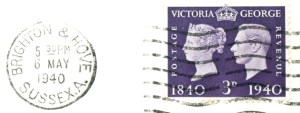
Oh! To have that knowledge of Latin to enrich my writing! So, no retirement, just fun, like scribbling another postcard !!

Richard – 20th February 2016 – richardyates24@gmail.com

PC 61 Somewhere to lay your head

It may be that you catch up with my postcards in bed, getting ready to sleep; I hope my banging on about this and that doesn’t keep you awake or indeed produce a soporific state? If I get my mathematics right, whilst this won’t be applicable to any of you, there have been some twenty five thousand two hundred and eighty something times when I have laid my head down, ‘to sleep, perchance to dream’, and whilst I can’t remember every place …..  a few come to mind, some generic, some particular.

I recall laying my head down on bunk beds, iron bedsteads, futons, slatted beds; sofa beds – wow, have you ever had a decent mattress on a sofa bed?; adjustable beds in hospital; water beds, so cold and clammy; on a car seat, waiting for a ferry; on a floor in a half built house in Aachen, Holland on a hitch hiking holiday aged 17; in a railway sleeper carriage, the ‘clickety clack’ rhythm rocking you to sleep; in a sleeping bag on a blow-up Lillo; on an apartment floor a few years ago, trying to get comfortable on old coats and cushions; or even on an aircraft seat – once you’ve experienced an upgrade it’s difficult to opt intentionally for discomfort!!

I get the basic sizing of beds, as in ‘single’and ‘double’ but then we get to ‘Queen’, a bit bigger that a double. The late Queen Victoria was extremely small; our current queen only average, so why it is bigger than a double? Then the king – as in “I need a bigger and better bed that my wife” and jokingly Emperor. One of the last great western self-styled emperors was Napoleon and he was famous for having small man syndrome – so you name the largest bed size after the smallest …….?

You put your head on someone’s lap for a little nap – an expression of intimacy/closeness. Firstly you hear the gurgling torrent that takes place the other side of the epidermis and then in the background the sound of the beat of the heart – well, that’s a good think to hear but you really can’t fall asleep with the noise in your ears, can you?

Talking of sounds, many years ago I went off to Manorbier in South Wales to make a reconnaissance of a live missile firing facility. My Battery Sergeant Major accompanied my small party and we were accommodated in a wriggly-tin roofed Nissen Hut in the nearby training camp. Across the road that ran beside the camp was a small, single track railway line that was used by the occasional cargo train. After a supper in Tenby we retired to bed. The bed itself was comfortable, my head hit the pillow and I was soon asleep. At some stage in the night I was shaken awake by the sound of a train rumbling past outside. Sufficiently compos mentis within a minute or so, I realised it was actually the rattling sound of the Sergeant Major’s snoring from next door.

I have sailed around the waters of Britain, extensively in The Baltic, occasionally in the Mediterranean and once a long haul across the Atlantic to the tiny islands of Bermuda. Up in the bow, in the forepeak as it’s known, under sail you suffer the rise and fall, the crash and shudder, the rushing noise of millions of gallons of water just past your head; difficult to sleep but exhaustion normally kicks in. Amidships, the port and starboard berths required a certain athleticism to clamber into. I once saw the opposite berth almost vertically above me as we broached (sort of capsized!) in a dramatic squall in the North Sea – water poured in, the mainsail ripped but then the yacht righted itself.

In charge of the directions we should take to Bermuda, I had the associated navigator’s bunk. With the chart table in constant use, getting into my berth was difficult; I had to double up, before straightening out and sliding my head under the table. Feeling queasy when sailing at the best of times, being claustrophobic, with the underside of the table 6 inches from my head, did not make sleep easy!

When you’ve had a tiring day, nothing better to fill the bath with steaming hot water, fill a glass with some crisp white wine*, and ……. soak! Gradually the issues of the day drift away, you drift away …… and you wake up later in a cooling bath with wrinkly skin! Nice Huh!

Part of Louis de Bernière’s latest novel “The Dust that Falls From Dreams’ covers the First World War and he describes the horror of living and sleeping in the water filled trenches. You will imagine that in the early weeks of my officer training at Sandhurst, we dug many holes and some we occupied for a day or two; some were dry and others filled with water in the pouring rain. Sleeping half standing up was not the easiest position to adopt but needs must. I also remember actually falling asleep standing up on the third day of a long exercise. Up a couple of hours before dawn, trekking to the start of some manoeuvre, and then waiting and waiting. Only woke up when the chap behind me moved forward and bumped into my back!!

In the steaming jungle in Belize in Central America, we first made the A-frame by chopping down some suitable saplings with a machete, then lashing them together. You tied the poncho to it, as a hammock, got the mosquito net in place, and settled down for the night. Of course ear plugs are essential in the jungle for the noise of the other inhabitants is deafening!!

Many years ago I tried camping again when going for a walk-about in the Australian island state of Tasmania. This is a dramatic, remote part of the world, one of rare natural beauty and delightfully uninhabited. As part of the circumnavigation, I hiked into the Freycinet National Park, complete with freeze-dried food for supper that night. I was awoken in my tent in the early hours by a Possum chomping its way through a bag of Chicken Supreme. Poor thing – it rushed off but not before it had completely emptied the little aluminium sachet – I often wonder what happened when it got thirsty and drank ……. (Dried food expands very quickly when it meets water …..!!)

But, for all of the above, when all’s said and done, there is nothing remotely as pleasing as one’s own pillow, in one’s own bed, on which to lay your head!

Richard 6th February 2016 – richardyates24@gmail.com

*Although I gave up alcohol fourteen years ago it doesn’t mean I can’t recall the delight of a glass of a NZ Cloudy Bay or a Pouilly Fuisse!! Yum! Yum!

PC 60 Goodbye …… but never forgotten

Observations and thoughts …….

Just how do we say goodbye to a loved one? It’s a challenge facing us all, and often more than twice in our lives. It doesn’t matter whether they have reached the full expected span of their life with accumulated wisdom and maturity or if only an infant – it’s the same pain, the same distress, the same anguished cry of “Why?” ……… and often the follow-up guilt in the “If only ….”! Buzzing around my head is this:

“Not a drum was heard, not a funeral note, as his corpse to the rampart we hurried;
Not a soldier discharged his farewell shot, o’er the grave where our hero we buried.”

Just simple, expressive, oozing with sadness and loss. The first verse of a poem concerning the burial of Sir John Moore after the battle of Corunna in the Peninsular War (1807–1814)

We all know we should listen to our bodies, but there is a tendency to hide a suspicion about this or that, a hope, maybe a belief, it will go away; must have been an aberration!! ….. then it becomes an issue and it’s often too late.

Worried family and colleagues gather in hushed muted groups to share information and the latest prognosis, all the while hoping against hope for the best. The end comes quietly and peacefully. The grieving grieve. In the hospital basement, in a small windowless room masquerading as a chapel, the body is clothed by nurses, delicately and with sympathy; just another job that needs doing.

Every one of you will have experienced the death of a loved one, or even an unloved relative, whose life on earth deserves recognition. Unless you’re of Muslim, Jewish or Hindu faith, where custom dictates the funeral is conducted on the same day as the death, in northern Europe it’s normal for the funeral to take place some days, even a couple of weeks, after the demise. So I had to get used to the idea that Carlos Eduardo Guile da Rocha Miranda’s body would be cremated less than two days after his soul departed. Whilst I understood from a practical point of view how this custom developed in hot countries, my mind was shocked by the undue haste; and still is.

Christians used to expect to be buried ….. ‘dust to dust, ashes to ashes’ ….. the intonation rang out across the graveyard at past funerals; the coffin lowered into the cold ground. But there’s pressure on the physical space and cremations are becoming more normal.

The crematorium is surrounded by the graves of the departed – above ground for the Jews and below for the Christians. Some huge edifices have been erected ….  the artist obviously having been given free reign  …… winged angels stand guard  …..  women lie draped in distress across the cold stone  bust  …. mausoleums large and frankly ridiculous dot the landscape. Is this glorifying death …… or life? Not sure! Maybe just highlights our awkwardness about what to do and how to do it??

The open coffin, the recently departed pale and lifeless, lies in the small crowded chapel, with only a figure of Christ on the Cross on the wall to suggest religious significance. The extended family, friends and academic colleagues gather to recollect, to pay their respects, to share in a life’s contributions. A priest conducts a simple, short service; the family are invited to say a few words. Eventually the orderlies come to put the top on the casket and wheel it away. Later the ashes will be collected and a decision made about what to do with them. My mother sat on my mantelpiece for a year or two before I scattered hers where my stepfather lay! Aunt Cynthia was placed under a rose brush outside her favourite church. Tom our loved Labrador was scattered on Hove beach at low tide. We all find the right place eventually.

The memorial service is in this case a mass. After the service, the line to meet and greet, to offer heartfelt condolences, snakes across the church. There is no haste, rightly so, each person wanting to express their memory of the man.

In the UK, about 1600 people died on the same day. Some quietly, some violently, some bravely, all just a number in the statistical record but as an individual so special and so loved. Some chums have written to say of similar end-of-life situations before this Christmas and others of the lingering for years in the twilight; one wishes we had a better way of ending the suffering.

I think Carlos would have liked to have recited this little poem, looking at his beloved Cecilia whilst he did so:

“If I should die and leave you here awhile

Be not like others sore and undone, who keep long vigils

By the silent dust and weep;

For my sake, turn again to life and smile,

The man I grieve in this piece was an enormously loved, talented individual who used his intellect to further our understanding of our brains and how they function. He was a simple man of faith or maybe a man of simple, deeply held faith, and if anyone was prepared for what might follow this earthy life, he was.

Richard – 20th January 2016 – richardyates24@gmail.com

PC 59 Incarceration

Doesn’t take much for a present day experience to bring to the surface, from those deep recesses of memory, a poignant recollection, does it? And so it was on New Year’s Eve, when I visited a dear friend’s father who’s incarcerated in the grim-looking Victorian prison in Lewes. The town boasts a Norman castle and a house left to Ann of Cleaves in her divorce settlement from Henry VIII, so the prison is comparatively new, being built in 1853! Looking out from the visitors’ room, out into the free world, I jumped back to 1955, locked up in St Christopher’s School in Bath, aged 8. That school stood high above the city; you could see lights, houses, life going on ….fireworks on Guy Fawkes’ night for instance …… and felt abandoned.

I told a friend I was making this visit, the first since the judge had sentenced the chap just over twelve months ago. Over a year incarcerated and my first visit: some friend? But that’s life. I have written most months, carefully adding his prison number to each page, but never visited. “What’s he in for?” ……. and when I told her, I could sense her recoil in horror …. probably about the offence but also that I was going to visit him. “So why are you going?” And then you get into that debate about guilty until proven innocent, or is it the other way around? How one person’s recollection of events can be chalk and cheese compared to the reality, but the reality is simply perception huh? When I learned from the father’s daughter of the events, of the cries of ‘foul’, of the cries of ‘this just isn’t possible’, I added my own cries and we both struggle to process the information and come to a conclusion.

Guilty? Well, the jury found him so. I am unsure ….. and only have the daughter’s version of the events …. and that’s the side that shouts “not guilty” but when all’s said and done the chap’s in prison and will not be out for another couple of years. So if there is a shred of doubt surely we should show humanity?

In the United Kingdom the number of people locked up has doubled over the last twenty years. Currently some 85,000 men and women are inside. Most prisons were built in the Victorian times, overcrowding is rife and less time is spent trying to reform the inmates. (As I write this in Brazil, I am conscious that British prisons are five star hotels by comparison to the more shocking state of some foreign ones.) The vociferous majority cry: “The bastard’s guilty so he should be punished.” But who knows which particular experience in his life lead him down the path towards incarceration. Was he willfully abandoned, orphaned, adopted, fatherless, abused? Were his parents alcoholics or drug-dependent? You could probably research the background of those in prison and find a higher proportion here. Our new Minister of Justice Michael Gove is trying to rethink how to balance crime committed with society’s expectations. It’s not working at the moment and reoffending is high.

The only time I’ve been up close to a prison was in 1975 when my Royal Artillery regiment, in Northern Ireland for four months, was responsible for inter alia the guarding of the perimeter of HMP The Maze. We had no say in the internal running of this place, built to lock up terrorists of both persuasions in the struggle for change in that part of the UK, and could only ensure no one was going to escape.

So here I was, on a gusty winter’s afternoon, gathered around the visitors’ entrance with others who had come to visit loved ones. I looked rather dispassionately on this group, mainly white, cheap, tartly clothes and all smoking: peroxide blondes: and felt slightly apart …. but we had the same aim, to bring some warmth into the heart of someone who, for whatever reason, was incarcerated. You can imagine the lengths the warders go to ensure no drugs enter the place, but first we had to get in! “Very sorry, Sir, but you’re not on the list of approved visitors.” We pleaded, we charmed and then it only took a telephone call to Trevor, I guess the duty office, to make it happen; we learned that often there’s a mix up or poor admin and ‘Cheryl’, who’s come all the way from Brighton on the bus, leaving her three children in the care of Nan, isn’t allowed in. Some staff can be really unhelpful!

One’s pockets are emptied into a locker, less for some loose change for a coffee, and eventually this sorry mournful group move through security checks, an open courtyard, up three flights of stairs and into a large hall with table & chair arrangements, past a sign telling us what we couldn’t do – the writing so small all I caught was something about not exposing one’s ….. ? Our man looks up, happy to see his daughter and actually to see me – anything to relieve the boredom that must hang heavily in a place like this, like a damp blanket around your shoulders.

We get some coffee and chat ….. about this and about that, about books and the open university course, and about being a nominated listener for those inmates at risk of self-harm or suicide.  For some there will be a huge difficulty about being locked up, incarcerated, your life no longer your own. I was reminded of those first 6 weeks at the Royal Military Academy Sandhurst when your life was certainly not your own! One of the statistics about modern Britain that saddens me is the number of adults who could be classified as functionally illiterate – over 10%, some 7 million people! It is believed that 75% of the prison population falls into this category. So here’s the challenge for a government. A prisoner’s sentence can be reduced if they can improve their literacy skills. I was told that generally inmates are disruptive in educational classes. “Don’t want to be here” “must kick against the system” but if there was some better incentive? These people are captive, and for the younger ones surely a golden opportunity? The cost would be an investment in the nation. Oh! If life were this simple!

I drove away with very mixed emotions but so pleased I had gone. I must go back, and not leave it for a year before I do so!

A sober scribble for the New Year!

Richard – 11th January 2016 – richardyates24@gmail.com

PC 57 Writing Joined up – continued ….

The doorbell rang; it was a DHL delivery. “Sign ‘ere, mate” the chap demanded, thrusting the electronic data entry device into my face. I love my normal signature, but try as I might, scratching the pen across the face of the machine produced a poor example. It didn’t help that the pad was grasped in his moving hand, but he seemed satisfied and left. One’s signature is being replaced by your finger print in a lot of areas; it couldn’t come sooner for this sort of use!

A thought? How can you create your signature if you aren’t taught joined-up writing? Just printing the letters, I guess, but it’s not the same. Manuscript is literally ‘written by hand or, interestingly, typewritten – but not printed by machine. The word obviously comes from the Latin – manu scriptus meaning ‘written by hand’ and in the UK there are recorded examples of this that pre-date the Norman Conquest of 1066. Latin is also responsible for the word ‘cursive’, meaning running – as it’s faster to write if you join the letters up. A C15th Italian from Florence, Niccolo Niccoli (just such a gorgeous name huh!), is regarded as the inventor of the cursive script, which became known as italic – not to be confused with the slanted forward letter in type which is known as italic! (Seems ridiculous but true!)

During my time in the British Army I learned that soldiers generally had poor handwriting skills. One particular Chief Clerk didn’t do ‘cursive’ writing and had developed a quick sort of ‘capital letters script’ that he lined up along a ruler. Like this:

joined up 3

Works quite well, actually; but it’s slow by comparison to cursive.

When you’re trying to write something about ‘manuscript writing’ it’s odd what comes to mind. I have always been fascinated by the story from the Old Testament of Belshazzar’s feast; Belshazzar was the King of Babylon who died around 539BC.  After huge amounts of food and the raising of goblets of wine in toasts to various Gods, the king thought he saw the fingers of a man’s hand writing on the plaster of the wall. Well, I suspect we’ve all sensed that things get a little blurred when we’ve had a few, seen things that aren’t there, so it’s hardly surprising ….. and his knees shook to boot!! I imagine this rather debauched scene, the guests’ faces glowing with alcohol, the light from the oil lamps casting shadows everywhere, and this yellow ochre wall where, if you screwed up your eyes enough, you could make out some marks! Daniel, a well-known soothsayer, was asked to translate what the king had seen: “Mene Mene Tekel Upharsin”.  “God’s brought your kingdom to an end as you’ve been found wanting; it will be divided between the Medes and the Persians.” That night Belshazzar was killed and Darius the Mede took his kingdom. Bit of a nightmare really; all because of some writing on the wall!! Maybe Daniel was in the pay of the Medes, and told the king what he knew was going to happen; you could easily see words and letters in the smudges and uneven plaster of a wall, surely? We’ve all seen the man’s face on the moon, so why not words on a wall?

Another quotation associated with writing that often whizzes around my little brain is this:

“The moving finger writes; and having writ,

Moves on: nor all thy piety nor wit

Shall lure it back to cancel half a line,

Nor all thy tears wash out a word of it.”

I’m not one for poetry but this translation of the Rubáiyát of Omar Khayyám by Edward FitzGerald has, for some reason, lodged in the depths of my memory. I know nothing about this acknowledged classic except these four lines; well, if I’m being really truthful, only to the semi-colon!!

Celina’s great grandmother Branca caught Spanish Influenza and her mind, poor soul, was slighted altered as a result! One of the fascinating consequences was that she could write backwards as easily as she could forwards!! Below on the left is a photograph of one of her letters from November 1918 to Minha Querida Virginia (My Dear Virginia) – with the mirror image on the right.

joined up 4

So why am I so alarmed by this idea that our children will not be taught cursive script? “Does it matter?” I ask myself, as I type away on my laptop! Why can’t they just be taught to touch type? Or do we really need to write to, I don’t know, compose the supermarket shopping list. “So last century; actually shopping ….. in a shop!” I hear you cry. “Do it online!” But if you do want to go and see, touch, feel just what is available you need to go. And of course you can do your list on your iPad or iPhone and take that with you. Check it out next time you go, just see how many people in your supermarket are using a scrappy piece of paper or interrogating their phone?

So we can now all swipe our phones across an electronic demand for payment, almost touch our credit card to pay for items if they’re not too expensive; will our grandchildren have any need to write their signature? Will their children even know what handwriting is? Who knows? But I read that students who write up their lecture notes rather than type them into a laptop, derive better conceptual and factual learning – in plain language, it sinks in better!! And they have better hand-eye coordination to boot.

Of course the irony is that these scribbles, a word describing immature and often illegible writing (!), are being composed on a laptop …… and sent electronically to you, when the subject of this postcard is manuscript writing! And it’s only very occasionally that I hanker after using a pen. I eye the pile of unwritten Christmas cards which, given an unhurried focus, will be enjoyable to ….. write ….. in my unique joined up style.

joined up 5

Funny life, inn’t?

Richard – 13th December 2015 – richardyates24@gmail.com


PC 56 Writing ‘Joined up’ (Part One!)

My brother, another Scorpio, had his birthday last month and duly reached for pen & paper to write a ‘Thank You’ letter in gratitude for our gift. Such a pleasure to receive his note, the manuscript writing strong, informative and entertaining whilst I admit, in parts, a little difficult to decipher! And conveying more of the effort made than a hasty email or text on smart phone or tablet.

A recent survey by the global manufacturer of biros, Bic, discovered that 50% of 13-19 year olds have never written a thank you letter, 83% a love letter and 25% never sent a Birthday or Christmas card. Maybe 75% of those polled were not Christian (?)  but why not send a physical card to acknowledge a birthday? I know that Jacquie Lawson provides your online card needs, but you can’t put one of those on the mantelpiece, can you? Bic should be worried – who’s going to buy their products?  I am, however, so old school that I am wedded, some might say welded (!), to the need to write manuscript ‘thank you letters’ and send birthday cards. I think it’s a rather British foible, sending cards and the like. Love letters? Well I guess I have poured my heart out in letters to loved ones many times and sometimes ripped them up and started again; now it’s on twitter/some text message or email electronically produced and unable to give a hint of personality through the care you would have taken in your joined up writing.

We journeyed up into Alaska in June this year, following in the footsteps of great grandfather George, who made the trip each year 1900-1902 (See PCs 44 & 45). His manuscript letters to his wife Eva, in London, are a wonderful family treasure trove of experiences, thoughts and comments. His careful script conveys such richness, so much individuality, so much personality; they all started ‘My Darling Eva’, and ended rather formally: ‘Your Loving husband, GM Nation.’ See for yourself:

joined up

Lovely isn’t it? If he had been able to email his news to his wife, as in:

From: GM Nation

To: Mrs Eva Nation

Dawson YT 10 May 1901

My Darling Eva. I am emailing you this but it may be two or three weeks before I get an internet connection. Travel has entirely been given up for the last ten days and everybody is watching the river and longing to see the ice float away.…..

Sent from my iPad

 …… where would the record be now, on some disk, some iCloud? And how would I have known that he wrote these letters, but for the physical collection with Cousin Caroline on Vancouver Island? These thoughts came into my head when, the other day, I glanced at a headline in the paper. I looked, looked again …… and tried to register what I had just read. Under an eye-catching headline “Handwriting, you’re Finnished”, it is reported that a school in Finland (ha! ha!), which apparently is noted for its radical educational ideas, the country not this particular school, has decided to stop teaching cursive handwriting. It may surprise you but my English education didn’t run to understanding exactly what ‘cursive’ meant, so I lifted my trusted ‘Oxford Illustrated Dictionary’ (Yes, that one given by my maiden aunt when I was 16 (see PC 53)) down from the shelf. ‘Cursive’ adj. n (Writing) done without lifting the pen, so the characters are joined together.” Ah! OK! Joined up writing!! So they are not going to teach children how to join up individual letters together …… to let the script flow??

The Finns are not alone. In the USA forty-one states no longer require schools to teach cursive script! And within two days I read another piece concerning cursive script, this from the Scottish comedian Billy Connolly, who has written many letters to his grandchildren, for them to read when they are old enough – “But I was saying to my daughter, maybe they won’t be able to read cursive with the way things are going.”

So personal, this ability to make writing ‘joined-up’. Can you remember the tortuous classes, holding the pencil just so ….. being told off for holding it incorrectly? No, of course not, but I do remember being beaten at boarding school for writing without my arm fully supported by a table; OK, maybe there might have been other issues that cumulatively added to trigger the beating, but the smog of history has descended! I see people today who were not taught properly and hold the pen in a funny way. No wonder they do not like writing in a joined-up way. However, I do take my hat off to those of you who are left-handed, as it looks to me as though you have arthritis, the way you twist your hand almost through 360°and then manage to write ….in a derogatory way some might say cack handed?

I used to hold my fountain pen in such a way that I developed a piece of hard skin on the side of my middle finger; it’s still there but not as pronounced, as the use of smart phones, tablets and laptops has reduced the amount of manuscript writing I do and hence the pen stays for longer periods in the drawer.

Many years ago I had to take a graphology test, as part of a recruitment process. It was in the days before I had a personal computer, and the application for the role had been in manuscript; couldn’t they use that?  “Ah! But the example must be in biro!”  This I could not understand, as the pressure applied through a nib varied much more than that from a biro, and weren’t they looking for variations of pressure, in addition to all the other bullshit? I assume the company believed that somehow my personality came out through my pen nib, although there is no scientific evidence to back up that claim. I’ve read that a backwards slopping letter signifies timidity or that how you write the letter ‘e’ was linked to your digestion – the neater and more closed the letter the better to digest – sprouts? I don’t think so! I remember looking at how I write the letter ‘e’ and realised I script it in two different ways!! An example might be:

joined up 2

You may remember my PC about treasured postcards? The one about a chap sitting at a desk answer an exam question about surrealism ……. and his pen jumped off the table and ran away? Well, my pen has run away with me, sorry!! So before you start yawning, I’ll stop  … to be continued ….

Richard – 6th December 2015 – richardyates24@gmail.com

PC 55 Male Waistlines

If you’re female, you don’t need to read any further; of course, you may want to?

We’d had a small supper party the night before. It was an autumnal meal, fairly simple yet wholesome; bruschetta, roasted vegetables and salmon, and apple & blackberry crumble. Oh! And custard – because you can’t have crumble without custard! What follows are thoughts that flew around the inside of my empty skull in the early morning, about 0415. I could not get back to sleep and had to write them down. To do this, I put my bedside light on, apologising to Celina for doing so. On other occasions I have come into our living room and, having poured myself a small glass of orange juice, scribbled half-asleep by the light from the open fridge door. It’s always curious to discover if any of these dubious pearls of wisdom are readable in the cold light of morning; only you can judge the content!

You may recall my rather immature descriptions of feeling bloated in PC 28 ….. “ … I felt like one of those large rubber bouncing balls, with two large hand holds, that children can ride on. “Bounce! Bounce.!” ….. except I had feet at the other end ….. just the middle that was so bloated. Puffer fish pump themselves up when confronted with danger. That was exactly how I felt, like a Puffer fish!

My tummy felt full, as I imagined it would be if pregnant; it was stuffed up under the ribcage! There was a photograph many years ago of a supposedly six-month pregnant man, wearing a godforsaken sweater, advertising the Family Planning Association? “Would you be more careful if it was you that got pregnant?” ran the subtext. Well, in this early morning, that’s me! I needed a pee. I got up and sleepily walked to the ensuite; I had somehow to get my huge tummy in so that I could stand over the loo. A chum of mine once said that one of the problems of developing a belly is that you can’t see your willy! And despite what you girls think, we need to! OK! You can do it by feel, but there’s something very necessary about a visual. One sees it in public loos. Chaps unzip or unbutton and bend forward to make sure it’s ….. still there? … hasn’t got caught up in your knickers? … ‘out’, so that when you pee the output goes where it should? These are all legitimate concerns for us men; well, certainly for me!

I’ve always thought that my behind was a sensible size, in proportion to my body, as it were, not too big and not too small; shades of Goldilocks and the three bears huh? Well, all this Bikram Yoga changes your body shape, so much so that my bum has become quite small – at the same time as my tummy sadly has got, er, larger. OK! I know there is a tendency for male waistlines to grow larger from middle age, but my centre of gravity used to run down through my spine. If I leant forward the body adjusted to a different centre – or you fall over, forwards or backwards. But now, with an expanding stomach in front, and a shrinking bum er behind, you have to lean a little backwards to maintain the centre of gravity. However I greedily attach myself to the belief I read in some well-respected medical magazine that taking Statins, as I do post-heart bypass, encourages the intake of some 10% more calories than I need –so straight onto the waist line! Nothing I can do about it then?!!

Carly Simon’s 1972 song “You’re So Vain” always runs around inside my head! In fact the newspapers only this week reported she’s admitted that one verse refers to Warren Beatty. So not me then! Am I? Vain? Since my tummy’s got bigger, I hate walking past a shop window and seeing a reflection of myself. My military training, so many years ago, had taught me to stand upright: “Neck in the back of the collar! Mr Yates Sir!” Sergeant Cameron screamed two inches from my face on the parade ground at Sandhurst. Now worn-out neck vertebrae prevent this. “Who’s that old man with the pot belly? Oh! God! It’s me!!”


The growing tummy has an effect on my clothes obviously. At what point do I give up trying to pretend that I still have a size 34 inch waist and recognise that even I am not immune to the ravages of time (you hear the personal disbelief loud and clear in these words?) But it would mean taking quite a few clothes to the charity shop so there must be another way? Currently, by the end of the day, the waist band of my knickers has been folded in two by the tummy pressure. The measurement Body Mass Index comes to mind, as well as that ratio waist to bum. If your bum’s getting smaller and your waist bigger ….. er …..

One of the causes of my tummy getting bigger could be water retention. We sweat so much in our Bikram Yoga sessions, about a litre and a half, that the body adjusts by carrying more fluid, in preparation; otherwise you could get dehydrated quite quickly. You might also think that all this Bikram Yoga should give one a ‘six-pack’, so there would be no possibility of developing a middle-aged spread. We certainly do some 14 double sit-ups in each session, and yes, there was a hint of one some years ago, but sadly I suspect now that the weight of my tummy has crushed it ….. or maybe simply buried it!!

Of course most people tend to lose weight when they are going through the dying embers of a relationship. I say ‘most’ people because some binge-eat to cope with the sadness. The converse is certainly true; when you are in a loving and fulfilling relationship …… you put on weight. Maybe my growing waistline is simply a reflection of my wonderful life with Celina …… and I should not worry at all? Pass another piece of coffee cake please? I climb back into bed ….. and the dreams restart.

“I had a dream.” Ah! Yes! Now, can I read what I scribbled?

Richard – 21st November 2015 – richardyates24@gmail.com

PC 54 The Loo

Some subjects are so dry it’s difficult to get worked up about them, but my PC about loo paper brought back many memories for my readers, some good and some hilarious. So popular was this PC that it’s inspired me to go the next step and scribble about the actual loo.

Some of you will have visited ancient castles or manor houses in England where the ‘loo’ was a little seat in a turreted corner of the bedroom; an improvement from the portable box! From the outside, the turret overhung enough for the ‘drop’ to clear the stone façade. Some years ago there was a TV documentary series in the UK, trying to take a new look at old designs: one was about the loo. The design of the loo doesn’t seem to have changed much in more than 150 years.

There are many words for this receptacle for our daily waste. Whilst this list if not definitive …….loo, toilet, lavatory, ‘long drop’, khazi, WC (short for water closet), the crapper, the Dunny, the ‘restroom’, bog, the ‘ladies’ or ‘gents’ in a public environment, the facilities, the white phone, latrine, the John, little room and privy.

Funny how words become part of our language. Take ‘crap; possibly a verb and certainly a noun! It’s been around since the C17th referring to waste, but not used for bodily waste until 1846. But the word only became well known thanks to a Victorian plumber, Thomas Crapper. He was extremely successful in manufacturing bathroom fixtures and had a Royal Warrant. So ubiquitous were Mr Crapper’s toilet bowls, with his name written on the rim, that American servicemen stationed in Britain during WWII coined the phrase “going to the crapper”!

loo

Thomas Crapper (1837 – 1910)

I do remember potties under the bed, but was shocked by this story, told to me in 1975 by a female newspaper reporter who had covered the kidnap by the IRA of a Dutch industrialist in County Kildare. Traced to a small village called Monasterevin, the siege attracted the world’s press, who had trouble finding somewhere to stay. My chum eventually found a house that offered the share of a bed (!) …… but was horrified to find that under the bed were emptied beer bottles ….. full of urine!

I am indebted to Paul for sending me this photograph, the latest design of ‘pissoire’ used by men at the Spa motor racing circuit in Belgium. He couldn’t find the female equivalent although you can buy a female ‘P EZ’ funnel on Amazon!

loo 2

I wonder at what point the rocket-nose-shaped ‘pissoires’ take off?

Back in 1968 I chartered a small 19ft yacht for a week’s sailing in The Solent on the south coast of England. On board was fellow Gunner Gerry and two girl friends (note that this is girl …. friends and not girlfriends!) joined for the weekend. Braganza was a very basic sailing boat, with two small bunks and a little gas stove – but no loo! This doesn’t present a problem if you’re a bloke, but for members of the fairer sex a bucket placed below on the cabin sole of a moving/shifting/lurching sailing boat does not encourage the natural flow of things! On the Saturday evening we moored in Wootton Creek on the Isle of Wight …. and I have a very vivid memory of these two girls rowing the little pram dinghy ashore to find a proper loo. The speed at which they were rowing was possibly indicative of the urgency of their quest.

I remember painful experiences at boarding school. If you wanted to go to the loo before breakfast, you had to go before the breakfast bell sounded. After that, you were simply not allowed to go, irrespective of how desperate you might have been. I really to this day do not know what aspect of social behaviour I was meant to learn? If you need to go to the loo, you need to go to the loo – simple!

If you were camping in the 1960s and 1970s you simply took a shovel and walked off to somewhere where no one could see you. Cousin Susan writes: “…. Then there was the loo paper in Egypt and one small town in particular…..a hole in the middle of the floor, no loo paper and no doors so we had to get our friends to stand in the doorway so passers-by could not see us performing our acrobatic ablutions. My thighs were mighty strong in those days!”  Benedicte has similar memories of loos in China today – but would rather forget them! In the Army the camping arrangements were more formal; the Royal Engineers dug bore holes (should that be bored bore holes I wonder?). If it was cold it was OK, in this hessian-encircled latrine; if hot, the flies ensured it was not somewhere you lingered.

My stepfather loved smoking his pipe, particularly when mowing his wonderful lawn … but also, and sadly for the rest of us, when occupying the small downstairs loo. Part of his morning weekend routine, I guess, attempting the daily crossword in the paper, sucking on his tobacco-filled pipe and attending to nature … all at the same time. The little room needed a quarantine notice on the door for at least an hour afterwards.

Mind you, it isn’t necessarily your own loo experiences that are worth writing about. Jeremy Clarkson, a man made famous as much by his Top Gear TV Motoring programme as his ability to call a spade a spade, has a column in the UK Sunday Times. After someone complained of their hotel in Turkey, his weekly column was full of his own experiences, including this: “Certainly I cannot forget the converted old sheep station in the uplands of Bolivia. During my stay, I was woken one morning by a cleaner who entered my room without knocking, shuffled past my bed with a mumbled ‘Buenos dias’, went into my bathroom and took a noisy dump (slang for ‘going to the loo’!!) before shuffling out of the room with a frankly insufficient ‘gracias’”

I have always remembered a story that did the rounds one term at school; written on a grubby piece of paper it told the story of the confusion that arose between the use of WC for either ‘Wesleyan Chapel’ (Named after John Wesley, the founder of the Methodist Church in the C18th) or ‘Water Closet’. This being the C21st, I ‘googled’ it (That must be a verb by now – ‘to google’?) to get the story correct. It hasn’t lost its amusement after 50 something years and is reproduced in full below.

Celina’s father would sympathise with Paul who, recalling Bronco loo paper, wrote:  “Bronco was absolutely useless of course but then I have always detested loo paper of any sort, as it is just not up to the job (so to speak)! Every house I have ever owned has had a bidet and I would find it uncomfortable now to live without one.” Maybe he should try the combined loo/bidet; choose your music/scent/temperature/softness/air …… and away you go!

This PC seemed to go on and on; sorry! I normally try and constrain myself but seem to have suffered a bout of verbal diarrhoea with this one! Enjoy the scribbles!

Richard – 8th November 2015 – richardyates24@gmail.com

  1. There was a little old English lady who was looking for a place to live in Switzerland.  She asked the local village schoolmaster to help her and together they found a place that suited her.  She returned to London to get her things, but on the way home she remembered that she had not noticed a bathroom in the new place, or as she called it, a water closet.  So when she arrived in London she wrote to the schoolmaster to inquire about a water closet in her place.  Being somewhat embarrassed to ask about this, she decided to just use the abbreviation W.C. rather than spell out the words.  When the schoolmaster received her letter he was puzzled by the initials W.C., never dreaming that she was referring to a bathroom.  So he went to the local minister to see if he knew what a W.C. was.  Of course, the minister thought it stood for the Wesleyan Church.  So the schoolmaster wrote this reply to the English lady.

 Dear Madam,

 The W.C. is situated nine miles from the house in the center of a beautiful grove of trees.  It is capable of holding 350 people at a time and is open on Tuesday, Thursday, and Sunday of each week.  A large number of folks attend during the summer months, so it is suggested you go early, although there is plenty of standing room.  Some folks like to take their lunch and make a day of it, especially on Thursday when there is organ accompaniment.  The acoustics are very good and everyone can hear the slightest sound.

 It may be of interest to you to know that my daughter was married in our W.C. and it was there she met her husband.

 We hope you will be here in time for our bazaar to be held very soon.  The proceeds will go toward the purchase of plush seats for our W.C., which the folks agree are a long-felt need, as the present seats all have holes in them.

 My wife is rather delicate; therefore, she cannot attend regularly.  It has been six months since the last time she went.  Naturally, it pains her very much not to be able to go more often. I shall close now with the desire to accommodate you in every way possible, and I will be happy to save you a seat down front or near the door, whichever you prefer.

 Sincerely,

 Alfred Schmidt

Schoolmaster”

PC 53 A United Nations Birthday

There are various milestones that we humans reach, ponder perhaps and pass, be they your first kiss, your first relationship, going to university, getting your degree/professional qualification, learning how to fry an egg/make a cake, change jobs, marry, maybe divorce, your first child, your second child, the death of a parent/someone close, some health scare, an overseas holiday, writing your first novel/composing your first music/playing an instrument/starting your own business/climbing the corporate ladder, your first house, second house, representing yourself/team/county/country at something, becoming well known, keeping a low profile ….. but your birthdays are a constant reminder, as if one needed one, of the relentless progress of your own existence!

Do you recognise the inevitable build-up of emotion in the days prior to your birthday, sort of difficult not to recognise that your birthday is approaching?  A   warm feeling? “Oh! Yes! My birthday’s next week/tomorrow/today” An event to share with loved ones, remembering the excitement from childhood … and carrying that childish excitement into adulthood. “It’s my birthday! Look at me!”

I always assume that everyone likes to celebrate their birthday but acknowledge that that isn’t necessarily the case. I am reminded of that lovely story from Winnie-the-Pooh about Eeyore’s birthday. Eeyore was an ‘Old Grey Donkey’, probably made of felt and stuffed with kapok, who was generally very miserable about life; I have certainly met some human Eeyores! ‘Gloomy and Doomy’!! Anyway, Pooh and Piglet find out it’s Eeyore’s birthday and give him a couple of presents, including a balloon, and get Owl to write a card. Because no one else can read, Owl thinks he’s very important and wrote the card: “Hipy Papy Bthuthdth Thuthda Bthuthdy’. So Eeyore was extremely happy.

At my first boarding school, aged 8, one’s birthday was recognised by a place at the top table in the dining room ….. and a little knitted Golliwog (not very PC!) to put in the top pocket of one’s jacket. I still have a very classy pen knife (every boy needs a penknife!) that has silver sides and my initials, given on my 12th birthday, a large Oxford Illustrated Dictionary from my maiden aunt on my 16th, a Sheaffer fountain pen that I still have from my 18th, its barrel worn and battered by constant use but the initials still visible, and a pewter tankard inscribed with the date of my 21st.

You may have missed that 70 years ago the United Nations came into being, to replace the somewhat ineffective League of Nations. From its initial membership of 51 states, there are now 193, suggesting that, despite its critics, it remains an effective and essential intergovernmental organisation, in promoting human rights and providing humanitarian aid in time of famine or natural disasters. It’s been less effective in peacekeeping, constrained by its members from being more interventional! Its birthday was on the 24th of October.

My birthday was also on 24th October and a few chums, actually quite an eclectic bunch, came to help celebrate. We had jellies and balloons, sausages and bacon wraps, smoked salmon …… and cake. The candles on the cake could have spelt ‘Happy Birthday’ but rather like Eeyore’s card said “bhtaiy pparhyd” – everyone knew what it said! When it came to blowing out the candles and singing that song, there was a nod to the United Nations and to our multicultural society. The song ‘Happy Birthday’ originates from 1893 and has been translated into at least 18 languages. There was a fairly competent rendition of ‘Happy Birthday’ in English; I admit to helping this one, although sang ‘Happy Birthday to me’ and not ‘Happy Birthday to I’! After a suitable pause, the Brazilian Portuguese version ‘Parabens ……’ rang out. Suddenly the assembled group got into the mood: I’ve never heard it sung in Arabic before …… or indeed in French ….. and then in Italian …… but never in Mandarin …… and certainly not Hungarian …. and some words in Czech! We didn’t have party games, but we should have played ‘sticking the tail on the donkey’, particularly as the first part of Eeyore’s birthday story concerns him losing his …. tail!!

Funny how I seem to have clusters of birthdays during the year; for instance in May and June, and then in October (Scorpio!!). Two days before mine was the birthday of my great chum Alwin …. and a business colleague David …… and two of our Bikram instructors …… and the husband of a fellow Bikram student.

I hope I’m not the only one to observe that often the ‘Qualifying Age’ for something moves just before you get there – or so it seems! The age you can vote, the age you qualify for your pension, the years needs to qualify for X or Y, changes to time-bars, drinking alcohol in USA, or even driving a car. Next it’ll be the qualifying age to die!

Birthday parties are fun and …. very necessary! But I was reminded of that parable from the Christian New Testament – Matthew 22; about the religious who have no time for God, represented in the story by those who accept the invitation but when the food is ready claim they are too busy to turn up! So, another birthday reached …… and celebrated. But how about this question to think about for the next few minutes: “How old would you be if you didn’t know how old you are?” Funny life inn’t? Just some scribbles, huh!

Richard – 27th October 2015 – richardyates24@gmail.com