PC 198 Tales from Northern Ireland (3)

I went back to Northern Ireland in October 1975. This time 39 Medium Regiment’s area of responsibility was centred on Her Majesty’s Prison (HMP) The Maze (aka Long Kesh). The prison housed members of the various paramilitary groups, IRA, Provos, UVF, etc. The UK Government had introduced a policy of ‘internment’ where those out to cause trouble were imprisoned, without the benefit of a proper trial by jury. As I write this over forty years later I wonder how it had become a politically-acceptable policy.

Our primary responsibility was the prison’s external security; others included an area of North Armagh and a permanent VCP at Aughnacloy, just before the border with The Republic.

Aughnacloy is due west of Portadown and south west of Belfast

This was an intellectually challenging tour as I was the regimental Public Relations (PR) Officer dealing with the press from our recruiting area of Birmingham, interfacing with the PR offices at HQ Northern Ireland in Lisburn and keeping the soldiers’ families aware of what their loved ones were doing.

I decided to produce a fortnightly magazine and called it TNT, for Three Nine (39) Times, although the pun was very obvious in the context in which we operated. The four Regimental batteries were cajoled, encouraged and hounded to produce some news and stories about their particular operations!

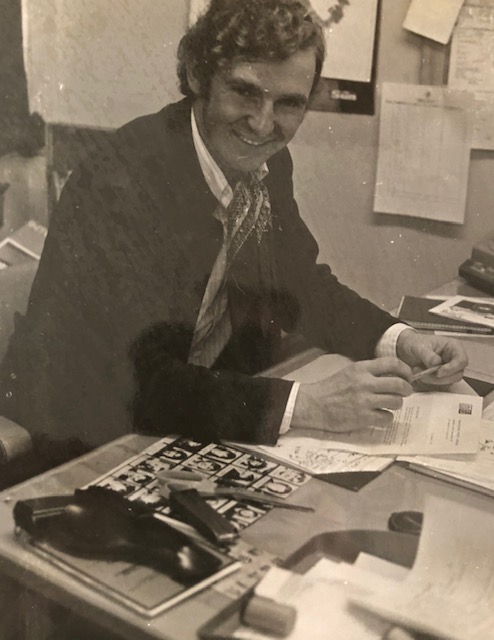
In my office. I wore civilian clothes most of the time and grew my hair!

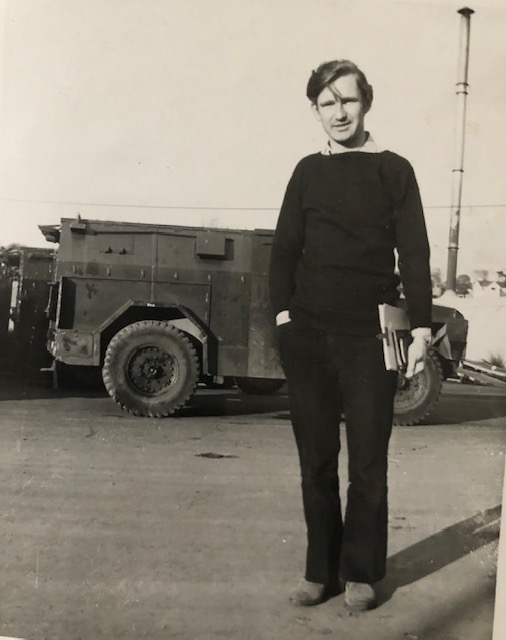
My TNT magazines were printed by a company in Portadown, a town some 20 miles from The Maze. For travelling around I had a hard-topped Land Rover that, in an effort to disguise its military ownership, was painted grey and cream; except that is for parts of the inside….. which were Army green!! Portadown was a reasonably peaceful place and Gerry was a small bundle of Protestant energy. We got on famously and during the tour produced some 300 copies each of the 8 issues.

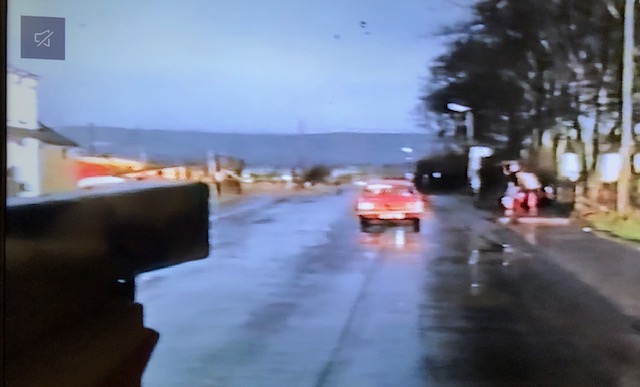
Visiting a recently blown-up farmhouse. The bodies were inside.

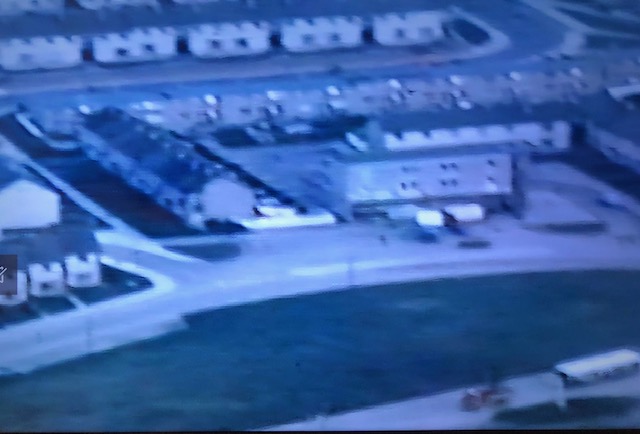
For the battery guarding HMP The Maze’s perimeter, this was an extremely tedious, repetitive and boring task, although the possible reaction to a unprofessional job was obvious. There was the added frustration that the sentries in the watch towers could see into the prison, could see a regime and culture that had many critics and maybe secretly wished the roles were reversed! HMP The Maze was run by the Prison Service of Northern Ireland. One example of allowed prisoner behaviour was the blanket protest when the inmates wore only a blanket and smeared their own excrement over the cell walls. Our soldiers took a dim view of this behaviour.

My role during the tour put me on the duty officer rota, manning the operations room on a shift basis. I was due to take over from Major John Harman, the Regimental second-in-command, one morning at 0800, he having completed the graveyard shift (midnight to 0800). He greeted me with a big smirk on his face and said:

I was just completing the handover notes and thought I might be late for breakfast in the Officers’ Mess. So I picked up a telephone handset (ed. from one of the bank of three) and dialled the Mess number. Just at that instant one of the other phones in the operations room rang. I reached across and said: “Ops Room 39! Just a minute, I am on the other line.” …… only to hear my own voice in the earpiece. I had phoned myself!”

Piggy-backing on the relationship that Zack Freeth (PC 197) had established with Julia Morley and the Miss World Organisation, I persuaded Julia to bring the then current Miss World, 18 year old Wilnelia Merced to Northern Ireland (Note 1). We visited a children’s home …. and entertained the new Miss World for three days, flying down to the VCP at Aughnacloy and around North Armagh.

As part of the visit the Sergeants’ Mess invited her and Julia to dinner. In my capacity as escort (!) at an appropriate time I knocked on Wilnelia’s bedroom door to take her across to the mess. She looked like someone off the set of West Side Story, leather bomber jacket and extreme short skirt. At another time and in another place completely gorgeous but she would have been eaten alive by the randy chaps in the mess!! I persuaded her with some difficulty to change into something less, how should I say it, sexy!

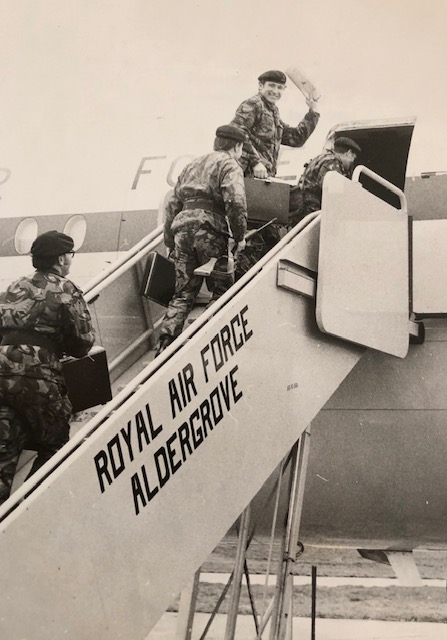
On the last day of her visit the officers’ mess laid on a curry lunch (Note 2), where Wilnelia was the guest of honour. The word got out and it was possibly the best attended curry lunch I have ever been to!! After lunch I borrowed the CO’s staff car and driver and took Wilnelia and Julia to Aldergrove Airport. There we were met by the VIP conducting officer and taken to a private room. Black Bushmills whiskey, one of the best things to come out of Ireland, was produced. After thirty minutes we were warned the flight gate was closing. Another twenty minutes and a member of the cabin crew came and escorted the VIPs to the foot of the aircraft steps.

A few weeks later another four months ‘at Her Majesty’s pleasure’ ended.

Little did I know then that in 1986 I would join the Belfast-based global aerospace company Short Brothers. As part of the sales team I travelled internationally a great deal from the London office – but occasionally had to visit Belfast. On my one-week company induction I was booked in to the La Mon Hotel. Someone had a sense of humour; in February1978 the hotel had been bombed by the IRA in one of the worst atrocities of the troubles which had killed 12 people and wounded another 30.

Richard 1st October 2020
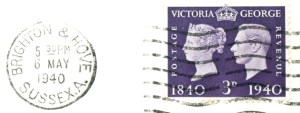
Note 1 In 1983 the Puerto Rican married the British entertainer Bruce Forsyth and became Lady Forsyth-Johnson.

Note 2 A ‘Curry Lunch’ was an established monthly Sunday event in most officers’ messes throughout the world.

PC 197 Tales From Northern Ireland (2)

December 1973 …….

It was in the Shantallow housing estate, in a follow-up to a particularly frustrating time when my soldiers’ patrols were targeted by bottles and bricks, that I recognised one particularly active participant, as he always wore the same striped sweater. We managed to pick him up and the RUC took him away for questioning. We learned later he was 11 years old! He’d be 57 now – I wonder what he became?

A Shantallow patrol. No way of knowing whether Bombardier Elrick and Gunner Foster were coming or going! Patrols always had the last soldier occasionally looking backwards! A still from a cine film

Apart from patrolling the Shantallow Estate we manned a permanent Vehicle Check Point (VCP) just short of the border and the Southern Ireland village of Muff. The road was not heavily trafficked and it was a tedious and repetitive task, checking documents and the contents of car boots. However on the weekends the youth of Londonderry made their way over the border to a popular disco; they returned before midnight, boisterous and with a confidence boosted by alcohol. One of the prime tasks of the VCP was to look for those wanted for questioning; these buses coming over the border provided a near perfect cover for trouble-makers to move into the city. Around 2330 on the top deck of a very full bus, I was looking at faces. Satisfied I couldn’t see anyone of interest, I turned on my heels to exit the bus; someone kicked me hard on the back of my leg. I looked around to see who it was, couldn’t identify the individual, so just took the nearest and marched him down between the seats to the stairs. My sergeant, a loveable competent soldier called Williams, gave me a wry grin, suggesting it wasn’t my most sensible decision. I looked behind me; everyone was up and coming off the bus!

Today if I smell cheap diesel I am immediately taken back to Londonderry, particularly to the road north out of the city to the Muff VCP.

We often drove up to Muff in a 1 ton armoured vehicle, known colloquially as a pig, with the back doors open and, as it laboured up the hill, the exhaust fumes were sucked into the back and up our noses. Yuk!

The ‘Pig’ in the background; the wit might say the foreground?

One of the most poignant memories of this tour was a particular visit by the padre; every regiment going to Northern Island had a padre attached to it for the four months. Desmond was a Baptist minister and an extremely likeable man. One evening just before Christmas he asked to visit some of my troop, and I took him up to the Muff VCP just after midnight. Around the static VCP were some sentry towers and we visited each one. It was an extremely cold night and a severe frost covered the fields. As he chatted about this and that to Gunner Batchelor, probably aged 19 or so, I could see Batchelor’s face; he couldn’t believe that someone was taking time to show him love and interest, especially at this Christmas time.

I mentioned that we had three days ‘Rest & Recuperation’(R&R) sometime after the first two months. Married soldiers flew back to Germany, single ones to somewhere in the UK; I flew to London. After landing at Heathrow I met some friends in a pub in Putney. When you are on duty or on call every day and night, your senses and emotions are sharpened, always ‘street aware’, conscious of your surroundings. It was extremely strange to sit in a pub and look at ‘normal life’ happening around me, unable immediately to relax.

Like all good soldiers we read both the more intellectual newspapers as well as the ‘red-tops’, as the Mirror and The Sun were known. One morning the PR officer, an effervescent character called Zack Freeth (Note 1), noticed that in the overnight Miss World Competition Miss UK had not been crowned. He contacted the Mecca Organisation and after some discussion, Miss UK was persuaded to come out and bring a smile to the troops. This visit was such a success that Julia Morley, the owner of the competition, did two things. Firstly, every soldier in the regiment was given a Christmas stocking, full of sweets, chocolate, cigarettes and even a Lad’s Magazine. Secondly, in January 1974, she brought the woman who had been crowned Miss World, Marjorie Wallace, (Note 2) to see the soldiers.

WO(2) Paddy Surgenor, Sergeant Williams and 19 year old Marjorie Wallace – and me!

As I write this it sounds fairly unemotional. Believe me, when you haven’t been near a woman for weeks (Note 3) this was a major morale boost. Another time Harry Secombe, a British comedian who was always supportive of Armed Forces charities, came and shared his humour with the soldiers.

Returning to Fort George after a patrol it was essential all weapons were cleared of live ammunition.

Daily routines often create a numbness and boredom can be dangerous; we were always attempting to do things better, be cleverer at identifying and defeating the terrorists.

Towards the end of the tour, in February 1974, the regimental rugby team started training in a makeshift circuit room, as we faced a crucial match soon after our return to Sennelager. Work hard play hard I guess!!

To be continued ……..

Richard 24th September 2020
Note 1 One of Zack’s sons, Ben, farmed in Zimbabwe and is in and out of the news, trying to get justice for the thousands of white farmers who had their livelihoods taken from them.

Note 2 Marjorie Wallace’s reign lasted 103 days. She had become engaged to an American Formula 1 driver Peter Revson (Ed. Good surname for a racing driver!) but was photographed kissing the Welsh singer Tom Jones on a beach in Barbados. “Tut! Tut!” said the Miss World organisation; “This violates your contract!” 

Note 3 No women served in our regiment, as this was long before gender equality and opportunity were addressed.

PC 196 Tales from Northern Ireland (1)

Northern Ireland has, for reasons which will become apparent if you read these tales, featured a number of times in my life. For those unfamiliar with how this part of the United Kingdom came into being and without writing three volumes of a book (!), the island of Ireland was partitioned in 1922 as a result of pressure to create a southern Catholic republic. Protestants who had settled mainly in the north wanted to have their own ‘province’. Part of the island became the six counties of Northern Ireland and de facto part of the United Kingdom; the south eventually became the Republic of Eire. Nationalist elements in the south agitated for a united Ireland; some still do! For a time the north was a mecca for employment and over the years many Catholics migrated there. Today the Province is evenly populated by both Protestants and Catholics. Fifty years ago the nationalists, mainly in the form of the IRA, banged the drum for change; they were resisted by various Protestant paramilitary groups.

In August 1969 the then Prime Minister of the UK, Jim Callaghan, announced that troops were to be deployed to Northern Ireland to try to calm the inter-sectarian violence that was spreading across the province. I was sailing in the Baltic; it was the summer after all and I was due to go to university the following month. My period of military service so far had been in the UK and in Germany, and rather dull; I remember thinking I might miss an opportunity for some action. Little did anyone realise the conflict would go on for almost thirty years until the Good Friday Agreement was signed in April 1998 (Note 1). It defined a large chunk of my military service, as I took part in two operational tours, 1973-74 and 1975-76, each time spending four months in the Province. When I resigned my commission in 1985, I joined Short Brothers’ London Office; its Head Office was in Belfast!

I had graduated in July 1972 and, with my Civil Engineering degree in my back pocket, returned to my Regiment in Lippstadt, Germany. A year later I got promoted and moved to a regiment, based in Sennelager near Paderborn; 39 Medium had been earmarked for a Northern Ireland tour in October that year.

We put our artillery equipment into ‘light care & preservation’ and practised infantry roles such as patrolling, dealing with unrest, intelligence gathering and searches. In mid-October 1973 450 of us flew to RAF Aldergrove to start our ‘24/7’ tour; we had three days off in four months.

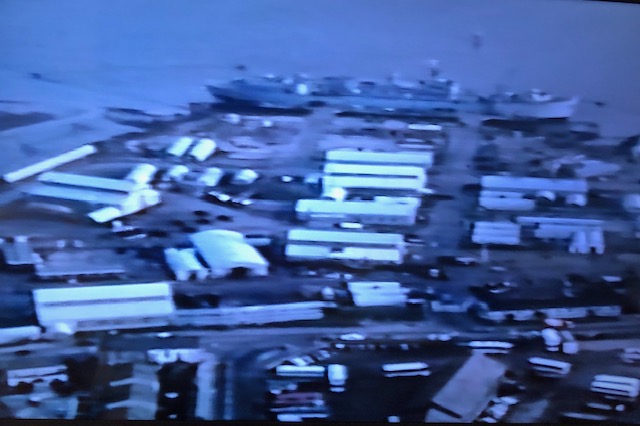
Our regimental home was Fort George, an old Royal Navy Storage depot on the western bank of the River Foyle. Alongside in the river was a Royal Navy ‘depot, maintenance and repair’ ship, HMS The Rame Head. Those officers posted to her seemed to include the more incompetent, lazy, and dangerous members of Her Majesty’s Navy.

Fort George, Londonderry. A still shot from a cine film!

We were accommodated in a mixture of Nissen huts and large draughty old storage hangars, in racks of bunk beds; The Hilton it was not! Incongruously, between the huts was a caravan that sold everything you needed – cigarettes (obviously), crisps, fizzy drinks, lads’ magazines, newspapers, sweets and chocolate. Over the centuries the tradition had been established that these entrepreneurs, these Chogy Whallahs, mainly of Indian decent, would provide such a service. The Regimental Second-in-Command engaged them, agreeing a percentage of the turnover that went into regimental funds. He once remarked that these guys often knew if you were going to be deployed operationally before the Ministry of Defence told you!

Our regimental patch covered the centre of Londonderry, the grand city bisected by the River Foyle know to the Catholic population as Derry, west to the border at Buncrana and north to the border at Muff. It was a real mixture of commercial properties and shops, dense housing and countryside and included the sprawling Catholic council housing estate of Shantallow. (Our area of responsibility did not include the City’s Bogside.)

Shantallow Estate shops A still shot from a cine film!

Sadly the time when the British Army had been seen as a force for good, coming between the Protestants and Catholics, each with their own years of deep-rooted bigotry and hatred, had long past; Bloody Sunday in January 1972 was the pivot on which it turned. Suffice to say as we patrolled the streets, either on foot or in Land Rovers, looking for trouble-makers and those out to bomb, kill and maim, we became the target of hate, suspicion and loathing. I recalled the ‘Internal Security’ training during my time at Sandhurst. In the films, the ‘rioters’ in some outpost of Empire were always led by a red T-shirted chap; the colour of their skin also made them stand out. Not so in Northern Island where everyone looked like everyone else!

I guess I had lived a very privileged life up to this point and had little experience of those living at the bottom of the societal heap. That all changed when my soldiers got to know Shantallow. Sometimes we searched these houses, acting on an intelligence tip-off that ‘someone of interest’ (Note 2) would be there. Sometimes we were lucky and were able to hand over an individual to the RUC (Note 3). During our tour we found weapons stuffed in garden sheds and a small amount of Semtex, the explosive of choice of the IRA; sometimes hundreds and hundreds of hours of effort produced scant results.

Hidden in a garden shed in Shantallow

On one early morning house visit I realised there were no beds in evidence, just piles of dirty clothes and coats on top of mattresses on the floor. In four months I only saw one bed and was ashamed to see this level of deprivation in the United Kingdom.

To be continued ……

Richard 17th September 2020
Note 1: Incidentally, John Hulme, a Northern Ireland politician who was largely responsible for keeping the search for peace on track, and was awarded the Nobel Peace Prize for his efforts, died on 3rd August 2020 aged 83.

Note 2: One of the ‘people of interest’ was a Martin McGuiness, who denounced violence after the Peace Accord and became the Deputy First Minister, alongside his bête noire, Dr Ian Paisley.

Note 3 The Royal Ulster Constabulary (RUC) was seen as a Protestant police organisation and therefore another target for the bombers and stone-throwers

PC 195 Snippets …….

The title of this PC is already open to debate and criticism according to a number of articles about the modern trends in punctuation or indeed non-punctuation as every punctuation mark be it a colon semi colon or full stop is coming under the magnifying glass of those who text and twit. Note that there was no punctuation in this sentence; did the sense of what I have written come across? So what did I mean when I wrote ‘Snippet’ with five stops? Indicating perhaps that  the title has no end, that I couldn’t think of the right word to add to ‘snippets’ or that I was just lazy and believed that my readers would read and understand it in whatever way they wanted to ….. and that that might depend on their age. ‘Snippets’ is often used to pull together a number of ‘new items’ that don’t in themselves merit a whole essay – the dictionary saying “a small part, piece, or thing; a brief quotable passage.”

Maybe the common theme in this PC is “…..ation” – punctuation and education.

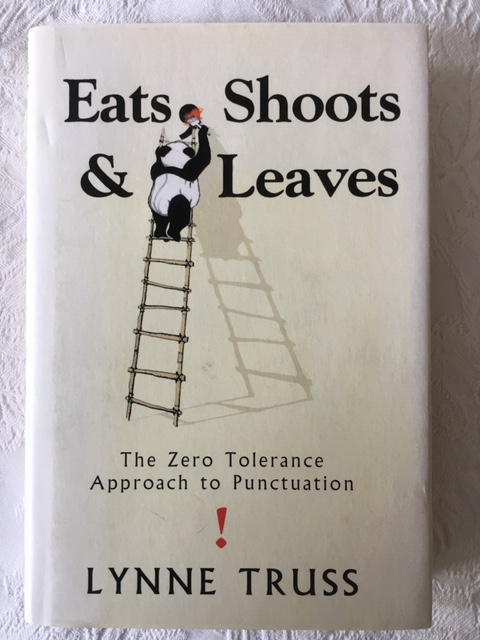
I hope most of you have read Lynne Truss’ ‘Eats Shoots and Leaves’ (see PC 26) about punctuation where the addition of a comma after Eats changes the whole meaning of the title; particularly when a Panda is concerned. (Note 1)

Susie Dent, writing in The Times last month, suggests ‘kids are killing the full stop’. By way of illustration, Dent offers a text response to a friend who’s had a pay rise: “great” or “great!” or “great.” “Most of us would choose the second, the first being a little muted and the third hints either at envy or absolute indifference.” Despite my pedantic view on punctuation, I begrudgingly admit she and those she’s observing have a point (aka full stop?). 

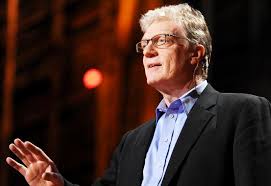
One morning in 2010 I was in The Institute of Directors on London’s Pall Mall, heavily engaged in a leadership and business coaching session with Frank Fletcher. Frank is the CEO of the Ellen MacArthur Cancer Trust, a charity that provides wonderful sailing opportunities to teenagers recovering from cancer. En passant, Frank asked whether I had seen the RSA animation of Ken Robinson’s Changing Education Paradigms.

I hadn’t and we spent the next twelve minutes watching this delightful representation of Robinson’s view on modern education from his 2010 TED talk. Having a pictorial preference to learning, I found the cartoon brought a hugely important message to life. Subsequently I watched the TED talk and bought his book ‘The Element: How Finding Your Passion Changes Everything’ and devoured it as if it was the first book I had read which really resonated with my inner emotions.

Our brains need to be activated – a bit like applying an activation code to some new App on my iPhone – and that brain switch-on is often achieved through education. Yet Robinson suggests that our current educational structure actually crushes creative thought, so pure in the young. Ken illustrates his book with some interesting vignettes, such as the one of a child who normally paid little attention in class. In art one day the teacher asked her what she was drawing.

“A picture of God.”

“But no one knows what God looks like!”

To which the girl replied: “They will in a minute.”

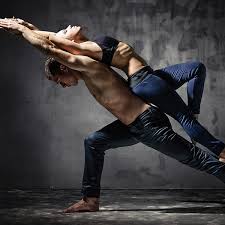
In his book he described meeting Dame Gillian Lynne, the choreographer behind Cats and Phantom of The Opera. Lynne had been a disruptive child in school and in desperation her parents took her to see a specialist. After chatting to her for a while, the psychologist said that he wanted to talk to her parents alone outside the room and, as they left, he turned on the radio. Through the little glass panel in the door they saw that Lynne immediately got up and danced. Rather than medication to calm her behaviour, she was sent to a dance school, igniting her creativity.

In PC 72 I told of a little shopping expedition to buy a light bulb and, as it seemed appropriate, wrote of my experiences a little in the style of James Frey’s ‘A Million Little Pieces’. His prose was continuous, with little punctuation. Initially I didn’t like it and looked for the colons and semi-colons, not to mention the paragraphs! Now I admit it works well …. occasionally!! And on punctuation, if you have ever looked at some legal document, maybe your will, you will realise that legalise is not a fan of punctuation, anywhere.

Robinson describes creativity as the process of having original ideas that add value. “Creativity is putting your imagination to work.”  When I am at my most creative, I sense I am extremely focused, in my zone, ignoring the outside world and consciously concentrating (back to Pooh: “My brain hurts.”)

Snippets can be musical of course and often one hears a few bars, chords or semi-quavers and think “Oh! That’s Ed Sheeran or that slow movement from Tchaikovsky’s piano concerto.” Recently in a novel I read of Bach’s Crab Canon used as a mobile ringtone – and immediately found it on YouTube. I never knew!

Robinson banged the drum to have creativity of equal importance as numeracy and literacy in our education system, but the idea failed to gain mainstream traction. He died aged 70 of cancer late last month, still using his metaphorical drumsticks. I will miss his contributions to our lives.

Sir Ken Robinson 4th March 1950 – 21st August 2020

My scribbles, started six years ago, have challenged my own ability to write something that people might want to read. In that process I find myself using a number of full stops as ……. to suggest my mind is catching up with my typing fingers.

What really concerns me is the current assault on the full stop. Note I have naturally put one at the end of the sentence. Lauren Fonteyn, a linguistics expert has suggested that not using a full stop is ‘neutral’, but using one adds a sense of ‘being peeved … or that you’ve done texting’. Really? Are we so concerned of slighting someone that we can’t even put a full stop at the end of a sentence? God help us! Dent on punctuation again: “The TV listing once included the actor Peter Ustinov interviewing ‘Nelson Mandela, an 800 year old demigod and a dildo collector’. The right punctuation can save a certain embarrassment!

If you only text or twit, writing in an abbreviated language that is understood by your recipients, that’s all well and good. But it’s unlikely you will understand the breath, richness, depths and grammatical constructs that make English one of the most glorious languages on the planet. If that’s still OK, that’s OK; I sincerely hope it’s not.

Richard 10th September 2020
Note 1 The original, seen by Truss, was a notice on a Panda paddock. It should have read ‘eats shoots (ie green bamboo) and leaves’; someone had added capital letters and a coma after Eats which changed the meaning – almost ‘Gun Fight at the OK Corral’ Panda-style?

PC 194 Waiting for …….

The wonderful lines “What is this life if full of care, we have no time to stand and stare.” from the poet William Davies remind me why, in observing life with all its complexities, nuances and interactions, we need to engage our brain; as Pooh would say: “sometimes my brain hurts.” Of course often you are waiting for …….

PC 194 1

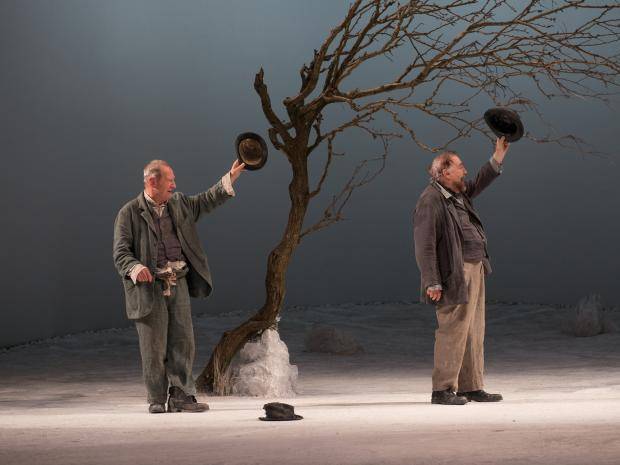
I have never seen the play ‘Waiting for Godot’ (1953) by the Irish playwright Samuel Beckett. Apparently two men chat on the stage, exchanging ideas about this and that, and admit they are waiting for Godot, whoever he is. A slave and his master enter …… and exit. Godot sends a message that he won’t be coming today – maybe tomorrow? By the end of the play Godot has not made an appearance and the two men have waited and waited, hoping for enlightenment from Godot. For whatever reason, the phrase ‘Waiting for Godot’ has lodged itself in my psyche although I am in no hurry to watch the play; just doesn’t appeal.

Some things worth waiting for are outside of our control, like the weather. Waiting for the rain to stop before walking the dog/hanging out the washing/gardening is literally in the lap of the gods  ….. and no end of pacing and getting anxious is going to change that. In my last PC I recounted our experience stuck in the apartment lift – waiting for help!

PC 194 2

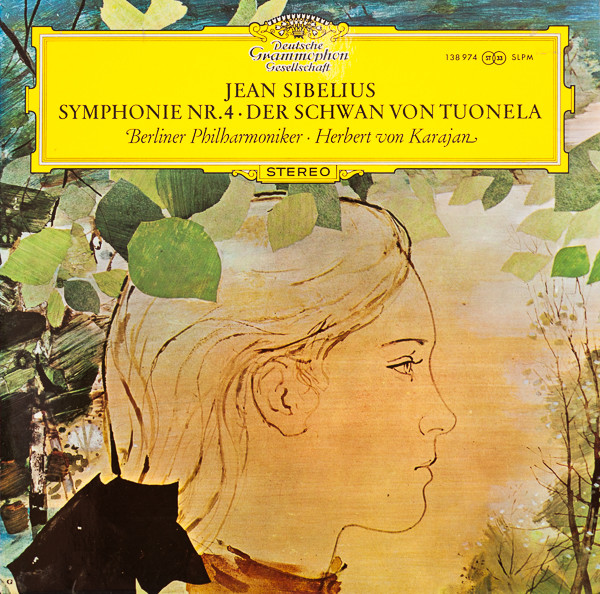
I love classical music and particularly that composed by Jean Sibelius (see PC 109). Heavily scored for the brass section his Symphony Number 4 is a wonderful romp through some Finish landscape until it reaches a crescendo and pauses ….. waiting …. and different conductors stretch the waiting seconds ….. for ever. If like me you want to faux-conduct and you have raised your arms in anticipation, getting it right is ….. well …. waiting!

My dear mother stayed in a nursing home for the last year or so of her life, for some reason reading, inter alia, ‘To War with Whittaker’ over and over again (Note 1). To visit her I would work my way through multi-cultural, mixed-ethnicity of Clapham Junction and take the two-hour-plus train to Sherborne in Dorset; I arrived on another planet where ‘ethnic diversity’ was something they read about or saw on television. At home one evening, I got a call from the staff to say they thought my mother was fading. I said I would take the first train in the morning. I walked up Sherborne High Street, picking up a bunch of flowers as I did so, and headed into the nursing home. My mother’s room was on the first floor. As I walked down the corridor a nurse popped her head out of an office to say that, sadly, my mother had died a couple of minutes previously. I walked into my mother’s room, now still and lifeless, and before I thought about grief and sadness, I couldn’t help saying out loud: “You could have waited a few more minutes, Ma!”

That experience came to my mind here in Estoril where someone is dying of cancer, too young. The prognosis is a matter of months rather than years. An extrovert, larger-than-life character, they have been hugely philosophical about their various treatments and diagnoses of the last twelve months. Now it seems the end is in sight, although there is huge denial that that will happen. I was struck the other afternoon when I saw them, in their silk pyjamas, opening the shutters of windows that overlook the pool …….. where life was going on as normal ……. whereas they were waiting …….. I am sure we all feel an unspoken sadness and helplessness, only able to offer love, prayers and lots of gin.

TAP Portugal aircraft at Lisbon Airport

One of the many modern afflictions is waiting for some call centre to answer. For instance, I had been on the telephone to TAP Portugal for over two hours before Andrea was able to do what I wanted. Initially the system doesn’t seem to acknowledge anyone is waiting until you have been listening to the musak for 22 minutes. Fortunately the ‘speaker option’ on your ‘phone allows you to leave it on the table, playing the musak to itself while you get on with other things – providing you stay within reach. Then Katrine answered, working from home, God knows where. It didn’t matter; could she solve my problem? In these circumstances the worst words you can hear are: “Let me put you on hold”. Later, having taken me off hold, she asked if it was OK if she transferred me to another department. What can you say: “No!” – as that would have resulted in the continuous tone, one’s disbelief that after 55 minutes the call has ‘dropped out’ – either accidentally or on purpose! Then Bruno took all my details, again, and put me on hold ……. I waited, read more of my digital Times newspaper, made myself another coffee ….. until Bruno came back ……. and then the call dropped out. Ninety minutes and counting. Another attempt, another requisite 22 minutes before Andrea answered. By now I had a ‘Case Number’ that comprised so many numbers another minute went by just speaking them. And so it went ….. more waiting …… more ‘on hold’ ……. but eventually after close to two hours and a half ……. the waiting ended and I heard those most lovely of words: “We will send you an email confirming everything! Have a nice day.” Easily pleased huh?

And lastly we British have a reputation for queuing patiently. We don’t acknowledge many saints in England apart from our patron St George although the phrase ‘having the patience of a saint’ comes to mind …. waiting for …….?


Richard 3rd September 2020

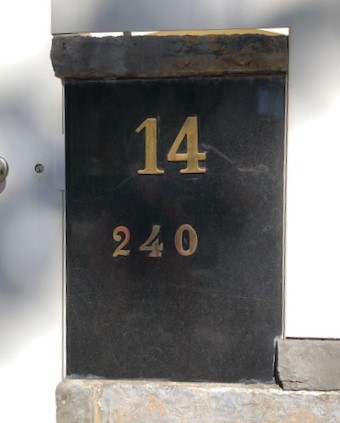
PS My chum David Morley, who has a beautiful mansion in south west France (see PC 18), has solved the puzzle of the street numbers (see PC 193). They are measured from the start of the street, in metres. No 240, the old No14, should be 240m from the bottom, No16 is another 52m up the street. So I used my calibrated ‘pace’ and walked the street; ‘tis true!

Note 1 ‘To War With Whitaker’ was the title of the wartime diaries of Hermione, Countess of Ranfurly. My aunt’s colleague Peggy (see PC 114) read Jane Austin’s Northhanger Abbey at least once every year for her last twenty years. Must be something in the water?

PC 193 Stuck in The Lift!

Next month Celina and I will celebrate nine years together, although last week we celebrated our fourth wedding anniversary. Marking important events gives us a framework on which to build our lives, to be corny, putting flesh on the skeletal outline of the predictable sequence of ‘birth ….. marriage(s)…. death’.

Living in the half-life of Covid, we decided to have a night in a hotel, having been assured that it was safe! And it was! There were hand sanitisers everywhere and masks were obligatory in the public areas, except at the Terrace restaurant’s socially distanced tables when eating; at least they recognised that difficulty.

PC 193 1

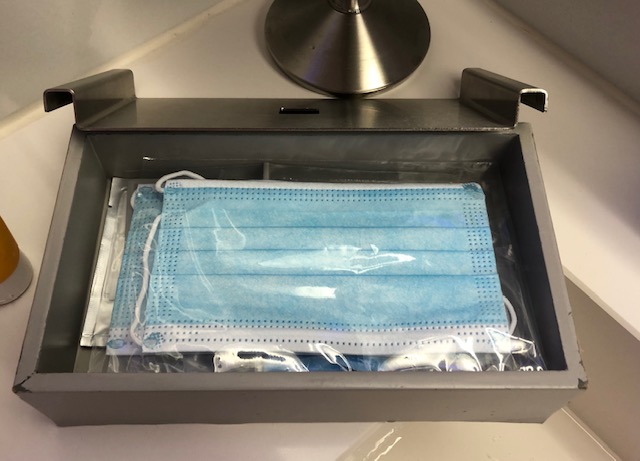
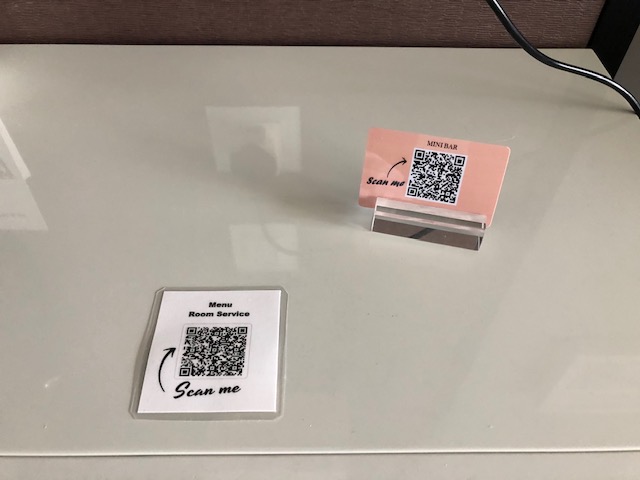
In our room where one might expect a box of tissues there was a box of masks; the mini-bar and coffee machine were wrapped in a paper that indicated they had been sanitised. The mini bar price list, hotel facilities and even the menu for supper were accessible through your smart phone camera.

PC 193 2

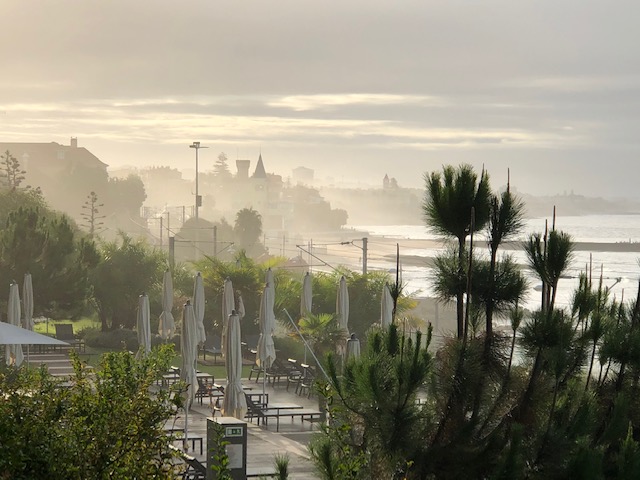
Back on the Terrace again for breakfast. I imagine we may have seen the death of the ubiquitous ‘Breakfast Buffet’, those tables groaning with every conceivable need for the famished guest. I remember a Norwegian one in Voss where fish was predominant or Far Eastern ones focused on fresh exotic fruit. Today one guest’s cough and the whole table would need to be consigned to the incinerator! It was a misty morning and Estoril and its Forte da Cruz looked rather enchanting.

PC 193 3

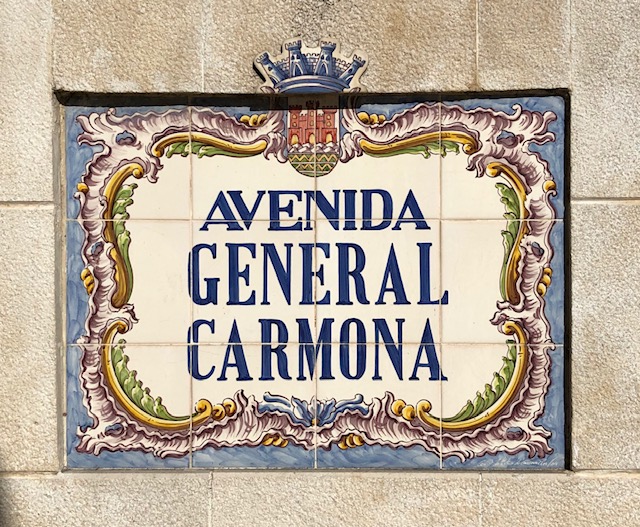
Later Celina and I returned to the apartment on Avenida General Carmona (Note 1)

PC 193 4

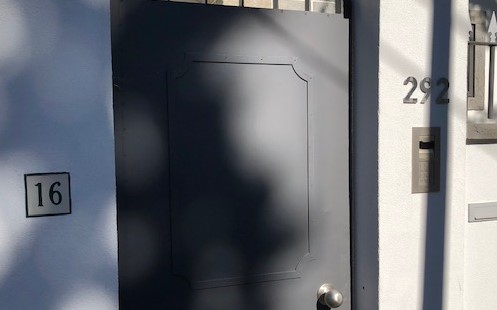
As an aside, for some reason known only to the Portuguese authorities, the house numbers on this four hundred metre street are being renumbered. Previously they had run from No 1, obviously, at the bottom with even numbers on one side and odd on the other, to the top, No 26. Now, No 16 for instance has been made 292, two hundred and ninety two, No 14 two hundred and forty (240!) And why would you leave the old numbers up? Go figure!

PC 193 5


PC 193 6

At the bottom of the street stands one of the largest casinos in Europe, not some embryonic housing complex …… that I might understand.

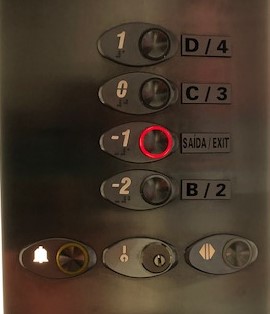
Having dropped off our overnight bag we headed for the pool as the sun, which had been reluctant to make an appearance when we had been at the hotel, had changed its mind! An hour and a half later we made our way inside and entered the lift. The pool is at -2 (Note 2); we needed No 1 …… and we both needed the loo! We pressed the button, the doors closed, and the lift ascended ……. a few feet …… and shuddered to a stop ….. briefly ….. before going back down with a bump. We pressed the floor button again; nothing happened! We pressed other floor buttons in that vain hope that that would make a difference …… but all we got was a row of red circles but no moving jackpot. The lift was made by the reputable company, Otis, and designed to hold 8 people or 630kgs; surely I hadn’t put on that much weight since lockdown on 23rd March?

Celina is Latin by temperament and by looks so tends to get excited very quickly, although we had both realised we were stuck in a lift, neither going up nor down. She pressed the button with a ‘bell’ symbol a number of times and eventually the emergency control room answered.

PC 193 7

A team was dispatched. We also banged on the doors to attract the attention of others in the building. (Note 3) It was getting warm inside and we both began to sweat. Internally I was trying to remember which films had people stuck in a lift and what the outcome was. Were we going to see Bruce Willis or Jason Stathan pull the doors open with their bare hands, the aluminium crumpling under their efforts …… or would we have to wait until Jorge or Costa arrive, puffing on their cigarettes and pulling up their blue, stained work trousers?

We both wanted the loo ….. and as the minutes ticked by there was little else that took our focus away. We did an inventory; a small empty tonic water bottle and two rather damp pool towels. If push came to shove, towel or bottle, or …….

Celina got a bit emotional, imagining we were going to be stuck for hours, but by now her loud banging on the doors had finally attracted her family’s attention (note2). Camila and Cecilia arrived outside; sort of comforting to know but it did nothing to relieve our bladder pressure!! By now I was dripping with sweat as if I was in our hot yoga studio, not a metal box stuck somewhere between floors. True to their promise, Jorge and Costa eventually arrived, 5 o’clock stubble and blue trousers in evidence, used a key to allow them to open the doors manually (no need for Willis or Stathan), and we were out in the daylight; the relief, both emotional and physical, was palpable. Not a pleasant experience although this is not a tall building; imagine being stuck in a lift in, for example, The Shard in London, with its 95 floors. Not daring to take the lift, we raced up three flights of the stairs to find a loo – always a difficult manoeuvre when your bladder is full!

Life on the edge!

Richard 26th August 2020
Note 1 General Antonio Carmona was President of Portugal from 1926 until his death in 1951. He appointed Antonio Salazar as prime minister and allowed him to run Portugal as an authoritarian dictatorship whilst his own powers became largely ceremonial. Just over twenty years after his death, in 1974, the Carnation Revolution saw the establishment of a modern democracy. Compare with Spain’s dictator General Franco who ruled his country from 1939 to his death in 1975.

Note 2 For other example of odd decisions by architects, the entrance level to the building is -1, the first floor is 0 and the top 1!!

Note 2 You could imagine someone in one of the apartments hearing a muffled banging noise and them thinking it was builders down the street …… and carrying on doing whatever they were doing!


PC 192 Why You Should Try Something Different – Ceroc?

In the coming months I suspect we are all going to have to be more open to different ideas, be more creative to achieve what we want to do, more accepting of restrictions and understand their necessity. When the future is uncertain and confused, it is natural to be cautious but it’s important not to let caution become a suffocating habit. Let me illustrate this from my own experience.

It was a busy late afternoon in early October, you know, when one begins to sense the evenings drawing in and feel the hint of autumn in the air; must have been about 1993. The Morgan & Banks office was in Brettenham House, opposite Somerset House on the north side of Waterloo Bridge in London. My desk telephone rang. (Note 1) It was Sophie, a bubbly friend who had established herself as the Office’s caterer for Boardroom lunches. Those of you who regularly read my PCs may remember a visit Celina and I made last year to The Anchor in Walberswick, run by Sophie (PC 153  Courgette Neutral June 2019).

“Why don’t you come Cerocing?” she screamed – she always screams, does Sophie.

“What the hell’s that?” I asked defensively, my alarm bells ringing, immediately thinking of reasons why I couldn’t/wouldn’t/shouldn’t!

“French Rock & Roll (See Note 2) – it’s great fun and I’m getting a party together – Thursday in Fulham; see you there about 7.30.” ……. And with that she ended the call ….. probably without hearing my “Not sure it’s my thing but thanks anyway.” Much relieved, I put the phone down and got back to work, resigning myself to the fact that Sophie rarely took “no” for an answer. Sure enough, two days later, another call to seek my participation!

“Come on! It’ll be fun.”

“But I’ve never done it/I can’t do it!”

“Doesn’t matter; everyone’s got to start at some time.”

“Thanks but no thanks!”

PC 192 Ceroc 1

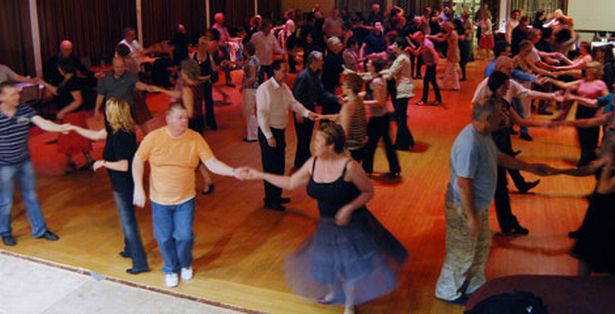
All shapes and sizes have fun

Then on the Thursday morning a final “COME ON” – I had nothing on that evening but still my inclination was to say “no”. Yet the request and my response to it had me niggled; why had I been so dismissive, why did the negative response come first, particularly as I really had no idea what Cerocing was. Oh! Of course I could imagine …., I could visualise the evening … a disaster …. uncomfortable …everyone pointing to the chap who couldn’t do it.

Eventually, on my way home from the office on the Northern Tube Line, I began to take a more rational approach to my thoughts. OK, so I didn’t know what Cerocing was, so why shouldn’t I find out? I had never danced Rock & Roll effectively in the ‘60s, never did master Chubby Checker’s The Twist, but that should be no barrier to trying it now. “Oh! I see, you think everyone else will be able to do it quite well, and you won’t and you’ll feel stupid, inept, embarrassed by being completely uncoordinated. And anyway, what sort of people go Cerocing anyway, would I have anything in common with them?” the thoughts rumbled. Rational brain said I had no answers to these questions as I had never experienced it … so why didn’t I try it? Whoa! Get out of my comfort zone and try something different? No way! But why NOT?

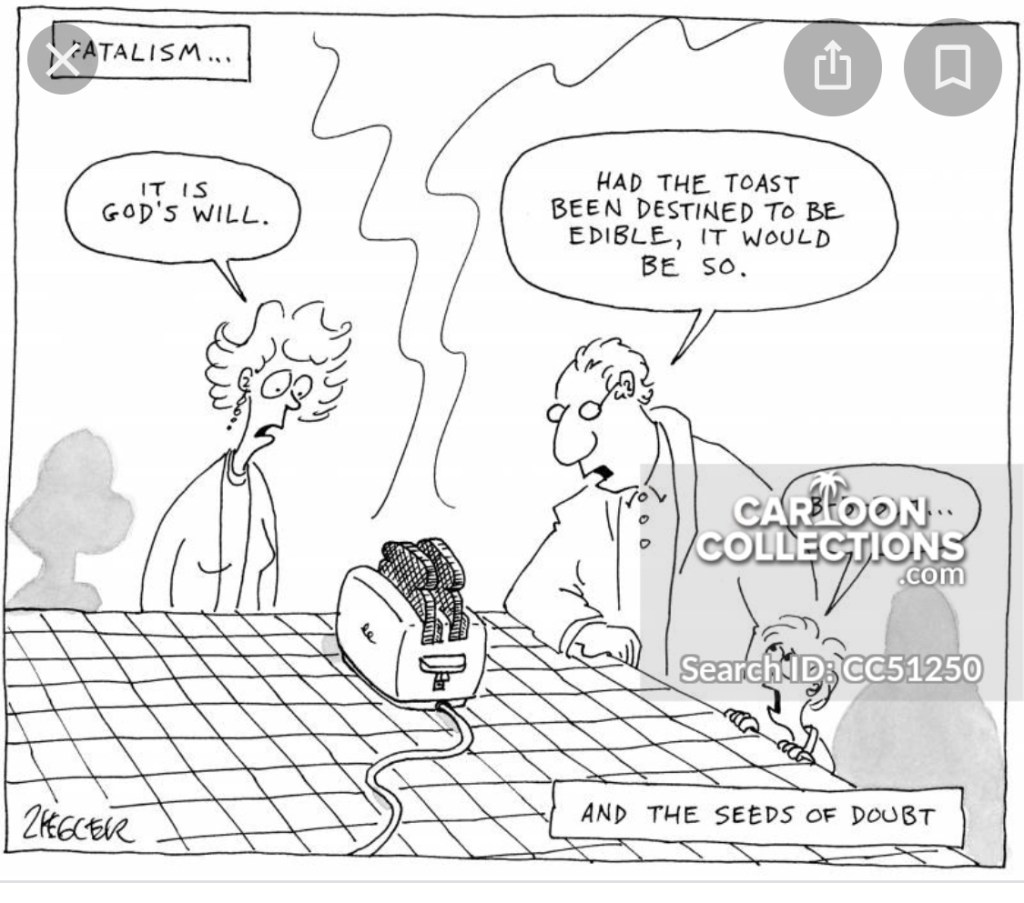
My mind in turmoil, I eventually decided to call Sophie and tell I was coming. She was predictably delighted and I took down the directions to the ‘Dance Hall’, trying all the time to push the seeds of doubt further and further away.

I arrived in Fulham Broadway and found the alleyway – as I passed the flashing arrow pointing to the venue I almost, almost turned back! Then the sign-in, the table lit by red lights and the sound of music beginning to lift my spirits – “in for a penny, in for a pound” I thought. I made my way into the hall, looking for Sophie, but am met by an amazing sight: on the stage a couple with throat mics are explaining the next step whilst on the main floor six lines of dancers, alternating between all male and all female, filled the space, practising as instructed. At the end of the sequence, newcomers were asked to join a line.

Suddenly I find myself in front of a girl I’ve never met – “I’ve never done this before” I mumble by way of excuse. “Don’t worry, not many people have, let’s just enjoy it.” And so we did! Every so often the lines moved so that you danced with someone different and gradually, so so gradually, it all began to make sense. And the evening is now a lovely memory of music and dancing and fun – but more that that.

PC 192 Ceroc 2

Maybe this Ceroc move requires some practice?

It’s an important reflection of why you shouldn’t let your perceptions put you off from trying something new.

Richard 20th August 2020
Note 1 An office was somewhere you went to work BC, to engage with your work colleagues, to exchange gossip over the water cooler. We each had our own desk and could book a small meeting room where, in my case, I could meet clients. My ‘desk telephone’ was a landline with push-button controls; ‘the mobile’ was a bit of a misnomer as they were the size of a house brick and you needed to work-out in the gym to lift them. One person in the office had a ‘dial-up’ internet connection; that dialing sound remains with me as an example of technological change!

Note 2 The name ‘Ceroc’ is said to derive from the French “C’est le roc” (it’s roc), used to describe rock n’ roll dancing in France. Ceroc is an international dance club which has with over 200 venues across the UK as well as national and regional competitions and weekend events throughout the year. It also has franchises in many other countries in Europe, Asia and in The Antipodes.


PC 191 Not Normal Behaviour? Well, maybe now!

I started PC 189 with: “You remember back BC (Note 1) when we couldn’t envisage the future and we made plans …..” and I was thinking how to start this little scribble ……. and rather liked that ‘You remember back BC …’ because it’s possible that we will contrast much of our behaviour today and in the coming weeks and months with what we did BC.

BC we read people’s faces in an unconscious manner, looking for tell-tale signs of emotions, the whole gamut from happy to sad, from delight to disgust, from friendliness to suspicion, from openness to ‘keep your distance’, from love to hate. The list and pairings are endless. From two metres with reasonable eyesight you could pretty much gauge the messages, up close and personal definitely. Now ‘up close and personal’ is seen as an invasion of one’s space, as a mark of disrespect. For those whose natural inclination is to hug and French kiss at any opportunity, these new-found rules are hard to abide by. For those who are very internally focused and emotionally cold-blooded it’s a godsend; they see everyone behaving just like them!

Then comes the wearing of the mask, which the majority of us believe is a sensible way to shield oneself and others from airborne germs. There are those who want to kick against the perceived threat to their personal freedom and liberties and talk of court action – poor souls. The mouth, that wonderful feature that tells tales, conscious and unconscious, is hidden. My comments in PC 189 about unconscious communication and its difficulty wearing a mask prompted many comments. One highlighted the difficulty of the paramedic, communicating within the team and with the individual, the focus of their emergency call-out. Reading personal accounts of hospital staff coping with patients in the intense days of the pandemic reinforces how we have to consciously change our facial features to ensure the messages are received.

The other evening my brother-in-law celebrated his birthday and a few friends were invited to share some Thai food and the cake. Should I wear a mask? Well, these people hadn’t been out of Portugal since lockdown so we assumed (?) they were Covid-free …. but we didn’t know! Later in the evening I realised how hypocritical I had been, chastising those in the UK who had attended parties with scant regard for spreading the virus and yet here I was, surrounded by strangers with hardly a social distance in evidence. But of course in a nod to the new behaviour, we did ‘elbow kiss’ or ‘bum bump’ as they arrived!

Today I overheard a scene that would not have happened BC. Firstly let me put my hand up and confess my knowledge of the Portuguese language is only marginally better than it was eight years ago which, given that then I had ‘da nada’, is not much to crow about! I had gone to the local upmarket grocers (read PC 141 Saloio from December 2018) to buy some supplies. They had a visibly stated policy of only allowing a certain number of people into the store at any one time, so there was a small queue on the narrow cobbled pavement of Avenida de Nice, although its masked participants were not socially distancing (so 50% OK!). I watched a woman and two children lift their purchases onto the checkout desk; as always when shopping with small children there were things in the basket that she hadn’t chosen but with some discussion with the animated children one or two items made it through the checkout. At the head of the queue outside, whether ‘at the head’ by taking her turn or by barging in with the air of entitlement, was an older woman, let’s call her Renata, clearly frustrated by having to wait:

“Children aren’t allowed in the shop. Come on! Hurry up!” Renata muttered in a voice clearly loud enough to be heard inside. The woman at the check-out looked up, acknowledged the other one, finished packing her purchases and paid the friendly staff. As she left she said to Renata who was already pushing her way in, completely oblivious of two little children and shopping bags:

“Now you can go in!”

Well, you could sense that this was a trigger, this well-mannered and quietly-spoken comment, to Renata whose fuse was set at danger.

I’ll paraphrase with my own personal observations.

“You stupid woman! Don’t you know that children are not allowed in the shop? I can’t afford to wait, as I have a very busy and important day.” (Note 2)

Raising her voice into a scream, twisting her face into a grimace, sure of the righteousness of her opinion, she wasn’t expecting anyone to dare a retort!

(We were all, shoppers and staff, who I later found out considered Renata always rude, were transfixed, frozen in the moment, awaiting the next interaction!)

It was clear that such selfishness deserved a response from the woman who, by now, was already on the pavement.

“Actually, you rude cow, children are allowed in and if you have such a busy life, why don’t you f**king shop when it’s less crowded?” she shouted at Renata.

Renata strode back towards the entrance, puce in the face, basket in hand and flustered: “How dare you talk to me like that; you don’t even know who I am! Bitch!”

The woman on the pavement screamed something like “Go f**k yourself!” and walked away, red-faced and probably inwardly regretting her own inability to control her temper.

Anyway this was only my reading of the situation, as the words were ‘lost in translation’! I couldn’t imagine this happening BC …… but maybe it did occasionally?


Richard 13th August 2020
Note 1. BC short for Before Coronavirus

Note 2. Somewhere in PC 141 I wrote: “…… a member of staff coming up the stairs clutching a single item asked for with an imperious tone and raised eyebrow in answer to the ‘they are downstairs madam’ response. The old-moneyed Europeans mingle with the nouveau riche, both stretching past one for a packet of smoked salmon, without any consideration or acknowledgement of your existence. There’s a certain haughtiness, a sense of birth right, that gives them the confidence to act in this rude way, whether the disdain is obvious or not.”

PC 190 Up My Nose!
For those of you who follow my Face Book postings, you may have seen something about my nose? I have a nose for a good story and used to have a nose for a good Shiraz but this was about my physical nose.

Let’s cut to the chase; my mother-in-law was due in Portugal this week from Brazil and is in a ‘high risk’ category for Covid 19 (She arrived safely on Wednesday thank goodness.) Common sense said it would be sensible for Celina and I to have the virus test; after all we have come from a country where the pandemic has caused widespread suffering. As we didn’t have any symptoms, to be able to access a test a doctor’s prescription was needed. We had to book and pay for individual appointments, although in the end we were seen together! I might have imagined this gave the very overweight but charming doctor the opportunity to go outside for a cigarette break. Then on Monday we went to the Convention Centre (aka Covid 19 Centre) here in Estoril.

PC 190 1Covid 1

Forming filling, passport checking, another 200 euros across the counter and we wait on social-distanced spaced-out chairs in the cavernous building.

PC 190 2

We are called forward individually. I go to Room 4 and am directed to a chair. The swab is shoved up the left nostril of my nose ….. I am reminded of cleaning a rifle’s barrel with a ‘pull through’ ….. it feels as though the swab is going to pierce my forehead ….. instinctively I push back on the small plastic chair. I had been instructed not to close my eyes …… but as the discomfort seems to reach a climax I realise I have done exactly that! I do not apologise!

It’s over and I leave; the results were emailed to us within 24 hours and we are negative. When I read of the search for better means of testing for Covid 19, such as using saliva, to avoid the invasiveness of the swab test, I now know what they mean.

If you Google ‘nose’, apart from the obvious links to descriptions about the proboscis (Note 1) that sits between your eyes, you get ‘The Nose’, a short story by the Russian author Nikolai Gogol, ‘The Nose’, an opera by Dmitri Shostakovich and ‘The Nose’ aka El Capitan, a particular difficult climb in the Yosemite National Park in California.

‘The Nose’ is satirical short story by Nikolai Gogol, written in 1835 during his time in St. Petersburg. It tells the story of a City official whose nose leaves his face and develops a life of its own. The use of iconic city landmarks by way of illustration, as well as the sheer absurdity of the story, has made this an important part of St. Petersburg’s literary tradition.

Over 90 years later Dmitri Shostakovich picked up the story and scripted an opera called ‘The Nose’. I am not a Shostakovich fan but the little snippet on You Tube of the Royal Opera House performance (24 November 2016) of the ‘noses’ tap-dancing is both intriguing and delightful.

PC 190 3 The Nose Shostakovich

I have done some hill walking in the Brecon Beacons and in the Lake District, been targeted by swarms of the Scottish midges strolling up Ben Lomond and abseiled down cliffs, but I have never been that interested in actually climbing mountains. That said, I do have ‘Climbing Wall Centres’ on my ‘To Do’ list for a bit of fun; maybe a bit contrary huh!

PC 190 4 El Capitan

The Nose, El Cap, otherwise known as El Capitan, is a vertical rock formation in Yosemite National Park, located on the north side of Yosemite Valley, near its western end. The granite monolith is about 3,000 feet (914 m) from base to summit along its tallest face, and is a popular objective for rock climbers. The top of El Capitan can be reached by hiking out of Yosemite Valley on the trail next to Yosemite Falls, then proceeding west. For climbers, the challenge is to climb up the sheer granite face and that has now been climbed by ‘free climbers’ ie those not using ropes or pitons etc. BASE jumping from it is currently illegal.

PC 190 5 Nose diagramme

The nose is a particularly delicate part of my anatomy. On a positive note I use it to filter the air I breathe, to smell my surroundings and food; on a negative note it drips when I have a cold and blood flows from it when I bang it – or someone else bangs it! It’s the most prominent structure between my eyes, contains the olfactory organ and is the entrance to the respiratory tract. The air I breathe in is cleaned, moistened and warmed and the nose cleans itself of any foreign debris that I have inadvertently inhaled. Good eh!

When I was a teenager I suffered for years with poor quality sinuses. If you have never heard of the sinuses, they are a connected system of hollow cavities in the skull. The largest are behind your cheekbones, the smallest low in your forehead. They produce mucus that moisturises the inside of your nose.  Sinusitis gives you the most horrendous headache, probably on a par with a migraine, although fortunately I have never suffered from one of those. There was a progression in the treatment; I had all three. First they were washed out, with a pressure pump stuck up your nose; I remember today why it was a pressure pump! That didn’t work, so I had them cauterized with a wire stuck up my nose and into the sinus cavity; then the doctor turned on the electrical current …….. I could smell my flesh burning! Yuk. That didn’t work, so I went under a general anaesthetic and had them enlarged, the drill going up my nose! It’s a useful access, the nose!

PC 190 6

When I think of noses, some cartoon characters immediately come to mind.  Pinocchio, for example, the wooden puppet of an 1883 Italian children’s novel whose nose had a tendency to elongate when he lied, which he did frequently. Or each of the Seven Dwarfs (apparently the politically correct word; not midget!) who all had big noses. I also think of the actor who played Cyrano De Bergerac, Gerald Depardieu, as he has a very large nose!

Richard 7th August 2020

PS My family name on my maternal grandfather’s side is Nation. Looking back over old photos it’s easy to see the resemblance past and present – the ‘Nation nose’ is quite prominent.

Note 1: The word Proboscis refers to a mammal’s nose, although strictly one which is long and mobile, like that of an elephant or Tapir.

PC 189 With Some Trepidation!


You remember back BC when we couldn’t envisage the future and we made plans ….….. that this year included seeing Celina’s family in Estoril over Easter. As we booked the TAP Portugal flights we thought even further ahead and also booked flights to cover the month of August in the sun. Little did we know the whole world was about to be turned on its head, or arse depending on your view.

Our Easter flights were cancelled and we have a voucher for future use with TAP Portugal. As we lived further into the lockdown period, we prayed we would still be able to go to Portugal on 28th July. At some point Celina was checking the airline’s flights from Brazil and in a ‘while I am on the website’ sort of moment, checked our July flights were still there. Nothing showed! We rang the airline in Portugal; I won’t bore you will the length of the call and the number of times we were put on hold etc etc as that, sadly, is an all too familiar experience, but eventually we talked to Gustavo.

We are not flying out of Gatwick in July so had to cancel your flight.”

(Unspoken, as we wanted to keep Gustavo sweet and didn’t want him to hang up , …… “But why didn’t you tell us and explore some of our options?”)

He rebooked us on a flight from London Heathrow for the same day. And so it transpired that on Tuesday we were due to fly to Lisbon. Two days before, the Prime Minister surprised the whole country and those 600, 000 tourists already there by adding Spain to the list of countries from which returnees would have to isolate for 14 days. Difficult if you are only allowed to take 14 days holiday at one go.

We had packed; we had a chum coming to stay in our apartment; we had the taxi booked to take us to Terminal 2. Still ….. Monday night was spent tossing and turning ….. should we or shouldn’t we. ……. imagining this and that …. and some of the other? A little bell was reminding me that my travel insurance probably would be invalid as the UK’s Foreign Office had advised against non-essential travel to Portugal. Maybe that health agreement whereby UK NHS registered individuals could access Portugal’s health care system would be honoured? Was it worth the risk? I should add that it was our intention to simply spend five weeks in Celina’s mother and cousin’s apartment, which has its own pool, not join a group of fifty somethings wanting to relive their youth in the local Cascais nightclubs or boogieing the night away at a BBQ on some distant beach. And anyway Portugal had been remarkably successful in dealing with Covid 19, far far better than the UK, so it wasn’t exactly jumping out of the frying pan into the fire or indeed vica versa. The doubts rumbled around over breakfast!

Sam picked us up and drove us to Heathrow. We hadn’t spent so long with someone in a car for a while and as we talked, I realised something was different. When you meet someone of the first time we automatically look at their eyes; if we find the eyes friendly our own eyes drop down to the mouth – more information gathering at a sub-conscious level. Our Covid 19 facial masks hide a real contributor to the conversation, the visual inputs now limited to the other’s eyes and eyebrows. You have to work harder at a conscious level to convey the intended message. Some people naturally have smiley eyes; for most of us it’s something we are going to have to work on if the wearing of masks becomes a way of life and not just for those attending a Venetian Ball.

PC 189 1

Apparently there is a shop in Brighton only selling facial masks!

At Terminal 2 there are one or two shops open for the few passengers in evidence; everyone is socially-distancing, wearing their personal choice of mask, and looking anxious. We board and taxi to our take-off position. No aircraft are landing and there is no queue of planes on the tarmac, neither in front nor behind us. Normally I am always like a child, fascinated by the long line of landing lights fading up into the sky as the aircraft make their decent towards the apron. Not today! We take off slightly early and fly out over the Isle of Wight, arriving over France on the western side of the Cherbourg Peninsula, and on over the Channel Islands of Sark and Jersey. We’re over Ushant, situated on that North West corner of France and I am reminded of our ferry trip from Portsmouth to Santander on the northern coast of Spain in 2018, when their course takes them through this rocky stretch of water.

My reveries are interrupted by a paper form that’s stuck rather unceremoniously under my nose. We borrow a Biro from the stewardess, for the form wants the details of where we are staying, our mobile numbers, full names, sex, shoe size (no! not really!) and our home address. I have read that some Covid-vaccine deniers think a microchip might be slipped under your skin as you have the little prick of the vaccine needle. This will give Big Brother the ability to access details of your life. (Some people actually believe this rubbish!) This form was enough ….. and I was filling it out very readily!

PC 189 2

The mask is hot to wear for a long time and I reach up to angle the ‘fresh’ air nozzle onto my face. The distance between the rows of seats is adjustable depending on the carrier, the position of the nozzles not. The best I can achieve is for the jet of cool air to hit – just behind my shoulder.

PC 189 4

Flying over Lisbon before doing a 360° turn to line up the approach

We land safely at Lisbon. There’s always one individual who has to be the first to stand as soon as the aircraft comes to a stop, as if they will gain a few seconds and lemming-like the rest of the passengers follow, only to stand bunched in the aisle until row 3 has cleared. Social distancing? Nah? At least they restrict passenger numbers on the coach that took us to the terminal building.

PC 189 7

The Sintra hills in the distance, the Monument to the Discoveries in the foreground on the shore.

On the way up the escalator to ‘Passport Control’ I realise this is my first European flight since the UK left the Union at the end of last year; we are currently in a ‘transition period’. So ‘EU Passports’ or ‘Non-EU Passports’? My burgundy-coloured EU passport is still valid so we try that line. We are through without a hitch. Bags collected and on our way towards Estoril within 40 minutes of landing – without any trepidation!

Richard 30th July 2020