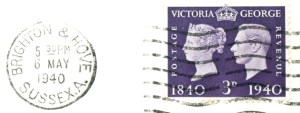
PC 248 A Hundred Years Party

I gather that many years ago Celina’s brother and sister-in-law didn’t have a large wedding and subsequent reception. Time to make amends as the significance of the months of August and September 2021 is not lost on the Rocha Miranda family; in the space of 25 days my brother-in-law Carlos celebrated his 60th, my mother-in-law celebrated her 80th and sister-in-law Camila her 40th. We mark decades of years past in our lives as if these are more important than other anniversaries – not so; although always time for a party …… even in Covid times.
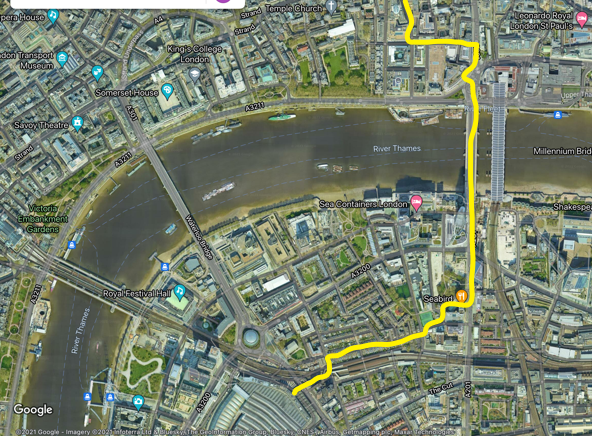
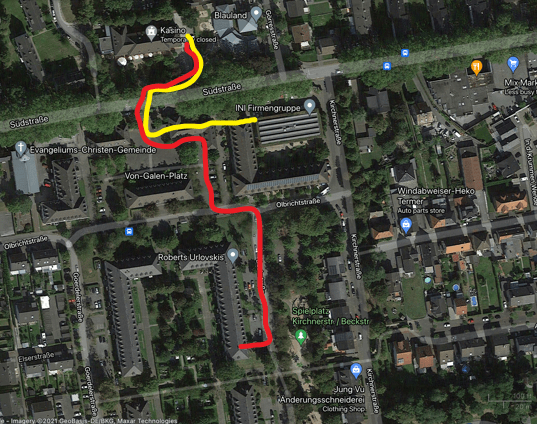
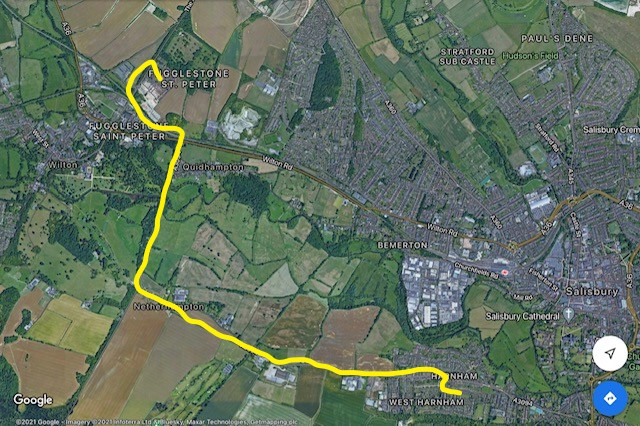
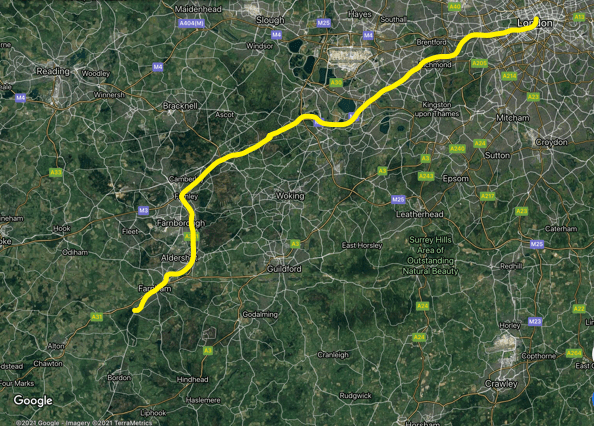
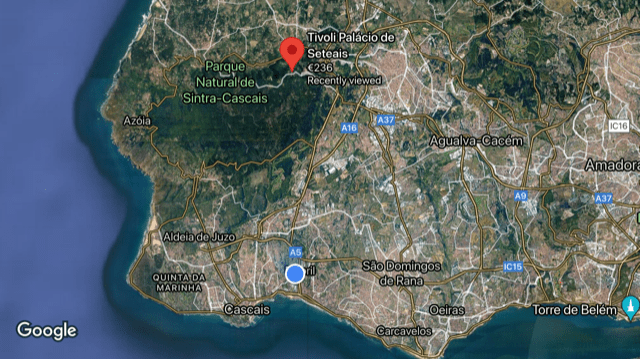
Sintra on the red splodge, Estoril on the blue dot!

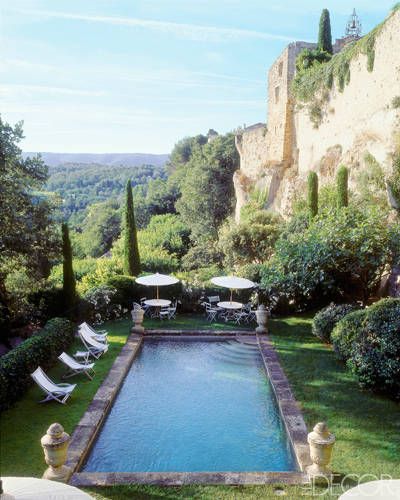
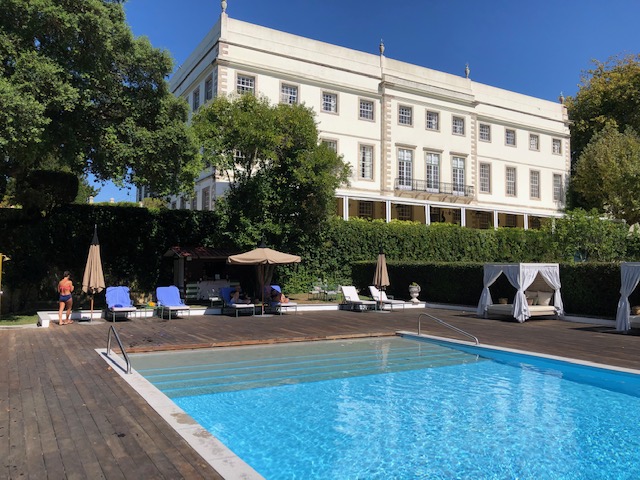
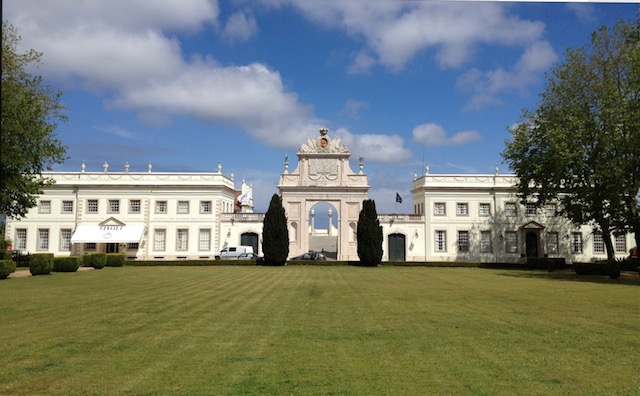
Up in the hills around Sintra lies the Tivoli Palacio de Seteais hotel, a perfect place for one. The Palacio de Seteais was built between 1783 and 1787 for the Dutch consul Daniel Gildemeester. Various additions were made during the next 150 years, enlarging the original building and laying out new gardens and orchards. In 1946 it was bought by the Portuguese government and it’s been a hotel since 1954.  

In Britain we have thousands of these great mansions built in the C18th and C19th. We refer to them as stately homes, grand expressions of the architecture of the time and now recognise some of them as monuments to unequal privilege and wealth. The same can be found in many European countries and Portugal is no exception. In the UK the National Trust and English Heritage, two charities, now own a huge number, allowing their members to make their own judgments and observations.

The name Tivoli (note 1) takes me back to Denmark as the Tivoli Gardens, smack bang in the centre of Copenhagen, offers places to eat, places to drink and places to have fun. One hundred and seventy eight years after it opened, its 20 acre site is in the Top Ten of the city’s tourist attractions.

The Tivoli Palacio de Seteais sits on a hill overlooking Sintra (see PC 130): in the distance is the Atlantic Ocean. Fortunately it’s warm and sunny when we arrive as the town has a reputation of being cool. In fact it developed as the place for the Portuguese Royal family to escape to in the summer months, their equivalent of Simla in India. The duty manager Paulo meets us and takes us through the COVID registration; either proof of two vaccinations or a negative test is acceptable! We unpack in Room 12 and head off to the pool as we have a few hours before the Hundred Party starts.


          Francisquinha has come too; well, not to the pool! She knows she’s not allowed to join the party but she didn’t want to be left behind in Estoril and she understands about room service, cable TV and the minibar.

The Hundred Year couple, Carlos & Camila

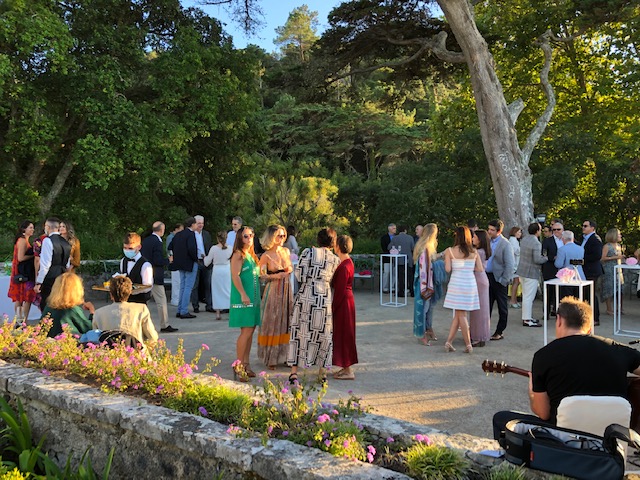
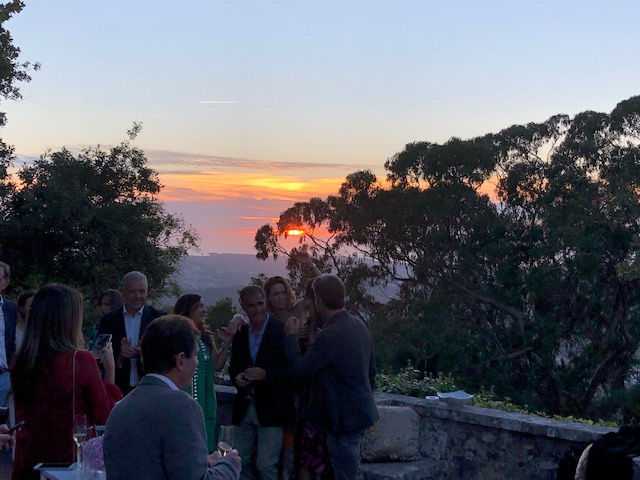
The programme says drinks and canapés on an outside terrace, starting at five thirty …… but the hosts are still 30 minutes away! Someone’s shirt got a burn mark on it and there’s panic. Being a pedant for punctuality I roll my eyes to heaven but have mentally added an allowance of 45 minutes before I expect anyone to arrive. By 1830 the terrace has live music, waiters, drinks, canapés and six people; most of the 50 guests have arrived by 1900.

Waiters offer, musicians play, people chat, catch up; laughter ripples and mingles with the music as the sun makes its slow descent in the western sky. A few guests dance in a somewhat desultory manner, more to acknowledge the efforts of the combo, to thank them for their efforts. Two guests show off their musical skills.


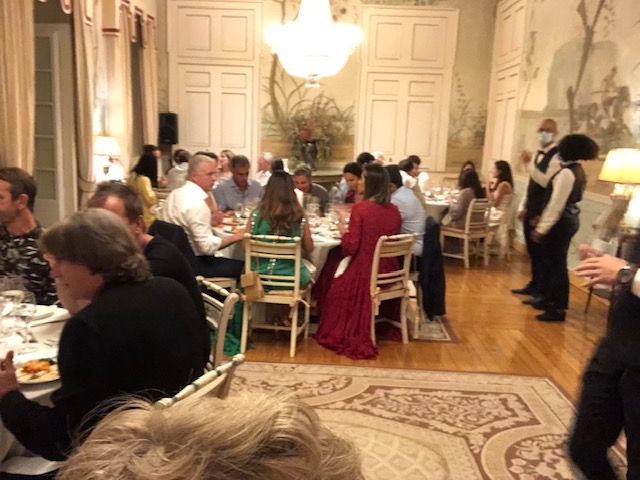
          It’s obvious that the hotel management want the guests to move into the elegant dining room and eventually we do, a little later than they might have liked! I imagine the stress in the kitchen as we are a party of 50. The Brazilians have copied the Portuguese in their love of food, and the more the better; the generous menu shows five courses.

The starter is a crêpe filled with Bacalhau (salted cod, considered by some close to divine); it looks and tastes good but there’s too much! The Peixe (fish) course is a meal in itself, a lovely piece of Sea Bass with a huge mound of sweet potato mash, with added sugar! For my entrée I am presented with 300g of filé mignon; I eye Celina’s mushroom Risotto slightly jealously! The sobremesa is a slice of Apple Crumble with some beautiful Cinnamon ice cream; the latter is very welcome! And still we haven’t finished as Camila’s baked two cakes (note 2) …. candles are blown out, the cakes are sliced and distributed and both Brazilian and English versions of ‘Happy Birthday To You’ ring out across the crowded room.

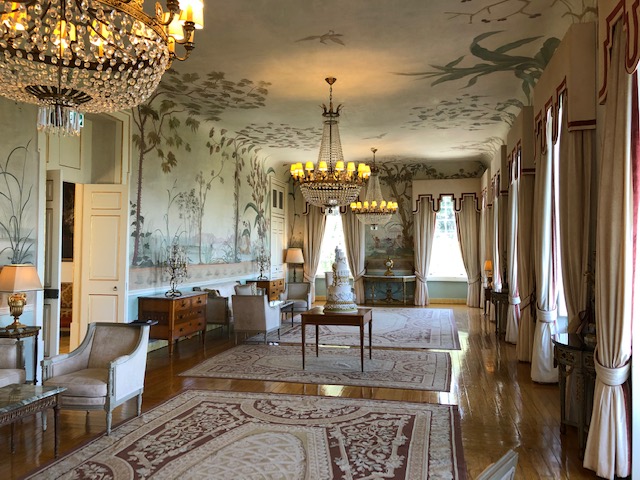
The elegant dining room, known for its murals, the following morning.

My abysmal lack of ability to speak Portuguese is tackled by Nuno, a Lisbon lawyer at my table. He leans across his wife Rita (Note 3) and says it’s easy for the Portuguese to learn another language …. and boasts that all they need is three months max! His own English is 80%. But if you are Portuguese there’s a need to learn another language unless you limit your travels to Brazil, Mozambique, Angola, The Azores or Madeira. I do not need to learn it, I want to, but the vocal chords get stuck …..

The party draws to a close and guests make for their rooms or for a taxi. Room service breakfast the following morning is followed by a dip in the pool before a taxi back to Estoril. The one-way system around Sintra is extremely long and it’s some time before we pull up outside Avenida General Carmona 368.

A good and generous celebration; espetacular and maravilhoso even.

Richard 17th September 2021
www.postcardscribbles.co.uk

Note 1 Tivoli was, some scholars believe, the name of a Roman town 20 miles east of Rome, used as a summer resort and noted for its waterfalls.

Note 2 Camila is building a very successful celebration cake business – Camila Vasconcellos at http://www.instagram.com>nacozinhadecasa

Note 3 Her sister and brother-in-law ran a beautiful beach resort at Picinguaba, to the west of Paraty in Brazil, a place to unwind, a place to watch men fish and maybe to eat their catch. (See PC 10 March 2014)

PC 247 Collections (1) or “I wish I’d said that!”

The last time I had to write any essays was for entrance into the Army Staff College in 1978, with papers on International Relations and War Studies. A great tip was to liberally drop appropriate quotes into the essays, hopefully giving an impression of being well read; like ‘Jaw! Jaw! Not War! War!’ (Note 1). Little did they know!

Not sure about you but I would hazard a guess that occasionally you come across some words, some comment, some observation, my grandparents would have used the French expression ‘bon mot’, that stops you in your tracks; you think “That’s so nice! That’s wonderfully apt! How beautifully expressed! Etcetera.” I certainly do and am often so moved to jot down those words in my Notes app on my iPhone. (Note 2) This postcard covers some of these, attributed where possible but if not I acknowledge that I did not write them!

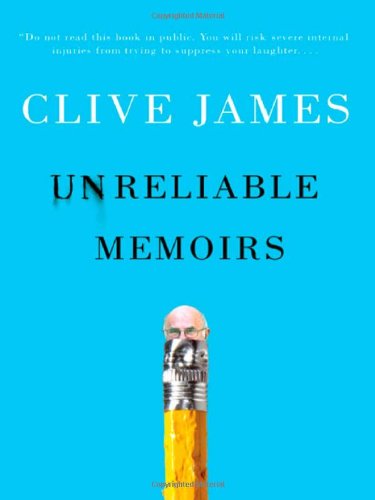
One of the most amusing autobiographies I’ve read was the late Clive James’ ‘Unreliable Memories’ (1980). Of his writing, Australian James (1939-2019) wrote: “All I do is turn a phrase until it catches the light.” All of us who want to turn our thoughts into words look for that, I guess, wanting them to ‘catch the light’!

Philosophical individuals have written much the future:

The future is just mere speculation. Now is the time to live tomorrow’s memories.” Like ‘live today as if your last’, but who does that, even if you acknowledge the wisdom of the direction? Then this little encapsulation: “Yesterday is history; tomorrow is mystery.” The rhyme of history and mystery is cute although it still comes back to living in the present. Try Yoga meditation if you want to learn how to be in the present. There is also a reminder that history can teach us a great deal; today we are forgetting how important is the study of history, of events and societies’ reaction to them.

Memory is an unreliable friend.”  It’s been described in many ways, this storage of our experiences, our data bank, no more so that over the last year or so when individuals have tried to redefine the word ‘truth’! Then I read ‘The Spaces In Between’, an autobiographical account of the early life of Caroline Jones, a yoga enthusiast and good friend. She writes about one’s ability to recall experiences: “…..  I don’t want to hurt anyone’s feelings – and who is to say that my version is true anyway? Who is entitled to say what is true in any family’s history? It is all shades of grey, interpretations and misinterpretations: something that passes one person by might be the thing that tips another onto a different journey; and all, in the end, coloured by imagination and weakened by unreliable memory.” Exactly: so simply put.

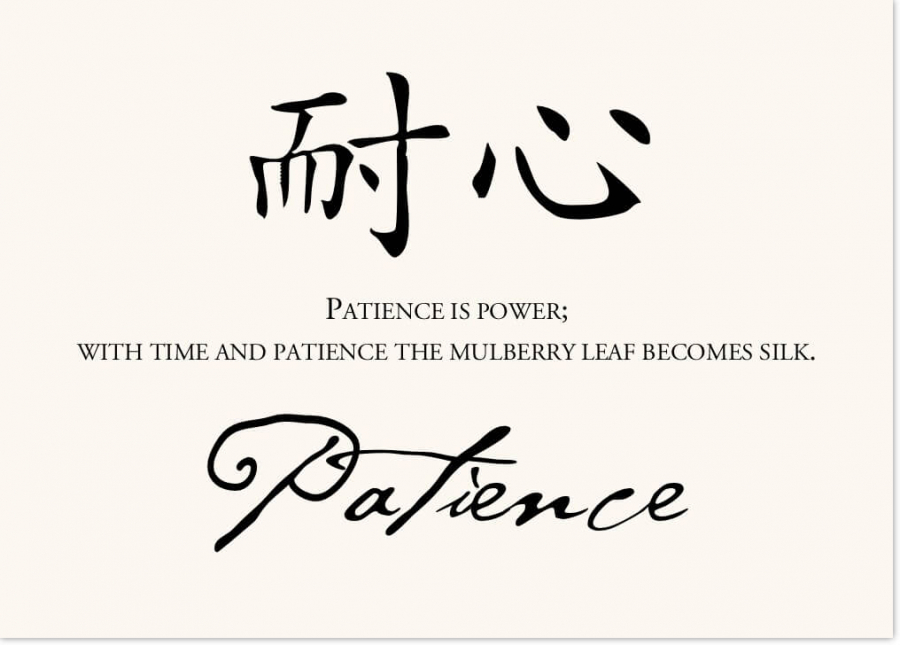
There’s this Chinese Proverb: “I hear and forget; I see and I remember; I do and I understand.” So ‘doing’ something gives one greater insight than simply observing or hearing? So better to play the piano than listen to someone else’s efforts, or enjoy looking at a painting rather than painting? Food for thought! (Er? Cooking rather than eating?)

I enjoy reading the wisdom of the Zen philosophers, especially the stories of the Muddy Road and the tale of the Cup of Tea. In the latter Nan-in, a Japanese master during the Meiji era (1868 – 1912), received a university professor who came to enquire about Zen. Nan-in served tea. He poured his visitor’s cup full and then kept on pouring. The professor watched the overflow until he no longer could restrain himself. “It is overfull. No more will go in!” “Like this cup,” Nan-in said, “you are full of your own opinions and speculations. How can I show you Zen unless you first empty your cup?” Both stories illustrate how we get obsessed with our own ego.

I often find that a phrase in a foreign language sounds more romantic than if read in English. Dante Alighieri (1265 – 1321) was a Florentine writer, poet and philosopher best remembered for his ‘The Divine Comedy’, a journey through the souls of Hell, Purgatory and Paradise. I recently read a quote from his Paradiso: “L’amor che move il sole e l’altre stele.’. Although lovely, I don’t think the English translation has that same magic: ‘The love that moves the sun and other stars.’ One of his more popular quotes is “Remember tonight for it’s the beginning of forever.”

There are a great many quotes made by people at the end of their time on earth. One I read the other day stays with me: “We loved this earth but could not stay!” Then there is the story how Harold McMillan, Prime Minister of the UK from 1957-1963, sat in his chair with his evening whisky, finished the glass and murmured: “I think I will go to sleep now!” ….. and died. He was 92.

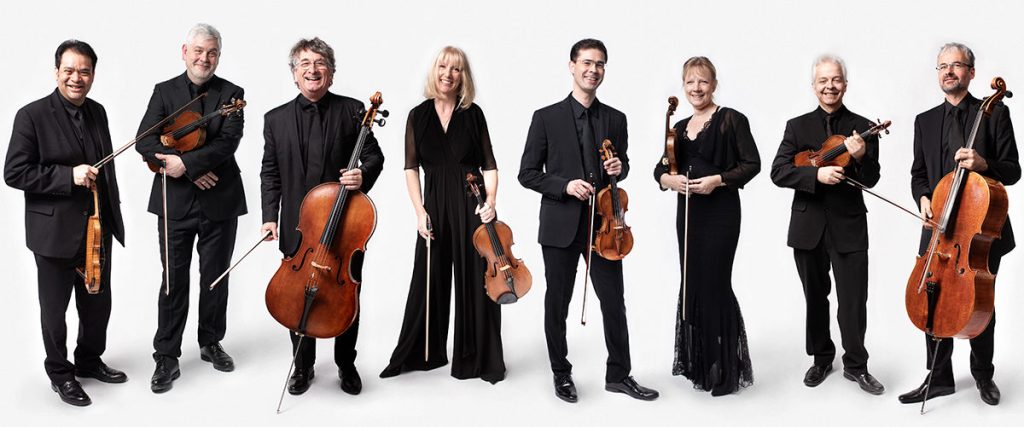
The Academy of St Martin’s in The Field Chamber Orchestra

The late Sir Neville Marriner was the founder and conductor of the Academy of St Martin’s in The Field orchestra in London. One day, irritated during rehearsals by the piercing sounds of a pneumatic drill being used in the road outside the church, he stormed out to confront the chap. “Are you interested in sex and travel?” “Of course!” said the man. “Well, fuck off then!” The music theme reminds me of Sir Graham Vick’s comment: “You do not need to be educated to be touched, to be moved by opera.” Which piece of opera touches you, gets inside your emotions?

Science takes things apart to see how they work. Religion puts thing together to see what they mean.” Jonathan Sacks was notably the Chief Rabbi from 1991 to 2013. Ennobled, Baron Sacks was also a philosopher, peer and very much a public figure.

I really hope you enjoyed some of these? There will be more – to be continued ……….

Richard 10th September 2021

www.postcardscribbles.co.uk

PS In PC 245 ‘Tagus and Cascais’ I mentioned the Niagara River. Coincidentally this popped up in Facebook this week, a rare photograph of the dry falls in 1969.

Note 1 Attributed to Sir Winston Churchill

Note 2 If you read books on a Kindle or some electronic device you can see which passages others have found profound/interesting/apt/funny/poignant.

PC 246 The Five Senses

You might think from the title of these scribbles that I am going to write something about the human body, taking a leaf out of Bill Bryson’s book ‘The Body: A Guide for Occupants’. Well, I am but only to frame these thoughts and give them some cohesion.

Have you unconsciously started listing them, these five basic abilities we have? For those of you who are missing one or more, I feel sorry for you as our colourful life will have lost some of its tones. For those of you whose sense of taste or smell was ruined by the after-effect of a Covid infection, I hope they return, functioning as well as ever. Writing in last weekend’s Times, the author Kate Weinberg’s article in Long Covid had this: “Then, one morning, my cup of tea tasted like hot water and my eggs like scrambled Polyfilla. (Note 1).”

We see, we hear, we touch, we taste, we smell, but this is not going to be about three monkeys! My sixth sense woke me at 0610 this morning and I realised I hadn’t written anything about it! (see Note 2)

Up above the marina, in an older part of Cascais, Portugal, is a restaurant I have been to a couple of times before, called 5 Sentidos – Five Senses. The name always stops me in my tracks and then I get the delightful subtlety of it, as the whole process of ‘eating out’ can be really enhanced by the active engagement of all senses.

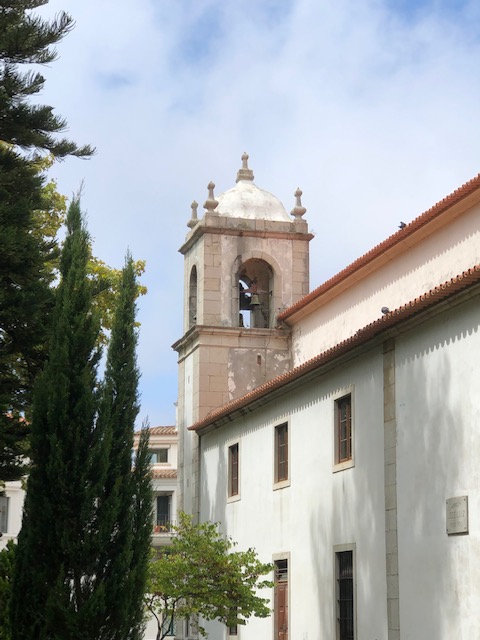
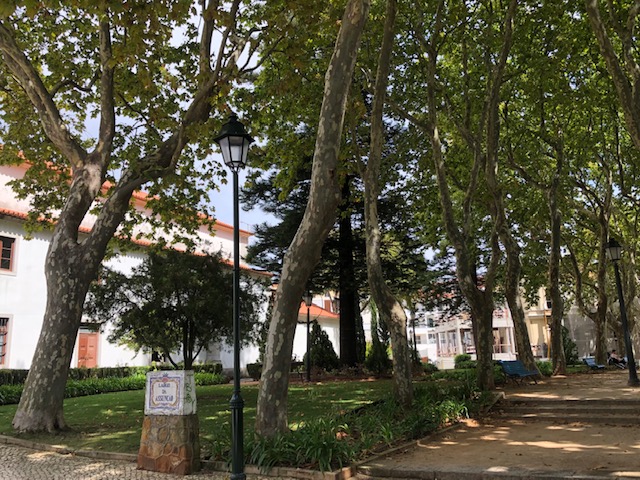
A large church, Igreja Paroquial de Nossa Senhora da Assunçăo, overshadows the plane trees that line the square, along one side of which lies Largo da Assunçăo and the ‘5 Sentidos’.

 Having circled the church (Can you circle a square?) looking for a parking space and been unlucky, we head off to the underground car park between the marina and the castle. Cascais has, like any town, a parking problem, made worse by the Portuguese habit of believing that parking restrictions apply to everyone else but themselves; they park on street corners, half on pavements, on pedestrian crossings (Note 3).

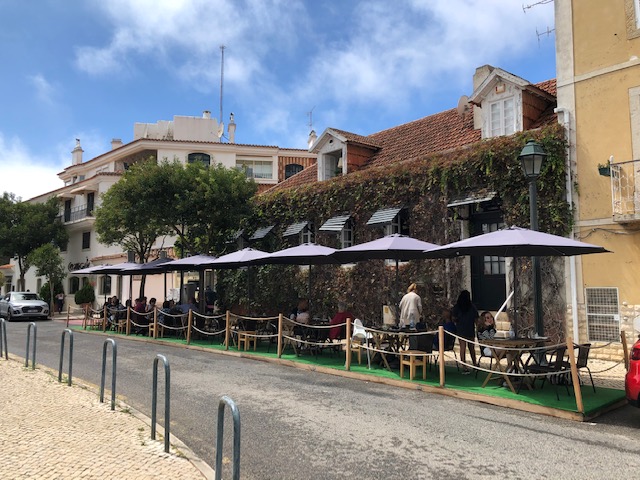
As we walk towards the restaurant we sight early diners already occupying the pavement tables. Then another sense is immediately assaulted – the large sonorous church bell chimes the half-hour: “boonnnnggggggg”. It’s so loud that I think maybe this wasn’t the best choice of places to eat, if this happens every 30 minutes! Fortunately it must have been rung for some other non-temporal reason as it only rang once more while we were there. Reminds me of stories of urbanites escaping to the country and complaining about the rooster’s crowing and the cows mooing!

Walking up the steps to our table on an outside terrace, my heart sinks for near where we are to sit is a table of three men and a woman and one of the men, an obvious Englishman, has a loud voice and finds everything he says funny. ‘I just need to get over my reaction!’ I think!

Our bottoms touch the slatted, painted wooden chairs and we settle down. The table has been chosen as a nod to Covid advice but also as inside can be a little claustrophobic on a warm evening. Unfortunately it’s not a warm evening; this Atlantic coast is cool compared with the Algarve’s down south or further, through the Straits of Gibraltar, along the Mediterranean coasts and we are grateful for a nearby space-heater.

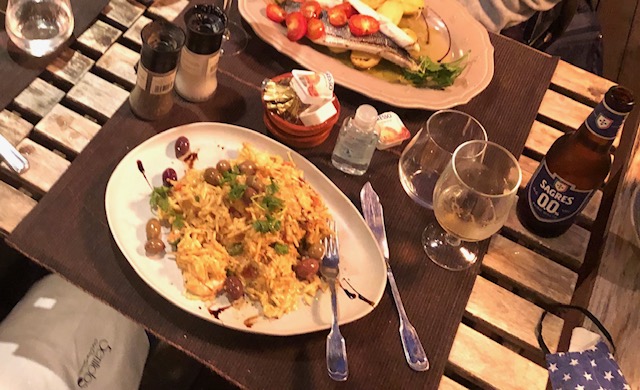
Adriana brings the menus and takes the drinks’ order. When I am eating out I try to choose a dish I don’t normally have at home. I spy Camarão à Braz; ‘sounded interesting’, I thought ‘and I love shrimps’. ‘À Braz’ means cooking the shrimps with onions and minute potato sticks, all bound together with scrambled eggs and sprinkled with parsley and black olives. Bacalhau (salted Cod) à braz is the more famous version.

A restaurant’s choice of the size of plate in interesting. If it’s small yet piled high with food, we think ‘how generous!’: extremely large plates with large portions are for Americans. On her last visit here my mother-in-law had had a huge plate of rice with a thimble of chicken curry in the centre; rice is cheap!

When my dish arrives I am reminded of my teenage years when a packet of matchstick-shaped chips or sticks was a treat; these are they, simply made soggy and eggy. My first mouthful tastes ‘interesting’ …… but that’s as good as it gets. I pick out the shrimps but struggle to finish the mound of now mash, my taste-buds covered with a glutinous coating!

There’s the general murmur of low muted conversations around us when we stop to listen, when our own chatting pauses; sounds of people eating, waiters waiting and occasionally a little snippets invading one’s own hearing. Across the terrace the 3+1 table have been asked to vacate to a table on the pavement as it’s passed 2100; we have no such restriction and order puddings. The ice bucket wobbles on the uneven slats and condensation forms on its shiny surface; tempting to run my finger down the outside! Ah! The tactility of cold and wet!

Having discovered from Adriana that the orange tart on the sobremesas menu was ‘off’, which was a pity as it sounded unusual, I opt for some chocolate soufflé instead and head for the loo. Cascais is old, and the street drainage system whiffs; inside the unisex loo there’s that damp, musty smell that is often present, no matter how many scented candles or smelly sticks abound. There is no lock on the outside door so I keep a wary eye out for another visitor!

And on the topic of smell (note 4), you remember when it was permissible to smoke inside a restaurant? With diners at different stages of their meal, it was irritating to get the whiff of someone else’s cigarette smoke across your delicate Sea Bass! This evening any smokers are banished to the pavement tables and the evening breeze keeps the smell away.

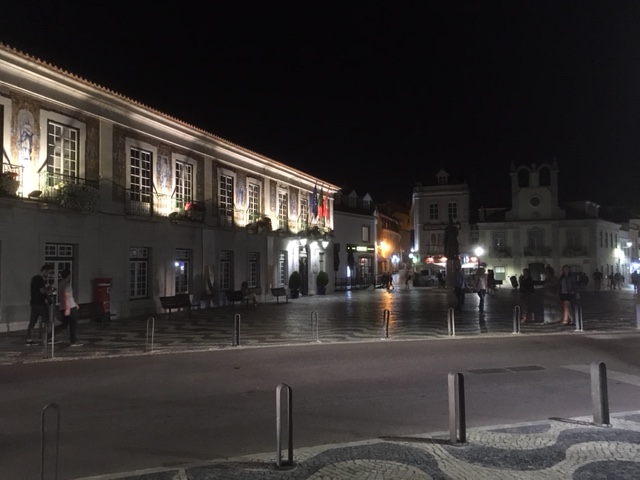
We signal for the bill with the international wave of the hand, settle up and, threading between the tables, step out onto Largo da Assunçăo, the assault on our five senses complete. Out into the night of Cascais.

Richard 3rd September 2021
www.postcardscribbles.co.uk

Note 1. Trademarked ‘Polyfilla’ is a type of plaster used for filling small holes.

Note 2 The five senses keep us informed about the physical world. A sixth sense Proprioception “allows us to keep track of where our body parts are in space” (?) Quite! Normally we describe it as our ability to perceive something which isn’t actually there, or hasn’t happened – yet! It was also the title of a Bruce Willis horror film in 1999.

Note 3 In Madeira it was so bad I surmised that pedestrian crossings were there purely for drivers to have more certainty of nudging a pedestrian; they never stopped!

Note 4 This sense is called Olfactory – which I find difficult to pronounce! And taste is officially known as gustatory.

PC 245 The Tagus and Cascais

A young elephant sets off on a journey and comes “to the banks of the great grey-green greasy Limpopo River, all set about with fever.” Lovely alliteration from the British author Rudyard Kipling (1865 – 1936) in one of his ‘Just So stories – The Elephant’s Child. (Note 1) But it was the word ‘river’ which prompted me to remember the Limpopo (Note 2), as sitting in Estoril I am close to the estuary of the Tagus, the longest river in the Iberian Peninsula.

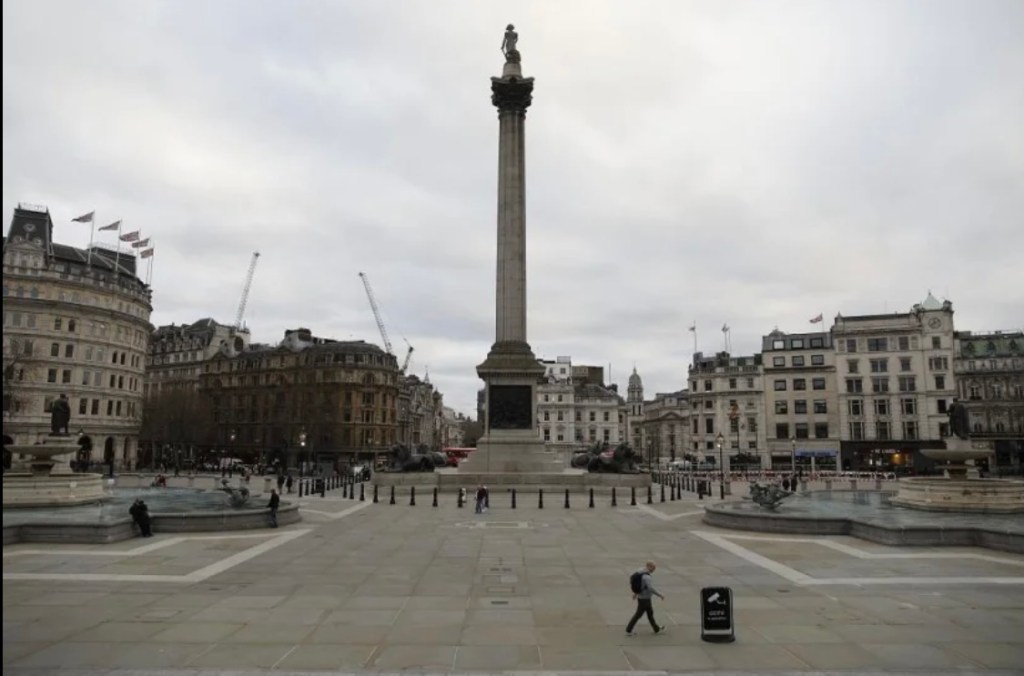
There is something obvious about major rivers and their part in the physical development of countries, as intercommunity trade was how societies grew – before airfreight! I am told that my readers often learn something new from my scribbles; that’s good as it’s never too late! Geography is a fascinating topic and the increasing focus and concern on man’s contribution to climate change will bring the location of some of the major world cities under the spotlight. For those which are sited on the coast, like Lisbon here in Portugal, or New York or Singapore or Wellington or like London, on a tidal river, a rise of only 1.5 metres in sea levels may have a significant impact.

Predicted sea levels in London in 2100

Just for fun, I have listed some of the major global capitals that lie on a river, some are of course a distance from the sea: Paris on The Seine, London on The Thames, Lisbon on The Tagus, Moscow on the Moskva River, Vienna on The Danube, further downstream Bratislava (Slovakia), still further Belgrade (Serbia) and even still further down The Danube Budapest, the capital of Hungary, with the hilly district of Buda across the river from the flat Pest. We have Rome on The Tiber, Washington on the Potomac, Khartoum (Sudan) lies on The Nile 2170 kms upstream of Cairo in Egypt, Baghdad on The Tigris, while in Africa Kinshasa (DRC) and Brazzaville (Republic of Congo) are astride on The Congo River. Amsterdam is on the River Amstel, Kiev on the Dnieper and Warsaw on The Vistula. In South America both Montevideo, the capital of Uruguay and Buenos Aires, Argentina’s, respectively sit north and south of the Rio de la Plata and across in South East Asia on the Mekong River lie Vientiane (Laos) and Phnom Penh (Cambodia).

Bill Nighy

You may have seen a Channel 5 series on British television called ‘The World’s Most Scenic Rivers’ narrated by Bill Nighy? Despite the syrupy nature of the commentary, with words like ‘spectacular’ and ‘marvellous’ (‘espetacular’ and ‘maravilhoso’ in Portuguese) gushing like the waters themselves, I suspect it was an informative series for most viewers. The rivers that earned the right to be called ‘most scenic’ were the Shannon in Ireland, the longest in both Ireland and the UK at 360 kms; the Spey in Scotland, famous for its salmon fishing; the Niagara (Note 3)  on the border between the Province of Ontario in Canada and the State of New York in the USA and one of the shortest rivers in the world at 58 kms; the longest river in Italy, The Po, at 652 kms; The Moselle in Germany famous for its wines and the Hudson in New York State, some 315 miles (506 kms) long.

So what would the producers of Bill Nighy’s series have made of the Tagus? Firstly it rises in the Sierra de Albarracin in eastern Spain, a thousand and seven kilometres from its mouth, and all its main tributaries flow into it from the north. The first major city along its banks is Sacedón.

Sacedón in eastern Spain

Its natural path is no longer smooth; there are several dams and dozens of hydroelectric schemes along its route, helping to provide drinking water and energy to population centres such as Aranjuez, Toledo ……

Toledo with the Alcantara bridge (Puente de Alcantara) over the Targus.

…… and Talavera. I can’t write Talavera without thinking immediately of the Peninsula War battle of the same name in 1809; British against the French (was ever thus!). Then the association runs to the Lines of Torres Vedras and the Duke of Wellington etcetera etcetera (Note 4).

The Tagus near Spanish/Portuguese border

By the time the Tagus reaches Portugal it’s slowed, meandering through a wide alluvial flood plain before mingling with the salt water of the sea.

The Tagus estuary from air, looking towards Cascais

On the northern banks of the Tagus estuary, some 30 minutes by a dinky little train west of Lisbon, lies Cascais (pronounced Kashkise) on what the Tourist Industry maintains is the Portuguese Riviera (Note 5). The resort was made popular by European royalty, particularly during the Second World War when Portugal was neutral. Today luxury villas are second homes to the rich and hotels cater for the well-heeled. Espetacular e maravilhoso!

A night at the Hotel Albatroz, set on a promontory overlooking the harbour, would set you back 420 euros; and that’s without breakfast! Today the era of elegance created by Cascais’ famous visitors has faded, swallowed by a faster pace of life and sadly less time to ‘stand & stare’.

In the summer months the tourists walk the tiled pavements ………,

……. gawk at the grand castle and marina and invade the fast-food establishments serving pizza or pasta.

This seaside restaurant is ….. marvellous

Some large mansions and hotels have been sympathetically converted into apartments whilst others stand gaunt and covered in shrubs and weeds, often the result of laws on inheritance producing no agreement as to ownership.

Needs a little more than TLC?

Cascais is some 20kms south of the western-most point in Europe, Cabo da Roca. Just north of Gincho Beach, the lighthouse on top of the cliffs is at 38° 47’N 9° 30’W. If the world was flat you might think you could see North America – on a day with good visibility!

Cabo da Roca

Richard 27th August 2021
www.postcardscribbles.co.uk

Note 1 Some years ago I managed a bookshop on Northcote Road, Battersea, for a day while the owner went off to a wedding. A challenging but interesting experience, dealing with potential customers and doing the cash balance at the end of the day. One customer asked me what I would recommend for his 13 year old son; I remembered Kipling’s Just So Stories ……. and made a sale!

Note 2 The Limpopo River flows through Mozambique.

Note 3 Niagara Falls got an unfavourable mention in my PC 51 (October 2015) about Foz do Iguazu in Brazil.

Note 4 Numerous books on Portugal but Patrick Wilcken’s 2004 Empire Adrift, about the royal family decamping to Brazil in the early 1800s, and Barry Hatton’s Portugal are very good.

Note 5 ‘The Riviera’ normally refers to the coastline between Cannes in France, and includes the Côte d’Azur, and La Spezia in Italy.

PC 244 What Is This Thing Called Love (2)

We humans seem to have an insatiable appetite for tales of romantic love, whether fictional ones from Jane Austen for example, or real ones from across the centuries. The fact that these stories often have a very sad ending intrigues us more; how can an emotion such as love be the cause of its own demise? (Note 1)

Such was the passion between Antony and Cleopatra, Queen of Egypt, that in some ways the end was never in doubt; they choose suicide to stay together in their eternity. When the Roman general Mark Antony first saw Cleopatra he reportedly exclaimed: “Brilliant to look upon and to listen to, with the powers to subjugate everyone.” She could have had anything or anyone she wanted but she fell passionately in love with this Roman. As Shakespeare depicts it, their relationship was volatile but, after they risked all in a war with Rome and lost, they chose to die together in 30 BC, rather than be paraded through the streets of Rome in disgrace. Mark Antony stabbed himself with his sword whilst Cleopatra ‘allowed herself to be bitten by an asp’, an Egyptian cobra.

In the first postcard about tragic love affairs I mentioned Elvira Madigan, whom I knew about from travels in Denmark. Many visits to Vienna and holidaying on an Austrian lake gave me insight into the Mayerling story, although I admit it’s not well known here. I thought it was a simple tale of two lovers who commit suicide, but there’s more to it than that.

No one at the time could foresee the fall-out from the doomed love affair between Rudolph, the 30 year old Crown Prince of Austria, and his lover 17 year old Mary Freiin von Vetsera. Rudolf, who was married to Princess Stéphanie of Belgium, was the only son of Emperor Franz Joseph and Empress Elisabeth, and was heir apparent to the throne of Austria-Hungary; crucially they had no son, only a daughter. The romantic version is that the strict codes of the Hapsburgs forbade this dalliance and that Rudolf proposed a suicide pact with Mary. Sneaking away to a royal hunting lodge in Mayerling, an hour outside Vienna, the crown prince shot his lover and then turned the gun on himself; it was 30th January 1890.

The Mayerling tragedy is the subject of both a film (1968) and ballet. The former stars such actors as Omar Sharif, Catherine Deneuve, James Mason, Ava Gardner and James Robertson Justice. Historians now agree that Rudolf was a poetic young man, liberal in his politics and often at odds with his conservative father. But he was also a rake, someone who used his position to bed as many women as possible. It’s believed he had some 31 illegitimate children! Another rumour was that he was ill with syphilis and felt guilty that he had infected his wife.

The Habsburg court tried to stifle the facts, suggesting he had died of a heart attack but their enemies enjoyed the scandal. As Rudolf had no son, the succession would eventually pass to Franz Joseph’s brother Archduke Karl Ludwig’s eldest son, Archduke Franz Ferdinand. Sadly for everyone Gavrilo Princip, a Yugoslav nationalist and ethnic Serb, assassinated him in Sarajevo in June 1914. The dominos fell: Austria declared war on Serbia, an ally of the Russian Empire and the systems of other alliances resulted in the start of the First World War that autumn.

What if Rudolph had not committed suicide? He was obviously a man conflicted by the demands of duty and his own personal wishes (Thinks? This reminds me of another prince?), but he had a growing reputation as a liberal on the European political scene and was not supportive of his father’s conservative aims for the Austro-Hungarian Empire. Maybe there would have been no First World War? You can have fun with ‘What if ….?’

Don’t you find it weird when various songs pop into your conscious brain, every so often? It’s either the lyrics or the musical score or both. Whenever I meet someone called Maria I can’t help it; ‘I once met a girl named Maria.’ just arrives, the memory sung by Tony (Richard Beymer) to his Maria (the beautiful Natalie Wood (Note 2)) in the 1961 film West Side Story. In a smoky cinema in Devizes in Wiltshire one evening I watched another modern day Romeo & Juliet take, this one set in 1950s New York. The portrayal is strong, vibrant, colourful and energetic as rival teenage gangs, The Jets, a white gang led by Riff, and The Sharks, a Puerto Rican gang led by Bernardo, fight for turf on the mean streets of the Upper West Side. Tony, a Jet and best friend of Riff, and Maria, a Shark and Bernardo’s younger sister, fall in love …… then everyone thinks they know better ….. there’s fighting ….. and a song ‘Officer Krupke’ …….. and eventually Chino, Maria’s fiancé, shoots Tony, who dies in Maria’s arms. Maria takes the gun from Chino and pleads with everyone to stop the inter-gang warfare.

My education never covered Greek mythologies but gradually I have learned the outline of the story of Helen of Troy. (Note 3) When Parris (one ‘r’ or two?), the woman-mad Prince of Troy, made a diplomatic mission to Sparta (modern-day Greece), he met Helen and fell head-over-heels in love with her. They ran back to Troy together, causing the Greeks to assemble a great army, led by Menelaus’s brother Agamemnon, to rescue Helen, thereby starting the decade long Trojan War. Whether she wanted to be rescued is a matter for debate, so of course is whether she actually existed! We’ll never know, but her romantic part in the greatest epic of all time can never be forgotten, forever remembered as ‘the face that launched a thousand ships.’. She didn’t actually smash a bottle of Greek Metaxa brandy over the bows as she wasn’t there; it was her face that Menelaus kept in the forefront of his mind when he built the huge navy built with which to attack Troy. Later the Greeks constructed a wooden horse to gain entry to the City of Troy; it secured their victory. Paris was killed and Helen and Menelaus returned to Sparta. (Note 4)

Richard 20th August 2021(my 5th wedding anniversary!)

www.postcardscribbles.co.uk

PS To be continued ……..

Note 1 Well! Of course! Those of us who have experienced love that withers, love that dies, shouldn’t be surprised!!

Note 2 Natalie Wood (1938 – 1981) had married, divorced and remarried fellow American actor Robert Wagner. He remains ‘a person of interest’

38 years after she fell off their yacht and drowned, aged 43. (In the film Marni Nixon and Jimmy Bryant’s voices sing ‘Maria’).

Note 3 She’s always known as Helen of Troy but of course she was born a Spartan.

Note 4 Coincidentally ……in last Sunday’s Sunday Times book reviews there’s one of ‘The Women of Troy’ by Pat Barker. The most thrilling scenes are ‘set inside the Trojan Horse; sweaty Greek soldiers packed into the wooden contraption as tight as olives’. I can instantly visualise them!!

PC 243 Le Renard et Les Poulets

It starts early, one’s understanding of the fox. If you learned the basics of French at school, you will no doubt remember the cautionary tale of the conversation between the fox, le renard, and the crow, le corbeau (Note 1)

Maître Corbeau, sur un arbre perché, tenait en son bec un fromage. Maître Renard, par l’odeur alléché, lui tint à peu prés ce langage: ‘Et bonjour Monsieur du Corbeau. ……….

…. you know the story? The fox encourages the crow to sing by remarking how beautiful the crow’s feathers are and how wonderful it would be to hear him sing. Eventually the crow is persuaded, opens its beak to sing, whereupon the piece of cheese falls …… into the mouth of the fox. ‘Thank you’ says the fox, ‘Although it is slightly cracked you have a voice sure enough, but where are your wits?’ The moral of this fable – don’t listen to flattery, or if you do, don’t act!

They’ve been around for millennia, these stories about foxes. Aesop, a Greek aged 56 when he died in 564BC, is credited with collecting numerous moral stories which today are known as Aesop’s Fables; they include one about a fox and some grapes. (Note 2)

For those who don’t know much about the fox, it’s a mammal native to every continent except Antarctica. More like a cat than a dog, foxes are nocturnal, solitary, smelly and extremely playful animals with impeccable hearing.

The pupils of vulpes vulpes are similar to a cat, vertical, which apparently helps them see very well at night. They can live for up to 5 years, are quite territorial and live underground. Living in London I was often woken at night by foxes screaming as they fought other foxes for territory or maybe over the contents of a Wheelie Bin! Scientists have recorded some 40 individual sounds emitted by the fox. In Hove, our neighbours’ cat Mummu often confronts the local fox; no love lost but they have a healthy respect for each other!

Our garden fox wanders off after a confrontation with Mummu!

The fox appears in many cultures, symbols of cunning and trickery and with a reputation derived especially from their ability to evade hunters. In Asian folklore, foxes are depicted as familiar spirits possessing magic powers, with the ability to disguise as an attractive female human. Certainly in western culture the adjective ‘foxy’ is used to describe a sexually-attractive woman. Up in the night sky the fox is represented by the constellation Vulpecula.

Nineteenth Century European settlers exported the hunting of foxes to all corners of the world and that continues today. In Australia the fox is responsible for a decline in native mammalian species and they prey on livestock and young lambs. Fox hunting with hounds was banned in the UK in 2004 although you can still hunt foxes without dogs and you can drink in the ‘The Fox & Hounds’!

You may be wondering by now why I have written this postcard at all …. and entitled it Le Renard & Les Poulets? Well, because of something that happened in mid-July. My step-mother had had chickens (See PC 73 July 2016) and I wasn’t a fan, not of the chickens per se but the way she never seemed to wash her hands after dealing with them! Debbie in Worthing has chickens, which delightfully means a little box of eggs whenever we meet.

My daughter Jade could, I suspect, live The Good Life as portrayed by Barbara (Felicity Kendal) and Tom Good (Richard Briars), in the 1975 TV sitcom of the same name. She teaches in a secondary school instead but I am sure has those wistful moments; don’t we all? Living in a village on the Surrey/Hampshire border surrounded by farmland and with good friends who farm, it seemed inevitable that at some point after the two cats, the American Red Labrador Margo and the tank of goldfish, she would lean towards getting chickens. Sure enough, 18 months or so ago some arrived, to be housed in the hutch and run that Sam her husband had cleverly constructed at the bottom of their garden.

Margo the Labrador was bemused by them – they couldn’t care less!

The names chosen by my grandsons, perhaps unconsciously predicting some future event, were Roast, Dinner, Noodle, Nugget, Cookie and Pip. Can’t find an association between ‘pip’ and ‘chicken’ but I am sure there was one. Jade’s favourite was an enormous one, reminding me of those chickens at the Devonshire family seat Chatsworth.

Their local fox had obviously sussed out the arrangements where the chickens were kept and timed his attack at dawn one morning; humans attack at dawn when the sentries are sleepy and foxes are similarly cunning. The next-door dog barked a warning but it was too late. Mr Fox had ripped off the heads of some, took two and left one alive, although I sense Nugget was now so traumatised she’ll never lay another egg in her life! (Note 3)

Thoughts of the tragedy were short lived as at the end of July another 5 hens, Dot, Pearl, Opal, Emerald and Daisy, arrived to live in what must now be the most secure henhouse in Crondall! C’est la vie!

And for another coincidence, one of the word puzzles in The Times this week had ‘Foxy’ as an answer!

Richard 13th August 2021
www.postcardscribbles.co.uk

Note 1 My family name is Corbett and the family crest is a depiction of a crow – those wanting not to appear too common would argue it’s a Raven!

Note 2 These fables were collated by American professor Ben Perry into The Perry Index, although it’s acknowledged that some listed were around before Aesop and some were not written for hundreds of years after he died! From number 15, the tale of the fox and the grapes, comes the term ‘sour grapes’.

Note 3 In the UK the majority of poultry is killed using gas. Sadly when slaughtered for Halal meat, they are only stunned using an electric shock, before being decapitated. The US has no Federal regulations concerning slaughtering chickens.

PC 242 What Is This Thing Called Love?

Ella Fitzgerald sang: “What is this thing called love? This funny thing called love? Just who can solve its mystery? Why should it make a fool of me?”

We have all, I hope, fallen in love with another human (Note 1) and experienced the waves of inexplicable emotions that wash over us. Some love affairs are short in duration, intense and all-consuming, with others, like the slow-cooking of a shoulder of lamb in the bottom of the oven for hours, one’s aware of changes to how you feel about someone and the appetite and longing grow. The freedom to love, and give love in return, is a very basic instinct. So when desire goes against societal convention, familial customs and unwritten class boundaries there is, often, a tragic but foreseen ending; “This is not going to end well!”

Romeo + Juliet (1996) Directed by Baz Luhrmann Shown: Leonardo DiCaprio, Claire Danes

Shakespeare’s Romeo and Juliet must be the most well-known of the doomed love tales, this one fictional. His Montagues and Capulets are powerful families in Verona, fighting to gain civic control. Romeo, a Montague, sees Juliet, a Capulet probably aged just 14, (note 2) at a ball, where she is resisting the advances of the much older Count Paris (Note 3). Romeo falls head over heels in love, there’s the famous balcony scene, and then the following day they get married (as you do!). Romeo gets involved in a duel, is forced into exile but manages to consummate his marriage before fleeing; got his priorities right! Paris tries his luck again and Juliet, in an effort to put him off, gets Friar Lawrence to give her some potion to fake her death, for 24 hours! Before the friar is able to tell Romeo of the trick being played on Paris, Romeo hears she’s died. He buys some poison, kills Paris, then commits suicide. Juliet wakes up, finds Romeo dead and stabs herself. The End! God! How exhausting!

A recent letter in The Times suggested this is a tale of silly teenagers, prone to act on impulse without thought for the consequences. However you see it, it has stood the test of time since being written around 1594;  the bare bones of the story have featured in some 32 films, the last one ‘Romeo & Juliet’ in 2013.

Shakespeare got the story from Ovid’s Metamorphoses published in 8AD. He wrote about Pyramus and Thisbe, children of rival families in the city of Babylon, who fall in love by talking through the party wall between their homes (Note 4). They arrange a secret tryst; Thisbe arrives first but is scared off by a lioness devouring a recent kill. As she flees, she drops her cloak which the lioness rips and plays with, covering it with the blood of her kill. Pyramus arrives, sees the cloak and, thinking 2 plus 2 equals 4, believes Thisbe’s been eaten and kills himself. She finds his body under a white mulberry bush, now covered with her lover’s blood. Her heart broken, Thisbe later kills herself with the same sword. The gods are so moved that the colour of the Mulberry fruit is forever changed to blood red!

If you have never been to Denmark, a particular story of doomed love may have passed you by. I had explored a great deal of the Danish coastline sailing, but many years ago undertook a trip by car, looking at some of the pretty villages that dot the landscape. It was a cool, rain-swept summer afternoon when I visited the little Landet cemetery on the islet of Tasinge, just south of the town of Svendborg. As water dripped off the leaves of a magnificent oak tree, I looked for the grave of two lovers.

The islet of Tasinge on the south of Fyn

I had heard that Mozart’s Piano Concerto No 21in C is sometimes referred to as the ‘Elvira Madigan’. Further research revealed that its Andante movement had been used in the soundtrack of the 1967 film of the same name. So who was Elvira Madigan? Actually it was the stage name of a Danish tightrope walker called Hedvig Eleonore Jensen, born in 1867, who performed in her step-father’s travelling circus.

In the audience one evening is Swedish Lieutenant Count Bengt Sixten Sparre, a member of the Swedish aristocracy, married with two children. Sparre falls madly in love with Elvira, abandons his family and career and embarks on what he imagines will be an idyllic love affair. For a while it lasts, but eventually they find themselves living on Tasinge, barely surviving on handouts from the local population. As their situation becomes more desperate they see death as the only option; Hedvig is only 21when she was shot by Sixten, who then killed himself.    

Such is the draw of these tragic stories that the original individual graves, hers marked by white marble and his by grey granite to recognise they were not married, were moved together in a circular pavement design only 8 years ago.

Grace Kelly and Prince Rainier on the left

My regular readers I hope appreciate these scribbles are not simply created two hours before posting and that I love coincidences? Well, imagine my surprise when I saw the news article, above, about Monaco in today’s Times, as the following was written on Monday:

Grace Kelly was one of the highest-paid and most respected actresses in the world, having starred in Alfred Hitchcock’s ‘Rear Window’ and ‘Dial M for Murder’. The American film star met Prince Rainier III while she was filming ‘To Catch a Thief’ on the French Riviera in 1955. Rainier needed a bride and an heir, hopefully in that order, as without the latter Monaco would become part of France. (For today’s news, see Note 5) Fortunately love blossomed and they married in 1956, producing three children, Caroline, Albert and Stéphanie. 

Tragedy struck on 13th September 1982, when Princess Grace suffered a stroke as she and her younger daughter were driving along the steep cliffs of the Côte d’Azur region of southern France. The car spun off the cliff’s edge and plunged down a 45-foot embankment. Mother and daughter were rushed to a hospital, where Princess Grace spent 24 hours in a coma before being taken off life support, dead at the age of 52. Princess Stéphanie suffered a hairline fracture of a vertebra but survived the crash. Rainier was heartbroken and never remarried; he died in 2005.

(This collection will be continued)

Richard 6th August 2021
www.postcardscribbles.co.uk

Note 1 Love of another human is one thing but for some of us the love of an animal lifts one to a different level.

Note 2 The UK government has pledged to raise the legal age someone can get married to 18. The ‘age of consent’, the legal age someone can have sex, is 16. These ages vary enormously across the diverse global cultures.

Note 3 He is named after Paris, Prince of Troy, in Homer’s Illiad.

Note 4 Whether in a terrace or between semi-detached houses, the ‘common’ wall is known as the party wall.

Note 5 Lovely coincidence in today’s Times. Count Louis de Causans, a German descendant of Honoré III, from whom the current ruler Albert is descended, is claiming compensation from the French State. He argues that, in the early C20th, it pressured Prince Louis II to ‘find an heir’ to prevent the principality falling into German hands! An illegitimate daughter was adopted and gave birth to Prince Rainier.

PC 241 It’s Been a Long Time Coming

Did life exist outside of the immediate environs of the local streets? A few months ago I drove to see my daughter for the first time since Christmas and outside of the city boundaries I marvelled at how little seemed to have changed over six months – why would it? “But oh! That’s still there!” The trees were all with blossom and the hedges covered with white hawthorn. So spring-like …. life beginning to return.

White Hawthorn by the roadside

It has been a long time coming, this idea we could get on an airplane and jet off somewhere. The last time had been to Estoril in Portugal last summer and, thwarted at both Christmas and Easter, we started crossing fingers and toes and everything else that our summer trip to Estoril could go ahead. Nothing was certain – we knew that the Portuguese airline TAP was not flying from our local Gatwick Airport after a number of tantalising searches – it appeared that it might have flown if there were enough people who wanted to fly and then only once a week and if that didn’t happen then bad luck and back to square one. So we tried British Airways, accepting that they don’t fly to Lisbon out of Gatwick so we would need to get to Heathrow. Not wanting to get up at sparrow fart we booked a flight in the afternoon and absorbed all the guidance and regulatory changes that came and went like a whore’s drawers.

We established that we needed to have a pre-flight Covid test and that we booked at Gatwick Airport; about the only thing that was functioning there! Then BA cancelled our flight. They had a funny way to communicating what could have been devastating news; they told us the flight we were booked on was cancelled in one email and then a few minutes later, once our spirits were well and truly down in the dumps, emailed to say they had booked us on an early flight on the same day. The smiles returned!

This earlier flight required an overnight stay somewhere around the airport as with Check-In at 0530, the alternative was leaving Hove at 0345, not being sure whether it was a late night or an early morning. Our preferred hotel would have been the Sofitel Hotel adjacent to Terminal 5, from whence we were departing the following day. Sadly Covid Quarantineers had taken all the rooms so we ended up at the Marriott Hotel on Bath Road.

Our journey from Hove was in a taxi driven by Del, an Albanian whose sister lives on Corfu. He’s a nice chap and we compared, with mask-muffled voices, Covid stories on the way to the hotel. His country has a reputation for fierce family honour and rivalry, and criminality; fortunately Del is as straight as a die!

At the Marriott Hotel Kristina, behind the Reception Desk, had that very prominent Eastern European accent and offered, when asked, that she came from Moldova. I am reasonably geographically-literate but couldn’t immediately place Moldova.

What did come to mind was the name of that great raconteur Peter Ustinov! It seemed the sort of place he would have been involved in or even from, possibly an Ambassador in some film! Actually his father was of Russian, German, Polish and Ethiopian Jewish descent, while his mother had French, German, Italian and Russian blood. He was born in Swiss Cottage, London in 1921; so not Moldovan! But I knew Moldova had been a former Soviet Republic and used Google Earth to establish it’s sandwiched between Romania to its west and Ukraine to its east. It’s one of the poorest countries in Europe so Kristina was maybe better off here in the UK? 

Having settled into our room we ventured down to the only place to eat, a Carluccio’s on the ground floor. From 1999, Antonio Carluccio had built up a chain of some 70 restaurants serving ‘authentic Italian cuisine’, but it had gone into administration in March 2020. Some 30 outlets and 800 jobs were saved when Giraffe and Ed’s Easy Diner’s owner BRG bought the chain.

The manager greeted us and as he showed us to our table, explained they were just getting used to the Carluccio franchise and asked us to comment after our meal. Marta took our order: Bruschetta for Celina and a steak for me. Airport hotel restaurants always have a funny collection of diners, us included I guess (!), most presumably flying off somewhere or maybe just arrived? My comments to the hotel went like this: “Bread and cold salad-dressed tomatoes, not a Basil leaf in sight, no brush of garlic and no suggestion of warmth, does not equal Bruschetta. My steak was meant to have a ‘garnish of rocket’ – I am always a little suspicious when I read ‘garnish’ as it’s so much an after-thought – sure enough the rocket had probably died the day before – limp, going slightly brown. Later, Marta had told me the ‘bread & butter pudding’ was made from chocolate and croissant; ‘What’s not to like?’, I thought. It needed 20 seconds or so in the microwave to unfreeze it – cold and stolid! They thanked me for being honest and gave me 6000 Marriott bonus points!

An expensive electric Jaguar

We booked a cab for 0500 to take us the short hop to Terminal 5. The all-electric Jaguar was a delight although our driver said he didn’t use it for long journeys as its range was limited. He lived locally, started work at 0230 and was all finished by lunchtime! Suddenly we were at T5 and paying the £15 for a ten minute ride – worth getting up at 0100 for perhaps?

Did we have the right documentation and/or QR Codes at check-in? Fortunately we seemed to be OK …. and joked to the lady whether anyone filled their 32kg suitcase allowance . She and her colleague started giggling, listing the items people put in their suitcases ….. for instance, potatoes if flying to Ghana, microwaves …….

We grabbed some breakfast in the lounge, having to order through the QR Reader, picked up some duty free and made our way to the gate.

We took off on time, flew out over Hayling and Thorney Islands and Chichester Harbour,

The Isle of Wight on the right, with Hayling & Thorney Islands above the engine

had a tail wind that shortened our flight time by 30 minutes and landed early.  

The Tagus estuary with Estoril & Cascais top centre. You can see the wooded hills around Sintra on the horizon and then it’s the Atlantic coast.

Fifty minutes later we were in Estoril. Good to be here!

Richard 30th July 2021

www.postcardscribbles.co.uk

PS Those slippers referred to in PC 220 of March had been returned to Hove, despite me writing to the Portuguese Prime Minister, who had the good grace to reply! They were in my luggage this time and now where they should have been in November, with my mother-in-law!

PC 240 They Go Together Like (2)

PC 240 They Go Together Like (2)

A continuation from PC 239 …….

Gin & Tonic – or G&T as it’s often referred to! A real staple of Middle England’s drinkers, a shot or two of gin, a slice of lemon, some ice and a sprig of mint …. oh! and a little tonic (Schweppes of course). The first drink is a great pick-me-up, the second has less effect and the third likely to make most individuals a little morose! I can still taste my first on a ferry from Civitavecchia to Olba in Sardinia in 1976; my Lancia Fulvia had been hoisted onto the deck, which meant I could sleep in it. More recently I discovered Gordon’s G&T with 0.5% ABV; that little percentage made all the difference. But habits change and now Diageo say they recognise the customers’ shift towards non-alcoholic drinks and will only make 0.0% G&T ….. and only in a can. There is probably another PC on the different flavours of gin available but I would have to ask my daughter to contribute to that ……. and she’s busy with a Chickenpoxed child!

Hansel & Gretel – The German fairy tale published in 1812 by the Brothers Grimm. Hansel and his sister Gretel are abandoned in a forest, but cared for by a witch who lives in a house made of gingerbread, cake and pastries. Her plan to fatten the two children prior to eating them is thwarted by Gretel, who kills her, before taking all the witches treasures and returning home.

Jekyll & Hyde – the surgeon who performed my heart bypass back in 2013 was called Hyde – the connection with the split personality of Mr Jekyll and his alter ego Mr Hyde could have caused a few sleepless nights, as it was Robert Louis Stevenson’s Mr Hyde that wouldn’t accept responsibility for his evil crimes!

Lager & Lime – Lager with a shot of lime cordial, a mixture popular in the 1980s but looked down on by seasoned drinkers.

Laurel & Hardy – Stan Laurel, a skinny American comedian, teamed up with Oliver Hardy, a stouter chap, to form a double act that began in the era of the silent films. From 1927 to 1955 they made some 107 short films.

M&S – Michael Marks and Thomas Spencer started their clothing and food supplier in Leeds in 1884; nowadays the 959 stores are known as M&Ss. My mother irreverently referred to her local shop as Marks.

Milk & More – (see PC 203) ‘Doorstep deliveries’ of milk have become popular again and ‘Milk & More’ seem to have the lion’s share of the business in southern England. In addition to milk they sell other dairy products and eggs and bread. 

Morecombe & Wise – Eric Morecombe and Ernie Wise were an iconic English comic double act that had huge radio and television success over 43 years, only ending when Eric died in 1984.

There is a statue of the pair at Euston Station in London and one of Eric doing his characteristic leap overlooking Morecombe Bay 

Night & Day – A song sung by Diana Krall, Ella Fitzgerald, Frank Sinatra and others, written by Cole Porter. See also PCs 124 and 125

Peaches & Cream – like strawberries and cream, as a desert. Initially only tinned peaches were available here but now nothing nicer then taking a fresh peach, halving it and popping the halves under a hot grill, with a little ground ginger. The word combination became synonymous with the perfect complexion for a female face.

Pitch & Putt – a derivative of golf, but the hole length is typically 90 metres and only 2 or 3 clubs are used.

Port & Starboard. To identify shipping and shipping lanes at night, lights are used. Port is the left side of a ship and it’s marked by a red light. The other side, Starboard, is marked with a green light. To remember which is which, the alcoholic fortified wine port is red in colour and port has four letters, like left. When arriving at an estuary from the sea, the left hand side is marked with red lights.  

Rain or Shine – Alternating rain and sunshine is something we have to cope with a great deal here in the UK, particularly in April, although the changing climate is increasing their likelihood in any month. ‘Come rain or shine’ means it’ll happen, whatever!

(For) Richer (for) Poorer. The traditional wedding vows contain this well-known couplet, sandwiched between ‘for better, for worse’ and ‘in sickness and in health’. A 1997 film of the same name starring Kirstie Alley and Tom Allen grossed over $32 million. 

Romeo & Juliet. I started writing about these famous Shakespearean lovers and decided this, this romantic love, could easily be a separate topic. So look out for a PC entitled Doomed Love!

Sausage & Mash – another British staple; meaty sausages and mashed potatoes. Or sausages into a batter and baked in the oven for Toad-in-The-Hole.

Salt & Pepper – S&P – the seemingly natural additives to food, before cooking or after. Recently someone queried why it’s become the norm to add black pepper. Being a lover of freshly ground black pepper I was a little taken aback, as it seems such a good additive – but there are alternatives to the ubiquitous ‘black pepper’!

Salt & Vinegar – a very popular combination for crisps; not one I share!!

Spit & Polish – to achieve a real depth of shine on polished leather, like on drill boots, spit is used to wet the cloth before adding the polish. Very effective!

Surf & Turf – if you go to a trendy gastro pub you might well see this on the menu, the idea that some meat and some fish might go together on the same plate? Sounds weird when I write it like that?

Tom & Jerry – A series of 161 comedy short films made in 1940 by William Hanna and Joseph Barbera featured a cat called Tom and a mouse named Jerry. Safe to say they probably have had their moment! Not to be confused with Ben & Jerry who make gorgeous ice cream!

Top & Tail – if you need an endoscopy and a colonoscopy the gastroenterologists refer to this as a top and tail. I wonder whether the cameras meet in the middle somehow?

Track & Trace – the only two word combination I could think of relating to the Covid 19 Pandemic but there must be more?

Tongue & Groove – Sheets of ready-formed tongue & grove made of MDF and in various thicknesses must be a DIY enthusiast’s dream?

Weights & Measures – ‘Shared Regulatory Services’ has a responsibility to ensure customers and other businesses do not receive short weight when purchasing good, as regulated by the Weights & Measures Act 1985

Whatever pops into one’s head!

Richard 23rd July 2021

http://www.postcardscribbles.co.uk

PC 239 They Go Together like ………

Cockney rhyming slang has been a feature of life in England seemingly forever but for those of us who weren’t born within the sound of the church bells of St Mary-le-Bow, it’s probably a bit of a mystery! It was created by Cockneys so they could speak freely in front of the local police, who were stationed at the new Bow Street Police Station in the early part of the C19th. Some word combinations are common enough, like Whistle & Flute for a suit, or Apple & Pears meaning stairs; Trouble & Strife is also well-known for wife – the choice of words shouting experience!

The prevailing south westerly winds ensure the sound of the bells covers a wide area of north east London.

Others include Bottle & Glass for ‘arse’, Bristol City for Titty (as in breast!) Butchers Hook for look (“I’ll take a butchers”) at my China Plate – mate. Dog & Bone is well known as Cockney for ‘phone and Frog & Toad for road, but Turkish Bath for laugh? Maybe you know that Mince Pies mean eyes and Pork Pies lies (Porkies??) …… and then Treacle Tart for sweetheart and Raspberry Tart for fart.

Go me thinking about words that have become natural partners, like husband & wife I guess! There are probably hundreds but here are some of the ones that have dropped into my consciousness: you may think the choices reflect my age? Of course!

Ancient & Modern – ‘Hymns Ancient & Modern’ is a collection of 273 hymns in common use in the Church of England. Forced attendance on Sundays has ensured the hymnal’s title is forever burned into my memory!

Bacon & Eggs – rashers of streaky bacon, a couple of fried eggs on fried bread, with optional tomatoes, mushrooms and baked beans (and black pudding if you lived north of Watford): those of us who have migrated to a healthier breakfast are often tempted to choose this combination off the hotel menu for breakfast. And why not, once in a while?

Bill & Ben – The Flower Pot Men were an important part of children’s television in1950s Britain. Marionettes fashioned out of wooden flowerpots, Bill and his friend Ben told stories about the garden in which they lived, much to the amusement of another creation called ‘Little Weed’. Not many people had a television set and if you did have one, it was most certainly not colour; this was a programme about a colourful garden so one aspect of the programme was not transmitted!! Bill and Ben had ordinary male voices, although Ben had a trademark nonsense word ‘flobabdob’! Little Weed was a dandelion with a smiley face, forever squeaking ‘weeeeeeeeed’.

Bits & Pieces – A hit song by the Dave Clark Five in 1964: ‘Since you left me and said goodbye, I’m in pieces, bits and pieces.’

Black and Tans – The Black and Tans (Irish: Dúchrónaigh) were constables recruited into the Royal Irish Constabulary as reinforcements during the Irish War of Independence. Recruitment began in 1920 and eventually over 10,000 men were enlisted. (A very dark green and khaki uniform earned them their nickname) They developed a reputation for brutality and reprisal attacks on civilians; this did nothing but sway public opinion against British rule.   

Black & White – used as a title for various dramas, remembered for being a blended Scotch whisky. The bottle’s label featured a black Scottish Terrier and a white West Highland Terrier.

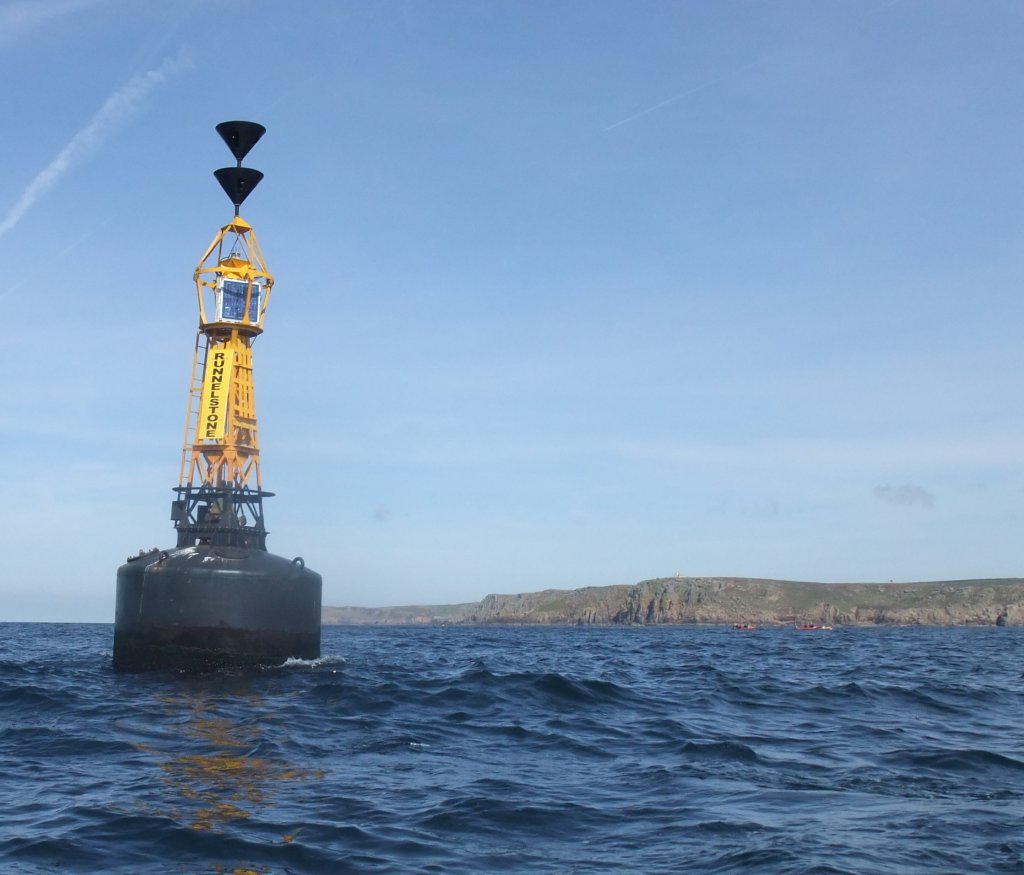
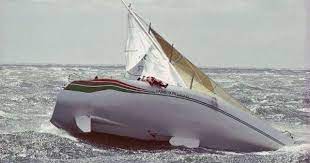
B&Q – DIY enthusiasts here in the UK will know the ubiquitous B&Q, a large superstore selling everything they wanted, and more. Opened in 1969 in Southampton by Richard Block & David Quayle, its initial name of Block & Quayle was quickly shortened to B&Q. By the end of the 1980s B&Q became part of the Kingfisher Group and in the following decade merged with Castorama, France’s largest DIY retailer. B&Q became the corporate sponsor for the international sailor Ellen Macarthur who in 2005 became the fastest person to sail solo around the globe, crossing the finishing line off Ushant after 71days and 14 hours at sea. Her yacht – B&Q!

The orange-and-white 75ft trimaran, plastered with the B&Q logo, had become a familiar sight. A B&Q spokeswoman said: “She has such a ‘can do’ personality; she has proved she really can do it, which fits with the B&Q brand which tries to encourage people to do DIY.” The B&Q slogan? “You can do it if you B&Q it!”     

Bow & Stern – one’s the pointy end of a boat, the other the blunt end.

Bubble &Squeak – a traditional British dish made from cooked potatoes and cabbage, mixed together and fried. First mentioned in 1762.

Champagne & Oysters – both contain complimentary sets of umami flavours that act synergistically to enhance the taste. You need to like oysters in the first place!!

Chapter & Verse – Giving a complete detailed account of what had happened. Often used in quotations from religious texts.

Cow & Gate – A UK dairy products company, founded in 1882. Merged with United Diaries in 1959 to become Unigate.  

Decline & Fall – ….. of The Roman Empire’ by Edward Gibbon (1766-1788). Used in a strangled way by the BBC for its 1976 sitcom ‘The Fall and Rise of Reginald Perrin’.

Donner und Blizen – the most famous of Santa Claus’s reindeer after Rudolph and note the German word for ‘and’!

…..with mushy peas!

Fish & Chips – I remember going to a fish & chip shop at the back of the Royal Crescent in Bath and buying a portion of chips; they came in a cone of grease-proof paper, wrapped in a piece of newspaper. The fish in England is normally Cod, whilst north of the border in Scotland Haddock; Cod has a longer shelf life than Haddock and in pre-refrigeration days most of England’s fish came from Scotland. Traditionally beef dripping was used to cook the fish and chips, although nowadays you are more likely to find rapeseed, peanut or palm oil.

To be continued ………

Richard 16th July 2021

http://www.postcardscribbles.co.uk