PC 392 Hope Continues

The visit of my mother-in-law precluded a visit to The Hope Café last month, so it was with some relief that, on our return from Croatia and Montenegro (see PCs 390 and 391), I was able to drop in; delightfully nothing much had changed! I am not sure if I had mentioned in a previous PC that Susie, after her return from Tasmania and her experience of working for Margie in her Hobart business, has signed up for a one-year course in Logistics. Brighton is not the place for this sort of thing, so she’s enrolled at the University of Southampton for a course that has both a residential and an on-line component. Her commitment will mean we’ll see more of her aunt Libby behind the counter.

I hadn’t had a good conversation with Sami for a while, so was delighted to find him at one of the tables, hunched over a book and cup of coffee. No need for an introduction:

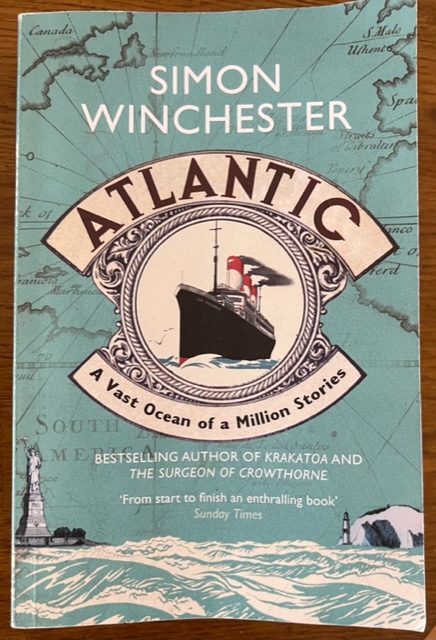
“What are you reading Sami?”

Well, don’t be surprised but it’s not a John Grisham or Jojo Moyes but a fascinating book by Simon Winchester called simply ‘Atlantic’.”

“Could still be a page-turning thriller?”

No! no! It’s about the Atlantic Ocean. I’m only about 40% through but a couple of facts have really excited me, things I didn’t know ….”

“And now you know them you can’t stop thinking about them?”

“Exactly!”

“So, enlighten me please.”

“Well, we have to go back a long, long way in history, to the time when Minoans believed that beyond the Pillars of Hercules (Ed The Straits of Gibraltar), that is beyond the known world, the waters were simply too frightful and fantastic to even think of braving. We’re talking about 7BC. Then the Phoenicians built ships that could cope with the seas and ventured out, turned north and founded what became Cadiz.”

“OK! Sami. All jolly good, but what’s this nugget of information you find so interesting?”

“The Phoenicians found what the Minoans had found 700 years before, the magic of the murex mollusc.”

“The what?”

“It’s a gastropod that secretes a rich indelible purple-crimson dye ….. and it’s that colour which the Minoans, the Phoenicians and most notably of all the Romans used to denote imperial authority. (Note 1) Sailing south from the Straits of Gibraltar, the Phoenicians found these snails gathered in their thousands in the bay just offshore from what is now Essaouira in Morocco.”

“I have been there but didn’t know anything about these sea snails.” (Note 2)

“There you go! For almost a thousand years the dye was traded from the city of Tyre and valued at some twenty times the price of gold.”

“Must read more about this; fascinating, and I can understand why this has stayed with you. What was the other fact which sparked your interest?”

“The Vikings were the first to discover North America.”

“What about Christopher Columbus? Every child learns he discovered it in 1492.”

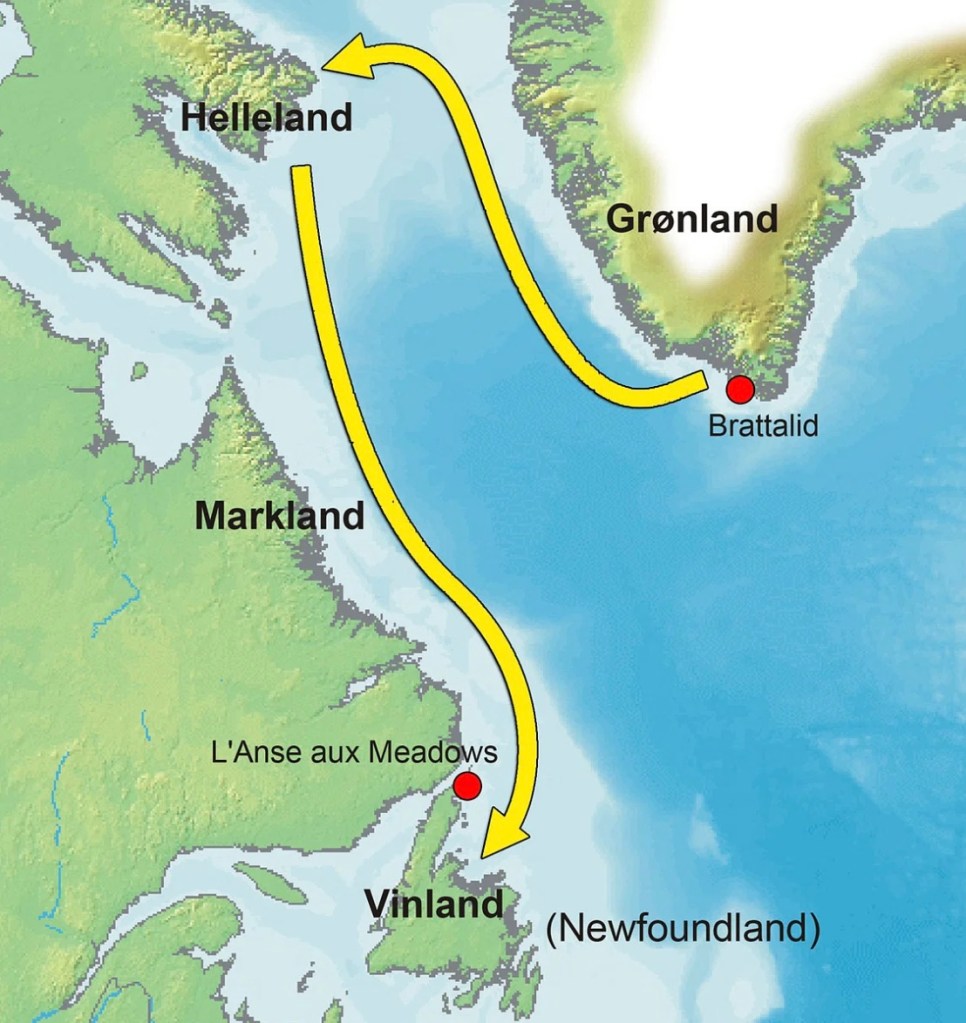
“A C15th map turned up in America in 1957 showing an island marked as Vinlandia to the west of Greenland. Latin script told it had been visited by Bjarni and Leif Eriksson in the C11th! I read further details and then went on to Google Maps and found this place, L’Anse aux Meadows, where excavations uncovered the Norse settlement.”

“Wow! And you’re only 40% through the book! I am sure there will be lots of other interesting things to find out about. Back to today, the Post Office enquiry was getting a lot of press before the General Election was announced, what with the senior managers, CEO and chairwoman giving evidence. I know you want to put it behind you but ……”

I do and I don’t. I’ve moved on but sincerely hope that those responsible for the whole fiasco face some criminal charges. Trouble is so many individuals hoped the whole thing would just go away, couldn’t take personal blame, couldn’t say: “It was my fault”. But I am delighted that Alan Bates, who founded the pressure-group Justice for Sub-postmasters’ Alliance and brought the whole scandal to the public’s attention, has been knighted in this month’s King’s Birthday Honours List.”

“That’s great! A good award. But the whole sorry saga sounds a little like the Infected Blood Inquiry, whose report last month was the culmination of 4 year’s work.”

“Remind me?”

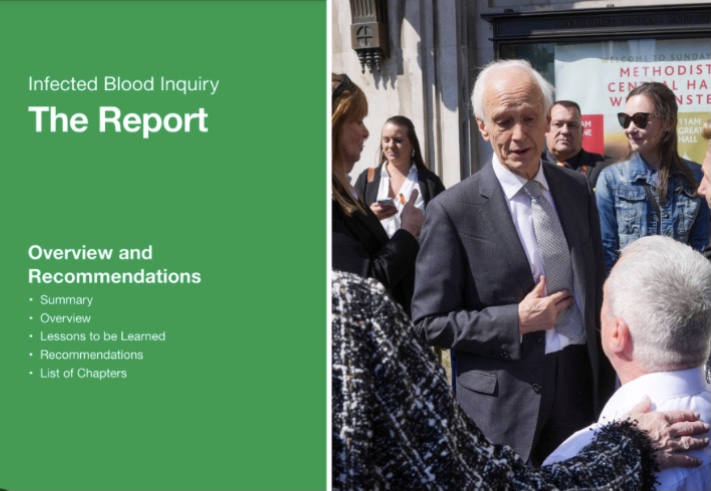
“As I understand it, from 1970 to 1991 the NHS, not having enough UK blood supplies, imported blood products, particularly from the USA, for use in transfusions, knowing that some were infected with viruses like HIV and Hepatitis C. More than 30,000 people were infected, with thousands dying as a result. A good example is from Treloar’s College, a school for disabled children in Hampshire. Between 1974 and 1987 children were offered treatment for haemophilia; at least 72 died after being given blood contaminated with HIV and viral hepatitis. After decades of failure by the government of the day, the NHS and doctors to even address the issue, let alone talk about compensation, the “Infected Blood Inquiry” May 2024 Report recommendations have been accepted and compensation levels and timescales have been agreed. As one of those affected said: “We have a voice and at long last we have been listened to. We have railed against authority, shaken a fist at the storm ….. and nothing happened. At last!” Absolutely disgraceful, shameful!”
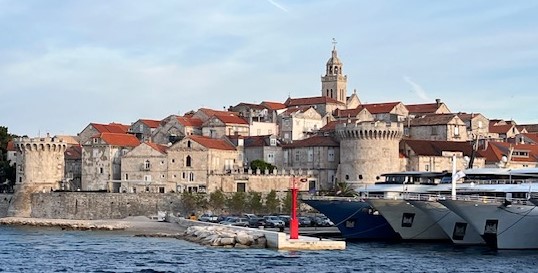
“You mentioned the General Election. I am cross as I won’t be able to vote …. and I want to.”

“Why can’t you vote?”

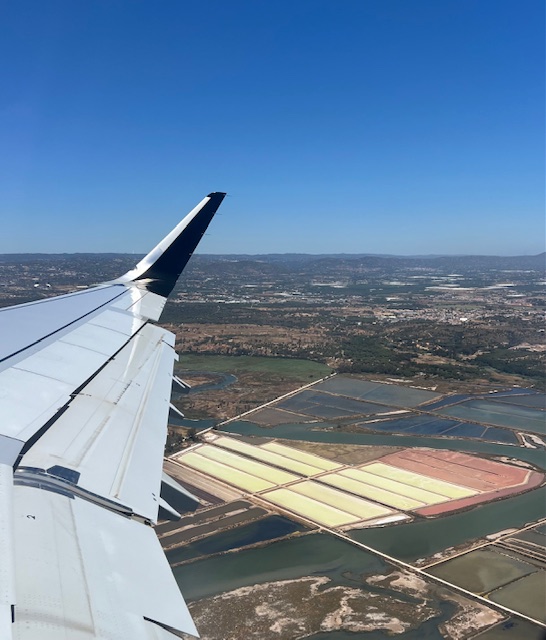
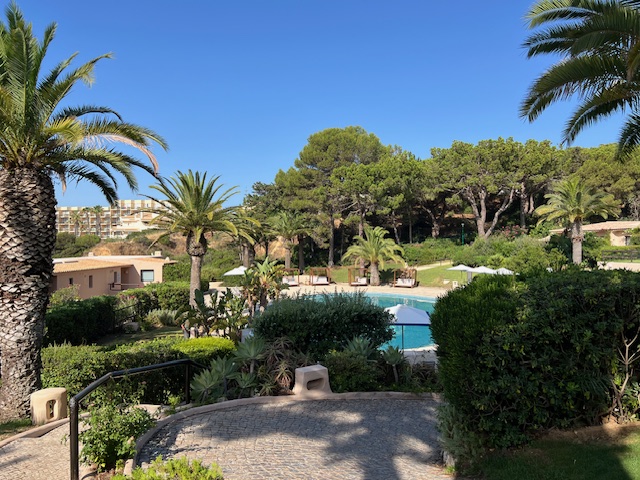
“Lisa and I are off to the Algarve in southern Portugal the day before the postal voting papers are distributed …. and not back until the day after the election!”

“Ah! Apply for a Proxy Vote now and someone who’s registered to vote in your Electoral Ward can vote for you both. Anyway, most people vote to get rid of whoever’s in power, not voting for another party they think will do better. Hey! I need to get going …. maybe see you in Portugal …..?”

Richard 21st June 2024
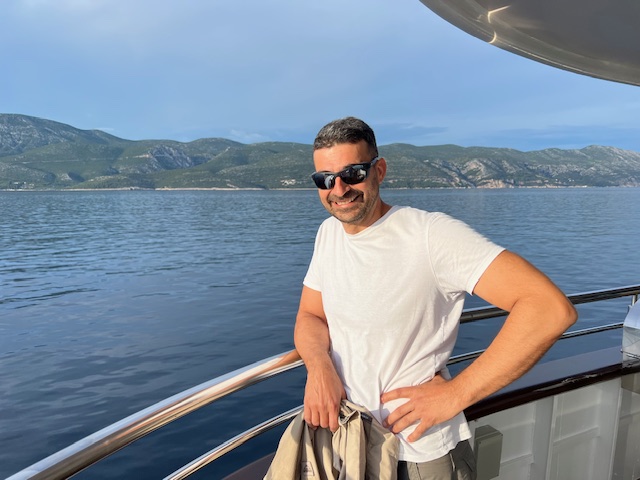
Estoril, Portugal

www.postcardscribbles.co.uk

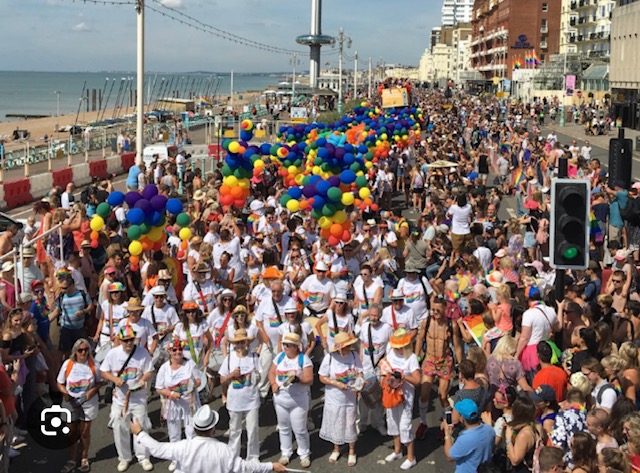
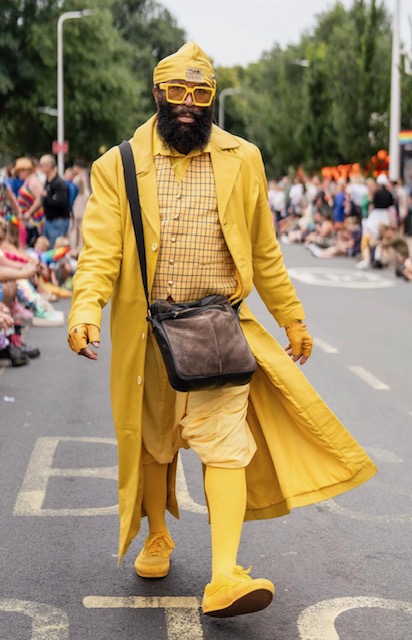
PS Just to keep you my readers up to date, the designations for sexual orientation are growing – it’s now LGBTQQIAPK+ (Lesbian, gay, bisexual, transgender, queer, questioning, intersex, pansexual, two-spirit, asexual and ally)

Note 1 Chemically it’s known as 6.6’-dibromoindigo

Note 2 In PC 391 I mentioned our Split, Croatia tour guide Pero Ugarkovic is an expert on sea snails. He probably could have waxed lyrically about these little creatures.

PC 391 Tales of Croatia (Continued from PC 390)

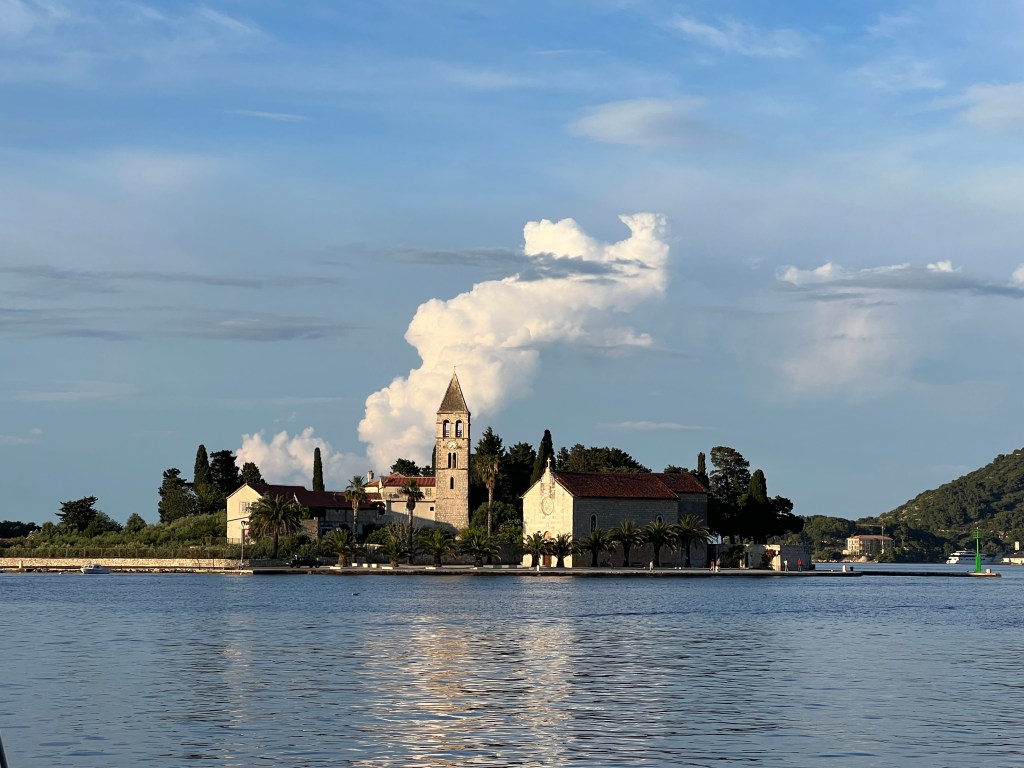
Then onto Vis, an island that played an important regional role in World War Two. Britain assisted Marshall Josip Tito, who went on to become President of Yugoslavia, to form and develop his partisan resistance movement, the British team led by the politician and author Sir Fitzroy Maclean. Tito and Maclean formed such a good relationship that the latter was able to buy a house on the island of Korčula, not normally possible for a foreigner. As an aside, it’s thought that Ian Fleming modelled his Bond character on Maclean. Vis is riddled with caves and tunnels which gave the partisans protection from any Italians sent to look for them. The island was occupied by Italy until 1943, when it was liberated by a combined British-Yugoslav force but it wasn’t until 1989 that tourists were allowed on Vis, as it had been a Yugoslav Naval base. It’s a typical Dalmatian Island, with clear water, limestone buildings and the obligatory monastery. (Note 1)

The Church of St Jerome in Vis

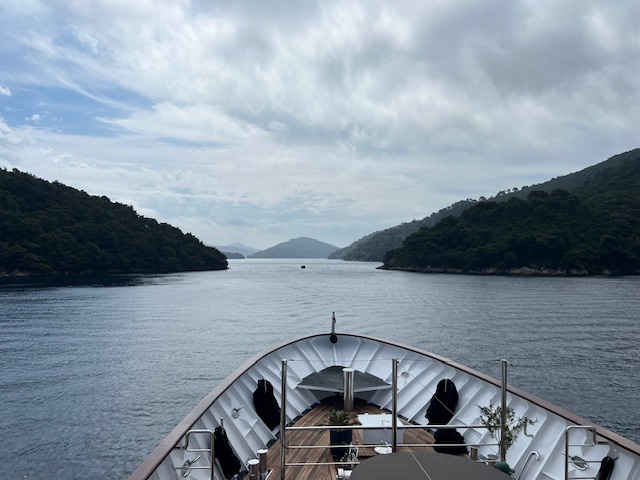
We upped anchor around 0530, motored out of Vis ……

 …. and made our way to Split.

We took the tour, our guide this time was Pero Ugarković. Croatians have a habit of being tall, and Pero was probably around 2m. (Note 2) When I asked what he did in his spare time, he divulged he loved spear fishing, was an associate of the Institute of Oceanography & Fisheries in Split, had just published a book on sea snails and in 2019 had photographed small sea angels in the sea off Croatia.

 “Now” he said to us, “here we have the southern gate of the Palace of Diocletian. Diocletian ruled the Roman Empire from 284 to 305, when he retired here to Spilt. He was possibly the only emperor to retire!” 

And so we wandered into and around one of the largest Roman palaces still well defined. For sure, the internal structures have changed over the centuries and the architecture reflects who was in charge at any particular time, but it wasn’t difficult to half-close one’s eyes and imagine …

We spent the night alongside in Split and were plagued by a boat of young people intent on shouting, screaming and yelling that tied up on the outside of us. I was reminded I was young once! Early morning and we were off before sunrise, destination Hvar.

Ivana, who came from Stari Grad, over the mountains to the north, was our guide. Her most memorable snippet was that the local wine is better with 10 drops of water; these apparently bring out a gorgeous bouquet. I knew already that the oldest public theatre in Europe is here, on the upper floor of the Arsenal Building.

Created in 1612 it’s been gradually modernised as the years have rolled by; it closed for its last renovation in 2004 and reopened in 2019. Hvar’s central square’s stone floor is so polished by the infinite number of soles over the years it reflects the bright sunshine. 

Hvar old town from the castle

After the short tour and time for a coffee, we left for the Mljet National Park and tied up alongside in Pomena for two nights.

A walk and a boat ride across a lake ……

….. found us on the island of St Mary’s and its little Benedictine monastery.

Just a sweet looking boat!

Then our last day on Ms Roko, motoring back to Dubrovnik. After a night alongside, Sunday saw us embark onto a coach for our journey to Montenegro, next door to Croatia, where we would have three days. I can’t think of the last time I had my passport stamped transiting by road from one country to another! In Perast we got on a boat and motored across Boka Bay ……

The Church of Our Lady of Škrpjela in Boka Bay

…… to Kotor.

Many beautiful walled towns dot the shores of the Mediterranean and, after Dubrovnik, Kotor must be a favourite. Fortunately it’s more difficult to get to, so it’s only the arrival of a large cruise ship that will swamp its narrow streets with rubberneckers.

The eagle-eyed will notice Francisquinha had jumped into my backpack

Driving out to the north requires a certain stamina, the road’s 25 hairpin bends a challenge for those vehicles without powered steering – like our Land Rover in 1965!

Then back on the coach to our hotel resort just south of Budva, itself a popular resort for the younger Montenegrin set intent on hedonistic pleasures. On the Monday Sandra, the Imagine Cruising representative, took us to Cetinje some 50 minutes inland and the former royal capital of the country. I am not a fan of religious paintings but was very taken by the rich gold-plated iconostasis in the Court Church.

Within the church are two marble tombs containing the remains of King Nikola and Queen Milena.

Cetinje’s sadly in decline; factories have closed and the younger population are moving out to find employment. Croatia’s been a member of the EU since 2013 and Montenegro seems poor by comparison, this little town being a good example; but it’s a small country with a population of some 600,000. Titograd became its capital after the demise of the monarchy, but the city’s name reverted to Podgorica in 1992. On our journey from Dubrovnik Sandra had told us that any land with a view of the sea had been snapped up by Russians, prepared to pay silly money to build a house. Apparently, the owners have no interest in integrating, no interest in the local environment and are consistently rude. Sounded familiar! (See PC 134 The Largest Mediterranean Island Oct 2018)

You might be wondering what it was like to be on a small ship during our time up and down the Croatian coast? Gathering my thoughts and will put pen to paper, so to speak, soon.

Richard 14th June 2024
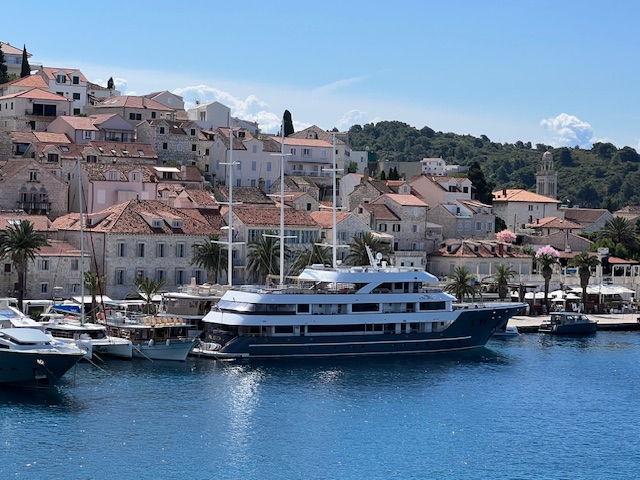
Hove

www.postcardscribbles.co.uk

PS And finally a sunset!

Note 1 Bonaparte Napolean closed all the Benedictine Monasteries dotted up and down this coast in 1805.

Note 2 Our Montenegrin guide’s sons were over two metres and one of the security people at Tivat airport towered over me!

PC 390 Tales of Croatia (Part 1)

Back in 1965, post-A Levels, myself and five others from Daunstey’s School packed ourselves into a hard-topped Land Rover and drove southeast across Europe to Greece. Part of the trip was down the coast of what was then Yugoslavia. After Trieste we drove down through Rijeka, Šibenik, which required a ferry crossing, Split and Dubrovnik, before turning inland at Kotor to skirt around Albania. (See PC 346 Puds to Greece August 2023). Ten days later we retraced our route, up to Venice and home. Since then I have had a couple of ‘bare-boat’ yacht charters, with no charter-company skipper, one out of Trogir and one out of Dubrovnik.

Attracted by a Sunday Times advertisement back in October last year, we booked a small boat cruise out of Dubrovnik for May 2024, which concluded in Montenegro in the first week of June.

It was an early start on Sunday 26th May, our flight for Dubrovnik leaving at 0555. Having got new reading glasses after my recent cataract operations, I have got into the habit of tucking them into the neck of my shirt/T-shirt. I was surprised to be asked to put them in the tray at Airport Security – “Really I thought?” …. But you don’t question a request from someone who could make the whole experience very tedious!

Gatwick at 0555 on a wet Sunday morning

The female EasyJet pilot smiled to the cabin crew and said we would leave slightly early! The male steward running the cabin had a strong Australian accent and I asked him where he was from:

Perth

“One of my favourite authors is from Western Australia; Tim Winton.”

Ah! He’s great isn’t he! ‘Cloudstreet’ huh!”

“Such a great book, so atmospheric of its time.”

I have never met anyone who’s read it …. mate!”

We had a connection! We arrived early as predicted and, having been joined by two other couples, were taken to the boat in Dubrovnik’s new port on the northwest side of the old city; others would arrive later.

I often find it strange meeting people for the first time, whether for a conference, supper at a friend’s, a group training activity or even for a cruise ….. and I am sure most of our fellow passengers felt the same, that slight awkwardness part of the English DNA! We discovered later that in our complement of 36 passengers, one couple had come from South Africa and two couples live north of the border in Scotland; no hint of the English habit!

Dubrovnik is always a delight; on our guided Saturday tour I learned from Ana that it had started off as two cities, one Slavic and one Roman, that the walls were very thick, some 5 metres, and that today few people actually live within the city walls, being forced out by the tide of tourists washing around the narrow streets (Note 1) and by the paucity of ordinary shops – these replaced by ice cream parlours, shops selling huge bowls of jellied sweets and liquorice and, strangely, ones where the only items for sale are small, yellow, plastic ducks, decorated in every imaginable design, tempting you to spend some €15 – on a plastic duck? In 1991 the city was of course badly damaged during the Balkan War by the Montenegrin Artillery but, with the help of UNESCO, has been completed restored to its former glory – sadly that doesn’t apply to the 114 civilians who died in the city.

Ston salt production today

I also learned that in the nine crystallization pools at Ston, some 55kms to the northwest, salt production started in 167 BC and today they’re producing 500 tons per year. In 1000AD about one third of Dubrovnik’s income came from the exportation of salt; salt was more valuable than gold! Ana added that in these walled cities, the good counsellors made sure enough food and water was preserved for the inevitable days of sieges – and salt was used in the food preservation process.

Before we left, Ana reminded us that the city has suffered many earthquakes over the centuries, the most major one, 6.4 on the Richter scale, in 1667 when the entire city was almost destroyed and some 4000 inhabitants killed. The latest was in 1979 when 1071 buildings within the city walls were damaged. But what she added was most interesting, especially to someone who studied, inter alia, cement and concrete at university. Those buildings that suffered least had used mortar made with fresh water; those which had used sea water seemed more vulnerable to the earthquake’s forces. I never knew!

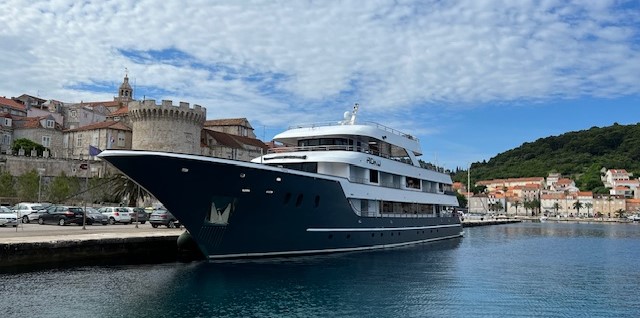
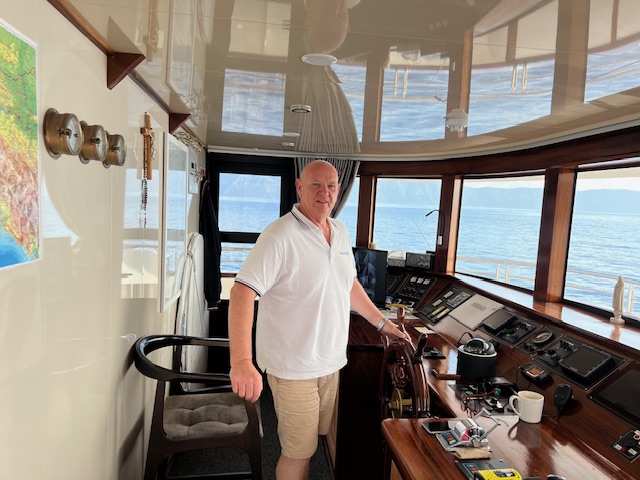
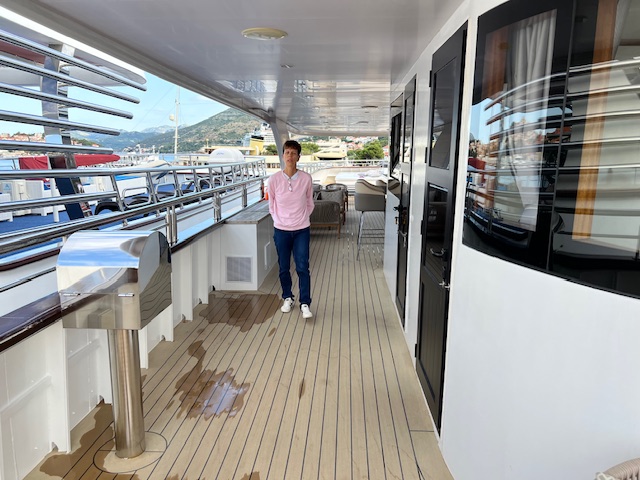
‘Cruise ships’ seem to have become bigger and bigger, more floating hotels than ship, but MS Roko was very definitely a ship, some 50m long with a total of 18 cabins. Captain Ivan ran the ship ……

…… and Viktor, a 40-something Croatian, was the delightfully unflappable chap who made sure everyone got what they wanted, did want they wanted, and ensured everyone was on board before engines were started and mooring ropes slipped.

Our first port of call was Korčula’s old town, just north of the eastern end of the island of the same name (Note 2). St Mark’s Cathedral, which sits on the highest ground in the middle of the promontory, dominates. The view from the tower is spectacular and worth squeezing oneself up a very narrow stone staircase for, but not for those prone to claustrophobia!

The streets were busy with tourists and the shops selling sponges and red, legally harvested, coral doing a good trade. Whoever designed the layout took account of the various winds that blow; in some cases the closely-packed narrow streets are curved, to lessen the effects of wind from a certain direction. Paying with cash for supper in one of the waterside cafes, the Serbian waiter explained that in his country credit cards were hardly used, as corruption and scams were common; a sad observation on one’s place of birth.

To be continued …..

Richard 7th May 2024
Hove

www.postcardscribbles.co.uk

Note 1 Talk about ‘killing the goose that lays the golden egg’. Venice is another city where the high tide of mass tourism, on which these cities depend, is having a negative impact on the experience! The ratio inhabitants/tourists in Dubrovnik is apparently 1:39

Note 2 The island of Korčula is twinned with Rothesay in Scotland

PC 389 Lymington (continued)

It’s often that first time you visit a place you remember years later, no matter how many times you subsequently go back. My first visit to Buckler’s Hard (Note 1) was over 55 years ago!

As a Second Lieutenant I had joined my first regiment, 27 Medium Regiment Royal Artillery, in Devizes, Wiltshire in February 1968. My Troop Commander was a Captain James Scarlet, who was also responsible for a small Royal Artillery Yacht Club yacht moored at Marchwood on Southampton Water; despite not knowing much about sailing at that time, he delegated the task of its bosun to me! Braganza (Note 2) was a 19 feet Bermudian sloop, with a lifting centre board; you couldn’t stand up below decks except immediately by the little sink and stove. It wasn’t booked much that summer and in June 1968 Gerry Ackhurst and I sailed down Southampton Water and into The Solent. One evening we decided the tide was perfect to sail over the sandbar at the entrance of the Beaulieu River and make our way upriver to Buckler’s Hard, about 6kms. The Solent sailing guide book said it was a good place to visit; we did not disagree!

Screenshot

For those of you interested in these things, estuary or river entrances are delineated by red and green marker posts. Convention has it that coming in from seaward, one has to keep the red posts to port (left) and the green ones to starboard (right). So far so good; a scenic tidal river leading to a very sheltered spot where you could tie up to a pontoon or large piles.

Fifty years’ ago there were few facilities at Buckler’s Hard, save for somewhere to secure your yacht, a diesel pump and the Master Builder, an atmospheric pub. The following day we took advantage of the incoming tide and sailed all the way up to the little town of Beaulieu, home of the late Lord Montagu (1926-2015) who founded the National Motor Museum (Note 3). With her centreboard up, Braganza only drew about 2 ft (in old money), so it was unusual but possible! 

A close inspection of the first photo will reveal a little indentation, just below the ‘B’, on the spit of land that forms the entrance to the river. ‘Gins Run’ was a little cut-through when leaving the river, tide-dependent! I used it a couple of times but gradually by 1986 nature had closed it with the shifting sands of the estuary.

So Celina, Cecilia, Toni and I leave Lymington and follow the smallest of roads northeast through the New Forest towards Buckler’s Hard. Having mentioned the free-roaming ponies to Cecilia, it was good to be able to find a couple munching some weed in a road-side pond!

Leaving the car in the carpark, our first stop was the excellent museum where you begin to understand the historic significance of Buckler’s Hard in our Nation’s story and why the pub is called the Master Builder. Originally founded as a free port for the trading of sugar, it flourished as a naval shipbuilding centre and has become famous for building a total of over 50 warships for Admiral Nelson’s navy. Three, Agamemnon, Euryalus and Swiftsure, took place in the Battle of Trafalgar in October 1805. Today it’s difficult to imagine the riverbank being such a hive of activity and industry, scores of expert carpenters, sailmakers, woodsmen and the like, working to construct these huge vessels. The museum has some terrific illustrations and for those of you who have not been, it’s highly recommended. What I find most surprising is that these large ships sailed down this small river to The Solent!

Worker’s cottages on right, Master Builder near the river on left

In addition to a huge amount of information about building these warships, such as how it took 100 oak trees to construct one ship and that the wood had to dry out for two years before it could be fashioned into the appropriate shape, there are stories of those who lived and worked here. Buckler’s Hard has become a popular tourist destination as well as a sailing centre!

.

There are some very realistic recreations of what the Master Builder public house might have looked like and the ‘one (room) up, one (room) down’ layout in the workers cottages. It meant extremely cramped living conditions for everyone, but I guess that view’s with the benefit of hindsight; they didn’t know anything different!

We had lunch at the Master Builder, its passageways hung with suitable nautical photographs and paintings, and sat in the garden in the sunshine. On one visit decades ago the yacht I was skippering arrived late in the evening, after the Master Builder’s kitchens had closed. However, with a great deal of diplomacy and persuasion, eventually we managed to get some soup and defrosted bread rolls which were devoured by the hungry crew; offshore sailing always generates healthy appetites!

Back into the C21st for our trip back to Hove which, on a Friday afternoon, was always going to be in heavy traffic.

There will be a postcard about our time in Croatia at some stage.

Richard 31st May 2024
Korčula Croatia

www.postcardscribles.co.uk

PS Braganza was not big enough to have an onboard loo (heads in nautical terms). This didn’t matter when the crew were only male but critical for onboard females. Later that summer I had another week on her, myself, Gerry and two girlfriends. I still remember approaching Wootton Creek and being asked to hurry up by the two girls, anxious to get ashore to find a loo!

Note 1 The ‘Hard’ here refers to the road that led down to the Beaulieu River.

Note 2 Funny coincidence! The Braganza dynasty (1640 -1910) was Portuguese and ruled Brazil from 1822 to 1889 when it became a republic. The town of Bragança is in northern Portugal.

Note 3 The current Lord Montagu is Ralph Douglas-Scott-Montagu, the 4th Baron. The family have owned the Beaulieu Estate for over 400 years.

PC 388 Lymington

My late father-in-law Carlos Rocha Miranda was a Professor of Neurophysiology in Brazil and spent almost all his professional life researching aspects of how brains work. Decades ago he was joined in Rio de Janeiro for some months by Hugh Perry, a graduate of Oxford University and eventually Emeritus Professor of Experimental Neuropathology at the University of Southampton. Hugh stayed in the family home in Iposeria, Rio de Janeiro and they became close friends.

Wind the clock forward a substantial number of years and the planning for a visit from my mother-in-law Cecila and partner Toni included a possible lunch with Hugh and his wife Jess. They live in Lymington, just to the west of Southampton and on the southern edge of the New Forrest, so lunch would have to include an overnight stay. The plans firmed up and on the third day of their visit in early May we drove off to Lymington.

I have some historical connections with the town, so it was a delight to return. Lymington has a ferry link to Yarmouth on the Isle of Wight (IOW) and the service is run by Wightlink.

The ferry link in yellow

In 1996 I secured some leadership coaching assignments with Wightlink, which at the time was owned by Sea Containers, so spent some time on the ferry.

The Wightlink ferry arriving in Lymington from Yarmouth

Sea Containers also owned Hoverspeed which operated cross-channel ferries out of Dover to Calais and Boulogne and my work was often located near Dover. The managers were all down-to-earth, lovely people and I hope whatever I contributed made a difference to both the individuals and to the bottom line!

Four years later, in 2000, I organised a couple of days’ team building for NM Rothschild, which included a day on a 45ft yacht I had chartered out of the Lymington Marina. We had stayed in the Stanwell House hotel so this time it seemed the obvious place to book a couple of rooms. It had recently been completely refurbished over an eleven-month period and had only reopened in February this year so our timing was perfect.

After spending an inordinate amount of time looking for a section of the municipal carpark reserved for hotel guests, we dropped our bags at the hotel and made our way to a delightfully named street called Captains Row. Hidden behind an insignificant façade was a house that had been added to over the centuries and now provides a comfortable family home, albeit rather elongated, and a south-west facing garden.

Hugh and Jess are one of those couples that you immediately feel at ease with, welcoming and warm. Chat … drinks …. admire their house ….. chat ….. food …. puddings … chat ….. all under the warmth of some early summer sun. Time passed quickly; my mother-in-law was obviously delighted to be renewing a close friendship and the rest of us were curious to know more about this interesting couple.  

Before supper in the hotel Celina and I walked up the High Street and, opposite St Thomas’ church, we found a self-designated ‘lifestyle’ shop called Willow. A glance through the window revealed a whole host of items to create ‘that look’ …. and somewhere some rather practical-looking dining chairs, so in we went …. and out we came some twenty minutes later significantly poorer. When they arrive in July, I am sure they will forever be reminders of Lymington!

If we had had the time, we could have driven south, parked the car and walked to Hurst Castle, a fortress with 38-ton guns and a lighthouse on the edge of The Solent.

Hurst Castle was built in 1544 on the orders of Henry VIII as part of his Defence Forts programme to guard against invasion from France. It defended the western entrance to The Solent.

The view north from the ramparts towards Lymington

Up against the ramparts there would have been a clear view of the iconic Needles on the western extremity of The Isle of Wight.

With friends of my daughter in 2011 off The Needles

Our visit to Lymington also reminded me of my stupidity concerning filling water and fuel tanks on a yacht. A client of mine had a share in a 40ft yacht based in the town marina and offered me a day’s sailing by way of saying ‘thank you’. After some good sailing on The Solent and a spot of lunch anchored in Alum Bay, famous for its colourful sand striations, we returned to the marina and cleaned up the yacht. I was asked to top up the freshwater tanks. To this day I cannot understand why the filler cap for the water wasn’t a different design to that for the fuel. Ten seconds of water funnelling down into a fuel tank and the damage was done!

Many years ago I visited Osborne House, the summer retreat of the late Queen Victoria and her husband Prince Albert, which lies just to the east of the IOW town of Cowes. Recently there has been a television documentary about it, how it was gradually increased from a summer pavilion to a large palace and how Queen Victoria stayed in mourning there for 15 years after Albert died aged 42 of Typhus. It’s already on the programme for the 2025 visit of my mother-in-law!

Osborne House

On my visit to Osborne I had noticed the mirrored floor-to-ceiling shutters in one of the State Rooms. I pinched the idea for our apartment here in Hove.

Options for the following day included taking the ferry to Yarmouth, a 40-minute trip, and lunch at The George, driving north to Salisbury to visit the cathedral or northeast to Winchester to see its cathedral. Both cities and cathedrals are stunning, but a fourth option was the most tempting. Lymington’s on the edge of the New Forest, with its stunning countryside and free-roaming horses …… and some 30 minutes from Bucklers Hard on the Beaulieu River and, blessed with gorgeous early summer sunshine, we plumped for this last one.

(To be continued)

Richard 24th May 2024

Hove

http://www.postcardscribles.co.uk

PC 387 Accident and Emergency (A&E)

If, having read and taken in the title of this postcard, you are wondering where the clothes you normally wear to funerals are, and should they be dry cleaned to get rid of the rather ‘unused’ whiff, relax! Hopefully, as far as I am concerned, you won’t need them for a while yet.

But my experiences on a rather quite Sunday evening at the end of last month are worth a few reflective comments!

On several occasions back in 2012, I experienced a tightness across my chest and was eventually sensible enough to go to my GP. By August 2013, after two ECGs and one angiogram, I am in the Royal Sussex County Hospital here in Brighton having a triple heart bypass. “Good for thirty years” said Jonathan Hyde my surgeon …… and I believed him, although now, when I get the odd twinge, I have my doubts about the ‘30’! Anyway, I have a sublingual Glyceryl Trinitrate spray which normally relieves the ache pretty much instantly.

That Sunday evening I had just sat down to watch the early evening news when I felt a twinge. Rather reluctantly I got up, found my spray and gave myself a dose. I sat back down but the ache persisted, so much so that Celina asked whether I was OK! I explained ….. then she said I looked very pale (I felt quite sweaty!) and she was on the phone to the emergency services. The enormous pressures on our NHS are well documented, with response times for ambulances way beyond guidelines and apocalyptic scenes in A&E the norm; somehow I hoped I would not see first hand their state on that Sunday evening.

While we waited for the ambulance, I was told to take four 75mg Asprin tablets. Paramedics Ben and his teammate arrived – within 14 minutes – and after various checks and tests, declared that the only sure way of eliminating any heart issue was to have two blood tests, four hours apart, to check levels of Troponine. Grabbing my kindle and iPhone, off we went, although I was reassured that the paramedics didn’t feel the need to advertise our presence with blue lights and sirens!

Ben and I chatted in the back of the ambulance, as I am always intrigued by everyone’s back-story! He had started as a Royal Military Policemen then ten years ago joined the Ambulance Service. Arriving at A&E Ben asked me to sit in a wheelchair so he could take me in. “Oh! I feel OK! I can walk.” “More than my job’s worth, Richard. Get in the chair.” Once inside I was confronted by the organised chaos of A&E. Not quite sure whether to look at the beds, the trolleys, the occupants some half-dressed, some moaning, some in severe pain, most with a family member or friend (Celina had offered but I reckoned I could cope!) and a multitude of different-coloured uniformed staff, moving confidently and expertly, to deliver whatever was needed. I sense everyone is looking at me and that’s probably always the case, observing the new arrivals, while you wait … and wait.

There is a high level of noise and I assume, if you work here, you have to shut it out, somehow! Somewhere in the background a woman is sounding off, ‘f**k you’, ‘f**k off’, etc, not appreciating the staff trying to assist her. It’s reckoned around 45% of those attending A&E have a drug or alcohol problem.

Wheeled into a curtained-off bay, I am transferred to a bed and given the obligatory backless gown. Omar comes in to administer an ECG and take blood. He has just qualified and is off to a residential doctor’s role in Chichester. Many years ago I was advised by member of a hospital blood team never to let a doctor take blood, but Omar was quite competent. Then Kojak aka Telly Savalas arrived to tell me what to expect; actually Savalas died in 1994 but this doctor was a dead-ringer for him! “Providing both blood tests are OK then you can go home, but the second one can only be in four hours’ time!” By now it was 1930 so home by midnight – fingers crossed.

While you’re here let’s have an X-Ray of your chest.”– and on the journey to and from the X-Ray department it was very apparent how stretched our A&E departments have become; trolleys along corridors, constant noise and movement, orderlies called hither and thither. The difficulty of getting a face-to-face appointment with one’s local GP encourages people to simply turn up to A&E, knowing they will not be turned away …. even if they have to wait four hours.

I was ‘parked’ in a room with a selection of large chairs, told my next test would be in three hours and asked whether I wanted something to eat. Grateful for something to while away the time, my chicken sandwich was followed by some yoghurt and some biscuits – but I wasn’t sure how to cope with a small orange with very thin skin and only a spoon.

Trying to concentrate on the book on my Kindle, invariably I eaves-dropped to understand why others were here, in this darkened room, on these large blue chairs. There wasn’t much chat going on, but I did managed to ascertain that the twenty-something chap next to me had had a bad trip on some drug at a party, so much so that his girlfriend had brought him in and was talking in a quiet concerned way to a nurse, whilst the chap moaned and shivered and groaned.

Somehow the time passed, eventually I had a second set of bloods taken, a doctor said they were fine and I could go. I called a taxi and when it arrived another chap in the carpark thought it was his; as he also lived in Hove I suggested we went together. His backstory? He had taken some laxative and had a severe allergic reaction!

A&E on a Sunday night!

Richard 17th May 2024

Hove

http://www.postcardscribbles.co.uk

PS A&E in Brazil is known as Urgências and in Portugual ‘Serviço de Acidentados e de Urgências’.

PC 386 Life in a Hyphen

After Easter I spent a few days with my daughter and family near the Surrey town of Farnham. There is no sensible comparison with the city of Brighton & Hove but like any experience, you appreciate the differences when you return home!

On the Thursday, as my middle grandson was having his haircut, I wandered off with Theo, aka KitKat and aged 7, to find a decent cup of coffee for me and an ice cream for him. Hamilton’s Tea House on Downing Street had Illy coffee, my favourite, so in we went. “Sorry, the seating area has just closed!” My watch said it was a quarter past three! Somewhat surprised and pissed-off, we took our purchases up the little lane to St Andrew’s church, where we found a bench in the church yard.

We finished our little refreshments and then strolled through the long grass, looking for enlightenment from reading the inscriptions on the headstones. Most had been there well over 100 years and the ravages of weather, pollution and lichen were obvious. A few words here, a date there, leaning forward, leaning to one side, some leaning backwards and only with God’s will were they still sort-of upright; good examples of a town’s visual historical record disappearing in front of one’s eyes.

St Andrew’s graveyard got me thinking of one grave I particular, in the churchyard of St Stephens in Shottermill, a very small village near other Surrey town, Haslemere.

Screenshot

For here lie my great grandfather George Nation, his wife Eva Nation (See PCs 44 & 45 (Alaska 2015), PCs 127, 152 & 154 (Family seat and Fosbery Connections) and PCs 169 & 170 New Zealand 2020) and their son Cecil, who’d died of TB aged 59 in 1936. The years have taken their toll on the words carved into the stone and it’s possible that future generations will not be able to read a thing.

I wrote to the appropriate Diocese asking whether a simple plaque could be stuck in the ground next to it (for example: George Mitchell Nation 1847 – 1931, Eva Fosbery Nation 1860 – 1947 and Cecil Fosbery Nation 1887 – 1936) and was told that I could have the stonework recut or replaced, at some expense, but couldn’t have a plaque! I had managed to have one made for George’s father Henry Matthew Nation, whose grave in St Stephens (Note 1), in the Auckland suburb of Parnell, New Zealand, had been unmarked.

So I think the Diocese’s stance is extremely sad and shortsighted; it suggests that in the not-too-distant future visitors to a closed church, which might hold written records of the occupants of the graveyard, will simply see a number of stone rectangles at various angles!

But just discernible on George’s gravestone are the dates recording their birth and death, and a hyphen was there, separating the start and the end of that life. It seemed that all their life’s activities, successes and failures, loves and life, were compressed into a single mark of punctuation. I read somewhere how odd it is to wander through a graveyard, look at the details on the gravestones and see ‘life in a hyphen’.

So what did ‘de Mackay’ do between 1931 and 2022?

If the observer has some basic knowledge of history, gravestone dates can recall national and global events of that period, so give an insight into living and working conditions of the occupant. But this hyphen, this simple line, not long, not thick, separating two numbers is recognised in some weird way as the extent of the person’s life. There is obviously a need for brevity when paying someone to chisel words on stone, but surely there is a better, more modern way for people to discover?  

Kitkat suggested we went inside St Andrew’s, where we found some lovely wire sculptures of fish suspended from the rafters.

Why fish?” asked Kitkat.

“Probably a nod to the belief that Jesus Christ asked two fishermen to become ‘fishers of men.’”

My daily reading of the digital version of The Times includes a brief look at the ‘Register’ where obituaries are found. You wouldn’t want to write your own obituary for publication, although as a personal exercise it can be quite enlightening, just for amusement or as a stock-take of where you are today and where you want to get to, and how you want to be remembered. Try it! When we die we leave it to others to comment and judge our life, the good bits and the not so good bits.

Epitaphs, a ‘form of words written in memory and often used as an inscription on a tombstone’, try to encapsulate a life in a few words. Frank Sinatra (1915 – 1998) asked that ‘The Best is Yet to Come’ was engraved on his tombstone.

Then you have other more general comments like ‘gone from our sight but not from our hearts’, or ‘too well loved to be forgotten’, or ‘to live in the hearts of those we leave behind is never to die’ or ‘in memories we find comfort, in love we find peace’ – but there’s no visible mention of what the individual did! For example they could have been a ‘doctor’, or ‘monarch’, or ‘architect’, or ‘saleswoman’, or ‘actor’, or ‘singer’, or ‘inventor’, or ‘civil servant’, or ‘balloonist’, or ‘writer’, or ‘policewoman’, or engineer – and the hyphen doesn’t divulge the information!

Maybe in the future there will be a QR or Barcode beside the grave that you can interrogate with your smart phone and find more information. In Sinatra’s case it might say: ‘I was a singer. Regrets? I had a few ……”

Richard 10th May 2024

Hove

http://www.postcardscribbles.co.uk

PS During Easter there was news coverage of some of the Christian services here in the UK and I heard someone say “today, Easter Sunday, is the most important day in Christianity”. I got confused – surely someone’s death can’t be more important than their birth in the sense one has to come before the other? But then I realised it was actually about the Christian belief in the Resurrection.

Note 1 A lovely coincidence that both churches are named St Stephens!

PC 385 More Hope ….continued from PC 382 Hope (12 April 2024)

At that very moment, we saw Duncan enter the café with a professional-looking woman and as they sat down at one of the tables, Josh brought over two cups of coffee. After what seemed like an intense 30 minutes, discussing some plans and drawings, the woman left and Duncan, looking around at who was ‘in’, came over to Mo and me. Maybe some sixth sense had encouraged him to join us.

“We were just talking about you! Your ears must have been burning. We were wondering how your ideas for the bookshop were coming on?”

“Well, that was Melanie from Elixir Interior Design and she’s helping me develop my ideas.”

“Who are Elixir Interior Design?”

“Think you would call them creatives and we’re lucky here to have such a large thriving sector. They have been involved in many of the city’s success stories and currently are working on a new hotel in Regency Square, Number 29. Melanie told me she’s just become a consultant for the company developing the old Hippodrome Building in Middle Street.

“Ah! Yes. That place has a long and chequered history.” says Mo. “I think it opened at the turn of the C20th and was, until 1964, one of the most popular and famous theatres in the country. It then fell into disuse and disrepair until 2020 when it was bought by Matsim Properties. Isn’t that right?”

Behind this rumpty-tumpty facade is a huge magnificent circular plastered ceiling

Yes. Planning consent was given at the beginning of last month for a performance space, a hotel and shop, and a private members’ club. Quite an undertaking and I suspect a huge ‘money pit’.”

“It’s just up the street from my yoga studio, Duncan. Pass it five days a week. ……. So, the bookshop?”

“I am confident it’s going to be a big success. I have raised some money from my family and in my mind have it opening in January 2025.”

Mo asked: “But what about higher wages and coffee bean prices, as well the hike in energy prices? Aren’t they creating a huge pressure on your overheads?  

I chipped in: “Didn’t the government advise reducing the time in the shower at home to 4 minutes? Personally don’t spend more than three minutes but ……”

          “Wages have overtaken raw materials as my biggest cost – at the beginning of April the National Living Wage rose by £1.02 an hour to £11.44. And yes, the cost of Arabica coffee beans has been affected by the impact of climate change in Brazil and Ethiopia. But you know what, people come for more than a coffee, which they could make at home; it’s the whole community feeling, belonging by a process of osmosis, even if you don’t engage with anyone!

Duncan says he must go, hopes we have a great day and with a nod to Josh goes out into a sunny morning.

Turning to Mo I asked:

“Mo, you know how we have habits which we have invested years and years in to perfect and then we get challenged by some news that questions whether what we have been doing is right?

Yes. Like that British habit of using a bowl in the sink to wash up – our continental cousins are horrified!!

“Well, actually anyone not British! I have been aware for maybe a year that dentists do not like us using mouthwash but know I couldn’t start or end the day without a good swill of Listerine – no alcohol of course ….”

Why don’t they like mouthwash?”

“It’s all about the fluoride that’s been an active ingredient of our toothpaste since the 1960s. Fluoride needs time to work, some 20 minutes, so if you habitually rinse and spit out, then use a mouthwash, the positive effects of the fluoride are nullified.”

But I recently read more modern thinking is that whilst fluoride has dental benefits, fluoride-free toothpaste with some nano stuff (Ed: Nano Hydroxyapatite) is just as effective without the systemic toxicity concerns that Fluoride has.”

“I suspect you would have to have kilos of Fluoride before it became an issue! By the way, did I tell you the other day Celina and I went for a ‘Mole Map’, a way of making sure we are not surprised by the development of a malignant melanoma? (See PC 366 Medical Decluttering 22 December 2023). We sat in the waiting area of the Worthing Skin & Laser Clinic and Celina offered to get some water from the dispenser, which offered a choice of either normal temperature or cold water. She wanted the former, my choice was the latter. Sipping from a paper cup, it was lovely and cold. Celina’s was exactly the same temperature, something we would not have appreciated if we had been on our own!! Technology? Plumbing problem more like!”

               “That’s sweet! Listen, this may be really passé but there is a cocktail called Gin & French. I love cocktails but never knew the ‘French’ refers to the vermouth but if the vermouth is Italian, the cocktail is called Gin & It!(Note 1)”

“Neither did I. Mo, I need to go but did you see that wokeism is losing favour?”

“Yes! Wonderful news! What a load of tosh!”

“I agree. You know, as I am no longer on the merry-go-round of paid work, growing up, social interactions, having offspring and suchlike, these issues have really passed me by. I can think ‘The lady doth protest too much’ (Note 2) but then I probably would have to discover whether Queen Gertrude would have preferred a different pronoun and whether she had some little badge on her chest telling the world.”

Ha! Ha! The rise of wokeism brought these gender neutral pronouns, which had been the preserve of the LGBTQ+ communities, into more common usage but I hope their continued use will not be at the expense of common sense. You need to go?”

“I do! See you next time. Bye Mo!”

Richard 3rd May 2024

Hove

www.postcardscribbles.co.uk

Note 1 ‘It’ short for ‘Italian’.

Note 2 from Hamlet by William Shakespeare

PC 384 The Man in the Window

PC 384 The Man In The Window

When you live in an urban environment it’s pretty certain you will have a view of your neighbours. East across Albany Villas from us is No 17 and to the left of the front door is an apartment.

In its right-hand window, its occupier has his desk in the bay. He obviously works from home and, whilst we’re not in the habit of staring, curiosity informs us roughly of his daily habits. We have no idea what he does but think he might be a day-trader; always there, regular as clockwork. Whilst we can see in a little …..

          ……. I am not sure whether he can see into our living room as the windows in Amber House have a sheen that provides some privacy. Maybe I should ask him? The room he could look into is our ‘living’ room in the true sense of the word; it’s roughly 5 metres by13 metres and here we cook, eat, work and relax ie ‘live’!

That’s our living room to the left of the front door

Would it matter if he did?

          Our Monday – Friday routine sees us leaving the apartment for yoga at 0915, to walk up to the bus stop. We sometimes lift a hand in acknowledgement as we see his face at the window and aren’t concerned that he never does the same.

Most of us, I suggest, are mildly curious to see into another building, whether it be a modern office block and you imagine what the workers are doing ….. “Oh! Look! Someone’s giving a presentation!” and my mind goes back to a similar event, whether I was giving the presentation or sitting through someone else’s ….. or somewhere where people live and you catch a glance of an xx or a yy or a zz. When does this mild curiosity become an obsession? Many people have voyeuristic tendencies but are unwilling to acknowledge them for fear of being discovered. Ah! These secrets we keep to ourselves. Is it a disorder being a voyeur? Well, there is no particular cause but some risk factors like alcohol misuse and abuse are often quoted in the development of an obsession.

A voyeur featured in the British television psychological thriller ‘The Couple Next Door’, written by David Allison and based on a Dutch series ‘New Neighbours’. A young couple move into a cul-du-sac and are immediately befriended by a couple across the green, who are swingers and like to engage in extra-marital sex. This is the main thread of the drama but a minor storyline concerns Alan, a peeping tom played by Hugh Dennis, who uses a telescope in his upstairs den to spy on the couple. Alan’s become increasingly lonely as he contemplates his own mortality and has nothing to say to his wife of many decades. Instead he scans the house across the street, projecting himself into a fantasy world in which he is king!

By definition, a peeping tom (Note 1) is a person who derives sexual pleasure from secretly watching people undressing or engaging in sexual activity. Legend has it that a tailor called Tom was the only person to watch the naked Lady Godiva as she rode through the streets of Coventry in 1040, so gaining a remission on harsh taxes imposed by her husband, Leofric, the Earl of Mercia.   

If you think Alan’s behaviour is not normal, reflect on the issue at Tate Modern in London a few years ago. About the same time as a 360° viewing gallery was opened on the 10th floor of the Blavatnik Building, wealthy residents moved into the NEO Bankside building just to the southwest of the Tate, where a penthouse could cost over £20 million.

Visitors were mesmerised by what they could see in these apartments through the huge windows, some posting the results of their snooping on Instagram! Residents complained of being waved at and being forced to keep blinds down. So many visitors enjoyed the view into other people’s private living spaces that the artist Max Siedentopf installed a dozen binoculars. “No other artwork on display attracts as much fascination as these open-plan apartments.” (Ed. A great example of ‘living art’?)

After a High Court case in 2019 which ruled in favour of The Tate, which is in itself interesting (!), the residents appealed and in October 2023 the UK’s Supreme Court ruled, by 3 to 2, that The Tate was liable if its visitors caused a nuisance. The viewing platform is no longer 360° but 270°!

Minor voyeurism is often used in films. Some of you will have watched the wonderful Hitchcock’s production ‘Rear Window’. OK! It came out in 1954 but is such a classic it’s been broadcast hundreds of times since. A professional photographer played by James Stewart has a broken leg. Physically constrained, he whiles away his time by spying on his neighbours through his apartment’s rear window. However his innocent habit turns serious when he witnesses an apparent murder.

Then there is Paula Hawkins’ ‘The Girl on the Train’ that uses the same idea to tell her story. Every day Rachel Watson takes the train into work in New York and every day the train passes her old house, which is now lived in by her ex-husband, his new wife and child. Not wanting to focus on where she used to live, she starts watching a couple who live a few doors down, Megan & Scott Hipwell. Emily Blunt is Rachel in the 2016 film.

Screenshot

Thinking of the chap across my street reminded me of the American comedian Shelley Berman (1925 – 2017) and his Department Store skit (Note 1). In summary he notices someone in trouble outside a window in the department store across the street from his office and the tale unfolds as he calls the department store:

Eventually someone answers:

“You don’t know me but I work in the office building right across the street….

“No, south west …… and there’s a woman hanging from the window ledge on the 10th floor.”

“No, I don’t wish to speak to her, I want someone to drag her in …

“Can I describe her? There’s only one woman hanging by her fingernails from a window ledge …… OK Could you put me through to that department please?”

“Complaints Department? …….

Etc etc

I wonder what the chap across my street would make of this postcard?

Richard 26th April 2024

Hove

www.postcardscribbles.co.uk         

Note 1 Not to be confused with Matthew Parker, Archbishop of Canterbury, 1559 – 1575 who had a reputation for prying into the affairs of others – he acquired the nickname Nosey Parker

Note 2 Available on You Tube – The Department Store.

PC 383 The Cow and The Moon

In The Hope Café in January (PCs 368 and 369) Sami, Mo and I were ruminating (Note 1) about trashy novels and how different writers can produce such contrasting prose. Of course it’s like any creative aspect of life, of composing music, writing plays or songs, painting in oils or in acrylics, so I guess I shouldn’t be surprised. Every human endeavour has those who do it well and those who do it adequately, some perfectionists, some producers who create for the popular market and some who simply get by. I tend to believe I am in the latter category although often the judge is oneself! I was described as ‘autodidactic’ last month; I had to look up its meaning!

At its most basic, a sentence can simply be a subject, a verb and an object. For instance:

The cow jumped over the moon.”

Nice and clear: an animal we identify as a cow jumped, that is lifted itself off the ground, over the moon, a lump of rock that orbits the earth once every twenty-four hours and immediately we think this is impossible! This is fairytale stuff, a nursery rhyme if nothing else! So we smile and move on. Those of you with good memories will be able to chant the complete nursery rhyme:

Hey diddle diddle, the cat and the fiddle, the cow jumped over the moon. The little dog laughed to see such fun, and the dish ran away with the spoon.”  

This particular rhyme goes back a long way and its origin is complicated; Dutch priests in the C16th get a mention but it’s more likely to have originated in the wonder of the constellations in ancient Egypt and the worship of Hathor. Hathor was the mother of the sky god Horus and Ra, the sun god. She’s often depicted wearing a headdress of cow horns with a sun disk between them. In the constellations Lyra is the fiddle, Taurus the cow and Canis minor the dog, (See PS).

The Egyptian god Hathor

How Hathor worship, which I imagine was quite a serious business, transforms down the centuries into a mostly cartoon characterisation of a cow jumping over the moon is bewildering! It’s possible of course that someone actually saw a cow skip and that lined up with the reflection of a full moon in a pond; it caught their imagination.  

Take that initial sentence and embellish it. “The two-year-old British Holstein cow, quite a popular black & white breed here in the United Kingdom and renowned for its milk, leather and beef, was called Mathilda. Showing off to others in the herd, she jumped into the sky, with a little skip and a flourish, and lifted herself up and up. So she thought; in reality her udders were full of milk and she barely made it off the ground. “But it’s good to dream,” she thought “and I like showing off. You know I’m the comedian in the cow shed? Well, I think I could jump over the moon. Don’t you?”

Or ….

“My name is Angus and I am a professional photographer. I have worked on a number of leading nature programmes and the other day was asked to produce a photograph of a cow jumping over a full moon. Everyone is aware of the nursery rhyme and my photograph was needed for a poster for a new museum of fables and nursery rhymes in Manchester. I think this is a great idea as these historical tales have so much to teach us, at many levels. But in the back of my mind was a warning from my agent; “Angus! Never accept work involving animals.”

“I knew better, didn’t I. Apart from family pets I had been out on a horse a few times …… and they’re the same sort of size as a cow, aren’t they?

Fortunately, I know a dairy farmer down in Devon, so I called him and asked if I could come and take some pictures of a cow. Clearly it would need to be during the next full moon, which wasn’t due for a few days. I booked into a local B&B for a couple of nights, knowing that I needed to plan for the unexpected. The weather forecast was quite good for what I wanted, a relatively cloudless sky and out in the countryside there would be little light pollution. I planned to get into a hollow in one of the fields and have the cow up on top of a hillock, not far from its barn.

Brian chose Mathilda, a two-year-old British Holstein, brought her out and led her up to the hillock. We had discussed how we were going to get Mathilda to jump and reckoned the crack of a Thunderflash, a training pyrotechic, would do – although Brian worried that Mathilda might not produce milk for a few days afterwards!

Picture me then, in the hollow, my camera on a tripod, in the dark, looking at the full moon as it appeared above the horizon. Brian’s still had hold of Mathilda’s harness when, by mistake, he let off the Thunderflash. Two things happened simultaneously. I was startled, tumbled backwards and fell into something warm and smelly, but not before I saw Brian being dragged off the hillock by a very upset Mathilda.

Could always Photoshop it, Angus?” said Brian when things were more under control. “Take a f**king photo of the full moon and one of Mathilda, superimpose one over the other …..”

“….. and ‘Bob’s my uncle?’ I thought but Brian’s challenge to my professionalism was not without merit …… and I think the result’s OK. What do you think?”

You know what, Angus? I’m over the moon! Perfect – tickled pink even.

Richard 19th April 2024

Hove

www.postcardscribbles.co.uk

PS A French astronomer Jerome Lalande called one constellation Felix. As a cat lover he was sorry there was none named after a cat, although there are two lion constellations and one lynx. It was 1799.

Note 1 Ruminating seems an appropriate word here