PC 69 Health & Effing Safety


I grew up to believe in the art of the possible, and developed an attitude of ‘I can do this’ as opposed to ‘I can’t do this.’ I thought about the issue, worked out some options and maybe even tried a few. (There were parallels in the ‘military appreciation’ which was either done in the heat of battle on the back of a fag packet or more formally, taking account of all the factors and coming up with options*.) You found out what worked as, sure as eggs are eggs, something will. Recently I have come up against the insidious development of the anti-culture, of the ‘can’t do’, ‘not my problem’, here in Britain and I find it very very sad …. and actually a worrying development in a country which historically has been one for invention experiment and possibilities; now we have the art of the impossible.

Our relationship with the landlord of Amber House is now very much a working one, and we get things done. For instance, I realised that if a lightbulb in the communal lights went, it tripped the electrical circuit board and that needed to be reset. That required an electrician to be called out as the cupboard was always locked! Oh and the electrician was need to change the light bulb! So we got the system redesigned, so that a dying light bulb did not trip the system and we also got a key to the cupboard. So I thought, well, the next step is to change the offending light bulb ourselves. As it’s a communal light bulb, it’s covered by the landlord’s insurance and as I don’t work for the landlord I’m not covered. Ok! I can cope with that. “But you haven’t had ladder training.” This of course is the outcome of the Health & Safety at Work Act 1974. No doubt there was a need to tighten up some of the regulations about safety where people worked, reducing the deaths and injuries that occurred, but this ‘catch all’ act is being used to stifle our humanity. I say ‘humanity’ because, for instance, policemen have been prevented from jumping into a canal to save someone who’s fallen in …….. because it’s not part of their job, that it requires specialist training.

I explained that in 2004 I had climbed the Sydney Harbour Bridge …… and to do that you have to have, inter alia, ladder training! You are also breathalysed, have to remove anything that could be dropped or fall off, and wear a prison-style boiler suit, but I digress. Seemingly this wasn’t enough! Then a neighbour who has the same sort of attitude as me said that he, as an employee of British Telecom, had been trained to ‘climb a ladder’. I can sense you’re smiling, wondering how difficult it is to climb a ladder and you would be right. Surely the only question is: “Do I lead with my right or left foot?” So the landlord supplies me with spare light bulbs, I climb a short ladder, and we don’t call out the electrician.

I tried to get agreement from the landlord to cut the communal grass, as I think I would take more care than the contracted company, and I care. As I do not own the grass, I am not covered by the insurance and ……. can’t do it!

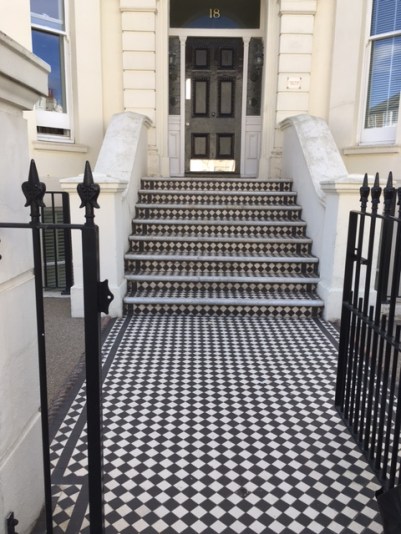
Now we come to what really got my goat. Living in one room, a room where we cook, eat, and relax, I suppose you could call it a ‘living room’ (!) the noise levels of domestic appliances are quite critical. The kitchen was already in place when we bought the apartment, complete with an American-style fridge freezer – with water dispenser and ice maker. I had arrived! I loved it although was a bit concerned of the noise level of the fan. Out of warranty, I had it replaced; I had it replaced 6 months later and again another six months after that – “Well, it’s not that bad and they are all like that” the engineer says as he leaves. Enough; my decibel app measures the noise as 75 db (advertised 43db!!) so the Lamona had to go. I eventually ordered a Samsung fridge freezer from Curry’s, a national retailer supplying TVs, domestic appliances, computers etc etc; Samsung have a reputation for quiet machines!! We discussed with Idis at Curry’s whether the 8 steps up to the front door of Amber House presented a problem and he said he didn’t think so but to be on the safe side he added a note to that effect – suggesting three people were needed (Note: these fridge freezers weigh about 130 kgs) I paid an extra £19.95 (why wasn’t it £20?) to have it delivered in the afternoon.
IMG_3918

Tessellated steps up to Amber House

So I waited. The doorbell rang. Knowhow, Curry’s delivery company had arrived; a good start! But then the two guys said they didn’t know how they would get it up the steps – “Oh! Yes. The paperwork says three chaps are recommended but the manager ignored it, obviously!” “Don’t you have some tackle on your van for helping lift/manoeuvre heavy items?” I come back to my ‘can do’ attitude; if I was a delivery man I would take pride in the fact I could delivery what I have to deliver, even if it meant having gear to assist me. That saying “More than my job’s worth mate!” came to mind. But this couldn’t have been the first time? Could I help you? “Nah! mate. Not insured.” They then moved into the world of the ridiculous; they could ‘deliver’ it onto the pavement – at which point I got uncharacteristically angry and asked them to leave.

John Lewis said the same, the delivery company couldn’t promise …..

So I found a local company who were Samsung dealers – delivery is tomorrow. I showed them the photograph of the steps. “Not a problem; we’ll have enough people to do that.” (A ‘Can Do’ attitude huh?)

And then I went back to Curry’s to get a full refund; “3-5 working day, mate. (everyone seems to be ‘mate’; over-familiarity or what?). It’s the banks, innit!” To add insult to injury, Curry’s asked me to complete an online survey on ‘how we did?’ ‘How was your recent experience with Knowhow? Rate 0-10 ‘0’.’On a scale of 0-10, with 10 being fantastic, how would you rate your experience with our Knowhow delivery drivers? ‘0’. To help us improve our service proposition (what does this mean?) please could you advise us of the reason for cancelling the order? ‘You couldn’t deliver it!’

Time for tea and toast.

Richard 2nd May 2016                                                                             richardyates24@gmail.com

*For those of you with some military experience, ‘two up and bags of smoke’ often seemed to be the answer!! If, dear Reader, you have no idea what I’m scribbling about, ask me.

PC 68 Eating Out ….. and In


In the last few days we managed, unplanned but actually delightfully, to eat out on three consecutive nights. You might think that this is a simple reflection on the social whirl in which we live here in Hove, but you would be wrong. We, I suspect like most people, eat out occasionally – it just happened that this time the evenings out were all bunched up together.

The local Ristorante Italiano, Orsino’s, is actually run by an Iranian, as is its sister restaurant, Otello’s, across the street. Not the same Iranian, but a relative; rumour has it some years ago a few staff at Otello’s walked across the street to open up a new place in competition! Some lovely neighbours, having decided they were done with having people for supper at home, asked us to join them for a meal at Orsino’s. Ramin, the manager, was able to be as obsequious as the ubiquitous Italian manager, but after the expected small talk returned to entertaining a couple of Iranian female models. The small-of-statue waiter Cassio was out of central casting, but we had, as expected, a good meal. Do you know, you can still have Insalata Tricolore in 2016, here in Hove? The offer of a complimentary glass of Grappa, or was it Limoncello (?), was graciously declined and we walked home down Albany Villas.

The UK’s Green party’s manifesto encourages the development of a local economy. In their warped sense of moral righteousness they envisage us driving cars made in a local factory, the cars running on petrol from a local oilfield, the pedals operated by feet wearing shoes made from local leather etc etc (Forgive me, I might be a little mean and selective here!). Sadly, like most idealistic endeavours, they failed to live up to their published dreams when they ran the City Council, and it came to the commissioning of the latest structure in Brighton – the BA i360, a 160m tall observation tower which will open this summer. All of the manufacturing was made on continental Europe, either by the Dutch steelwork specialists Hollandia or by the glass company Sunglass of, er, Italy. It’s also, I guess, a rather stark reflection on the UK’s dwindling manufacturing capability.

Not so ‘Isaac – at’, a restaurant in the North Laines area of Brighton (www.isaac-at.com). Personally the name is just on the too clever side of clever (particularly when you email info@isaac-at.com! (just read it aloud.) but I heartily support their aim, to provide food and drink that is sourced as locally as possible. For those of you who live in countries renowned for their wine, watch out. The sparkling Brut that preceded dinner and the Horsmonden Dry Davenport 2013 both came from Sussex vineyards and were apparently delicious. The menu is only decided when Isaac has been out and about, finding what he can: this evening for example it’s cuttlefish (from Newhaven) and Cucumber (from Chichester).

And it’s a little like a staged play, we the punters merely enjoying the creations of the chef artists. A ‘tasting menu’ was the offing, but even that was preceded by a little appetiser – a smoked salmon creation that tasted like a smoked salmon sandwich without the bread. The starter was asparagus, egg yolk, pork scratchings and scurvy cress  …… and so it went on, creation following dish, small, simply beautifully presented and unctuous. Occasionally the chef’s imagination ran away with itself …. “…. and it’s finished with the mist from steaming Kale.” Er? Really? Why? Highlights were poached cuttlefish with a smoked apple puree …… and a desert of chocolate and lavender ice-cream.

Cuttle Fish

poached cuttlefish with Bok Choi, smoked apple and cauliflower puree

We have dear friends who aren’t the greatest cooks on the planet and it’s recognised by them and us. One memorable ‘apple crumble’ was so hard that rumour has it it went into the footings for a fence post after we had all tried to eat it. They have had suppers with us and if there is anything as ‘our turn’ so it was. We offered to bring along some of the food (‘once bitten twice shy’ you might say), an offer greedily accepted, Oh! and we should help in its cooking …… and we had a great evening, no hassle, no pressure, just four people enjoying each other’s company. We drove back rather later than planned, a lovely Buttermilk Yellow moon, just off full, hanging in the night sky above the South Downs. April can be a month of changeable weather in England and the temperature outside was only 2°C. By the time we got down to sea level, the northerly wind was screened by the hills and at home the temperature had reached a balmy 6°C!!

So different from the evening before and the evening before that – and each in its own way memorable, sharing food with people you love. And tonight? Just the two of us, so we’ll probably look in the fridge, look in the cupboard and concoct something; you can probably guarantee it will be what we want!!

More scribbles ……..

Richard 28th April 2016                                       richardyates24@gmail.com

PC 67 A Short Break


London Gatwick Airport North Terminal. Wednesday afternoon in April. What are all these people doing, where are they all going? Judging by the coats and scarves all are off somewhere cool, although the extra clothing may simply reflect the rainy weather outside. What I can never get my head around is that this number of people, from everywhere within a radius say of 100 miles, are here today, just like the similar number who were here yesterday and will probably be tomorrow; we just happen to be seeing them today ….. as we join them on a short break.

We got here two hours before the advertised departure time as the traffic was slight; never want to be stressed before I fly! So now we sit, temptation at ever glance; for instance – ‘world duty free’ – but how do you know if it’s a good deal or not? You know from your local bank that their currency exchange rate is worse than the travel agent along the street, and they tell you that the rates at the airport are dreadful. So we continue to sit, wondering about a cup of coffee, people watching – families with children, the elderly in a special area as if they need protecting from the unseemly rabble, people in business clothes contrasting with those in shorts and flip-flops. I am not a shopper, hate ‘shopping malls’, but when I have time to kill I wander into shops I would not normally visit  – Jo Malone, Swatch, WH Smiths, ‘Duty Free’, Boots, Dixons – with its confusing display of every available new technology known to man. It goes on; Pret a Manger, Sunglasses Hut, Estée Lauder and the other scent outlets – eventually having tried them all you smell like some third rate brothel.

Last call for passengers Brian Walker and Louise Br..w ..te, flying to Lanzarote with Thompson Holidays, please make you way as quickly as possible to Gate 201 where your aircraft is waiting to depart.” The airport tannoy can be loud and intrusive …… and unintelligible sometimes!

Last call to the loo for me as I’m in the middle seat and the loo is the end of the aisle. I resist drinking too much water as I’ve sat on board after take-off, looking at the illuminated seat belt sign, praying it will be turned off and I can dash to the loo – and the more you look at it, the longer is seems to stay on. On a short break you can make do with one ‘carry on’ but I’m pleased it has wheels.

A coach out to the aircraft and we load. When flying became affordable for all, luggage went in the hold, passengers embarked and were seated quite quickly. Nowadays it takes 20 minutes or so, as people struggle to lift their ‘cabin baggage’ into the overhead lockers and when they’re putting it up there, they’re blocking the aisle! Some bags are just too big; so how were they allowed on? I get the advantages of not having hold luggage, as we didn’t, and on EasyJet they charge you for each piece of hold luggage, but the time saved in loading the aircraft with passengers would easily offset the time waiting for your bags at the other end. We take off, a little late due to the aforementioned problem!

After two hours plus we start our decent and touch down, that little squeal of rubber touching concrete the sound of ‘relief’. If you didn’t go to the loo on the flight because of the trolley blocking the aisle, now is the time. Before or after passport control? ‘After’ you decide …… and then find the cleaners have closed it off. And at the ‘Ladies’ the queue is snaking out onto the concourse!

We grab a taxi to the Sabóia Hotel in Monte Estoril, dump our bags and walk off to the nearest restaurant for supper with Celina’s brother and sister-in-law. Back in the hotel, we’re on the top floor; it’s windy on this coast most of the year and there’s something on the roof that bangs and scrapes all night. And the loo seat wouldn’t stay up!! To my female readers this doesn’t mean anything. To us males, you need a hand to hold one’s appendage and if the seat doesn’t stay up, another to hold it up! You could always sit down I suppose.

On our second night we ate in Cimas, a Irish Manor House replica from the 1940s; the current family have owned it for over 50 years. Old hunting prints and social cartoons cover the walls – one entitled: ‘A Day Trip to Brighton’! Home from home you might say! Portuguese waiters attend, I think, the same school as the Italian ones. They are all male, all over 50 and all impeccably well mannered. Good grub too!

I sat on the 6th floor balcony on a white plastic chair in the weak morning Spring sun, looking at the view. To the west, my right, the old town of Cascais and its modern marina denominated the view. The wind was strong and the tops of the waves of the Atlantic were whipped into a fine spray. To my left, far away on the shimmering sea, I could just make out the lighthouses guarding the entrance to the Tagus River and the Portuguese capital city, Lisbon.

Short breaks are, er short and suddenly we’re in the taxi returning to the airport. It’s Friday evening and the European school holidays are coming to an end; the airport is crowded, people finding food or running to get to their gate in time. Easyjet post their departure gate and we join the queue; we’re still in the queue when the scheduled departure time comes and goes, with no apology! We board, we taxi and we wait, another queue (!) Half an hour before midnight we touch down at Gatwick and taxi ……. and taxi ……. and taxi …… 15 minutes to find a parking slot (a little like finding a parking spot for your car on a Friday evening in busy Hove!). You have to have the patience of a saint. I join the small queue for the ‘eye recognition software’ passport control; fortunately I’m recognised and ‘in’. Off to call the car parking valet service, and find that my iPhone battery has suddenly decided to show ‘10% remaining’!! We get the car and head home; a refreshing couple of days in a different country. Just a short break, just a short scribble!!

Richard 21st April 2016                                       richardyates24@gmail.com

PS If you think I have a fixation about knowing where the loos are, you’re right. One of those irritating physical aspects of middle age!!

PC 66 Molars and Wisdom (continued)

For those of you old enough to go to the cinema in 1976, you may remember a film called “Marathon Man” with Dustin Hoffman and Laurence Olivier? If not, rent it! Following the murder of Babe Levy (Hoffman)’s brother, ex-Nazi Szell (Olivier) believes that Babe was given information about a diamond-smuggling operation that Szell is running. His henchmen grab Babe when he is out running, and handcuff him to a …… dentist chair. Szell had a reputation as a torturer in the war and applies his skills to one of Babe’s teeth cavities, using a dental probe. At this point most people in the cinema couldn’t watch and cover their ears to the screams of Hoffman. Did I suggest you rent it? Maybe not!

We are always urged to clean our teeth more regularly, more efficiently and if there is one area of dental hygiene that has improved it’s here; or maybe as I get older I recognise more and more how critical this is. The ordinary tooth brush now comes in all sorts of shapes and sizes or you can use an electric one. Both need the brush replacing regularly or they begin to look at though you clean the dog’s food bowl with it. Clearing food from between our teeth has become much easier, but if you leave it for too long, you get that slight whiff of rotting food when you do – disgusting! I should follow Celina’s example and clean my teeth after every meal but, except after eating spinach or pineapple, rarely do. Tooth picks, floss, interdental brushes, mouthwash and now the electric ‘AirFloss’ assist. Diligently use this latest gadget and you feel you’ve been to the hygienist, but haven’t paid £55 for the privilege! And if you floss, please do NOT do it in public at the dinner table (See PC 38 March 2015).

As the King’s Fund, a London-based Health pressure group, says of the changes taking place: “Sadly the lower socio-economic group and those less educated have not been giving up unhealthy behaviours as fast as the rest of the population and this does not bode well for our future.” Smoking tobacco, for instance, is bad for your teeth and for your gums. It doesn’t cost a great deal to look after your teeth, but if you need treatment, you need money. If you can afford it, you can look after your teeth.

There has been much discussion here in the UK about a tax on sugary soft drinks as one way to combat growing levels of obesity and diabetes; the government has just announced it will impose such a tax in 2018. But we don’t help ourselves, do we? The modern coffee houses like Starbucks and Costa, visited by 20% of the population every day, sell some concoctions that contain 24 teaspoons of sugar – three times the recommended daily intake in one drink. The ubiquitous Jamie Oliver went to Mexico where the poor quality of drinking water has caused villagers to only drink Coca Cola; the result has been a huge rise in Diabetes and tooth decay. Oliver’s TV documentary was a sad reflection on modern life. Children as young as 5 are having rotten teeth pulled out. In the UK projected costs to cover diabetes and dental decay could overwhelm the National Health Service (NHS) budget.

And here’s the funny thing. When the UK’s NHS was set up in 1948 it was trumpeted as ‘free for all, free at the point of delivery.’ Not everything is free; people are expected to pay towards the cost of their dental and optical treatment, and towards the cost of their prescriptions, except if you’re pregnant or under 18. So it is possible to get limited dental cover on the NHS, but it’s very restricted and any treatment needed is not free; only some £3.8bn per year is set aside to cover dentistry, from an overall budget of £116bn. When I mentioned this to the Practice Nurse at my local Doctor’s surgery, she said she didn’t go to the dentist as she knew she would need treatment, and couldn’t afford it. Maybe the old man on the bus was in a similar situation. But couldn’t he have had dentures, those revolting things that people kept in some Sterident beside their bed overnight? Maybe they are no longer available such is the advances in implants etc.

The advances in techniques may explain the huge increase in cosmetic dental work. Braces are now ‘normal’, often for adults as well as teenagers. Implants have become routine if you have the money, and the variety of claims for toothpaste seem never ending. It was ever thus. At school in the last century I regularly sent an empty toothpaste tube to Colgate as the box said: “if you don’t notice the difference, money back guaranteed.” Who could really tell?  Today the same company claim ‘maximum cavity protection whitening plus sugar acid neutralisation’ – wow! We do need to accept that teeth are a natural part of us and as such will rarely be too uniform and level. It’s so obvious when someone has had too much cosmetic work; their teeth no longer look natural, the smile is so synthetic; pity, I think.

white-teeth

A natural look?

When you meet someone for the very first time, you instinctively look at their eyes. If these are friendly, you look down the face to the mouth, to a welcoming smile. So teeth are important in making that good first impression huh? I had a client who mumbled when he spoke, didn’t open his mouth to enunciate the words well – and you know what? They were ashamed of their teeth, all crooked and not too clean. Three months and a few hundreds of pounds later, they were a different person, projecting their personality and ability with confidence!

So it does matter, it matters enormously; smile with confidence, laugh with love ……. and if you can, keep paying your dentist for those check-ups.

Richard 10th April 2016                                        richardyates24@gmail.com

PC 65 Easter thoughts

It’s remarkable how early the celebration of the Christian festival Easter is this year. Unlike a fixed date say of Christmas, the date of Christ’s crucifixion and subsequent resurrection is moveable, linked to the lunar rather than solar cycle, and can occur sometime between March 22rd and April 25th. Even after reading some of the interpretations of Old and New Testament scripts concerning the date of the crucifixion, I still find it strange that it can vary by over a month.  The resurrection was supposedly ‘on the 3rd day’, so they must count the day of the crucifixion as the first, otherwise we would celebrate it on Monday! And of course this is using the Gregorian calendar, which in the C21st is 13 days earlier than the Julian calendar used by Eastern and Orthodox Christians. This year The Archbishop of Canterbury announced that there are ongoing discussions between the Protestant, Catholic and Orthodox communities to fix the date, possibly as 19th April – but not for 5 years or so.

Growing up I remember, or was told as a two year old’s memory is not reliable, that my parents had placed some chocolate Easter eggs on my bed. I had woken, found them, eaten them, and when my mother came in she found me covered in chocolate. Of course!

My mother and step-father lived in a small village in Sussex and went to the local Church of England C12th Saxon church every Sunday. At some stage the vicar discovered that they were confirmed in the Church of Scotland and so it was, on Easter Sunday, to take communion, we all travelled up to London to St Columba’s Church in Pont Street. Although we had driven the roads many times, I do remember a moment of confusion in 1962 when we reached a particular T-junction: “Left or Right?” Ahead of us was a poster advertising a Bob Hope film – “The Road to Hong Kong” and so the inevitable comment was made from the back seat – ‘if you go straight on we’ll go to Hong Kong’. (We probably thought this a preferable option!!)

Before the communion, those who were not confirmed left the church. My brother and I would go and find some Sunday papers and read those in the car, before we were joined by our parents and driven off to lunch at Lyon’s Corner House at Marble Arch.

So for many people, Easter is about religion, marking the death and resurrection of Jesus. For others, it’s about Easter eggs, of bunnies, and overdosing on chocolate. I read that this year in the UK it’s also all about eggshell wreaths, bunny string lights and stylish Easter trees; the sending of Easter cards has made a comeback. God Help Us! Incidentally the ‘egg’ association started in the C13th, as a representation of new life.

This year the Easter weekend has been used to mark the centenary of the Easter Rising in Dublin. This had nothing to do with Simnel cakes, hot cross buns and the like, but an attempt by seven fervent Irish nationalists to form a new nation, independent from London. The rebellion was over in a week, and the ‘rebels’ executed, but it hastened the creation of the Irish Free State in 1922, known as the Republic of Ireland from 1937. The Easter Rising was, according to a recent book about the seven nationalist, ‘a catastrophe that poisoned Irish veins with the toxin of political violence’. One sixth of the island of Ireland remains part of the United Kingdom and is known as Northern Island. That ‘toxin’ encouraged a thirty year terrorist campaign by the IRA to force the UK to end its governance of Northern Ireland. It ended in 1998 but fringe groups continue their misguided criminal activity. The actual date of the Easter Rising is 24th April 1916, but as Easter is so early this year ……!!

But for me, the abiding memory associated with Easter is completing the canoe race from Devizes, 125 miles west of London, to Westminster; the ‘DW’. You might not think of me as a roughie toughie canoeist, and you’d be correct; I’m not and wasn’t! On commissioning, I was posted to an artillery regiment in Devizes, Wiltshire. I duly wrote to the Commanding Officer, as required, expressing my enormous pleasure in joining his regiment. I was also required to say a little about myself; after mentioning playing rugby and a love of art, I was scrambling around to fill the page. Stupidly, I said I loved canoeing, having spent a couple of lazy sunny Sundays on the lake at the military academy, complete with female companion and bottle of bubbly. I never made the connection – that Devizes was the start of the DW Canoe Race. Volunteered in true military fashion, ie “Yates! We’ve entered a team of three two-man canoes in the DW. You’re in charge!”, I found myself on Good Friday morning 1968 on the Kennet & Avon canal, ready for the off. I won’t bore you with the details, as it’s immensely tedious to paddle 125 miles. The first 53 miles are on the canal, before one joins the River Thames. On the canal stretch, at every one of the 77 locks, you had to get out, carry the canoe around the lock, get back in and start paddling again. Some parts of the canal had no water and you just had to carry the bloody thing! The Thames becomes tidal, and consequently very choppy, after another 55 miles; those last 17 miles are “just mind-numbing” says Sir Ranulph Fiennes the British explorer. Indeed, many teams fail on this last 17-mile stretch. Suffice to say my crewman became sick, another team canoe struck something and developed a leak, and in the end it was just one canoe, mine, with a different crewman, paddling into London, against the coldest wind imaginable. Someone gave me a cup of tea – I dropped it, so exhausted, so wet, so frozen.

The winner that year came in in about 25 hours; we were not in racing canoes and took considerably longer. But we finished and I have the certificate to prove it, although as we had changed crew, we weren’t given a ‘place’ but simple recognition we had completed what has been described as the Mount Everest of canoe races. The former Liberal Democrat politician Lord Ashdown also completed it as a young Royal Marines commando, famously commenting afterwards that he could think of only one person who’d had a worse Easter than him!

So, some thoughts at Easter in 2016

Richard 28th March 2016                                               richardyates24@gmail.com


PC 64 Molars and, er, Wisdom?

My recent encounter with a dentist away from his treatment room (PC 62) started another train of thought. Just what is your relationship with your dentist? One to be put up with, an acceptance of a necessity, or one you would prefer not to think about? After two close encounters recently with chums who are undergoing ‘dental work’, but not really wanting to know too much detail, I saw an old man on the bus the other day who had clearly given up going to a dentist – absolutely no front teeth, top or bottom, and what teeth there were, were stained by tobacco or too much coffee. Could I dare to scribble about our teeth? Worth a try!

missing_teeth

We do not want this sort of decay!

First the details, in case you’ve forgotten? Children have 20 deciduous teeth which they lose after some 10 years. A normal adult mouth contains 32; 8 incisors, 4 canines, 8 premolars and 12 molars. The latter include 4 wisdom teeth; they are the last to appear right at the back of the mouth, by which time you are supposed to have gained some degree of wisdom – personally I’m not sure about this!

I lost one of my baby teeth on a sailing trip on the west coast of Scotland in 1956. I fondly remember the feel of the coin under my damp pillow in the wet berth, for in the UK we have this tradition of placing a coin under the pillow when a child loses one of their baby teeth. It used to be an old sixpence, but I’m sure inflation has increased the coin’s value. I learned later that the yacht had been in danger of capsizing – but that detail is hidden in my psyche!

One’s tongue is a funny part of one’s body, very sensitive, strange-looking, and indicative of good health. But when you have a loose tooth, you use your tongue to ….. lick the tooth, to tease it, rock it in and around in its socket, push it so it almost comes out ….. just a little more!! What a delicious feeling!

Growing up in 1950’s Britain, sugar, which had been rationed during World War Two, was more available, but only just! I am old enough to remember Ration Cards that allowed me to buy sweets from Mr Sugden’s newsagents in Margaret’s Buildings, a small pedestrianised shopping street around the corner from The Royal Crescent in Bath where I lived. Four Black Jacks cost one penny (in old decimal currency a two hundred and fortieth of a pound). I think I indulged my love of sweets too much, trading other’s sweet ration for chores; that and an oft-quoted ‘we all have soft teeth in the family’ and visits to the dentist became a regular feature of my life. If you have ‘soft’ teeth you should not eat Winegums or toffees, especially caramel, but they’re my favourites!! (Oh! And dark chocolate-covered Brazil nuts ….. and Cadbury’s Chocolate whole nut and …….)

I haven’t talked about this nightmare before, so forgive me if I get a little emotional! Mr Sharp, my dentist, had a practice in one of the honey-coloured Bath stone buildings in The Circus, a circle of large, tall, terraced houses with a stand of enormous trees in the centre. As a schoolboy, wearing shorts and long socks, I would ring the well-polished brass bell by the large front door, and step into a stone-flagged hallway. Mr Sharp’s surgery was on the first floor ….. and he stood hands on hips at the top of the stairs, with the light from the surgery behind him. He looked threatening and I climbed those stairs with huge reluctance, wishing that I could have been transported away, anywhere actually; “Beam me up Scottie?”

Hello, Richard!” His cold clammy hand did nothing to lighten my mood. “Come on in.” The chair of course becomes your prison, its back the wall. If I had an injection, it always seemed to me that the numbness was at its most effective just as I stepped out of the chair at the end of the appointment. In those days I think the drill was a cable & foot-pedal affair; it might have been driven by electricity but the fluctuation in its speed suggested otherwise. When that drill bit made contact with a tooth, it made me sympathise with concrete when a workman starts digging it up with a hydraulic jackhammer. You couldn’t talk as you were like a hamster, with bits of cotton wool stuck in both cheeks. The suction device that was meant to take away the saliva was never quite in the right place but you couldn’t move it as your hands were gripping the armrests of the chair so tightly. Oh! How I hated going to see Mr Sharp!

In common with many children I managed to come off my bicycle, in this case crashing into my brother, and chewed the tarmac. This hastened the loss of the front teeth – and reminded me of that song “All I Want for Christmas is my Two Front Teeth.” There was a small gap between my two top teeth which aided my ability to play the trumpet in the school orchestra. My passion for sweets created cavities in my teeth, much like the hole at the core of the Chernobyl Nuclear reactor that needed a concrete cap, although the covering in my case was made of a nicer material. Most of the work was done by an Army dentist and I spent so much time in his chair that we became good friends! Those crowns remain in good shape, such was the quality of his work. I am still in touch with his wife who, forty years later, lives in Hastings.

Other memories of the dentist cover a broken crown that I glued back temporarily with super glue (the dentist was not amused!); failing asleep in the chair; and a root canal that required a second mortgage to finance.

But I have had sufficient money to get the treatment when and where it’s been needed. Woe betide those who don’t. (To be continued …….)
Richard 20th March 2016                                                         richardyates24@gmail.com


PC 63 Santa Catarina – the penultimate southern state of Brazil

Should I have worried when the receptionist fixed a plastic strap around my wrist and said: “Welcome to Il Campanario Jureré”?  It was like that thing they do when you’re an in-patient in hospital, so you, and they, can remember your name, but this was apparently for ‘security’. It was a shade of green that I adore …. but I could have done without it. According to the travel agent, on Ilha de Santa Catarina the place to go was Jureré , some 40 minutes drive north from the capital Florianópolis. After two days we thought otherwise. The pool was fine except the muzak too loud to talk comfortably … we asked for them to turn it down but they said: “no”. Welcome to Jureré!

Although it was low season, and only at 40% occupancy, everything took an hour and a half. We had a problem in the shower in our room; well, actually a major problem –  no water! We called reception – after a long wait they eventually answered and said they would send someone. Thirty minutes later another call, another ‘we’ll send someone’ adding they were very busy. A man arrived, mumbled something, and went away. The words Faulty Towers were beginning to surface from my memory pool. He came back, muttered to himself, fixed it and left. An hour and a half. We showered; unfortunately my towel was so threadbare you could see through it so it didn’t dry well. I almost took it to reception ….. but decided to go for dinner instead.

Most guests from Argentina, Uruguay and some of the locals seemed to be tucking into the buffet …… and an hour and a half later we knew why. We sat in the alternative  ‘bar restaurant’ and waited. Laverina bought the menu and suggested we order our starters and mains at once as they all came together! Not quite sure what she meant at the time, but as we waited ….. and waited ….. her words came backs to haunt us. How long does salad and 6 little cod croquettes for an appetizer take to make? Almost exactly an hour and a half later our starters and mains arrived, together. We decided not to have pudding as …..

We didn’t have Manuel attending to us when we tried the buffet the second evening but Andrico, who had learnt English in London and was keen to impress us with his knowledge – standing too close to our table, he wanted to talk about English football, of which I know nothing, and the European Union, of which I know a little. (But I am being extremely hypocritical here, as my knowledge of Brazilian Portuguese hardly runs to more than ‘boa tarde’.)

After two days we drove south to Quinta Do Bucanero on Praia do Rosa, north of Imbituba. We had arrived! At the end of a sandy track with pousadas left and right, very much like on the Mediterranean coast, a wonderful seductive atmosphere awaited us. … and seclusion. The pousada was cleverly built into the rocky hillside, and consequently on many levels. Our room overlooked the beach and you walked down a steep path to get to the sea, which was a little cool. The staff were attentive, the food was lovely, the massage relaxing and ……… we had that view!

PC63-1

Praia do Rosa, voted one of the 30 best beaches in the world in 2003

Next to Praia do Rosa was Praia do Vermelha: almost deserted as to access it you had to climb up and around a headland, so few bothered! After three nights we moved on.

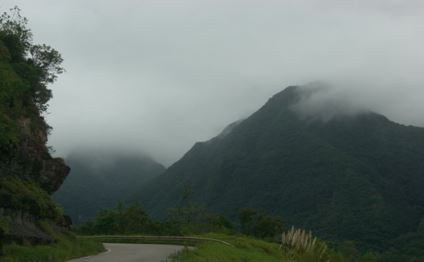
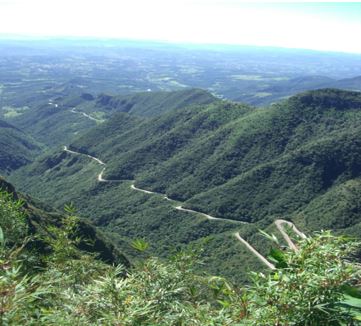
It’s only about 250kms to get to the top of the Serra do Rio do Rastro mountains from the coast, a climb of some 1500m, but the final 20 kilometres are extremely steep. We came up behind a lorry which, in order to complete particularly sharp corners, had to reverse! Traffic backed up, the roads wet with rain showers and with low cloud, one could be anywhere apart from Brazil. It was slightly nerve racking and with visibility low there are some anxious moments.

PC63-2

Into the Serra do Rio do Rastro

The economy of this southern state, population 7 million, is mainly agricultural-based, with apple production and cattle farming abundant; tourism is on the increase. Vineyards abound and the local wine, I’m told, is delicious, the expertise being handed down through the generations by the Serra Catarinense people, descendants of the Germans and Italians who settled here in the C19th. This part of Brazil still retains the traditions of those original European settlers; for example, as we drove into Orleans, the sign over the road declared: “Hertzlichen Willkommen”!

The Rio Do Rastro Eco Resort, in Bom Jardin da Serra, where we had planned two nights was a mistake!! I guess we imagined more of a hotel complex, not a group of chalets lying in a natural bowl …. with no view. It’s the only place in Brazil where it snows every year, so we expected a change of temperature, but the drizzle and cold did nothing to lift our mood ….. so we went to check out the restaurant. After some trout laced with ginger and honey (terribly sweet), I liked the sound of the ‘ice-cream with wild berry sauce’ …. but got some microwaved raspberry jam instead. The alternative was what turned out to be a few strawberries swimming in 500ml of balsamic vinegar and 500g of sugar! Then we decided to spend only one night here!

The following morning the sun came out as we headed for breakfast and the American comedian Allan Sherman’s ‘Camp Granada’ song came into my head. Sung to Amilcare Ponchielli’s Dance of the Hours, it’s an amusing letter from a teenage son to his parents, moaning about his summer camp in the rain. At the end, the sun comes out and he writes: “Wait a moment it’s stopped hailing …. muddah, fadduh kindly disregard this letter.” But the clear visibility gave us a wonderful view from the top.

PC63-3

We went home …. back to Quinta do Bucanero for one night before flying back to Rio.

More scribbles to come!

Richard – 4th March 2016 – richardyates24@gmail.com

PS When you book a flight you think: “Oh! That’s ok, we leave at 0915.” forgetting if you work the times back you have to get up at 0450 to get to the airport! C’est la vie

PC 62 Retirement, Retired, Retiring and Retire

Eek! What awful words ….. so many connotations of the end of life, finished, the scrapheap!! But actually we shouldn’t read them as such, should we?

Some years ago at a post-theatre supper party (sounds grander than it was!!) a guest asked a close relative of mine what he did. “Oh! I’m retired!” he responded, effectively ending any further conversation. I was reminded of this exchange the other evening, when a long-established friend of Celina’s family came to supper. “And what do you do?” he asked after the initial pleasantries were out of the way. I accept that youthful looks belie my actual advancing years; I fell into the trap and replied: “Oh! I’m retired!” I later apologised to him, saying that my response was very lame, and went on to tell him what I had done in my three careers, so as to encourage conversation. He is a dentist and conversations with dentists are often completely one-sided. You sit in that chair: they talk to you; your mouth’s open and the gums are numb; the suction device struggles to clear the saliva; and he (or she as I have been treated by a number of female ones) asks “Oh! And how’s so-and-so?” ….. and blah blah ….. and all you can do is mumble and look appealingly into their eyes as if to say: “Please stop asking questions!”. But I digress!

My first ‘retirement’ was from the British Army in 1985, on a pension large enough to buy one glass of wine a day! After twenty years’ service I was still under 40 and another career beckoned. It seems to me that my step-father’s generation had made the long career in one company or organisation their ‘goal’, one you started after school or university and left when you were 65; the gold watch in your pocket and the grateful thanks or otherwise of your colleagues ringing in your ears. It was the aspiration of the middle classes (actually when I was typing this I missed the letters ‘m’ and ‘d’ and typed ‘idle’ classes before realising my error – or maybe it wasn’t an error?). Frankly it should be ‘working’ classes as we all need to work. Retirement isn’t necessarily confined to older age; “The Home Office (forcibly) retired him on a full pension, as it was reorganising the department.” The phrase ‘put out to grass’ was often used in this context; it rather sadly originated in farm use, animals too old for other work were ‘put out to grass’.

People now talk about having fun when they ‘retire’, as if they didn’t before they stopped working. In my professional business coaching days, I tried to get my clients to identify where they could have fun, even if they were ‘working’. Surely you don’t want to wait until your mid 60s before you can indulge yourself in joyous activities? This word ‘retirement’ is now linked to places where the elderly ‘rest’. To the west of Hove is the town of Worthing, known unfairly maybe as God’s Waiting Room, and to the east Eastbourne, near the Continent (of Europe) and incontinent; such is the density of the elderly!

There is a rather archaic use in relation to an unassuming, unassertive, effacing person. “A retiring acquiescent woman with a fondness to be on her own.” For me it conjures up a rather sweet, quaint character who actually contributed to the fabric of society in a funny way. Is anyone ‘retiring’ anymore?

It can of course be used to describe the withdrawal from a race or match; participants ‘retire’ from a race because of equipment failure or personal injury or retire from the sport, say rugby, because they’re not able to keep up (trying to avoid using the words ‘too old’ here!!). It’s not the end of life as we know it!

I love the use of the word to describe withdrawing from a particular place or indeed to just somewhere else.  “He retired to bed.” And I imagine silk pyjamas, slippers and a little ‘nightcap’ (material or liquid?). The use of the word ‘retire’ in a courtroom actually means of course the start of work for the jury. “The judge finished his summing up and the jury retired (out of the courtroom) to consider the evidence and come to a conclusion as to proven guilt.”

And finally, it’s used as another word for ‘retreat’ in a military context: “lack of numbers compelled the British force to retire“. Researching the background to the Indian Mutiny of 1857, as a great great grandfather had been in the country at the time, I came across the story of General Charles Napier’s foray into what is now Pakistan. His orders had been to put down an insurrection of Muslim rulers who had remained hostile to the British Empire in the Indian subcontinent. Napier’s success went to his head and, despite huge diplomatic efforts to make him and his army retire, he greatly exceeded his orders by conquering the whole of Sindh Province. Napier was supposed to have despatched to his superiors the short, notable message, Peccavi, the Latin for “I have sinned” (which was a pun on I have Sindh). This pun appeared in a cartoon in Punch magazine in 1844 beneath a caricature of Charles Napier. The true author of the pun was, however, Catherine Winkworth, who submitted it to Punch, which then printed it as a factual report. Later proponents of British rule over the East Indians justified the conquest thus: “If this was a piece of rascality, it was a noble piece of rascality!”

Oh! To have that knowledge of Latin to enrich my writing! So, no retirement, just fun, like scribbling another postcard !!

Richard – 20th February 2016 – richardyates24@gmail.com

PC 61 Somewhere to lay your head

It may be that you catch up with my postcards in bed, getting ready to sleep; I hope my banging on about this and that doesn’t keep you awake or indeed produce a soporific state? If I get my mathematics right, whilst this won’t be applicable to any of you, there have been some twenty five thousand two hundred and eighty something times when I have laid my head down, ‘to sleep, perchance to dream’, and whilst I can’t remember every place …..  a few come to mind, some generic, some particular.

I recall laying my head down on bunk beds, iron bedsteads, futons, slatted beds; sofa beds – wow, have you ever had a decent mattress on a sofa bed?; adjustable beds in hospital; water beds, so cold and clammy; on a car seat, waiting for a ferry; on a floor in a half built house in Aachen, Holland on a hitch hiking holiday aged 17; in a railway sleeper carriage, the ‘clickety clack’ rhythm rocking you to sleep; in a sleeping bag on a blow-up Lillo; on an apartment floor a few years ago, trying to get comfortable on old coats and cushions; or even on an aircraft seat – once you’ve experienced an upgrade it’s difficult to opt intentionally for discomfort!!

I get the basic sizing of beds, as in ‘single’and ‘double’ but then we get to ‘Queen’, a bit bigger that a double. The late Queen Victoria was extremely small; our current queen only average, so why it is bigger than a double? Then the king – as in “I need a bigger and better bed that my wife” and jokingly Emperor. One of the last great western self-styled emperors was Napoleon and he was famous for having small man syndrome – so you name the largest bed size after the smallest …….?

You put your head on someone’s lap for a little nap – an expression of intimacy/closeness. Firstly you hear the gurgling torrent that takes place the other side of the epidermis and then in the background the sound of the beat of the heart – well, that’s a good think to hear but you really can’t fall asleep with the noise in your ears, can you?

Talking of sounds, many years ago I went off to Manorbier in South Wales to make a reconnaissance of a live missile firing facility. My Battery Sergeant Major accompanied my small party and we were accommodated in a wriggly-tin roofed Nissen Hut in the nearby training camp. Across the road that ran beside the camp was a small, single track railway line that was used by the occasional cargo train. After a supper in Tenby we retired to bed. The bed itself was comfortable, my head hit the pillow and I was soon asleep. At some stage in the night I was shaken awake by the sound of a train rumbling past outside. Sufficiently compos mentis within a minute or so, I realised it was actually the rattling sound of the Sergeant Major’s snoring from next door.

I have sailed around the waters of Britain, extensively in The Baltic, occasionally in the Mediterranean and once a long haul across the Atlantic to the tiny islands of Bermuda. Up in the bow, in the forepeak as it’s known, under sail you suffer the rise and fall, the crash and shudder, the rushing noise of millions of gallons of water just past your head; difficult to sleep but exhaustion normally kicks in. Amidships, the port and starboard berths required a certain athleticism to clamber into. I once saw the opposite berth almost vertically above me as we broached (sort of capsized!) in a dramatic squall in the North Sea – water poured in, the mainsail ripped but then the yacht righted itself.

In charge of the directions we should take to Bermuda, I had the associated navigator’s bunk. With the chart table in constant use, getting into my berth was difficult; I had to double up, before straightening out and sliding my head under the table. Feeling queasy when sailing at the best of times, being claustrophobic, with the underside of the table 6 inches from my head, did not make sleep easy!

When you’ve had a tiring day, nothing better to fill the bath with steaming hot water, fill a glass with some crisp white wine*, and ……. soak! Gradually the issues of the day drift away, you drift away …… and you wake up later in a cooling bath with wrinkly skin! Nice Huh!

Part of Louis de Bernière’s latest novel “The Dust that Falls From Dreams’ covers the First World War and he describes the horror of living and sleeping in the water filled trenches. You will imagine that in the early weeks of my officer training at Sandhurst, we dug many holes and some we occupied for a day or two; some were dry and others filled with water in the pouring rain. Sleeping half standing up was not the easiest position to adopt but needs must. I also remember actually falling asleep standing up on the third day of a long exercise. Up a couple of hours before dawn, trekking to the start of some manoeuvre, and then waiting and waiting. Only woke up when the chap behind me moved forward and bumped into my back!!

In the steaming jungle in Belize in Central America, we first made the A-frame by chopping down some suitable saplings with a machete, then lashing them together. You tied the poncho to it, as a hammock, got the mosquito net in place, and settled down for the night. Of course ear plugs are essential in the jungle for the noise of the other inhabitants is deafening!!

Many years ago I tried camping again when going for a walk-about in the Australian island state of Tasmania. This is a dramatic, remote part of the world, one of rare natural beauty and delightfully uninhabited. As part of the circumnavigation, I hiked into the Freycinet National Park, complete with freeze-dried food for supper that night. I was awoken in my tent in the early hours by a Possum chomping its way through a bag of Chicken Supreme. Poor thing – it rushed off but not before it had completely emptied the little aluminium sachet – I often wonder what happened when it got thirsty and drank ……. (Dried food expands very quickly when it meets water …..!!)

But, for all of the above, when all’s said and done, there is nothing remotely as pleasing as one’s own pillow, in one’s own bed, on which to lay your head!

Richard 6th February 2016 – richardyates24@gmail.com

*Although I gave up alcohol fourteen years ago it doesn’t mean I can’t recall the delight of a glass of a NZ Cloudy Bay or a Pouilly Fuisse!! Yum! Yum!

PC 60 Goodbye …… but never forgotten

Observations and thoughts …….

Just how do we say goodbye to a loved one? It’s a challenge facing us all, and often more than twice in our lives. It doesn’t matter whether they have reached the full expected span of their life with accumulated wisdom and maturity or if only an infant – it’s the same pain, the same distress, the same anguished cry of “Why?” ……… and often the follow-up guilt in the “If only ….”! Buzzing around my head is this:

“Not a drum was heard, not a funeral note, as his corpse to the rampart we hurried;
Not a soldier discharged his farewell shot, o’er the grave where our hero we buried.”

Just simple, expressive, oozing with sadness and loss. The first verse of a poem concerning the burial of Sir John Moore after the battle of Corunna in the Peninsular War (1807–1814)

We all know we should listen to our bodies, but there is a tendency to hide a suspicion about this or that, a hope, maybe a belief, it will go away; must have been an aberration!! ….. then it becomes an issue and it’s often too late.

Worried family and colleagues gather in hushed muted groups to share information and the latest prognosis, all the while hoping against hope for the best. The end comes quietly and peacefully. The grieving grieve. In the hospital basement, in a small windowless room masquerading as a chapel, the body is clothed by nurses, delicately and with sympathy; just another job that needs doing.

Every one of you will have experienced the death of a loved one, or even an unloved relative, whose life on earth deserves recognition. Unless you’re of Muslim, Jewish or Hindu faith, where custom dictates the funeral is conducted on the same day as the death, in northern Europe it’s normal for the funeral to take place some days, even a couple of weeks, after the demise. So I had to get used to the idea that Carlos Eduardo Guile da Rocha Miranda’s body would be cremated less than two days after his soul departed. Whilst I understood from a practical point of view how this custom developed in hot countries, my mind was shocked by the undue haste; and still is.

Christians used to expect to be buried ….. ‘dust to dust, ashes to ashes’ ….. the intonation rang out across the graveyard at past funerals; the coffin lowered into the cold ground. But there’s pressure on the physical space and cremations are becoming more normal.

The crematorium is surrounded by the graves of the departed – above ground for the Jews and below for the Christians. Some huge edifices have been erected ….  the artist obviously having been given free reign  …… winged angels stand guard  …..  women lie draped in distress across the cold stone  bust  …. mausoleums large and frankly ridiculous dot the landscape. Is this glorifying death …… or life? Not sure! Maybe just highlights our awkwardness about what to do and how to do it??

The open coffin, the recently departed pale and lifeless, lies in the small crowded chapel, with only a figure of Christ on the Cross on the wall to suggest religious significance. The extended family, friends and academic colleagues gather to recollect, to pay their respects, to share in a life’s contributions. A priest conducts a simple, short service; the family are invited to say a few words. Eventually the orderlies come to put the top on the casket and wheel it away. Later the ashes will be collected and a decision made about what to do with them. My mother sat on my mantelpiece for a year or two before I scattered hers where my stepfather lay! Aunt Cynthia was placed under a rose brush outside her favourite church. Tom our loved Labrador was scattered on Hove beach at low tide. We all find the right place eventually.

The memorial service is in this case a mass. After the service, the line to meet and greet, to offer heartfelt condolences, snakes across the church. There is no haste, rightly so, each person wanting to express their memory of the man.

In the UK, about 1600 people died on the same day. Some quietly, some violently, some bravely, all just a number in the statistical record but as an individual so special and so loved. Some chums have written to say of similar end-of-life situations before this Christmas and others of the lingering for years in the twilight; one wishes we had a better way of ending the suffering.

I think Carlos would have liked to have recited this little poem, looking at his beloved Cecilia whilst he did so:

“If I should die and leave you here awhile

Be not like others sore and undone, who keep long vigils

By the silent dust and weep;

For my sake, turn again to life and smile,

The man I grieve in this piece was an enormously loved, talented individual who used his intellect to further our understanding of our brains and how they function. He was a simple man of faith or maybe a man of simple, deeply held faith, and if anyone was prepared for what might follow this earthy life, he was.

Richard – 20th January 2016 – richardyates24@gmail.com