PC 263 Freedom

Josh looks up as I order a double espresso; Susie is on the late shift. “Hello! Richard, how are you doing?”  (Note 1)

“Oh! I’m fine. Need to gather my thoughts for this week’s postcard.”

What? The last one of the year? Why don’t you write something about freedom? Been in the news a bit recently!”

“But I limit my scribbles to about 1000 words, otherwise I think my readers will get bored! Freedom is potentially such a wide topic ……”

 “Just be succinct then!” Josh interupts, putting my coffee on the counter in front of me. I pick it up and head for a table; there are a number free, socially distanced of course!

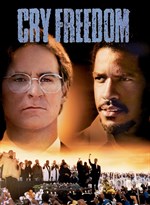
For those of a certain age the word freedom instantly brings back a memory, the 1987 film ‘Cry Freedom’. Set in late 1970s apartheid-era South Africa, it was based on books written by the journalist Donald Woods about his black-activist friend Steve Biko. Woods attempts to uncover the reasons Biko dies in police custody. He is banned from leaving the country, decides he must expose the corrupt nature of South African politics and is forced to trek to neighbouring Lesotho disguised as a priest, before flying to London.

But here in Britain we don’t need to go back to the memory bank to read ‘freedom’, as our shores are a magnet today for migrants fleeing persecution in many countries, for instance Syria, Iran, Sudan and Afghanistan. The UK is often chosen as the migrant not only has some knowledge of English but also believes our flexible black market economy will allow him or her to find a job quickly.

Matthew Parris, writing in The Times, rightly points out a couple of things; that ‘voters on an island will never soften towards settlers arriving uninvited in boats’ and that ‘persecution is most oppressive when the country is poor but individual rights are most respected in countries that our rich.’ Unless that changes, the poor will attempt to gravitate to where the rich live.

Migrants on an inflatable crossing the busy English Channel’s shipping lanes (Photo The Times)

On the news the other evening, a small malnourished 8 year old boy in a refugee camp on the Greek island of Lesbos, close to the Turkish coast, turned to the camera and pleaded: ‘I just want to be free. I just want freedom.’ On the other side of the pond – “Freedom feels different to different people ….” So began an article in the Sunday Times magazine about 55 year old Jens Soering, who had just stepped outside an American prison for the first time in 33 years.

Whilst it came in for a great deal of criticism as the writer was not from Central America, so how could she write about the subject (?), Jeanine’s Cummins’ ‘American Dirt’ was an eye opener on the migrant struggles to cross from Mexico into the southern USA. I even Googled the train that carries this human cargo northwards and watched some documentary video – tragic of course, but fascinating if detached. All in the desperate search for freedom, real or imagined.

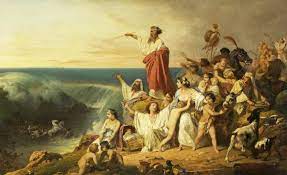
Freedom has been sought over the centuries by groups of people: for example the Israelites crossed the Red Sea in search of it, the Pilgrim Fathers sailed to North America to flee persecution and find freedom and Jews have been victimised until they were granted freedom in a homeland in 1948.  

Some might consider it wonderful to be ‘completely’ free, although as soon as you live with others, in some form of community or society, rules and laws are introduced to bring a sense of order to what would otherwise be chaos. Over hundreds of years these laws have been refined, or changed in response to altering views and values. Most of us in democratic countries believe in the rule of law and adhere to the restrictions, restrictions on our ‘personal freedom’. Some do so only when it suits! Nobody says it’s a perfect way to live but it reflects the variable nature of the human species; rules for the majority.

Here the anti-everything brigade cry about lost freedom, about government interference in their personal liberty, without realising how conforming they are. Societies mandate certain requirements. Currently if you want to work in a nursery you have to have a DBS (Note 2) check; certain countries require you to have a Yellow Fever vaccination if you want to visit them; to drive you need a licence. It’s your choice to accept the mandatory requirements or forgo the right to work in a nursery, travel or drive. That’s your free choice. It may be we will require a Vaccination Passport to go to certain events, eat in restaurants, work in certain sectors. To those who do not want to be vaccinated, you have a choice.

The antivaxers reject the wisdom of medical science one moment, in this case that the overwhelming scientific evidence says the Covid vaccine is statistically safe, but accept it the next as an infection puts them in hospital needing specialist care (Note 3) – that could have been avoided if they had been vaccinated. Carol Midgley, a Times columnist, repeated a joke doing the rounds: ‘A man who has refused to have a jab saying he’s concerned about the side effects, is challenged by a work colleague. “But they said masturbation made you blind, Gary, and yet here you are without a white stick.”’

I pay Josh, who asks: “How did it go, the scribbles about freedom?”

“Actually hardly touched the surface. No space to mention Chinese repression and re-education of the ethnic Uyghurs in Xinjiang province, no time to explore sexual freedom or modern-day slavery, or even mention Freddie Mercury’s ‘I want to break free’ (Note 4)!”

Ironically it’s the antivaxers who are potentially keeping everyone else under threat of restrictions to their liberty, to their freedom. A close friend just doesn’t believe in vaccinations. Normally I accept her decision, but not during a pandemic when there is a collective need for everyone to be protected. Of course our ‘loss of freedom’ pales into insignificance compared with the little refugee on Lesbos.

Richard 31st December 2021

www.postcardscribbles.co.uk

Note 1 When you go regularly to a restaurant, café or even a shop, being on first-name terms with those who serve brings colour to the whole experience!

Note 2 DBS (Disclosure and Barring Service) is an analysis and record of someone’s past, looking for criminal convictions, cautions etc, which might bar someone from employment in certain sectors.

Note 3 Recovering Covid patients need to stay in ICU three times longer than someone recovering from, say, a heart bypass.

Note 4 The 1984 song was actually about a failed relationship but it became an anthem against oppression and in support of freedom.

PC 262 Christmas Eve Post

I was all prepared to post some thoughts about freedom, as it’s a word often in the news at the moment; had even written 900 words. I paused, thought about the subject, one where the breadth of associated emotion runs from elation to abject misery, and decided it could wait until after the celebrations.

A distant cousin in Auckland sends me her seasonal newsletter by email; I don’t think I am the only recipient! In a wonderfully serendipitous way, somewhere embedded in it is an explanation of how the Maori understand the future. They feel that we walk backwards into the coming years, unable to view what that will bring, only able to look at our past years and what eventuates for us then. It’s good to take our blinkers off sometimes and understand how others see the world, for their view is not wrong and it can be challenging. Personally looking back I only see the experiences I have had, maybe make some judgement about how they have shaped me, but very firmly look forward into my future and all that it may or may not contain. Physically walking backwards without fear of falling over, without looking over my shoulder to see where I am going, is not natural to me.


          So …… enjoy your Christmas Eve ……. I hope you have a fun time …… thank you for reading my scribbles …….. and I promise my freedom thoughts are coming! Walk backwards into the coming year, or face it with energy and enthusiasm and embrace all it offers.

May 2022 be better

Richard 24th December 2021

http://www.postcardscribbles.co.uk

PC 261 That Moment

Susie’s on her day off and Josh is making the coffee this morning. He is a very accomplished Barista and my double espresso with some hot water on-the-side is well-made. Don’t have long before I need to head down to the hot yoga studio in Middle Street but thought a shot of caffeine was needed. Caffeine is easily absorbed by the body within a few minutes and can increase one’s mental alertness and physical energy; for me very necessary! That very first sip, lips on the side of the cup, the hot liquid seeping into the mouth and down the throat – one of those ‘ah!’ moments.  

Last Sunday morning, head down into the biting north easterly wind, I passed a couple of rough-looking chaps outside the Smart Seaview Brighton Hotel. One of those delightful misnomers as it’s neither smart nor in Brighton, although to be fair you can see a patch of sea between some buildings!

They sat either side of a wooden table & bench combination, concentrating madly on rolling some tobacco or something stronger in some paper; a couple of stained mugs with steaming tea lay on the table.  I didn’t want to interrupt the process, as I was aware how important the first ‘something’ is, in this case the first inhale of smoke, in through the nose and down into the lungs and then the heady rush of nicotine. Being an ex-smoker I can well remember that first morning cigarette, the nicotine entering the blood stream, stimulating the adrenal glands to release adrenaline. God it felt good!!

Got me thinking of other times when we all experience ‘that moment’. Maybe we have hundreds, maybe even thousands but some are more instantly recallable than others, aren’t they?

A visual one comes to mind, prompted by a recent television programme, ‘Griff’s Great New Zealand Adventure’ (Note 1). Griff Rhys Jones was making his way down the South Island of NZ when he had to stop …. simply had to get out of his car …… and shouted ‘wow’, looking at the stunning scenery through which he was driving. I have had many such moments in New Zealand, such is its breath-taking landscape. My most recent one was in December 2019 (See PCs 169 & 170), driving away from Elmslie Bay where, in 1877, the girl who became my great grandmother came ashore from a shipwreck. It’s 100% pure New Zealand and around every bend there was another photo opportunity; the rolling landscape of this hill looks like a Pug puppy’s face! That is a moment to treasure.

Yachts have their own idiosyncrasies and it takes a while to get to know how to get the best performance out of them. Sailing in Uomie in the Fehmarn Light Race in Kieler Woche , the German equivalent of our Cowes Week, many years ago, the first leg of some 35 nm (6okms) was out to a lightship off the German island of Fehmarn.

We beat into a cold northerly; pointing the bow too much into the wind and the yacht slows, too far the other way and it heels over too much. On the tiller, I somehow managed to get Uomie sailing as best she could, thrashing into the night. In sailing parlance she “lifted her skirts”, like mums in the 50m dash at a school sports day  (Note 2) ; we rounded the light a few hours later, tacked and bore away towards Sønderborg and the second course mark about 80kms away ….. but that moment stays with me, that and the fact we won our class!

Nothing comes close to seeing something in real life; no matter how many times you’ve seen pictures of, for instance, the Mona Lisa or the Taj Mahal, you can still gawp and wonder either in the Louvre or in Agra. My first glimpse of Christ the Redeemer on the mountain overlooking Rio de Janiero is one.

And this reminds me of a sister-in-law’s children, in London for the first time, seeing Big Ben and the Houses of Parliament as we drove in from Heathrow one night. The excitement in their voices: “Look! Ah! Wow!”

Some of you will be parents and maybe grandparents. Whilst I acknowledge that the birth of a child is special, I think the birth of a first grandchild is extra special. The realisation that the little mite has some of your DNA in its cells is a moment like no other.

And there’s another moment, maybe more sombre than others, that I was reminded of recently. When your last surviving parent dies, there is this rather weird realisation that there is no one ‘above’ you in the family. We are so used to having our parents around ….. and then they aren’t!

At this time of year when alcohol is being advertised more than normal, I am reminded of the first whiff, and then the first taste, liquid on lips, into the mouth and eventually down the throat, of some Australian Grenache.

I asked a friend what “Ah!” moment immediately came to mind and she said: “Losing my virginity in a caravan”. She didn’t elaborate and I thought it would have been indelicate to ask whether the experience met her expectations!

When your body is hot from being in the sun, a dip into a cold sea is an absolute delight; that sense of being enveloped by water. Interestingly many more here in the UK are swimming in the sea all the year round – great for increasing one’s immunity from disease.

Josh came to collect my empty cup and asked what I was scribbling about this week. When I told him he immediately said: ‘First Love!’ Maybe that’s a topic that could fill a PC on its own?

Left the Hope Café in a hurry, off to yoga.

Richard 17th December 2021

www.postcardscribbles.co.uk

Note 1 Griff Rhys Jones travels from Cape Reinga on the tip of New Zealand’s North Island to the bottom. Four episodes UK ITV.

Note 2. ‘Showing her underneath/keel’? Yachts are always female hence this expression – today I hope, sincerely hope, we don’t shy away from this tradition. “It lifted its unisex trousers ….” doesn’t create the same emotion.

PC 260 Bread

In my last postcard I highlighted toast, aided initially by a Tony Buzan mind map. Then I thought I was ahead of myself, as I should have started with ‘bread’!

Before we go any further can we define ‘bread’? It’s a staple food most commonly made from wheat flour and water and one of the oldest human-made foods. It can be made to rise with naturally occurring microbes as in Sourdough, with chemicals for example baking soda, with yeast or high-pressure aeration – all creating gas bubbles which fluff it up. Additives can be added (well, they would be, wouldn’t they, by definition additives are added?!!!) which improve shelf life, texture, colour, flavour, nutrition and ease of production.

If bread has been an absolute every day necessity of life for thousands of years, I wonder whether the Christian writers of the Lord’s Prayer: “……. give us this day our daily bread ……” were referring to the food or to their belief that Jesus was represented as bread in some metaphysical sense. Following this thread, in the Christian ritual of Communion the ‘body of Christ’ is represented by a piece of bread or wafer – so did Christ appropriate bread to be his own, as in essential for life?

Thinking of bread immediately brings Manna to my mind. According to the Christian bible it was ‘an edible substance that God provided for the Israelites during their 40 year wanderings in the desert. That figure ‘40’ keeps cropping up in the Christian story, for example Christ wandered in the wilderness for 40 days and nights, but forty years, like from 1980-2020 surviving on manna ….. beggars belief …….. wandering the desert ……. sand and more sand ….??

Away from religious beliefs, to earn one’s living became synonymous with earning one’s bread, or even crust! Therefore bread, or even its uncooked name dough, became slang for money and the person bringing in the wages the breadwinner.

Here in the UK, with its history of Victorian religious piety, the examples of great stirring hymns, today so loved by Football and Rugby spectators, are numerous. ‘Jerusalem’ comes to mind, but scribbling about bread it must be ‘Bread of heaven’ as it’s become known. Written in 1762 by Welsh hymn writer William Williams, ‘Guide Me O Thou Great Redeemer’ became a favourite for funerals; translated into English in 1772, it was set to the tune Cwm Rhondda in 1905 (Note 1) I am not sure many singing in the terraces understand the phrase ‘bread of heaven’, probably thinking of a sandwich (?), but hey! ho! good to open your vocal cords and SING.

My mother would have been astounded at the variety of breads available today, from an essential wholemeal sliced bread (Waitrose £0.60 for 800g) through to Sourdough for £3.50 and San Francisco (SF) Sourdough for £3.90. Celina and I have come to prefer sourdough and particularly the SF version – both available in our local Gail’s bakery (£4.00). SF sourdough has a somewhat sour taste, brought about by a longer proving time than ordinary sourdough and the specific lactobacillus in its yeast. Sourdough generally is a great alternative to conventional bread as its lower phytate levels make it more nutritious and easier to digest. It also is less likely to spike your blood sugar levels. However if you buy the SF you have to pay for the holes that are more numerous than in the ordinary version!!

SF Sourdough on the left

I was lucky enough, many years ago, to have a birthday treat making various types of bread and buns at The Lighthouse Bakery Workshop south of Bodiam in East Sussex.

Going into the oven

Baking

It was a fun day; the results were distributed to our neighbours in Battersea! These days you can you own bread very easily by investing in a bread maker. In the morning the smell of freshly baked bread will fill the kitchen. Buying freshly-baked bread, still warm, is a treat; the difficulty is getting it home in one piece, resisting the temptation to stick your fingers into the centre and pulling out a ball of gorgeousness!

Two bread recipes here in Britain come to mind, Bread & Butter Pudding and Summer Pudding. The former uses stale bread, as in Pain Perdu, raisins, and an egg custard which are baked in the oven. The crispy edges to the slices are particularly unctuous!

The latter uses plain white bread which is layered around the side of a bowl; the centre is then filled with strawberries, raspberries, blackberries, etc and some sugar and placed in a fridge overnight. It holds its shape when turned out:

Murphy’s Law (circa 1949) states that if anything can go wrong, it will. It’s best demonstrated by a slice of buttered bread, which will always fall onto the dirty (?) floor butter-side down.

Being of a certain age I can remember an American band called ‘Bread’. The first of many hits was in 1970; some of you may recall ‘Make it with You’, ‘Everything I Own’ and ‘If’, as in “If a picture paints a thousand words, why can’t I paint you …..”. They called themselves ‘Bread’ after getting stuck in traffic behind a Wonder Bread truck!!

And no postcard about bread would be complete without a mention of the French baguette. Defined in law, they have to be sold on the premises where they are made and can only contain four ingredients: wheat flour, water, salt and yeast. They can’t be frozen or contain any additives or preservatives. Personally the best thing to do with a baguette is slice it, coat the slices with garlic butter, wrap it in tin foil and put it in a hot oven for 20 minutes!

The Italian Ciabatta loaf is perfect for bruschetta – in its simplest form, lightly toast, rub with a little garlic, cover with sliced tomatoes and basil and drizzle with Olive Oil. Yum! If this Christmas you get offered some Bread Sauce to go with your slice of Turkey, you may not know that it’s made by infusing milk with an onion, some cloves, a Bay leaf, some black peppercorns and butter. The strained milk is then thickened with bread crumbs, commercial or homemade.

Must stop these scribbles to write a ‘bread & butter’ letter to Meryl, a dear friend, who took us to The Ivy last night.

Richard 10th December 2021

www.postcardscribbles.co.uk

PS There is of course a fruit about the size of a melon whose whitish pulp looks like new bread; unsurprisingly it’s called Breadfruit!

Note 1 “Guide me oh thou great redeemer, Pilgrim through this barren land; I am weak, but thou art mighty; hold me with thy powerful hand; bread of heaven, bread of heaven Feed me till I want no more, feed me till I want no more.

PC 259 Toast

Back in The Hope Café just after 0830, Susie is preparing some buttered toast for a customer; the smell of bread colouring under the grill (note 1) drifted across the room and I could sense I wasn’t the only one whose nose was twitching. There is something about toasted bread which is very evocative; stirs the memory bank.

I think of Tony Buzan and scribble a mind map!

In the Officers’ Mess in Lippstadt, Germany, Moritz, a rather stooped civilian waiter with wispy white hair around his balding skull, scurried from the kitchen to the long dining table, bringing food or collecting plates. It was rumoured that he was a refugee from somewhere to the East, but we didn’t bother to find out. I came across him in the kitchen one Saturday afternoon, patiently making Melba toast to go with the paté for dinner that evening. It had never occurred to me that you simply took some white bread, toasted it, then sliced it in two with a sharp knife and toasted the un-browned sides. Moritz taught me something and the association with Melba toast remains. I regret we were young, boisterous and loud and probably rather dismissive of this gentle old man; shame on us!

Why Melba? The Australian opera singer Dame Nellie Melba (neé Helen Mitchell 1861-1931) became one of the most famous singers of the late Victorian and early C20th, performing in America, Europe and of course in Australia. She took the pseudonym Melba from her home city of Melbourne. Her name lives on in Melba toast, created for her by the French Chef Auguste Escoffier. These days you can of course, like most things, buy it commercially. There is however something very therapeutic about making it yourself. (Note 2)

Fortunately Susie’s toast didn’t burn and the fire alarm stayed silent! Incidentally when you burn any organic material chemicals called ‘polycyclic aromatic hydrocarbons’ are produced. The smell of burnt toast is highly recognisable because it’s a dry food without any fat to trap the smoke particles. At home I find that trying to stop one’s own domestic fire alarm with a broom handle is a mixture of comedy and frustration!

If I ordered some toast from Susie it would probably come on a plate, but toast deserves to be elevated to something special. So we invented the toast rack; its object is to keep the toast from going soggy! These days they come in all shapes and sizes; if you need a new one remember your preferred thickness of the toast!

At school the prefects had a dingy room fitted out as a kitchen; a kettle, little ‘fridge, and a toaster. My memory is the plastic-wrapped white loaf being toasted and devoured in minutes during break time. I can picture the butter on its paper, covered in crumbs and bits of marmalade, knives left unwashed and mugs tea-stained and cracked!

I am a great fan of a soft-boiled egg, or three! In gentler times one took the trouble to toast some bread, white or brown, butter it, and cut each slice into four lengthways. In the UK we call these soldiers; it’s so much part of our traditional culture that a café on Northcote Road in Battersea, London called itself The Boiled Egg & Soldiers.

I seemed to have sailed a great deal in my life. In doing so I have found huge variations in the kit provided, some quite ingenious. Food is an essential element of sailing providing you don’t suffer from seasickness. A greasy fried breakfast might be frowned upon in the C21st but it was an absolute essential for providing energy and it needed toast. The best gadget was a trapezoid prism in skeleton, placed over a gas ring. This formed the frame against which you could prop the bread and brown one side. With skill you could create a recognisable piece of toast; a lack of concentration and the burnt bread went to feed Davy Jones.

Nigel Slater OBE is an English food writer, journalist and broadcaster. He wrote an autobiographical story of his childhood and called it ‘Toast’. Is there a double entendre here as toast can be used for something that is finished, as in ‘soon their relationship was toast? First appeared in English in the C15th. I have his ‘Appetite’ cookbook; maybe I should raise a glass to Nigel for the success of his recipes; a toast perhaps?

The British love affair with toasted bread has spanned the centuries. In her book The Art of Cookery, published in 1747, Hannah Glasse outlined the differences between Scottish, English and Welsh Rabbit. The Welsh version contained melted cheese and mustard (note 2), the Scottish one omitted the mustard, and the English one involved soaking the toast with a glass of red wine before covering it with cheese and toasting it again. Kitchen utensils were slightly different in the C18th and at some point you had ‘to brown the bread with a hot shovel’. (Note 4)

Whilst we Brits are content with cheese or beans (must be Heinz!) on toast, the French use stale bread, soak it with milk, sugar and cinnamon for a sweet version, or with salt, pepper and mayonnaise for a savoury one, and fry it. They call French Toast Pain Perdu, literally lost bread; love that! The Brazilian version, Rabanadas, is popular around Christmas time.

Toasting forks were made so you could brown your bread over an open fire, or toast your marshmallows as I was doing in Juneau Alaska in 2015.

Once upon a time there was sliced white bread and when it was toasted, lathered with butter, slightly salted and cut into fingers, it was the bee’s knees to tuck into after a winter walk, back home in the warm, with a mug of tea.

Enough! I hope you haven’t found these scribbles as dry as toast? Time for my own tea and toast.

Richard 3rd December 2021

www.postcardscribbles.co.uk

Note 1 ‘Under the grill’ as opposed to in a toaster? If someone wants ‘cheese on toast’ it’s difficult to do in a toaster!

Note 2 Escoffier also created a dessert of peaches, a raspberry sauce and vanilla ice cream at the Savoy Hotel in London in 1892, in her honour: Peach Melba!

Note 3 A C21st Welsh Rarebit might include an egg, some Cayenne pepper, a teaspoon of Worcestershire sauce and a dash of beer.

Note 4 Its spelling was changed to Rarebit when someone pointed out it contained no rabbit!

PC 258 Playing by or with myself

Tuesday morning: I am back in my usual seat in the Hope Café, ears pinned for the odd snippet, listening for more vignettes of others’ lives, for the demands of the empty-headed aspiring writer are constant! It is raining outside; inside the umbrella stand is stuffed, its tray almost full, and there’s a smell of damp clothing and hair. The latter is particularly pleasant – not!

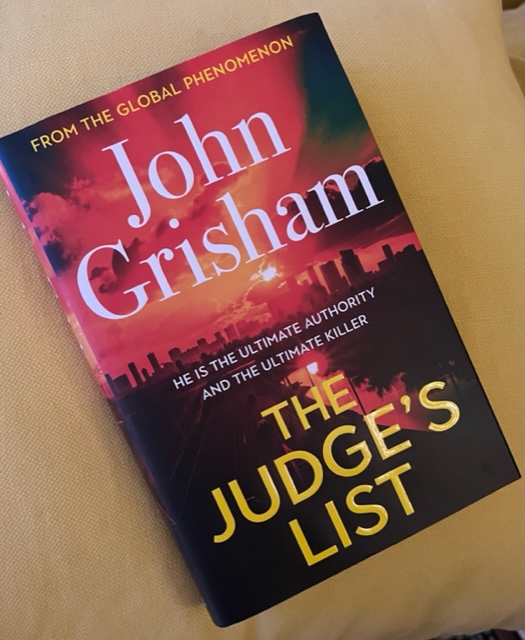
The regulars are here, plus those for whom the “Why don’t we get out of the rain and grab a cup of coffee?” is irresistible. In the far corner, sitting by himself and enjoying the contents of a pot of tea, a grey-haired chap is head down into a book, his lips gently and unconsciously forming the words. I recognise the cover, the latest by the American author John Grisham entitled ‘Sooley’. Grisham has written 36 novels, mainly involving lawyers and court cases; they are always well-crafted and gripping stories – you can tell I’m a fan as is, I assume, the man this morning.

Having read Sooley, the story of a gifted basketball-playing teenager from South Sudan who makes it to the United States in search of a better life, I realise only two aspects of the story have stayed with me. One is that keeping up-to-date with the geopolitical news of South Sudan and its northern neighbour Sudan, both countries riven by tribal conflicts, dashed hopes and refugee crises one after the other, is difficult. The other, light years away from the reality back home, is Sooley playing by himself in the American school gym, shooting baskets hour after hour after hour. The dedication required of individuals who want to ‘make it’ is admirable; but playing by yourself is also lonely. Oh! The third thing, sorry I only said ‘two’, is that I know nothing about the art of playing basketball and actually don’t want to! 

Funny thing one’s mind. Noticing Grisham’s book cover has got me thinking about all sorts of things, particularly about being alone, playing by yourself, maybe playing with yourself. Sooley is not unusual. Swimmers swim up and down their pool, length after length, two hours before breakfast, alone with their thoughts. Trumpet players lock themselves into a sound-proofed rehearsal room, practising their scales and embouchure. Alone!

The other day Celina and I tried out ‘bouldering’ in the local centre in Portslade. Not quite climbing with ropes, you use handholds to climb up an artificial wall. We went together, but climbed solo. Focused on the task, on the unfamiliar, directing your body to reach here, hold there, up and up! You can play virtually any sport by yourself apart from, by definition, team games; those who try to play by themselves within a team don’t succeed! (Note 1)

From a personality point of view, humans can be divided into those who are generally extroverted and those who are generally introverted. Those who define as extroverted engage with people and things around them; they use the interaction with others as a way of recharging their emotional and physical batteries. Interestingly Western cultures tend to sanction and encourage this outgoing gregarious nature. The flip side are the introverts who find mixing and being with others energetically draining. They much prefer the inner world of concepts and ideas and love their own company.

Practising most activities requires a focus, the coming together of all of one’s abilities and skills, to perform something. My daily challenge of Killer Sudoku is not shared by Celina; when we practise our hot yoga, we share and enjoy the tangible emotional vibes and spirituality of the other attendees, but the focus is firmly on one’s own efforts, the battles with the body and mind and the heat!

My grandchildren seem to enjoy Mindcraft; playing by themselves …… woe betide someone who interrupts at some crucial moment. And that’s true of so much of what we do, painting, writing, talking, acting, designing, curing, cooking whatever; the focus to bring together the skills ….. to do.

Our experiences of ‘lockdown’ are varied and illuminating. A number of people re-found that the art of sewing, painting, and other activities can be very rewarding, (See PC 205 and the Lego Porsche) whilst the interaction with those in the same household more challenging than normal! Playing with themselves was better than playing with others!

Humans can play by themselves and with themselves and this thread reminded me of my large, loveable, black Labrador Tom. Tom used to have wild dreams and some wet ones; it was embarrassing when he sat outside a shop waiting for me, spraying the pavement!! Tom’s facial expression never changed much and it was hard to know whether he was aware of what he was doing! The human experience maybe can be summed up by the drill sergeant opening the door to the National Service squaddies’ barrack room at 0600, screaming: “You ‘orrible lot! Time to get up! Hands off cocks, on socks!” (Note 2)

I notice a number of others are plugged in …… and I plug in my earphones to listen to a podcast! The Times magazine last Saturday covered the phenomenal success of one called ‘Call Her Daddy’ by 27 year old Alex Cooper. Podcasts are a god-send for those who travel, listening to new ideas, old concepts, history, careers, life stories; you will find something of interest. Cooper’s, the fifth most popular ones (Note 3), covers sex, with chats and advice about ghosting, threesomes and masturbation. Two other contributors, Emily Ratajkowski and Heidi Montag, cover issues like body image and orgasms. Asked by the interviewee for her very best sex tip: “I would say the confidence you have in the bedroom should be the same confidence you find within yourself when you’re masturbating.”

Masturbation? Hands up who hasn’t indulged in a little self-help relief and if not why not? Just playing …….

Realising the time, I stuff everything into my Kipling, settle up with Susie and head out into the rain.

Richard 26th November 2021

www.postcardscribbles.co.uk

PS In The Times’ ‘Last Word’ last week: “The best conversations are with yourself. At least there’s no risk of a misunderstanding.” Olga Tokarczuk, a Polish author. Following this, someone wrote in to the Letters page, saying that her mother firmly believed she was the only person that she could get any sense out of!

Note 1 “There is no ‘I’ in TEAM”

Note 2 National Service in the UK lasted from 1949 to 1960. All 17-21 year old males had to serve 18 months (increased in 1950 to 2 years); women were not included.

Note 3 The first four in the very American-centric list are The Joe Regan Experience, TED Talks Daily, The Daily (an American-focused news digest) and The Michelle Obama Podcast.

PC 257 Alcohol and the British Issue

In the last few months there have been more and more articles in the press about alcohol and its misuse here in the UK. I admit I don’t read ‘Wine & Beer Digest’ which probably extolls the virtues of alcohol so perhaps I am getting an unconscious biased view? (Note 1)

But …. there is no doubt in my mind something needs to be done to change the way we British use and treat alcohol and the sooner the better. To highlight the statistics:  “Half the cases that our paramedics in the ambulance service respond to are alcohol-related.” FIFTY per cent! (Note 2) “It’s estimated that heavy drinkers” however those are defined (?) “cost the NHS some £3.5 billion a year.” David Aaronovitch, writing in The Times, suggested that “drink kills nearly twice as many British people as drugs (Note 3) and yet we still delude ourselves it’s a harmless part of our culture.” Additionally rising drink-drive deaths are prompting calls for new alcohol limit.

I declared I wouldn’t drink alcohol whilst at school, but before I left that dream lay on the straw-covered floor of the local pub, a victim of peer pressure!! Alcohol became a regular part of normal life.

Historically we Brits have drunk a lot, socially divided between those who drank wine and its derivatives and those who could only afford ale or beer. Then wine became more widely available and it was no longer considered only a celebratory drink. Statistics show wine consumption had a tenfold increase 1960-1990.

We have a reputation for drinking alcohol in a certain way. Whilst we can admire the French for the way they can drink small amounts, a large section of our society can’t see any point in drinking alcohol, without an aim of getting completely hammered/drunk/trolleyed/unconscious/irresponsible. So embedded in the national psyche is this view that any form of celebration must be accompanied by alcohol – as if you can’t have fun without some stimulant.

The association of sports and alcohol is hard to fathom, given the health needs required for the former. “Congratulations Steve on winning the village/town/city/league football title.” says the BBC sports commentator and then asks: “What are you planning to do this evening, have a few?”Yer of course! Probably get hammered.” (A few drinks yes, but hammered, senseless?) And the fans are no better. Does anyone think it acceptable that Leicester Square in London, after the Football World Cup final, was trashed by drunken individuals in a demonstration of mindless hooliganism?

And when it comes to ‘going out’ in the evening, it seems that the advent of drinking ‘shots’ has become standard; the quickest way to lose it!

Alcohol and drugs featured in a piece of television drama this month. Students got ‘off-their-faces’ in an after-course party and one ended up strangled with a scarf and her body dumped in a river. Two individuals were charged with her death; one pleaded guilty to disposing of her body, the other simply stated over and over again she couldn’t remember, ‘I have no recollection’. The jury acquitted her – we thought she was guilty – but alcohol and drugs had killed someone.  

Fortunately the millennial generation don’t want to have a headache or a hangover and are demanding lower alcohol or non-alcohol drinks. “Typically I would have been wasted. Not drinking I didn’t do anything I’d regret and I’m glad I get to remember it all.” Chrissy Teigen on Instagram.

Looking for an alternative to alcoholic drinks one turns to ‘00’ beers and wine. The latter is, I sincerely believe, not there yet although with 0.5% ABV a glass of red wine provides a slither of fond memory. Funny how some countries are picking up of this but for instance in Singapore the Marina Bay Sands hotel thought the alternative to an alcoholic drink to have with a meal was something sweet – this is just nonsense. Remonstrating with the barman in The Royal Crescent Hotel in Bath someone had to go scurrying off to the local 9/11. (See PC 164).

From books I have read this year:

From ‘This Charming Man’ by Marian Keyes: “Bridie stared, clearly wondering what kind of peculiar religion forbade alcohol. To be Catholic, it’s practically obligatory to have drink problem.”

From ‘Everything I Know About Love’ by Dolly Alderton: “I always saw alcohol as the transportation to experience, but as I went through my twenties I understood it had the same power to stunt experience as it did to exacerbate it.”

Sales of Lyre’s non-alcoholic drinks have been exponential

I admit it’s possible that, because I do not drink alcohol any more, I am overly sensitive to its portrayal in our society. Recently a couple of good dramas on television suggested that every time an individual arrived home, irrespective of the time of day, they reached into the ‘fridge for a beer or bottle of white wine, or picked up a glass from the ‘drinks tray’ (Who has these anymore?). A staged play we saw three years ago had the same directions: ‘When you arrive on set, either from stage-left or from stage-right, head for the drinks trolley.’ Is the director simply reflecting modern life or his own?

Maybe Generation Z and the Millennial Generation’s approach to alcohol, more restrained and less habitual, will by the osmosis process permeate up through the generations. Do I personally miss alcohol? Absolutely not, although some others would wish I did.

Richard 19th November 2021

http://www.postcardscribbles.co.uk

PS This PC has simply focused on the British obsession with alcohol. The other issue for every society in the C21st is the growing use of drugs, whether recreational or habitual. For some this seems OK but for others it leads to destruction. Just today a headline caught my eye: “US overdose deaths pass 100,000 a year in epidemic of opioid use.”

Note 1 The Times articles that may be of interest:

‘Rising drink-drive deaths prompt call for new limit’ Paton               27/08/21

‘It’s a smart move to quit booze, Boris.’ Robert Crampton             16/08/2021

‘Welcome to half-drinking; not on the wagon, not off.’ Gunn            15/08/21

‘Our addiction to alcohol isn’t a bit of fun.’ David Aaronovitch               10/08/2021

‘Drunk Nation; why do British people drink so much?’ Josh Glancy 25/07/2021

Note 2 The knock-on effect of this is that those in need of an ambulance in an emergency for non-alcohol related health issues have to wait longer for one to arrive and then longer to be seen in the A&E Department.

Note 3 In 2020 this amounted to 7400 individuals.

PC 256 Words – English and Foreign

I have to admit that my record of learning a foreign language is extremely poor and I have started many times, on and off, over the years! It’s one of the advantages of advancing years, being able to accept oneself as oneself, not someone a youthful version might have envisaged! At school we were taught the rudiments of French as well as English, the latter being divided into language and literature.

Dauntsey’s School and Mercer’s Company’s coat of arms and Latin motto

I almost forgot that we also had to learn Latin, the language of the Greeks and the Romans. We made fun of it; God you needed to as it was to me as dry as desiccated leaves. Why is that I can remember the names of two Latin masters, Mr Moss at Glencot, and Dauntsey’s David Burgess but nothing they tried to teach me? For those of you young enough to have missed the edification provided by a Latin lesson, the only amusement was the learning of Dog Latin. This refers to the creation of a phrase in imitation Latin, often by ‘translating English words into Latin by conjugating or declining them as if they were Latin words’; that’s clear, isn’t it? Well, it would be if you knew what conjugating and declining meant!

The most famous of Dog Latin is the spoof of this verse:

Caesar adsum jam forte; Brutus aderat; Caesar sic in omnibus; Brutus sic in at.

The actual translation of the original verse is confusing! But we understood:

Caesar (h)ad some jam for tea; Brutus (h)ad a rat; Caesar sick in omnibus;

Brutus sick in hat.

Ubique quo fas et gloria ducunt’ , the Latin for ‘Everywhere where faith and glory lead’, was the motto of the Royal Regiment of Artillery. My uncle Bill Bailey used to pull my leg as, when advancing on Caen in July 1944, his battalion of Somerset Light Infantry suffered many casualties from ‘friendly fire’, highlighting the word ‘Ubique’ (everywhere) in our motto. It was probably better than ‘drop shorts’!  (Note 1)

Another motto echoing down the decades of English history is ‘Honi soit que mal e pense’ – a maxim in the Anglo-Norman language, a dialect of Old Norman French spoken by the medieval ruling class in England. It means ‘shamed be whoever thinks ill of it.’ One apocryphal story as to its origins concerned King Edward lll. Dancing at a ball in Calais to celebrate his victory in the 1346 Battle of Crecy, his daughter-in-law’s garter slipped down her leg, much to the amusement of the other guests and courtiers. He added to the ‘honi soit ….’ phrase by suggesting ‘whoever is laughing at this (the garter) today will later be proud to wear it’. (Note 2) The words appear today in heraldry and within the coats of arms of royalty.

So Latin aside, I tried to pass ‘O’ Level French; eventually I did but more by luck than knowledge. Next came German as, posted to a regiment in the British Army of The Rhine, it seemed the ‘right’ thing to do. Living in our English barracks with our English social life and little contact with the local population, it was easy not to bother. What I did learn is obviously very well embedded as often it’s a very basic German word that comes to my mind before a Brazilian Portuguese one for instance! Years later I completed two terms of evening classes at the Adult Education School in Clapham South in colloquial Italian. Only two!!

The City of Granada, home to the Alhambra

And then, after a long weekend in the wonderful Spanish city of Granada in the dying months of my marriage, I imagined spending six months there in some garret learning Spanish. It was a plan ……. but then I met Celina and for Spanish read Brazilian Portuguese!!

English must be very confusing to those who do not have it as their mother tongue. We have all seen the attempts by non-native English speakers to translate a brochure for instance, and it makes me smile. The other day I saw on the menu of the Intercontinental Hotel’s Terrace Bar in Estoril in Portugal ‘….. steak with Jack Potato.’ Commonly called Spud I suppose?

The Indian Bikram Choudury who put together his now famous sequence of 26 Hatha Yoga postures, to be practised in a room heated to 40° C, was not one for the purity of English. All his teachers went through a gruelling 9 week training course, during which they had to learn the exact words of ‘The Dialogue’, written by ……. Mr Choudury! The class teacher does not demonstrate the postures, relying on those students in the front row to show how a posture is done; listening to the oft-repeated dialogue will give you the instructions and guidance. But the dialogue is littered with appalling English and grammar. The two that really makes me inwardly scream are ‘more back’ when of course it should be ‘further back’ and ‘more straight’ when it should be ‘straighter’. It seems his default was to add ‘more’ to anything!

We hear words and try and make an attempt at spelling them. I was hopeless as a child and not much better now. Spellcheck doesn’t help as sometimes it’s the context which defines the letter combination. If you heard: “The Gobi dessert is a plaice of extreme whether. I red that their, in summer, the temperature reaches 45°C butt in winter it can drop down to -40°C!” you would understand it perfectly. Reading it and you would give the writer no marks for spelling. (Note 2)

In English we have strait and straight; course and coarse; draught and draft; desert (dry and sandy) and dessert (hopefully wet and creamy!); current and currant; there and their and they’re; weather and whether; are and our; bail and bale; plane and plain; read and red; lead and led and lead; made and maid; poor, paw, pore and pour; soul and sole; mine and mine; two and to and too ….. for instance.

Our knowledge of other languages, however scant, colours the understanding we have of our history. Understanding our history gives our lives today deeper meaning.

Richard 12th November 2021

www.postcardscribbles.co.uk

PS In a recent episode of the BBC’s wonderfully informative ‘Who Do You Think You Are?’ the actress Judi Dench discovered her C17th Danish heritage and her ancestors’ links to Shakespeare and the Danish king.

Note 1 ‘Drop short’ referred to the fact that sometimes the artillery shells, designed to fall on enemy positions, fell (dropped) short of their target, on our own troops.

Note 2 The Order of the Garter, established in 1348 by the then king, is the most senior order of knighthood in the British honours system, outranked only by the Victoria Cross and the George Cross.

Some of the current members of the Order of The Garter.

Note 3 The lack of rainfall is caused by the Tibetan Plateau blocking precipitation from the Indian Ocean.

PC 255 Collections (3)

I love the novels of Captain Corelli’s Mandolin’s author, Louise de Bernierès. In the completely absorbing ‘Birds Without Wings’, one particular passage has stayed with me as a great example of imagination and creativity; I hope you agree? The blurb on the back of this book says:

Set against the backdrop of the collapsing Ottoman Empire, the Gallipoli campaign and the subsequent bitter struggle between Greeks and Turks, ‘Birds Without Wings’ traces the fortunes of one small community in south-west Anatolia (in what is now Turkey) – a town in which Christian and Muslim lives and traditions have co-existed peacefully for centuries.

One of the main characters is Rustem Bey who, for various reasons, has brought back a girl from Istanbul, a girl he hopes will become his wife/lover. He’s a patient man but it’s six months before Leyla suggests that ‘tonight’s the night’ – and sends Rustem Bey out for the day while she prepares a feast in their house.

Rustem Bey arrives back at his house.

She held out her hand, took his, placed it to her heart, kissed it and then touched it to her forehead. “My beauty, if I have any ……………… it’s for you.” She said. “Come, I have something to show you.” Rustem Bey allowed himself to be led by the sleeve. When they reached the door to the inner courtyard, Leyla said: ‘close you eyes’. A few steps later: “Open them.”

Rustem Bey beheld something so marvellous, so unwonted, that he fell speechless. He put one hand to his forehead and laughed out loud with delight. Finally he asked: “What have you done? Have I come to paradise?”

The inner courtyard was a sea of glimmering, moving golden-yellow lights. There was no pattern to it. Some of the flames were momentarily still and others were travelling, meandering slowly among the lemon trees, the pots of pelargonium, oregano, mint and rose. It was as if the stars had been captured from heaven and been set in motion there in that small square of the lower world.

Rustem Bey stepped forward and bent down to look. Each light was the flame of a candle and each candle was borne upon the back of a tortoise that the village children had spent all day collecting from the surrounding mountains.

Isn’t that f**king gorgeous?

And here’s another feast of visualisation: “The torchlight was dancing off the beech trees, a cohort of ghosts.” An extract from Paula Hawkins’ book ‘Into the Water’. Paula wrote about Beech trees and I imagine silver birch trees, standing in the gloom! Good word – cohort!

The American poet Sylvia Plath (1932 – 1963) is best known for her confessional poetry and her tumultuous marriage to the English poet Ted Hughes. She suffered from depression for most of her life and committed suicide at the young age of 30. I am not a lover of poetry but think she summed up the dilemma some of us feel, about whom we are or who we would like to be: “I can never be all the people I want and live all the lives I want. I can never train myself in all the skills I want. And why do I want? I want to live and feel all the shades, tones and variations of mental and physical experience possible in my life.”

The Danish writer Jussi Adler-Olsen’s Department Q series are great detective stories, based on cold cases resurrected by Carl Morck and his assistant Assad. How about this for an invitation to imagine: “…… and in the meadow, the grass whispered of spring.”, from his book Redemption?

After two months in Portugal this summer, the following has a certain personal ring, although I failed to note who wrote it: “I’m sprawled in a chair on the sandy beach, languid and dreamy, made as loose-limbed as a mermaid by the long summer’s release.”

Yoga thoughts and sayings are numerous but this basic one is where it all starts, so you can make of it what you wish:  “Om So hum: I am that that what I am.”

I have quoted Philip Roth before. Here’s his observation about the elderly: “The old have been stamped by their time.” – Ed – some sadly more than others!

Climbing a tall building, or a mountain, or going up in a glider or aeroplane can give one a perspective unavailable from ground level, for “a horizon is nothing save the limit of your sight.” And then William Faulkner said “You can’t swim for new horizons until you have the courage to lose sight of the shore.” For some this is the ‘letting go moment’ of any activity. Seeking guidance on how to approach one’s life you can drown in the oceans of advice to be found in philosophical writings or even in abundant psychobabble. The advice that will work for you will be the one that you understand and can own. Someone wrote: “Life is not as we are taught, a matter of seeking answers, but rather learning which are the questions we should ask.”

We should, as children innocently do, ask questions. At the back end of a Yin yoga class the other Sunday, I was struck by a reading of the last section of  Rainer Maria Rilke’s advice: “Be patient toward all that is unsolved in your heart and try to love the questions themselves, like locked rooms and like books that are now written in a very foreign tongue. Do not now seek the answers, which cannot be given you because you would not be able to live them. And the point is, to live everything. Live the questions now. Perhaps you will then gradually, without noticing it, live along some distant day into the answer.”

Lee Child, co-writing with his brother Andrew about the hero Jack Reacher in their collaboration ‘One Shot’, writes: “His life was like that, a mosaic of fragments. Details and contexts would fade and be inaccurately recalled, but the feelings and experiences would weave over time into a tapestry equally full of good times and bad.”

So write something yourself and do as Clive James said he did in his ‘Unforgettable Memories’:  “All I do is turn a phrase until it catches the light.” (See PC 247 Collections (1))

Richard 5th November 2021

http://www.postcardscribbles.co.uk

PC 254 Overheard

I understand that writers are always looking for ideas and snippets from real life to weave into their fictional tales, although the first ‘novel’ is often fairly autobiographical. Sitting on a bus or in a restaurant or in a café, with a notebook open to catch and record some lovely phrase …… or awful account ….. can be the start. The most famous café writer that comes to mind is JK Rowling, who continued writing her Harry Potter stories in The Elephant House café in Edinburgh. Now the place is on the tourist bus route, although the café is temporary closed, having suffered smoke and water damage from a fire next door in August 2021.

The black-framed metal door opened into The Hope Café. On the right hand side the counter with all the paraphernalia to make drinks to meet the wide eclectic tastes of today’s customers – and cakes and stuff to tempt us. In the middle a collection of smallish tables with purposefully mismatched chairs and down the left a row of bench seating for more intimate chatter

I settled into my usual seat, with eyes on both the entrance and on the counter. From my yellow Kipling bag I pulled out my scruffy notebooks and pencil case. The cafe had no power socket for laptop charging and I knew mine would only last 45 minutes so it was the old fashion way or no way.  One of my notebooks simply held scraps of paper, some ripped from newspapers or magazines, others my own scribbles at 3 am in the dark, a bon mot that I needed to record – otherwise lost.

A quick furtive look around the room confirmed the usual regulars were there plus a table occupied by two late-twenties women. They sat over their coffees, one a latte and the other one a simple double espresso, their handbags over the chair-backs, the iPhone or Samsung in front, visible in case …… in case what? In case the conversation was boring,  in case world war three had been declared, in case DHL suddenly needed them to be home between 1200-1400, in case …..?

Outwardly they looked chalk & cheese these two and the decade that had passed since leaving school had left its mark; one obviously a mother and the other single. But true friendship, with care and love, lasts a lifetime and this sounded like a catch-up coffee.

One had a loud piercing voice and it was impossible not to cock an ear!

I had a fling when I was in France; I was only there for a week but I met this chap in a bar and well, I was bored and he was engaging. My recollection is we never actually had sex but then again one evening we got extremely drunk and woke up in the same bedroom.  Well! I texted him: “We had fun! It was a couple of days! We kissed! Now get over …..  and I have found someone else and you just need to accept that! Sorry!” And you know what, like he couldn’t accept it, that I was the, what’s that expression, The Love of His Life. God! He hardly knows me ……. no way ….. just have to be brutal.”

“So you just cast him aside like an out-of-date Activia Vanilla yoghurt?” asked the friend!

And all this in earshot of every other customer, the old lady nursing a single cup of tea and a teacake, two blokes indulging in the ‘Full English but ‘no mushrooms please’, a romantic couple with only eyes for each other, the mother and two children struggling to control their ‘I want’ suggestions.

In one’s twenties the ‘love’ focus is to have some fun, get some experience and acknowledge that the ‘love of your life’ may be followed by other loves of your life. It’s unfortunate if you look on a friend, as this woman did, as a ‘potential ex-boyfriend’ as it immediately suggests a lack of permanence and possible lack of commitment. But it’s a view!

On the television on the café wall, out of the corner of my eye, I overheard rather than observed a news item. Just as a crisis was looming in the UK energy supplies, the newsreader was joined by the BBC Business editor Simon Jack to give a more detailed analysis. Having talked about gas prices and price caps and gas pipelines and petrol supply issues, he added that one or two longer-term projects that were going to change the industry would have to be put ‘on the back burner’ (Note 1) for the time being – and he said it with a straight face!

Realising the time, I quickly stuffed everything into my bag and, with a nod to Susie behind the counter, headed out of the door. To my right was a bus stop for the No 1 – and the indicator board signified one was due.

Sure enough, around the square it came and, with a flourish of my iPhone over the reader, I was on and in a seat.

Across the aisle sat 70-something Jim, unmasked and overweight. At the next stop another old chap got on, supporting his sagging body with walking sticks. Spying the empty seat next to Jim, he sat down. Snippets of overheard conversation went something like:

Stan: Where are you off to?
Jim: Portslade

Stan: Oh! Yes! I have lived in Portslade for years; still don’t know my way around. Where’s your stop?

Jim: No idea?

Stan: What! You have no idea where you’re getting off?

Jim: No! Of course I can recognise my stop but I can’t tell you exactly which one it is.

Stan: No worries ………

Stan looks out of the window and sees the mountains of rubbish on the streets (note 2).

Stan: This bin strike is causing a bit of a mess; I used to work for a council up north for many years so know something about ‘em bastards. (Ed: Not sure if he was referring to the council or the company that runs the refuse collection service.)

Jim is obese and he’s finding the seat uncomfortable.

Jim: This seat isn’t very big; sorry, I seem to be overflowing. They must be making narrower ones.

Stan: Where are you getting off?

Jim: Portslade – I told you ……

Stan: Which is your stop ……

I got off the bus at my stop, smiling to myself, amused by the elderly.

Richard 29th October 2021

www.postcardscribbles.co.uk

PS Probably christened Stanley and James but more likely known as Jim and Stan??

Note 1 The back burner being the rear ring on the hob, offering less heat.

Note 2 In the City of Brighton & Hove on 7th October the chaps responsible for collecting the rubbish from the street bins went on strike. Apparently they had been asked to change their ‘round’ or drive with another team, as Covid and sickness required some flexibility. They went back to work a week ago, after a massive pay increase for the drivers.