PC 415 More thoughts for The Times’ Letters

I have been an avid reader of The Times ever since they offered a discount to schoolboys back in the 1960s. During my military career the mid-morning coffee break in the Officers Mess was an opportunity to skim other papers, for example The Telegraph or Guardian, or those known as the Red Tops, like The Sun and The Mirror, which did indeed have a red banner headline for more salacious gossip. But I have always enjoyed The Times for its balanced views and now read it digitally. ‘Letters to The Editor’ have featured in my postcards, firstly in July 2022 (PC 292 Dear Sir (1)) and secondly PC 317 Dear Sir (2) in January 2023.

Other attempts to get published have all met with disappointment, although the comments might amuse you and, in an uncharacteristic moment of not having many postcards in draft form, I hope that these will suffice.
Twenty years ago, in the month of May, I wrote:

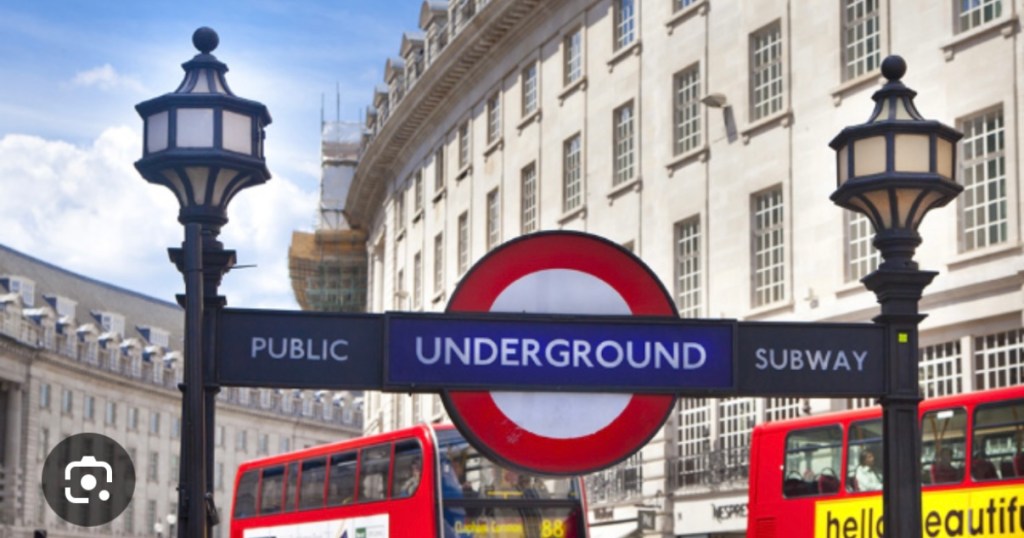
I hope I am not alone in being flabbergasted by the clearance yesterday of the tube driver for playing squash whilst on sick leave. Even before his dismissal by London Underground, his appalling employment record, a day off every week for 5 years, suggests he will milk the ‘system’ as much as he can. Yesterday was a victory for the workshy, the uncommitted, the jokers – and sadly says a great deal about the culture of our Public Services.”

In 2013, I wrote about the NHS Health Check and its validity:

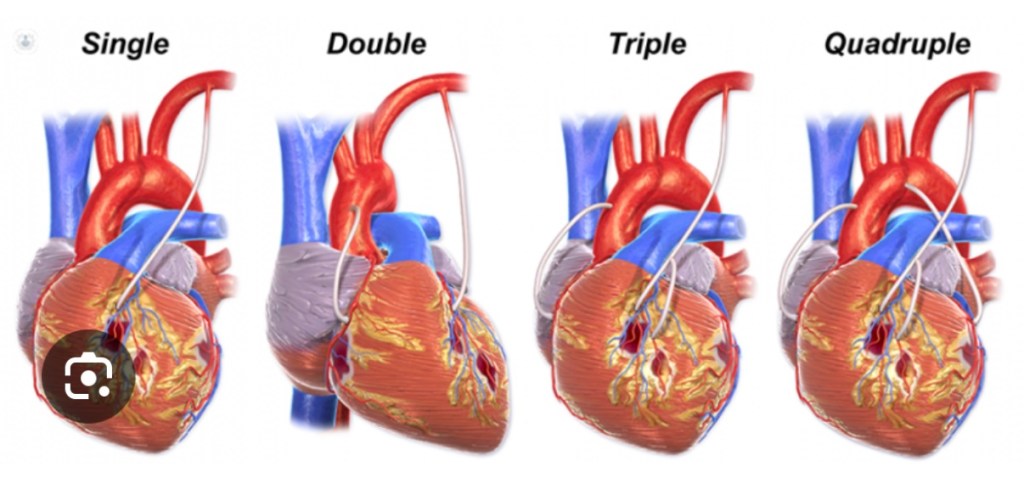
“Three months ago, in June, my local GP surgery suggested by text I had a free NHS Health Check Up and I duly booked an appointment. Although surprised that this health MOT didn’t inspect my eyes or my teeth, I was more than pleased to be told, after being checked for this and that, that I was fit and healthy with an 83% chance of not having a heart attack. Now, two months after a triple heart Bypass, I muse that someone must be in the 17%!”
In November 2014, an observation about business:

“Sir. One of the marks of a great leader is their ability to develop talent in both breadth and depth in their organisation, so much so that when they depart, there is no lasting ripple on the surface. Despite being awarded Veuve Clicquot Businesswoman of the Year, Harriet Green is clearly not in the category of a great leader, as the share price of Thomas Cook dropped 18% on the announcement of her departure.

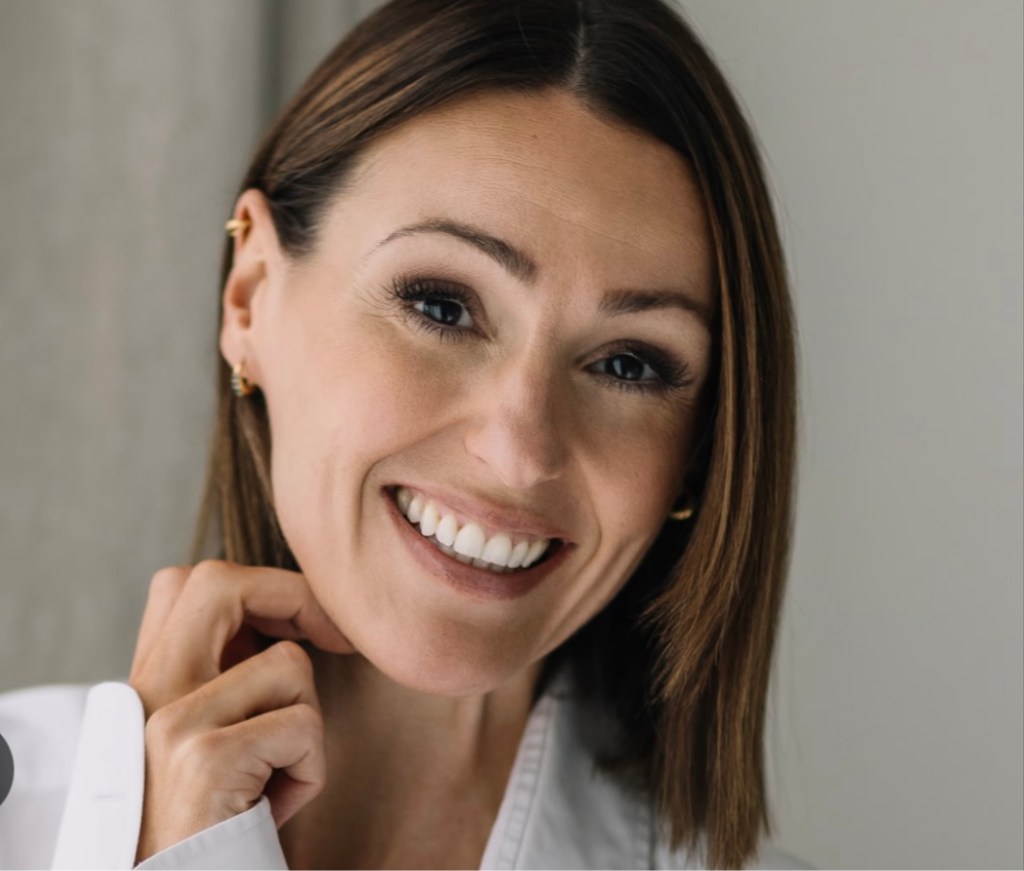
Suranne Jones

In May 2016 I was prompted to put pen-to-paper, well not literally these days, but fingertips-to-keyboard doesn’t have the same ring:

“Sir. On the front page of Monday’s Times (9th May) you carried a photograph of Mark Rylance who had been given the BAFTA (Note 1) for the leading actor. Inside you showed a photograph of Suranne Jones, who was BAFTA’s leading actress. Did someone toss a coin to determine who went on the front page or was it yet another example of continuing sexism throughout our society?

28 April 2017

Appearance is everything. We have got used in recent years to seeing both terrorists and anti-terrorist forces hiding their faces with balaclavas or headdresses of some sort. A rather sinister frightening impression is given by this tendency, understandable for those perpetrating the terror but not for those acting to stop it. So it’s hugely refreshing to see those anti-terrorist police in Whitehall yesterday, bare headed and unmasked ……. proud of the role they undertake on our behalf.”
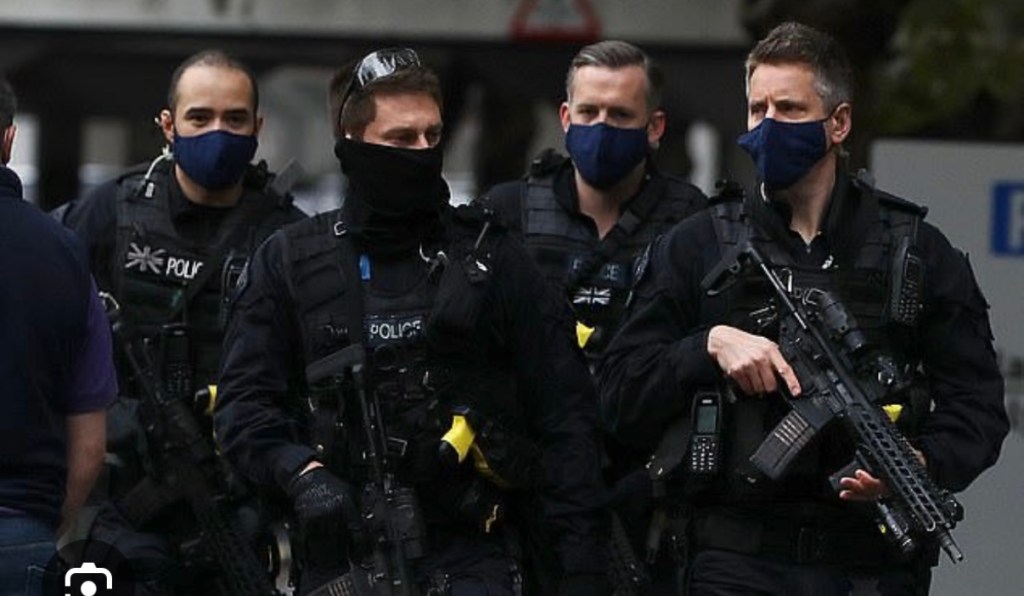
Couldn’t find the exact photograph but you take my point?

In the same year I wrote about ‘Modern Times’, prompted by a visit to a GP’s surgery.

“Sir, I secured an appointment with a doctor in a different surgery yesterday evening, my own being completely booked. In the waiting room I checked my mobile phone was switched to ‘silent’, popping it into my trouser pocket as I was called. The doctor stood, asking about my symptoms, then suddenly stopped talking. He looked at me intently, obviously expecting me to say something. I was not sure what, so I stared back! “Aren’t you going to answer your phone?” he asked in a rather irritated voice. I hadn’t recognised the sound and had assumed it was his!! Sure enough my phone was ringing. I hauled it out of my pocket, mightily embarrassed. I hadn’t locked the screen and inadvertent contact with my thigh had opened a coincidental sequence of ‘settings’, ‘sounds’, ‘ring tone’, and was offering me ‘ripples’ as an alternative to my normal ‘crickets’. I think the GP thought I was beginning to show signs of early dementia or some such and not seeking simple treatment for a chesty cough!”
April 2020

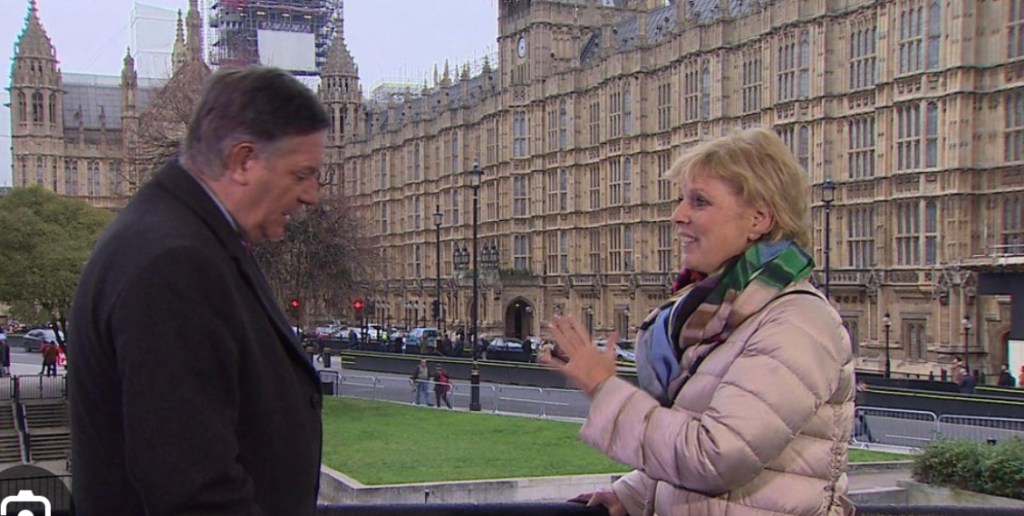
Sir. Am I the only person fed up with watching the BBC news spokesperson reporting from the outside platform near the Houses of Parliament, constantly trying the keep their hair away from their face? It distracts from their message and it can’t be beyond the resources of the BBC to find a wind-proof place.”

And finally a comment on society today:

“Sir. A recent television documentary concerned the Coventry forensic team’s work in trying to identify who stabbed a 15-year-old teenager. Their success was commendable. What was missing was any mention of parents, either of the innocent victim or of the three teenagers who committed the crime. As a society more needs to be done to ensure those who become parents understand the responsibilities that this entails.”

It’s fun to write to The Times, not only from the point of view of seeing one’s thoughts in print, but also to try to construct one’s letter in such a way as to appeal to the editors over the hundreds of others!

Richard 29th November 2024

Hove

www.postcardscribbles.co.uk

Note 1 BAFTA is an abbreviation for the British Academy of Film and Television Arts
PC 414 It’s all about the B

Some months ago, we had a couple of people who share our passion for hot yoga around for supper. Always a surprise to see other hot yoga enthusiasts with clothes on, as in the studio you need to wear as little as possible. One, Serena Wells, is a graduate of Brighton University where she studied Fashion Textiles and specialises in using colour to create bold, graphic works, often silk on silk. She currently has a design studio in Brighton. Her parents were from Guyana. (Note 1) The other, Armando Colucci, known to everyone as Armi, is an Italian from Naples who works as a head trainer for the hair products company Schwarzkopf. We sit down to a simple supper and the conversation starts. It wasn’t the first question but at some time Armi asked:

“Have you always lived in Brighton?”

That’s when the thought went ‘ping’!

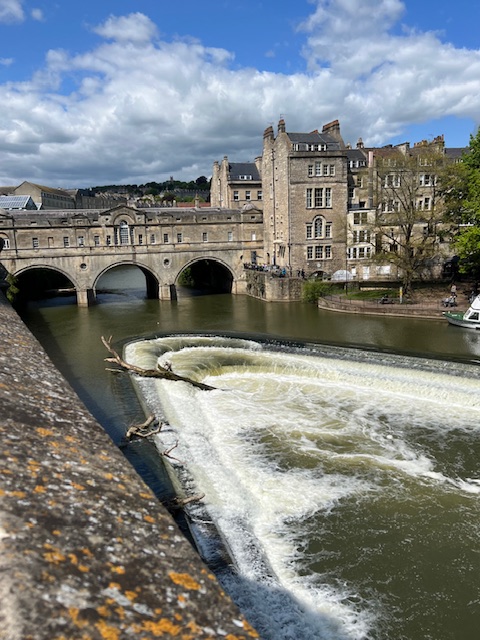
“No. I was actually born in Bath ……”

Pulteney Bridge over the River Avon in Bath

…… and I realised that ‘B’ was a linking letter to a great number of places I have lived in! I could hear myself talking about being born in Bath (PCs 164 & 165), how I went to the first of three boarding schools there and how my parents had divorced.

Then my mother remarried and she and my stepfather moved away and my mind went into another subconscious loop about how they moved to Balcombe, too far away for more than one visit each term, the two-day half term.

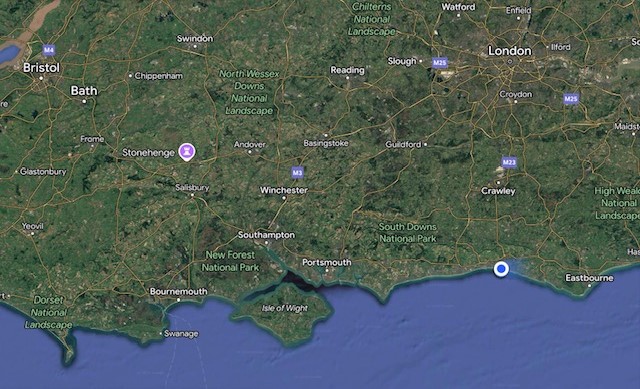
Brighton’s where the blue spot is. Bath top left.

Balcombe is a little village some 18 miles north of Brighton. (See PC 58 Going Home December 2015). I remember a first Geography lesson at Daunsteys’, a public school in Wiltshire; ‘write an essay about where you live’ and Balcombe was by comparison to Bath very small, so I volunteered that it had a population of 300. These days I’d simply ask Google and get a reasonably accurate figure. The master, Mr Taylor, put a red ‘1’ before the 300; I guess the village had a large catchment area.

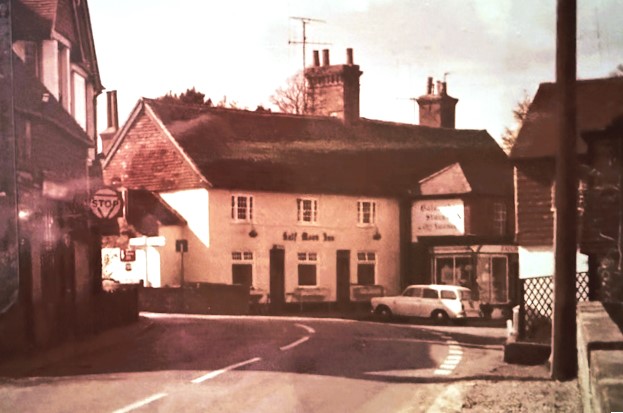
The Half Moon Inn in the centre of Balcombe circa 1961

It had a good steam train service to London Victoria and to Brighton, and a regular bus service to Haywards Heath, the local town where there were many shops and the Perrymount cinema, where the auditorium was divided into ‘smoking’ and ‘non-smoking’ sections. We went to the Theatre Royal, Brighton for pre-London productions or to the ice rink for a fun afternoon.

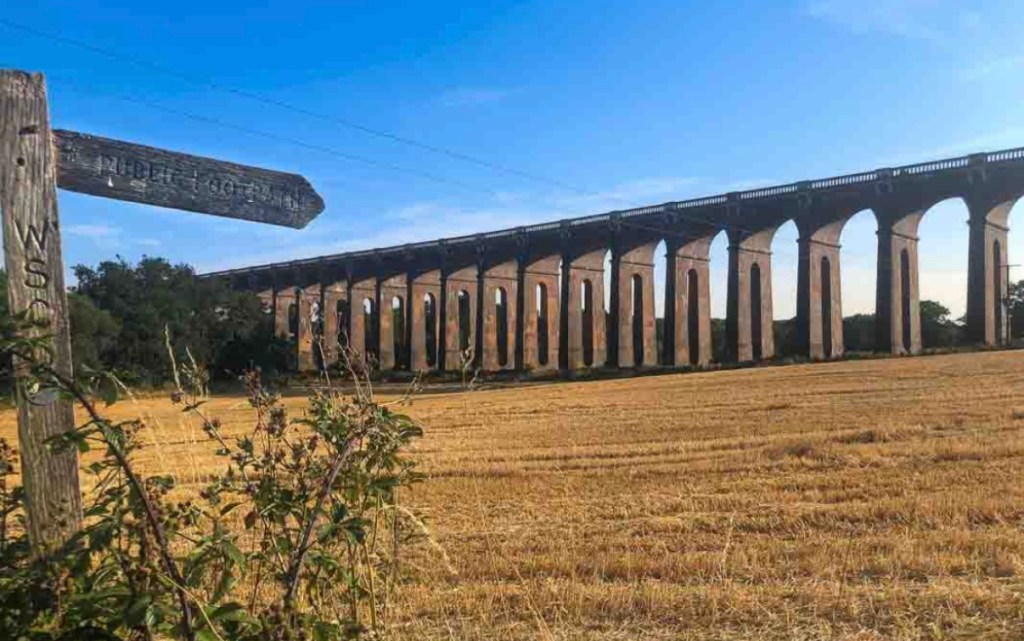
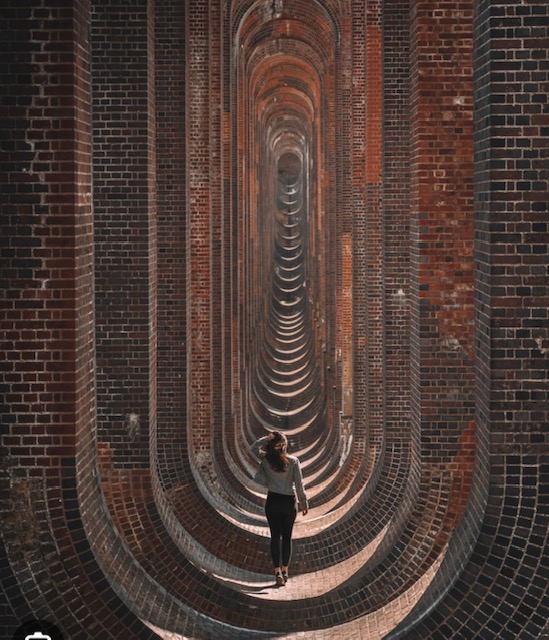
On the way to Haywards Heath the road passed over the River Ouse and to its west was the magnificent Ouse Viaduct, known locally as the Balcombe Viaduct.

My next ‘B’ would have been Bielefeld, a town in what was then West Germany, where the British Army had a large Headquarters and where I met my first wife. I was stationed in both Lippstadt and Sennelager, ten miles away. Returning to the UK for a staff role and Staff College, after a stint in the Ministry of Defence I took over an Air Defence battery in Wing Barracks in Bulford, a few miles north of Salisbury.

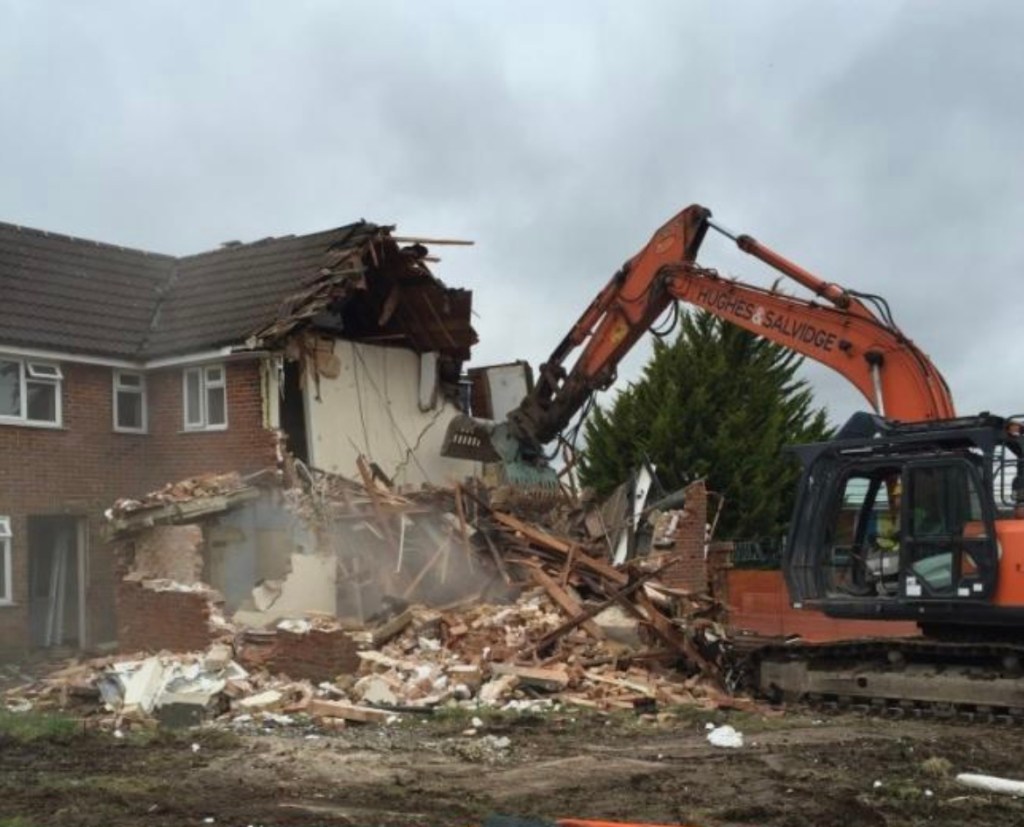
Wing Barracks, Bulford being demolished in the C21st!

Thoughts tumble through my subconscious like cereal into a bowl at breakfast. My mind leapt to London where I bought a rather dingy basement flat on the south side of Clapham Common, across the Common from Battersea. For those of us of a certain age, Battersea will for ever be associated with Peter Sellers and his ‘Balham – Gateway to the South’ radio skit. “We enter Balham through the verdant grasslands of Battersea Park, stretching for more than half an acre …..” or something like that! I toyed with the idea of buying a house just south of Basingstoke, southwest of London in Hampshire, but there were too many issues that couldn’t be resolved and I pulled out.

In 2000 I bought a terraced house in Bramfield Road, Battersea and nine years later attended my first session in Hot Yoga South, Balham, a ten-minute cycle ride away; the start of a continuing journey. Battersea is another London village that went from rather down at heel to being an attractive place to live, particularly for ‘Yummy Mummies’. So much so that the road at the bottom of Bramfield Road, Northcote Road, was known as Nappy Valley. 

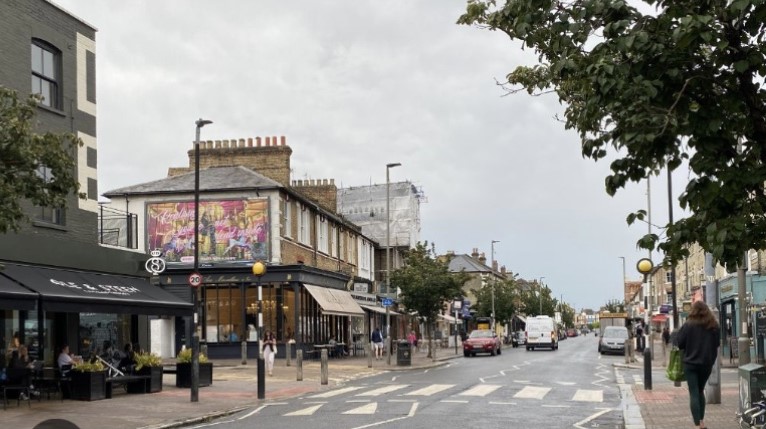
Northcote Road, Battersea

My life moved on and through my regular hot yoga practice I met Celina.

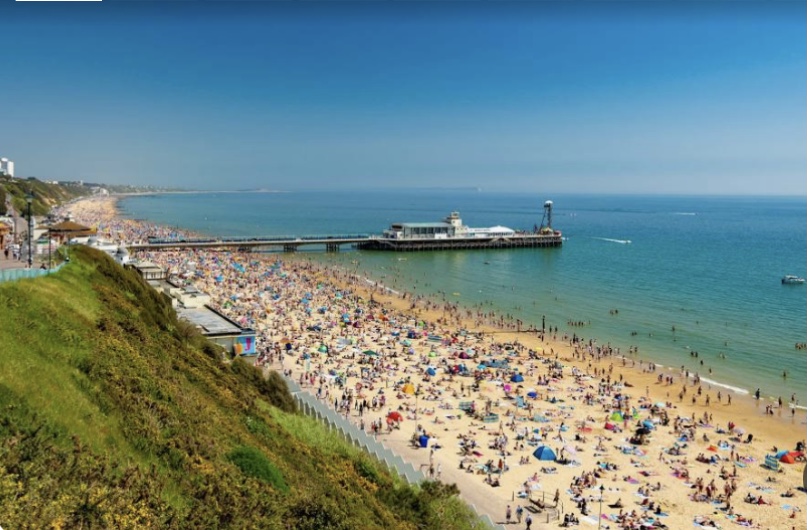
Bournemouth Beach

Wanting to live on the south coast and needing to be able to practise Hot Yoga regularly, Celina and I identified where that was possible. We had a weekend in Bournemouth and went to two classes in the studio in Boscombe. For me, Bournemouth will always be associated with an uncle’s brother, a chap called Ken Bailey who was awarded the Freedom of the City for his work with the young. (There’s another B!). Boscombe is somewhat rundown, what might be called a ‘white trash’ area; sad, gaunt, pale faces, skinny bodies, dressed in black. We decided to look in Brighton. We knew the studio owners in Brighton and here were more options. We bought in Hove, practised in Portslade until 2018, then moved to practise in Yoga In The Lanes in Middle Street, Brighton.

Brighton of course is a city of contrasts, although in the early C20th its seedier side seemed to colour its reputation; in the 1930s – “Queen of Slaughtering Places”! Now it’s better known for its thriving arts scene and laissez faire attitude, for its Pride Parade in August and for its Palace Pier, and a beach of pebbles.  

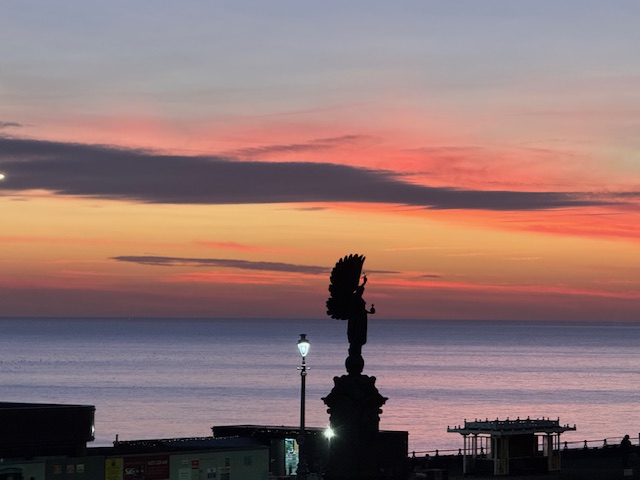
The Peace Statue on the boundary between Brighton and Hove

It’s just a coincidence, these Bs; obviously could easily have been A or C.
These thoughts had drifted through my brain in a few seconds but suddenly I was aware that Serena was asking me a question about my paintings, and I needed to become fully conscious!

Never imagined I would return to Brighton & Hove!

Richard 22nd November 2024

Hove

http://www.postcardscribbles.co.uk

Note 1 The explorer Lucy Shepherd traversed the Guyana jungle from the east to the border with Brazil in the west, on foot in 50 days. Watch ‘Secret Amazon: Into the Wild’ on You Tube or Channel 4. Don’t if the idea of Bushmaster snakes terrifies you.

Note 2 My Podiatrist thinks Bath is ‘posh’.

PC 413 Hope in The Autumn (continues from PC 411)

“That was a long break, Richard!”

“Yes. Sorry! Got caught by Libby who wanted to give me an update on Susie.”

“How’s she doing?”

“Libby thinks she’s enjoying her course which should finish before Christmas. Obviously now looking where she can apply new-found her skills.” (Note 1)

“Unlikely we will see her back behind the counter! Sad but life moves on and so it should. We were talking about what The Times’ obituary writers had said about General Sir Mike Jackson. Always interesting to read the obituaries of others, not that I imagine for one second that mine will feature in a national newspaper.”

“Maybe, maybe not! The obituary writers must have a fun if not conflicting time deciding who to include. Did you see that one last month about possibly the last ‘ice harvester’?”

“No ….”

“In an age when a refrigerator and freezer are considered essential gadgets, we forget some of the ingenious ways our forebears used to keep food fresh. One such device was an ice box, made of wood or metal. Food was placed in the bottom and an ice block in the top compartment. Cold air falls so keeping the food fresh.”

“OK. I’ve seen some on visits to National Trust properties, but who was this ice harvester?”

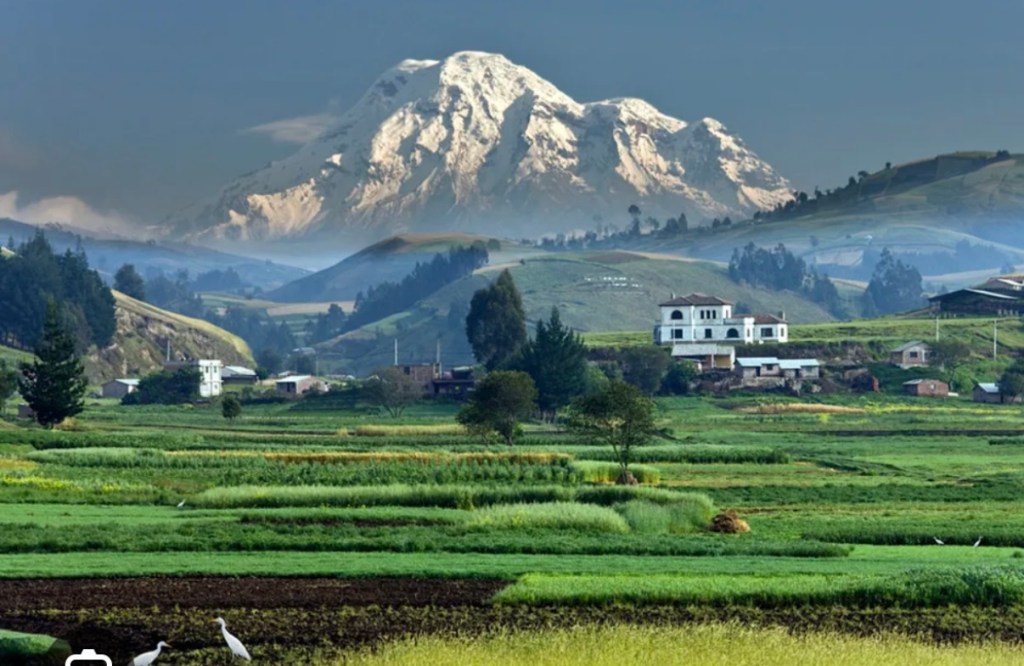
“Actually an Ecuadorian named Baltazar Ushca, who for more than 60 years climbed the slopes of Mount Chimborazo, the tallest mountain in Ecuador, to harvest the ice that covers the dormant volcano. “It’s the tastiest and the sweetest, full of vitamins for your bones,” he explained of the frozen water, which glistens in the sunlight like a huge diamond.”

“Now I know something about Mount Chimborazo. Its summit, over 6000m if I remember correctly (Note 2), is the point on earth closest to the sun, as it sits just one degree south of the Equator, where the Earth’s bulge is at its greatest. But why did The Times decide his life was worth remembering?”

Mount Chimborazo

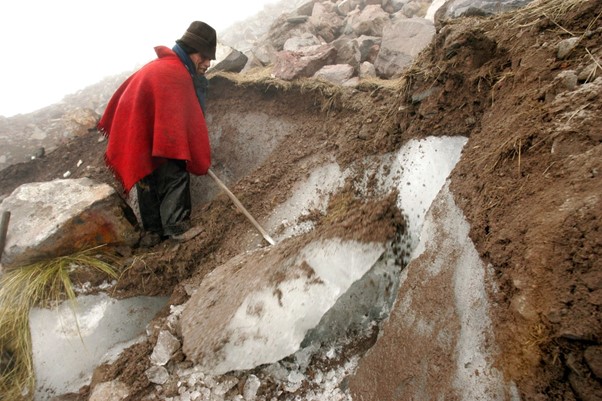
“Probably to mark the end of a traditional way of life. At one time there were up to 40 ice harvesters, known as hieleros, including his brothers Gregorio and Juan. “We would go out in a group of friends, four or six groups, twice a week,” he explained in his native Quechua language. “I would go with my mother and father, with my brothers and sisters.” Gradually their number dwindled. Ushca, who was born in 1944 and started the five-hour trek to the top of the mountain aged 15, was believed to be the last one.”

Baltazar at work

“Ah! That’s both fascinating and sad. I haven’t been anywhere in South America, let alone Ecuador, although Rio and Machu Picchu are on my bucket list. And now, Richard, I need to get going as I promised my mother we’d meet in M&S in Brighton. She wants to buy some clothing staples and M&S’s very good for these. See you ……”

I sat back, relishing the agreeable atmosphere in the café, and was thinking of getting my iPad out to read the day’s news when I saw Sami coming through the left hand door.

“Hey Sami! A belated Happy Birthday for the 24th. Us Scorpios must stick together!”

“Afternoon Richard. How was your birthday?”

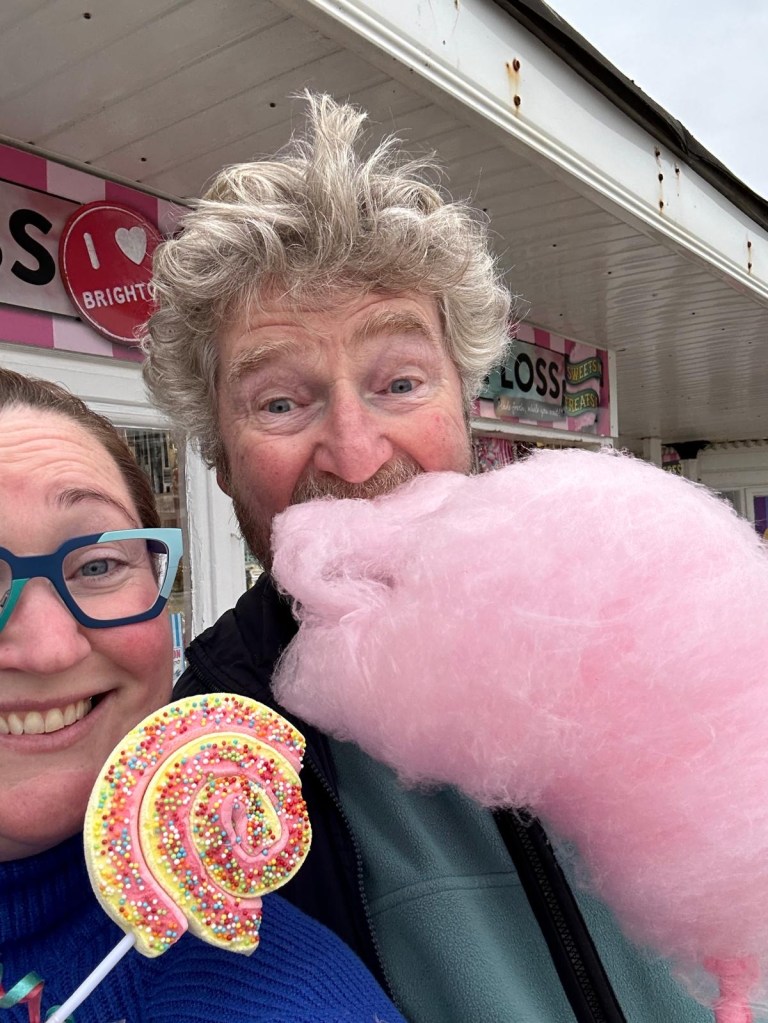
“Actually lovely and rather drawn out. The week after we went to Chichester for lunch with my brother and then had Jade and the boys down. They just LOVE Brighton; Lego shop, VR business, lunch down on the pebbles at Captain’s, then an hour on the pier. For some strange reason they had never been on it, so the excitement levels were sky high. And Candyfloss is a favourite – on a stick of course.”

“I bet they went for a swim before going home?”

“They did indeed …… and had a slice of cake. Actually it was a very drawn out birthday as my mother-in-law made me a cake when we were in Estoril last week!”

“And have they moved yet? I remember your daughter was buying a derelict house that her maternal grandmother had lived in. How’s that going?”

“Water under the bridge! A very stressful two months but they completed a week ago and have moved into a rented house until Christmas. They have replumbed and rewired, fitted a new bathroom and now have six weeks to fit the kitchen and windows. Certainly doable!”

“Thank you for the update. Good luck to them. You know Paul Simons, who writes a column in The Times about weather?”

“Yes. He digs up really interesting information. What’s piqued your interest this week?”

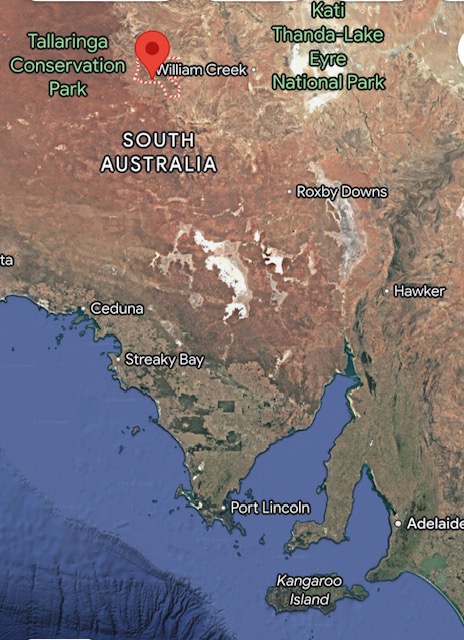
“A place in Australia called Coober Pedy. Australia is expected to face one of its hottest summers on record and, even though it’s spring in the southern hemisphere, a couple of weeks ago South Australia had its highest temperature for 29 years when the outback town of Coober Pedy recorded 43.7C.”

Red marks Coober Pedy

“Never heard of Coober Pedy. Tell me more?” (Note 3)

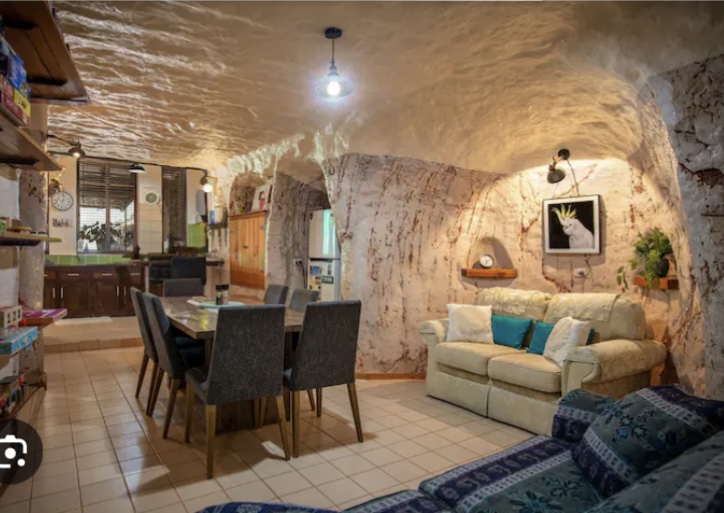
“Well, Coober Pedy is a remote mining town in the South Australian desert and has the largest opal mine in the world. When miners arrived in 1915 they soon found life was far more bearable underground, inside disused mine shafts, than above ground in the heat. So they began digging out their own subterranean homes and today it’s a grand subterranean town with restaurants, bars, art galleries, a bookshop, churches and even a four-star luxury hotel, all built to escape the desert heat. Temperatures below ground stay at a surprisingly pleasant 23C-25C throughout the year without any need for air conditioning. How about that!”

An underground Air BnB in Coober Pedy

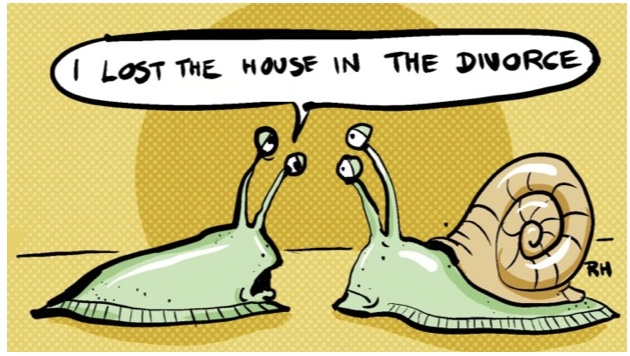
“Never been to South Australia; maybe I should put it on my list. Incidentally you read my postcard entitled ‘The Snail aka Brian’ (PC 406 Sep 2024)? Well, there was a lovely little cartoon on Facebook the other day which certainly made me smile.

And now we need to get going as I see Duncan wants to close. Love to Lisa and see you soon.”

“Great cartoon! Love to Celina. Good to see you. Take care.”

Richard 15th November 2024

Hove

www.postcardscribbles.co.uk

Note 1 After her late ‘Gap Year’, when Susie spent some time in New Zealand and Australia, she started a course on Logistics, with the intention of getting involved in the wholesale side of commerce.  

Note 2 Mount Everest, for comparison, is 8849m above sea level.

Note 3 Unbelievably Kay, our masseuse, had a one-year dance contract Australian tour that included a performance in Coober Pedy in 1988. ‘Very Red-neck!’

PC 412 Memories of Sandhurst (part 3)

The link between mental fitness and physical fitness is well researched. Thankfully we got physically fit, through sessions of PT, time in the swimming pool, ‘Battle PT’ runs, wearing kit and carrying one’s rifle, and undertaking long treks, particularly in the Brecon Beacons in South Wales. One evening towards the end of our first term, so probably early December, we got dropped off, at night, in the middle of nowhere! The first checkpoint was at the top of Pen y Fan, the highest mountain in this National Park, with a notoriously steep ascent to start; hard work, particularly carry full kit. Don’t forget this was light years before GPS and mobile phones; we had learned the basics of land navigation and worked with paper maps and old-fashioned compasses.

Pen y Fan

It was probably midnight when we got to the top and were given our next  checkpoint, some 16kms away. There we had to inflate a rubber boat and paddle some 10 kms to the next point. Oh! I think there was a stretcher race in there somewhere. Sometime the following evening we gathered in a pub carpark, without any permission to enter so psychological torture (!) and were given our next task, a four-point speed-march over the Sennybridge Impact Area. Sleep deprived and mentally and physically exhausted, I remember distinctly seeing a three-masted sailing ship slide across the face of the full moon, as we laboured from one water-filled hole to another.

Once I realised sleep deprivation was something one had to deal with, I learned how to catnap. The memory of hallucinating that wonderful sailing ship triggered another, sleeping standing up! It was before dawn on day three of an exercise on the local training area known as Barossa. My platoon was to be the assault unit for a company attack at daybreak.

John Thewlis and Martin Ward-Harrison – somewhere

After a night in trenches, with patrols and sentry duty, everyone was knackered but, fortified by breakfast cooked over ‘hexy’ burners and a hot coffee, we formed up in our sections and silently made our way to the FUP (forming up point), some 1000 metres away (actually it was probably 1093 yards as this was pre-metric UK!). We tried to move quietly through the darkness, every now and again stopping to ensure everyone was together. I fell asleep upright and only woke because John Webster, who was behind me and who had expected me to move, had shuffled into me!

As our understanding of military tactics, albeit at a low level, grew, so did the opportunities to show how much we had learned. The gathering of intelligence is often achieved by patrolling and the memory of one night patrol exercise has stayed with me. I am not sure who the platoon commander was, but I was his radio operator, equipped with an A41 radio set, about the size of a ream of A4 paper and weighed as much; its aerial was about 5 feet long. My task was to keep in touch with the controlling station, callsign Zero, and relay information as necessary. The problem was I had Laryngitis, so all my communications were barely audible, irrespective of how loud I wanted them to be! In the exercise debrief, the Directing Staff praised the quietness of the patrol; there are some benefits of being ill!

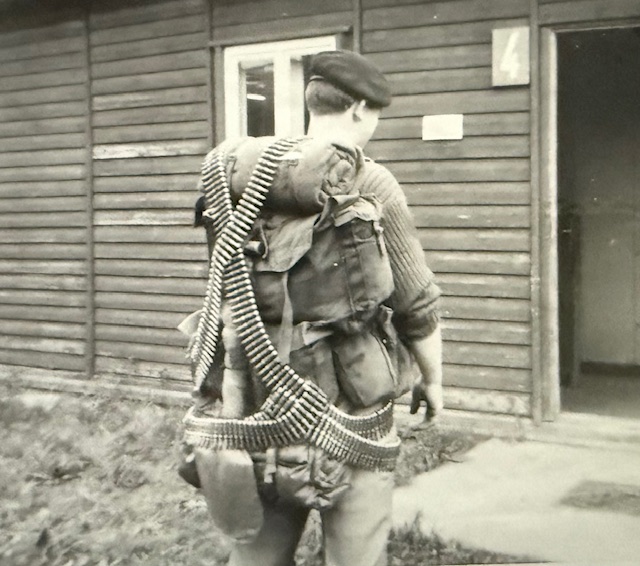
Sometimes we had to carry a lot of equipment. Preparing for an exercise in Belgium.

One aim of our training at Sandhurst was to teach us how to work as a team, both as a team member and as a team leader. Seems obvious, doesn’t it, but it is potentially one of the most difficult things confronting a leader. In each of the six Sandhurst terms, there was some Academy competition, be it the inter-company Drill Competition or the dreaded Assault Course, the winner the quickest team over a number of obstacles. The latter loomed at the start of the term in which it was placed as some mountain to climb. Actually that isn’t far from the truth as the ‘mountain’ was a ten foot wall. We were used to six-foot walls and one’s ability to climb up and over on one’s own. The 10ft wall required teamwork, technique and belief, particularly for the first and last person. To get the first person (A) on to the top of the wall, the tallest in the squad would stand with his back to the wall, with his hands cupped in front. Running from 10 metres or so, the second person (B – lightest and strong!) then placed his boot into the cupped hands of (A) and lifted himself up towards the top of the wall. His ascent was aided by (A) twisting his body and extending his arms upwards. Once on top, (B) could lean down and grab the next person (C), who was aided by (A). After the other five members of the section were over, this left (A) on his own at the bottom! (B) and (C) would both lean down, grab one of (A)’s arms, haul him up and over they all went. All this with the timekeeper’s stopwatch clicking away the minutes and seconds.

I am not sure the current training includes Bicycle Drill. Back in 1966 we were instructed how to stand next to a bicycle, how to mount, how to move off and how to stop. Saluting an officer whilst on a bicycle was not encouraged; we simply had to brace our arms, keeping looking forward! No helmets!

Sandhurst offered a full career to a pensionable age of 55. One loses contact with people, so I have little idea of how others’ careers developed. But I do know that my dear friend Martin Ward-Harrison was killed in Oman, that Sid Sonsomsouk retired as a general in his home country of Thailand and that Crichton Wakelin retired at 55, then took on a retired officer’s role for another ten years.  

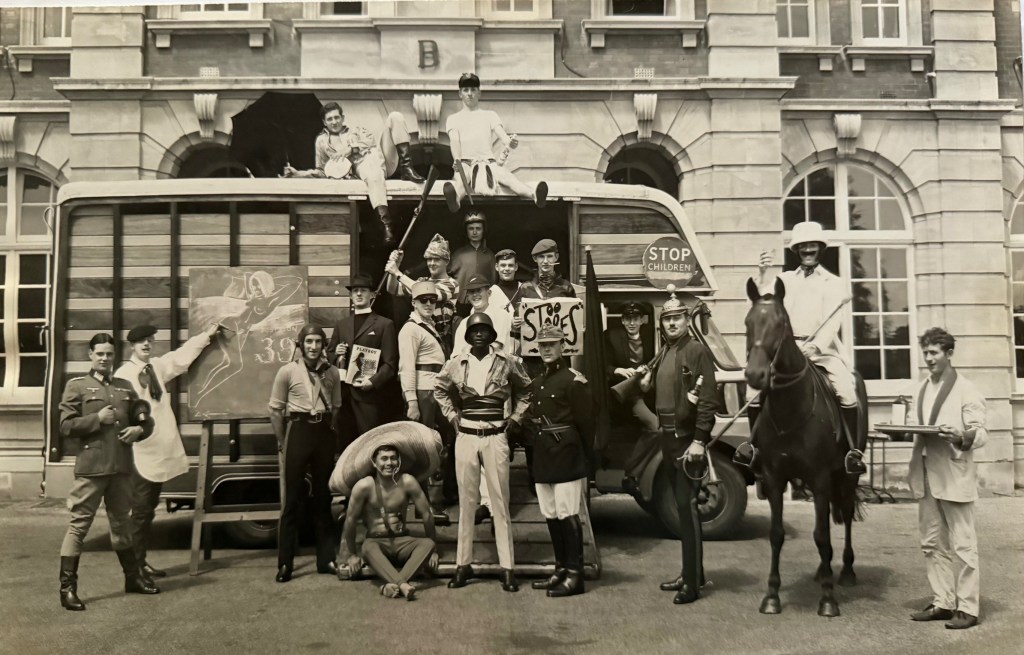
The lighter side of Burma 39. I spent two years with these guys – apart from the chap on the far right, Martin Ward-Harrison’s groom.

There have been many television programmes following recruits, from the time they cross the threshold of various training establishments, to when they ‘pass out’, get their commission. Some have followed Marine recruits at their school in Lympstone, some Police Cadets at their Hendon training establishment, some recruits at the Army Foundation College at Harrogate and there was one for those going through RMAS – ‘Sandhurst’ (ITV 2011). All have shown that given the right fertiliser, anyone can grow from boy to man, from girl to woman.

Richard 8th November 2024

Estoril Portugal

www.postcardscribbles.co.uk

PS I did well at Sandhurst, becoming a Company Junior Under Officer and winning the Benson Award. This was awarded ‘to the cadet commissioned into the Royal Artillery who has shown himself most deserving on grounds of general efficiency and character at Sandhurst’. ‘From little acorns, mighty oak trees grow!

PC 411 Hope in The Autumn

As the afternoons draw in and in most Northern Hemisphere countries the clocks were wound back one hour last Sunday, cafés emit a warm welcoming glow, encouraging one to drop in for a coffee and a slice of cake! And why not? I need no encouragement, however, to drop into The Hope Café, such is my familiarity with and love of its regulars and its offering.  

I haven’t seen Mo in The Hope Café for a while, so delighted to spy her in a corner and, grabbing a double espresso from Libby, make my way over to her table.

“Hello stranger!” says Mo, as she sees me coming. “You OK?”

“Absolutely. Had my birthday last week; actually the same day as Sami’s. A friend called James, who obviously likes numbers, said if you were born in 1978 – I wish – I would have been 46. As it is, I was born in 1946 and am 78! Good to see you; you got time for a catch up?”

“Yes! And I’m pleased to see you too, as I’ve been enjoying your postcards about your time at Sandhurst. It would have been an alien world to me, so fascinating reading of your memories and just what has stayed with you over fifty-five years. There’s one more postcard on the subject, I think. My own experience has parallels in that within secondary education one’s developing young minds and instilling values in teenagers …. so come to think of it there are similarities, albeit dealing with a younger individual. You mentioned military law. I guess the civilian world doesn’t really grasp the concept of an organisation having its own judicial system.”

“Do you know, Mo, I found studying military law at Sandhurst really interesting; learning about it, how it works and then using its provisions to deal with minor offences like losing kit, which could be dealt with by a fine, or stoppages of the individual’s pay. The interesting aspect was to find the right section to apply, rather than use the catch-all lazy one, Section 69. This section’s provisions covered those ‘guilty of any conduct or neglect to the prejudice of good order and military discipline’. Major offences, for instance when one of my sergeants smashed a pint glass into someone’s face, were dealt with by a Court Martial. The Military Law Manuals themselves are extremely detailed as you might imagine, covering every aspect of minor and major offences. Every soldier had the option to be tried by a civilian court.

Another part soon. Probably could have written a fourth part but recognise one’s own memories are not always interesting to others. To reinforce the issue about being on time for parade (See PC 408 Memories of Sandhurst) Jim Longfield, an ex-Army chum who was in Intake 40, wrote: “I recall Day One and being told to be 10 minutes early for the following morning’s parade; the final reminder was ‘remember gentlemen, 5 minutes early is late’. For Jim those words became his platoon’s mantra. I’ve been doing a lot of ‘looking back’ recently as I had those two celebrations of life to go to; for obvious reasons personal memories of the two individuals surfaced.”

“I enjoyed Saying Adieu (PC 409) as it’s something we will all experience, although one won’t know much about one’s final adieu!”

“Ana Ronchi, who tried to teach me some basic Portuguese, wrote:

‘Refletir sobre a morte e os adeuses nos faz lembrar da transitoriedade da vida e da importância de valorizar os momentos com aqueles que amamos. Que possamos sorrir ao recordar, como escreveu Christina Rossetti, e encontrar consolo em nossas memórias compartilhadas.” ….. which translates as ‘Reflecting on death and goodbyes reminds us of the transience of life and the importance of cherishing moments with those we love. May we smile as we remember, as Christina Rossetti wrote, and find solace in our shared memories.

She’s spot on. Jonathan, who had also been at Carol’s funeral, attended another the other day and remarked: ‘Fantastic tributes to Hugh, but everyone attending had hours of their own stories and memories which would never be heard. And there they go ….. leaving the car park!’ The analogy is quite apt. Jonathan will be going to the memorial service for General Sir Mike Jackson.”

“Jackson? Funnily enough I read his obituary in The Times and now remember that incident during the Balkans War.”

“Where he disobeyed an American four-star general?

“Exactly. Had to be reminded of the details; the obituary was very well written. He was in command of the Kosovo Force (KFOR), the 40,000-strong NATO multinational force assembled in Macedonia to implement the peace agreement in neighbouring Kosovo.”

“It was 1999 wasn’t it?”

Yes. By God those Balkan nations have a very individualistic parochial outlook. One only has to think of that siege of Sarajevo in 1992/93 and the atrocities committed by the Serbs. In 1999 that scumbag President Milosevic was very friendly with the Russians and encouraged their leader Yeltsin to contribute some forces.”

“Yeltsin! There’s a blast from the past. Not sure how good he was as President but my abiding memories are of him regularly drunk and at some time standing on top of a tank somewhere.”

“Mischievous! He sent some troops, inaccurately marked KFOR, to secure the Kosovan capital Pristina’s airport, in order to fly in more troops from Russia.”

“Yes. I remember this bit. General Clark, the American senior NATO commander, flew to Macedonia to talk to Jackson. Clark suggested a couple of things Jackson should do and Jackson declined to agree to either, saying they were too dangerous. Accounts differ, but Clark has not directly challenged the version in Jackson’s Soldier (2007), in which Jackson told Clark: ‘Sir, I’m not going to start World War Three for you.’ Clark, a four-star, full general, insisted that he had the authority and repeated the order. Jackson replied: “Sir, I’m a three-star general, you can’t give me orders like this. I have my own judgment of the situation, and I believe that this order is outside our mandate.” (Note 1)

“And Mike Jackson not only survived but some six years later became Chief of the General Staff.”

“Wonderful stuff. Mo, must go and have a pee! Be right back.”

(To be continued)

Richard 1st November 2024

Hove

www.postcardscribbles.co.uk

Note 1 Jackson agree with the Russians that he would provide a security cordon around the airfield, effectively blunting the ability of the Russians to do anything.