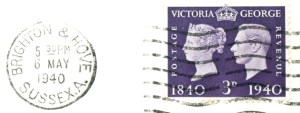
My postcards have covered an eclectic range of subjects; you have only to look at the vague synopsis in PC 300 (September 2022) to see I have, for instance, scribbled about travel, about health issues, about sailing, about current news and whatever has peaked my interest. This week’s title was prompted by reading a recent obituary, but let me explain.
If I reach for my dictionary I find: “Serendipity – The occurrence and development of events by chance in a happy or beneficial way.” Apparently Britain’s favourite word, it was first coined by English writer Horace Walpole on 1754. (Note 1) He had made an unexpected discovery of a Persian fairy tale of the Three Princes of Serendip, an ancient Persian name for Sri Lanka (formerly also Ceylon), often referred to by Arab traders as ‘Sarandib’.
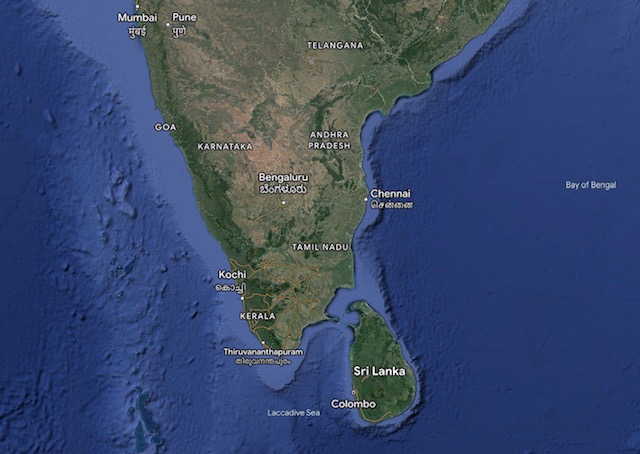
A little like a water droplet on the tip of the Indian sub-continent
First written down in 1302, the fairy tales of the Three Princes of Serendip are based on the life of the Persian king Bahram V, who ruled the Sassnid Empire between 420 and 440 AD. Briefly, the three sons of King Giaffer are sent abroad to learn more about the real world. They come across signs of a blind, lame camel carrying butter, honey and a woman …. but never actually see the animal. When they report their findings, they are arrested, accused of stealing the camel and taken to Emperor Beramo. Suffice to say the camel is found, the Emperor is impressed by the princes’ sagacity (Note 2) and their powers of observation and appoints them as his advisors. They were always making discoveries by accident and sagacity, of things which they were not looking for …. so we have ‘serendipity’! There’s also a version of the fable of the camel with a blind eye included in the Talmud!
There are many examples of serendipitous discoveries:
Perhaps the most famous is that by Sir Alexander Fleming in 1928 of the antibiotic penicillin. On his return from a holiday, he found a petri dish containing a staphylococcus culture that had been left on his laboratory bench. Peering into it, he noticed it had been infected by a Penicillin mould.

In 1954, on his return from a bird hunting trip (Note 3), the Swiss George de Mestral removed from the outside of his trousers some cockleburs and put them under a microscope. Each burr was covered in tiny hooks. He named the hook-and-loop fastener he subsequently developed Velcro (from the French words ‘velour’ and ‘crochet’).

When you next use your microwave oven, think of its inventor Raytheon scientist Percy Spencer. Fiddling with some radar equipment in 1945, he noticed a chocolate bar in his pocket had been melted by heat-generating microwaves emitted from a magnetron! The laboratory equipment was the size of a house but by 1976 it had been reduced to a viable commercial size.
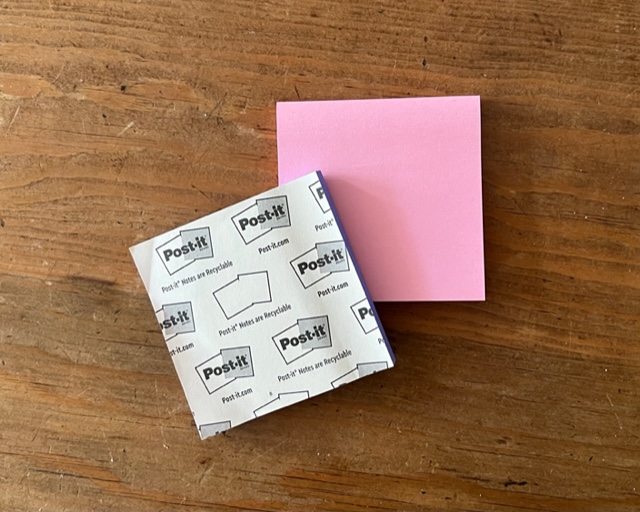
And another one worthy of mention as serendipitous is the Post It note. A colleague used some of a weak adhesive produced by 3M scientist Spencer Silver to keep temporary bookmarks in place in his church hymnal. It was 1979.
Are you still wondering whose obituary prompted these scribbles? Well, back in March 1963 in New York, Joāo Gilberto, a Brazilian guitarist, singer and composer who was a pioneer of the music genre of bossa nova in the late 1950s, and Stan Getz, the American jazz saxophonist, sat in a recording studio intent on producing an album. One of the songs they planned to record was Garota de Ipanema (the Girl from Ipanema), about a beautiful teenage girl called Heloisa Pinheiro whom the Brazilian pianist Antōnio Carlos Jobim and lyricist Vinicius de Moraes had admired as they sat at the Veloso bar on Rio de Janeiro’s Ipanema Beach.

Ipanema beach on a cloudy day!
Originally written by Moraes in Portuguese the lyrics had been translated into English by Norman Gimbel, who had come up with the wonderful opening lines: “Tall and tanned and young and lovely/the girl from Ipanema goes walking/and when she passes, each one she passes goes, ‘ahhh’” The album’s producer, Creed Taylor, decided they should record the song with its English lyrics but immediately realised they was a problem; Joāo Gilberto spoke no English and neither did any of the other professional singers in the studio that evening. Creed looked across to the control room and saw Joāo’s wife Astrud. He beckoned her in and asked whether she could sing the lyrics: she volunteered and proceeded to sing “in a dreamily romantic and sensual voice that fitted the song like a glove.”

The single of the song didn’t even have her name on the credits, but the following year,1964, an album entitled ‘Getz/Gilberto’ included a second track of hers and it went on to become a million-seller: ‘Astrud Gilberto made the album a smash hit’. Astrud died on 5th June 2023 aged 83. Surely a wonderful example of serendipity, the occurrence and development of events by chance in a happy or beneficial way,?
Richard 23rd June 2023
Hove
Note 1 There have recently been accusations that Beatrix Potter ‘stole’ the stories she used to create ‘Peter Rabbit’ from earlier tales known as Brer Rabbit, told by enslaved Africans working on American plantations. I think one thing we can be certain about is that over the centuries stories get retold, translated, adapted and often skewed to suit their new audiences. The story of the Three Princes of Serendip started around 420 ….. only one thousand six hundred and three years ago and not written down for 900 years! You can find the same feature in modern songs, often using tunes familiar to classical music adherents! For example, Leonard Bernstein borrowed a tune from Beethoven’s Emperor Concerto for his song ‘Somewhere’ for the musical West Side Story. Nothing new under the sun!
Note 2 Sagacity. Such a lovely sounding word, one that is rarely used these days, means foresight, discernment or keen perception.
Note 3 I never understanding the fascination people, particularly Europeans, have of blasting little migratory birds out of the sky.
 postcards
Your skill at maintaining the attention of the reader is great!
Another enjoyable read and I have learnt a few serendipitous facts!
LikeLike
And another accidental invention was Wilson Greatbatch’s pacemaker!
LikeLike
Ah! Yes! There’s a long list …….
LikeLike