
This post is a departure from my more mundane scribbles but I feel it’s vitally important that as many people as possible understand the dangers inherent in the title; share with others if you can. I am not sure when exactly I became aware of something called ‘Sepsis’, as the term was hardly every used in the first part of the last century; it’s sometimes called septicaemia or blood poisoning. But now we talk about all sorts of things and what might have been something that the medical profession would have liked to remain under the radar has become mainstream ….. and we now know its effects can be deadly.
What or where would we be without our blood?
Our heart dispenses around 260 litres every hour, pumped to every organ and through every artery in our bodies, although the kidneys take the most at 20%. The whole cycle is complete in about 50 seconds, about four litres out through the arteries and back through the veins; what hydraulic engineers would called a closed system. (Note 1)
So why should I write about it now? A recent documentary “In Memory of Maude” featured the death of two year old Maude, the daughter of actor Jason Watkins and his wife fashion designer Clara Francis. Maude had had a sore throat and was running a temperature, severe enough to be taken to their GP, then to hospital, but was discharged. The following day they took her back to A&E as she was floppy and extremely pale. She was diagnosed with having croup and again discharged. The following morning she was found dead in her cot by her four year old sister. At no stage was Sepsis mentioned or suspected, but maybe the doctors and nursing staff didn’t really know what to look for? ‘Read, mark and inwardly digest’ the following; it could save your life or the life of someone else:
Signs of Sepsis in adults:
Slurred speech or confusion
Extreme shivering or muscle pain
Passing no urine in a day
Severe breathlessness
It feels like you’re dying
Skin looks mottled
A child may have sepsis if they:
Are breathing very fast
Have a seizure
Look mottled, bluish or pale
Have a rash that doesn’t fade when pressed
Are very lethargic or difficult to wake
Feel abnormally cold to touch
To quote: ‘Sepsis is the body’s extreme response to an infection. It is a life-threatening emergency. Sepsis happens when an infection you already have, for example influenza, triggers a chain reaction throughout your body. Infections that lead to sepsis most often start in the lung, urinary tract, skin or gastrointestinal tract.”
Here in the United Kingdom the Sepsis Trust says 48,000 die of sepsis every year. Early intravenous antibiotics are essential; for every hour lost, the risk of death rises by 8%! Nice huh?
A very good friend of my daughter suffered a horrendous car crash some years ago and it left her with physical and mental issues one wouldn’t wish on anyone. Suffice to say she is often diagnosed with Sepsis and rushed to hospital on an infrequent but depressingly regular basis. This was rumbling in the background when I then read of some poor unfortunate obese individual who had joined the trend to have a Gastro Band fitted in Turkey, saving himself many thousands of pounds. Sadly like so many of these ‘on-the-face-of-it-amazing-deals’, the minimal local after-care didn’t pick up that he had got an infection, that turned into Sepsis, and he died. The surgeon had said he’d had a cardiac arrest but a post-mortem revealed internal bleeding!
My son-in-law Sam was recently told that a friend with whom he had lost contact had had a heart issue which required hospitalisation. Presumably it was serious enough for him to be put into a coma, but somehow bacteria got in, Sepsis got hold of his body and he woke up without his hands and feet. He is in his 40s.
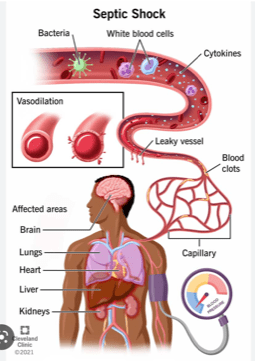
The loss of one’s hands and feet following a bout of Sepsis seems quite common. Septic shock causes small blood clots in the blood vessels, which prevent adequate blood flow to the fingers, hands, arms, toes, feet and legs. Given that our blood carries vital oxygen and nutrients, tissues deprived of these begin to die.
Now I come to a news story the nub of which constantly reverberates around my brain. A white woman had developed sepsis after a urinary tract infection, relapsed into a coma for nine weeks, and had both her hands and feet amputated. Makes you realise how infections can have such tragic consequences. Kim Smith obviously imagined that our healthcare system would respond by outlining her options, either with the provision of prosthetic hands and feet or with some transplanted ones. The whole issue is frankly distressing for those of us not faced with these choices, but in her case it got worse. She had been accepted as suitable for having a double hand transplant but the search for donor hands was proving quite difficult. According to the article she was offered either a pair of male hands or those of a black female. I have read this a number of times, but still can’t get my mind around the emotional impact of the initial need and then the offered solution.
I type these scribbles using fingers attached to my white hands and try to imagine if I had been in Kim’s situation, what I might have found acceptable. Reminds me a little of ‘Sophie’s Choice’ ……… (Note 2)
Richard 12th May 2023
Hove
http://www.postcardscribbles.co.uk
PS In 1863 the British surgeon and anatomist Joseph Green was finding his pulse. “Stopped!” he announced and promptly died.
Note 1 The Body: A Guide for Occupants by Bill Bryson
Note 2 Sophie’s Choice is a novel by William Styron and a 1982 film. Sophie is asked by a Nazi concentration camp officer to choose between her daughter and son; the one not chosen will go straight to the gas chamber.
 postcards
Thank you for an informative and a much misunderstood illness.
My father died of sepsis in 2021, up until then, I had little idea of what it was, or how fatal it can be.
The heart wrenching choice forced upon Sophie is unimaginable, let’s hope we never have to make such a decision.
LikeLike