PC 426 It’s a Fine Line ….

I was going to scribble how it’s often a fine line between success and failure, between life and death …… but I thought I would consult my Oxford Illustrated Dictionary and see what it says about ‘line’. Wow! Over a column of the three-columns-to-a-page layout devoted to the word ‘line’.
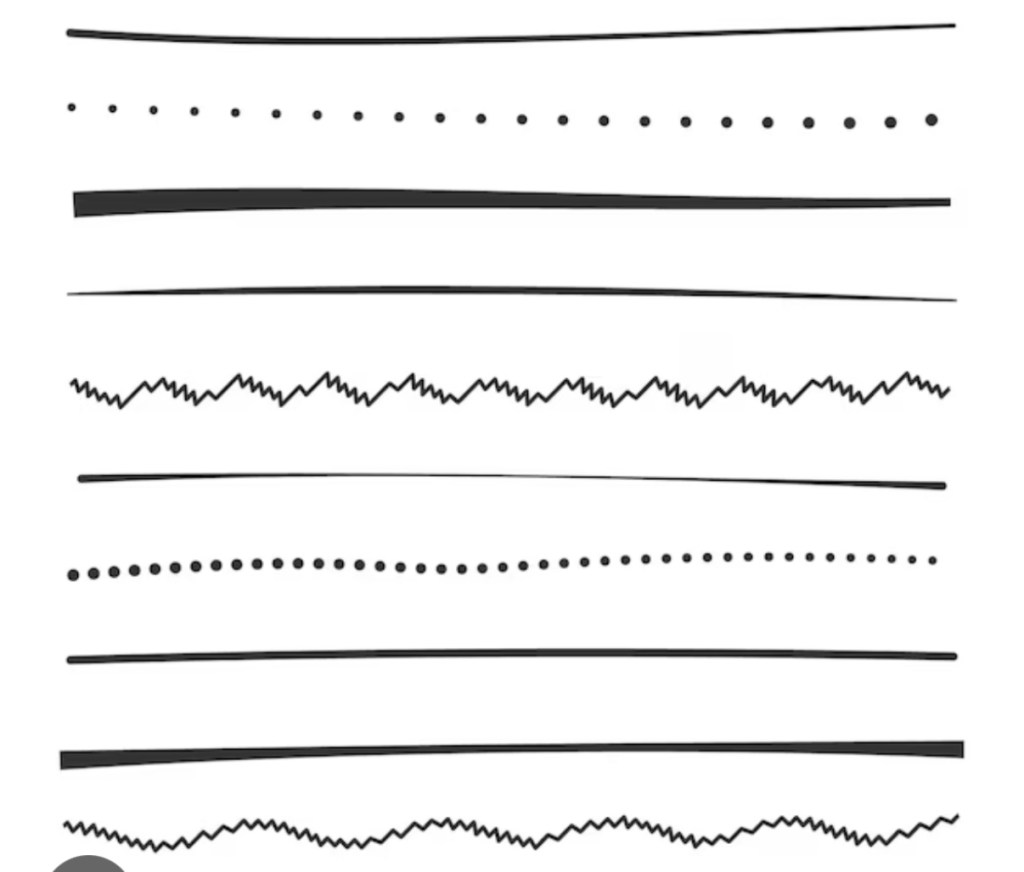
Most would immediately understand it is a noun and that it joins two points. We have telegraph and power lines; lines marking the boundaries of, for instance, a tennis court; life lines on the palm of your hand; lines that connect points having common property, like an isobar, or the Equator or lines of longitude or latitude; lines to be learned by actors, as opposed to reading between the lines to discover a meaning not obvious or expressed; a line of poetry remembered years later; somewhere to hang your washing, the clothes line; words to be written out as a school punishment; naval ships in formation are often line astern or line abreast;

tram lines in cities or railway lines criss-crossing the country; in Rugby Union forwards form a line to receive the ball from the touchline, a ‘line out’. As a verb, troops could line the streets for ceremonial occasions; you could line a drawer with paper or you could line your stomach, anticipating drinking too much alcohol!

My own fine line, my brush with death in 1991, remains very clear today. As a passenger (in car A in diagram) being driven into Canberra, Australia during the rush hour, traffic was heavy in both directions. Suddenly we were aware of a car (car B) overtaking the oncoming traffic, coming at us head-on. There was nowhere to go. My friend decided to swing right, although instinctively left would have been the better option!
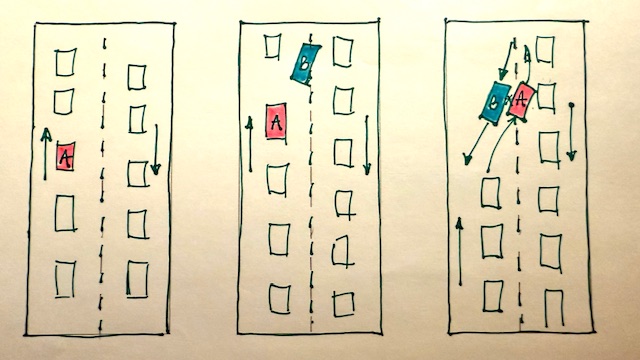
The oncoming car swung to their right; a collision seemed inevitable. The only touch was the paintwork on the passenger-side wing mirror; a very fine line indeed.

Writing about lines, fine or not, remined me of a question I often asked my clients in their first coaching session. I would draw nine dots on a piece of paper, thus:

then ask them to join them up, using four straight lines, without taking their pencil off the paper. We habitually see things that aren’t necessarily there, because it gives us a comfortable feel, recognition of the familiar. I recall that about 25% of my clients were successful. Trump is thinking ‘outside of the box’ with his ideas about Gaza – makes me wonder whether he would be in the 25% or not?

Last weekend in Europe we had the second round of the Six Nations (Note 1) Rugby Union Competition. England were playing France; it was a very good game to watch and the lead changed hands throughout, although a last minute try by England meant we won 26 points to 25 …. a fine line. (Note 2)

Words which mean the same are collectively called synonyms, like ask, question or inquire, or beautiful, gorgeous and dazzling. You can also have a phrasal synonym, like ‘fine line’ and ‘hair’s breadth’. Typically a hair strand is between 0.03mm and 0.08mm in diameter; one nominal value often chosen is 75µm. Such measures can be found in many cultures; for instance in the Burmese system of Long Measure a tshan khyee, the smallest unit is literally a ‘hair’s breadth’.

A straight line between two points can be at any angle, but geometrically graphs always have at least two axes, one horizontal and one vertical. My pedantic nature is offended if something isn’t level, horizontal or vertical. Sometimes it’s a fine line, even half a degree or so. When we moved into our apartment in Amber House after its conversion in 2012, a couple of light switches were not straight; given the availability of spirit levels, it was a good example of poor workmanship.  

When sailing, if the wind is coming from the direction you want to go in, you have to ‘beat’, with the sails as flat as possible. It’s a very fine line to steer the yacht at its optimum; too much into the wind and sails start being back-winded; too far off the wind and the yacht heels so much, reducing the efficiency of the sail area. When you get it right, it’s as if the yacht ‘lifts its skirt and flies’; yachts are always female by tradition so this expression should be safe in this sensitive world.

For James Howells it’s still a fine line between success and abject misery! In Wales in 2013 he had a bitcoin wallet worth £4 million; its password was stored on his hard drive. His girlfriend, possibly ex by now (?), threw out the hard drive with some rubbish, presumably without knowing what it was. Somewhere under a mountain of household waste in some council refuse tip is a hard drive which, if retrieved, could unlock, at current bitcoin value, about a billion pounds sterling. He’s even offered the council millions if he’s allowed to successfully search for it, so far without success. 

The polarisation of everything, including politics, views about this and that, personal opinions, is making society more fractious, the line between acceptable and unacceptable extremely thin, like living on a knife-edge. With the increase in false news stories and conspiracy theories, it’s surely time for us all to apply good old fashioned common sense and move towards the centre.  

David Lammy the UK Government’s Foreign Secretary: “There’s a fine line, as you know, between free speech and hate speech.” Maybe I could add that it’s also a fine line between love and hate, other extremes. So, let’s concentrate on ‘Love’, particularly on this romantic day?

Richard St Valantine’s Day 2025

Hove

www.postcardscribles.co.uk

PS Last Summer, a tree near my brother-in-law’s apartment in Estoril Portugal looked as though it could do with about one third taken off it. Someone asked whether that should be from the top or the bottom. (Just think about that?)

Note 1 The six nations comprise England, Scotland, Wales, France, Italy and Ireland

Note 2 The previous weekend Ireland had beaten England 27-22.
PC 424 We are Nothing Without Hope

There was a very good reason that Duncan named his café here in Hove ‘The Hope Café’, as on that single word hang our todays and our tomorrows. Without hope, in whatever form, we are nothing. Last Monday was International Holocaust Memorial Day, this year’s made even more poignant as it is the 80th anniversary of the liberation of Auschwitz.

Back in February 2022 I wrote about the atrocities sections of our global society have inflicted, one against another, in PC 268 Least We Forget. Whilst acknowledging that unspeakable horrors committed, man on man, have not been exclusively the preserve of the Nazis, the latter managed to create an industrial killing machine within their concentration camps. Just remember these words: ‘In Auschwitz it’s estimated that a million Jews were killed’; 1,000,000 individuals expecting, as we do today, to have a reasonable life expectancy, simply snuffed out because of their race. The testimonies of survivors at Monday’s Ceremony of Remembrance at Auschwitz shared a common theme, that current and future generations must heed the alarm bells already ringing from rampant antisemitism on display in the Middle East and elsewhere.

Last December I read ‘The Happiest Man on Earth’, the autobiographical account by Eddie Jaku (Note 1) of his life, particularly the years he spent in Buchenwald and Auschwitz. For those who are uncertain whether these camps existed, this story lays it out in all its horror and degradation. You may have already read what King Charles wrote on Monday in the Auschwitz Visitors’ Book: “Remembering what took place here, and those who were so cruelly murdered, is a duty, a sacred duty that must be protected. Being here today, hearing the stories of those who experienced its horrors, seeing the shoes of children whose lives were taken when they’d just begun, and walking the paths upon which such cruelty was inflicted is something I will never forget.”

Tova Friedman, now 86 but aged 6 when Auschwitz was liberated, should have a final word. “I stood and watched helplessly as little girls were marched away to the gas chamber. ….. I thought it was normal that if you were a Jewish child, you had to die.”

Let us hope.

I was hoping to have a chat with Lisa, Sami’s partner, when I went to The Hope Café on Wednesday, as I hadn’t seen her this year. Sure enough she’s at a table, tapping her laptop keyboard as if her life depended on it. Incidentally I hope that schools are teaching children to type properly and not just using two fingers. Unlike mine, their future is digital. Lisa’s happy to be interrupted.

Hi! Richard. I enjoyed your last postcard …. what was its title ….  ‘There Are Standards, Carruthers.’  Excellent! I bet it garnered a lot of comments?”

“It certainly did! Funny how we find something so simple as manners and common courtesies an interesting topic. There were a lot of new readers who ‘liked’ it, so I am pleased. How are you and Sami?”

“We’re very good, thanks. With the weather so vile we’ve probably watched more television that we usually do and really enjoyed a new drama called Patience, set in the City of York. The character of the title, Patience, played by Ella Maisy Purvis, has autism, as has Ella. I read “In an overcrowded crime drama market it is the slowly developing connection between Bea (Ed. Bea Metcalf is a detective working for Yorkshire Police) and Patience that is the Bechdel test-passing USP of this show.”

“Er! What’s the Bechdel test?”

“Glad you asked. I was aware of it but it’s become very popular of late, so I looked it up. Essentially it asks whether a work featuring at least two female characters have a conversation about something other than a man.”

“Can you imagine? But seriously, that is interesting. And I assume Patience is neurodiverse….”

“Absolutely! Just like Bill Gates and see where that got him.”

“Celina and I occasionally watch dramas on Channel Four which are sponsored by a user car dealership called Arnold Clark; the advertisements always feature a car … surprising huh! One of the latest shows a chap taking an electrical charging cable, walking to the charging point on the rear of his electric car, and plugging it in. Then he seems to stand there, holding the cable handle, looking up …… at an imaginary petrol station pump display ….. as he had always done!

Ah! Habits die hard.”

“You may remember in PC 422 ‘Back in The Hope Café’, right at the end, I admitted to Mo that I had asked someone who was due to have an acupuncture session whether it was online or were they going to the practice. Since then, the acupuncturist has confirmed he charges 25% more for online appointments!

Then I had an amusing exchange with our masseuse, Kay, who had a tree in her garden that needed trimming. She asked by text whether she could borrow a saw. She’d dictated her text and hadn’t checked it before pressing ‘send’. It came out as ‘I would love to borrow your soul if that’s possible.’ A day later she realised: ‘Just realised I’ve asked to borrow your soul. I’ll let you keep it and just stick with the saw. Anyway, didn’t you sell your soul a long time ago?’ My response was short: ‘Too long ago to remember; too short a time to forget.’”

“Brilliant! By the way, I noticed Libby’s looking very subdued and quietly asked Josh if he knew why.  Apparently, she’s admitted to him that she’d been the victim in a Romance Scam, has lost a lot of money and is feeling very embarrassed.”

“I am not surprised! I’ll have a chat with her sometime, not now, and see if she can put it behind her.

Richard 31st January 2025

Hove

www.postcardscribbles.co.uk

PS For clarity, I am not Jewish, simply a human being.

Note 1 Eddie Jaku OAM (Order of Australia Medal) was born Abraham Jakubowicz in 1920. He died in Sydney in October 2021.

PC 422 Back in The Hope Café

After a couple of postcards that, on reflection, were quite serious in content, I needed to relax a little, so headed to The Hope Café for some R&R (Note 1). With a pastry and double espresso in hand, I found a corner table and sat … and relaxed … and observed. Such a great pastime, watching other people living, doing, engaging, focused; fortunately, most people who are here in The Hope Café come to meet others or just get some relaxation, some space away from their hectic life outside. Well, most; apart from our budding novelist Robert, who is tapping away on his laptop at the window counter, lost in his own world of fictional stories and subplots and characterisation. He gets the best of both worlds, working with headphones clamped over his ears listening to a podcast or music, whilst absorbing the café’s ambience and warmth by a process of osmosis!

 I guess we’ve all noticed a very modern trend; where acquaintances get around a restaurant table, order some food and drinks and then get their mobiles out and catch up with their social media lives and have no conversations IRL (in real life).  It doesn’t happen here in The Hope.

I was struggling with one of The Times’ hard Killer Sudokus, which I do on a daily basis as it keeps the grey matter well oiled, when I had a tap on my shoulder. I looked up to see Mo. Pleased, I motioned to her to sit down.

“Listen, Richard; I bet you had a lot of comments about your last scribbles about the Cancel Culture. (PC 421 Not the Way to Go January 2025). I thought you did a great job, highlighting this very real issue. It’s awful and a very worrying state of affairs, especially for those with low self-esteem. The new ‘being sent to Coventry’, perhaps; used to mean deliberately ostracising them, by not talking to them and acting as though they no longer exist. Sounds about right?” (Note 2)

“I got a lot of reaction, yes, but all rather sad, huh! One friend whom we met in the Portslade yoga studio has two sons in their early twenties. The older one did a Video Gaming course at university; “Bullied online over the last few days. Really awful; impacted his physical and emotional well-being; seems as though younger people are losing their kindness and the ability to discuss differences openly and curiously without judgment; he had to remove himself from one gaming group.

“You may have read about 66-year-old Martin Speake, who taught jazz for 22 years at the Trinity Laban Conservatoire in London?”

“Not a name that rings any bells. Tell me more?”

“It’s a complex story with many nuances but in essence when Speake was asked for feedback on the school’s equality and diversity policy, he said he didn’t agree that black musicians were discriminated against in the UK’s jazz scene (Note 3). Martin Speake is white. His response was ‘shared’, his classes were boycotted …. and he was eventually forced to resign. It was claimed by a student that his email has made black musicians feel unsafe at Trinity. He believes that students are treated like customers so they’re in charge but they don’t have the maturity to know what they are doing; ‘they have destroyed my life’.”

“That’s such a sad reflection on the world in which we live. We can only hope that common sense will return. By the way, I know you read The Times; did you see the obituary of Cherry Hill?”

“Never heard of her, no.”

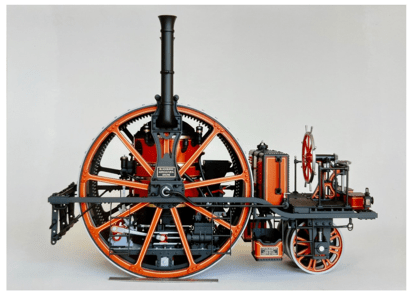
“She was a prize-winning model maker, who spent a lifetime creating elaborate scaled-down versions of Victorian traction engines and other machines, some of which had not even been built at full size.”

“And why are you mentioning her?”

“Because I was astounded by her skill and attention to detail. I took this screen shot of her model of a Blackburn agricultural engine of 1857:

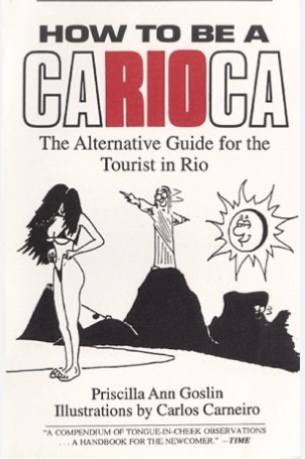
“Wow! That’s incredible. Incidentally, you asked whether I had lots of comments about my last PC. Yes, but PCs 417 and 419 (Have you Read …) were equally popular. One of my readers, Priscilla Goslin, author of ‘How to Be a Carioca’ (Note 4), not only passed them on to one of her adult sons, who has ‘difficulty of letting go of past disappointments’, but also admitted to having copy of Zen Flesh Zen Bones: ‘on my shelf forever. I’ve never known anyone who had it! I can still recite a few of the stories.’ Priscilla lives 50/50 in Brazil and the USA.

Before I go, Mo, I thought you would be amused at my recent stupidity. We get so used to doing things online that when someone I know said they were going to see an acupuncturist, I immediately asked: “Is that online or are you going to their practice? Bye ….”

Good to chat!  

Richard 17th January 2025

Hove

www.postcardscribbles.co.uk

Note 1 R&R is an abbreviation for Rest & Recuperation, a term I first came across in 1973. Halfway through our four-month operational tour in Londonderry, Northern Ireland, we had three days ‘R&R’. Those soldiers who were married flew back home to Germany, those who were single flew to the UK mainland. After living in a heightened state of alert for weeks, it was weird and strange to re-enter ‘normal life’, even for a few days.

Note 2 The phrase may date from the English Civil War (August 1642 – September 1951) when Coventry had a military prison. Others suggest it dates from the C18th when Coventry was the nearest town to London that lay outside the jurisdiction of the Bow Street Runners, so London criminals would flee there to escape arrest.

Note 3 Probably some ‘tick box’ survey.

Note 4. An international best seller since 1992, this is a humorous look at what makes up one of the world’s most colourful characters – the Carioca, a resident of Rio de Janeiro, Brazil.

PC 414 It’s all about the B

Some months ago, we had a couple of people who share our passion for hot yoga around for supper. Always a surprise to see other hot yoga enthusiasts with clothes on, as in the studio you need to wear as little as possible. One, Serena Wells, is a graduate of Brighton University where she studied Fashion Textiles and specialises in using colour to create bold, graphic works, often silk on silk. She currently has a design studio in Brighton. Her parents were from Guyana. (Note 1) The other, Armando Colucci, known to everyone as Armi, is an Italian from Naples who works as a head trainer for the hair products company Schwarzkopf. We sit down to a simple supper and the conversation starts. It wasn’t the first question but at some time Armi asked:

“Have you always lived in Brighton?”

That’s when the thought went ‘ping’!

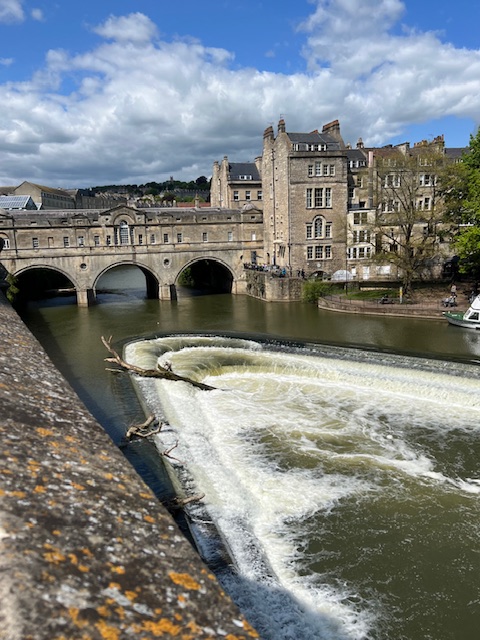
“No. I was actually born in Bath ……”

Pulteney Bridge over the River Avon in Bath

…… and I realised that ‘B’ was a linking letter to a great number of places I have lived in! I could hear myself talking about being born in Bath (PCs 164 & 165), how I went to the first of three boarding schools there and how my parents had divorced.

Then my mother remarried and she and my stepfather moved away and my mind went into another subconscious loop about how they moved to Balcombe, too far away for more than one visit each term, the two-day half term.

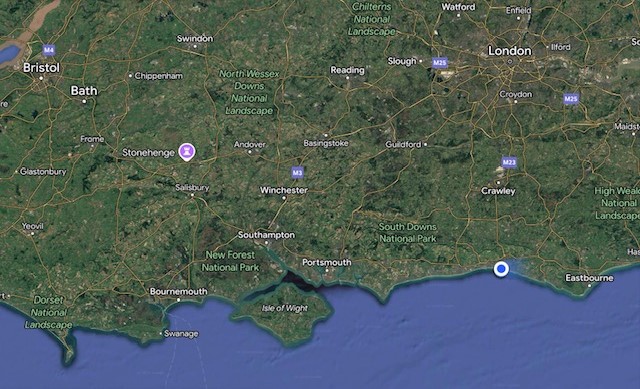
Brighton’s where the blue spot is. Bath top left.

Balcombe is a little village some 18 miles north of Brighton. (See PC 58 Going Home December 2015). I remember a first Geography lesson at Daunsteys’, a public school in Wiltshire; ‘write an essay about where you live’ and Balcombe was by comparison to Bath very small, so I volunteered that it had a population of 300. These days I’d simply ask Google and get a reasonably accurate figure. The master, Mr Taylor, put a red ‘1’ before the 300; I guess the village had a large catchment area.

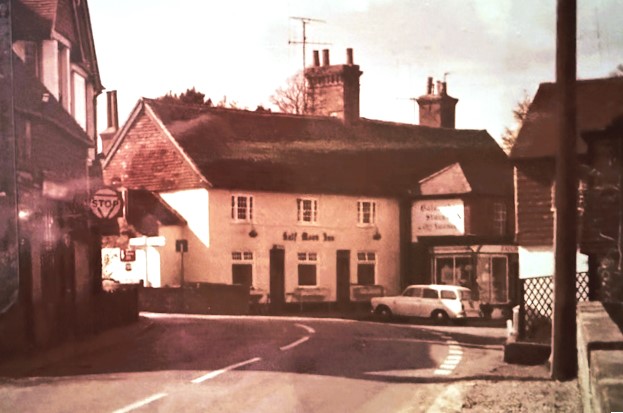
The Half Moon Inn in the centre of Balcombe circa 1961

It had a good steam train service to London Victoria and to Brighton, and a regular bus service to Haywards Heath, the local town where there were many shops and the Perrymount cinema, where the auditorium was divided into ‘smoking’ and ‘non-smoking’ sections. We went to the Theatre Royal, Brighton for pre-London productions or to the ice rink for a fun afternoon.

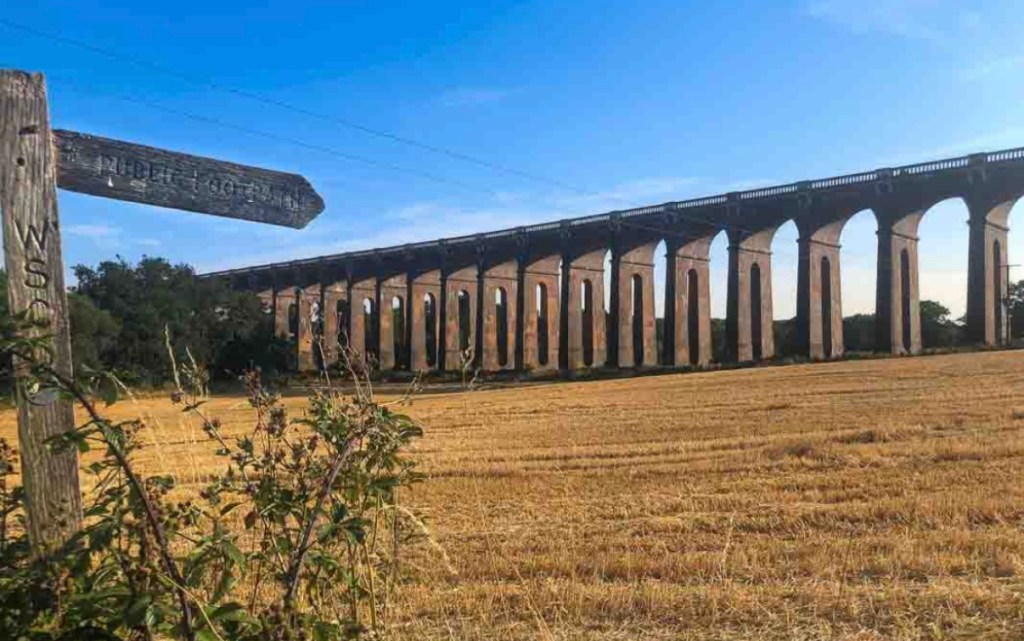
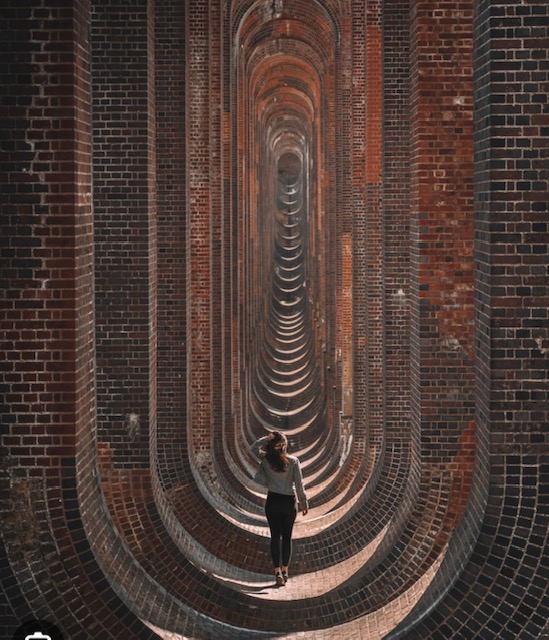
On the way to Haywards Heath the road passed over the River Ouse and to its west was the magnificent Ouse Viaduct, known locally as the Balcombe Viaduct.

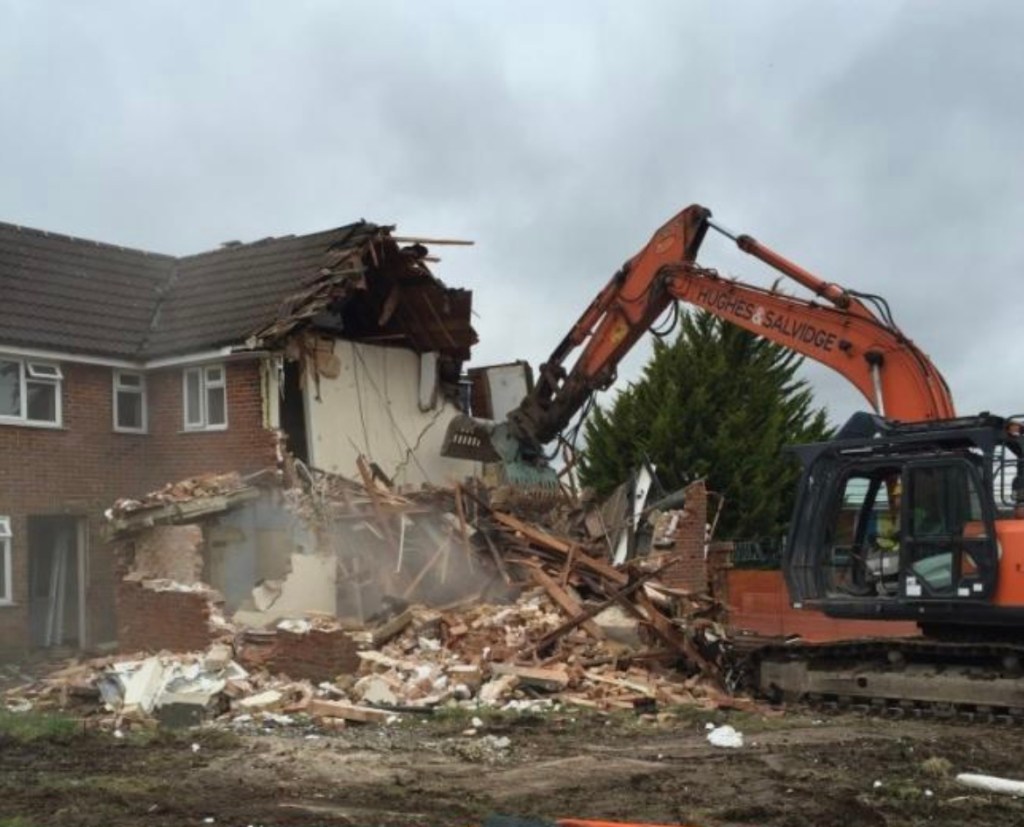
My next ‘B’ would have been Bielefeld, a town in what was then West Germany, where the British Army had a large Headquarters and where I met my first wife. I was stationed in both Lippstadt and Sennelager, ten miles away. Returning to the UK for a staff role and Staff College, after a stint in the Ministry of Defence I took over an Air Defence battery in Wing Barracks in Bulford, a few miles north of Salisbury.

Wing Barracks, Bulford being demolished in the C21st!

Thoughts tumble through my subconscious like cereal into a bowl at breakfast. My mind leapt to London where I bought a rather dingy basement flat on the south side of Clapham Common, across the Common from Battersea. For those of us of a certain age, Battersea will for ever be associated with Peter Sellers and his ‘Balham – Gateway to the South’ radio skit. “We enter Balham through the verdant grasslands of Battersea Park, stretching for more than half an acre …..” or something like that! I toyed with the idea of buying a house just south of Basingstoke, southwest of London in Hampshire, but there were too many issues that couldn’t be resolved and I pulled out.

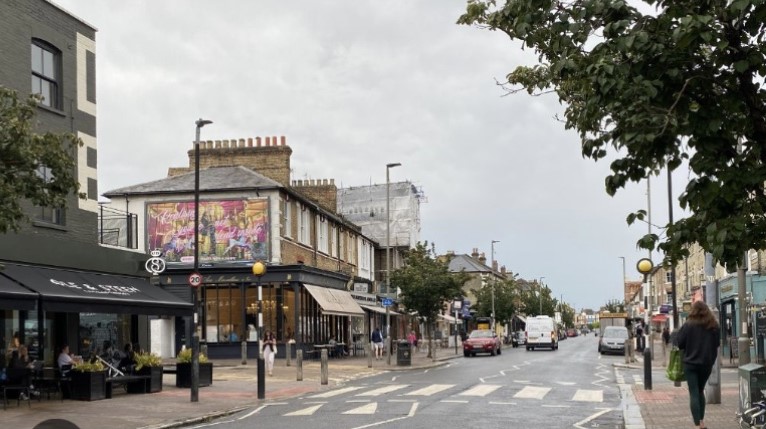
In 2000 I bought a terraced house in Bramfield Road, Battersea and nine years later attended my first session in Hot Yoga South, Balham, a ten-minute cycle ride away; the start of a continuing journey. Battersea is another London village that went from rather down at heel to being an attractive place to live, particularly for ‘Yummy Mummies’. So much so that the road at the bottom of Bramfield Road, Northcote Road, was known as Nappy Valley. 

Northcote Road, Battersea

My life moved on and through my regular hot yoga practice I met Celina.

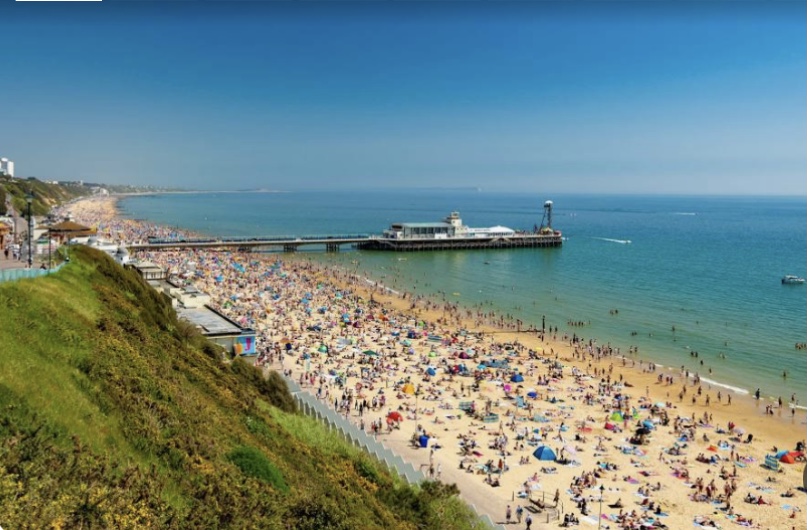
Bournemouth Beach

Wanting to live on the south coast and needing to be able to practise Hot Yoga regularly, Celina and I identified where that was possible. We had a weekend in Bournemouth and went to two classes in the studio in Boscombe. For me, Bournemouth will always be associated with an uncle’s brother, a chap called Ken Bailey who was awarded the Freedom of the City for his work with the young. (There’s another B!). Boscombe is somewhat rundown, what might be called a ‘white trash’ area; sad, gaunt, pale faces, skinny bodies, dressed in black. We decided to look in Brighton. We knew the studio owners in Brighton and here were more options. We bought in Hove, practised in Portslade until 2018, then moved to practise in Yoga In The Lanes in Middle Street, Brighton.

Brighton of course is a city of contrasts, although in the early C20th its seedier side seemed to colour its reputation; in the 1930s – “Queen of Slaughtering Places”! Now it’s better known for its thriving arts scene and laissez faire attitude, for its Pride Parade in August and for its Palace Pier, and a beach of pebbles.  

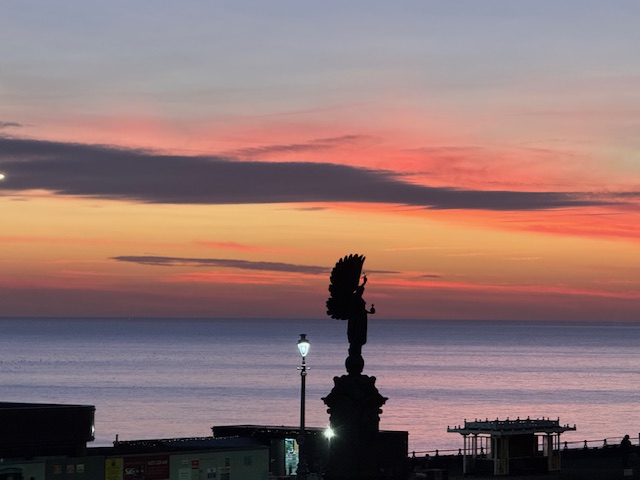
The Peace Statue on the boundary between Brighton and Hove

It’s just a coincidence, these Bs; obviously could easily have been A or C.
These thoughts had drifted through my brain in a few seconds but suddenly I was aware that Serena was asking me a question about my paintings, and I needed to become fully conscious!

Never imagined I would return to Brighton & Hove!

Richard 22nd November 2024

Hove

http://www.postcardscribbles.co.uk

Note 1 The explorer Lucy Shepherd traversed the Guyana jungle from the east to the border with Brazil in the west, on foot in 50 days. Watch ‘Secret Amazon: Into the Wild’ on You Tube or Channel 4. Don’t if the idea of Bushmaster snakes terrifies you.

Note 2 My Podiatrist thinks Bath is ‘posh’.

PC 413 Hope in The Autumn (continues from PC 411)

“That was a long break, Richard!”

“Yes. Sorry! Got caught by Libby who wanted to give me an update on Susie.”

“How’s she doing?”

“Libby thinks she’s enjoying her course which should finish before Christmas. Obviously now looking where she can apply new-found her skills.” (Note 1)

“Unlikely we will see her back behind the counter! Sad but life moves on and so it should. We were talking about what The Times’ obituary writers had said about General Sir Mike Jackson. Always interesting to read the obituaries of others, not that I imagine for one second that mine will feature in a national newspaper.”

“Maybe, maybe not! The obituary writers must have a fun if not conflicting time deciding who to include. Did you see that one last month about possibly the last ‘ice harvester’?”

“No ….”

“In an age when a refrigerator and freezer are considered essential gadgets, we forget some of the ingenious ways our forebears used to keep food fresh. One such device was an ice box, made of wood or metal. Food was placed in the bottom and an ice block in the top compartment. Cold air falls so keeping the food fresh.”

“OK. I’ve seen some on visits to National Trust properties, but who was this ice harvester?”

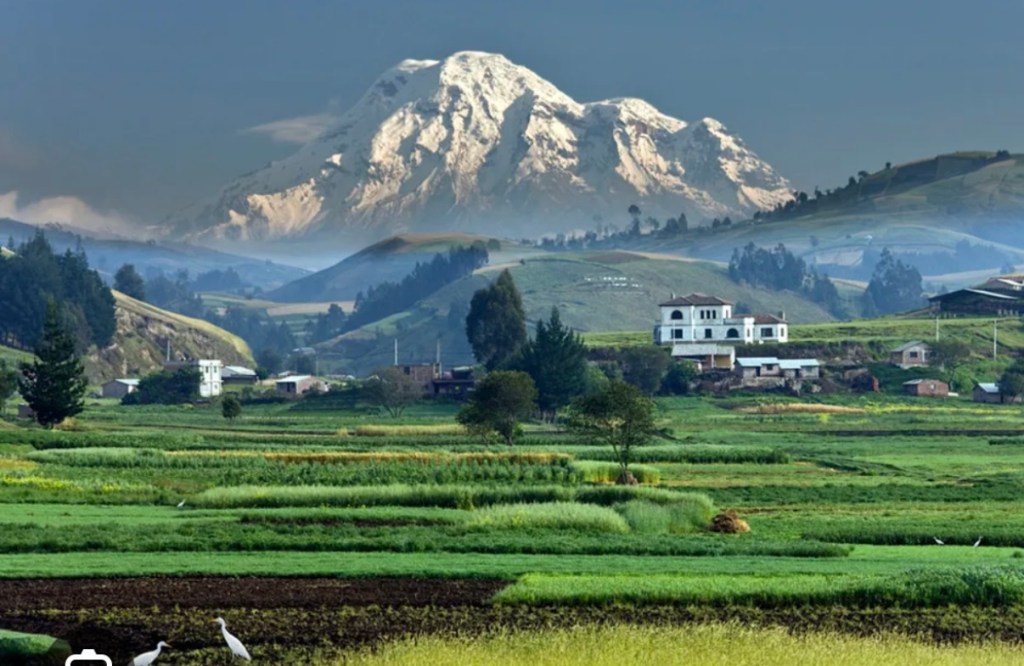
“Actually an Ecuadorian named Baltazar Ushca, who for more than 60 years climbed the slopes of Mount Chimborazo, the tallest mountain in Ecuador, to harvest the ice that covers the dormant volcano. “It’s the tastiest and the sweetest, full of vitamins for your bones,” he explained of the frozen water, which glistens in the sunlight like a huge diamond.”

“Now I know something about Mount Chimborazo. Its summit, over 6000m if I remember correctly (Note 2), is the point on earth closest to the sun, as it sits just one degree south of the Equator, where the Earth’s bulge is at its greatest. But why did The Times decide his life was worth remembering?”

Mount Chimborazo

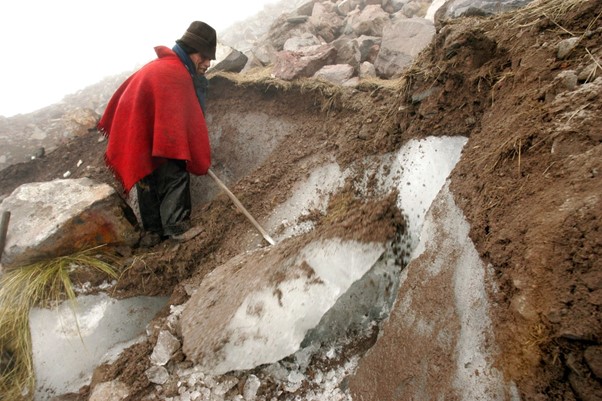
“Probably to mark the end of a traditional way of life. At one time there were up to 40 ice harvesters, known as hieleros, including his brothers Gregorio and Juan. “We would go out in a group of friends, four or six groups, twice a week,” he explained in his native Quechua language. “I would go with my mother and father, with my brothers and sisters.” Gradually their number dwindled. Ushca, who was born in 1944 and started the five-hour trek to the top of the mountain aged 15, was believed to be the last one.”

Baltazar at work

“Ah! That’s both fascinating and sad. I haven’t been anywhere in South America, let alone Ecuador, although Rio and Machu Picchu are on my bucket list. And now, Richard, I need to get going as I promised my mother we’d meet in M&S in Brighton. She wants to buy some clothing staples and M&S’s very good for these. See you ……”

I sat back, relishing the agreeable atmosphere in the café, and was thinking of getting my iPad out to read the day’s news when I saw Sami coming through the left hand door.

“Hey Sami! A belated Happy Birthday for the 24th. Us Scorpios must stick together!”

“Afternoon Richard. How was your birthday?”

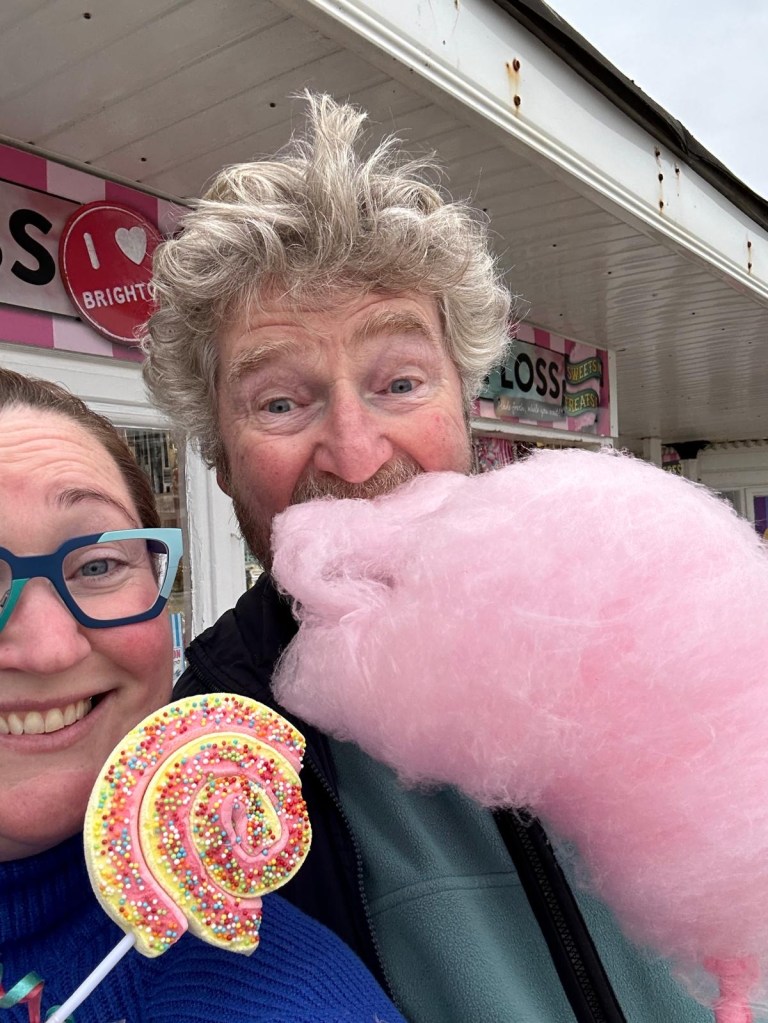
“Actually lovely and rather drawn out. The week after we went to Chichester for lunch with my brother and then had Jade and the boys down. They just LOVE Brighton; Lego shop, VR business, lunch down on the pebbles at Captain’s, then an hour on the pier. For some strange reason they had never been on it, so the excitement levels were sky high. And Candyfloss is a favourite – on a stick of course.”

“I bet they went for a swim before going home?”

“They did indeed …… and had a slice of cake. Actually it was a very drawn out birthday as my mother-in-law made me a cake when we were in Estoril last week!”

“And have they moved yet? I remember your daughter was buying a derelict house that her maternal grandmother had lived in. How’s that going?”

“Water under the bridge! A very stressful two months but they completed a week ago and have moved into a rented house until Christmas. They have replumbed and rewired, fitted a new bathroom and now have six weeks to fit the kitchen and windows. Certainly doable!”

“Thank you for the update. Good luck to them. You know Paul Simons, who writes a column in The Times about weather?”

“Yes. He digs up really interesting information. What’s piqued your interest this week?”

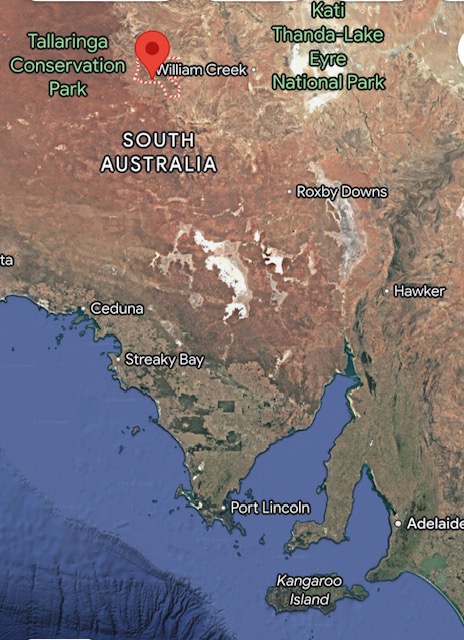
“A place in Australia called Coober Pedy. Australia is expected to face one of its hottest summers on record and, even though it’s spring in the southern hemisphere, a couple of weeks ago South Australia had its highest temperature for 29 years when the outback town of Coober Pedy recorded 43.7C.”

Red marks Coober Pedy

“Never heard of Coober Pedy. Tell me more?” (Note 3)

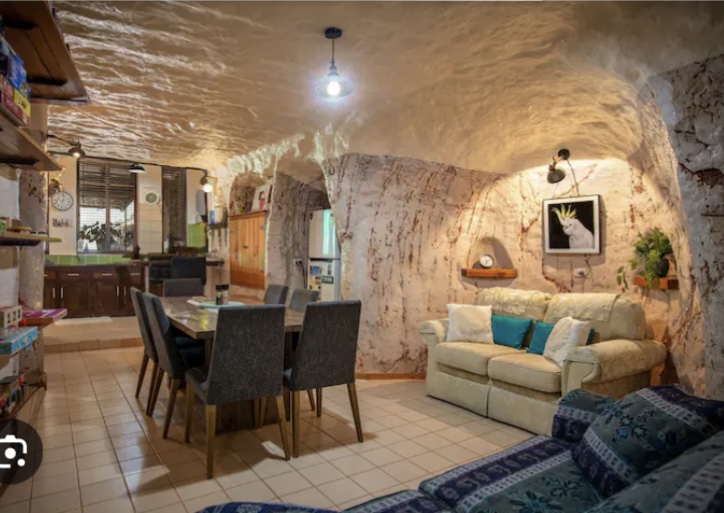
“Well, Coober Pedy is a remote mining town in the South Australian desert and has the largest opal mine in the world. When miners arrived in 1915 they soon found life was far more bearable underground, inside disused mine shafts, than above ground in the heat. So they began digging out their own subterranean homes and today it’s a grand subterranean town with restaurants, bars, art galleries, a bookshop, churches and even a four-star luxury hotel, all built to escape the desert heat. Temperatures below ground stay at a surprisingly pleasant 23C-25C throughout the year without any need for air conditioning. How about that!”

An underground Air BnB in Coober Pedy

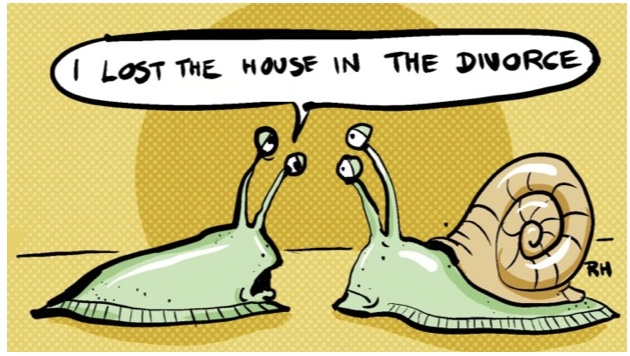
“Never been to South Australia; maybe I should put it on my list. Incidentally you read my postcard entitled ‘The Snail aka Brian’ (PC 406 Sep 2024)? Well, there was a lovely little cartoon on Facebook the other day which certainly made me smile.

And now we need to get going as I see Duncan wants to close. Love to Lisa and see you soon.”

“Great cartoon! Love to Celina. Good to see you. Take care.”

Richard 15th November 2024

Hove

www.postcardscribbles.co.uk

Note 1 After her late ‘Gap Year’, when Susie spent some time in New Zealand and Australia, she started a course on Logistics, with the intention of getting involved in the wholesale side of commerce.  

Note 2 Mount Everest, for comparison, is 8849m above sea level.

Note 3 Unbelievably Kay, our masseuse, had a one-year dance contract Australian tour that included a performance in Coober Pedy in 1988. ‘Very Red-neck!’