PC 455 A Nation State? Or the State of the Nation

Writing in the summer months should be light-hearted, tackling subjects like the size of the marrows in the annual Village Fete, one’s recollections of, or lack of, attendance at one of the many festivals, either musical or book-related, or even, if you’re of a certain age or persuasion, at one of the many summer Scouts Camps. The 16th World Scout Jamboree Parade was held this year in the Portuguese city of Porto. Or, of course, of one’s memories of taking part in the 2025 Fastnet Race.

Recently two pieces in The Times prompted this postcard, inevitably a little more serious than posting a selfie on Instagram of you and your friends at the Edinburgh Fringe Festival (1st – 25th August). One was the personal view of the United Kingdom by author Lionel Shriver who has moved abroad and the other The Sunday Times’ survey of 2,113 British adults (excluding Northern Ireland), carried out by More in Common between 22nd and 24th July.

It’s fashionable at the moment to be critical of Britain, not where it stands in the world, but of the mess that our society, you and me, us, are perceived to be in.

I remember reading Lionel Shriver’s 2003 book ‘We Need to Tak About Kevin’, a fictional story of a school massacre in the United States, written from the first-person perspective of the teenage killer’s mother. It was Shriver’s seventh novel, won the 2005 Orange prize and was made into a film in 2011. I have read a number of Shriver’s other novels; some I’ve liked and some I’ve found hard going.

Lionel Shriver’s piece started: “An American based in the UK for 36 years, in 2023 I absconded to Portugal (She’s aged 68). So how dismal does Britain look from a distance? I’m still emotionally and politically enmeshed in British affairs. But my personal fate is no longer joined at the hip with the increasingly distressing fate of the UK.” Nice huh! Diving straight in!

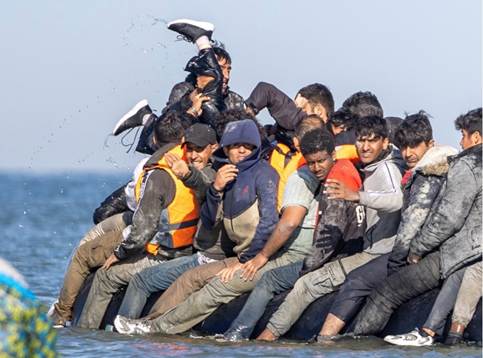
The easy target for anyone concerns the levels of immigration, legal and illegal, and the way the state meets its humanitarian obligations. The current Labour Government won last year’s General Election with a promise to ‘stop the small boats’; so far, they have failed miserably! This tide of humanity, mainly but not exclusively single men aged 18-30, has been washing up on the Kent shore for some years, increasing year-on-year; so far this year 28,000 have made the crossing. Every shade of the political spectrum claims to have an answer, but so far the stream continues unabated.
Shriver continues:

“Small boats and sky-high legal immigration will continue to wreak demographic havoc. This change is permanent. Millions of immigrants from clashing traditions will bring only more of their friends and families.”

If you look at the projected demographic changes in European countries and the shifting burden of increasing pension provision onto a smaller workforce, most show their populations in decline; apart from Britain, due to net immigration! The trick will be to assimilate these immigrants into our society and no one seems to be very creative in this respect. We haven’t insisted, for instance, on immigrants learning English within a few years, as a prerequisite of citizenship; in some towns there are enclaves of people who arrived in the latter half of the last century, still unable to speak the language. Across the North Sea, potential Danish immigrants have to have proof of a certain income level, proficiency in speaking Danish, passing a citizenship test and integrating into society. This policy, introduced last year, has slowed the flow of potential immigrants to a trickle.

From the Times survey for ‘More in Common’, when asked the main reasons people crossed the Channel in small boats to get to the UK, voters agreed the government needs to crack down on the UK’s black market for labour and welfare payments. According to the poll, 54 per cent believed the most likely reason people came was to access the UK’s welfare system. This was followed by claims it was easier to gain asylum in the UK than elsewhere (49 per cent) and because they were fleeing conflict in other countries (37 per cent).

In one focus group, Peter, a dockyard manager from Plymouth, described Britain as a “soft touch” because as “soon as [migrants] land on our shores, they’re entitled to healthcare, food and a roof over their head. There won’t be many countries in the European nation[s] that will offer them that. I think we need to harden our borders and take advice maybe from America or Australia, which I appreciate. Seems harsh, but the country is on its knees.” He speaks for the silent majority.

Shriver followed up with: “Supposedly, a leading “British value” is “fair play”. So let’s talk about fairness. Amid an ever-escalating housing shortage, itself powered by mass immigration, your government uses your money to provide a free water-taxi service to your shores and to put up low-skilled, overwhelmingly male foreign citizens in four-star hotels. No one’s putting locals in free hotels.”

This sort of popularist comment is swallowed by the unquestioning masses. It’s recognised, for instance, that successive governments have failed to ensure sufficient houses are built to meet national demand; the current immigration crisis has simply exacerbated an already bad situation. Until their asylum application is processed, it’s perceived that these immigrants might make our streets unsafe. But, as Fraser Nelson says: “It chimes with what a great many Brits now believe. Poll after poll finds the public convinced that crime is getting far worse. The reality is different; NHS hospital data shows knife assaults last year fell to a 25-year low, with the number treated for violent assault close to half what it was in 2000. Crime surveys agree. By such measures our streets have seldom, if ever, been safer.”

I am as concerned as Shriver is when she writes: “Ten million working-age inhabitants are on benefits. Almost half of universal credit recipients need neither work nor look for work, and over a million are foreign-born.” If I understand it correctly, you can apply for benefits online, with no face-to-face meeting. Self-diagnosis? Absolute nonsense. A quick way to reduce this ridiculous figure would be to have face-to-face reviews; those who genuinely need support can be identified from those who are gaming the system.

Fraser Nation gives a final perspective. ‘Perhaps the ultimate sign of national confidence is the migration figures: not so much the arrivals, but the departures. Last year, just 77,000 Brits emigrated, the lowest since records began. Among those who remain, I like to think, are some who share my deeply unpopular belief: that in spite of our problems, this is an amazing country. And that now, more than ever, there is no better place in the world to call home.’

Richard 5th September 2025

Hove

www.postcardscribbles.co.uk

PS Shriver makes the point that Portugal has an immigration backlog of over 400,000 cases.

PPS Jeremy Clackson’s column in last weekend’s Sunday Times was titled: ‘Britain is awful. But here’s why you shouldn’t leave.’  This made me smile: ‘Then there’s the problem of Europe’s unpredictability. One minute Portugal has the welcome mat out for Brits who wish to escape from the menace of Keir Starmer, but then they change their minds.’ 

PPPS The queue at Passport Control Lisbon Airport yesterday morning was enormous; 55 minutes? Almost Third World!!
PC 420 Contentious Issues in the UK for 2025

The complete resolution of contentious issues here in the UK seems impossible, taking forever, so much so that one suspects a certain degree of wilful obstruction and reluctance in the decision-making organisations. For example, I wrote about the scandal that engulfed sub postmasters and sub postmistresses back in June 2021, in PC 235 Generosity in Government, a piece which dealt with both the Post Office (PO) Scandal and the aftermath of the 2017 Grenfell Tower fire and its inflammable cladding. Then I met Sami in The Hope Café, listened to his own experience of working for the PO, which had ended up in his bankruptcy (See PC 271 Friday 25th February 2022). The last Tory government and the new Labour one both committed to ensuring every postmaster and mistress was exonerated and given compensation, no questions asked. And some still wait, PO lawyers arguing about levels of the latter. The Post Office Independent Inquiry finished on 18th December 2024 but don’t hold your breath for criminal charges to be brought. One estimate is two years! A good example of lack of action for fear of organisational reputation.

The Church of England is our ‘established’ church and in an ideal world should not only reflect the current mores of our society but also set some standards; if it can’t I think the link between church and state should be severed. The last Archbishop of Canterbury, Justin Welby, was a political appointee, famous for asking the population before the May 2023 Coronation to show obedience to and genuflect before the new king. Shades of ‘doffing one’s cap to the landowner’; fortunately, he was put right. What it showed was someone out of touch with society and his organisation’s role in it.

This aloofness was further demonstrated by his inability to get rid of a known paedophilic priest; he completely misunderstood the public mood, its belief that the church continues to protect its own. He was forced to resign and formally leaves the role on Monday. So far, so right and proper, you might think. A good example of lack of action for fear of organisational reputation. Sadly, he added insult to injury by making light of the whole saga in his House of Lords (Note 1) final speech, neither offering an apology nor mentioning the victims. His possible successor, the Archbishop of York, has also been linked to a sexual abuse case within the church and his inaction in ridding the church of the abusive priest. Another example of lack of action for fear of organisational reputation.

The threads remain. At two of Scotland’s prestigious schools, Edinburgh Academy and at Fettes College in the 1970s, ‘Edgar’ was notorious for his sexual abuse of dozens of boys. Rather than have him investigated by the police, he was given a glowing reference and allowed to take up a post in a school in South Africa, where he continued his evil behaviour. In this case, those who ran the schools are guilty of putting the reputation of the school before the victims. Edgar did not face his victims; he died whilst the UK and South Africa were agreeing his extradition back to the UK. The only good thing to come out of this is that more and more individuals are coming forward to tell their stories; those in charge in schools must be held to account.

Sami and I chatted about the Infected Blood Scandal in PC 392 Hope Continues (June 2024). After the inquiry concluded ‘the NHS and successive governments of all colours took part in a chilling cover-up and closed ranks to hide the truth’, the government announced a £11.8 billion payout. But the compensation scheme for some reason differentiates between those who contracted HIV from those who contracted hepatitis C. Somone with HIV gets over £2 million whereas someone with hepatitis C around £750,000; now the latter group are dying at a faster rate than those with HIV. Another example of a lack of urgency and fairness to settle the matter.

I can’t finish this postcard without wondering whether the fallout of the trial of Dominique Pelicot will have any lasting effect in France or indeed over here. It was his own actions, being caught ‘upskirting’, that led to the discovery of his cache of videos, but it was the courage of his wife, Gisèle, that led to an international furore and his subsequent very public trial. The media have made much of the remarks of the mayor of their village of Mazan, Louis Bonnet: “…. after all, no one died. It could have been far more serious. There were no kids involved. No women were killed.” He later apologised but there’s a feeling that the actions of Pelicot and those men who participated merely deserved a Gallic shrug. Sadly, society has a long way to go to accept that women and men should be given completely equal treatment. This not only applies to Christian societies but also to those who treat women in an unequal way.

There are many other contentious issues for the UK, but I’ll highlight another two to finish this postcard. I mentioned the Assisted Dying Bill in PC 418 Hope Christmas News. This is such a huge moral issue its unlikely to be far from the headlines. This month it’ll start its Committee Stage in the House of Commons.

The other is a change to Inheritance Tax rules. When I die my estate will attract a tax of 40% on my assets, after a tax-free threshold of £325,000. If I leave my home to Celina, there’s no tax. If I leave it to my daughter, I have a tax-free threshold of £500,000. I suspect she would have to sell it to pay the tax. The new Labour government have said that farmers, hitherto exempt, will have to pay inheritance tax at 20%. It’s a complicated scene, with tax allowances and the value of land, generational ownership etc but it brought the tractors into London …… and the furore is unlikely to go away.

Happy Contentious Issues 2025

Richard 3rd January 2025

Hove

www.postcardscribbles.co.uk

PS Today the news is that the urgent review of Social Care overhaul is delayed until 2028. Government urgency huh!

Note 1 The Archbishops of Canterbury and York, the Bishops of London, of Durham and of Winchester and the next 21 most senior diocesan bishops are all members of the House of Lords.

PC 414 It’s all about the B

Some months ago, we had a couple of people who share our passion for hot yoga around for supper. Always a surprise to see other hot yoga enthusiasts with clothes on, as in the studio you need to wear as little as possible. One, Serena Wells, is a graduate of Brighton University where she studied Fashion Textiles and specialises in using colour to create bold, graphic works, often silk on silk. She currently has a design studio in Brighton. Her parents were from Guyana. (Note 1) The other, Armando Colucci, known to everyone as Armi, is an Italian from Naples who works as a head trainer for the hair products company Schwarzkopf. We sit down to a simple supper and the conversation starts. It wasn’t the first question but at some time Armi asked:

“Have you always lived in Brighton?”

That’s when the thought went ‘ping’!

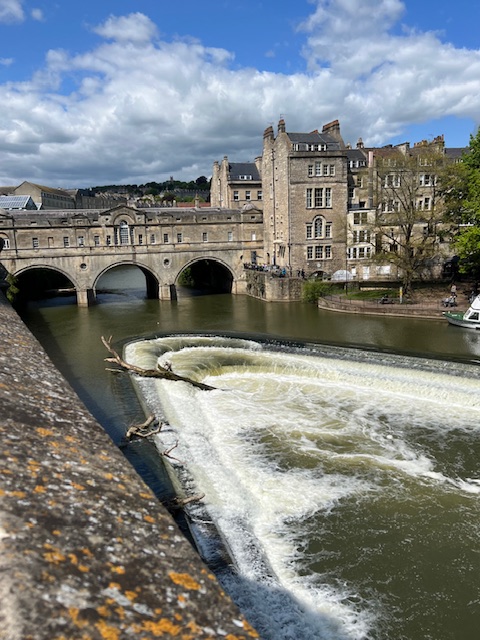
“No. I was actually born in Bath ……”

Pulteney Bridge over the River Avon in Bath

…… and I realised that ‘B’ was a linking letter to a great number of places I have lived in! I could hear myself talking about being born in Bath (PCs 164 & 165), how I went to the first of three boarding schools there and how my parents had divorced.

Then my mother remarried and she and my stepfather moved away and my mind went into another subconscious loop about how they moved to Balcombe, too far away for more than one visit each term, the two-day half term.

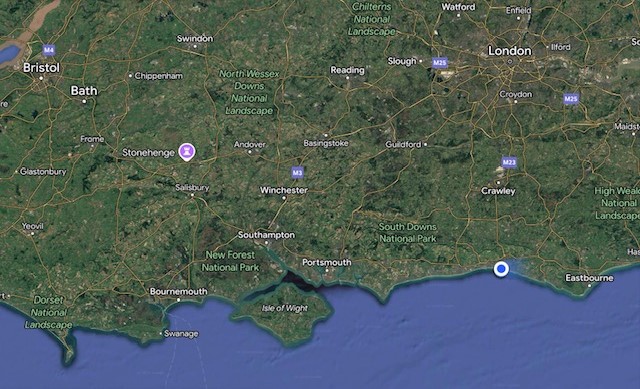
Brighton’s where the blue spot is. Bath top left.

Balcombe is a little village some 18 miles north of Brighton. (See PC 58 Going Home December 2015). I remember a first Geography lesson at Daunsteys’, a public school in Wiltshire; ‘write an essay about where you live’ and Balcombe was by comparison to Bath very small, so I volunteered that it had a population of 300. These days I’d simply ask Google and get a reasonably accurate figure. The master, Mr Taylor, put a red ‘1’ before the 300; I guess the village had a large catchment area.

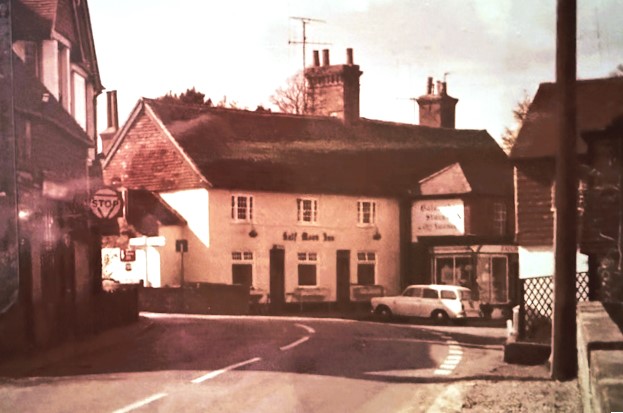
The Half Moon Inn in the centre of Balcombe circa 1961

It had a good steam train service to London Victoria and to Brighton, and a regular bus service to Haywards Heath, the local town where there were many shops and the Perrymount cinema, where the auditorium was divided into ‘smoking’ and ‘non-smoking’ sections. We went to the Theatre Royal, Brighton for pre-London productions or to the ice rink for a fun afternoon.

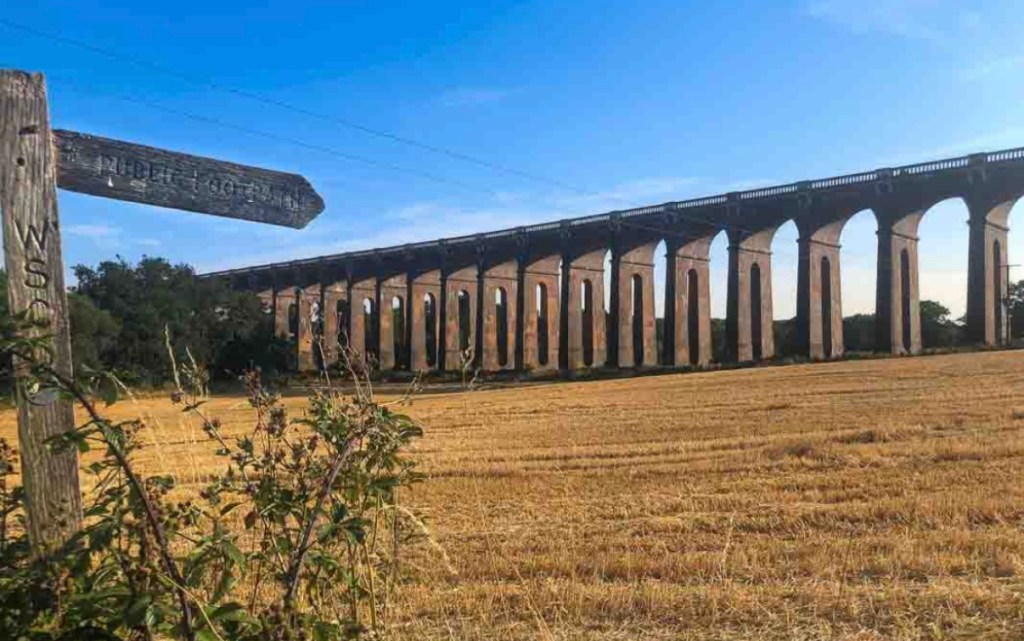
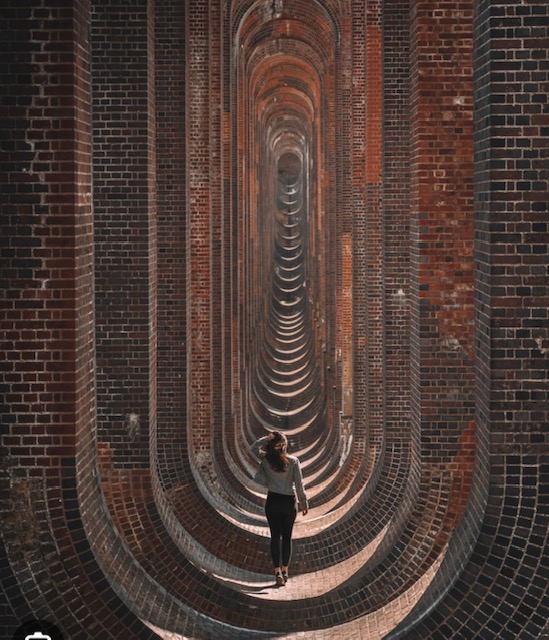
On the way to Haywards Heath the road passed over the River Ouse and to its west was the magnificent Ouse Viaduct, known locally as the Balcombe Viaduct.

My next ‘B’ would have been Bielefeld, a town in what was then West Germany, where the British Army had a large Headquarters and where I met my first wife. I was stationed in both Lippstadt and Sennelager, ten miles away. Returning to the UK for a staff role and Staff College, after a stint in the Ministry of Defence I took over an Air Defence battery in Wing Barracks in Bulford, a few miles north of Salisbury.

Wing Barracks, Bulford being demolished in the C21st!

Thoughts tumble through my subconscious like cereal into a bowl at breakfast. My mind leapt to London where I bought a rather dingy basement flat on the south side of Clapham Common, across the Common from Battersea. For those of us of a certain age, Battersea will for ever be associated with Peter Sellers and his ‘Balham – Gateway to the South’ radio skit. “We enter Balham through the verdant grasslands of Battersea Park, stretching for more than half an acre …..” or something like that! I toyed with the idea of buying a house just south of Basingstoke, southwest of London in Hampshire, but there were too many issues that couldn’t be resolved and I pulled out.

In 2000 I bought a terraced house in Bramfield Road, Battersea and nine years later attended my first session in Hot Yoga South, Balham, a ten-minute cycle ride away; the start of a continuing journey. Battersea is another London village that went from rather down at heel to being an attractive place to live, particularly for ‘Yummy Mummies’. So much so that the road at the bottom of Bramfield Road, Northcote Road, was known as Nappy Valley. 

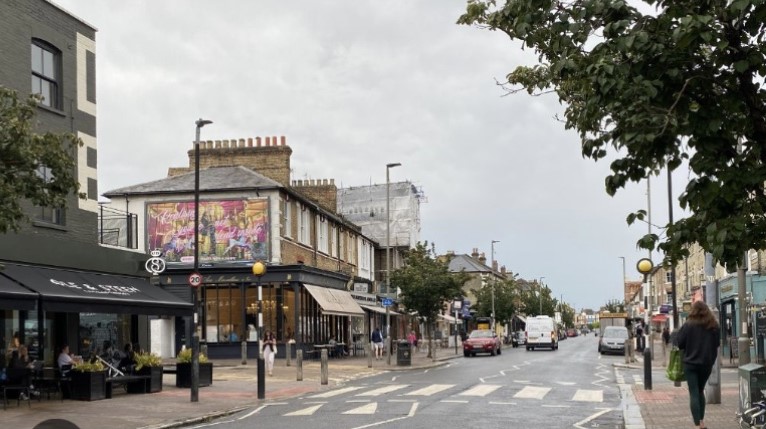
Northcote Road, Battersea

My life moved on and through my regular hot yoga practice I met Celina.

Bournemouth Beach

Wanting to live on the south coast and needing to be able to practise Hot Yoga regularly, Celina and I identified where that was possible. We had a weekend in Bournemouth and went to two classes in the studio in Boscombe. For me, Bournemouth will always be associated with an uncle’s brother, a chap called Ken Bailey who was awarded the Freedom of the City for his work with the young. (There’s another B!). Boscombe is somewhat rundown, what might be called a ‘white trash’ area; sad, gaunt, pale faces, skinny bodies, dressed in black. We decided to look in Brighton. We knew the studio owners in Brighton and here were more options. We bought in Hove, practised in Portslade until 2018, then moved to practise in Yoga In The Lanes in Middle Street, Brighton.

Brighton of course is a city of contrasts, although in the early C20th its seedier side seemed to colour its reputation; in the 1930s – “Queen of Slaughtering Places”! Now it’s better known for its thriving arts scene and laissez faire attitude, for its Pride Parade in August and for its Palace Pier, and a beach of pebbles.  

The Peace Statue on the boundary between Brighton and Hove

It’s just a coincidence, these Bs; obviously could easily have been A or C.
These thoughts had drifted through my brain in a few seconds but suddenly I was aware that Serena was asking me a question about my paintings, and I needed to become fully conscious!

Never imagined I would return to Brighton & Hove!

Richard 22nd November 2024

Hove

http://www.postcardscribbles.co.uk

Note 1 The explorer Lucy Shepherd traversed the Guyana jungle from the east to the border with Brazil in the west, on foot in 50 days. Watch ‘Secret Amazon: Into the Wild’ on You Tube or Channel 4. Don’t if the idea of Bushmaster snakes terrifies you.

Note 2 My Podiatrist thinks Bath is ‘posh’.