PC 464 On to South Island

Fourteen years on from Christchurch’s 2011 earthquake, there are many buildings still not rebuilt. The city’s cathedral is one and, rather than leave it a ruin like Coventry’s in the UK after the Second World War, it’s half rebuilt and the money’s run out.
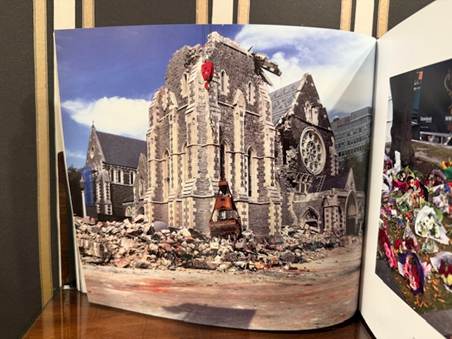
This was taken from a book about the earthquake

And as it is now ….
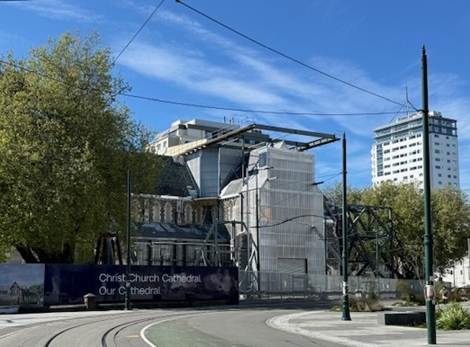
Of course, today other parts of New Zealand need State Funding, and they argue Christchurch’s had enough!

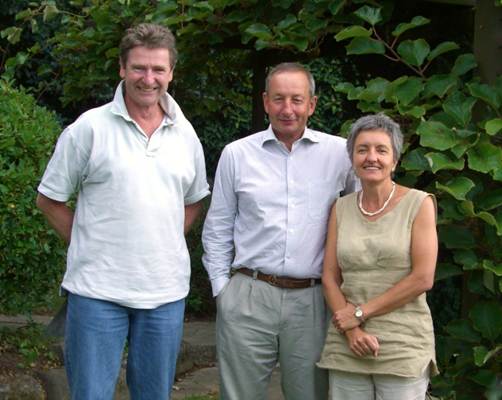
Third-cousin Debs Nation used to work for Radio New Zealand and lives in Lyttelton, over the hill from the city. Her brother Gerald also lives in Christchurch; this photograph from some years ago!
Her son Henry and daughter-in-law Lou work for the civil service in the New Zealand capital Wellington, at the bottom of North Island. Her daughter Tessa runs an emporium of New Zealand-made products situated in The Arts Centre in Christchurch.
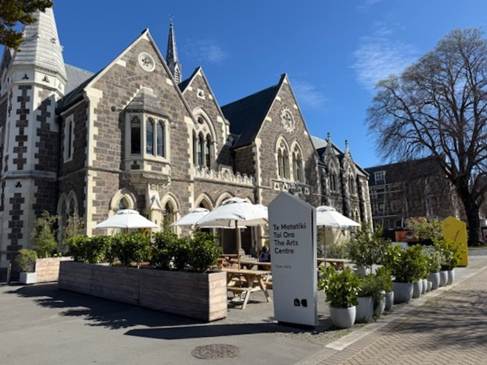
She’s called the store Frances Nation after her maternal grandmother.
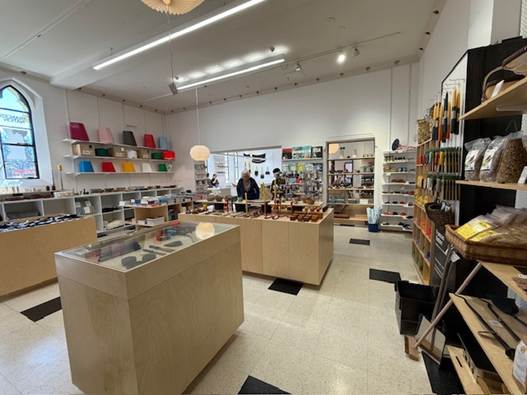
It’s a huge success and one of those places where it’s impossible, once you’ve entered, not to purchase something!

More recently she and her wife Emma have opened ‘Peaches’, a café in Linewood Village. Given that her grandmother’s maiden name was Hope I had suggested she call it The Hope Café, then the one here could claim to be international, but it was not to be. Her father’s surname is Peach so …..
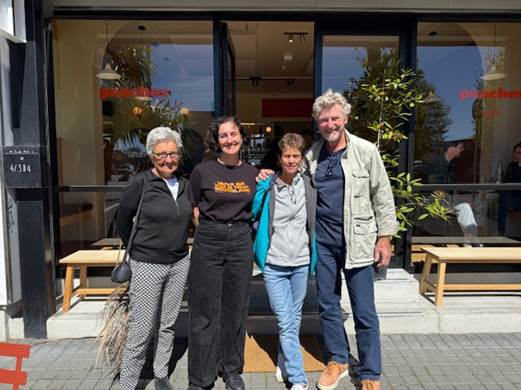
I sense that white New Zealand is attached to the United Kingdom by an invisible umbilical cord. The receptionist in The George Hotel in Christchurch was from Manchester and Mark, on the concierge’s staff, has a sister who holds a senior position in the NHS on north London. A woman who ran a gift shop where I bought some soap eggs ……
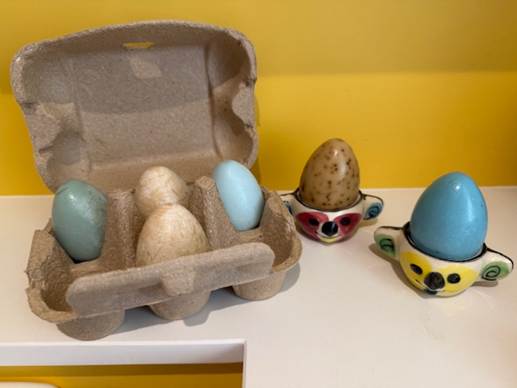
has a sister in England.

We were lucky enough to have some beautiful spring weather in Christchurch
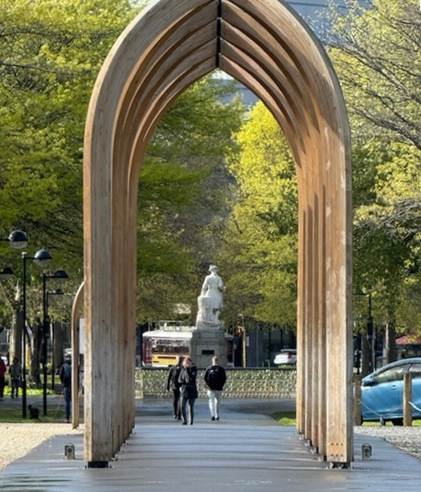
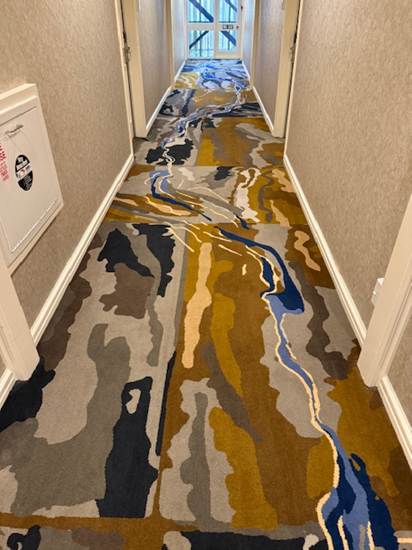
and the city has a great atmosphere. The George Hotel where we stayed was a good choice, not something I could say about the carpet in the corridor outside our room. You would not want to be confronted by this on your return from a boozy night out!
South Island is rich with stunning scenery; for instance the beautiful Milford Sound in its Fiordland in the southwest,
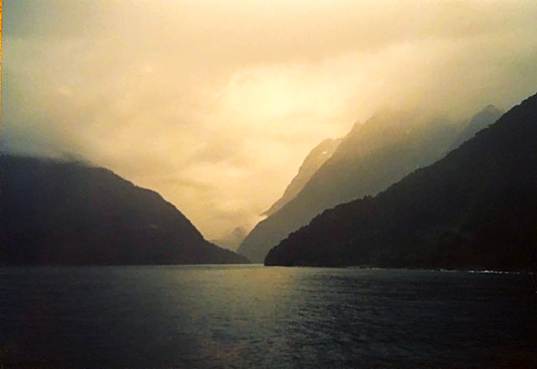
…. but I wanted to revisit one particular view, the one as you come up out of Burke’s Pass on the way to Lake Tekapo. We took the direct route from Christchurch to Geraldine, a classic NZ farming town, and stopped for lunch.
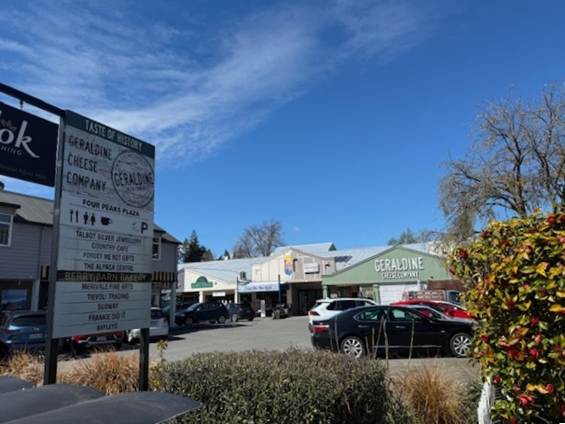
Twenty minutes out of the town we pulled into one of those designated ‘Scenic Viewpoints’, the Geraldine Fairlie Lookout, and gazed over a classic New Zealand rural landscape.
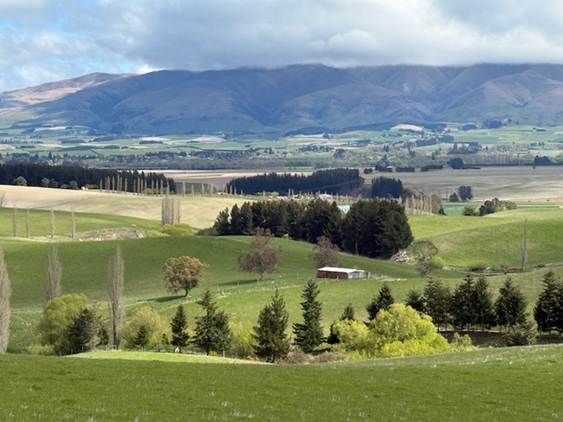
Up through Burke’s Pass …… and you have to stop ….. and take this view in.
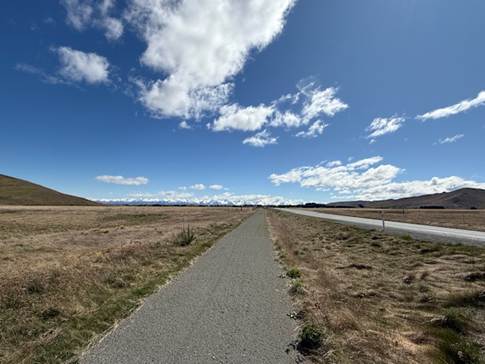
A very flat expanse of countryside and then, on the horizon, the Southern Alps. It reminded me of a trip many decades ago, driving down to Rome from Germany. Passed Strasbourg, passed Colmar and suddenly, before you get to Basel, you see the European Alps filling the horizon.
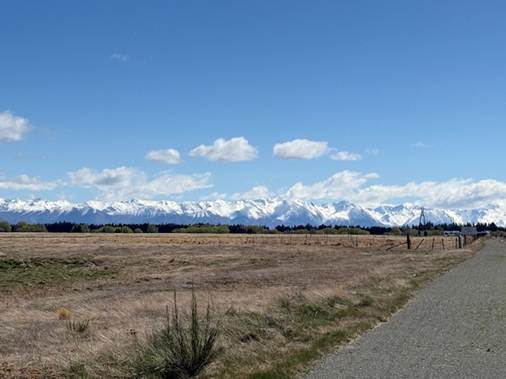
New Zealand’s Southern Alps

Breathtaking in every sense; I could have stayed a long time, just sitting, just looking, in silence, in awe. 100% Pure New Zealand!

We had booked a night in the Grand Suites Lake Tekapo, essentially accommodation only but to a high standard. Dave the South African manager says it’s very popular in the summer as a base for trekking, mountain biking, exploring.
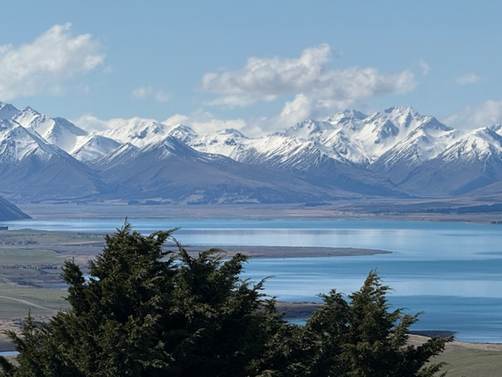
Lake Tekapo is known for the remarkable blue colour of its water, caused by rock flour, finely ground particles of rock brought down by the glaciers at the head of the lake and held in suspension in the melt water.
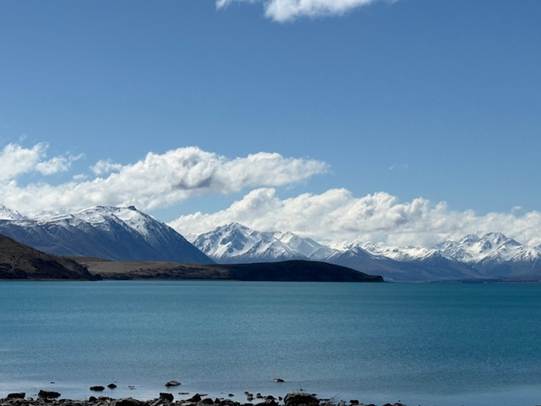
Then above the lake, because of the purity of the atmosphere, the University of Canterbury has an observatory on Mount John to the west of the town, from where there are glorious views of the lake and to the west, of New Zealand’s highest mountain, Mount Cook (3755m); not to mention the stars in the night sky.
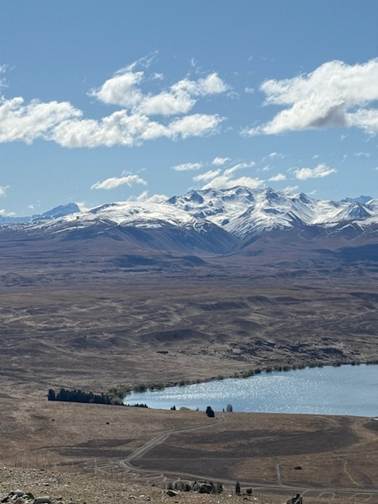
Mount Cook

Lake Tekapo fills what’s known as the Mackenzie Basin
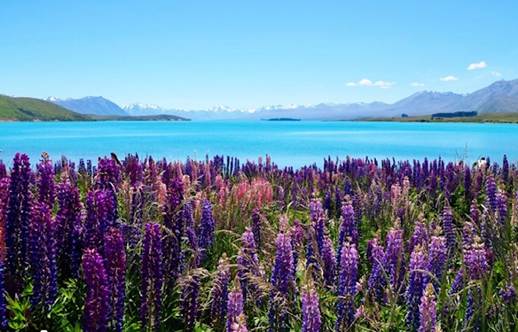
The Church of the Good Shepherd is one of the most photographed buildings in the whole of New Zealand. Built in 1935, the architect Richard Harman based his design on sketches done by a local artist, Esther Hope. And here’s a family connection: Esther neé Barker married Deb Nation’s grandfather’s brother Tom Hope. Today a manager runs the agricultural and Merino sheep side of the Grampian Hope Farm leaving the family to concentrate on the artistic activities.
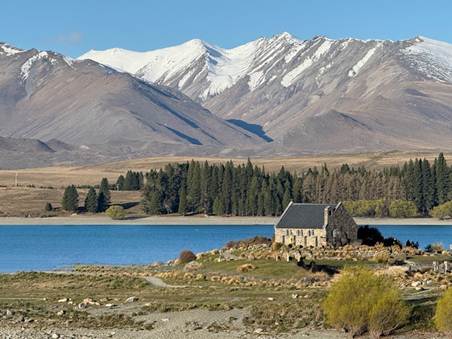
It’s difficult to get a photograph of the church without capturing some of the 600,000 tourists who now visit annually. (Note 1)
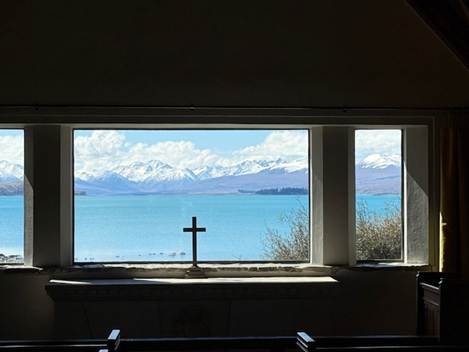
A donation into a wooden box inside the church and chatting up the volunteer who was there to ensure no one takes photographs inside, and there’s no wonder why people want to come and see this, heaven and earth and all between.

I sense we met a large proportion of the tourists, either in the supermarket buying supplies for their self-catering accommodation or where we had supper, as pork seemed to be everyone’s choice! They come because they want to experience what they’ve seen in photographs; I suspect they don’t want to see too many other people. There needs to be a balance between the wish of individuals to go and see places and the need to restrict numbers to preserve the very reason people go!

We drove back to Christchurch via the scenic route
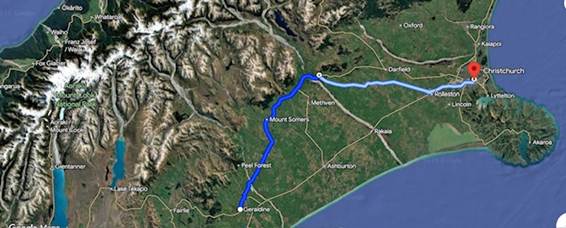
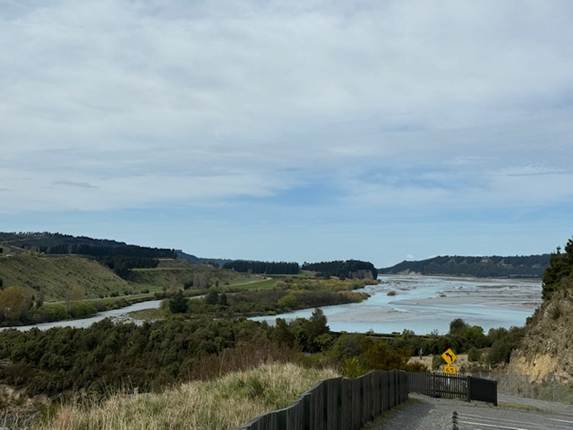
which took us over the Rakaia gorge and river just north of Methven.
Back in The George in Christchurch for one night before our return via Singapore home. We were blessed with clear flying conditions as we flew over the Southern Alps
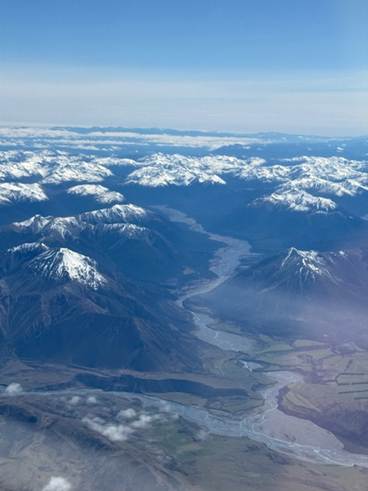
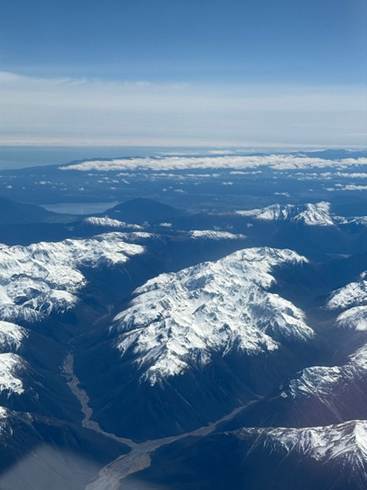
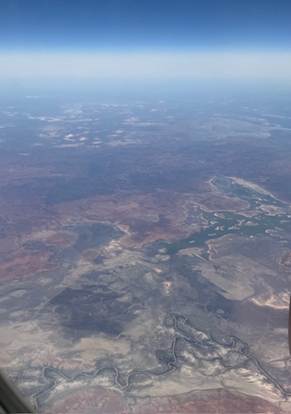
And later over the central section of Australia, which looks like another planet!
Richard 7th November 2025

Hove

www.postcardscribbles.co.uk

PS We were lucky with the weather at Lake Tekapo. A week ago this was how the road from Geraldine looked!

Note 1 Thanks to the ‘clean’ option on my iPhone I can erase the tourists!
PC 463 More from Down Under

Other highlights from our time in Auckland were attending a hot yoga session in the Hiyoga studio on Queens Street, experiencing the local rail network when we went out to Des & Gleneth’s in Meadowbank for supper, seeing Cornwall Park where we met Michael & Angela and Des & Gleneth for lunch in The Bistro, and being lucky enough to stay in the Sofitel Viaduct Hotel, which was very central and comfortable. During our time in Auckland, England’s Women’s team The Lionesses played Canada in the Rugby World Cup final on Saturday 27th September. Cousin Michael in Victoria on Vancouver Island found a pub at 0800 local time to watch the match; in Auckland the time for the kick-off was at 0400 local on the Sunday, so I watched the highlights!

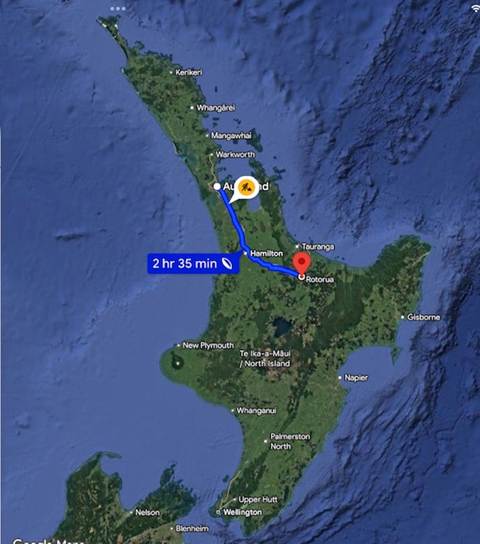
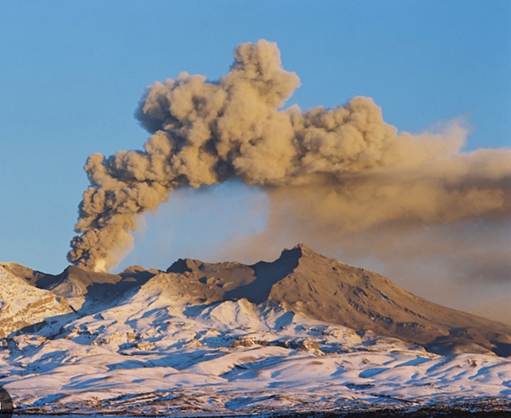
After checking out of our hotel, we picked up a hire car and drove down to Rotorua. Known for its lively geothermal activity, it’s an area of New Zealand I wanted Celina to see. Of course, there is so much of New Zealand that’s gorgeous; another two hours’ drive further south we could have seen Mount Ruapehu, one of the country’s largest volcanos and Lake Taupo.

Mount Ruapehu

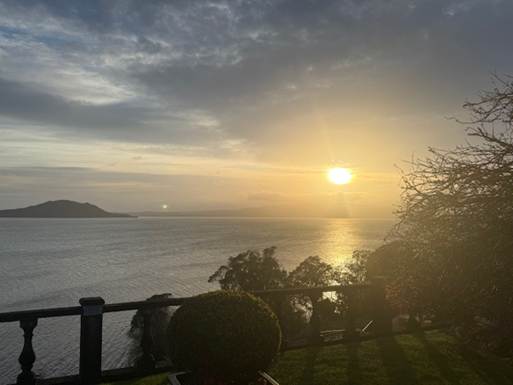
Rotorua is also the home of distant cousin Peter & Gwenda Russell and their daughter Anna & husband Paul. We checked in to the On the Point hotel with its glorious view across the lake ….

… and drove out to their home. I’d first met Peter & Gwenda in London almost twenty years ago, been to stay in their then house in Tauranga and now find them co-located with their daughter Anna. How we live out our later years is a challenge for all of us; The Russells are a good example of how to do it. Gwenda developed a huge interest in our Nation family story and remains curious and enthusiastic, adding for instance a little colour where none existed.

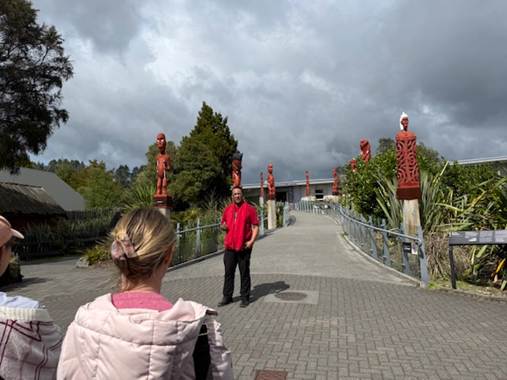
Anna & Paul recommended we visit Te Puia – ‘a place that changes you’ – and it did just that the following morning. Patrick, our engaging Māori guide,

took us first to the New Zealand Māori Arts & Crafts Institute, where students are trained in carving and weaving, using traditional techniques.

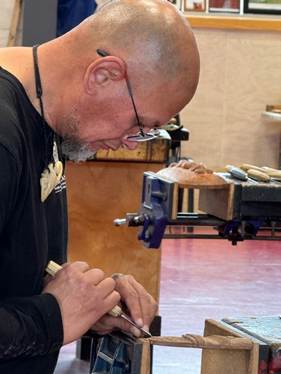
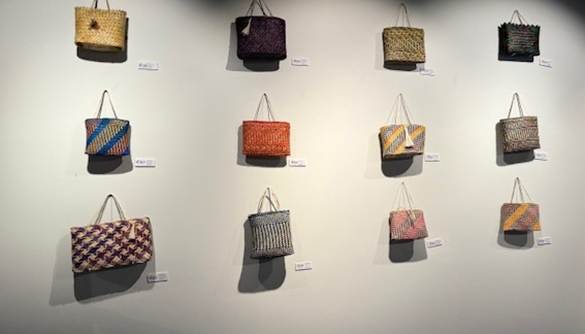
A Master craftsman was concentrating on a little wood carving while elsewhere an apprentice was sharpening a chisel. The craftswomen weave beautiful bags, made from New Zealand flax, but they are expensive; for instance, the second left on the bottom row around £210.

I found the whole enterprise fascinating and, in another life, might have become a student!

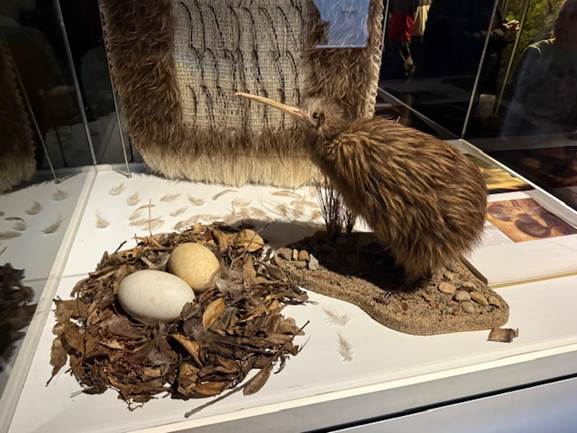
The Kiwi, a small flightless bird, is recognised as an icon of New Zealand and the human population are often referred to as Kiwis. It’s the smallest of the ‘ratites’ family, which includes ostriches, emus and rheas. In Te Puia there are a number of these nocturnal birds in a carefully controlled habitat. Obviously, photography is forbidden in their hide but this photograph shows a stuffed bird and its eggs. Think the eggs rather large for a small bird; must be painful?

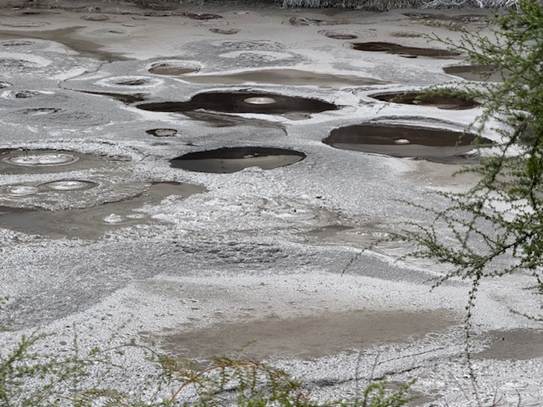
Mud pools, grey and bubbling, …….

…… form the backdrop to the Pōhutu geyser, which erupts once or twice an hour. It’s easy to become completely mesmerised by the constantly evolving geothermal landscape but eventually we had to move on.

We left, as the brochure suggests, changed, thoughtful,

.. and drove back to Auckland.

As you do when you hire a car, you look for the last possible petrol station, so you deliver the car back with a full tank of fuel. We had a very new Yaris ‘something’ and I knew the fuel cap was on the passenger side of the car. We pulled up to the pump, I walked around to the panel covering the fuel cap and pressed ….. and pressed …. and pulled ….. and pressed again …… I looked in the car for some lever ….. couldn’t find one, went back and pressed again. Just then James, or Nick or Good Samaritan appeared; filling up his own truck, he’d seen me making a fool of myself, Googled the make of my car and came around and said: “Oh! There’s a level under the dash somewhere” …. and so there was, not obvious (obviously!).  

We caught an Air New Zealand flight to Christchurch, a city a third of the way down South Island and, glancing out of the window as we crossed the coast, I could make out Farewell Spit where great grandmother Eve was shipwrecked in 1877. (See PCs 169 Shifting Sands & Feathers and 170 100% Pure New Zealand January 2020)

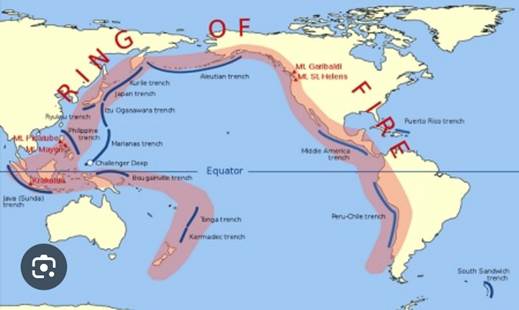
New Zealand lies on one of the many fault lines of the earth’s crust, this one between the Indo-Australian and Pacific Plates, part of the Pacific Basin Ring of Fire. To keep it in perspective, about 14,000 earthquakes occur in and around the country each year, of which some 175 are big enough to be felt. Within living memory, the February 1931 Hawke’s Bay earthquake, also known as the Napier earthquake, remains the country’s deadliest natural disaster. Two hundred and fifty-six people died when the quake, with a magnitude of 7.8, devasted the Hawke’s Bay region; aftershocks continued for two weeks.

The disaster prompted a review of the country’s building codes, deemed woefully inadequate. By way of illustration, today there are only four buildings in the Hawke’s Bay region taller than five storeys. In Christchurch on 22nd February 2011, a total of 185 people died, more that 7000 were injured and over 10,000 made homeless when a magnitude 6.3 earthquake struck the city. (Note 1) It caused over NZ$52.2 billion’s worth of damage.

If you live in a part of the world which is prone to earthquakes, there’s not much you can do about it, except be vigilant ….. and maybe have a ‘Go Bag’ always handy! We were planning to stay for a few days in Christchurch, so the topic wasn’t mentioned – a little like not watching an aeroplane disaster film when you’re about to fly somewhere!

Continues in PC 464 ….. next week

Richard 31st October 2025

Hove

www.postcardscribbles.co.uk

Note 1 Seventeen days before the first Nation family get together in Auckland.

PC 462 Western Australia to New Zealand.

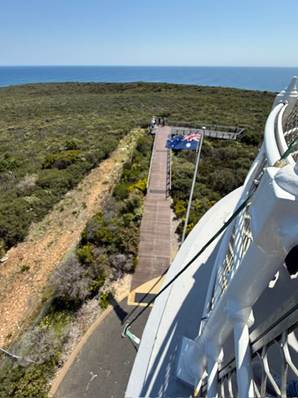
The twenty-metre-tall Cape Naturaliste lighthouse was activated in 1904, became fully automated in 1978 but remained fully staffed until 1996. Before automation, the rotation of the light was achieved by a gearing system whose weight was wound up (just like the pendulum of a grandfather clock) every 45 minutes. Staff watches were 4 hours on, eight off, every day of the year.

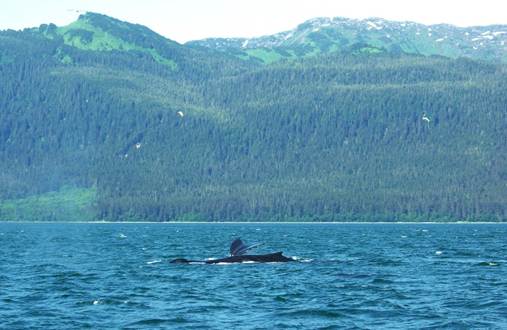
Whales in Alaska

Celina and I have seen whales off the coast in Alaska (see PCs 44 and 45 June 2015) and in WA we were lucky enough to be here at the start of the annual whale migration, from their wintering north of Australia where they calved, to their summer feeding grounds in the Southern Ocean. Whilst you could see them surfacing and breathing, they were so far offshore that no iPhone photograph was going to do more than capture a moment of broken water in the distance. Even so, quite magical!

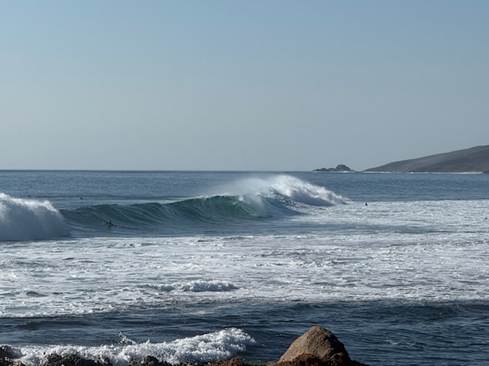
On the way back to Cape Lodge we stopped off at the beach at Yallingup. My brother-in-law Carlos would have loved the surf.

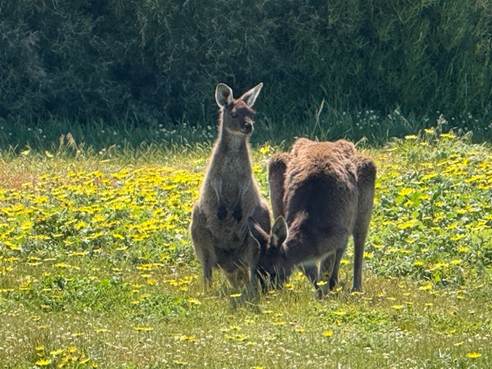
At the lodge Josefinna had messaged us to say she’d seen some kangaroos up near the entrance. We found three, but leaving the following day we found more than a dozen up near Petra’s Olive Oil plantation.

In my last postcard I mentioned that the Aboriginal people have six seasons. Just for interest, and they vary throughout WA and across Australia, the Wadandi’s Noongar are Birak (hot & dry) December and January; Bunuru (warm easterly wind) February and March; Djeran (Cool and pleasant) April and May; Makuru (Cold and wet) June and July; Djilba (Cold lessening rain) August and September; and Kambarang (longer dry periods) October and November. I rather like this, although I wonder how much climate change will alter them.

Acceptance by the settlers of Australia of the Aboriginal people and their beliefs is everywhere. For instance, this is a footnote on the Cape Lodge welcome letter: “We acknowledge the Wadandi people, the Traditional Owners of the land and waterways on which we operate. We pay our respects to Elders past, present and future.”

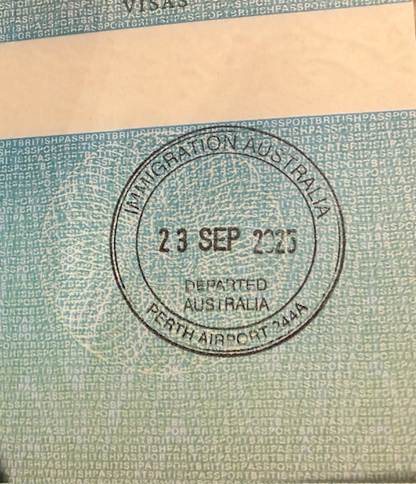
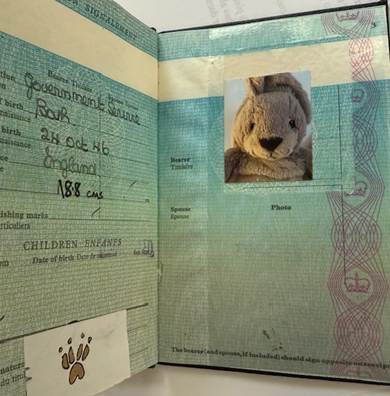
Back to Perth for our evening flight to Auckland. Ms Francisquinha was very chuffed as one of the border force officers found a stamp for her passport.

Another four-hour time shift saw us arrive in a very wet dawn in Auckland at 0600 (0200 WA Time!). New Zealand has extremely strict environmental laws, basically forbidding one to bring in anything! Celina surrendered her half-opened Lindt chocolate or might have found herself fined hundreds of dollars.

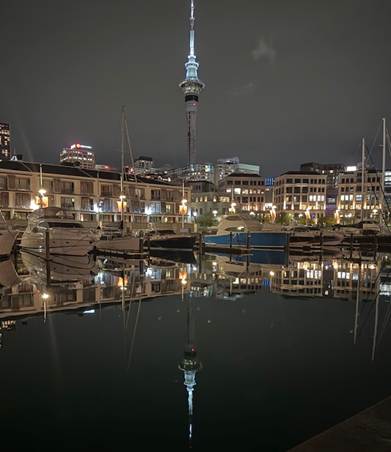
Auckland’s Sky Tower

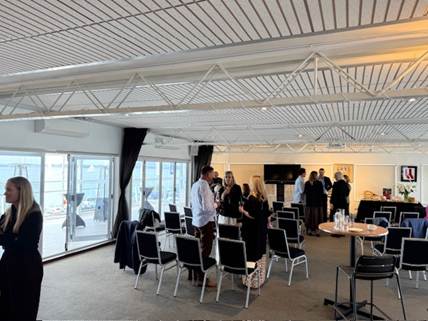
This is not the first time Celina and I have been together to New Zealand. In January 2017 we stayed in the Coromandel at Whitianga (PC 88) and in 2019 explored Farewell Spit and Marlborough Sounds, on the northern coast of South Island (PC 169 Shifting Sands & Feathers and PC 170 100% Pure New Zealand). This year’s visit was to attend the ‘Celebration of Life’ of Dinah Warren. She had died in April this year and her five children had organised a ‘get together’ at the Royal New Zealand Yacht Squadron in Auckland.

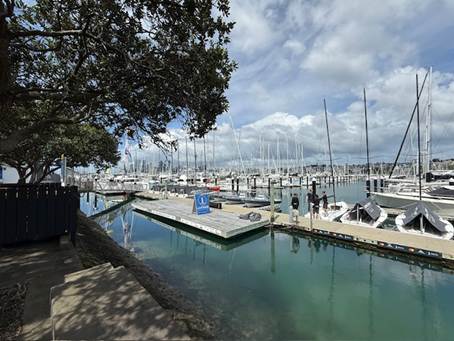
Auckland marina

In this photograph taken towards the end of the celebration, you will notice on the far wall on the right what looks like a framed pair of red socks.

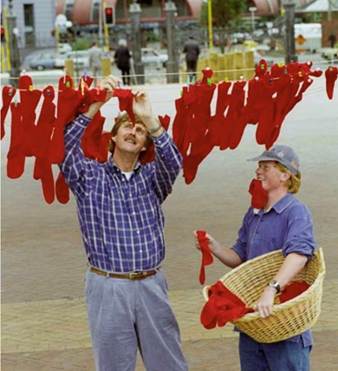
These belonged to Peter Blake.

Peter hanging up the red socks

For an explanation see Note 1 below.

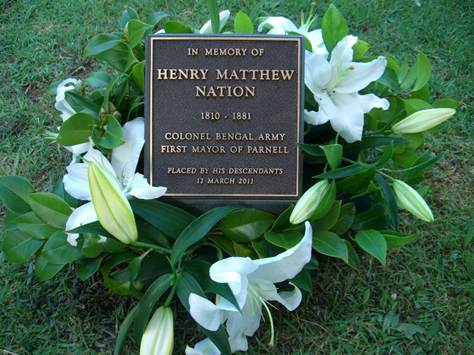
Back in March 2011 I had organised, with others, the first Nation get together, deliberately coinciding with the 130th anniversary of the death of my great great grandfather Henry Matthew Nation (HMN). In the same hotel in Parnell was one Dinah Warren (HMN was her great grandfather) and she persuaded me to help her get some flowers to put around the plaque we had placed on his grave.

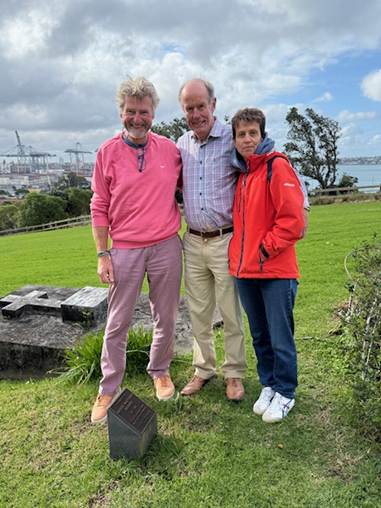
On this trip Des & Gleneth Laery took us out to St Stephen’s Cemetery to see HMN’s grave.

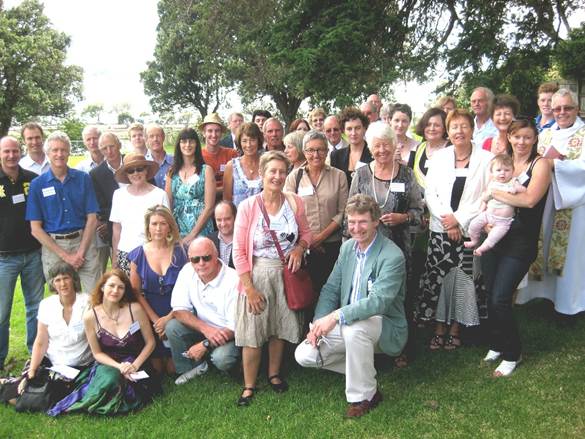
I dug out the group photograph from March 2011

Dinah Warren is directly behind me!

Regular readers of these scribbles will know all about Francisquinha, our stuffed rabbit with her own personality and passport, who accompanies us on our travels (see PC 172 Francisquinha February 2020 and PC 217 ‘My Week – Francisquinha February 2021).

In the ‘order of tribute’ booklet for Dinah’s celebration was an extract from her favourite story, The Velveteen Rabbit by Margery Williams. It read: ‘You become. It takes a long time. That’s why it doesn’t happen often to people who break easily, or who have sharp edges, or who have to be carefully kept. Generally, by the time you’re Real, most of your hair has been loved off, and your eyes drop out and you get loose on your joints and very shabby. But these things don’t matter at all, because once you are Real you can’t be ugly, except to people who don’t understand.

Her grandchildren believed ‘Dinah’s greatest gift of her life was being Real, being Real through being loved. She believed that’s how we all become real – not by how we look, but by loving deeply, and being loved, even as life wears us in (sic).’

I only met Dinah a couple of times, once in London and then when we bought those lilies. But I, and Francisquinha who has read the story, think this is a great way to be remembered, so I had to include it in this postcard.

Richard 24th October 2025 (My birthday!)

Hove

http://www.postcardscribbles.co.uk

Note 1 Thanks to Wikipedia (!) Sir Peter James Blake KBE (1 October 1948 – 5 December 2001) was a New Zealand yachtsman who won the 1989–1990 Whitbread Round the World Race, held the Jules Verne Trophy from 1994 to 1997 by setting the around-the-world sailing record as co-skipper of ENZA New Zealand along with Sir Robin Knox-Johnston, and led New Zealand to successive victories in the America’s Cup. In the 1995 America’s Cup challenge, Peter Blake wore some red socks his wife had given him; the team made a clean sweep, beating American Dennis Conner 5-0 …. and the red socks became Peter’s trademark. Peter Blake was shot and killed by pirates while monitoring environment change on the Amazon River on 5 December 2001. He was 53 years old.