Continued …..
On Saturday 23rd April 1983 (St George’s Day) I took a call at home from the Ministry of Defence Duty Officer in London, asking about using SAM systems for the defence of the British contingent to the UN’s MNFIL in Beirut. Lebanon was in the grip of a nasty civil war, with an UN-imposed multinational force trying to bring about peace. Before midnight the following day I am on a C130 Hercules flying out of RAF Lyneham to Cyprus; I share the huge aircraft hold with an aircraft engine – I am the only passenger. You can read all about it in PC 183 Beirut June 2020; I was back in Bulford two days later!
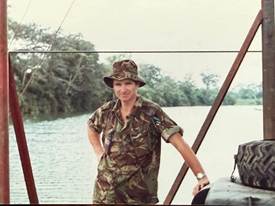
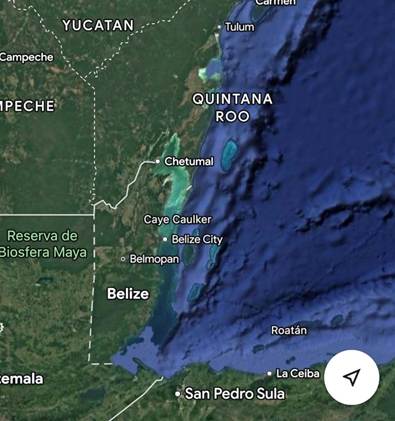
I made two trips to Belize, to visit my soldiers and to facilitate some live missile firing off one of the uninhabited offshore cayes (local name for islands).
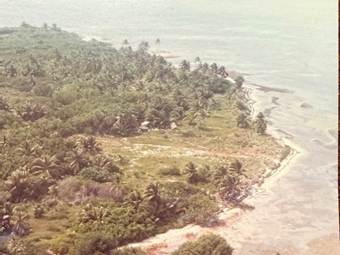
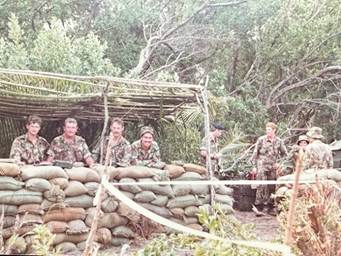
We flew out to the caye by helicopter, accompanied by a 81mm mortar section from the roulement infantry battalion, who provided the targets – a bunch of phosphorus hanging below a little parachute, normally used to illuminate the battlefield.
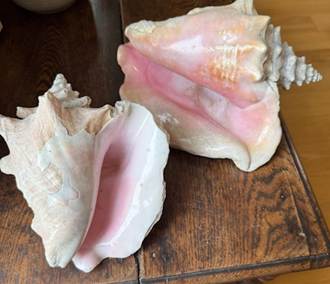
When not swotting away the mosquitoes, we took advantage of the crystal clear and warm water. The seabed was covered with large shells; I brought two home! On my first trip to Belize, I had gone down to the southern British military base in Toledo District; I think it was called Camp Riddeau. My troop sergeant had organised a night deep in the jungle, something I had never experienced. We made the A-frame supports for our hammocks, cooked some supper and listened to the insects and animals that make it their home. Night comes early in the jungle, and it was noisy, wet, extremely humid and hot. (Note 1)
I had some down-time during my time, accommodated in the RAF Officers Mess, and remember reading John Fowles’ Daniel Martin. Today, Wikipedia says “it follows the life of the eponymous protagonist, using both first and third person voices, whilst employing a variety of literary techniques such as multiple narratives and flashback.” I wished I’d had Wikipedia back in 1983. I struggled with the first third, almost gave up, then understood it, devoured the remaining two-thirds and started at the beginning again, to reread that incomprehensible first section!! John Fowles had written The Magus and of course The French Lieutenant’s Woman and remains one of my favourite authors.
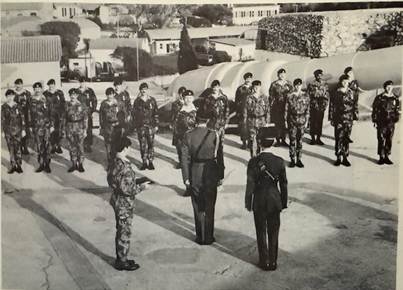
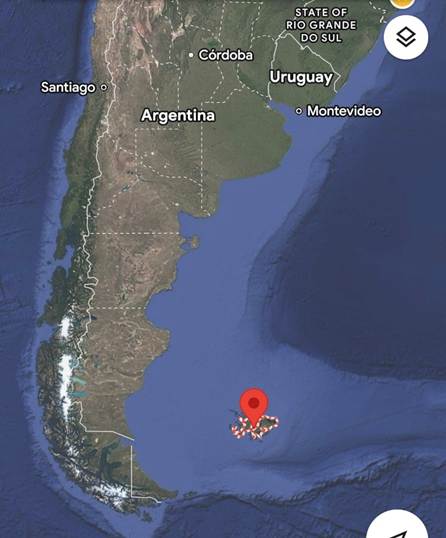
In December 1982 E Troop soldiers who had taken part in the Falkland’s War were presented with their campaign medals by the Deputy Fortress Commander of Gibraltar. (See photograph) I returned to The Rock in 1984 with the whole battery (ie less the Belize troop) for some adventurous training and to take part in the Gibraltar Half Marathon. Flying into Gibraltar is always interesting. The airport lies on the north of the massive vertical rockface and in certain weather conditions it’s a very turbulent area. In my first visit in a RAF C130 we went around twice, succeeding on the third attempt with a very hard landing.
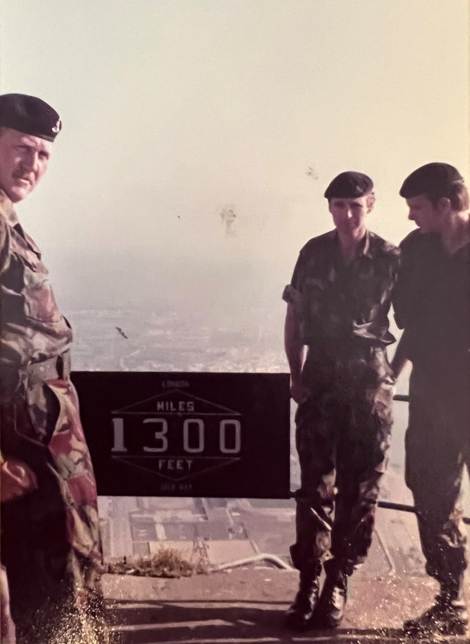
At the very top of the Rock with WO2 Black and Lt Richard Dare
After Belize, Beirut and Gibraltar, you might think that Manorbier, to the west of Tenby, the Brecon Beacons, both in South Wales, and Otterburn in the Northumberland National Park, were rather tame. But each in their own way added to one’s appreciation of the United Kingdom landscape. We had regular ‘live firing camps’ at Manorbier, staying in the Sennybridge training camp, used the wonderful Brecon Beacons for strenuous exercises and carried out some troop training up in Otterburn. It was here for five days in May 1984 that I had the largest component of Lloyds Company together during my two-and-a-half-year tour; Lieutenant Paul Goad was on a course and the Belize troop of 14 wasn’t there!
I always sought to bringing out the best of my soldiers, testing their ability where necessary, promoting them when they earned it, encouraging them to apply for external roles, even if it meant they were posted away. The commanding officer, Lieutenant Colonel Ian Forward, noted in my annual confidential report: “He never sought to hoard his assets, willing to share his carefully nurtured talent across the board.” And, of course, it was personally satisfying when soldiers grew and matured before my eyes.
But not everyone grows! When I took over my battery I rapidly sensed that one of my sergeants, let’s call him Sergeant Smith, had been promoted (Note 2) above his ability; he wasn’t happy and didn’t seem to enjoy his job. After a chat, I arranged a couple of training exercises where he had ample opportunity to show his capabilities. He failed miserably, so he was reduced back to Bombadier and was found another position in another unit, one more suited to his abilities. He wrote later saying how happy he was. We see it in civilian life, individuals ‘promoted’ into roles they’re not suited to, not able to fulfil. I much prefer round pegs in round holes!
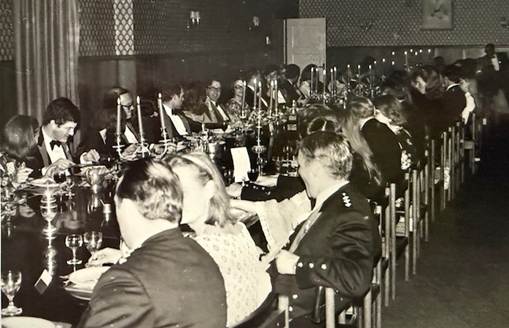
At one of the weekly Commanding Officer’s conferences of 1983, it was suggested we should hold a Summer Ball in the Officers’ Mess. Feeling that the ball I had organised in Lippstadt in 1972 had been a success, I volunteered, formed a committee, doled out responsibilities and set about making it happen.
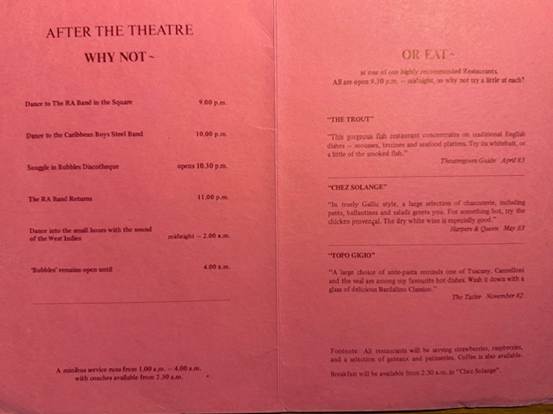
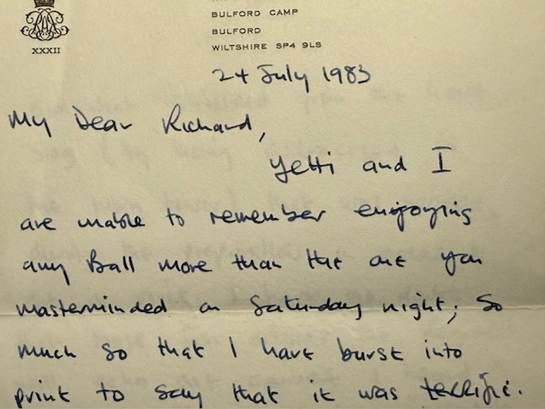
I decided that the theme should be ‘After The Theatre’, when one might have drifted around, finding different places to eat and maybe a nightclub or two to dance in. It was a great success, so much so that both the Commanding Officer and adjutant wrote letters in appreciation. The latter’s started:
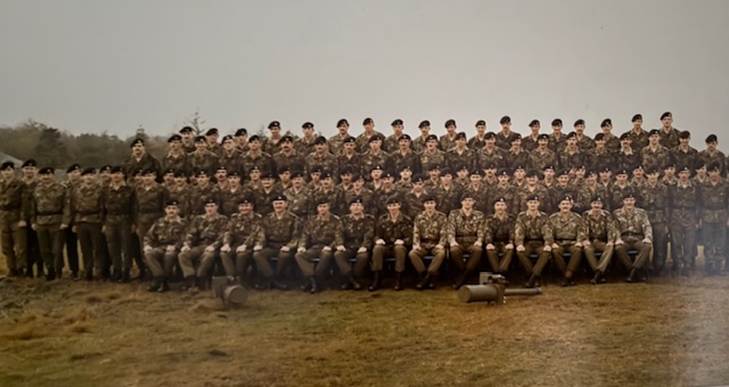
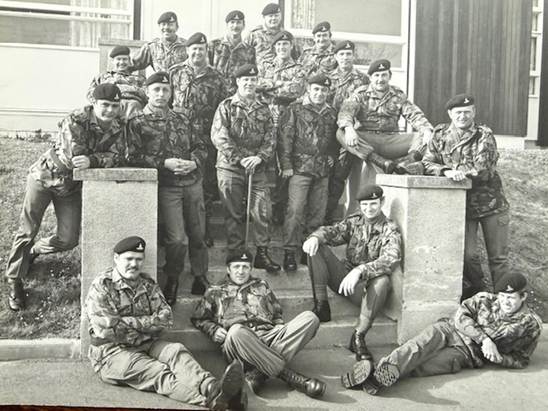
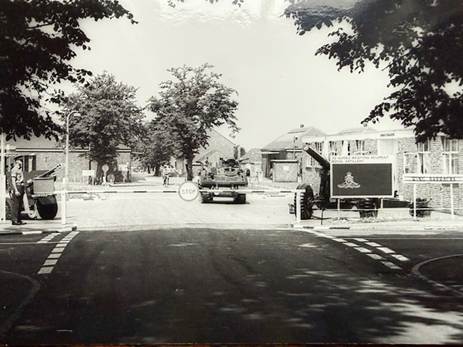
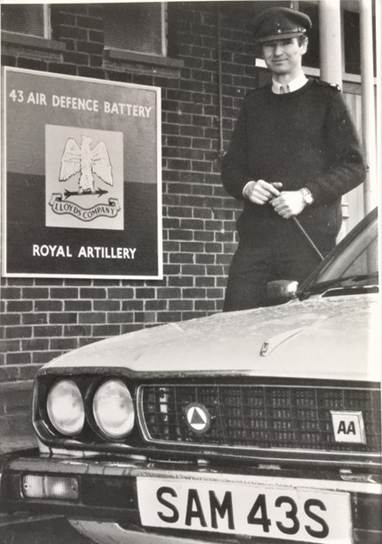
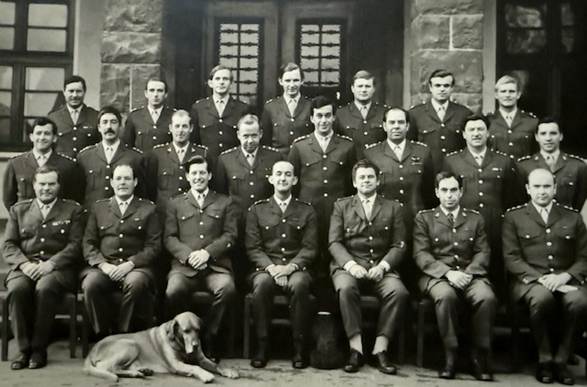
And the men who made the two and a half years I had in command of 43 Air Defence Battery (Lloyd’s Company) RA fun and rewarding are here, in this photograph, my officers, Warrant Officers and senior non-commissioned officers outside the training wing at Sennybridge Camp in South Wales.
Richard 27th March 2026
Hove
Note 1 My Stepfather, Philip Thomson-Walker, as a Captain in SOE during World War 2, spent months in the Malayan jungle in Force 136 fighting the Japanese.
Note 2 Normally on probation for six months, this man had been on probation for 15 months. No one had ‘grasped the nettle’!








 postcards