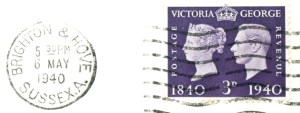
PC 505 Did you see …….

Those who decide who should be included in the day’s obituaries must have an interesting time discussing the merits of one person’s life over another. And they obviously hope that, having made their selection, the last-minute demise of someone mega well-known will not have them scrabbling for their page layout tools. As an example of their craft, a week ago yesterday The Times’s included Monty Roberts, ‘horse whisperer and friend of Queen Elizabeth II’; Eve Wilkinson, ‘message coder for Winston Churchill’; Justin Hardy, ‘film maker’; Plas Johnson, ‘saxophonist whose solo defined ‘The Pink Panther’ theme (Ed. It immediately started playing in my memory); The Rev Edward Hovsepian-Mehr, ‘Iranian pastor who led an underground church’ and Kath Pettingill, ‘one-eyed matriarch of a Melbourne crime family’.

The rules of copyright forbid me from copying and pasting Kath’s photograph here but believe me she was not blessed with a natural beauty. The Times’ obituary started:

“A diminutive, one-eyed grandmother known as Granny Evil, Kath Pettingill was the matriarch of Melbourne’s most notorious crime family. She oversaw an empire built on drugs, armed robberies and prostitution that reached its heyday in the 1980s, often protected by corrupt police officers. Pettingill bore the scars of a lifetime on the wrong side of the tracks. Her front teeth were smashed after leaping over a wall to retrieve a ball but remained untreated. Her right eye was shot out in 1978 during an argument with a prostitute over a $300 debt. That brought the benefit, she joked, of not seeing double after excess drinking. The police joined the humour, naming a surveillance exercise against her family Operation Cyclops. Several of her ten children followed in her criminal footsteps.” Etcetera! Etcetera. A fascinating story.

I really don’t think I am alone, such is the natural curiosity running through us all, that when I read something interesting, or unusual, or something that highlights my lack of knowledge, it sometimes leads me to find out more about it. And it’s so easy these days, with the internet and its trillions of data available at the stroke of a computer key.

I have read many of the fictional novels of Australian author Chris Hammer and have just finished his latest, ‘Legacy’. A previous one, ‘The Broken River’, had these lines:

“He drew deep on the reefer before breathing out. ‘The ancient Greeks worshipped a sun god, Helios, who had a son and seven daughters. When the son died, his sisters wept tears of golden sunlight that were hardened by their grief to become amber.’“

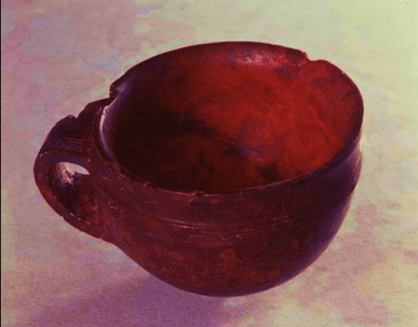
Celina and I live in an apartment in a 2010 conversion of a large 1890s house in Hove. The developers named it Amber House, after the Amber Cup which was unearthed during landscaping in 1856 to create nearby Palmeira Square. An ancient 6-metre-high burial mound was excavated and found to contain a coffin hewn from a tree-trunk. Dated from 1200 BC, it yielded many treasures including this cup, made of translucent red Baltic Amber and about the size of a regular teacup. The find suggests trade links between Britain and the Baltic States over 3200 years ago??? Wow!
I have no knowledge of even the basics of Greek Mythology, so I went online and found this, ‘Thank you, AI’, which filled some of the spaces in Chris Hammer’s story.  ‘Phaethon, son of Helios, begs his father to let him drive the golden sun chariot for a day. A hot-headed youth, he loses control of the horses, and the fiery chariot scorches the earth, nearly destroying it. To save the earth, Zeus strikes Phaethon with a thunderbolt, causing him to fall into a river called Eridanus and he’s drowned. His grieving sisters, known as the Heliades, stood on the riverbank and wept for him so long that the gods turned them into Poplar trees and their hardened tears into golden Amber.’ So now I understand that the little cup was made from Greek tears.

Reading the ladies became Poplar trees reminded me of a framed print in the dining room of Glencot, a ‘prep’ school near Wookey Hole in Somerset. I don’t recognise any images that the internet offers when I search for ‘poplar trees’, so it may not have been by a famous artist, but it’s stayed with me. It looked something like this:
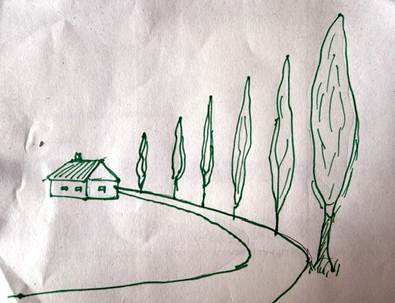
A possible entry into the RA’s Summer Exhibition 20027? Think it would need some work!

Talking of reading, James Marriott’s weekend essay in last Saturday’s Times was jaw-dropping. He writes: ‘Where people once used smartphones to read news articles, they now use them to spend hours scrolling through a dazzling stream of videos, many of them only a few seconds long. More than 40 per cent of young adults regularly get their news from TikTok.’ He highlighted the fact that the publishing industry is ever more reliant for its survival on a committed hard core of “super-readers”; ‘80 per cent of books are read by 20 per cent of adults.’ (Note 1) and claims, more worrying for those who care, that the decline of reading is about more than the fading of a pleasant hobby. ‘It is one of the most important trends of our time. We are moving from a literate culture based on the written word to a visual one dominated by moving images.’

My postcards have helped close an ‘open’ memory. Martin Ward-Harrison was in my intake at Sandhurst (RMAS) and we became very good friends.
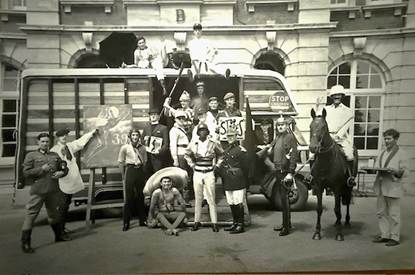
Our ‘end of Officer Training’ photograph July 1967; Intake 39 Burma Company. Martin’s on his horse, with his groom holding the drinks tray. I suspect it was his horsebox too.

On commissioning our paths parted; in the days before email and mobile phones, keeping in touch required writing letters and we were both very busy. I had no inkling what had happened when I heard he had died in Oman in 1976. A childhood friend of Martin’s, Nick MacAndrews, got in touch through my postcards about my time at RMAS, asking what I knew. We did some digging and, thanks to Keith Ryde of Oman.org, found he’d been in a Landover that crashed near the Dhofar border with Yemen. Badly injured, he was airlifted back to the UK but died a few days later. On 24 October 2023 his name was added to the Roll of Honour at RMAS, suggesting he’d been seconded to the Sultan of Oman’s Armed Forces, to assist in their border conflict with Yemeni rebels. Feel good about this closure!

Richard 21st August 2026

Estoril, Portugal

www.postcardscribbles.co.uk

Note 1 I no longer get paid to work, so in theory have more time to read than others. In 2025 I read 35 books, so I suspect clearly in Marriott’s 20%.

PC 502 Heading to The Hope Café

After lunch on Tuesday, before a dental appointment towards the end of the afternoon, I headed to The Hope Café for a coffee and a catch-up. In a little bag I had some toothpaste and a toothbrush, as I needed to clean my teeth before being subjected to an oral examination. Nothing worse than one’s dentist berating one for poor dental hygiene. This reminds me that we make sure our apartment is clean and tidy ….. before our fortnightly cleaner’s visit; funny what we do, huh? ‘There are standards, Caruthers.’

In my mind I was collecting thoughts for this week’s scribbles and suddenly thought: ‘I have enough …… I don’t need to have a conversation with anyone!’ ….. so popped into Café Nero on Church Road, got a double espresso, plugged in my laptop and looked at my notes.

My regular readers will know Celina and I visited both the North and South Islands of New Zealand last autumn, and on the latter drove from Christchurch to Lake Tekapo. The weather was glorious:

The little stone Church of The Good Sheppard, built in 1935 to honour the first English settler families in the area, is one of the most photographed buildings in the country. On Facebook a couple of weeks ago it looked completely different; I read that Lake Tekapo had recorded minus12.5C!

In my normal perusal of the obituary column in The Times, I found that the former Emir of Qatar, Sheikh Hamad bin Khalifa al-Thani, has died aged 74. He had deposed his father and was credited with bringing Qatar into the C21st. What I found amazing was his ability to procreate! He had married three times; his first wife Mariam, a cousin, gave him 2 sons and 6 daughters, his second, Moza, 5 sons and 2 daughters and his last, Noora and another cousin, 4 sons and 5 daughters, a total of 11 sons and 13 daughters. Quite a brood. The practice of marrying a first cousin, and the obituary didn’t say whether two of his wives were first cousins, is debateable. For example, it’s legal in the UK and in about 50% of the States in America, while banned in many other places. Statistics show that children of first-cousin marriages have a 5% risk of ‘autosomal recessive genetic disorders’ compared to the 3% of the children of unrelated parents. It’s certainly a common practice in the Pakistan community in Leeds where, according to a television documentary, the percentage of abnormal births is very high.

Back from a week in Estoril in Portugal earlier this month, I read another obituary, that of a judge, André Cerdini. What caught my eye was the subtitle: ‘Provincial magistrate praised for his calm restraint during the prosecution of ‘The Butcher of Lyon’ (Klaus Barbie), four decades after the US helped him to escape justice.’ Barbie had been ‘notorious as a sadistic figure, relentlessly pursuing both the city’s Jewish population and its French Resistance members. He was responsible for hundreds of murders and deportations to concentration camps.’ He was one of the monsters in human form, the subject of my PC 324 ‘Monsters’ from March 2023.

You might think that our yoga studio has some background music before class and that it’s all yoga-stuff, spiritual, chanting, Indian etc. Most of the time the music that’s playing as students check-in is the choice of the individual teaching. Last month Eve was playing music that I instantly recognised, from a 1960’s British folk-rock band called ‘Pentangle’. Their single ‘Light Flight’ became popular when it was used as the theme music for a BBC drama series ‘Take Three Girls’ – incidentally the first drama series to be televised in colour.

My postcards reach a wide variety of individuals, maybe the readership expanded by people sharing them with others. Back in March, a photograph from September 1965 of Burma Company Intake 39 at the Royal Military Academy, Sandhurst (RMAS) caught the eye of Nick Whittle, who was researching an uncle’s career and thought he might have been an Officer Cadet at RMAS in my time. Eventually, through a very helpful individual at The Sandhurst Collection, a Dr Sebastian Puncher, we established that Stephen Hall-Jones had been in Normandy Company in Intake 37 (September 1964 – July 1966) and was commissioned into The Inniskilling Fusiliers. Sebastian sent Nick a cache of information that enabled him to fill out the details of his uncle’s life.

At about the same time, a Nick MacAndrews got in touch about a fellow Officer Cadet in Burma 39, Martin Ward-Harrison. I will write about him in a subsequent postcard.

My parents’ house in Balcombe had an enormous garden and at one time the gardener was a chap called Buswell, who cycled about 4 miles from his home. He was a red-cheeked chap, full of enthusiasm for life, although his actual knowledge of plants was minimal! He needed careful supervision. I remember him for all sorts of reasons but particularly for the way he said ‘binoculars’. Why this particular useful piece of equipment came up in the conversation I don’t know but he pronounced it ‘binockerknickers’. And why it came to my mind this week is a mystery!

          I mentioned we’d been to Portugal (See PC 499 Évora 10 July). The new entry arrangements – fingerprinting etc – took no time at all, although we had to have our passport checked by a human being. When we flew back, I presented my passport to check-in my suitcase, got through an electronic gate using my passport, but then had to go to a border force official in a kiosk, showing my passport again ….. then to get into the boarding gate waiting area had to show it again ….. and then again when we started boarding! Absolute nonsense! Then to cap it all, my suitcase took the long route, eventually delivered home by personal courier 36 hours later at 0200.

Last week’s postcard PC 501 ‘Living and loving more, or victim’, the follow-on from PC 485 ‘Live more, live less’, was well-received: ‘Beautiful PC this morning’; ‘This PC really spoke to me’; ‘With 485, this time you’re getting deeper and closer …’, while Eddie commented he only had 7 months left to confound the statistics! If it’s still in your ‘will catch up later’ folder (?) I suggest you spend 5 minutes and read it (well, 10 if you didn’t read the first!)

Richard 31st July 2026

Hove

www.postcardscribbles.co.uk

PC 498 Our Hands

My annual visit to the Hove Skin Clinic to check for skin cancers resulted in Dr Bav Shergill freezing three little spots on the back of my hands. They took just three weeks to heal and during the first two, I was careful in some yoga postures in the floor series, as the backs of my hands should have been in contact with the floor.

It’s not until we sprain a thumb, split a nail, break a finger, or have an open sore that we realise how much we rely on our hands. The ‘prehensile multi-fingered appendage at the end of the forearm in primates such as humans, chimpanzees, monkeys and lemurs’ is crucial for fine motor skills, tactile sensations and the manipulation of the surroundings. The fingers contain some of the densest areas of nerve endings in the body, giving us enormous tactile feedback. Each hand is controlled by opposing brain hemispheres so that our preferred choice for single-handed activities such as writing reflects individual brain functioning.

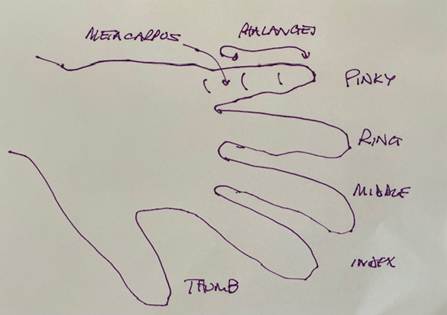
This is an outline of my left hand.

The whole hand is made up of 27 bones. The top two bones in each finger are the well-known phalanges and the metacarpus bone completes the finger; four fingers (Note 1), the index, middle, ring and little (or pinkie), and one thumb make up the hand. The importance of our hands and their component parts is reflected in our language, in our sayings and phrases. Instantaneously I recall people saying ‘I’m all fingers and thumbs’, meaning they are, particularly when flustered or nervous, extremely clumsy or awkward.

The distance between the tip of the thumb and the tip of the index finger is typically around 6 to 7 inches (15cms); maybe a more useful measurement is the distance between the tip of your thumb and the tip of your little finger, about 9 inches (23cms). The tip of the thumb to its first joint is about an inch (2.54cms), and from the nose to the tip of the outstretched arm is about a yard (92cms). A finger is approximately ¾ inch wide – so if you’re asked how much whisky you want and you answer: ‘two fingers’ – you’ll get about 1 ½ inches. (Note 2)

Sailing in coastal waters and checking for navigational aids, it’s good to know that at arm’s length the little finger covers about one degree, three middle fingers together about 5 degrees, a clenched fist about 10 degrees, the spread of index and pinky about 15 degrees, and there’s 25 degrees between the thumb and pinky. There’s more! If you spread your hand out so the pinky is horizontal, the ring finger is at about 30˚, the middle 45˚, the index about 60˚ and the thumb 90˚.

We talk of using the ‘rule of thumb’, working with a method or procedure based on experience and not on theory.

‘Many hands make light work’ is a saying that’s been around since the 1540s, meaning with teamwork tasks are more easily achieved. In this case the word ‘hand’ refers to a ‘person who does something’, most common as a sailing term for the ship’s crew – ‘all hands on deck!’. Those of you who remember The Goon Show with Harry Seacombe, Spike Milligan, Michael Bentine and Peter Sellers may recall a skit when they gathered around an unlit light bulb; ‘Ah! Many hands make light work’ quips Spike …. and the lightbulb lit up; a wonderful example of the zany, timeless humour of that show.

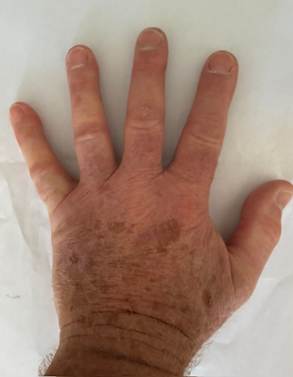
This is my left hand (Note 3). Pseudo psychology would have me believe that if the ring finger is longer than the middle finger, I am poor, that if the middle finger is longer than the index finger I am rich, and if the ring and index finger are the same length you’re a genius. As I said: ‘pseudo psych’!

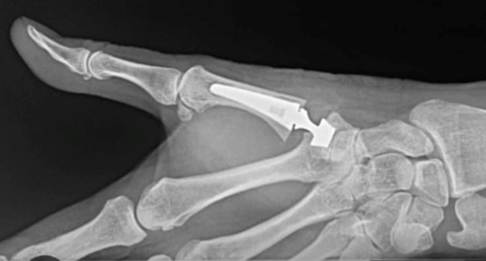
I wrote at the start of this postcard that we rely on our hands for so much. Spare a thought for Armi, a yoga friend from Naples, who works for the hairband Schwarzkopf. Over the years he developed repetitive strain injury in his left thumb, which eventually required the insertion of a metal rod.

He had his operation some weeks ago and the normal functionality is returning. There was debate about who owns the copyright to his X-ray …. so I am chancing he does!

You could add ‘hand’ to ‘writing’, ‘shake’, ‘cuff’, ‘ball’, ‘bell’, ‘to mouth’, ‘over fist’; or after ‘in’, ‘off’, ‘to’, ‘take in’. You could keep your hand in, lay your hand on, change hands, or even ‘win hands down’.

One of the greatest hits of the French singer Françoise Hardy’ was ‘Tous Les Garcons et Les Filles’, from 1962. It’s second verse started: ‘Et les yeux, dans les yeux, et la main, dans la main’  (And the eyes, in the eyes, and the hand, in the hand …). Like every song or lyric one adores, it’s on instant recall.

There is no space here to delve into the interesting mysteries and reading of the various lines on the palm of one’s hand. Palmistry has been around for centuries; who knows what a professional reading of mine would reveal, Oh! I don’t know, how any years I have left …… or whether I should just reflect that according to those beliefs about the lengths of my fingers …. I am a poor genius or a rich nincompoop!

…… if I could put my finger on it!

Richard 3rd July 2026

Evora Portugal

www.postcardscribbles.co.uk

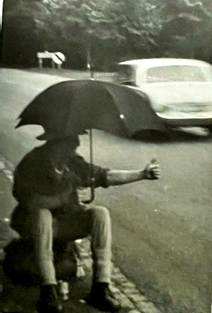
PS Back in 1964 I hitched through the Low Countries. Here’s me trying my luck ….. to ‘thumb a ride’.

Note 1 I asked one of our fellow yogis, Daren, whether he remembered the ‘Four Candles’ sketch with Ronnie Barker and Ronnie Corbett and he admitted to never having seen it. I told him a scruffy Barker walks into a hardware store and asks Corbett who, complete with brown coat, is behind the counter, for ‘fork handles’ (ie new wooden handles for large gardening forks.) Corbett hears ‘four c …. andles’, as Barker has dropped the aitch, and puts those on the counter. It continues ……..

Note 2 Imperial units of measurement work better here.

Note 3 Actually it’s my right hand but when you insert a photograph into a word document sometimes the software turns it through 180˚!