PC 474 Memories of Regimental Service in Germany (1)

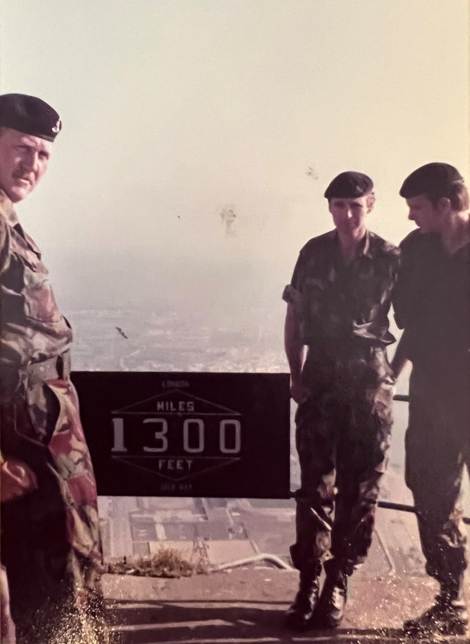
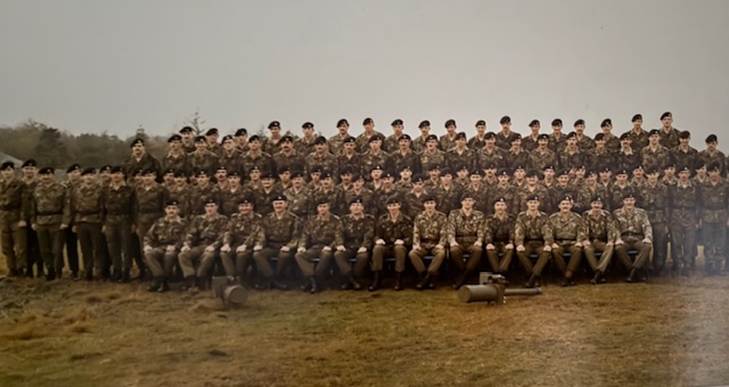
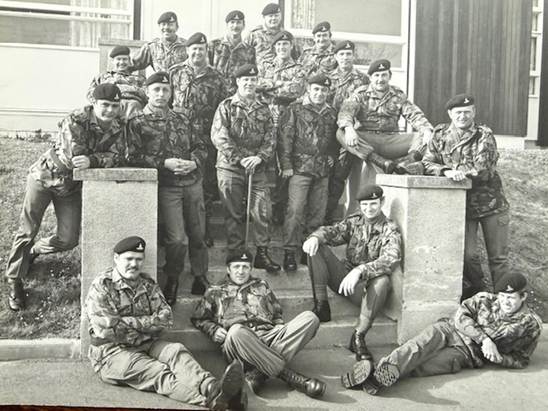
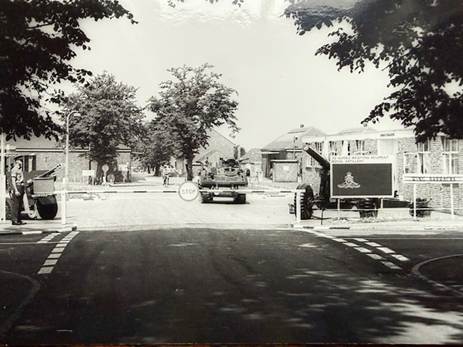
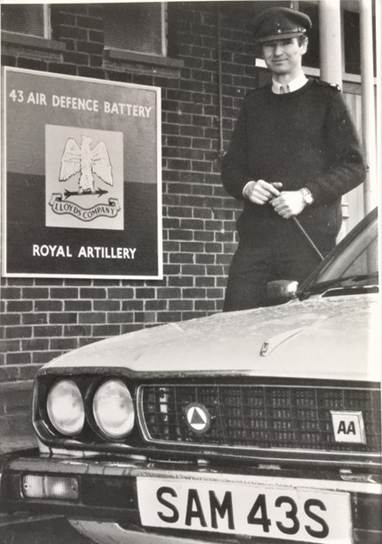
During my 20 years serving Her Majesty and her elected governments, I spent almost six years in Germany, when it was divided into West and East, and home to the British Army of The Rhine (BAOR). In the 1970s 1st (BR) Corps, which was headquartered in Bielefeld, had a strength of about 53,000. NATO forces faced the combined might of the USSR and Warsaw Pact armies. To quote a former commander of 7th Armoured Brigade: “These were huge armies that we were going to have to take on, and we were inevitably going to be overwhelmed by numbers. Therefore, it was the amount of damage that we could do …. to limit their advance before ‘nuclear release’, before we actually used tactical nuclear weapons.” I reflect that we never practised ‘advancing’, always refining the managed retreat!

I write these memories at a time of heightened tension across Europe, with Russia reinterpreting history to justify its own belligerent nature. Sad when you read its president talking about war with Europe. Why can’t he refocus, on, say, raising the living standards of his people?

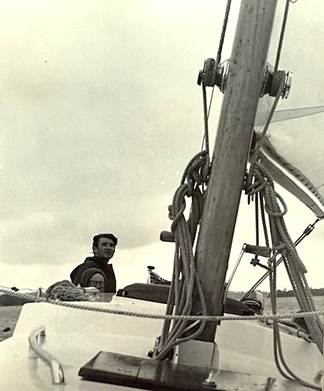
Sailing a 30ft engineless Danboat with the late Bill Pender

In my first year in Lippstadt, before going to university, I was often sailing in The Baltic, on yachts from the British Kiel Yacht Club on the western side of the Kieler Fjord (See PC 106 Sailing in The Baltic 2017, PC 229 Kiel to Oslo 2021 and PC 231 Ropes and Sheets 2021.) I continued to introduce soldiers to the rigours of offshore sailing when I returned to Lippstadt in 1972, before moving down the road to Paderborn the following year.

My absence from barracks was noticeable! So much so that when the Second-in-Command, Major John Harman, wanted to reinforce a point in his lecture to junior NCOs, he allegedly asked: “So where would you expect the FOO of 132 Battery (Note 1), Captain Yates, to be at this stage in the battle?”, a wag at the back shouted: “Sailing in The Baltic, Sir!” In my accommodation in the Officers’ Mess, I had a wall covered with charts of The Baltic, with coloured lines marking different expeditions. Good times!

In August 1969 I heard on the radio Prime Minister Jim Callaghan announce that British troops would be sent to Northern Ireland ‘to aid the police’. I was, naturally, on a yacht, this time near the little Danish village of Aerøskøbing and within three weeks of returning to England and starting university. I genuinely thought I might miss some action, with the prospect of three years studying Civil Engineering. Surely in that time ‘they’ could sort out what would become known as the Troubles? No one forecast the civil conflict would last for 30 years. My own ‘Tales of Northern Ireland’ can be found in PCs 196, 197 & 198 from 2020.

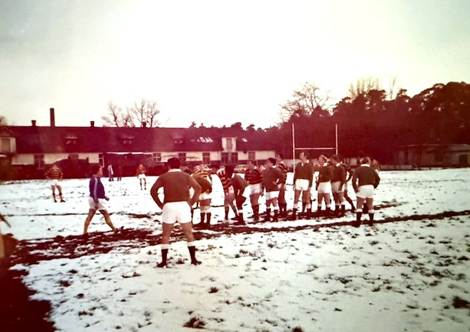
I was a single officer during my time in Germany and life revolved around training in and out of barracks, sport,

An inter-regimental rugby match in February 1973

and the Officers’ Mess. It was here we congregated for a mid-morning coffee, a drink in the bar before lunch, a drink or two in the bar before dinner and possibly a nightcap. I sensed we ‘worked hard and played hard’! There was no watchable television, the newspapers were at least a day old and the only telephone was a landline contained in a little kiosk in a corner of the Mess hallway. For international calls, you had to talk to the operator and book it! The Mess in Lippstadt was a grand building with a double-height dining room and a Minstrel’s gallery at one end. During morning coffee in one of the anterooms, Captains David Morley and the late Bill Pender would read, with appropriate accents, Punch magazine’s Idi Amin column. (Note 2) Somehow a wonderful memory, although the subject was evil! Idi Amin was the dictatorial President of Uganda (1971-1979) whose regime was responsible for the deaths of anywhere from 100,000 to 500,000 Ugandans and the expulsion of some 50,000 Ugandan Asians, who owned the vast majority of the country’s businesses; economic collapse followed.

We enjoyed a life of duty-free alcohol, cigarettes and other goods like cars. The British Forces were supported by the NAAFI (Naval, Army & Air Force Institute), which had a large supermarket near the barracks in Schloss Neuhaus. Living as a single chap in the Officers’ Mess, my victualing needs were met, and I rarely went to the NAAFI. On the odd occasion I did, I was disappointed. Looking for some ink cartridges for a fountain pen, I tried the NAAFI: “Sorry love; no, we don’t stock those ….. but you’re the third person this month who’s asked for them.” I left, thinking well why don’t you order some in if there is a demand.

Training for the four-month infantry-role deployment to Northern Ireland took a huge chunk out of our normal Artillery training schedule; I did it twice!

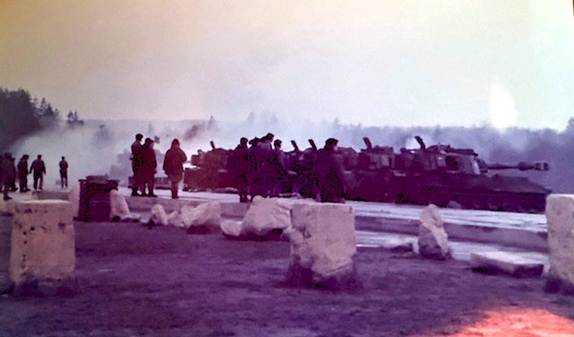
M109s in the direct as opposed to indirect fire role

The artillery training programmes at regimental level hadn’t changed for decades; individual/personal training advanced into sub-unit and regimental exercises, then in the autumn much larger Divisional formations practised over the north German plains. Farmers were paid compensation if dozens of tracked vehicles ripped through, for instance, their fields of Sugar Beet. These exercises naturally never used live ammunition; we practised that with 155mm shells on the Hohne-Bergen and Münsterlager Training areas.

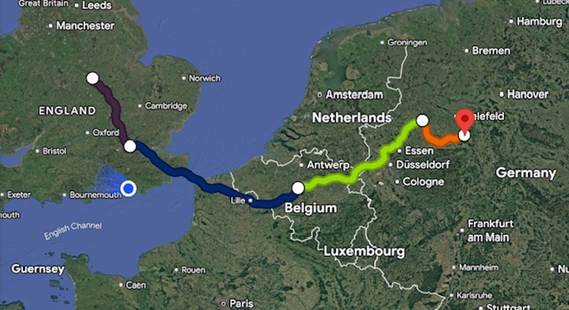
We did some mad things but then we were in our twenties, and everyone does mad things in their 20s, right? One Friday afternoon I got in the car after work, and drove to Calais, some 550kms. I then caught the 2300 ferry to Dover and drove to Leicester. On the Sunday afternoon, I drove back to Dover, caught the ferry to Ostend in Belgium and drove back into Germany, arriving for breakfast in the Officers Mess.

(To be Continued)

Richard 16th January 2026

Hove

www.postcardscribbles.co.uk

Note 1 An artillery Forward Observation Officer (FOO) would be attached to an infantry or tank regiment, to bring indirect fire support as necessary.

Note 2 Regular articles by Alan Coren appeared in Punch, “utilising phonetic spelling and current idiom to lampoon this odious dictator. Sadly, its success won the attention of the Politically Correct Commissars, who pompously halted the satire.”

PC 472 Shorts

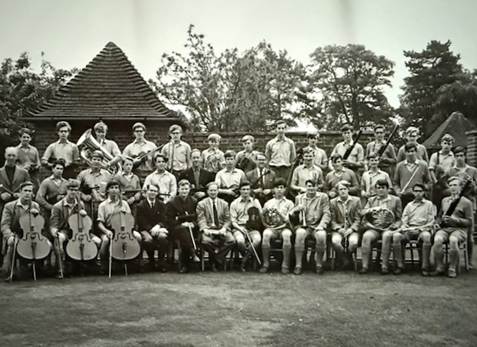
The title might have given the impression I was going to scribble about shorts, ie short trousers ….. maybe I should, given that I wore shorts at school until I was 18 …….

Dauntsey’s School First Orchestra circa 1964

…. but I’m not! Those who practise hot yoga in the Middle Street studio are an interesting group, from diverse backgrounds and professions, the young and those slightly older. Some of the regulars have become good friends, others prefer to drop in, practise, and leave, without any interaction; each to their own!

Sophie is an ‘award-winning actor, writer and film producer who works professionally under the name Cerys Knighton’. (See PC 342 Relationships IRL July 2023). She’s a graduate of the National Film and Television School and recently her short film ‘I’m Not Brilliant’ was shown as part of Brighton’s Film Festival in The Trinity Chapel on Duke Street in the centre of the city.

The chapel was built in 1817 by Thomas Kemp for his Nonconformist congregation, underwent several alterations during the C19th, and closed in 1984 due to declining numbers. In keeping with a lot of non-conformist places of worship, around three sides it has a large gallery on its first floor. The Fabrica Art Gallery made the chapel its home in 1996 and it was Fabrica which laid on the ‘Short Film Festival’.

I wouldn’t regard myself as a ‘Film Buff’, enjoy mainstream films as much as anyone, but sense our attendance at the local Odeon cinema has declined over the years. Supporting friends in their professional careers is important to me, so we went along to the early-evening screening of Sophie’s and other ‘short’ films; anything under 40 minutes is considered ‘short’. Hers was sixth on the list. The first was more like a dirge; atmospheric cliff-top images of Guernsey for 17 minutes, interspersed with a red-bearded individual who wandered around with a tattered old book. I have a habit of falling asleep in dark, warm places, so maybe I missed the whole point!

The next film was about a surprise birthday party, the subject entering a doorway and confronted by ‘friends and family’, whom you heard but didn’t see. She kept protesting that she didn’t do birthday parties and then seemed to get sprayed with blood ……! Again, the point was completely lost on me; the audience gave it desultory applause for some 4 seconds, so maybe I wasn’t alone. There was a short film, almost a documentary, about individuals who volunteered on a hospital radio. It had ‘real’ people not actors but again its point was lost – on me! One interesting film showed a series of cartoons about a boy going to Boarding School, the voice-over suggesting he felt abandoned and unloved. The choice of dull colours, browns and greys, added to the sense of despair. A clever way of portraying a difficult and possibly traumatic subject.

At the beginning of my commissioned Army service, I won a prize for being the best/worst/punctual/late/immaculate/scruffy – interested/ disinterested/capable/incapable young officer – it was a long time ago!! The award came with a cheque for £50 (about a month’s pay!) – to be spent on ‘sports equipment’.  Did I need another Squash racket? I didn’t play cricket so no need for a new bat, I played Rugby but didn’t need to buy a ball: I was at a loss! Eventually I persuaded the committee that I would seriously benefit from buying a Super 8 Cine Camera and projector; it was a stretch but ultimately successful. I used it for almost ten years before buying a Ftb Canon 50mm still camera.

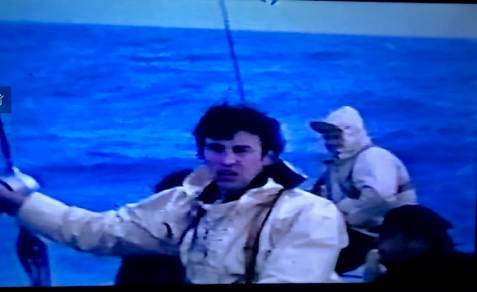
A still from one of the many hours of ‘sailing trips’ Super 8 Cine film; the late James Hodges skippering a yacht returning from the Channel Islands.

Given that two aspects of my life then, offshore sailing and my Royal Artillery service, were full of photogenic opportunities, it was inevitable I ended up with hours of 8mm cine film, spliced together when necessary. Life moved on; I transferred the films I wanted to keep to VHS video tape …… then onto CDs. Now I don’t have a dedicated CD player …….

I was reminded of my library of Super 8 film by the fifth ‘short’ showing, a mishmash of family cine film reels spliced together in some incoherent way. I am sure the more critical members of the audience would have gained something by watching all 9 minutes, but I didn’t include myself in that group.

And then we got to our ‘Main Event’, Sophie’s film ‘I’m Not Brilliant’, written by her and directed by Julian Kerridge.

Sophie plays Donna, an overly keen carer of Elsie, an elderly woman wanting to end her life. Little flashes of very dark humour, like Elsie going up the stairs with an electrical toaster saying: ‘Think I’ll go and have a bath’ made me smile, as did the confusion about the location of Dignitas as one of the options – Sweden? Elsie is determined to spend any extra cash she has and not let her ungrateful daughter get her hands on it, so they depart for the local pub. There they bump into a Hen Night, to which Donna thought she should have been invited. And there was a delightful twist at the end to make you smile with relief. This short film got the loudest round of applause of the evening, not because Sophie had packed the audience with friends and supporters but because it was a rounded, sensible and watchable film.

After an interval, another collection of ‘shorts’ and another audience. We drifted out of the old chapel, into the cool evening air and made our way home. These viewings are the bedrock of the cinematic industry and the development of its creatives, without whom we couldn’t sit back in Screen 4 with the tub of popcorn and escape into a different world. No doubt we will read about some of the makers of and participants in these short films in the years to come, as they grow, experience and are recognised for their art.

Richard 2nd January 2026

Hove

http://www.postcardscribbles.co.uk

PC 470 A Nod to Christmas

In the eleven years since I started scribbling about this and that, naturally I have mentioned the Christian festival of Christmas. This year I have reread some of those postcards and have extracted some bits I have liked; hope you do too? You can obviously read the full postcards through WordPress.

From PC 27 Christmas 2014:

“I’ve spent Christmas in Sydney in Australia, rather warm but wet that year, in New Zealand where it was warm and dry, and in Rio de Janerio, where it was amazingly hot … and humid. Wherever, “There must be turkey …. and sprouts ???” Really?? “It wouldn’t be the same without Brussel Sprouts.!” The most maligned vegetable in western cuisine, normally with any taste and colour boiled out ……. until Jamie Oliver came along and suggested roasting them with bacon. Brussel Sprouts are just another of those things in life associated with the most boring country, Belgium.”

“This was followed of course by Christmas pudding, a wonderful, sweet concoction of dried fruits, eggs, suet and spices, laced with Brandy during its manufacture to ensure it matured properly, accompanied by Brandy Butter. Before the pudding was brought into the dining room, hot brandy was poured over it and set alight. Uncle Tommy simply nodded his head – he’d seen it many, many times.”

‘Uncle Tommy’ a papier-mâché Father Christmas from 1963

I spent a couple of Christmases in Northern Ireland when the IRA were fighting for some form of independence, firstly in Londonderry in 1973 and then in north Armagh in 1975. (See PCs 196, 197 & 198 Tales from Northern Ireland) These were dangerous times but we still recognised Christmas; dinner was roast turkey, Brussel sprouts (!) and Christmas pudding served by the officers to the soldiers. The Miss World organisation, through Julia Morley, delivered 400 stockings to our regiment in 1973, with packets of cigarettes, sweets, playing cards and I think the latest copy of Penthouse, a Men-Only raunchy magazine. I’ll leave it to your imagination how the soldiers enjoyed the contents of the stockings!

In Londonderry on Christmas Eve, I went up to the border Vehicle Check Point at Muff, to visit some of my soldiers. A Baptist minister, let’s call him Desmond as my memory is too dim (!), attached to the regiment for the tour, accompanied me. One of the sentries and I stood in a static observation post, looking out over the dark, frosty countryside, whilst Desmond talked softly about the meaning of Christmas; one of those memories that will stay with me all my life!

In the United Kingdom and in some countries of The Commonwealth the 26th of December is called ‘Boxing Day’. I wrote about this special day in PC 86, posted on 31st December 2016.

The following year an extra postcard concerned Mr & Mrs Santa (PC 113). Here’s an extract:

“Mrs Santa hears a crash and looks out across the sleigh park. Rudolph, a retired reindeer with an alcoholic red nose and used only once, in 1939, because it was foggy, stirs in his adapted St Bernard’s dog bed. “Wattts ttthhh ffuni” – sort of Reindeer speak for ‘What the fuck?’ Sure enough, Mrs Santa’s husband has returned, the reindeer hooves and sleigh’s skids screeching on the ice and eventually the empty sleigh has skidded to a stop. The reindeers’ flanks are steaming from the exertion of galloping across the world and both they and Santa seem somewhat worse for wear.

Christ! What the hell’s happened?” she calls across the frozen ‘sleigh park in the sky’.”

Read the rest in PC 113.

Amber House Christmas Tree Thingy (See PC 210 Christmas Lights)

My ‘Creative Writing’ evening class at Brighton Met was encouraging and I even liked a few things that came from the challenging homework. 2018’s PC 140 was another ‘Extra! Extra!’; it covered a couple of homework scripts, one Christmas-themed about carol writing. Facebook asked whether I wanted to repost this last one earlier this week, so you may have already seen it.

At the end of 2020, a year when many countries had suffered total lockdowns to restrict the spread of Covid, I reminded my readers that the Christian bible is littered with stories of pestilence and plague, be it an invasion of locust, which coincidentally in 2020 had been particularly troublesome in Africa, ……. or famine ……. or pandemics. In the C14th in Europe the Black Death ravaged communities over 7 years. Those interested in our Nation’s story will recall the 1665 Great Plague of London; by the time a fire in a bakery in Pudding Lane started an inferno which destroyed most of the city in the following year and killed off the Yersina Pestic bacteria in the process, some 70,000 had died.

And, by the way, there is little evidence Jesus was born on 25th December. The earliest mention of this day was AD 354. Early Christians preferred January 6th, nine months after the Passover. In the original Julian calendar 25th December was the Winter Solstice, the date of which moved to 21st December with the introduction of the Gregorian calendar. “Here endeth the lesson!”

PC 262, posted on Christmas Eve in 2021, was short ….. and finished:

“So …… enjoy your Christmas Eve ……. I hope you have a fun time …… thank you for reading my scribbles. Face the coming year with energy and enthusiasm and embrace all it offers.”

In December 2022 I posted a modern version of the traditional Christmas Story (PC 314 23rd December 2022). It concerned a group of friends sitting around a table in a warm pub, in this case the Lamb & Flag in Folding Under Sheet in the Derbyshire Peak District. There’s Amanda, a very successful shepherdess, Jim whose girlfriend is very pregnant, Pete and others.

Last year I wrote PC 418 ‘Hope Christmas News’ about a party Duncan at The Hope Café had laid on for his regular customers. It reads well, I think; but see for yourself on WordPress.

Big hugs for everyone at this time.

Richard 19th December 2025

Hove

http://www.postcardscribbles.co.uk

PC 469 More from The Hope

Sami and Lisa come in through the doors and, spying Mo and me, come over; it’s been too long since I had seen them both. I decide to treat them to some coffee and ordered an Americano for Sami and a Mocha for Lisa from Libby. Regular readers will know that Lisa was writing an article for Brighton & Hove’s Argus newspaper about low level health care and had asked my opinion. (See PC 457 Low Level Health Care September 2025)

“Hey you two! Lisa, I saw that your article was published in The Argus in mid-October. Will there be a follow-up?”

“Hope so; nothing certain but they liked my style.”

“And, Sami, I read that not only has Sir Alan Bates finally agreed a settlement in his claim against the Post Office but that a 92-year-old ex-postmistress has also finalised hers. Not before time you might think!” 

“Time passes, doesn’t it. I hadn’t realised Alan had started his campaign for justice for victims of the Horizon scandal more than twenty years ago. So pleased to understand part of his settlement includes compensation for those efforts”.

“Betty Brown fought for 22 years for justice after The Post Office accused her of false accounting after discrepancies in their County Durham branch books. She and her husband made up the £50k shortfall, which had been caused by erroneous Horizon software. Her husband died a year later. Then the Sunday Times, towards the end of November, had a poignant article about Michael Mann, accused of stealing £15,000 from his Post Office in 2013. In October that year Mike committed suicide, so depressed at being sacked from the job he loved. The public enquiry is now analysing the evidence it’s collected and is handing over files to the Metropolitan Police for possible criminal charges. Operation Olympos has so far identified seven suspects, with a formal prosecution expected to begin in 2028; nothing seems guaranteed and meanwhile those wrongly convicted wither.”

“You probably missed the obituary of Lam Leung-tim ……”

“Who he?”

“A Chinese businessman who created ‘a kingdom from nothing’ after the Japanese occupation of China during the Second World War. His name sadly will not be familiar but one of his plastic toys, the little yellow duck, will be.

Who hasn’t had one in their bath, if you have a bath in which to float it nowadays(?), or indeed watched one of the many ‘Yellow Duck Races’.”

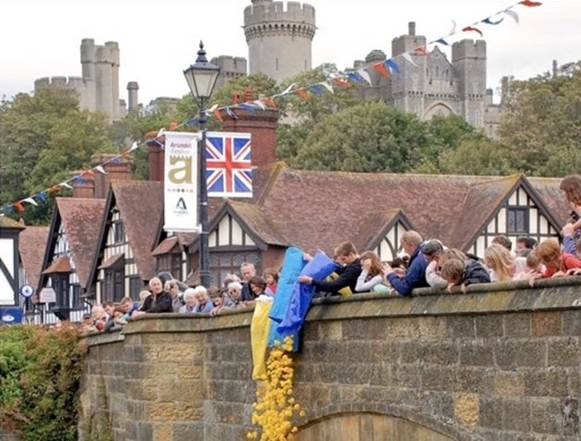
“Ah!” Says Mo, “There’s one held every year on the River Arun during the Arundel Festival of The Arts, here in Sussex. Two thousand yellow ducks, each with a number corresponding to a £1 ticket, are poured from a bag from a bridge.

The winning duck earns its owner £100, second and third £50 and £25 respectively and the remaining money goes to local charities. All the ducks are cleared from the river by the Arun Divers Club.”

“Did you know,” Sami interrupts, “that Lam says he made a ‘pleasant mistake’; there’s an old Chinese saying ‘yellow goose and green duck’ ….. but Lam made his duck yellow! He lived to 101.”

“Wow! That’s a lovely anecdote to our love of the yellow ducks.”

“How was your birthday, Richard?” asked Lisa “Not sure Sami told me”, she said, looking at her partner quizzically.

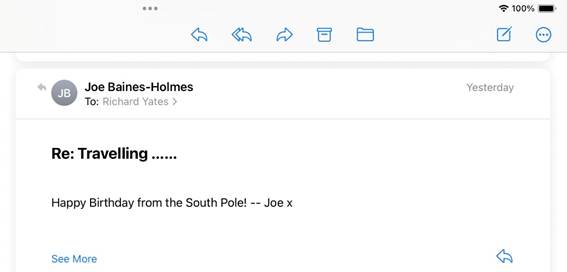
“Great. Dinner in a new restaurant in Church Road, Maré, and all the normal birthday stuff, including birthday wishes from Joe at the Amundsen-Scott South Pole Base. (see PC 403 Idle Thoughts about This and That September 2024)

You’ll have to take my word for it, as you could argue that the email could have come from anywhere! Joe owns one of the apartments in Gilmour House, the other half of Amber House. His contract finished at the end of October and he’s on his way back to Hove, via Thailand and SE Asia.”

Mo butts in: “You’ll have a view, Richard, about the budget last month; what did you think of the removal of the Child Benefit Cap?”

“I had to check the facts. Previously you could claim the benefit for every child; you’d qualify if you’re responsible for a child under 16 and live here, providing neither parent earns more than £80,000. New rules were introduced in 2017, limiting it to two children. The aim was to end the iniquity of workless households getting paid by the state for having larger families than those with jobs could afford. Today families on Universal Credit, which is typically means-tested, get £3500 per child. In removing the cap by April 2026, the government aims to lift hundreds of thousands of children out of poverty. Critics of the lifting of the ban argue there’s no real measure of ‘poverty’, it should be down to parental responsibility to decide how many children to have and whether they are affordable, and that it’s not for The State to say: ‘we’ll pay more and more’.

“You know my view Richard.” says Mo. “If you want to have children, you have to understand that there is a cost involved and there’s a responsibility for both parents, the mother and the father. There’s been an increase of about 10% in the number of families headed up by a single parent since 2019. Mothers make up 85% of the 3 million single parent families here in the UK. Not sure how you can change this, educating society about basic responsibilities, be more draconian about financial support from the absent parent? The more the state helps financially the less incentive there is to change. Don’t think Joe and Joanna Public are in favour of lifting the ban.”

“I do feel a bit concerned that the ‘Ship of State’ is captained by someone who’s just qualified, that most of his crew try hard to please him but have little professional experience, and there’s an ongoing dispute as to the destination, let alone how to navigate there.”

Richard 12th December 2025

Hove

www.postcardscribbles.co.uk

PS The knife was successful!

PC 466 Hope News

Hadn’t been into The Hope Café since our return from New Zealand, although I had caught up with Sami in Gail’s one afternoon (See PC 461 ‘Bumped into Sami’ 17 October 2025). On Wednesday it was cold and raining so perfect for a coffee in convivial surroundings. I find Mo sitting at one of the tables, with a couple of books she’d obviously bought from Duncan’s bookshop next door.

“Oh! Hi! Richard. Come and join me and tell me what you’ve been up to.”

I ignored the question! “New books? What have you bought Mo?”

“’The CEO; The Rise and Fall of Britain’s Captains of Industry’ and Saul David’s latest book, Tunisgrad, about the battle for Tunis and subsequent victory in May 1943 in Africa during the Second World War. As you know I love history and this looks fascinating.

“Not sure about the CEO book but, if you find it good, let me know. I read Saul David’s book ‘Victoria’s Wars’ and then met him.”

“Not name dropping?”

“No! No! No! In 2007 I went on a tour of the ‘Sites of the Indian Mutiny’ (Note 1) and he was our historical guide, giving colour and meaning to what we saw and heard. Afterwards I bought his book ‘Victoria’s Wars’ which explained just how the Empire expanded in the queen’s reign, thanks to adventurers and successful military opportunists. At its height the empire covered about 24% of the earth’s land mass and some 450 million people. Anyway, I thought you would have bought the latest local author Peter James’ book – it’s about the Royal Family, isn’t it?

“No idea – used to love his books but like anyone continuing a series, they become a little samey and he’s got it into his head that he has to include little ‘bon mots’ or modern sayings to give his writing more gravitas!! Of course, at this time of the year all my regular writers like John Grisham and Lee Child bring out their annual offering. Now, how are you?”

“Well, a regular blood and stool test worried my GP and she thought I should have a colonoscopy.”

“Why?”

“William my late nephew died aged 18 in 2002 of Bowel Cancer, so this was not the first time I have had to suffer the indignity of someone I had never met inserting firstly their finger then a tube up my arse. But if one’s GP suggests it, you should have one; just in case. You’ve probably never had one of these procedures; in preparation for it you have to clear your intestines, and this is achieved by drinking two litres of something called Moviprep. It’s a chemical concoction designed to flush out one’s colon; the ingredients, Sodium Sulphate, Sodium Chloride, Potassium, Ascorbic acid and something called Macrogol, which probably doesn’t appear on the periodic table, are enough to frighten anyone.

One of the often-quoted reasons for Britain leaving the European Union was the desire take control of our borders. Not only have the number of ‘small boats’ crossing the English Channel with illegal immigrants increased but our Health Service now seems to rely on individuals born overseas. My snapshot of the Endoscopy Department in The Royal Sussex County Hospital bears this out. There were two Endoscopists, Mrs Jane Machinjike, from Zimbabwe, and Dr Nabeel Akhtar and two nurses, Mr Ashik from Kerala in Southern India and Ms Shrishti Maharjan from The Philippines. Worse still there’s not only an audience, in this case two nurses and two endoscopists, but the only programme on the two screens was of someone’s insides – odd when you realise it’s one’s own. What else’s happening Mo?”

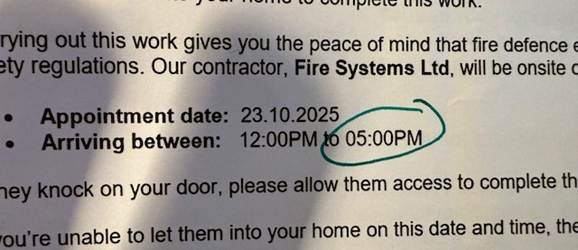
“My mother’s residential home in Shoreham recently had a Fire Equipment Inspection and the company carrying it out wrote to tell her when they would be ‘on site’. I read the important piece, when and at what time …..

 ….. and thought we’ve got our knickers in a twist! It’s either 1700 or 5:00 pm. I was nerdy enough to drop them an email and ‘William’ said he would look into it and thanked me! The same happened when I booked a haircut – the App said ‘03:00pm’ – and clearly it should be either 1500 or 3:00pm, or even 3 o’clock! This is a little like a rash. I had a hire car the other day; when I collected it the time on the dashboard said 0920. Later the same day, in the afternoon, the clock said 0335. What’s going on?    

“What indeed Mo! You know we went to London to have a pre-birthday lunch with chums last month?”

“Where did you go?”

“Colbert in Sloane Square; used to be Oriels and has a simple menu. And it’s easy to get to – into Victoria railway station and then one stop on the District or Circle Underground lines.”

“Ah! Yes! I’ve also been there. How was your journey?”

“Actually, our direct Southern train from Hove was delayed by engineering works which meant a diversion. As we arrived in Victoria the driver announced we were 23 minutes late and we could claim some refund?”

“Really? That’s remarkable. And did you?

“I did. Southern will give you 25% of a single journey fare if the delay is between 15 minutes and 29 minutes and 50% refund if it’s between 30 and 59 minutes. Not sure what happens if it’s over that!! I went online, filled out the details including our ticket number, and got a refund of £4.10 per ticket.”

“You’re well brought up Richard so I suspect you would have been as horrified as I was. Watched the reality TV programme Celebrity Traitors; at some point the contestants were filmed eating. Like pigs at the trough; knives as weapons, stuck in the air, to balance the fork sticking in the air, holding them like some dagger, or even like drum sticks, talking with their mouth open …. I was surprised someone wasn’t using their fingers. Horrified and disgusted in equal measure, like watching cavemen.”

“As a Gunner Captain, I was being run to be ADC to the C-in-C BAOR, General Harry Tuzo and had to have the ‘Knife & Fork’ test, that is have lunch with him and his wife, Lady Tuzo. I passed!”

          “Hey, I need to have a pee; back in five.”

Richard 21st November 2025

Hove

http://www.postcardscribbles.co.uk

Note 1 The Indian Mutiny took place in 1857; it resulted in much bloodshed on both sides and changed the way India was governed.

PC 447 Books & Hope

Sounds a little like the name for a firm of family solicitors, ‘Books & Hope’, doesn’t it, but Duncan thought it brought together those who wanted to simply have a coffee and a chat, and those for whom a good book is an essential accompaniment to a tasteful coffee or herbal tea, with a delicious pastry from Teresa’s Brazilian delicatessen counter of course!

There’s been a great deal in the news about schemes in the UK encouraging more individuals of every age to read. ‘Reading should be accessible to everyone, whether English is a second language, literacy is a challenge, or life has simply made it difficult to maintain the habit. The written word is the foundation of so much of our culture and ensuring more people can engage with it will have a far-reaching impact.” says creative director of the charity The Reading Agency Shanz Gulzar. Reading fiction fires the imagination; one’s person’s pictorial setting of a story is different from another’s. Just like watching the film of a book one’s thoroughly enjoyed, only to find the director’s take is theirs and not yours! Non-fiction, biographies, historical accounts, whatever, broadens one’s knowledge.

To be able to enjoy the written word you need to be able to read. Adult illiteracy is not uncommon; Bombardier Broad, one of my men in a Royal Artillery regiment in Germany in 1974, struggled to read. Getting help for him was essential for his developing career and personal confidence.

On Tuesday a news item caught my attention. ‘Some children are reaching Secondary School with a reading age of 5!’ It went on to suggest some of the reasons, one being the Covid-enforced lockdown and for some its traumatic effect. And we can all understand the huge impact game-playing on digital devices has; time that might have been used to get inside a good book. Interestingly nowhere in the discussion were parents mentioned. It’s as if we have collective amnesia as to the responsibilities that come with having children. Some see criticism of parents as a sensitive issue, maybe linked to labels like deprivation and poverty, single parents and lack of education. Personally I think a national drive to improve parenting skills and responsibilities would have a big impact, as too often it’s our schools that must cope with children who haven’t been taught the very basics, poor sods!
But then was a parting comment by one of the interviewees, that here in the United Kingdom, 1 in 5 children do not attend school regularly; twenty percent! So the poor sods don’t get what help there is by being absent! This might be a topic for another postcard, but in a First World country this is disgraceful.

Despite the proliferation of digital reading devices and the advantages of such when weight is a factor, travelling for instance, the popularity of physical books, either hardback or paperback, has not diminished. Last week for instance the Number One slot in the Sunday Times Bestsellers, fictional and factual, totalled 40,000 sold books.

I met Duncan in his new venture next door to The Hope Café, which quietly opened its doors last month. I sense ‘Books’ is going to take a while to get established; good places often do, but the book shop’s association and co-location with The Hope Café will ensure there’s lots of crossflow. Just sitting and having a coffee with a good friend will often prompt a ‘I must buy a card for great aunt Maud, she’ll appreciate it no end; back in a sec’, sort of action. (note 1) I knew Mo was going to be working there three afternoons a week and sure enough she was there on Tuesday. She was already busy and no chance to chat, mouthing ‘talk later’ as she served a customer, so I meander back into The Hope Café and find Sami, looking cross.

Regular readers will recall Sami’s history with the Post Office, falsely accused of stealing money from one of his two Post Offices and being made bankrupt. He’s moved on, accepted the £600,000 compensation that was, at one time, on offer, formed a great relationship with Lisa Wallace, a journalist and writer from Derbyshire, and put it behind him. It doesn’t of course prevent him from taking a keen interest in how the issue of compensation is being handled.

“Don’t you just love weasel words Richard?” asks Sami, pouring over an article from last Saturday’s Times.

Over his shoulder I can read the headline – ‘345 Horizon victims have died before getting a payout.’ Sami read the preamble: ‘Close to six years after the scandal was exposed by a High Court judge, more than 3700 postmasters have yet to receive compensation. Thousands of sub-postmasters were wrongly blamed for financial losses as a result of the Horizon computer system. More than 900 were prosecuted and 236 sent to prison.’ Then the drivel:

‘The Post Office says it is an absolute priority for us and the government that all victims of the Horizon scandal receive full redress as quickly as possible”.

On 8th July Sir Wyn Williams, chair of the public inquiry, published the first part of his report, focusing on compensation and the human impact of what is believed to be the one of the biggest miscarriages of justice in UK history. The second report, establishing what happened and who is to blame, may not be published until 2026, suggesting any criminal trials may not start until 2028. (Note 2)

As an outsider, I read this and think, couldn’t someone just say: “Pay them NOW, this week, don’t quibble about certain aspects of the claim, and close this sorry, sorry episode.” Both the Post Office and HMG could fix this this month.

Richard 11th July 2025

Hove

www.postcardscribbles.co.uk

Note 1 On reflection they may not, given that a First Class postage stamp now costs £1.70.

Note 2 The United Kingdom justice system is, frankly, in crisis. There are some 77,000 cases awaiting their time in court, stretching the search for and resolution of justice to incredulity. There’s an average wait of two to three years for a case to come to court. For both parties, accused and victims, that’s cruel.

PC 438 More Odds from The Hope Cafe

Knowing my days would be busy with the visit of my mother-in-law around Celina’s birthday, I popped into The Hope to catch up with Sami on Monday afternoon. When I first met him some years ago, he was reading the latest John Grisham novel and sure enough, this afternoon his head is also into a book. He looks up and slips his bookmark between the pages:

“Hi! Richard. How are you? I read that you had food poisoning on your flight back from Rio. You OK now?”

“Yes! Thank God! Very nasty! Got into jelly! Haven’t had sweet jelly for decades and it was perfect. Even bought a block of blackberry flavour and poured boiling water over it ……. ! What are you reading?”

“Well, given the death of Pope Francis, it seems an appropriate time to read Robert Harris’ book Conclave; it was published almost ten years ago but it feels very current! Very good, but then I would expect nothing less from Harris; such a great and inventive author.”

“You’ve watched the film Conclave, right, the one with Ralph Fiennes and Stanley Tucci? I read the book a few years ago and found the film on our flight out to Rio de Janeiro towards the end of March. Sometimes the director of a film diverges from important elements of a book for whatever reason; for a film is only their take, their understanding, and may or may not compare with one’s own imaginative thoughts derived from its reading. Personally, I think the film’s great and whilst it may not be a completely accurate description of the real conclave, it’s going to be in the back of my mind when the 133 cardinal electors gather in the Sistine chapel on Wednesday to choose Pope Francis’ successor. (Note 1)

Hopefully there is a big dollop of truth in terms of the way the next pontiff is chosen; it sort-of lifted the lid on something regarded as very mysterious. Wasn’t his funeral wonderful? But a demonstration of a male-dominated organisation, hundreds of men in skirts and brocade and silk, centuries of tradition; I wonder whether it’s fit for the C21st? And now we’ll see the fight between traditionalist and liberals, the former tending to be a strong cohort in catholic churches of Africa.”  

“Ha! I heard that, in a twist worthy of Harris’ book and the subsequent film, Pope Francis, in a death-bed letter, forbade Cardinal Angelo Becciu, the most senior Catholic Church official ever to stand trial before a Vatican criminal court, found guilty but free pending an appeal, from voting in this month’s conclave.”

“For some reason a rerun of a Dave Allen skit (Note 2) was broadcast on Instagram the other day. You remember Dave Allen, Sami?”

“Oh! Come on! I was born in 1958 so too young for what I gather was compulsory Saturday Night television viewing! Of course I have seen some of the compilation programmes. What was the topic of the skit?”

“With the current focus on the Vatican and the choosing of the next Pope to lead the world’s 1.4 billion Catholics, it’s very apposite:

‘Jeremy died and made his way to heaven, where he was welcomed by St Peter, who offered to show him around. ‘Over there, that group are Hindus, and down there by the lake are Muslims; Anglicans and Jews tend to congregate around here.’ There was a very tall wall behind St Peter and curious, Jeremy asked him what was on the other side. ‘Ah! On the other side of the wall are the Catholics; they think they are the only inhabitants of heaven.’

Then we had Morten Morland’s wonderful cartoon that summed up the late Pope (Note 3):

“Don’t you love cartoons like that? Perfect! Different topic. Not sure you were here or in Brazil but there was an interesting news item about health a couple of weeks ago that caught my eye.”

“Health? In Brazil it’s a national fixation but here in the United Kingdom less so!”

“You’re right! Researchers studied more than 100,000 people living in the United States over 30 years and found that only 9.3% of the older people could be classed as properly health, defined as ‘surviving to the age of 70 years without the presence of any of 11 major chronic diseases and with no impairment in cognitive or physical functions or mental health.’ Those eleven, in case you’re interested, cover cancer, diabetes, myocardial infarction (a heart attack), coronary artery disease, congestive heart failure, stroke, kidney failure, chronic obstructive pulmonary disease (COPD), Parkinson’s disease, multiple sclerosis and amyotrophic lateral sclerosis (a fatal type of motor neuron disease). Not surprisingly, it concluded that ‘greater long-term adherence to a healthy diet during mid-life was associated with greater odds of healthy ageing.’”

“Not rocket science huh but I guess everyone will be asking themselves – ‘Have I had any?’ More yoga I say! By the way, you remember I scribbled about Gen Z a while ago?” (PC 425 February 2025)

“Yes ……”

“Well, Robert Crampton, writing in The Times about Generation Z and their idea of work, laid it on the line:

Generation Z don’t seem to understand the basic social contract!’ and went on to say your family care for you, from being a baby to acquiring educational qualifications, then you go and earn your own living. You pay taxes to keep the country safe, educated, moving and healthy. He stressed that the ‘going to work’ business, reliably, regularly, cannot be construed as emotional abuse! ‘It’s normal to feel anxious; it’s also normal to have days when you don’t fancy it.’ Then you retire and get looked after again. ‘That’s the deal. It’s really not negotiable.

“Actually, think that’s spot on! Not only Generation Z; too many people think The State should support them.”

“Sami! Must get on. Lovely to talk to you and I’ll let you get back into ‘Conclave’.”

Richard 9th May 2025

Hove

www.postcardscribbles.co.uk

PS White smoke appeared yesterday as the cardinals elected Robert Prevost to be the next pontiff. He’s decided to call himself Pope Leo XIV

Note 1 135 were eligible but two are too infirm to travel.

Note 2 Dave Allen (July 1936 – March 2005) was a brilliant Irish comedian, satirist and actor.

Note 3 Morland is a Norwegian political cartoonist who regularly features in The Times.

PC 430 Like and More

Sometime last year I read a book by an author I was not familiar with – and got exhausted by his use of the rhetorical device, the simile. A simile, well used, gives colour to a piece of prose, as it directly compares two things, using the linking words ‘like’ or ‘as’. Here are a couple of examples from a Jo Nesbø novel: ‘Oslo at this hour was hers, like sharing a stolen hour with a secret lover.’ and ‘The buildings on the city centre were black silhouettes, like a cemetery at sunrise.’ I loved these two enough to add them to my ‘Notes’. You could also say, because someone has years of experience, they were ‘as wise as an owl.’  But the repetitive use of a simile gets tedious. Grammar shouldn’t be left behind at school, as knowledge of good grammar makes what you write a pleasure to read. And grammar changes as our language and its usage evolve, although there is often a huge difference between how we speak and how we write.

A simile should not be confused with a metaphor, a figure of speech that implicitly compares two unrelated, typically by stating that one thing is another. Examples could be ‘the chef was a magician’, ‘you are an open book’ or ‘the exam was a piece of cake’.

The word that introduces a simile, like, has been highjacked by lazy speakers and it’s doing my head in. Here’s a great generalisation; anyone under 35 uses the filler ‘like’ so often its meaningless. Sometimes you hear: “I mean, like, well, you know, if I am totally honest …….” and you’re waiting for the conversation to start, let alone being irritated by ‘totally honest’, as you’re either honest or not.

Robert Crampton writing in The Times had this to say of Generation Z (Note 1):

“One big growth business, it was reported yesterday, is the provision of etiquette courses for awkward youngsters. Etiquette not so much as in how to get out of a sports car in a short skirt or which spoon to use for soup, but more everyday stuff such as introducing yourself with confidence, establishing eye contact, using the correct forms of address to a prospective employer, and so forth. Not mumbling, not looking at the floor and not calling your interviewer “bro”, basically. And maybe, like, not saying, like, like every third word? With an invisible question mark, like, at the end of every sentence? That all sounds very sensible to me.”

The vexed subject of fillers, lazy words and thinking time when talking – normally words not used when writing, even a text – reminded me of a client from my business coaching days. Many years ago Brian (Note 2), a new client, sat down at my table in The Institute of Directors members’ meeting room. I always started a series of coaching sessions with the question: “Tell me About Yourself”, expecting the response to last for at least a couple of hours; for me it was one of the most fascinating and intriguing parts of our interaction. After about ten minutes I noticed Brian kept filling his story with ‘you know’, when clearly, I didn’t know! So I started making little ticks in my folder every time he said it. After 30 or 35 ticks, his curiosity got the better of him and he asked what I was doing. He was a bright chap but completely unaware of this lazy habit he’d developed, that detracted from what he was saying.  

Being a bit of a pedant when it comes to our language, I am a paid-up member of the Apostrophe Society, railing against councils who can’t be bothered and those who say it simply doesn’t matter if the understanding of the phrase or sentence is obvious. There is a difference between ‘it is a fine day’ which can be written ‘it’s a fine day’, and ‘its a fine day’. Similarly, ‘this cheese is past its sell-by date’; writing ‘this cheese is past it is sell by date’ is nonsense. For me a slippery slope into muddy waters.

American English is fine, in America, but here we are seeing some of their phraseology creeping in and that’s sad. For example, we Brits are happy to meet someone, we don’t have to add ‘with’ as it’s obvious.

My regular readers will know that I am an enthusiastic follower of the sequence of 26 Hatha Yoga postures and two breathing exercises put together by Bikram Choudhury, an Indian American, in the 1970s, following an accident that left him wheelchair bound. The classic 90-minute sequence is brought to life by a dialogue that all teachers must learn, word-perfect; individual deviation is only allowed after many years! Unfortunately, Birkam’s grasp of the essentials of proper English is weak and there is much to scream about.

The word ‘more’ refers to greater quantities of something; there is one and there is more than one. The word ‘further’ refers specifically to more of something. ‘One more step’ refers to other steps being taken, whereas ‘One step further’ refers to where the steps lead to, one step closer to a goal. More is either a pronoun or an adverb; it can’t be an adjective. Bikram uses the word ‘more’ with gay abandon, in most cases it should be ‘further’. For instance ‘more back’, encouraging students to bend further backwards; ‘more higher’ is a real mangle – it’s either higher or not!

Sometimes we are encouraged to go ‘much more back’ or ‘lift more higher’ and nowhere in the dialogue is the word ‘further’. You might ask whether this matters, in the greater scheme of things and the answer is probably not. But when one is a pedant, it only gets more and more irritating, not further and further irritating (!), so much so that it becomes the subject of one of my weekly scribbles!

Richard 14th March 2025

Hove

www.postcardscribbles.co.uk

Note 1 Not only Gen Z but Millennials as well.

Note 2 I never had a client called Brian so safe to pull this name out of the anonymous hat.

PC 427 Hope Conversations

I had promised Libby I would offer what support I could after she’d confided in Josh and me that she’d been Love Scammed. Knowing she’d be finishing her Barista duty behind the Hope Café counter mid-afternoon on Tuesday, I popped in, grabbed a double espresso from Josh, and joined Libby at one of the more secluded tables.

“Good to see you Richard and I think talking about my experience will help put it behind me. It knocked my confidence so much and has made be both more anxious and also more suspicious of other people, and that’s horrible.”

“Jim died a few years ago, right?

“Dear Jim. Yes. We’d had some wonderful times, then he had a heart attack and died in his chair, watching some trashy Soap on telly. He was only 68.”

“Well, I think that’s a good way to check out, rather than in a hospital bed or in some smelly care home. Then you came to join Duncan’s team here?”

“Gives me an opportunity to engage with the customers; some are delightfully chatty and when Susie was here. (Note 1) I felt like I had another family. But it was lonely at home, so when Andrew, never sure it was his real name, made contact via Facebook, I answered. He claimed to have known Jim through work ….. and soon we were texting quite regularly. Over a few weeks I began to look forward to his messages, telling me of his time in the Army, of his divorce and his sad estrangement from his three children. He made out he’d been the victim in the divorce, had lost so much and was now struggling financially. My heart went out to him, how his story of loneliness resonated with mine. We all need the company of others, right?

“Absolutely Libby. I’ve had periods in my own life when I have felt very lonely, others when I am surrounded by people, people whom I trust and love. Don’t tell me, Andrew asked for some money, like a friend’s brother David? A 61-year-old divorcee, he was sucked into believing that Tatiana from Leningrad was in love with him; he took the bait, ‘hook, line and sinker’! She couldn’t wait to come to England but first needed, oh! I can’t remember, money for her grandmother’s operation, a new passport, to buy the flights that she kept putting off. Eventually she hoodwinked him out of £30,000. Apparently there is still a hesitation in David’s mind that Tatiana exists, that she loves him!”   

“Exactly! Silly isn’t it! I’ve thought how could educated people be so stupid, and yet here I was sending money to his UK bank account, so he could pay the outstanding solicitor’s bill of £750. I had some savings and I imagined our relationship would be strengthened; maybe he would finally meet me.”

“So what happened? What made you realise it was a scam?”

“He said he was going to take me to Rome for a long weekend to say Thank You. He gave me all the details, flight timings, the name of the hotel and so on. Then he admitted he didn’t have a credit card and the hotel needed one for security. Oh! Why oh why! I gave him the card details and the security number and arranged to meet him at Check-in at Gatwick Airport on the Friday afternoon.”

“And he never showed? And he used your credit card? Oh! Libby I am so sorry.”

“Exactly! I felt so let down, cried all the way back to Hove in the taxi and tried to stop my credit card being used fraudulently. He took £15,000. The bank said I had given him my details and there was little it could do. (Note 2) There! Now I have told someone it feels better, so thank you Richard. The more people who know the less others will fall for these scams. Now I had better say goodbye to Josh and get on with my day. See you soon.”

I see Sami munching on a croissant so go and say hello.

“Haven’t got long, but thought I could tell you a recent experience.”

Why not, Richard. If it’s quick.”

“Had to laugh the other day, both at myself and with Sandra, the Tesco member of staff. Although we naturally use Waitrose for our online weekly shop, there is a large Tesco’s supermarket a 5-minute walk away, opposite St Andrew’s Church in central Hove, which is handy for those few things you need right now. My regular but infrequent visits prompted me to apply online for a Tesco Clubcard, on the basis it costs me nothing and would occasionally reduce the bill at check-out. I downloaded it to my Wallet on my iPhone and on Monday thought I would try it out.

Arriving at the self-service checkout, I scanned my three items, opened the Wallet App, found the Tesco logo and presented the QR Code to the scanner. “We do not recognise this.” was its response. So I tried again ….. and got the same result. Whilst the supermarket wasn’t busy so I wasn’t holding up anyone, Sandra, who was just clearing empty plastic baskets, asked whether she could help. I explained I had never used my Clubcard before but …. and she took my iPhone and showed it to the scanner …. and got the same result. She then looked at my Wallet. The Tesco Clubcard QR Code was hiding behind an old Covid Travel Pass, which had expired in December 2021. We had a laugh.”

“Actually, that is funny Richard. Now, see you ….”

Richard 21st February 2025

Hove

www.postcardscribbles.co.uk

Note 1 Susie is Libby’s niece. After time in The Hope Café, Susie took a late Gap Year for six months in New Zealand and Australia before coming home to do a course in logistics.

Note 2 Victims of Romance Fraud lost more than £7 million in over 600 cases in Surrey and Sussex last year.

PC 422 Back in The Hope Café

After a couple of postcards that, on reflection, were quite serious in content, I needed to relax a little, so headed to The Hope Café for some R&R (Note 1). With a pastry and double espresso in hand, I found a corner table and sat … and relaxed … and observed. Such a great pastime, watching other people living, doing, engaging, focused; fortunately, most people who are here in The Hope Café come to meet others or just get some relaxation, some space away from their hectic life outside. Well, most; apart from our budding novelist Robert, who is tapping away on his laptop at the window counter, lost in his own world of fictional stories and subplots and characterisation. He gets the best of both worlds, working with headphones clamped over his ears listening to a podcast or music, whilst absorbing the café’s ambience and warmth by a process of osmosis!

 I guess we’ve all noticed a very modern trend; where acquaintances get around a restaurant table, order some food and drinks and then get their mobiles out and catch up with their social media lives and have no conversations IRL (in real life).  It doesn’t happen here in The Hope.

I was struggling with one of The Times’ hard Killer Sudokus, which I do on a daily basis as it keeps the grey matter well oiled, when I had a tap on my shoulder. I looked up to see Mo. Pleased, I motioned to her to sit down.

“Listen, Richard; I bet you had a lot of comments about your last scribbles about the Cancel Culture. (PC 421 Not the Way to Go January 2025). I thought you did a great job, highlighting this very real issue. It’s awful and a very worrying state of affairs, especially for those with low self-esteem. The new ‘being sent to Coventry’, perhaps; used to mean deliberately ostracising them, by not talking to them and acting as though they no longer exist. Sounds about right?” (Note 2)

“I got a lot of reaction, yes, but all rather sad, huh! One friend whom we met in the Portslade yoga studio has two sons in their early twenties. The older one did a Video Gaming course at university; “Bullied online over the last few days. Really awful; impacted his physical and emotional well-being; seems as though younger people are losing their kindness and the ability to discuss differences openly and curiously without judgment; he had to remove himself from one gaming group.

“You may have read about 66-year-old Martin Speake, who taught jazz for 22 years at the Trinity Laban Conservatoire in London?”

“Not a name that rings any bells. Tell me more?”

“It’s a complex story with many nuances but in essence when Speake was asked for feedback on the school’s equality and diversity policy, he said he didn’t agree that black musicians were discriminated against in the UK’s jazz scene (Note 3). Martin Speake is white. His response was ‘shared’, his classes were boycotted …. and he was eventually forced to resign. It was claimed by a student that his email has made black musicians feel unsafe at Trinity. He believes that students are treated like customers so they’re in charge but they don’t have the maturity to know what they are doing; ‘they have destroyed my life’.”

“That’s such a sad reflection on the world in which we live. We can only hope that common sense will return. By the way, I know you read The Times; did you see the obituary of Cherry Hill?”

“Never heard of her, no.”

“She was a prize-winning model maker, who spent a lifetime creating elaborate scaled-down versions of Victorian traction engines and other machines, some of which had not even been built at full size.”

“And why are you mentioning her?”

“Because I was astounded by her skill and attention to detail. I took this screen shot of her model of a Blackburn agricultural engine of 1857:

“Wow! That’s incredible. Incidentally, you asked whether I had lots of comments about my last PC. Yes, but PCs 417 and 419 (Have you Read …) were equally popular. One of my readers, Priscilla Goslin, author of ‘How to Be a Carioca’ (Note 4), not only passed them on to one of her adult sons, who has ‘difficulty of letting go of past disappointments’, but also admitted to having copy of Zen Flesh Zen Bones: ‘on my shelf forever. I’ve never known anyone who had it! I can still recite a few of the stories.’ Priscilla lives 50/50 in Brazil and the USA.

Before I go, Mo, I thought you would be amused at my recent stupidity. We get so used to doing things online that when someone I know said they were going to see an acupuncturist, I immediately asked: “Is that online or are you going to their practice? Bye ….”

Good to chat!  

Richard 17th January 2025

Hove

www.postcardscribbles.co.uk

Note 1 R&R is an abbreviation for Rest & Recuperation, a term I first came across in 1973. Halfway through our four-month operational tour in Londonderry, Northern Ireland, we had three days ‘R&R’. Those soldiers who were married flew back home to Germany, those who were single flew to the UK mainland. After living in a heightened state of alert for weeks, it was weird and strange to re-enter ‘normal life’, even for a few days.

Note 2 The phrase may date from the English Civil War (August 1642 – September 1951) when Coventry had a military prison. Others suggest it dates from the C18th when Coventry was the nearest town to London that lay outside the jurisdiction of the Bow Street Runners, so London criminals would flee there to escape arrest.

Note 3 Probably some ‘tick box’ survey.

Note 4. An international best seller since 1992, this is a humorous look at what makes up one of the world’s most colourful characters – the Carioca, a resident of Rio de Janeiro, Brazil.