PC 443 ‘ere in the ‘ope!

PC 443 ‘ere in the ‘ope!

Almost a month has gone by since I was last in the Hope Café and it was good to be back in its familiar surroundings. As I was getting a double espresso I put a little card on the counter, with Josh’s permission of course! It read:

‘If you have a favourite quote about the ear, would you come across and tell me? Richard’

I have scribbled about teeth (see PCs 64 & 66 Molars and Wisdom March 2016) and eyes (see PC 94 Sight and Eyes April 2017) but not, surprisingly, about one’s ears. So why now, I sense you ask. After my food poisoning and virus infection, I managed to develop an inner ear problem which affected my balance big time.

The diagnosis is Benign Paroxysmal Positional Vertigo (BPPV – see note 1), which causes short periods of intense dizziness or vertigo when the head is moved in certain directions. It’s thought to be caused by tiny solid fragments in the inner ear labyrinth. Who knew?

So a quick revision. The ear:

The inner ear includes the cochlea, responsible for one’s hearing, and those ‘semi-circular canals’. These are small shell-like structures containing narrow fluid-filled channels called the labyrinth. They sit in the three planes, two horizontal and one vertical. Just like in a gyroscope, small movements send signals to the brain, essentially telling it which way is up!

“In your shell-like ear – having a quiet word with someone – but a poetic simile comparing the shape of the outside of an ear to that of a shell” Sami’s contribution

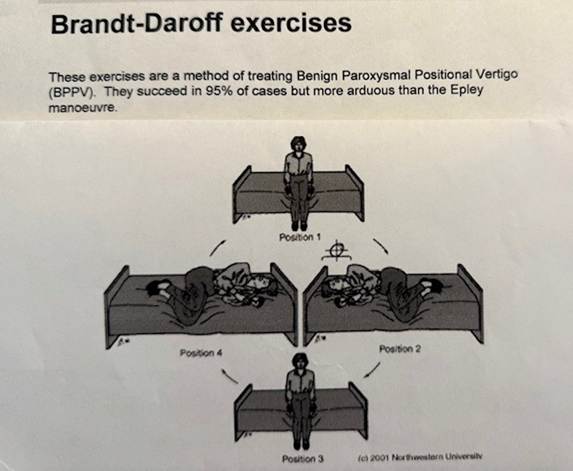
BPPV can be treated by a series of simple exercises devised by Brandt and Daroff. I assume these two are doctors specialising in the ear, but nowhere could I find out more details!
This is the first time I’ve had an ear problem, apart from the frequent removal of wax and temporary deafness caused by being near a loud noise. I spend twenty years in the Royal Artillery; being near a field gun firing a shell with a large charge can be instantaneously deafening. In my early years no one had ear-deafeners and the joke was we all had Gunner-ear (just say that out loud!).
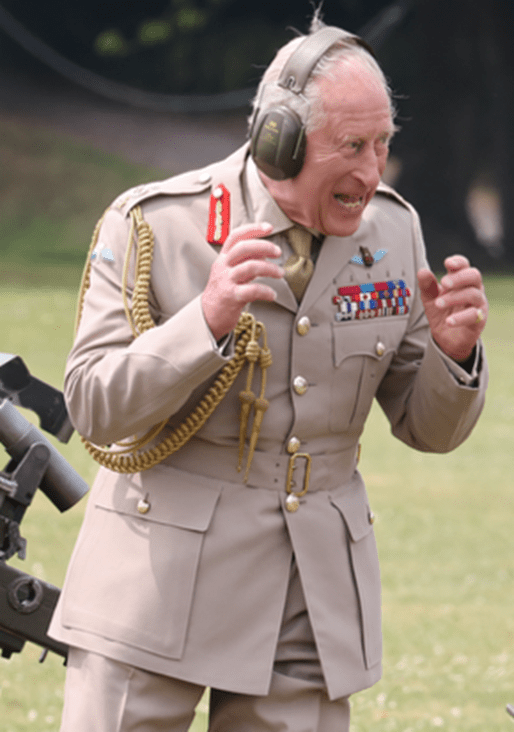
The King, who is Captain General of the Royal Artillery, having just fired a L118 Light Gun on a visit to RSA Larkhill. Wearing Ear Defenders of course! (Photo Times)

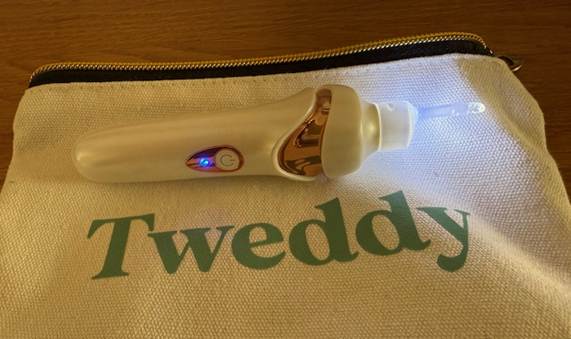
I know I shouldn’t, but I love using a cotton bud to keep my ears wax-free. There’s something very satisfying about carefully digging around and this reminds me of something else. In my military service it was vitally important to keep one’s weapon clean. Getting rid of explosive residue in its barrel required a ‘pull-through’; a cord with a weight at one end and a little slit at the other, into which you could thread a piece of ‘four by two’, a strip of cloth 4 inches by 2 inches. Drop the weighted end into the barrel, pull it through and hey presto the barrel was spotless. Sometimes I think it would be good to insert one into one’s ear and pull it through the mush inside; a sort-of brain cleaner! Or you could use this Chinese ear vacuum cleaner?
Kay our masseuse swears by the benefits of using an ear candle to get rid of wax. In for a penny, in for a pound; I tried it. She’s very good and some wax came out. But the general consensus amongst health professionals is that you don’t need to remove it at all, as it’s beneficial!

One of my yoga teachers, Carrie, said her father often massages his ears using the QiGong technique. The Chinese believe that the ear has Qi energy connections with the whole body. I have scant knowledge of Chinese medical traditions, although had a few sessions of acupuncture a decade ago. Apparently, the outside of the ear, its ridge, connects with the spine, the lobes the liver and heart, and the inner part with the kidneys and lungs. So go on, get massaging. I also read that a study in China found that those who wore dangly earrings lived longer than others. I must try and find a suitable pair.

Most of the sayings about ‘ears’ are to do with hearing. On cue, Lisa comes over and offers: “Friends, Romans and countrymen, lend me your ears. I come to bury Caeser not to praise him.” Everybody should recognise these first lines from Mark Antony’s speech in Shakespeare’s Julius Caeser.

The statistics tell me that one in three adults in the UK have some form of hearing loss, tinnitus or are deaf. In a recent TV drama, ‘Code of Silence’, one of the main characters was played by Rose Ayling-Ellis, deaf since birth and a user of British Sign Language. Good to see those with disabilities getting major roles.

Mo, who’s sitting at a table close by, leans over with a piece of paper: ‘The War of Jenkin’s Ear’. Ah! Yes, I know about this, fought by Great Britain and Spain between 1739 and 1748. Most of the fighting took place in the Caribbean. The name derives from Robert Jenkins, a British captain whose ear was allegedly severed in April 1731by Spanish coastguards searching his ship for contraband. It’s commemorated annually on the last Saturday in May at the Wormsloe Plantation in Savannah Georgia.  

Duncan gives me three: “I’m all ears”,In one ear, out the other” and “playing it by ear”.

Anna, who’s been listening, comes across in her wheelchair; “How about – ‘Walls have ears’? That was World War 2, but it’s not new! In 1645 a poet wrote: ‘For the halls of our masters have ears and hear, and the walls of the palace have eyes and watch.’”

And the free coffee goes to Robert, who came up with “‘ere in the ‘ope”! (Note 2). I loved his play on ‘ear’ and here!

Richard 13th June 2025

Hove

www.postcardscribbles.co.uk

PS No mention of ‘cauliflower’ ears!

Note 1 Benign – not serious; Paroxysmal – symptoms come and go without warning; Positional – certain positions of the head trigger symptoms; Vertigo – you feel unsteady on your feet, a little like being at sea on a ship.

Note 2 ‘aitch-dropping’ is the deletion of the ‘voiceless glottal fricative’ (H-sound). It’s common in most English regions, but often seen as a sign of uneducated speech, due to its strong association with the lower class.
PC 423 There Are Standards, Carruthers (PS)

There are standards, there are passing fads and there are habits. But even the standards that you grew up with, understood them to be sacrosanct and embedded in your DNA, can and should be challenged sometimes. Take men’s shoes; I am using them as an example as to comment on women’s would be like me commenting on whether wedges are more comfortable than stilettos, and I am not qualified to do so!

I grew up in the days of leather, leather shoes and leather soles. I think I had a pair of suede shoes, not Hush puppies, but it was the leather polished ones which defined my upbringing. At Sandhurst we were taught how to polish one’s brown shoes, getting the wax into the welts, and one’s parade ground Drill Boots, with their steel quarters on the heels and the studs on the sole. We were even told that one should polish the instep of the shoes so that, when you were sitting down, if you crossed one leg over the other, exposing the instep, it looked cared for and polished. These habits became part of the collection of one’s standards. Like having a crease down the length of one’s trousers.

Then I got into suede boots and the number of shoes requiring polishing diminished. Back then trainers were what you wore if you were training, obviously; in the gym, on the running track, playing squash or going for a jog. They went with track suits, not an item of clothing for everyday wear, surely, Caruthers. Now I have more trainer-type footwear than leather shoes, the latter growing Mold at the back of the wardrobe. But if I do wear leather ones, they have to be polished beforehand.

Table manners are another ‘standards’ issue. In one of my PCs I mentioned I went to be interviewed by the C-in-C BAOR for a role. The first test would be over luncheon (Note 1), the unspoken ‘knife-and-fork test’; how did I hold my knife and fork, what did I do with them when I wasn’t eating, did I speak when I had food in my mouth and was still masticating etc. I was brought up to believe that these things mattered and still do. I try not to show how sad I am when others stab their food as if it will jump off the plate, hold their knife and fork vertically as if to indicate no one should try to take something off their plate or just speak with an open mouth showing the half-digested potato or sausage. Just so gross!

Writing about individuals eating with their mouth open reminded me that, many years ago, a new client sat down at my table in the Institute of Directors in Pall Mall, the start of some coaching sessions, expecting us to get straight into it. We did, after he had disappeared to the Men’s Room to remove his chewing gum. There are standards, Carruthers!

And if you are wondering, puddings should be eaten with a fork or a spoon and fork, not a spoon on its own!

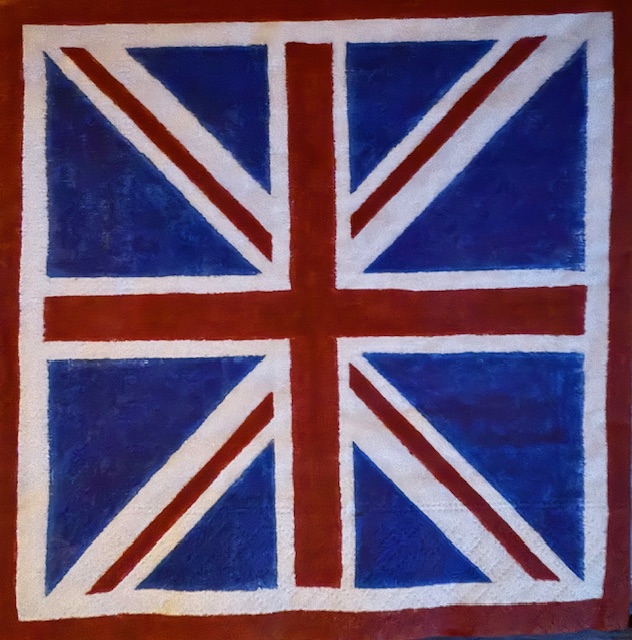
Napkins or serviettes, call them what you will, are another essential when eating. Because I like ironing, I am happy we use proper napkins, linen or cotton and not some paper replica, unless it’s for a party, like these:

And if you use a napkin, it’s good to have your own napkin ring in which to put it. There are standards after all.

I am not sure when it started but it has for me become one of the most annoying habits to witness and it’s mainly actioned by, I think, under-thirties women. Although in this age of equality I wouldn’t want to exclude some members of the opposite sex and anyone in between. For any multitude of reasons, the individual is feeling anxious and that anxious emotion brings a certain wetness to their eyes. Whether in disbelief that they’re going to cry or pleased that they’re showing their feelings, they move their hands towards their cheeks, fingers extended, nails prominent …. and shake their fingers, brow creased ….. mumbling ‘I don’t want to cry’ or somesuch. Someone could choreograph a little ballet with each finger having its own independent part to play. Any tears are carefully wiped away with the finger-print part of the finger; otherwise, their fashionable nails would stab them in the eye. (Note 2) I know we’re encouraging everyone to show their feelings more, especially young men, but this is absolutely ridiculous. And it goes on and on and no one says: “Oh! For God’s sake, Emma, get a f**king grip!” because that would breech their human rights.  

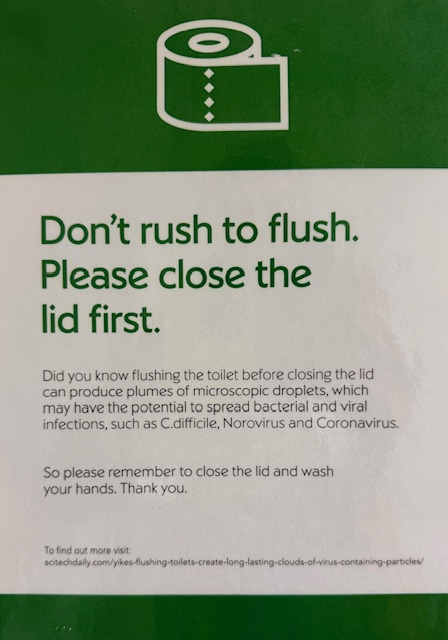
I have written before about ‘Loo Paper’ (PC 47 Aug 2015) and ‘The Loo’ (PC 54 November 2015). After using the loo, I think it’s important to close the lid, but I hadn’t factored in the latest advice. Close the lid then flush and not the other way around:

And finally, if you go to someone’s house and use a knife & fork, ie having something to eat, you should write a Thank You letter. With the cost of postage sky high, I write mine in cursive script with a fountain pen, take a photo then send it via WhatsApp. A rather modern take on old-fashioned standards; Carruthers would smile.

Richard 24th January 2025

Hove

www.postcardscribbles.co.uk

PS Carruthers is an old Scottish surname which reeks of upper-class aloofness. Inter alia, the main protagonist of Erskine Childers’ novel ‘The Riddle of The Sands’.

Note 1 Another word that defines a class and an age …. and an indefinable ‘meat’! Actually ‘fine-particle meat products enriched with pork fat and flavouring additives.’ Sounds very healthy.

Note 2 Nail extensions have become longer and longer, so much so that some should be registered as dangerous weapons and the owners of others will have problems in the future as in order to use a keyboard today, they have to hold their fingers in a convex manner.

PC 413 Hope in The Autumn (continues from PC 411)

“That was a long break, Richard!”

“Yes. Sorry! Got caught by Libby who wanted to give me an update on Susie.”

“How’s she doing?”

“Libby thinks she’s enjoying her course which should finish before Christmas. Obviously now looking where she can apply new-found her skills.” (Note 1)

“Unlikely we will see her back behind the counter! Sad but life moves on and so it should. We were talking about what The Times’ obituary writers had said about General Sir Mike Jackson. Always interesting to read the obituaries of others, not that I imagine for one second that mine will feature in a national newspaper.”

“Maybe, maybe not! The obituary writers must have a fun if not conflicting time deciding who to include. Did you see that one last month about possibly the last ‘ice harvester’?”

“No ….”

“In an age when a refrigerator and freezer are considered essential gadgets, we forget some of the ingenious ways our forebears used to keep food fresh. One such device was an ice box, made of wood or metal. Food was placed in the bottom and an ice block in the top compartment. Cold air falls so keeping the food fresh.”

“OK. I’ve seen some on visits to National Trust properties, but who was this ice harvester?”

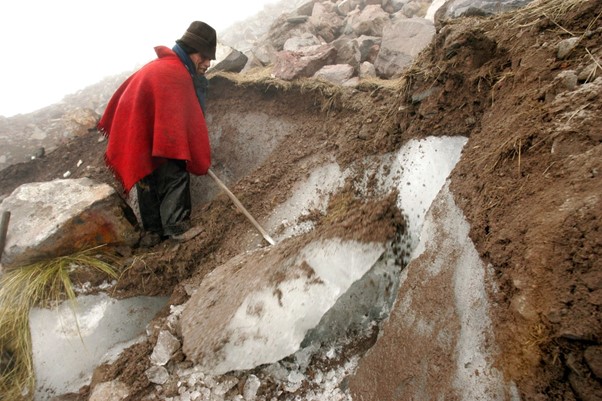
“Actually an Ecuadorian named Baltazar Ushca, who for more than 60 years climbed the slopes of Mount Chimborazo, the tallest mountain in Ecuador, to harvest the ice that covers the dormant volcano. “It’s the tastiest and the sweetest, full of vitamins for your bones,” he explained of the frozen water, which glistens in the sunlight like a huge diamond.”

“Now I know something about Mount Chimborazo. Its summit, over 6000m if I remember correctly (Note 2), is the point on earth closest to the sun, as it sits just one degree south of the Equator, where the Earth’s bulge is at its greatest. But why did The Times decide his life was worth remembering?”

Mount Chimborazo

“Probably to mark the end of a traditional way of life. At one time there were up to 40 ice harvesters, known as hieleros, including his brothers Gregorio and Juan. “We would go out in a group of friends, four or six groups, twice a week,” he explained in his native Quechua language. “I would go with my mother and father, with my brothers and sisters.” Gradually their number dwindled. Ushca, who was born in 1944 and started the five-hour trek to the top of the mountain aged 15, was believed to be the last one.”

Baltazar at work

“Ah! That’s both fascinating and sad. I haven’t been anywhere in South America, let alone Ecuador, although Rio and Machu Picchu are on my bucket list. And now, Richard, I need to get going as I promised my mother we’d meet in M&S in Brighton. She wants to buy some clothing staples and M&S’s very good for these. See you ……”

I sat back, relishing the agreeable atmosphere in the café, and was thinking of getting my iPad out to read the day’s news when I saw Sami coming through the left hand door.

“Hey Sami! A belated Happy Birthday for the 24th. Us Scorpios must stick together!”

“Afternoon Richard. How was your birthday?”

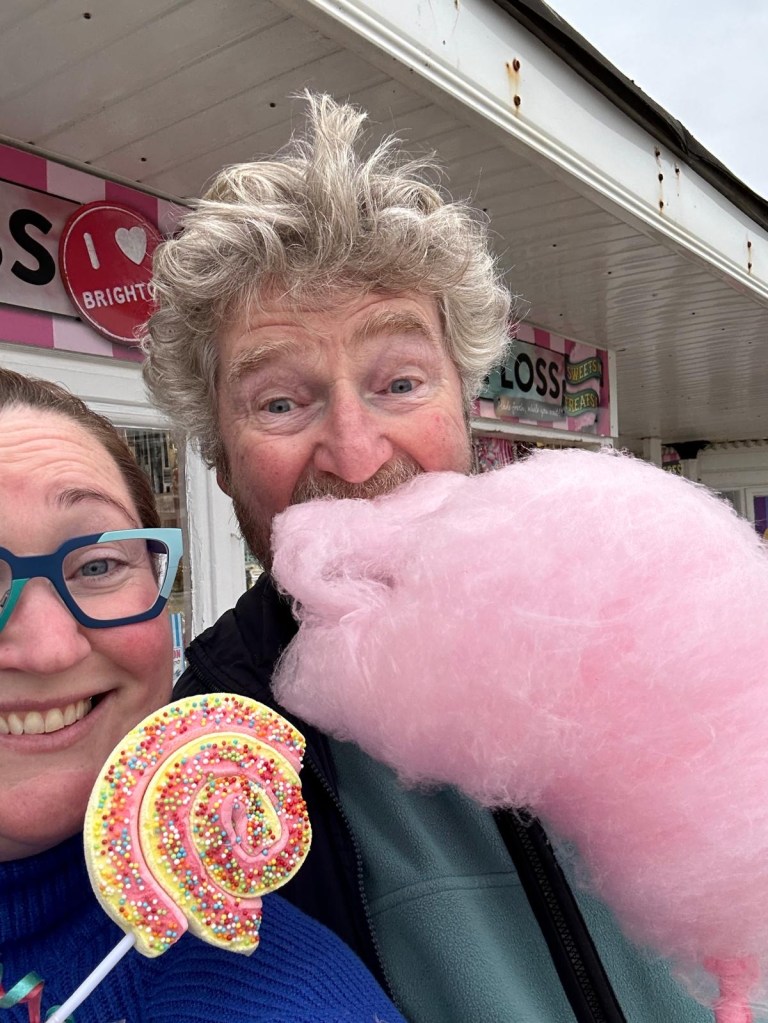
“Actually lovely and rather drawn out. The week after we went to Chichester for lunch with my brother and then had Jade and the boys down. They just LOVE Brighton; Lego shop, VR business, lunch down on the pebbles at Captain’s, then an hour on the pier. For some strange reason they had never been on it, so the excitement levels were sky high. And Candyfloss is a favourite – on a stick of course.”

“I bet they went for a swim before going home?”

“They did indeed …… and had a slice of cake. Actually it was a very drawn out birthday as my mother-in-law made me a cake when we were in Estoril last week!”

“And have they moved yet? I remember your daughter was buying a derelict house that her maternal grandmother had lived in. How’s that going?”

“Water under the bridge! A very stressful two months but they completed a week ago and have moved into a rented house until Christmas. They have replumbed and rewired, fitted a new bathroom and now have six weeks to fit the kitchen and windows. Certainly doable!”

“Thank you for the update. Good luck to them. You know Paul Simons, who writes a column in The Times about weather?”

“Yes. He digs up really interesting information. What’s piqued your interest this week?”

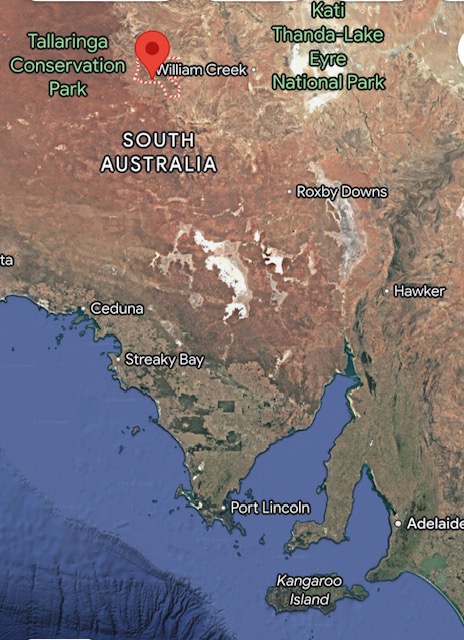
“A place in Australia called Coober Pedy. Australia is expected to face one of its hottest summers on record and, even though it’s spring in the southern hemisphere, a couple of weeks ago South Australia had its highest temperature for 29 years when the outback town of Coober Pedy recorded 43.7C.”

Red marks Coober Pedy

“Never heard of Coober Pedy. Tell me more?” (Note 3)

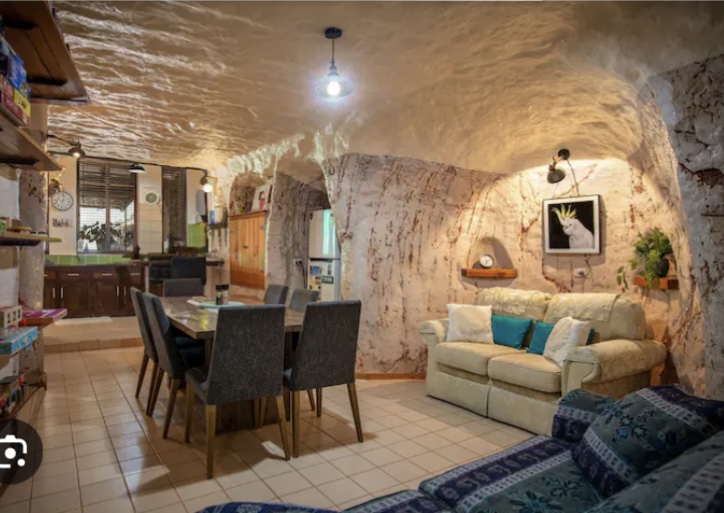
“Well, Coober Pedy is a remote mining town in the South Australian desert and has the largest opal mine in the world. When miners arrived in 1915 they soon found life was far more bearable underground, inside disused mine shafts, than above ground in the heat. So they began digging out their own subterranean homes and today it’s a grand subterranean town with restaurants, bars, art galleries, a bookshop, churches and even a four-star luxury hotel, all built to escape the desert heat. Temperatures below ground stay at a surprisingly pleasant 23C-25C throughout the year without any need for air conditioning. How about that!”

An underground Air BnB in Coober Pedy

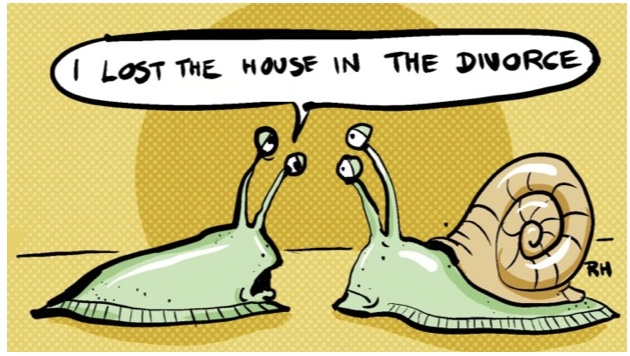
“Never been to South Australia; maybe I should put it on my list. Incidentally you read my postcard entitled ‘The Snail aka Brian’ (PC 406 Sep 2024)? Well, there was a lovely little cartoon on Facebook the other day which certainly made me smile.

And now we need to get going as I see Duncan wants to close. Love to Lisa and see you soon.”

“Great cartoon! Love to Celina. Good to see you. Take care.”

Richard 15th November 2024

Hove

www.postcardscribbles.co.uk

Note 1 After her late ‘Gap Year’, when Susie spent some time in New Zealand and Australia, she started a course on Logistics, with the intention of getting involved in the wholesale side of commerce.  

Note 2 Mount Everest, for comparison, is 8849m above sea level.

Note 3 Unbelievably Kay, our masseuse, had a one-year dance contract Australian tour that included a performance in Coober Pedy in 1988. ‘Very Red-neck!’