PC 128 Travelling

Our luggage was different this time. Normally we’ve established how many suitcases we can take with our airline allowance and packed accordingly, with a weather eye on the bathroom scales – those extra pots of Oxford Vintage Marmalade that we believe are coveted or that special Muesli that someone the other end identified as their favourite in the whole wide world and could you bring a bag or two (another 500 or 1000g eating into your weight allowance!!). And eventually it’s done and we leave for the airport, our minds running a mental check-list to ensure that it’s only at the top of the road that we shout stop and not think f**k when you get to the departure gate at the airport!!

One of my pet hates is the electrical socket difference. How did the world develop different plugs and sockets? Bit like PAL and VHS but some of you will be too young to remember those video formats? Surely this is something the UN should insist on, a change to one standard and it would have to be the UK system because that’s the best!! How many travel adaptors do I own? Too many – and often not the right one! (See note)

Cables and plugs

This time we were packing for an extended time away in Portugal and not Brazil, where some of the European descendants still hanker after certain English favourites. In Europe these are probably now available in the Saloio supermarket in Estoril, an upmarket delicatessen that serves a sizeable British ex-pat community. …. but going by sea ferry and car we were able to take as much as we wanted – weird! For example: “Should we take a picnic bag?” “Why not, it doesn’t take up much room.” “A kitchen sink?” “Nah!”

Do you have a box or a tin or a bag with all your loose foreign change, or are you good and drop it into the charity envelope proffered by the stewardess on the aircraft prior to landing or into that cardboard box close to arrivals? When I worked for Short Brothers in the second half of the 1980s my role was to go and meet potential customers; I was a salesman but I think I was called Sales Executive or Manager or some such as the word ‘salesman’ in the UK carries certain connotations, connections with second hand cars and the name Arthur Daley!! In those 5 years I covered just under 300,000 miles with Singapore Airlines alone and visited a large number of countries. Each time I came back with some loose change and generally put it into old Schimmelpenninck cigarillo tins I had for some reason kept (in case ?). Being quite organised I labelled each tin, according to the contents – Deutsche marks, Danish Krone, French Francs, Indian Rupees, Singaporean dollars, Malaysian Ringget, Australian Dollars etc. Now I only have some Euros or Brazilian Reals in coinage and don’t really need those tins.

Some of you will be aware that Celina and I took the ferry to Santander in northern Spain and then drove to Estoril in Portugal. Apart from the Dartford crossing of The Thames to the east of London where you have to pay a toll, no longer through a machine but only ‘online’, it’s rare for me to travel on a toll road. Here on the Iberian Peninsula motorways charging for their use are common.

toll-road-portugal

The locals will have one of those cards that are automatically read by sensors on an overhead gantry at the Toll Gate, and are charged monthly. Tourists have to pay at a personnel-manned or machined-manned gate. We thought we had got the hang of it, then found ourselves with a ticket that needed to be paid when we got off the motorway. An hour later, in the outside lane of three, the exit booths were upon us before we realised it and we drove through an open gate. Aagghhhh!!

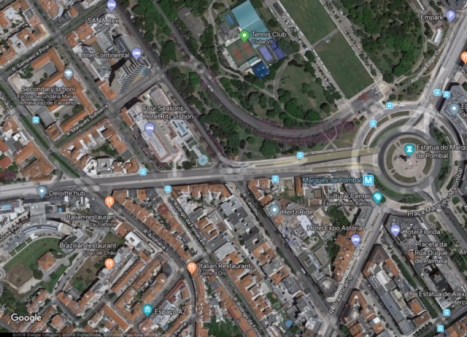
So, when we got into the hotel in Porto, we asked the reception staff how we could pay. “On the right of the Praça do Marquês de Pombal there’s a Post Office counter inside the CTT bank.” The man we found there laughed and almost accused us of trying to avoid paying. Then he told us he couldn’t take the payment but if we went down the street, turned left etc etc “You are in a car, no?” “No!” “OK, rather a long walk.” But this wasn’t the half of it, as they say. The attendant in the garage to which we had been directed said he couldn’t help but if we went …… five sets of traffic lights …… turn left …… can’t miss it. “You’re in a car, no?” “No!” “OK, rather a long walk …..” Eventually we did find the offices of the company Via Verde who operate the toll roads and paid what we should have paid three hours before. The dubious bonus was we saw parts of Porto that tourists rarely see ……. and I understand why!

167 A traditional port cask boat

Porto, on the Douro River, is the commercial capital and second largest Portuguese city: the inhabitants think it’s the best. It has of course given its name to the fortified wine beloved of after-dinner drinkers and the warehouses of the great trading families line the river – Taylors, Sandeman, Graham, Vasconcelos to name but a few. I have drunk enough port in my life to know it’s glorious, in the right place and at the right time. It was an essential part of the formal dining I enjoyed, and endured, in my military life. After the debris of the last course had been cleared away, the port decanters came out and were placed at each end of the dining table. As far as I remember, the ‘form’ was for the person at the end to offer it to the person on their right …… and then pass it clockwise. Once all the glasses were full, the appointed president asked the Vice-President to propose a toast to The Queen who, in the case of the Royal Regiment of Artillery, was also our Captain General. We got to our feet, toasted Her Majesty, and then got on with the more informal entertainment. Maybe some of that port had been in casks on one of these small boats on the Douro River, decades ago.

Richard 14th July 2018

Note: The eagled-eyed among you will notice a UK plugged extension cable. This trip I decided to take one and then replace its UK end plug with a Portuguese one – that’s on the assumption that I can find a plug as most electrical appliances these days have a molded non-replaceable one.


PC 127 I went looking for a family seat

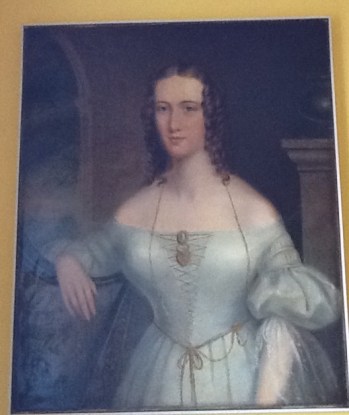
I went looking for a family seat ….. and added a few more threads to my knowledge of the family’s tapestry. In our hall there is an oil painting of a rather gorgeous lady and only recently I found out that she was a great great grandmother, Sarah Fosbery. I know from the marriage certificate of one of her nine daughters that she lived in Adare, County Limerick, in Ireland. A few of you may stop reading now, the blinds coming down with the words ‘great great gra…’, having a phobia for uncovering our unique ancestry; personally I think it’s fascinating and important and helps me feel more grounded in this world.

Sarah Fosbery 2

Sarah Eleanor Fosbery 1822-1861

Andrew Black was my contact and I hoped through him to find the family seat, the house near the town of Adare. He was a rather amusing chap, typically Irish, self-educated and self-made; he called a spade a spade, or a shovel, depending on his mood. He continuously expounded his dislikes for food, especially those dishes from other countries, a dislike of sport in any form and a fervent dislike for any other race than the Irish or English – well the white ones at least. Each position was justified with a passion; I sensed that within a few months we could have had some form of discussion, but he just ‘switched to send’ and talked …. and talked ….. as those from his country have a reputation to so do. He assured me he could ‘show me Curraghbridge House’ so we booked a couple of nights in the Absolute Hotel in Limerick (Note 1).

Limerick 5

I couldn’t come to the City of Limerick without understanding something of its history, as that was crucial to my own. The city sits at the upper limit of the navigational part of the river Shannon and has played a hugely important part in the history of Ireland. The castle dates from 1200; rebellions by the largely Catholic population led to it being besieged a number of times. The last one was in 1690 when the defeated Catholic armies of King James retreated to Limerick after the Battle of the Boyne and were besieged by the armies of the Protestant King William lll. The Treaty of Limerick in 1691 created a peace that lasts until today, although I sense that those with long memories believe this a black moment in Irish history. This treaty allowed Patrick Sarsfield, 1st Earl of Lucan, to sail with his Irish Jacobite Army of some 19,000 to France, in what became known as the Flight of the Wild Geese (Note 2). With the Protestants victorious, land was distributed to a number of loyal English families who emigrated to Ireland. Burke’s ‘The Landed Gentry of Ireland’ (1910)  records that a Francis Fosbery was ‘said to have emigrated to Ireland 1690’ and settled in Clorane, on land south of the Shannon river, to the west of the town of Adare (pronounced Adooore if you have the Irish brogue!).

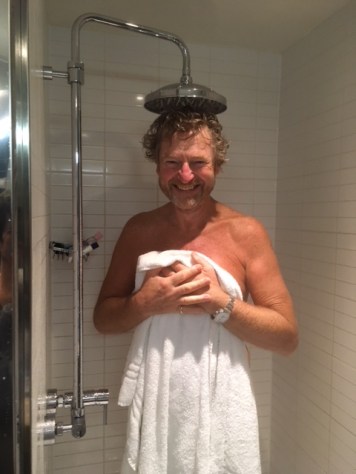
Limerick today is a place of “wonderful pubs, friendly people, scenic riverside views and an enormous castle”, but mention it to any Irishman, particularly those from Dublin, and they frequently mention the city’s nickname of ‘Stab City’. For sure there are areas of deprivation just like in many modern towns and cities, but we found the place safe and interesting, although I did find the height of the shower head in the Absolute Hotel had been fixed for Leprechauns, but that is a minor criticism!

Limerick 30

During our countryside search for Curraghbridge House we stopped at various little bungalows, built on tiny plots of land a direct result of land distribution, to inquire about the house owner and ask if someone had his contact number; no one did!

Limerick 32

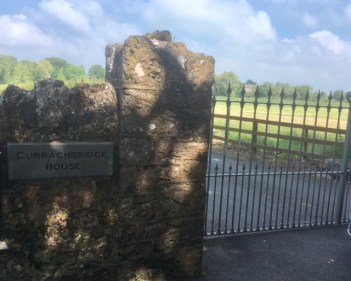
Curraghbridge House, behind the locked gate, in the distance

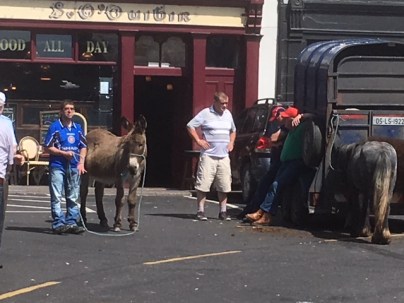
I was by now growing frustrated that Andrew hadn’t made contact before our arrival, but the sun was out and this was Ireland, where there is little sense of hurry! At one such stop I did a double take, for the oldish chap was wearing what my somewhat distant father would have worn when gardening – a pair of dun coloured corduroy trousers sitting high on the waist with a piece of bailer twine to keep them up, and turn-ups A rather well-worn shirt of the same sort of grubby colour and muddy shoes completed the look, that of the care-worn Irish male. We saw a similar look the following day, passing through Kilrush. It was market day and, in addition to the food stalls laid out up and down the High Street, a group of men were hanging around outside the S. O’Ouibir Pub with a collection of dubious looking horses and ponies.

Limerick 12 Kilrush 2

We had driven along the north banks of the Shannon estuary and eventually had lunch at Kilkee on the Atlantic Ocean. We were blessed with gorgeous weather, completely contrary to the expected rain, and eventually paddled in the sea at Spanish Point.

Limerick 2

We never got onto the land or into the house of Curraghbridge but knowing it’s there, this family seat, and its importance in my history, made this trip very worthwhile. (Note 3)

Richard 29th June 2018

Note 1         The city rather downplays its obvious connection to the word limerick as a form of nonsense verse, made particularly popular by Edward Lear, which are rather rare today. The reason for the connection is lost in time!! It’s ‘ a jingle, now usually epigrammatic (short poem ending in a witty or ingenious turn of thought), and frequently indecent, consisting of five lines.’ Here’s an example from Anita V: “An infatuated man from Dover, was left by his imaginary lover. He pulled at his hair, in sheer despair, forgetting his wig was his cover.” And of course we know them as nursery rhymes. For example: “Hickory, dickory, dock, The mouse ran up the clock. The clock struck one, And down he run, Hickory, dickory, dock.”

Note 2         These troops continued to serve King James as he planned and then aborted an invasion of England. Lord Lucan was himself killed in the Battle of Landen in 1693; he was aged 33.

Note 3         Sarah had nine daughters and died shortly after the arrival of the last, aged just 39. Her husband Francis married again and, eventually, produced an heir. Unable to inherit anything from the family estate, well, apart from their mother’s portrait, all the girls emigrated to New Zealand apart from one who went to the USA.

Note 4         Limerick hit the headlines again in 1996 when Frank McCourt published his story ‘Angela’s Ashes’ about growing up in the poverty and deprivation that was Limerick in the 1930s. It’s been suggested that 60% of his account was fabricated and embellished but I know how difficult I find it to remember last year let alone sixty years ago so I would sympathise if it was the case!


PC 126 Brexit* and …… Racism

My personal view ……. picking and choosing the bits I understand ……. from an ever-changing scenario!!

After a number of false starts (note 1) the people of Britain joined the European Union in 1973; a 1975 referendum confirmed the nation’s wish to remain a member by 67%. Wind the clock forward 41 years to 2016, when the then Prime Minster, David Cameron, honoured his manifesto commitment to hold a referendum on Britain’s continuing membership. It seemed they walked into a disaster of their own making; confident of the result, the Government’s campaign to stay in was negative, rather than positive, and I reflected at the time the language of the postal campaign was of a sixth form debating society, not worthy of an organisation with the collective intellectual weight of the nation!! So on 23rd June we voted on whether to stay in or leave.

‘Take back control of our institutions; immigration and our future!’ was the message that screamed from the billboards across the country. The bogeyman was the potential, at some stage in the distant future, for Europe to develop into some socialist utopia, a Federal States of Europe, which I guess is a real anathema to most Brits; wave that flag and everyone will vote ‘out’. But today there are other issues. For those of you who live outside of Europe in other parts of the world, you may not know that EU citizens have freedom to work and live wherever they want to within its borders. For instance the Polish population in Britain, historically around 200,000 since the Second World War, has grown by just under a million since Poland joined the EU as its workers flooded in, armed with a great work ethic. Look for a plumber or builder, chances are they are Polish. More recently the Romanians, who joined the EU in 2007 but who had unrestricted access in 2014, have become the second-biggest non-British nationality living and working here. A section of society complains that these people ‘take our jobs’ – so voted ‘out’.

For those of us who believe it was better to stay in, ‘better the devil you know that the devil you don’t’, and for all its many faults (see note 2) believe it has been good for Britain, the result was like awakening in a nightmare – except this was real. I simply could not believe it – 52% voted to leave, although I was pleased Brighton & Hove was in the Remain camp. Sadly 69% of people over 65 voted to leave and whilst I fit into that category it’s only by age, not by either head or heart. Hoist with his own petard, Cameron resigned, ushering in the uncertain rule of Theresa May who had the unenviable task of implementing a policy she didn’t vote for. ‘Brexit is Brexit’. A headline oft repeated but never fully explained, because one senses that no one knows!!

‘Bring back control of our borders’. There was some very odd voting during the referendum. In Sunderland, in the North East of the country, they voted to leave despite the whole local economy being rescued from its past ship building days by Japanese car manufacturers, giving them an entry into other European countries tariff-free. Made in post-Brexit Britain cars will probably be subject to an import tax if sold into the EU. So it’s possible that manufacturing plants will move to mainland Europe. Cornwall, which as a deprived region was eligible for grants to improve its local economy, has been allocated £2.5bn between 2000 and 2020, yet voted to leave!! Talk about shooting yourself in the foot!

There is, in my view, another more odious aspect to those who voted ‘no’. They imagined that, in addition to the repatriation of millions of European citizens who live and work here, other ‘migrants’ would be forced out too. The other day someone said to me: ‘you know, lots of the Muslims will have to go too.’ I was too shocked to respond properly given the individual was educated and worldly. Britain has been subjected to immigration for ever. As a member of the Commonwealth we have accepted thousands of immigrants. For instance, when India and Pakistan were established in 1947, Anglo-Indians were expelled and settled here, just as Asian Indians did when expelled from Uganda by Idi Amin; the Commonwealth mother country opened its doors.

Recent newspaper reports have highlighted a common problem with immigrants. Despite living here for decades, thousands of immigrants don’t speak English, content to settle within their own established communities. Gradually that area becomes more like the country where the people came from, where they were born. ‘Good grief! They even allow Mosques to be built!’ But when we British expanded our empire, we built churches …… and if the ‘natives’ didn’t speak English we simply spoke louder. Ah! The circle of hypocrisy! Whilst every reasonable individual would, I suspect, like everyone to assimilate and learn English, the fact is we have large sections of some of our cities inhabited by those of Indian and Pakistani descent, and also little enclaves of Portuguese, areas of north London predominately Jewish, our French friends in ‘Petty France’. You can’t force people to be tolerant, but we do have a very multicultural society in Britain and you can’t put that particular genie back in the bottle, Brexit or no Brexit.

The comment about Muslims could equally have been made about Hindus or other religions but the visibility of head-scarfed or burka-clad female Muslims singles them out as being different. It’s not helped that Islam has been hijacked by extremists and the very wrong sort of PR specialists. Could it be that Islam is probably where Christianity was 600 years ago? But this issue has nothing to do with Brexit!!

Richard 15th June 2018

 *Brexit is horrible shorthand for ‘Britain exiting the EU’.

Note 1.        Our entry was opposed by France’s President Charles de Gaulle, but he resigned in 1969, making our application more likely to be accepted.

Note 2.        I have two real hates about the EU. One is the historic fact it has two geographic locations where its Parliament sits, one in Brussels and one in Strasbourg. Every six months or so the MEPs and their staff decamp from Brussels to Strasbourg. The reason for this doubling of the cost was France’s insistence that the ‘European’ Parliament be in French soil. So a costly fudge was made. The second one, which people seem to accept, is that the audit of the EU’s finances is never completed, giving reign to wastage, potential corruption, misappropriate use of funds …… and no one is accountable!

PC 125 Day


“It’s been a hard day’s night, and I been (sic) working like a dog …..” sang The Beatles in 1964 and having scribbled PC 124 about ‘night’ it was the most obvious thing to pull together something about ‘day’ for my next blog.

I guess we have all been here? Eyes open, looking at the blackness of the night around one and then, gradually, becoming aware that there is an infinitesimal lightening, the darkness is lifting, objects have shape and meaning, the sky is discernible …….. dawn is breaking. That hour before sunrise is magical for those of us lucky enough to be up and out; sort of allows you to own the day that’s coming. ‘Day’ – the time during which the sun is above the horizon; the time it takes for the earth to revolve once on its axis; but the ‘Solar Day’ is defined as from noon to noon – go figure that!

Often playing around inside my skull is the song ‘Let the sunshine in!’ from the musical Hair. I never saw the show on stage but I am sure we can all identify with those lyrics. Many years ago I visited Osborne House, the summer palace of Queen Victoria and Prince Albert situated on the Isle of Wight on our south coast. The mirrored shutters in one of the state rooms were a very clever idea and I replicated them here in our apartment in Amber House. Wooden shutters are good insulators and it’s a joy to open them on a sunny morning and ‘let the sun shine in!’ The large windows face due East so facing the direction of sunrise ……. well, not quite true and actually only twice in the year, on the equatorial equinoxes. As summer arrives, the sun rises further and further to the north, until at the summer equinox it’s rising almost due North East! Conversely on the winter equinox it’s well down into the South East; almost 90º difference.

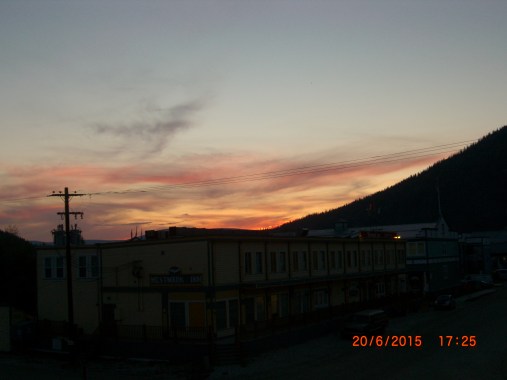
You may have read PC 45 about our trip in 2015 up into Alaska. On the longest day we were in Dawson City, preparing to drive further north to Eagle.

Sunset The Longest Day 2015

This was sunset (!) at 0125 on 20th June

Did you see that 2002 film Insomnia with Al Pacino playing a detective sent to a small Alaskan town to investigate a teenager murder? He has trouble sleeping, due to the almost endless daylight in the summer at that latitude. We had no such trouble but it is a weird thing, living in constant daylight. It seems the body needs that rhythm of awake and asleep/day and night.

And these celestial moments define so much for us. Hands up who hasn’t taken endless photographs of magnificent sunrises and fabulous sunsets?

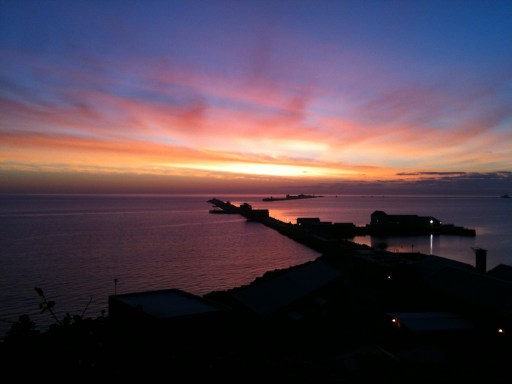
sunrise Portland

Sunrise over Portland Harbour, Dorset


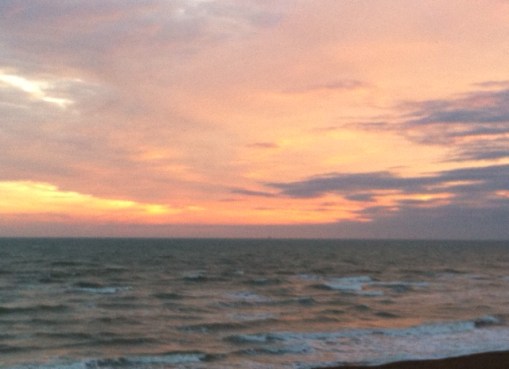
sunset 25

Sunset in Hove

The worship of the sun has been a constant feature of man’s existence, for we would not be here without its light and warmth. In the UK we have the 4m high Sarsen stones forming Stonehenge in Wiltshire where, on the summer solstice, the rising sun lines up with particular stones; Druids celebrate. Did you read of the alternative idea, that actually it was used at sunset on the winter solstice, as that signified the beginning of longer days, warmer days, days for sowing crops? You’ve heard the term ‘the sun shot’ probably; the altitude of the sun relative to the horizon can be used in navigation to determine your latitude, providing you know the time accurately.

When you know something to be true, it’s sort of difficult to imagine it otherwise! In PC 120 Virgins I mentioned that in biblical times it was not understood that both man and woman were needed for procreation, something we could not comprehend now. Similarly, it wasn’t until the C16th that it was proved, by a Polish mathematician called Copernicus, that the sun is the centre of our universe, and not the earth! And you can see why – we sense the sun rises and sets and don’t sense that the earth spins on its axis.

We get used to the way it is and hardly question it. The time it takes for the earth to complete its orbit of the sun is 365 days. Yes! Of course! Well, actually it orbits a common centre of gravity, pulled and pushed a little by other planets, but ‘around the sun’ works better huh? And this takes 365.256 or 365.243 days ……. so every four years working, with the Gregorian calendar, we add on an extra day, February 29th . Folk lore in Britain says that’s the day a woman can ask a man to marry them, as it was a man’s right on every other day of the year; post-Harvey Weinstein that may change?

The sun defines our days but in Britain it can be a rare occurrence, this ‘sunshine’. Here our days are often cloudy, misty or sometimes foggy, the latter so disruptive if travelling but magical if just contemplating life. Without sunlight life would not exist, right? Crops wouldn’t grow; they use photosynthesis to convert the light energy into chemical energy which fuels the organism’s activities. Oxygen is produced as a by-product and this maintains sufficient levels in our atmosphere for life. But recently the Planet Earth series has shown life in a multitude of forms living in the complete darkness at the bottom of the oceans, at pressures that would crush a human.

We have hard days, good days, bad days, birth days, fun days, sad days, ‘Go ahead, make my day’ times (Clint Eastwood in Sudden Impact (1983), reinforced with his .44 Magnum), POETS’ Days (‘Piss Off Early Tomorrow’s Saturday’ – often used at work on a Friday), and the Sunday Times series ‘A Life in The Day’ where well-known individuals describe a typical day. The day, this 24 hour period when we work, rest and play, can also be an analogy for life itself, the span of our lives. This John Ellerton hymn is often sung at funerals; this is the first verse (read the rest please!)

‘The day Thou gavest Lord is ended,

The darkness falls at Thy behest;

To Thee our morning hymns ascended,

Thy praise shall sanctify our rest.’


Enjoy your day!

Richard 3rd June 2018


PC 124 Night Time

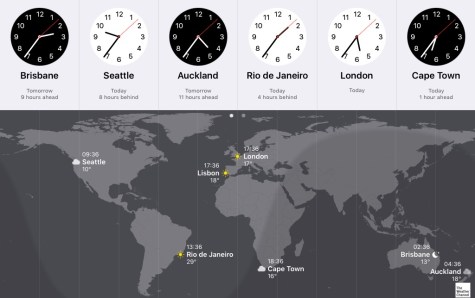
The difficulty about writing a thousand words about ‘night’ is that my butterfly mind keeps landing on some other aspect I hadn’t considered; bear with me? Night – ‘The dark period after twilight and before dawn, generally one hour after sunset and one hour before sunrise.’; so says my dictionary under the entry ‘night’. (Note 1)

For most of us it’s simpler to imagine the sun rising, climbing to its noon zenith before its gradual descent and disappearance below the horizon, than thinking of the sun stationary and earth revolving on its axis. Funny to know that we are spinning at 1000 miles per hour, at the equator, and we have no sense of this in any way! In addition we orbit the sun at an average speed of 67,000 mph …… and yet life here is extremely static. Weird what we get used to, or maybe we never knew anything different so ……

Night & day

Late afternoon in the UK; deep in the night-time in Australasia

The setting of the sun, often in glorious technicolour, ushers in the beginning of the ‘night-time’ period. This varies enormously, depending on the seasons and where you actually live on the planet. In the United Kingdom, London is just north of the 51st parallel, where on the summer solstice night-time is a mere 7.5 hours; on the winter solstice this more than doubles to 16 hours. Within the whole of the UK there is wide variation as at this latitude the earth gets flatter towards the North Pole. The islands fit into 50-60º north (cf with New Zealand which lies between 35 and 50 degrees south) and has almost 19 hours of daylight at its northern tip on the summer solstice. (See note 2)

Enough of the geography refresher! Night and Day; black and white! The word night is associated with darkness, evil, the colour black, sinister activity etc etc. Politically you may recall Germany’s Kristallnacht (The Night of Broken Glass), the Nazi pogrom against the Jews on 9/10 November 1938, and ‘The Night of the Long Knives’ when Himmler’s black-shirted SS attempted the complete liquidation of Hitler’s brownshirts (SA). The latter has become a common label here in the UK to describe a surprise and complete reorganisation of a cabinet. And then, in 1997, Anne Widecombe, an ex-minister, said that the British Home Secretary at the time, a Michael Howard, was reckoned to ‘have something of the night about him’, as in shadiness or underhandedness!

So light becomes synonymous with living … and goodness ….. and the darkness with evil, ghosts and ghouls. But there are always some of us who enjoy the night time. In Andrew Lloyd-Webber’s The Phantom of the Opera, the phantom sings of the ‘Music of the Night. He believes that night time sharpens and heightens each sensation, stirs and wakes imagination; that night will slowly and gently ‘unfurl its splendour’. Don McClean sang of the ‘starry starry night’ in his song about Vincent Van Gough and I hope we all wonder at the sights available to us if we look up on a cloudless night. You may recall PC 20 about The Pantanal in Brazil; with absolutely no light pollution seeing the stars arching across the heavens above and the fireflies lighting up the scrub at ground level was absolutely magical.

Many years ago I was visiting a work colleague near Barnard Castle in Northumberland. They lived in a little village in the middle of nowhere. It was night-time by the time I left; I remember walking outside to get the car which had been parked about 100 metres away. Wow! Couldn’t see a thing!

Night

Absolutely pitch black (a nod to the colour of tar maybe?); there were no street lights; mobile phones and their built-in torch hadn’t been invented so I was dependent on walking with one foot in front of the other, arms outstretched ….. in the general direction of the car!

During Officer Training quite a lot of emphasis was placed on infantry tactics. One particular exercise concerned night patrolling to gather information; we were very green and tried to do our best. I had some form of laryngitis and as luck would have it I was the radio operator. When using the set I could only respond in a husky cigarette-racked whisper, at low volume. I didn’t tell the directing staff of my incredibly sore throat and I suppose they assumed we were being very professional! But the real lesson we learned was that one’s eyes needs to adjust to darkness, to night time. “30 minutes to maximise your ability to see” was the advice. And without any moonlight that’s about right.

I prefer the daylight but sometimes needs must! At 0300 I might have been seen walking my Labrador Tom around the streets of Battersea if his success at foraging for fox carcases had caused an upset stomach and he needed to get out. Always fascinating to see who’s up at that time or how to avoid being stopped by a police patrol car who assume that anyone out was up to no good!

Of course we all started off in the womb, in the dark. But did you know that the developing foetus is able to detect light through the outer wall of the womb, even though the eyelids are still shut? And you remember as a child shining a torch on the underside of your hand and seeing the pink light visible through the translucent skin?

Then the word night has been used as an adjective, as in:

Night cap – an old-fashioned idea to keep the head warm in bed at night but survives as a way of going to sleep with some infusion of alcohol.

Night mare – originally a female monster or evil spirit, an incubus, which descended on someone sleeping. And then fun aspects, as in night club, make a night of it, being a night owl.

Being an offshore sailor I am well used to navigating at sea at night, when the various navigation aids of lighthouses and marker buoys enables you to establish your position accurately. Sometimes you needed a stopwatch to tell the difference between a flashing 1 (3) ….. and an quick (3) ….. and these days you would need to know that a red light sequence of flashing 1 (1) 2 (1) 2 (composite group occulting) is actually the Rampion wind farm off the coast here in Hove; 116 wind turbines lit up like Christmas trees!

Richard 20th May 2018

Note 1. In fact there is a legal distinction between ‘housebreaking’ in the daylight and ‘burglary’ during the hours of darkness!

Note 1. I often ‘sense’ that New Zealand is geographically quite isolated but actually its reference in the northern hemisphere would be about Nantes in Northern France, such is the asymmetry of the earth.

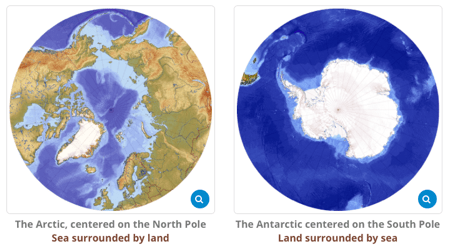
Poles

Maybe it’s also something to do with the fact that the Antarctic is so much larger than the Arctic and its cooling effect extends hundreds of miles.

PC 123 It Depends on Your Perspective

You can read the following and get the gist, an idea or the truth?

It’s a nightmare come true; thrown into the back of a police car and dumped in this cell.

“OK Gringo, entonces dices que eres inocente” (“OK Gringo! So you say you’re innocent”) the policeman sneers as he thrusts some paper towards me.Sweat drips down my back and the stubby pencil I’ve been given slips in my fingers. The word ‘anxious’ wouldn’t cut it; ‘shit scared’ would be better. So they want a statement; OK ….. now:

My name is Dean Jones. I’m 43, English and a writer. I came out to Cuba to make some progress on a crime novel I’m writing. You can check when I arrived, last week actually, and I booked a little cottage on the outskirts of Matanzas; I plan to stay for a month. I was getting stuck on a particular chapter and needed both some inspiration and a drink, so I walked into town and sat at an outside table in the Casa Blanca – you know where that is because that’s where you arrested me! The place was full of locals, chatting, eating, drinking or just staring into space, their thoughts a million miles away. You know your country has an international reputation for beautiful women, right? Well, that night the clientele included one or two very exotic ones; just couldn’t keep my eyes off!          Anyway, I’m half scribbling my story and half glancing around, and suddenly a rather tubby, grubby man’s coming across to my table. He’s extremely agitated and he screams at me:

“Has estado mirando a mi mujer.” (You’ve been looking at my woman)

He reaches across and grabs me by my shirt, lifting me onto my feet. He’s clearly had a few drinks and although I try to apologise, he’s not hearing anything. I sense I’m in for a beating, but I am a Black Belt in Judo and automatically switch into self-defence mode. His smelly breath, a mixture of garlic and alcohol, wafts over me; disgusting! I decide to jab him in the throat, a generally incapacitating move, but just as I am bringing back my arm to gain some momentum, this chap’s eyes go funny, he clutches his chest, crumples forward, hits the table and slides down to the dirty floor. I never made contact; I never touched him. I am no way responsible for his death.

Two hours later I’m released, with a caution to be more sensitive to the local cultures. The poor chap had had a heart attack and I am in the clear. I make my way back to my cottage intent on reworking my novel’s Chapter 4 but, before I can get started, there’s a knock on the door. I open it gingerly, not expecting anyone. It’s the beautiful woman from the Casa Blanca: “I come in, pleeeze?”

Or you can read the same events from a different perspective!!

Saturday’s are always the same. Pedro sleeps late on his rest day, scratches his raggedy backside a lot and heads to the Casa Branco as soon as he is sober enough to walk. His habits are disgusting. He spits, chews tobacco and wears the vilest T shirt – one he bought on holiday in Venezuela ten years ago – ironically stating the owner is ‘Number One!’ I try to wrest it off him to wash it but he resists.This evening he stands at the bar with his mates, hardly paying me any attention, quietly getting sozzled. Why do I stay I ask myself. I look around the packed place. The normal crowd is in and then, out on the terrace, I see a blonde- headed guy sitting by himself, alternating between drinking and tapping away at his laptop. Every now and again he looks around as if searching for the right phrase or maybe simply inspiration. Both must be in short supply. He catches my eye and dangerous though it might be, I give an imperceptible nod of my head as he’s quite cute, then look away. I don’t think I am the only one he’s fantasizing about.

Just before midnight Pedro suddenly understands that I might have an admirer; being a jealous type I know he won’t stand for it. Right enough, he gets off his stool and lurches over to the guy, who must be foreigner, a tourist maybe. I hope Pedro is not going to make a fool of himself, as he’s completely pissed and unsteady on his feet. He reaches across the table and grabs the guy by his shirt collar and lifts him towards him.

“Has estado mirando a mi mujer.” (You’ve been looking at my woman).”

The other man looks startled and surprised but then gathers his thoughts and I can tell he’s going to do something; the way his body moves, he is getting ready to hit Pedro. But I sense before he makes any contact, my crazy Pedro freezes, clutches his chest, shouts in agony, and crumples to the floor. I rush across to cradle my man, at the same time yelling to the barman to call an ambulance. Pedro is barely conscious, his breathing labored; somehow he manages to look rather serene …… and that’s a first! The police and medics arrive at about the same time. The former take the foreigner away and I jump into the ambulance with Pedro.

That dreadful DOA (Dead on Arrival) is pronounced …. I learn that the police have been informed that Pedro died of a heart attack ……. and I find out where the man is staying. An hour or so later I knock on his cottage door. “I come in pleeeze?” I ask, smiling.

I ditch the pidgin English: “Another dead Russian double agent – with his own nerve agent! Ha! High five!!”

Richard 5th May 2018


PC 122 Margo

Back in the day, I had a girlfriend who was the daughter of an army veterinary officer and her name was Margo. More recently I had a client who worked for one of the big insurance companies who was also called Margo …. but when my daughter announced she was going to name her new American Labrador puppy Margo too, with a ‘T’ or not I wasn’t sure, I wondered whether she should have been called Mango because she was of that colour.  I thought, incidentally, that Margo was the surrogate child …. until Jade became pregnant and Theo arrived ….. and Margo stayed.

I lost the argument about her name and Margo she stayed. That was 24 months ago and she has grown into a handsome, well behaved dog, so congratulations are due to my daughter for her patient training that has paid off in spades. Mind you Margo lives in a house with three children under 7 and two cats, so she had to be adaptable and not a pain in the arse!

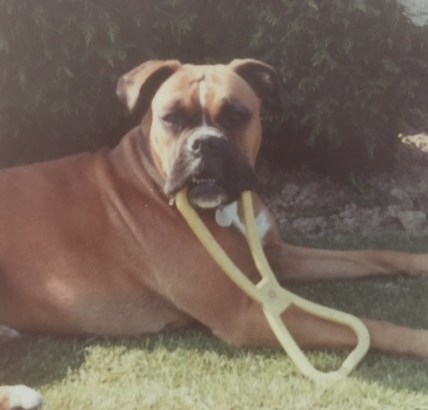
After Easter Margo stayed with us here in Hove for ten days and I was reminded of the two other dogs I’ve had. While I was at university I took the decision to have a dog; after all, a three year residential course represented unusual stability in an ubiquitous Army career and, with parental agreement to look after her if I was posted overseas, I got a Boxer.

Fleur

At the beginning of 1967 the second BBC television channel showed a drama called The Forsyte Saga on Saturday evenings, with a wonderful cast that included Susan Hampshire, Nyree Dawn Porter, Kenneth More and Margaret Tyzack. At the time there were not many television sets capable of receiving BBC2, which used the latest 625–line broadcasting system (cf 405 lines), so it was repeated on Sunday evenings eighteen months later when coverage had improved significantly. It was the last major British serial made in black & white and was compulsory viewing! Hard to believe, but evening Church services were rescheduled and pubs emptied as everyone sat before their TV sets …. and became hooked on the storylines. Susan Hampshire played Fleur …….. and this is a long-winded explanation as to why I called my boxer Fleur when she came into my life in 1969. Coincidentally my ex-sister-in-law, who lives just north of Seattle, is also called Fleur. The Boxer breed is well known for being highly strung and Fleur, a lightweight, slim dog, was one such. Sadly she died aged 7 but I would like to think she had a fun life; she certainly gave a lot of love.

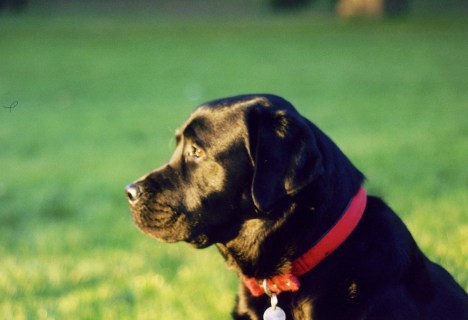
Wind the clock forward twenty five years and in 2002 I got Tom, my beautiful black Labrador, through Labrador Rescue. The decision to get another dog was prompted by the death of my nephew William at the age of 18 from cancer. That ‘Why put off something you want to do, especially as ‘life’ is full of uncertainties?’ question ……. and the answer was Tom. A gentle giant if ever there was one; what he lacked in brain power he made up for with love and affection in spades. His walks were either around the streets in Battersea or across Wandsworth Common, an area of 70 hectares/170 acres of grass, trees, lakes and wild life which lay at the top of the road some 200m away from home. Walking there daily kept me aware of nature’s death and decay, of new birth and new growth, the changing seasons and all that they bring. Tom of course loved the ‘death’ bit and was good at ferreting out a decaying fox’s carcass!! Yuk.

2004 6 (2)

He moved with us to Hove in 2012. The apartment leasehold building has a ‘no pet’ clause so we had to get permission from the landlord to have him, on the basis that he would not be around too much longer. If you are a pet owner you will recognise that awful moment when you realise that their life has become one of discomfort and it’s their time to go. Unless of course it’s a goldfish! That was six years ago and so when Margo came all these memories came flooding back.

IMG_5883

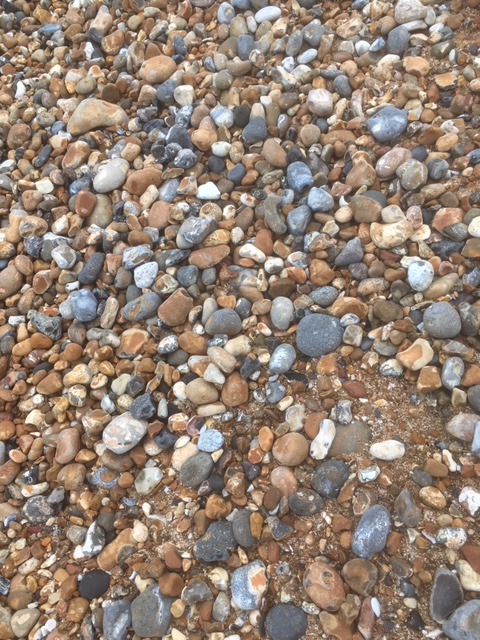
We are reminded of the routines involved with owning a pet with Margo and it’s amazing how quickly we get into the early morning walk, the lunchtime wee, the afternoon long walk and ball games and the evening last-thing-at-night wander around the streets. Our jacket pockets become full of plastic poo bags, antiseptic gel and treats. We buy a stuffed material duck that lasts about one day before its capok has been ripped out; we go to the charity shop for a cheaper replacement. Tom never got into ripping his toys; funny how dogs can be so different. Margo will not pee on the concrete pavements so the grass of Hove Lawns becomes her first stop. Then it’s onto the pebble beach to poo. Without going into too much description of similar colours etc, could you find a dog deposit on a beach such as this?

Beach Hove

One morning I looked, and looked ….. and then prayed that the rising tide would come soon!! And I have noticed there seems to have been an increase in ‘negative’ council by-law signs: “Dogs on leads!!” “No Cycling!” “No dogs on beach 1st May – 30 September” “No BBQs on this beach” “Respect the ‘shared space’” and all that inclusive politically correct wording. Sometimes I just want to see a sign which simply says “Enjoy Yourself”!!

Funny how walking a dog ensures strangers smile, pass the time of day, acknowledge you in a way that sans chien would never happen. And whilst Wandsworth was inland, here on the coast I’m very conscious of high and low water times and the consequent size of the beach. During Margo’s time with us we had the second blue moon in a month, with the tidal difference over 6 metres.

And then she went home to her owners, the two cats and three young boys, and all she left, apart from her memories, were tufts of ginger hair in odd places and that faint whiff of damp dog. Lovely having another living creature with one.


Richard 21st April 2018

PS I am actually not sure whether Margo is a Labrador, American or not! Every Labrador I know will devour their food faster than you can say Jeremy Corbyn; Tom would take about 47 seconds to get through 300g of dried food. Margo, on the other hand, would always leave some in her bowl so she could snack throughout the day. Strange huh!

PC 121 Bananas etc


The other weekend I drove west to see my brother in Dorset. It was a cold spring day and snow was forecast but the roads were still dry. I pulled into a motorway service station in search of petrol and personal sustenance. I didn’t need a coffee but was gaging for some sort of fruit; funny how we get like that about some food …… just gaging for it!! The motorway service stations in the UK have recently been accused of hiking the price of petrol by 15% but overall the quality of the food & drink offing has improved immeasurably since the 1980s when they were graded abdominal!

Three shops comprised the retail section, the first two a burger joint and a coffee shop with its attendant biscuits, buns, wraps, doughnuts and sugary snacks; the other was a small supermarket offering newspapers, CDs, ready meals to put into the microwave when you reached your destination, crisps of every size shape and flavour, snack bars and chocolate made by the well-known manufacturers  ….. but the only fruit was an extremely small container of melon balls. Three scoops with the plastic spoon and that would have been it, except you would have been considerably poorer!! No apples, no bananas, no ……..  before my current exercise in eating more healthily I would have bought a Twix bar, a Cadburry’s chocolate whole nut, a tube of  Smarties or Trebor Extra Strong Mints but this time I had only set my sights on some fruit!! I drove away disgruntled and empty handed. Got me thinking about the health geeks’ exhortations to eat more fruit, eat at least five portions of vegetables and fruit a day etc etc.

In my mother’s day our fruit was mainly home grown, except for bananas. In 1956 my parents bought a house in the Sussex village of Balcombe called ‘Orchards’(see PC 58 Going Home). The name suggests more than one and there wasn’t, but the singular name doesn’t sound right does it?

Honeycrisp

Some previous owner had planted dozens of apple trees in the garden with the net result that every autumn we picked hundreds of apples, wrapped them in newspaper and put them in cardboard boxes in the cellar, ready to be enjoyed throughout the winter. Invariably about February one would unwrap one and find the whole box had become mouldy. Or you took a bite and found a maggot in the half-eaten apple …… and wondered whether this was a half or the whole maggot ….. and where might the other half be!! We picked apples from the trees without realising just how many varieties of this fruit there are. In another part of the garden were fruit cages full of raspberries, red currents, black currents, blackberries and strawberries. Strong netting was needed to keep hungry birds out.

In addition to the outside grown fruit there was a grape vine in the conservatory attached to the house. With a little bit of careful pruning and mould management it produced small bunches of white grapes. I ate them as if it was my duty, being home grown and all, but actually my memory is of a rather bitter small grape …… with a pip! In UK apples with names like Bramley, Cox, Granny Smith and Golden Delicious were well known and then along came the New Zealand Braeburn which was developed in 1952. Other varieties continue to be developed. English pears, plums, greengages and gooseberries seem to thrive well in our island climate but all the citrus fruits we tend to leave to those Mediterranean countries that have a more suitable one.

Today we have got used to the availability of most fruits month in, month out, although you need a mortgage to buy half a kilo of cherries imported from Chile or Peru out of season. Sadly imported strawberries bought in January suffer in the long flight in low temperatures; the result is a tasteless berry you bought for a premium! Buying ‘in season’ reminds us of the yearly rhythms.

Blueberries


Blueberries were almost unknown in Britain thirty years ago but growing awareness (no pun intended) of their benefits has caused a 500% increase in their production in the UK, rivalling the raspberry in popularity. Experts say that blueberries contain antioxidants that help blood circulation, keep the heart healthy and skin elastic – a classic modern ‘superfood’! In the three years 2005 to 2008 total sales went from £40m to £95m.

And I haven’t mention bananas yet!! Britain became conscious of the banana at the beginning of the C20th due to a marketing campaign by Elders & Fyffes, importers of the fruit from the Caribbean. Sales soared ….. and further increased in 1960 when Mather & Crowther launched a campaign on behalf of the major importers to ‘unzip a banana’. The sexual suggestiveness of the fruit was reinforced when ‘unzip your banana’ became a popular slogan!!

Banana

Today the banana is the favourite UK snack with imports from the Caribbean and Latin American countries reaching 5 billion a year. Sadly due to the fickle nature of the buying public, 160 million of these are thrown away each year, either because they were rejected by the supermarkets as too ripe or by the public who let them over-ripen and become black at home. Apart from unzipping and eating it straight, you can BBQ them, fry them, put them into a Banana Sundae or, and this is great, wrap them, without the skin on, in clingfilm and put them in the freezer. If you fancy a banana ‘ice-lolly’, just take it out, leave it to defrost for a few minutes and suck! Yum.

I couldn’t write a postcard without some nod to the use of fruit in our language and I hope you smile at a few that come to mind:

‘Going Bananas’ is used to describe someone becoming irrational or crazy.

‘Life is just a bowl of cherries’.

‘Don’t upset the applecart.’

‘I couldn’t give a fig’ means not to be worried about something, but why the use of the word ‘fig’ is uncertain.

Otherwise it would be sour grapes! The one that I really like is ‘The Apple of One’s Eye’, referring to someone who is irreplaceable and precious. Curiously over a thousand years ago the centre of one’s eye was called the ‘apple’ in English as the Latin word ‘pupil’ had not been introduced. So the association with something precious and the word apple became common.

And my mother would have been amazed at the lychees, star fruit, Kiwi fruit, mangos and papaya one can now buy in most regular supermarkets.


Richard 8th April 2018

PS    Pineapples were grown in the UK by the Victorians but today they are virtually all imported. The name has specific connotations in Brazil where a pineapple, apart from their delicious home-grown ones, is a problem to be grappled with! Funny life inn’t?

PC 120 Virgin ……

‘Virgin’ – as a noun, a person who has never had sexual intercourse or a person who is naive, innocent or inexperienced in a particular context. Or, as an adjective, being related to a virgin or as in not yet used, exploited or processed.

Historically the Christian world started with a ‘virgin’ birth. You can imagine the scholars, mainly disciples of Jesus Christ, who got together to write about events in Bethlehem forty or so years before. Must have had good memories huh? Could I write about events that occurred in 1978 today with any degree of factual certainty? How much was ‘created’ I wonder? Unlike today, little was known of the reproductive process at the time; no one knew that male semen and female ovum were both needed to form a foetus. It was widely thought that Mary’s bodily fluids would provide all the matter needed for Jesus’ body, including his male sex. The idea of a ‘virgin birth’ was initially only mentioned by two of the gospel writers, Mark and Luke. There were plenty of precedents for the idea of a virgin birth, as it was common in their mythology that deities would impregnate mortal women. It occurs to me today that here was a wonderful opportunity for a promiscuous woman to explain a pregnancy to her husband in their sexless marriage – “Oh! Perseus visited me last month!” Anyway, despite lots of scepticism among scholars and other gospel writers, the view prevails and Mary Magdalene became known universally as the Virgin Mary.

But those who wrote the story of Christianity wanted it to be known that the son of God was a reproduction ‘in his own likeness’. So the word virgin became associated with purity, goodness, newness and so when marrying it was expected that the female would be a virgin. Note that there seemed to be no requirement for the man to be so, indeed it was expected he would gain sexual experience before getting married. This always seemed to me a little unfair but it was based, I suppose, on the belief that a virgin would bleed during her first sexual experience so you could check. No such check was possible on a man.

You might wonder why I am scribbling a PC on such a topic. Well, it seems that the whole world has developed falsehoods about virginity, based on a myth. The phrase “losing your virginity” as a female relies on the erroneous belief that the hymen breaks during the first penetrative sex ……. and that there will be blood.  Keeping your daughter a ‘virgin’ until she marries is regarded as a crucial cultural milestone in many many societies. Indeed there are some medical men, and I am refraining from using the word doctor here, who make a living reconstructing a hymen for those who need demonstrable proof.

The world seemed to go on as normal so I am not sure many people saw the fascinating article in The Times in January entitled; “The Virginity Myth and the G-Spot Shock.” If everyone reads it and accepts it is scientific fact, the culture of certain countries will have to be turned upside down. You missed it? Well, read on.

In their new book ‘The Wonder Down Under’ – and no, this is not a title of some advertisement for an Australian or New Zealand holiday – Norwegian medics Nina Brochmann and Ellen Stokken Dahl lay out the truth about female genitalia. Excuse me? A PC on female genitalia? Why not? It’s not as if they are a rarity; bit like male genitalia but then these appendages have been talked about, fascinated over, depicted in marble statues since a Greek stonemason first lifted a chisel towards the block of marble.

'David'_by_Michelangelo_Fir_JBU002

Female ones were covered up by a fig leaf (why fig?), hidden under some pubic hair, or even covered by a hand, to create a sort of mystic!

320px-Cnidus_Aphrodite_Altemps_Inv8619

The curiosity starts in childhood ……… and for some goes on well into their dotage! On one British TV channel an adult programme called ‘Naked Attraction’ asks contestants to choose someone for a ‘blind’ date by looking at their genitalia, in most cases of the opposite sex. I say ‘most cases’ because in 2018 this seems a little too traditional and other choices are available! I can tell you, we are all different!

You can be hear the two Norwegians giving a TED talk ‘The Virginity Fraud’ and having read the article, that’s what I did, hearing the message that these two young doctors want to deliver. Shock horror; The Hymen myth! “The hymen” according to Brochmann and Dahl, “is a seal formed in female embryos, possibly a piece of redundant evolutionary tissue from our aquatic ancestors. The seal dissolves before birth, leaving a residual ring.” They illustrate their TED talk by covering a Hula hoop with cling film, popping it to illustrate that the hymen is simply the ring, rather like a stretchy scrunchie.

How can this physical aspect of the female gender have escaped the microscope for so long? Or is it in the interests of the male dominated societies to perpetuate the lies? For sure, fewer than half of women surveyed report bleeding when they first have sex, and no one really knows where this blood comes from, but the authors have had letters from women in the Middle East particularly who have been threatened with violence as their hymen didn’t behave as the textbooks had predicted – ie bleed!

Fortunately most people today believe that the ‘virgin birth’ is as likely to be true as those who believe the earth to be only 10,000 years old or that the moon is made of blue cheese. And when I think of the word virgin today, I think of Richard Branson and his various companies, Virgin Media or Virgin Airways!!

Funny world, inn’t?

Richard 24th March 2018

PS Space precludes me from explaining in detail their take on the ‘G-Spot Myth’. Suffice to say that the clitoris is a huge organ, about 7-12cm long, under the skin and delightfully described by Helen Rumbelow of The Times (Ed: There’s an interesting surname for such an article!!) as ‘if I am allowed a poetic bit of symbolism, in the shape of a wishbone’. For a man, think ‘boner’ for an erection; and now think boner for women who can have the same erectile tissue, but hidden beneath the skin.

PPS Another myth demolished by these two doctors is that far from the idea that the male sperm is one of millions heading to fertilise the only egg, actually there are thousands of eggs from which to choose from. So it’s a miracle it happens at all!!

PC 119 Why can’t you just do it?

After two hugely satisfying careers I found myself, in 1991, a victim of the economic recession and was made ‘redundant’. Such a horrible word but you have to get your mind around the fact that it was the job that was no longer, that you were still ‘you’. Taking a personal stock check is a hugely cathartic process and so essential at certain times; this was one. Friends said: ‘Stay with what you know (the Defence Industry); now is not the time to change’. But my own stock-take had confirmed lots of transferable skills and I had always been attracted to some sort of PR role, maybe even advertising. So I networked and, although I wasn’t successful in finding something in those sectors, knew it was possible to do something different. A couple of months later I found myself poacher turned gamekeeper, as I got a job helping people who were unemployed!

When the recession finally ended, the stream of unemployed executives needing assistance dried up, but I had learned enough about the ‘unlocking your potential’ process to sell myself as an executive coach. Often people firstly think of the reasons why they can’t do something, whereas a change of thinking might unlock a new path, an alternative thought process which reinforces the reasons they can do something. It’s the challenge for those of us who work with others to assist in finding the key that unlocks that process.

Although I have hung up my toolbag, yesterday, exceptionally, I had a session with someone who needed help. I still get excited by starting with a new client, even after 22 years! From the many hundreds of clients, here’s one story that I remember vividly, as it demonstrates how simply talking to someone can be so beneficial. I have changed the names and situation a little.

A friend suggested that Sally came to see me as she was due to come to the end of her current contract in the Metropolitan Police and had admitted to being rather unsure of what she, unmarried and 29, wanted to do next. She sat down for our session, actually quite confident and self-assured. So I asked her what she wanted to talk about, did she know what she wanted to do next.

“Probably advertising!” she replied, although I detected the slightest suggestion of doubt in her voice.

“OK!” I said, “So why have you come to see me?”

“Well, you know, simply confirmation that this is the right thing to do.” I didn’t know Sally, and to make some judgements, I had to understand a little of her background.

So then we started the tale, from the beginning; how she had actually wanted to become an internet webpage designer, seemed to have a gift for it, but her father had other ideas, wanting to see his daughter ‘do something with your life’ – suggesting of course that webpage design wasn’t quite the right thing! Her elder brother was equally adamant. Funny, and sometimes tragic, how family pressure can seriously affect the decisions you make in your late teens, often only realising later in life with more maturity and experience that you should, perhaps, have stuck to your guns.

Sally asked her father whether he would loan her some money to pay for the web design course that would give her the skills she needed. He said: “Of course! But I have an inkling you could carve out a great career in the Metropolitan Police;” following his own illustrious one. “Would you please me and just see whether you could pass the selection tests? If you decide it’s not for you, then I’ll give you the cash you need.” Well, she did well, and he didn’t honour his side of the bargain; with no funding, she stayed, resentful and untrusting. Many years later we get to ‘today’ ……… and ‘advertising’.

As we talked about relationships and her experiences, she began to trust her own thoughts and ideas, secure in the unthreatening confidential coaching environment. Suddenly, and I can remember this moment as if it was yesterday, she leans forward and says: “Do you know what I really really want to do?” “It’s not in advertising then?” “No!” “Go on!” I say; and out it came, ideas unfettered by parental judgement and personal insecurities, a stream of excitement and enthusiasm. She outlined her ideas, her timescales and her business model. Eventually, breathless, she asked: “What do you think? Can I do it?”

“If you think this idea has merit, it’s worth pursuing. Only then will you know whether you can do it or not”

Great” she said, and got up and left!

I sat there in the aftermath, reinforced in my personal belief that if you really want to do something, the best thing is to do it. In my hand I held her metaphorical brake!!

Richard 11th March 2018

PS Sally emailed later to say that she had re-established contact with her brother after 6 years and had seen her father. The past was going to remain the past.