PC 178 Smarties

If you have every worked for a public sector organisation you may be sympathetic to some of the news stories that abound at the moment? If you have worked for a private sector company you may read some of them with profound disbelief.

After attending Staff College I was posted to be GSO2 (W) (SHORTAS & UGS) (Note 1) in the GW(E) Directorate of the MOD (PE) based in Fleetbank House, just of Fleet Street in London. You see; bored already! I will not try to explain the intricacies of the Ministry of Defence’s buying department (PE – short for ‘Procurement Executive’, an unfortunate choice that word: ‘procurement’!) , save to say they have been reformed, reorganised, criticised and left alone to fester, and still they remain an immoveable monster which has eaten many a capable senior civil or military servant.
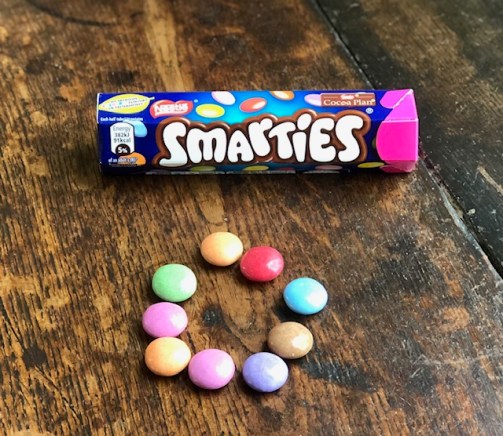
One of the features of the current ‘normal’ is that apparently we dream more than during the old ‘normal’. Last night I had a real nightmare and it was so vivid I scribbled it down. Does it make sense? I will let you be the judge of that.

“Down in the bowels of a NHS (Nutritional Happiness Supply) government building, rarely seeing the daylight, I sit with Jon and Marion, awaiting the other committee members. We are responsible for the supply of Smarties, a national favourite and one without which the country would simply grind to a halt. I’ve called a crisis meeting; people from all over the country have come, as their department is always invited, whether they have anything sensible to contribute or not. Three people could have made the decisions necessary but twelve will guarantee no decisions today.

PC 178 1

I call the meeting to order and put up an agenda as my first PowerPoint slide:

“The Menu for lunch.”

Good morning! First I can confirm lunch is fixed in Room 201 for 1230; coffee and biscuits on the table as normal. (Note 2) We have a crisis of supply …. so, George, why don’t you summarise where we are?”

George, the Midland Hub Warehouse Manager (NHS), looks sheepish, unused to the spotlight.

You may have read the minutes of a meeting thirteen years ago when it was decided to find a cheaper supplier and that that supplier is overseas.”

Many heads nod and recall that decision, taken after a great deal of heated debate, to place the contract in Germany. (Some people have been in their posts for years!)

Well,” continues George, “the world has fallen in love with Smarties and there is projected to be, in Quarter 2, a shortage. The price is expected to go through the roof and we will not have the budget to pay for them.”

“But there must be someone here in Britain who could produce them?” asks Alice who’s new and innocent to government by committee.

Well! There used to be quite a manufacturing base in the country but we have been seduced by cheapest is best, never mind the quality, crowing about how much money we have saved as we went to you-know-where, so now there’s no one who can produce Smarties here in the UK. I have photocopied off the General Smarties Specification (GSS) so please grab one and have a look.”

Antony interrupts: “Surely that place up in Yorkshire could be restarted?”

The meeting has a period of general discussion; I allow everyone to have their say.

“Can we work through lunch?” asks Alice.

Tut Tut” says Godfrey who’s travelled in from Reading and wants his lunch, the highlight of his month. He also seems to have a cough!

PC 178 2

We reconvene after lunch. Meanwhile the GSS has been emailed to a number of companies the committee thought might have been able to manufacture Smarties in the UK. Jon adds that he’s had two entrepreneurs he has never heard of ask for a copy. Antony says rather disdainfully they will have to do due diligence on these people: “We can’t let a government contract to anyone.”

“Surely that takes months?” asks Alice.

“Ah! Yes! But we could have a shortened ‘crisis’ version – I’ve been reliably informed it could be done in 5 weeks.”

“Would it help if the GSS had an option for alternatives in terms of size, or shape or packaging for instance?” asks Alice.

What? Like 50% smaller? Or less sugar? Or a softer coating? Or in a square box as opposed to a hexagonal tube? Or a bigger tube?” queries Jon

Brian, who’s been very quiet as he’s nearing retirement after a career spanning forty years and doesn’t want to do anything that might jeopardise his pension, complains. I glance at him across the windowless room; Brian is one of those ‘beige’ men, always dressed in shades of beige and often looking as though he needs a good bath, with his clothes heading for the washing machine. Brian always complains. “If the Smarties come in anything other than a tube then I will not be able to play the game of seeing how far the plastic end of the tube will travel.”

Everyone looks at him; they know that the cylindrical cardboard tube was discontinued in 2005.

“But Brian,” says Jon, “they have been available in all sorts of little boxes and bags and large tubes for some time!! Where have you been?”

I say I know a company who make something similar, a little chocolate button called M&Ms or maybe they’re called N&Ns ……. but they’re not Smarties.

“No, but they could make Smarties for us surely, for this is a national crisis.” Says Alice

“What? Ask a competitor to make a Smartie?” sneers Antony.

“Should we respond to the entrepreneurs quickly ….. simply to say give us your suggestion and we will get back to you in a few days? Bring them in to a GSS meeting with all interested parties.”

“How many tubes of Smarties do we need?” asks Marion, always focused on the important facts.

“Well the nation gets through 18 million tubes a day …… each tube currently sells for costs £0.60 (for 32 Smarties at 38 grams each) and we’ll need enough to last until September at least.”

Committee members reach for their calculators and crunch some numbers …… and there’s a clamour …… everyone starts shouting at once ……. even Brian seems to be more animated than normal …….. Godfrey coughs loudly.


PC 178 3

There’s another sound in my ear; the alarm is ringing. I wake up in a sweat. Thursday morning and still in ‘lockdown’ …… another sort of nightmare!


Richard 30th April 2020

Note 1. For those unfamiliar with service abbreviations GSO (2) W- (SHORTAS & UGS) stands for General Staff Officer (grade 2) Weapons (ie technical!) Short Range Target Acquisition Systems & Unattended Ground Sensors. As if you ever wanted to know!

Note 2 Important issues always addressed first!

Note 3. In our real world, the news reported that some Dutch trader had a warehouse full of personal protection equipment and was offering it at a big mark-up – masks normally £0.15 for £3 or aprons normally £0.02 for £0.30.

PC 177 Numbers (2) 484065


Was mathematics created or simply there to be discovered? Discuss …… or not! A natural number 1, 2, 3 and so forth is represented by a symbol called a numeral; for example ‘5’ is a numeral representing the number five. A zero, ‘0’, was included at some point. When I was commissioned my officer cadet number 24067711 (See PC 176) was discarded and I was given my officer number, 484065.

PC 177 1

Whenever I idly think someone’s late I remember, for whatever reason (?), “Come in No 35, you’re time is up!” spoken over a loudspeaker to someone who had hired a dinghy for 30 minutes or so and needed to be encouraged to come back to the jetty.

In June 1968 the sailor Robin Knox-Johnston left Falmouth to take part in the Sunday Times non-stop, single-handed, Golden Globe Race, sailing his 32ft yacht Suhaili on to victory. He reached his home port 51 years ago yesterday, on the 22nd April 1969. At some point during the race his on-board generator, essential for powering the limited electronics in those days, failed. Robin determined that the spark plug gap was not right but didn’t have any feeler gauges. (note 1)

PC 177 2

Here is a clear case where necessity really was the mother of invention. Long hours of thought produced a light bulb moment (cf Thomas Edison and the electric light bulb – 1000 ways of not working!). Robin took a book and measured its depth; let’s say it was half an inch (these were pre-metric UK days!). Then he counted the pages and found the book contained 100; so each single page was 5 thousandths of an inch ……. and he needed a gap of 0.025 thou. He counted out 5 pages and that thickness was the gap needed for the electricity to jump the gap, to spark, and so ignite the fuel vapour and bring the generator to life. So clever! (Note 2)

The current credit-card sized UK Driving Licence has been around for a few decades but when it was first introduced there was some sensitivity about whether it should show the bearer’s age. The Driving Licence number is in the following format: one’s name followed by a sequence of numbers and letters. It didn’t take long to realise it shows your date of birth, albeit in a convoluted way. For example …..CAMERON610096DWD58CP …. is for a David Cameron whose birthday is 9th October 1966 …. and the last sequence is random (I think!!)

PC 177 3

Some numbers have become simply part of our day-to-day language. We know that 7-11 means the shop is open from 7am to 11pm and that ‘24/7’means the enterprise is open all-day, every day. Sadly 9/11 had also become imbedded in our memory, just as in the UK 11 o’clock on the 11th day of the 11th month (November) 1918 marks the end of the First World War.

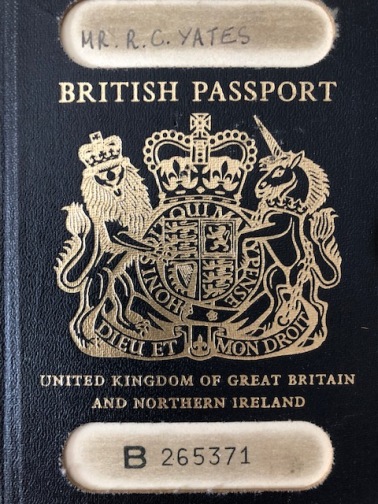
When you travel you travel with numbers!! Holding your passport B265371 and your Boarding Pass, with its e-ticket 349623492634 for flight BA 249 departing from Gate 56 at 1120, you board looking for your seat number!

PC 177 4


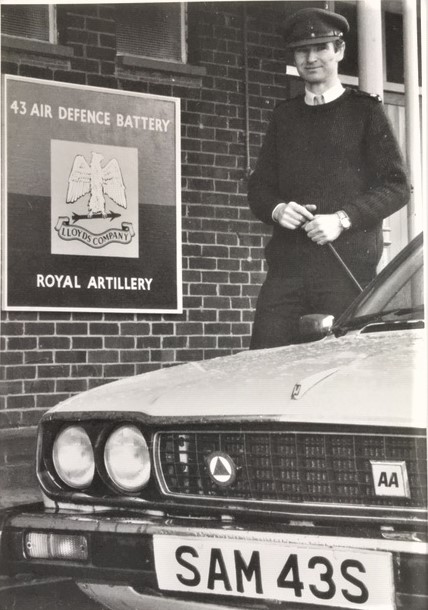
Numbers featured highly in my Royal Artillery days. Not only did we serve in regiments with differing numbers (for me in 27 Medium Regiment, in 39 Medium Regiment and in 32 Guided Weapons Regiment), the batteries within these regiments had numbers and a strict order of seniority dating back over two hundred years. It seems a long time ago now, having retired over 33 years ago in 1987, but I served for instance in 132 Medium Battery The Bengal Rocket Troop RA (raised in India in the days of the Raj) and commanded 43 Air Defence Battery (Lloyd’s Company) RA, established for the Battle of Waterloo in 1815 by a William Lloyd. (See note 3)

PC 177 5

Being reasonably numerate helped in the technical art of field artillery; in those pre-computer days taking down, with some urgency and accuracy, the 6 figure grid references of potential targets over a crackly radio link required a clear head. I am reminded, as I scribble this, of an error I made on a Colloquial German Course. I was play-acting handing over an observation post to another officer, a German, and was asked to tell him there was a large enemy tank behind the barn (one that you could see some distance away). Full of ill-found confidence I said: “Hinter der grossen Bauer befindet sich ein feindlicher Panzer.” In fact I had mistaken the word for barn (Scheune) with the word for farmer so we had the large tank hiding behind a fat farmer – makes me smile to remember it and the laughter of my fellow students!

In PC 174 I scribbled about the issue of the functionally illiterate, meaning that their grasp of our language is actually so poor that they can’t contribute to the society in which they live in any meaningful way. I also highlighted the statistic that some 47% of 16 year old school leavers (2006) didn’t achieve a basic level of functional mathematics. Since 2015 it has become compulsory for a teenager to be in either education or some form of training until their 18th birthday, but I am not sure this will necessarily alter this percentage much. I am ashamed when I watch someone reach for their calculator to do some basic mathematics, an addition or subtraction or even answer a ‘Can I have a 10% reduction?” question. Doing a daily Killer Sudoku puzzle may help my mental arithmetic – certainly keeps the brain from atrophying.

In English there’s an expression “Give him an inch and he’ll take a mile” meaning that if you are generous to someone be careful as they’ll demand even more. Somehow it doesn’t have the same ring about it if converted to the metric system: “Give him 2.54cms and he’ll take 1608 metres.”!!

You may remember PCs 43 & 44 about our trip to Alaska in 2015, following in the footsteps of my great grandfather George Nation? Outside the tiny settlement called Eagle, itself 66kms from the Arctic Circle, was a workshop/timber yard/scrap heap that had a couple of rusted pumps for fuel, one diesel and one petrol. It was run by Ron who chatted while he operated the filler. He had an interesting perspective on the world and I chose my words carefully, not wanting to irritate him at 0830 in the morning, or at any other time come to think of it! When I asked how much I owed for the 40 litres of petrol, he said US$25 and then “cheaper huh compared with where you’re from ……. you pay for your petrol by the gallon instead of by the litre?” Blink twice and you almost believe it!

Richard 23rd April 2020

Note 1 A feeler gauge is a tool used to measure gap widths, eg a clearance between two parts. A spark plug has a central electrode that protrudes through an insulator into the combustion chamber. A spark is initiated between this and the earth electrode. The size of the gap needs to be accurate in order for this to work!

Note 2 It’s possible that this tale was not about Robin Knox-Johnston but someone else sailing around the world. I can’t verify it as I no longer have the book in which I read it!!

Note 3 Completely coincidentally my Honda Accord, which eventually rusted to bits, had as its number plate SAM43S. Lloyd’s Company was a Surface-to-Air Missile (SAM) battery whose number was 43.


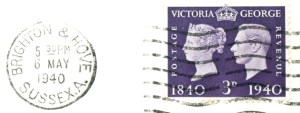
PC 176 Numbers (1) 24067711

This postcard was prompted by a conversation with an acquaintance, one who had changed his Christian name late in life and then, intriguingly, admitted he would be happy to be called No 16!! It brought back memories of a cult television series from 1967 called The Prisoner. Patrick McGoohan plays a secret service agent incarcerated in a village in Wales. The village administrator, No 2 and representing ‘collectivism’, assigns the individualistic McGoohan the title No 6. Any attempt to escape is prevented by an enormous white balloon called Rover. The image of McGoohan lying on the beach, having been chased by Rover in and out of the surf, has stayed embedded in my memory!

PC 176 1

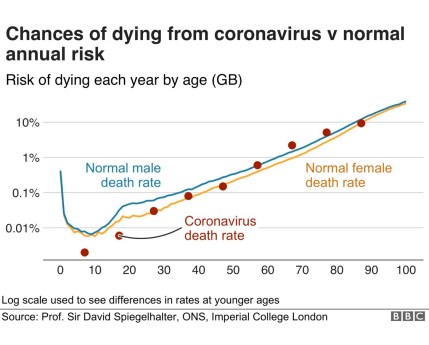
The current pandemic has produced a deluge of figures as bad as a Rio tropical rainstorm; statistics and projections, seeking to explain, seeking to reassure, seeking to give us all hope there will be light at the end of the tunnel and that the new world into which we emerge might be better. Notwithstanding the very serious nature of our situation, it’s worth remembering that in the UK about 500,000 people of all shapes and sizes, of all ages, from every background, die every year (about 9600 each week); of those, 170,000 die of cancer and 10% of that figure of winter influenza. This graph explains!PC 176 2

Currently almost 13,000 have died of Covid 19 in the UK, although many of these had underlying health problems; men and the elderly feature most (that’s me!!) Balancing those exiting this life are those entering our world, for example 731,213 babies were born in 2018 here in the UK. (Note 1)

There has been much comment here in the press about people not respecting the government’s guidance about daily exercising. The population of Brighton & Hove is about 290,000; normally there are an additional 180,000 students and tourists but they can be ignored because they are not here! If only 50% of us want to exercise once a day, that’s 145,000 spread, say, over 10 hours, spread over the city of 88 square kilometres that’s a density of 165 people per sqkm per hour. But then you realise the majority of that 88 sqkms is covered by housing and roads, that there will be more popular times to be out running, walking or cycling and most people will be drawn to the flat seaside promenade than the hills behind Tesco. You do the maths …… it’ll be busy! Just a thought for all those people scaremongering and moaning.

When there is not a great deal to smile about, it’s good to read of stories that make one laugh, such as the President of Belarus saying working on a tractor, having more Vodka than normal and a daily sauna will protect you from the virus, or the Russian doctor who claimed, as she walked into a Moscow church, that she felt safe as you couldn’t get the virus in a holy place. For a period  here in the UK there was panic buying of loo paper but some weeks on there is now plenty in the shops, not to mention stacked in Mrs Smug’s fourth bedroom. According to Caitlin Moran, a Times Journalist, Americans use TWICE as much loo paper as other Western Nations, about 50lb per person per year. We know that in the US food & beverage portion sizes are enormous but I hadn’t realised that the average American arse needed twice as much paper to clean it than anywhere else! Our chum in Michigan posted that she’d been able to find a 48 roll pack – now I wonder how long that will last her?

Our health is often reduced to a series of numbers and of course we start with a NHS Number; mine is 6124727978 if you’re interested? Height and weight obviously …….

PC 176 3

An extract from my PE School Report card circa 1964

…….  and now that gets configured into a measure called Body Mass Index (Weight in kilograms divided by height in metres (squared)). To be healthy your BMI should be 18.5 to 25; 25 to 30 is overweight and 30 to 40 Obese. Sixty-four per cent of adults in the UK have a BMI of over 25 giving us the unflattering accolade of being the most obese country in Western Europe. The fattest nation in Europe can’t afford to get any fatter – otherwise the NHS will be inundated with other health issues that being overweight brings – so use the lockdown to stay fit/get fitter.

An optimal blood pressure level is 120/80 mmHg whilst 139/89 mmHg would put you in the higher range. In 2013 I attended a NHS Well Man clinic – and was assessed as having an 83% chance of not having a heart attack. Great I thought …… and then six weeks later had a triple heart bypass ……. so much for statistics and chance …. but someone has to be in that 17%!! Did you ever wonder about the claim that “99.9% of bacteria will be destroyed by this product”? So it’s the 0.1% not killed by it that will get you!

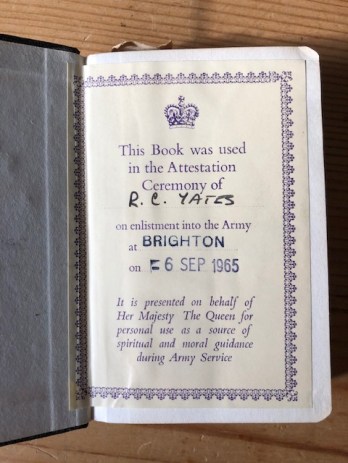
You may be beginning to wonder why I have added ‘24067711’ to the postcard title? Just as those who have fallen foul of the law are often portrayed with a number across their chest in the police mugshot, so I was given a number when I signed up for service in the British Army, at the Brighton Army Careers Office in Queens Street, in early September 1965 – ‘24067711’. Strange to finds myself living here 55 years later – well, in Hove, actually.

PC 176 4

The flyleaf of my little pocket-book sized New Testament

Later during officer training at the Royal Military Academy Sandhurst we had to endure, among other stuff, the Respirator Confidence test – wearing full NBC kit (trousers, jacket and respirator), standing in a gas chamber full of CS gas (Note 2), you had to remove your respirator and state your number (24067711), rank (Officer Cadet) and name (YATES) …… and then head for the door to spew up your breakfast in the fresh air outside. It’s worth remembering that the use of chemical or biological weapons by the Warsaw Pact in any conflict was considered likely and NATO had to be prepared.

Part 2 of this postcard on numbers will follow shortly.

Richard 16th April 2020

Note 1. Just to keep a perspective on these numbers, some 3 million people died from Typhus in World War 1 on Germany’s Eastern Front. My own grandfather died aged 49 in the 1936 TB epidemic in England; my mother was 16.

Note 2.The compound 2- chlorobenzalmalononitrile, a cyanocarbon, is the defining component of tear gas, commonly referred to as CS gas, used as a riot-control agent. NBC stands for Nuclear Biological Chemical.


PC 175 POD(s)

My Oxford Illustrated Dictionary, circa 1962 and given to me by my Godmother for my 16th birthday, is a mine of information laid out in a delightfully old-fashioned way, with some gorgeous little drawings. The thick blue-bound, rather battered reference book smells a little musty if I am honest and therefore not the Go-To tome if you are allergic to dust!

PC 175 1

From it, this is an example of “A. Dry Fruits and B. Succulent Fruits.” And No 2 is labelled ‘Legume (pea)’ and the figure 14 says Pod or Hull. If you then go to ‘Pod’ further down the alphabet you get the description: “Long seed-vessel, especially of leguminous plants (eg pea or bean); cocoon of silkworm; case of locust’s eggs; narrow-necked eel net”. Marvellous language, English, isn’t it? One word meaning many many things!

If you buy your Broad Beans frozen, providing of course that Iceland or your local supermarket has not been raided by those with two chest freezers in their double garage, you have missed the sexiest thing possible to do with raw vegetables. When they are in season, buy some broad beans in their pods (better still, go to a pick-your-own farm), break open the pod to expose not only the broad beans but also the inside of the pod itself, covered in light green, silken hairs. Run your fingers over these hairs – sexy huh?

PC 175 2

If you have the time it’s worth taking the outer skin off the broad bean to reveal the tender inner one. Do this by placing the beans in a small saucepan of boiling water for two minutes, drain and then dunk in a bowl of cold water. Pop the bean from their thick, leathery skin by squeezing gently – so-called double–podding. (You see, you probably didn’t know this is a verb?)

The dictionary also informs me that pod is the name for the socket of a brace and bit (of a drill) ……. and a small herd of seals or whales. I imagine everyone has watched at least one of David Attenborough’s nature programmes and somewhere will have seen either pods of dolphins, or killer Orcas, or poor little Sardines forming pods to present a more intimidating sight for feasting whales.

In our C21st we tend to ‘Google’ – so ‘pod’ gets Pay on Demand (Note 1), Print on Demand, Payable on Death and ‘POD’, an American-Christian nu (sic) metal band formed in San Diego in 1992. Here in the seaside city of Brighton & Hove we have the British Airways i360, locally irreverently called The Doughnut, which offers passengers an opportunity to see the city and the sea from 138m high up in its 18m diameter observation pod.

PC 175 3

In the last century if you went camping you took a canvas tent and pitched it in some farmer’s field. Nowadays you can hire a camping pod, complete with running water and electricity. Glamping anyone?

PC 175 4

Any excess luggage needed for your stay can be packed into your car’s roof-rack storage pod.

If you are a foodie you will recognise the term Chocolate pods. Whilst the natural ones are the seed pods on the cocoa shrub, nowadays you can buy pods from Galaxy, from Nespresso, from Hotel Chocolat etc to create your perfect Chocolate drink.

PC 175 5

And if you are involved with the Armed Forces there are fuel pods of varying capacity and weapon pods, slung underneath fighter aircraft or infra-red flare pods to be activated against SAMs or AAMs

PC 175 6

The current Coronavirus pandemic has created a whole new lexicon, words I hadn’t known existed or have been specifically invented – ‘social-distancing’, ‘lock down’ ‘self-isolating’ ‘herd immunity’ to name but a few. Who knew you could have a NHS Coronavirus ‘Priority Assessment Pod’?

PC 175 7

And the word pod has been attached to the word sky to describe a new transportation system to be developed in Dubai, where Skypods on a monorail will whiz commuters around the city by 2030. A British company, BeemCar, has just signed a contract for this new form of travel.pc 175 8

We have all heard of the iPod, I imagine – “a pocket-sized portable music-playing device produced by Apple” – which first hit the shops in October 2001 and currently on its 7th iteration. What you may not know is that ‘pod’, in this case, is thought to mean ‘portable open database’.

Then we come to Podcast – a joining together of iPod and broadcast – ‘An episodic series of digital audio files that a user can download to a personal device in order to listen (to?).’ So for those who normally spend a lot of time in a car or travelling by train, this is a way to listen to every imaginable type of broadcast, from songs, to comments, to news, to reviews.

I have signed up to a Podcast platform giving me space to ‘publish’ my audio PCs. I have recorded the first 30 or so and published them on the platform. To ensure a free posting, I am limited to the number of hours of published content. In a month or so when I have recorded more I will start deleting the earliest ones. I only have just over another 140 to record so that’s some 16 hours of talking into a microphone, so don’t hold your breath, although with the self-imposed (Government diktat?) isolation for three months it seems a good time to tackle it ……… after clearing out this cupboard and that drawer, pulling out the fridge, moving the bed and vacuuming underneath, turning the mattress, clearing out the wardrobe, pulling out the outline chapters for that book you started in the last century etc or trying again to learn some basic Brazilian Portuguese.

And the name of the Podcast platform? Podbean! (Note 2) Bringing me nicely full circle to pods and broad beans!

PC 175 9


Richard 2nd April 2020

Note 1: Payment on Delivery used to be called Cash on Delivery COD

Note 2: Simply download the Podbean App and search for The Postcardscribbles.

PC 174 Can’t Read well. Can’t Write well.

The Coronavirus pandemic is currently dominating our lives; we will get through it! The fundamentals of life remain and this PC is about one of these basics.

I find it truly sad that in 2020, in such a well-developed society as that of the United Kingdom, by any standards one of the richest countries in the world, there remain pockets of almost Dickensian poverty. In addition to a small percentage of our inhabitants whose income levels are extremely low (Note 1), there is another poverty that shouldn’t happen, be allowed to happen …… and that’s the lack of the ability to read and write well.

If you are poor, you naturally worry about your ability, first and foremost, to feed, clothe and provide shelter for your family; schooling takes a back seat. But here in the UK it’s been compulsory for over a hundred years; in 1880 your child had to attend school until his or her 10th birthday, then the Education Act of 1996 raised the age limit to 16. In 2015 it became compulsory for a teenager to be in either education or some form of training until their 18th birthday. And yet some 10-15% of these teenagers leave without an ability to read and write well. That last adverb is important! ‘Lacking the essential (reading) skills needed to participate effectively and productively in society’ is not the same as ‘being unable to read or write’; this percentage for functional illiteracy is similar to that of, for instance Sweden, Germany, France, the USA or Ireland.

The UK’s Department of Education reported in 2006 that 47% of school children left aged 16 ‘left without having achieved a basic level of functional mathematics and 42% without a basic level of functional English. Every year 100,000 pupils leave functionally illiterate!! (You have to believe the statistics!)

Some parents believe it’s the State’s job to school the next generation; that they don’t have to take any part, don’t have any responsibility in the education of their children, so abrogating their role as parents. Additionally, if they themselves have never understood the value and benefits of learning how to read and write well, it’s possible their children will be raised in a cultural and literacy vacuum, develop an inverted snobbery for the theatre and for opera, for instance. I can’t imagine it but I am sure there are homes where there are no books or magazines.

PC 174 1

The ancient wisdom and spellbinding poetry of Homer’s Iliad  and Virgil’s Aeneid have formed the backbone of Oxford University’s classic degrees – read in Latin and Greek – and I will put my hand up and admit to never having read them, these stories of myths and daring-do from centuries gone by, but I devoured novels as a schoolboy. My father gave me a 14th birthday present of membership of the Companion Book Club. Everyone month the chosen book would come through the post, together with a magazine encouraging me to spend hard-earned pocket money on other published works. One should remember, however, that there was little television and the internet-enabled visual and audio offerings unknown; time to read.

It’s through reading that you develop your vocabulary, your understanding of language, of its nuances and subtleties. And if you can’t read and write well, you’re not able to fill out forms confidently, read legal documents, carefully the label on a medicine bottle, understand instructions for instance on how to put together some IKEA flatpack furniture  –  you know, the one with an illustration of a woman with a smile and a screwdriver?

“I’m not well read, but when I do read, I read well.” Kurt Cobain

During my time in the British Army one of my senior NCOs couldn’t write well and it became apparent when he had, for instance, to complete his soldiers’ annual reports. He felt ashamed that, as a man aged 30 something, he couldn’t express himself. I got him some professional help although recognised he had been too ashamed to ask for help before!

In the film Renaissance Man, Danny De Vito plays a redundant advertising executive who is sent to teach English to a bunch of underachieving army recruits. They are portrayed as a class from hell and De Vito finds it impossible to engage with them, until he introduces them to Shakespeare’s Hamlet. They hadn’t heard of Shakespeare let alone Hamlet but gradually, by setting the story in a situation with which they could identify, they started to understand. Watching them, it was like Daffodil buds opening in the warm spring sunshine.

So how do we encourage parents to break the mold, to get them and their children to become proficient at reading? Their children might be very dextrous when it comes to using a mobile, to playing games, texting, using instagram but the cornucopia of the literary world remains unknown. Some schools have engaged with a local old persons’ care home and found a symbiotic relationship when it comes to reading; the older population encouraging the younger generation to read.

PC 174 3

Writing well? In the C21st, this may be debatable, the ability to write cursive script …… as opposed to tapping away at a keyboard ……. but however you ‘write’, George Orwell warns: “If people cannot write well, they cannot think well. And if they cannot think well, others will do their thinking for them

If you are in this category, of lacking confidence to read fluently, it’s unlikely you’ll have signed up to read my inane scribbles …… but I am planning to create a podcast and record past PCs so they will become available to listen to. But will you bother, if you don’t value the richness of our written words, of our histories, of our stories both fact and fiction?

In the UK we have a current prison population of about 85,000. And it’s estimated that 50% of those locked up for whatever misdemeanour are functionally illiterate; so they weren’t able to even read and understand the charge sheet? In an effort to reduce reoffending rates why not make it a condition of those expecting being granted the standard 50% reduction of their sentence that they must pass a basic English language examination?

I was slow to appreciate the writing of the late American author Philip Roth; then I watched the film ‘The Human Stain’ with Anthony Hopkins and Nicole Kidman, a story based on Roth’s book of the same name. (Note 2). I was hooked – and read this book and others. Roth once called the current US President “humanly impoverished, ignorant of government, of history, of science, of philosophy, of art, incapable of expressing or recognising subtlety or nuance, destitute of all decency, and wielding a vocabulary of 77 words that is better called Jerkish than English.”

Does it matter? Hell yes!

Richard 19th March 2020

PS “Writing is thinking. To write well is to think clearly. That’s why it’s so hard.” David McCullough

Note 1. Poverty in the UK means not being able to heat your home, pay your rent, or buy essentials for your children. The constant stress of your financial circumstances deprives you of the chance to play a full part in society.

Note 2. Coincidentally one of its chapters was titled “What Do You Do with the Kid Who can’t Read?”


PC 173 “Water, Water, Everywhere ……”

We recently spent three weeks in the sultry warmth of Celina’s home city, Rio de Janeiro, a visit memorable for two things. Firstly the torrential summer rain that fell during the majority of days we were there (Note 1) and, secondly, the state of the City’s tap water.

PC 173 1

Pedra da Gavea shrouded in rain-clouds

It had been the same last year. You may recall PC 145 about the tropical storm with extreme winds and torrential rain that caused havoc across Rio last February? The City’s engineers have yet to come up with a permanent solution to the landslips that closed the Niemeyer Road from Leblon to Säo Conrado and threatened the Vidigal favela, where houses cling precariously to the steep side of the Dois Irmaes Mountain. The road remains closed and the traffic forced into the only other thoroughfare, the tunnel under the mountain.

A large wall behind Celina’s family home, knocked over by the sheer force of the rainwater, is only now being rebuilt and the road into the condominium has yet to have proper drainage pipes, so is still susceptible to heavy rainfall.

PC 173 2

Huge granite edging stones lifted by the torrents of water

This year we were hoping for a drier time but I don’t think William Shakespeare would have written, in 2020: ‘The quality of mercy is not strain’d. It droppeth as the gentle rain from heaven upon the place beneath’ (Note 2)!! There is nothing gentle about tropical rain; it’s sometimes like water gushing from a shower head ….. but you’re not in control of the tap! While we were in Rio, Säo Paulo had an even bigger deluge and flooding occurred across the city. The local paper had diagrams showing how the incidents of heavier rainfall, in some cases twice historical levels, have increased this century.

Cleaning up Rio’s water and sewage system was supposed to be part of the 2016 Olympics legacy, but as so often happens in Brazil the allocated money disappeared, drained away one could say! Four years on and the tap water has a strange taste said to be caused by an organic compound called Geosmin. The city’s publicly-owned water company insists the water is safe to drink, but the city’s 6.7 million people beg to differ. For those who can afford it, buying bottled water is the preferred option; those too poor suffer – as always! Fortunately the tap water in Celina’s mother’s house in the Iposeria Condominium is drawn from an underground cistern filled with rainwater straight off the slopes of Pedra da Gavea and is safe! Personally I love ‘tap water’ but in the UK we seem to be wedded to buying bottled water!

PC 173 4

I am never sure why but some things you hear during the course of your existence stay with you ……. echoing down the decades ….. coming to the surface at odd moments. I never read Samuel Taylor Coleridge’s ‘The Rime of the Ancient Mariner’ but somehow the line ‘Water, water everywhere and not a drop to drink’ got ingrained in my memory. Scribbling about water ….. and it bubbled to the surface ……. and now it reminds me of that crossing of the Atlantic (PC 161) in the Services yacht Sabre. The fresh water tanks provided some 1000 litres – but for a crew of 12 for a three week trip this is only some 4 litres per person per day …. and this included that needed for cooking and teeth cleaning. A small exception was made if you wanted a splash of water in your sundown whisky! Surrounded by water and none of it drinkable!!

Here in Hove the council updated a pedestrian crossing with studded paving slabs to help the visual impaired and improved wheelchair access. Unfortunately the improvements weren’t well designed and when it rains the PedX (as Kiwis tend to call them!) is one big puddle.

PC 173 3

Interestingly the council blame staff shortages and having to spend the money by a certain date!! (Note 3) But remedial work is due this month – at more cost! In the course of an email exchange with the responsible department, the subject of our drainage system came up. The Victorian sewers and drains quickly reach capacity in these increasing periods of heavier rainfall. Acknowledging the out-of-this-world expense of replacing these across the country, maybe there is a need to have ‘monsoon’ type roadside culverts to cope with future downfalls?

In the UK last month Storm Dennis followed Storm Ciara and deposited 158mm (6.2 inches) in 48 hours, caused by a weather bomb – for those of you who appreciate the science, the barometric pressure dropped 50mbars in 24 hours. In a rather perverse way there is a tendency to claim your dry/wet/cold/hot spell has been worse than someone else’s …….. but this is what 158mm of rain would look like ……..

PC 173 5

……. it’s an enormous amount and here in the UK it fell on saturated ground …… the rivers overflowed and the land flooded.

PC 173 6

This the flooded village of Severn Stoke in Worcestershire (Note 4)

So was this February’s rainfall unusual for the UK? Well, here are the figures:

PC 173 7

And as Paul Simons, The Times’ weather expert says: “The behaviour of the Atlantic and our weather varies over the years and decades, and trying to tease out the natural fluctuations from any influence of man-made climate change is challenging. What is clear is that climate change is expected to lead to more rainfall in the UK, making flooding more likely.”

As we move into March properly I hope that February 2020 remains simply a soggy memory:

PC 173 9

Richard 5th March 2020 ( a very wet day in Hove!)

Note 1 It has continued to rain in Rio virtually every day since we left in mid February – God ignoring Barbra Streisand’s plea in her song “Don’t Rain on my (Carnival) Parade”!

Note 2 The Merchant of Venice Act IV Scene 1

Note 3 Very simplistic but …. HM Treasury money allocated to public bodies often needs to be spent within the Financial Year. If it’s not spent, the treasury believes it wasn’t needed enough and reduce the following year’s tranche. For instance, in the Armed Forces this often resulted in the unnecessary redecoration of Married Quarters – just to spend the money. There must be a better way of managing Public Finances?

Note 4 After the flood water has receded, houses need to be completely disinfected, as ‘flood water’ carries every imaginable bacteria …. and some! Poor people!

PC 172 Francisquinha*

She stares at me with her soulful eyes.

“What do you mean you’re stopping my pocket money? You’re saying I’ve overspent on your credit card at The Ivy and the tab at Mixologist is due? Well, what do you want me to do? Do the washing up?”

She turned her back on me and sulked.

My relationship with Francisquinha is complex. When she is asleep and calm, I really love her. When she is bouncing up and down at some perceived slight I wonder why I bother. And why do I bother?

The relationships we have with our fellow human beings develop over time, time when their depths rise and fall as regularly as the tide. Some give us great satisfaction and joy, others drive us to distraction. The relationship we have with our pets, our cats, dogs, canaries, tropical fish, snakes, and rabbits, particularly if you’re English, can often be better and deeper. But what about a relationship with a stuffed animal – not the one a friendly taxidermist could do for your recently-departed Chihuahua – but a real stuffed animal, made of material, kapok and in the old days buttons for eye (now replaced by cloth as too many babies took the buttons as sweets)? I guess we will all immediately think whether we had or even still have ‘something’ in which we invested emotions, characteristics and a quasi-life.

PC 172 1 Chilling Out

Francisquinha

Oh! So now you’re going to write about me? At last! Do you want me to suggest what you should say?”

“Actually I am going to write about more famous stuffed animals than you.”

Someone’s more famous than me? How come?”

I ignore her question. A couple of ‘bears’ come to mind. For me the first is Winnie-the Pooh; not that I had a physical example but loved AA Milne’s Christopher Robin’s bear that came down the stairs ….. ‘bump, bump, bump!’

PC 172 2

Milne’s genius was assisted enormously by the illustrations of EH Shepard and of course by Pooh’s friends, Piglet, Tigger, Kanga, Roo and Owl.  Pooh’s home-spun philosophy rings as true today as it did when the stories were written 94 years ago. More recently Benjamin Hoff made much of this little bear in his ‘Tao of Pooh’, using the characters to explain modern life:

“By the way, Pooh, how do you spell Tuesday?”

“Spell what?” asked Pooh.

“Tuesday. You know, Monday, Tuesday ….”

“My dear Pooh,” interjects the all-knowing Owl, “everybody knows it’s spelt with a Two.”

“Is it?” asks Pooh.

“Of course,” said Owl. “after all, it’s the second day of the week.”

“Oh! Is that the way it works?” asked Pooh.

“All right, Owl, I said. “Then what comes after Twosday?”

“Thirdsday,” said Owl.

“Owl, you’re confusing things. This is the day after Tuesday, and it’s not Thirdsday – I mean Thursday.”

“Then what is it?” asked Owl.

“Today!” squeaked Piglet.

PC 172 3

Older generations will remember Beatrix Potter’s animal creations such as Peter Rabbit – “But round the end of a cucumber frame, whom should he meet but Mr McGregor, planting out young cabbages.” – and Jemima Puddle-Duck. And you remember Paddington, who came to England from Peru in 1958, was the creation of Michael Bond and eventually became the star of two films? In fact, inevitably, these delightful characters from the written word have been mercilessly exploited by consumerism and merchandising. My parents’ bedroom mantelpiece had a large collection of Beatrix Potter china figurines – which gathered dust and required constant cleaning!

“What are you scribbling? Is it about me?”

“Not everything is about you …..”

…… and off she went mumbling about something under her whiskers ……

At the Royal Military Academy Sandhurst there was ‘The Edward Bear Club’. Edward Bear was a proper teddy bear who had become the mascot for the Parachute Course. One Easter leave I spent two weeks voluntarily throwing myself out of an aeroplane to earn my ‘Military Parachutist’ badge (Very different from the punishing P Company Course run by the Parachute Regiment for those wanting to enter their ranks and earn the parachute wings (Note 1)).

PC 172 4

Edward Bear Club tie motif

Some weeks after qualifying 70 of us parachuted onto Hankley Common near Aldershot for a ‘Teddy Bear’s Picnic’. Edward Bear had badges from the French Saint Cyr Academy and from West Point, as well as British ones; and of course he had his own parachute and was always the first out of the aeroplane!

PC 172 5 Edward Bear

In 1981 British Sunday evening television had us glued to a series called Brideshead Revisited staring Jeremy Irons and Antony Andrews. Based on the 1945 Evelyn Waugh novel of the same name, it featured a Lord Sebastian Flyte who always carried his stuffed teddy bear called Aloysius. Waugh had been at Oxford with John Betjeman who had a teddy bear he called Archibald Ormsby-Gore, and this might have been the inspiration for Aloysius.

PC 172 6 Aloysius the teddy bear

Jeremy Irons, Antony Andrews and Aloysius

Actually I am jealous of one thing that Francisquinha has and that’s her removable tummy. Wouldn’t it be wonderful if after a heavy meal you could simply open up the Velcro fastening and take out your tummy? Francisquinha’s is made of microwaveable beans; 45 seconds at full power and you have a warm-tummied cuddly rabbit!  When she’s come with us on some trip, to the Marina Bay Sands hotel in Singapore for instance, she leaves the tummy behind so she can just chill with the Room Service menu and other amenities

PC 172 7

“So what else are you writing about?”

“I bet you didn’t hear of the stuffed rabbit known, not surprisingly, as Bunny (original huh!), that was sucked out of a gun-port on a ‘Flying Legend’ World War Two bomber over Canada last year?”

“No! I didn’t see that on the Rabbit TV News programme. Tell me more …..”

The stuffed pet owner’s father had previously borrowed his daughter’s pet when with the RAF on a tour in Afghanistan so was mortified when he lost it. The power of social media ensured that when Bunny was found on the roof of a care home two weeks later, she/he/it (?) was reunited with Victoria.

PC 172 8 Canadian Bunny

“Wow! That’s so cool. Must be a very special rabbit: like me! Did I tell you someone in The Ivy asked me whether I wanted to star in a soap opera they were going to start filming, to be called The Warren? No? Oh! Well! You shouldn’t be surprised given my good looks etc. And by the way, did you ever see me doing one of those 26/2 hot yoga postures you love doing? “

PC 172 9

Francisquinha’s ‘Half Lotus’

……and so off she hopped, full of herself, looking for her passport and hoping that she could stow away in our cabin luggage for our trip to Rio de Janeiro; She has complained so often that the cargo compartment is so cold her Caipirinha freezes! And over her shoulder she couldn’t resist another jibe: “And if Boris thinks he can hibernate all winter, he can think again!

PC 172 10 Boris in hibernation

Boris hibernating

Richard 20th February 2020

Note * Francisquinha is the diminutive form of Francisca, a common Christian name in some parts of the world. Brazilians love adding ‘…..quinha’ to names!)

Note 1. Delighted to read yesterday that Captain Rosie Wild RHA has become the first woman to complete this gruelling selection course and has received her coveted maroon beret.


PC 171 Belonging to One’s Nation

You may have read of the French President’s desire to bring back conscription in France? The service, compulsory for all 16 year olds, would include a month-long placement focusing on civic culture and a voluntary three-month placement where participants would be encouraged to serve “in an area linked to defence and security”. It was an idea first suggested by Emmanuel Macron during his election campaign. He said he wanted French citizens to have “direct experience of military life”. The cynic might have linked it to France’s high youth unemployment rate (20% compared with an EU average of 14% and the UK at 11%)

Here in the UK, for the past three years politicians have been arguing about how we should leave the EU; last week we left. But for those who in their hearts feel European first and foremost, there are some interesting ways to stay one. The other day I learned that a few people have been enquiring about Austrian citizenship. The sting in that tail is if you are under 35 you would be required to do ‘national service’ which means joining the army or air force (they don’t have a navy as such, being a landlocked country!!).

PC 171 1

In the UK we have played with the idea of some form of service to the nation since National Service was abolished in 1957 ….. and the country heaved a great sigh of relief. However, this from a neighbour who was old enough to have spent two years in the Royal Air Force:

“Knowing many friends who “endured” National Service, I can think of few who regret the experience. There may have been awkward moments but you were all in it together and could mostly laugh off the occasional stupidity. More importantly it taught the importance of discipline, how to act in a team and the added advantage of making good friends in a close environment. I am still in regular contact with two fellow National Service men from different parts of the country, who I served with over 60 years ago. You also learned how to understand Scouse and Geordie! (Ed The regional dialects from Liverpool and Newcastle) Today is different  …… and it would be a strong government who could introduce such a plan, however beneficial that would be.”

For those who wish to read more about the experiences of those who undertook National Service, read Leslie Thomas’ ‘The Virgin Soldiers’ (1960)

As part of his Big Society initiative, the then Prime Minister David Cameron launched the National Citizen Service in 2011 in the UK; it was formalised in law by an act in 2017. The scheme takes place in the school holidays for 16 and 17 year olds – the focus being on outdoor team building activities. Some participants go on to get involved in a local social project. The scheme has become more popular as it’s developed. In the first year, 2012, 26,000 teenagers took part; in 2017 there were 99,000 in the programme …… but this was still only some 16% of those eligible (600,000). The target for 2020-21 was 360,000 which like all targets was probably inflated to encourage political and financial acceptance. Cameron’s idea was not compulsory and it might be argued that the sectors of society who would benefit most were the ones least likely to sign up voluntarily.

PC 171 2

Our Armed Forces had and probably still have no wish to administer any such scheme and yet for those of us who did serve the nation in a military capacity, the appreciation of how such service can mold and develop young adults is very strong. And perhaps never as strong as it is today when we look around at our feckless, unfocused, ‘I want it all and I want it now’ youth.  Of course I am very biased, as I scribble how undertaking such service gave us a sense of duty and a sense of responsibility, about how an institution took 18 year olds and made us into men (well, most of us!), creating friendships that have lasted a lifetime. Michael Caine the actor has suggested that bringing back some form of service to the nation would give young people ‘a sense of belonging rather than a sense of violence’.

Melanie Philips, writing her column in The Times last month, was reviewing Sam Mendes’ film ‘1917’. She writes: “In our era of narcissistic self-absorption, with identity politics and victim-culture putting self-interest first at the expense of others, this (film) is a timely reminder.” She goes on to suggest that it is in the military that emotional restraint and the overriding obligations of duty and service to others remain most conspicuous. Hear! Hear!

In my PC about mores and milieu (No 166) I wrote about our current very individualistic society. So is it in any sense important for all individuals to establish some connection with the country, with the ‘nation’ we live in? Shouldn’t it be part of our development to become contributing, responsible members of our society? We do accept, after all, compulsory education! Conservatives with a small ‘c’ don’t like state intervention, preferring a hand up rather than a hand out …. but this seems to contradict their inherent sense of duty to the nation state. Voluntary? Compulsory?

Some form of mandatory service need not be military. For instance, early last year the Food Farming and Countryside Commission here in the UK suggested that youngsters on gap years could work on farms and in the countryside, to give them a taste of environmental and rural matters. Or as a football-focused nation, could we not involve some of the training activities of the 44 Premier and Championship clubs, or the 140 Football League organisations?

Americorps worker CJ Sanchez helps gut a house being renovated into affordable housing by PUSH, a non-profit organization working to rebuild the West Side of Buffalo

 Refurbishment of old buildings?

Around Europe we find many countries have some form of ‘national service’. For example Switzerland has a compulsory 21 weeks of military service for those aged between 18 and 34. Sweden reintroduced conscription in 2017 and 4000 men and women will be called up from the target 13,000 people born in 1999. Both Turkey and Greece require their male 19-20 year olds to serve about 9 months, and in Israel military service is compulsory; men serve for three years, women for about two years.

This PC is really just like lobbing a pebble into a pond, fascinated and mesmerised to see the ripples such an action creates. I don’t know how it would work, some form of compulsory commitment for a month or two, voluntary for longer; but I don’t doubt the benefits this would bring.


Richard 6th February 2020


PC 170 100% Pure New Zealand

PC 170 1

A glass Kiwi by Flame Daisy, a Nelson artist

Adrift on Tasman Bay! Despite the Captain wanting the boats to stay together as far as possible, the lifeboat, cutter and the Captain’s Gig carrying the 26 passengers and 24 crew drifted independently away from The Queen Bee, stranded fast on the sand and taking on water. There were few oars, no sails and little provisions. (See PC 169)

The lifeboat carrying a Mrs Gibbs, some of her 8 children, and other passengers and crew, slipped to the east of Separation Point and south into the estuary of the Awaroa River, where it beached a day and a half later.

PC 170 2

Awaroa River entrance

PC 170 3

Today Awaroa is part of the Able Tasman National Park, an area of immense beauty and wilderness, attracting walkers and bird watchers, those wanting quiet and those wanting a chance to unwind. Abel Tasman, a Dutch explorer, had charted both North and South Island in 1642. Today his name also lives on in the Tasman Sea which separates Australia and New Zealand and in Tasmania, originally named Van Diemen’s Land.

There are no roads through the park and access is on foot or by ‘sea-shuttle’, out of Kaiteriteri. (I had a real problem pronouncing this little resort, as initially I took the first four letters …. and then had nowhere to go! As soon as I thought ‘Kai…..’ it was easy as in Kai … teri…teri. Funny life huh!) The trip up to Awaroa took some 80 minutes; we stopped to let people on and off, we detoured to look at seals and rock formations ……

PC 170 4

… and the colour of the cool water just made you feel good to be alive. We stayed in the Awaroa Lodge, tucked in the bush a few hundred metres from the beach.

PC 170 5

East of Awaroa across Tasman Bay, D’Urville Island forms the western edge of the Marlborough Sounds, an area of some 4000 km² of islands, sounds and peninsulas. The island was named after the French explorer Cesar Dumont D’Urville, who had sailed through in his corvette Astrolabe in 1827. Whilst the Captain’s gig beached on its northern tip, 35 kms down on its southern tip, the cutter carrying Eva and her two sisters ran into Te Puna Bay.

PC 170 6

Te Puna Bay

Here they stayed until the following day when they rowed up the treacherous channel between the mainland and D’Urville Island, through the narrows of French Pass, where the sea rushes through at around 8 knots in a series of violent eddies and whirlpools, and around the corner into Elmslie Bay.

PC 170 7

The Narrows of French Pass

PC 170 8

D’Urville Island and the narrows of French Pass

PC 170 9

Elmslie Bay

The first settler to put down roots on this remote headland had been an Arthur Elmslie in 1857. Twenty years later the overloaded, leaking cutter carrying twenty two survivors from the Queen Bee arrived, after a traumatic 55 hour passage, the men, women, children and one ten day old baby, often up to their waists in water and continually baling to keep the boat afloat.

PC 170 10

We walked on that pebbly beach  …….. and I imagined the sheer relief as the crunch of the keel of the cutter  carrying Eva and the others announced their deliverance. Hours later the ship Aurora, out of Nelson, anchored offshore, the survivors taken on board and eventually, after awaiting a change in the tide, the ship returned to a huge welcome in the town.

PC 170 11

The second pier (circa 1950) at Elmslie Bay replaced the 1907 one

I am in awe of nature and the landscape and out on the road to and from French Pass, I can’t not stop for another photograph, another look, another ‘soak-up-the-scenery’. Looking east from the road towards Hallam Cove and the little community of Cissy Bay, the vegetation is draped across the hills like gathered velvet, or like the facial skin folds of a Pug puppy.

PC 170 12

It’s breathtaking, it’s 100% pure New Zealand …… and around every bend there was another photo opportunity! Celina looked resigned! It’s 60 kilometres from the start of Rai Valley to this isolated community and the road took four years to build, scraped from the hillside by the bulldozer of the Blake Brothers who won contract after contract to finally complete it in 1957.

PC 170 13

The road snaking along the hills

Eva’s traumatic experience drew us to French Pass; without that we probably would never have gone (Note 1). Fifty people live here, but the nearest provisions are effectively in Nelson, 90 minutes away. We were self-catering, so we had to take everything we needed for three nights ….. but we didn’t count on having no electricity for 20 hours …… and that meant no water, as in rural communities water is pumped; for while we were there in December last year South Island suffered some torrential rain and long-lasting thunderstorms. Further south in Timaru someone recorded 250 mm of rain in 24 hours!

PC 170 14

 Thunderstorms over D’Urville Island

We had left Collingwood, right up on the north-west corner of South Island, to start our Farewell Spit Tour.

PC 170 15

The Collingwood Old Courthouse Café – a good place for lunch

We had stayed at ‘Adrift at Golden Bay’, near Takaka (another interesting pronunciation. My instinct was to accent the ‘k’s …. as in TaKaKa, but was corrected by the girl behind the bar at The Mussel Inn who said the locals pronounce it Taaaakaka.). Run by a lovely chap originally from Bolton, Lancashire, it was a wonderful oasis of calm with its own private beach.

PC 170 16

The view from our chalet across the immaculate gardens to the sea.

Then around the crescent of Tasman Bay, through Nelson, and out to French Pass, along that long dirt road. Everywhere we went we encountered friendly and curious Kiwis, interested in what we were doing. If it hadn’t been for that old yellowing front page of The Nelson Evening Mail from 11th August 1877, we might never have known about the Queen Bee and never have gone, but by God we are glad we did. One hundred percent pure New Zealand you might say?

Richard 23rd January 2020

PS Before flying home, from Nelson we flew up to Auckland for the weekend and caught up with distant relatives (the connection is the great great grandfather!!) who have become good friends.

PPS When thinking about this trip, I went to Google Maps, zoomed in on Nelson on South Island, found a travel agent (worldtravellers.co.nz) and sent them an email. If anyone knew about the local area, they would. The whole trip, including international flights and our Singapore stay, was organised by email through them. When we were on the ground, having a local contact was invaluable. Highly recommended!!

Note 1 In 2015 we drove a similar journey to Eagle in Alaska. Seventy miles down the Taylor Highway, Eagle on the Yukon River is another isolated community at the end of a long dirt road! George Nation, whom Eva had married in Dunedin in 1884, managed a gold mining operation there in 1901 (See PC 44 & 45).

PC 169 Shifting Sands and Feathers


Flying back to the UK from Wellington, New Zealand, having participated in the first gathering in Auckland of my great great grandfather Henry Nation’s descendants, I happened to glance out of the aircraft’s starboard window ……….. and saw Farewell Spit, on the northern tip of South Island. It was March 2011 and by then I understood its significance in my life, for it was there in August 1877 that a 17 year old girl, Eva Constance Fosbery who became my great grandmother, was shipwrecked and survived – for without her survival I would not be here!

PC 169 1

In the summer of last year I hatched a plot to go and stand as near as possible to where the ship was stranded and also visit where Eva and two of her sisters came ashore 3 days later. (PCs 152 & 154 refer).

PC 169 2

The Queen Bee

There are few spits of sand that grow as much as Farewell Spit. It is estimated that in the 150 years since a lighthouse was first constructed the Spit has lengthened by 5 kilometres; it’s now 32 long, from Cape Farewell at its western end to its tip. It has also widened considerably; at low water the lateral distance from north to south is over 10 kilometres! Access by the public is limited to the first 4; the Farewell Spit Tour Company runs regulated visits out to the lighthouse at low water, another 23.

PC 169 3

 Notice the little green blob South East of the light. We went beyond that!

The lighthouse’s 1870 wooden structure was built on the sand-blasted end of the Spit, with no vegetation and no shelter. The staff that managed it brought soil from nearby fields, planted trees and bushes ….. and in over one hundred years transformed the site into a little sheltered oasis.

PC 169 4

Farewell Spit Lighthouse today

The steel-lattice tower replaced the wooden structure in 1897. From an oil-burning lamp to large bulb to a small 50w tungsten halogen bulb with magnifying lenses, it’s now completely automatic and stands over four kilometres from the end of the Spit at high tide. Its ‘light characteristics’ are white with red sectors flashing once every 15 seconds. Of course during the stranding of the Queen Bee, one of the passengers was heard to ask the captain if the red light showing on the lighthouse was a warning. “It’s nothing you should worry about, Mrs Gibbs; leave the sailing of the boat to us professionals.” Talk about famous last words: an hour later the Queen Bee grounded!

PC 169 5

Looking east down the spit

Beyond this, nature holds sway …… some two kilometres past the lighthouse is a huge Australasian Gannet colony. Gannets usually nest on rocky cliff faces but here 60 breeding pairs arrived in 1982 and now the colony has some 9000 birds nesting on a shell bank; they stay for about four months.

PC 169 6

Conservation authorities limit the numbers of tourists able to visit this colony so we were lucky ……. as I could imagine …….. back in August 1877 ……… that it was somewhere just here the 726 ton Queen Bee grounded on the sand and juddered to a halt. Despite the efforts of the crew to get her off, she stuck fast and as the tide receded her predicament became far too obvious. Large waves crashed onto the deck, the strain on her timbers showed as water started leaking into her hold and by breakfast time the captain decided to abandon ship. One lifeboat came ashore at Awaroa Bay, on the western coast of Tasman Bay, a cutter beached 70 miles across Tasman Bay on the south coast of D’Urville Island three days later and the Captain’s gig ended up on the northern tip of the same island. The ship was uninsured and at auction the wreck sold for £335 and its 30 tons of cargo for £385. This ‘cargo’ included the passengers’ personal possessions, which they then had to buy back from those who had bought the wreck!!

PC 169 7

This the little green blob on the second photo, with the lighthouse barely visible to the west.

Today there is nothing to see …… but maybe, just maybe, ten feet, twenty feet under the sand where we stood lay the skeletal ribs of that great ship.

PC 169 8

It got a little soggy underfoot and I saw our guide Charles Mersmans, from the Farewell Spit Tour Company, looking at his watch, checking the tide times. Time to go! As when the land is so flat, the tide can rush in at an alarming rate.

PC 169 9

The Gannets don’t care about wrecks and such like, their sole purpose to replicate their species; every year the numbers increase and the Spit is one of those places so important on the global migration routes of seabirds. I am no ornithologist, although I can tell the difference between a white and black swan, the latter abundant here from their native Australia. And of course I know there is no difference between a shag and a cormorant but the first has rather smutty connotations, the latter a rather regal ring, so prefer the second name. But our guide Charles was hugely knowledgeable about our feathered friends. Did you know, for instance, that the red bill of the Oyster Catcher will change shape within weeks depending on what food is available?

PC 169 10

Red-billed Oyster Catchers. Apparently they stand on one leg to conserve energy.

Sand is deposited on the spit from the northerly-going current up the west coast of South Island, mainly from the shrinking Franz Josef glacier ….. so it’s grey, granite sand. And it shifts! We saw the ribs of an old coal trading ship that came ashore in the late 1800s; our guide hadn’t seen it for six months and had a story about its sinking concerning debts and insurance and such like.

PC 169 11

We climbed a sand dune and from the top saw the extent of the spit, as far as our eyes could see; and then we ran down its steep side like children. And we were lucky with the weather; normally the wind blows above 25kph, picking up the fine sand and reducing visibility. On the day of our visit you could see for miles.

PC 169 12

We saw a whale blowing on the north side of the spit, apparently unusual at this time of year. And on the south side of the Spit, in Golden Bay, pilot whales and dolphins are frequently caught by the rapid-changing tides and strand. Last year about 300 died in January and February, despite huge efforts by the local population to keep them hydrated until the tide changed. It’s a hugely upsetting occurrence. We saw seals close up ….. which they found unsettling and generally headed as quick as their flippers and tail could power them across the sand to the sea.

PC 169 13


PC 169 14

Looking East across Golden Bay

When we think of shipwrecks, we probably think of rocks and cliffs and raging pounding seas. In this case the ship grounded on a sandbar. (Note 1) …….. and that gave us an opportunity to connect geographically and emotionally with Eva. We will connect with her again in PC 170. Farewell Spit is a very special place.

PC 169 15

Richard 9th January 2020

Note 1: When sailing in shallow estuarial waters, where the underwater contours shift and change, one has to be careful! I remember many years ago being on a 32 ft yacht when it grounded on the sandy seabed off Ryde on the Isle of Wight. Fortunately there wasn’t a great deal of wind, but we had to wait until the tide started to rise again before we could sail off; God’s way of saying: “Time for tea & toast?”