PC 451 A Quick Hope Café Visit

PC 451 A Quick Hope Café Visit

Back from two weeks in Portugal and then out again; it’s as if the two weeks here is like being on holiday, then Portugal becomes ‘home’. An odd sensation – but a nice one just the same. Managed to spend an hour on Monday afternoon in the Hope Café; the day when an unseasonal storm, Storm Floris, battered the northern half of Great Britain, with winds of 70 mph plus. Summer storms can pay havoc when the trees are in full leaf, as they offer more resistance to the wind and are prone to come crashing down!

Mo waves as she spies me at the counter; she looks a little sad, so I join her with my double espresso.

“You’re a bit down, Mo. Everything alright?

“It’s my mother, Richard. You remember she lives in a retirement home in Worthing? She’s 93 and she’s caught shingles. She didn’t have the vaccine some years ago and she suffering; so debilitating, a very painful rash.”

“It’s the same virus that causes Chickenpox, isn’t it? In Portugal they call it Herpes Zoster and it can reactivate in the body. Mario, a taxi driver we often use in Estoril, had it …… and then my sister-in-law, soon to be 44, also caught it. Fortunately, the antiviral treatment clears it up relatively quickly. Your poor mother.”

“Anyway, nothing we can do! You look well; how was Portugal?”

“Great! For me it’s a time to read a lot more, as well as walking and writing. Sounds idyllic huh!”

“Indeed, it does. Did you watch the football, the Women’s Euros 2025 at all?”

“I have a funny relationship with sport. I avidly watch the Six Nations Rugby fixtures, never normally watch football. Perversely I do follow the fortunes of our local Brighton & Hove Albion football team but more from my interest in its management and player development than the actual game! However, I am aware of the exponential rise in women’s football, of our national team The Lionesses, and how they were defending their Euros title. So, yes, I watched the final.”

“But you were in Portugal on 27th July and you wouldn’t have been able to follow the commentary as your knowledge of the language is crap! And anyway, Portugal would have been supporting Spain, so the pundits would have been biased. I watched it here but what did you do?”

 “I needed to find out how to watch an UK television channel abroad. I subscribe to Nord VPN (Virtual Private Network), so fooled the system by connecting to one of their hubs in Scotland. Then onto the BBC1 channel. The connection occasionally dropped out and I prayed that wasn’t when a goal was being scored! So, then it’s 1-1 after extra time and it’s the penalty shootout. The first English ball went into the back of the net but was disallowed as the striker slipped; must be a new rule! You understand I watched the game as its important for all sorts of reasons but have no knowledge of the players’ names or even some of the rules. Then someone called Chloe Kelly comes to the penalty spot, knowing that if she’s successful, it’s game over and England have won. Just as she steps back to take the kick, a banner headline comes across my iPad: “England have won Euros 2025”. I guess the broadcast I was watching had a time delay of a second or three!! Technology huh!”

“Ah! But well done them. I remember, Richard, you’ve sailed a lot, so you must have been interested in the coverage of Cowes Week, The Admiral’s Cup competition and the Fastnet Race?”

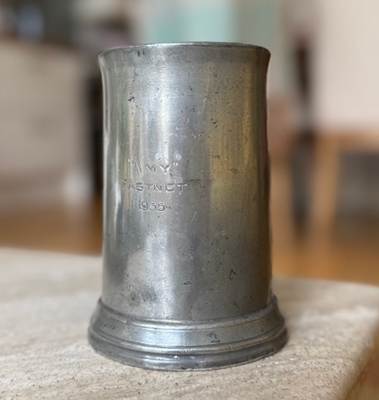
“Absolutely! Raced in Cowes Week many years ago but never competed in The Fastnet Race; my father did, in 1935 in a yacht called Amy.”

‘Amy’ Fastnet 1935

“Wow! And this year was its 100th run. Forgive my ignorance but what exactly is The Fastnet?”

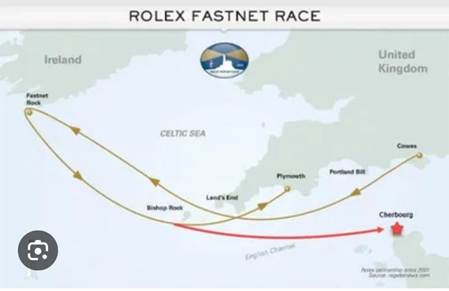
“They leave Cowes, head down the English Channel, round the Bishop’s Rock lighthouse and head to the Fastnet Rock on the southern tip of Eire. Originally they headed back to Plymouth but for the last two races they’ve finished in Cherbourg in France. It’s about 690 miles long and used to take the winners over 5 days.”

“And this year?”

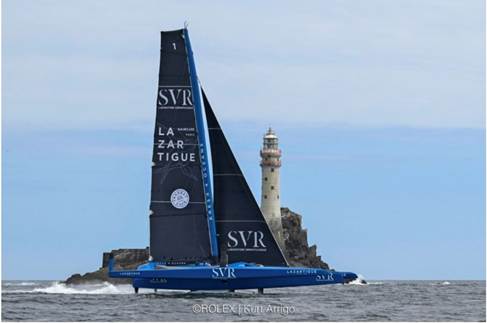
“The trimaran SVR Lazartigue was first over the finish line in 1day and 17 hours. It’s more like flying than sailing; averaging 15 knots with some runs at over 30 knots! The technology is amazing!

SVR Lazartigue rounding the Fastnet Rock and its lighthouse

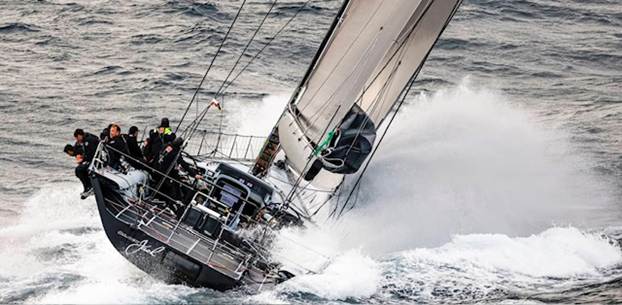
Ordinary monohulled yachts took longer! ‘Black Jack’ took line honours in 2 days and 12 hours.”

“No regrets about not taking part?”

“No! But I did race from Tenerife to Bermuda one year and that was another story! (See PC 161 The Atlantic Sept 2019) Mo; must go and catch up with Sami, so see you when you’re back from France huh!”

I get another coffee and join Sami. Sami doesn’t waste time.

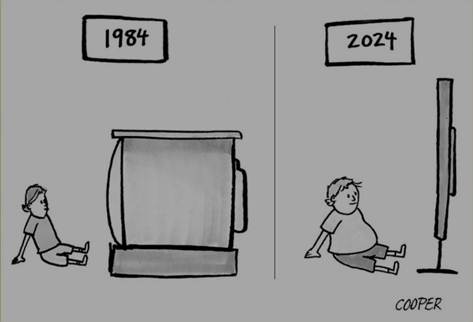
“I think you were having a go at those who decide the easy way to control their weight is by having these injections ……”

“Yes  …….”

“Well, in my scrap book I found this delightful cartoon – and cartoons that hit the spot are so clever.”

“Actually, the debate continues. NICE (Note 1) says that those coming off weight-loss drugs will, without the right support, simply put the weight back on.”

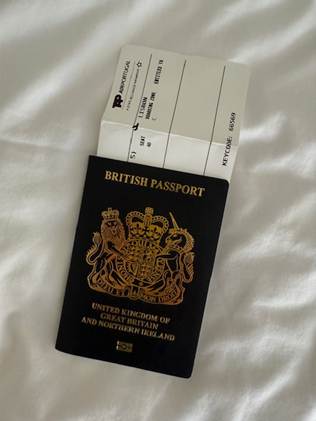
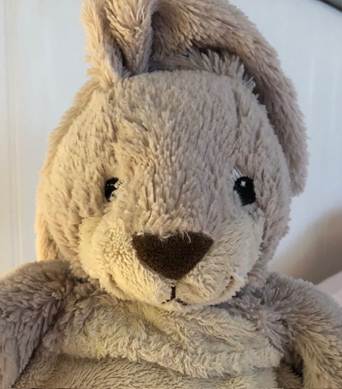
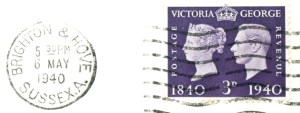
“OK! Incidentally your rabbit amuses me! I see that she got her passport stamped again when you came back from Portugal!”

“Yes. Although the Border Force lady asked her to look at her so she could compare her passport photograph! She can be very coy so she had to compose herself before she did”

“As I said, she amuses me!”

Richard 8th August 2025

Hove
www.postcardscribbles.co.uk

PS Happy Birthday to my first cousin Caroline in Nanaimo on Vancouver Island and to my brother-in-law Carlos in Estoril, Portugal.

Note 1 The National Institute for Health and Care Excellence.

PC 450 How many milestones are there?

I uploaded my first electronic postcard to my Facebook page in May 2013; the second and third followed, but it was not until PC 17 that I started publishing them at fortnightly intervals on WordPress. If you are still happy to glance at, speed read, or absorb more slowly with a cup of tea, coffee or something stronger, my now-weekly musings, thank you and congratulations for your perseverance. For those of you who hadn’t realised it, the fortnightly postcard, now labelled a blog perhaps, became a weekly offering in 2020, to counteract the loneliness some experienced during the two COVID-enforced lockdowns. And like a lot of habits people started during Covid, they’ve continued, these scribbles of mine, posted on a Friday, regularly as clockwork.  

The beach at Bahia

That first postcard was about Bahia; the State of Bahia is north of Rio de Janeiro and its capital is Salvador. We spent a week on its coast, a tropical paradise of enduring calmness. The first ‘milestone’, PC 50, posted on 21st September 2015, was entitled ‘One Person’s Party can be Another Person’s Nightmare’; the polar opposite of Bahia, it concerned a party next door to Celina’s parents’ house in Iposeria, São Conrado, a suburb of Rio de Janeiro. The music’s noise level made the windows in her house rattle and, after silently enduring it for a while, for speech was impossible, we decamped to the Sheraton Hotel.

Francisquinha (PCs 172 and 217) looked over my shoulder; ‘Tell them about my passport! Tell them about my passport!’ she demanded; she repeats herself when she’s animated.

The 100th PC was posted in July 2017 and PC 150 in April 2019. The latter concerned two local enterprises, Dean’s ‘Fruit & Veg stall’ at the top of pedestrianised George Street and D Jones’ ‘Watchmaker & Jewellers’ around the corner in Blatchington Road, here in Hove. PC 300 was posted on 16th of September 2022, just after the State Funeral of the late Queen, Elisabeth II and PC 350 (1st September 2023) covered the coronation of the new King, Charles. After PC 400 (16th August 2024) I added PC 400a, a catalogue of those first 400.

PC 401 ‘The Hope Café via WhatsApp’ was posted on WordPress, on Facebook and on LinkedIn on 23rd August 2024. Conversations with Sami and Mo covered the Paris Olympics, DSD (Note 1), my middle grandson moving to Secondary School and my step-granddaughter moving to Dubai to teach. PC 403 ‘Idle Thoughts about This and That’ (September 2024) mentioned that I had had to apply for a new passport, so thought I could apply for one for Francisquinha. Both arrived back in the same envelope, although hers is slightly bigger than mine!

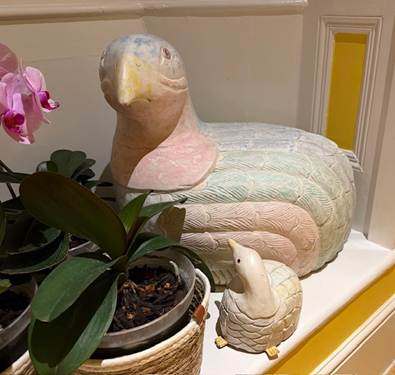
‘Is that my passport?’ She asked. ‘Wow! ….. I must be important.’ Then she showed me a photo of her in a suite in the Marina Bay Sands Hotel in Singapore in 2019.

Celina and I are lucky enough to be able to travel, so it seemed right that Ms Francisquinha had her own passport, photograph and all. What’s been interesting is the reaction of the various passport control officials, when she presents it for a stamp. Obviously, these Government Civil Servants, wherever we’ve arrived, have an important role to play, making sure everyone has the correct documentation; a sense of humour is not part of the job description. In Portugal she is generally viewed very suspiciously, despite her putting on her most charming face. ‘Blood, sweat and tears’ are needed for a stamp to be added. Whereas in Brazil, they’ve laughed and drawn colleagues’ attention to her passport.

Generally, when we arrive back in London Gatwick, Celina and I head for the E-Gates, avoiding the inevitable queue. However, on one occasion there was no queue whatsoever …… so I headed for one of the kiosks. Presenting my own passport, I showed Francisquinha’s to the female officer and asked whether she could stamp it. This was clearly considered so serious a matter that two armed policemen came over to see if there was a problem. The stamp came with a disclaimer: ‘On Request’! I often wonder what was going through her mind, this Border Force official, having to justify by writing ‘on request’ why she had stamped the passport of a fluffy grey rabbit.

We had a laugh, Francisquinha and I.

So, what are the stand-out memories you have of the last twelve months, from 3rd September 2024 to 1st August 2025?

It really doesn’t matter whether you voted for the 47th President of the United States or not, the world is trying to deal with, adapt to, and accept that the current incumbent of the Oval Office is like no other. One thing I thank him for is forcing the European members of NATO to recognise their defence is their responsibility and that they should pay more for it.

Giles Coran in his column in The Times, wondered why he had bothered during his life to eat sensibly, take exercise and watch his weight to stay healthy, as the news story of the last twelve months is undoubtably the exponential use of weight-loss injections like Wegovy, Ozempic and Mounjaro. I can understand the attraction, but the jury is still out as to their effects on your body when you’re taking it, and the lasting effects on your vital organs. Personally, unless you’re morbidly obese, I do not think this is the way forward.

In the UK the Post Office and Blood Infection scandals dribble on; the longer they continue, the more Joe & Joanna Public will be disenchanted with politicians whatever their colour. I watched the funeral of the late Pope Francis and subsequent election of the new Pope, all the time thinking of the great book Conclave by Robert Harris.

And in 50 weeks’ time, when I post my 500th PC, I suspect the stand-out news story will be the speed of our climate change.

Richard 1st August 2025

Hove
www.postcardscribbles.co.uk

Note 1 DSD is an abbreviation for ‘Difference of Sexual Development’.

PC 449 Sexual and Racist Thoughtlessness

PC 449 Sexual and Racist Thoughtlessness

If you are of a certain age, you will remember the saucy postcards picturing, oh! I don’t know, a dog tugging at the knickers of a large breasted woman, or this:

Or these ……

Was there anything harmful in these, produced in an era before television, a genre of comedy that appealed to all but the frigid? Barrack-room humour, pub male banter, it seemed part of the social fabric; just as comedians like Ken Dodd and Frankie Howard hammered the sexual jokes and innuendo to the point they became, to a degree, their trademark. I always pitied the mother-in-law! Sexual bluntness but at arm’s length; nothing personal. If we didn’t laugh out loud, we maybe sniggered silently, not wanting to be seen as outwardly coarse, but appreciating the creator’s skill.

Page 3’s Jakki Degg

The Sun, a British tabloid newspaper and part of the stable of Rupert Murdoch, from 1970 featured ‘topless glamour models’ on its third page. The Sun’s Page 3 became a defining aspect of the paper and a cultural phenomenon, with models like Katie Price aka Jordan gaining fame through it. ‘Page 3’ was discontinued in 2015 after criticism about how it was portraying women.

Whilst I am not a fan of some of the reality television shows that grace our screens, such as Love Island or Celebrity Big Brother, I do like creative programmes, such as MasterChef (Presented by Greg Wallace and John Torode), The Great British Bake Off (Presented by Alison Hammond and Noel Fielding, with judging by Paul Hollywood and Prue Leith) and Bake Off The Professionals (Presented by Liam Charles and Ellie Taylor, and judged by Benoit Blin and Cherish Finden), although you can identify a bit of a theme in these! I could add ‘The Great Pottery Throw Down’ (Presented by Siobhán McSweeney and judges Keith Brymer Jones and Rich Miller) all about using clay.

I mention these four because in some episodes, sometimes, someone will make what used to be called a smutty joke, some comment with sexual undertones. And everyone laughs, presenters and participants, and the comment is never challenged; presumably if it was it would be edited out. Challenging would have been viewed as prudish; no one wants to be called a prude. So the inference is that the programme makers believe these titillations add colour to the conversations, to the banter. “It’s what we do, its harmless fun …..” until it isn’t. How do you know when you might offend someone? I love sex, love reading about sex, watching its portray in films and am no prude for sure, but I have always failed to understand why there is this incessant underlying sexual inuendo present in programmes that have nothing to do with sex. I watch and cringe, think ‘is that comment really necessary?’ In baking, ‘buns’, ‘cream’ and ‘rising’ are good examples of cross-over words not leaving much to the imagination.

Greg Wallace and John Torode

Both presenters of Master Chef, Greg Wallace and John Torode, have had their contracts terminated in the last few weeks, the former as a result of a BBC investigation into allegations of sexual misconduct. Greg is now considered old school, the dinosaur who doesn’t understand that what was considered fun and OK, is now not OK; certainly not fun if you are the victim.

Interestingly Wallace has apparently claimed that he often does not wear underpants as his autism manifests itself in extremely sensitive skin. This obviously explained why he was wearing a sock on his cock when someone opened the door of his dressing room during the making of a MasterChef programme. Another female member of the production crew recalled that Wallace, in his dressing room, said he needed to change his trousers and simple dropped them in front of the woman. ‘Oh! Sorry, I never wear underwear!

A great example of a reality television show that seemed to be squeaky clean was Handmade: Britain’s Best Woodworker, which was first broadcast in 2021. Talented woodworkers were set a ‘big project’ challenge, like making a bed, as well as skills tests, designed to demonstrate a particular expertise. Sadly it only ran for three series and there’s no news of it coming back. Perhaps too squeaky clean?

I must obviously question whether the audience love and laugh at the sexual inuendo, just part of the relaxing point of television – not paid to think! Whilst sexual jokes and suggestive scripts may be, some might argue, harmless, they are not if you are the victim or target.

As Wallace was being shown the door, there was an unsubstantiated allegation that John Torode, his co-presenter, had used ‘an extremely racist offensive term.’ Despite insisting he had no recollection of any of it, he too was gone.

Racism is a nasty and insidious aspect of human interaction. We have come a long way from the popular views of our grandparents or even great grandparents, where foreigners began at Dover, the British Empire was possible because of the superiority of the white race, and certain races had a bad reputation. We still have further to go.

At the weekend news came that one of England’s Lionesses football team, Jess Carter, has been the target of racist abuse during the current Euro 2025 football competition. I thought ‘monkey chants’ from the football terraces were becoming, thankfully, rarer, but in this case the perpetrators are using social media to broadcast their unwelcome and unwarranted bile.

Maro Itoje

Interestingly the England Rugby Union international Maro Itoje believes that rugby suffers less from racist than football does because “rugby fans, and people in rugby, are a little bit more educated than those in football. The strength of tribalism between football clubs is partly to blame; when an oppositional player who’s a person of colour does damage to their team, the fans want to throw abuse at them. Rugby is nowhere near as tribal.” Even today I sadly find some of my generation use what in the C21st are rightly considered racially offensive words. The further out in the sticks you live, the more likely to hear such things. It will take years for everyone, whatever their race, their skin colour and their religion to just accept that others may be different but that they have a right to exist….. in their own way.

Richard 25th July 2025

Estoril, Portugal

www.postcardscribbles.co.uk

PC 448 Books & Hope (2)

Whilst I love the mug of Illy coffee I make in the morning with our Gaggia Espresso, I also love the interaction and social scene of The Hope Café; long may it last. And obviously I hope the additional draw of its co-location with a real book shop and reading room will increase the footfall for both enterprises.

The other morning I bumped into our neighbour Olga, on her way back to her apartment with her morning coffee in its disposable cup. She’s Ukrainian, a lawyer in the Worthing firm Mortimer Clarke and works from home some days. She loves the coffee from Gails, an expensive coffee shop and bakery founded in 2005 by Gail Mejia and Tom Molnar; there’s an outlet at the top of our road. (Note 1) We know it’s expensive as we buy our San Francisco sourdough bread there – £4.50 a loaf! Olga’s coffee is over £4 and I teased her that she could buy a small coffee machine like ours for under £200, equivalent to only 50 cups from Gails – probably paying for itself in less than six months.

However, we all have our peculiarities when it comes to ‘having a coffee’. Some of us make it in the comfort of our own home, wearing whatever takes our fancy; others, like Olga, prefer to go and grab a ‘take-away’ (Note 2), interacting with the barista and maybe others in the inevitable queue, while welcoming places like The Hope Café entice one to sit, and chat, and read, and savour the closeness of others. ‘Time to stand (sit!) and stare’.

If you want to know more about coffee, buy James Hoffmann’s The World Atlas of Coffee. You’ll find answers to questions like ‘Is it worth grinding your own beans?’, ‘Is coffee good/bad for you?’ and ‘What’s the difference between Arabica and Robusta beans?’. (Published in October 2025)

I went to the Hope Café in the morning towards the end of last week. Usually we have our 90-minute hot yoga class at 1000, but I had to let a new scar heal; ‘No yoga for two weeks!’ The scar on my left scapula was the visible sign of the removal of a Squamous cell carcinoma.

Squamous cells make up the middle and outer layers of the skin. Squamous cell carcinoma is a common type of skin cancer, not life-threatening but better removed than left to grow.

I had had a ‘melanoma in-situ mole’ removed 18 months ago, so am aware of the harm a life of sun-worshiping has had on my skin. As a teenager no one knew or cared about skin cancer, caused by too much sun. Now we know and care and can alter our habits accordingly. So, if in doubt about a spot on your skin, get it checked out as soon as possible.

My middle grandson, Reuben, had his 12th birthday last week and we sent a rendition of ‘Happy Birthday’ by WhatsApp to his mother, as we imagined he’s too young to have a mobile. Actually we found out that he has had one since the beginning of the year, mainly for parental needs; sensibly there’s a strict list of what he can/can’t access. His birthday reminded me that, at my first boarding school, one’s birthday was marked by a little knitted figure, rather like Golliwog. The boy celebrating his birthday was called out at breakfast and presented with a knitted Golliwog aka Robertson, which was placed in their jacket breast pocket, where it stayed all day. (Note 3)

The BBC Two unlikely hit ‘Couples Therapy’ is back for a second series, with Dr Orna Guralnik in her chair. The first series introduced me to ‘Afro-American generational trauma’, the belief that the psychological and emotional impact of historic events like slavery and systemic racism can be passed down through families over generations and it’s an emotional burden Afro-Americans carry today. Many older American black adults, according to research, view mental health conditions as a consequence of personal weakness and that the belief is an excuse.

I was reminded of this belief in generational trauma when Boris Kodjoe and his wife Jessica sat before Orna. Boris’ parents came from the USSR; Boris can’t believe why his wife isn’t sympathetic with his internal struggles, his generational trauma, and doesn’t understand him. The trouble seems to be that whenever she says she is and does, he moves the goalposts and there’s a different challenge. We are in the middle of this series, so it’ll be interesting to see how they resolve, with Orna’s guidance, this issue …. or not! 

Mo saw me and said she’d remembered the subject of my PC 421 ‘Not the Way to Go’, when she’d read a review of ‘Ghosting On Disappearance’ by Dominic Pettman. The dictionary definition of ‘Ghosting’, added in 2012, is ‘the action or ignoring or pretending not to know a person, especially that of suddenly ceasing to respond.’

“Oh!” I exclaimed, “I am constantly ghosted! When I send a WhatsApp message to someone asking a simple question like: ‘Are we on for coffee tomorrow?’, I see those two blue ticks lurking underneath the read but unanswered WhatsApp message and wonder why they haven’t replied. We’re either on or not!”

“Absolutely!” exclaimed Mo.

Richard 18th July 2025

Estoril Portugal

www.postcardscribbles.co.uk

Note 1 We are surrounded by independent cafes in Brighton & Hove. I adore some of the names: Trading Post Coffee Roastery, Café Coho, The Bystander Café, Small Batch Coffee Company, Milk no Sugar, the Flour Pot Bakery, Grocer & Grain, 17 Grams, Coffee at 33 and many more.

Note 2 Delightfully some people go and pick up their take-away still wearing ‘whatever takes your fancy’.

Note 3 Since 1910 Robertson’s marmalade jars had a golliwog on the label and brooches were collectable. For the last 40 years it’s no longer there, but you can still ask for a brooch! Seen now as racially insensitive. ‘Wog’ is an English slur against dark-skinned, brown-skinned people and as a racist epithet is comparable with spic and nigger. A lovable icon or racist symbol? (Wog being an abbreviation for Western Oriental Gentleman.)

PC 447 Books & Hope

Sounds a little like the name for a firm of family solicitors, ‘Books & Hope’, doesn’t it, but Duncan thought it brought together those who wanted to simply have a coffee and a chat, and those for whom a good book is an essential accompaniment to a tasteful coffee or herbal tea, with a delicious pastry from Teresa’s Brazilian delicatessen counter of course!

There’s been a great deal in the news about schemes in the UK encouraging more individuals of every age to read. ‘Reading should be accessible to everyone, whether English is a second language, literacy is a challenge, or life has simply made it difficult to maintain the habit. The written word is the foundation of so much of our culture and ensuring more people can engage with it will have a far-reaching impact.” says creative director of the charity The Reading Agency Shanz Gulzar. Reading fiction fires the imagination; one’s person’s pictorial setting of a story is different from another’s. Just like watching the film of a book one’s thoroughly enjoyed, only to find the director’s take is theirs and not yours! Non-fiction, biographies, historical accounts, whatever, broadens one’s knowledge.

To be able to enjoy the written word you need to be able to read. Adult illiteracy is not uncommon; Bombardier Broad, one of my men in a Royal Artillery regiment in Germany in 1974, struggled to read. Getting help for him was essential for his developing career and personal confidence.

On Tuesday a news item caught my attention. ‘Some children are reaching Secondary School with a reading age of 5!’ It went on to suggest some of the reasons, one being the Covid-enforced lockdown and for some its traumatic effect. And we can all understand the huge impact game-playing on digital devices has; time that might have been used to get inside a good book. Interestingly nowhere in the discussion were parents mentioned. It’s as if we have collective amnesia as to the responsibilities that come with having children. Some see criticism of parents as a sensitive issue, maybe linked to labels like deprivation and poverty, single parents and lack of education. Personally I think a national drive to improve parenting skills and responsibilities would have a big impact, as too often it’s our schools that must cope with children who haven’t been taught the very basics, poor sods!

But then was a parting comment by one of the interviewees, that here in the United Kingdom, 1 in 5 children do not attend school regularly; twenty percent! So the poor sods don’t get what help there is by being absent! This might be a topic for another postcard, but in a First World country this is disgraceful.

Despite the proliferation of digital reading devices and the advantages of such when weight is a factor, travelling for instance, the popularity of physical books, either hardback or paperback, has not diminished. Last week for instance the Number One slot in the Sunday Times Bestsellers, fictional and factual, totalled 40,000 sold books.

I met Duncan in his new venture next door to The Hope Café, which quietly opened its doors last month. I sense ‘Books’ is going to take a while to get established; good places often do, but the book shop’s association and co-location with The Hope Café will ensure there’s lots of crossflow. Just sitting and having a coffee with a good friend will often prompt a ‘I must buy a card for great aunt Maud, she’ll appreciate it no end; back in a sec’, sort of action. (note 1) I knew Mo was going to be working there three afternoons a week and sure enough she was there on Tuesday. She was already busy and no chance to chat, mouthing ‘talk later’ as she served a customer, so I meander back into The Hope Café and find Sami, looking cross.

Regular readers will recall Sami’s history with the Post Office, falsely accused of stealing money from one of his two Post Offices and being made bankrupt. He’s moved on, accepted the £600,000 compensation that was, at one time, on offer, formed a great relationship with Lisa Wallace, a journalist and writer from Derbyshire, and put it behind him. It doesn’t of course prevent him from taking a keen interest in how the issue of compensation is being handled.

“Don’t you just love weasel words Richard?” asks Sami, pouring over an article from last Saturday’s Times.

Over his shoulder I can read the headline – ‘345 Horizon victims have died before getting a payout.’ Sami read the preamble: ‘Close to six years after the scandal was exposed by a High Court judge, more than 3700 postmasters have yet to receive compensation. Thousands of sub-postmasters were wrongly blamed for financial losses as a result of the Horizon computer system. More than 900 were prosecuted and 236 sent to prison.’ Then the drivel:

‘The Post Office says it is an absolute priority for us and the government that all victims of the Horizon scandal receive full redress as quickly as possible”.

On 8th July Sir Wyn Williams, chair of the public inquiry, published the first part of his report, focusing on compensation and the human impact of what is believed to be the one of the biggest miscarriages of justice in UK history. The second report, establishing what happened and who is to blame, may not be published until 2026, suggesting any criminal trials may not start until 2028. (Note 2)

As an outsider, I read this and think, couldn’t someone just say: “Pay them NOW, this week, don’t quibble about certain aspects of the claim, and close this sorry, sorry episode.” Both the Post Office and HMG could fix this this month.

Richard 11th July 2025

Hove
www.postcardscribbles.co.uk

Note 1 On reflection they may not, given that a First Class postage stamp now costs £1.70.

Note 2 The United Kingdom justice system is, frankly, in crisis. There are some 77,000 cases awaiting their time in court, stretching the search for and resolution of justice to incredulity. There’s an average wait of two to three years for a case to come to court. For both parties, accused and victims, that’s cruel.

PC 446 Mid-Summer

PC 446 Mid-Summer

For those of my readers who live in the Southern Hemisphere, and especially those in South Island New Zealand whose north has been ravaged by torrential rains, you’re moving, albeit slowly, towards Spring and warmer weather. Here the summer equinox passed a fortnight ago and we will gradually slide towards Autumn. But now it really is mid-summer!

Many years ago I was curious about the lack of symmetry of our sunrise/sunset times and created a chart showing exactly how it is. I find it fascinating, but understand if you shrug your shoulders and say: ‘So what?’

You can see that here the sunset time reaches its latest some days before the sunrise time reaches its earliest.

Our apartment in Amber House is what an estate agent would call a duplex (note 1), as well as having a double aspect, our living room’s 3m tall windows facing both east and west. Although it doesn’t have a sea view, it catches the early morning and late afternoon sun at certain times of the year. Additionally at mid-summer we observe the wonders of the celestial movements of both sun and earth. Every year hundreds of people gather at Stonehenge in Wiltshire to watch the midsummer sunrise.

I must admit I’ve always liked the alternative view, that the henge was built to celebrate the winter solstice, marking the time when days started getting longer.

On the summer solstice in Hove, the sun rose at 0447 on a bearing of 048deg, almost Northeast. By 0640 (Note 2) it was high enough to be over the houses on the other side of Albany Villas and its rays were pouring into our living room.

Then, a day later, when the sun is sinking towards its 2115 set, on a bearing of 312deg, almost Northwest, we experience something rather false.

Red sunrise rays, yellow reflected rays

At around 1940 the sun’s rays bounced off a window on a house across the street and poured into our living room, illuminating the photograph of Celina’s parents, just like the rising sun had the day before.

I think by now we are all aware of our changing climate. The arguments about whether human activity is responsible for all of it, some of it, or whether the planet will grow warmer, whether we like it or not, will go on and on. However, its effects are already being felt. There was an interesting chart on the BBC News the other evening. It showed how the likelihood of June temperatures in the UK being above 30°C has increased over 70 years. In the 1960s there were one or possibly two days in the month, now it’s more like 8-10. And we can expect shorter, more intense weather, whether it be temperatures or floods.

I don’t think it’ll happen in my lifetime but ‘Families Like Ours’ was an interesting television drama broadcast recently. It featured Denmark, a country I know well from business forays and as a sailor. Climate Change was causing rising sea levels in the Baltic, so much so that the government decided the country could no longer exist ….. and everyone had to leave. Go where, you might ask? Watch it for a glimpse of what may happen.

In Britain the seasons are marked with traditional events. In mid-Summer The Wimbledon Tennis Tournament (23rd June – 13th July 2025) is preceded by the Lexus Eastbourne Open (21st – 29th June 2025) if tennis is your thing. My dental hygienist Jennyis a great fan and had tickets for both Eastbourne and for Wimbledon. Cricket Tests against India have started and the Henley Rowing Regatta (1st – 6th July 2025) is a wonderful example of Britishness. ‘Glastonbury’ (Note 3) 25th – 29th June was just one of many festivals around the country, that feature not only ‘pop’ music but classical, often in the grounds of some stately home. And midsummer would not be complete without strawberries and cream and maybe a glass of Pimms!

Over my lifetime I have learned how to navigate over the land, using a paper map and a compass and over the seas, using a mixture of charts, compass sightings of land features, ‘dead reckoning’, working with boat speed, leeway, tide and time, and on longer passages with a sexton for sun shots. The advent of Global Positioning Systems has changed forever the way we now move from A to B, but the basic knowledge is ingrained in my DNA, as is the need to understand where people are!

Recently Celina told me her mother was going off to a religious retreat in France. ‘Where abouts?’ I asked. “Near Poitier – Bonnevaux.” France is the size of the USA’s state Montana; demographically the former has a population of some 68 million people, whereas Montana only 1.1 million. So, despite travelling in France and finding parts of it are ‘empty’, it has a density of 123 people per square kilometre, compared with Montana’s 18, which is really empty! I dived onto Google Maps to search for Bonnevaux and found one north of Montpellier. A further question revealed that the retreat is in the Abbaye de Bonnevaux Centre ‘pour le paix’, near the village of Marçay ….. near Poitier. The WhatsApp message came with warning – ‘mobile phones are kind-of banned’!

The Abbaye de Bonnevaux

Peace in midsummer.

Richard 4th July 2025

Hove
http://www.postcardscribbles.co.uk

Note 1 An apartment on two floors. In our case our bedrooms are at the lower ground level, which has the advantage of being quieter.

Note 2 On the north coast of Scotland, in the northern hemisphere, on the longest day, the sun rises at 0403 and sets at 2225.

Note 3 The first music festival to be held at Worthy Down Farm was called the Pilton Pop, Folk and Blues Festival and took place in 1970. It was attended by 1500 people who paid an admission charge of £1 which included free camping and free milk. Twelve thousand people attended the first festival named ‘Glastonbury’ which took place the following year.

PC 445 Nowhere Street? Somewhere surely?

As regular as clockwork, Monday to Friday, Celina and I take the bus from Hove to Churchill Square in Brighton. From there we walk across the square, down Cranbourne Street to West Street, across into Duke Street, right into Middle Street and down to the Yoga in the Lanes studio, behind the synagogue. The green line gives you an idea:

Cranbourne Street is a short street, no more than 70m long; I know as I measured it. Not with a tape measure or by some smart App on my iPhone, but with my calibrated pace! Joining the Royal Artillery involved undertaking the Young Officers’ Course run at the Royal School of Artillery at Larkhill, north of Salisbury, Wiltshire. We learned, inter alia, how to lay out a position for six field guns and measure the distance of each gun from the Command Post. We ‘calibrated’ our normal stride by counting how many steps one took to reach a measured 100m. One’s height matters; the shorter you are, it’s likely to be more than 100!

We are all guilty, I guess, of walking along streets from A to B without really taking in the streetscape so, prompted by seeing someone unique outside the Crowns pub, I thought I could scribble about Cranbourne Street.

At the bottom end, at its junction with West Street (note 1), Deliveroo drivers congregate with their scooters, to chat about their day, share a cigarette or vape, await their next call to deliver a pizza to Mr Smith, some pasta to Mrs Jones or a full meal from The Ivy to Mr & Mr Brown. Most seem to be Brazilian and it amuses Celina to half-hear some of the conversations.

This street is a microcosm of Brighton, its somewhat incongruous mix of retail outlets and the people who visit them, walk down or struggle up the steep slope. The retail mix is incongruous because, amongst the fast-food outlets and two pubs, there’s Timpsons and Scribbler.

Timpson Group is a British and Irish service retailer with 2100 stores, covering dry cleaners (Johnsons), photo printing (Snappy Snaps), watch repairs (The Watch Lab) and shoe repair and key cutting (Timpsons). It was founded in 1865 by William Timpson and is still owned by his descendants. The ethos of their founder lives on today; for instance, a belief in giving people a second chance is reflected in their workforce, 12% of whom have a past criminal conviction.

Scribbler sells stationery and wrapping paper but is best known locally for its vibrant and diverse selection of cards, praised for their humour and uniqueness. Apart from a traditional men’s barbers, a mobile/lap top repair shop and a currency exchange, the remainder of the shops feed the soul. ‘Real California Burritos & Tacos’ is opposite a taste from the Pacific, Island Poké, which sits next to Dak.Zip, a Korean Street Food offering. There’s a strange outlet called ‘Drink What?’ and I have no idea what it offers, but there’s no uncertainty in the Belgian Chips shop, with its large sacks of potatoes in the window!

Ala’s himself shuffles out to the tables of his café, which offers everything from freshly cut sandwiches with various bread options to burgers, fish ‘n’ chips and Nachos.

Sadly, Cranbourne Street is no different from other inner-city streets, with their regular homeless individual, usually a male, sitting on a blanket or box on the pavement, hoping you’ll feel a couple of quid means more to him than you. We have got so used to Daren that we wonder, when he isn’t there, whether he is OK, being looked after; we have no way of knowing. Daren is in his late 50s so doesn’t qualify for the support offered by The Clock Tower Sanctuary, just around the corner and open for 18–25-year-olds; he has a tent ‘somewhere’.

Most of those we see on the streets have complex issues, some of course are heavily influenced by drugs or alcohol, but Daren is always sober, just homeless and suffering from Raynaud’s disease. This disorder affects the small blood vessels in the body’s extremities, which causes tingling, numbness, throbbing and pain. Daren’s feet and hands are often freezing ….  and he has Gall stones. We have passed him twice, every day, for over three years; we have given him gloves and thick socks in the winter; somehow he never manages to have them when he needs them. One of us would pass him some cash, particularly when it was wet, and when we returned almost three hours later he was still there.

Living in the city of Brighton & Hove we have got used to the wonderful inclusivity of our fellow inhabitants and little raises our collective eyebrows anymore. Initially when Celina’s mother would visit, you could tell she was somewhat shocked but now is used to the so many variations. However, the other morning l did a double take, my mind processing what I witnessed! Outside The Crowns pub, with awnings sheltering the outside tables from sun or rain, customers can sit, drink, smoke and watch the pedestrian traffic flowing up and down the street. “What is this life if, full of care, we have no time to stand and stare?” (Note 2)

It was about 1150 and I noticed a chap with greying hair and small, nicely trimmed beard, sallow complexion, with a jean’s material bolero jacket. As he leaned forward to take a sip of his beer, I noticed his very white T shirt and two perfectly formed largeish breasts, their nipples showing through the material. A double take, more like a triple take; I quickly got Celina’s attention, she turned and saw what I saw …… we sort-of shrugged and thought ‘It’s Brighton’ and walked on to catch our bus home. Later I thought of Kenny Everett. (Note 3)

Cranbourne Street – now somewhere!

Richard 27th June 2025

Hove
www.postcardscribbles.co.uk

Note 1 West Street runs north-south but was named as it was on the west side of the little town of Brighton, before the town expanded.

Note 2 WH Davies’ poem ‘Leisure’.

Note 3 Kenny Everett (1944 – 1995) was a radio and TV entertainer, known for his zany comedic style. He loved dressing up as a female with large breasts!

PC 444 More Observations and thoughts

My last scribble, PC 443, ‘ere in The ‘ope’, reached Ian, one of the school chums with whom I went to Greece in 1965. (See PC 346 Puds to Greece August 2023) Ian commented that his wife Julie suffers from BPPV but uses the Epley Manoeuvre to ‘pop the rocks back’; always good to know what works! Ian’s note reminded me of Ray, one of us six, who died in Toronto in March; otherwise we’re all still pumping blood!

Funny how often something you read or see brings back memories. The other weekend, in one of those colour magazines accompanying the newspaper – I buy a hard copy at the weekend but read the digital version during the week – there was a fascinating article about Caroline Scott who, with her husband James, had fostered many many children over ten years. Faced with some stark choices for the future of their last one, Scarlett, they decided to adopt her themselves.

Caroline’s own mother had spent a lot of her early life in a Liverpool orphanage, “enduring a regime so brutal that she couldn’t recall a moment of kindness.” It was the next memory that pulled me up short. “When she frequently wet her bed out of fear and misery, she was made to stand alone in the corner of an empty room with the soiled sheet over her head for hours until it dried.” Sadly ‘the casual violence of adults’ continues in the C21st, as does ‘the utter powerlessness of little children’. I read that a couple of times, the image forming in my mind of a poor little girl standing alone and unloved.

I don’t imagine Ian would have remembered, but as an early teenager I suffered the indignity of wetting my bed; if he does, it’s not the sort of thing to mention. In our boarding school, there was no privacy and those who ended up with wet sheets were the focus of ridicule and derision. It lasted for a few months, probably brought on by a sense of abandonment, left in a school over a hundred miles from my parents. (“Do you good Caruthers! Man up!” sort-of thinking).

This week The Times carried the obituary of Joy Schaverien, a Brighton resident, who coined the term Boarding School Syndrome and, in 2015, published Boarding School Syndrome: The Psychological Trauma of the “Privileged” Child. She noted the ABCD of trauma: abandonment, bereavement, captivity and dissociation. Growing up in an institution without much love or appropriate touch, she explained, can lead to depression, broken relationships and problems with intimacy. “Children need to grow among people who love them,” she said in 2011. “Things have improved but children are still exposed to regimented lifestyles, loneliness and separation. They often turn into very successful adults — look at the cabinet — but they can suffer from a poverty of emotion.”

Losing bladder control when frightened is known as ‘stress incontinence’, because the ‘fight or flight’ response triggers involuntary muscle contractions and a temporary weakening of the pelvic floor muscles. These muscles are responsible for holding urine in and preventing leaks. When scared the body releases adrenaline, causing muscles throughout the body to tense. This tension can disrupt the normal control of the bladder and lead to involuntary leakage, even if the bladder isn’t full. Of course, delightfully, the same can happen when something is hysterically funny, a little loss of control!! (Note 1)

My postcard titled ‘The Man in The Window’ (PC 384 April 2024) was the result of thinking about the chap who worked at his desk, in the front window of the house across Albany Villas. Delightfully Simon has become a friend and happy to chew the fate about this and that. The postcard itself ventured into voyeurism, initiated by that James Stewart film Rear Window. Voyeurism could have been levelled at whoever took the photograph of me having my cold shower after a hot yoga session!

I knew nothing of it until it appeared on a social media platform. Would I have minded? Of course not? But it got me thinking whether the person who took the photograph should have asked my permission before posting it online. Unprompted, maybe after thinking about it themselves, they did take it down after a few hours!

Not taken by a drone!

In Castle Combe in Wiltshire, one of the ‘prettiest villages in England’, voyeurism is taken to another level. The village is a magnet for drone operators who want to capture its beauty. Unfortunately for its residents they have become a real issue; “Somebody was sitting in their bath, looked out the window and there’s a drone filming them.”!! Voyeurism again?

We live with plastic, although there is a great deal of effort to negate its lasting effect on the planet. I assume this is the reason that my morning ‘Orange Juice with bits’, which comes in a plastic bottle, now has its top connected to the main body by two little thin strips of more plastic; I guess it’s to stop them separating and polluting the earth.

The trouble is if the top isn’t completely clear of the bottle, it’s easy for some juice to drip into the cap. When you put the cap back on, it runs down the outside of the bottle. God! These First World C21st problems!

My landlord, Southern Housing, is trying to enter the century by updating its IT systems. I now have an on-line account through which I can notify them of repairs etc. I have owned our apartment since 2012 so you would think they had my personal details correct. I was asked to check. Apparently, my date of birth is 1st January 1900! Gulp! I knew I was getting on but over 125 years of age. Unlikely!

Richard 20th June 2025

Hove

www.postcardscribbles.co.uk

Note 1 There was a joke about Eastbourne, a town popular with pensioners to the east of Brighton: “Near The Continent (ie north coast of France) and incontinent.” Of course, we start life wearing a nappy and some will end it doing the same!

PC 443 ‘ere in the ‘ope!

PC 443 ‘ere in the ‘ope!

Almost a month has gone by since I was last in the Hope Café and it was good to be back in its familiar surroundings. As I was getting a double espresso I put a little card on the counter, with Josh’s permission of course! It read:

‘If you have a favourite quote about the ear, would you come across and tell me? Richard’

I have scribbled about teeth (see PCs 64 & 66 Molars and Wisdom March 2016) and eyes (see PC 94 Sight and Eyes April 2017) but not, surprisingly, about one’s ears. So why now, I sense you ask. After my food poisoning and virus infection, I managed to develop an inner ear problem which affected my balance big time.

The diagnosis is Benign Paroxysmal Positional Vertigo (BPPV – see note 1), which causes short periods of intense dizziness or vertigo when the head is moved in certain directions. It’s thought to be caused by tiny solid fragments in the inner ear labyrinth. Who knew?

So a quick revision. The ear:

The inner ear includes the cochlea, responsible for one’s hearing, and those ‘semi-circular canals’. These are small shell-like structures containing narrow fluid-filled channels called the labyrinth. They sit in the three planes, two horizontal and one vertical. Just like in a gyroscope, small movements send signals to the brain, essentially telling it which way is up!

“In your shell-like ear – having a quiet word with someone – but a poetic simile comparing the shape of the outside of an ear to that of a shell” Sami’s contribution

BPPV can be treated by a series of simple exercises devised by Brandt and Daroff. I assume these two are doctors specialising in the ear, but nowhere could I find out more details!

This is the first time I’ve had an ear problem, apart from the frequent removal of wax and temporary deafness caused by being near a loud noise. I spend twenty years in the Royal Artillery; being near a field gun firing a shell with a large charge can be instantaneously deafening. In my early years no one had ear-deafeners and the joke was we all had Gunner-ear (just say that out loud!).

The King, who is Captain General of the Royal Artillery, having just fired a L118 Light Gun on a visit to RSA Larkhill. Wearing Ear Defenders of course! (Photo Times)

I know I shouldn’t, but I love using a cotton bud to keep my ears wax-free. There’s something very satisfying about carefully digging around and this reminds me of something else. In my military service it was vitally important to keep one’s weapon clean. Getting rid of explosive residue in its barrel required a ‘pull-through’; a cord with a weight at one end and a little slit at the other, into which you could thread a piece of ‘four by two’, a strip of cloth 4 inches by 2 inches. Drop the weighted end into the barrel, pull it through and hey presto the barrel was spotless. Sometimes I think it would be good to insert one into one’s ear and pull it through the mush inside; a sort-of brain cleaner! Or you could use this Chinese ear vacuum cleaner?

Kay our masseuse swears by the benefits of using an ear candle to get rid of wax. In for a penny, in for a pound; I tried it. She’s very good and some wax came out. But the general consensus amongst health professionals is that you don’t need to remove it at all, as it’s beneficial!

One of my yoga teachers, Carrie, said her father often massages his ears using the QiGong technique. The Chinese believe that the ear has Qi energy connections with the whole body. I have scant knowledge of Chinese medical traditions, although had a few sessions of acupuncture a decade ago. Apparently, the outside of the ear, its ridge, connects with the spine, the lobes the liver and heart, and the inner part with the kidneys and lungs. So go on, get massaging. I also read that a study in China found that those who wore dangly earrings lived longer than others. I must try and find a suitable pair.

Most of the sayings about ‘ears’ are to do with hearing. On cue, Lisa comes over and offers: “Friends, Romans and countrymen, lend me your ears. I come to bury Caeser not to praise him.” Everybody should recognise these first lines from Mark Antony’s speech in Shakespeare’s Julius Caeser.

The statistics tell me that one in three adults in the UK have some form of hearing loss, tinnitus or are deaf. In a recent TV drama, ‘Code of Silence’, one of the main characters was played by Rose Ayling-Ellis, deaf since birth and a user of British Sign Language. Good to see those with disabilities getting major roles.

Mo, who’s sitting at a table close by, leans over with a piece of paper: ‘The War of Jenkin’s Ear’. Ah! Yes, I know about this, fought by Great Britain and Spain between 1739 and 1748. Most of the fighting took place in the Caribbean. The name derives from Robert Jenkins, a British captain whose ear was allegedly severed in April 1731by Spanish coastguards searching his ship for contraband. It’s commemorated annually on the last Saturday in May at the Wormsloe Plantation in Savannah Georgia.  

Duncan gives me three: “I’m all ears”,In one ear, out the other” and “playing it by ear”.

Anna, who’s been listening, comes across in her wheelchair; “How about – ‘Walls have ears’? That was World War 2, but it’s not new! In 1645 a poet wrote: ‘For the halls of our masters have ears and hear, and the walls of the palace have eyes and watch.’”

And the free coffee goes to Robert, who came up with “‘ere in the ‘ope”! (Note 2). I loved his play on ‘ear’ and here!

Richard 13th June 2025

Hove

www.postcardscribbles.co.uk

PS No mention of ‘cauliflower’ ears!

Note 1 Benign – not serious; Paroxysmal – symptoms come and go without warning; Positional – certain positions of the head trigger symptoms; Vertigo – you feel unsteady on your feet, a little like being at sea on a ship.

Note 2 ‘aitch-dropping’ is the deletion of the ‘voiceless glottal fricative’ (H-sound). It’s common in most English regions, but often seen as a sign of uneducated speech, due to its strong association with the lower class.

PC 442 Wooden Spoons

Don’t you just love a good wooden spoon?
(Note 1)

A wooden cooking spoon is versatile and can be used for stirring soups and sauces, stirring eggs when you want them scrambled. (Note 2) They are heat resistant and don’t melt or warp – although they can burn! They can be cracked – it doesn’t’ matter; they are great for your non-stick saucepan as they won’t scratch it. And we don’t seem to worry that a little bit might come off and be ingested!

My daughter has spent five months doing everything possible to make her late grandmother’s house habitable and moved in at the end of March. The renovations aren’t complete by any stretch of the imagination, but it is dry, with working kitchen, working bathroom and downstairs loo, rewired, replumbed, with a new roof and new windows. This is the third house she’s owned with her husband Sam, so I had to scratch my head as to what to give her for a Housewarming present. I imagined she would want something that will be useful, not a pointless knick-knack; she probably threw out lots of stuff when she was packing, ‘ours not to reason why’, so it could replace something old and tired that went. There’s a tradition of giving someone in her situation a wooden spoon ….. and you can’t have enough wooden spoons in your kitchen!
Spoons have been a symbol of love all over Europe for hundreds of years. In particular in Wales, ‘love spoons’, small and carved out of wood, a material which is considered to be capable of keeping away evil, were given by a man to his girl, hoping she would accept it as a token of their engagement.

And often, like everything else in life, there is another meaning seeming at odds with love! In C19th British slang, ‘spoon’ meant simpleton, a meaning that might have been influenced by the shallowness of spoons. To be given the wooden spoon doesn’t say much about your performance as it’s given to those who finish last. The custom began in 1811 at Cambridge University when there were three classes of honours degrees awarded; the First Class winners were called Wranglers, said to have been born with golden spoons in their mouths; Second Degree winners were called Senior Optimes, born with silver spoons and the third class went to Junior Optimes, referring to lead spoons. The unfortunate who was last was called the ‘wooden spoon’ and the university adopted the custom of presenting a wooden spoon to the individual placed lowest in the Mathematical Tripos. But it was still a pass!

I went online to find a large one ….. and ordered it. It arrived and had a crack in it. Without question I was given a refund with no need to return it.

Back to square one! I was still undecided when I saw two old scaffolding-type planks on the street, leaning up against the recycling bins. I can’t abide waste so thought I could use them somehow. That’s when the idea came to me. Perhaps I could fashion a large wooden spoon out of a plank, so large that it would have to be up on the kitchen wall. I have a modicum of DIY skill, supported by some very basic tools, but more importantly a strong belief that I can do anything. Whatever I do, I accept that the end result might not be the greatest example but ….. if someone showing the cheeks of their bum can do something, I am sure I can make a passable attempt. My regular readers may remember the little brick wall I built at the back of the patio of my basement flat off Clapham Common.

It probably took me about a week, evenings and the weekend, whereas a bricklayer would have taken a day. But there’s something very satisfying in achieving something way out of one’s comfort zone.

Back to the spoon. The first thing I had to do was to determine its size. The plank was 18cms wide by 1.8m long, so I cut 50cms off it. Mapping out the head of the spoon wasn’t an exact science but soon I had an outline that I could attack with tools that cut/sawed/planed/chiselled/sanded.

Eventually I had a sanded ‘spoon’ which then, after some staining and some polish, I liked so much we kept it!!

So the other plank was used to make Jade’s!!

The first spoon in front of the other plank

I have made four so far, one for Scarlet Anderson who founded a London-based production company called Spoon Studios. I had fashioned almost all of the spoon end of one when it cracked into one third/two thirds. I had a fit, swore a little, but then thought I could glue them back together using some dowels.

Wooden dowels

For those of you unfamiliar with woodworking – and here’s me suggesting I am (not) – these little wooden pegs are ideal for fixing pieces of wood together when you don’t want to use a metal screw. Just drill a hole in each side of the pieces of wood you want to join, apply some glue, place a dowel in one side and bring them together, clamping as necessary. Sounds so easy, except that the holes in each side need to be exactly lined up.

YouTube has some helpful videos. In short, you hammer a small nail into one side, cut off the top, and bring the two pieces together. The nail will make a mark on the other piece of wood. Drill!

I am not going to start a production line, but it’s been a fun experience!

Richard 6th June 2025

Hove

http://www.postcardscribbles.co.uk  

Note 1 You will notice amongst the spoons a wooden spaghetti quantity measurer and some other thing used for I know not! Looks nice!

Note 2 The trick to making good scrambled egg is to turn off the heat just before they’re ready. The eggs will go on cooking a little and then they’re perfect.