PC 208 Wills and Pens

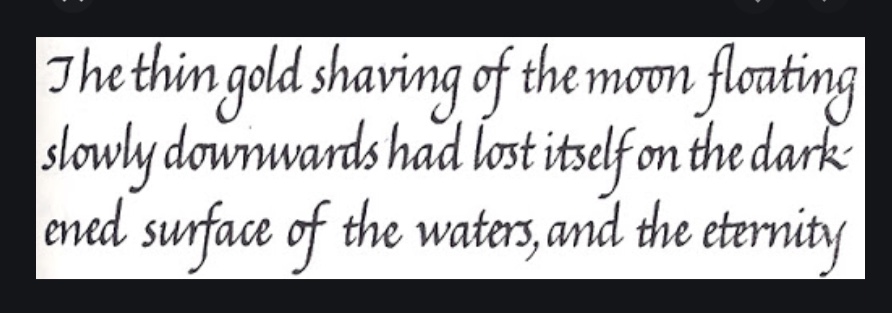
There was a well-balanced but stark documentary on UK’s Channel Four TV station entitled “Surviving Covid” the other week. It followed the fights for survival of four Covid patients in King’s College Hospital in Camberwell, London this year. This PC was partly prompted by a scene towards the end of the documentary which showed the scribe, for the word is perfect here, recording the names of those who had died. She was adding the names extremely carefully in Italic script; it was beautiful and it was surprising and it was delightful – a somewhat old-fashioned tradition that added something to the record, more than if it had been typed. How long would this sort of thing last I wonder?

I tried to take a photo of the scribe, but the documentary has now been shortened, and that piece deleted! This is a simple example of italic script.

If you haven’t made a will it’s probably because you are under 30 and without children. If you are over 30 and want to make life easier in the event of your demise, make a will. Doesn’t cost a great deal and they are not written in stone; you can alter it as often as you like. Always surprises me that a court will accept a challenge to a will by a discontented relative as, in theory, a will is you last will and testament, your choice how you leave your assets, however small they may be. I should add that here in England you can leave your possessions entirely as you wish, not constrained as I might see it by diktats of The State (Note 1)

I needed to sign the latest alterations to mine and that signature needed to be witnessed. In these constrained times finding two people who could do that is bound to break the UK Covid guidelines. However within my part of Amber House are six other apartments, two occupied by their owners and the others rented out. We meet in the hallway and on stairs, on the external flight leading to the large old front door, we take in each other’s Amazon parcels and I argued with myself that we form a support bubble, so asked Ellie and Charlie in Apartment 8. Ellie is an art teacher in a secondary school and her partner runs his own landscaping business, so both are mixing with potentially infected people all the time. However, Covid rates in Brighton & Hove are much lower that the UK average so when they arrived on Saturday morning to witness my signature, I dismissed their ‘Do you want us to wear masks?’

I didn’t need to expose Ellie & Charlie to any details of my will so no explanation why I was leaving 50% to crofters on the Isle of Mull, who knit sweaters from the hair of island rats, was needed. The last page just covered the signatures, mine and theirs as witnesses. I had thoughtfully provided a pen, in this case a green Lamy fountain pen with green ink – my favourite ink colour at the moment.

“Goodness!” exclaims Ellie, “I haven’t used a fountain pen since I was at school.” (She’s just turned 30). Charlie added that he got fed up with getting ink on his fingers, which we all acknowledged was a constant problem. Ellie signed whilst Charlie practised, then applied himself to his task.

My affaire with a fountain pen goes back to school days I guess. At that time it was deemed an essential skill, being able to write well and legibly …. and that meant with a fountain pen, when you could impart character into your cursive script. I could not get into the habit of resting my right forearm on my desk as I wrote; apparently you couldn’t form your letters if you didn’t and Mr Adams, both headmaster and English teacher, took a dim view of such deviant behaviour! Eventually he thought he could beat the habit into me so gave me ‘six of the best’!

My step-father’s mother Isabella gave me a Conway Stewart pen for my 12th birthday; I lost it twenty years later during a weekend at Wield Farm where my chum Alwin was wooing the eldest daughter Claire. I went along in some capacity, certainly not a chaperon! So then I bought myself a Sheaffer which took an ink cartridge, as opposed to putting the nib into a bottle of Quink and letting it suck it up. I still have my Sheaffer, now almost 50 years old; the barrel is a little battered and worn but it writes beautifully.

The signature white ball in the top’s gone and the barrel’s metal casing is very worn!

During my period of unemployment after leaving Short Brothers in 1991 I applied for a sales role with an Israeli firm. After two interviews I was asked to do a graphology test. This was before personal computers and my CV and its covering letter was in my cursive script, in dark blue ink (safe!!). So I asked whether that was sufficient for the expert to analyse. “Could you write something with a biro?” I almost threw my toys out of the pram, imaging that my biro-created words were going to be used to determine my success or failure.

My final degree exams and the Staff College entrance exams all came out of the nib of this pen, as if the answers were all in the barrel or locked into the ink, or flowing down my arm from my brain and out across the paper. There were more figures than letters in engineering examinations, more letters in writing an essay on contemporary international affairs.

Constant use of a pen, whether fountain, cartridge, felt tip or biro is always going to cause a little piece of hard skin on the left hand side of the second finger. As I write this I look down and run my thumb along the finger, for sure enough it’s still there despite less and less use of any writing instrument in this digital world.

I have a collection of fountain pens now, including a MontBlanc given some years ago for some milestone birthday by Stewart, as well as lots of biros, felt tips, fibre pens, Staedtler Lumocolor fine permanents and dozens of pencils. But I do love my fountain pen.

Richard 11th December 2020

Note 1 For instance in Brazil when one parent dies 50% of the value of the house goes to the survivor, the other 50% split equally between any children. In Scotland children are legally able to claim 33% of a parent’s will, divided equally between them.

PC 207 I’ll eat my hat! **

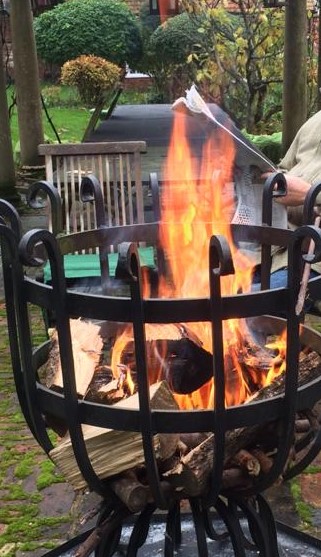
My good friend Jonathan lives in the glorious little village of Bratton, tucked under the northern slopes of Salisbury plain in Wiltshire, and is gradually getting back to full health having suffered from Long Covid for 9 months. The latest round of Tier 2 restrictions that came into effect this week preclude him having a planned small supper party indoors but not put off, he was trying out his garden brazier to see whether (up to 6) people could gather around that one evening – in December??

For some reason we got talking about hats and the ubiquitous ‘flat cap’ so loved of the military and those who indulge in country pursuits. Jonathan messaged later to say he felt ‘a postcard’ coming on! So what follows was prompted by our chat, our ‘chewing the fat’!

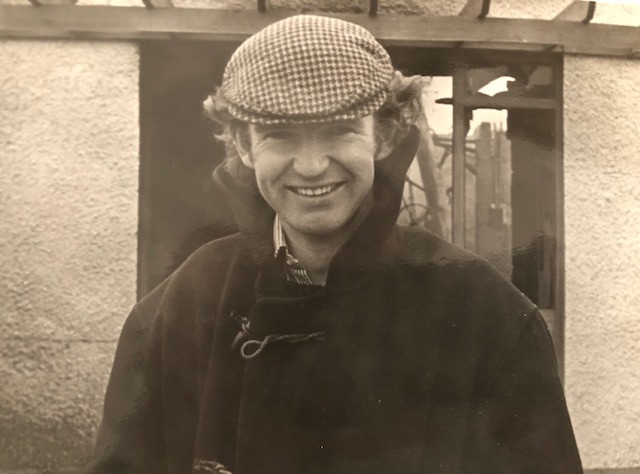
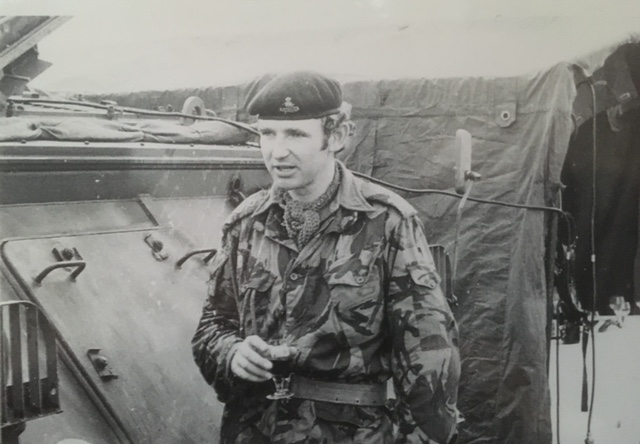
My flat cap; sadly no longer, but here in 1976 on a Northern Ireland tour as PRO

Not being sexist but this PC is exclusively about male headgear, as I know something about this and little about female attire for the head.

My military service ensures I have some experience with many different forms of headgear; the Service Dress hat, the ceremonial Forage Cap, berets, the helmet and the Cap Comforter, a knitted hat that you could pull down around your neck if you needed to.

When the army was called upon to deploy troops to Northern Ireland in 1969, ‘in aid to the civil power’, regiments were initially welcomed by the catholic community as they would surely act as a buffer with the protestant one. Most troops wore their regimental beret – a softer look or so it was believed. Sadly it didn’t take long before the hail of bricks and bottles directed a more sensible alternative in the form of the helmet!

On a break on exercise in Germany, wearing my Royal Artillery cap-badged beret, with a glass of red wine and a cheroot.

The service beret was a comfortable form of headgear; the civilian equivalent is the beret so loved by our neighbours across the Channel. Mine, made by Kangol, I use occasionally; when not in use, it keeps Fredrick happy.

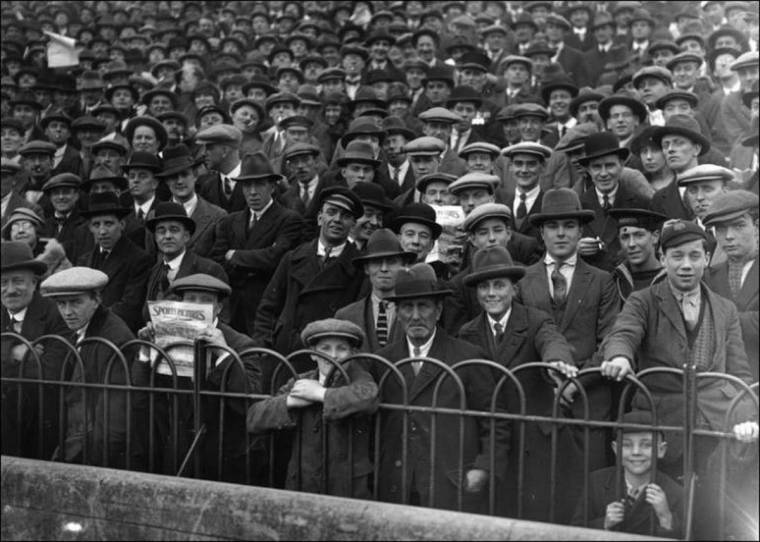
When I left the army in 1985 my father, with whom I had little contact, sent me his bowler hat in the mistaken belief that anyone who worked in London would need one. Fortunately that wasn’t the case but in the early part of the C20th every male wore a hat!

The success of the radio series The Archers, when it first aired in 1951 ‘an everyday story of country folk’ which morphed into ‘a contemporary drama in a rural setting’ and still broadcast today, led to television soaps like Coronation Street, Emmerdale, East Enders, Neighbours and Crossroads developing a huge following. For a decade from 1975 one of Crossroads’ characters was a chap called Beeny Hawkins who was not the sharpest pencil in the case. His trademark piece of clothing was a woolly hat.

After the 1982 Falklands War the military garrison was naturally strengthened and relationships with the small civilian population became paramount. Our armed forces are known for their wit and humour, often at someone’s expense. One morning the garrison commander asked his staff at their weekly meeting why the soldiers referred to the islanders as Beenys. Once his staff had educated him as to the character in the Crossroads TV soap, he asked that this habit stopped as it was disrespectful. A fortnight later he congratulated his staff; apparently the soldiers no longer referred to the locals as Beenys. “But why” he asked, “are they now referring to them as Stills?” “Still Beenys Sir!” came a quick retort.  

We have experienced a number of ‘firsts’ since settling in Hove in 2012, but one that has stayed quite prominently in my memory – someone wearing a hat at dinner! When you don’t know people that well, as hosts it’s our role to make them feel comfortable, and not necessarily comment on individual idiosyncrasies!! The couple came, we took their coats and scarves, introduced them to the others and got them a drink. The black flat cap stayed on; it stayed on throughout dinner and was still there as the owner departed. Does he have a huge scar on his skull or a birthmark he’s not happy about, is he bald or does he suffer from a cold bonce? We will never know but he certainly felt comfortable wearing a hat having his salmon and roasted vegetables …… and that’s OK!

I own a yellow cap in the style of a baseball one, although have never played the game. What I do not understand are those who wear it with the peak at the back! Maybe someone could explain this trend?

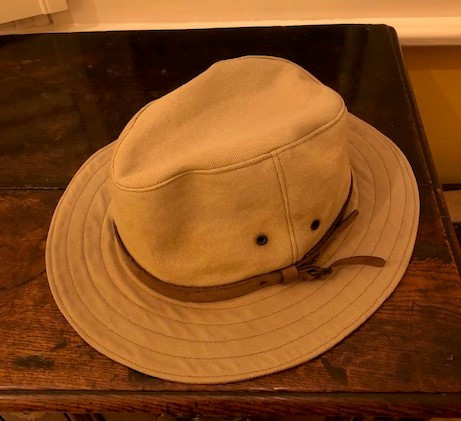
Dog walking requires the right clothing for any weather; when my Labrador Tom arrived in 2002 I realised my wardrobe required some extra gear. I am not one for an umbrella so, during a break in a coaching session in the Institute of Directors, went across Pall Mall to Farlows, a ‘Huntin’, Shootin’ & Fishin’ emporium. I came away with an Aigle jacket and a wide-brimmed hat that was, when first purchased, vaguely waterproof. It’s been through the washing machine a few times so probably has lost some of the rain-proofing but has developed some character; well, I think it has!

After the first six weeks of our Officer Training at Sandhurst in October 1965, we cadets were allowed to venture into Camberley, the local town. In a sign of how rigid and formal our training was, our civilian clothes, our mufti, had to include a Trilby hat, made of course by Herbert Johnson. If we were seen in town without one all hell broke out!!

Fortunately I still have a full head of hair but those who are follicly challenged used to believe that 40% of body heat was lost through the top of the head – so wore a hat. We now know it was a myth and that the head suffers no more heat loss than any other part of the body.

So, thanks to Jonathan for an idea for a postcard; always fun to look at something like a hat!

Richard 4th December 2020

** ‘I’ll eat my hat’ a phrase suggesting an event is extremely unlikely to happen so offering to do something silly.

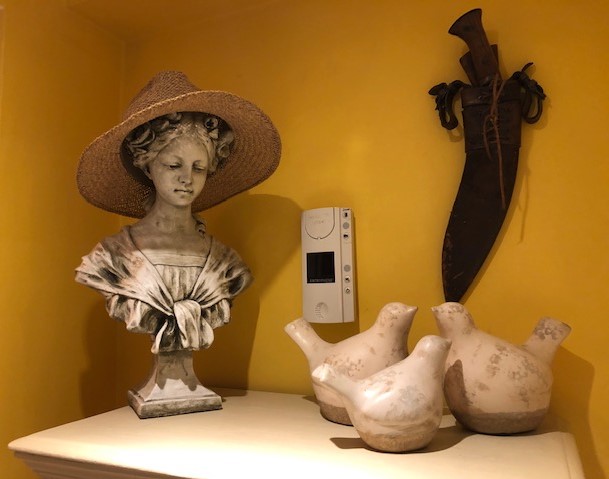
A sun hat finds another use

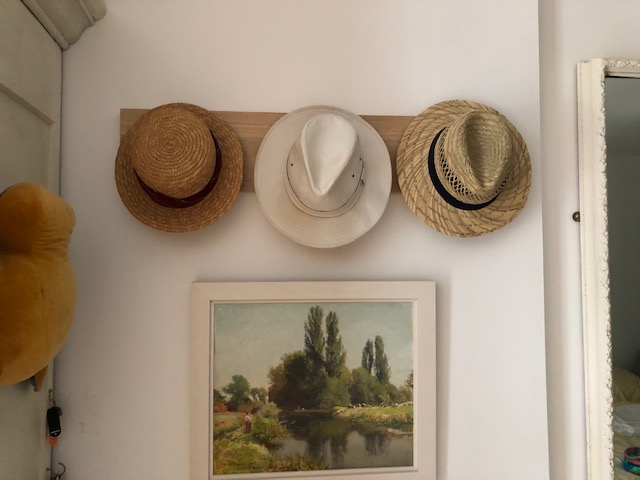
A place for hats – a rack!

A fun hat after James Dennison’s 2018 wedding

Another use for ex-army stuff

PC 206 Chewing The Fat

I caught up with Celina’s cousin Toni in Estoril, Portugal on Saturday and spent some time just ‘chewing the fat’ (Note 1). In Brazilian or Portuguese I am told the equivalent is ‘passar o tempo’ but that sounds like ‘passing the time’ and I sense our saying has greater depth. There was an old-fashioned phrase ‘chewing the rag’ where the word ‘chew’ meant simply ‘to say’ and ‘rag’ was slang for tongue. ‘Chewing the fat’ I can understand, maybe getting my teeth into some delicious pork scratchings; no good if you are vegetarian or vegan!! My mother used to ‘chew the cud’ when she was concentrating on some sewing job; exactly like a cow seems to chew the inside of its cheek, although this is actually ruminating. (Note 2)

I digress. We had called Toni on WhapsApp as it was his birthday. I brought him up to date about life here in the UK and mentioned that I had just read the obituary of Eric Mark (Jun 1922 – Nov 2020), a German-born Jew who had worked as a ‘listener’ at high-ranking German Officer POW camps in England during WWII. It was Mark who, through listening to bugged conversations of the inmates, identified the existence of a secret rocket programme, the Nazi ‘vergeltungswaffen’, that became known to us as the V1, colloquially the doodlebug, and V2. Completely coincidently the British author Robert Harris’s new thriller is called V2.

En passant, Toni asked whether I would have an anti-Covid vaccine when it became available. “Of course!” I answered immediately and went on to extoll the professionalism and standards of our regulatory system, the ‘checks and balances’ and the confidence I had in it. I imagined that any trials would fit all the required parameters ie the majority of people would show no adverse reaction (Doomsayers would jump on this and say but they are risking people’s lives and bleat about the Draconian State and …….) but common sense prevails. If it works for the majority, I’ll have it! Don’t forget I spent the first three decades of my life institutionalised – first at boarding school then in the military – and survived, not as an automaton, but someone who works within some boundaries, within some framework of values and rules. I have an inbuilt ‘acceptance’ switch; I trust the system.

We have had a hideous year by any measure; reminds me of our Queen’s annus horribilis of 1992: “not a year on which I shall look back with undiluted pleasure.” That year three royal marriages collapsed, a fire destroyed more than a hundred rooms in Windsor Castle and a toe-sucking scandal involving Sarah Ferguson, Duchess of York, rocked Britain and the monarchy. Last year could have been another bad year for her but I leave that for you to research!

Celina and I have ducked and weaved and somehow remain physically and mentally in good shape. We left Singapore in early December last year (phew!), had our lovely time on South Island and our three weeks in Rio in January were just wet but free of Covid. We obviously got caught up in the first lockdown, had a glorious if constrained six weeks in Portugal in the summer and slipped back to Hove before we were required to self-isolate. We have adapted to yoga online and now with a room heater and humidifier practise our daily 26/2 sequence in a warm and cosy atmosphere. We have been lucky. Some people we know have not made it or are still suffering from Long Covid; being vulnerable I take care when out and about and have shunned the local buses!

There is always an upside to any crisis and it’s worth just thinking about some of the positives! The other evening I happened to look up into the night sky and saw some moving lights. Ah! Yes! I thought: an aeroplane; so unusual. (London Gatwick flights are down from over 900 to about 77 per day). Less pollution in the skies and around our major roads has cleaned our air and water, both fresh and sea. 

Some of us have been reacquainted with more simple pleasures like jigsaw puzzles, like Marvel’s Super Heroes, and Lego. My daughter has had world-wide quizzes with far flung cousins over Zoom.

After twenty years of argument, NHS’s patient records suddenly became available to doctors online in a few weeks. And instead of going to the surgery and sitting in the waiting area with people who were ill, we now have online consultations, saving time and efforts for patients and doctors alike. Granted it’s not for everyone but it’s working.

We should also now have a greater awareness of what makes one vulnerable to this virus. We have known for years that the UK population is getting fatter and that makes us susceptible to all sorts of things, but most of us ignore the signals – “it’ll happen to someone else!” But Covid is indiscriminate and slowly that fact is sinking in, through the subcutaneous layers. Initially we had the old, bold and overweight men ending up in ICU and heading to an early grave. Then we saw individuals in the forties and fifties suffering and the penny began to drop – “It could be me”. So hopefully all of us are using this period for a real sensible self-assessment of our physical being; this is your life and you can live it and live it well – or not – but it’s never too late to change.

You may have heard that those who caught the virus lacked Vitamin D or were of a BAME origin? An investigation on TV’s Channel 4 the other night aimed to determine whether Covid is racist and was presented by a medic described as a ‘gay, black, androgynous intersectional’ feminist – whatever ‘intersectional’ means. So not biased then? But there is a serious element here, as BAME (Note 3) groups have been disproportionally affected by the pandemic.

The pandemic has flushed out the vaccine deniers, those who try to link Covid with 5G, voting illegalities, worries about ‘the army on the streets’ and the mindless people who stand up and spout drivel. Poor misguided souls. Whenever the vaccine is available, if you’ve nailed your colours to the mast and said you will not have it ….. go and self-isolate for a year or two, please. (Note 4)  The shenanigans by President Trump over the US election results remind me of President Lukashenko’s continuing attempt to insist that Belarus’ August 2020 election was fair and that he won – again! In the west I suspect we all believe it was rigged – different country, same reluctance to accept they’ve lost.

Finally, above all, let’s not forget what we see as disgusting scenes in the Wuhan wet markets that beggar belief – and I then read they are going to ignore the connection! (I tried to post another photograph here but was prevented for ‘security reasons’???)

Just chewing the fat ……..

Richard 27th November 2020

Note 1 To talk to someone in an informal and friendly way

Note 2 Ruminating actually is the process of bringing back half-digested food into the mouth for further chewing (yuk!)

Note 3 BAME – Black, Asian and Minority Ethnic. About two thirds of NHS key workers are from BAME groups.

Note 4 Another suggestion from a chum is to use the unused cruise ships to accommodate them – somewhere – anywhere – far away!

PC 205 ….. A First Step (continued)

Scribbling about that ‘Wants’ list (see PC 204) and sowing seeds brought another connection to mind, my good friend Jon becoming a grandfather for the first time. I wrote to him saying that I had found something extremely special about cradling my first grandchild in my arms, in my case Jasper in November 2011, and realising he contained some of my DNA. These scribbles are about more first steps but I suspect Otis’s are some way off, as he was only born in late October!

I caught up with Jonathan & Deborah earlier in the month. He’s been struggling to return to full health following a bout of Covid back in February and then Long Covid for five months; pleased to hear slowly but surely he’s getting better, but this ‘Long Covid’ is a real bummer. Deborah is a talented pianist and she told me that recently she’s ‘been hearing new tunes, passages and musical sequences in my head’ whilst gardening. The first step I guess to composing something, like a novelist looking at a blank sheet of paper and waiting for inspiration. We wait, we start …… with a first word, with a first note, with a first brush stroke.

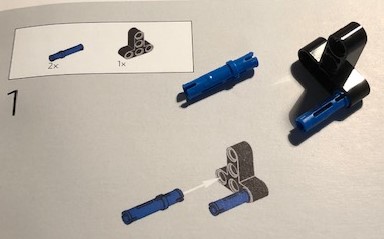
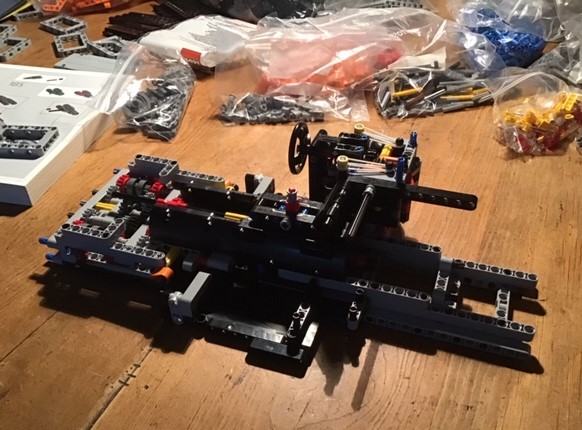
In a note to PC 200 I mentioned that Simon & Benedicte have very kindly lent us a 4000-piece of Lego Techic – a Porche 911 GT3 RS. We saw it on their table completed; from memory it’s probably about 65cms long! Then they took it apart and gave it to us in a number of plastic bags. It comes with a book that’s 2cms thick and contains 856 individual instructions. Like so many things in life, building the model Porsche starts with the first step; take A and B and fit them together.

And some weeks on, after a false start and the need to go back to the first instruction, we are making progress!

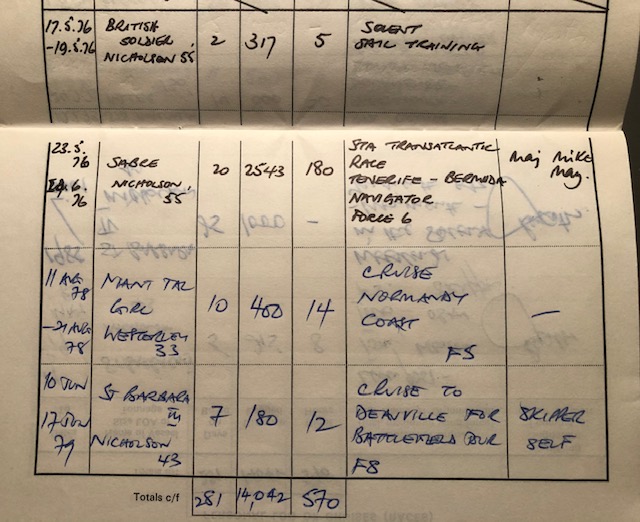
I have sailed in dinghies and in keel boats all my life; sometimes around buoys or lightships, both inshore and offshore, in a race and sometimes cruising long distances to other countries (For instance the STA Transatlantic Race 1996 to Bermuda (PC 161)). No matter how often I have doubled up the warps in preparation for casting off from the mooring or jetty, the actual instant of feeling the yacht moving with the wind, taking that metaphorical ‘first step’, with all the anticipation that adventure brings, never ceases to thrill me.

The warp doubled up, ready to leave ……

Of course there is hesitation with anything unknown – with the analogous darkness if you like. But like the chap who wanted to walk to a far-off town, all you need is a little light. Sometimes that light has a religious feel.

Like a lot of people of my generation I read Nelson Mandela’s inspirational autobiographical book “Long Walk to Freedom”; now he took a huge number of ‘first steps’!! Somewhere in his Presidential inauguration speech he said:

Our deepest fear is not that we are inadequate. Our deepest fear is that we are powerful beyond measure. It is our light, not our darkness, that most frightens us. We ask ourselves, “Who am I to be brilliant, gorgeous, talented and fabulous?” Actually, who are you not to be? Your playing small doesn’t serve the world. There’s nothing enlightened about shrinking so that other people won’t feel insecure around you. 

We are all meant to shine as children do. We are born to manifest the glory of God that is within us. It’s not just in some of us; it’s in everyone. And as we let our own light shine, we unconsciously give other people permission to do the same. As we are liberated from our own fear, our presence automatically liberates others.”

I get that, letting our light shine, the light of our life. So it was sort of disappointing to learn some years later that he hadn’t actually written this, that he had been guided by the American Marianne Williamson. Ah! Yes! I thought, I have read her book “A Return To Love: A Course in Miracles”, about her journey from drug addict to someone with purpose and ambition. I reached for the book on my bookshelf; somewhere in here I thought, in this course of miracles, she will have written those words, but where exactly? I closed my eyes, thought about this quotation, and opened the book at random, finding myself at page 165. The first paragraph started: “Our deepest fear is not that we are inadequate. …” I kid you not; there it was! SPOOKY or what? Possibly a miracle?

Next to Rami’s there’s a café which acts as a venue for an AA Meeting (Note 1). I make no judgment as to its popularity but pleased that each individual, young and old, man and woman, has taken the vital first step, possibly one of the most difficult they have ever taken. Whilst I acknowledge that alcohol can act in all sorts of ways to enhance one’s experience of life, in excess it destroys both the individual and those who love them. I don’t know anyone who has engaged in the AA’s Twelve Step programme, although I have known some who should have! As I understand it, the first step is to admit one’s powerlessness over alcohol; the second to believe some ‘greater power’ could help restore one’s control and the third step is deciding to commit to the programme. The fact these meetings are still allowed during our second UK lockdown emphasises their essential nature.

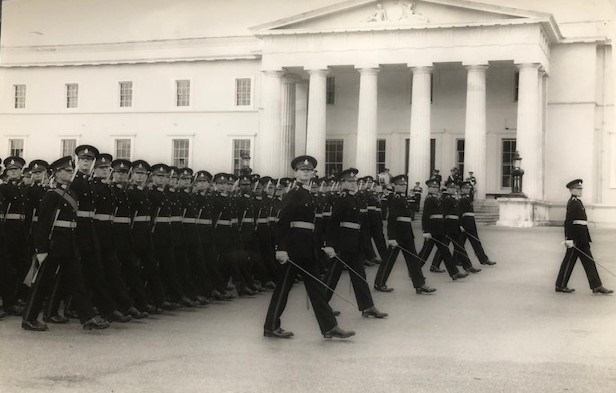
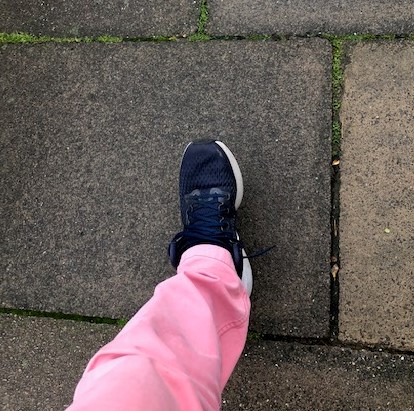
And being an ex-military man, you would expect me to write something about marching, that first step, that initial lift of the foot forward. A military pace is 30 inches, measured by the drill sergeant with his Pace Stick. You start off with your left foot. Why? Well, when the Greeks developed the phalanx formation, the soldiers’ shields interlocked, and their weight was transferred to the left foot in a fighting stance. We have all heard it somewhere, sometime: “By the right! Quick March! Left, right, left, right, left …..” (Note 2)

Intake 39 Commissioning Parade July 1967 Slow March – that’s me on the right of the line!

Neil Armstrong was the first human to set foot on the moon, on 20th July 1969, famously declaring: “That’s one small step for man, one giant leap for mankind.” Now that was a very famous ‘first step’ ….. onto the moon’s surface.

And finally when you step forward you step into a virgin idea, onto a clean sheet of paper and as you do so you make memories. So go on, take a first step, whatever it is?

Richard 20th November 2020

Note 1. Alcoholics Anonymous

Note 2 ‘By the right’ simply indicated that you line up with the person on your right. When recruits were uneducated chaps from the countryside, they didn’t know left from right. Drill sergeants tied a wisp of hay to the left foot and a piece of straw to the right one; instead of ‘left, right’ it was ‘hay foot, straw foot’!

PC 204 A First Step (part one)

Actioning something new, anything to stretch and give sense and structure to your day during enforced (UK) lockdown restrictions, always starts with a first step.

But how do you see where you might want to go, what you need to do? In PC 124 I scribbled about darkness. “….. My friends lived in a little village in the middle of nowhere five miles outside Barnard Castle in Northumberland. It was night-time when I was ready to go home. I opened the front door to walk to the car which I’d parked about 50 metres away. Wow! Couldn’t see a thing, nothing to differentiate shapes, one from another! Hesitatingly I edged forward, arms outstretched, towards where I thought the car was parked ….” What I needed was a lamp or torch; there was one in the car, so that was no use, and this was before the answer would have been the torch app on my mobile ie before mobile phones!

Another story comes to mind, one heard during my Philosophy Course in 1995 at the London School of Economic Sciences (Note 1) This was recorded from conversations with Adi Shankaracharya. He was born in 700AD in Kalady, India and consolidated the Advaita Vedanta, a school of Hindu philosophy.

A certain man had to go out to another town nearly ten miles away. It was pitch dark and all he had was a tiny little lamp, which could at most light a couple of steps. Since the journey was long he became depressed and was not sure of reaching his destination with the help of his little lamp. He stood by the door in utter disgust and helplessness.

A holyman happened to appear (Ed: As they have a habit of doing!!) and asked him why he was standing by the door with his ridiculous looking lamp. The man replied he did not know what to do; he was all set for his journey but it was a long journey and the lamp was so small.

The holyman then said it was not necessary to have a light stretching all over the way. “As you proceed the light will also proceed and the way will always be clear for you. All you need do is to hold on to this light and keep walking.  You will reach your destination in full light.”

Illuminates the issue quite well, I think! Maybe at the start of the first UK lockdown you had a bucket list? Well, not a bucket list as that’s a bit of a cliché, but a list, in your head, on paper, rocking around inside your mind: “I must try and …., I wonder if I could ……, I’ve got time to focus on ……, maybe now’s the time to complete/revisit/restart ……”. And now, here we are again! When I was working with those who were looking for another role in the 1990s, I asked them to write down 30 things they wanted to do, wanted to be, wanted to accomplish. Often the result did nothing more than sow a seed or two, that over time they fed, watered and warmed with their zest for life.

Some of us will tell our friends and loved ones: “Oh! I am planning to walk every day/run every day/work out in that little gym in the spare bedroom every day” and often in the telling one sets oneself up to fail. Others just commit themselves silently ……. to read more, to walk twice a day, to research a local choir to see if that long held personal belief in one’s voice has traction, to write something every day. You shouldn’t be surprised that successful writers and artists and musicians practise, practise, practise every day.

For some of you the prospect of a lockdown might suggest more laziness in the morning. I use the word laziness as I am a morning person and simply love the first light of day, the freshness of the time of sunrise; staying in bed is just a waste of everything that’s out there, so a first step is actually putting your feet onto the bedroom floor.

 For some only a little light, our own light, on actioning something is necessary, certainly not a spotlight, and as we fulfil our own personal commitment so we become more confident about sharing the achievements. “I have been drawing/painting/sketching a bit and wondered whether you’d like to see what I’ve done?”

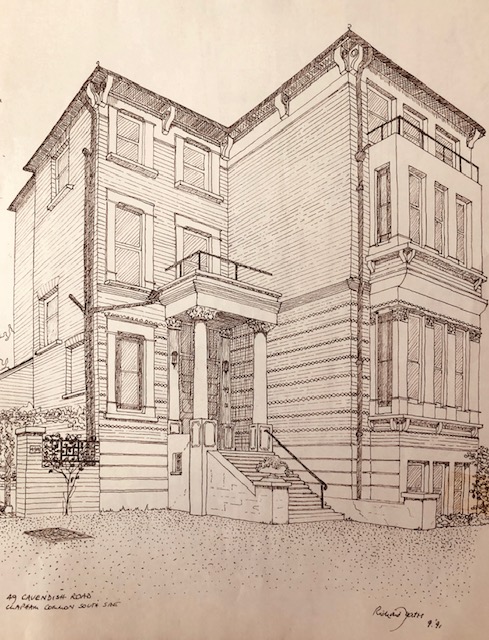
My first London flat was ‘below stairs’ on Cavendish Road SW12

I have dabbled with pencils, pen & ink and with oil paints at various times in my life. With the former I even took a few commissions to draw others’ houses. As with everything, they started with a first pencil stroke, a tentative line, a curve.

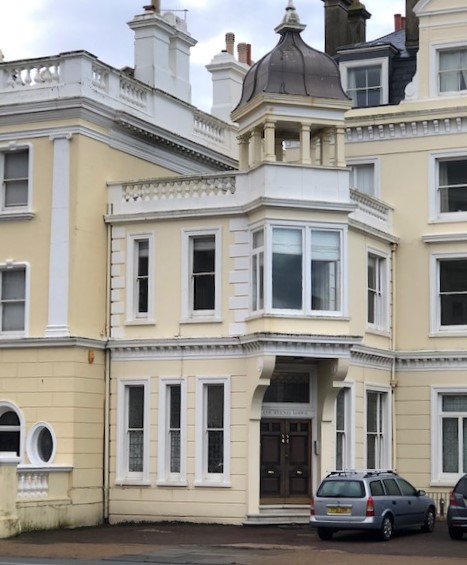
My side entrance. The Yellow Palette was my business coaching company

 I was reminded of this the other day on my way back from Rami’s, a newsagent where I buy my paper copy of The Times first thing in the morning. There on Kingsway, a main thoroughfare into Brighton, on a cold, sharp morning and in the rays of the rising sun, sat Stephen (Note 2), on an old milk crate, pencil in hand, drawing the beautiful building opposite. He told me he had drawn every building from the statue of Queen Victoria up to the King Alfred Leisure Centre (Ed. Some 500m) and was on his way back. Why? Because he loved the challenge, loved being alive, in that moment, focused. He did it for pleasure, pure and simple. Nice, that!

One of the houses on Kingsway Hove Stephen drew

Back in March 2009 I asked a neighbour whether she knew anything about ‘yoga in the heat’. “Oh! That’s Bikram Yoga. Do you want to go? Come with me on Wednesday to the Balham Studio?” So on the 12th March, eleven years ago, I took my first step into the hot class; been a few steps since then huh!

…… to be continued

Richard 13th November 2020

Note 1. Delightfully I remain in touch with my facilitator Robin Mukherjee.

Note 2. Not sure of the spelling; could have been Stephen or Steven?

PC 203 A Milk Bottle

When I was eighteen I applied to join the British Army and the selection process was a three night/four day assessment at The Regular Commissions Board (RCB) situated at Westbury in Wiltshire; I went in May that year. You can probably guess some of the items on the agenda: taking a team of four across a raging river, simulated by white tape, with only two barrels, a broken branch, a bucket of luck and some rope; an obstacle course to test fitness and agility; listening to lectures on why the Army might/might not be for you, being interviewed by a psychologist and by the selection board, and being observed 24/7 to see how you behaved. Being able to think on your feet was tested by the ‘Five Minutes’ talk.

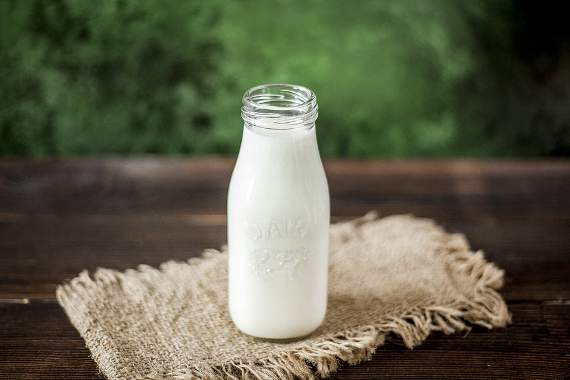
I stood in front of my fellow applicants and was given my task: “Speak for five minutes about a milk bottle.” ‘Gulp’ I thought, looking across the room of expectant faces, not to mention the officer who was going to mark my efforts.

So I started, (Ed: without slides of course but I have added photos to assist you!) my brain struggling to get some salient points in order before I ran out of either time or things to say:

Three words; ignore the indefinite article so only two: ‘Milk’ and ‘Bottle’.

Milk is, er, the white stuff that comes from animals and humans. It’s a nutrient-rich liquid food produced by their mammary glands for their offspring. Dairy milk is extracted from cows (Note 1): one will produce about 2 gallons each day.

The Holstein-Friesian cow makes up 90% of the UK dairy herds

Glass I think comes from melting sand, soda ash and limestone in some ratios. (Note 2). Seem to remember it was the Egyptians who made the first glass containers around 1500BC.

Humans have being drinking milk for millennia but it wasn’t until 1880 it was first sold in a glass bottle. If you raid the fridge and drink milk straight from the bottle, inevitably it dribbles down your chin and leaves a tell-tale white rim around your mouth.

Combining the two words, my first real memory of a milk bottle was that one-third pint bottle that was dished out daily at morning break at school. This amount of milk, roughly 200ml, was deemed essential for our physical development, particularly its calcium component which helps bone structure. At Dauntsey’s School, just up the road from here in West Lavington, the bottles, some 5 inches tall and 2⅓inches in diameter (13cms and 5.5cms), were available from a crate in the Tuck Shop, run by a Mr Pickford; one for each boy.

Mr Pickford was a slight short man with a white moustache; for some reason he always wore a white laboratory coat. (Note 3) He liked Wagner and would often play the wonderful overture to Tannhäuser. At break-time we sat at Formica tables, drinking our milk and playing Cribbage.

The ⅓ pint bottle was unique to the educational establishments. It came into being with the School Milk Act of 1946, not only providing children with something good but also as a bolster to the Dairy industry in a time of a depressed economy.

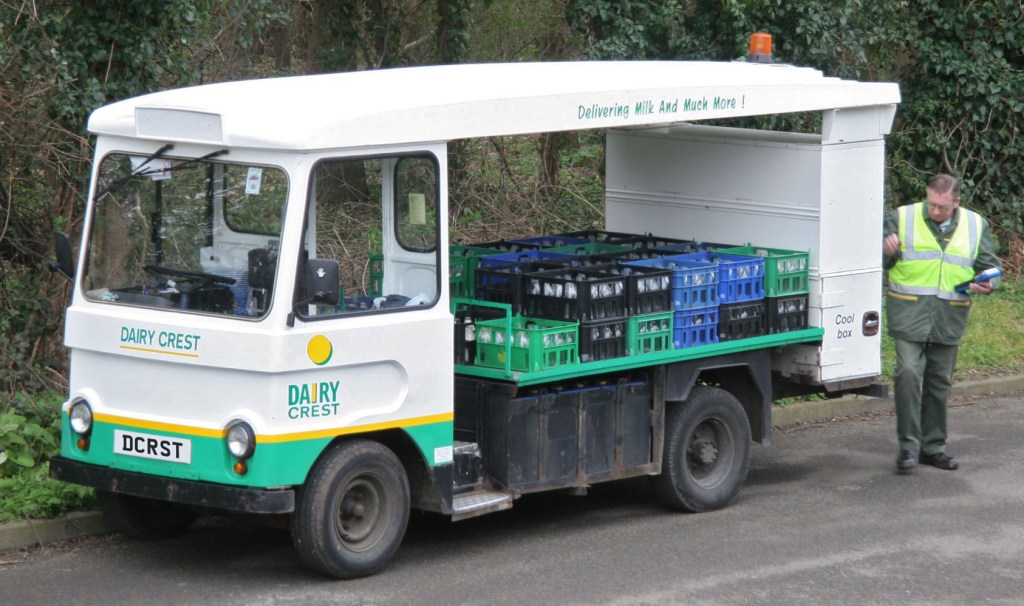
In residential street milk in bottles was delivered by electric milk floats – the origins of why ‘float’ are lost but it’s a romantic image, the electric delivery vehicle floating down the streets of our cities. Light sleepers will know just how early the milk is delivered, as the noise of rattling bottles was as familiar as that of fighting foxes!

Somehow birds learned that the gold-foil topped bottles contained milk with the most cream and many a morning it was apparent that the birds had drunk from your milk bottles, but only from the gold-capped ones!! Needless to say you could buy a cover for the four-bottle container to stop them; a simple counter could also be set to indicate how many bottles you needed.

Er! Er! ………

……. and I know this talk is on Milk Bottles but it would be remiss of me not to mention Mrs Adams, the wife of the Headmaster of a preparatory school at Wookey Hole near Wells. The school milk was not delivered in bottles but in churns, some 2ft 4ins tall and over a foot in diameter, which contained 10 gallons. A gallon of milk weighs just over 8.5lbs (almost 4kgs). I remember watching her lift a couple of churns in from the road where they had been left by the farmer; she had very big arms! ……….”   (Note 4)

I am sure somewhere in my unrehearsed 5 minutes on ‘A Milk Bottle’ I launched into the ‘what it wasn’t’, when you start running out of ideas. It shouldn’t have been an empty container for artist’s brushes, for water to wash out water-based paint. And I don’t think it was a big enough bottle for those who were dextrous enough to create little models of sailing ships and slide them in, pulling the rigging upright and plugging it with a piece of cork. Whilst I have always admired the craftsmanship of those who did, collecting them didn’t appeal and I guess these days a cruise liner inside a bottle doesn’t cut the mustard!

Today in the UK a company called Milk & More are building a very good business with home deliveries of milk and milk products. They sell whole, semi-skimmed and organic milk in 1 pint (568ml) glass bottles. A group called ‘Friends of Glass’ say that “milk in glass bottles is left closer to its original state than milk in other packaging; more enzymes remain. It is therefore easier to digest and those who have intolerance to milk can drink it.” There is always a counter-view; …. the nutritional content is negatively affected by glass. Apparently essential amino acids in milk such as tryptophan and tyrosine break down due to light; vitamin A and riboflavin are also degraded. Remember when butter was good for you, then bad for you, then good for you??

When I first started Hot Yoga back in 2009, I would be gagging for some energy infusion after a 90 minute class. There was nothing like a bowl of fresh Kellogg’s Cornflakes with Granulated (not Caster) sugar and cold, full-fat milk; so bad for you ……. yet so good!!  

There is something romantic about the old-fashioned shape of the milk bottle, something that modern cartons don’t convey. Today you can once again buy the glass bottles – not with milk in but for flowers, pencils, etc. What goes around comes around!

Richard 6th November 2020

Note 1. I gather some children don’t make the connection between a dairy cow and milk bought in a supermarket.

Note 2. Factually, in case you didn’t know, glass uses generic silicate known as silicon dioxide. Soda-lime glass with some 70% silica accounts for almost 90% of manufactured glass. 

Note 3. It could be he associated a brown coat with ‘trade’ and wanted to inhabit the next level up, that of the technician or assistant?

Note 4. I must have done OK, as I passed and entered the Royal Military Academy Sandhurst in September 1965.

Major-General Sir James d’Avigdor-Goldsmid, whose signature appends this note, was President of the RCB.

PC 202 Other’s Manners

Stating the obvious ….. one’s observations about life are very personal! You and I may see the same thing, experience the same event, be in the same space and in the same time, but our own memory will be different as we have developed our own filters through which we make such observations. I have always wondered how autobiographical writers have remembered conversations from months or years ago; yesterday’s difficult enough for me!

Then I read ‘The Spaces In Between’ (Note 1), an autobiographical account of the early life of Caroline Jones, a yoga enthusiast and good friend. She writes about one’s ability to recall experiences: “…..  I don’t want to hurt anyone’s feelings – and who is to say that my version is true anyway? Who is entitled to say what is true in any family’s history? It is all shades of grey, interpretations and misinterpretations: something that passes one person by might be the thing that tips another onto a different journey; and all, in the end, coloured by imagination and weakened by unreliable memory.” Exactly: so simply put. (Note 2)

On the UK TV’s Channel Four there’s an interesting Belgium drama called The Twelve; fortunately subtitles are provided for those of us who don’t speak Flemish! A jury has been selected to try a case of double murder. As the story unfolds, it focuses on the background of the individuals who make up the jury, making us very aware that their judgments and values are unconsciously coloured by their own experiences, good and bad, despite hearing in the courtroom exactly the same thing.

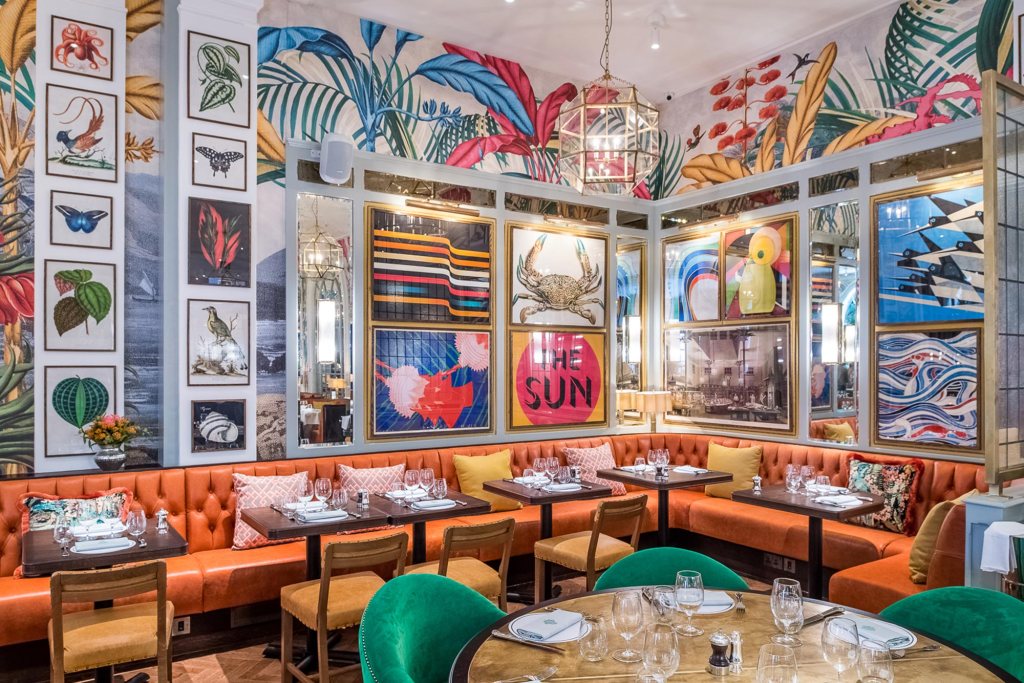
Normally we try and celebrate my Scorpio birthday with a supper party of some sort. This year we wondered how to do that living in the half-life of Covid 19. So we planned a couple of suppers, maximum 6 to abide by the rules, and Celina would shout a dinner at The Ivy in central Brighton. The name The Ivy is familiar as part of the upmarket London ‘eating & be seen’ scene; actually I ate there once …… didn’t recognise anyone else!  

The original restaurant started life as an unlicensed Italian café in West Street in London’s theatre-land in 1917. Over the decades it’s maintained a reputation as a very special place to eat and remains hugely popular; mobile phones and cameras are banned. In the last decade the company has established The Ivy Collection, a number of similarly-themed restaurants all serving the same good quality food and staffed by well-trained individuals.

Part of the dining area in The Ivy Brighton

There are Ivy Collection restaurants in a number of British cities; for instance we ate in The Ivy in Bath (See PCs 164 & 165) last year. The Ivy in Brighton opened in early summer 2018. Intrigued, we had a drink there a year ago and then in November were delightfully included in the wedding and Ivy luncheon of chums Sandie & Dom.

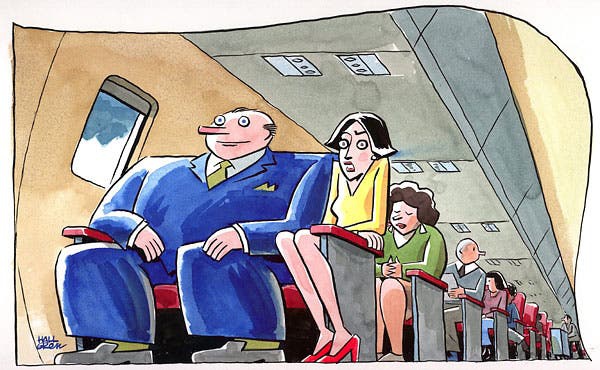
When you book a table in a restaurant you have no control over the behaviour of the other diners or where you sit, although I appreciate there is probably a difference between those in McDonalds and those dining in The Ritz (Probably better in McDonalds?)  Obviously you imagine that most people are well mannered and sensitive in shared spaces. Some of you may recall our irritating experiences of sharing a sun-terrace in Sicily with some Russians in PC 134? And you may have seen cartoons of an airline passenger sitting in an aisle seat and being next to a giant of a man; I think Gary Larson did one of a huge man coming down the aisle towards his seat?

The Ivy had no free tables on the day of my birthday, last Saturday, so we went earlier on Thursday. With current restrictions the restaurant has to close at 2200 and by 1845 it was full; we were shown to our table, one with places for 4. I guess it’s rude to stare directly at the people at the next table, but I remember clocking them and thinking “Oh! Dear!” Too quick to make a judgment, me, you might suggest; I couldn’t possibly comment.

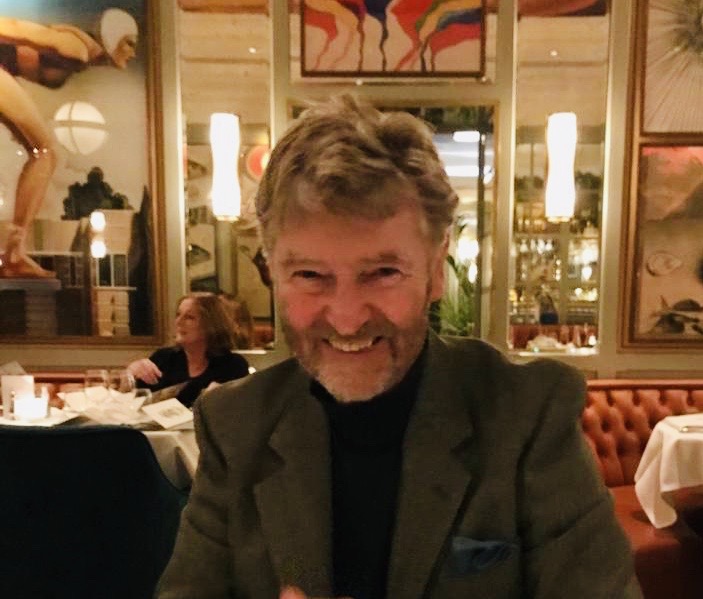
Mr & Mrs Overweight were accompanied by a couple who in the course of the evening said little and laughed, actually ‘screamed’ is a better word, a lot, in a way that grated on my sensibilities. Mr Overweight clearly appreciated their unconscious admiration at his jokes and stories. It was Mrs Overweight’s birthday so a time for celebration and the alcohol in the form of cocktails (with umbrellas of course) flowed. Halfway through the evening I met him on the stairs to the loo; I was on my way up, returning to our table. No recognition! No ‘after you’ suggestion as one of us had to give way. Gravity and potential energy (Note 3) was of course on his side! During the course of the evening, Mr Overweight’s language, liberally doused with swear words, and the volume at which he spoke got more irritating, all the time ‘stuffing his face’ with food and washing it down with glasses of wine. Twice they left to have a cigarette outside; the smell of stale smoke from their clothes on their return wafted across our table. I have to say I was much relieved when they paid their bill and left. Don’t read this incorrectly! We had a lovely meal of food that we do not normally eat, served by some skilled waitresses, and ignored the riff-raff manners. Celina took a photograph of birthday boy.

In PC 50 from September 2015 I scribbled about suffering a house & pool party of 450 people next to Celina’s parents’ house on Iposeria in the Sān Conrado suburb of Rio de Janeiro? We are often in conflict with others’ behaviour but nowadays there is a growing lack of respect for our fellow human beings and our tolerance levels are extremely low; mine included, sometimes!! Ironic words huh!!

Richard 30th October 2020

Note 1 On the book jacket the typeface had “the spaces in between” with no capitals! Very casual and calming.

Note 2 The late great Clive James’ first autobiographical book was titled “Unreliable Memoirs”.

Note 3 Potential energy is defined mathematically as mgh – ‘m’ mass in kg, ‘g’ acceleration due to gravity and ‘h’ height. Mr Overweight had lots of mass!

PC 201 Facts and Dying

In one of my posts from Estoril in the summer, PC 194 ‘Waiting for ……’, I mentioned the larger-than-life character who owned one of the apartments where my brother-in-law lives in Portugal. Early sixties-something Glenda told us last year that she had been diagnosed with cancer. With typical joie de vie she laughed and said how she was going to try everything but Chemo to beat it. When we saw her at the end of July this year you would not have known she was losing the battle, but by the time we left on 9th September it was quite clear her time left was measured in weeks rather than months. She had laughed and said that when it becomes unbearable, she’ll check out; she did so on the 15th of October. As someone recently said about a chum: “She loved this earth but could not stay.”

How often have looked up into the sky at the end of a holiday, after a get-together with friends off the beaten track or on Sunday afternoon when thoughts inevitably turn to the working week ……. ‘but can’t we stay’?

Someone suggested that we are the architects of our own demise and I agree. Most of us know that drinking alcohol to excess damages our livers, most of us know that smoking can cause lung cancer, most of us acknowledge that eating too much makes us fat, and we read that exercising is good for us. Only this week I read that swimming in cold water reduces the onset of dementia. We ignore the data if it suits us; a look on the bathroom scales can be fact, but we mitigate the unwelcome rise with some excuse. Those of us who smoked pointed to the 90 year old smoking 30 a day or thought that one might get hit by a bus crossing the road, so why not! We make our own luck but sometimes, inevitably one can be in the wrong place at the wrong time! Some people subscribe to the fatalist view, that no matter what they do, the outcome will be the same …… as it’s predetermined.

I never used to read obituaries published in the quality press, but do so regularly now because it’s more likely I might know someone whose life was noteworthy enough! It’s not only the rich and famous or the well-connected who feature. Often an ‘ordinary’ person whose life was fascinating appears and the compilers of the pieces clearly research their subjects with relish. I used to wonder why the accompanying photograph was of the person at 53 or 64 but never 86! We all can see that the ageing process is not flattering. Here’s an example of the little stories that often colour the summary of a life. Philip Ayrton-Grime was an established vet in Windsor and was entrusted with the health and well-being of the royal Corgis. Sharing a glass of Sherry with The Queen after one of his last visits in post, the elderly Philip was asked whether he was forgetting names and faces. As he nodded in agreement, the Queen sighed: “Fortunately everyone seems to know me!”

For the last few years I have got used to watching what is known on the BBC channel as the ‘Early Evening News’, broadcast at 1800. Since the start of the pandemic and repeated every evening since, the newsreader has solemnly read out the number of Covid deaths for the day and the cumulative total ie people who have died having a positive test. Initially it was sort of shocking, as if these deaths could have been prevented. Then it became apparent that the majority of the deceased had had ‘underlying health issue’ – suggesting that the virus had simply hastened their demise. A few months ago the public body for reporting the deaths, Public Health England, admitted that they used a different measure to that used by the other nations of the United Kingdom. Reworking the figures took over 5000 deaths off the total and introduced a measure of scepticism with the published data. So now I often scream at the television when they give the total as gospel! Now it’s just morbid mumbo jumbo. Next they will be announcing how many people have died as a result of a car accident. (Fact (check it?): In July 2020 the UK had 38,179 deaths. A daily average of 450 from cancer, 180 from heart problems …. and 17 from Covid 19)  

A headline in the newspaper concerned Russia and fake news.

You and I might think this is absurdly childish and pathetic, but if it is absorbed as the truth by those unable to make more informed judgments, it becomes a real concern, as such people are easily swayed.

Writing in The Times this week, Hugo Rifkind says: “Ideas that thrive are not necessarily the best or wisest ones. Witness a tweet saying a recent study had shown half of all positive Covid tests were false. It hadn’t at all, but that tweet was re-tweeted thousands of times. Various scientific brains tried to set the record straight, but the reality was boring and complicated and nobody wanted to hear it. What do we do with these people? Ignore them? Argue with them? Shut them up?

Recently I watched the Netflix documentary ‘The Social Dilemma’ about how people use the interconnected world to spread all sorts of news. Watch it and I imagine you like me will think it’s kinda scary? Sometimes the headlines are skewed by those with a particular bias. My dear friend Jonathan, who had fought in the Falklands War of 1982, drew my attention to a claim that veterans of that conflict were committing suicide at a higher rate than the average for their age profile. He investigated; of the 21,432 service personnel who had fought in the war, by December 2012, 1335 had died (compared with 2079 civilians for that age group). Seven per cent of the veteran deaths were due to intentional self-harm, making them 35% less likely to kill themselves than their civilian peer group. So what point was the claimant trying to make? I leave that to you to figure out. Of course I accept that the figures Jonathan quoted are accurate!

Funny world, inn’t?

Richard 23rd October 2020

PC 200 Another Milestone!

On the 2nd July 2017 I posted my 100th postcard …… and thought that was quite an achievement; quite proud of myself! And now, just over three years and three months later, I am trying to pull together my thoughts for the second one hundred, and doing that with the grey fog of Covid 19 hanging over me like a wet blanket. I assumed that Covid 19 was named as ….. CoronaVirusDecember2019 but if I Goggle it I find I am wrong; it’s happened before!

Despite everything being in digital form these days I wanted to have a paper record of my first three volumes of 50 PCs each. The local printer in Portland Road produced these ………

…… and in anticipation I created a frontispiece for the fourth volume PCs 151-200! They are possibly the most expensive single colour copies ever produced. (Note 1)

I am always amazed when people say they remember conversations they had with their mother/father/sister/brother/dear friend/boss/ex-boss/lover/ex-lover/dinner party guest/whoever months or even years afterwards. Can I remember what I was doing in July 2017, or even July 2018, let alone remember conversations? Nah! So I scroll back through my ‘Articles’ folder in Word and am reminded what’s happened over the last three years, events and thoughts that have prompted me to put pen to paper, so to speak!

Scribbling about this milestone, I sense I am looking back into a forgotten world, one where we could travel freely, could mix socially and could use our unmasked faces to express what we really felt and not have to rely solely on our eyes.

Boy did we travel! In addition to annual trips to Rio de Janeiro in Brazil, the establishment of a Rocha Miranda base in Estoril has given us an excuse to travel to Portugal at the drop of a Panama hat. In 2018 we took the ferry to Santander, drove through north-west Spain and south to Estoril (PCs 129 & 130); this year we spent six weeks there.

September 2018 found us in Sicily for a week (PC 134). Apart from going to Rio, these were all shortish journeys compared with our long haul out to the Far East at the end of 2019. Singapore (PC 168) and then, putting some of my family history into context, visiting Farewell Spit on the north of New Zealand’s South Island.

You may have got bored by my interest with the Fosberry and Nation families but if not, PCs 127, 152, 154, 169 &170 will put you right. Some of you will have read my PCs about our Alaska trip in 2015, following the escapades of George Nation who married the girl who was shipwrecked on Farewell Spit in 1877. There are some simply beautiful places to experience on this planet of ours, and I reckon New Zealand’s landscapes rate as some of the best.

In amongst the second one hundred PCs I have written about visits in the UK to The Anchor at Warbleswick (Courgette Neutral PC 153) and to the city of my birth, Bath (PCs 164 & 165).

Under the wooden representation of entwined ‘Love’ and ‘Hove’ that I carved from a pine board ……

……. around our dining table we have entertained some of the people whom we have met since arriving in Hove eight years ago this week. Some have come much more than once, such is how relationships develop. Sometimes one of the couple has had a passion for hot yoga. One of the real negatives of the current pandemic is that the social aspect of following our yoga practice has come to a halt, frozen in the fear of contagion and social infection. It will recover.

In addition to scribbling about social mores and changing behaviours, a hot topic of the moment, I have written about Virgins (PC 120), Bananas (PC 121 – and not related to the previous PC!), Night & Day (PCs 124 & 125) and September (PC 132).

My beautiful gorgeous Labrador Tom only spent a few months here in Hove before finally hanging up his collar, but the stay of my daughter’s American Labrador Margo prompted a PC about animals I have owned (PC 122). If we didn’t want to travel so much I am sure we would have another one – although Celina is more of a cat person.

Three PCs about my time in Northern Ireland came at the end of this batch of 100. Odd that after two tours there in the 1970s I should find myself working for a Belfast-based company when I left the Army in 1985. There is often something circulatory about one’s life’s events.

When lockdown was imposed in March I decided to increase the frequency of my fortnightly posts to weekly; if I hadn’t, this PC would have appeared sometime in May 2021. I imagined, rightly or wrongly, people would have more time to read (See Note 2). I have also tried to bang the drum for everyone to read more, given that the numbers of people in the UK who can’t read and write well is far too high (PC 174). (Note 3)

And I guess we have all been watching more Netflix than usual? One documentary that was recommended by Celina’s mother was The Social Dilemma, about the insidious invasion of our lives by postings on social media platforms, and the potential to alter our own judgements through fake or biased news items. Scarry!

Stay Safe. Stay Healthy. Now …… for the next one hundred.

Richard 16th October 2020

Note 1. Think you can make out postcards being sucked up into a Royal Mail red postbox? Now to collate another 50 and take the memory stick to the printer.

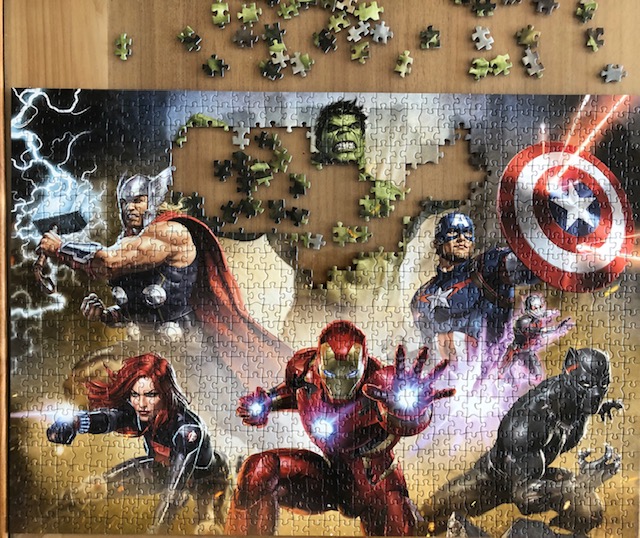
Note 2. In Estoril in the summer we were challenged to complete a 1000 piece jigsaw puzzle of the Marvel’s Avenger characters.

More recently Simon & Benedicte have very kindly lent us a 4000-piece of Lego Techic – a Porche 911 GT3 RS. Now that’s going to give days of ….. fun!

Note 3. One of my favourite authors Lee Child (He, real name James Grant, and his wife often referred to their daughter Ruth as ‘le child’ (the child)!) has co-written his next book about Jack Reacher (The Sentinel) with his brother Andrew. The intention is that after a few more, Lee will hang up his pen, leaving it to Andrew to continue.

PC 199 The Way We Are?

On my kitchen island I have a piggy money box ……

….. into which I drop the odd one pound coin. The habit of desultorily collecting spare coins started back at university when I wanted to stop smoking. In those days a packet of cigarettes was £0.50, so I bought a Snoopy money box and dropped a 50 pence piece into it every day. It was a few decades ago but that fund paid for a week’s holiday in Spain. (Note 1& 2)

The money box came to mind the other evening when Bill came to supper. Do you have an Anxiety Box? Somewhere you can drop those anxious thoughts about this and that ….. and leave them to fester, as opposed to not putting them there and seeing them in the cold light of day and seeing them for what they are …… often things completely outside of your control ….. and just let them go ….. let the wind take them? 

He sat opposite me, replete after a bowl of lovely fresh pasta and some yummy pudding. Relaxed and at ease with himself, he started talking about the next few months and then mused about the next few years. This was unusual for a bloke, talking about his feelings and thoughts, exploring the inner recesses of himself. In the climate of the Covid 19 pandemic, making any definite plans is fraught, for we don’t know, if we ever did, what tomorrow is going to bring.

For some, this uncertainty is easy to accept, for most of us it’s irritating to say the least, as exploring the future from the benefits of your armchair is what we do. For armchair read on top of a cliff, possibly windswept and bracing but with an horizon with which to stretch your thoughts; on a yacht using nature’s forces to go somewhere or just enjoy the experience; on a beach with the ‘lonely sea and the sky’; at the top of the spire of some cathedral; the theme is somewhere where you can see …. “an horizon is nothing save the limit of our sight” (note 3) …… and not snuggled under a duvet. And now those ideas and dreams are tempered with the uncertainty of when, if ever, life will return to some semblance of what we had previously considered normal! Some seem to believe life is on hold; naturally we are all a little anxious.

Smugly, I am OK thanks! I have reached a point in my existence where I am extremely happy in my own skin, think I know what I like, what I love and what I don’t like and what I don’t love – oysters for example! Some of you will, of course, be right at the beginning of adult life (I have to assume no teenagers read my scribbles?), as some of the children of chums are, reaching university and all that that rite of passage entails, for some onto their second or third careers, for some battling with health issues, for some fighting with relationship trauma. It’s happened before and it will happen in the future; don’t think you are the only one! For example, back in 1978 the mortgage interest rate was over 16%  and that sure gave one sleepless nights!

“So” he muttered “should I stop work and if I did what would I do? Would I continue to live in my current house now my children have left? What should I do? Learn to play bridge?”

“Oh! Come on Bill! That’s such a cliché!”

With a climate of anxiousness, ‘mental health’ issues have come under the microscope in 2020 and about time too. (See PC 136) But I am afraid all we hear are the negatives and not the positives. I wrote “On the day of my recent birthday the quotation in the yoga studio was very serendipitous: “Happiness involves taking part in the game of life, not standing on the edge of things and frowning.” Mental Health was a minority issue that has moved mainstream; failure to address it properly will have major consequences for the nation.”

If you read PC 195 ‘Snippets …..’ you will have read of the death of Ken Robinson. Maybe if you hadn’t done so before, you went onto You Tube and watched his TED talk about finding your element, that issue, that topic, that sport, that experience that engaged all of your emotions. I get that, for many, being in love with your work is not always possible. We get drawn into something that gives us an income and that pays for the art classes, the singing lessons that, whilst acknowledging you will never be Adele or Caruso, give us so much pleasure and we think that’s it, that that’s all there is. In fact just this last week someone admitted over supper that their job pays the bills, but what they really wanted to do was sing, preferably in the ‘chanson’ style as that suited their voice ……. and that was a real passion.

Bill again: “It’s too difficult and it’s alright for you, you …….” and the defensive self-justification comes rolling in from left field.

“But I’m OK! I thought it’s you who are coming up with all these situations that for no reason make you anxious. Does it make you feel comfortable to pop these anxious thoughts into your box and leave them there to look at in the small hours, when the churning starts? Please, just get them out and let them fly away.”

Richard 9th October 2020

Note 1 I stopped smoking then and at various other times during my life, always tempted back through smoking little cigarillos. My last cigarette was on 14th March 1994 – at 1230 if you are that interested?

Note 2 Additionally I have, like most people I guess, an old coffee tin into which I drop my monetary shrapnel (1, 2 and 5 pence coins) when I come back from a shopping trip. At Christmas it’s given to charity – ie my daughter!!

Note 3 Father Bede Jarrett (1881-1934) was an English Dominican friar