PC 228 Thinking Out Loud

Inspired to make a contribution towards more ecological living, you may recall my purchase of a Hotbin composter (PC 221) in the last few days of February and how I had had to use the landline telephone. Landline? Who has one of those these days? Well, here some 75% of the adult population but that’s probably a great deal lower in our 18 – 35 year age group. Living in Amber House the landline is essential as mobile signal coverage is very variable. Despite living in a city and despite my service provider O2 claiming I should have 5 bars, the reality is that it drops out, that the only way to get a good signal is to hang out of the window, with the tips of your toes wrapped around the radiator to prevent catastrophe. Texts?  ‘Didn’t send. Try again?’ ….. so you move a couple of metres and try again, lifting your arm up into the stratosphere as if that will help.

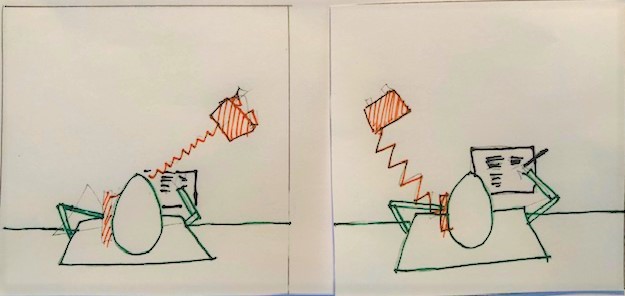
You may remember an office …… and you may have been lucky enough to have a desk …… which came with a landline telephone …… its cable coming up through a hole on the right hand side? I am sure you’ve watched a film where someone picks up the telephone with their right hand, dials a number and in the course of the conversation wants to make some notes. So they transfer the handset to their left ear, with the cable coming under their neck, half-throttling them, and use their right hand to write. Much easy to get used to using your left ear to listen, having the telephone on the left hand side of the table, with a free right hand to scribble. The reverse is true if you are left-handed (Note 1)
You might think if you have been reading these postcard scribbles for a while that I watch television quite a lot. ‘Tis true, particularly during these lockdown periods, but documentaries and dramas give me ideas about this and that.

Recently I watched some lightweight crime drama where the lead detective, and that’s lead as in most senior and not lead as in dead-boring and that probably would have been leaden…….. in the middle of a conversation with someone ……. when their mobile chirped and he said: “Sorry! Just need to take this!” without even looking at the screen to see whether it was someone on his Contacts List or someone unknown, without knowing who had called him and of course these days it could have been someone asking whether he had been involved in a no-fault car accident or someone whose first words were ‘I am not selling anything’ and one’s heart sinks because you know that’s exactly what they are going to lead into (lead again!) …… so interrupting whatever conversation he was having ….. just because your mobile rang or chirped or barked or whatever ringtone you have selected …… just because the caller has decided to call you as it’s convenient for them without knowing whether it’s convenient to you and we have become slaves to the ringtone, slaves to the ‘must answer this’ demands!

Sorry if I am a dinosaur about this but what happened to good manners when you are talking to someone aren’t you focused on them and what they are saying and how you might respond and yes sometimes you wish your mobile would ring and give you an excuse to pause the conversation because the person next to you is banging on and on and you wish they would listen and then you realise the only way to interject is to interrupt and that used to be rude but in some cases necessary. In the course of this particular drama the detective must have said ‘sorry I need to take this’ 8 times ……. not that I was counting!

I often call a chum, just for a catch-up, and I call when it’s convenient to me; possibly after lunch. “Sorry, just in the middle of lunch/afternoon tea/reading important stuff! Can I ring you back?” – so why answer in the first place when an answering machine will take a message? And don’t get me started on the modern habit of arriving in a restaurant (remember those?) and everyone puts their mobiles on the table; why go in the first place if you don’t want to engage with those you have come to be with?

Carol Midgley, writing in The Times on 17th April: “Oh! No! They’ve come back the phombies, more gormless than ever! People who walk and text simultaneously, oblivious to traffic or the old ladies they knock into. Almost knocked one over the other day texting, crossing the road, earbuds in; it’s important to be deaf as well as blind crossing.”

Of course our mobiles have become so much more than a way of speaking to someone. We communicate by voice, by text, by sending a photo or using one of the many social media apps. And more than a communication device, the mobile or iPad has become the internal spy for companies anxious to sell you stuff. For example, last year a bird dropped a seed and it landed in some compost in a terracotta pot. This I surmise as I didn’t actually see the bird but I saw the little shoots of growth.
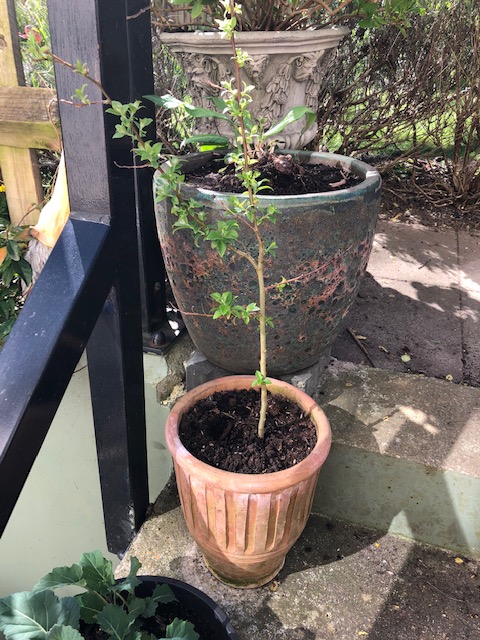
So I encouraged it, watered it, re-potted it and watched it develop. The problem is I don’t know what type of plant it is, possibly a weed, possibly a shrub, possibly a tree. So I took a photo and sent it by WhatsApp to Sally whose a keen and knowledgeable gardener – if in doubt go to the Oracle or so I thought.
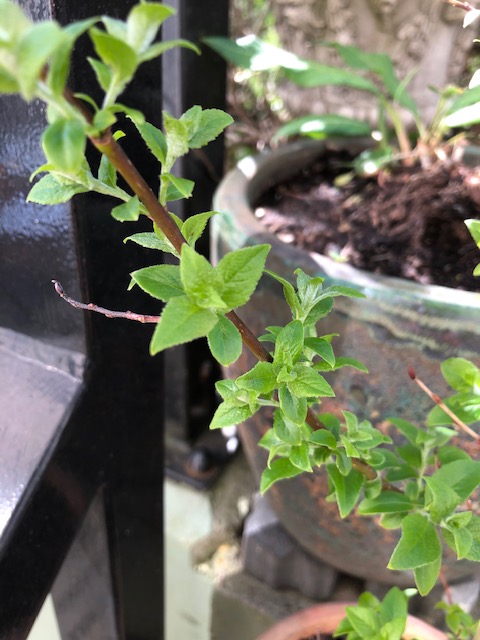
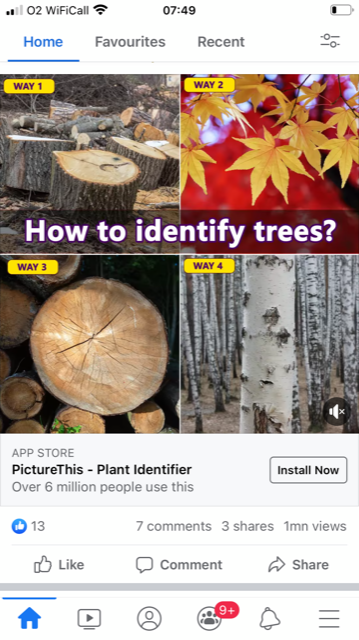
The Oracle responded in a negative way. Not so the internal spy! The morning after my Facebook offering is to invest in an App that will tell me what it is; I know there is one for plants but this is for trees.  
Just thinking out loud!

Richard 30th April 2021

http://www.postcardscribbles.co.uk

Note 1. Famous lefthanders include Angelina Jolie, Winston Churchill, US Presidents Barak Obama and Bill Clinton, Bart Simpson (as his creator Matt Groening is) and the future King of England Prince William.

PC 227 Departing ………

It comes to all of us, without exception, our departure from this world. Where we go, if anywhere, has been a constant in our philosophical merry-go-round discussions.

I appreciate it may be a factor of age, reading the published obituaries of individuals deemed worthy of comment, but three recently caught my eye. The first, George Reynolds, who heeded the advice of a priest after he emerged from his fourth prison sentence: “You’re clearly not very good at crime; why not try something legitimate?” Reynolds went on to make £260 million – a real mixture of businessman and rogue.

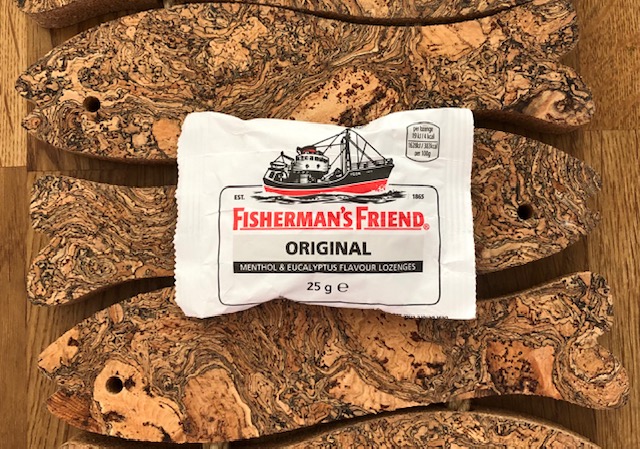
Then there was Doreen Lofthouse. Not sure whether it spans the generations but you may recognise the trade-name Fisherman’s Friend? Developed for fisherman from Fleetwood, Lancashire to sustain them and relieve their bronchial congestion in the cold North Atlantic, it was initially a liquid medicine, containing liquorice, menthol, eucalyptus oil and capsicum. From its origins in 1865 it was modified into a starch-enclosed lozenge and by 1971 into the aniseed one we recognise today. Believe it or not, some 5 billion lozenges are now produced annually and exported in various versions all over the world.
Doreen, who married into the family, changed the company from a small local operation to a global business; she died at the end of last month aged 91. Interestingly her obituary in The Times erroneously titled her as ‘OBE MBE’. When you are elevated from one rank in the ‘British Empire’ award, you drop the lower one; she should have been simply OBE! Just for accuracy you understand.

Then we have the celebration of the life of the Duke of Edinburgh, Prince Philip, who died aged 99. Anybody who has reached their 90s must be judged to have had a full and rewarding life; his was no exception. One of the lovely comments I read was from the Countess of Wessex, wife of Edward; “He passed away gently, as if someone took him by the hand.” Departed for sure!

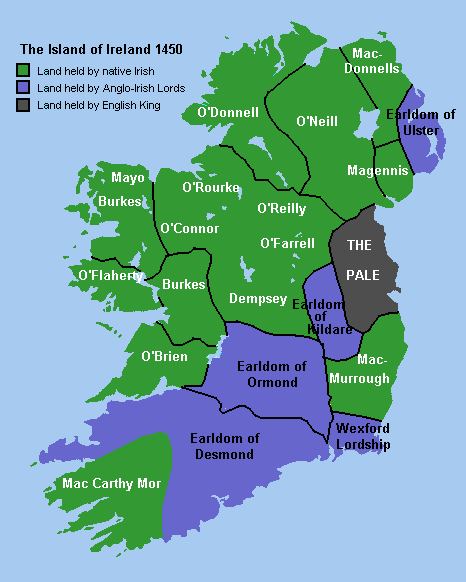
Numerous stories have been published here in the newspapers about his unique and waspish sense of humour. One concerned some tabloid photographs of the Duchess of York having her toes sucked while she lay naked by some swimming pool in the south of France. “Beyond the pale!” the Duke commented, using a phrase popular amongst his generation. (Note 1) Reminded me of how this lovely phrase, meaning unacceptable behaviour, came into the English lexicon. The word ‘pale’ comes from the Latin ‘palus’ meaning a stake or fence. The historians of you will know that England ruled over much of the island of Ireland, although by the late C15th that area had been much reduced; what was left was contained by a ditch from Dalkey just south of Dublin to Dundalk to its north. The ditch had in theory a fence, and obviously anywhere beyond the fence was an area of lawlessness and danger – ‘beyond the pale’.

Gives colour to one’s language, to know the origins of these things. Nigel Rees’ ‘Phrases & Sayings’ is a great reference and what you can’t do if you simply Google it is read what phrases it’s sandwiched between. In this case ‘Beyond The Fringe’, a term first used at the Edinburgh Festival in 1960, and ‘BFN’. Jimmy Young had a hugely successful BBC Radio 1morning show and his sign-off was BFN – ‘bye for now’. Maybe it’s used in modern abbreviated text speak – but I know not!

Word associations and links can create fun challenges and often on the commercial radio station Classic FM the compere asks the listener to establish a link between pieces of music or composers. The other day I drove up to see my daughter, a rather unique event these days and the first since Christmas; I listened to the radio. The guest presenter was John Humphrys who hosted the television series Mastermind for 18 years and therefore anxious to measure his listeners’ knowledge. He played John Caponegro’s Shoe Symphony and was looking for associations. I immediately thought of Choux (pastry) and later research found a Baker’s Symphony by a Kuba Piecze.

Do you understand this: “to plus to is fore?” Or this: “Te kwality of merci is not stained. It drops as te gentle reign from heven on the place beneef. Its twice ……..” Not shore weather ither make cens? Maybe this is better:

“The quality of mercy is not strained; it droppeth as the gentle rain from heaven Upon the place beneath. It is twice blest; it blesseth him that gives and him that takes.”

Departure from a good standard of spelling and grammar has been on the lips of many pedants here, after the University of Hull announced that “they were committed to removing barriers to learning, increasing social mobility and providing opportunities to students from all backgrounds.” …. meaning if your work is badly spelt but understandable, that’ll do.

Writing in the Times, Giles Coran’s headline screamed: “Don’t stop at spelling, let’s refresh jography too”. (And this is not the science of slow running). Fortunately that newspaper’s leader of 12th April was written with clarity. “The claim that requiring good English could be seen as ‘homogenous north European, white, male, elite’ (as Hull had suggested!) is seen as a idiotic travesty of everything a university stands for …… and a massive disservice to those it misguidedly believes such piffle is meant to help.”

Such an appropriate if old-fashioned word, PIFFLE!

Richard St George’s Day 2021

http://www.postcardscribbles.co.uk

PS My last PC concerned the truth. One comment from Meryl, “Not only very interesting but highly philosophical! You have identified that the biggest threat to modern civilised society is the absence of absolute truth. Whereas for many this used to be God, it has now become a case of ‘what I believe is the truth for me.’ What do you think?” deserved a reply: “I think we see our perspective of our experience as the truth but acknowledge that others may see it differently and the reality may be something different again.” And Meryl again: “Truth is a concept that is increasingly stretched from reality.”

PPS Twitter exploded last Sunday with comments about a text read in a BBC Crime drama called ‘Line of Duty’. The word ‘indefinitely’ was spelt ‘indefinately’.

Note 1 There was another use of this phrase this week as we watched a Netflix series, Occupied. Another of those coincidences!

PC 226 The Truth, The Whole Truth ..

I am sure we have all seen it on television, in plays or in films, the moment of gravitas when the clerk of the court offers a bible to a witness and says: Take the bible in your left hand and say after me ………. “I do solemnly, sincerely and truly declare and affirm that the evidence I shall give shall be the truth, the whole truth and nothing but the truth.”

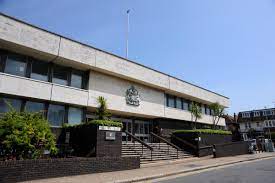
Some years ago I was called to serve on a jury in the local Hove Crown Court. Having been sworn in, we were asked to judge whether the accused was, beyond reasonable doubt, guilty or not. It was a great reminder of the way our justice system is the bedrock of civilised society, being judged by one’s peers. I had my share of making such judgements in the army, both as a Battery Commander delivering summary justice to miscreants under Military Law and also on a Courts Martial panel. Trying to establish the truth is quite subjective, for we all innocently filter what we hear and see through our own mesh of experiences.

Hove Crown Court

You may recall me quoting Caroline Jones from her book “the space in between” in PC 202; it’s worth repeating as she eloquently sums up the issues about memory: “…..  I don’t want to hurt anyone’s feelings – and who is to say that my version is true anyway? Who is entitled to say what is true in any family’s history? It is all shades of grey, interpretations and misinterpretations: something that passes one person by might be the thing that tips another onto a different journey; and all, in the end, coloured by imagination and weakened by unreliable memory.”

Last year, still in the age of the Trump Presidency, we read about the hearings on the nomination of Judge Brett Kavanaugh to the US Supreme Court. These are not things we in Britain understand. Here judges are appointed to our Supreme Court by the monarch; the name of a nominee is given by a Selection Commission to the Prime Minister who must pass the name without comment to the Queen, so in theory ensuring the Judiciary remains apolitical. You may of course think the American way has some merit, as it gives a congressional committee an opportunity to determine whether A or B could or should be selected.

This is by-the-by. What always amazes me is a person’s ability to recall conversations from their past, in the case of Christine Ford and Brett Kavanagh over thirty years ago. She had accused him of sexual assault at a party. Now I understand that when the experience is traumatic, the memory can be very vivid and long-lasting. But my mouth drops when I listen to someone recall a party 36 years ago …… one where alcohol was present ….. and go into the ‘he said’ ‘she said’ recall. It’s the same when people write their autobiography. Conversations with my mother when I was 7? Nah! Can I quote verbatim what I heard last week any better than last year or within the last decade? Nope! My mind generalises the experiences, compresses the data so it’s manageable.

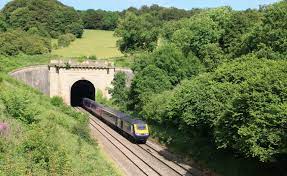
I find myself shouting at the television more and more, mouthing ‘bollocks’ or somesuch; must be a feature of being over 60? Most recently it was during a screening of an ITV lightweight crime drama entitled MacDonald & Dobbs, set in the city of my birth, Bath. The second episode was centred around someone’s death on the railway tracks running through the Box Tunnel. This tunnel was designed by the prolific Victorian engineer Isambard Kingdom Brunnel (1806-1859) and its alignment catches the rays of the rising sun on his birthday, the 9th April.

Much was made of this fact in the drama and that it only happened once a year ‘on his birthday’. Well, anyone with even the scantest knowledge of our solar system and our earth’s tilting axis will know that the sunrises on the same azimuth some five months later, in this case on the 4th September. But if you didn’t know, as maybe the writers of the drama didn’t, then you would accept this as the truth – the whole truth being different, gospel.

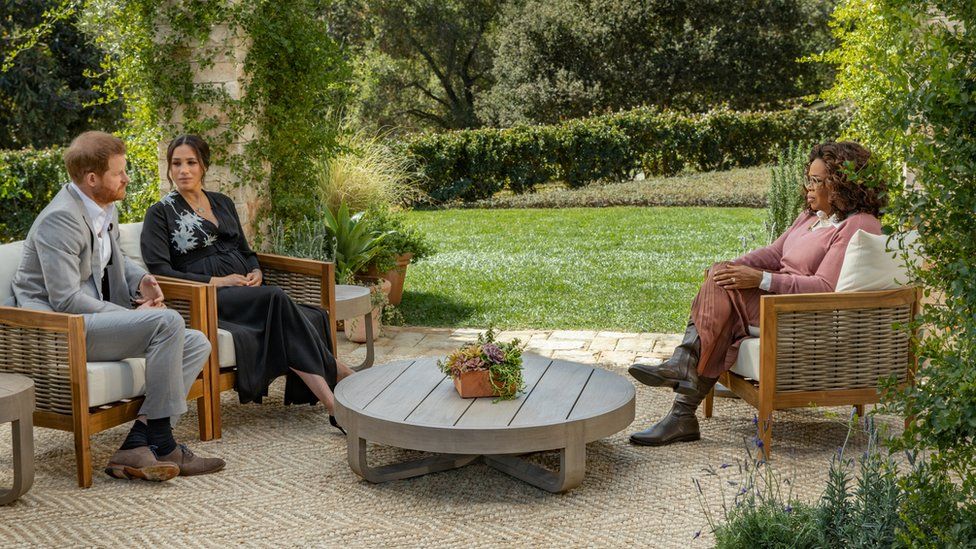
I didn’t watch Harry & Megan’s interview with Oprah Winfrey, but saw enough of the clips and read much of the analysis to form a view. This is not about them or their situation but more about the trend to challenge what is true. Although advertised as an interview, it seemed more an opportunity for them to air ‘their truths’, to make statements that went virtually unchallenged. The rules for royal titles for instance were laid down in the Letters Patent, issued by King George V, so in my view it’s disingenuous for Meghan to make out otherwise. Similarly her statement that she had a ‘secret wedding’ before the official one was simply untrue; revelations such as these diminish the whole two hours and subsequent furore.   

Much has been made over the past 18 months by both Harry and his brother William of the modern challenges to our mental health. So in my mind it’s unbelievable that Meghan didn’t discuss her suicidal thoughts with him and he, in turn, couldn’t help or find the right person for her to talk to; shame on him. What is striking are these new ideas about what is true, what is your truth or my truth and what isn’t; to use a playing card analogy, that a ‘lived experience’ can trump ‘hard evidence and intellectual analysis’. One person’s version of past events can be rather different – summed up nicely by the statement from The Queen – “recollections may vary”.

The truth, the whole truth and nothing but the truth.

Richard 16th April 2021

www.postcardscribbles.co.uk

PS And slightly tongue in cheek, we always imagine that the BBC newsreader’s script is grammar-perfect and speaks the truth!! Not so the other evening when they described Prince Charles as the late Prince Philip’s elder son, when he is of course his eldest son

PC 225 The Fall Guy

Following on from my last postcard and continuing a little the theme of self-deprecating stories, I hope you will find this one is less intimate?

Do you ever dream of falling? Apparently it’s one of the most commonly reported dream subjects, this feeling of falling and it’s not falling in love or embracing any other emotion, it’s the physical action of falling through the air, one imagines from some height, with a degree of uncertainty about how it will end. Wow, that’s a long sentence, sorry. Oh! And I have never dreamt about falling, at least not in my conscious memory; who knows what goes on in that subconscious. I never quite understand how dreams can be so so vivid … and then you wake up, think ‘I’ve been dreaming’ and can’t recall anything.

These scribbles, despite what you might be thinking, are not about dreams, but about the act of falling, as I did the other morning. After we have learned to walk, it is one of the subconscious actions we carry out without thinking, like breathing. Like lifting your arm; you reach for something and unconsciously all the muscles do the bidding of the mind. Being physically fit, walking was just something you did, so it was a surprise when I enrolled in the British Army that one or two of my fellow officer cadets had two left feet and had to be taught how to use both independently; and how to swing the alternate arm – which seemed even more difficult!

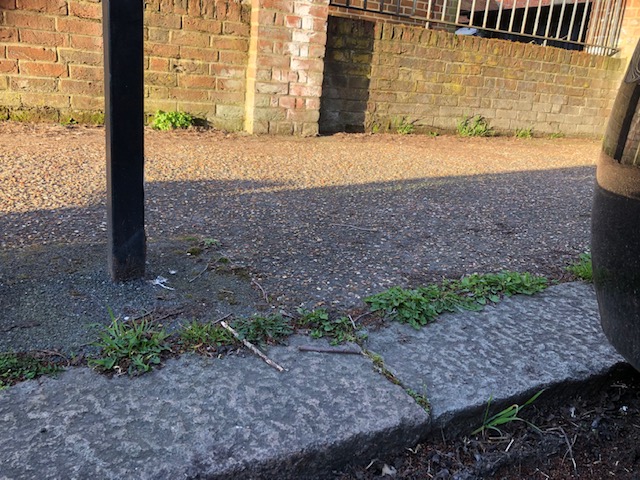
So I cross the road and as I am reaching the pavement I trip and stumble, somehow (presumably to trip you have to have your toe too low?), sense myself heading for the rough asphalt that replaced some nice paving stones, put out my hand and in the last minute stop myself from being a complete prat! So not quite base over apex.

My hand stings and I look to see chips of gravel imbedded in my palm; blood starts to ooze. My pride’s taken a dent (Note 1). I get up; nothing obviously broken and no one has seen me – that’s a relief! Before all of you writers dust off any minimal notes you might for my obituary I am OK, shaken but not stirred. I collect my paper and gingerly make my way home. Realising my chinos have blood showing through on one knee, I am reminded how Jeremy Clarkson (Top Gear and gentleman farmer) never buys any other types of trousers but jeans, as jeans tend to hide the odd scuff, the little bit of dirt, whereas on my green Chinos it’s obvious. (Note 2)

So I became a guy who fell, a fall guy! Actually ‘The Fall Guy’ was a television action series in the 1980s, featuring Lee Majors as Colt Seavers who earned money from tracking and capturing bail-jumpers. The Fall Guy has another more well-known meaning, referring to a person to whom blame is deliberately and falsely attributed in order to deflect blame from another party. Obvious contenders here in the UK might be the scientists who appear flanking the politicians at the evening Covid briefings, not fully ‘independent’ and yet asked to support whatever policy is being outlined. If it all goes tits up, not difficult to know who takes the blame?

Well, it’s not the chap in the middle!

For those of you with longer memories, the stand-out American fall guy from the 1980s was Oliver North. The Iran-Contra affair was a political scandal that engulfed Ronald Regan’s presidency but it was North who was prosecuted. In a typical American twist, by 1991 all charges were dismissed; they know how to protect their own!

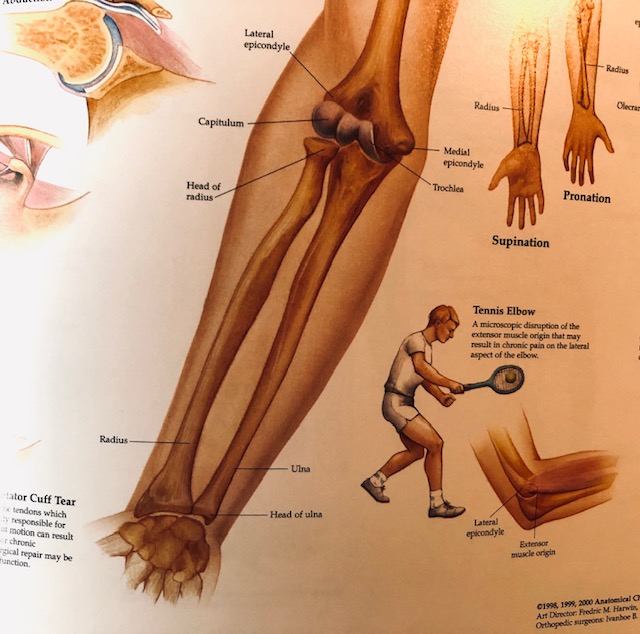
Now every morning, as I walk through the local streets to Rami, I pass the place where I tripped. I look at the pavement and kerb and give it a ‘you bugger’ sort of malevolent stare. It stares back. You might recall, as I am sure we’ve all done it (?), kicking the table that you bumped your knee on, as if it was its fault. Inanimate objects, no matter how much we hate or love them, have no emotions. Cleaning myself up, I feel lucky ….. and then am reminded of when I broke a bone in my arm, not sure whether the radius or the ulna, aged 11.

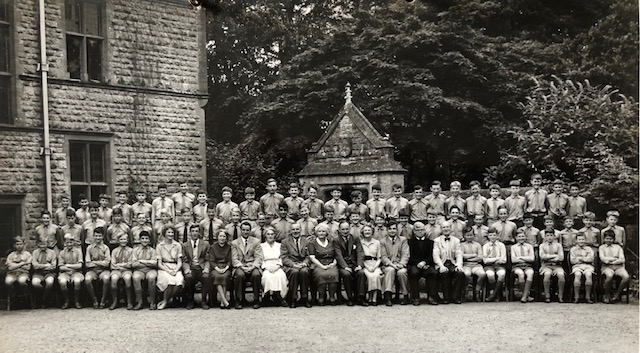
Glencot, a boys’ boarding school for 5-12 year olds, operated from an old manor house just down the road from Wookey Hole, near Wells in Somerset. The building is now a hotel!

Down at the basement level was a room with a table-tennis table and a black & white television. We used to gather around the latter to watch Saturday evening programmes as a treat. One music show featured Perry Como, who had a hit single “Oh! What did Dela ware boy?” whose lyrics ran through all the states of the USA and was clever. Like all catchy songs it still resonates “…… she wore a brand new jersey……” and “What did missi sip boy?” ….. “She sipped a mine sota”. Anyway, I digress. Two short flights of steps led up out of this room, the first step two feet away from the others.

I tripped on the first, put my hand out, caught my forearm on the next flight and broke a bone. My plaster cast was covered in others’ scribbles within a day.

The plaster-cast covered by the Cricket Scoring book!

A few weeks ago the US President Joe Biden tripped going up the steps of Air Force One and the press and everyone else made fun of him. Sadly it seems it’s a common trait.

I tripped on a paving slab on St John’s Road in Battersea many years ago, all suited and carrying my brief case after seeing a client in the IOD. I recovered my vertical position but not before someone starting laughing loudly.

Bearing has, I think, a great deal to do with our physical and mental well-being and with walking; demonstrable pride, neck in the back of the collar, head-up, shoulders back – that sort of thing. (Note 3) Maybe I should just look where I am going?

Richard 9th April 2021

http://www.postcardscribbles.co.uk

Note 1 ‘Pride Comes Before a Fall’ a C16th saying suggesting if you are too confident something bad will happen to remind you you are not as good as you think you are. Doesn’t apply here!! Moi? Surely not.

Note 2 Our new neighbour fell up his internal stairs before Christmas and cracked two ribs, so I was lucky!

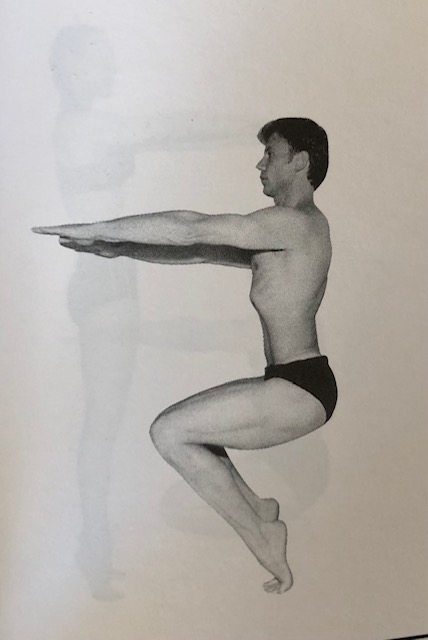
Note 3 In yoga there’s a posture that requires you to keep your head level but drop your eyes to 4ft in front of you, bend your leg over the other and lower yourself to a swat. Try it!

PC 224 Trinity

Although we generally do our weekly supermarket shop online, I needed to go and pick up some Gordon’s Gin & Tonic 0.5% abv from the physical shop the other afternoon. As I reached for the hand-sanitiser inside the entrance, a chap was making his way into the supermarket, his left leg all encased in rods and strapping. To my eye he was making a bit of a meal of it and I ask whether he needs any assistance. He tells me he’s fine. Out of curiosity I ask whether it’s his ankle or knee and get the “Both knee and hip and don’t get me started!” line, with a light-hearted tone in his voice. I see him later struggling with some bags of Bok Choy and raspberries but leave him to it, his determination obvious to see. 

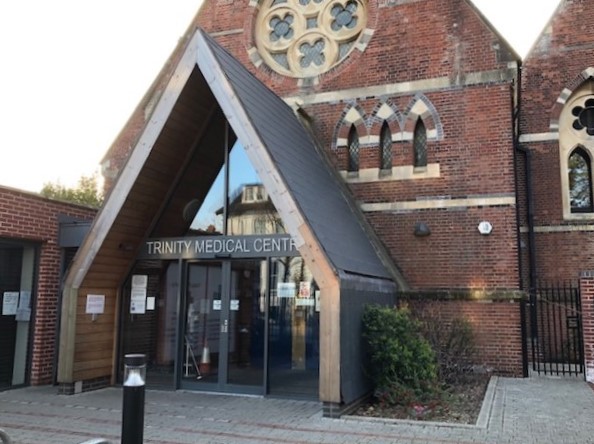
My local GP surgery moved from Sackville Road into the renovated, deconsecrated Holy Trinity Church in 2017, joining two other surgeries to become the 16-doctor Trinity Medical Centre; co-located in a new building is the Trinity Pharmacy.

After a recent prolonged period of bloatedness (see PC 28 Balloons, Bacteria & Bloating) and an email consultation with my doctor, she asks me to come in; yes, actually face-to-face …. or mask-to-mask! This led, inter alia, to the need for a microscopic examination of my faeces: “We will get to the bottom of this!” I left the old church clutching an envelope with all the instructions to follow and a warning from the receptionist ringing in my ears: “Follow the instructions carefully as 25% of the returned Faecal Immunochemical Test (FIT) samples are unusable.” This suggests to me the instructions need rewriting?

Having done what the instructions have asked of me, the following morning I walk up to the surgery clutching my enveloped-sample; not a lot, in fact only enough to fit through the eye of a needle! Normally the space that would have been the church nave is crowded with chairs, the majority occupied. Most will now be familiar with the Check-in Procedure on a wall-mounted computer screen; name and date of birth and then, ‘Take a seat’ or ‘Go to the first floor waiting room’. Another screen high on the wall indicates which of the waiting individuals should go to which doctor’s room. In between patient announcements are advertisements for treatments for this and that or, for instance, what to do if you think someone’s having a stroke – look for indications in FAST (Face, Arms, Speech and Time). We are reminded that every booked appointment that is a ‘no show’ costs the NHS £150. Bit like double booking a meal out and being too ignorant to cancel! Oh! To be able to think about eating out! Currently it’s like the Marie Celeste (note 1) but unlike the Marie Celeste a skeleton staff operates and greets individuals outside.

To the left of the main doors an intercom/entry device controls the large, glass double doors. I have timed my visit to miss the peak times, normally first thing in the morning when the night’s fears and niggles need addressing. Already there’s an elderly, slim, white headed lady standing by the door. One rarely chats to others in the waiting room, often lost in your own reasons for wanting to talk to your doctor and not wanting to invade others’ personal space. Generally we never talk about our health to strangers, unless you press the ‘on’ button of a health bore and then you get chapter & verse and if you are extremely unlucky Volume 2. Outside it’s somehow different:

Good morning. Have you dialled the number?” my head nodding in the direction of the intercom.

Ya! Ya!” she mutters with impatience “but no von comes!” I ask whether she’d been waiting long – she eyes me rather suspiciously: “Long time! But no von comes!” I often try to hear the origins of an accent and in this case think she’s either Jewish or Polish. She reminds me a little of Rose Tobin, who used to accompany my grandmother in piano duets in the Roman city of Bath.  

I walk over to the intercom and press the interrogation button. It rings out; I try again and again ….. eventually Anne-Marie the Irish receptionist on duty answers and promises to be out shortly.

She’s coming” I say to my companion who gives me an ‘about time’ sort of look. Anxious not to talk about the weather or politics or Covid or Brexit (is there anything else?) I say casually: “You wouldn’t want to know what’s in my envelope!” 

Can’t be as bad as mine!” she boasts, without smiling.

The electronically operated doors swing open and Anne-Marie appears, all smiles and apologies (well she’s masked so I don’t see the smile of her mouth but her eyes smile – best we can do these days). I let the old lady offer her envelope first ….. then give mine; they are both the same, both FITs, both of us leaving a deposit of our poo to be microscopically examined.

I smile as I leave – a connection!

Richard 2nd April 2021

(www.postcardscribbles.o.uk)

PS Completely coincidental that these scribbles about Trinity, those three GPs surgeries coming together to form Trinity Medical Centre, in the old Holy Trinity church and of course ‘the Father, Son & Holy Ghost’, are posted on Good Friday 2021.

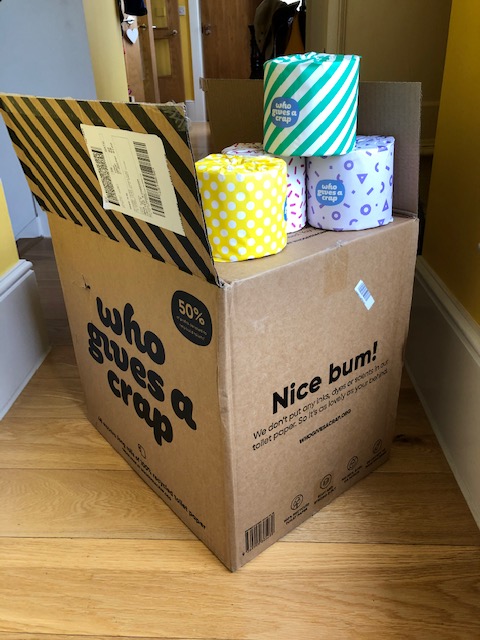
PPS Doing our little bit for the planet, we ordered some 100% free-of-plastic loo paper made by a British company called ‘Who Gives A Crap’ – crap of course is slang for rubbish. Learn more about Loo Paper in PC 47 and about Thomas Crapper in PC 54.

PPPS An afterthought to PC 223 (Chips and Shoulders). My brother, who had a full career in the Royal Navy and in the Fleet Air Arm, writes: “Before taking over the Lynx squadron at Yeovilton in 1980, I had to learn to fly the beast (Ed. The Lynx helicopter). As the CO (designate), I was known on the training course as COD. Inevitably the (student) observer with whom I was often paired was dubbed “chips”.”

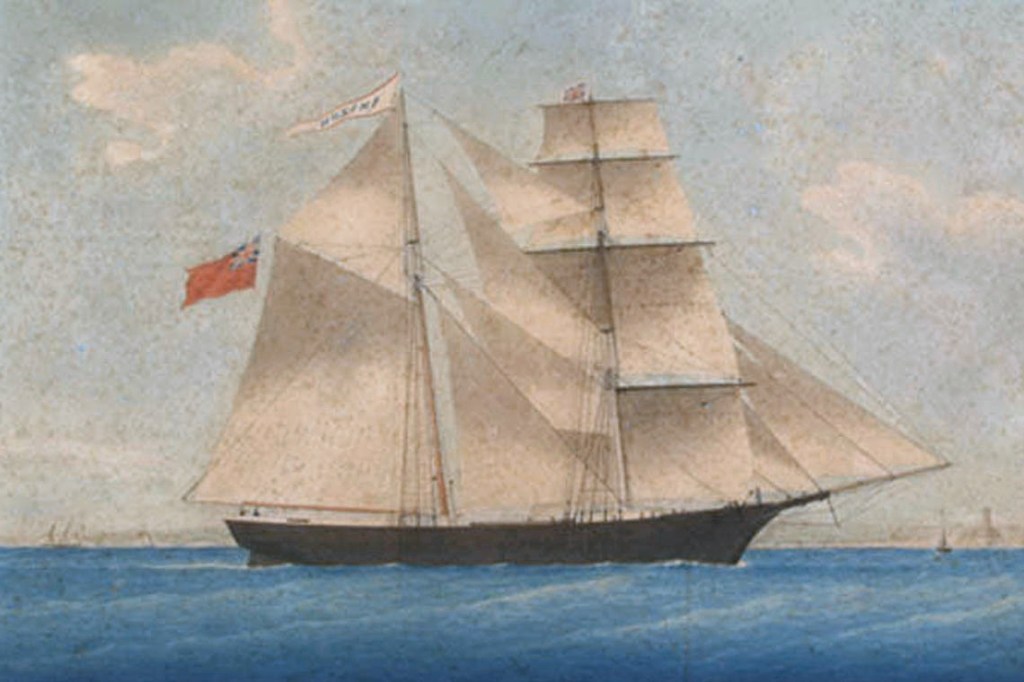
Note 1 I have mentioned the Marie Celeste before (PC 166) and was surprised when one of my readers expressed ignorance as to what or about whom I was referring! The Marie Celeste was a two-masted ship that was sailing from New York to Genoa in 1872. A month after leaving the US, it was found adrift, off the coast of Portugal, intact but with no soul on board. There has never been a satisfactory explanation as to what happened to the Captain, his family and crew; they were never found.

PC 223 Chips and Shoulders

The idea to write this postcard was prompted by Jon dropping in for a coffee, in the garden obviously as this has been permitted since 8th March, after getting his vaccination a week ago. Vaccinations and the fleshy part of the shoulder go hand in hand ……. and he had had a shoulder injury some years ago that had been operated on and it still wasn’t as good as it should’ve been …..

 …… and I thought he might have had a chip on his shoulder …… angry that the surgeon couldn’t do a better job …… and then the association with the madcap world in which we live kicked in.

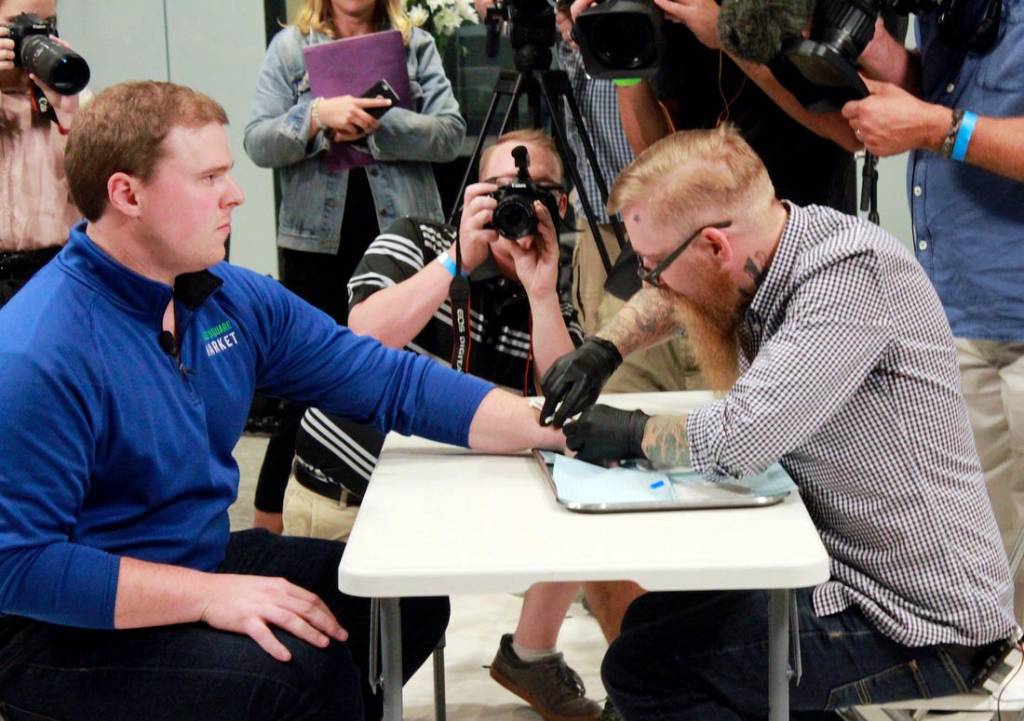
A researcher having a microchip implanted

Chips? Ah! Yes! Microchips that Bill Gates, founder of Microsoft, has paid for everyone to have injected into themselves when they get their Covid vaccination. I really do wonder about the creativity of people. Who thought this idea up? If I extrapolate the current technology way into the future, it’s possible that we will be able to have a microchip in our wrist that will monitor our health and alert us to something amiss; that would be real progress. But I have had my first dose of the Oxford AstraZeneca vaccine and didn’t feel a thing; Niente! Zilch! Nada!

No chip! The idea that ‘Big Brother’ could implant a chip into my arm at the same time, as if I could be distracted in some way, beggars belief ….. without me knowing about it? And for what purpose? To monitor my habits and alert agencies to changes perhaps? For instance, I go to the loo most mornings about the same time, as I am sure most people do; it is a daily necessary deposit. What if I was late? Do I really want a text or worse still my Amazon Echo to remind me I should have gone 30 minutes before?

Every country has parts which are more beautiful or plainer than others, more mountainous or flatter, more industrial, richer or poorer; inhabited by snootier, more religious, less couth, people than in other areas. It’s just the way our societies develop. For example, I got to know littoral Denmark from sailing around it when stationed in Germany; see PC 106 Sailing in the Baltic. I was delighted to return to Denmark when I started working for Short Brothers, travelling particularly to Copenhagen or up to Hjørring, right up in the north of mainland Jutland. If you get to know a foreign country well, you gain some insight into how a nation thinks. Dining out in expensive Copenhagen restaurants I was amazed at the exorbitant costs of ‘fine wines’ at the top end of the cellar list. I asked my agent who on earth bought these; Jørgen Brøndum, a delightful sagacious chap who was great company, replied: “Well, only those uncultured and rural folk from Jutland who think it’s the right thing to do when they come to the capital! Trying to show they are not country bumpkins!”

In the UK, the Forrest of Dean to the west of Cheltenham is thought of in a similar vein, so an extreme case of ‘chip on the shoulder’ might become ‘The Forrest of Dean on both’!

‘Crisps’

Across the pond, that large expanse of ocean called The North Atlantic, crisps are called chips and chips are called fries and it’s from the USA that the saying ‘a chip on his shoulder’ is thought to have originated; so nothing to do with food! Back in the 1800s when a boy was spoiling for a fight, he would put a twig or small chip on his shoulder and challenge another boy to knock it off. It became synonymous with someone always wanting to pick a fight, not standing criticism, always arguing with everyone, often about some perceived sleight.

Despite my early military service I am not by nature an aggressive individual, preferring to seek common ground rather that accentuating what divides us. So whilst I am prepared to accept that the explanation from 1800s America is the correct one, the more romantic me likes this other English one.

Just under two hundred years before, carpenters (Note 1) working in the Royal Naval Dockyards in England had an allowance of ‘spare’ wood chips they could take home at the end of their shift, useful for cooking and heating. These offcuts were normally carried on their shoulders out through the gate. By 1756 this privilege was being abused, costing the taxpayer too much, so a warrant was issued, restricting the carrying of surplus wood to under the arm, so lessening the quantity that could be carried. One carpenter, a John Miller, refused to take his chips off his shoulder and his workmates crowded around him and carried him with them out through the dockyard gates. I am not sure what happened to John Miller when he turned up for work the next day! (Note 2)

There was no chip on Jon’s shoulder or in his arm and he had no issue with accepting the efficacy of the vaccine but some are still unsure. They anxiously point out that previous research and development took years and years to produce an effective vaccine against this and against that; ergo these can’t be safe or as a graduate-level educated friend claims: “it’s an untested, experimental vaccine which has not been approved by any regulatory medical body” I wonder how we differ? In reality, if enough people are involved in anything and enough money is thrown at it, in parallel and not in series, everything is possible. On the Continent there was a huge kerfuffle about blood clots in those who had had the Oxford Astra Zeneca vaccine …. until the statisticians pointed out that 40 cases in 17 million was not statistically significant, less in fact than being struck by lightning (Note 3)! Mind you if you don’t want the vaccine because you think it’s not safe, then that is your prerogative.

As an afterthought on the topic of chips, the American Henry Channon (1897 – 1958) came to England in 1920 to study at Christ College Oxford. At university he shared a bachelor house with a friend colloquially known as ‘Fish’; from then on Channon was forever known as Chips Channon. Although never reaching ministerial rank, he represented Southend for 23 years and will be remembered as a social diarist of the first half of the 20th century.

Richard 26th March 2021

(www.postcardscribbles.co.uk)

PS You may remember the ubiquitous wood chip lining paper that was pasted on every house wall in the 1970 and 1980s?

PPS And while talking about chips, you may not have heard this joke? “Why are there no good potato chips in Wiltshire? Because they have no Devizes for Chippenham!” (It helps if you have a Wiltshire accent!) (….. no devices for chipping ‘em!)

Note 1 A carpenter is often referred to as a chippy.

Note 2 If I know anything about British humour, he was probably called Dusty – the surname first used for those who milled corn and who were always covered in flour ‘dust’.

Note 3 Thirty six hours after I wrote this paragraph, an El Salvadorian surfer, 22 year old Katherine Diaz, was struck by lightning and was killed. I love coincidences but this is so sad.

PC 222 Meals – Institutional et al

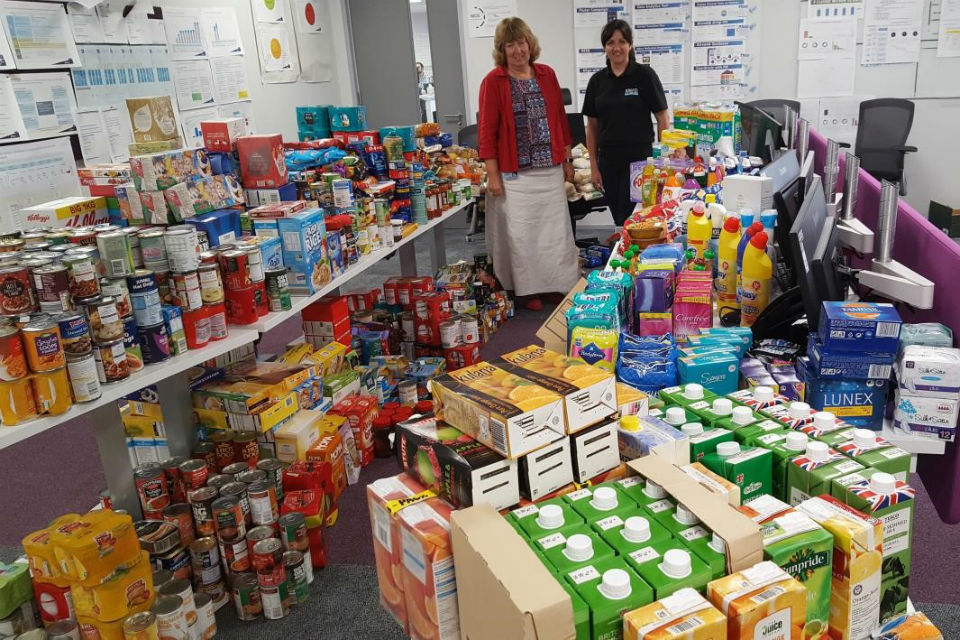
It’s been in my ‘PC Topics’ file for some time, an idea to scribble something about institutional meals, as we have all eaten them at some stage in our lives, good or bad! The impetus to write now was triggered by something sad someone experienced last month. There is no doubt that coping with the current pandemic has created hardship for most of us, but more keenly felt by those at the bottom of the societal heap. I don’t think the UK is unique in the huge growth in Food Banks, where those out of luck and money go in order to survive. A veritable army of lovely individuals has stepped up to the plate, no pun intended here, and created places where food, drink and words of encouragement are available, using initiative in getting donations and support from a wide range of organisations.

But ……. and there is often a ‘but’ ….. some people picking up their bag of staples like bread, eggs and milk and a box of vegetables & fruit were obviously too embarrassed to admit not knowing how to cook the vegetables, as around the corner from this particular food bank were boxes of vegetables discarded on the street by the (un)grateful recipients. There are obvious cultural and educational issues involved here!

Fortunately I grew up in a privileged household, where there was enough food to satisfy two hungry teenagers, although school food will always bring back memories for everyone and most of the ‘yuk’ type! At my first boarding school we had to finish everything that was put in front of us; that included breakfast’s porridge and Macaroni Cheese. The former is difficult to cook in bulk and it’s inevitable that lumps proliferate; cold, dense, uncooked lumps of oats are hard to swallow. Not so good Macaroni Cheese, but at St Christopher’s the dense crust on top had tentacles stretching into the substrata – which when cold brought on an urge to vomit! I had been at this school for some three weeks when, in September 1955, my mother got remarried. My only concern was that I could get her to write a letter excusing me from having to eat these two foods; I was 8 years old.

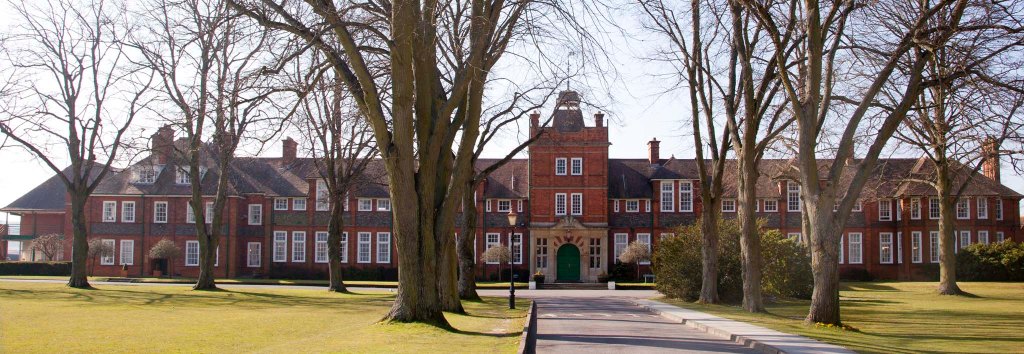
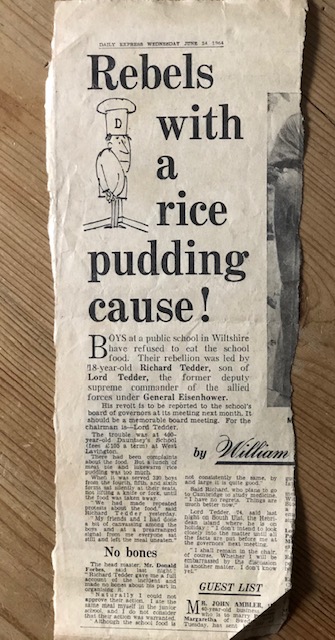
The dining room at Dauntsey’s School, on the edge of Salisbury Plain in Wiltshire and at that time a single-sex boarding school, was traditional. Large refectory tables and benches filled the main floor, while up on a raised area at one end a table was reserved for members of staff, including the Duty Master. Despite a Food Committee, the quality of food was constantly criticised and this led eventually to a strike. One lunch time we all filed into the Dining Room but refused to eat the food handed out by the kitchen staff, much to their bafflement; we sat in silence, hoping this would be enough to encourage better standards. The Duty Master was a David Burgess; having said ‘Grace’ at the beginning of lunch, he sat and ate his alone as his fellow masters left, and at the end intoned in his strong Scottish brogue: “What I have received, may you all be truly grateful.”

The food protest was reported in the William Hickey column in the Daily Express for no other reason I suspect than the chairman of the Governors was a Lord Tedder (ex-Marshall of the Royal Air force) …… and his son was in charge of the Food Committee! Sadly I don’t remember the food getting much better! (Note 1)

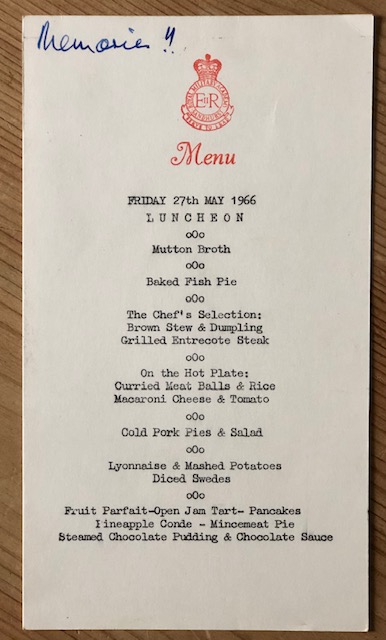
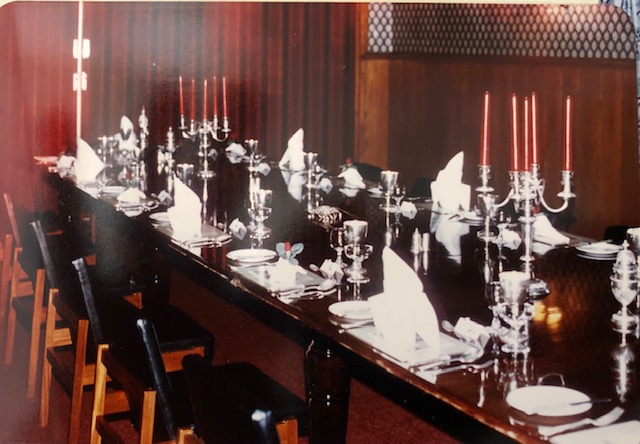
At The Royal Military Academy Sandhurst formal dinners, where we had to wear Mess Uniform, were held once a month; less formal weekly ones only demanded Black Tie. There is a saying: “The army marches on its stomach.”; the food was of great quality and quantity, needed when 1000 cadets sat down to eat. 

The frequent formal dinners continued in commissioned service, a worthwhile tradition to maintain.

In the Officers’ Mess in the ex-Luftwaffe barracks in Lippstadt, Moritz, a grey-haired old chap with a bad back, shuffled backwards and forwards from the kitchen as a waiter. In the afternoon he was often to be found slicing sideways a piece of toast that could be then re-toasted and appear as Melba toast that evening.

In Dempsey Barracks in Sennelager, in Germany our regiment had a French exchange officer staying for a week. On his first evening we all dined in the Officers Mess. The starter was corn-on-the-cob, a wonderful opportunity to eat a single vegetable, with lashings of butter and S&P. Those who designed the menu hadn’t realised that in France corn from the cob is fed to pigs! Jean-Claude thought we were taking the Michael (and that’s pronounced Michael in English and not Michel in French)

Bored with what was on offer on the luncheon menu one day, I asked the waiter who was the duty cook. “Corporal Matthews, Sir.” “Well, would you ask Corporal Matthews to make me a large omelette please?” Corporal Matthews did as he was asked and the 12 egg omelette was delivered on a large platter. I met his challenge but it was a struggle!!

I have had my share of institutional food in our hospitals, the last here in Brighton in 2013 when I was asked what I wanted to eat and the chap made notes on his iPad, but the doctor was still using quill pen and dipping ink for her paper notes! Seemed a bit arse about face? Prior to my stay, I had had an Angiogram and was offered a healthy (?) lunch of white steamed-bread sandwiches and a bag of crisps.

In 2006 I stayed in a little barn overlooking the River Dart, just upstream from Dittisham in Devon. Unfortunately my appendix rumbled and I went off to Torquay Hospital. It was agreed to remove it, which was just as well as it ruptured during the operation and sepsis is a very real concern when this happens. My stay lasted two days, during which time I sampled the hospital fare. Green vegetables need careful handling otherwise they lose their vibrant colour. French beans do not like being transported from a central kitchen miles away so that by the time lunch reached my bed they are lukewarm and slightly brown!

Not sure much has really changed?

Richard 19th March 2021

Note 1 Simon, who had been educated at Lancing College, developed a hate for the school’s fish pie, particularly if it included an egg. At a dinner party some thirty plus years later, he vehemently refused a plate of gorgeous ‘fish pie’! Strange these memories that define us. 

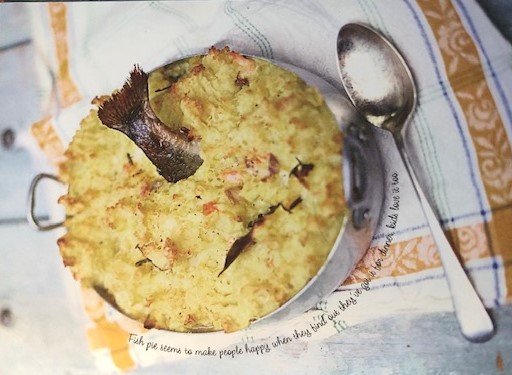
Jamie Oliver’s Happy Fish Pie – yum! yum! (not for Simon!)

PC 221 Ephemera

I read that the average Joe, and this is no criticism of you particularly if your first name is Joe but rather like John Doe in the USA, a generalisation, has a daily vocabulary of about 5000 words and knows the meaning of about 20,000; if you are university-educated you might know the meaning of double that number. Given that the Oxford English Dictionary contains some 170,000 words in current use and some 45,000 obsolete ones, these are small proportions!

Here in the United Kingdom there has been a focus on a political spat between Alex Salmond and Nicola Sturgeon, one past and one present leader of the Scottish National party (SNP), the latter currently First Minister of Scotland. It’s odd that these two individuals’ surnames are almost the same as types of fish – maybe all politicians are slippery? In the greater scheme of things this story is, according to Mathew Syed writing in The Times, simply ephemera and there are more important things to worry about, for instance the state of our united kingdom.

Ephemera is one of those words not in my normal vocabulary yet over the past week I have seen it in print three times! You may recall PC 26 ‘This Language of Mine’ where I admitted to rarely using ‘mores’ and ‘milieu’ and not knowing the correct name for the grammatical construction ‘zeugma’ or even ‘syllepsis’?  Reaching for my dictionary I read ephemera is actually the name of the commonest of Mayflies that in their winged form live for a day.

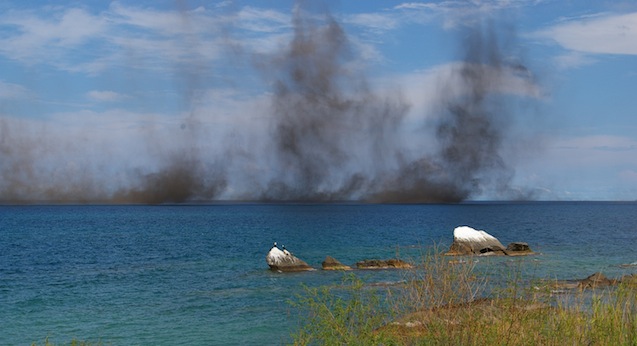
Rising up as larva from the bottom of this African lake, the mayfly’s wings unfold and it takes flight, the swarm like black smoke from a fire.

So it is used for something short lived or transitory – little snippets of stuff. There are, incidentally, no more than ten words that start ‘eph…’ so quite special.

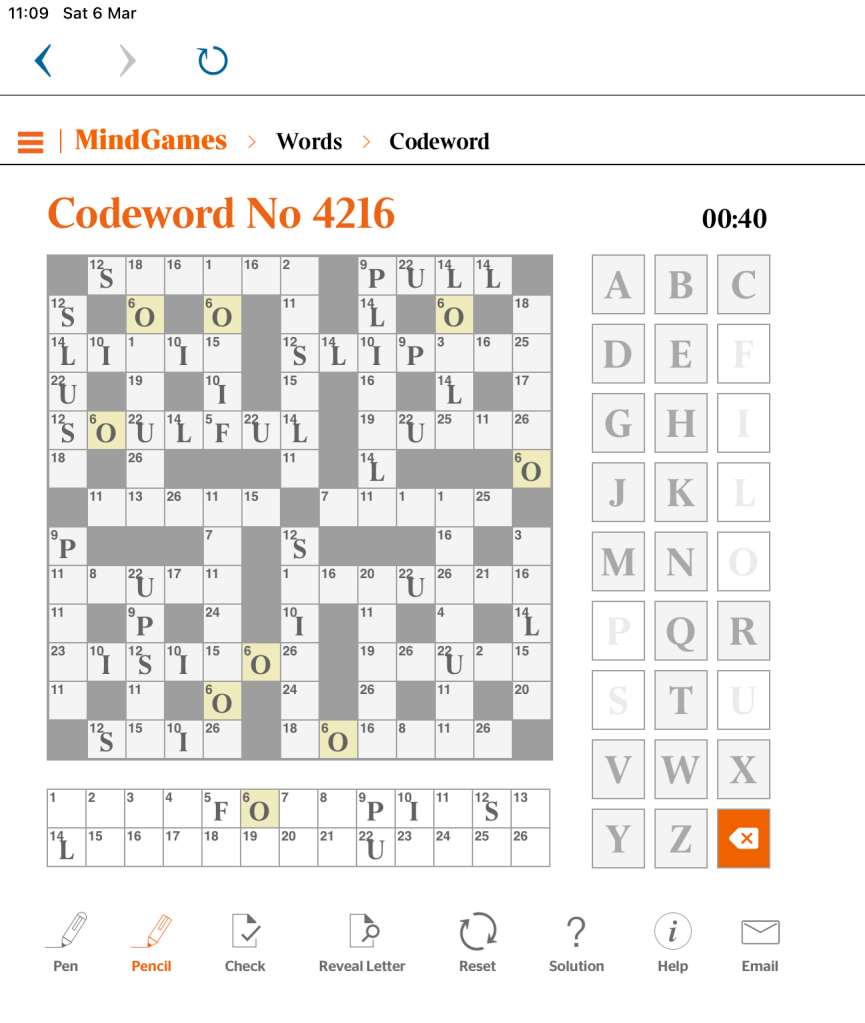
If you read my last posting about ‘souls’ and ‘sole’ and my made-up word ‘soleful’, I hope you will agree it was weird to find in a little word puzzle in the paper the following day that  ……. ‘soulful’ was one of the answers. Don’t you just love these coincidences?

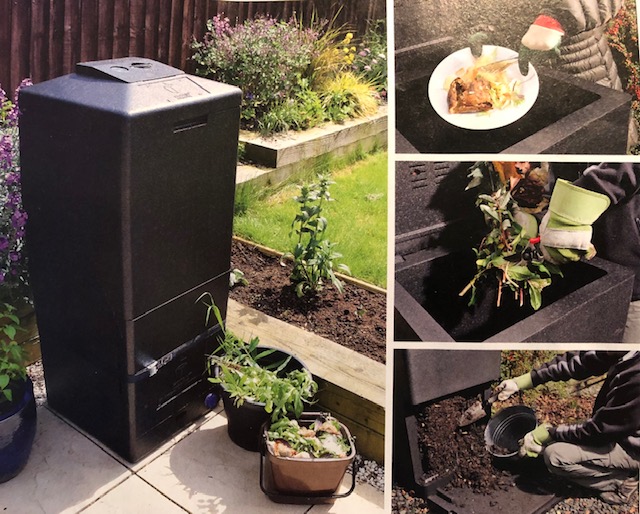
On a different topic, a recent copy of our supermarket magazine had a piece on composting kitchen waste – complete with an advertisement for a HotBin Composter.

Having established a communal garden here at Amber House (see PC 212) the need for compost is constant, especially as the soil used by the company who did the conversion is not of good quality. Normally I buy it, but here was an idea; I decided we would catch up with those who regularly compost their kitchen waste and buy a bin.

Ordering on line (hotbincomposting.com), I selected the large one, about the size of a wheelie-bin, and went to pay …… chose a card ….. put in the long card number …….. and was informed a verification code was needed ….. clicked ‘send’ …… and got the ‘check your mobile’ message. The mobile reception in our apartment is very intermittent so when the code didn’t appear I asked for it to be resent  ……  and repeated that for the third time. Ten minutes passed, I changed the card (erroneously believing this might help) and started the verification process again. Then I got three codes for the first card; no good! Eventually I got a new verification code, which I typed into the box  ….. only to be told that the 10 minute time limit had expired!! Aaaaaggggghhhhhh! I reached for the telephone and dialled Hotbin’s number ……. 

Above the city of Brighton & Hove lie the glorious South Downs, which stretch from the Itchen Valley of Hampshire in the west to Beachy Head, just to the west of Eastbourne: they cover an area of some 260 square miles (670 square kilometres). Immediately above the city is Devil’s Dyke, a 100m deep V-shaped valley. The name ‘Dyke’ means a water-course or channel and legend has it the devil was furious at the conversion of people to Christianity and decided to dig a dyke through the South Downs so the sea could flow in and drown the village inhabitants. (Note 1)

Its popularity with Victorian walkers ensured the word Dyke is reflected in the local urban-scape – Dyke Road and Dyke Park for example. So it was a wonderful example of the stupid world in which we live, when we can’t disagree about anything for fear of causing offence, when Facebook banned a post which included the word ‘Dyke’ as an example of hate speech, when in fact it was an innocent mention of a local road!

Incidentally, the word dyke originated in the 1920s as a homophobic and misogynistic slur for a masculine, butch or androgynous woman (Sorry, not sure I can use the word ‘Woman’ – isn’t it “a person who …..”? )

In my last post I recounted the sorry tale of trying to send some slippers to my mother-in-law and rather light-heartedly suggested it would have been quicker to hand deliver them, even if I had walked the whole way. Forty-Five days, south down the western seaboard of France, diagonally across Spain and into Portugal; now that would be an adventure. However I sense I would be doing it alone!!

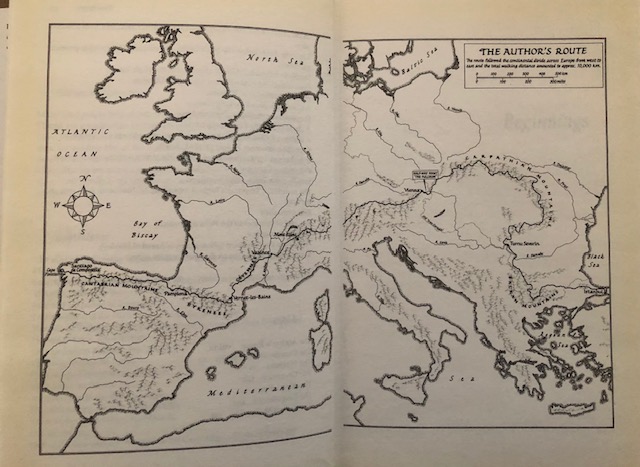
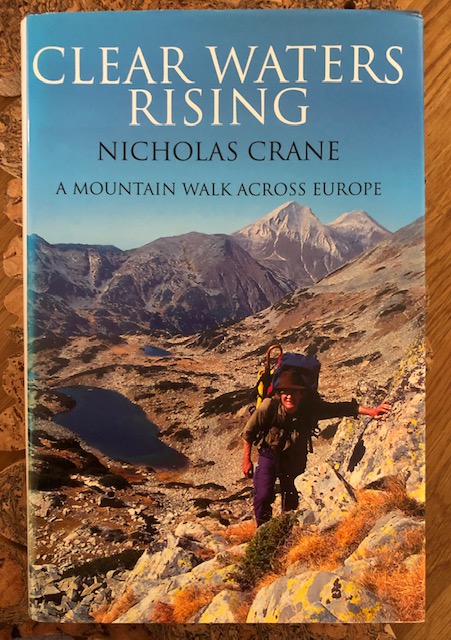
And this realisation reminded me of a chap I met in 1991, Nicholas Crane. Ever the adventurer, Nick decided to walk what has been called the European watershed (note 2), from Cape Finisterre in the west, to Istanbul in the East. Alone!

Starting in 1992, seventeen months and 10,000 kilometres later he completed his epic journey by dipping his toes into the Bosphorus. If you like reading about this sort of thing, Clear Waters Rising is his 1996 book.

Nothing in this postcard is going to move mountains or be remembered in twelve months – just ephemeral bits and pieces.

Richard 12th March 2021

Note 1 Actually the dyke is only on the north side, so doesn’t cleave the hills as legend would have it. That happens further east where the main A23 enters the city through a natural break in the downs.

Note 2. Called the watershed as the rain and melting snow water either ran to his left and northwards into the Bay of Biscay, English Channel, North Sea or Baltic, or to his right down towards the Mediterranean.

PC 220 Soleful Tales

On one of my many trips to Portugal I learned of Fado, the music genre that became popular in Lisbon in the 1820s. It’s characterised by mournful tunes and lyrics ….. “infused with a sentiment of resignation, fate and melancholia” ……… loosely captured by the Portuguese word saudade meaning ‘longing’ or ‘yearning’; barrel of laughs huh?

Moving to Hove in 2012, we invested in a Brennan JB7 music box on which to store, and play, our large collection of CDs. The aim was to get rid of some clutter; we failed, and simply stored the 300 odd CDs in a box! Fortuitously in retrospect! Easy for me to then search for the ‘Simply the Best Platinum Soul’ and ‘Sad Songs’ two-CD collections; the latter resonates with me more than the former.

The soulful songs of Canadian singer Leonard Cohen resonated across the ‘60s and ‘70s, but I became a greater fan of Neil Diamond and prefer his version of Suzanne, together with ‘Stones’ and ‘Love on the Rocks’. Of the classical genre, Sibelius’s Valse Triste, Max Bruch’s Violin Concerto and of course Edward Elgar’s Cello concerto raise the hairs on the back of my neck. I am of a generation that will forever link this last work to the virtuoso Jacqueline D Pré, an extremely gifted player who was diagnosed with MS aged 28, and died in 1987 aged 42.

The eagle-eyed among my readers, well, certainly Colin (!), might have noticed that these scribbles are entitled soleful – which if it had been spelt soulful would have meant expressing deep and often sorrowful feeling. It may be considered a cliché but I love the idea that you can see someone’s soul through their eyes, particularly when, with face coverings over the nose and mouth, we are all looking for other indicators to read another’s empathy.

But if you had simply said soleful most people would have understood. The English language has many words which sound the same but mean something completely different. PC 33, way back in January 2015, was titled Pause, Pours and Paws; three words which sound the same but whose meaning is very different. Like whether and weather, sow and sew, there and their, draft and draught, course and coarse, patience and patients, current and currant, two and too and to and many more; others depend on how clearly you annunciate your words, like weir and where, or pier and peer and pear!

In some parts of the world the throwing of shoes is considered a form of protest. In the Arab world they are considered unclean and it’s customary not to show the sole of your own shoe when sitting down. At the Royal Military Academy we learnt how to clean shoes to perfection, including of course the underneath of the instep, so if you inadvertently showed it it was highly polished!

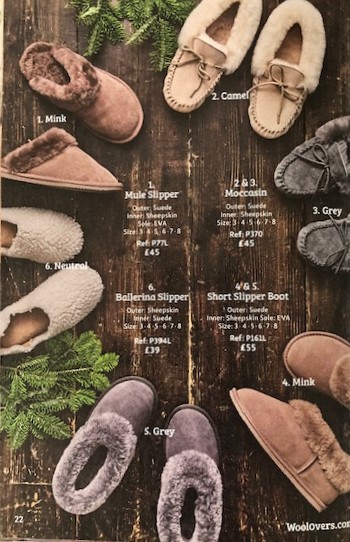
My mother-in-law flew to Portugal from Rio de Janiero last August and would normally have returned home to miss the European winter. Nothing is normal at the moment and she is still there, in Estoril. Recognising how difficult it can be to live in a cold climate when used to a hot one, I sent her some sheepskin-lined slippers on 8th December, innocently imagining they would get there for Christmas .…….. and before the end of the Brexit Transition Period which would end on 31st December. I used our local post office and even paid a little extra for them to be ‘signed for’.

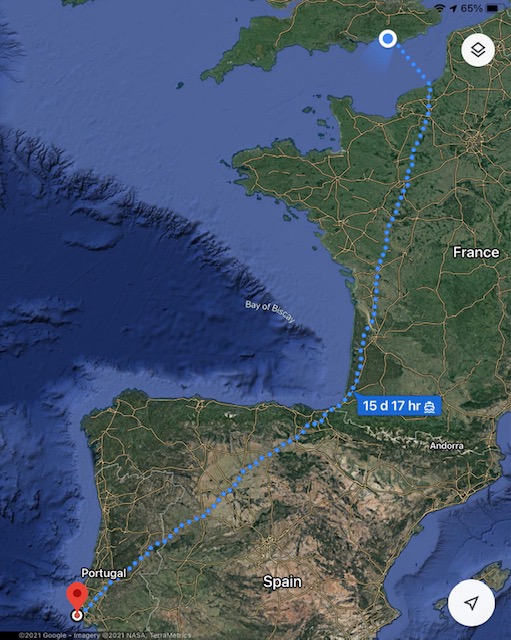
You can fly from London to Lisbon in one hour and 40 minutes (when we are allowed to!). Goggle Maps tells me I could drive it in just under 24 hours, without stops …… and they also suggest I could walk it in 15 ½ days. Personally I think this is a bit fanciful as it’s 1125 miles. Walking continually at 3mph you would cover 72 miles in a 24 hour period, so just over a fortnight would get you there – but one has to sleep!! Twenty five miles a day would be more sensible – so about six weeks (What an adventure that would be?)

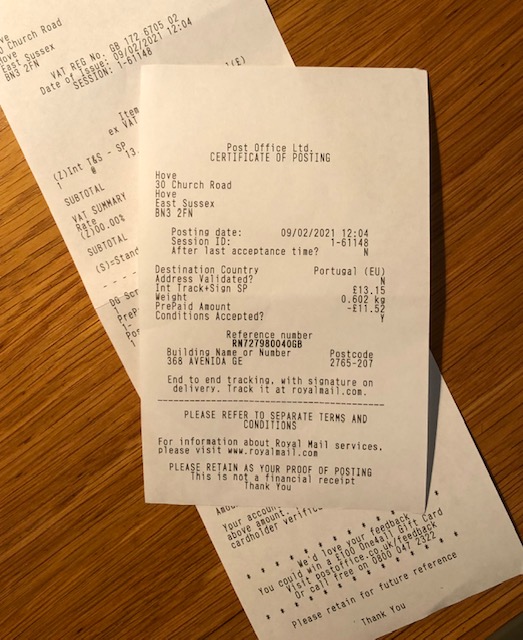
By the end of the year, there was no sign of them, or for that matter any other Christmas gifts that Celina had sent to her mother, brother and sister. A form obtained from the post office says you can claim – but they only pay 50%! We tracked the slippers; they arrived in Lisbon and delivery was attempted (?) on 20 January 2021. No card was left, no second attempt (unlike our local postie Steve!) …….. and the parcel was returned here to Hove. Back to square one; bit like snakes and ladders! After a degree of umming and ahhing I decided to send them back, for who knows when we might physically meet. So on 9th February off they went again.

Now of course they are caught in the post-Brexit nightmare that seems to be inflicting everything from British shellfish to our Performing Arts industry to the just-in-time import/export systems that had become second-place – so so sad that the UK voted to leave the European Union. My sister-in-law Camilla makes gorgeous cakes in Estoril and while we were part of the EU imported ingredients from the UK. Last week the local customs wanted to charge over 100% duty on her most recent order; it was returned.

We know the slippers have arrived in Lisbon: “Fill out the customs form and you might have to pay this or that but we are not sure so we can’t release them yet”. The weather is warming up so soon the need will dissipate ….. until October or November. I will keep you posted!

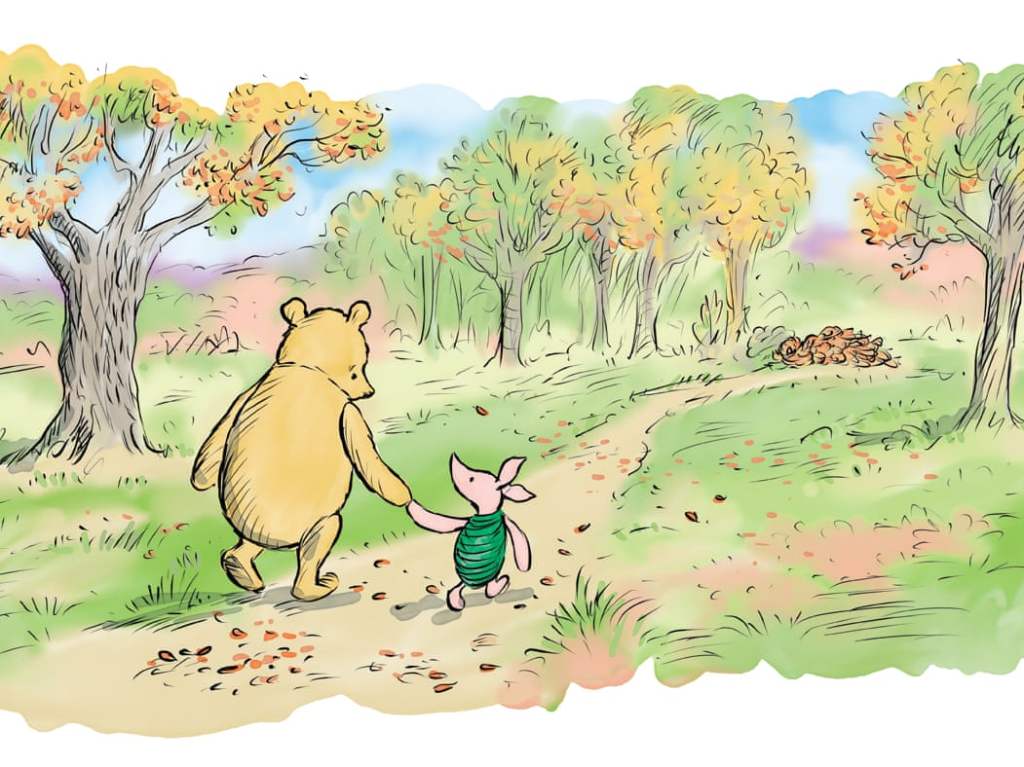
On the topic of footwear and feet, I was reminded of Pooh’s little ditty when I found I have ‘Covid Toes’:

“The more it snows, (tiddely pom) the more it goes (tiddely pom), the more it goes (tiddely pom), on snowing.

And nobody knows (tiddely pom) How cold my toes (tiddely pom) How cold my toes (tiddely pom) are growing.”

Sure as eggs are eggs these cold toes make the second part of the yoga pose Utkatasana, or Awkward Pose, even more difficult, getting up on one’s points when they feel cold and tingly!!

This taken from a book – I am not this good!!

Rereading the above, if I had walked to Estoril I would have probably worn out some soles but I could have personally delivered the slippers, and been able to have some lovely hugs that would have lifted my soul (sole?).

Richard 5th March 2021

PS I note that high heels (for women) are back in fashion. So good for your feet – not!

PC 219 It Doesn’t Take Much

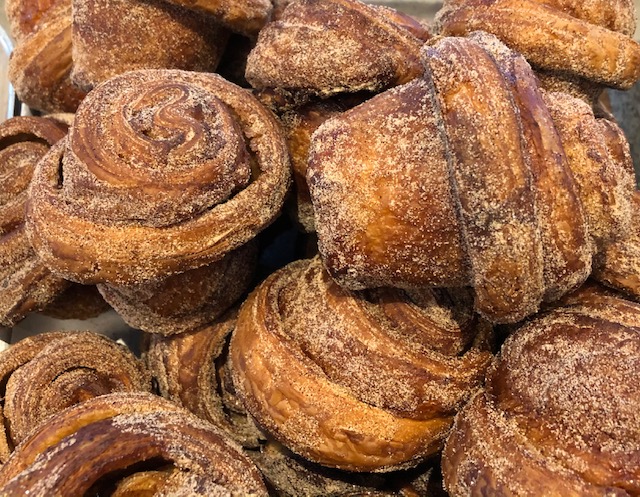
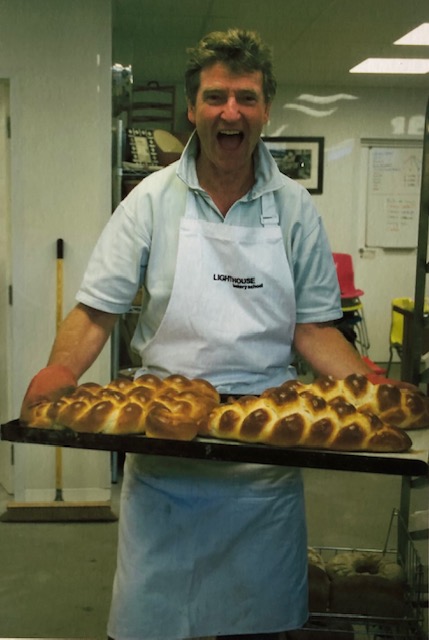
I have a very sweet tooth and find it easy to get into habits and repetitive behaviour without a thought. Whilst living just off Northcote Road in Battersea the local Lighthouse Bakery (Note 1) offered a little bun filled with Crème Anglaise – called a Dewy Bun, one on its own was not enough! It became a daily visit. Down here in Hove I have recently discovered a Cinnamon Bun (Note 2) in Gail’s, a successful purveyor of coffee, artisan breads, stickies and the like. They are soft in the centre with a crisp sugary cinnamon skin; a must as a morning coffee accompaniment.

Having a somewhat addictive personality, it didn’t take long for the Cinnamon bun to become a daily indulgence! Not immune to Lockdown Spread, I realised something had to change. The nudge of the arrival of the Christian festival of Lent last Wednesday provided that impetus. No more Cinnamon buns – well, at least not until 40 days have passed – it doesn’t take much, huh! Lent lasts for 40 days, the time Christ spent in the wilderness finding and testing himself; today many go on retreats to recharge, rethink or recover, although forty days would be too long. (Note 3) Today I sense many feel they have been forced to ‘find themselves’ during enforced periods of lockdown!

All sorts of thoughts flash through our minds, a million times a second, in the blink of an eye; if we are awake we may focus on one or two until one becomes dominant. Doesn’t take much for the thought to develop into a feeling, an emotion and sometimes that emotion is translated into action. In PC 214 ‘Saints and Sinners’, I wrote that it’s the translation of these emotions into acts that sometimes causes a problem. Clearly this was uppermost in the mind of Ayatollah Khamenei when he said this week that looking at an ‘uncovered’ (ie no hijab) woman in a film was fine as long as the viewer’s thoughts were not lustful. In the same breath he recommended that female cartoon characters should be depicted wearing the hijab as he was worried about the consequences of them not being so depicted. Who would have thought it?

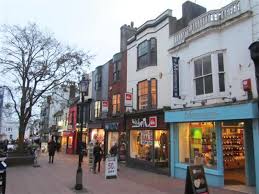
Closer to home, when our yoga studio was open Celina and I would take the bus into Brighton and walk down through the little lanes to Middle Street. Outside one of the shops was a homeless chap, there most days, week in, week out. Recognition of this chap, thoughts filtered through one’s own experiences, created a feeling of sympathy, of wanting to do something, wanting to be human. One could not not act! Into the nearest ‘take-away’: “Coffee, milk, three sugars and two sausage rolls please”. “That for the chap outside? He prefers semi-skimmed!” Always grateful, always polite. Doesn’t take much huh!

Duke Street in Brighton

I think for the most part our penal system works well, although I don’t believe that the automatic 50% reduction in one’s sentence with the remainder being spent on parole, is right. Fortunately HMG has recognised this and in the last Queen’s Speech said it would toughen sentences. In January 2016 I wrote a postcard titled Incarceration (PC 59) about someone we knew who had been sentenced in December 2014 to six years in prison. He came out in December 2017; we had dinner at The Ginger Pig and caught up with his plans, living within the restrictions of parole. Sadly it didn’t take long for him to be caught violating those conditions and he went back inside for another three years. Didn’t take much!!

Exaggeration seems to be apparent in much of life, in those who want to suggest a better/more wonderful/further than ever/beyond belief story that focuses on them. The feeding of the ‘Five Thousand’ is a good example. The idea that many many people were fed from an extremely small quantity of food is remarkable, although cynics might suggest that the atmosphere of excitement put off people’s hunger. But why 5000? Three thousand would surely have been enough to make the point? Was someone counting?

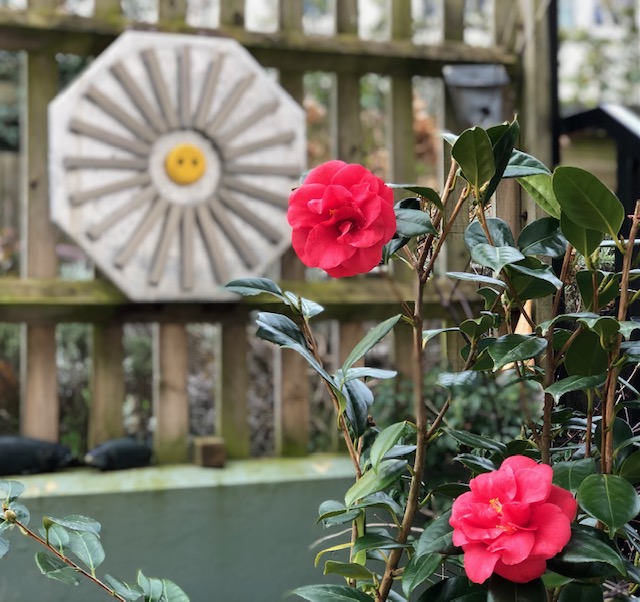
Here in the Northern Hemisphere we have passed the official start of Spring and are only a month away from when the sun is directly over the Equator. It doesn’t take much, longer daylight and milder temperatures, in daytime at least, for the Camellia to flower ……

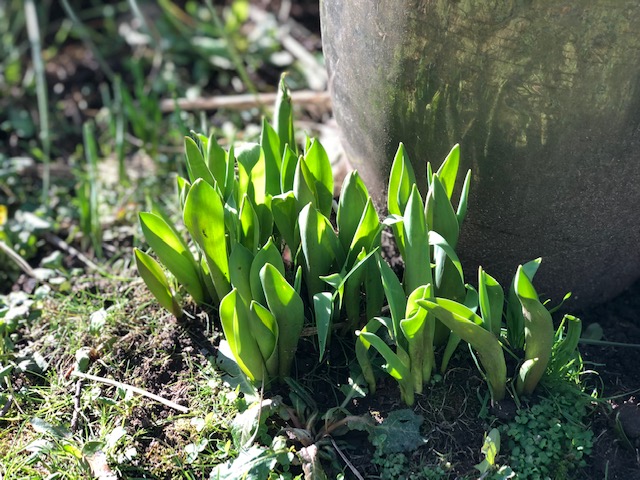
…… and for the Tulip bulbs to start pushing upwards into the light.

A couple of weeks ago I was putting the finishing touches to one of my postcards, adding a little here, rephrasing something there. I am really not sure what happened or what key I inadvertently pressed but the screen went blank. Doesn’t take much to think ‘Oh! No!’ (or other, more choice words!)  etc …… and when I switched the laptop back on and retrieved my draft postcard those most recent changes had disappeared into the ether. Watching TV crime dramas it now seems possible to retrieve virtually anything you have deleted, inadvertently or not, but I have only a surface knowledge of my laptop and its inner workings are like, oh! I don’t know, the surface of Mars! Maybe with Perseverance’s help I will know more in future.

Richard 26th February 2021

Note 1 Rachel and Liz ran this bakery with a passion and that showed in their produce. Sometime around 2005 they sold up and opened The Lighthouse Bakery & School near Bodium Castle. I went for a birthday treat one year. For health reasons, combined with the pandemic’s decimation of the hospitality industry and their customer base, they have sadly had to close.

Note 2 Started a new book this week, The Last Snow by Swedish author Stine Jackson. A few pages in and a lorry driver asks a girl: “Would you like a Cinnamon bun?”!!! Another of those coincidences!

Note 3 ‘Forty days’ was a common period in biblical stories; the time Moses spent on Mount Sinai, the time Elijah spent wandering around Mount Horeb and the length of the rainstorm that produced the great flood. And the Hebrew people ‘wandered’ for 40 years before reaching ‘the Promised Land’. Who chose that number?