PC 238 Good and not so good!

The other afternoon I had an appointment with my dentist. These have been completely unavailable during the lockdown so it was a relief to be able to have my first check-up in a year. The tools with which I chew, bite and grind up whatever I put in my mouth have taken their fair share of damage over the years, probably starting in my childhood with rampant disregard to health warnings about too much sugar. Actually that’s not true; there were no warnings about sugar! Many years on, engineering works abound, but fortunately no dentures – sorry, this may be too much information?

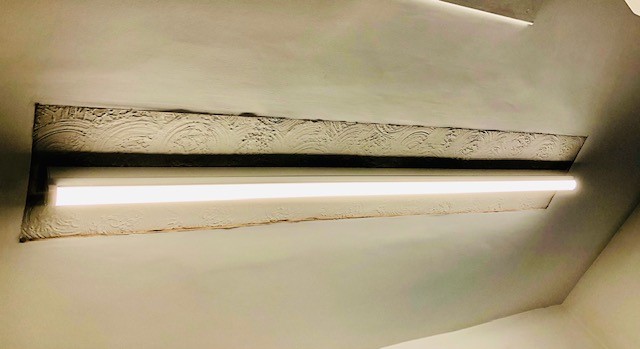
The advice about brushing at least twice a day, about using floss or dental brushes or airbrushes, Fluoride toothpaste or not, gush around like mouthwash. My aim, sitting in the chair, is to ignore what is going on and focus on something on the ceiling. So I am looking up and notice that the neon strip lights are in a different fitting; maybe new lights? Not in themselves remarkable, except that the previous fittings had had a wide cover and the new ones are a great deal narrower.

When the original fittings were up, a decorator had removed the embossed paper that covered the whole ceiling. Now around each strip light was a surviving oblong of cream paper. The electrician who had changed the lights obviously was not qualified to remove the paper. Got me thinking about good and not-so-good designers and tradespeople. Anyone with even the slightest nod to ‘good standards’ would have taken a Stanley knife and cut away the paper. 

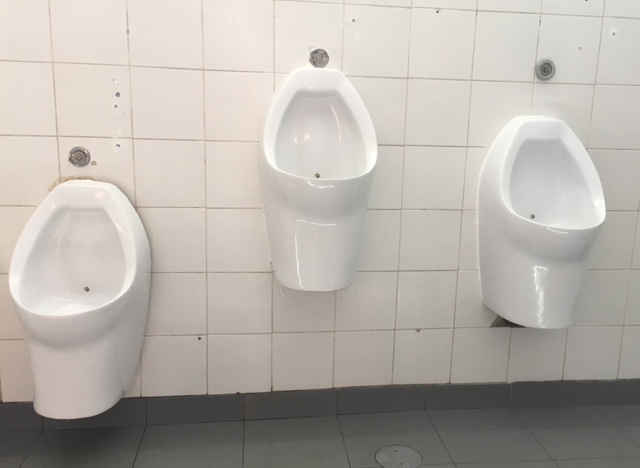
If you regularly read these scribbles you may remember from July 2018 a photograph of some urinals in a motorway service station in Portugal? I think these must be the greatest, most thoughtful design of men’s urinals on the planet, catering as they do for variations in us chaps’ height. They are of course a nod to the foreign tourists, as no Portuguese national would be able to use the highest one, unless …..

You may wonder how I managed to take the photograph without someone looking at me askance and …..

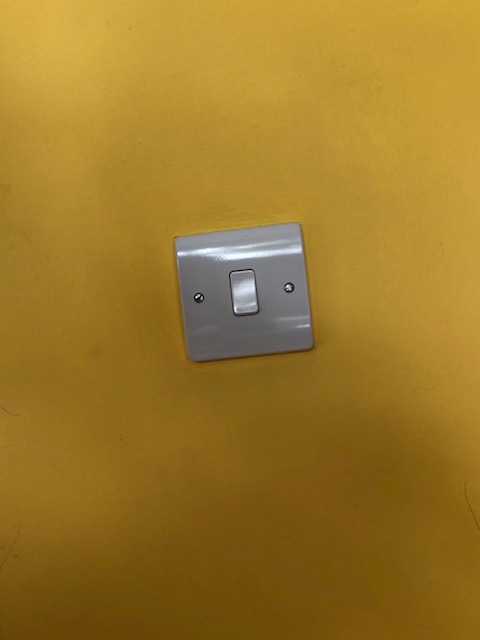
I have made bits and pieces throughout my life and, being slightly OCD, know the importance of things being exactly vertical or exactly horizontal. (Note 1) Our apartment here in Amber House was brand new in 2012, the result of the conversion of an old people’s home, the original building dating from 1890. Five months after we moved in the company responsible for the work came for a ‘snagging’ inspection. I handed out an Excel spreadsheet where I had noted ‘snags’, to assist them, you understand! I showed them this light switch.

Why couldn’t the electrician simply apply a spirit level? Probably because the same individual positioned other light switches behind open doors?

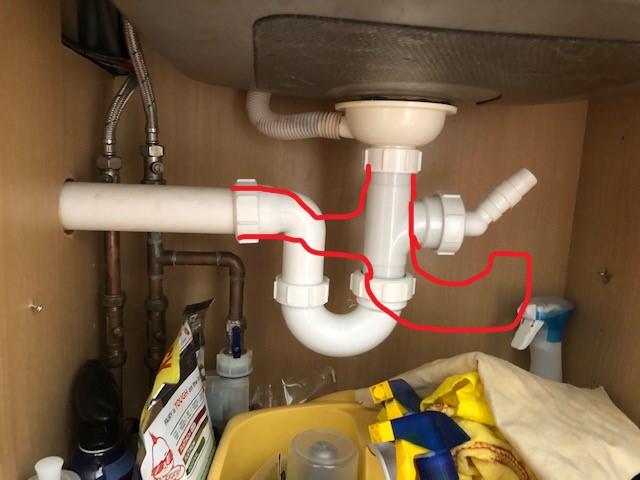
For nine months we suffered a slight whiff of drains around our kitchen sinks, despite our obsessive attempts to get rid of it. Eventually we engaged a professional plumber who took one look under the right-hand sink and said: “Well! That’s easy! The dickhead who put this in put the U-Bend on the wrong side!” (Note 2)

The red outlines where the U Bend was!!

It took him five minutes to change it around. I wrote to the company that was responsible for the conversion but didn’t get a reply!!

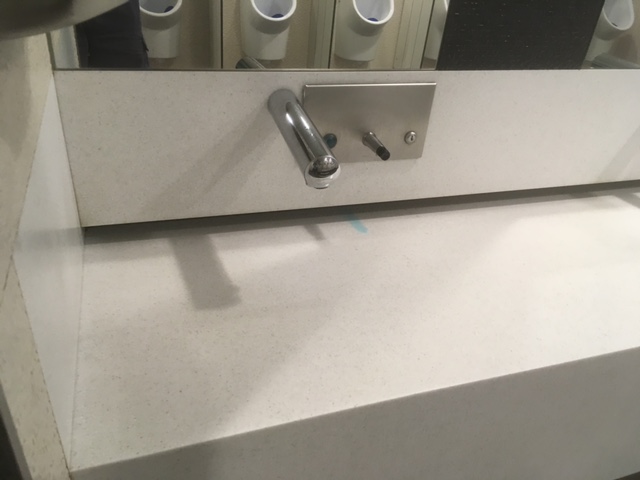
Good design comes in all shapes and sizes. I love this sink in a hotel’s ‘washroom’ – no plug to collect the gunge, just free-flowing water onto a ceramic surface and a chute at the back.

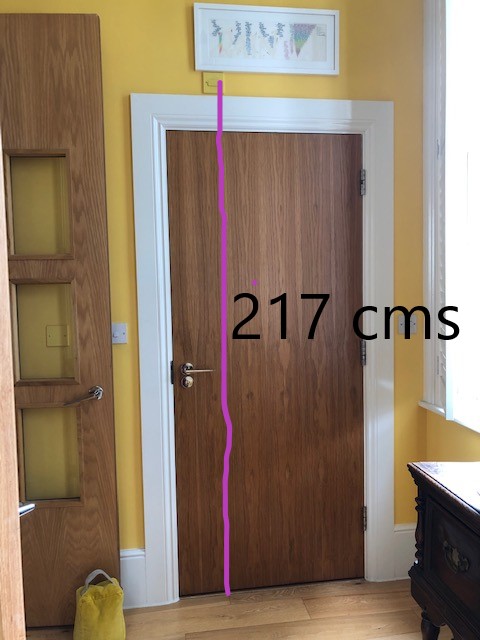
We have three extractor fans in the apartment, one in the hall loo for obvious reasons and downstairs in both bathrooms to assist with steam removal. The isolator switch for each fan has been placed centrally outside, above the door. I am 187cms tall; if I stretch my arm up my fingertips reach to about 217. Celina is considerably shorter and has to jump high to operate the switch.

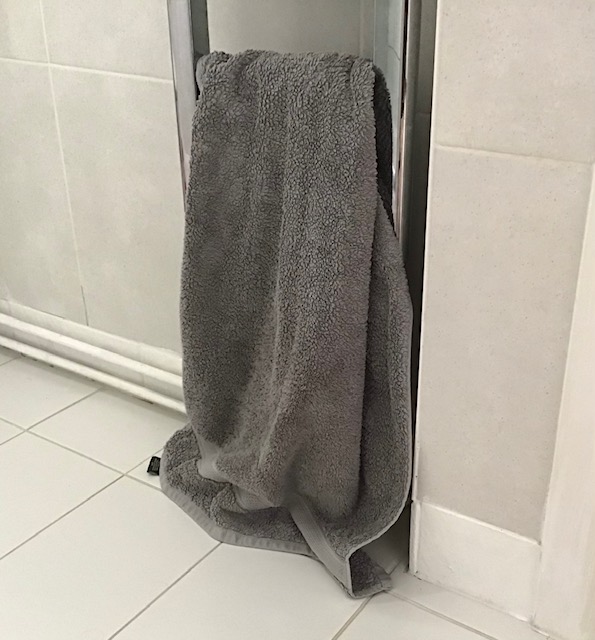
When I asked the snagging team why the switch was almost unreachable they said it needed to be out of the reach of children. Wow! I know the population is gradually getting taller but zero common sense was applied to where the switch was located; this must have been an architect, positioning ‘fixtures & fittings’. Probably the same one who positioned the towel rail in the en-suite, although this time, in a nod to those vertically challenged amongst us, placed the bottom rung 15 cms off the floor; very useful huh?
I do not want my towel on the floor!

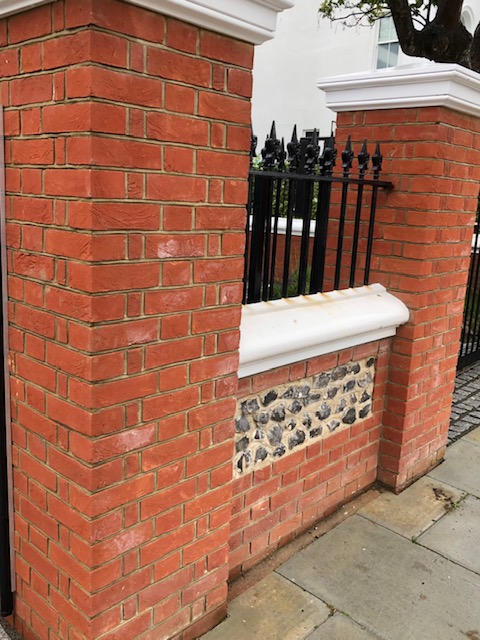
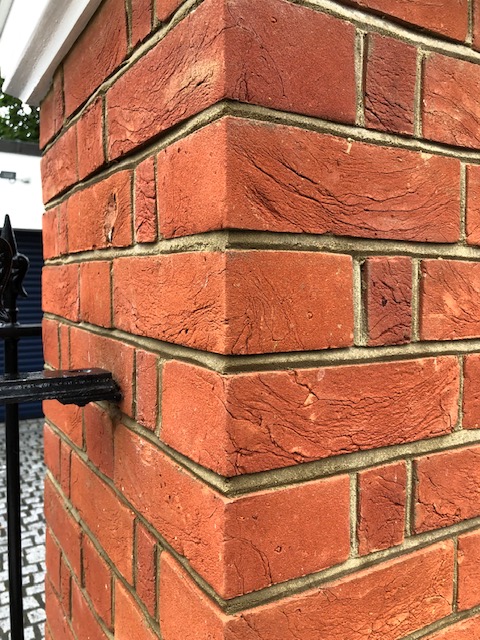
In case you think I can be far too critical, I do admire good design and good workmanship! The local owner of a number of expensive cars, and I mean worth-a-huge-amount-of-money type cars, bought and renovated a row of three run-down garages on Albany Villas some 18 months ago; the three-car garage behind his substantial house was full. His obsession with great design recognised in the choice of his automobiles translates into the quality he demanded of the builders. Brick pillars affront the pavement and are joined by electronic gates. The brickwork is simply beautiful.

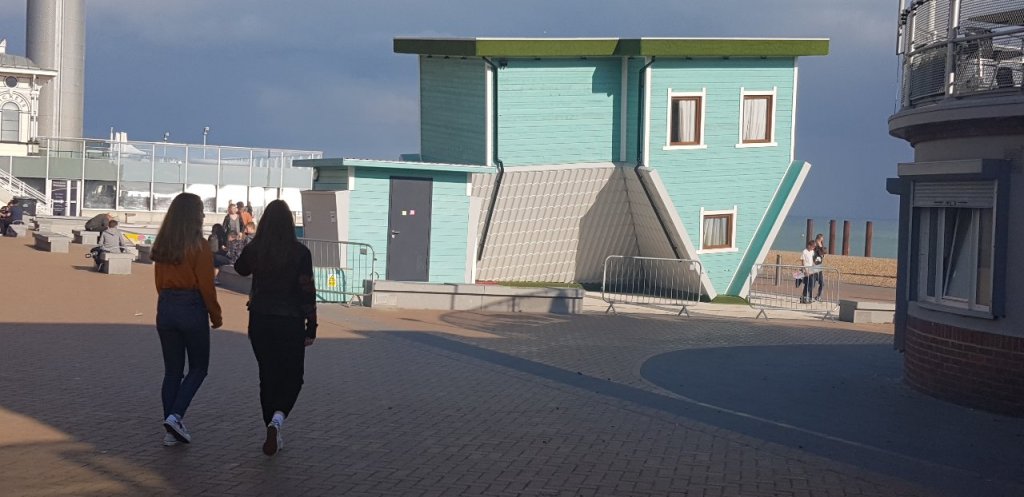
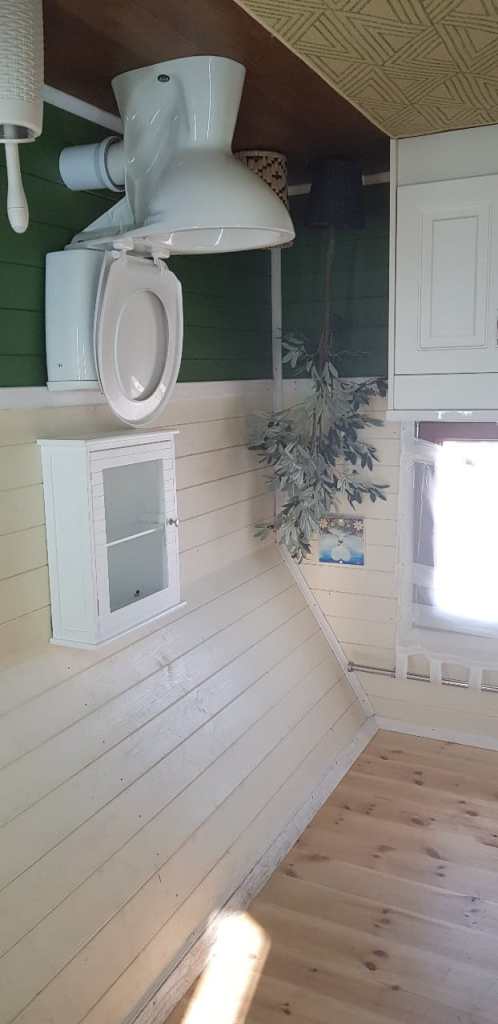
But good or not-so-good, it’s better to have things the right way up as opposed to being upside down!

A couple of photographs of Brighton’s Upside Down House

Richard 9th July 2021

www.postcardscribbles.co.uk

PS This Upside Down House is located on Brighton’s promenade. (www.upsidedownhouse.co.uk) Photographs courtesy of Holly Monnery

Note 1 My daughter has a ‘photographs wall’, covered in some thirty or forty (?) framed photographs. When I see her I can’t stop myself making sure they are all level!!

Note 2 The U Bend in pipework is designed to hold water, so that unpleasant smells can’t come up from the drain. It was fitted so an open pipe was attached to the drain.

PC 237 “Next Slide Please”

Here in the United Kingdom we were not used to the ‘Briefing Room’ presentations so loved by, for instance, the Americans. If the monarch or Prime Minister (PM) want to address the Nation, they do it from a chair or from behind a desk, with a certain informality guaranteed; that is the British way, understated but no less important. That changed for politicians at the beginning of the Covid pandemic last year, when the PM needed moral support in the form of specialist advisors to help field the inevitable questions …… that he couldn’t answer.

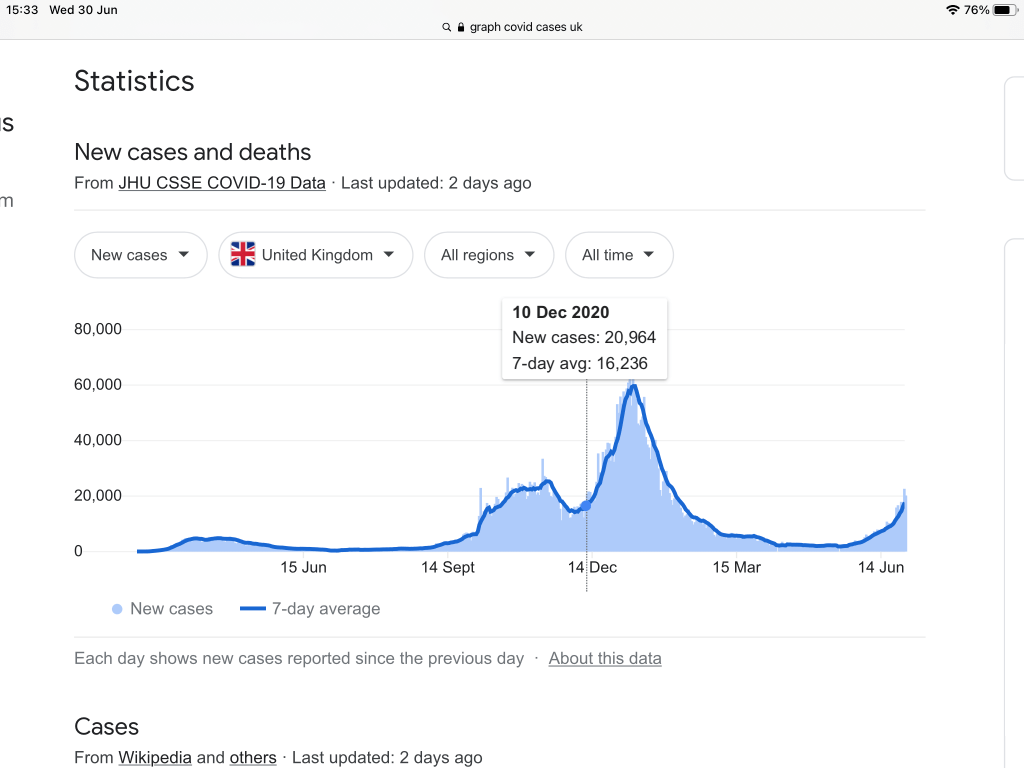
We became used to a daily briefing, with the scientists demonstrating through complex graphs the various indications of where the virus and therefore the crisis was going. You remember the dreaded R Number? Anything above 1 was not good. Sure, we got inured to the scale and complexity of Covid but if you didn’t know someone who had it, there was a little of the ‘it’s not going to happen to me, I’m fit and healthy’. That view no longer holds any water as the virus has raged indiscriminately across all ages, genders and societal levels!

The fluctuating number of Covid cases in the UK

As the pandemic continued, so the briefings became more formal and a brand new ‘briefing suite’ was created – at the cost of some £2.6million. Then the government got cold feet, not wanting to emulate the White House Press conferences where the Press Corp is always looking to ask a more poignant question, and reverted to the three individuals. The PM has generally been in the chair, actually standing behind a podium (!), except of course when he was in hospital himself, seriously ill. The top team is the PM, the Chief Medical Officer and the Chief Scientific Advisor. The choice of three individuals invariably gives rise to parallels with the three monkeys, one who is deaf, one who is blind and one who is dumb, but I can never work out which description applies to who.

Occasionally other members of the Cabinet have been in the PM’s spot. The Home Secretary, Ms Priti Patel, has chaired a few but at 5ft 3” (160cms) she is vertically challenged and has to have a step behind the podium to give her a lift! During the pandemic and lockdown their interrogators have appeared on a large screen.

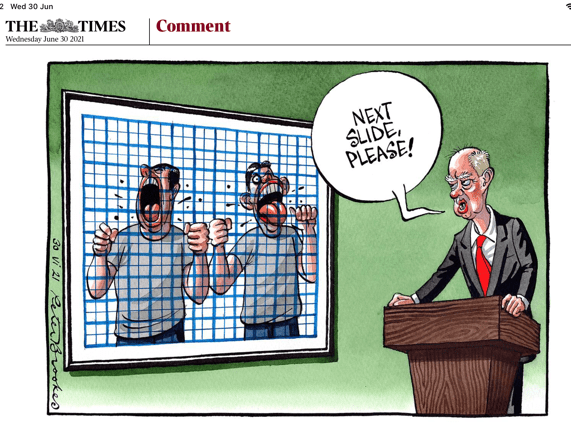
I haven’t watched many of these briefings, but the other evening’s was running late and I caught the tail end. Professor Chris Whitty, the government’s Chief Medical Officer, not to be confused with Sir Patrick Vallance, the Chief Scientific Advisor, was speaking, re-enforcing his comments with some illustrations. These days they are obviously digitally produced and show up on a large television screen. There are many things I see or hear that make my jaw drop in amazement; maybe this is because standards have slipped or perhaps I have got more fuddy-duddy. My mouth hit the floor when I heard, for the fifth time, Chris Whitty say: “Next Slide Please”. Of course he would say ‘please’ as he’s a quiet and cultured individual but was he really instructing someone out of sight to change the graph? Didn’t he have a button beneath his finger? Very mid-C20th!

I started these scribbles at the beginning of this week, so you can imagine my surprise when, in The Times on Wednesday 30th June, the cartoonist Peter Brookes picked up Whitty’s phraseology as well:

Two mindless individuals had hassled Chris Whitty for a selfie in St James’ Park!

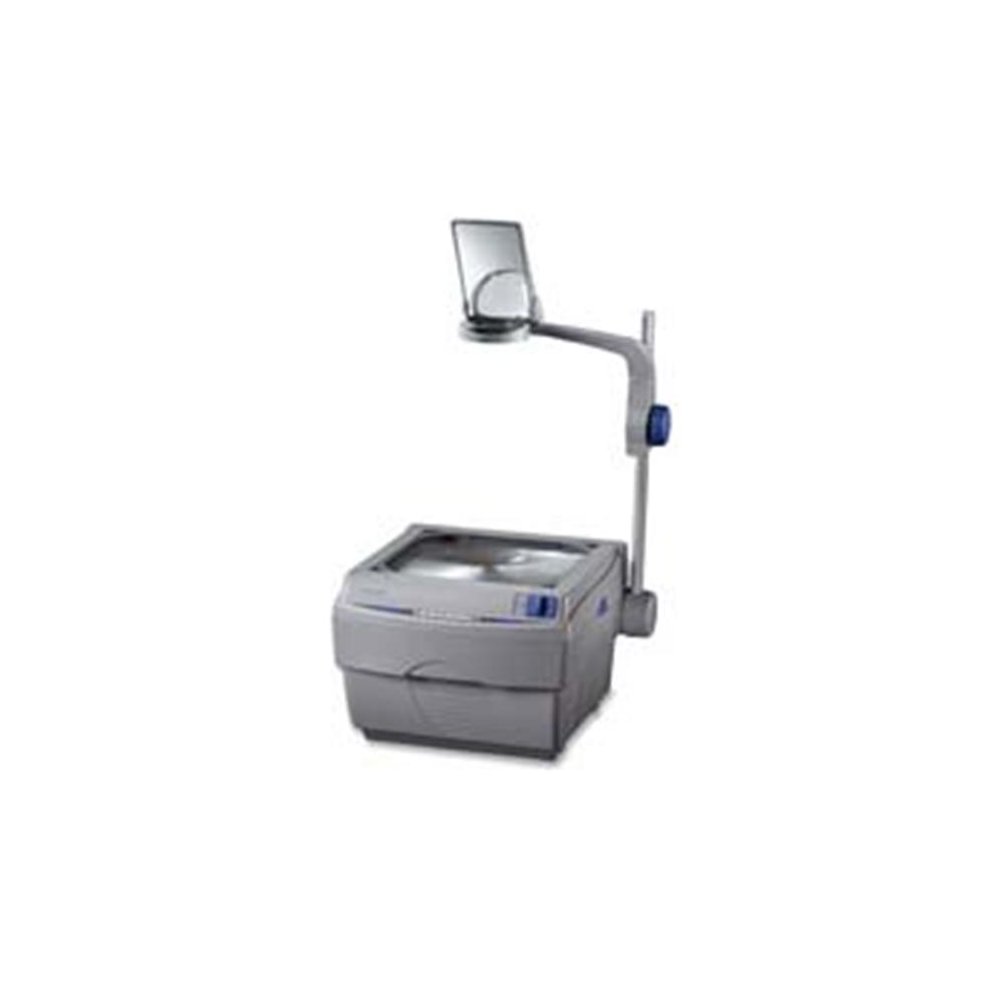
Hearing ‘Next Slide Please’ immediately took me back to when I first started giving presentations. You remember the vufoil projector?

You scribbled on a piece of acetate with some form of marker pen, then asked someone to put the vufoils on the projector in order.

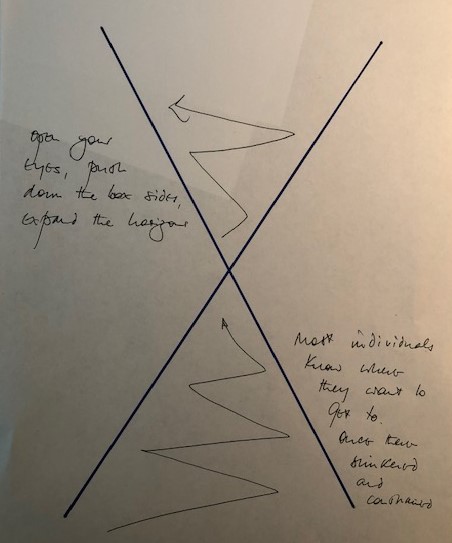
An illustration of how individuals end up stuck in their careers

Invariably some were back to front, or upside down: some choice of colour made the words or diagrams difficult to read. Giving scripted presentations about the air threat to ground forces in my time as an instructor at the Royal School of Artillery required a copy of what I was saying. This was annotated with ‘vufoil on’ and ‘vufoil off’ for the person next to the projector.

All this reminds me of a general who was well known for giving excellent presentations, but never thanked his team who worked hard to produce the script and supporting visuals. Eventually they had had enough: at the start of one presentation, armed with twenty sheets of script and lots of slides, the general launched into his polished delivery. Finishing page two, he turned the page to start Page Three. Covering the whole page were five words: “You are on you own!” The remaining pages were blank.

I left the Army and joined Short Brothers’ Missile Systems Division’s Sales Team. After a year trudging around Europe I was given ‘India and the Far East’ as my patch. My presentation changed depending on the audience and their security clearance, but my briefcase contained a large circular carousel of slides, one development up from the printed vufoil. By this time the slide projector could normally be operated by a remote control.

One presentation was to a team at the Japanese Defence Contractor Kawasaki Heavy Industries, in a suburb of Tokyo. The slide projector should have been in a museum and only took a linear slide box. From the lectern I was able to advance the slides, so no ‘tsugi no suraido o onegaishimasu’, but the box was on an angle and the slides kept falling out! Not my best moment and not theirs either! (Note 1)

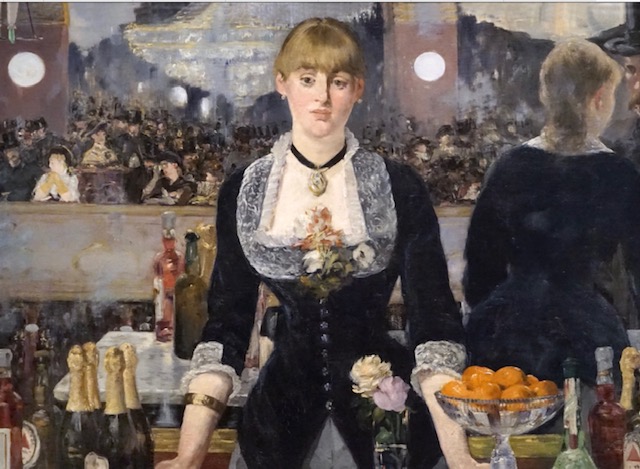
Writing these thoughts reminds me of using a vufoil to create a large painting for a summer ball in Lippstadt in 1973. The theme had been ‘Paris in the summer’ so I drew an outline around the important details of ‘A Bar at the Folies’ by Edouard Manet onto a vufoil. Then glued some butcher’s paper together and projected the image to give me a reproduction 2m by 1.5m. Then out came the paints for ‘painting by numbers’!

Next slide please?

Richard 2nd July 2021

http://www.postcardscribbles.co.uk

PS Out of the UK adult population of 53.5 million, 85% have had one vaccine dose and 62% two. A real success story.

Note 1 This isn’t a case of ‘bad workman blames his tools’, really!

PC 236 Dawn

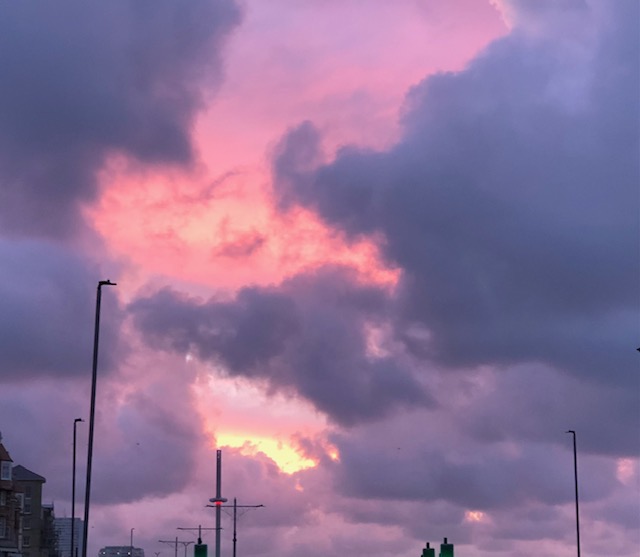
Dawn! The very word unlocks a kaleidoscope of colours, of images, of emotions, this description of the very start of a day. We think of the dawn as exquisite, breathtaking, special, soft, natural, glorious and I have photographs stretching back over the years of the same event, dawn, although probably have more of the end of the day, of sunset, because I am more likely to be awake! Most of us welcome it, this new start, this new day; in fact Nina Simone even sang about it in her hit ‘Feeling Good’ – “It’s a new dawn, it’s a new day, it’s a new life for me, yeah!” and James Blunt described it as ‘beautiful’!

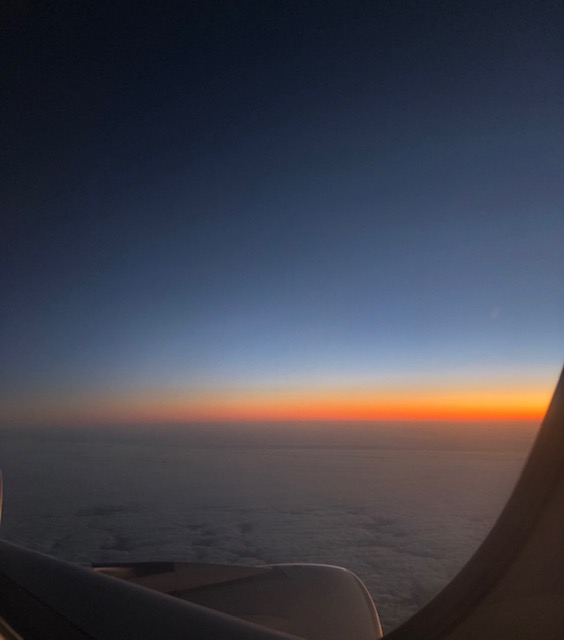
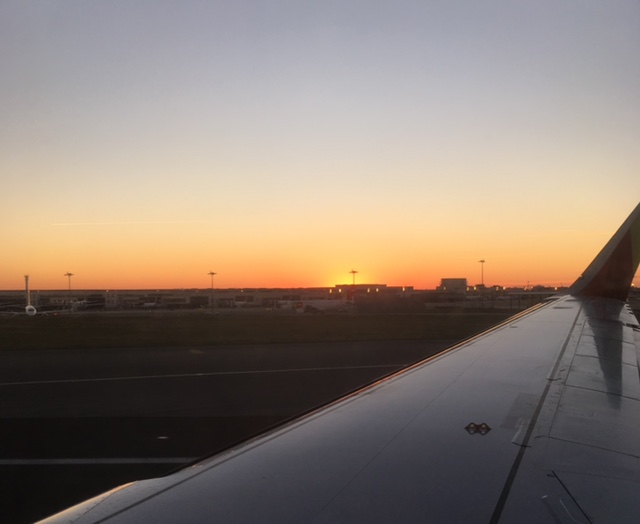
Flying from Singapore to Melbourne

Seems an appropriate title for a postcard when here in the northern hemisphere we celebrated the longest day on Monday, when the sun is overhead the Tropic of Cancer. In Lerwick, the capital of the Shetland Islands, 130 miles north of the Scottish mainland, sunrise was 03.38 and sunset 22.34; here in Hove sunrise was 0447 and 2118, giving Celina and me almost two hours less daylight. I always find this ‘longest day’ always comes as a bit of a surprise, as we have hardly got into ‘summer’ and already the days are getting shorter!!

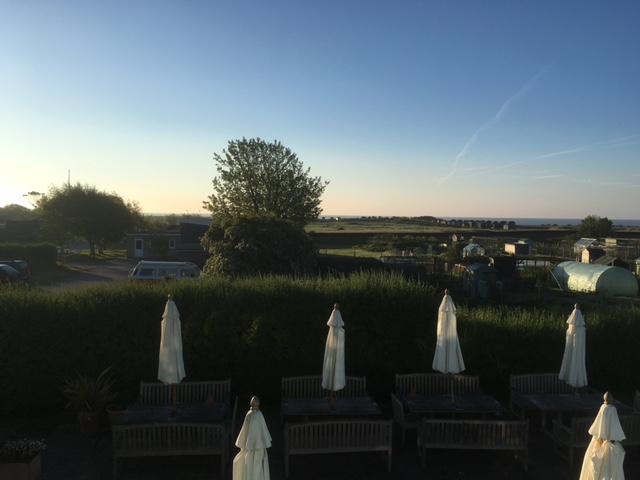
Dawn at The Anchor Warbleswick, Suffolk

You might think a definition of ‘dawn’ is easy – the ‘sun gets up’, with or without its hat. No so! Let’s start with twilight and its three phases.

The first, Astronomical Dawn, occurs when the sun passes the elevation angle of -18 degrees as it ascends towards the horizon before sunrise and a very small portion of its rays begin to permeate the firmament. However, at this point, the twilight is so faint that it is generally indistinguishable from night, especially in areas with light pollution. Astronomers may be unable to observe some of the fainter stars and galaxies as the Sun passes this mark. Militarily darkness allows forces to move into position for a dawn attack, with twilight giving enough light for the start. Conversely defenders will often ‘stand to’ in the hour before dawn, to repel such attacks.

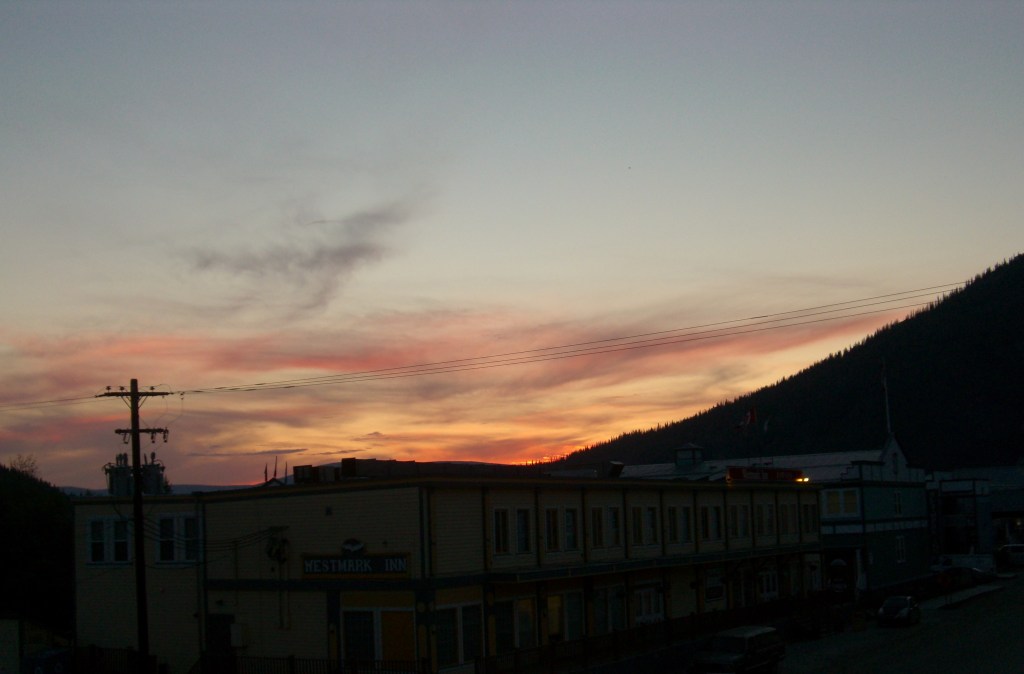
Dawson City on the Yukon River -dawn in 2017

Another six degrees and we come to the Nautical Dawn, when the sky is distinguishable from land or water in clear weather conditions. Having sailed thousands of nautical miles, I can vouch for the fact that the first glimmer of light is always welcome. Lastly Civil Dawn, the brightest instance of dawn, occurs when the geometric centre of the Sun’s disk is 6° below the horizon. (Note1)

i360 Observation Tower in Brighton at dawn. The tower, third from the left, appears to be belching flames!

If the sky is clear, it is now enveloped in bright orange and yellow colours. At this point, only the brightest stars and planets, like Venus and Jupiter, are visible to the naked eye.

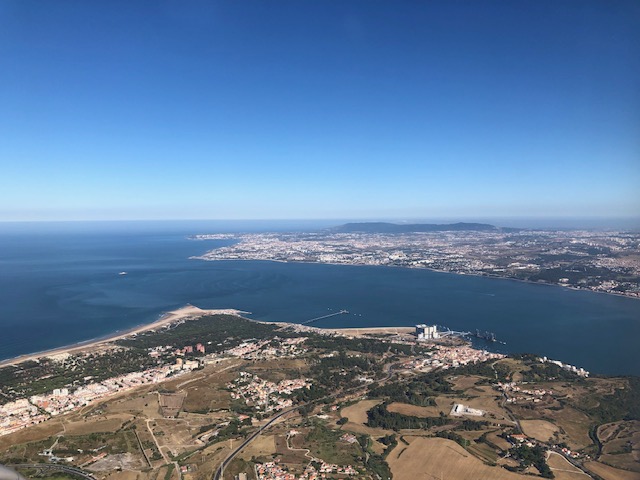
Leaving Lisbon on an early morning flight

Daybreak is, as it says, when the leading rim of the sun breaks the horizon. Depending where you are on the earth, the time of the year and the thickness of the atmosphere, it can take between 2 and 3 minutes to be fully exposed. It ends as the lower edge of the Sun clears the horizon.

Sunrise over Praia do Rosa at Quinta Bucanero, Brazil

Dawn has been used as a first name, as in the actress Dawn French and one of our yoga chums, Dawn Everton; the association with a baby, new and beautiful, is obvious. It’s also the title of the largest and oldest English-language newspaper in Pakistan. It first came off the print rollers in 1941 and is the flagship publication of the Dawn Group of Newspapers.

As the beginning of a new day, dawn has a special significance in many of the world’s religions. However, the definition of the term varies from one faith and religious community to another. For example, Muslims are required to offer the Fajr prayer, which is one of the five obligatory daily prayers in Islam constituting one of the Five Pillars of the Islamic faith, during the morning twilight period. The Jewish Holy Scripture also dictates dawn as a time for prayer; but the Talmud defines dawn as the moment 72 minutes before sunrise, which conflicts with the scientific definitions!

Our poets are a little parsimonious with the word! Surprisingly for a word that is so often in our conscious brain there are few. There is the C17th proverb ‘The darkest hour is just before dawn’ which was famously used by Emmylou Harris in her song. The Greek poet Homer wrote of ‘when rosy-fingered dawn, child of the morning appeared’ and Oscar Wilde in ‘The Harlot’s House’ described it as ‘down the long and silent street, the dawn, with silver-sandaled feet, crept like a frightened girl’. The English poet John Milton wrote: ‘to hear the lark begin his flight, and singing startle the dull night, from his watch-tower in the skies, ‘till the dappled dawn doth rise.’

The Dawn Chorus occurs when birds sing, starting as soon as they perceive a lightening of the sky at the start of a new day. In temperate countries this is most noticeable in spring when the birds are either defending a breeding territory, trying to attract a mate, or calling in the flock.

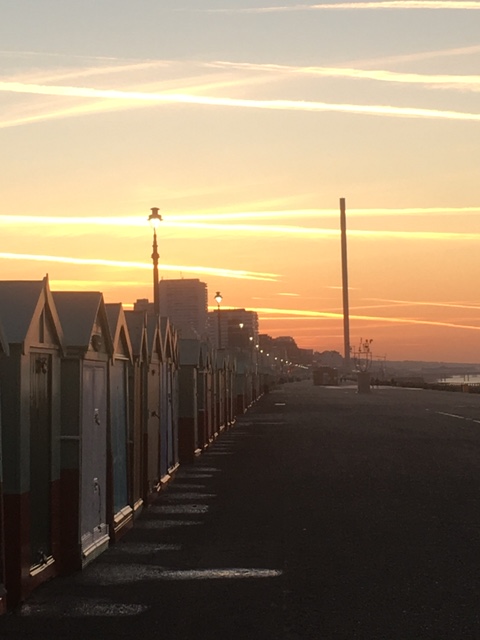
Dawn over Hove beach huts

Red skies at dawn often herald a change in the weather, particularly if the weather comes predominately from the west. A red sky appears when dust and small particles are trapped in the atmosphere by high pressure. This scatters blue light, leaving only red light to give the sky its notable appearance. At sunset it is a sign of a high pressure system to come; at dawn it suggests the system has passed through and unsettled, wet weather is more lightly. Dawn can be wet and cloudy with no sight of the rising sun, as occurred at this year’s Summer Solstice at Stonehenge.

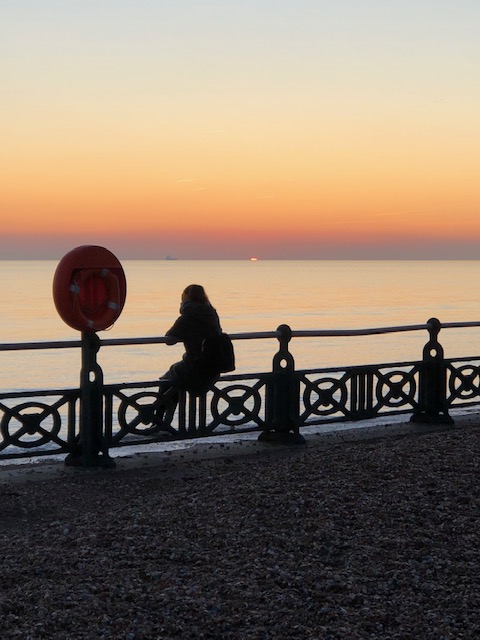
And at the opposite end of the day, the one started by dawn, we have a glorious sunset.

Richard 25th June 2021

www.postcardscribbles.co.uk

Note 1 Yesterday I saw that astrologers have determined that stars started forming some 250 million years after the Big Bang, itself some 13 billion years ago. So after the darkness came light, ‘Let there be light’, and that’s the Cosmic Dawn.

Note 2 It dawned on me I have not mentioned the Dawn of Civilisation; sorry …. ran out of space.

PC 235 Generosity in Government

“Whatever it takes” should be the mantra of our elected government when faced with a scandal that cuts across every level in our society; whatever it takes! Easy to write, so difficult for governments with all their conflicting pressures to agree to.

For those of my readers who do not live here in the United Kingdom (note 1) there may not be so much interest in the scribbles this week, as they concern two particular scandals, one domestic and the other with international reverberations, that the Government is facing. If you are directly involved, they are dreadful; if not you sense that the government sometimes just has to say ‘Whatever it takes, we will put this right’ Wishful thinking huh? Let me explain.

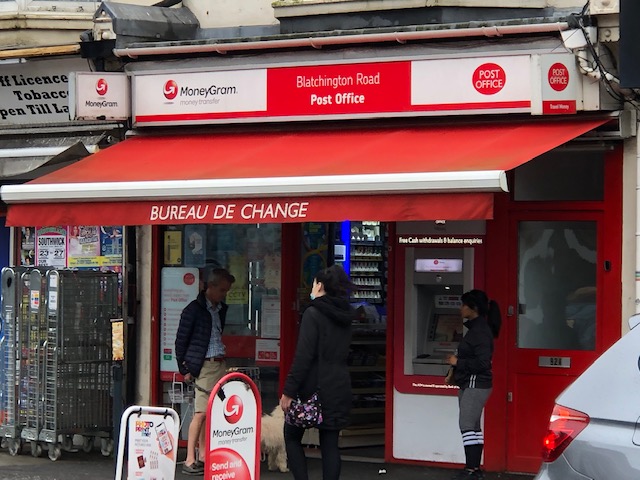
Every country in the world has some form of postal service, some better than others. Our postal service, Royal Mail, was a government organisation responsible for both the physical post offices on the high street and for the collection and delivery of the country’s mail and parcels. From its origins in the C16th, it was eventually privatised in 2014, being split into two companies. Royal Mail delivers parcels and mail and The Post Office’s nationwide network of branches offers a range of postal, government and financial services. There used to be two deliveries of mail a day …… but that was in the days when there was no electronic mail and life was conducted at a gentler pace. Almost every village would have had a post office; 30 years ago there were 23,000 of them but now only 11,500. Luckily here in Hove I can walk in ten minutes to two, both run by families of Asian descent, confirming their reputation of being good with figures.

Inside the Blatchington Road Post Office

In the year 2000 the Post Office, still in government ownership, introduced a new computer system, one designed by Fujitsu. Between 2000 and 2014 736 sub-postmasters (Note 2) were prosecuted for false-accounting, theft and fraud; postmasters who had had an unblemished record going back years, loyal to a fault. No one in the Post Office linked the sudden increase in money issues with the new system, happy to blame their sub-postmasters; many were fined, some went bankrupt and some went to prison. The computer programme had some serious systemic faults but these were not admitted by the Post Office until it was dragged through the High Court by 39 ex-post office workers last month. An inquiry ordered by the government will look at this scandal, but currently it has no power to compel witness to attend or hand over evidence. Calls for a judge-led inquiry are falling on deaf ears. In my view the government should do whatever it takes to compensate those wrongly accused as quickly as possible and then look to punish those who were responsible. Whatever it takes! Be generous!

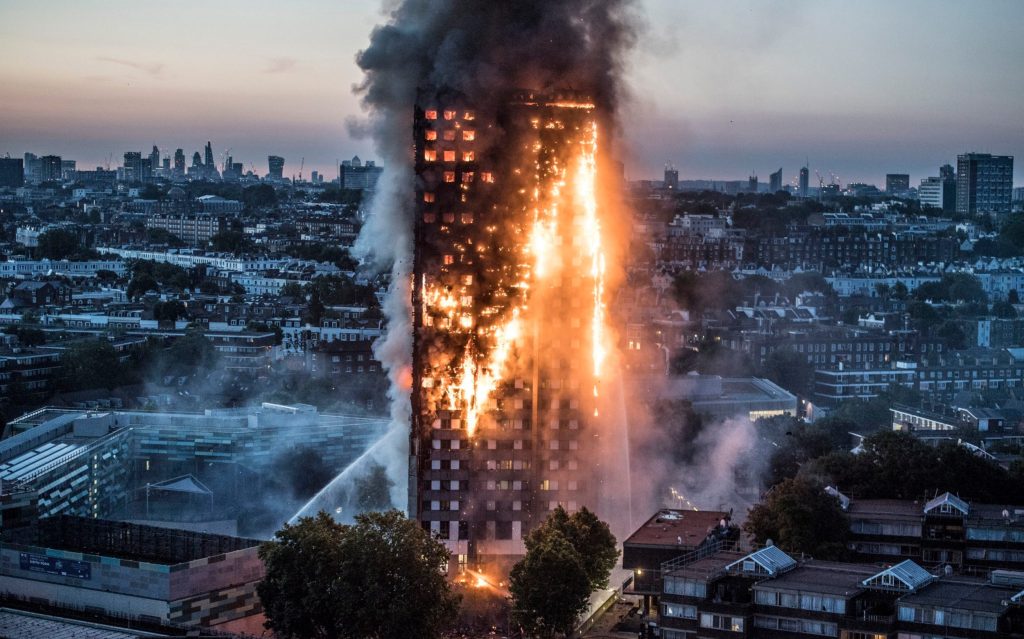
On 14th June 2017, four years ago last Monday, a 24-story tower block called Grenfell Tower in west London caught fire; seventy two people died as the flames quickly engulfed the whole building. A Public Inquiry has been sitting since September 2017; Phase 1 is complete and the hope is that the inquiry will report next year. Meanwhile the issue of flammable cladding on high-rise buildings has come under the spotlight, not only here but also internationally I suspect; changes to building regulations have meant most has to be removed.

The whole building aflame – photo DT

The government has agreed to cover leaseholders’ costs for the removal of dangerous cladding on high-rise buildings but has told those owning buildings between 11m and 18m high they have to pay themselves. In wonderful ‘government speak’ the housing department said “government funding does not absolve building owners of the responsibility to ensure their buildings are safe.” Given that building regulations control every aspect of construction and design, isn’t there an unspoken assumption that owners should believe what they buy is OK? When I buy a car, there is an inherent belief it’s passed all the safety tests, and it’s not my responsibility to check.

A more recent cladding fire in Canary Wharf, London

Home ownership is the goal of so many here in the UK; a place on the housing ladder, climbing towards your 4 bedroom mansion. Now thousands of first time buyers are stuck, unable to sell because the building containing their flat doesn’t qualify for Government finance, yet has unsafe cladding, paying £50 per month for ‘fire wardens’ to keep a 24/7 check on the building and living somewhere where the smell of a distant BBQ is likely to give one heart palpitations!

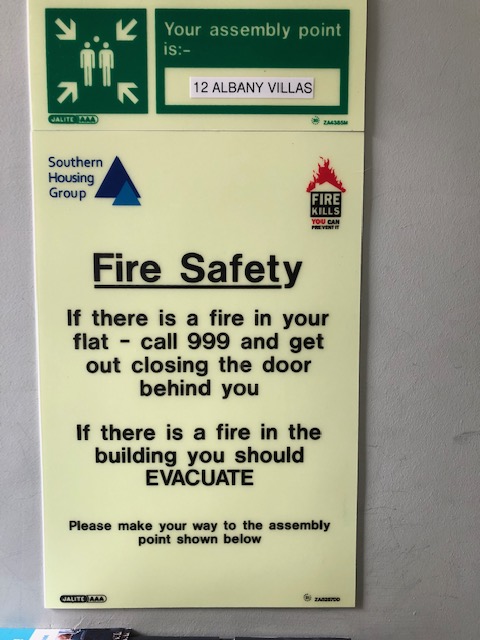
My landlord, Southern Housing Group, is very professional in trying to ensure all its buildings conform to the latest regulations. However, sometimes a degree of common sense is needed when applying these. (Note 3)

A new Amber House ‘In Case of Fire’ notice

Whatever it takes? Well, there are so many professions involved here, from architects who designed wooden (not fire resistant) floors to the nice little balcony, local authorities who often look for the cheapest refurbishments of their estates and, as in the case of Grenfell, not too rigorous in the choice of contractors, building suppliers and construction companies, to property developers and building planners and inspectors, that spreading the costs of solving this scandal and giving every flat owner peace of mind and some fairness in the action … should be the mark of a government that recognises the people who live in dangerous apartments are not at fault. 

Whatever it takes! Be generous and big hearted and get these two scandals sorted and earn the respect of our society writ large.

Richard 18th June 2021

http://www.postcardscribbles.co.uk

Note 1 The United Kingdom comprises England, Wales and Scotland (otherwise known as Great Britain) and Northern Ireland. Whole and sovereign – despite what a certain Frenchman might claim.

Note 2 For ‘sub-postmasters’ read ‘sub-postmasters and sub-postmistresses’. Don’t want to appear anti-woke!

Note 3 If you can’t work out what’s wrong, text me.

PC 234 No Buts …… No Butts

I suspect we can all look back on our lives and think how, if we had known then what we know now, we wouldn’t have done what we did back then? For example, there was no breathalyser and I know most people drank and drove; “Oh! I will be fine! I have only had three!” Well of course it wasn’t fine and a number of people died as a result of people drinking alcohol and then jumping into the driving seat. Believe it or not, the introduction of the breathalyser was as far back at 1967, introduced by a fiery politician called Barbara Castle. Now the majority of us don’t ‘Drink and Drive’.

Front seat belts were compulsory equipment for all new cars registered in the UK in 1968 but it took another 15 years for it to become compulsory for them to be worn! Now it’s rare to see someone NOT wearing one.

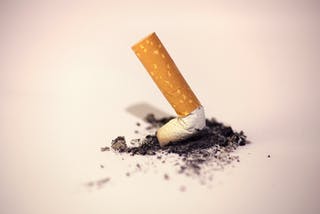
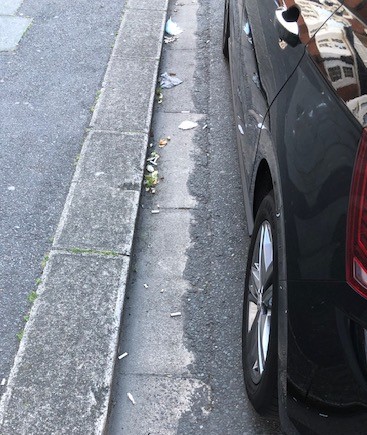
And if you smoked, as I did, you had a choice with what to do the cigarette butts. Indoors, I had a whole range of ashtrays – silver, earthenware or glass for instance or the empty beer can (yuck!). If you smoked in your car, you could stub the cigarette out in the ashtray, which then required you to empty and clean it …… or simply open the window a fraction and let the slipstream whip it away – to wherever it went; it didn’t seem your concern! In the same way when sailing and it was Gin & Tonic time (ie every hour). If the tonic came in glass bottles, the game was to launch the empty Gin bottle into the air and throw the empty glass bottles at it, trying to smash it. Such fun! No thought to the bottles sinking to the bottom. Now we are aware this is not right!

A week ago the local paper, The Argus, ran a story about a Council Warden chasing a woman onto a bus; the woman had thrown her cigarette butt on the pavement and that’s against local bylaws. She wasn’t charged but the social media storm contained, as it always seems to, every shade of opinion, some vitriolic and others of the ‘leave her alone’ type and how the authorities should be worrying about more serious things.

This news item prompted these scribbles as, every morning on my way back with my newspaper, I pass the Smart Sea View Brighton Hotel. This is a misnomer, as it’s in Hove and not Brighton and it looks like a real dump certainly from the outside; smart? Nah! Anyway, the smoking staff and visitors prefer to throw their butt ends onto the pavement – as they have always done!

The figures are interesting. Here in the UK twenty six billion cigarettes were sold in 2019 to the seven million people, 14% of the population, who still smoke (Note 1). That number is fortunately decreasing annually, as is the number of cigarettes each smoke, down to below 15 a day. In 2007 smoking was banned in pubs and restaurants which, as a now non-smoker, I welcomed. But it produced a dichotomy; if you wanted to sit outside on a summer’s day and have lunch on the terrace or in the pub garden, you had to put up with the second-hand smoke that drifted across your grilled sole. Or go inside!

It’s been recognised for decades that smoking is not good for your health and yet people still smoke: “It’s my right, my choice! I know it’s bad for me but I enjoy it.” Here the health figures speak for themselves: 400,000 cases of respiratory disease, 775,000 cases of circulatory disease and 360,000 cases of cancer – all caused by smoking.

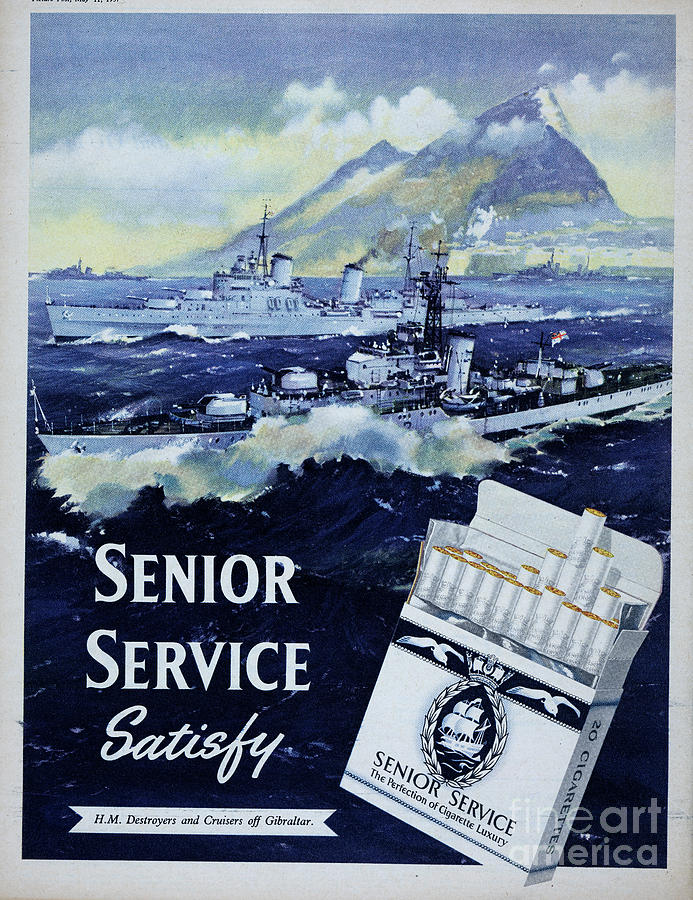
Effects to mitigate the harmful effects of burning tobacco resulted in the filter, introduced in the 1950s. If ever you needed a visual demonstration of the stuff you were sucking into your lungs, you only had to look at the end of the filter! Interesting, my brother’s Royal Navy career encompassed a time when cheap filter-less cigarettes, a unique brand called Senior Service, were available. That 200 year old tradition ended on 1988.

The disposal of the butt was always an issue, but everyone was ignorant of the problem. The cigarette filter is 99% cellulose acetate which is a plastic. We have changed our thinking about plastic bags and about plastic straws and now we need to focus on how we get rid of our butts.

For those who still smoke, I imagine they are aware of the health risks but enjoy it too much for them to quit. The Singaporean Government has banned smoking in certain areas of the city and fines heavily those who throw their cigarette butt into the street; it seems society accepts this and the city streets are remarkably clean. Here in the UK the government has a target to create a smoke-free society by 2030; given some people’s continuing love of smoking, good luck with that! (Note 2) But smokers need to understand how to dispose of their butts in a more environmentally-friendly way. Currently most butts are washed into gutters by rain and thence to the oceans, creating a plastic hazard for marine life.

There’s an adage – “Take care of the pennies and the pounds take care of themselves.’ If we can change habits about the disposal of the tiny butt, maybe those habits will also translate into dealing more considerately with other rubbish, such as pizza boxes or burger wrappers.

Discarding your cigarette stub has been described as “The Last Acceptable form of Littering”. Let’s all try to make this completely unacceptable and a rare event, like not wearing your seat belt or drinking and then driving. So no “But ….”; just “No Butts!”

Richard 11th June 2021

www.postcardscribbles.co.uk

Note 1 Up until 1975 the British billion was a million million. Now we use the American-driven definition of a thousand million.

Note 2 Cigarettes here cost over £10 for a packet of 20; 80% of this is government tax. One way for the government to further discourage smoking would be to make them prohibitively expensive.

PC 233 Am I Obese or just overweight?

Am I obese or just overweight? I don’t feel ‘obese’, a bit wobbly maybe, and think that’s a label for the Billy Bunter character, or Noel Edmonds’ Mr Blobby; so no! But overweight? We probably have all had periods of being fatter or thinner than we would like, than we feel comfortable with, but overweight? What follows are my personal thoughts, reflecting that what’s right or wrong for me isn’t necessarily right or wrong for someone else. And I accept that advice changes – ‘butter is good for you’, ‘butter is bad for you’, ‘eggs are good for you’, ‘eggs give you salmonella’. Sedentary lifestyles during lockdown initially saw lots of people turning to exercise, but the novelty’s worn off and weight, well certainly mine, has been going up incrementally!

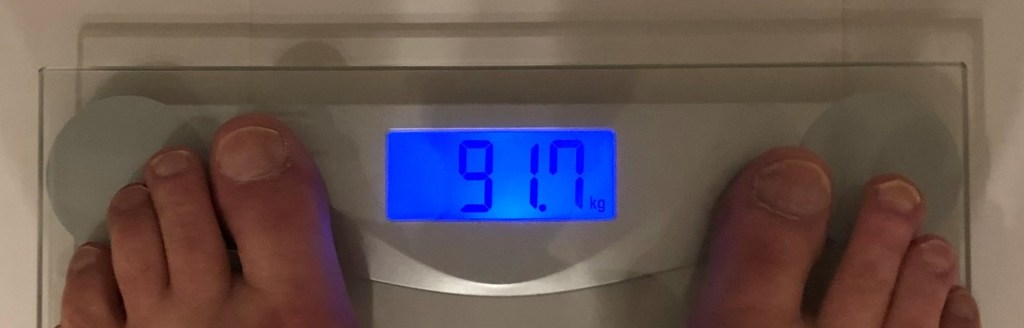
This was me just over two months ago – 100kg and a BMI score of 28 whichever way you look at it! (Overweight!)

Our headlines scream: ‘Britain has been the ‘Fattest Nation in Europe’ for a while’ and recent reports indicated the percentage of the population overweight or obese is increasing! So, does it matter?

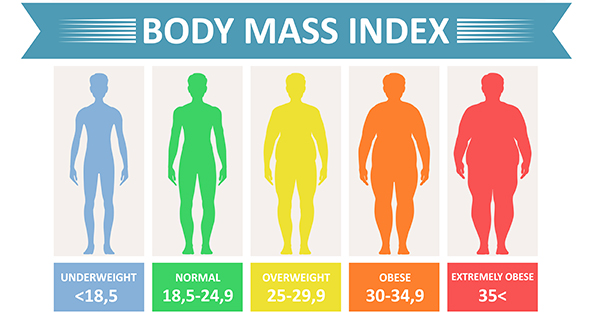
We have been measuring our childrens’ growth in schools for ever, establishing whether their health and growth were in line with the norms. The Body Mass Index (BMI) was introduced in the 1830s by a Belgian mathematician, Lambert Quetelet, as a way of estimating whether a person had a healthy weight, to measure the degree of obesity in the general population and therefore assist the government to allocate enough resources. I suspect we all know that BMI equals your weight in kilogrammes divided by your height in metres squared – kg h²

But this is simply measuring height and weight and doesn’t take into account other variables, for instance overall fat or lean tissue content. In 2013 Professor Nick Trefethen from Oxford University suggested that the height term ‘divides the weight by too much when a person is short and by too little when they are tall. This results in short people being told they are thinner than they really are, while tall people (that’s me!) are made to think that they are fatter than they are (‘tis true!!) Trefethen thinks a more accurate measurement would be multiplying the weight by 1.3 and the height by 2.5 and not squared. The same ranges would apply. (Ed. Doesn’t make that much difference to mine – still overweight!)

More recently it’s thought a waist-to-height ratio might be a better predictor of cardiometabolic health. Measure your waist mid-way between your bottom rib and hip; make sure it’s level and measure after you have breathed out. A healthy waist measurement should be less than 80 centimetres for a woman and less than 94 for a man. (Sorry? Not a circumference I recognise!) Your waist circumference should be less than half your height.

The urgency of tackling obesity here is the UK has been brought into focus by the evidence of the link between overweight and susceptibility to Covid; who knew? It’s estimated that 64 % of British adults, some 32 million people, are overweight (BMI over 25). This includes 28% who are obese and that’s double the figure for 30 years ago; of these almost a million people have a BMI of 35 or more. For those in this last category there is good news and bad news. The good news is that scientists have identified a gene, MC4R, that, if faulty, causes the brain to assume we have less fat than we do and signals we have to take in more calories. This might be the cause of an extra 16kgs. The bad news is it is likely to affect only 200,000 people in the UK; the other 800,000 obese are obese for other reasons!

Eating has become a continuous process – snacking or drinking coffee ‘on the go’. Mrs Fedup had a microphone stuck under her nose and the reporter asked her for her thoughts about the three hour delay from Magaluf to Manchester: “Shocking! No one tells us anything and no one provides us with any food. Haven’t eaten for 90 minutes. I’m starving!” We use words like hungry and starving too readily – it would be extremely difficult to find someone starving in the UK.

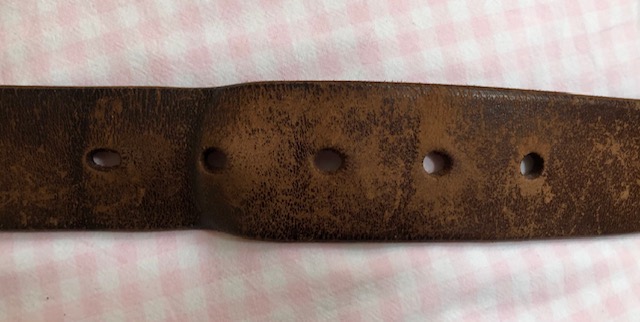
The leather belt by RM Williams shows the struggles, up and down!

Some people feel healthy even if they are overweight, particularly if they have been overweight most of their lives. Sadly being overweight often runs in families through bad eating and drinking habits; deaf to the warnings about the damage they are doing to their bodies and lacking the desire to self-educate about being healthier – but does that matter? We probably think that those who work in the health sector would understand and be role models of fit and healthy – but we are simply human and our doctors and nurses are just as likely to be overweight as the normal population. In Portugal last year the doctor we saw to get our Covid tests smoked and was overweight; I am sure he was happy, apart for the little monkey in his brain which every now and again said ‘Do something’. Some of us of course have a fatalistic approach to life.   

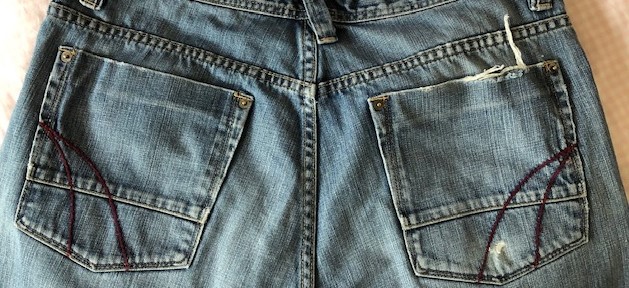
 Here we are making it easier to live with being overweight. Seats are being made wider, ambulances have stronger stretchers, you can find some clothes in XXXL (Well, maybe!). Instinctively this seems the wrong thing we should be doing; we should make it more uncomfortable as an incentive to lose weight. Part of my move away from 100kgs has been that, in order to get the jeans to do up, I have to breathe in; when I am zipped up, I breathe out and it’s uncomfortable. So I could go and buy some bigger jeans ……. or lose weight.

After decades of telling myself that breakfast is the most important meal in the day, I now skip it completely so actually fast from 2100 to 1230 the following day. Fasting changes the metabolism and from 100kgs I am on my way down ………

Some argue that the obese and overweight will actually save the NHS money as their life expectancy is lower than those of a healthy weight; bit morbid but probably true! However issues like heart disease and diabetes, brought on by being overweight, occur in middle age so there will be a bigger bill for the bigger nation. It matters and it matters big time!

Richard 4th June 2021

www.postcardscribbles.co.uk

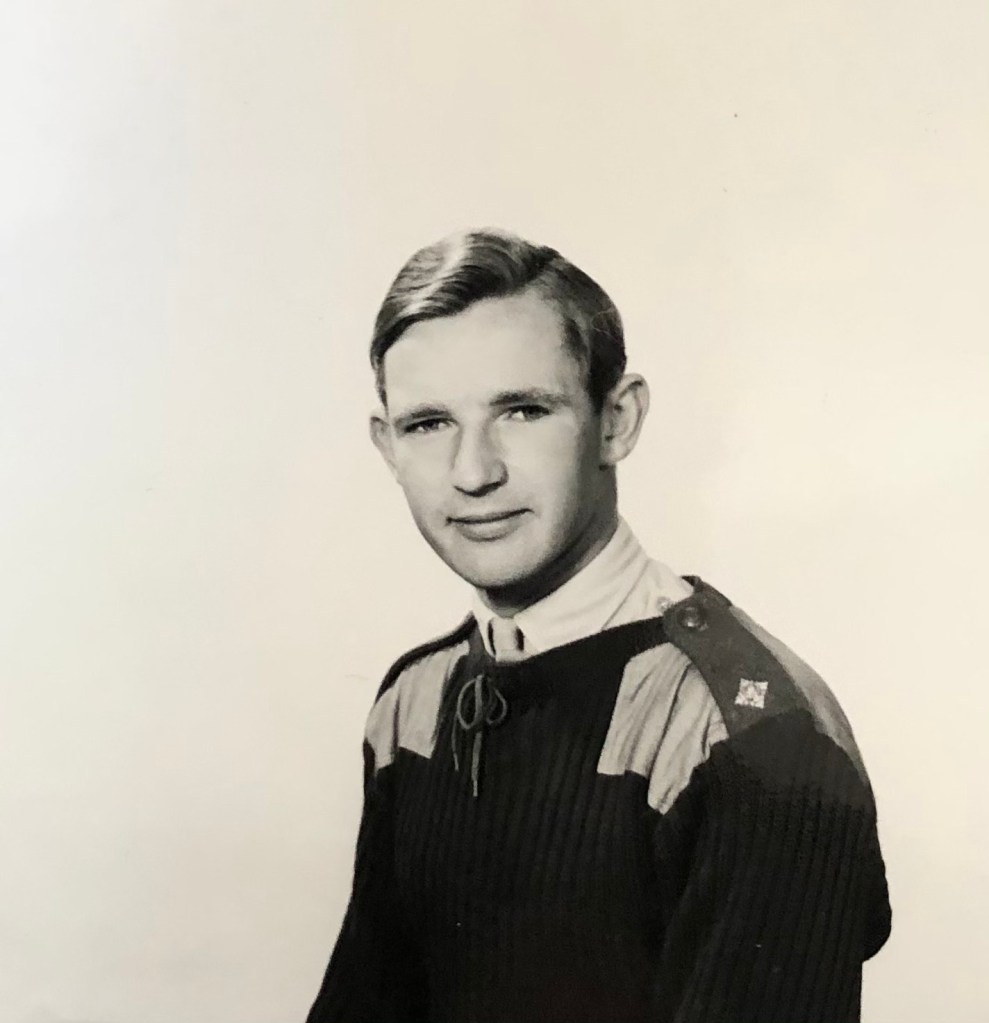
PS Suggestions one should get back to the weight you were at 20 are common. For me this would have been at The Royal Military Academy weighing 73kgs (11.5 stone) – with a BMI of 20. Ha! Ha!

PC 232 Pockets

This might be conceived as a very male–oriented postcard but in this unisex, gender-fluid world in which we live, I suspect we all wear trousers at some stage – real or metaphorical!

Originally in Britain the word pocket was used to describe a sack containing a measure of hops, some 168lbs, about 76kgs – or, if it was wool, a half sack. Feels like a lots of hops to me!

The other morning changing for our online yoga session, I decided to put the trousers I had been wearing into the washing machine, a process which requires diligence so not to wash a tissue or somesuch. As I emptied the contents of my pockets onto the bed, it struck me how habitual I am, and I suspect I am not alone? From my front right pocket I retrieved my house keys and my handkerchief, for I am sufficiently British to feel naked without one there in case of sniffles. It always amazes me when people who don’t have a handkerchief in their pocket sneeze – watching how they deal with any discharge, for sure there is always some, is intriguing – mostly they try and suggest nothing happened. Hopefully their disgusting personal habit will have changed post-Covid.

Normally my front left pocket is empty, a place for the wallet or mobile phone should I venture out.

In my back right hand pocket I always have a couple of monetary notes and a few coins. Despite losing two folded £20 notes many years ago from this rear pocket, I still take the risk! The advent of plastic notes has actually increased this risk, for they don’t fold as well as the old paper ones. In what used to be a virgin pocket, the left hand back one, I keep a reasonably clean face mask, ready when needed and hopefully not for much longer.

I remember a story from my childhood. A chap not too fond of flying boarded an aeroplane and found himself sitting next to an older man dressed in a three piece suit. As the plane taxied down the runway he observed the guy moving his hand, touching his forehead then following the line down to the waist, then from right to left across his chest. Imagining him rather religious, he asked whether it helped to pray.

“Pray? Oh! No! I was just checking: spectacles, testicles, wallet and watch!”

As a schoolboy one essential pocket item was a penknife – the older you got the bigger and more versatile was the penknife; the search for a horse to help with that stone in its shoe was never ending. Carrying a ‘knife’ these days seems problematic.

I grew up being told it was the correct thing to brush my hair, using a comb to create a parting, so a comb, however grubby, was another essential pocket item.

 That’s how it was, seemingly forever. Then I left the Army, grew my hair a little and decided it didn’t need a parting and a proper comb, just a comb through with my fingers. I am lucky, still retaining my hair and never carrying a comb.

And of course, as a smoker, a packet of Marlborough Reds and a cigarette lighter was always in a pocket; well, until 1994! No wonder the man-bag came into being – for a while!

The word accoutrements, as in an additional item of dress, is seldom used today  but off to a business meeting that’s exactly what I needed to check in my pockets. Business cards in a little silver case in a side jacket pocket and my half-hunter pocket watch in the outside breast pocket complete with silk handkerchief; if I failed to put one in I felt naked and hoped no one would notice – not about being naked, but about no silk pocket handkerchief!

In the army in our field ‘now you see me now you don’t’ disruptive pattern uniform, there were pockets everywhere. Especially useful was one on the outside of the sleeve for chinagraph waterproof crayons, to mark onto maps symbols that didn’t’ come off in the inevitable rain. Not to be confused with the look of the mad scientist with his pens in his jacket breast pocket.

Funny how phrases can be slightly contradictory; if you described someone as in-pocket after a deal, they had made some money, if they were out-of-pocket they had lost money. And if that had been the case it might have been because someone pocketed something dishonestly. Then of course we all remember pocket money?

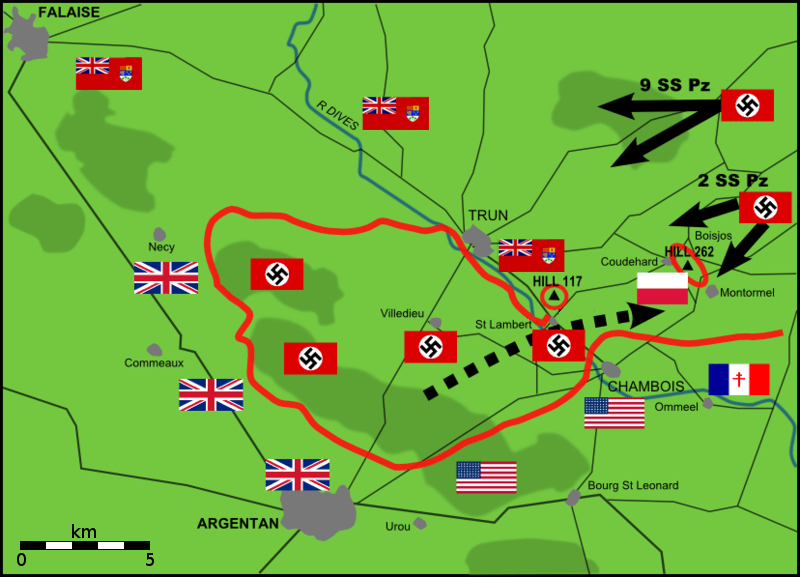
Military historians amongst you will think ‘pockets of resistance’ and remember the Falaise Pocket when, two months after the June 1944 Allied invasion of Normandy, 50,000 German troops were trapped in and around the Falaise/Chambois area of Northern France.

The original encirclement was penetrated a number of times by the Germans but eventually closed and they surrendered; their loss of men and equipment was enormous. A week later the Allies liberated Paris.

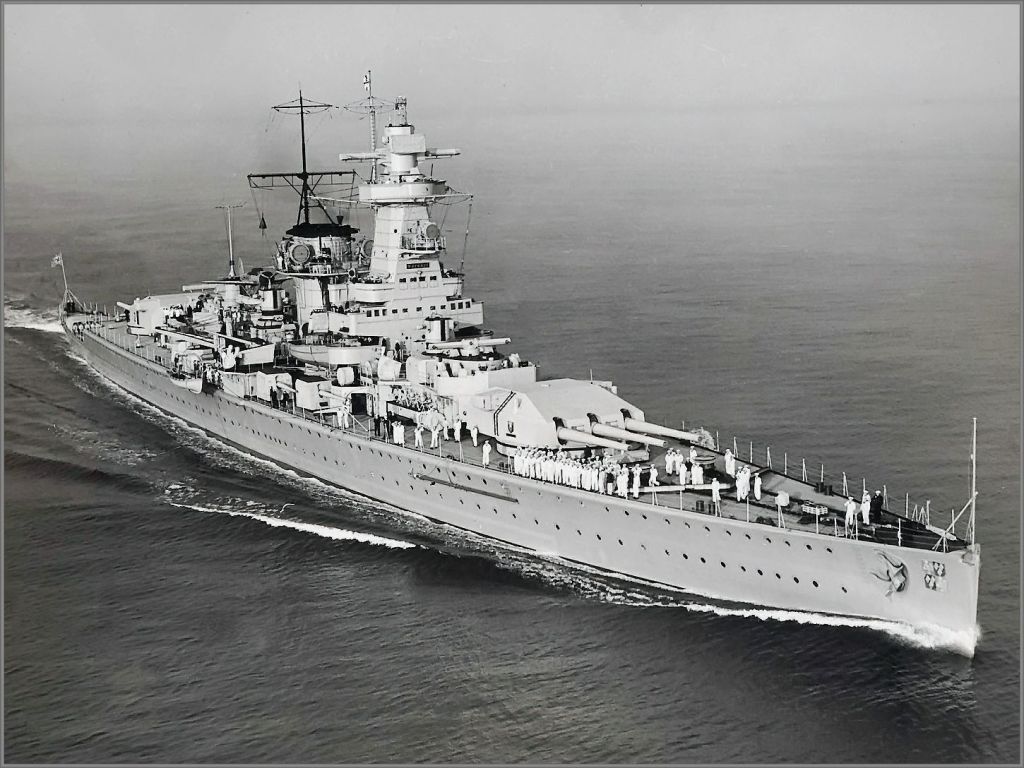
The original meaning of the phrase ‘pocket sized’ was that something was small enough to be carried in ones’ pocket, like a notebook. Not so the design of warship that was somewhere between a heavy cruiser and a battleship, the ‘pocket battleship’; the most famous of these perhaps the German Navy’s Admiral Graf Spee.

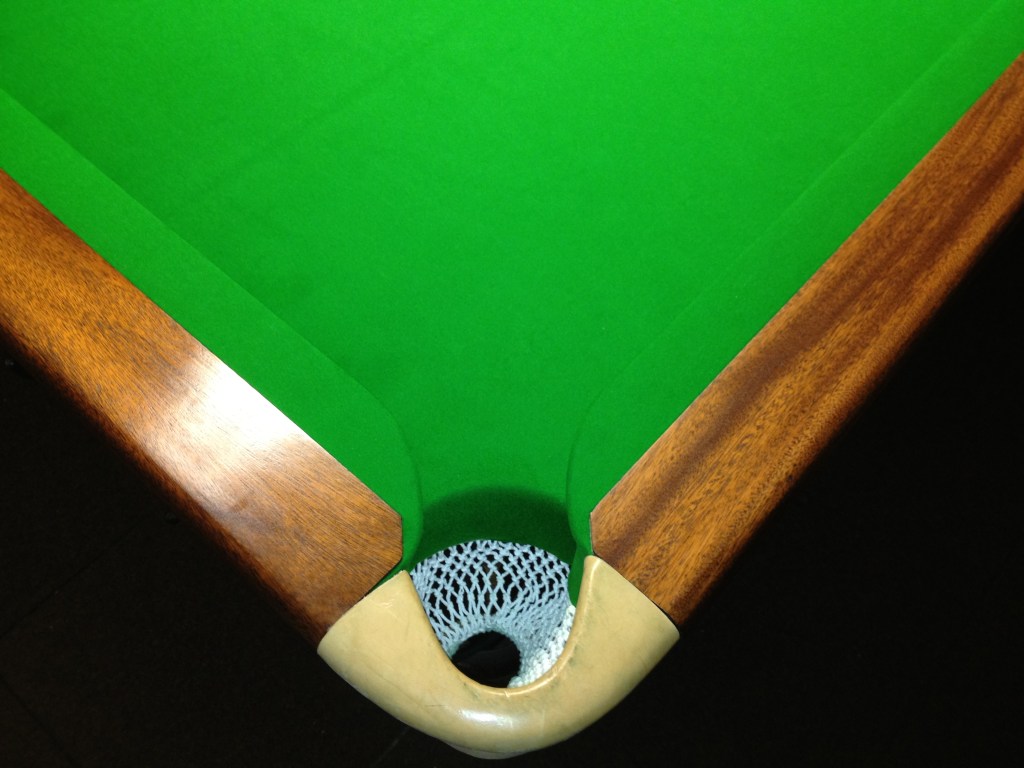
Over the years, starting at school I guess, I have played many games of both billiards and snooker, although not so obsessed as to watch the championships played here in the UK at The Crucible. Each billiard table has six pockets; the word can also be used as a verb, to pocket a ball, ie driving a ball into a pocket!

A corner pocket

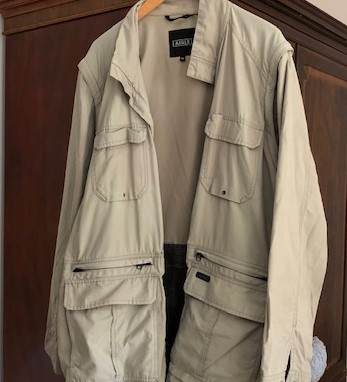
Needing an outside jacket with lots of pockets when out with my Labrador Tom, I dropped into Farlows on Pall Mall opposite the IOD in 2004. I am not a huntin’, shootin’, fishin’ chap but my Aigle angler’s jacket is perfect; pockets galore, even one at the back – possibly to bring back the stolen (poached?) trout – but used by me as somewhere to put the detachable sleeves.

And who hasn’t suffered air turbulence of some sort, some times worse than others? Those bloody air pockets into which the aeroplane seems to fall, your body straining against the seat belt.

Finishing these random thoughts about one’s pockets, I found this from Italy around 1850: ‘Shrouds have no pockets so money is for spending, not hoarding; you can’t take it with you!’

……. and no hands in pockets!!

Richard 28th May 2021

http://www.postcardscribbles.co.uk

PC 231 Ropes Warps and Sheets

Over the centuries those who sail have come to name every conceivable part of a boat, ship or yacht so that, in times of crisis, the exact name, particularly of a sail or rope, can be used. ‘Slacken off the main sheet’ cried the mate and a crewman jumped to do it. These scribbles are not designed to educate you to become an experienced sailor but simply to describe a couple of occasions when ropes, whether lifts or warps, made a difference.

I should declare my love of ropes and warps and sheets and halyards and guys and hawsers ……. will whip any lose end and splice ropes to make lanyards etc. I even made a Star Knot but my five 60cm lengths soon disappeared and I never had a tail, the knot that is!  

Star Knot on the left and my sailing knife with spliced lanyard

When I arrived at the British Kiel Yacht Club on the western shore of the  Kieler Fjord in northern Germany in 1969, all the club’s training yachts were ‘Danboats’; GRP, about 30ft long, sleeping 6 and without an engine, they were ideal for teaching the rudiments of sailing.

The BKYC Pontoon with Danboats on both sides

Rather like flying, taking off is easier than landing and when the yachts came back to the jetty they had to carry out a complicated manoeuvre to tie up.  Diagrams are the best way to illustrate this.

This is how the yachts are moored, bow to piles and stern to jetty

To get there you had to come alongside the piles, with both mooring lines having Bowlines (Note 1) made into their ends. You had no brakes so it was a real judgement about when to let the sails down. The starboard (green and right) warp was brought around the yacht’s stern to the port (red and left) side.

When you could you placed both bowlines over the cleats on the wooden piles and checked the forward motion a little.

When the stern was clear of the second pile, you turned the yacht through 90° by pulling on the starboard line first; squared up into the berth and pulled backwards, ensuring two crew were at the stern with mooring lines.  

The previous year my regiment spent three weeks in the Dhekelia Sovereign Base area in south eastern Cyprus, near Larnaca, undergoing ‘Adventurous Training’ and skills assessments. I was a second lieutenant and you don’t get lower on the officer ladder than that (Note 2). My troop commander, a Captain James Scarlett, loved sailing so he chartered a 44ft RAF yacht based at RAF Akrotiri, near Limassol, called Highlight.

On the first day of the charter we set sail for Dhekelia. Cyprus in August is hot and 1968 was no exception; generally the nights were calm with little breeze but by 1100 there was a strong onshore wind that got up from the south.

We arrived well after dawn off the sandy beach. We anchored and James Scarlett suggested we all went ashore for breakfast, Scarlett and me to the Officers’ Mess, two sergeants to the Sergeants’ Mess and the three soldiers to the mess hall – all very hierarchical!! In retrospect he was showing too much bravado and not much common sense as he left no one on board; sand is often a poor holding ground. By 1030, just finishing scrambled eggs and grilled bacon a mess orderly appeared and whispered in Captain Scarlett’s ear: “Sir! Thought you ought to know that your boat seems to be too close to the beach.”

Never seen James blush so quickly and we legged it out the door and down to the beach to find Highlight bouncing up and down in the surf, her keel firmly on the sand. We managed to bring her around, head to wind, but by then she had created a little trench in the sand with the constant up and down action of her keel; I stood with water up to my thighs next to her and her draft was 6 feet!

A still from some cine film. The chap on the left of Highlight is standing!

There was much scratching of heads and eventually a local Royal Engineer offered to bring over a tug – essentially a large metal assault boat filled with engines. A hawser was attached to the Samson Post up in Highlight’s bow and paid out to the tug. The first hawser, a rope, parted as soon as tension was increased; the second, a wire one, started to lift the Samson Post out of the rather rotten wooden deck. Back to square one!

By now it was late afternoon and the wind had died down a little. To break the suction of the sand trench, we needed to be imaginative. Our solution was to take the topping lift and attach it to a large kedge anchor and put that in the sand some 25m off to the starboard side. We then winched in the topping lift; gradually the yacht heeled over and when it was about 40° the tug, sitting at an oblique angle, began to pull.

There was a great sucking sound and Highlight came free. We later tied up to a buoy in a nearby bay and inspected the keel. There was a slight dent in the keel plate but otherwise no damage. We were extremely lucky!

Lessons are always learned when sailing and I was reminded of Cyprus and near disaster when anchored off Lamlash on the Isle of Aran in Scotland, in the midst of sailing St Barbara IV from Liverpool to Oban.

The little village of Lamlash top left; Holy Island on the right

It was 1983 and the Royal Artillery Yacht Club was celebrating its 50th birthday by sailing St B IV around Great Britain.  I set an anchor watch as we turned in, for we were a bit exposed. At 0310 Chris woke me, worried about the rising wind and possibility of dragging the anchor. We started the engine, hauled the anchor in and motored three miles or so into the lee of Holy Isle. Anchor firm, engine off, back to my bunk. Job done!

Richard 21st May 2021

http://www.postcardscribbles.co.uk

Note 1The Bowline – an essential knot which can be undone very easily

Note 2 It had its advantages, being the lowest of the low, as towards the end of the three weeks the Commanding officer took me aside and asked me to be in charge of the 4 man Rear Party – another 10 days to make sure all the Regimental freight left as planned. An onerous task which took all of one day!

PC 230 Observations

It’s fun to consciously observe one’s surroundings; too often it’s all in the mush of generalisations and we fail to see the detail, where the interest is. On my way back from collecting my newspaper the other morning, I observe a silver Porsche pull out from the kerb; we live in a posh area!

It wasn’t this one but same colour!

If I owned a Porsche I am sure I would do a little ‘look at me’ exaggerated movement or throttle revving – why not! But this individual had forgotten the basic lesson about never cross your hands on the wheel – and with a mixture of too much throttle and whirling crossing hands fighting to control the steering wheel, almost took the car across the street into another one. Writing ‘look at me’ brought back a memory of one of my first cars, a VW Variant, not the sexiest of automobiles. I bought some very nice Chrome wing mirrors and two seat belts, fitted both and drove around thinking ‘look at me’. Simpler age maybe?

Did you see that lovely reproduction of Leonardo’s Head of a Bear in a newspaper last weekend? A ruler at the bottom showed it to be 7 cms long – and it was square. So it was 49 sq cms and not 7 sq cms as described! And I thought the editorial staff at The Sunday Times were numerate!

Leonardo da Vinci’s ‘Head of a Bear’ measuring 7cms by 7 cms

I sense everyone is trying to outdo everyone else with their ideas for saving the planet, doing their bit to slow the man-made element of climate change. Reducing the amount of plastic we use, improving recycling rates, moving from fossil-fuel powered transport to electrical, trying out new fuels ….. to our own efforts. We recycle but get frustrated that ‘stuff’ we think should be recyclable isn’t and we don’t understand why the industry isn’t publicising why we can’t do this or that or indeed why they can’t do this and that, and buying a Hotbin composter. In addition to the pile of loo paper from ‘Who Gives A Crap’ (minimum order 48 rolls) we now have a little plastic (sorry, couldn’t find a wooden one!) container in the kitchen for the food waste.

And I am reminded of my late step-mother and her habits. She and I didn’t have the greatest of relationships so I can indulge my memory in its entirety. She and my father lived in the middle of a damp wood in an old keeper’s cottage, in Wigtownshire. She kept chickens. One disgusting habit was to take the scraps of kitchen waste out in their little bucket to the chickens, scoop up the contents with her hand, come back into the kitchen and start preparing a meal – without washing her hands – well, to be fair, she might have wiped them down on her not-too-clean apron first.  

Unbelievably, the slippers sent to my mother-in-law in Portugal in November, and returned, and returned, have now been returned. They must be the most travelled slippers on the planet, having completed 4500 miles and still not worn! (PC 220 Soleful Tales and 221 Ephemera refer) We thought they had complied with the “Fill out the customs form and you might have to pay this or that but we are not sure so we can’t release them yet” request. Then silence …… until Royal Mail delivered them back to our front door.

Monitoring the amount of energy you use is other way, so we are told, of helping the planet. Sadly the electrical meters for Amber House are in an outside cupboard more than 25m from my apartment and a Smart Meter wouldn’t work. Trumpeting the benefits of a Smart Meter, a recent advertisement stated it costs 63p per hour to boil your kettle. Who would want to boil their kettle for 60 minutes?

In the United Kingdom the Office for National Statistics conducted a census on Sunday 21st March. In the book ‘Britain: An Official Handbook’, published by the Central Office for Information, you can garner every conceivable fact about this country. Whenever I read the word census I am reminded of why Joseph and Mary travelled to Bethlehem, such are the Christian stories embedded in my psyche! Sorry! – Oh! Yes! The national census – these days completed online, done easily and without too much thinking. So it was a surprise to have a census chap ring the doorbell the other afternoon. “We need to verify some of the responses from a sample of the population and your address came up.” On Thursday a chap presses the door-entry phone and came into the inner hall but didn’t want to enter the apartment.

Our Apartment front door – and the view the census chap had!

I thought he was simply going to ask me a couple of questions and enter my answers digitally and that I would only going to prison if I my answers were not the same as those I gave on 21st March. But no, unable to get an internet connection, he withdrew a paper booklet from his satchel and proceeded to ask me every question on the census form. After ten minutes the question “What sex do you declare?” came up. I am not so much of a dinosaur that I am unaware that this is now a multiple choice question. “Really?” I asked. “Yes! Particularly as this is Brighton (& Hove).” “I am sorry I am not going to answer that!” I said, putting my hand in my trouser pocket, searching for something. (Note 1)

The founder of the Apostrophe Protection Society, a John Richards, died last month aged 97. Twenty years ago this retired journalist was so concerned for the apostrophe’s survival that he created a website (www.apostrophe.org.uk) aimed at preserving its correct use. “The apostrophe plays a vital part in written English. Just take this sign outside a block of flats: ‘Residents’ refuse to be placed in bins.’ Remove the apostrophe and you see a very different notice.” You may remember PC 195 illustrated with Lynne Truss’s ‘Eats, Shoots & Leaves’ and the misplaced comma? Apostrophes have, I think, an important part to play in modern written English; it’s true isn’t it or is it “its true isnt it?”

Richard 14th May 2021

http://www.postcardscribbles.co.uk

Note 1We are getting our knickers in a complete twist when it comes to gender and its variants. Here the LGBT charity Stonewall has a ‘Diversity Champions’ scheme urging employers to sign up to its goals, but not allowing individuals to argue against its diktats. Apparently ‘dozens of woman have faced disciplinary action at work for offences such as stating JK Rowling is not transphobic (interesting a word the online dictionary doesn’t recognise!), asking questions during equality training or requesting female-only loos’ – actually they used the word ‘lavatories’ but this is not a word I recognise!! I did, by the way, find what I was looking for.

PC 229 500 miles to Oslo

If you are a Netflix fan you may have watched ‘Occupied’, a very interesting drama set in the future about a partial occupation of Norway by Russia.  (Note 1) There was some good coverage of the beautiful city of Oslo and I was reminded of my many trips there, but one in particular, approaching from the sea.

Sailing up in Scotland Aged 9

Regular readers will know that I have enjoyed many years of offshore sailing, clocking up some 15,000 miles since 1969. (See PC 106 (Sept 2017) Sailing in The Baltic and PC 161 (Sept 2019) The Atlantic) Some voyages are naturally more memorable than others and so it is with my 500 mile Oslo trip in August 1974. I was based in Sennelager near Paderborn in Germany and chartered the Royal Artillery Yacht Club’s yacht St Barbara II (St B II) for a fortnight. (Note 2)

Crew Kiel to Oslo

Arriving at the British Kiel Yacht Club on the outskirts of Kiel, we were met by the bosun, a likeable and competent Bombardier on secondment to the club.  “You’ll have plenty of storage for your trip as the engine is out for maintenance and we are awaiting spares.”  St B II was a 42ft Rebel and I had sailed her a number of times, so wasn’t particularly fazed by this news, except in relation to the provision of electricity. A yacht’s engine was useful for charging batteries which, inter alia, powered the navigation lights essential for night passages. It was also useful for manoeuvring in tight marina berths, particularly in a 40ft plus yacht.

The outward trip in red, the return in green

The crew numbered seven, 3 of whom knew how to sail, so the trip was a mixture of training and sightseeing. Slipping the BKYC jetty on the Friday morning we sailed north up the Little Belt between the Danish mainland and the island of Fyn and into the harbour of Middlefart (Yes! Really!). From there a short hop to the university city of Aarhus (Note 3).

Aarhus

We did a little sightseeing while recharging the yacht’s batteries and then set sail, north up the coast, passing Skagen on the tip of Denmark, so loved by international artists for the purity of its light. The sea north of Denmark marks the exit of the fresh water of the Baltic, from the Kattegat into the Skagerrak and then into the North Sea. I didn’t want to sail the majestic Oslo Fjord at night as I had no means of getting out of trouble without an engine, so drifted into Hortens on the west coast of the fjord for an overnight stop and essential battery charging. The wind tends to funnel down the fjord so it was hard work beating northwards, but in daylight the following morning it was a wonderful experience, as sheer mountainsides close in from both sides, waterfalls tumble down, wind shifts are numerous and the water is extremely deep. Eventually we tied up alongside in the marina in Dronningen on the west of the city, did some sightseeing and welcomed a new crew from Germany.

Oslo

On Sunday 25th we sail south, this time goose-winged (Note 3), feeling very small as the mountains dwarf the yacht. Our initial destination is Marstrand, just north of Gottenburg on the Swedish west coast. The town is Sweden’s equivalent of Cowes on the Isle of Wight here in England and the focus of international racing festivals.

Marstrand, Sweden

From the chart and from the various sailing guides I had interrogated there were two ways in ….. and the southerly one looked more interesting – I wished I had listened to the little voice in my head ‘play safe’. This approach required lining up a transit and sailing that exact bearing.

Lining up a transit of rocks and a lighthouse, sailing a course of 42°

Why? Well, the west coast is strewn with rocks and the transit took us between two large patches. It was blowing about Force 4-5 from the north, the wind was abeam and this made for fast sailing. Having lined up the transit we committed ourselves, knowing that we couldn’t deviate much from the line; the sea surged over some rocks visible on the bow to both port and to starboard but there was space between! The guides had described it as easy; my heart started beating faster than normal and I remember asking the mate what he thought, was this sensible … or not!

In Marstrand our arrival created some local interest and it wasn’t long before the jetty was crowded with onlookers. One particular chap and I struck up a good report and I invited him on board for a drink. Invariably we talked about the prohibitive cost of alcohol in Sweden and he told me that most Swedes brewed their own. “I use an old bath in a shed.” Olav said. “So how do you know when it’s ready to drink?” I asked. He held up his fingers; one was missing its tip. “I dip my fingers in; too strong and this is the result!”

From Marstrand we sailed south into the channel between the Danish island of Zeeland and the Swedish mainland, passing the twin castles of Helsingør, used by Shakespeare as Hamlet’s Elsinore, and Helsingborg at the northern narrows.

Helsingør

As we approached the outskirts of Copenhagen what wind there had been vanished and we drifted. Fortunately we were spotted by Stan Townsend, a British retired engineer officer and well-known Baltic sailor. A tow was proffered and gladly accepted and we made it to a marina just north of the city. Judging when to let go the tow so that you have sufficient way to make a berth is tricky, for yachts without engines have no brakes!

After some sightseeing in the city we slipped the marina moorings and made our way south, down the west coast of Zealand and into Stubbekøbing.

Stubbekøbing’s marina is new!

Black Jack, the yacht’s mate, was responsible for taking St B II into this rather commercial harbour. Good practice for him I thought …….. until we found ourselves heading towards a fishing boat tied up alongside the quay too fast and emergency manoeuvres were required! 

The Army called this ‘Adventure Training’; for me an absolute delight!

Richard 7th May 2021

www.postcardscribbles.co.uk

Note 1 Norway is not part of the EU and this drama has been mirrored this week in a stand-off between French fishermen and the State of Jersey, part of The Channel Islands, over fishing licences. A French minister threatened to cut off the island’s electricity supplies, 98% of which come from EDF a French energy company!

Note 2 We covered 1050 miles and spent 45 hours sailing at night, between Thursday 15 August – 4th September 1974.

Note 3 The Danish TV series Dicte was based in this city

Note 4 With the mainsail set to one side and the foresail to the other, only possible with the wind well aft of the beam, the sailing term is goose-winging.