PC 463 More from Down Under

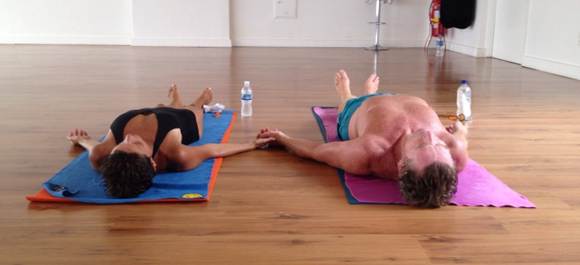
Other highlights from our time in Auckland were attending a hot yoga session in the Hiyoga studio on Queens Street, experiencing the local rail network when we went out to Des & Gleneth’s in Meadowbank for supper, seeing Cornwall Park where we met Michael & Angela and Des & Gleneth for lunch in The Bistro, and being lucky enough to stay in the Sofitel Viaduct Hotel, which was very central and comfortable. During our time in Auckland, England’s Women’s team The Lionesses played Canada in the Rugby World Cup final on Saturday 27th September. Cousin Michael in Victoria on Vancouver Island found a pub at 0800 local time to watch the match; in Auckland the time for the kick-off was at 0400 local on the Sunday, so I watched the highlights!

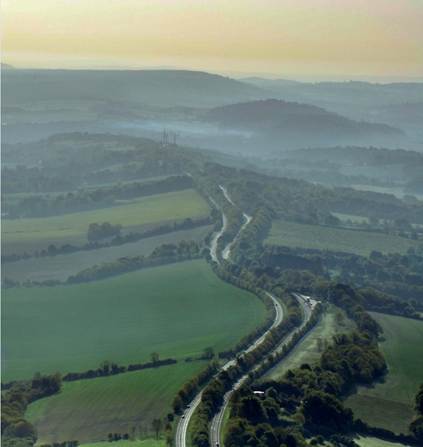
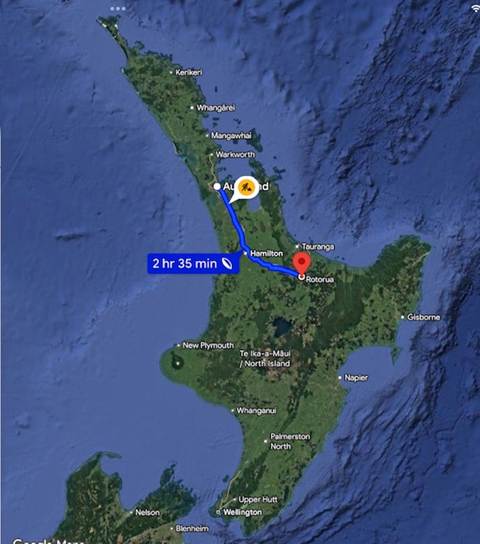
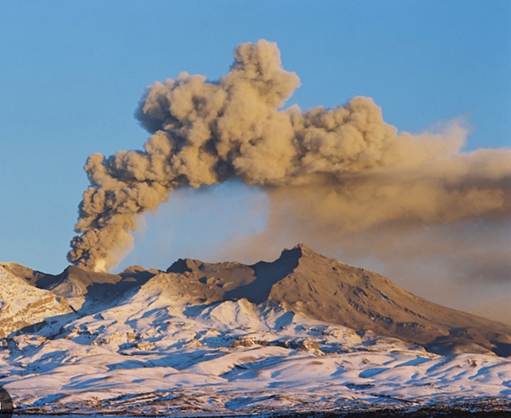
After checking out of our hotel, we picked up a hire car and drove down to Rotorua. Known for its lively geothermal activity, it’s an area of New Zealand I wanted Celina to see. Of course, there is so much of New Zealand that’s gorgeous; another two hours’ drive further south we could have seen Mount Ruapehu, one of the country’s largest volcanos and Lake Taupo.

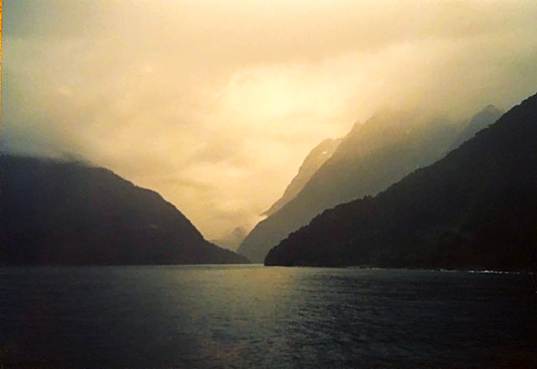
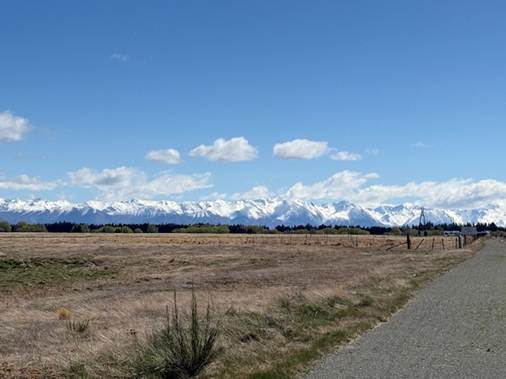
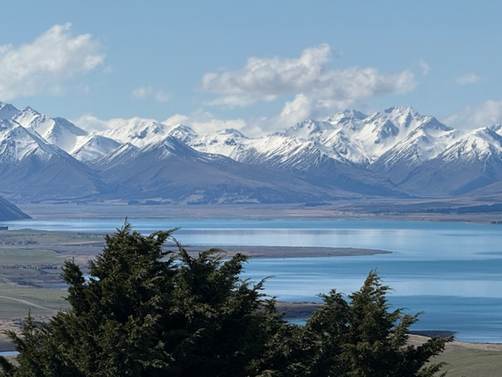
Mount Ruapehu

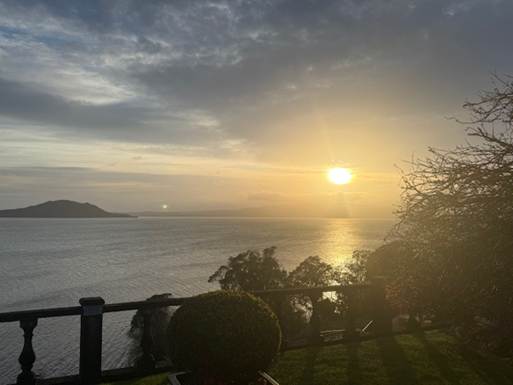
Rotorua is also the home of distant cousin Peter & Gwenda Russell and their daughter Anna & husband Paul. We checked in to the On the Point hotel with its glorious view across the lake ….

… and drove out to their home. I’d first met Peter & Gwenda in London almost twenty years ago, been to stay in their then house in Tauranga and now find them co-located with their daughter Anna. How we live out our later years is a challenge for all of us; The Russells are a good example of how to do it. Gwenda developed a huge interest in our Nation family story and remains curious and enthusiastic, adding for instance a little colour where none existed.

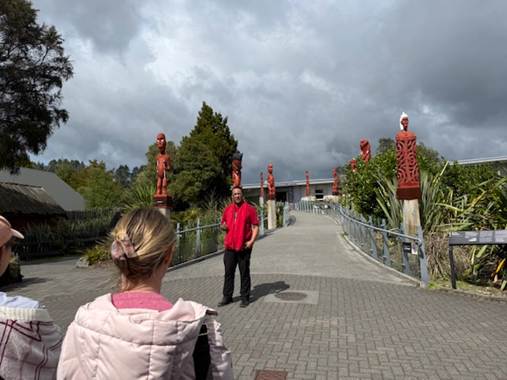
Anna & Paul recommended we visit Te Puia – ‘a place that changes you’ – and it did just that the following morning. Patrick, our engaging Māori guide,

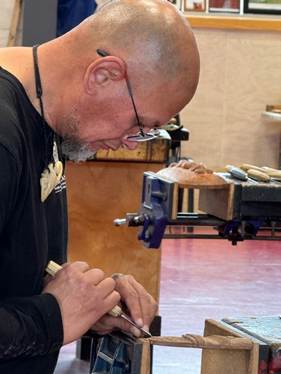
took us first to the New Zealand Māori Arts & Crafts Institute, where students are trained in carving and weaving, using traditional techniques.

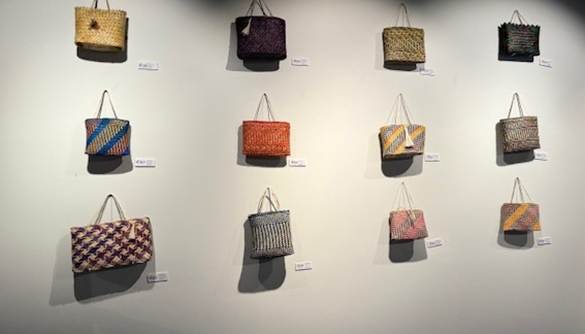
A Master craftsman was concentrating on a little wood carving while elsewhere an apprentice was sharpening a chisel. The craftswomen weave beautiful bags, made from New Zealand flax, but they are expensive; for instance, the second left on the bottom row around £210.

I found the whole enterprise fascinating and, in another life, might have become a student!

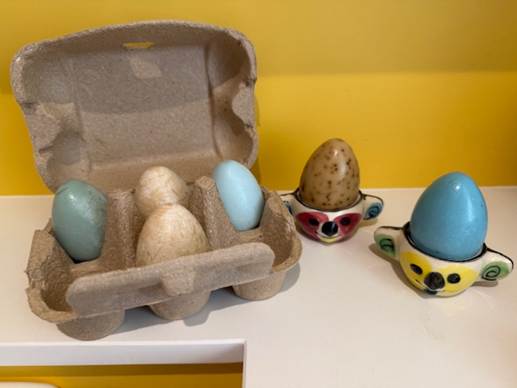
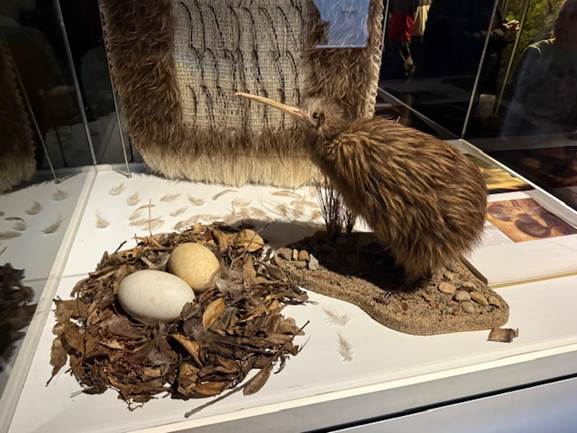
The Kiwi, a small flightless bird, is recognised as an icon of New Zealand and the human population are often referred to as Kiwis. It’s the smallest of the ‘ratites’ family, which includes ostriches, emus and rheas. In Te Puia there are a number of these nocturnal birds in a carefully controlled habitat. Obviously, photography is forbidden in their hide but this photograph shows a stuffed bird and its eggs. Think the eggs rather large for a small bird; must be painful?

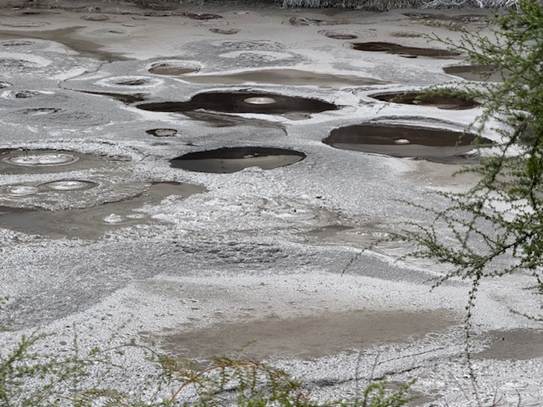
Mud pools, grey and bubbling, …….

…… form the backdrop to the Pōhutu geyser, which erupts once or twice an hour. It’s easy to become completely mesmerised by the constantly evolving geothermal landscape but eventually we had to move on.

We left, as the brochure suggests, changed, thoughtful,

.. and drove back to Auckland.

As you do when you hire a car, you look for the last possible petrol station, so you deliver the car back with a full tank of fuel. We had a very new Yaris ‘something’ and I knew the fuel cap was on the passenger side of the car. We pulled up to the pump, I walked around to the panel covering the fuel cap and pressed ….. and pressed …. and pulled ….. and pressed again …… I looked in the car for some lever ….. couldn’t find one, went back and pressed again. Just then James, or Nick or Good Samaritan appeared; filling up his own truck, he’d seen me making a fool of myself, Googled the make of my car and came around and said: “Oh! There’s a level under the dash somewhere” …. and so there was, not obvious (obviously!).  

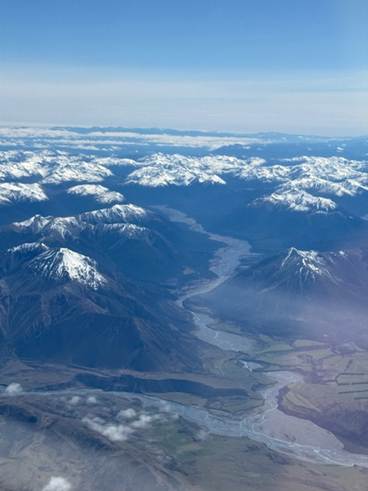
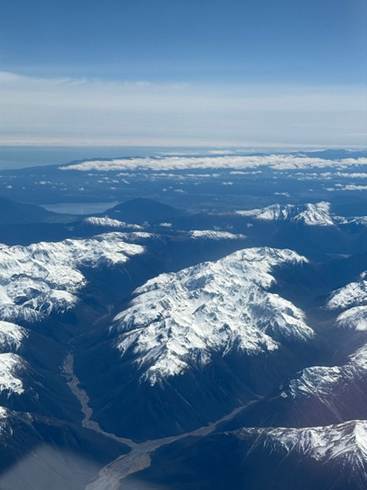
We caught an Air New Zealand flight to Christchurch, a city a third of the way down South Island and, glancing out of the window as we crossed the coast, I could make out Farewell Spit where great grandmother Eve was shipwrecked in 1877. (See PCs 169 Shifting Sands & Feathers and 170 100% Pure New Zealand January 2020)

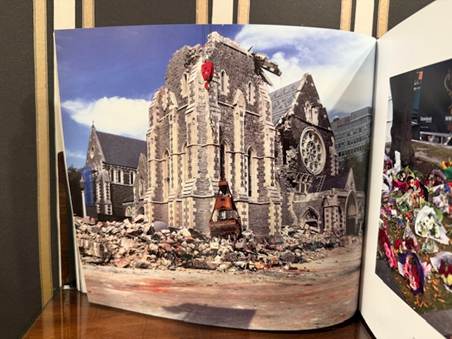
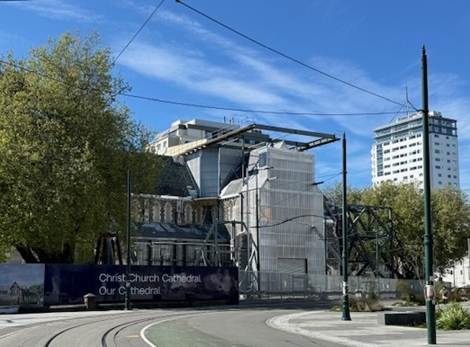
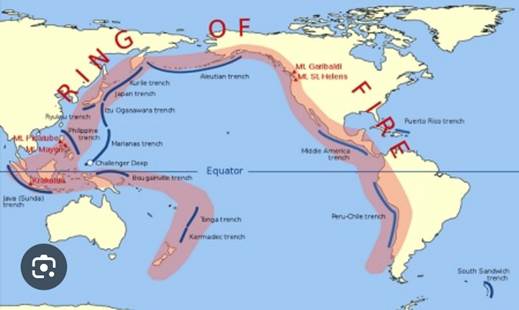
New Zealand lies on one of the many fault lines of the earth’s crust, this one between the Indo-Australian and Pacific Plates, part of the Pacific Basin Ring of Fire. To keep it in perspective, about 14,000 earthquakes occur in and around the country each year, of which some 175 are big enough to be felt. Within living memory, the February 1931 Hawke’s Bay earthquake, also known as the Napier earthquake, remains the country’s deadliest natural disaster. Two hundred and fifty-six people died when the quake, with a magnitude of 7.8, devasted the Hawke’s Bay region; aftershocks continued for two weeks.

The disaster prompted a review of the country’s building codes, deemed woefully inadequate. By way of illustration, today there are only four buildings in the Hawke’s Bay region taller than five storeys. In Christchurch on 22nd February 2011, a total of 185 people died, more that 7000 were injured and over 10,000 made homeless when a magnitude 6.3 earthquake struck the city. (Note 1) It caused over NZ$52.2 billion’s worth of damage.

If you live in a part of the world which is prone to earthquakes, there’s not much you can do about it, except be vigilant ….. and maybe have a ‘Go Bag’ always handy! We were planning to stay for a few days in Christchurch, so the topic wasn’t mentioned – a little like not watching an aeroplane disaster film when you’re about to fly somewhere!

Continues in PC 464 ….. next week

Richard 31st October 2025

Hove

www.postcardscribbles.co.uk

Note 1 Seventeen days before the first Nation family get together in Auckland.

PC 462 Western Australia to New Zealand.

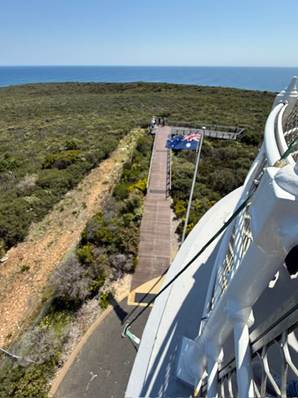
The twenty-metre-tall Cape Naturaliste lighthouse was activated in 1904, became fully automated in 1978 but remained fully staffed until 1996. Before automation, the rotation of the light was achieved by a gearing system whose weight was wound up (just like the pendulum of a grandfather clock) every 45 minutes. Staff watches were 4 hours on, eight off, every day of the year.

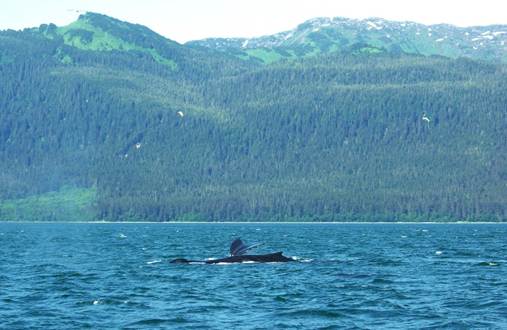
Whales in Alaska

Celina and I have seen whales off the coast in Alaska (see PCs 44 and 45 June 2015) and in WA we were lucky enough to be here at the start of the annual whale migration, from their wintering north of Australia where they calved, to their summer feeding grounds in the Southern Ocean. Whilst you could see them surfacing and breathing, they were so far offshore that no iPhone photograph was going to do more than capture a moment of broken water in the distance. Even so, quite magical!

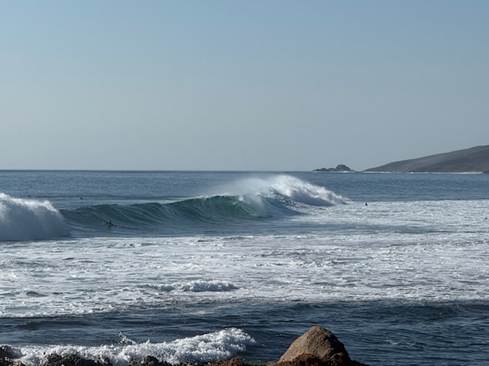
On the way back to Cape Lodge we stopped off at the beach at Yallingup. My brother-in-law Carlos would have loved the surf.

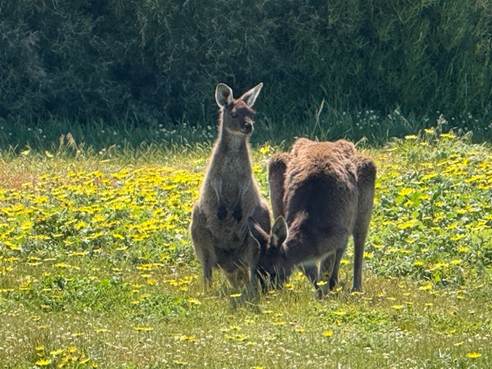
At the lodge Josefinna had messaged us to say she’d seen some kangaroos up near the entrance. We found three, but leaving the following day we found more than a dozen up near Petra’s Olive Oil plantation.

In my last postcard I mentioned that the Aboriginal people have six seasons. Just for interest, and they vary throughout WA and across Australia, the Wadandi’s Noongar are Birak (hot & dry) December and January; Bunuru (warm easterly wind) February and March; Djeran (Cool and pleasant) April and May; Makuru (Cold and wet) June and July; Djilba (Cold lessening rain) August and September; and Kambarang (longer dry periods) October and November. I rather like this, although I wonder how much climate change will alter them.

Acceptance by the settlers of Australia of the Aboriginal people and their beliefs is everywhere. For instance, this is a footnote on the Cape Lodge welcome letter: “We acknowledge the Wadandi people, the Traditional Owners of the land and waterways on which we operate. We pay our respects to Elders past, present and future.”

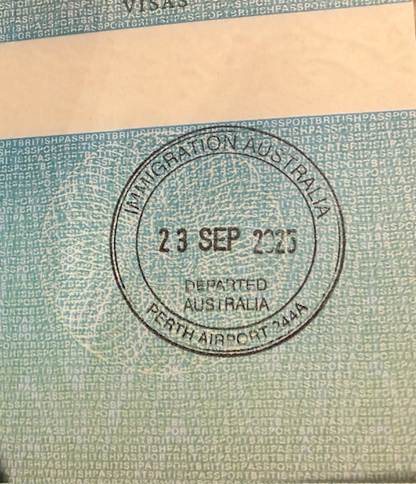
Back to Perth for our evening flight to Auckland. Ms Francisquinha was very chuffed as one of the border force officers found a stamp for her passport.

Another four-hour time shift saw us arrive in a very wet dawn in Auckland at 0600 (0200 WA Time!). New Zealand has extremely strict environmental laws, basically forbidding one to bring in anything! Celina surrendered her half-opened Lindt chocolate or might have found herself fined hundreds of dollars.

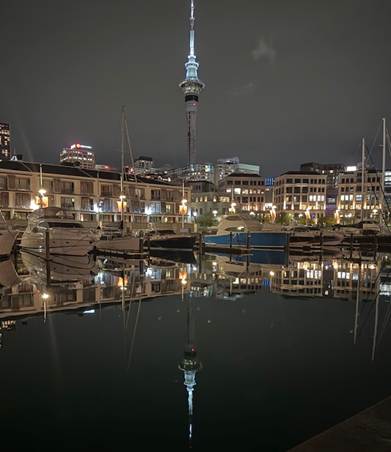
Auckland’s Sky Tower

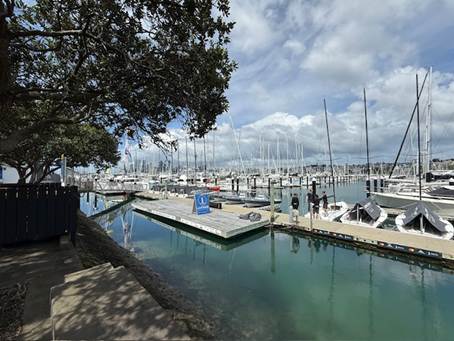
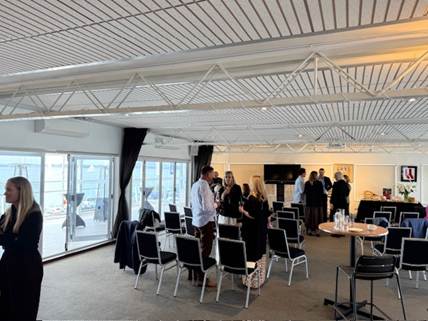
This is not the first time Celina and I have been together to New Zealand. In January 2017 we stayed in the Coromandel at Whitianga (PC 88) and in 2019 explored Farewell Spit and Marlborough Sounds, on the northern coast of South Island (PC 169 Shifting Sands & Feathers and PC 170 100% Pure New Zealand). This year’s visit was to attend the ‘Celebration of Life’ of Dinah Warren. She had died in April this year and her five children had organised a ‘get together’ at the Royal New Zealand Yacht Squadron in Auckland.

Auckland marina

In this photograph taken towards the end of the celebration, you will notice on the far wall on the right what looks like a framed pair of red socks.

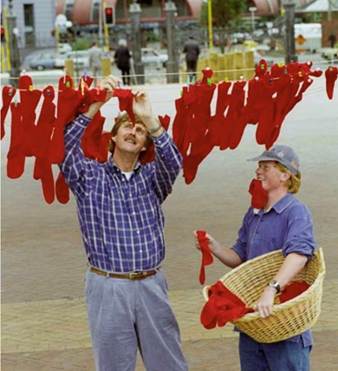
These belonged to Peter Blake.

Peter hanging up the red socks

For an explanation see Note 1 below.

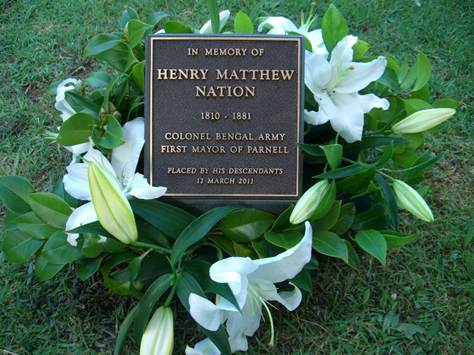
Back in March 2011 I had organised, with others, the first Nation get together, deliberately coinciding with the 130th anniversary of the death of my great great grandfather Henry Matthew Nation (HMN). In the same hotel in Parnell was one Dinah Warren (HMN was her great grandfather) and she persuaded me to help her get some flowers to put around the plaque we had placed on his grave.

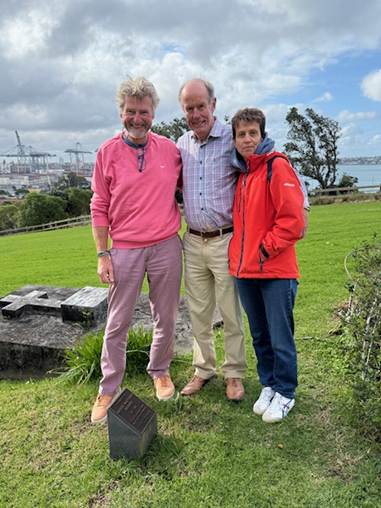
On this trip Des & Gleneth Laery took us out to St Stephen’s Cemetery to see HMN’s grave.

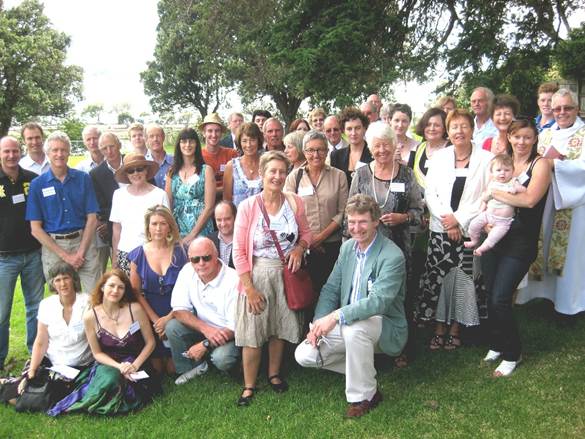
I dug out the group photograph from March 2011

Dinah Warren is directly behind me!
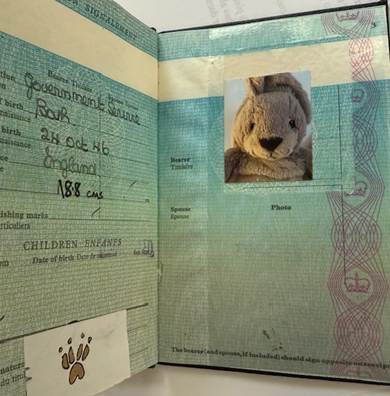
Regular readers of these scribbles will know all about Francisquinha, our stuffed rabbit with her own personality and passport, who accompanies us on our travels (see PC 172 Francisquinha February 2020 and PC 217 ‘My Week – Francisquinha February 2021).

In the ‘order of tribute’ booklet for Dinah’s celebration was an extract from her favourite story, The Velveteen Rabbit by Margery Williams. It read: ‘You become. It takes a long time. That’s why it doesn’t happen often to people who break easily, or who have sharp edges, or who have to be carefully kept. Generally, by the time you’re Real, most of your hair has been loved off, and your eyes drop out and you get loose on your joints and very shabby. But these things don’t matter at all, because once you are Real you can’t be ugly, except to people who don’t understand.

Her grandchildren believed ‘Dinah’s greatest gift of her life was being Real, being Real through being loved. She believed that’s how we all become real – not by how we look, but by loving deeply, and being loved, even as life wears us in (sic).’

I only met Dinah a couple of times, once in London and then when we bought those lilies. But I, and Francisquinha who has read the story, think this is a great way to be remembered, so I had to include it in this postcard.

Richard 24th October 2025 (My birthday!)

Hove

http://www.postcardscribbles.co.uk

Note 1 Thanks to Wikipedia (!) Sir Peter James Blake KBE (1 October 1948 – 5 December 2001) was a New Zealand yachtsman who won the 1989–1990 Whitbread Round the World Race, held the Jules Verne Trophy from 1994 to 1997 by setting the around-the-world sailing record as co-skipper of ENZA New Zealand along with Sir Robin Knox-Johnston, and led New Zealand to successive victories in the America’s Cup. In the 1995 America’s Cup challenge, Peter Blake wore some red socks his wife had given him; the team made a clean sweep, beating American Dennis Conner 5-0 …. and the red socks became Peter’s trademark. Peter Blake was shot and killed by pirates while monitoring environment change on the Amazon River on 5 December 2001. He was 53 years old.

PC 461 Bumped into Sami

There’s been so much to write about from our time in Singapore, Australia and New Zealand that I wondered whether I should pause this week and scribble about something else. Coincidentally I bumped into Sami outside Gail’s at the bottom of George Street here in central Hove the other afternoon, so we popped in for a small cake and a coffee; walking to The Hope Café would take too long!

Luana, a Brazilian living in Hove, was not on shift; they have a high turnover of staff and I don’t recognise anyone, then the local manager Steve comes down from upstairs. It’s quieter on the first floor so we go up there!
Sami starts the chit-chat.

“Good to get a fresh perspective on life through travelling, isn’t it? I know I certainly do and you know what, people moan about the state of the United Kingdom, but every country has issues, often exactly the same as ours!”.

“You’re right, Sami. Talking to a relative who works in the health care system in Rotorua in New Zealand, about the crisis in the young and their ‘mental health’, she says it’s exactly the same there. Most have been allowed to opt out of working, whereas they should be encouraged to opt in! Whilst I was in New Zealand I read of the very interesting developments here with regard to the use of weight-loss drugs to combat obesity.”
“You thinking of our gallant Secretary of State for Health and Social Care, Wes Streeting?”

“Indeed. He wants to make these weight-loss drugs more freely available through the NHS. Personally, I think this is absolutely the wrong approach to tackling the country’s fat-verging-on-obesity crisis. Then I read Emma Duncan’s column in The Times ‘The UK’s Addiction to State benefits can be broken’. Think she’s bang on when she writes: “Although genes play a role, the primary determinants of obesity are what you eat, how much you eat and how much you exercise. Obesity is thus largely a matter of personal choice. Unfortunately, the government is reluctant to conduct a campaign like the one on the dangers of smoking, because it fears that fat people would be offended by the implication that they are responsible for their excess weight.” And you’ve heard my views before. Unless you are force-fed, you alone are responsible for putting food into your mouth!”

“I saw this the other morning in an NHS hospital waiting room; the left hand one stopped me in my tracks! Sign of the times huh!”

“OMG! No way?”

“Ah! Yes! ‘Personal Choice’. Isn’t that the one of the very basic differences between socialism and conservatism? Socialism regards people as the victims of impersonal economic forces. Conservatism sees them as individuals in charge of their own destiny. Labour voters are much likelier to believe that “people’s success in life depends mostly on factors beyond their control”; Conservatives that it is the consequence of “their own merit and efforts”. Then we have this ridiculous nonsense about ‘mental health’. Because political parties need voters’ approval, they are unwilling to tell people uncomfortable truths — such as that feeling anxious and stressed is a normal part of working life! Have you written any letters to The Times recently Richard?”

“Funnily enough …… being married to a Brazilian encourages me to keep up-to-date about their macro issues, like the trial of ex-President Bolsonaro. I read this in The Times on the 12th September: “Bolsonaro will not be jailed immediately. He will remain under house arrest at his apartment within a gated compound in the capital, Brasilia. ­According to Brazilian law, a full appeal against the conviction is not possible because only one judge disagreed with the unanimous decision.”

“And you immediately thought it wasn’t a unanimous decision if one judge disagreed?

“Exactly! Sadly, The Times didn’t publish my short letter. Then I realised that when you pronounce ‘unanimous’, it starts with a ‘you’ sound, whereas for instance ‘unambiguous’ starts with a ‘un’ sound. This is the English language, in all its complexity of pronunciation; then I thought of usual (you!) or unusual (un). Fascinating!”

“Whatever floats your boat!”

“Incidentally, Sami, do you have a will, outlining what should happen to your assets when you die?”

“Oh! Yes. Doesn’t take long and it makes sense, helping your executor sort out your estate. Why do you ask?”

“Families become complicated sometimes. We know of someone who settled in another country and told their father they didn’t want any share in his estate. For whatever reason, he either didn’t believe them, wanted to show his generosity, however misplaced, or didn’t make a will. Now they are continually being drawn back to sort out some legal tangle. There’s a lesson here; a will makes matters easier for those you leave behind.”

“Richard, have been meaning to ask you; when did you I start adding the geographic location of where your postcards are sent from, which, if it’s one about travel, maybe completely different?”

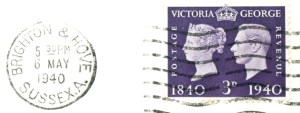
“I guess trying to be accurate! In years gone by I remember buying postcards abroad and, if the shop didn’t have sell stamps, forget to buy them somewhere else. I would find them in my suitcase when I got home and post them using a British stamp. Then I wondered what the recipient would have preferred, the photograph showing some exotic location, the foreign stamp or the simple message ‘thinking of you/wish you were here’.

“You still obsessed with your hot yoga?”

“Actually, I am and it’s one obsession I am happy to be controlled by. Great for staying reasonably fit, good for its mental challenge and I need a regular routine. On Friday it’s something of a milestone; it’ll be my 4000th session. I started in March 2009 so have averaged 250 per year for 16 years! Never too late, never too old to start; you thinking of joining Celina and me, Sami?”

“Er! Got to go, Richard. Good to see you and we’ll get together in The Hope Café shortly.”

And off he went, down the stairs, muttering to himself …. ‘If he thinks I’m going to ……’ then he was out of earshot!

Richard 17th October 2025

Hove

http://www.postcardscribbles.co.uk

PS I have an Excel spreadsheet that tracks my sessions …..

20096520163162023174
201022220171802024144
201133920183132025124
20123432019287
20132492020288
20142702021218
20152792022189

PC 460 Perth and The Margaret River WA

I sent this WhatsApp to Mo, who’d asked why we were going to WA.

“Many years ago, someone recommended ‘Cloudstreet’ by Western Australian author Tim Winton. I read it and loved it enormously.

In summary: ‘The novel opens in 1943. Two poor families, the Lambs and the Pickles, flee their rural homes to share a large house called Cloudstreet in Perth, Western Australia. The two families contrast each other; the devoutly religious Lambs find meaning in hard work and God’s grace, while the Pickles hope for good luck and do not share the Lambs’ appetite for hard work.

Since then I have read most of his subsequent books, like Dirt Music and Breathe and had Western Australia on my bucket list for years. And it’s true, it’s roughly the same distance from Singapore to Perth and from Perth to Sydney; Perth is also in the same Time Zone as Singapore.”

“Now I understand. So, what have you been up to?”

“Perth in September is between seasons and we caught a rather cool wind, especially compared with Singapore! So, we didn’t take the 30-minute train ride to visit Fremantle on the coast, nor the ferry to Rottnest Island to sit on the beach or look for the Quokka marsupial, but we did walk up to Kings Park and admire its views across the city.

In the park I took a few photos of a kookaburra up in a tree, but for some strange reason they failed to materialise. Doesn’t happen very often and when it does it’s infuriating. Fortunately, we found another one in Cape Lodge’s grounds that was equally photogenic. To round off the outside activities we walked Elizabeth Quay …… which was basically closed!”

“OK! Richard. I’ll catch you when you’re back. Safe travels and enjoy WA.”

 Later we went to Perth’s Art Gallery of Western Australia and I was very taken by Mrs Bundamurra’s painting ‘Kira Kiro spirits’. The card said:

She often painted the Kira Kiro spirits that reside in and around the town of Kalumburu where she lived. There are good spirits and traditional dancers who sing about the yam and fruits that can be gathered when the wet season begins. Mrs Bundamurra had a strong connection to them which is how she was able to illustrate their animated, quirky nature.”

We all dream and sometimes our dreams are very vivid, sometimes they evaporate as soon as we wake, at other times their weirdness or strangeness lingers in our conscious. I wonder how I would paint these colourful thoughts, even the odd ethereal spirit, if indeed I could. Could you? I look at Mrs Bundamurra’s painting and marvel big time.

Normally I get very bored very quickly with museums, maybe 90 minutes max, but we spent about three hours in the WA Museum Boola Bardip, a fascinating collection of local culture and history. And somewhere in one of the galleries, one detailing skeletons of prehistoric animals found in this part of Australia ……

……. we found this little chap, the only living non-human on three floors of the museum. Felt he, or she (?), must have been lonely.

We checked out of our hotel, picked up a hire car, and headed south towards the Margaret River area which lies between Cape Naturaliste in the north and Cape Leeuwin in the south. The latter is the place where the Indian Ocean meets the Southern Ocean – the Indian Ocean current going north and the Southern Ocean current south.

Indulging ourselves, we’d booked three nights in Cape Lodge – “offering intimate accommodation and an award-winning restaurant, Cape Lodge is a hidden gem situated in a private paradise within Yallingup and the renowned Margaret River wine region. Its restaurant was recognised in Australia’s top 1% at the 2025 Good Food Guide Chef Hat Awards.”

Driving around this region, everywhere one looked were vineyards, some smaller than others; Cape Lodge has its own – ‘Sous Ciel’.

The stand-out memories of our stay are: The lovely staff, especially Josefinna, from Argentina, in reception and Lèa, from Normandy in France, who, at just 28, ran the restaurant; the restaurant’s food was beautiful, in a minimalistic way; ‘Vegetarian’ and ‘Australian’ don’t occupy the same page and one meal left Celina quite hungry; no matter how you treat a carrot, boil it, peel it, grill it, roast it, grate it, it’s still a carrot – and one needs more than one; the local kookaburra obliged with his best side…..

…… and the stars over the vineyard were exceptional (you have to look hard at this; the iPhone camera is excellent but this is stretching its abilities!

Geologically the area is mainly limestone on a lower stratum of granite. There are numerous caves; we drove south to the Mammoth Caves …..

….. and ooo’d and ah’d at the magnificent stalactites and stalagmites.

Lunch down on Prevelly Beach gave me the opportunity to paddle in the Indian Ocean for the first time in my life.

We drove up to the lighthouse on Cape Naturaliste, the cape named after the second ship in Frenchman Baudin’s mapping expedition of the coast.

The recognition of the ancient Aboriginal people and their influence is very poignant here in Western Australia. The Magaret River area is the home of the Wadandi people. By the lighthouse is this welcome: “The traditional name for this location is Kwirreejeenungup, the place with the beautiful view. Look out to the horizon, where the sun sets. That’s where the spirits of our ancestors travel to rest, until the spirit totem return back to the boodja (country). We have a close connection to the ocean, land, plants and animals and will continue to care for this land and its waters. Our six-season calendar guides us as we live in harmony with boodja. We are encouraged by nature’s changes such as the flowering of different plants and animal behavioural cycles. If you look after the boodja, the boodja will look after you.”

To be continued ……….

Richard 10th October 2025

Hove

www.postcardscribbles.co.uk

PC 459 Singapore ….. then Perth

In Singapore we went to the Asian Civilisation Museum in Empress Place which had opened in 1997; it was within walking distance and there’s a fascinating collection of bits and bobs. The ‘bits and bobs’ are explained on the website thus:

“The Chinese collection is represented by fine Dehua porcelain figures, Taoist and Buddhistic statuary, export porcelain, calligraphy and other examples of decorative art. The South Asian Galleries feature statuary from a range of periods, early Buddhist art of India and South Indian woodwork, Nepali Tibetan bronzes, textiles, late medieval miniatures and colonial prints. The Southeast Asian collections are broad in scope and are rich in ethnological material. The Khoo Teck Puat Gallery is the permanent home for the cargo recovered from the Tang Shipwreck, a sunken 9th century trading ship bound for Iran and Iraq, discovered in 1998 off Belitung Island in the Java Sea. The recovered cargo comprises more than 60,000 well-preserved ceramics produced in China during the Tang dynasty (618–907), as well as objects of gold and silver

I particularly liked the three earthenware chaps rescued from an important tomb; the label said from between 206BC – 9AD in the Western Han dynasty. Wow!

The description said the bandy-legged chap would have sat on a wooden horse – but over 2000 years that had turned to dust.

Then there was an ancient bowl for your tropical fish collection. It was about a meter in diameter and painted with scenes from its construction.

A metal cast of one of Buddha’s feet was fascinating; the whole sole was covered in little metal pictures.

When we entered the museum we offered Singapore dollars in exchange for our entry tickets, only to be told it was a cashless museum. OK! So out with the debit card; no problem. Just around the corner in the first exhibition hall was a plastic box asking for small change ie cash for charity!

Now this is interesting, isn’t it? We don’t mind dropping some lose change into a container asking for a donation to a charity, but would you baulk if the same charity asked you to donate using your debit card? Nothing is ‘spare’ in your bank account, so how much would you give? Then you’d think you were being mean ……. but a handful of lose change? You probably wouldn’t count it!

Social media has meant it’s easy to stay in touch with or at least keep tabs on what our friends and family are up to. Celina, like most people, has a number of cousins; one, Ana Clara Sampaio nicknamed Caia, I met in Rio de Janeiro in September 2016 in a café on Copacabana’s Forte, with Celina and their cousin Bel:

At the time she had just started cabin crew training with United Airlines and today has clocked up nine years with their long-haul flights, working out of Chicago. Three days before we flew to Singapore, Celina found out that Caia was having a Singaporean holiday, at exactly the time we were there. We met for a very serendipitous drink at the roof top bar of The Fullerton Bay Hotel then supper.  

I was curious what had prompted Caia to work as cabin crew and compared her with our chum in Hove, Benedicte Deutsch, who decided to become a paramedic in mid-life. Apparently, her grandfather, Paulo de Oliveira Sampaio, was CEO of Panair do Brazil, the largest Brazilian Commercial aviation company 1929 – 1965. During the military dictatorship the company was forced out of operation, routes and assets seized by the government. The Supreme Court later ruled its bankruptcy a fraud and the company the victim of political persecution. His passion for aviation obviously rubbed off on her whenever they met.

It’s probably a good thing we left when we did, as Singapore is hosting the Formula 1 Street Racing Marina Bay circuit and Grand Prix – 26th September until 5th October.

Gradually the streets around the Fullerton Hotel were being constricted, fenced, barriered. Will be very noisy!

Ghosted by an ex-colleague whom we saw on our last visit; over six years ago, so what happened? Are they still around? Tried mobile, text, Facebook and LinkedIn before we left home. Nada! Zilch! They lived in Singapore and worked across the causeway in Malaysia. Time to move on? But what happened to them …….?

We boarded our late afternoon flight to Perth. As we entered our cabin there was a chap already on board who was completely pissed, remonstrating with a member of the cabin crew as to why he should be allowed to fly. “I vvv paid tttousands of dollars. Mush get back to MY wifey in Perf. Shhhhheees not well. Ivve don nothfin rong … not shhhor why u hve a prblem … I’ll jush sit here.” How he was allowed to emplane in the first place is a question I am sure the cabin crew were asking! Eventually Airport Security police arrived and he was taken off. The atmosphere palpably relaxed.

My iPhone pinged; my friend Mo from the Hope Café texting on WhatsApp.

“Hi! Richard. Just thought I could catch up; think you’re in Western Australia. Remind me why you wanted to go to Perth? How’s your trip so far? How’s Francisquinha?”

I replied: “Actually we’ve just arrived in a cool and cloudy Perth, so I’ll text you back when we’ve unpacked. Francisquinha? Rather fed up, if I’m honest. Both Singapore and Australia’s border checks have gone electronic – quick scan, a thumb print for me and we’re through. I asked officials in both countries what about a passport stamp for my stuffed rabbit. They laughed. (Francisquinha didn’t!) No one could find any form of stamp, let alone an ink pad – she was just sort of waved through, despite her complaining!”

Richard 3rd October 2025 (NZ Time)

Christchurch, New Zealand

http://www.postcardscribbles.co.uk

PC 458 Singapore – again (1)

I covered our first visit to Singapore in 2019 in PC 168 Singapore. One of that postcard’s paragraphs is worth repeating here:

“Singapore is a small island (50 kms east to west, 27 kms north to south; about 720 sq kms) strategically situated between the Indian Ocean, the South China Sea and the Pacific, on the trading routes from China and Japan to Europe. Its unique position was appreciated by Sir Thomas Stamford Raffles who in 1819 developed it as a trading port. In December 1941, during World War Two, Japan invaded Malaya at about the time it attacked Pearl Harbour. A few weeks later, in February 1942 it overran Singapore and some 90,000 troops became prisoners of war. It was subsequently reoccupied by British, Indian and Australian Forces following the Japanese surrender in 1945. In 1963 it gained independence from Britain as part of Malaysia and became an independent republic two years later. Its population is predominately Chinese, but Malays make up 15% and Indians 7% and there is a significant expat community amongst the 5.65 million people who live on this very crowded island.”

I first flew to Singapore in 1987 when I was working for Short Brothers, the Aerospace company based in Belfast in Northern Ireland. I was asked to accompany a colleague giving a presentation and he insisted we flew from London’s Heathrow on Cathy Pacific, whose home hub was Hong Kong, as he didn’t trust any pilot who wasn’t white!! A dinosaur you might think and, because of his racist views, we suffered a six-hour stopover in Hong Kong before flying down to Singapore. I never flew Cathy Pacific again. I clocked up over 250,000kms with Singapore Airlines in the next four years and reckon them to be one of the world’s best.

Thinking about the current trip before we left Hove, I was reminded of Frederick, a wooden Quail I saw in Tangs large department store on Orchard Road on one of my many times in the city.

The minute I saw him I thought I should buy him and take him home. But Frederick’s carved from some very dense wood and weighs a great deal; he’s about 50cm x 40cm x 40cm. The obvious question was how to get him home without spending an arm and a leg on extra baggage charges. After my meetings in Singapore I was flying to Sydney in Australia, returning to London via Singapore. Frederick was securely packed and taken to Changi Airport, where I popped him in Left Luggage before checking in for my Sydney flight. A few days later in Sydney I checked in for my return flight, ensuring my suitcase was ticketed all the way to London.

Frederick and his/her friend Eric

At Singapore I went out through Passport Control, collected Frederick from his locker and checked in for my Singapore – London flight. “Have you any baggage to check in Mr Yates?” “Yes, just this cardboard box.” I replied, looking down at Frederick on the weighing scales! In the photograph you’ll make out his little friend, Eric. He also came from Singapore on another visit but didn’t require any subterfuge!

Lee Kuan Yew

It’s rare for Singapore for make international news, but a news item the other day is worth mentioning. Singapore became independent from Britain in August 1965 and its first Prime Minister, Lee Kuan Yew, is widely recognised as being responsible for building this city state into the trade powerhouse it is today; the founding father of the country, if you like. He died in 2015; coincidentally his birthday was during our time in the city!

His two sons are quite different, Lee Hsein Loong entering politics and serving as Prime Minister and his younger brother Lee Hsein Yang spending almost twenty years in the military before entering the world of commerce. The news item concerns their father’s will’s direction that the family house on Oxley Road should be demolished, not wanting it to become a shrine. Older brother Loong wants it preserved, the younger Yang demolished, honouring his father’s wishes. It all turned rather nasty and the latter was granted asylum in the UK. Brothers huh?

The second time I flew long-haul to the Far East, on Singapore Airlines, I wore some casual slip-on work shoes but not lace-ups. Just before we landed I tried to put my feet into my shoes ……. the big toes made it but not much else! An outward sign of travelling in a pressurised tube. It was very undignified way to leave the airplane … a sort-of soft shoe shuffle.

Having stayed at The Marina Bay Sand hotel on our last visit, this time we opted, through our travel agent Pettitts Travel (pettitts.co.uk and part of Good Travel Management (Note 1)), for the Fullerton Hotel across the bay. Built in 1928 it became the General Post Office Building.

In the linking underground walkway are historic photographs of workers sorting the mail. At the end of the last century the whole area was redeveloped, with the hotel opening in 2001; it’s in a prime location. According to our taxi driver the construction of a fourth tower is underway at the Marina Bay Sands Hotel; there’s debate about whether it will be possible to link it to the other three.

The view in 2019 from the pool; the Fullerton Hotel is in the centre!

‘China Town’, an area a kilometre from the Fullerton Hotel, still houses traditional eateries, temples and shops. Look up and modern tower blocks scrape the sky.

Next week I’ll continue this postcard, but finish with a word of caution. If you take any prescription drugs, you need to check the rules; some require a written licence!

Richard 26th September 2025

Auckland

www.postcardscribbles.co.uk

PS Half written in Singapore but then we flew to Perth and that week’s postcard, (PC 457) about low level health care, was in the mailbox.  …… hence the Auckland postmark!

Note 1 I was a consultant to the John Good Group for many years in my Leadership Coaching role. Pleased to return the favour!

PC 457 Low Level Health Care in the United Kingdom

(Following on from PC 456; I was talking to Lisa in the Hope Café)

“Earlier this year I recognised that my ‘gut health’ was in a poor state following three general anaesthetics in 14 months, so started taking a probiotic, Symprove, one recommended by a dietician/nutritionist called Caroline Laidlaw.”

“Surely you can just eat more fermented fruit and vegetables and drink Kombucha. Isn’t that the same?”

“Possibly!! According to the various health bibles, ‘you can support your gut health by eating a diverse, fibre-rich diet, managing stress, prioritising sleep, exercising regularly and staying hydrated, while also limiting processed foods, sugar and excessive alcohol.’ I wish! Anyway, I decided to follow Caroline’s advice and sense a big improvement. Sadly the ‘original’ flavoured liquid tasted like cat’s piss, so now I’ve opted for the Strawberry & Raspberry flavour.

“Cat’s piss? How would you know what that tastes like? Actually don’t answer that!”

“We use ‘piss’ in a variety of ways. There’s ‘weak beer’s the colour of piss’ and then ‘he’s pissed’, in informal English suggesting someone’s angry and annoyed, a contraction of ‘pissed off’. Confusingly ‘he’s pissed’ might also mean ‘he’s drunk’, probably because one’s subsequent actions may piss off those around you.” 

“Come on Richard. Forget about gut health for a moment, I need you to concentrate on GPs etcetera. Having done lots of research already I suspect that low level healthcare provision in the United Kingdom is not in a good shape.”

“Well, I looked at my own, Trinity Medical Centre, the one I am registered with in Hove.”

“Ah! I am just up the road with Charter. And ……”

“According to their website, they have eight doctors who are partners and eight who are salaried general practitioners, but not all the doctors spend five days a week in the practice, carrying out other roles within the NHS, committee work, training research etc.”

There’s a certain symmetry in having a medical centre in a decommissioned church!

“So, 16 doctors in total. The World Health Organization norm is one doctor for 1000 patients. Here in the UK the average is some 2250, an increase of 17% in ten years. ….”

“That’s a huge increase!”

“My doctor at Charter says they plan on some 8-12 minutes per patient ….. and you can only present one issue!”

“Trinity has, according to their website, about 24,000 registered patients. GP Surgeries are paid £136 per patient per year for the Practice’s operational costs, including heating, staff wages and administration. There are separate funds for specific patient care services such as specialist referrals or prescription drugs. Twenty-four thousand registered patients give them an income of £3,264,000. One of the doctors told me that unscrupulous practices just sign up as many individuals as possible, giving them more revenue and making that patient/doctor ratio unworkable.

“You know that one in seven GP Practices have closed since 2018? There are now 6,229 active practices in England, down 14 per cent on seven years ago. Just at a time when there are additional 5 million individuals registered”

“I had an interested comment from one of the GPs at Trinity. Some years ago, very few patients needing to see a doctor were in the 18-50 age bracket, so a practice could cope with a large number of registered individuals. Today everyone clamours to see a doctor – especially the ‘worried well’ and the anxious Millennials and Generation Z; and they want to be seen ….. now!”

“I assume that, when they can’t get an appointment, in frustration they head to the private practices, of which there are more and more.”

“Well I have certainly done that …….”

“I’ve got this note: The Royal College of General Practitioners’ plan ‘Fit For the Future’ urges new investment and retention measures, warning of a mass exodus of nearly 19000 GPs in the next five years.”

“That’s interesting; I have first-hand knowledge of this. I asked a couple of GPs, actually friends, actually a couple, how they were. “We are in the process of moving out of NHS general practice in the main due to the issues outlined in the RCGP’s ‘Fit for The Future’ plan. We as a bunch are highly resilient, committed and actively excited by the ability to change, to suit our patients’ needs, but the clunky system is no longer able to deliver this and we are fatigued. For a long time we’ve been squeezed financially and our newly qualified GPs don’t have job prospects. And those of us with experience have to work longer hours to earn the same pay, as our practices are aware they can employ someone willing to earn less because there is such demand. Morale is low! All a bit gloomy I’m afraid! But we are fine!” This really annoys me! On the one hand we have a high wastage rate of skilled individuals, on the other the Department of Health and Social Care saying: “GPs are front of centre of the Ten-Year Health Plan ……..  that’s why they will benefit from an increasing proportion of NHS funds, and we’ve already made great progress, including recruiting over 2,000 extra GPs in a year”.

“Wouldn’t it be better to try and reduce the wastage rate? I was told about 30% of trained doctors leave within five years. This seems such a waste of time, talent and experience.”

“My daughter says it’s the same, the wastage rate, in the teaching profession. Maybe it would be possible to work on some retention scheme ….. or improve the working conditions. No business would accept this loss of skill; they would start looking as to why it was happening and how to lessen the wastage.”

“Richard this has been really useful and I’ve probably got enough copy for my article. Thank you!”

“No problem. Before you go …… we were talking about cat’s piss ….. in Estoril, Portugal Celina feeds a black cat that lives on the street and has also made friends with Mirela Gatos (Note 1), a Romanian who looks after dozens of strays down on the promenade.

Celina and Mirela

Ah! We always need examples of good deeds. Enjoy Singapore, Perth and New Zealand.”

“Thank you. We will.”

Richard 19th September 2025

Perth Australia

www.postcardscribbles.co.uk

PS The provision of both good health care and education are the bedrocks of a mature society.

Note 1 ‘Gatos’ is Portuguese for Cat!

PC 456 How was Portugal?

Managed to get a couple of hours in the Hope Café this week, in between returning from Portugal and flying to Singapore on Sunday evening. I had promised to meet Lisa, as she is gathering information for a piece she’s writing about Low Level Health Care in the United Kingdom. We agreed to meet on Tuesday, before my haircut with Monika at Amor on Palmeira Square.

Tuesday afternoons in the Hope Café are never very busy and, despite a manic diary for this week, I found myself slightly early for Lisa. With an espresso in hand, went and sat at one of the tables, my mind running over our recent three weeks in Estoril (See PC 454 Portugal’s Estoril). One of the joys of being with Cecilia and Toni is that every now and again the conversation uncovers a gem of a story. I shouldn’t be surprised, given that Cecilia has lived in Boston and Washington as well as in Rio de Janeiro and Toni’s parents were Brazilian diplomats so lived a peripatetic life. I think it was Toni who happened to say he knew someone whose mother had accumulated a great deal of money through a number of failed marriages. Then Cecilia remembered a Brazilian named Lily Safra whose story is one of a colourful and intriguing life, worthy of writing just the highlights!

Lily Safra was born in 1934 in Porte Alegre in Brazil, grew up in Rio and moved with her family to Montevideo, Urugay. Aged 17 she married Mario Cohen with whom she had three children, before divorcing some ten years later. So far, so normal, you might think. In 1965 she married Alfredo Monteverde, a Romanian Jewish immigrant, who ran the Ponto Frio household appliance distribution business, only for him to commit suicide four years later. Her late husband’s banker, a chap called Edmond Safra, a Sephardic Jew, helped her secure control over her late husband’s entire fortune. A brief romance with Safra ended as his family disapproved of Lily’s Ashkenazi Jewish faith, so in 1972 she married a businessman called Samuel Bendahan, separating after two weeks and divorcing a year later.

Four years later, in 1976, she and Edmond Safra, who had founded the Republic National Bank of New York, married. The couple divided their time between homes in New York, Monaco, Geneva and the Villa Leopolda on the French Riveria. A day after the couple gained Monegasque citizenship, on 3 December 1999, Edmond died in a fire in his apartment. The fire was started by a former US Green Beret, Ted Maher, whose plan was to rescue Safra and be forever in his debt; it went out of control! Maher was sentenced to ten years in goal but sawed his way out of his prison window and escaped to France. There’s a film here, isn’t there? (See PS)

Edmond and Lily Safra

In my last Estoril PC (PC 454) I included the view from the bathroom window around 0200 one morning, the street brightly lit with the sodium streetlight.

Note the little grey gate to the left of the tree

The other morning around 0320 I needed a pee …. and noticed a chap outside the gates of the house almost opposite. He had arrived on a smart electric scooter, parked it on the pavement and was interrogating his mobile phone. I realised he was actually texting or talking to someone ….. at 0322! A minute or so later the pedestrian gate swung open and he disappeared up the driveway – leaving his scooter, lights on, outside. I imagined a number of scenarios; a male escort arriving to party was dismissed as he would have taken the scooter inside; no Pizza delivery or Uber Eats as he wasn’t carrying anything; … so I suspected he was your local drug delivery chap ….. just dial a number, order your Cocaine or ecstasy and in no time it arrives.

The same chap the following afternoon

My colourful thoughts were dashed when I saw him the following afternoon, again trying to interact with someone inside the house, but his efforts were rebuffed by a chap at the gate and he was shooed away. Romance has its ups and downs and I don’t now think he is a drug delivery man.

The family apartment is on the northern slopes of Estoril. Outside a house in the square near the casino, the Estoril motor racing circuit is laid out in black blocks on the white pavement.

The circuit itself is some 6 kilometres further inland and last week they were hosting the Porsche Cup Brazil.

Sound carries and it becomes a tedious background noise, unchanging except for the gears. I imagine the drivers taking their cars around the circuit know what they’re doing and how to handle the vehicles. Sadly, the majority of Portuguese drivers demonstrate some of the worst aspects of driving, possibly summed up by their brain saying: ‘I am entitled to do what I want.’ Woe betides a pedestrian who gets in their way. Those who can’t elevate their skills to going around the racing track take to the streets in the early hours, both the car and the driver screaming with delight. Not a view shared by the light sleepers.

Just as I was thinking Lisa wasn’t going to show, she rushes in in a bit of a lather ……..

Hi! Richard. Gosh! I am so sorry I’m late. Got involved in a meeting with the editor of The Argus, discussing current assignments and what we might like to look at. You know I want to get any views you have on the current GP system here?”

“Yes, and in preparation I asked a couple of doctors I know …… and I will come on to that but, a couple of afterthoughts from Portugal …..”

(To be continued)

Richard 12th September 2025

Hove

www.postcardscribbles.co.uk

PS Lily died in 2022 from pancreatic cancer aged 87, with a net worth of some $1.3 billion.

PC 455 A Nation State? Or the State of the Nation

Writing in the summer months should be light-hearted, tackling subjects like the size of the marrows in the annual Village Fete, one’s recollections of, or lack of, attendance at one of the many festivals, either musical or book-related, or even, if you’re of a certain age or persuasion, at one of the many summer Scouts Camps. The 16th World Scout Jamboree Parade was held this year in the Portuguese city of Porto. Or, of course, of one’s memories of taking part in the 2025 Fastnet Race.

Recently two pieces in The Times prompted this postcard, inevitably a little more serious than posting a selfie on Instagram of you and your friends at the Edinburgh Fringe Festival (1st – 25th August). One was the personal view of the United Kingdom by author Lionel Shriver who has moved abroad and the other The Sunday Times’ survey of 2,113 British adults (excluding Northern Ireland), carried out by More in Common between 22nd and 24th July.

It’s fashionable at the moment to be critical of Britain, not where it stands in the world, but of the mess that our society, you and me, us, are perceived to be in.

I remember reading Lionel Shriver’s 2003 book ‘We Need to Tak About Kevin’, a fictional story of a school massacre in the United States, written from the first-person perspective of the teenage killer’s mother. It was Shriver’s seventh novel, won the 2005 Orange prize and was made into a film in 2011. I have read a number of Shriver’s other novels; some I’ve liked and some I’ve found hard going.

Lionel Shriver’s piece started: “An American based in the UK for 36 years, in 2023 I absconded to Portugal (She’s aged 68). So how dismal does Britain look from a distance? I’m still emotionally and politically enmeshed in British affairs. But my personal fate is no longer joined at the hip with the increasingly distressing fate of the UK.” Nice huh! Diving straight in!

The easy target for anyone concerns the levels of immigration, legal and illegal, and the way the state meets its humanitarian obligations. The current Labour Government won last year’s General Election with a promise to ‘stop the small boats’; so far, they have failed miserably! This tide of humanity, mainly but not exclusively single men aged 18-30, has been washing up on the Kent shore for some years, increasing year-on-year; so far this year 28,000 have made the crossing. Every shade of the political spectrum claims to have an answer, but so far the stream continues unabated.

Shriver continues:

“Small boats and sky-high legal immigration will continue to wreak demographic havoc. This change is permanent. Millions of immigrants from clashing traditions will bring only more of their friends and families.”

If you look at the projected demographic changes in European countries and the shifting burden of increasing pension provision onto a smaller workforce, most show their populations in decline; apart from Britain, due to net immigration! The trick will be to assimilate these immigrants into our society and no one seems to be very creative in this respect. We haven’t insisted, for instance, on immigrants learning English within a few years, as a prerequisite of citizenship; in some towns there are enclaves of people who arrived in the latter half of the last century, still unable to speak the language. Across the North Sea, potential Danish immigrants have to have proof of a certain income level, proficiency in speaking Danish, passing a citizenship test and integrating into society. This policy, introduced last year, has slowed the flow of potential immigrants to a trickle.

From the Times survey for ‘More in Common’, when asked the main reasons people crossed the Channel in small boats to get to the UK, voters agreed the government needs to crack down on the UK’s black market for labour and welfare payments. According to the poll, 54 per cent believed the most likely reason people came was to access the UK’s welfare system. This was followed by claims it was easier to gain asylum in the UK than elsewhere (49 per cent) and because they were fleeing conflict in other countries (37 per cent).

In one focus group, Peter, a dockyard manager from Plymouth, described Britain as a “soft touch” because as “soon as [migrants] land on our shores, they’re entitled to healthcare, food and a roof over their head. There won’t be many countries in the European nation[s] that will offer them that. I think we need to harden our borders and take advice maybe from America or Australia, which I appreciate. Seems harsh, but the country is on its knees.” He speaks for the silent majority.

Shriver followed up with: “Supposedly, a leading “British value” is “fair play”. So let’s talk about fairness. Amid an ever-escalating housing shortage, itself powered by mass immigration, your government uses your money to provide a free water-taxi service to your shores and to put up low-skilled, overwhelmingly male foreign citizens in four-star hotels. No one’s putting locals in free hotels.”

This sort of popularist comment is swallowed by the unquestioning masses. It’s recognised, for instance, that successive governments have failed to ensure sufficient houses are built to meet national demand; the current immigration crisis has simply exacerbated an already bad situation. Until their asylum application is processed, it’s perceived that these immigrants might make our streets unsafe. But, as Fraser Nelson says: “It chimes with what a great many Brits now believe. Poll after poll finds the public convinced that crime is getting far worse. The reality is different; NHS hospital data shows knife assaults last year fell to a 25-year low, with the number treated for violent assault close to half what it was in 2000. Crime surveys agree. By such measures our streets have seldom, if ever, been safer.”

I am as concerned as Shriver is when she writes: “Ten million working-age inhabitants are on benefits. Almost half of universal credit recipients need neither work nor look for work, and over a million are foreign-born.” If I understand it correctly, you can apply for benefits online, with no face-to-face meeting. Self-diagnosis? Absolute nonsense. A quick way to reduce this ridiculous figure would be to have face-to-face reviews; those who genuinely need support can be identified from those who are gaming the system.

Fraser Nation gives a final perspective. ‘Perhaps the ultimate sign of national confidence is the migration figures: not so much the arrivals, but the departures. Last year, just 77,000 Brits emigrated, the lowest since records began. Among those who remain, I like to think, are some who share my deeply unpopular belief: that in spite of our problems, this is an amazing country. And that now, more than ever, there is no better place in the world to call home.’

Richard 5th September 2025

Hove

www.postcardscribbles.co.uk

PS Shriver makes the point that Portugal has an immigration backlog of over 400,000 cases.

PPS Jeremy Clackson’s column in last weekend’s Sunday Times was titled: ‘Britain is awful. But here’s why you shouldn’t leave.’  This made me smile: ‘Then there’s the problem of Europe’s unpredictability. One minute Portugal has the welcome mat out for Brits who wish to escape from the menace of Keir Starmer, but then they change their minds.’ 

PPPS The queue at Passport Control Lisbon Airport yesterday morning was enormous; 55 minutes? Almost Third World!!

PC 454 Portugal’s Estoril

Estoril? Where’s that? Well, it’s west of Lisbon, just before you get to the Atlantic coast of Portugal.

According to Wikipedia, “Estoril is ‘a town in the civil parish of ‘Cascais e Estoril’, of the Portuguese Municipality of Cascais, on the Portuguese Riviera. It is a popular tourist destination with hotels, beaches and the Casino Estoril.

Estoril’s Casino

It has been home to numerous royal families and celebrities. It’s one of the most expensive places to live in Portugal and the Iberian Peninsula; it is home to a sizeable foreign community.” (Note 1)

Estoril, enclosed by the candy-striped line

Why Estoril? I’ll explain. My connections with Brazil, itself a former Portuguese colony, go back to 1851; my great grandfather Richard Sydney Corbett was born in Recife, on its northeast coast (See PC 34 Recife Brazil February 2015). More recently, I got to know Celina in the Balham Hot Yoga studio in 2011 and made my first visit to Rio de Janeiro in April 2012. When her brother Carlos decided to uproot his family and move to Portugal in 2016, he chose to live in Estoril. Their cousin Toni did the same and their mother spends six months of the year here; Celina and I have made the most of having a home-from-home here in Portugal! I have mentioned Estoril and neighbouring Cascais before in some of my postcards.

With no convenient Hot Yoga studio, we get our daily exercise by a long before-breakfast walk to Cascais and back, the five-mile circuit including some of Estoril’s most expensive real estate. For instance, up on Rua Bélgica there’s a monster of a house, its street frontage running for some 100m:

……. from the air you can see it’s rectangular in shape. Rumour has it its worth upwards of €10 million

In this particular area of Estoril, high up on a hill overlooking the sea, the streets reflect the country’s imperial past; names such as Rua Angola, Rua Timor, Rua Cabo Verde and Rua Brasil. Towards the southern end of Rua Inglaterra (Note 2), last year there was a house that needed some TLC. You can see it on this screenshot from Google Maps.

This year the house is gone and is being replaced by four structures that look more like warehouses than dwellings, with concrete rooves. You get one view from Rua Inglaterra:

And another from Rua Dom Afonso Henriques

The men working on these building projects are generally from Portugal’s African ex-colonies and most arrive around 7 o’clock at Monte Estoril station on the train from some cheaper dormitory village near Lisbon. Other arrivals disappear into the staff entrances of the many hotels here in Estoril.

Connecting Rua India and Rua Ingleterra is Rua Mouzinho de Albuquerque.

I wondered who he was …… and found out! A general, Joaquim Augusto Mouzinho de Albuquerque (1855 – 1902) was Governor of Mozambique. Portuguese society saw him as the hope and symbol of Portuguese reaction to threats against its interests in Africa from European empires. For example, in 1890, The British required Portugal to give up all the land between its African colony of Angola in the west and Mozambique in the east and gave it an ultimatum. Portugal was no match for the British Empire and acquiesced; the land became the British colonies of Malawi and Rhodesia. (See PC 353 ‘…. Of Cabbages and Kings’ September 2023)

Following a common Portuguese tradition, he married his cousin, but they didn’t have children (Note 3). He allegedly committed suicide at the entrance to the Jardim das Laranjeiras in Lisbon on 8th January 1902 aged 46.

Walking through the streets I am pleased to see wonderful examples of craftsmanship evident in the stone walls that surround some of the mansions. I first noticed it in Iposeira in Rio de Janeiro:

Then saw a couple of examples here in Estoril. Here’s the best:

Although maybe the builders are simply trying to copy nature?

Of course doing things the traditional way is generally very expensive, the cost of labour the critical factor. But it’s very sad when, in this particular area of expensive houses, there’s a great example of naffness. The owner, who could probably afford the real thing, substitutes some hedge greenery with plastic … yes, real green plastic! Apparently they are Chinese.

Historically the water off some of Estoril’s beaches had high levels of iodine where older people bathed to heal joint pains and bone diseases; the seaweed grew on the rocky sea ledges. Currently there’s an invasion of foreign kelp and the council make huge daily efforts to remove it from the sand.

I am aware I see things that don’t register with others! One of our fellow passengers on Ms Roko in Croatia last year (See PCs 390, 391 & 393) commented:

Were we on the same boat, did we go on the same tours, did we have meals together? All I do on holiday is relax and enjoy the sun. You seem to do that and observe life going on around you, listen to life going on around you, enough to write three fascinating ‘Tales of Croatia’ PCs.”

For instance, the daytime view across Avenide General Carmona is of another house; no surprises there!

The nighttime view, taken at 0215, is very different; worthy of note?

And if you own a large mansion and only occupy it occasionally …..

you need some guard dogs to roam freely, although these two aren’t very alert!

Maybe I should finish these musings about Estoril with the refrain from ‘Nights in Estoril’ by Christine McVie (Jul 1943 – Nov 2022), of Fleetwood Mac. It featured in their album ‘Time’.  

“I remember the nights in Estoril

A kiss and, oh, the never ending thrill

And I remember the coming storm

Oh, and you my love, how you kept me warm.”

Richard 29th August 2025

Estoril Portugal

www.postcardscribbles.co.uk

Note 1 There is a large contingent of Brazilians here, drawn by the common language.

Note 2 Maybe a nod to our 600-year-old alliance.

Note 3 Statistically 25% of children born from a marriage of first cousins have some defect, mainly mental.