PC 313 I am Lucky (2)

It was an interesting exercise in PC 311, starting each paragraph with ‘I am lucky ….’ and seeing what appeared on the screen. It reminded me of another lovely example of letting the brain run, typing in ‘I remember …..’ and then see what, without too much thought or effort, appears. The trick is to start again as soon as you realised you’ve paused to think. Go on! Try it?

I am lucky; back in March 2009 I went to my first hot yoga class in Balham, South London. Seventy two strangers packed into a hot room, sweat everywhere, breathing and stretching and challenging. Gradually the practice of this sequence became an important part of my daily routine. So important that Celina and I moved to the city of Brighton & Hove as here there are two local studios offering this type of hot yoga. Almost fourteen years later I am lucky enough to complete 5 sessions a week. If you have never tried yoga, particularly hot yoga, give it ago; don’t if you really detest sweating!

I am lucky enough to have met, through the practising of hot yoga, Celina. We started chatting in the corridor outside the studio, waiting for the previous class to clear the room, and after a year and a bit decided to have supper one evening in London (Note 1). Thirteen months later we, together, moved into an apartment in Hove. I could easily have been on my own somewhere, so count my blessings and my luck that I have her in my life. I am also lucky she comes from Brazil and not somewhere like Walton-on-Thames. Regular readers will remember a great grandfather Richard Corbett of mine was born in Recife, in the north east of the country. I mentioned that the two numbers of my current age add up to thirteen, an unlucky number for those who are superstitious. In Celina’s case they add up to ten.

I am lucky to have had three fascinating careers that paid me for my efforts and now, my fourth career, where I do stuff but don’t normally get paid (Note 2). Now when someone asks what I do, I respond: “I do yoga, paint and write and look after my young love.” So much better than: “Oh! I’m retired.” which closes the conversation before it’s got started!

I am lucky I spent twenty years in Her Majesty’s Service. Sure it had its ups and downs, its excitement and its boredom, its opportunities and its constraints, its adventures and its challenges, but it was all about trying to get the best from others, to develop and encourage others to do well, to carry out whatever operation confronted us. And it instilled in me an attitude and values by which I live today.

I am lucky I was once made redundant after working for an aerospace company for six years, as the role I was fulfilling was no longer needed, or so the company thought. OK! At the time I probably was gutted, but in retrospect it was a lucky break. Everyone reacts in different ways but in the final analysis you have to take a good look at yourself; some honest personal introspection, however difficult, is essential to achieve some real fulfilment in life.

In PC 311 ‘I am Lucky’ I recalled that the inflation rate when I got my first mortgage to buy my first house was 14%. The house itself cost £29,500, an arm and a leg at the time. I have been lucky since: having spent 25 years living in South London I benefitted hugely from the explosion in its property values.

I am lucky technology doesn’t stand still and my generation, and yours, benefits from that. In ‘A Short Conversation with my Step Father’ (PC 96 May 2017) I looked at some of the developments he would have embraced and others he might have poo pooed. He probably would have been unhappy not being able to tinker with the engine of his car, being a Mechanical Engineer by profession. Frankly I feel extremely lucky that the reliability of car engines, drive trains etc is now so so good that it’s unlikely the engine will blow up, as did my Sunbeam Alpine’s on the M3 Motorway back whenever!

I am lucky that I have lived through a period when air travel became normal, both short haul and long haul, as experiencing the smells, sights and sounds of other countries, other climates and other peoples is, I believe, life enhancing. Recently Sir Keir Starmer, the leader of His Majesty’s Opposition here in the UK, admitted in an interview that his mother had only been on an aeroplane once, when she had flown from London to Manchester, for her honeymoon.

One outcome of my first marriage was my lovely daughter, Jade. I am lucky she has found her niche in the teaching profession, has three fine healthy sons …. and a great husband. I am lucky that through Celina I have gained another lovely extended family, living in both Brazil and Portugal.   

Those who have read the stories of AA Milne concerning a bear called Pooh will know that his friends’ characteristics reflect those found in us humans! I think I am lucky to be very much more ‘Tigger’ than ‘Eeyore’.

And finally I am extremely lucky to have been able to sail extensively, travelled widely and still have my health to pursue my current interests.

Richard 16th December 2022

http://www.postcardscribbles.co.uk

Note 1 She suggested we went for a drink, a sort of ‘first base’ in the dating game! I explained I didn’t drink alcohol any more so suggested we had supper somewhere; second base in the dating game! Lucky huh!

Note 2 An ex-client commissioned me to paint something for his wife, which had to include a pear tree, a single pear and the crooked spire of Chesterfield Parish Church of St Mary and All Saints. Lucky to be paid for doing something I love.

PC 312 News from The Hope Café

Susie is looking quite gaunt when I pop into The Hope Café, with an hour or so to gather my thoughts about this week’s PC and before I meet Sami, who had texted me to say he’s got some news! Never sure whether to engage with people obviously lost in their own thoughts, but I’ve known Susie for a couple of years so give her a querulous look when I order my double espresso. She looks down and then mutters:

It’s one of my cousins. He was crossing the road in Clapham when an e-scooter knocked into him.”

“I thought they aren’t allowed on the roads.”

“Most aren’t, although there is a trial going on to help decide how this new form of transport can be regulated. (See Note 1) This one was being ridden illegally.”
“How is he?”

“Oh! Richard. It’s awful. He hit the kerb with his head and was knocked unconscious. They called an ambulance which took him to St George’s Hospital in Tooting but it’s not looking good. When they got to A&E it was some two hours after the accident and he was rushed into ICU.”

“God! In ICU! I am so sorry Susie.”

“The doctors think he had a bleed on his brain and are not sure how to reduce the swelling. My aunt and uncle are there and have been told to be prepared for the worst possible outcome.”

I left Susie with her worries and concerned thoughts about her cousin and find a table. The café has charging points as a way of encouraging more people to WFC (Work From Café – see PC 282 Back in The Hope May 2022) and plug in my laptop. My thoughts begin to flow, at last, and I’m in mid-sentence when Sami taps me on the shoulder. I hadn’t seen him come in and think he looks very well.

Hello Richard! How’re you doing?” he asks, pulling out a chair and sitting down.

Sami, who you may recall was made bankrupt through the faults in the Post Office Horizon computer system, brings me up to date. Apparently those who were made bankrupt have been offered three options: take all the interim payments they have received but risk a company called Moore Recovery taking action against them, begin costly litigation themselves or accept 51% of their claim. These poor sub-postmasters, poor not in a monetary sense necessarily but poor as in put-upon by the power of the government and the Post Office, won a landmark case against the Post Office in the High Court and were awarded £55 million. Wow! Wonderful you might think; £100k each. But after legal fees were deducted they ended up with some £20,000. The current Public Inquiry was due to hold a special hearing on compensation this week.

If I understand this scandal correctly, the Post Office introduced a new computer system and it was very quickly recognised there were faults in it. Faults which caused sub-postmasters accounting errors. Over 12 years hundreds suffered. Surely the Government or its Post Office should foot the legal bills of the claimants?
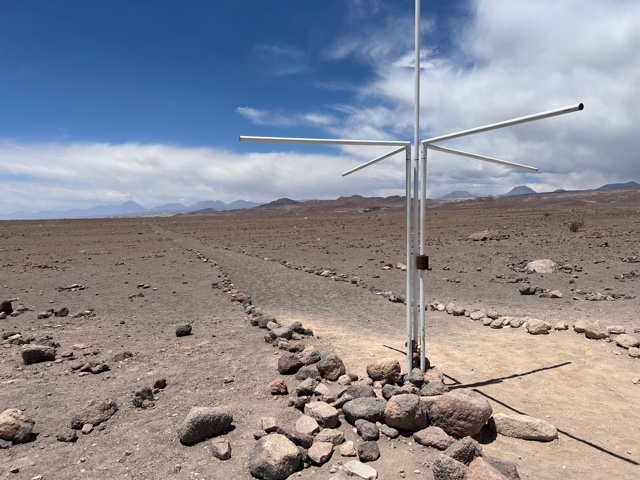
We are in the midst of industrial action by Post Office/Royal Mail workers, complaining about pay and conditions (who isn’t!?). In the run up to Christmas, the busiest time for card and letter delivery, their action will not garner public sympathy and will exacerbate the decline in letter writing. In fact I now write my bread-and-butter ‘Thank You’s longhand, as always, and, rather than consigning them to an unreliable postal service, photograph them and send them via email or WhatsApp! Very C21st!

After some twenty minutes or so, Sami looks down at his watch and then towards the Hope Café door. “I have a surprise for you.”

Ah! Her she is!” he exclaims and gets up to greet a gorgeous looking woman. “Richard, meet Lisa!” I get up, shake her hand and we all sit down.  Susie comes over and takes the drinks order.

Lisa lives in Folding Over Sheet up in the Derbyshire Peak District and is a writer. She’d come down to Hove for a few days, to see Sami whom she had met during his tour of the Indian Mutiny sites. (See PC309 November 2022). I haven’t seen Sami so animated in a while and sense this relationship is just what he needs.

“So why were you doing this tour Lisa?”

“Such a mixture of reasons. Firstly some of my ancestors had served in the East India Company, one as the Secretary at the Residence in Lucknow and I was interested to see its ruins, to put the family stories in context. Secondly India is an enormous country and this tour not only covered some interesting cities but also gave me a sense of the countryside and the rural way of life, all within two weeks. Being a writer I am always looking for ideas to weave into future stories.”

I needed to leave them to get on with other things but I hope to meet up for supper somewhere, sometime.

Richard 9th December 2022

http://www.postcardscribbles.co.uk

Note 1 Here in the UK, trials are taking place in four transport areas where, if you have a driving licence, you can rent an e-scooter and use it on the roads. You can only use an e-scooter outside of these areas on private land. The public desire to use e-scooters is way ahead of the current transport laws, so HMG is playing catch-up. Meanwhile thousands of individuals are buying and using them illegally. In Wednesday’s Times a news item on e-scooters reported that a 12 year old boy had died on Tuesday as his (illegal) e-scooter had collided with a bus and in the London Boroughs of Bromley and Newham two other children had died in the last year. “I didn’t know it was not legal” is not a defence likely to find favour for Giovanna Drago, who is suing Barnet Council in London for £30,000 over a pothole which caused her to crash her e-scooter, breaking her leg.
PC 311 I am Lucky

The dictionary says:  ‘Lucky: “Occurring by chance and bringing happy results …….. or something worn for good luck.”’ The latter reminds me of a rabbit’s foot that I found in a box that contained my step-father’s wartime ‘treasures’; maps and black-and-white photographs for example, from his time in Force 136, behind the Japanese lines in Malaya in 1944. It was well worn and it indeed brought him luck in that he survived the fighting and the horrific jungle conditions. I sense that these talismans are not used as much as they were.

When I think of the word ‘lucky’ I immediately think of ‘Lucky Jim’, a novel by Kingsley Amis (1922-1995), first published in 1954. I have never read it but it’s considered ‘as the finest, and funniest, comic novel of the C20th.’ I had thought that Jim was his surname and that he’d been christened ‘Lucky’; actually his surname was Dixon! The American writer Percival Everett wrote a book called ‘I am not Sidney Poitier’. The main character had actually been christened ‘Not Sidney Poitier’ as he looked extraordinarily like the actor Sidney Poitier, who died earlier this year aged 94. His films included ‘Guess Who’s Coming to Dinner’, ‘To Sir, with Love’, ‘In the Heat of the Night’ and ‘Lilies of the Field, for which he won an Oscar.

But no! I am not called or known as Lucky, although a chap at the top of our road is so called. He has run three different food retail outlets in the same place over the last four years, so maybe his name does not reflect his business acumen?

Why am I scribbling this week about being lucky? Well, here in the UK the hot topic is the economy and the ‘cost-of-living’ crisis, driven by the energy hike caused by the Russian invasion of Ukraine. Unsurprisingly our government did not react well and we are now in an inflation spiral; currently some 10%! Wow! I bought my first house in 1979 …… when the rate was almost 14% …. and we all seemed to believe the best thing to do was buy, buy, buy as the cost of an item would be dearer the following day  Bring out the Credit Cards! But spare a thought for those living in Turkey where the current inflation rate is 85% (October 2022); aren’t we lucky!

I am lucky to be alive. My own great-great-grandmother Sarah Fosbery, who had married when she was 17, died aged 39 but she had given birth to nine daughters and her body must have been physically depleted of nutrients. Her husband Francis went on to marry again and died aged 86 in 1897. Seems unfair, I hear you cry, but I suspect in some parts of the world today this is not uncommon, women simply the producers of children. Life expectancy has dramatically improved in developed countries; at the start of the C20th in the United States it was 49 and it’s now 77, although the Covid pandemic has caused a plateauing of this trend.

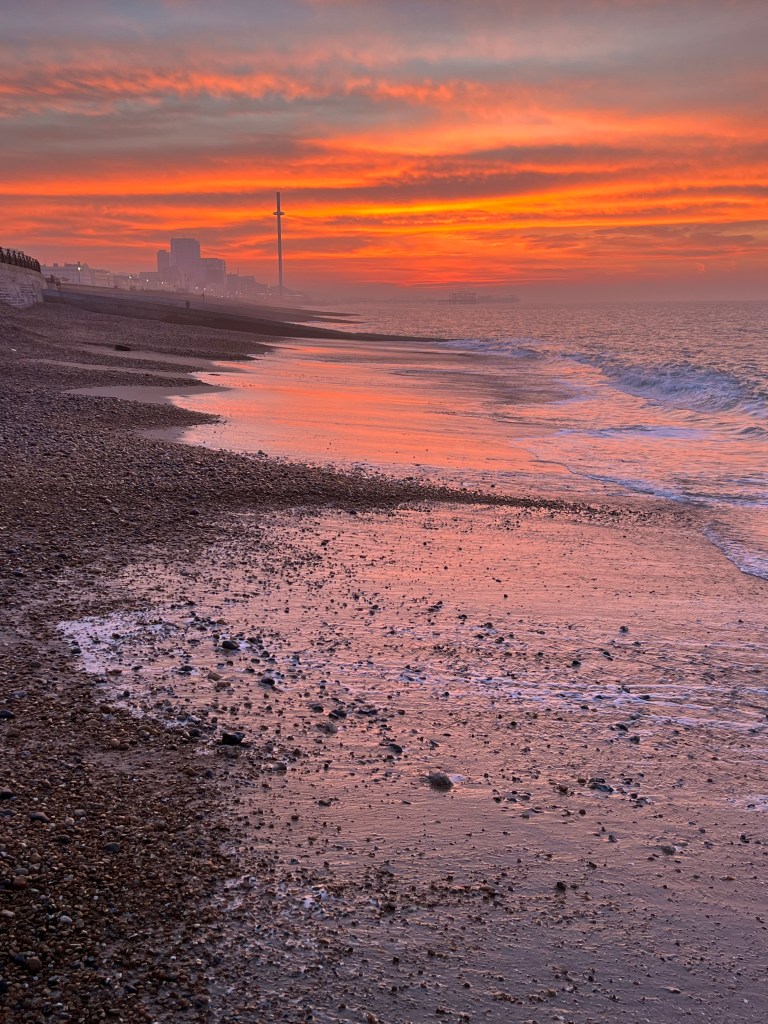
I am lucky that I live by the sea and breathe in the freshest air there is. Like anything you get used to it but when we were flat-hunting, exiting the railway station I was aware just how different the air was to that of Central London. For thirteen years I lived in a basement apartment in a large house next to the busy South Circular Road in Clapham. Brake dust, a dark residue comprising iron particles and carbon residue, was an invisible contribution to the air from the constant traffic roaring past and it seeped inside. It was noticeable as a slimy film that settled on books in my living room. Good thing I couldn’t see my lungs!

I am lucky to be healthy, at least today!! The pessimist would say you never know what lurks beneath the surface, but being an optimist I simply count my current blessings and know that in an emergency our National Health Service (NHS) delivers big time. There has been a recent television documentary about the night patrols of our local Brighton police, what they have to contend with and how they react. Sadly there was only one conclusion you could draw, that if individuals didn’t drink so much and if individuals were more sensible in the drugs they took, there would have been no content for a programme! In addition to this work-load for our police, 80% of the cases our paramedics attend are alcohol or drug related.

I am lucky, I think, that I decided to give up alcohol. In the summer, when someone in Portugal remarked: “ You don’t know what you’re missing!”, I know exactly what I am missing and know just how many times I have been badly affected by alcohol in my past – and that’s the times I can remember!! Misuse of alcohol, according to a recent study in the UK, costs the NHS in England £3.6 billion and alcohol-related crime in England and Wales about £11.4 billion per year. “Alcohol can cause serious upset to others around us, damaging relationships and careers ……”

I am lucky! I turn on a tap in our kitchen, in the bathroom, in the hall loo or outside in the garden and good, drinkable water flows. It doesn’t smell and I love it, although many other people spend huge amounts of money to buy bottled mineral water; in the UK in 2021 they bought 2.5 billion litres, apparently spending some £1.6 billion. Some 70% of the UK population live in areas where the level of Fluoride is ˂0.2mg and water companies add the chemical to around 1mg per litre, a level which is found to reduce tooth decay. Of course water, so vital to life, will become a resource people fight over, particularly as our changing climate causes population shifts.

I am lucky …… or is it that I make my own luck? More about luck later maybe.

Richard 2nd December 2022

www.postcardscribbles.co.uk

PS The Four-leafed Clover is reported to bring good luck!

PC 310 Bits and Bobs

On my birthday last month I was treated to dinner at The Ivy in Brighton (see PC 202 Others’ Manners October 2020) ; it’s become a little bit of a habit and I admit I’m a lucky chap. (Note 1) After our main courses and whilst perusing the dessert section of the menu, I decided to go downstairs to the loo. As I entered I saw a chap standing in front of the left hand of two urinals, so walked over to the free one. During these few steps my brain started processing what this chap looked like …… but within the confines of a gentlemen’s loo too much obvious staring could be construed in different ways. There was no sound and no movement from him and eventually I had enough confidence to look at him directly. He was a mannequin dressed in an absurd costume.

Phew! Thank God I got that right as in Brighton anything goes, is acceptable and maybe it was his particular penchant. Having completed my own business I thought I should take a photograph of him, as he was just such a weird thing to find in such an intimate space. I got out my iPhone, stood back a little and …… and at that point another chap opened the door. To find someone taking a photograph of another ‘pointing Percy at the porcelain’ as the euphemism goes, well, I could imagine what instantly went through his head. He recoiled ever so slightly but recovered when he heard me loudly say ‘He’s not real!’, although he probably thought … “to be on the safe side I’ll go into one of the stalls: funny people in here!”

It seems every time you want to order something the company concerned need all your personal details, including your shoe size and how often you change your electric toothbrush head. This mining of our data doesn’t worry me, but sometimes I have a real problem filling out the questionnaire. For example, a few weeks ago I booked a dental appointment, at a practice I have used before, so thought they knew all about me. Not so! Before my visit I have to fill out a questionnaire. I was doing OK until I came to this:

“If you are female, are you pregnant or could you possibly be pregnant?” and the options were ‘Yes’ or ‘No’. I could not leave the box blank!

So a ‘No’ answer could be I was a male, or that I was female but not pregnant.

Then further on, these two questions:

“How Did you hear About us?” Again a ‘Yes’ or a ‘No’ option, as it was with “What is your occupation?”

I was at the practice this week and asked the receptionist how I was meant to fill it out. “It’s a generic form, we have no say …..”!   

Three weeks ago the South Dorset village of Langton Matravers ……

…… joined a line up the length of Great Britain to Fraserburgh in the far northeast of Aberdeenshire as the three ‘norths’, true, magnetic and grid aligned.

True north, the direction of lines of longitude that all converge at the north and south poles, grid north, the vertical lines on maps, and magnetic north, the direction a compass will point in, will all be on one line. I find this stuff fascinating and vital in my past lives as soldier and sailor, where navigating by a magnetic compass was an important skill to master. You may remember in PC 209 (Off Arromanches) a skipper who I knew well asked whether he should have added or subtracted the magnetic variation, then some 4°, as they had missed the entrance for the French town of Trouville.

In PC 308 From Pillar to Post, I quoted a local guide John Cummings-Lee-Hynes and asked in a note whether anyone knew of a four hyphenated surname. My brother offered the name of his local South Dorset MP, a Richard Drax, as his full surname is Plunkett-Ernle-Erle-Drax. (Note 3)  Interestingly his grandfather Sir Reginald Plunkett-Ernle-Erle-Drax was an Anglo-Irish Admiral whose mother had extended the surname, initially to Ernle Plunkett-Ernle in 1905 and then adding Erle and Drax in 1906, both by Royal Licence. If you think the name Drax rings a bell, it’s because Ian Fleming was a friend of Sir Reginald and named his Moonraker character Sir Hugo Drax as a tribute!

In my innocence I had assumed it was a mixture of a God Father with a stutter and a hard-of-hearing Parish Church clerk at someone’s baptism.

Who names this child?”

I do and his names are Rrrreginald er er Errrnle Enrrle Drrrrax.”

So the clerk fills in the Baptismal Register incorrectly, a little like how Smith has been written Smyth and Smithe. You wouldn’t want to admit to not knowing how to spell someone’s surname so you just wrote it as it sounded!!

One’s age is, for some, a very personal thing and it was considered very rude to ask a woman her age. But the other day I thought, well, if you add the two individual numbers that make my age together you get 13. So there you are: what a disclosure! On that recent birthday my brother had sent me a slab of lovely chocolate Brownies by post from a Dorset company called Chococo.  It was only when the box was empty did I notice the cardboard lid:

Initially I thought it was amusing, using a little Dorset vernacular, dropping the ‘h’ but that didn’t make sense with ‘in’ – in where? Hey! Ho! No one is perfect.

Richard 25th November 2022

http://www.postcardscribbles.co.uk

Note I This might be the title of my next postcards.

Note 2 Such a delightfully name originating from Langton from ‘long town’ and John Matravers who owned land there in 1281. There is another village, Worth Matravers, so named after a William Matravers who was Constable of Corfe Castle in the C14th.

Note 3 I feel sure his nickname at school was Peed (?)

PC 309 A Conversation with Sami

I popped into the Hope Café this week as Sami had texted to say he was back from his Indian adventures (see PC 302) and wanted to show me some photographs. Grabbing my usual double espresso I made my way across to Sami’s corner table, where his iPad lay open in front of him. In these quasi post-pandemic times, a big hug seemed the right thing to do!

“Sami, so good to see you again; you must have been away three months or more?”

“Actually I got back in mid-October but I hadn’t been keeping my Covid Vaccinations up to date and caught a very mild dose! Fortunately my blood group is O Positive and statistically we have fewer symptoms than other groups; anyway I am now fully vaccinated!”

“Glad to hear it! How was your trip? Did you get to look at some of the Indian Mutiny sites?”

“Yes! I found a great travel agent, Float & Fly Tours and its MD JP Sangar who organised everything for me.”

“Excellent! You remember me telling you before you went that my great-great-grandfather had been in Patna during The Mutiny, commanding the Behar Station Guards. One of his sons, George and aged 7 at the time, remembers sitting on a roof and watching the rioters roaming the streets looking for trouble.

But Britain didn’t of course govern the entire Indian subcontinent, did it?”

“No, I found this map which shows parts of the country were run by Maharajahs. And the rest (shaded) was essentially subcontracted out to the East India Company, who was a quasi-governmental organisation whose army was recruited mainly from Bengal.

I flew to Delhi and learned that the tour would take in Meerut, Delhi itself, then down to Agra and on to Cawnpore (now reverted to its Indian name Kanpur) and Lucknow.  Here’s the geography.”

“You probably don’t want to do a blow-by-blow, minute-by-minute account but what are the immediate memories you’ve brought back?”

“Well, most people know the popularist reason for The Mutiny concerned the new Enfield rifle cartridge. The rifleman needed to bite off the end of the paper wrapping, said to be greased with pork and beef tallow; not good if you were either Hindu or Muslim! But there were other grievances throughout the army, which was a volunteer mercenary force officered by men of a different race and religion!”

“Ah! Yes! The British men who didn’t have the money to buy a commission in the army at home!”

“Exactly! We drove out of Delhi to Meerut where it had all kicked off on 10 May 1857. As you move away from the centre of Delhi, or any other city for that matter, the roadside stalls change in their offering. For example, first new cars, then second hand cars, then tyres and upholstery, then individual wheels, then wheel hubs and finally nuts. Everything is recycled, everything is for sale!”

Susie popped over, asking whether we wanted more coffee and, as it was a Thursday, produced some Brazilian Brigadeiros from next door to sample. With more coffee ordered, Sami continued:

“In Meerut the church has memorials to the officers and their families who died; here’s one to Veterinary Surgeon Charles Dawson and his wife Eliza – ‘killed by the mob’

We looked at where there had been fighting in Delhi but it was what happened in Cawnpore that I remember more; such a tragic story and its ramifications spread far and wide.”

“What happened?”


Satichaura Ghat looking downstream

“In short, the British forces in the city of Cawnpore surrendered to the rebel army, with a promise of safe passage down the Ganges. As the laden boats pulled away from Satichaura Ghat, rebels opened fire, and hundreds died.

The survivors, some 197 women and children, were taken to a single storey house, the Bibigarh, in Cawnpore, to be used as a bargaining chip. Two weeks later, any negotiations having proved fruitless, five men hacked the group to death with swords and threw the bodies down a nearby well.”

The covered-over well at Cawnpore

“God! How awful!”

“Sadly this slaughter unleashed a wave of retribution on the Indian rebels and thousands were hanged or blown to pieces with the cry ‘Remember Cawnpore’ ringing in their ears.”

“I think we believe women and children should be spared violence but the war in Ukraine has reminded us that savagery knows no limits. Any nicer memories?”

“We visited a few Maharajas’ palaces. In the one in Agra we saw a huge mahogany dining table, so big that the condiments were moved around by a model train set, in solid silver of course!

While we were in Agra we joined the queues to see the famous Taj Mahal, the white marble mausoleum housing the Mughal emperor Shah Jahan and his favourite wife Mumtaz Mahal.

Such a British thing, to queue, but in India there is no idea of personal space; everyone is happy to be up against the person in front – I found this uncomfortable!

It’s been interesting going to India and to meet Indira and other cousins but I don’t feel Indian. My skin colour suggests a pigmentation darker than white, natural as my mother was English, but she never learned to cook curries! My father never cooked, it’s not the way an Indian family split responsibilities, so our house in Southall was never full of the aroma of spices.

Delhi’s Red Fort

The country is littered with ancient forts and palaces, some like the Red Fort in Delhi well maintained and others just rotting away with no budgets or current interest to maintain or care for them.  

The Indian Mutiny, or the First War of Independence, is now considered to be the start of the agitation for independence, which culminated less than 100 years later in the partition of the country into Hindu India and Muslim Pakistan.”

“Wow, Sami, you’ve had a wonderful time by the sound of it; love the photographs. Now all you need is a good outcome to the Post Office Inquiry and you will finish the year on a high.”

“Absolutely! And by the way, I went looking for the memorial to your great-great-great grandfather Stephen Nation (a Brigadier who died of cholera aged 48 in 1828), who’s buried in the Christian Cemetery in Cawnpore, but it’s all rather crumbled ……. and I couldn’t find it”

“That was really sweet of you.”

Richard 18th November 2022

www.postcardscribbles.co.uk

PS If you seriously want to know more about The Indian Mutiny, read some of these books:

PC 308 From Pillar to Post

I could image this English saying to mean unconnected items to scribble about, as a pillar is not the same as a post, but the reality is different! It actually originates from the game of ‘real tennis’ (Note 1) and was first used in 1420 when it was ‘from post to pillar’! Its modern meaning describes someone who is being driven, hounded or chased from one place to another, is being harassed. Certainly not harassed about writing this week’s post, but don’t you just love how some sayings get hijacked to mean something completely different from their origin?

There is a tenuous theme to today’s post and it’s sand, as in the mixture of small grains of rock and granular materials, finer than gravel and coarser than silt, generally found at the seaside.

Our beach at low tide

Here on the Sussex coast at Hove the yellow stuff is only visible at low water. Normally the beach consists of small to medium pebbles, which make walking down to the water’s edge a slightly tricky operation and sitting on it without padding uncomfortable, unless you have your own built-in upholstery. The upside is that you don’t get sand inside your swimming costume or in your sandwiches!

When I first sailed offshore I started taking more of an interest in weather forecasting, as it played a hugely important part in any voyage. The ‘Shipping Forecast’ became de rigueur before any trip and I can recite the various sea areas around the UK, in their order, in my sleep: “…… Dogger, German Bight, Humber, Thames, Dover, Wight etc etc”. Paul Simons writes a column in The Times called Weather Eye and he’s good at researching for instance, comparisons with current weather, quoting weather folk lore and its accuracy or informing me that the earthy smell after it’s rained is called petrichor. I hope he won’t mind me quoting verbatim his recent piece about Red Crabs and their march across the sand, as it’s nature at its best and I couldn’t write it better:

(Photo from Alamy)

“Swarms of brilliant red land crabs are on the march across Christmas Island in the Indian Ocean (see photo). Up to 50 million crabs are swarming in a crimson carpet towards the sea in one of the natural world’s most epic migrations. The signal for this mass movement is the arrival of the first rains of the wet season at about this time and this year the migration kicked off when heavy rains fell on October 22; the speed of the migration then depends on the timing of the rains.

Most of their lives the red crabs live in forests, where they shelter from the sun as well as performing valuable forestry services, digging and fertilising the soil and keeping weeds in check. But the start of the wet season is the signal for all of them to scuttle off to the coast to spawn.

The male crabs set off before the females and when they eventually reach a beach they dig burrows for protection from competing males. When the females arrive, they mate before the males return to the forest, leaving the females to incubate the eggs. Then, with uncanny accuracy, the females wait until the moon reaches its last quarter and the high tide starts to turn before dawn. The females all leave their burrows laden with their eggs, mass along the shoreline, move into the sea and release the eggs. The eggs hatch as they touch the salt water and the crab larvae begin their initial growth stage in the ocean. As for the female crabs, once they have released their eggs, they turn around and return to the forest.”

Absolutely amazing!!

My brother announced some weeks ago he and his wife were off to Slapton in Devon, just to the South West of Dartmouth, for a Memorial Lunch. The name meant nothing to me so I went onto Google Maps:

…….. and found this from local guide John Cummings-Lee-Hynes (Note 2): “Slapton Sands is an outstanding piece of tranquillity and beauty; the beach is well kept by all who visit with deep shingle sands and clear clean water. To the left of the toilet is the nudist section and to the right miles of beach for families with paid parking facilities and a coffee cart.”

Dig in the sand a little deeper and you find that, seventy eight years ago, it was the scene of carnage and mayhem. For the stretch of sand and its inshore shallow lagoon were similar to Utah beach in Normandy, one of the beaches to be used for the invasion of France in June 1944. (Note  3) On 27th April a rehearsal for the beach assault resulted in some 300 men being killed as a live firing bombardment from battleships didn’t lift as planned. As if this wasn’t tragic enough, the next day nine German E-boats attacked the next wave of ships with torpedoes. The Battle of Lyme Bay cost the Americans over six hundred lives.

If you visit Slapton Sands today and, while you sit with your toes in the sand, someone tells you this awful story, you would find it difficult to reconcile the two. Those men who survived Slapton arrived on the sands at Utah Beach two months later. In the United Kingdom, today is Remembrance Day, remembering all those who gave their lives for our freedom.

Richard Remembrance Day 2022

www.postcardscribbles.co.uk

PS Yesterday in his column Paul mentioned today is the start of St Martin’s Summer, a few days of mild weather to thank Martin, a C4th Roman Officer, for giving half his cloak to a cold beggar.

Note 1 Real Tennis originated in France in the C12th and was popularised (actually this means probably 0.001% of the population!) in the UK by Henry V (1413-1422).

 It’s still played in a number of countries today and the word ‘tennis’ probably comes from ‘tenez’ – the French for ‘take heed’ ….. although these days the word heed is somewhat old-fashioned and we’d probably say ‘look out!’. The player serving the ball is known as a pillar; the post is part of the ‘gallery’ ……

Note 2 Does anyone know of someone with four hyphenated surnames?

Note 3 The American invasion beaches were called Omaha and Utah, the British Gold, Juno and Sword.

PC 307 I Am …..

Some weeks ago we went to a lovely supper party with local friends. Another couple were already there and one more arrived shortly after us. Introductions were made and, unless I repeat the person’s first name, I forget it in the blink of an eye. I am then of course embarrassed and spend time trying to think ‘do they look like a Robin or a Robert, or a Sara or a Serena’! The trick is to repeat their name when the introduction is made: “Hello Robin I’m Richard.” At least that’s what I am told works: I am still learning!

This particular evening remains in my memory as one of the guests wanted to immediately say who he was, as in: “I am a retired trade union official”. He could have said he was/had been a teacher/chemist/footballer/writer/artist or one of the hundred and one other descriptions of what people do for work or for love. I wanted to ask him more about it but my thoughts were more about why he felt the need to quickly identify himself to others, to label himself.

There’s a word from the Zulu language Ubuntu meaning ‘I am, because we are’; the longer phrase means a person is a person through other people, their community, their team – ‘umuntu ngumuntu ngabantu’. This suggests a belief an individual only has her or his existence through their interaction with others.

The actor William Hurt died in March. His obituary started “In the zoo of monstrous egos that is Hollywood, William Hurt took an almost Zen-like attitude to his profession. “I am not an actor. I am a nobody. I don’t exist.” he insisted. “But the work exists. The work is more than the actor.” This from a man who had three consecutive Oscar nominations for Best Actor!

Well, I know I exist (!) and I have a sense of my ‘self’ – “a person’s essential being that distinguishes them from others.” I am also aware I have an ego – “a person’s sense of self-esteem or self-importance.’

I practise yoga which is “a Hindu spiritual and ascetic discipline, part of which includes breath control, simple meditation and the adoption of specific bodily postures, widely practised for health and relaxation.” Many years ago, before I started practising yoga, I attended the London School of Economic Sciences for a weekly session in Philosophy. Fascinating – Year One at least! Year Two had an element of ‘meditation’ …… to which I recoiled. It was ‘an essential part of this course’ I was told …… so sadly I left. Blinkered? Maybe; that typical British attitude of not wanting to ‘give of oneself’ completely ….. and an inherent mistrust of those who are fervently preaching ‘their way is the only way’!! I think differently about meditation now.

I read recently that Buddhist teaching encourages one to distance oneself from ‘self’ and from self-concern, that the concept of ‘self’ is an illusion (!). I am a simple soul; I sense I live in my head, seeing the world, hearing the world and being aware through my other senses of the world around me. Am I an illusion? To whom? I don’t live in my big toe or in my arse, although some might challenge the latter! The sense I have of myself, confident and sure, or anxious and sensitive, starts within all those chemical goings-on inside my skull. If I try and explain it, explain that process, I run out of words and ideas.

After my Army career, I got into the habit of jogging wherever I was. Not a natural runner, it was a simple way of keeping fit, even though I found it hard. I felt ‘better’ afterwards (self-esteem up?). Then I turned to ordinary Hatha Yoga in 2002 as a way of gaining some more body flexibility – I could put up with the odd ‘omm’ I thought! I understood the physical benefits and progressed to hot yoga in 2009, and the particular sequence promoted by Bikram Choudray. Here, in addition to the physical demands of attempting the postures, the body, and one’s mind, has the challenge of the heat, which at times is suffocating!! Completion of the 90 minutes session was a real achievement. Tick in the box. Wow! I did it …….. and naturally I gave myself (that word ‘self’ again) a pat on the back and my self-esteem went up.

I understand how pure it could be to not focus on ‘myself’, able to live within and demand nothing of others. But life as I know it wouldn’t progress much if I spend my days sitting atop a pole, trying to plug into the ‘enlightenment’. Do I want to go and closet myself within some monastery, talking to no one, reading the ‘teachings’ of some guru, father, priest or even saint? It’s not for me; I actually think those that do are disengaging in real life, in the workings and struggles that beset us, the fulfilment of the hopes, dreams and aspirations within us. Does their way of life assist mine? I think not, unless we communicate on some subconscious level that I am not aware of. Give each human a good solid grounding, a teaching of values that mean something, and here each ‘religion’ contributes their own take on how to behave, how to grow, how to develop and we are good to go. 

Over ten years of doing yoga I still get that lift (endorphins?) when I complete a session; I feel good. If at that point some person doing a survey had asked me whether I felt better – absolutely!! I have started classes with a 60 second meditation; I have started with a 5 minute meditation. I understand a little of the ancient beliefs about yoga and meditation but I live in an age of enlightenment, of knowledge , of depth, so does my yoga give me more meaning to my life, does it enrich my soul?

Sure does ……. and I hope Buddha is smiling because of it.

Richard 4th November 2022

www.postcardscribbles.co.uk

PC 306 Murder at the Fete

You might think that after 300 one-thousand-word postcards I would be scrabbling around for things to write about? That maybe I should stop my scribbling and become a little more serious, focus on writing a novel? One postcard in draft concerns some of the books I have enjoyed, some which continue to stay fresh in my memory years after I have read them and others I have been unable to finish. Often novels develop from short stories, expanding the characters, their backstories and the tale itself.  I scribbled what follows three years ago; hope it makes you smile.

“I suppose that, after so many years of being a detective, nothing should surprise me. But life has a habit of doing exactly that and last weekend’s events are a case in point. I was the on-call duty officer, expecting a quiet couple of days and the weather forecast suggested a family BBQ was a possibility. As I wrestled with weighty matters like charcoal and underdone steaks, my mobile rang. My wife Jill looked up as I took the call and immediately saw from my face that duty called.

Sorry darling! There’s been a death at the summer fete in Folding-under-Sheet and the local chap wants some assistance. I’ll give you a call when I have established just what’s happened. Shouldn’t  be too long!”

Nestling deep in the Derbyshire Peak District, Folding-under-Sheet is a quintessential English village where time and customs turn slowly. Driving into the village I recalled its history, how the family in the manor had owned most of it until the beginning of the 1900s when Death Duties forced them to sell large tracts of land. Today Mrs Grace Girdlestone, (Note 1) the widow who lives in the mansion with her two daughters and son, would be in her eighties. Her daughters, headstrong and arrogant, were known to ride both horses and roughshod over the villagers but their mother would have been presenting prizes at the fete, as was her right!

 As I parked my car I saw PC Benson, a local policeman whom I had met previously, walking over.

Hello Sir! Good to see you. It’s Mrs Girdlestone I’m afraid; she was found about an hour ago outside the refreshment tent with her skull smashed in.”

“Good God! Forensics on their way?”

“Actually they got here about 5 minutes ago; they are over there now. There are lots of witnesses, Guv! People in the Refreshment Tent heard Grace having a fearful row with her younger daughter Sophia; George was standing meekly by.”

“George?”

“Her son-in- law.”

“What was the row about?”

“In summary Grace said she’d heard Sophia was pregnant by Matt, who runs the riding stables, and that she was disinheriting her. She used a few choice words apparently, quite shocking some of the older people! George was speechless and ran out of the tent.”

“So we’ll need to speak to Matt: what’s his surname?”

“Weaver Sir.”

“OK! So Grace follows George out of the tent and she’s found with her skull smashed in moments later?” 

“Seems that way. The doctor’s doing the preliminaries right now; come on ……”

I walk over to see the duty forensics officer bending over the body.

“Hi! Mark! What have we got?”

“Looks like someone cracked her skull open with a wooden instrument. That somewhat new wooden-handled fork, the one with the maker’s name stencilled in blue, could be the murder weapon; it’s got a certain amount of blood on it. We’ll take it back to the lab for testing. No sign of a struggle, just this blue stain on her right middle finger.”

“Let me know what forensics say. Seems we have the suspect, motive and weapon. Wish they were all so easy. I’ll go up to the manor and look around.”

The manor house lies only a mile outside of the village so within 15 minutes I ‘m looking around Grace’s study. On her desk I find a handwritten note to her solicitors telling them of the changes she needs to her will. A quick scan confirms what witnesses had said the row was about. Sophia was to receive nothing from her mother’s estate, save for a string of pearls and one particular oil painting of a horse. An old Sheaffer pen, very worn and well-loved, lies on the paper. Returning to the fete I arrest George for murdering his mother-in-law.

The following morning I am enjoying a first coffee at my desk, with an appointment at 1100 with the Super to bring her up-to-date, when I’m called down to the front desk, where Mr Wallace and his teenage daughter Tanya are waiting. We find an empty interview room.

“OK Mr Wallace. Tell me what you told the desk sergeant.”

“I hate gardening but my missus has a real passion for growing vegetables. Do you like gardening Detective Inspector? Well, anyway, Doris had two huge Celeriacs in the Largest Vegetable Competition. Such a tragic thing to happen, Mrs Girdlestone and all and …..” 

“Why are you here?”

“Well, Stan won the largest carrot competition……”

“Please Mr Wallace, get to the point!”

“Doris got a prize and Tanya filmed her. We didn’t look at the footage until this morning ……. you had better see for yourself.”

They pass me Tanya’s phone; there’s Doris clutching her large Celeriacs  ……. and in the background is the outside of the refreshment tent. I pinch out the view …… and see Grace come running out ……. she must have tripped on a guy rope, put her foot out, caught that garden rake that had been left against the tent and got smacked very forcibly by the handle. She went down like a stone, her skull cracked like a breakfast boiled egg. No sign of George or anyone.

Back at my desk, I find a note. ‘Forensics just called. That blue stain on Mrs Girdlestone’s fingers? Quink Blue.’ (Note 2)

Richard 28th October 2022

www.postcardscribbles.co.uk

Note 1 Obviously known behind her back as GG

Note 2 Quink, a portmanteau from ‘quick’ and ‘ink’ is a fountain pen ink developed by the Parker pen Company in 1931 and remains in production.

PC 305 Alternative Beliefs

The Church of England is the established Protestant church of the United Kingdom and during my education attendance at Sunday morning church services was mandatory. In the holidays we walked the mile or so to an evening service in Balcombe’s little C15th St Mary’s Church.

 It wasn’t until a new vicar forbade my parents from taking communion as they belonged to the Church of Scotland that I realised the huge variations and schisms that exist in our global belief systems.

Setting aside the major religions of Christianity (31%), Islam (24%), Hinduism (15%), and Buddhism (7%), and acknowledging that some 16% of the world’s population could be described as irreligious, the remainder follow minor religions such as Shinto, Taoism, Confucianism, Jainism and Judaism (0.2%). I have put a percentage against Judaism as in Western culture it must be one of the most identifiable ‘minor religions’ and its source the centre of continuing bloodshed and division over two centuries. 

These scribbles are prompted by a recommendation to watch a four-part Netflix mini-series called Unorthodox. It concerns a young Hasidic Jewish woman called Esty Shapiro who flees Brooklyn and an arranged marriage and is taken in by a group of classical musicians in Berlin. It was fascinating and I realised I had little or no understanding of Ultra-Orthodox Jewish beliefs.  

Ultra-Orthodox Jews strictly observe Jewish religious laws and separate themselves from Gentile society, as well as from Jews who do not follow the religious laws as strictly as they do. They live in closed communities, marriages are arranged and dress codes strictly observed. The men wear black or navy suits and a white shirt, and skull caps, Fedoras or Homburg hats; there are rules about the length of the hair down the side of their face. Women wear modest dresses. Stroll around Stamford Hill in London and you’ll be surrounded by some of the 30,000 Ultra-Orthodox Jews who have settled here, particularly as pre-war refugees and post-Holocaust survivors. Walk around Williamsburg in New York, where Netflix’s ‘Unorthodox’ series is set, and you could be forgiven for believing you were not in America.

For those of us who do not regularly interact with minority groups the film Witness (1985), with Harrison Ford and Kelly McGillis about an Amish boy who witnesses a murder, gave us an insight, albeit through the eyes of a producer intent on making an interesting and dramatic thriller, into the Amish community of Pennsylvania.

Amish transport

The history of the Amish church began with a break between the Swiss and Alsatian Mennonite Anabaptists in 1693. Today the Old Order Amish, traditionalist Anabaptist Christians, of whom the Mennonite Church is another denomination, are known for their simple living, plain dress, Christian pacifism and slowness to adopt many of the modern conveniences that non-Amish take for granted. Some 350,000 live in the USA and a further 6000 in Canada. The Amish communities operate their own schools and a great emphasis is placed on church and family relationships.

Mennonites can be split into roughly three groups, Old Order ones who eschew modern technology,  Conservative who use modern conveniences like cars and telephones but hold firmly to traditional theologies and wear plain clothes, and mainline Mennonites who are virtually indistinguishable from the general population. Mennonites have settled in 87 countries spread across the planet but I first became aware of them in Belize, when I went there in 1983.

Belize, in Central America, outlined in yellow

They had settled here in 1957 when it was a British Colony, British Honduras, and in particular in Orange Walk, Cayo and Toledo Districts. The communities have established hugely successful organic farms that now provide some 85% of the nation’s milk, cheese and other dairy products.

Another minority group, The Plymouth Brethren, was founded in 1848 in Plymouth, England by John Darby, who believed the Anglican Church was too close to the Catholic Church in doctrine and ritual. Today some 50,000 members are spread over 17 countries. Traditional marriage and family life see women subservient to men and children expected to marry within the fellowship.  

The men are clean shaven, keep their hair short and don’t wear ties while the women should not cut their hair but wear scarves. Everyone starts the day with communion at 0600 and its members will not use the internet or watch television. The Brethren reserve all social activities for those with whom they celebrate the Lord’s Supper, excluding family members who are not members of the church. A client of mine didn’t agree with his parents’ devotion to the Plymouth Brethren diktats and hasn’t seen, been allowed to see them, in decades.

Francisquinha (PC 172 March 2020) pops her head around the door. “But you haven’t even mentioned The Church of Jesus Christ of Latter-day Saints aka The Mormon Church, Jehovah’s Witnesses or The Church of Scientology, to name a few omissions!”

“Ah! Mention Scientology and I think of Tom Cruise and my stepfather.”

Your Stepfather? Was he a member?”

“No, but a favourite Godson Tony Freeland became a member and shunned his friends, family and twin brother John. His parents were distraught!”

“And isn’t The Mormon Church concentrated in the west of the USA?”

“Of course! Its early leaders founded the state of Utah and one third of all six million American Mormons live there, mainly in Salt Lake City.” (Note 1)

These alternative beliefs create a way of life for their adherents, often one which is all-embracing, encompassing. The common theme to all these groups, and maybe with any ‘religion’, is a suspicion of outsiders, a belief that their way is the right way, in fact the only way ….. and ‘if you are not with us you are against us’. A worrying thought when the population of the planet cries out for more understanding and less polarisation.

Confident groups should not only welcome new arrivals but happily say farewell to those who wish to leave. Those trying to ensure continuing obedience often through coercion don’t get my vote.

Richard 21st October 2022

http://www.postcardscribbles.co.uk

Note 1 The church has some 16 million members

PC 304 Foot Fetishes

Where would we be without our feet? You can’t even say ‘on all fours’ as we need something at the end of our arms and legs! I assume that over the course of our evolution hands and feet developed into very different physical shapes, for very different purposes. Most of us take some care over our hands, maybe using a hand cream if they get dry and ensuring the nails are of a reasonable length. Nail polish of all sorts of colours is often applied but more normally by the female gender. But our feet?  “The lower extremity of the leg below the ankle, on which a person stands or walks”

Each foot is made up of 26 bones, 33 individual joints and more than 100 muscles, tendons and ligaments, all of which work together to provide support, balance and mobility. In addition to the bones and their support systems, there are 7000 nerve endings in each foot and 250,000 sweat glands. The bones are grouped into three; the Tarsals making up the rear section, the five Metatarsal bones in the middle of the foot and the Phalanges, the bones of the toes; the second to fifth toes each contain three phalanges. I sincerely hope this is clear?

And if you recognise any of these conditions it’s possible you have been/are effected by them. Big toe arthritis, bunions, Gout, hammer toes, heel spurs, plantar fasciitis and stress fractures!! Then there are issues like chilblains, ‘Covid’ toes, in-growing toenails, verrucas, Morten’s neuroma and Athlete’s Foot.

Tinea pedis is afungal infection that is quite contagious and the haunt of swimming pools and gym changing rooms. Some years ago after suffering a bout and finding it resistant to most remedies, I remembered Potassium Permanganate from childhood. I was surprised to be able to buy it over-the-counter at a chemist’s. Followed the instructions and applied it for a few weeks. It did nothing for the Athlete’s Foot but did give me a delightful display of purple toenails!

A plaster cast of a baby’s feet

If your feet are constantly encased in cold, wet boots and socks, the chances are you will develop Trench Foot. Soldiers lived in awful conditions in the trenches in the First World War and some developed blisters, blotchy skin and tissue falling off on their feet; the condition became known as Trench Foot; 75,000 British soldiers actually died of it! The military were reminded of it during the Falklands War in 1982, as the wet, freezing conditions soldiers endured on the islands brought on some cases.

Frost bite is as bad as trench foot and something that those who wish to climb to the tops of mountains risk.

A nasty case of frost bite

During some routine exercise at Sandhurst called Battle PT, on the run I managed to put my booted right foot into a rabbit hole but continued forward. The resulting sprain swelled the ankle up like a Puffer Fish and for two years or more it felt vulnerable. No bone had been broken but the muscles managed to twist a bone out of kilter to the point I now have a bony tip where a bony tip shouldn’t be!! 

My mother-in-law remembers going to a recommended podiatrist in Rio de Janeiro back in the late 1980s. He was good but she sensed he was gay and as HIV Aids was creating misery and heartache in the gay community, she wasn’t sure that having someone picking and scraping her feet was such a good idea!!

The shape and design of some ladies shoes can cause severe problems later in life. Squeezing your foot into narrow-fronted shoes can permanently distort the foot bones, in addition to producing bunions and the like.

However nothing in the west can compare with the ancient Chinese tradition of binding a child’s feet. The small feet were physically broken and then bound.

The resulting distorted foot was known as a lotus foot and the shoes Lotus shoes. Almost 100% of upper-class Han Chinese women had bound feet in the C19th. If this is news to you, read a most fascinating book on the subject, Pang-Mei Natasha Chang’s 1996 book “Chinese bound feet and Western Dress”.

Swedish men statistically have larger feet than most nationalities. During the late 1800s many migrated to the North West of the United States but found it impossible to get shoes big enough. John Nordstrom teamed up with Seattle shoemaker Carl Wallin, opening their first shop catering for bigger shoe sizes in 1901. Now Nordstrom is one of the largest department stores in the United States; revenue in 2021 was US$ 14.8 billion!

It seems natural to have a unit of measurement based on the length of a physical human foot, about twelve inches (big feet huh!). Since the International Yard and Pound Agreement of 1959 one foot, equal to twelve inches in the British Imperial and US Customary Systems of Measurement, is 30.48 centimetres; a ‘yard’ is three feet. It is useful to calibrate your own pace as you never know when that knowledge might come in useful. Simply measure out say 50 or 100 metres, then walk the distance ‘with a measured pace’!! Most individual’s pace is less than a metre. On my ‘Young Officers’ course at the Royal School of Artillery I  had to calibrate my ‘pace’ as it was useful in setting out a gun position.

Apart from the physical foot, it’s the projecting part on which a piece of furniture, or each of its legs, stands, the bottom or end of a space or object or “at the foot of the cliffs.”

There are of course lots of sayings and phrases that include ‘the foot’:

‘Foot the bill’ – pay for something typically when the amount is considered large or unreasonable; ‘Best foot forward’ – take your first step to begin anything; “They were taken out feet first, the body covered on the gurney by a flimsy blanket and wheeled into the waiting hearse.” – direction of travel for the body!; informally, to cover a long distance on foot for example “The rider was left to foot it ten or twelve miles back to camp” – my preferred term would be hoof it!; and ‘Footnotes’, so beloved of researchers.

Richard 14th October 2022

www.postcardscribbles.co.uk

PS If you measure ‘stuff’ regularly, be aware that some metal measuring tapes don’t start at zero!! Always worth starting at 1 inch or 10 centimetres!!