PC 471 Another Tale  

Most of us are too busy to read much at this time of the year, so here’s something I wrote last year, which is just another tale. And if you don’t read it that doesn’t matter either!

“I had only the vaguest of directions, in the form of a land survey map and some handwritten notes from the solicitors, but as I neared what I thought was about my destination, I could sense my heart beginning to beat faster, the excitement palpable; I pulled into the verge. Somewhere down this deserted country road, 100 miles in from the coast north of Sydney, was a five-barred gate. Sure enough 50 metres away there was an old wooden gate, hanging at an odd angle from a large timber post, rather unkempt and unloved; across the top bar was the name, “Standby”, burned into the wood by an untrained hand. A track led through the gums and over a small hillock; clearly no one had travelled this way for a while, so thick was the red dust and the absence of tyre tracks.

So much had happened since I had received that letter from Wilcock & Brown, a firm of solicitors in Sydney, in London two months before, informing me that a long-lost relative had left me a station in New South Wales. Being rather vague about the family tree, I had rung my grandfather, to see if he could enlighten me.

Come down and see me, dear boy”, more an order than an invitation! A few days later we had had sat around the coffee table in his drawing room, doing a cursory search of some dusty albums and box files. He’d told me how James Ruse, his great great grand-father’s half-brother, had been one of the first European settlers and the first to be deeded land in Australia, thirty acres at Parramatta, west of Sydney. James had prospered and had bought tracts of land as future investments. One was far north of Sydney, which he had let to a fellow settler, who had gradually built up a sizeable holding. Over the years my grandfather had rather lost touch with his extended family relatives in Australia and had no clue as to how the station had come to be left to me.

Grandpa’s parting comment still rang in my ears: “Why don’t you go and have a look? You have nothing to lose, it could be a wonderful adventure and you can come back and tell me all about it.”

Certainly, I had to take a look, if only out of curiosity, but I had no experience of running anything bigger than my back garden, the size of postage stamp, in South London, so I would probably sell the station. After the long flight to Sydney and a few days to get over the jetlag, here I was, north of Newcastle. I remember smiling as I passed a sign on the road to Booti Booti, without knowing how it came to be so named and how I would become intimately involved with those words. Then I spied ‘Standby’ on that gate.

At the top of a rise in the track I caught a glimpse of buildings in the distance, half hidden by gums, with a water tower and fences that formed cattle pens. The nearer I got, details of the main house became clearer, classic colonial ranch style, with a large overhanging roof and wide verandas at both ground and first floor level. I had arranged to meet the man who had been looking after Standby since my relative had died, at noon. It was almost that time now, judging by the position of the sun, burning down from the cloudless sky, and yet there appeared to be no one around. 

I parked my car in the shade of a large barn, walked across to the main house and up the steps to the front door, which opened to my push. Inside, dust lay on everything, on the furniture, across the floors and the windows; my finger ran across the table in the dining room, underneath the dust the surface of a lovingly polished mahogany table, obviously brought out from England many years before. The interior was cool and pleasantly laid out, with the main rooms off the central corridor, and the kitchen at the far end.

I was just about to explore the first floor when steps sounded on the veranda. Framed in the doorway was the slender frame of a woman, a broad-brimmed hat on her head, bare arms and legs, and a flowing skirt; in her right hand was a basket. The strong sunlight made it difficult to see any detail of her face and I walked back to the front door to introduce myself.

Good afternoon”, I said, “my name’s Robert Harrison; you are?”

As I came closer, I could see she was probably in her late twenties, her skin the colour of milky coffee with large soulful eyes and a broad smile.

“G’day, I’m Clarissa; I am Winston’s daughter.”

Ah! Yes. Winston was the chap who was looking after the station. She told me he’d been delayed with some cattle about an hour’s ride away.

Would you like some lunch? I’ve got some cheese and mangoes, and a bottle of beer. Why don’t you sit on the veranda and I will get it.” Without waiting for a reply, she brushed past me and headed for the kitchen. 

I sat in the shade, tasted the most delicious goat’s cheese, slurped my way through a couple of mangoes and quenched my thirst with the beer. Winston arrived about an hour later, riding into the yard on a rather rough looking black mare, accompanied by a cloud of reddish dust. We introduced ourselves and sat on the veranda whilst Winston told me something of the ranch. A hundred thousand acres of cattle station was mine if I wanted it. He suggested that the best way to see what Standby consisted of was to ride the land. He startled me as he yelled at Clarissa to saddle up a horse, but soon we were riding out of the station yard and up the hill to the east. It was late afternoon, the heat of the sun was easier now, and the kangaroos were coming down to the water holes to take their first drink and nibble the short grass. I looked back at the house, already deciding that here was a place I could live. The comparisons with England were few, it was an exciting idea and, although I knew nothing about cattle and running a station, seemed too good to turn down.

What was the alternative?  Whilst I had no illusions about how different and physically demanding it would be, I felt a surge of excitement as I following Winston over the hill and through the gums. We crossed dried-up river beds, through gullies and around ant hills as big as my horse; the air was dry but clear and there was a wonderful smell of eucalyptus. Some three hours later we rode back into the yard in the soft light of dusk; Clarissa came running out and took the reins and led the horses back to the stables.

I gratefully accepted the offer to stay the night and later, lying in bed wide awake, I wondered what I was letting myself in for.”

(To be Continued – maybe)

Richard 26th December 2025

Hove

www.postcardscribbles.co.uk

PS Ideas always welcome!

PC 470 A Nod to Christmas

In the eleven years since I started scribbling about this and that, naturally I have mentioned the Christian festival of Christmas. This year I have reread some of those postcards and have extracted some bits I have liked; hope you do too? You can obviously read the full postcards through WordPress.

From PC 27 Christmas 2014:

“I’ve spent Christmas in Sydney in Australia, rather warm but wet that year, in New Zealand where it was warm and dry, and in Rio de Janerio, where it was amazingly hot … and humid. Wherever, “There must be turkey …. and sprouts ???” Really?? “It wouldn’t be the same without Brussel Sprouts.!” The most maligned vegetable in western cuisine, normally with any taste and colour boiled out ……. until Jamie Oliver came along and suggested roasting them with bacon. Brussel Sprouts are just another of those things in life associated with the most boring country, Belgium.”

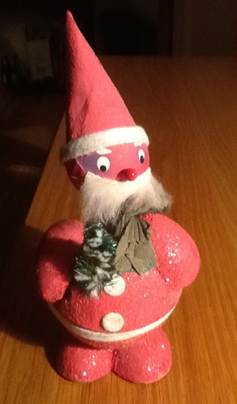
“This was followed of course by Christmas pudding, a wonderful, sweet concoction of dried fruits, eggs, suet and spices, laced with Brandy during its manufacture to ensure it matured properly, accompanied by Brandy Butter. Before the pudding was brought into the dining room, hot brandy was poured over it and set alight. Uncle Tommy simply nodded his head – he’d seen it many, many times.”

‘Uncle Tommy’ a papier-mâché Father Christmas from 1963

I spent a couple of Christmases in Northern Ireland when the IRA were fighting for some form of independence, firstly in Londonderry in 1973 and then in north Armagh in 1975. (See PCs 196, 197 & 198 Tales from Northern Ireland) These were dangerous times but we still recognised Christmas; dinner was roast turkey, Brussel sprouts (!) and Christmas pudding served by the officers to the soldiers. The Miss World organisation, through Julia Morley, delivered 400 stockings to our regiment in 1973, with packets of cigarettes, sweets, playing cards and I think the latest copy of Penthouse, a Men-Only raunchy magazine. I’ll leave it to your imagination how the soldiers enjoyed the contents of the stockings!

In Londonderry on Christmas Eve, I went up to the border Vehicle Check Point at Muff, to visit some of my soldiers. A Baptist minister, let’s call him Desmond as my memory is too dim (!), attached to the regiment for the tour, accompanied me. One of the sentries and I stood in a static observation post, looking out over the dark, frosty countryside, whilst Desmond talked softly about the meaning of Christmas; one of those memories that will stay with me all my life!

In the United Kingdom and in some countries of The Commonwealth the 26th of December is called ‘Boxing Day’. I wrote about this special day in PC 86, posted on 31st December 2016.

The following year an extra postcard concerned Mr & Mrs Santa (PC 113). Here’s an extract:

“Mrs Santa hears a crash and looks out across the sleigh park. Rudolph, a retired reindeer with an alcoholic red nose and used only once, in 1939, because it was foggy, stirs in his adapted St Bernard’s dog bed. “Wattts ttthhh ffuni” – sort of Reindeer speak for ‘What the fuck?’ Sure enough, Mrs Santa’s husband has returned, the reindeer hooves and sleigh’s skids screeching on the ice and eventually the empty sleigh has skidded to a stop. The reindeers’ flanks are steaming from the exertion of galloping across the world and both they and Santa seem somewhat worse for wear.

Christ! What the hell’s happened?” she calls across the frozen ‘sleigh park in the sky’.”

Read the rest in PC 113.

Amber House Christmas Tree Thingy (See PC 210 Christmas Lights)

My ‘Creative Writing’ evening class at Brighton Met was encouraging and I even liked a few things that came from the challenging homework. 2018’s PC 140 was another ‘Extra! Extra!’; it covered a couple of homework scripts, one Christmas-themed about carol writing. Facebook asked whether I wanted to repost this last one earlier this week, so you may have already seen it.

At the end of 2020, a year when many countries had suffered total lockdowns to restrict the spread of Covid, I reminded my readers that the Christian bible is littered with stories of pestilence and plague, be it an invasion of locust, which coincidentally in 2020 had been particularly troublesome in Africa, ……. or famine ……. or pandemics. In the C14th in Europe the Black Death ravaged communities over 7 years. Those interested in our Nation’s story will recall the 1665 Great Plague of London; by the time a fire in a bakery in Pudding Lane started an inferno which destroyed most of the city in the following year and killed off the Yersina Pestic bacteria in the process, some 70,000 had died.

And, by the way, there is little evidence Jesus was born on 25th December. The earliest mention of this day was AD 354. Early Christians preferred January 6th, nine months after the Passover. In the original Julian calendar 25th December was the Winter Solstice, the date of which moved to 21st December with the introduction of the Gregorian calendar. “Here endeth the lesson!”

PC 262, posted on Christmas Eve in 2021, was short ….. and finished:

“So …… enjoy your Christmas Eve ……. I hope you have a fun time …… thank you for reading my scribbles. Face the coming year with energy and enthusiasm and embrace all it offers.”

In December 2022 I posted a modern version of the traditional Christmas Story (PC 314 23rd December 2022). It concerned a group of friends sitting around a table in a warm pub, in this case the Lamb & Flag in Folding Under Sheet in the Derbyshire Peak District. There’s Amanda, a very successful shepherdess, Jim whose girlfriend is very pregnant, Pete and others.

Last year I wrote PC 418 ‘Hope Christmas News’ about a party Duncan at The Hope Café had laid on for his regular customers. It reads well, I think; but see for yourself on WordPress.

Big hugs for everyone at this time.

Richard 19th December 2025

Hove

http://www.postcardscribbles.co.uk

PC 469 More from The Hope

Sami and Lisa come in through the doors and, spying Mo and me, come over; it’s been too long since I had seen them both. I decide to treat them to some coffee and ordered an Americano for Sami and a Mocha for Lisa from Libby. Regular readers will know that Lisa was writing an article for Brighton & Hove’s Argus newspaper about low level health care and had asked my opinion. (See PC 457 Low Level Health Care September 2025)

“Hey you two! Lisa, I saw that your article was published in The Argus in mid-October. Will there be a follow-up?”

“Hope so; nothing certain but they liked my style.”

“And, Sami, I read that not only has Sir Alan Bates finally agreed a settlement in his claim against the Post Office but that a 92-year-old ex-postmistress has also finalised hers. Not before time you might think!” 

“Time passes, doesn’t it. I hadn’t realised Alan had started his campaign for justice for victims of the Horizon scandal more than twenty years ago. So pleased to understand part of his settlement includes compensation for those efforts”.

“Betty Brown fought for 22 years for justice after The Post Office accused her of false accounting after discrepancies in their County Durham branch books. She and her husband made up the £50k shortfall, which had been caused by erroneous Horizon software. Her husband died a year later. Then the Sunday Times, towards the end of November, had a poignant article about Michael Mann, accused of stealing £15,000 from his Post Office in 2013. In October that year Mike committed suicide, so depressed at being sacked from the job he loved. The public enquiry is now analysing the evidence it’s collected and is handing over files to the Metropolitan Police for possible criminal charges. Operation Olympos has so far identified seven suspects, with a formal prosecution expected to begin in 2028; nothing seems guaranteed and meanwhile those wrongly convicted wither.”

“You probably missed the obituary of Lam Leung-tim ……”

“Who he?”

“A Chinese businessman who created ‘a kingdom from nothing’ after the Japanese occupation of China during the Second World War. His name sadly will not be familiar but one of his plastic toys, the little yellow duck, will be.

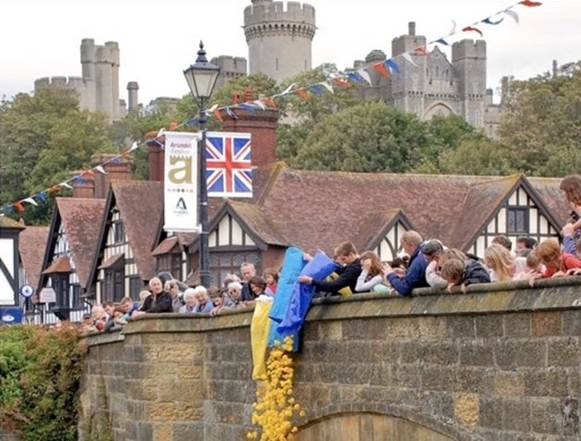
Who hasn’t had one in their bath, if you have a bath in which to float it nowadays(?), or indeed watched one of the many ‘Yellow Duck Races’.”

“Ah!” Says Mo, “There’s one held every year on the River Arun during the Arundel Festival of The Arts, here in Sussex. Two thousand yellow ducks, each with a number corresponding to a £1 ticket, are poured from a bag from a bridge.

The winning duck earns its owner £100, second and third £50 and £25 respectively and the remaining money goes to local charities. All the ducks are cleared from the river by the Arun Divers Club.”

“Did you know,” Sami interrupts, “that Lam says he made a ‘pleasant mistake’; there’s an old Chinese saying ‘yellow goose and green duck’ ….. but Lam made his duck yellow! He lived to 101.”

“Wow! That’s a lovely anecdote to our love of the yellow ducks.”

“How was your birthday, Richard?” asked Lisa “Not sure Sami told me”, she said, looking at her partner quizzically.

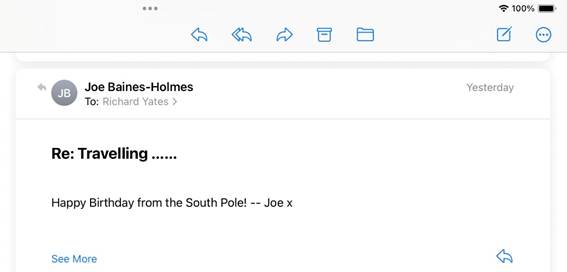
“Great. Dinner in a new restaurant in Church Road, Maré, and all the normal birthday stuff, including birthday wishes from Joe at the Amundsen-Scott South Pole Base. (see PC 403 Idle Thoughts about This and That September 2024)

You’ll have to take my word for it, as you could argue that the email could have come from anywhere! Joe owns one of the apartments in Gilmour House, the other half of Amber House. His contract finished at the end of October and he’s on his way back to Hove, via Thailand and SE Asia.”

Mo butts in: “You’ll have a view, Richard, about the budget last month; what did you think of the removal of the Child Benefit Cap?”

“I had to check the facts. Previously you could claim the benefit for every child; you’d qualify if you’re responsible for a child under 16 and live here, providing neither parent earns more than £80,000. New rules were introduced in 2017, limiting it to two children. The aim was to end the iniquity of workless households getting paid by the state for having larger families than those with jobs could afford. Today families on Universal Credit, which is typically means-tested, get £3500 per child. In removing the cap by April 2026, the government aims to lift hundreds of thousands of children out of poverty. Critics of the lifting of the ban argue there’s no real measure of ‘poverty’, it should be down to parental responsibility to decide how many children to have and whether they are affordable, and that it’s not for The State to say: ‘we’ll pay more and more’.

“You know my view Richard.” says Mo. “If you want to have children, you have to understand that there is a cost involved and there’s a responsibility for both parents, the mother and the father. There’s been an increase of about 10% in the number of families headed up by a single parent since 2019. Mothers make up 85% of the 3 million single parent families here in the UK. Not sure how you can change this, educating society about basic responsibilities, be more draconian about financial support from the absent parent? The more the state helps financially the less incentive there is to change. Don’t think Joe and Joanna Public are in favour of lifting the ban.”

“I do feel a bit concerned that the ‘Ship of State’ is captained by someone who’s just qualified, that most of his crew try hard to please him but have little professional experience, and there’s an ongoing dispute as to the destination, let alone how to navigate there.”

Richard 12th December 2025

Hove

www.postcardscribbles.co.uk

PS The knife was successful!

PC 468 Only The Lonely

For those of a certain age, the title should immediately take you back to the early sixties and Roy Orbison’s hit song and its lyrics: ‘Only the lonely, know the way I feel tonight; Only the Lonely, know this feeling ain’t right.’ Or, taking the last word of the title, Justin Bieber’s 2021 hit ‘Lonely’. Mud had a 1975 hit single ‘Lonely This Christmas’, about a relationship breakdown at a time of family get-togethers.

My dictionary defines ‘lonely’ as ‘solitary, companionless, isolated.’ Not to be confused with ‘alone’ – standing by oneself.

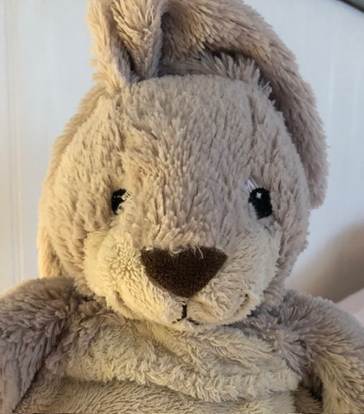
“What are you writing about?” asks Francisquinha, looking over my shoulder.

Francisquinha – read PCs 172 and 217 for more understanding

“Well. I was thinking about scribbling ….”

“I like that word, scribbling, gives a sense of free-flowing thoughts!”

“Thank you; probably about right! Anyway, I was drafting some thoughts about friends, family and that sort of stuff …..”

“I know I’m very much ‘family’, but I’m not sure about George.”

“Ah! Yes! George, the bear given to you by the staff of the George Hotel in Christchurch. To add to the bear given to you by the crew on our Singapore Airlines flight, and the stuffed little lamb from the manager of the Sofitel Viaduct hotel in Auckland. Weren’t you spoilt? But you’ve kept George?”

“I have. I had a choice and something gelled with him and me; choosing who your friends are is so important. In the back of my mind, I know I have a family who live in The Warren but that doesn’t make them friends, just because they are kith and kin. I sense he’s going to be a good friend but not sure what really makes a ‘good friend’. What do you think?”

“It must start with mutual attraction, and this could be physical or mental, shared or even contrasting interests, possibly shared experiences and background. You need to be able to trust someone, for without trust there’s nothing. It may be anecdotal now, but there was that initial exercise individuals attending a Family Institute course did on the first evening: ‘Without speaking, pair up with someone else.’ Once everyone had paired up, well 99% of them because there’s always someone who can’t, for some deep-seated reason, they were asked to discover why you were attracted, one to the other. Shared backgrounds trigger a feeling of attraction without any conscious awareness, just as an unconscious bias and filtering colour our preference for people we might be familiar with.”

“Are we friends?”

“What, you and Celina and me?

“Yes! I have been with you for many years; you take me on all your adventure, I have my own passport, but you often talk about me behind my back.”

“Bit unfair! Think we both wonder what you would have said, how you would have behaved, given certain criteria and given that you’re a fluffy rabbit. And we value your contribution to our love and friendship, often offering a nicely nuanced opinion.”

“I guess to be a real friend you need to be able to accept someone for who they are, not what you would like them to be!”

“Now that is often the nub of the issue, acceptance, allowing others to be who they want to be. Here in Brighton & Hove there are countless examples of individuals feeling comfortable in their own skin, feeling unconsciously accepted by everyone. One major issue, Francisquinha, is that we often, almost certainly, change over our lifetime and sometimes our friends don’t respect our decisions and choices and one wonders whether they remain a real friend.”

“You have an example?”

“Actually, I do! You know I got addicted to Hot Yoga, so much so that it’s part of who I am, what I do, what Celina and I do. I love the mental and physical challenge, although I appreciate it’s not for everyone. Someone who was a good friend has often asked, in a snide and derisory manner: ‘Still doing your yoga?’. So, I question that ‘real’ friendship.”

“Can we, you and me, be friends for life?”

“Oh! Yes. One of the things we love about you is that you listen and that’s such an important part of being a friend. When people want you to listen, they want you to listen to what they’re saying, patiently, not for you to second guess what they might say. Sometimes people are more interested in speaking than listening, looking into their own memory bank to match your experience, your situation. To fully process what’s being said, you need to listen, and listen good. That’s another attribute of a good friend.”

“George told me he was lonely before he came to stay with me, I mean us.”

“And now?”

“Well, he’s always liked being alone, happy with his own company, but he now appreciates he was also lonely.”

“Loneliness is a huge issue for human society, particularly when individuals haven’t made or kept long-term friendships, not making the continual effort that these require. Real loneliness can lead to a gradual reduction in how one takes care of oneself, the ‘why bother?’, and fortunately in the UK this is being recognised by the NHS. The new term is a ‘Social Prescription’, which helps to connect people to community groups and services, to meet social, emotional and practical needs that affect their health and well-being. Instead of medication, the links help a person to find groups like art classes, walking groups or gardening clubs for instance. These are particularly beneficial for those with loneliness, long term health conditions or complex social needs, aiming to improve overall health and therefore reduce pressure on the NHS.”

“You were reading an article the other day about how schools and residential homes for the elderly were coming together to encourage higher standards of reading.”

“Indeed. That seems a Win -Win, relieving aspects of potential loneliness in the elderly and improving children’s reading ability.”

“Would you drop everything for a friend in need?”

“Genuine need? Of course. That’s what friends are for!”

“I have one final question: “What’s Love Got To Do With It?”

“Ah! Yes. The one and only Tina Turner. What indeed?”

Richard 4th December 2025

Hove

www.postcardscribbles.co.uk

PS Posted on Thursday 4th as am under the knife tomorrow, Friday!