‘Wait ….. pause ….. expect ….’
In October our yoga studio was host to a Teacher Training Course for Yoga Shape Shifting (Note 1), run by Mary Jarvis from The United States. During the fortnight our normal 10 o’clock class was occasionally taught by one of the team doing the training. It’s good to have someone other than your regular teachers, as you pick up their personal preferences, individual take on certain postures; some you think: ‘that’s good’. One such woman, Sheila (pronounced Sheyla) (Note 2) from Florida, was an extremely empathetic teacher, imparting her knowledge and passion in equal measure. At some point, when we were in savasana, she asked us to wait ….. wait in the moment ….. and not start thinking about what’s coming next.
For instance: “Now for the first sit-up. Feet together, arms over your head …….”
We should start with the dictionary definition:
Wait: verb; Abstain from action or departure till some expected event occurs; pause, tarry (Ed: linger); expectant or on watch. Await, bide; act as attendant on person; wait upon, pay respects; defer (a meal for instance) until someone arrives. As a noun; lie in wait ie ambush or waits, street singers particularly of Christmas Carols.
There is an implied expectation that something will happen, is just about to happen, when you wait! The author Charles Dickens even suggested that when writing a novel which would be published as a series, you should “Make ‘em laugh, make ‘em cry, make ‘em wait.”; the suspense inherent in the next episode.
Not sure about you but so often a phrase or quotation, or even misquotation (!), pops up into my consciousness. When I thought I could write something about ‘wait’ …… up came “‘Tarry a while’ said Slow”. From where? Well, it’s one of those nursery rhymes whose full verse goes:
“To bed! To bed!” says Sleepy-head.
“Tarry a while,” said Slow.
“Put on the pan”, says greedy Nan;
“We’ll sup before we go.”
When you hear it narrated for the first time, it’s as if ‘Slow’ is a person and sometimes it’s written ‘says Slow’ which makes it all the more confusing! Actually the word ‘slow’ refers to how the words ‘tarry a while’ should be spoken, ie in a gentle, soothing, slow tone!
‘Wait’ features in some proverbs, the most well-known perhaps, ‘Time and tide wait for no man’, something as a sailor I recognise. Then there’s the French proverb ‘All things come to those who wait’ – suggesting that patience and persistence can lead to achieving your goals or finding success. But ‘We’ll wait and see’ sounds a little like prevarication, sitting on the fence?
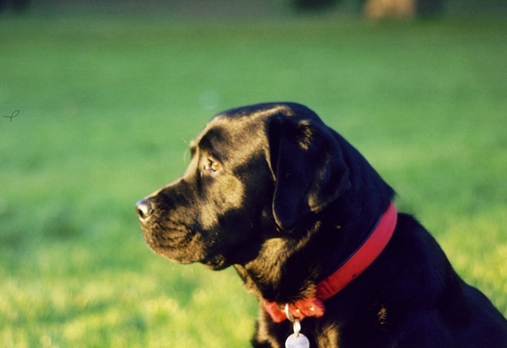
My Labrador Tom (2001 – 2012) came through Labrador Rescue, run by Mindy Randall. He was a magnificent animal, although his ‘hip scores’ meant the owner couldn’t bred from him and put him up to be rehoused. He was a big chap, some 38kgs when he arrived and full of energy. He needed to be taught who the ‘Pack Leader’ was and one thing I tried was imitating eating out of his food bowl. I would put his died food in the bowl, pop a few Carr’s Water Biscuits on top, lift the bowl and eat a cracker in front of him. He learned to wait, for his leader to eat first, but the waterfall of saliva that fell from his jowls was awful!!
Often, we wait for the perfect timing to take some action and there’s a great example when sailing. To tack a yacht, to move the bow through the direction of the wind, requires changing the headsail sheets (ropes!) from one side to the other; generally the large mainsail will move over by itself. Once your crew are ready the person on the helm shouts: ‘Ready About!’ and hopefully gets the response ‘ready’.
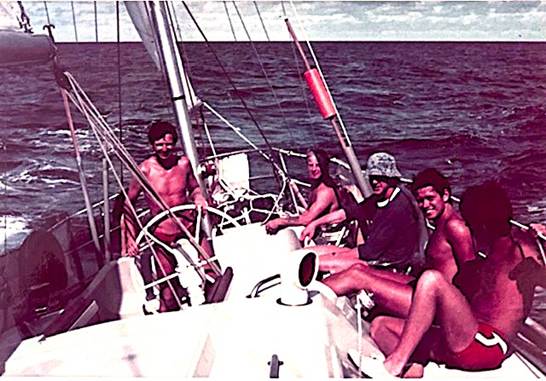
Somewhere in the middle of the North Atlantic
An experienced helms person will wait for the right moment, maybe catching the right wave or getting enough clearance to round a buoy, and then shouts ‘Helm’s a lee’ or more commonly ‘lee ho’, pushing the helm to the leeward, as opposed to windward, side of the yacht. The bow comes through the wind, the sails are pulled across and the sheets made good.
There’s a certain amount of waiting when it comes to parachuting and particularly in the sequence of events just before you leave the aircraft. In 1966, during an Easter break from Officer Training at the Royal Military Academy Sandhurst, I learned the basics of parachuting. After ground training in a hangar, we took to the air in a lumbering Dakota, or similar as I am no aeroplane buff, and eventually lined up by the open door as we approached the drop zone.
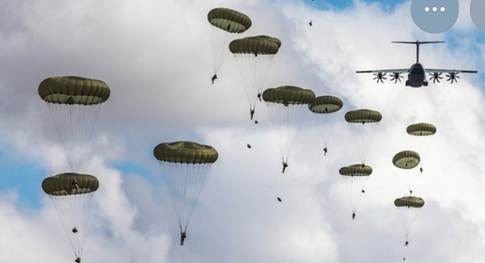
(This stock photo features a much more modern aeroplane!)
A red light cast an eerie glow on the faces of us horrified students as we waited for a green light. The light turned green, the instructor shouted: “Green On! Go!”, we knew what to expect and, without much hesitation, the whole stick followed one another out ……
At school I played a trumpet in the Brass Section of the orchestra; over a year we would perform concerts, support opera productions and play in local festivals.
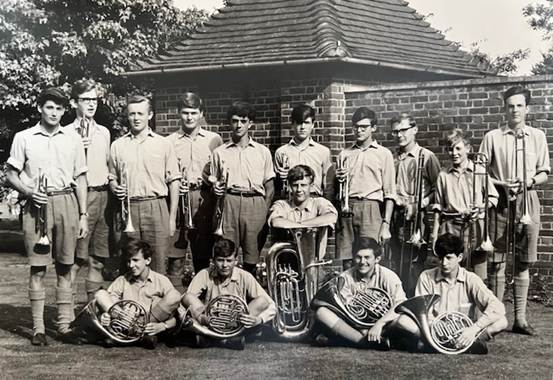
You learned to wait, waiting for the indication from the conductor to play a particular section. For example, we performed Sibelius’s second symphony in which, towards the finale, there’s a moment when, after a rising crescendo, the silence hangs, everyone is poised …… and then the wait’s over, and the trumpets sound.
The cry: ‘Wait! Wait!’ in any phase of love making could be interpreted as expectation or anticipation or frustration or even criticism, depends on the tone of the voice …. and a number of other things!
I love coincidences; here’s another. I have just finished the fifth novel of Mick Herron’s Slough House series, London Rules. The very last line is: “But mostly, Slough House waits.” A very apt end to these scribbles!
That …. and this!
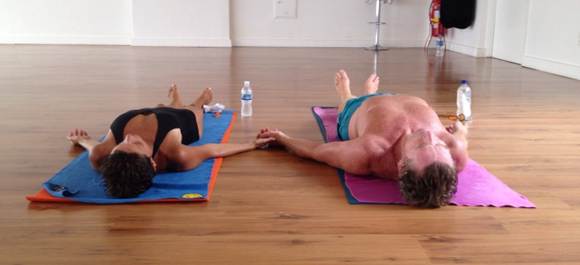
savasana
Richard 14th November 2025
Hove
http://www.postcardscribbles.co.uk
Note 1 The definition of Shape Shifting is the ability of an imaginary person or creature to change itself into a different shape or form. In the yoga field, this has come to mean ‘the original life changing transformational Yoga practice created by Mary Jarvis’.
Note 2 Not to be confused with Lola by The Kinks 1979 – “I asked her her name and in a dark brown voice said, Lola – L-O-L-A – Lola.” Could imagine someone singing Sheyla, S-H-E-yla, Sheyla or even Layla, L-A-Y-la (Eric Clapton)
 postcards