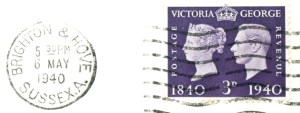
PC 467 Hope News Continues

“Sorry Richard! That took a long time. Coming back from the loo I got side-tracked by Josh who wanted to ask about my mother. I have read your postcards about your Australia – New Zealand trip (PCs 458, 459, 460, 462, 463 & 464) ….. you obviously had a good time, jetlag notwithstanding. Anything you haven’t mentioned?”

“Now you’ve reminded me, in Perth, walking back from Kings Park, we came across a couple of young chaps standing beside their car which had a flat front tyre. They looked rather pathetic, so I asked if they had a problem.”

“No! Thanks! My brother/cousin/flat mate’s coming to give us a hand.”

“But you’ve only got a flat tyre. Can’t you change it?”

“Never had to before; no idea how to! Here’s the jack, but where does that go?”

“So …..” and I get a look from Celina as I have a mild hernia and shouldn’t force anything, “…… the first thing to do is loosen the wheel nuts whilst the wheel is on the ground. Good garages will tighten them with a torque wrench; others use an impact wrench which can easily exceed the recommended torque (Note 1) and they are almost impossible to undo.”

At that point their brother/cousin/flat mate turned up, looking reasonably confident, so I left them to it but mentioning a torque wrench reminded me of my Army Service.

In 1968, 27 Medium Regiment moved from Devizes, Wiltshire to Lippstadt, Germany, swapping our towed 5.5̋ howitzers for the self-propelled M109. The latter had seven idler wheels between the track sprockets. Each wheel was attached by a number of large nuts, which we assumed had to be tightened to the maximum. After three months in Germany, the Aluminium idler wheels were showing signs of extreme wear and many had to be replaced. Eventually the problem was identified; the tightness of the nuts needed to be to a certain torque, and that could only be achieved by using a torque wrench, not by Gunner Elrick who believed they should be as tight as physically possible.”

“Live and learn huh! Although these days some newer cars don’t seem to have a spare tyre! By the way, have you ever watched ‘Celebrity Who Dares Wins’, one of those celebrity television programmes where you don’t know any of the contestants? I’m sure you have; anyway, I was fascinated to listen to some of the individual ‘back stories ’in the last series. There was a man whose family were very committed to their church. As a six-year-old he was horrified to be told by the pastor that he had demons that needed to be exorcised. As an adult he questioned how someone could be so cruel. Another contestant’s career was going well, until her sister died suddenly and she had to step in and look after her eight children.”

“Ready-made family!”

“Exactly, but can you imagine that, your own plans and ideas for your life suddenly and completely put on hold? Anyway, then there was a black ex-footballer who recalled not being able to find a UK club so signed for Lithuania, only to be the subject of racist chants from the stands: ‘Zigger zigger, kill the nigger!’ And finally there was a singer auditioning for the show X Factor, who got wasted one evening, was raped by the hotel porter, …… and became the victim when thrown off the show. Years later these experiences are life-defining. Talking of life defining, how are your daughter’s house renovation coming on?”

“Certainly life defining, but in a pleasant way. I drove up to see her and the state of the house during Half Term week. So often these days I need to break my journey for a pee-break.

“Isn’t there some theory that one of the factors in the cause of vehicle accidents is the full bladder of the driver?”

“I have heard, yes, that but not sure whether it’s based on any statistics. Not the sort of question you ask someone who’s just been involved in an accident: “Excuse me, do you need to go to the loo?”

“No! I guess not! Anyway, you were saying …..”

“I pulled into the layby on the Hogs Back, a prominent ridge running east west between Guildford and Farnham and know as the Hogs Back since the time of Jane Austen, knowing the little café had some loos.
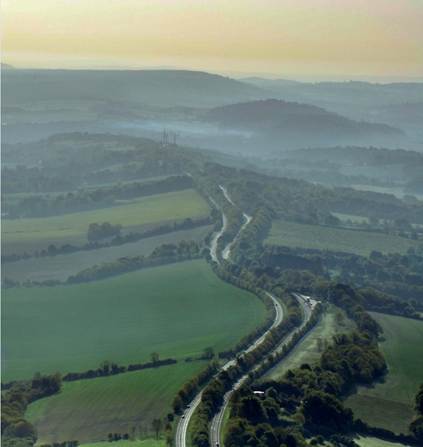
The lay-by and little café can be seen on the right of the dual carriageway

It was raining quite heavily and I scurried down the concrete path, following the signs to the loos, which were round the back. I get to the Men’s; it’s locked and you need a code, presumably from the café. My expectation was that the loo would be open and I am getting desperate – and wet! There is no alternative but to water the weeds growing between the cracks in the concrete.”

“I am sure that happens to a lot of men; we women don’t really have that option! Have you been watching the historian David Olusoga’s ‘Empire’ three-part series on the BBC?”

“I have, Mo, and I’m glad I have, as so often you get the ‘British Empire was bad’ bias whereas David’s tried to create balance and a modern reflection. I was fascinated by the explanation of the Indentured Labour Scheme, brought in to provide the sugar plantations with workers after the abolition of slavery in 1834.”

“It was a huge success for the plantation owners, but most workers came from the poorest parts of British India, and many were unaware of the long distance they would travel and indeed the terms of their contract. They were paid a paltry sum and had to stay for five years. The scheme was active for 80 years and its results can be seen today in the significant communities of Indian descent in South Africa, East Africa, the Caribbean and Mauritius.  Why were you fascinated by this?”

“David mentioned how Prime Minister Gladstone’s father had owned sugar plantations in Guyana and was one of the major instigators of the Indentured Labour Scheme. One of our yoga chums, Serena Wells, is from Guyana and she and her father are going to try and find out more about their family history, as ‘Wells’ was a common surname for slaves.”

“Now that will be interesting. Oh! Look, there’s Sami and Lisa …..”

Richard 28th November 2025

Hove

www.postcardscribbles.co.uk

PS Why have Christmas decorations suddenly appeared in mid-November? Now the radio stations are broadcasting carols! Humbug?!

Note 1 Wheel nuts should be torqued to between 80 and 160 Nm (Newton-meter)
PC 466 Hope News

Hadn’t been into The Hope Café since our return from New Zealand, although I had caught up with Sami in Gail’s one afternoon (See PC 461 ‘Bumped into Sami’ 17 October 2025). On Wednesday it was cold and raining so perfect for a coffee in convivial surroundings. I find Mo sitting at one of the tables, with a couple of books she’d obviously bought from Duncan’s bookshop next door.

“Oh! Hi! Richard. Come and join me and tell me what you’ve been up to.”

I ignored the question! “New books? What have you bought Mo?”

“’The CEO; The Rise and Fall of Britain’s Captains of Industry’ and Saul David’s latest book, Tunisgrad, about the battle for Tunis and subsequent victory in May 1943 in Africa during the Second World War. As you know I love history and this looks fascinating.

“Not sure about the CEO book but, if you find it good, let me know. I read Saul David’s book ‘Victoria’s Wars’ and then met him.”

“Not name dropping?”

“No! No! No! In 2007 I went on a tour of the ‘Sites of the Indian Mutiny’ (Note 1) and he was our historical guide, giving colour and meaning to what we saw and heard. Afterwards I bought his book ‘Victoria’s Wars’ which explained just how the Empire expanded in the queen’s reign, thanks to adventurers and successful military opportunists. At its height the empire covered about 24% of the earth’s land mass and some 450 million people. Anyway, I thought you would have bought the latest local author Peter James’ book – it’s about the Royal Family, isn’t it?

“No idea – used to love his books but like anyone continuing a series, they become a little samey and he’s got it into his head that he has to include little ‘bon mots’ or modern sayings to give his writing more gravitas!! Of course, at this time of the year all my regular writers like John Grisham and Lee Child bring out their annual offering. Now, how are you?”

“Well, a regular blood and stool test worried my GP and she thought I should have a colonoscopy.”

“Why?”

“William my late nephew died aged 18 in 2002 of Bowel Cancer, so this was not the first time I have had to suffer the indignity of someone I had never met inserting firstly their finger then a tube up my arse. But if one’s GP suggests it, you should have one; just in case. You’ve probably never had one of these procedures; in preparation for it you have to clear your intestines, and this is achieved by drinking two litres of something called Moviprep. It’s a chemical concoction designed to flush out one’s colon; the ingredients, Sodium Sulphate, Sodium Chloride, Potassium, Ascorbic acid and something called Macrogol, which probably doesn’t appear on the periodic table, are enough to frighten anyone.

One of the often-quoted reasons for Britain leaving the European Union was the desire take control of our borders. Not only have the number of ‘small boats’ crossing the English Channel with illegal immigrants increased but our Health Service now seems to rely on individuals born overseas. My snapshot of the Endoscopy Department in The Royal Sussex County Hospital bears this out. There were two Endoscopists, Mrs Jane Machinjike, from Zimbabwe, and Dr Nabeel Akhtar and two nurses, Mr Ashik from Kerala in Southern India and Ms Shrishti Maharjan from The Philippines. Worse still there’s not only an audience, in this case two nurses and two endoscopists, but the only programme on the two screens was of someone’s insides – odd when you realise it’s one’s own. What else’s happening Mo?”

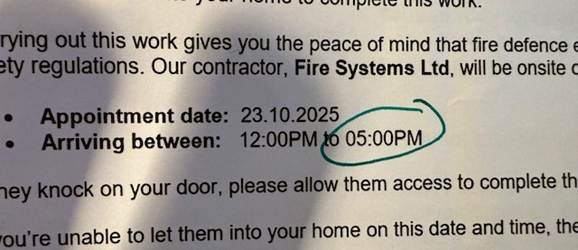
“My mother’s residential home in Shoreham recently had a Fire Equipment Inspection and the company carrying it out wrote to tell her when they would be ‘on site’. I read the important piece, when and at what time …..

 ….. and thought we’ve got our knickers in a twist! It’s either 1700 or 5:00 pm. I was nerdy enough to drop them an email and ‘William’ said he would look into it and thanked me! The same happened when I booked a haircut – the App said ‘03:00pm’ – and clearly it should be either 1500 or 3:00pm, or even 3 o’clock! This is a little like a rash. I had a hire car the other day; when I collected it the time on the dashboard said 0920. Later the same day, in the afternoon, the clock said 0335. What’s going on?    

“What indeed Mo! You know we went to London to have a pre-birthday lunch with chums last month?”

“Where did you go?”

“Colbert in Sloane Square; used to be Oriels and has a simple menu. And it’s easy to get to – into Victoria railway station and then one stop on the District or Circle Underground lines.”

“Ah! Yes! I’ve also been there. How was your journey?”

“Actually, our direct Southern train from Hove was delayed by engineering works which meant a diversion. As we arrived in Victoria the driver announced we were 23 minutes late and we could claim some refund?”

“Really? That’s remarkable. And did you?

“I did. Southern will give you 25% of a single journey fare if the delay is between 15 minutes and 29 minutes and 50% refund if it’s between 30 and 59 minutes. Not sure what happens if it’s over that!! I went online, filled out the details including our ticket number, and got a refund of £4.10 per ticket.”

“You’re well brought up Richard so I suspect you would have been as horrified as I was. Watched the reality TV programme Celebrity Traitors; at some point the contestants were filmed eating. Like pigs at the trough; knives as weapons, stuck in the air, to balance the fork sticking in the air, holding them like some dagger, or even like drum sticks, talking with their mouth open …. I was surprised someone wasn’t using their fingers. Horrified and disgusted in equal measure, like watching cavemen.”

“As a Gunner Captain, I was being run to be ADC to the C-in-C BAOR, General Harry Tuzo and had to have the ‘Knife & Fork’ test, that is have lunch with him and his wife, Lady Tuzo. I passed!”

          “Hey, I need to have a pee; back in five.”

Richard 21st November 2025

Hove

http://www.postcardscribbles.co.uk

Note 1 The Indian Mutiny took place in 1857; it resulted in much bloodshed on both sides and changed the way India was governed.

PC 465 Wait …….

‘Wait ….. pause ….. expect ….’

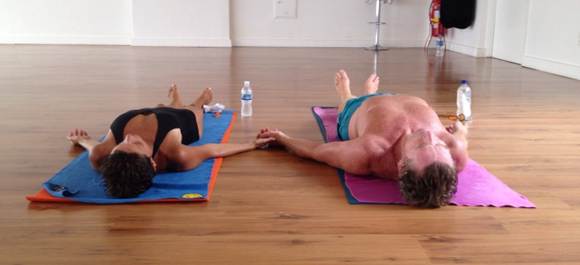
In October our yoga studio was host to a Teacher Training Course for Yoga Shape Shifting (Note 1), run by Mary Jarvis from The United States. During the fortnight our normal 10 o’clock class was occasionally taught by one of the team doing the training. It’s good to have someone other than your regular teachers, as you pick up their personal preferences, individual take on certain postures; some you think: ‘that’s good’. One such woman, Sheila (pronounced Sheyla) (Note 2) from Florida, was an extremely empathetic teacher, imparting her knowledge and passion in equal measure. At some point, when we were in savasana, she asked us to wait ….. wait in the moment ….. and not start thinking about what’s coming next.

For instance: “Now for the first sit-up. Feet together, arms over your head …….

We should start with the dictionary definition:

Wait: verb; Abstain from action or departure till some expected event occurs; pause, tarry (Ed: linger); expectant or on watch. Await, bide; act as attendant on person; wait upon, pay respects; defer (a meal for instance) until someone arrives. As a noun; lie in wait ie ambush or waits, street singers particularly of Christmas Carols.

There is an implied expectation that something will happen, is just about to happen, when you wait! The author Charles Dickens even suggested that when writing a novel which would be published as a series, you should “Make ‘em laugh, make ‘em cry, make ‘em wait.”; the suspense inherent in the next episode.  

Not sure about you but so often a phrase or quotation, or even misquotation (!), pops up into my consciousness. When I thought I could write something about ‘wait’ …… up came “‘Tarry a while’ said Slow”. From where? Well, it’s one of those nursery rhymes whose full verse goes:

“To bed! To bed!” says Sleepy-head.

“Tarry a while,” said Slow.

“Put on the pan”, says greedy Nan;

“We’ll sup before we go.”

When you hear it narrated for the first time, it’s as if ‘Slow’ is a person and sometimes it’s written ‘says Slow’ which makes it all the more confusing! Actually the word ‘slow’ refers to how the words ‘tarry a while’ should be spoken, ie in a gentle, soothing, slow tone!

‘Wait’ features in some proverbs, the most well-known perhaps, ‘Time and tide wait for no man’, something as a sailor I recognise. Then there’s the French proverb ‘All things come to those who wait’ – suggesting that patience and persistence can lead to achieving your goals or finding success. But ‘We’ll wait and see’ sounds a little like prevarication, sitting on the fence?

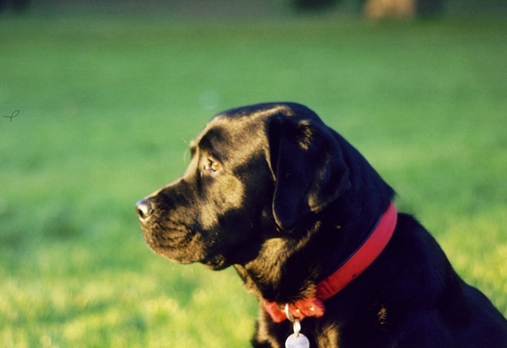
My Labrador Tom (2001 – 2012) came through Labrador Rescue, run by Mindy Randall. He was a magnificent animal, although his ‘hip scores’ meant the owner couldn’t bred from him and put him up to be rehoused. He was a big chap, some 38kgs when he arrived and full of energy. He needed to be taught who the ‘Pack Leader’ was and one thing I tried was imitating eating out of his food bowl. I would put his died food in the bowl, pop a few Carr’s Water Biscuits on top, lift the bowl and eat a cracker in front of him. He learned to wait, for his leader to eat first, but the waterfall of saliva that fell from his jowls was awful!!  

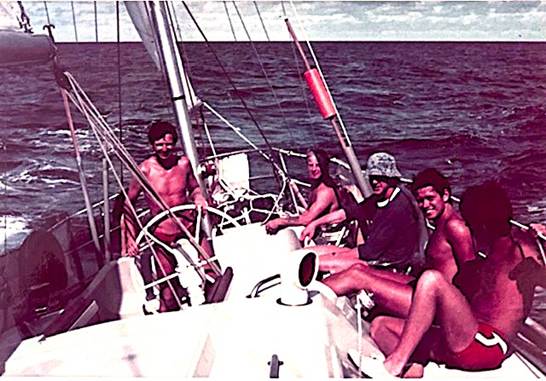
Often, we wait for the perfect timing to take some action and there’s a great example when sailing. To tack a yacht, to move the bow through the direction of the wind, requires changing the headsail sheets (ropes!) from one side to the other; generally the large mainsail will move over by itself. Once your crew are ready the person on the helm shouts: ‘Ready About!’ and hopefully gets the response ‘ready’.

Somewhere in the middle of the North Atlantic

An experienced helms person will wait for the right moment, maybe catching the right wave or getting enough clearance to round a buoy, and then shouts ‘Helm’s a lee’ or more commonly ‘lee ho’, pushing the helm to the leeward, as opposed to windward, side of the yacht. The bow comes through the wind, the sails are pulled across and the sheets made good.

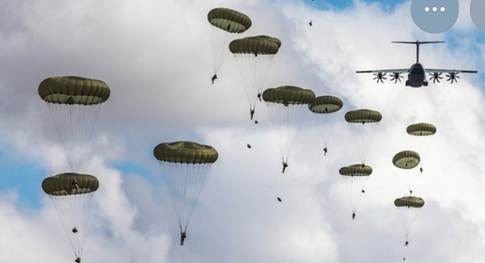
There’s a certain amount of waiting when it comes to parachuting and particularly in the sequence of events just before you leave the aircraft. In 1966, during an Easter break from Officer Training at the Royal Military Academy Sandhurst, I learned the basics of parachuting. After ground training in a hangar, we took to the air in a lumbering Dakota, or similar as I am no aeroplane buff, and eventually lined up by the open door as we approached the drop zone.

(This stock photo features a much more modern aeroplane!)

A red light cast an eerie glow on the faces of us horrified students as we waited for a green light. The light turned green, the instructor shouted: “Green On! Go!”, we knew what to expect and, without much hesitation, the whole stick followed one another out ……

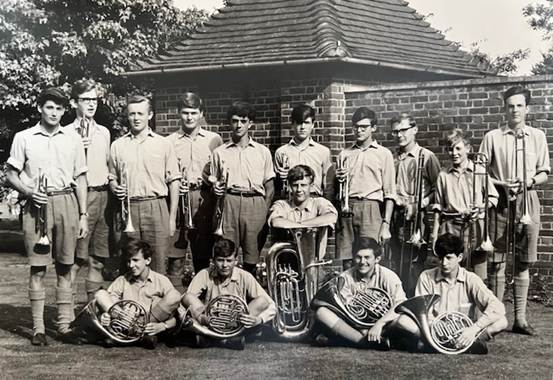
At school I played a trumpet in the Brass Section of the orchestra; over a year we would perform concerts, support opera productions and play in local festivals.

You learned to wait, waiting for the indication from the conductor to play a particular section. For example, we performed Sibelius’s second symphony in which, towards the finale, there’s a moment when, after a rising crescendo, the silence hangs, everyone is poised …… and then the wait’s over, and the trumpets sound.

The cry: ‘Wait! Wait!’ in any phase of love making could be interpreted as expectation or anticipation or frustration or even criticism, depends on the tone of the voice …. and a number of other things!

I love coincidences; here’s another. I have just finished the fifth novel of Mick Herron’s Slough House series, London Rules. The very last line is: “But mostly, Slough House waits.” A very apt end to these scribbles!

That …. and this!

savasana

Richard 14th November 2025

Hove

http://www.postcardscribbles.co.uk

Note 1 The definition of Shape Shifting is the ability of an imaginary person or creature to change itself into a different shape or form. In the yoga field, this has come to mean ‘the original life changing transformational Yoga practice created by Mary Jarvis’.

Note 2 Not to be confused with Lola by The Kinks 1979 – “I asked her her name and in a dark brown voice said, Lola – L-O-L-A – Lola.” Could imagine someone singing Sheyla, S-H-E-yla, Sheyla or even Layla, L-A-Y-la (Eric Clapton)

PC 464 On to South Island

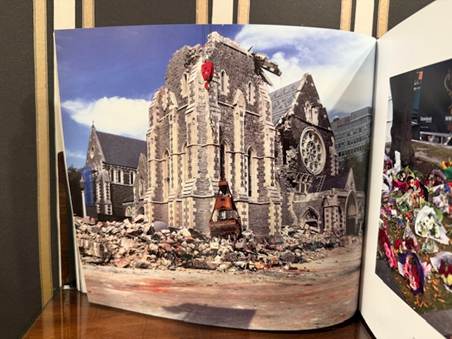
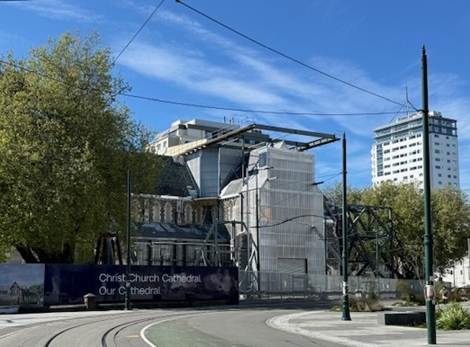
Fourteen years on from Christchurch’s 2011 earthquake, there are many buildings still not rebuilt. The city’s cathedral is one and, rather than leave it a ruin like Coventry’s in the UK after the Second World War, it’s half rebuilt and the money’s run out.

This was taken from a book about the earthquake

And as it is now ….

Of course, today other parts of New Zealand need State Funding, and they argue Christchurch’s had enough!

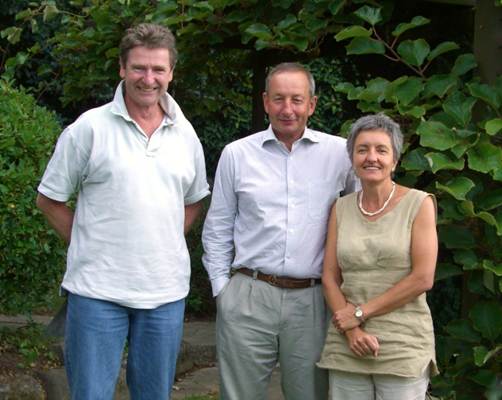
Third-cousin Debs Nation used to work for Radio New Zealand and lives in Lyttelton, over the hill from the city. Her brother Gerald also lives in Christchurch; this photograph from some years ago!

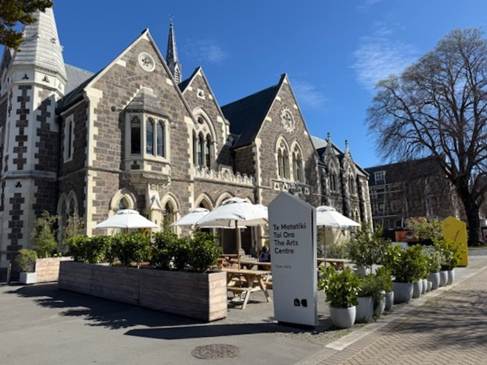
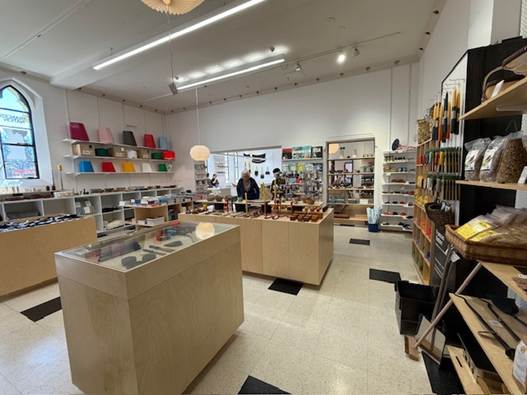
Her son Henry and daughter-in-law Lou work for the civil service in the New Zealand capital Wellington, at the bottom of North Island. Her daughter Tessa runs an emporium of New Zealand-made products situated in The Arts Centre in Christchurch.

She’s called the store Frances Nation after her maternal grandmother.

It’s a huge success and one of those places where it’s impossible, once you’ve entered, not to purchase something!

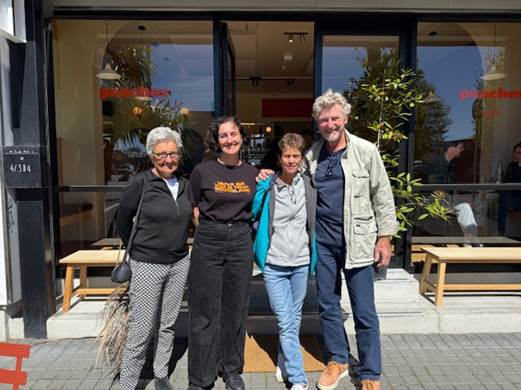
More recently she and her wife Emma have opened ‘Peaches’, a café in Linewood Village. Given that her grandmother’s maiden name was Hope I had suggested she call it The Hope Café, then the one here could claim to be international, but it was not to be. Her father’s surname is Peach so …..

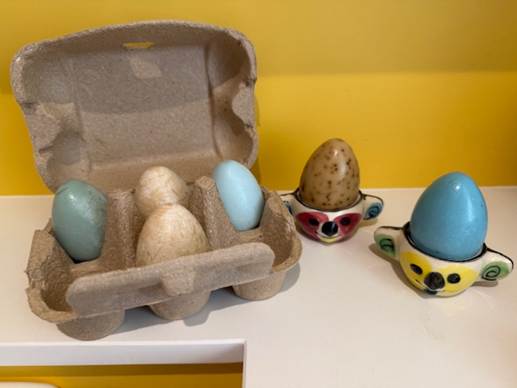
I sense that white New Zealand is attached to the United Kingdom by an invisible umbilical cord. The receptionist in The George Hotel in Christchurch was from Manchester and Mark, on the concierge’s staff, has a sister who holds a senior position in the NHS on north London. A woman who ran a gift shop where I bought some soap eggs ……

has a sister in England.

We were lucky enough to have some beautiful spring weather in Christchurch

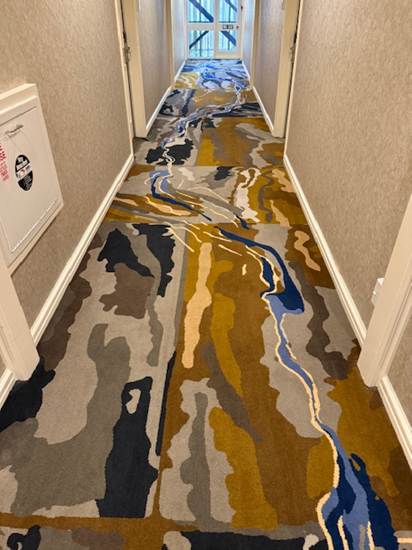
and the city has a great atmosphere. The George Hotel where we stayed was a good choice, not something I could say about the carpet in the corridor outside our room. You would not want to be confronted by this on your return from a boozy night out!

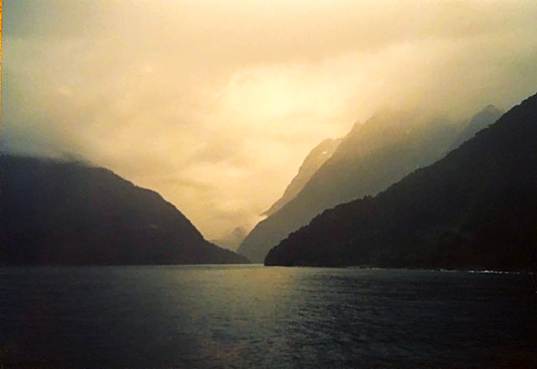
South Island is rich with stunning scenery; for instance the beautiful Milford Sound in its Fiordland in the southwest,

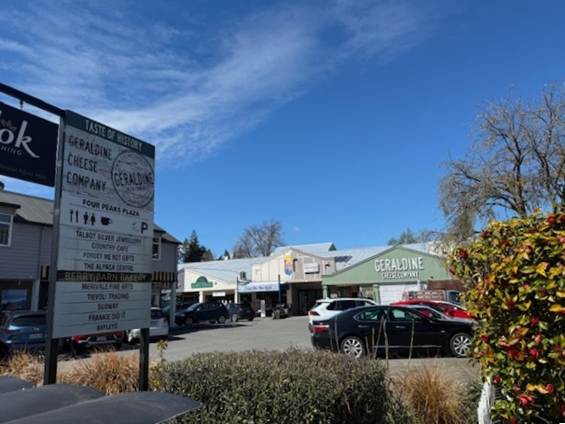
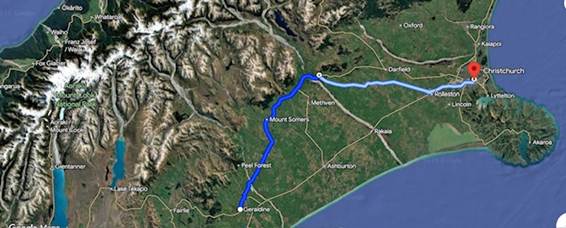
…. but I wanted to revisit one particular view, the one as you come up out of Burke’s Pass on the way to Lake Tekapo. We took the direct route from Christchurch to Geraldine, a classic NZ farming town, and stopped for lunch.

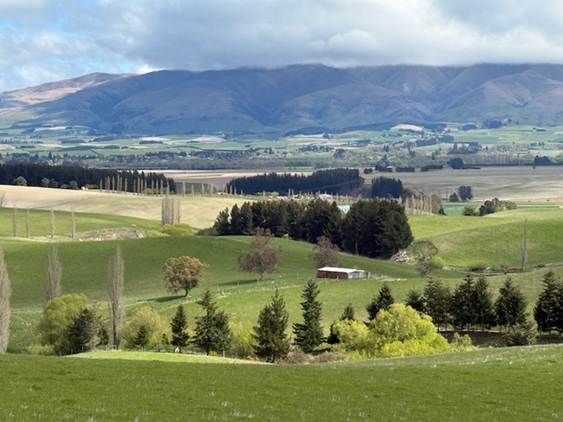
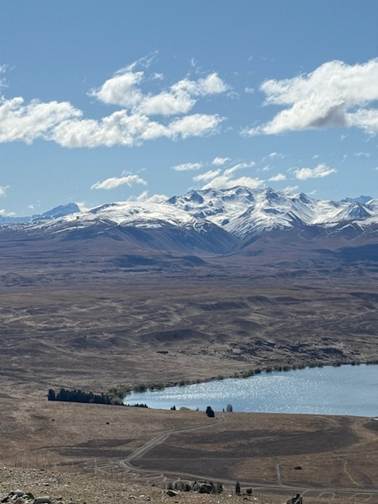
Twenty minutes out of the town we pulled into one of those designated ‘Scenic Viewpoints’, the Geraldine Fairlie Lookout, and gazed over a classic New Zealand rural landscape.

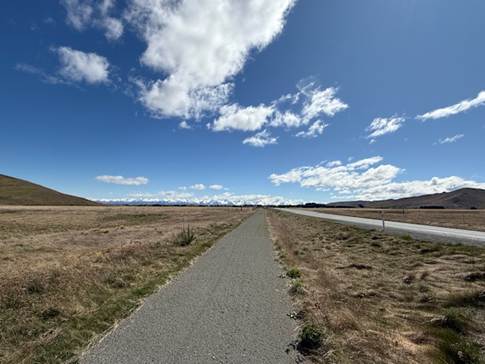
Up through Burke’s Pass …… and you have to stop ….. and take this view in.

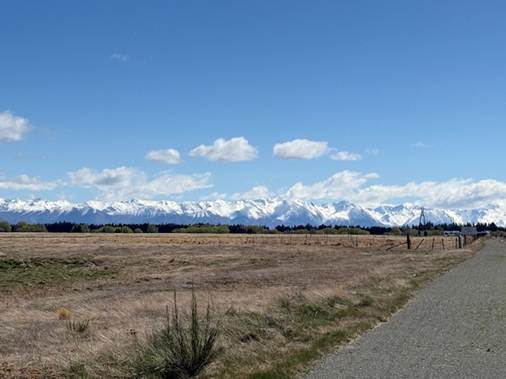
A very flat expanse of countryside and then, on the horizon, the Southern Alps. It reminded me of a trip many decades ago, driving down to Rome from Germany. Passed Strasbourg, passed Colmar and suddenly, before you get to Basel, you see the European Alps filling the horizon.

New Zealand’s Southern Alps

Breathtaking in every sense; I could have stayed a long time, just sitting, just looking, in silence, in awe. 100% Pure New Zealand!

We had booked a night in the Grand Suites Lake Tekapo, essentially accommodation only but to a high standard. Dave the South African manager says it’s very popular in the summer as a base for trekking, mountain biking, exploring.

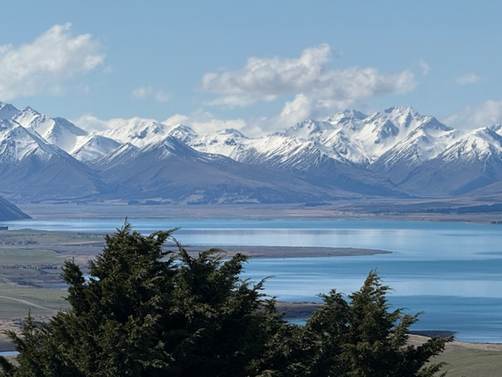
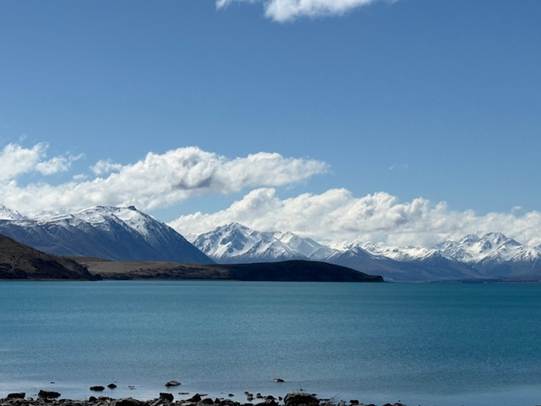
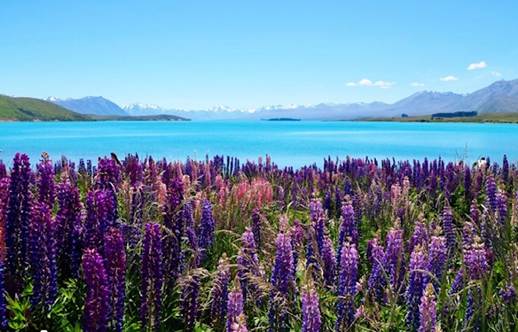
Lake Tekapo is known for the remarkable blue colour of its water, caused by rock flour, finely ground particles of rock brought down by the glaciers at the head of the lake and held in suspension in the melt water.

Then above the lake, because of the purity of the atmosphere, the University of Canterbury has an observatory on Mount John to the west of the town, from where there are glorious views of the lake and to the west, of New Zealand’s highest mountain, Mount Cook (3755m); not to mention the stars in the night sky.

Mount Cook

Lake Tekapo fills what’s known as the Mackenzie Basin

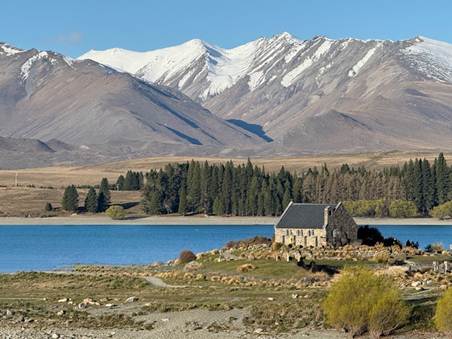
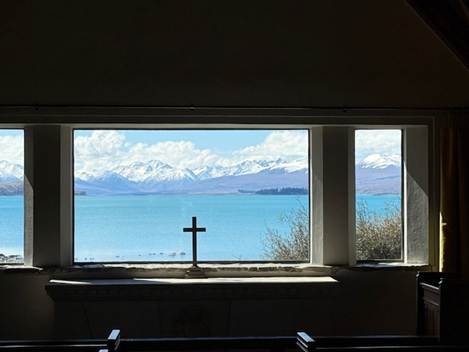
The Church of the Good Shepherd is one of the most photographed buildings in the whole of New Zealand. Built in 1935, the architect Richard Harman based his design on sketches done by a local artist, Esther Hope. And here’s a family connection: Esther neé Barker married Deb Nation’s grandfather’s brother Tom Hope. Today a manager runs the agricultural and Merino sheep side of the Grampian Hope Farm leaving the family to concentrate on the artistic activities.

It’s difficult to get a photograph of the church without capturing some of the 600,000 tourists who now visit annually. (Note 1)

A donation into a wooden box inside the church and chatting up the volunteer who was there to ensure no one takes photographs inside, and there’s no wonder why people want to come and see this, heaven and earth and all between.

I sense we met a large proportion of the tourists, either in the supermarket buying supplies for their self-catering accommodation or where we had supper, as pork seemed to be everyone’s choice! They come because they want to experience what they’ve seen in photographs; I suspect they don’t want to see too many other people. There needs to be a balance between the wish of individuals to go and see places and the need to restrict numbers to preserve the very reason people go!

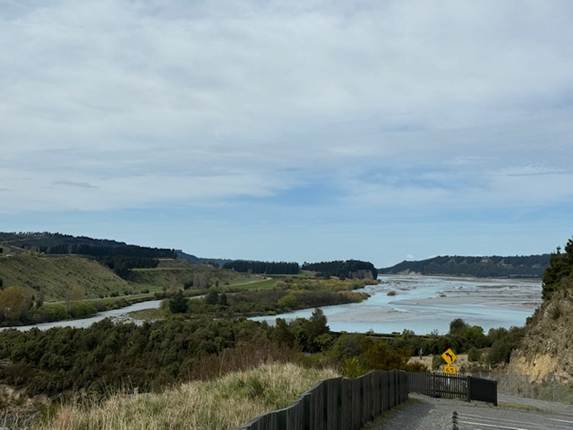
We drove back to Christchurch via the scenic route

which took us over the Rakaia gorge and river just north of Methven.

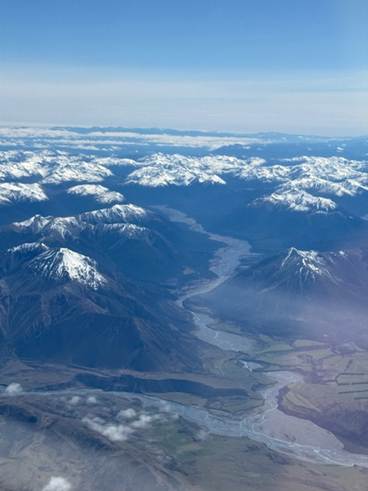
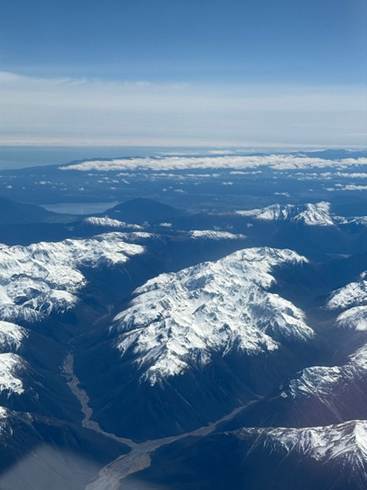
Back in The George in Christchurch for one night before our return via Singapore home. We were blessed with clear flying conditions as we flew over the Southern Alps

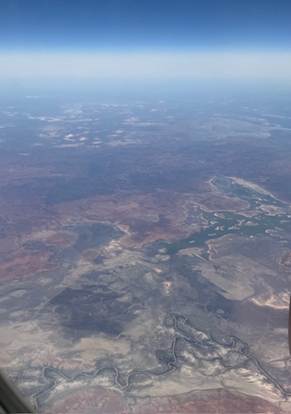
And later over the central section of Australia, which looks like another planet!

Richard 7th November 2025

Hove

www.postcardscribbles.co.uk

PS We were lucky with the weather at Lake Tekapo. A week ago this was how the road from Geraldine looked!

Note 1 Thanks to the ‘clean’ option on my iPhone I can erase the tourists!