
Estoril? Where’s that? Well, it’s west of Lisbon, just before you get to the Atlantic coast of Portugal.
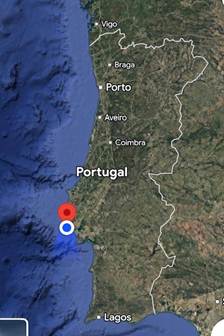
According to Wikipedia, “Estoril is ‘a town in the civil parish of ‘Cascais e Estoril’, of the Portuguese Municipality of Cascais, on the Portuguese Riviera. It is a popular tourist destination with hotels, beaches and the Casino Estoril.
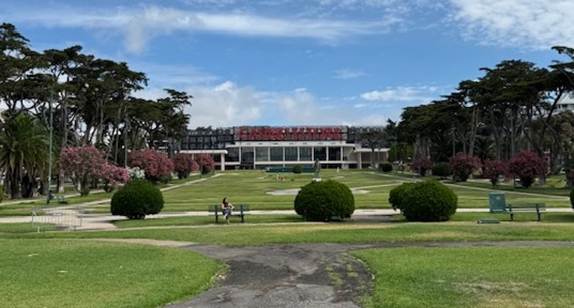
Estoril’s Casino
It has been home to numerous royal families and celebrities. It’s one of the most expensive places to live in Portugal and the Iberian Peninsula; it is home to a sizeable foreign community.” (Note 1)
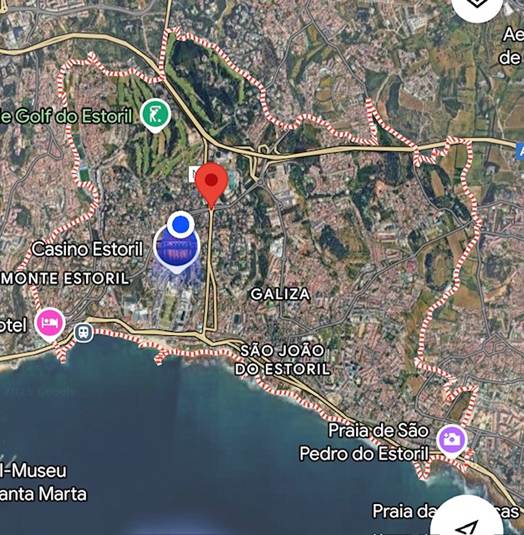
Estoril, enclosed by the candy-striped line
Why Estoril? I’ll explain. My connections with Brazil, itself a former Portuguese colony, go back to 1851; my great grandfather Richard Sydney Corbett was born in Recife, on its northeast coast (See PC 34 Recife Brazil February 2015). More recently, I got to know Celina in the Balham Hot Yoga studio in 2011 and made my first visit to Rio de Janeiro in April 2012. When her brother Carlos decided to uproot his family and move to Portugal in 2016, he chose to live in Estoril. Their cousin Toni did the same and their mother spends six months of the year here; Celina and I have made the most of having a home-from-home here in Portugal! I have mentioned Estoril and neighbouring Cascais before in some of my postcards.
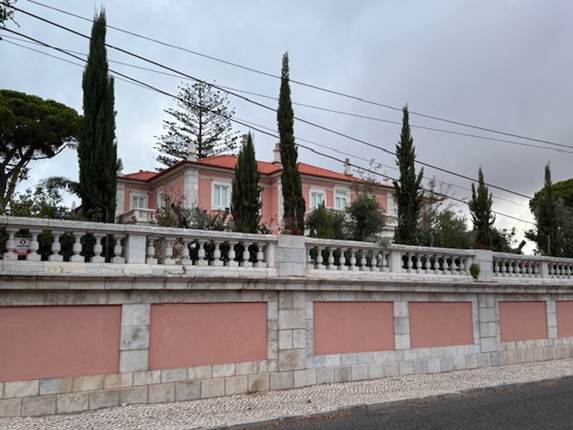
With no convenient Hot Yoga studio, we get our daily exercise by a long before-breakfast walk to Cascais and back, the five-mile circuit including some of Estoril’s most expensive real estate. For instance, up on Rua Bélgica there’s a monster of a house, its street frontage running for some 100m:
……. from the air you can see it’s rectangular in shape. Rumour has it its worth upwards of €10 million
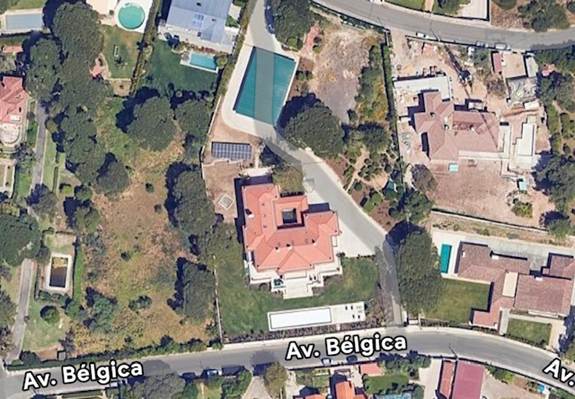
In this particular area of Estoril, high up on a hill overlooking the sea, the streets reflect the country’s imperial past; names such as Rua Angola, Rua Timor, Rua Cabo Verde and Rua Brasil. Towards the southern end of Rua Inglaterra (Note 2), last year there was a house that needed some TLC. You can see it on this screenshot from Google Maps.
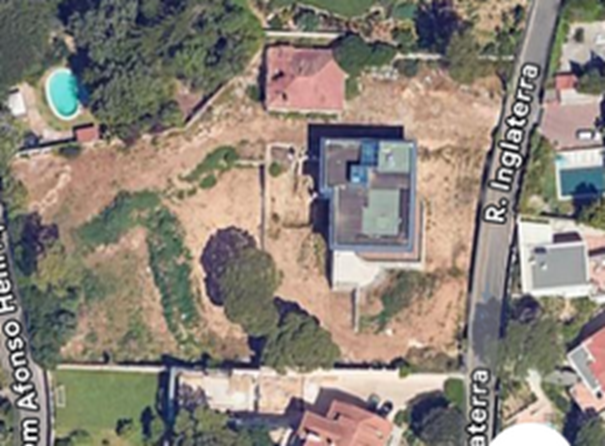
This year the house is gone and is being replaced by four structures that look more like warehouses than dwellings, with concrete rooves. You get one view from Rua Inglaterra:
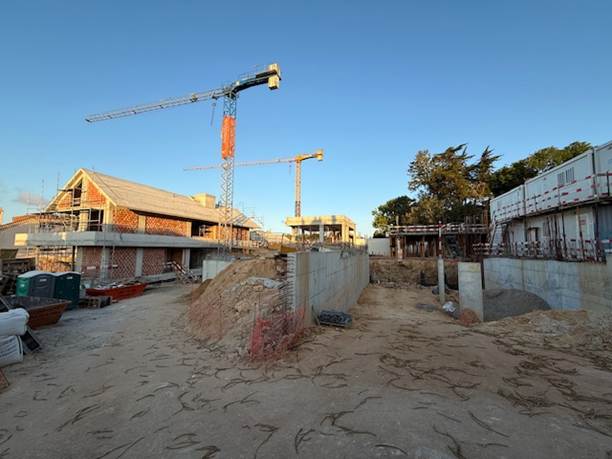
And another from Rua Dom Afonso Henriques
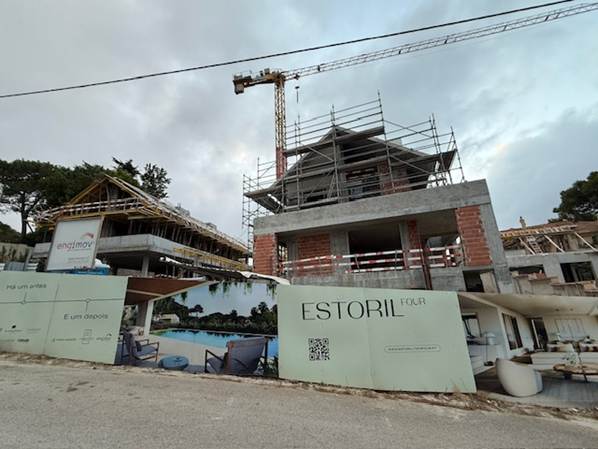
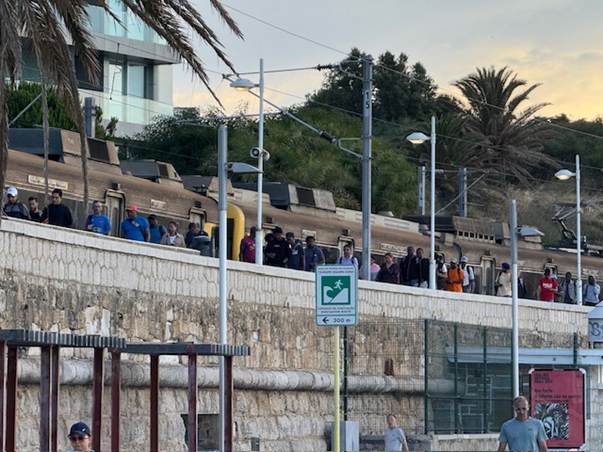
The men working on these building projects are generally from Portugal’s African ex-colonies and most arrive around 7 o’clock at Monte Estoril station on the train from some cheaper dormitory village near Lisbon. Other arrivals disappear into the staff entrances of the many hotels here in Estoril.
Connecting Rua India and Rua Ingleterra is Rua Mouzinho de Albuquerque.
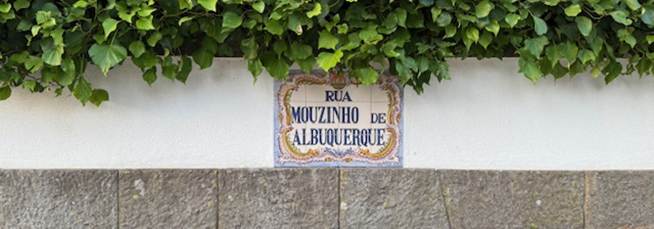
I wondered who he was …… and found out! A general, Joaquim Augusto Mouzinho de Albuquerque (1855 – 1902) was Governor of Mozambique. Portuguese society saw him as the hope and symbol of Portuguese reaction to threats against its interests in Africa from European empires. For example, in 1890, The British required Portugal to give up all the land between its African colony of Angola in the west and Mozambique in the east and gave it an ultimatum. Portugal was no match for the British Empire and acquiesced; the land became the British colonies of Malawi and Rhodesia. (See PC 353 ‘…. Of Cabbages and Kings’ September 2023)
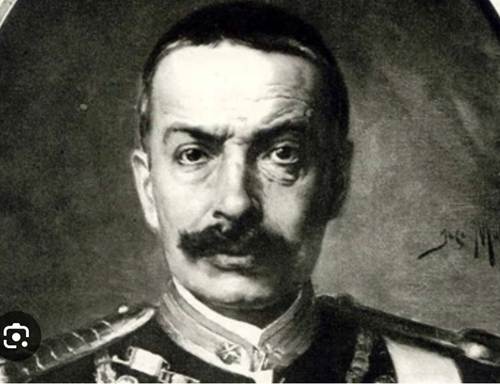
Following a common Portuguese tradition, he married his cousin, but they didn’t have children (Note 3). He allegedly committed suicide at the entrance to the Jardim das Laranjeiras in Lisbon on 8th January 1902 aged 46.
Walking through the streets I am pleased to see wonderful examples of craftsmanship evident in the stone walls that surround some of the mansions. I first noticed it in Iposeira in Rio de Janeiro:
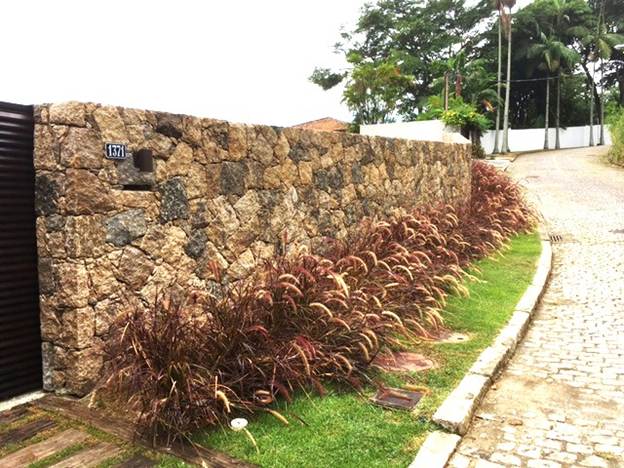
Then saw a couple of examples here in Estoril. Here’s the best:
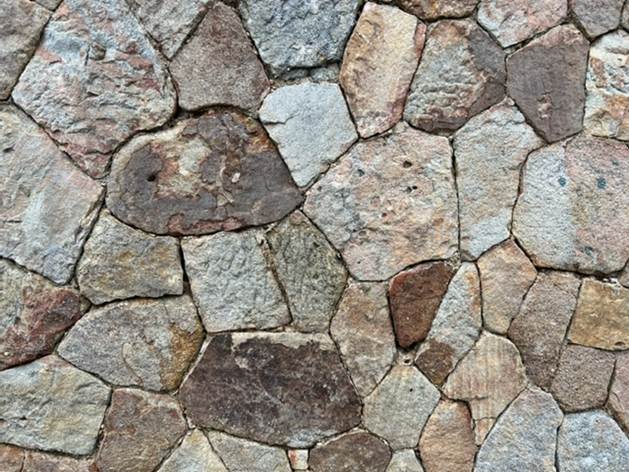
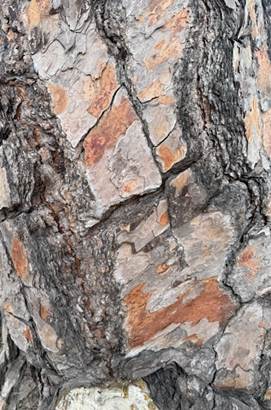
Although maybe the builders are simply trying to copy nature?
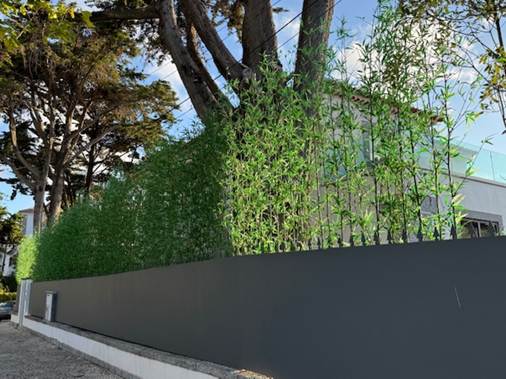
Of course doing things the traditional way is generally very expensive, the cost of labour the critical factor. But it’s very sad when, in this particular area of expensive houses, there’s a great example of naffness. The owner, who could probably afford the real thing, substitutes some hedge greenery with plastic … yes, real green plastic! Apparently they are Chinese.
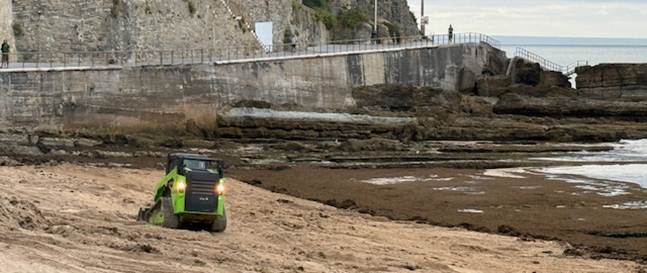
Historically the water off some of Estoril’s beaches had high levels of iodine where older people bathed to heal joint pains and bone diseases; the seaweed grew on the rocky sea ledges. Currently there’s an invasion of foreign kelp and the council make huge daily efforts to remove it from the sand.
I am aware I see things that don’t register with others! One of our fellow passengers on Ms Roko in Croatia last year (See PCs 390, 391 & 393) commented:
“Were we on the same boat, did we go on the same tours, did we have meals together? All I do on holiday is relax and enjoy the sun. You seem to do that and observe life going on around you, listen to life going on around you, enough to write three fascinating ‘Tales of Croatia’ PCs.”
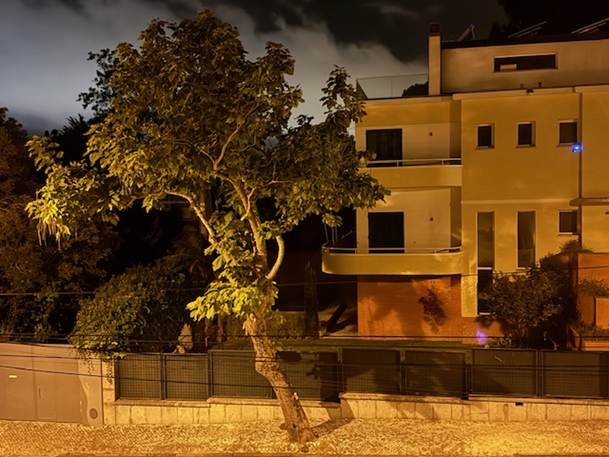
For instance, the daytime view across Avenide General Carmona is of another house; no surprises there!
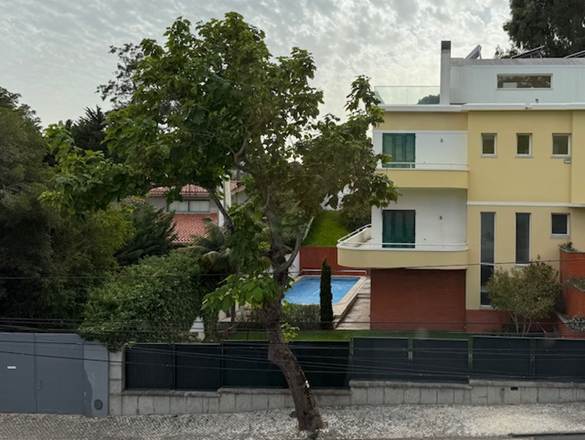
The nighttime view, taken at 0215, is very different; worthy of note?
And if you own a large mansion and only occupy it occasionally …..
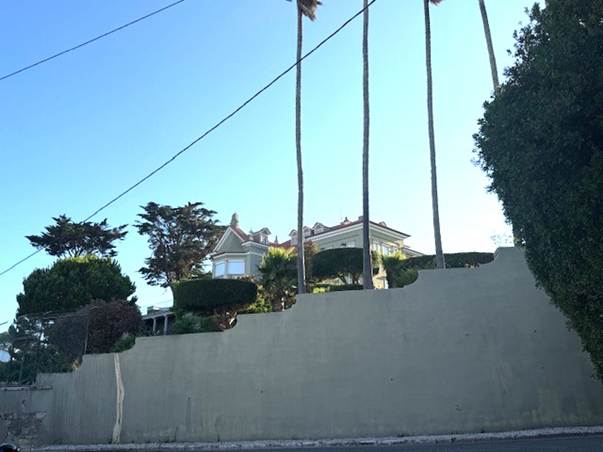
you need some guard dogs to roam freely, although these two aren’t very alert!

Maybe I should finish these musings about Estoril with the refrain from ‘Nights in Estoril’ by Christine McVie (Jul 1943 – Nov 2022), of Fleetwood Mac. It featured in their album ‘Time’.
“I remember the nights in Estoril
A kiss and, oh, the never ending thrill
And I remember the coming storm
Oh, and you my love, how you kept me warm.”
Richard 29th August 2025
Estoril Portugal
Note 1 There is a large contingent of Brazilians here, drawn by the common language.
Note 2 Maybe a nod to our 600-year-old alliance.
Note 3 Statistically 25% of children born from a marriage of first cousins have some defect, mainly mental.



 postcards