
Whilst I love the mug of Illy coffee I make in the morning with our Gaggia Espresso, I also love the interaction and social scene of The Hope Café; long may it last. And obviously I hope the additional draw of its co-location with a real book shop and reading room will increase the footfall for both enterprises.
The other morning I bumped into our neighbour Olga, on her way back to her apartment with her morning coffee in its disposable cup. She’s Ukrainian, a lawyer in the Worthing firm Mortimer Clarke and works from home some days. She loves the coffee from Gails, an expensive coffee shop and bakery founded in 2005 by Gail Mejia and Tom Molnar; there’s an outlet at the top of our road. (Note 1) We know it’s expensive as we buy our San Francisco sourdough bread there – £4.50 a loaf! Olga’s coffee is over £4 and I teased her that she could buy a small coffee machine like ours for under £200, equivalent to only 50 cups from Gails – probably paying for itself in less than six months.
However, we all have our peculiarities when it comes to ‘having a coffee’. Some of us make it in the comfort of our own home, wearing whatever takes our fancy; others, like Olga, prefer to go and grab a ‘take-away’ (Note 2), interacting with the barista and maybe others in the inevitable queue, while welcoming places like The Hope Café entice one to sit, and chat, and read, and savour the closeness of others. ‘Time to stand (sit!) and stare’.
If you want to know more about coffee, buy James Hoffmann’s The World Atlas of Coffee. You’ll find answers to questions like ‘Is it worth grinding your own beans?’, ‘Is coffee good/bad for you?’ and ‘What’s the difference between Arabica and Robusta beans?’. (Published in October 2025)
I went to the Hope Café in the morning towards the end of last week. Usually we have our 90-minute hot yoga class at 1000, but I had to let a new scar heal; ‘No yoga for two weeks!’ The scar on my left scapula was the visible sign of the removal of a Squamous cell carcinoma.
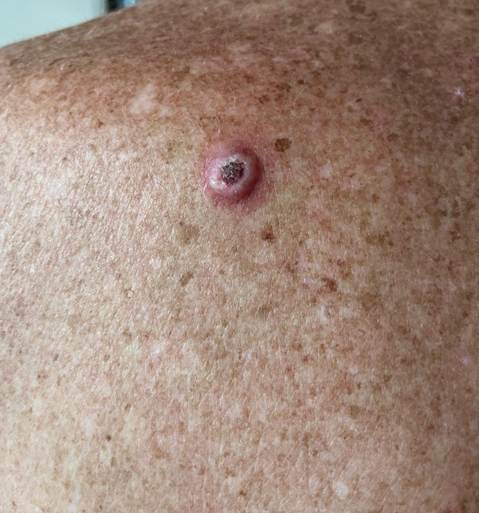
Squamous cells make up the middle and outer layers of the skin. Squamous cell carcinoma is a common type of skin cancer, not life-threatening but better removed than left to grow.
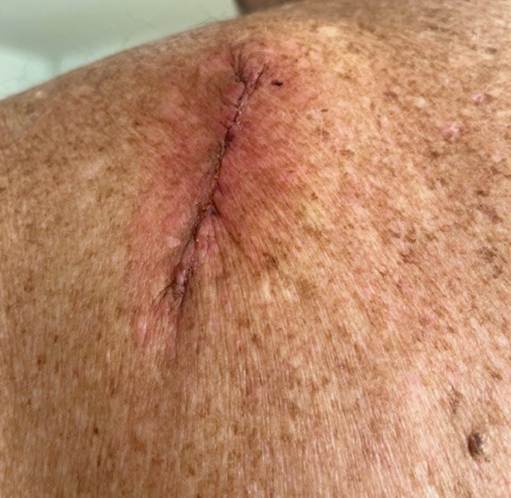
I had had a ‘melanoma in-situ mole’ removed 18 months ago, so am aware of the harm a life of sun-worshiping has had on my skin. As a teenager no one knew or cared about skin cancer, caused by too much sun. Now we know and care and can alter our habits accordingly. So, if in doubt about a spot on your skin, get it checked out as soon as possible.
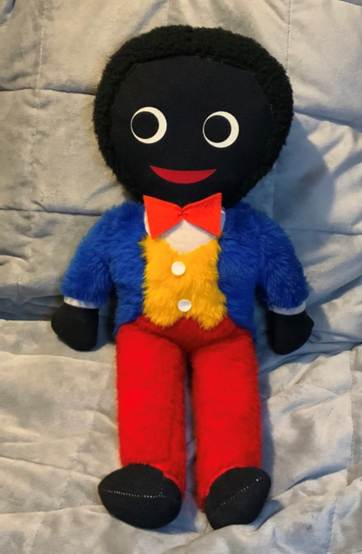
My middle grandson, Reuben, had his 12th birthday last week and we sent a rendition of ‘Happy Birthday’ by WhatsApp to his mother, as we imagined he’s too young to have a mobile. Actually we found out that he has had one since the beginning of the year, mainly for parental needs; sensibly there’s a strict list of what he can/can’t access. His birthday reminded me that, at my first boarding school, one’s birthday was marked by a little knitted figure, rather like Golliwog. The boy celebrating his birthday was called out at breakfast and presented with a knitted Golliwog aka Robertson, which was placed in their jacket breast pocket, where it stayed all day. (Note 3)
The BBC Two unlikely hit ‘Couples Therapy’ is back for a second series, with Dr Orna Guralnik in her chair. The first series introduced me to ‘Afro-American generational trauma’, the belief that the psychological and emotional impact of historic events like slavery and systemic racism can be passed down through families over generations and it’s an emotional burden Afro-Americans carry today. Many older American black adults, according to research, view mental health conditions as a consequence of personal weakness and that the belief is an excuse.
I was reminded of this belief in generational trauma when Boris Kodjoe and his wife Jessica sat before Orna. Boris’ parents came from the USSR; Boris can’t believe why his wife isn’t sympathetic with his internal struggles, his generational trauma, and doesn’t understand him. The trouble seems to be that whenever she says she is and does, he moves the goalposts and there’s a different challenge. We are in the middle of this series, so it’ll be interesting to see how they resolve, with Orna’s guidance, this issue …. or not!
Mo saw me and said she’d remembered the subject of my PC 421 ‘Not the Way to Go’, when she’d read a review of ‘Ghosting On Disappearance’ by Dominic Pettman. The dictionary definition of ‘Ghosting’, added in 2012, is ‘the action or ignoring or pretending not to know a person, especially that of suddenly ceasing to respond.’
“Oh!” I exclaimed, “I am constantly ghosted! When I send a WhatsApp message to someone asking a simple question like: ‘Are we on for coffee tomorrow?’, I see those two blue ticks lurking underneath the read but unanswered WhatsApp message and wonder why they haven’t replied. We’re either on or not!”
“Absolutely!” exclaimed Mo.
Richard 18th July 2025
Estoril Portugal
Note 1 We are surrounded by independent cafes in Brighton & Hove. I adore some of the names: Trading Post Coffee Roastery, Café Coho, The Bystander Café, Small Batch Coffee Company, Milk no Sugar, the Flour Pot Bakery, Grocer & Grain, 17 Grams, Coffee at 33 and many more.
Note 2 Delightfully some people go and pick up their take-away still wearing ‘whatever takes your fancy’.
Note 3 Since 1910 Robertson’s marmalade jars had a golliwog on the label and brooches were collectable. For the last 40 years it’s no longer there, but you can still ask for a brooch! Seen now as racially insensitive. ‘Wog’ is an English slur against dark-skinned, brown-skinned people and as a racist epithet is comparable with spic and nigger. A lovable icon or racist symbol? (Wog being an abbreviation for Western Oriental Gentleman.)
 postcards