
If you walk down a pavement in any town after overnight rain, you’ve probably noticed a snail or three, making their way slowly across the paving stones. Sadly some get crushed by people’s shoes and a gooey mess and broken shell are all that remains. But I don’t think anyone does this on purpose, extinguishing life just for the hell of it. I certainly don’t, carefully side-stepping the little creature and wondering what urges it to travel in a certain direction. And if you ever wondered, on the ends of a snail’s tentacles are its eyes, which can’t focus or see colour but can discern different intensities of light, helping it to navigate towards dark places.
When I put my small gardening hat on, it’s a different matter.
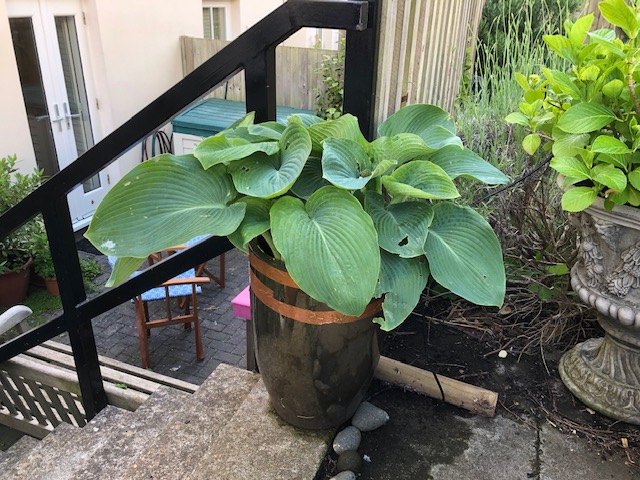
I love the Hosta, a large-leaved plant that produces white flowers around July time. In the winter months it hibernates under the soil, then in the spring little shoots appear and the cycle begins all over again.
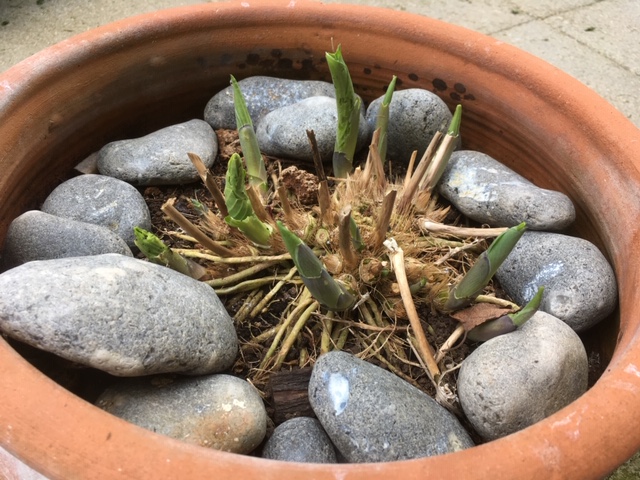
Snails love Hostas! Not wishing to use pesticides, I have tried a number of different things to discourage them from eating my plants. Placing the pot in water sort of works for small pots, as snails are not good swimmers, but that’s impractical for a large pot of Hostas. I read that applying some grease around the rim of the pot creates an uncrossable boundary; it works for a week or so then the little buggers wade through it or jump it or …… I bought a roll of copper tape, well, three actually as it was on offer, and stuck it in a thick band around the top, having first got rid of any grease! The pot looks nice with a copper-coloured band around it but, contrary to the advertising blurb, the snails still got across.
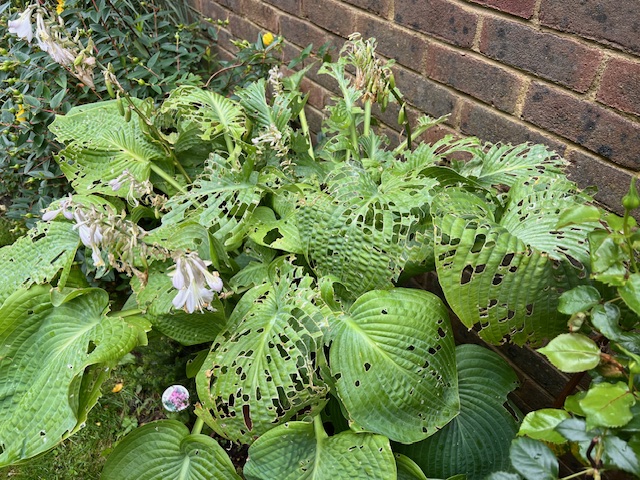
Now I have resigned myself to thinking I grow Hostas as a food for snails.
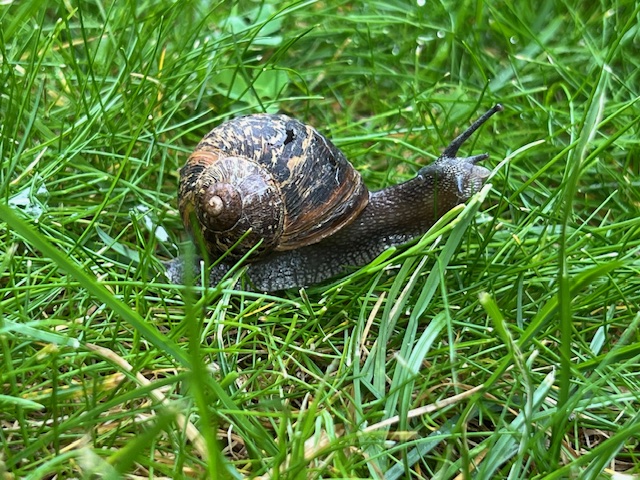
I love watching them slide across the grass, I hate them munching through my juicy Hosta leaves, and I loved eating them, although I haven’t for over 15 years as my tastes have changed. You used to be able to buy them in little plastic tubes, complete with garlic butter and parsley; pop them into the oven for the requisite number of minutes and ….. yum! yum! …. But you have to like garlic.
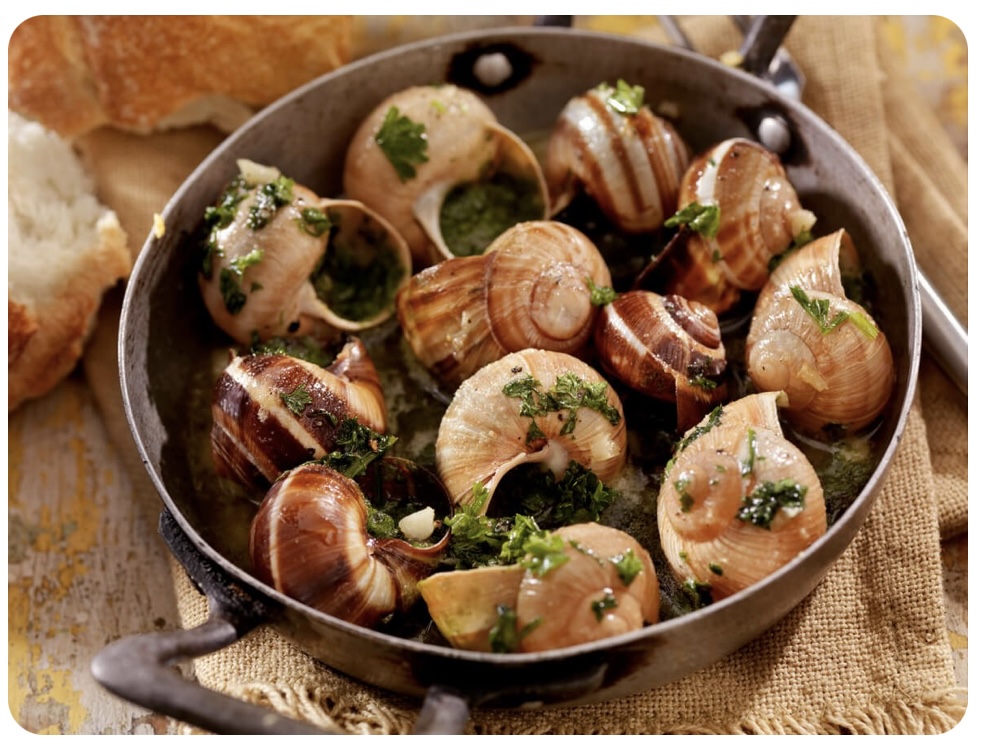
The Portuguese eat an estimated 4000 tonnes of Caracóis a year. Some are of the tiny variety, usually about 1cm in diameter. Cooked in a broth with lots of Rosemary and not swimming in melted garlic butter, normally you’re presented with about 100 in a small bowl and enjoy them with a cold beer. Or if you visit a cheap tasca bar they come as grilled appetizers. Helix Pomatia is often referred to as the land lobster for its superior flavour and texture. The French eat about 25,000 tonnes of snails a year; about 6.5 per person per year, normally cooked in garlic butter or chicken stock. I remember whenever I sailed across the English Chanel to Cherbourg, supper was at a bistro that specialised in snails and mussels; it could have been called Madame Escargot?
In Britain snails are available in supermarkets or delicatessens but I am reminded how on The Continent you can buy live ones. Many years ago I was on holiday with my daughter near Estepona in southern Spain, staying with cousin Susie and husband Robin. Tasked with foraging for things for lunch, we went to the local market. Jade, aged 8, saw a large cardboard box and sensed it was moving. Closer inspection revealed it was full of live snails. After the screams and tears subsided, she was placated with buying a dozen ….. which she set free in Susie’s garden; we didn’t tell Susie!
Used to small snails, I saw a photograph of a giant one. It turns out to be the Giant African land snail (Lissachatina fulica) which can weigh nearly a kilo and whose shell is some 20cms long. Celina tells me they also live in Brazil.
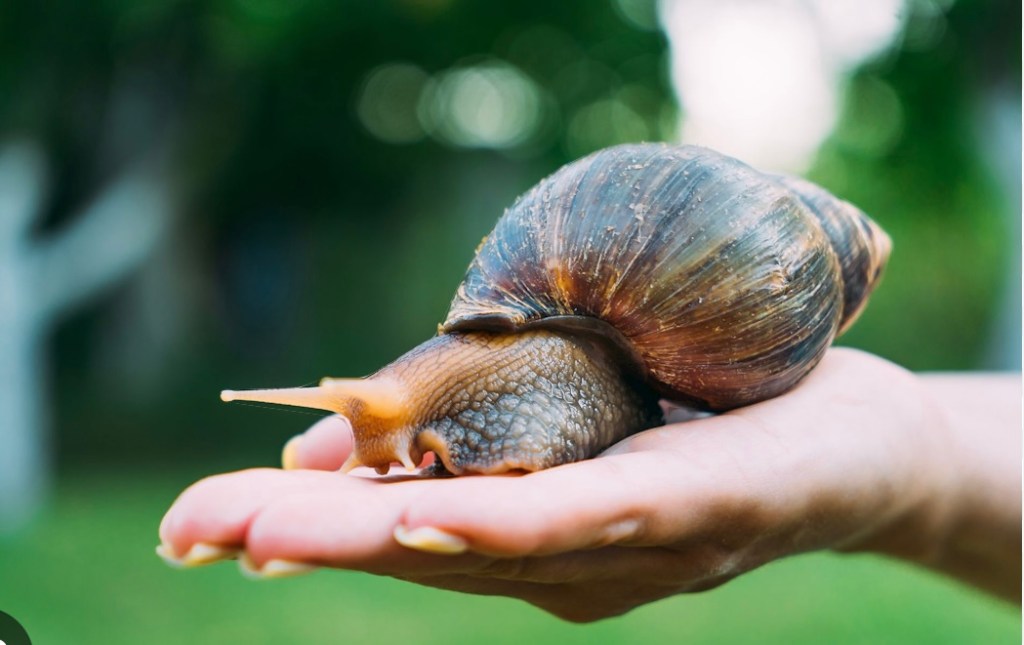
Sadly it really is a pest; it feeds voraciously and causes severe damage to agricultural crops and native plants.
In my postcards from our time in Croatia this summer (PCs 390 & 391 Tales of Croatia) I wrote that our guide in the seaside town of Split was a very tall chap called Pero Ugarković and he’d written a book about the sea snail. Sea snails breathe with gills whereas land snails with lungs. There is another type, the freshwater snail which use either gills or lungs.
I think we could call snails nomads for they take their home with them! The shell is created from calcium carbonate and has a protein outer coating. Other creatures consume the shells to obtain the nutrient calcium. There’s something very practical and endearing about carrying your home with you, self-contained and all that, and snails often feature in stories written for children.
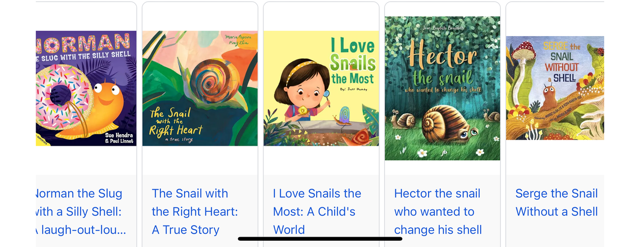
“Soon, which in cosmic time means millions and millions of years, they crawled out of the ocean and onto the land. Not knowing whether they would find a home, some of these brave early explorers carried their homes on their backs. So snails took to the earth!” extracted from ‘The Snail with the Right Heart: a True Story’ by Maria Popova
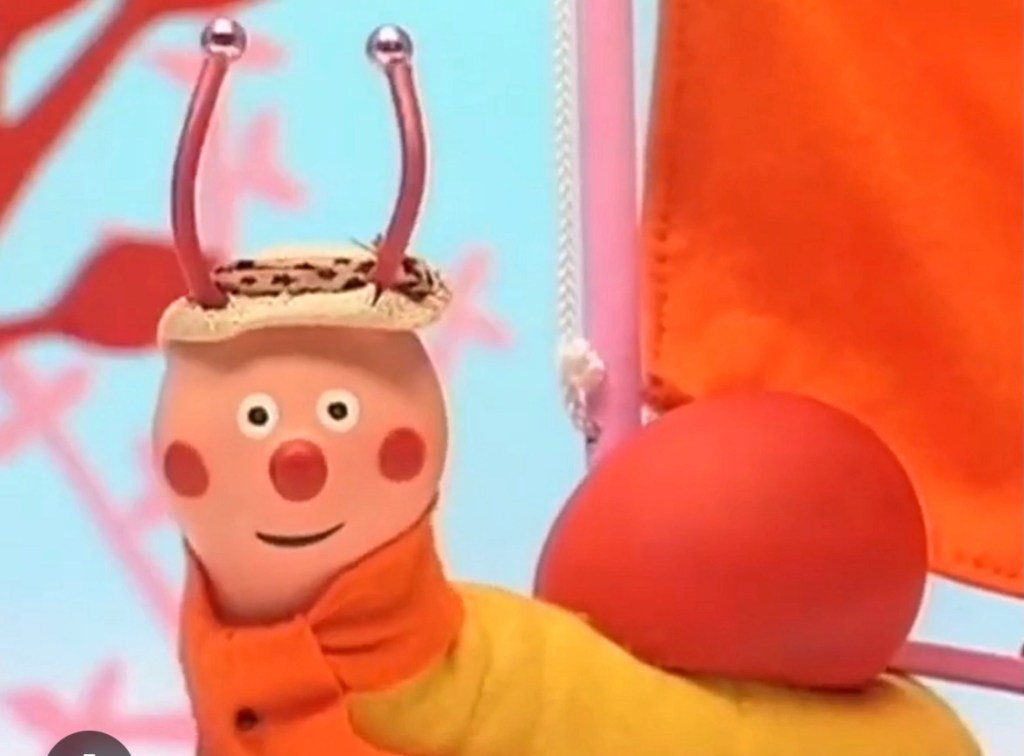
Still wondering why I have titled this postcard ‘… aka Brian’? In 1965 the BBC bought a French children’s programme ‘Le Manège Enchanté’, created by Serge Danot, and used the footage with new English-language scripts unrelated to the original story lines to produce ‘The Magic Roundabout’. It proved a great success and achieved cult status. Its characters included Dougal, a drop-eared variety of a Skye Terrier, Zebedee, a talking jack-in-a-box who kept crying “time for bed”, Ermintrude the cow, Dylan a hippy rabbit and a cheerful, bashful and intelligent snail called ……. Brian. (Note 2)
Richard 27th September 2024
Hove
www.postcardscribbles.co.uk
Note 1 There are three main species of helix snails that are edible: Roman or Burgandy snails (Helix Pomatia), Garden snails (Helix Aspersa and the European Snail (Helix Lucorum)
Note 2 Who knows why the writers called the snail Brian. But if you’re called Brian, I hope you’re cheerful, bashful and intelligent!
 postcards
I thought this postcard would be more nostalgic about childrens tv programmes like The Magic Roundabout but maybe you weren’t a fan?!
Brian was my favourite character!
Snails have been a nightmare in the garden this year…..your poor hosta!
LikeLike