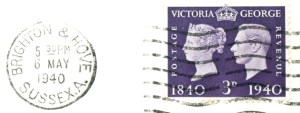
Our French friend Benedicte was supposed to visit her mother in France one Saturday last month. When she found she couldn’t check-in at home with EasyJet for her flight from London Gatwick, she drove to the airport, about 40 minutes from Hove. EasyJet had overbooked her flight and offered her one on the Monday. She texted me:
“I had to cancel the trip. It’s fate ….”
“Fate can play a funny part – is that why fate’s feminine?”
“La destinée.”
“Exactly!”
“Yes but we also have ‘le destin’. I wonder why we have those two words; there must be a slight difference in meaning. I think ‘destin’ is what you are born with. What is written for you at birth, influenced by your place of birth, your family economic status, your race… you can’t do anything about it. Destinée is more something you can influence. You take your journey in life into your hands. But the difference between the two is also a big philosophical conversation that can vary according to religious beliefs.”
It’s clear that ‘la destinée’ is actually ‘destiny’ in English and ‘le destin’ is Fate. I turned to a dictionary to find some definition. … of destiny:
“A noun. The events that will necessarily happen to a particular person or thing in the future. For example: She was unable to control her own destiny’. Or ‘The hidden power believed to control future events.” (Which is confusing!)
…. and ‘fate’:
“A noun: the development of events outside a person’s control, regarded by some as predetermined by some supernatural power. In Greek and Roman mythology, there were three Goddesses who presided over the birth and life of humans. Each person’s fate was thought of as a thread spun, measured, and cut by the three Fates, Clotho, Lachesis and Atropos.”
There’s a phrase in English ‘It’s all Greek to me!’, meaning I have no idea what you’re talking about. (Note 1) It appears in Shakespeare’s Julius Caesar (1599) so it’s not modern, but it sums up my knowledge of Greek mythology and stories of Icarus and Hades and Odysseus and Achilles and ……. However, they had an interesting take on fate, those ancient Greeks.
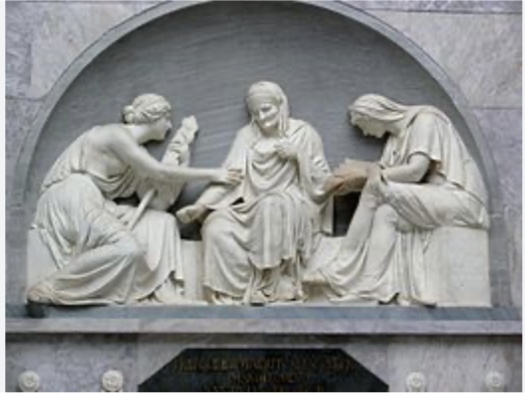
The ‘Fates’, otherwise known as the Moirai, were the personifications of destiny. They were three sisters: Clotho (Note 2) aka The Spinner, Lachesis, the allotter, and Atropos who was ‘the inevitable’, the metaphor for death. You can see where this is going, can’t you?
Their role was to ensure that every being, mortal and divine, lived out their destiny as it was assigned to them by the laws of the universe. For us mere mortals, this destiny spans our entire lives and is represented by a thread spun from a spindle. I only hope that when Clotho was spinning my life, she didn’t run out of thread too early, and that Lachesis was generous in her use of her measuring rod! These female fates were considered to be above even the gods in their role as enforcers of fate, although they did acknowledge orders from the chief of the gods, Zeus. (Note 3)
The Ancient Greeks were not alone in their beliefs about Fate. In Norse mythology the Norns were a trio of female beings who ruled the destiny of gods and men, twinning the thread of life. One was called Urḋr, from Old English wyrd from which comes the modern English weird.
One source suggests that ‘although they are used in similar contexts, they cannot be used interchangeably’; that’s an ugly word! Fate implies a lack of control or inevitability, like the situation that Benedicte found herself in, no personal control when EasyJet’s overbooked her flight; destiny suggests a sense of purpose or direction that can be within one’s control.
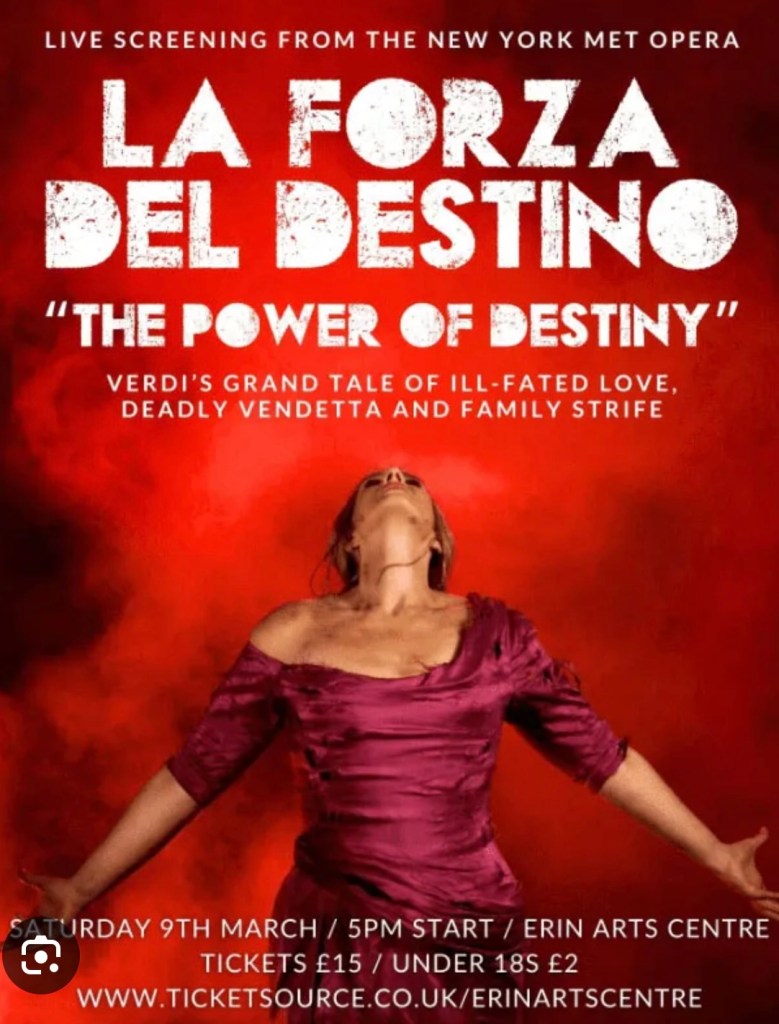
The composer Guiseppe Verdi wrote the opera ‘La Forza del Destino’ (The Power of Destiny). As Shakespeare and the Greek dramatists have taught us, man is not always in control of his own destiny. In Verdi’s opera, based on a Spanish drama, the power of destiny contrives at every turn to frustrate the happiness of Leonora and Alvaro. In 1960 at the Metropolitan Opera, the famous baritone Leonard Warren collapsed and died during a performance of the opera in New York. The supposed curse reportedly kept Luciano Pavarotti from ever performing the opera and the tenor Franco Corelli used to follow small rituals during a performance to avoid bad luck.
You can imagine William Shakespeare had something to say about destiny, and you’d be right. For instance – “This above all; to thine own self be true. And this must follow, as the night the day. Thou canst not then be false to any man. It is not in the stars to hold our destiny but in ourselves.” This was from ‘Hamlet’ and then we have: “We know what we are but know not what we may be.” Knowing what we are, who we are, is essential to knowing how to be oneself (PC 399 Why Can’t I just be Me? July 2024)
And who could forget Destiny’s Child, the name of an R&B/Soul Quartet that formed in 1990? Its most famous member was Beyoncé Knowles and I’m told its hits included ‘Say My Name’ and ‘Survivor’. I am more likely to remember the hits of Paul Anka, a Canadian singer born in 1941, particularly ‘You Are My Destiny’, the first line of which goes “You are my destiny, you share my reverie, you are my dream come true, that’s what you are.”
Finally John Dryden, England’s first Poet Laureate (1631 – 1700), wrote of fate:
“Tis fate that flings the dice,
And as she flings
Of kings makes peasants,
And of peasants kings.”
So was it fate that caused you to read this postcard ….. or destiny?
Richard 13th September 2024
Hove
Note 1 Other nations have the same saying. For instance the Czechs think it’s all Spanish and the Dutch ‘That’s Chinese to me’ (Dat is Chinees voor mij)!
Note 2 Clotho’s Roman equivalent was Nona, a goddess called upon during the 9th month of pregnancy.
Note 3 In Shakespeare’s Macbeth the weird sisters were prophetesses, but also known as the three witches.
 postcards