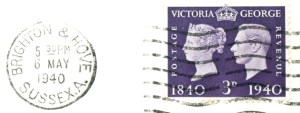
Back from Portugal, I popped into The Hope Café on the off chance of catching both Sami and Mo. Josh is on his own behind the counter and the café is quite busy, with customers tucking into some of the delicious Brazilian sweets offered by Theresa. There’s a contented buzz of conversation and everyone’s keeping their voices low enough not to irritate others. I hate it when the noise from nearby tables in a café or restaurant makes hearing those at yours impossible.
Sami and Lisa are at the same table, although both are head-down into their iPads, so I sense I can interrupt Sami.
“Hey! Sami!”, just glancing at Lisa who looks up in acknowledgement, “You remember last time we spoke you were telling me about things you’d learned from that ‘Atlantic’ book …..” (See PC 392 Hope Continues)
“About the sea snails that produce a purple dye the Romans used to signify Imperial power and ……”
“And you said it was worth three times the value of gold at that time …..
“That’s right!
“Well, if you read the first of my three postcards about Croatia and Montenegro (PC 390 Tales of Croatia June 2024) I imagine you were as surprised as I was to understand that in AD 1000 salt was more valuable than gold. Er! Hang on! …… what was I going to tell you? …. ah! yes! ….. sorry ….. memory lapse …. in Portugal I was reading the latest thriller from Danish author Jussi Adler-Olsen, ‘The Shadow Murders’, and one of the main characters refers to a 2002 book by Mark Kurlansky titled ‘Salt: A World History.’
“You’re going to trump my story of sea snails with one about salt?”
“How about the fact that the word ‘salary’ comes from the word ‘salt’ and how about Kurlansky suggesting a monopoly on salt in France was a contributing factor in the 1789 revolution? You’ll also remember the 1982 film Ghandi with Ben Kingsley? Ghandi opposed the salt monopoly of the British Empire in India with his 1930 peace march; his followers collected salt from evaporated sea water in breach of the law.”
“I thought you were going to remind me of Sodom and Gomorrah, how they were destroyed and that Lot’s wife defied a warning not to look on their destruction. She was turned into a pillar of salt!” he said smiling.
“Poor woman – not funny! You were in The Algarve just before us so when you flew into Faro you probably saw some salt pans on the flat shoreline …. the continuing Salt Connection ……
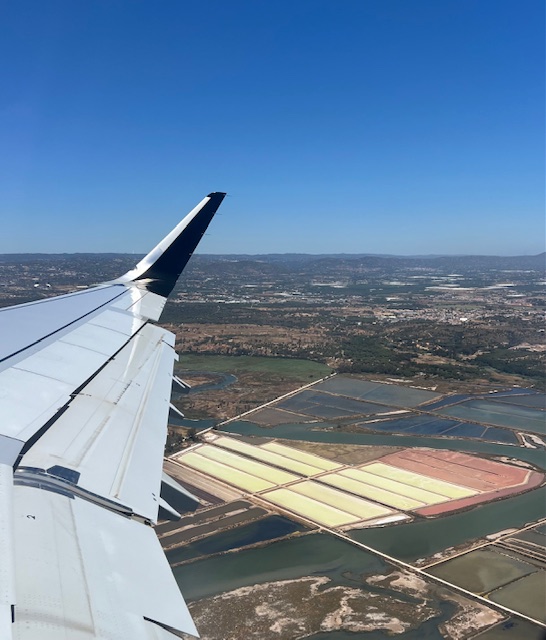
My God! I’ve just remembered something from 1968 ….!”
“About salt?”
“No, about the word salary ….”
“Go on”
“Here in the UK salary is used to denote an annual pay package, usually paid in twelve monthly amounts, and was used by the professions. ‘Workers’, that word that has many connotations, were paid a wage, normally given weekly. In the Armed Forces in the ‘60s officers were paid a salary and soldiers were paid a weekly wage. There was no charge for food and accommodation, although that changed in 1970 when pay scales increased and there were modest charges for food and accommodation. Most soldiers did not have a bank account so every fortnight or month, I can’t remember which, each sub-unit had a Pay Parade; just writing this sounds so archaic, so unbelievably old-fashioned! My troop’s NCOs and gunners, some 30 individuals, formed up in a vehicle shed. I sat at a wooden 6ft table, an essential piece of equipment (Note 1), with the Army Pay Corps clerk who had all the records.
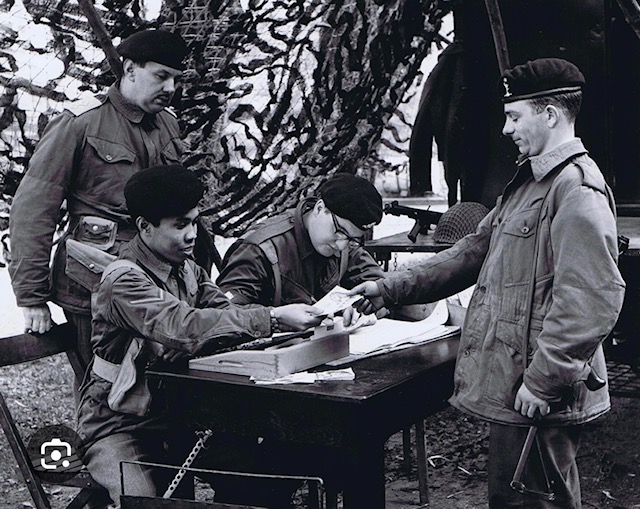
Just an illustration – this is not Lance Bombardier Batchelor, nor me!
The process went as follows:
I read out a name, for example: ‘Lance Bombardier Batchelor’
Batchelor would march up to the table and salute; the pay clerk would give me Batchelor’s pay book and an envelope with his wages. I checked that it was correct, told Batchelor how much he had that month (deductions were made, for instance, for lost kit) and counted out the pounds, shillings and pence in front of him. (pre-decimal days huh!) (note 2). He signed against the date, announced in a clear loud voice: “Pay and Pay Book correct Sir!”, saluted, turned around and marched back. The next chap was called forward …….”
“You’re not making this up, Richard? This actually happened?”
“A fond memory of a more innocent time perhaps, but yes! So thank you for reminding me.”
“No problem! Incidentally we found The Algarve delightfully warm but rather a warm version of here; so many English own homes, rent a villa or come out on a package holiday that it’s often the only language you hear in the shops and restaurants. A good break though; explored the south of Portugal and ventured into Spain, with one night in Cadiz. Thought about those Phoenicians who founded it and then years later went on to find those little sea snails …..”
“Think these sea snails are like bad pennies, keep turning up!”
“You came down from Estoril to the Algarve for three days; enjoyable?”
“The Vilalara Resort reminded me of the setting of that 1967 television series The Prisoner, as some guests and the staff moved around on little electric golf buggies! Nice weather, three swimming pools and a beach; a mixture of hotel rooms and private apartments often used as Timeshares. By the way, did you organise your proxy vote in time?”
“Yes, got a neighbour to do it for us. You?”
“Yup! The MP for Hove, Peter Kyle, is an interesting chap, isn’t he, and he deserved to win. Listen, I see Mo over there; I need to pick her brains about something, and I need to pop to the loo. Good to talk to you, Sami; hope the rest of the day goes well for you and Lisa ….. see you.”
To be continued …….
Richard 19th July 2024
Hove
Note 1 Known in Army language as ‘Tables. GS. 6ft’. The GS stood for General Service.
Note 2 For comparative purposes, the average wage in the UK was £46 per week; a private soldier would earn £32. As a Second Lieutenant my salary was circa £3000.
 postcards