Then onto Vis, an island that played an important regional role in World War Two. Britain assisted Marshall Josip Tito, who went on to become President of Yugoslavia, to form and develop his partisan resistance movement, the British team led by the politician and author Sir Fitzroy Maclean. Tito and Maclean formed such a good relationship that the latter was able to buy a house on the island of Korčula, not normally possible for a foreigner. As an aside, it’s thought that Ian Fleming modelled his Bond character on Maclean. Vis is riddled with caves and tunnels which gave the partisans protection from any Italians sent to look for them. The island was occupied by Italy until 1943, when it was liberated by a combined British-Yugoslav force but it wasn’t until 1989 that tourists were allowed on Vis, as it had been a Yugoslav Naval base. It’s a typical Dalmatian Island, with clear water, limestone buildings and the obligatory monastery. (Note 1)
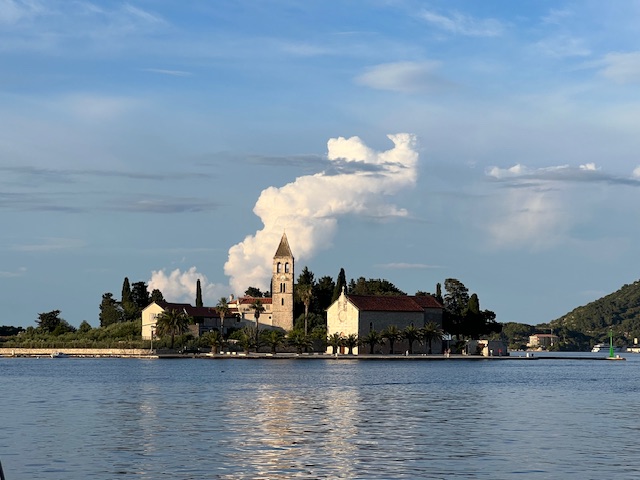
The Church of St Jerome in Vis
We upped anchor around 0530, motored out of Vis ……
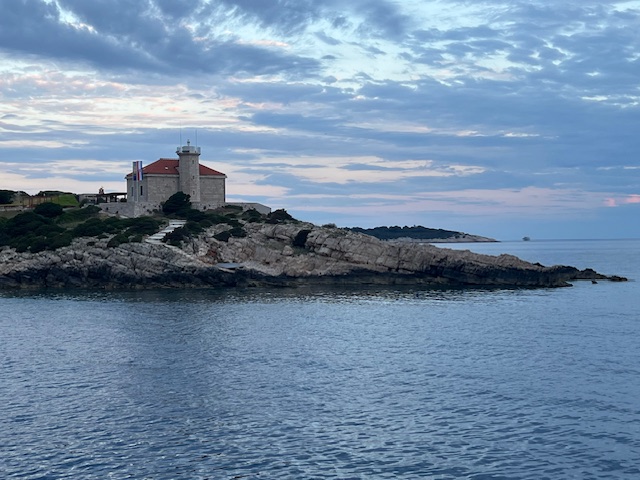
…. and made our way to Split.
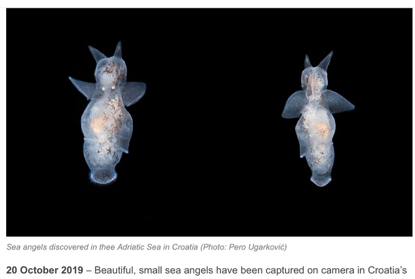
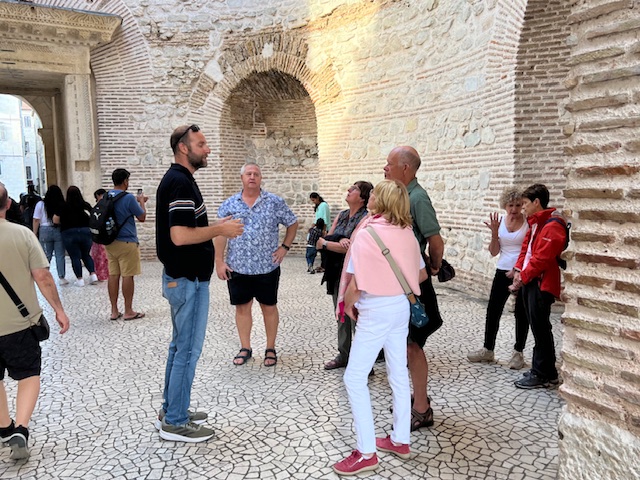
We took the tour, our guide this time was Pero Ugarković. Croatians have a habit of being tall, and Pero was probably around 2m. (Note 2) When I asked what he did in his spare time, he divulged he loved spear fishing, was an associate of the Institute of Oceanography & Fisheries in Split, had just published a book on sea snails and in 2019 had photographed small sea angels in the sea off Croatia.
“Now” he said to us, “here we have the southern gate of the Palace of Diocletian. Diocletian ruled the Roman Empire from 284 to 305, when he retired here to Spilt. He was possibly the only emperor to retire!”
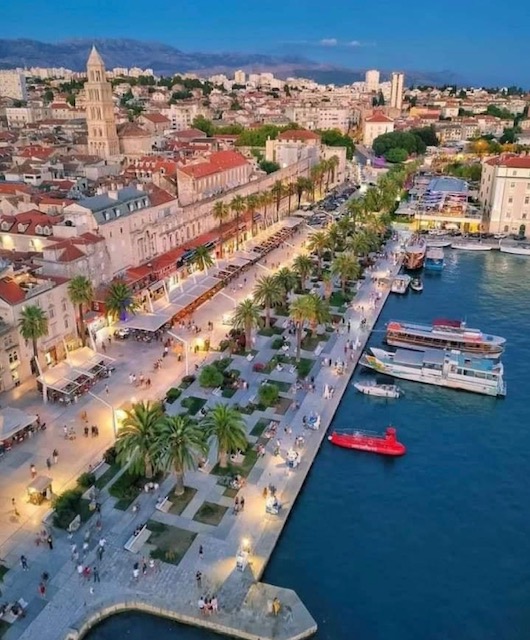
And so we wandered into and around one of the largest Roman palaces still well defined. For sure, the internal structures have changed over the centuries and the architecture reflects who was in charge at any particular time, but it wasn’t difficult to half-close one’s eyes and imagine …
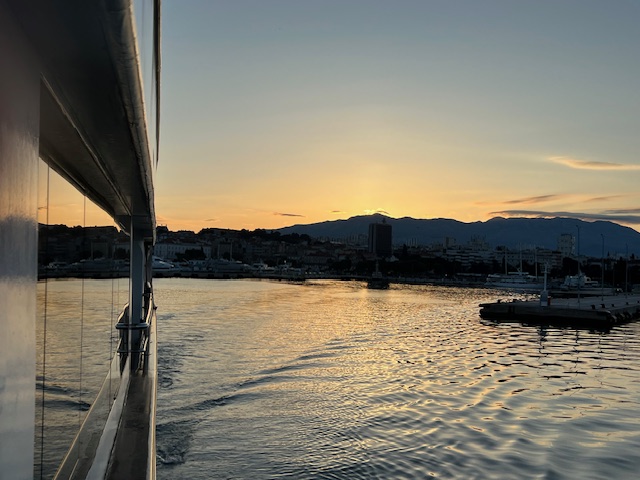
We spent the night alongside in Split and were plagued by a boat of young people intent on shouting, screaming and yelling that tied up on the outside of us. I was reminded I was young once! Early morning and we were off before sunrise, destination Hvar.
Ivana, who came from Stari Grad, over the mountains to the north, was our guide. Her most memorable snippet was that the local wine is better with 10 drops of water; these apparently bring out a gorgeous bouquet. I knew already that the oldest public theatre in Europe is here, on the upper floor of the Arsenal Building.

Created in 1612 it’s been gradually modernised as the years have rolled by; it closed for its last renovation in 2004 and reopened in 2019. Hvar’s central square’s stone floor is so polished by the infinite number of soles over the years it reflects the bright sunshine.

Hvar old town from the castle
After the short tour and time for a coffee, we left for the Mljet National Park and tied up alongside in Pomena for two nights.
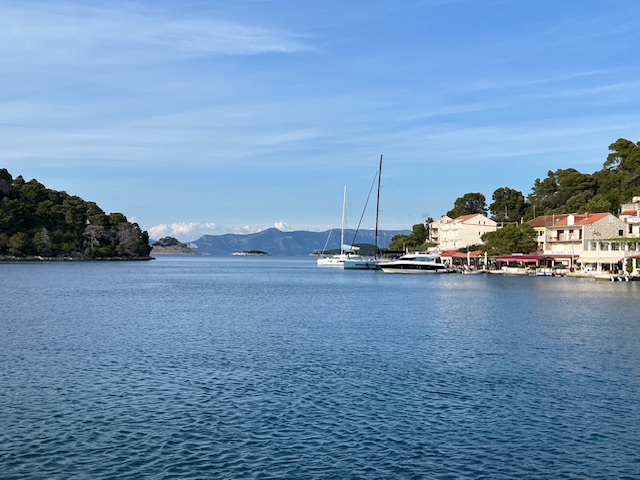
A walk and a boat ride across a lake ……
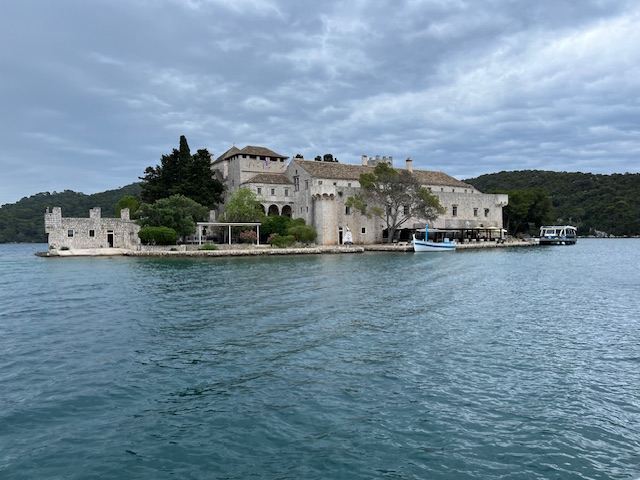
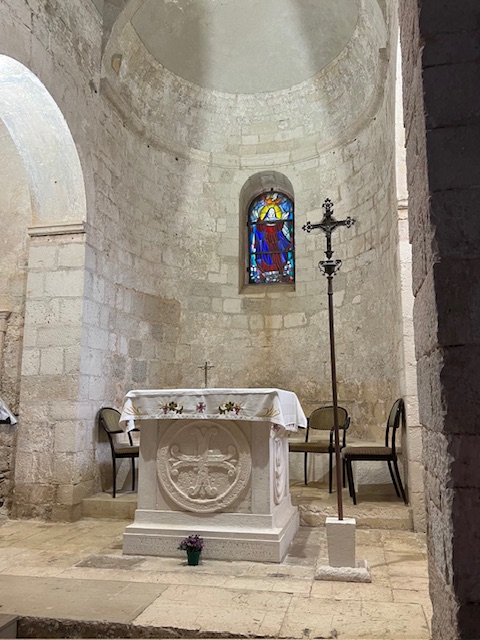
….. found us on the island of St Mary’s and its little Benedictine monastery.
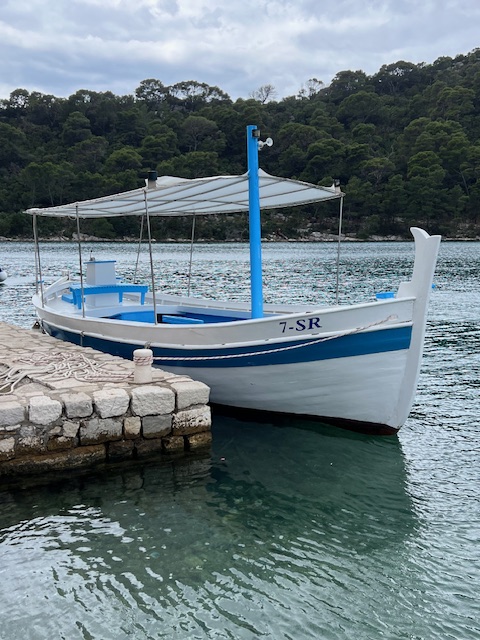
Just a sweet looking boat!
Then our last day on Ms Roko, motoring back to Dubrovnik. After a night alongside, Sunday saw us embark onto a coach for our journey to Montenegro, next door to Croatia, where we would have three days. I can’t think of the last time I had my passport stamped transiting by road from one country to another! In Perast we got on a boat and motored across Boka Bay ……
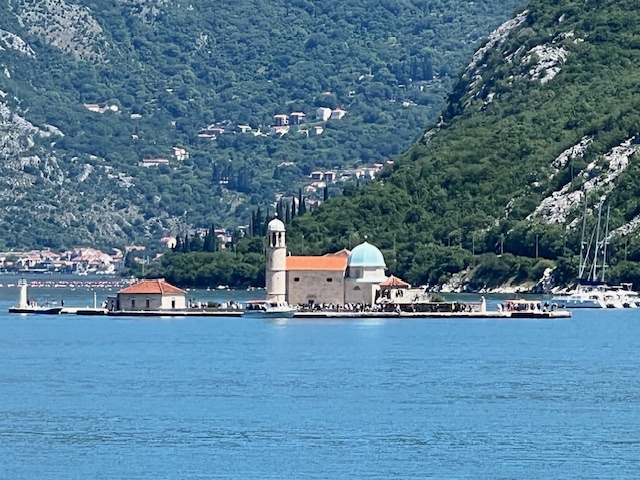
The Church of Our Lady of Škrpjela in Boka Bay
…… to Kotor.
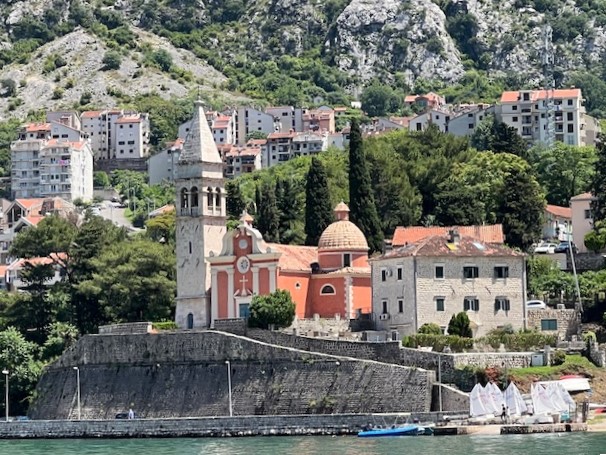
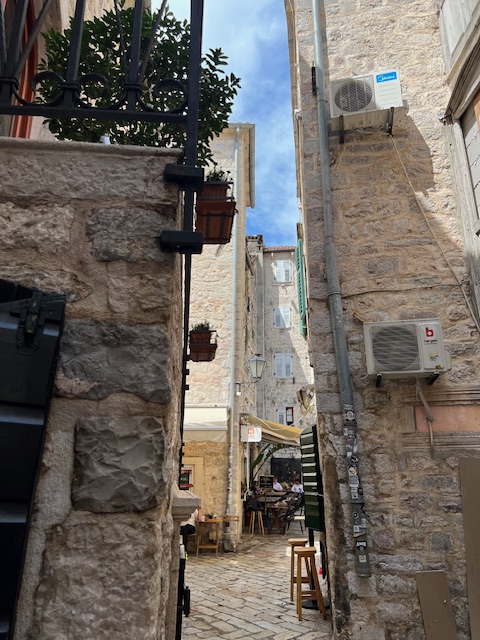
Many beautiful walled towns dot the shores of the Mediterranean and, after Dubrovnik, Kotor must be a favourite. Fortunately it’s more difficult to get to, so it’s only the arrival of a large cruise ship that will swamp its narrow streets with rubberneckers.
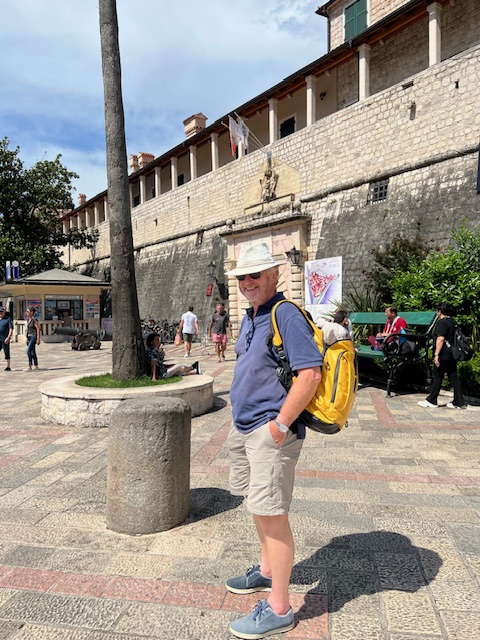
The eagle-eyed will notice Francisquinha had jumped into my backpack
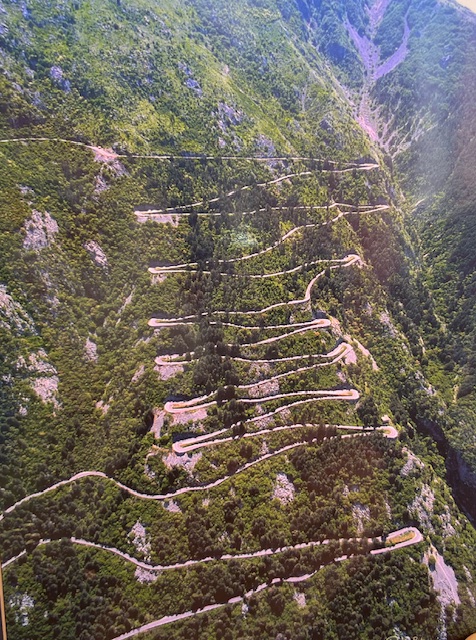
Driving out to the north requires a certain stamina, the road’s 25 hairpin bends a challenge for those vehicles without powered steering – like our Land Rover in 1965!
Then back on the coach to our hotel resort just south of Budva, itself a popular resort for the younger Montenegrin set intent on hedonistic pleasures. On the Monday Sandra, the Imagine Cruising representative, took us to Cetinje some 50 minutes inland and the former royal capital of the country. I am not a fan of religious paintings but was very taken by the rich gold-plated iconostasis in the Court Church.

Within the church are two marble tombs containing the remains of King Nikola and Queen Milena.
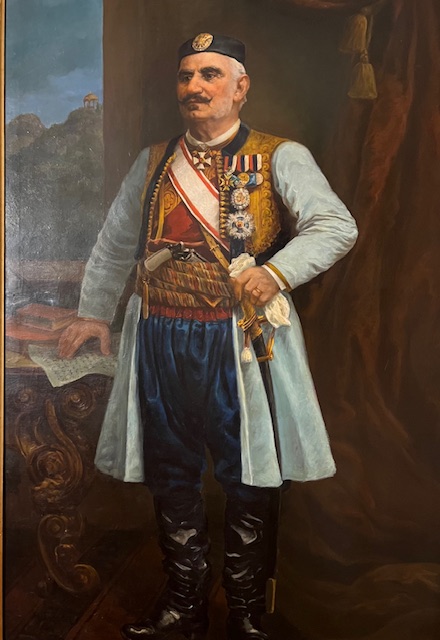
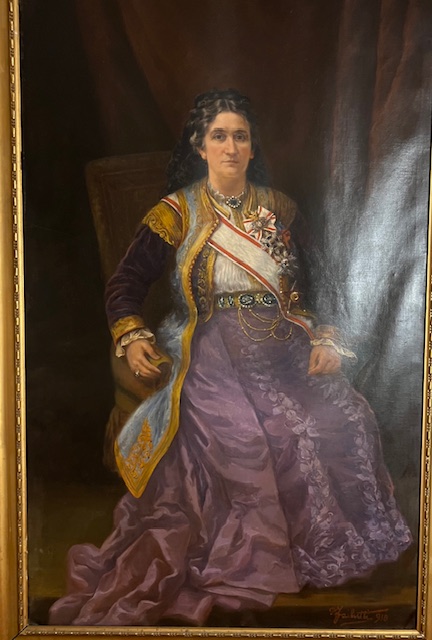
Cetinje’s sadly in decline; factories have closed and the younger population are moving out to find employment. Croatia’s been a member of the EU since 2013 and Montenegro seems poor by comparison, this little town being a good example; but it’s a small country with a population of some 600,000. Titograd became its capital after the demise of the monarchy, but the city’s name reverted to Podgorica in 1992. On our journey from Dubrovnik Sandra had told us that any land with a view of the sea had been snapped up by Russians, prepared to pay silly money to build a house. Apparently, the owners have no interest in integrating, no interest in the local environment and are consistently rude. Sounded familiar! (See PC 134 The Largest Mediterranean Island Oct 2018)
You might be wondering what it was like to be on a small ship during our time up and down the Croatian coast? Gathering my thoughts and will put pen to paper, so to speak, soon.
Richard 14th June 2024
Hove
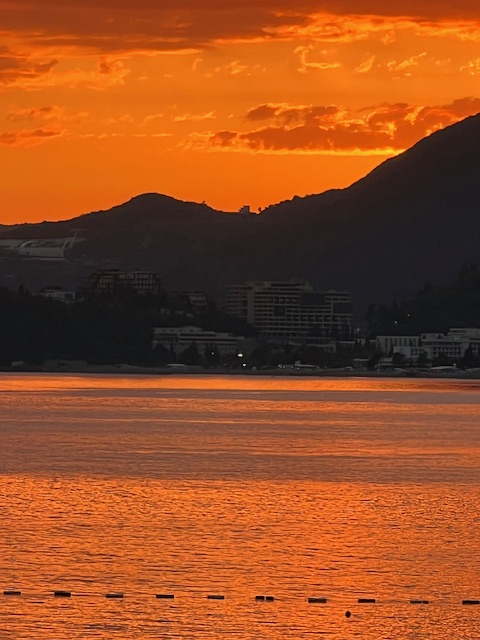
PS And finally a sunset!
Note 1 Bonaparte Napolean closed all the Benedictine Monasteries dotted up and down this coast in 1805.
Note 2 Our Montenegrin guide’s sons were over two metres and one of the security people at Tivat airport towered over me!
 postcards