PC 393 MS Roko et al

In the dark days of last October, the advertisement in The Sunday Times for 11 days in Croatia and Montenegro, showing blue skies and sparkling water, looked very tempting. We thought, ‘let’s give it a go’ and duly booked for late May. (See PCs 390 and 391Tales of Croatia)
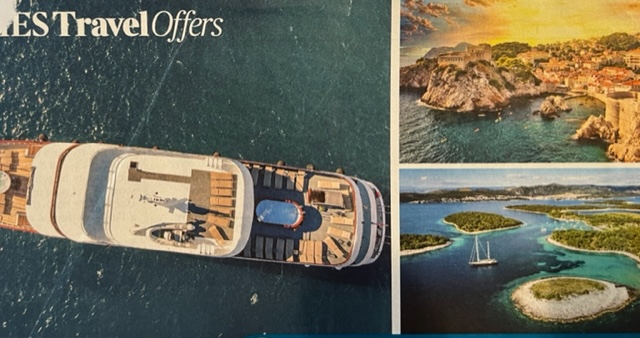
Neither of us are drawn to the cruise ships that pack 2000 – 6000 souls into a floating small town, disgorge them to clog the streets of a port, then suck them back on board at 1800 like a powerful vacuum cleaner rids the floor of crumbs and ……

For time out, on holiday, fortunately everyone has different ideas of what they want to do. For some ‘lying and frying’ (with suitable Factor of course) on a beach is the epitome of a holiday, for others it’s an anathema, to be avoided at all costs. Camping appeals to some, and I did enough ‘living in the field’ in all weathers in the military to know it no longer has that draw, while for others a coach trip linking some of Europe’s great cities – ‘It’s Tuesday; this must be Berlin.’ – ticks a bucket list box.  
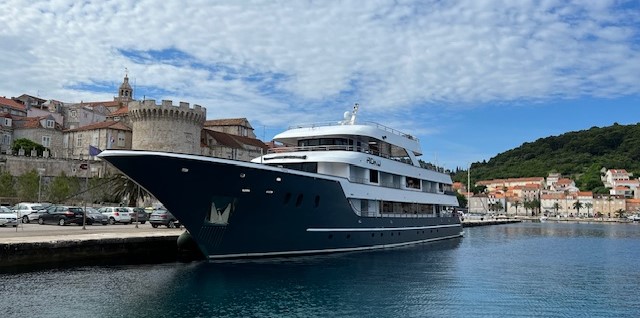
MS Roko

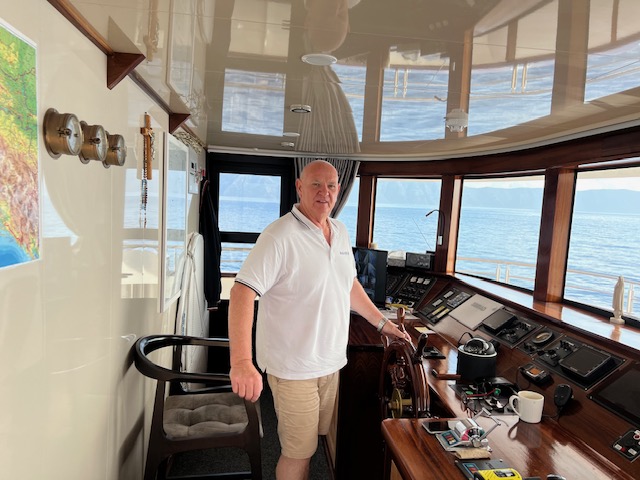
MS Roko was launched in 2021; she’s 50 metres long with a beam of 8.8m and a normal speed 15.7 km/hr – which equates to just under 8.5 knots. The Captain, Ivica Rakuljić, named his ship after his son. (Note 1)
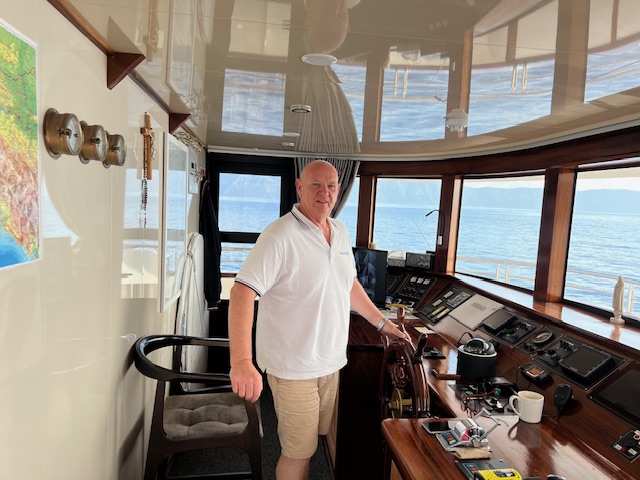
It has 18 cabins so, when full, a compliment of 36 passengers and 9 crew. You could hire her for about €10,000 a day! MS Roko has a draft of 3 metres. I spent a few minutes on Ivica’s bridge when we slid between two islands – with the depth meter showing a healthy 3 metres under her keel.
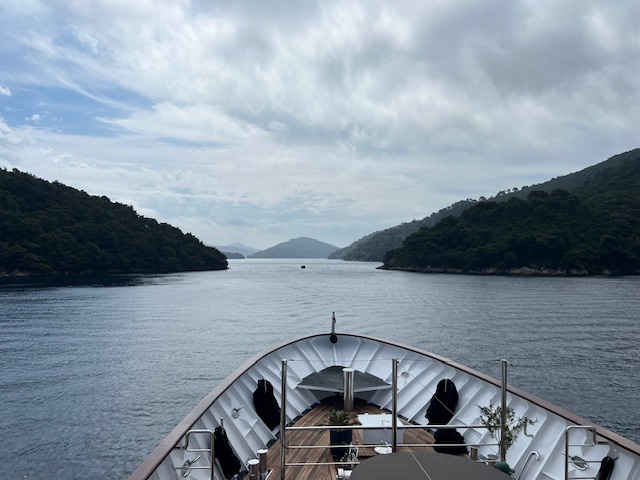
For Celina and me, this cruise would be a new experience, being in the confines of a small boat with lots of strangers! On MS Roko, coming together at breakfast and lunch was a good time to chat and get to know the others, whilst outside of those times most people did their own thing, relaxed on a sun lounger, curled up with a book, went ashore in search of an evening meal or listened to one of the very informative tour guides at our various ports-of-call. The atmosphere on board was very informal – except that lunch was 1300 – on the dot! This allowed the galley staff led by Marianna to prepare three-course lunches every day.

A third of the guests were vegetarian, had some food intolerance and others were allergic to something, like Celina and seafood. In the confines of the ship’s galley it was understandably difficult to cater well for everyone. The on-board bar that dispensed coffees and drinks was run by Sneža, assisted by Natalia. Given that the ship had been chartered for the six ‘tourist’ months, there was a new group coming every Sunday, week in, week out. Sneža was permanently on board, with no free days, except when the ship was in Split where her fiancé lives.

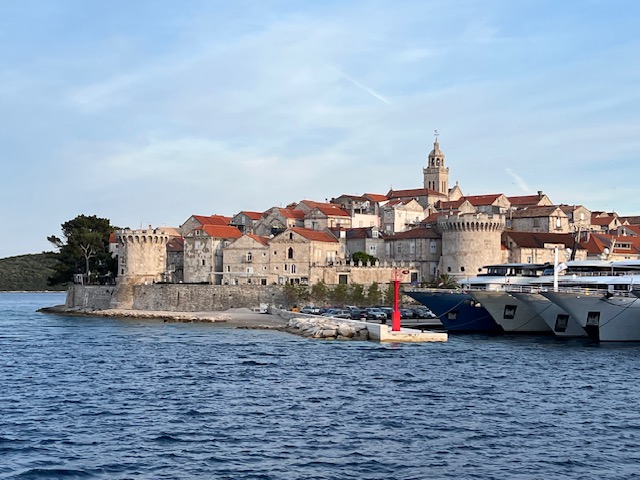
In the evenings we were alongside. Such is the popularity of some of these little Croatian towns that space on the quayside is often very limited. Visiting ships end up forming what, in nautical parlance, is called a trot, a boat tied up to another ….. and another …. and another. None of the outer boats used a bow or stern line to the shore, but I imagine they would if a storm was forecast.
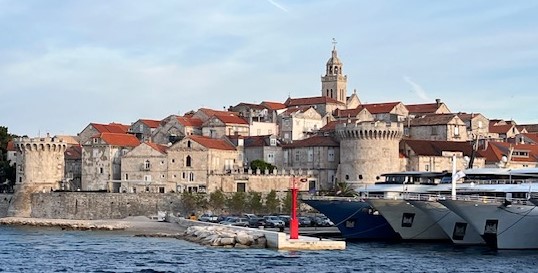
MS Roko alongside in Korčula, on the inside of the trot

From the passengers’ point of view, the ship was effectively run by Viktor, an extremely personable 40 something, married with two sons, engaged by Imagine Cruising to ensure the passengers got what they wanted, knew what was happening and felt cared for. He ticked all those boxes!
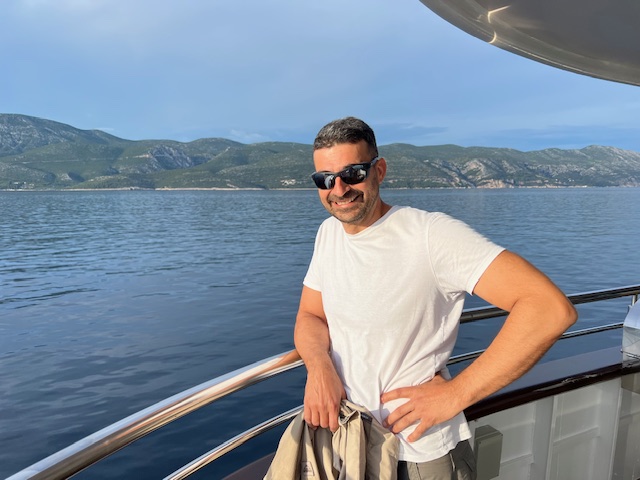
Viktor

I asked an ex-RN Submariner Medic, who plays in goal for Scotland’s Under 75s Hockey team, whether he had made any long-term chums through cruising. “Large ships aren’t like this! So no!” There was an eclectic mix of backgrounds in our fellow passengers, and I couldn’t resist asking those questions that uncork the back-stories. Our group included a delightful woman who’d been the bursar of a Special Needs’ school, a couple of men whose careers had involved surveying, either quantitative, chartered or commercial, a female General Practitioner, a recruiter specialising in the Marine and Shipping industries, nurses, artists, property developers, a product developer for B&Q, a South African financial advisor, an ex-Army specialist in packaging, two individuals who’d made a career in the Wines & Spirits Industry, an IT Consultant, a talented designer of books and a woman ten years older than me! Invariably one gravitates towards some people more readily than others.
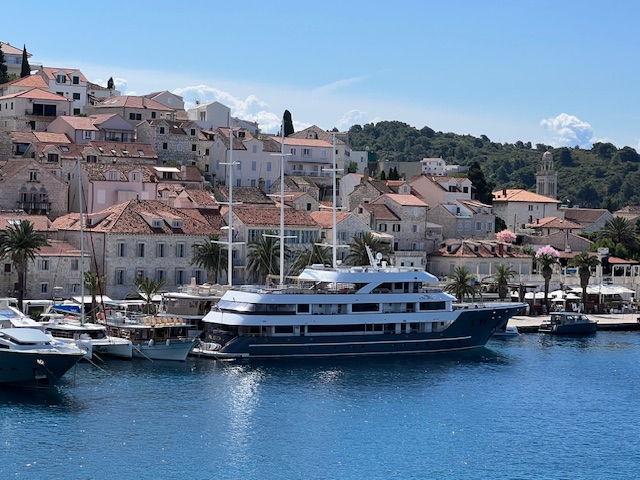
Alongside in Hvar
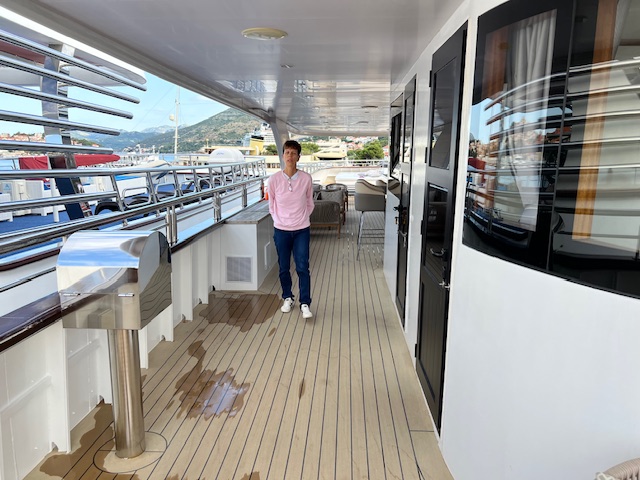
I have always thought one of the benefits of a Kindle is that you can load books before a trip and not have to carry them, although acknowledge that if there are maps to which you want to refer, it’s a pain in the butt to find them. I was surprised how so few of us had Kindles, the majority gripping a paperback.

Tales of polytunnel plastic around the propeller shaft, the conga line around the deck after the Captain’s Dinner, a missing nightie, the skipper thinking leaving the quayside five minutes before he had agreed to was OK (not!) et al …. are best left for another time.

We left on a Sunday morning at 0900. At 1500 another group would arrive; repeat!

The American poet Longfellow (1807 – 1882) had this to say in his ‘Ocean of Life’ poem:

“Ships that pass in the night, and speak

To each other in passing.

Only a signal shown and a distant

Voice in the darkness;

So on the ocean of life we pass and

Speak one another,

Only a look and a voice, then darkness

Again and a silence.” 

Having sailed over 4000 miles I have passed, or been passed by, hundreds of other vessels at night. First the recognition, then the identification – it’s a yacht/ferry/container ship/trawler/oil tanker …. , the fading stern light and then the darkness. And so I suspect with our delightful fellow passengers on MS Roko; together for 11 days, then we continue our life’s journey, enriched by our experience, like ships in the night!

Richard 28th June 2024

Estoril

www.postcardscribbles.co.uk

PS We bumped into a chum from hot yoga in Brighton – on the street in Dubrovnik!

Note 1 Ships/boats are normally referred to as feminine. Naming a ship after a male fits with the gender fluidity of 2024!
PC 392 Hope Continues

The visit of my mother-in-law precluded a visit to The Hope Café last month, so it was with some relief that, on our return from Croatia and Montenegro (see PCs 390 and 391), I was able to drop in; delightfully nothing much had changed! I am not sure if I had mentioned in a previous PC that Susie, after her return from Tasmania and her experience of working for Margie in her Hobart business, has signed up for a one-year course in Logistics. Brighton is not the place for this sort of thing, so she’s enrolled at the University of Southampton for a course that has both a residential and an on-line component. Her commitment will mean we’ll see more of her aunt Libby behind the counter.

I hadn’t had a good conversation with Sami for a while, so was delighted to find him at one of the tables, hunched over a book and cup of coffee. No need for an introduction:

“What are you reading Sami?”

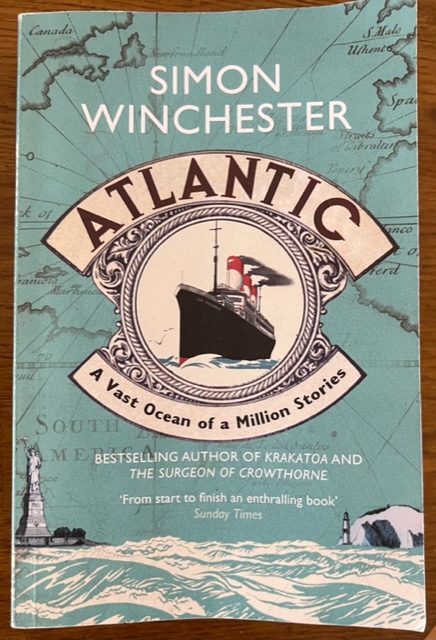
Well, don’t be surprised but it’s not a John Grisham or Jojo Moyes but a fascinating book by Simon Winchester called simply ‘Atlantic’.”

“Could still be a page-turning thriller?”

No! no! It’s about the Atlantic Ocean. I’m only about 40% through but a couple of facts have really excited me, things I didn’t know ….”

“And now you know them you can’t stop thinking about them?”

“Exactly!”

“So, enlighten me please.”

“Well, we have to go back a long, long way in history, to the time when Minoans believed that beyond the Pillars of Hercules (Ed The Straits of Gibraltar), that is beyond the known world, the waters were simply too frightful and fantastic to even think of braving. We’re talking about 7BC. Then the Phoenicians built ships that could cope with the seas and ventured out, turned north and founded what became Cadiz.”

“OK! Sami. All jolly good, but what’s this nugget of information you find so interesting?”

“The Phoenicians found what the Minoans had found 700 years before, the magic of the murex mollusc.”

“The what?”

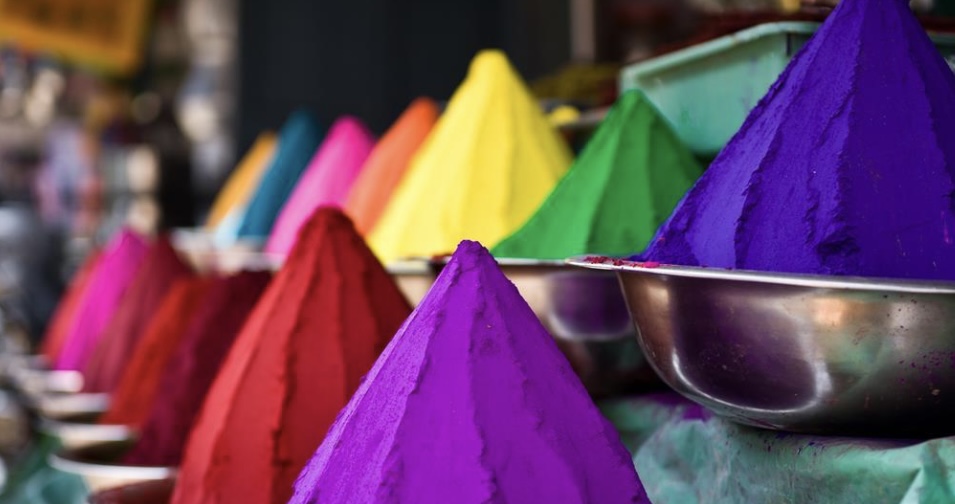
“It’s a gastropod that secretes a rich indelible purple-crimson dye ….. and it’s that colour which the Minoans, the Phoenicians and most notably of all the Romans used to denote imperial authority. (Note 1) Sailing south from the Straits of Gibraltar, the Phoenicians found these snails gathered in their thousands in the bay just offshore from what is now Essaouira in Morocco.”

“I have been there but didn’t know anything about these sea snails.” (Note 2)

“There you go! For almost a thousand years the dye was traded from the city of Tyre and valued at some twenty times the price of gold.”

“Must read more about this; fascinating, and I can understand why this has stayed with you. What was the other fact which sparked your interest?”

“The Vikings were the first to discover North America.”

“What about Christopher Columbus? Every child learns he discovered it in 1492.”

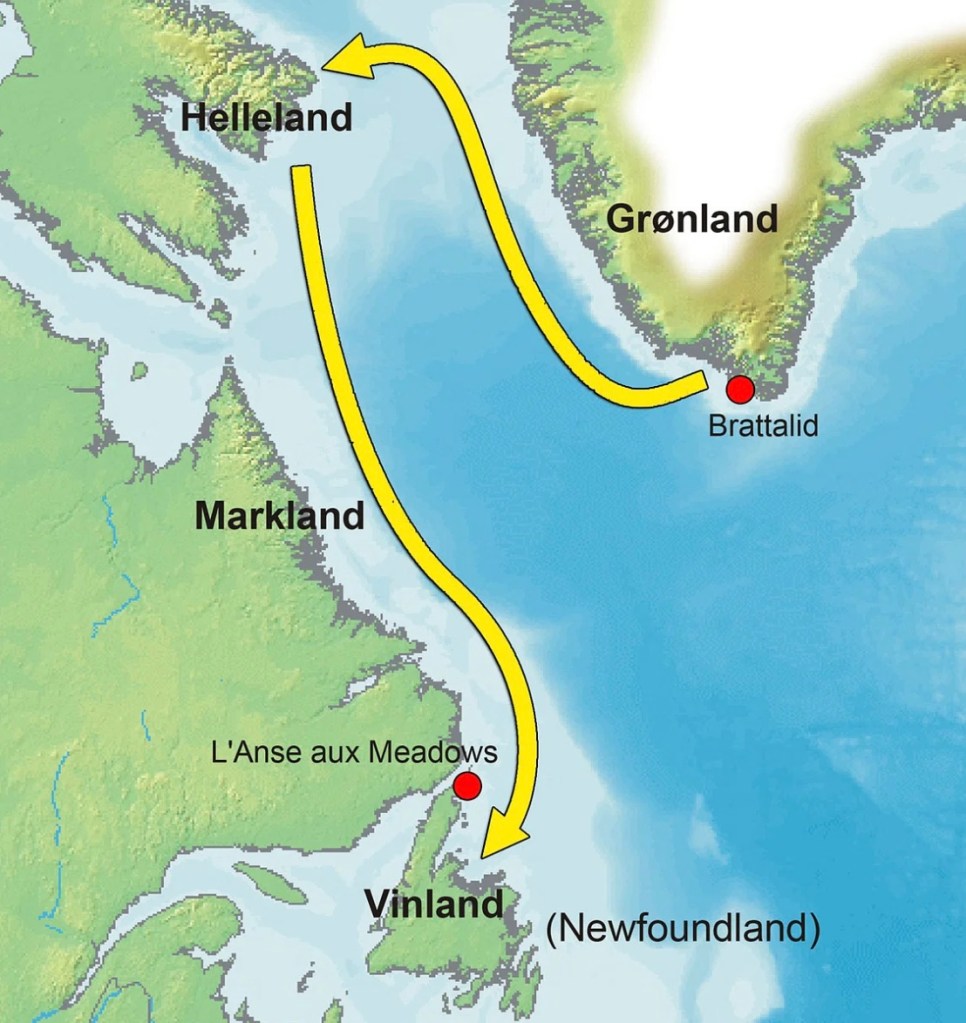
“A C15th map turned up in America in 1957 showing an island marked as Vinlandia to the west of Greenland. Latin script told it had been visited by Bjarni and Leif Eriksson in the C11th! I read further details and then went on to Google Maps and found this place, L’Anse aux Meadows, where excavations uncovered the Norse settlement.”

“Wow! And you’re only 40% through the book! I am sure there will be lots of other interesting things to find out about. Back to today, the Post Office enquiry was getting a lot of press before the General Election was announced, what with the senior managers, CEO and chairwoman giving evidence. I know you want to put it behind you but ……”

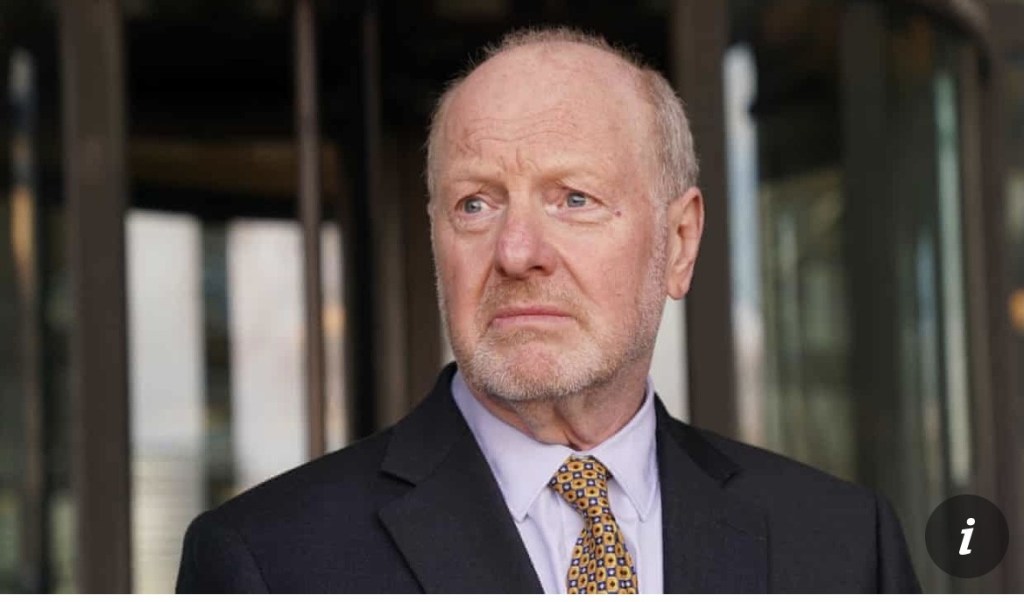
I do and I don’t. I’ve moved on but sincerely hope that those responsible for the whole fiasco face some criminal charges. Trouble is so many individuals hoped the whole thing would just go away, couldn’t take personal blame, couldn’t say: “It was my fault”. But I am delighted that Alan Bates, who founded the pressure-group Justice for Sub-postmasters’ Alliance and brought the whole scandal to the public’s attention, has been knighted in this month’s King’s Birthday Honours List.”

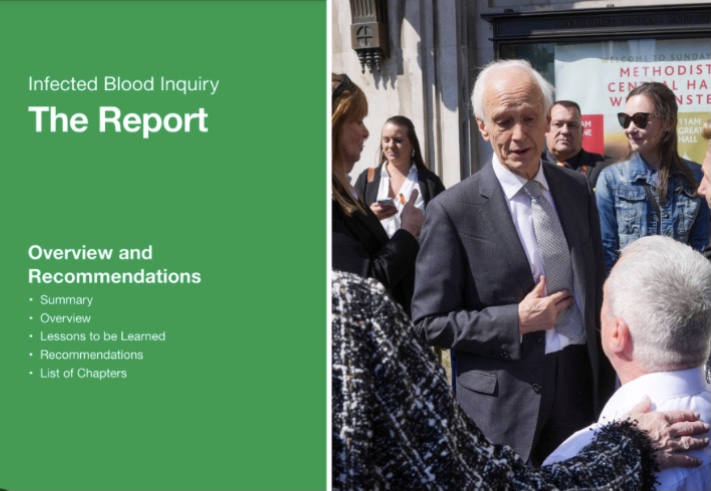
“That’s great! A good award. But the whole sorry saga sounds a little like the Infected Blood Inquiry, whose report last month was the culmination of 4 year’s work.”

“Remind me?”

“As I understand it, from 1970 to 1991 the NHS, not having enough UK blood supplies, imported blood products, particularly from the USA, for use in transfusions, knowing that some were infected with viruses like HIV and Hepatitis C. More than 30,000 people were infected, with thousands dying as a result. A good example is from Treloar’s College, a school for disabled children in Hampshire. Between 1974 and 1987 children were offered treatment for haemophilia; at least 72 died after being given blood contaminated with HIV and viral hepatitis. After decades of failure by the government of the day, the NHS and doctors to even address the issue, let alone talk about compensation, the “Infected Blood Inquiry” May 2024 Report recommendations have been accepted and compensation levels and timescales have been agreed. As one of those affected said: “We have a voice and at long last we have been listened to. We have railed against authority, shaken a fist at the storm ….. and nothing happened. At last!” Absolutely disgraceful, shameful!”

“You mentioned the General Election. I am cross as I won’t be able to vote …. and I want to.”

“Why can’t you vote?”

“Lisa and I are off to the Algarve in southern Portugal the day before the postal voting papers are distributed …. and not back until the day after the election!”

“Ah! Apply for a Proxy Vote now and someone who’s registered to vote in your Electoral Ward can vote for you both. Anyway, most people vote to get rid of whoever’s in power, not voting for another party they think will do better. Hey! I need to get going …. maybe see you in Portugal …..?”

Richard 21st June 2024

Estoril, Portugal

www.postcardscribbles.co.uk

PS Just to keep you my readers up to date, the designations for sexual orientation are growing – it’s now LGBTQQIAPK+ (Lesbian, gay, bisexual, transgender, queer, questioning, intersex, pansexual, two-spirit, asexual and ally)

Note 1 Chemically it’s known as 6.6’-dibromoindigo

Note 2 In PC 391 I mentioned our Split, Croatia tour guide Pero Ugarkovic is an expert on sea snails. He probably could have waxed lyrically about these little creatures.

PC 391 Tales of Croatia (Continued from PC 390)

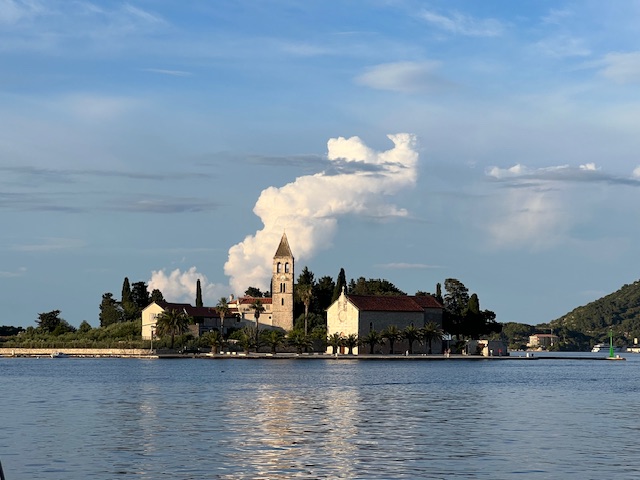
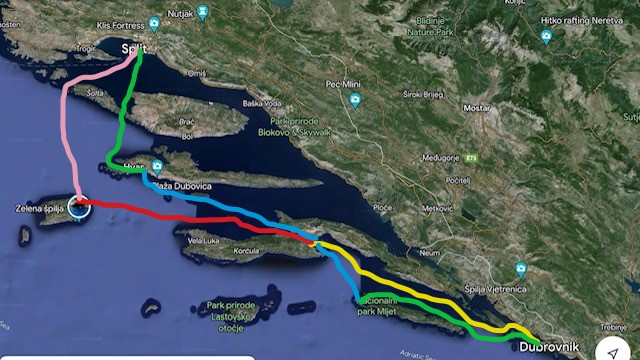
Then onto Vis, an island that played an important regional role in World War Two. Britain assisted Marshall Josip Tito, who went on to become President of Yugoslavia, to form and develop his partisan resistance movement, the British team led by the politician and author Sir Fitzroy Maclean. Tito and Maclean formed such a good relationship that the latter was able to buy a house on the island of Korčula, not normally possible for a foreigner. As an aside, it’s thought that Ian Fleming modelled his Bond character on Maclean. Vis is riddled with caves and tunnels which gave the partisans protection from any Italians sent to look for them. The island was occupied by Italy until 1943, when it was liberated by a combined British-Yugoslav force but it wasn’t until 1989 that tourists were allowed on Vis, as it had been a Yugoslav Naval base. It’s a typical Dalmatian Island, with clear water, limestone buildings and the obligatory monastery. (Note 1)

The Church of St Jerome in Vis

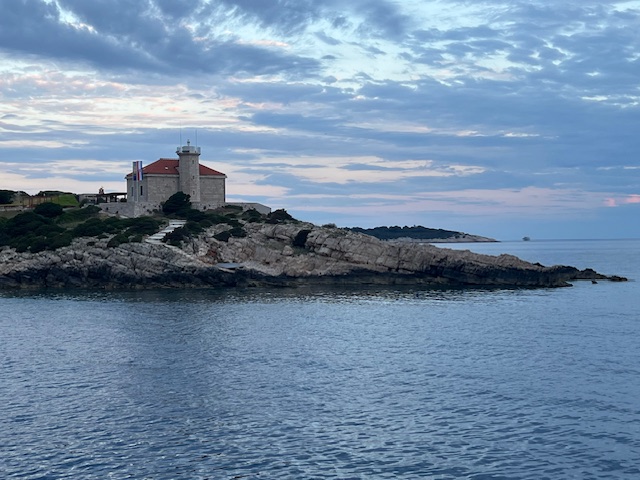
We upped anchor around 0530, motored out of Vis ……

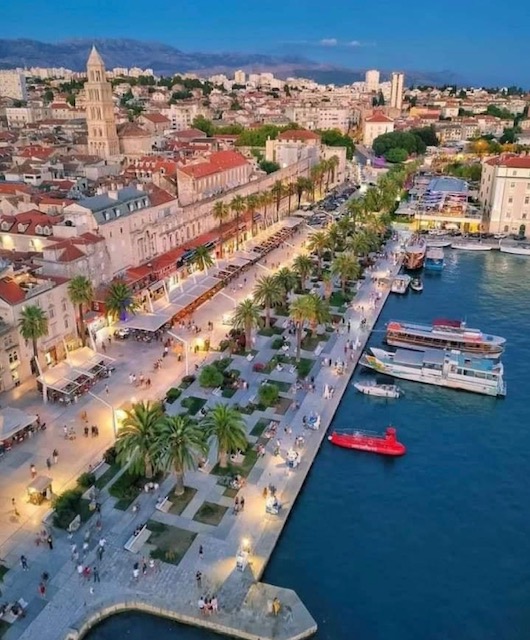
 …. and made our way to Split.

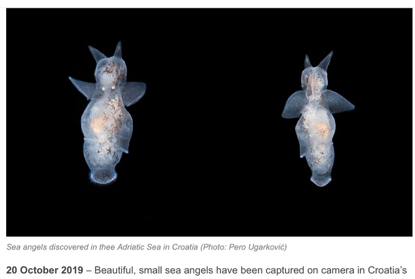
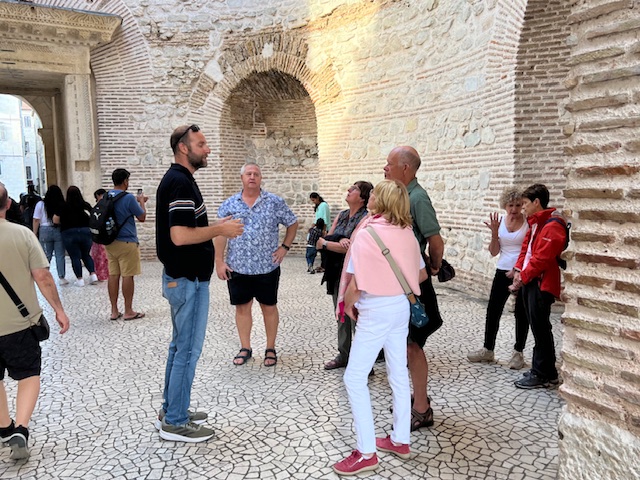
We took the tour, our guide this time was Pero Ugarković. Croatians have a habit of being tall, and Pero was probably around 2m. (Note 2) When I asked what he did in his spare time, he divulged he loved spear fishing, was an associate of the Institute of Oceanography & Fisheries in Split, had just published a book on sea snails and in 2019 had photographed small sea angels in the sea off Croatia.

 “Now” he said to us, “here we have the southern gate of the Palace of Diocletian. Diocletian ruled the Roman Empire from 284 to 305, when he retired here to Spilt. He was possibly the only emperor to retire!” 

And so we wandered into and around one of the largest Roman palaces still well defined. For sure, the internal structures have changed over the centuries and the architecture reflects who was in charge at any particular time, but it wasn’t difficult to half-close one’s eyes and imagine …

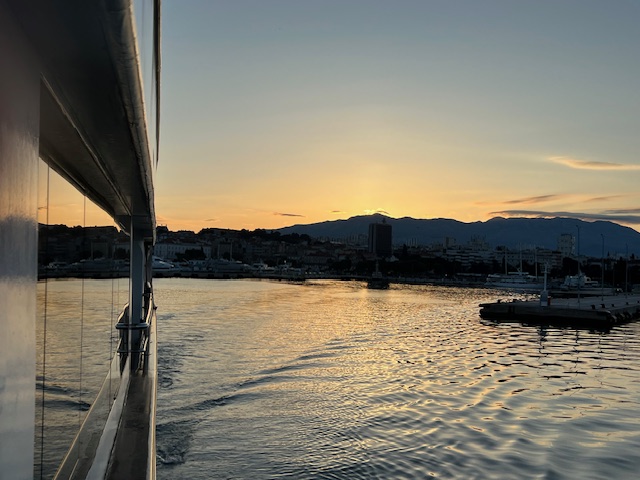
We spent the night alongside in Split and were plagued by a boat of young people intent on shouting, screaming and yelling that tied up on the outside of us. I was reminded I was young once! Early morning and we were off before sunrise, destination Hvar.

Ivana, who came from Stari Grad, over the mountains to the north, was our guide. Her most memorable snippet was that the local wine is better with 10 drops of water; these apparently bring out a gorgeous bouquet. I knew already that the oldest public theatre in Europe is here, on the upper floor of the Arsenal Building.

Created in 1612 it’s been gradually modernised as the years have rolled by; it closed for its last renovation in 2004 and reopened in 2019. Hvar’s central square’s stone floor is so polished by the infinite number of soles over the years it reflects the bright sunshine. 

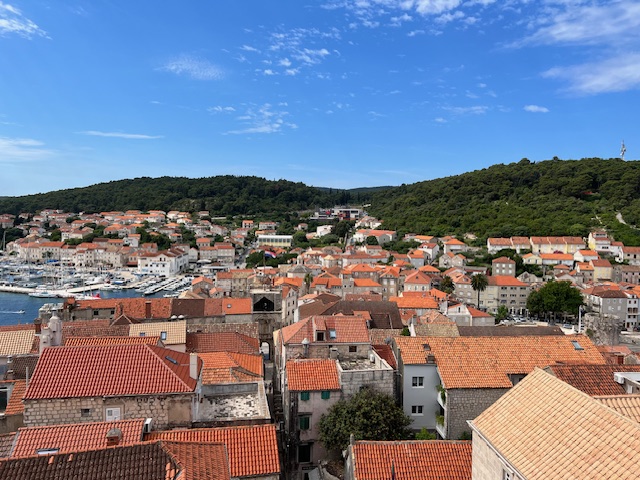
Hvar old town from the castle

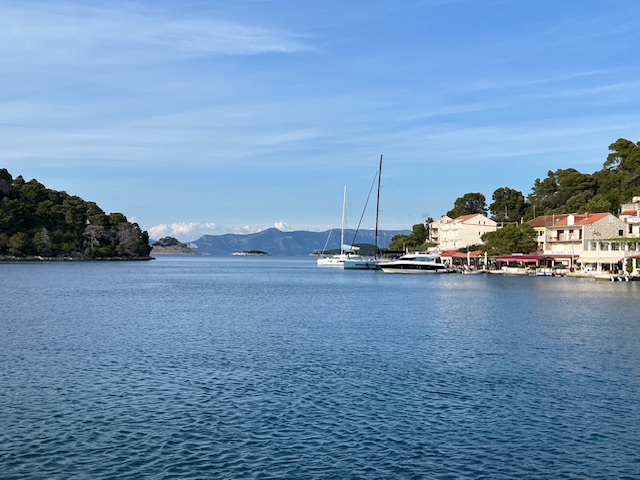
After the short tour and time for a coffee, we left for the Mljet National Park and tied up alongside in Pomena for two nights.

A walk and a boat ride across a lake ……

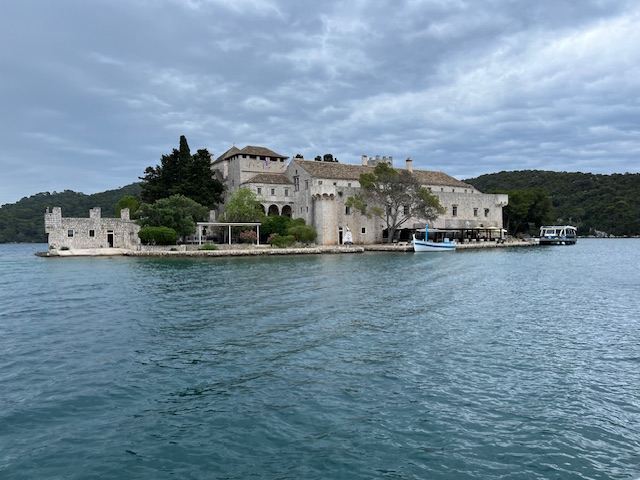
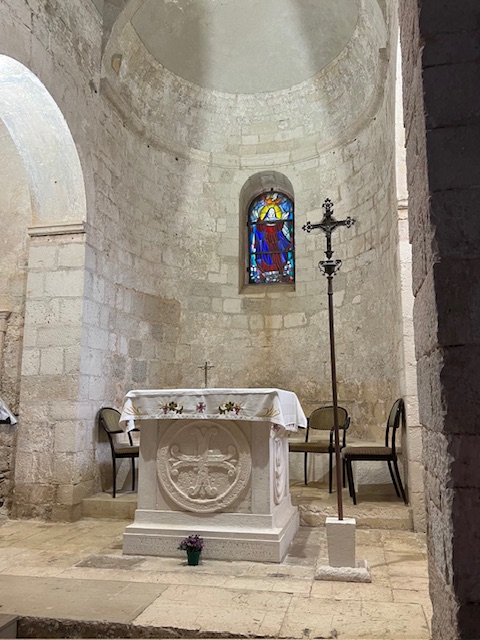
….. found us on the island of St Mary’s and its little Benedictine monastery.

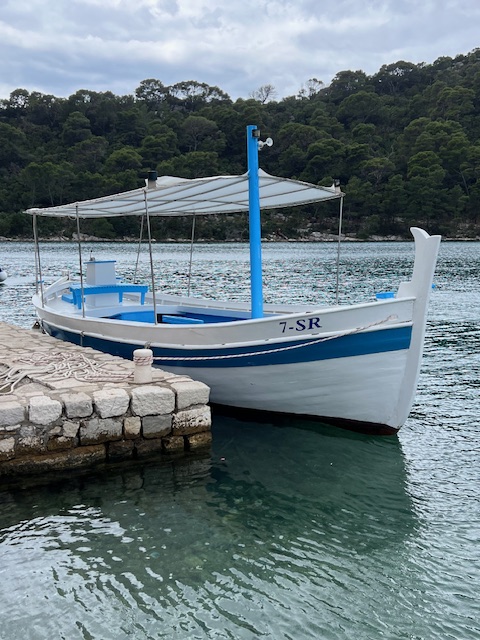
Just a sweet looking boat!

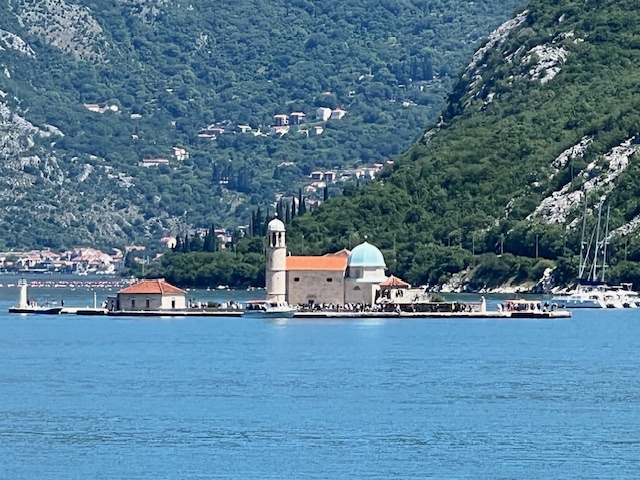
Then our last day on Ms Roko, motoring back to Dubrovnik. After a night alongside, Sunday saw us embark onto a coach for our journey to Montenegro, next door to Croatia, where we would have three days. I can’t think of the last time I had my passport stamped transiting by road from one country to another! In Perast we got on a boat and motored across Boka Bay ……

The Church of Our Lady of Škrpjela in Boka Bay

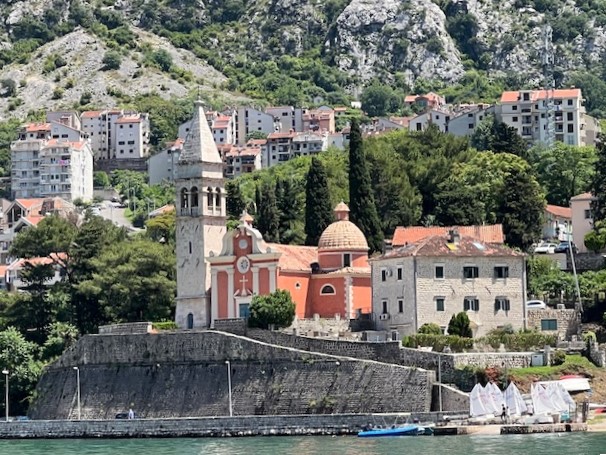
…… to Kotor.

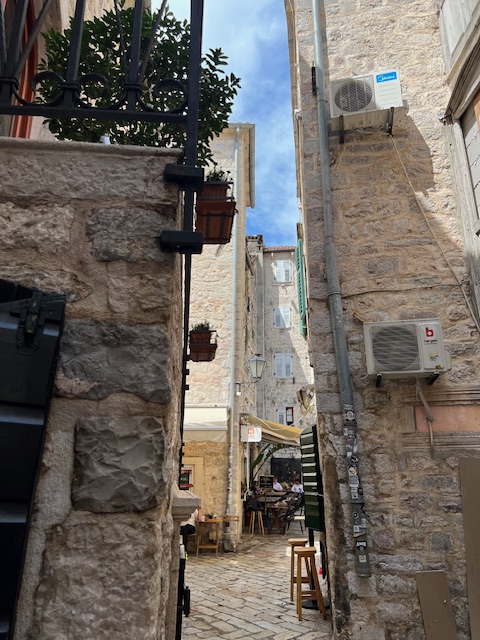
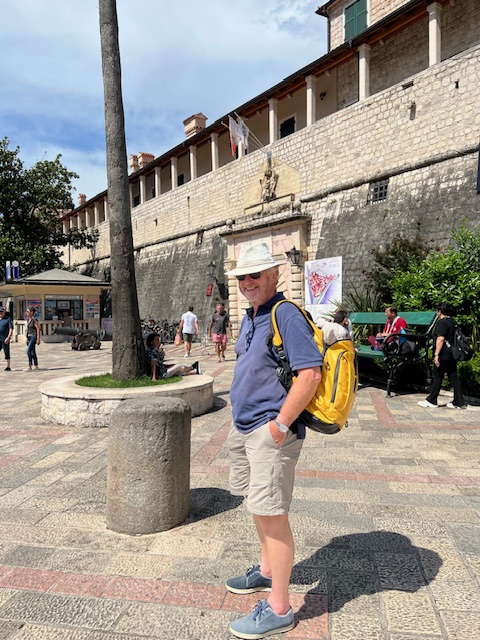
Many beautiful walled towns dot the shores of the Mediterranean and, after Dubrovnik, Kotor must be a favourite. Fortunately it’s more difficult to get to, so it’s only the arrival of a large cruise ship that will swamp its narrow streets with rubberneckers.

The eagle-eyed will notice Francisquinha had jumped into my backpack

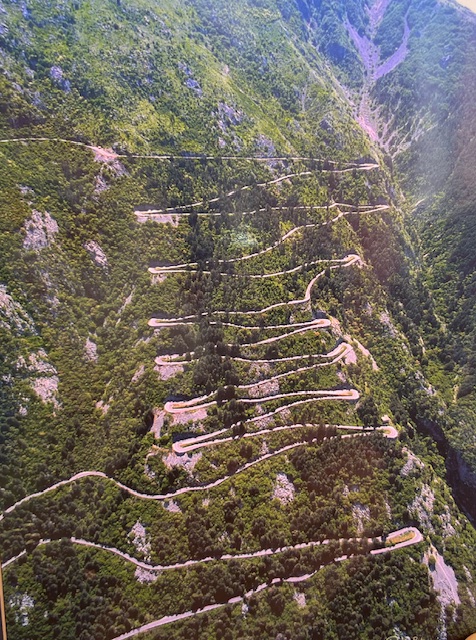
Driving out to the north requires a certain stamina, the road’s 25 hairpin bends a challenge for those vehicles without powered steering – like our Land Rover in 1965!

Then back on the coach to our hotel resort just south of Budva, itself a popular resort for the younger Montenegrin set intent on hedonistic pleasures. On the Monday Sandra, the Imagine Cruising representative, took us to Cetinje some 50 minutes inland and the former royal capital of the country. I am not a fan of religious paintings but was very taken by the rich gold-plated iconostasis in the Court Church.

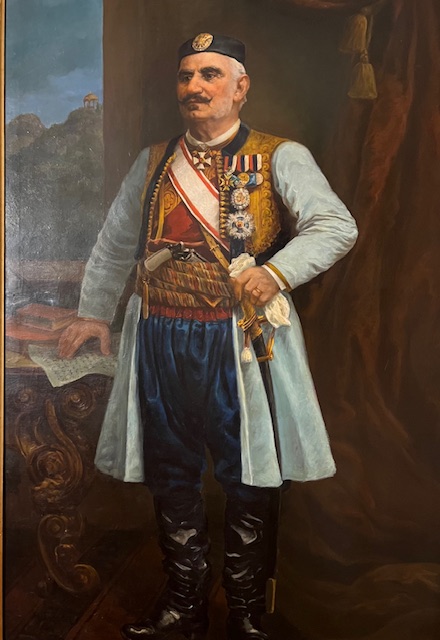
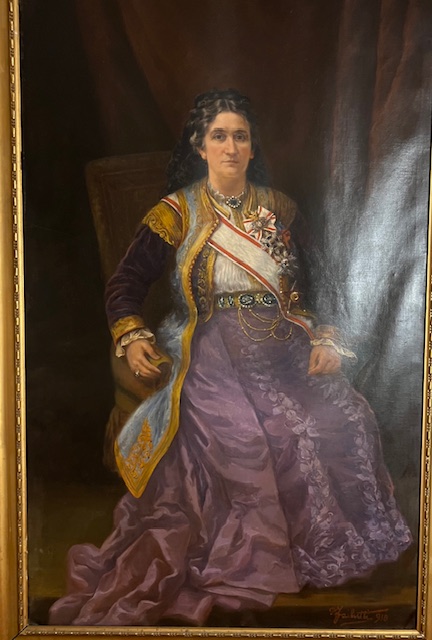
Within the church are two marble tombs containing the remains of King Nikola and Queen Milena.

Cetinje’s sadly in decline; factories have closed and the younger population are moving out to find employment. Croatia’s been a member of the EU since 2013 and Montenegro seems poor by comparison, this little town being a good example; but it’s a small country with a population of some 600,000. Titograd became its capital after the demise of the monarchy, but the city’s name reverted to Podgorica in 1992. On our journey from Dubrovnik Sandra had told us that any land with a view of the sea had been snapped up by Russians, prepared to pay silly money to build a house. Apparently, the owners have no interest in integrating, no interest in the local environment and are consistently rude. Sounded familiar! (See PC 134 The Largest Mediterranean Island Oct 2018)

You might be wondering what it was like to be on a small ship during our time up and down the Croatian coast? Gathering my thoughts and will put pen to paper, so to speak, soon.

Richard 14th June 2024

Hove

www.postcardscribbles.co.uk

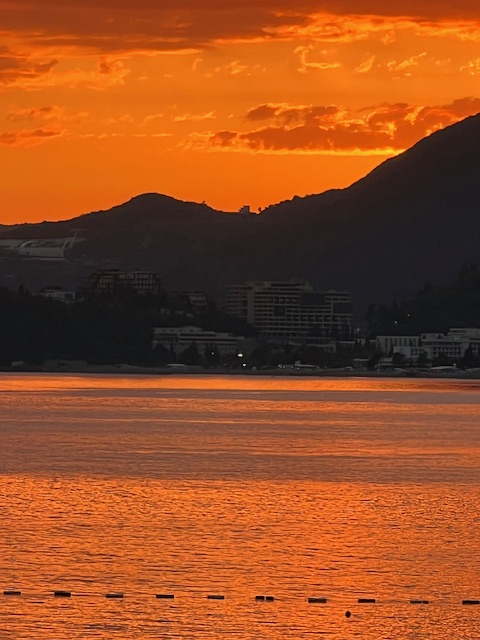
PS And finally a sunset!

Note 1 Bonaparte Napolean closed all the Benedictine Monasteries dotted up and down this coast in 1805.

Note 2 Our Montenegrin guide’s sons were over two metres and one of the security people at Tivat airport towered over me!

PC 390 Tales of Croatia (Part 1)

Back in 1965, post-A Levels, myself and five others from Daunstey’s School packed ourselves into a hard-topped Land Rover and drove southeast across Europe to Greece. Part of the trip was down the coast of what was then Yugoslavia. After Trieste we drove down through Rijeka, Šibenik, which required a ferry crossing, Split and Dubrovnik, before turning inland at Kotor to skirt around Albania. (See PC 346 Puds to Greece August 2023). Ten days later we retraced our route, up to Venice and home. Since then I have had a couple of ‘bare-boat’ yacht charters, with no charter-company skipper, one out of Trogir and one out of Dubrovnik.

Attracted by a Sunday Times advertisement back in October last year, we booked a small boat cruise out of Dubrovnik for May 2024, which concluded in Montenegro in the first week of June.

It was an early start on Sunday 26th May, our flight for Dubrovnik leaving at 0555. Having got new reading glasses after my recent cataract operations, I have got into the habit of tucking them into the neck of my shirt/T-shirt. I was surprised to be asked to put them in the tray at Airport Security – “Really I thought?” …. But you don’t question a request from someone who could make the whole experience very tedious!

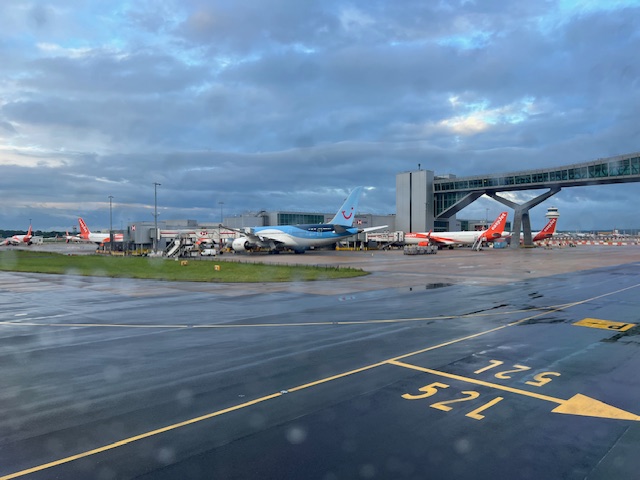
Gatwick at 0555 on a wet Sunday morning

The female EasyJet pilot smiled to the cabin crew and said we would leave slightly early! The male steward running the cabin had a strong Australian accent and I asked him where he was from:

Perth

“One of my favourite authors is from Western Australia; Tim Winton.”

Ah! He’s great isn’t he! ‘Cloudstreet’ huh!”

“Such a great book, so atmospheric of its time.”

I have never met anyone who’s read it …. mate!”

We had a connection! We arrived early as predicted and, having been joined by two other couples, were taken to the boat in Dubrovnik’s new port on the northwest side of the old city; others would arrive later.

I often find it strange meeting people for the first time, whether for a conference, supper at a friend’s, a group training activity or even for a cruise ….. and I am sure most of our fellow passengers felt the same, that slight awkwardness part of the English DNA! We discovered later that in our complement of 36 passengers, one couple had come from South Africa and two couples live north of the border in Scotland; no hint of the English habit!

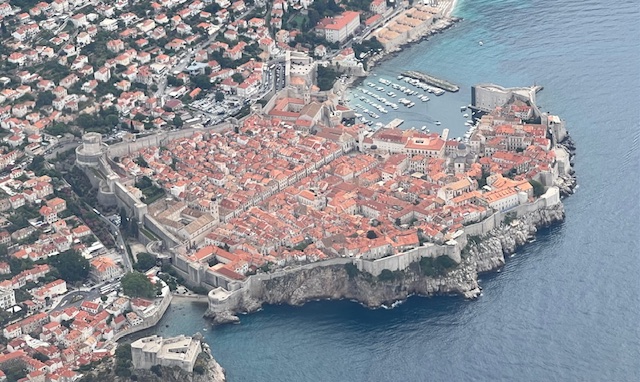
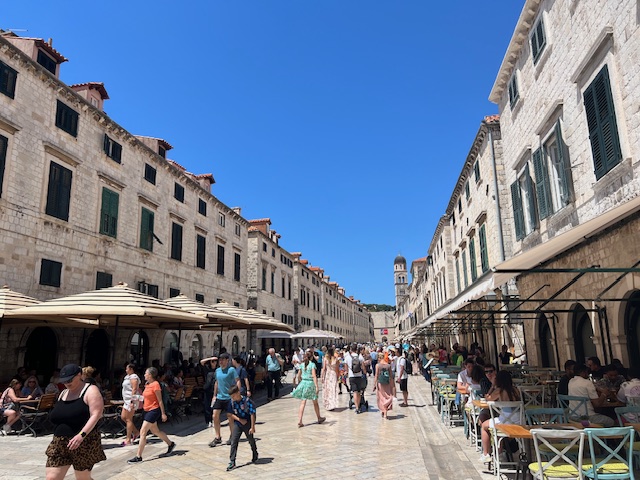
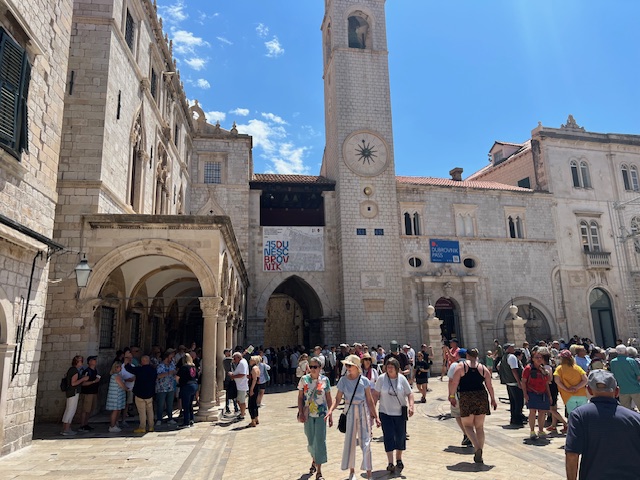
Dubrovnik is always a delight; on our guided Saturday tour I learned from Ana that it had started off as two cities, one Slavic and one Roman, that the walls were very thick, some 5 metres, and that today few people actually live within the city walls, being forced out by the tide of tourists washing around the narrow streets (Note 1) and by the paucity of ordinary shops – these replaced by ice cream parlours, shops selling huge bowls of jellied sweets and liquorice and, strangely, ones where the only items for sale are small, yellow, plastic ducks, decorated in every imaginable design, tempting you to spend some €15 – on a plastic duck? In 1991 the city was of course badly damaged during the Balkan War by the Montenegrin Artillery but, with the help of UNESCO, has been completed restored to its former glory – sadly that doesn’t apply to the 114 civilians who died in the city.

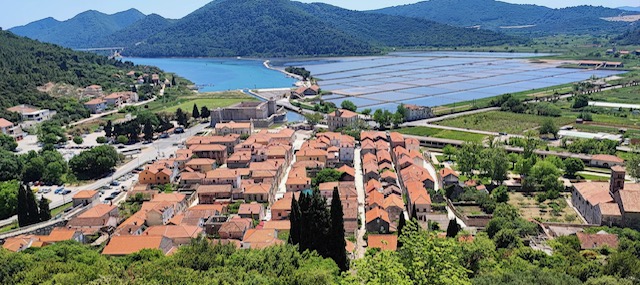
Ston salt production today

I also learned that in the nine crystallization pools at Ston, some 55kms to the northwest, salt production started in 167 BC and today they’re producing 500 tons per year. In 1000AD about one third of Dubrovnik’s income came from the exportation of salt; salt was more valuable than gold! Ana added that in these walled cities, the good counsellors made sure enough food and water was preserved for the inevitable days of sieges – and salt was used in the food preservation process.

Before we left, Ana reminded us that the city has suffered many earthquakes over the centuries, the most major one, 6.4 on the Richter scale, in 1667 when the entire city was almost destroyed and some 4000 inhabitants killed. The latest was in 1979 when 1071 buildings within the city walls were damaged. But what she added was most interesting, especially to someone who studied, inter alia, cement and concrete at university. Those buildings that suffered least had used mortar made with fresh water; those which had used sea water seemed more vulnerable to the earthquake’s forces. I never knew!

‘Cruise ships’ seem to have become bigger and bigger, more floating hotels than ship, but MS Roko was very definitely a ship, some 50m long with a total of 18 cabins. Captain Ivan ran the ship ……

…… and Viktor, a 40-something Croatian, was the delightfully unflappable chap who made sure everyone got what they wanted, did want they wanted, and ensured everyone was on board before engines were started and mooring ropes slipped.

Our first port of call was Korčula’s old town, just north of the eastern end of the island of the same name (Note 2). St Mark’s Cathedral, which sits on the highest ground in the middle of the promontory, dominates. The view from the tower is spectacular and worth squeezing oneself up a very narrow stone staircase for, but not for those prone to claustrophobia!

The streets were busy with tourists and the shops selling sponges and red, legally harvested, coral doing a good trade. Whoever designed the layout took account of the various winds that blow; in some cases the closely-packed narrow streets are curved, to lessen the effects of wind from a certain direction. Paying with cash for supper in one of the waterside cafes, the Serbian waiter explained that in his country credit cards were hardly used, as corruption and scams were common; a sad observation on one’s place of birth.

To be continued …..

Richard 7th May 2024

Hove

www.postcardscribbles.co.uk

Note 1 Talk about ‘killing the goose that lays the golden egg’. Venice is another city where the high tide of mass tourism, on which these cities depend, is having a negative impact on the experience! The ratio inhabitants/tourists in Dubrovnik is apparently 1:39

Note 2 The island of Korčula is twinned with Rothesay in Scotland