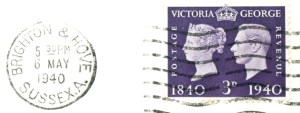
It’s often that first time you visit a place you remember years later, no matter how many times you subsequently go back. My first visit to Buckler’s Hard (Note 1) was over 55 years ago!

As a Second Lieutenant I had joined my first regiment, 27 Medium Regiment Royal Artillery, in Devizes, Wiltshire in February 1968. My Troop Commander was a Captain James Scarlet, who was also responsible for a small Royal Artillery Yacht Club yacht moored at Marchwood on Southampton Water; despite not knowing much about sailing at that time, he delegated the task of its bosun to me! Braganza (Note 2) was a 19 feet Bermudian sloop, with a lifting centre board; you couldn’t stand up below decks except immediately by the little sink and stove. It wasn’t booked much that summer and in June 1968 Gerry Ackhurst and I sailed down Southampton Water and into The Solent. One evening we decided the tide was perfect to sail over the sandbar at the entrance of the Beaulieu River and make our way upriver to Buckler’s Hard, about 6kms. The Solent sailing guide book said it was a good place to visit; we did not disagree!
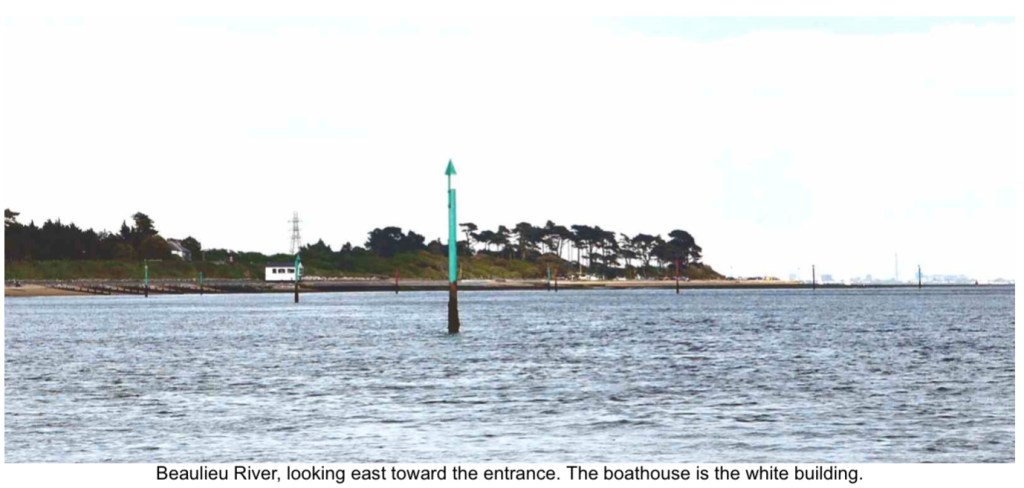
For those of you interested in these things, estuary or river entrances are delineated by red and green marker posts. Convention has it that coming in from seaward, one has to keep the red posts to port (left) and the green ones to starboard (right). So far so good; a scenic tidal river leading to a very sheltered spot where you could tie up to a pontoon or large piles.
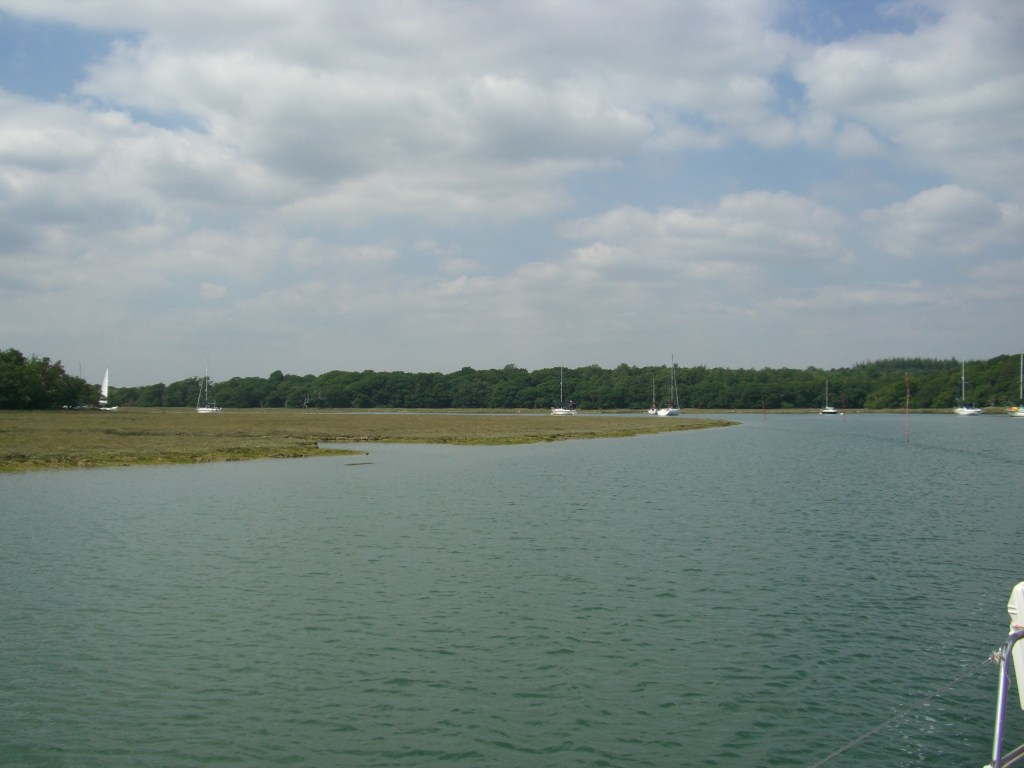
Fifty years’ ago there were few facilities at Buckler’s Hard, save for somewhere to secure your yacht, a diesel pump and the Master Builder, an atmospheric pub. The following day we took advantage of the incoming tide and sailed all the way up to the little town of Beaulieu, home of the late Lord Montagu (1926-2015) who founded the National Motor Museum (Note 3). With her centreboard up, Braganza only drew about 2 ft (in old money), so it was unusual but possible!
A close inspection of the first photo will reveal a little indentation, just below the ‘B’, on the spit of land that forms the entrance to the river. ‘Gins Run’ was a little cut-through when leaving the river, tide-dependent! I used it a couple of times but gradually by 1986 nature had closed it with the shifting sands of the estuary.
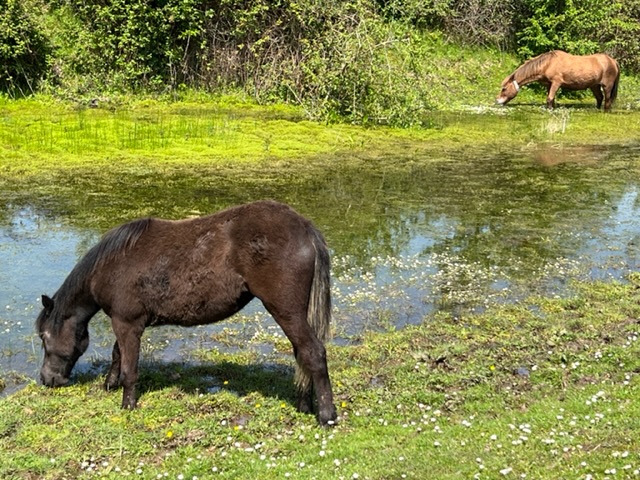
So Celina, Cecilia, Toni and I leave Lymington and follow the smallest of roads northeast through the New Forest towards Buckler’s Hard. Having mentioned the free-roaming ponies to Cecilia, it was good to be able to find a couple munching some weed in a road-side pond!
Leaving the car in the carpark, our first stop was the excellent museum where you begin to understand the historic significance of Buckler’s Hard in our Nation’s story and why the pub is called the Master Builder. Originally founded as a free port for the trading of sugar, it flourished as a naval shipbuilding centre and has become famous for building a total of over 50 warships for Admiral Nelson’s navy. Three, Agamemnon, Euryalus and Swiftsure, took place in the Battle of Trafalgar in October 1805. Today it’s difficult to imagine the riverbank being such a hive of activity and industry, scores of expert carpenters, sailmakers, woodsmen and the like, working to construct these huge vessels. The museum has some terrific illustrations and for those of you who have not been, it’s highly recommended. What I find most surprising is that these large ships sailed down this small river to The Solent!
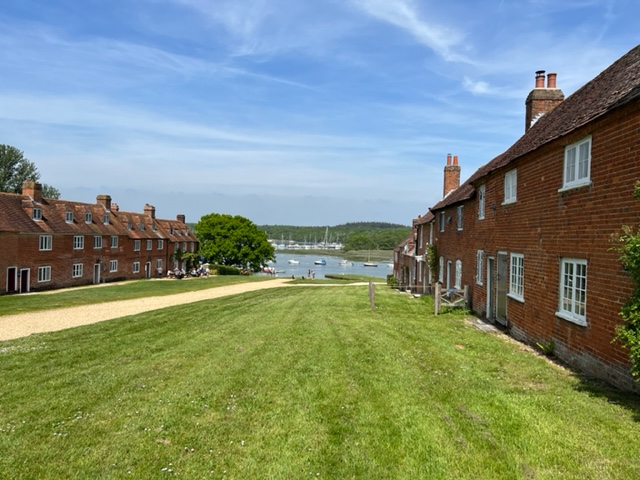
Worker’s cottages on right, Master Builder near the river on left
In addition to a huge amount of information about building these warships, such as how it took 100 oak trees to construct one ship and that the wood had to dry out for two years before it could be fashioned into the appropriate shape, there are stories of those who lived and worked here. Buckler’s Hard has become a popular tourist destination as well as a sailing centre!
.
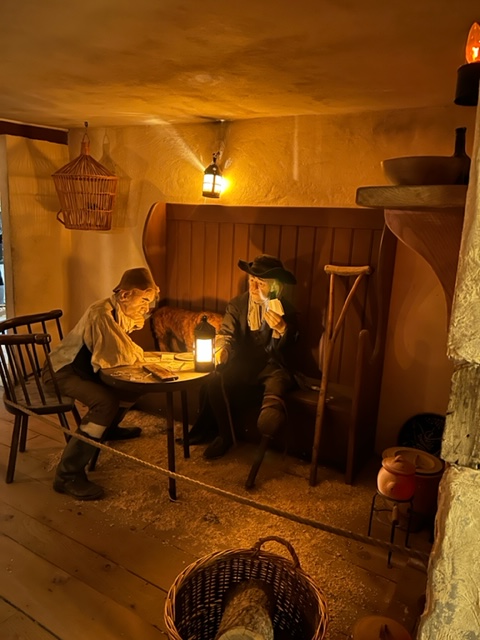
There are some very realistic recreations of what the Master Builder public house might have looked like and the ‘one (room) up, one (room) down’ layout in the workers cottages. It meant extremely cramped living conditions for everyone, but I guess that view’s with the benefit of hindsight; they didn’t know anything different!
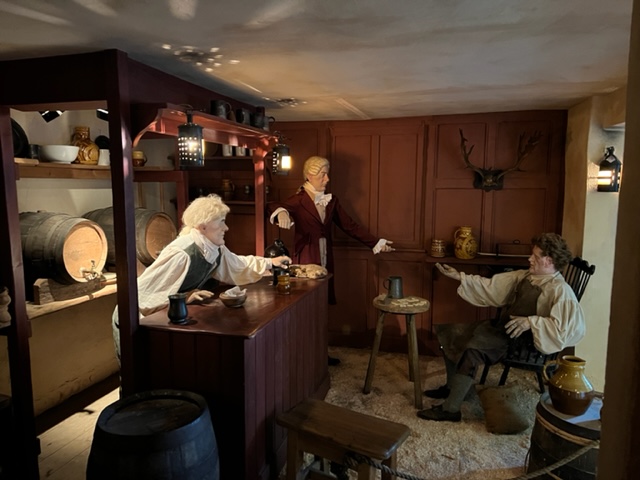
We had lunch at the Master Builder, its passageways hung with suitable nautical photographs and paintings, and sat in the garden in the sunshine. On one visit decades ago the yacht I was skippering arrived late in the evening, after the Master Builder’s kitchens had closed. However, with a great deal of diplomacy and persuasion, eventually we managed to get some soup and defrosted bread rolls which were devoured by the hungry crew; offshore sailing always generates healthy appetites!
Back into the C21st for our trip back to Hove which, on a Friday afternoon, was always going to be in heavy traffic.
There will be a postcard about our time in Croatia at some stage.
Richard 31st May 2024
Korčula Croatia
PS Braganza was not big enough to have an onboard loo (heads in nautical terms). This didn’t matter when the crew were only male but critical for onboard females. Later that summer I had another week on her, myself, Gerry and two girlfriends. I still remember approaching Wootton Creek and being asked to hurry up by the two girls, anxious to get ashore to find a loo!
Note 1 The ‘Hard’ here refers to the road that led down to the Beaulieu River.
Note 2 Funny coincidence! The Braganza dynasty (1640 -1910) was Portuguese and ruled Brazil from 1822 to 1889 when it became a republic. The town of Bragança is in northern Portugal.
Note 3 The current Lord Montagu is Ralph Douglas-Scott-Montagu, the 4th Baron. The family have owned the Beaulieu Estate for over 400 years.
 postcards