I hope we’ve all done it, sitting around the table amidst the detritus of a lovely supper, an attacked cheese board and accompanying pear peel, some strawberries, an empty bowl of ice cream, soft lighting revealing dirty plates and contented faces, and the conversation just drifting with little direction. During the summer in Estoril with Celina’s mother and cousin, our shared experiences are often not the same, my knowledge of Brazil and growing up in Rio de Janeiro miniscule compared with my own English upbringing. After-dinner chats roll in a desultory way……
One word started the process, in this case ‘forever’, maybe referring to how long the redecoration of the four-apartment building on Avenida General Carmona was going to take …..
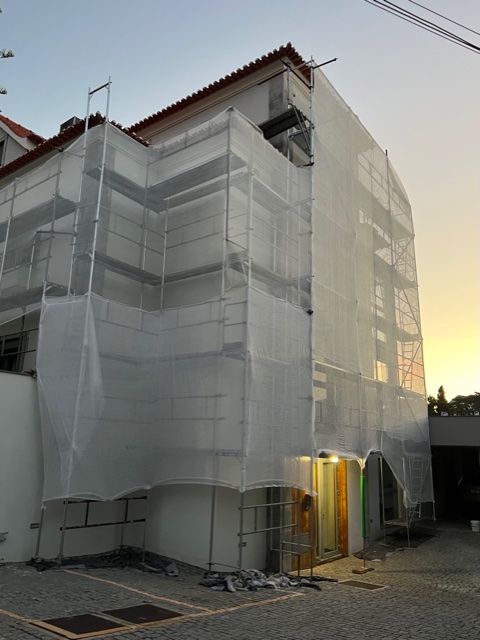
….. and I go ‘Forever and Ever’, being the title song from a 1973 hit ….. and someone poses a rhetorical question: Who was that chap, that big man, who wore a Kaftan or some other somewhat feminine garb, his falsetto voice at odds with his long black hair and mass of curly locks protruding from his chest? Maybe that’s what made him a star in his time. And sure enough the name Demis Roussos rises to the surface of one’s memory. Celina reaches for her iPhone, opens Spotify and suddenly he’s back with us in the room, and we remember one of his other smash hits, Goodbye My Love Goodbye.

“It says here (Wikipedia!) he died eight years ago at the early age of 68 …… oh! and had a huge hit here in Portugal with Vocé Vocé e Nada Mais (You, you are nothing more) in 1977.”
“Well, well! Who knew?! But he always performed in a Kaftan so he didn’t look so big as he was over 20 stone (130kgs)!
“So, no tutu for Demis!! And there was another Greek singer from about the same time …… Nana …..?”
“Nana Mouskouri.”

“Nana Mouskouri! Yes. The White Rose of Athens was her most famous song but did you know she recorded over 200 albums before she took a break to become a Greek member of the European Parliament? She’s still with us, aged 89!”
“I bet she never wore a Kaftan.”
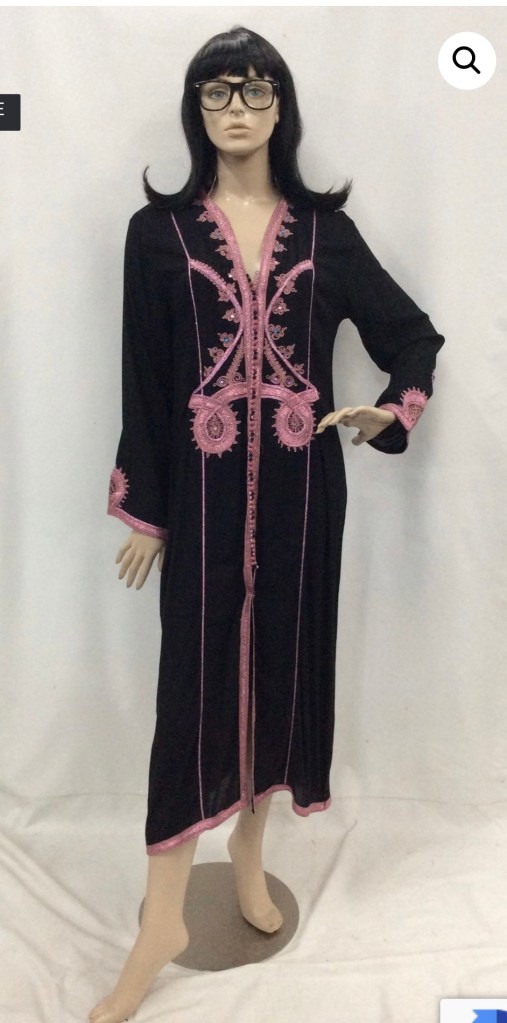
“Actually she did!! Or so this photograph from some museum suggests!”
“But never a tutu!”
The word brought up another memory and I look across at Toni and ask:
“Did you ever hear the story of Mimi and Toutou (Note 1)?”
“Sounds like two very short skirts? (Note 2)
“No! No! Not Mini! Mimi ….. and Toutou with extra ‘o’s.”
“No! I haven’t. But I sense you’re going to tell me ….”
Many years ago I had been so taken by a Times review of the book ‘Mimi & Toutou Go Forth’ that I ordered it. It was before the Kindle so a paperback copy came through the post. Knowing everyone likes a good story, I thought I could give them a summary.………
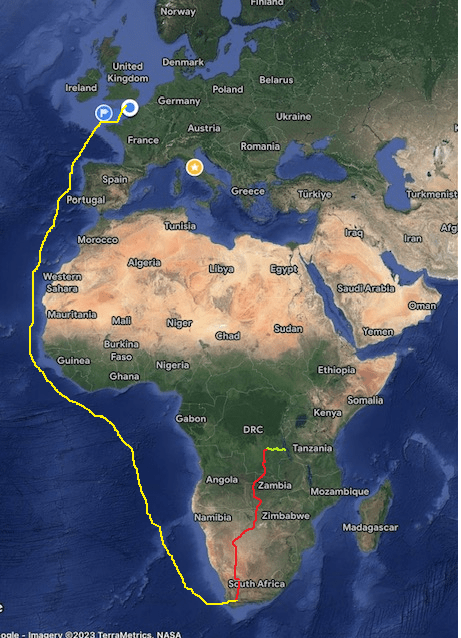
“OK! We go back to the First World War and the minor skirmishes in East Africa. History buffs will know that the colony of German East Africa was surrounded by Belgian and British colonies, with Lake Tanganyika, a huge body of water some 670 kms long acting as the inland border. News reached the War Office in London’s Whitehall that the Germans had moved a naval ship to the lake via the railway from Dar es Salaam and we, the Brits, had nothing. Deep in The Admiralty a plot was conceived whereby a couple of armed boats would be shipped to South Africa, a British colony, then north by rail to Fungurume in the Belgian Congo and on overland to Lake Tanganyika.
This hairbrained scheme needed a wacky Boys’ Own Adventurer-type to carry it off; officer files were searched and eventually the oldest Lieutenant Commander in the Royal Navy, Geoffrey Spicer-Simson, twice court-martialled and known as a complete liar, was chosen.
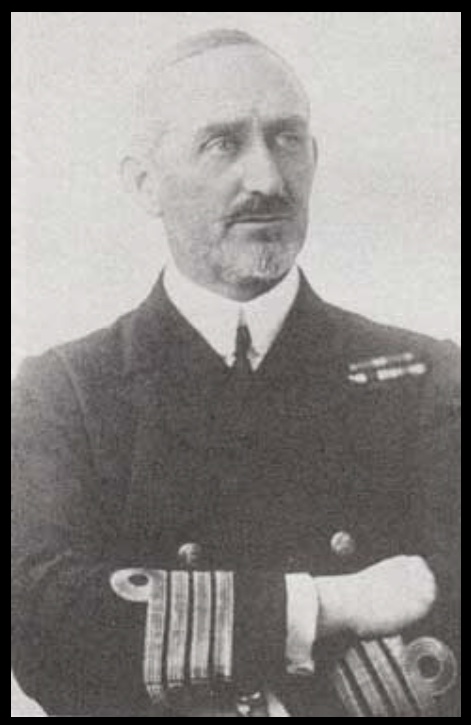
At his insistence the two 12m motor launches were commissioned as HMS Mimi and HMS Toutou and armed with 3 pounder Hoskiss guns. In July 1915 Spicer-Simson, twenty seven other naval personnel and the two launches arrived in Port Elizabeth after a month long voyage from Portsmouth. Loaded onto railway wagons they were then transported 3250kms northwards, and then the real adventure began. With hundreds of hired native Africans, they dragged the two launches across 140 rivers and gorges, building temporary bridges and using oxen and steam engines, the four hundred kilometres to the western shore of the lake.
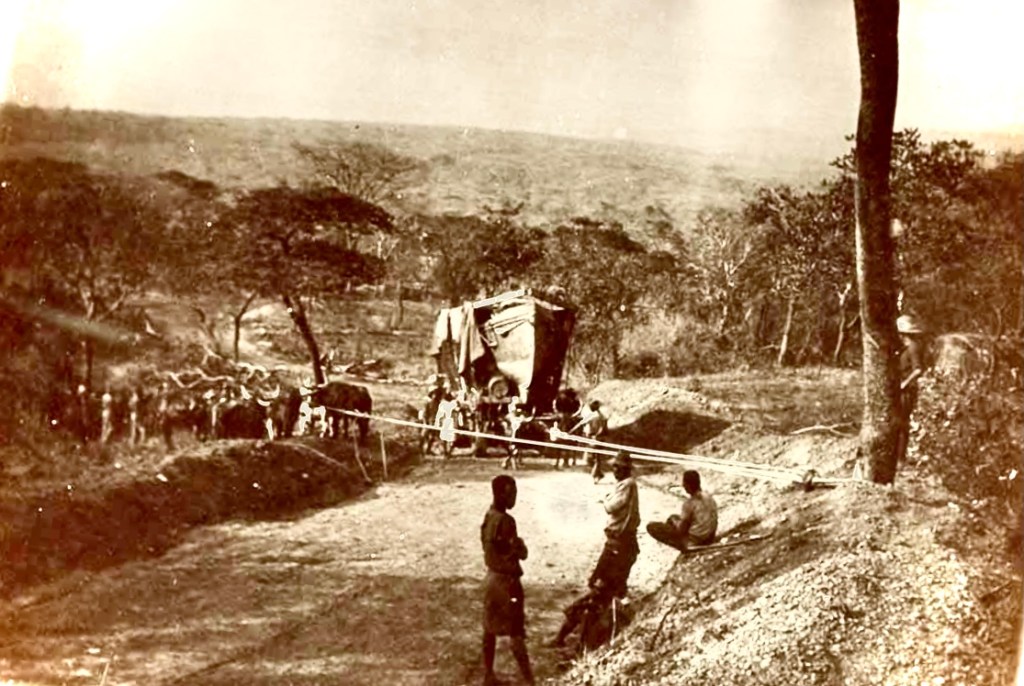
HMS Mimi on route
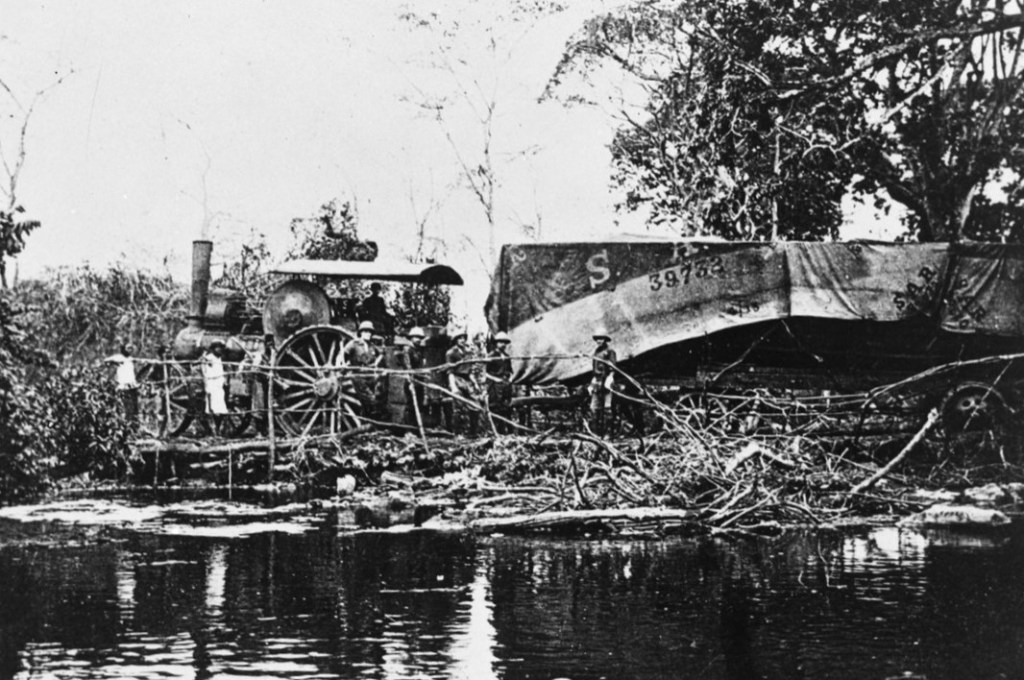
Arriving on 28th September, HMS Mimi and HMS Toutou were deployed three days later. In their first skirmish with the Germans, they captured the Kigani and subsequently renamed her HMS Fifi. Eleven days later they attacked and sank the Hedwig von Wissman but sensibly did not engage the much more heavily armed Graf von Götzen. An Anglo-Belgian attack on German land positions the following year resulted in the scuttling of this large vessel (Note 3)
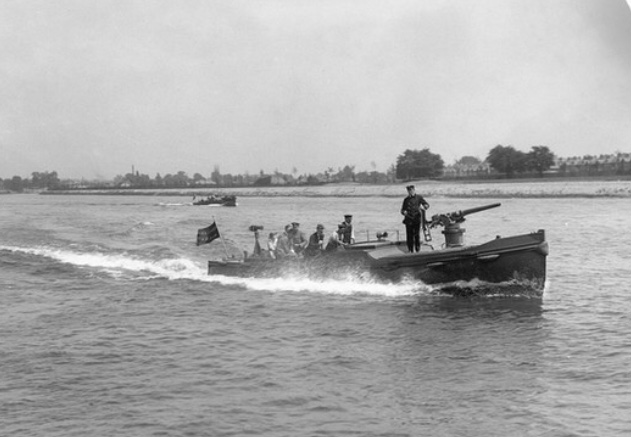
HMS Mimi with HMS Toutou behind her
The Battle of Lake Tanganyika was summed up as: “No single achievement during World War One was distinguished by more bizarre features than the successfully executed undertaking of 28 daring man who transported a ready made navy overland through the wilds of Africa to destroy an enemy flotilla on Lake Tanganyika.”
Lieutenant Commander Spicer-Simson never held a Naval command again and died in 1947 aged 71.
I think I still had Toni’s attention but Cecilia and Celina’s had wandered somewhat. Nothing worse than someone banging on …….
“Hey! Ho! Let’s clear the table …..”
Richard 10th November 2023
Hove
PS There’s plenty of stuff on You Tube about this or you can read Giles Foden’s book, ‘Mimi and Toutou Go Forth’
Note 1 Mimi and Toutou are often known as childish onopatopoeia for cat and dog in French. (Meow and Fido in Parisian slang.) Mimi’s also the name of Celina’s bestest friend, although she was christened Marina.
Note 2 What’s that slang description of extremely short schoolgirl skirts – pussy pelmets?
Note 3 The ship was raised after the war and still operates on Lake Tanganyika as the MV Liemba
 postcards