PC 362 Eternity

I hadn’t thought of Arthur Stace for way over a decade, but his name came up in an excellent book, The Household Guide to Dying, by Debra Adelaide, recommended by my chum Chris Popham (See PC 348 Frogmore Devon).

Initially I wasn’t sure whether this was my sort of book, the title suggesting something mawkish and sad. How wrong I was! I finished it some weeks ago, sitting by the pool in Estoril, soaking up both the sun and the interesting story. It concerns Delia, an established author, who has written many family guide books, ‘The Household Guide to Laundry’, ‘…. to Gardening’ for example. Suffering from terminal cancer, she persuades her commissioning editor that she should write a guide for her family and others, so they can continue without her; they call it ‘The Household Guide to Dying’. Additionally, there are things she feels she needs to do while she still can, for example go to places that were pivotal in her life and the story is interwoven with these threads.

It took me a while to understand it was set in Australia but when Delia mentions Mr Eternity, Arthur Stace, it made sense.

In theology eternity means an endless life after one’s earthly death – the concept of one’s ‘immortal’ soul destined for eternity. This is a fundamental belief in Christianity, in Islam and in Hinduism. But Buddhism teaches something completely different, that there is no perception of an eternal metaphysical aspect of human personality. The only common ground is a belief that one’s spirit leaves the body. Buddhists believe that, as we are such a mixture of the physical and psychical, the spirit is ‘reborn’ is some form, depending on the laws of karma, the ‘cause-and-effect’ laws of our material existence. All religions believe where your spirit goes depends on how you perform in your life. You might go up, you might go down, you might go sideways although reincarnation in some animal form is viewed in a negative light and is seen as a backward step in the journey to self-mastery. So no concerns about ‘coming back’ as a snake, for instance!

Eternity is a noun and eternal an adjective. Classic philosophy defines eternity as what is timeless or exists outside time. Eternal and forever are synonymous but there is a subtle difference. Forever refers to an endless or seemingly endless period of time. Eternal means always lasting without a beginning or end: think of eternal as existing outside of time. Easy huh?

A British R&B girl group formed in 1992 called themselves Eternal and there are ‘eternal flames’ in cathedrals and public squares across the world that pay homage to those who died in battle. For me the word will always take me back to the closing minutes of the Sunday morning service at the Royal Military Chapel at Sandhurst. Kneeling on hassocks and, hoping our highly polished parade boots were not being scuffed by the flagstones, one thousand officer cadets sang quietly ‘Eternal Father’, in memory of Merchant and Royal Navy sailors who had lost their lives during conflict:

“Eternal Father, strong to save, Whose arm does bind the restless wave, Who bids the mighty ocean deep

Its own appointed limits keep; O hear us when we cry to thee For those in peril on the sea.”

From ‘Here to Eternity’ was the title of a 1953 American romantic war drama starring Montgomery Cliff, Burt Lancaster, Deborah Kerr and Frank Sinatra, based on the James Jones book of the same name. I guess we’ve all seen the B&W photograph of Burt Lancaster and Deborah Kerr on the beach?
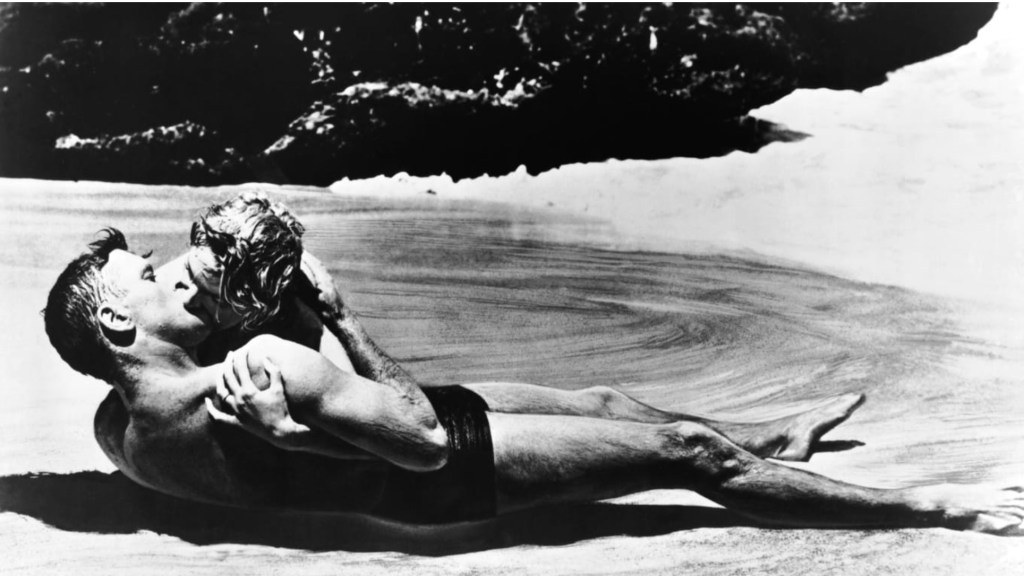
James Jones found that the phrase ‘from here to eternity’ was first used by Rudyard Kipling in his 1892 poem ‘Gentleman Rankers’. Kipling wrote about soldiers of the British Empire who had lost their way and were ‘damned from here to eternity’. It had been incorporated into the ‘Whiffenpoof Song’ by junior students at Yale University and Jones liked it!

In the British Army in the C19th a ‘gentleman ranker’ was an enlisted soldier suited through education and social background to be a commissioned officer, It’s a long poem but the final verse is:

“We’re poor little lambs who’ve lost our way, Baa! Baa! Baa!

We’re little black sheep who’ve gone astray, Baa – aa – aa!

Gentleman rankers out on the spree,

Damned from here to eternity,

God ha’ mercy on such as we, Baa! Yah! Bah!”

Mr Eternity? Oh! Yes! Sorry … got distracted! Somewhere ‘Delia’ mentions Arthur Stace! Arthur Stace (1885 -1967) was the fifth child of alcoholics and brought up in poverty in the Sydney suburb of Redfern, By his 12th birthday, with no formal schooling and often in trouble with the authorities, he was an alcoholic, had already spent some time in prison and was made a ward of the state. In 1916 aged 32 he joined the Australian army and served for three years during World War One. Over ten years later Arthur Stace was moved to attend church and in 1932 heard these words from the Reverend John Ridley:

Eternity, eternity, eternity; I wish I could sound or shout that word to everyone on the streets of Sydney. You’ve got to meet it, where will you spend eternity?”

Something clicked inside the head of Arthur Stace; in some way the words spoke directly to him.
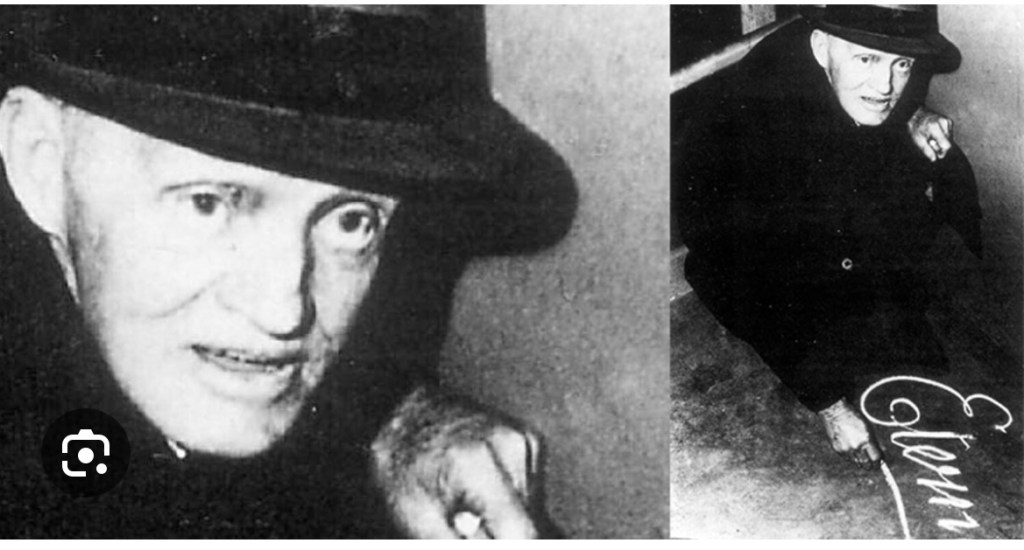
He was so touched that for the next 35 years Stace got up early and wrote the word ‘Eternity’ in yellow chalk wherever he could, on pavements, on buildings, on walls. For those living in Sydney at the time, the fresh yellow script was there during their morning commute into work, but whoever was doing it was a mystery; so the man who wrote ‘Eternity’ became a Sydney legend, only resolved in 1955 when the Reverend Lisle Thompson saw Stace take a piece of yellow chalk and write ‘Eternity’ on the pavement. It’s estimated he wrote it over half a million times.

So, see you in the next life …. or more likely, next week.

Richard 24th November 2023

Hove

www.postcardscribbles.co.uk

PC 361 Hope Returns

Before I scribble about my last visit to The Hope Café, I need to share a delightful ‘You Tube’ link, courtesy of my Greek dentist Rachil. I sent her PC 360 ‘Kaftans, Mimi & Toutou’ as two Greek singers were mentioned in the first part, Nana Mouskouri and Demis Rousos. You can watch them singing a duet, wearing Kaftans, at https://youtu.be/YqtT7fICQFY?si=N61nnthnpzD2-2U6

The first thing I notice when I push open the door of The Hope Café is that Josh, the barista who’s always there, is absent. Libby is manning (womaning doesn’t seem right?) the counter, but Duncan sees me and greets me in the middle of the floor.

“Afternoon Richard, glad I was here to see you as Josh wanted me to give you his best wishes and hopes to be back at some time.”

“At some time? Where’s he gone?”

“You remember back in March 2022 in PC 273 ‘Stories to Tell’ you wrote how Josh had told you his grandparents had escaped the persecution of the Jews in Ukraine in 1938 and fled to England ……”

“Yes! Absolutely! Oh! No! He’s not flown to Israel and joined the Army?”

“He has. He was watching the videos of the indiscriminate Hamas slaughter of 1400 Israelis, the young, the old, the babies and the festival goers, and those taken hostage in early October and sensed that he should do his bit to protect the country that was founded after The Holocaust.”

“Isn’t it amazing …. There’s no other nation on earth where individuals in its diaspora would have heard the unsounded call to leave their safe lives, family and jobs and travel to their mother country and sign up.”

“The whole situation, the Hamas slaughter and the subsequent huge loss of life in Gaza is so so sad, although here the country seems split on generational lines as to who to support, the young siding with the Palestinians and the older age group saying: “But what do you make of the Hamas spokesman who says we will repeat the attacks of 7th October again and again until Israel is annihilated?”

“Maybe we should keep a lit candle on the counter, until Josh returns?”

“Good idea! Libby’s been in touch with Susie and she’s going to finish off her Gap Year in Melbourne, not go to Western Australia, and return by the end of the year. So we’ll just muddle through without Josh until then.”

“I have an idea. You know I do hot yoga? Well, the other day I was talking to Kate, another aficionado and Hot Yoga teacher, who, it transpires, is a bus driver on the tourist route to Eastbourne. This is a seasonal job and she’s just finished for the winter months. Let me ask her whether she could stand in for Josh; she lives down by Hove Lagoon so not far. If she’s enthusiastic I’ll get her to call you.”

“That would be great. Before you go, how is the triptych coming on, you know, the one you promised by Christmas?”

“Er! Well, the idea’s taking shape, I just need to draw it out and then apply some paint! Don’t worry!”

I see Mo having a Latte, step over to her table and ask how she is.

“Loving the new layout and can’t resist some of the goodies from Teresa’s Brazilian Deli!”

“Ah! Yes. Difficult to stop them becoming a habit.”

“Can I buy you a slice of Queijadinha?”

“No! Please. I do not need another centimetre or two on my waistline!”

“Did Duncan tell you about Josh? He’s my daughter’s age and now he’s gone to assist in the defence of Israel, poor boy! Poor parents! I know from my history that there was nowhere else for the homeless Jews at the end of the second world war, those that hadn’t been exterminated in the concentration camps. Today, 75 years later, and Israel’s the only truly democratic country in the Middle East and it’s surrounded by countries who challenge its existence.”

Mo and I exchange views about The Middle East for some 30 minutes before ……

“It’s tragic whichever way you look at it. Let’s talk about less destressing stuff! Can’t see Sami and Lisa?”

“They were here earlier in the week and I think they have gone up to Derbyshire to get her house ready for renting.”

“Where is it? In Folding over Sheet?”

“Yes and now Sami’s got his compensation after the Post Office debacle they are going to buy something together down here. Seems to make sense. Incidentally I saw some of Sami and Lisa’s photos of their two weeks in the Maldives ……. I won’t spoil it for you as I know they’ll want to show you but what a serene and beautiful place. Did you know it’s at risk from rising sea levels due to climate change? If you’ve never been you need to go soon!”

“Incidentally, as you know, I love trivia – well trivia to some (!) but I read the other day that of those who were born globally between 1930 and 1946, only 1% are still alive.”

“Sorry! Run that past me again ….”

“Records of global births and deaths are difficult to ascertain, with data collections hugely unreliable in some places, but it’s claimed that of all the individuals born between 1930 and 1946, only one percent are still alive (aged between 77 and 93)! I did find out that 90 million people were born globally in 1950 and then 140 million in 2020 but this is probably completely irrelevant!”

“Think you should do more research then this weird percentage could become more interesting. Where are these 1% for instance?”

“Before I go, Mo, I think I’m going to introduce Robert Silcock, over there on the counter by the window, to Lisa when she’s next in. I know Robert struggles with the social aspect of life and, given her own journalistic background, she could give him some encouragement.”

“Good idea! See you next time! Big kiss!”

Richard 17th November 2023

Hove

http://www.postcardscribbles.co.uk

PC 360 Kaftans, Mimi and Toutou

I hope we’ve all done it, sitting around the table amidst the detritus of a lovely supper, an attacked cheese board and accompanying pear peel, some strawberries, an empty bowl of ice cream, soft lighting revealing dirty plates and contented faces, and the conversation just drifting with little direction. During the summer in Estoril with Celina’s mother and cousin, our shared experiences are often not the same, my knowledge of Brazil and growing up in Rio de Janeiro miniscule compared with my own English upbringing. After-dinner chats roll in a desultory way……

One word started the process, in this case ‘forever’, maybe referring to how long the redecoration of the four-apartment building on Avenida General Carmona was going to take …..

 ….. and I go ‘Forever and Ever’, being the title song from a 1973 hit ….. and someone poses a rhetorical question: Who was that chap, that big man, who wore a Kaftan or some other somewhat feminine garb, his falsetto voice at odds with his long black hair and mass of curly locks protruding from his chest? Maybe that’s what made him a star in his time. And sure enough the name Demis Roussos rises to the surface of one’s memory. Celina reaches for her iPhone, opens Spotify and suddenly he’s back with us in the room, and we remember one of his other smash hits, Goodbye My Love Goodbye.

“It says here (Wikipedia!) he died eight years ago at the early age of 68 …… oh! and had a huge hit here in Portugal with Vocé Vocé e Nada Mais (You, you are nothing more) in 1977.”

“Well, well! Who knew?! But he always performed in a Kaftan so he didn’t look so big as he was over 20 stone (130kgs)!

“So, no tutu for Demis!! And there was another Greek singer from about the same time …… Nana …..?”

“Nana Mouskouri.”

“Nana Mouskouri! Yes. The White Rose of Athens was her most famous song but did you know she recorded over 200 albums before she took a break to become a Greek member of the European Parliament? She’s still with us, aged 89!”

“I bet she never wore a Kaftan.”

“Actually she did!! Or so this photograph from some museum suggests!”

“But never a tutu!”

The word brought up another memory and I look across at Toni and ask:

“Did you ever hear the story of Mimi and Toutou (Note 1)?”

“Sounds like two very short skirts? (Note 2)

“No! No! Not Mini! Mimi ….. and Toutou with extra ‘o’s.”

“No! I haven’t. But I sense you’re going to tell me ….”

Many years ago I had been so taken by a Times review of the book ‘Mimi & Toutou Go Forth’ that I ordered it. It was before the Kindle so a paperback copy came through the post. Knowing everyone likes a good story, I thought I could give them a summary.………

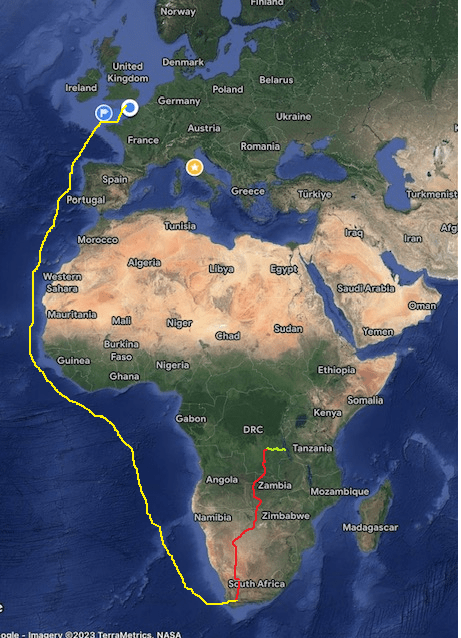
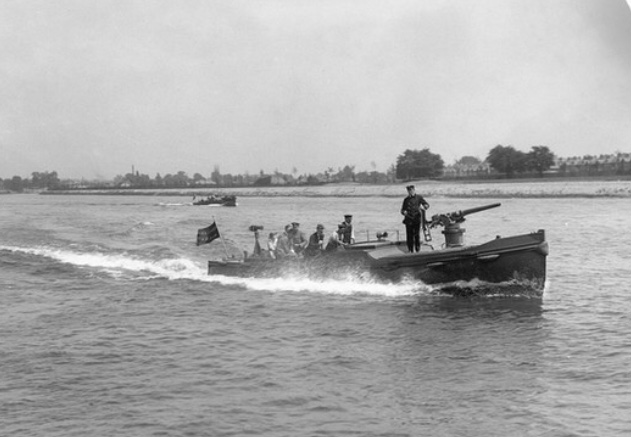
“OK! We go back to the First World War and the minor skirmishes in East Africa. History buffs will know that the colony of German East Africa was surrounded by Belgian and British colonies, with Lake Tanganyika, a huge body of water some 670 kms long acting as the inland border. News reached the War Office in London’s Whitehall that the Germans had moved a naval ship to the lake via the railway from Dar es Salaam and we, the Brits, had nothing. Deep in The Admiralty a plot was conceived whereby a couple of armed boats would be shipped to South Africa, a British colony, then north by rail to Fungurume in the Belgian Congo and on overland to Lake Tanganyika.

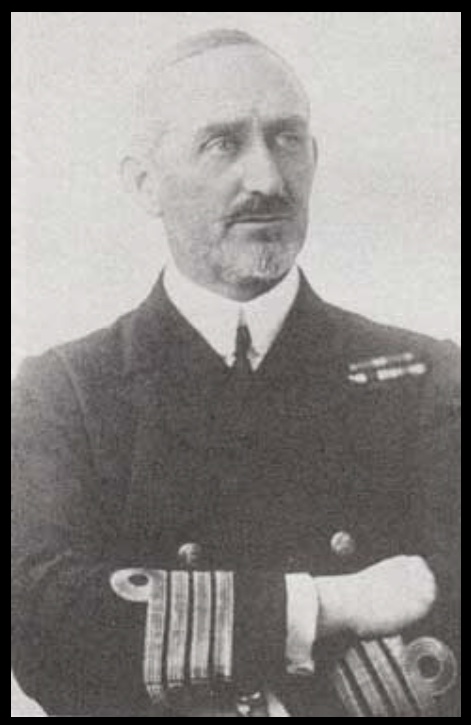
This hairbrained scheme needed a wacky Boys’ Own Adventurer-type to carry it off; officer files were searched and eventually the oldest Lieutenant Commander in the Royal Navy, Geoffrey Spicer-Simson, twice court-martialled and known as a complete liar, was chosen.  

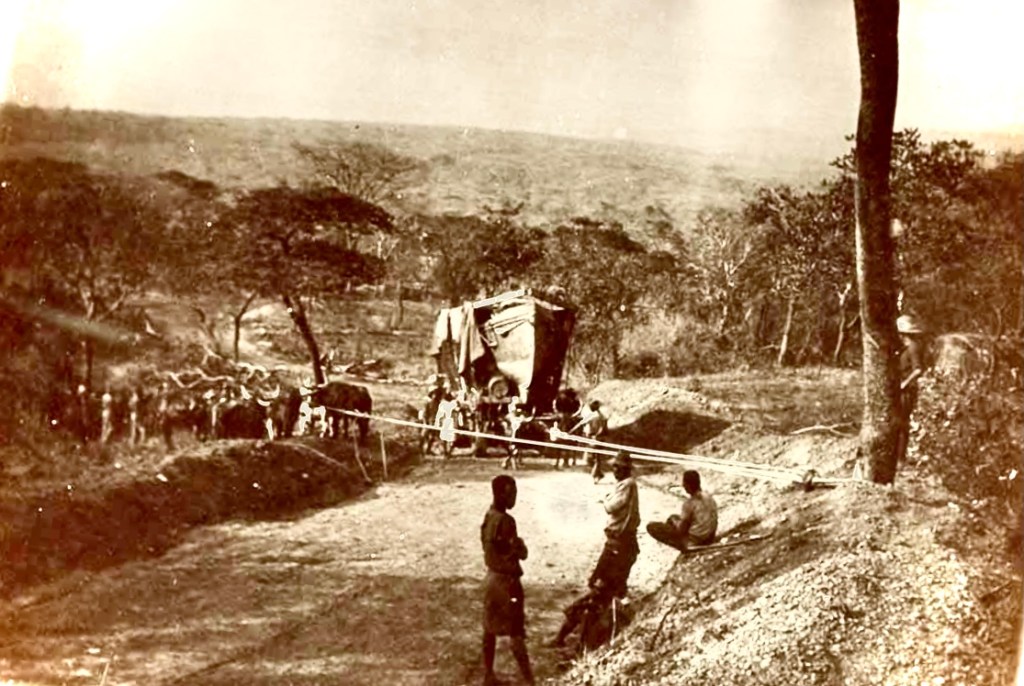
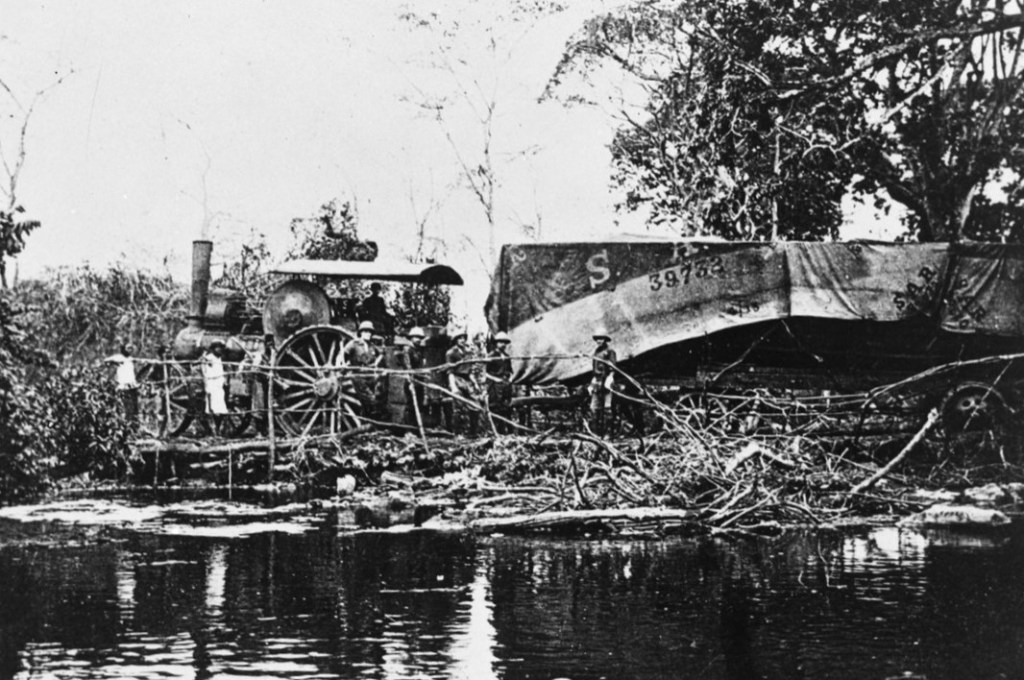
At his insistence the two 12m motor launches were commissioned as HMS Mimi and HMS Toutou and armed with 3 pounder Hoskiss guns. In July 1915 Spicer-Simson, twenty seven other naval personnel and the two launches arrived in Port Elizabeth after a month long voyage from Portsmouth. Loaded onto railway wagons they were then transported 3250kms northwards, and then the real adventure began. With hundreds of hired native Africans, they dragged the two launches across 140 rivers and gorges, building temporary bridges and using oxen and steam engines, the four hundred kilometres to the western shore of the lake.

HMS Mimi on route

Arriving on 28th September, HMS Mimi and HMS Toutou were deployed three days later. In their first skirmish with the Germans, they captured the Kigani and subsequently renamed her HMS Fifi. Eleven days later they attacked and sank the Hedwig von Wissman but sensibly did not engage the much more heavily armed Graf von Götzen. An Anglo-Belgian attack on German land positions the following year resulted in the scuttling of this large vessel (Note 3)

HMS Mimi with HMS Toutou behind her

The Battle of Lake Tanganyika was summed up as: “No single achievement during World War One was distinguished by more bizarre features than the successfully executed undertaking of 28 daring man who transported a ready made navy overland through the wilds of Africa to destroy an enemy flotilla on Lake Tanganyika.”

Lieutenant Commander Spicer-Simson never held a Naval command again and died in 1947 aged 71.

I think I still had Toni’s attention but Cecilia and Celina’s had wandered somewhat. Nothing worse than someone banging on …….

“Hey! Ho! Let’s clear the table …..”

Richard 10th November 2023

Hove

www.postcardscribbles.co.uk

PS There’s plenty of stuff on You Tube about this or you can read Giles Foden’s book, ‘Mimi and Toutou Go Forth’

Note 1 Mimi and Toutou are often known as childish onopatopoeia for cat and dog in French. (Meow and Fido in Parisian slang.) Mimi’s also the name of Celina’s bestest friend, although she was christened Marina.

Note 2 What’s that slang description of extremely short schoolgirl skirts – pussy pelmets?

Note 3 The ship was raised after the war and still operates on Lake Tanganyika as the MV Liemba

PC 359 Swimming Places

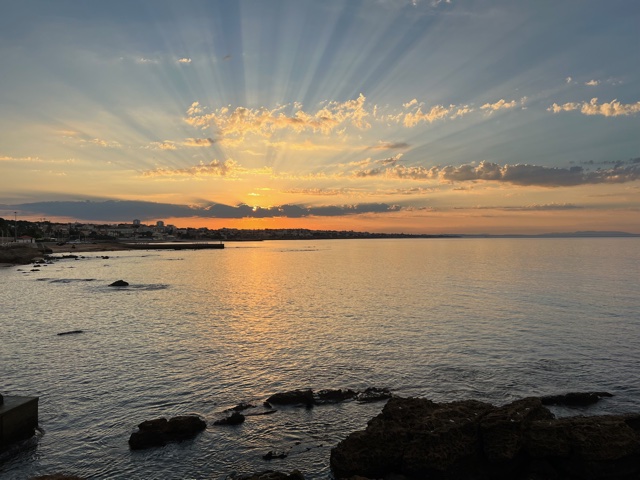
The temperature of the sea water on Portugal’s Atlantic coast doesn’t encourage many to swim unless you’re into triathlons or some such and swim in a wetsuit. Often it’s a very quick in-and-out and a wrap in your towel. Got me thinking about my own experiences of swimming, in seas, in rivers, in lakes and in pools.

My early years were spent in Bath and by nine was a boarder in a school on the southern hills of the city. The obligatory weekly swimming lessons required a walk down to the small public swimming baths. Larking about one day, suddenly the challenge was to swim under the rather grotty wooden steps by which one entered the water. It probably required three strokes – I was not a confident swimmer and almost, almost got stuck. I can feel the wood of the steps against my back today!

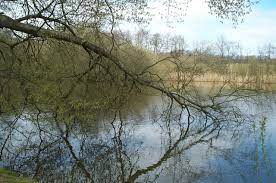
Balcombe Lake lay in the valley below my parents’ house. During the summer school holidays I used to walk down across the fields to the water’s edge, strip off, and wade in. The bottom was thick mud and I didn’t dwell on what might be living in it, absorbed by the sense of freedom and being close to nature, the thrill of naked swimming. ‘Wild Swimming’ has become very popular in Britain in the last few years although sadly its attraction has highlighted another issue in the United Kingdom, the poor quality of the water in our rivers and streams, often as a result of ‘permitted run off’ from farms, both cattle and chicken.   

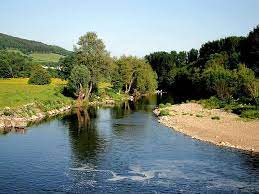
During one Summer break from school Mr Proctor took a group of us to the Brecon Beacons in South Wales for some hill walking. We had some basic tents and blankets, sleeping bags being a luxury, and when not out on Pen y Fan or Cribyn were based in the Army’s hutted Sennybridge Camp. About a kilometre away lay the youthful River Usk, a cool, clear fast-flowing stream that eventually emptied into the Bristol Channel 120kms away. After a long day walking, it was heaven on earth to lower one’s body into the water and, hanging on to a boulder, let the stress of the day float away!

Dauntsey’s School had a long outdoor swimming pool built by the post-A Level students. It was fed by spring water, but a year after it was opened another project saw the water pumped into a large tank, from where it ran over some sun-heated corrugated panels; early solar heating I guess.

The first six weeks at The Royal Military Academy Sandhurst were designed to sort the ‘wheat from the chaff’, so to speak, with an accent on getting us physically fit. Part of that process was time spent in the large swimming pool. The eventual test was something like today’s: “Jump in and swim for 50 metres wearing a lifejacket. (Not in my time! More: “If you sink Mr Yates, Sir, an instructor will save you!”) Jump in with combat jacket and trousers, tread water for two minutes and then swim 20 metres.”

Almost without exception, when one swims one has a vague idea of how deep the water is; in a swimming pool it’s obvious, along a beach less so, but in the mid-Atlantic I knew the bottom was almost two thousand fathoms below my feet!

We imagined there were no shoals of fish here ….. so no sharks ….. but we kept a lookout and allowed only one person in at once. Very strange feeling, this during a transatlantic yacht race on a Nicholson 55 in 1976. (See PC 161 The Atlantic Sept 2019)

Have you ever thought to yourself: ‘God! I am a complete dickhead!’ or similar words? When I worked for Short Brothers’ Missile Systems Division my area of responsibility was ‘India and the Far East’ and on one trip in 1988 flew from Singapore to Brunei. I stayed in the capital Bandar Seri Begawan and gave a presentation at their Department of Defence. On the Saturday I drove out along the coast road to visit the Brunei Armed Forces’ Air Defence Battery, commanded by a friend of mine Andy Fellowes, seconded from the Royal Artillery.

Brunei lies due east of Malaysia

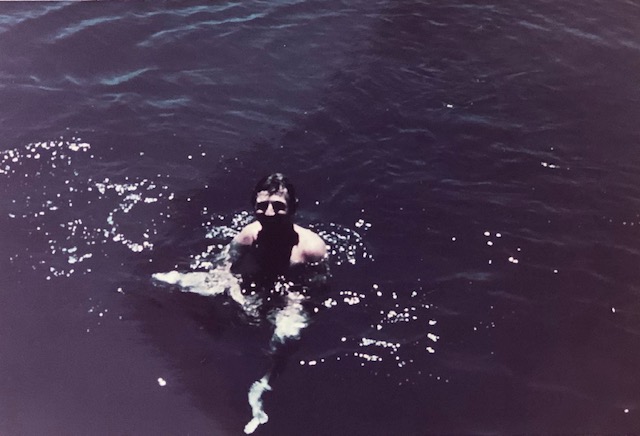
One particular stretch of the coast road ran parallel to the sea. On my return, it was a typical hot steamy late afternoon and I suddenly thought I could have a swim. There was virtually no traffic and certainly no visible humans, so I pulled off the road onto the sandy verge, locked the car and walked across the warm sand to the water’s edge. Toe in! Bliss! No one around and I thought just a quick swim, so stripped off my clothes and waded into the tropical water. Ah! After ten minutes of splashing around I thought I must get back, dry off somehow and return to my hotel. It was then I realised a little worrying undertow not only was taking me down the beach but also further out. I was only about ten metres from the shore but those ten metres were the longest in my life; major physical effort saw me back exhausted, lying on the sand thinking how stupid I had been. I sort-of saw the headlines in the newspaper: “Abandoned car and a pile of clothes! Mystery of the vanishing British sales executive.”

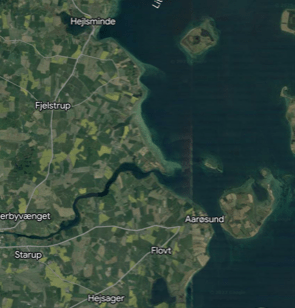
The river entrance is just north east of Aarosund

It was more of a hardship to jump into the fjord when sailing with chums in Denmark one year. We were in the south of the Little Belt and had sailed up the Haderslev Fjord to ensure a peaceful night at anchor in the river, only to find that the heads (WC to those of you unfamiliar with nautical nomenclature) was blocked. The only answer, it seemed, was to get over the side and reach under the water to the outlet pipe ….. and poke around until ….. it became unblocked! As the skipper, I didn’t ask for volunteers, just got on with it!

Richard 3rd November 2023

Hove

http://www.postcardscribbles.co.uk