
Being a regular reader of ‘The Times’, whether in its paper copy or digitally via the internet, I often read Caitlin Moran’s column in Times 2 or in the Saturday Magazine. She’s insightful about a wide range of topics with a wicked sense of humour and the ability to bring out the verbal ‘hat pin’ ready to prick pomposity! As a feminist, she’s written a number of non-fiction books such as ‘How to be a Woman’ and ‘Moranthology’ and it was during a speaking tour in 2014 promoting the first that, in the Q&A session after her talk, a woman asked: “What advice would you give to the mothers of teenage boys?” At the time, she was rather dismissive, telling the mother that other men, their father perhaps, should be the ones giving advice, being an ardent feminist and all.
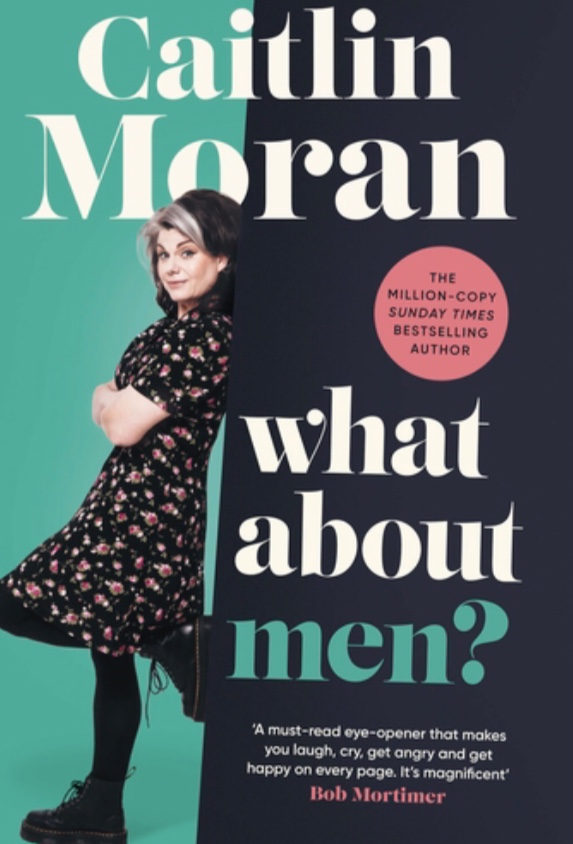
Wind the clock forward five years and her teenage daughters need advice! In her book ‘What About Men?’ she recalls a Zoom call with three teenage girls and four teenage boys. “It’s harder to be a boy than a girl now. Everything is stacked against boys.” says Milo. “The girls talk about how scared they are of sexual violence – but the boys are much more likely to be attacked. It’s a fact; everyday I’m scared I’m going to be stabbed!”
George: “Girls don’t have to worry about getting into a fight or being stabbed. But there’s a lot of ‘she said/he said stuff’; in school rumours will suggest that such-and-such a boy has raped a girl, then it turns out they did have sex but she changed her mind, afterwards – or wanted to get back at him. A lot of boys are too scared to even talk to girls now!”
Moran found there was no good guide (Note 1) to help teenagers become happy contented men. So she wrote ‘What About Men?’ but was no way prepared for the backlash. One group were all: “How dare you suggest men have problems communicating their emotions?” and the other: “How dare you suggest that men should communicate their emotions? We are not biologically designed to be emotional!” During one of her Q&As, one woman’s response was to address these angry men: “If you don’t see yourselves reflected in this book, I suspect a lot of the girlfriends, mothers and colleagues do!”
Why, you might ask, am I writing a postcard about this? Curiosity for one thing; secondly as I have three grandsons all currently under twelve, I feel I need to understand, to use a nautical metaphor, the waters in which they swim and will swim and whether they will be able to go with the flow or have to fight against the tide; and thirdly because my daughter teaches in a secondary school, is currently Head of Year 11, and has to understand the issues her male students are presented with. My curiosity was highlighted in a column in The Times, whose headline was ‘A Question: why are men so rubbish at asking them?’ by Decca Aitkenhead, the paper’s Chief Interviewer. “Men”, says Nihal Arthanayake in his book ‘Let’s Talk; How to have better Conversations’ “ are not curious – a conversation with a typical straight man is like playing tennis with someone who only serves at you.” Recalling her days at university, Decca wrote: “A fellow undergraduate seduced almost all the females on the course, despite him being not particularly handsome. I asked him his secret.” “It’s so unbelievably easy, I don’t get why every bloke doesn’t do it.” “What?” “I ask questions and am prepared to listen to the answers.”

I am not sure whether I fell into the ‘not curious’ group in my early life, but soon needed to be ultra-curious when I started my third 16 year-career as an executive coach. Getting inside someone’s head to understand them so that I could suggest alternatives/change required curiosity and the ability to ask the important question, like: “How do you feel?” And I remain curious about people today. In the men’s changing rooms at the yoga studio I can’t help myself in engaging with the others, impulsively wanting to know who there are/what they do/why they came to yoga – now naturally curious!
Men generally do not talk about sex, apart from in some meaningless banter. I mentioned Caitlin’s book to our masseuse the other day and said I could personally reinforce the idea that men don’t talk to each other about sex and its pluses and minuses! She immediately volunteered that she, her thirty-something daughter and a friend had sat on the beach the other evening and her daughter had looked for guidance on how to address the infrequency of her own sex life with her busy boyfriend. I can’t imagine men doing this.

I’ll scribble about pornography in the second part of this postcard as, according to Moran, some 65% of men admit to watching it. Apparently the addiction starts early.
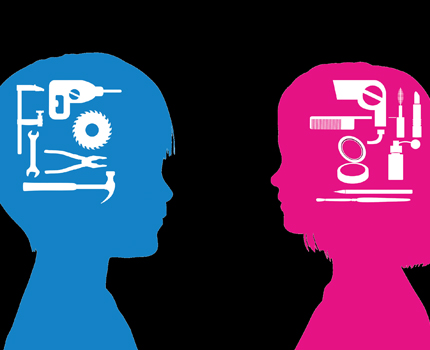
But one of the issues that seems to have been overlooked, or dismissed as being in the ‘too difficult’ corner, is the fact that girls’ cerebellums reach physical maturity at 11 years old, whereas for boys it’s 15. What if we changed the way we educate our future generations to reflect this difference somehow in the structure of the syllabus, the ‘what, when & where’? I wonder whether other developed countries try and address this issue? I thought I was a fan of mixed sex schools, have suffered from being in a male-only environment from my early years until when I left the Armed Forces aged 39 (Note 2), but now, understanding this difference, I am not sure!
More in Part 2 …….
Richard 15th September 2023
Estoril
Note 1 There are guides to masculinity but most promote a rather skewed view, unbalanced and biased. Not ‘good’ guides.
Note 2 Not completely true as gradually female soldiers became more integrated. But for instance in my last job in 32 Guided Weapons Regiment, the only woman among 450 men was the Assistant Adjutant, Rebecca Adams, but it was 1985!
 postcards