PC 354 More About Men

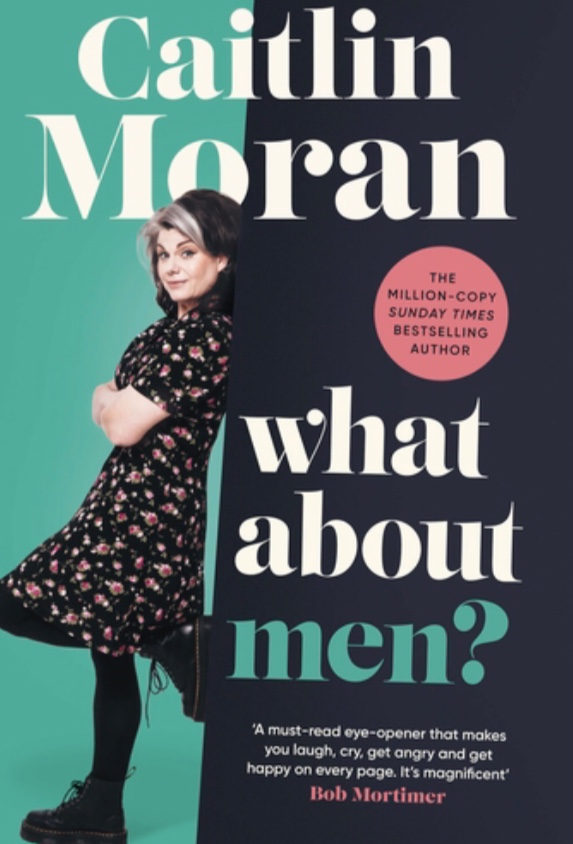
I am no more qualified than anyone else of my gender to write this postcard, but I am indebted to Caitlin Moran for raising the issues in her book, ’what about men?’ – printed with no capital ‘W’ so very modern!

I mentioned earlier in part one (PC 352 15th September) that teenager boys are now frightened about talking to teenage girls. Curiosity about females is often met by a visit to a soft porn site, easily accessible through their mobile phones. Years 7 and 8 will watch porn in groups, huddled around someone’s mobile and begin to think that what they are watching is real life, it’s what they expect when they try sex for the first time!

Recently there was an interesting piece by 30 year old Sean Russell, a features sub-editor and writer at The Times, on just this subject: “The Problem with porn and teenage boys? I should know.” (Friday 18th August 2023)  It’s a long article so read if you can: (https://www.thetimes.co.uk/article/2b5f2a4e-b8f6-404c-993e-2ffca1a161ba?shareToken=f6a3836070dd738b4d8e661572034d00) Simon finishes by saying ‘After some time and having formed proper relationships in my twenties, porn became something separate from sex and it was wonderful.’
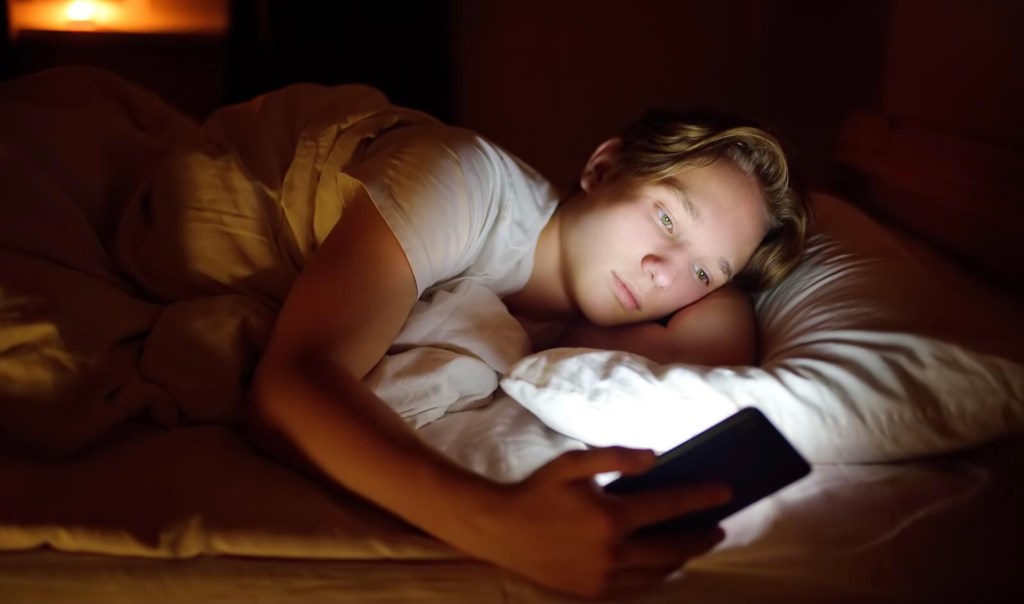
And for an IRL example? Two 15 year olds formed a relationship over this summer and the strength of their feelings eventually led to a bedroom. After the initial inevitable fumbling, they got into it …. until the boy started to choke the girl, having learned from some porn site that this was what girls wanted. Sadly these two teenagers are no longer together, both probably traumatised by their experience and fearful of committing to a future relationship. Rejected and confused boys often get drawn to the misogynistic world of Andrew Tate and his influence has become odious (Note 1).My daughter, a teacher in a secondary school in Farnham, says Tate’s views are absorbed by innocent teenagers like water by a dry sponge.

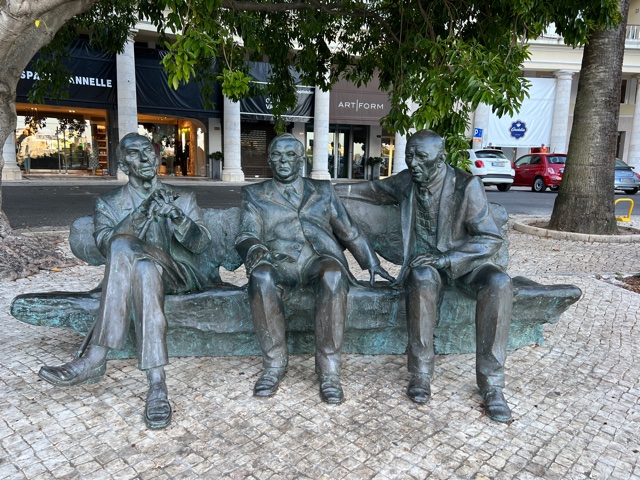
In Estoril there is a bronze piece of three men sitting on a bench. It could be titled ‘A Male Conversation’ as the body language frozen in bronze suggests little empathy or interest between the three! (Note 2)
Moran has a great vignette of a male conversation involving two male cyclists. They had just competed in a time trial up and down mountains and get onto the same train to go back to their respective homes.  I looked up the dictionary definition of a conversation: ‘a talk especially an informal one, between two or more people, in which news and ideas are exchanged’.  In the overheard conversation these two exchanged every aspect of the race they had just taken part in but a simple exchange of information without a drop of personal emotion. When they arrived at the rail terminus they probably simply said: “Bye! Good talking to you.” And went their separate ways without even knowing the name of the other person; whereas two women, according to Moran, would have known each other’s names, how many children etc etc!
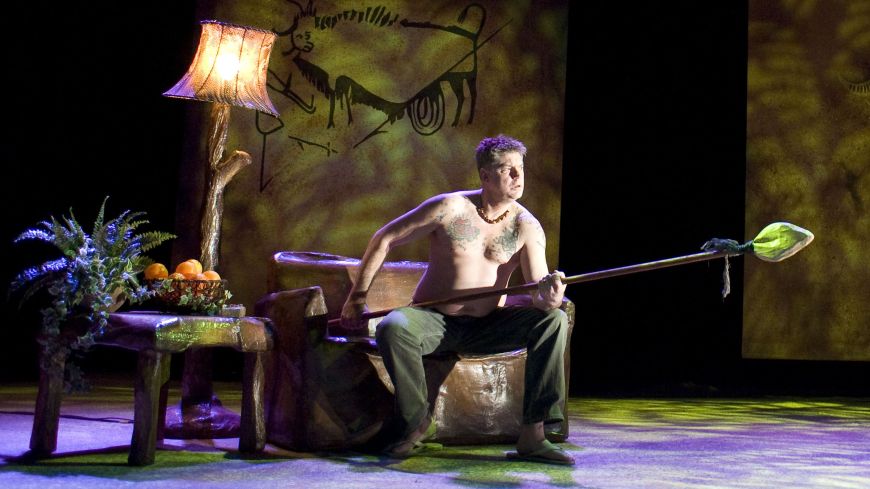
Many years ago a group of us went to see Australian Mark Little’s “Defending The Caveman”, a one-man show in Wimbledon London. The show ‘catalogues the instantly recognisable traits that separate men and women’; understanding our differences, he suggests, gives us the potential to build bridges rather than engage in open warfare.’ Moran’s simple vignette of the cyclists mirrors Little’s sketch about two male anglers, who arrive at the river bank for a few hours of fishing. They immediately stake out their pitch with a suitable distance between them, cast their flies, and settle into contented silence.

After half an hour, one shouts to the other:

“Fancy a beer? There are some in the car.”

A minute goes by.

“Yup!”

Another minute.

“You goin’ to get them?”

Another minute.

“No! I paid for them. You go!”

Another minute.

“OK! Then.”

This is a good example of the average male’s ‘deep and meaningful conversation’.

But how can we accept the stark statistical differences between the sexes:

Boys underachieve at school compared with girls, are more likely to be excluded, less likely to go into further education and more likely to be prescribed medication for ADHD.
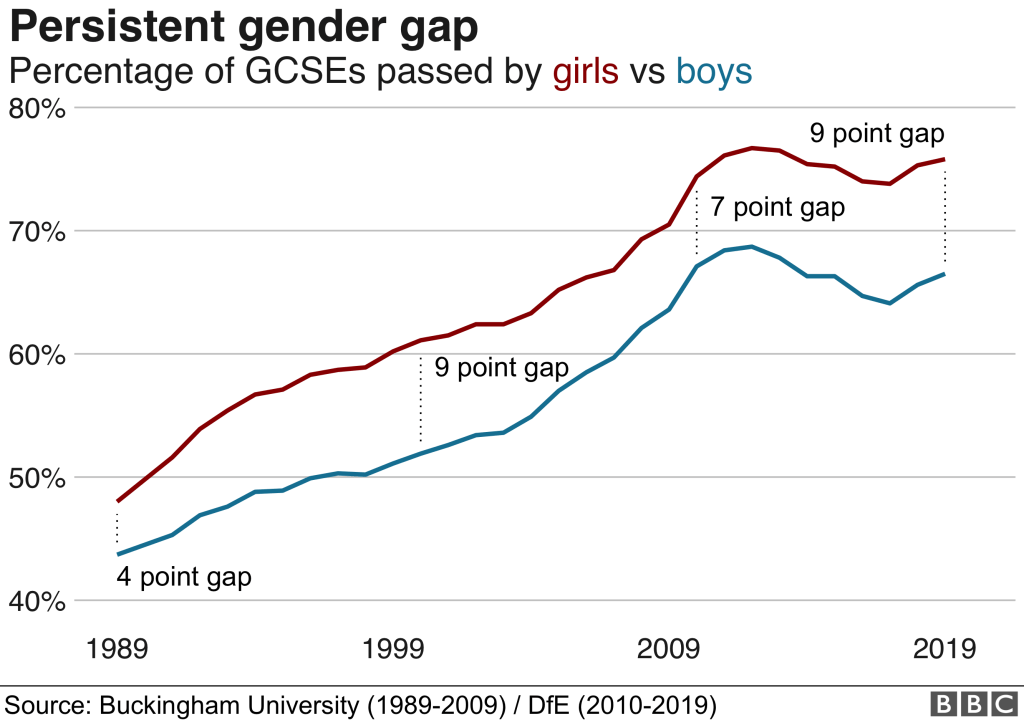
After school, men make up the majority of gang members, of the homeless, of the unemployed, of suicides (75%), of the prison population (95%) and are most likely to lose custody of their children in a divorce.

Statistics are always open to interpretation and one glaring factor skewing the percentages in adulthood is the fact that only females can give birth. But it’s an extremely depressing list of lost opportunity, lost lives, of negativity and we all need to change what some see as the inevitable!

A British MP has suggested there be a Minister for Men to mirror that for woman. Predictably the columnists had their field day but one more credible suggestion was a Minister for Young Men or even Boys? I obviously have my finger on the national pulse, as a few days ago an ex-client of mine who works at AWE, Bob Kingston, posted on LinkedIn about someone wearing a T-shirt with the words ‘Boys Get Sad Too’ emblazoned on the front. Further enquiries revealed a website (www.boysgetsadtoo.com) promoting male mental health. Bob wrote: “I think what they stand for is very true in this day and age, in that boys/men don’t share feeling and bottle them up as it’s seen as a sign of weakness. In my view sharing feelings should be seen as a strength.”

I am proud to be a man; my gender at the time of my birth was not my choice! Would I want to be any other gender, as Moran questions? Never given it much thought, although nowadays gender fluidity offers new options! So if you are a man, read this book. If you are a woman, also read this book.

Richard 29th September 2023

Hove

www.postcardscribbles.co.uk

Note 1 Andrew Tate is an extreme misogynist encouraging young teens to, among other things, become ‘incels’, a woke description meaning involuntary celebrate.

Note 2 It’s not meant to illustrate male conversations! The three men, Jan Karski, Jerzy Lerski and Jan Nowak-Jezioranski were Poles living in Portugal and were noted for helping their nationals escape the clutches of the Nazis during WW2.
PC 353 …. Of Cabbages and Kings

The time has come’ the Walrus said ‘to talk of many things, of shoes …. and ships …. and sealing wax, … of cabbages … and Kings.’ (Note 1)

I love museums but often find that after an hour or so my initial enthusiasm and interest has waned, especially if you can see through to another exhibition hall …. leading on to another exhibition hall ….. leading on to …… and then the inevitable shop!

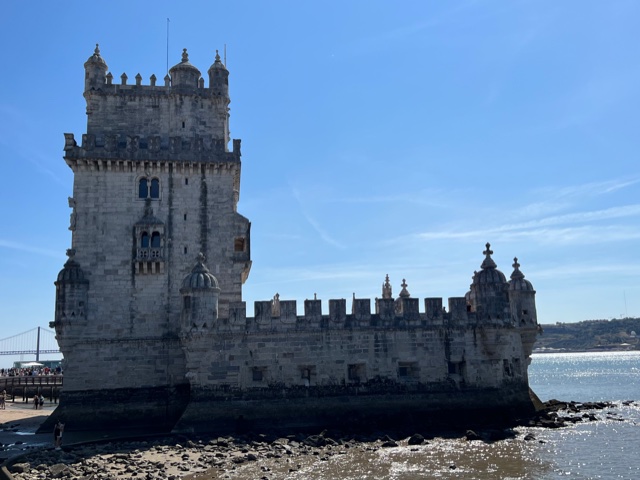
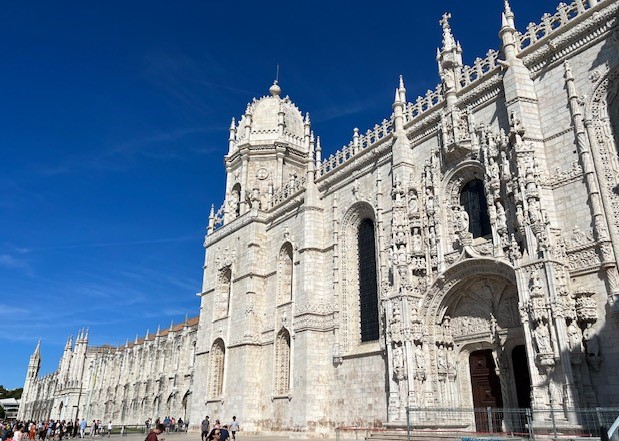
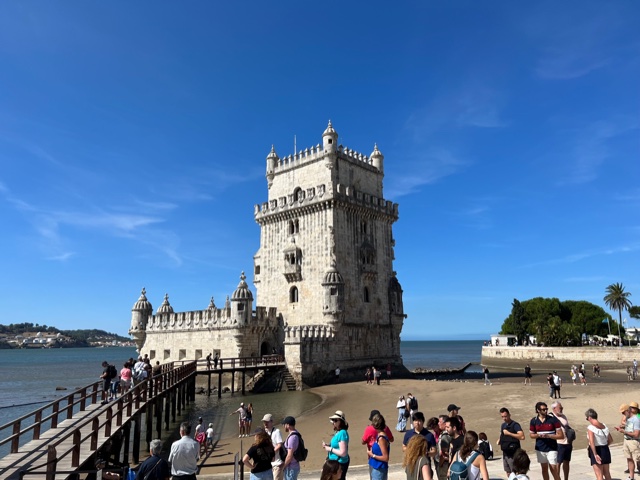
At some stage during my current stay in Estoril it was suggested that we visit the Jerónimos Monastery in the Lisbon suburb of Belém, after an admission that I hadn’t yet wandered the hallowed corridors where the monks had first created the little custard tarts know as Pastel de Nata or Pastel de Belém (Note 2). We could also see the Torres de Belém.

Having booked online for a 1030 admission, we parked the car, saw a huge queue and thought it was a good thing we booked! We walked over to the head of the queue to show our tickets and were pointed to the back of the queue, some 200m long! Something was seriously wrong with the way this is organised! It as a warm, sunny day but the queue was stationary so we decided to see the Tower of Belém first.  

The tower, which used to stand on an island in the Tagus River before some land reclamation, had a similar length of queue so we asked a ticket seller whether we could get a refund and why there was a problem. Apparently the authorities has decided to reduce the visitor capacity of the monastery from 200 to 60 but hadn’t altered the online booking system!

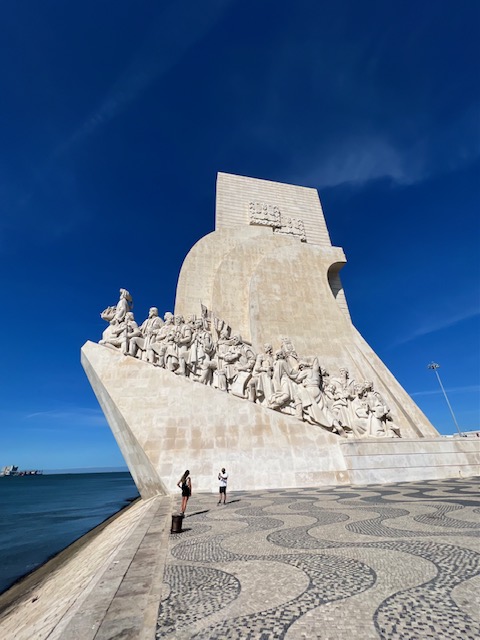
Near to the tower stands a very powerful stone projection of the reach and influence of Portugal in the C15th and C16th. Today in the C21st it’s hard to remember just how powerful this little country of 10.5 million people (Note 3) had been.

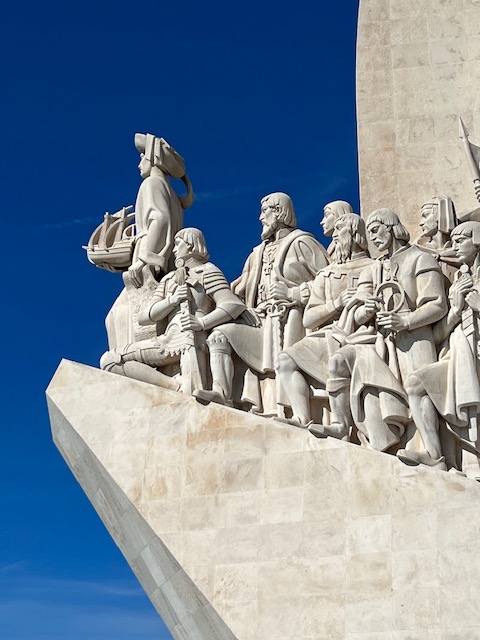
The first figure on the ‘prow’ of the Monument to the Discoverers is Prince Henry The Navigator (1394-1460), tasked by King Manuel I to explore!!


Third on the eastern flank is Vasco de Gama who discovered India in 1498 and next Pedro Alvares Cabral (see PC 349) the first European to reach Brazil in 1502. Further exploration saw Portuguese influence stretching across southern Africa, to Australia, Goa (Note 4), Macao and East Timor.

In 1788 Governor Phillip claimed the continent of Australia for Britain, but only as far west as the 135° east longitude, not wanting to upset the Portuguese who, under the Treaty of Tordesillas, still had a presence in the area, particularly in Macau and East Timor.  By 1825, however, Britain was powerful enough and found it convenient to adopt the original line of 129° east, which today demarcates Western Australia from the Northern Territories.

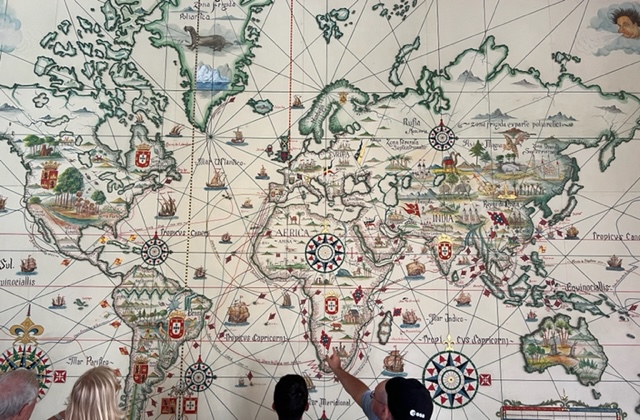
So we planned to return, just Toni and me, to see the Maritime Museum; plenty of ships there, one might think.

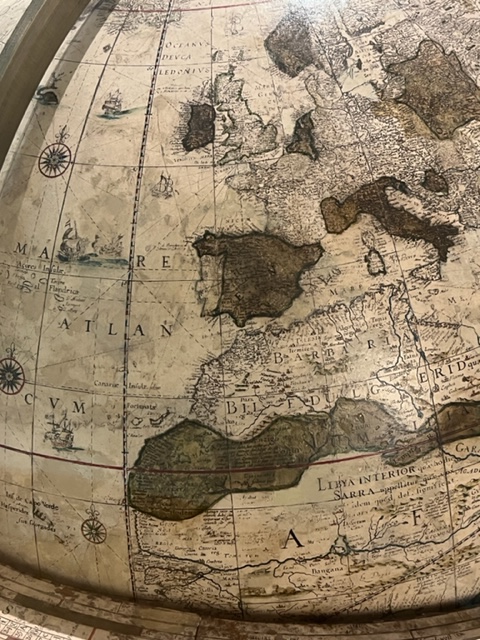
The charts are fascinating, given the age when they were drawn …..

…. and this glorious globe dated around 1645 by the Dutchman Willem Jansz Blaeu, amazing in its details …….

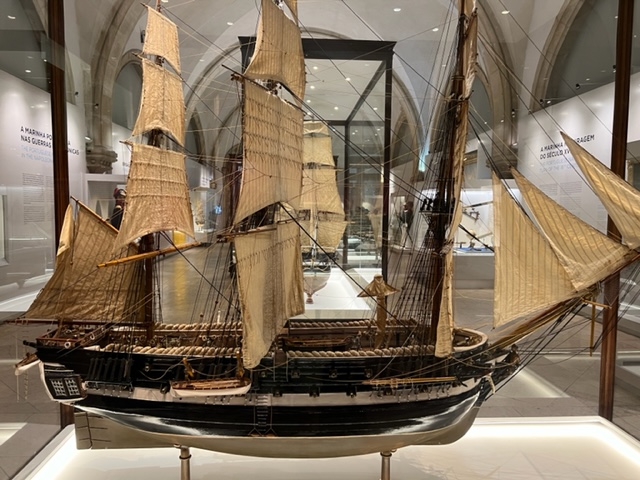
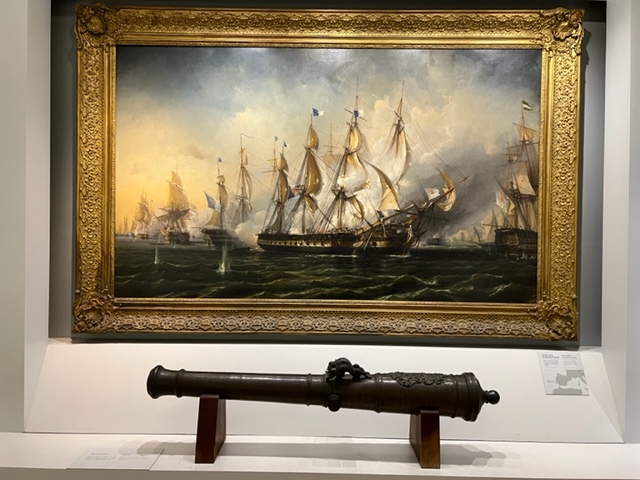
….. and some models and oil paintings.

In the third exhibition hall, or was it the fourth (?), we came across ‘The British Ultimatum’ of 1890. The British required Portugal to give up the land between her African colonies, Angola on the west coast and Mozambique on the east; Britain would use force if necessary. So Portugal acquiesced and the land became the British colonies of Malawi and Rhodesia, now Zimbabwe, Malawi and Zambia. Portugal was extremely embarrassed by its inability to resist the British demands, and one can see here the seeds of dissent that would flower in revolution at the beginning of the C20th.

Angola on the west coast and Mozambique on the east

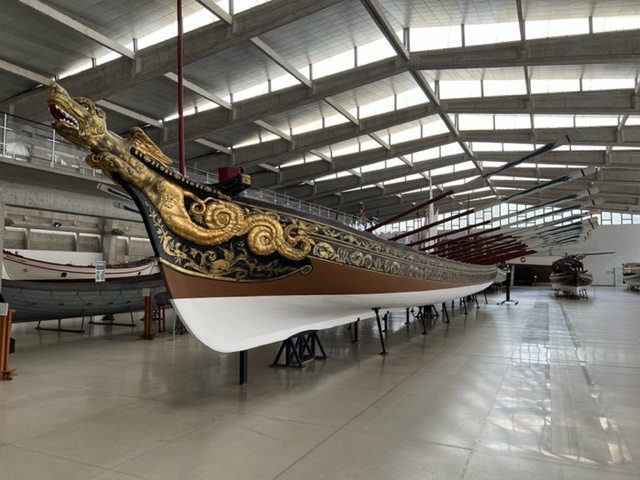
In some ways the large hanger-like building that houses a collection of boats, yachts and state barges is a metaphor for Portugal today.

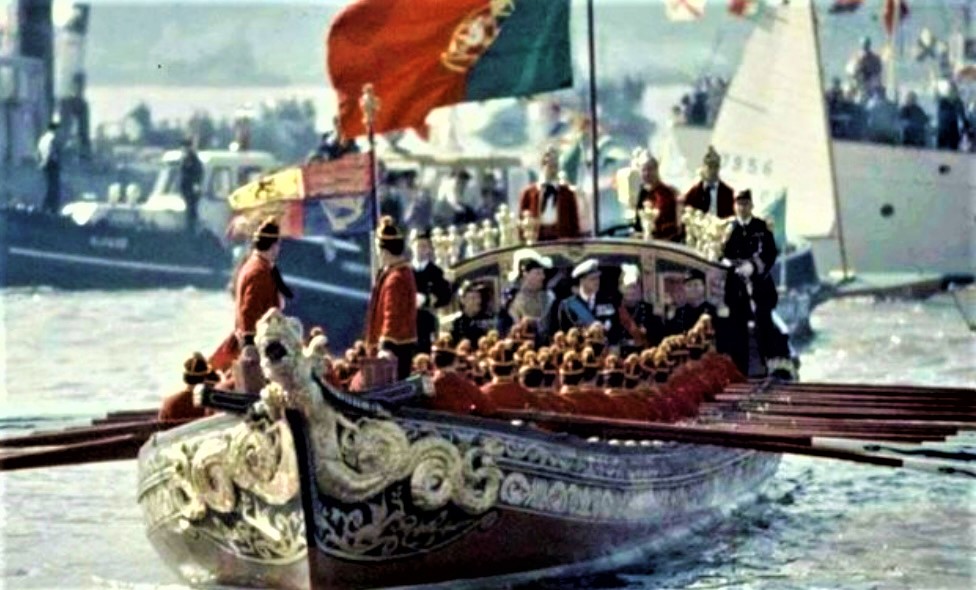
Fascinating but rather dusty, reflecting a more glorious age. The Royal Barge was constructed in 1784 and was powered by 78 oarsmen using 40 oars.

It was last used when the late Queen Elizabeth II came on a State visit in 1957. Today it’s dusty!

So, onto Lewis Carroll’s ‘… and Kings’!

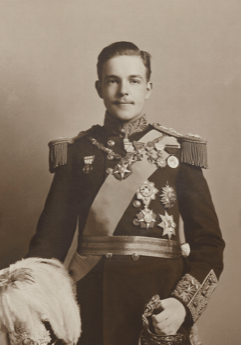
In my postcard about Mafra (PC 130 from 2018) I mentioned that when the republic was declared on 5th October 1910 the King, Dom Manuel II, one of whose nicknames was The Unfortunate, left the country rather quickly by sea. He eventually settled in Fulwell Park in Twickenham, London. His rapid departure was probably prompted by the memory of his father King Carlos I and his elder brother Crown Prince Luis Filipe’s assassination in Lisbon in 1908. Manuel died young in 1932 aged 42 and conspiracy theorists did not rule out foul play! His body was returned to Portugal by a Royal Navy Cruiser (HMS Concord) and, after a State Funeral, interred in the Royal Pantheon of the House of Braganza.

So no cabbages but ships, shoes on our feet, sealing wax on an ultimatum and now, no kings!

Richard 22nd September 2023

Estoril

www.postcardscribbles.co.uk

PS Next year on the 25th April Portugal will mark the 50th Anniversary of the 1974 Carnation Revolution which saw the return to democracy after the dictatorship of Salazar (1928 – 1968)

Note 1 Lewis Carroll, best known for his ‘Alice’s Adventures in Wonderland’, also wrote a poem called ‘The Walrus and the Carpenter’. It’s about entitlement and encroachment; it’s lovely nonsense but please ….. read it in full?

Note 2 Traditionally large quantities of egg whites were used to stiffen the clothes of the monks and nuns. The surplus egg yolks were used to make pastries and custard tarts. After the Liberal Revolution in 1820 and under increasing likelihood of closure, the monastery monks started selling Pastéis de Nata to the nearby sugar refinery. The monastery closed in 1834 and the recipe was sold to the refinery.

Note 3 Of these 10.5 million, 94% are Portuguese, 1.5% Brazilians, 1.5% Black, 1.5% mixed race and 1.5% other Europeans – but ask another reference and you get a different make up!

Note 4 Goa on the western seaboard was invaded by India in 1961 and after a mere 36 hours became an Indian state. (See PC 330)

PC 352 About Men (with ‘More About Men’ in Part 2)

Being a regular reader of ‘The Times’, whether in its paper copy or digitally via the internet, I often read Caitlin Moran’s column in Times 2 or in the Saturday Magazine. She’s insightful about a wide range of topics with a wicked sense of humour and the ability to bring out the verbal ‘hat pin’ ready to prick pomposity! As a feminist, she’s written a number of non-fiction books such as ‘How to be a Woman’ and ‘Moranthology’ and it was during a speaking tour in 2014 promoting the first that, in the Q&A session after her talk, a woman asked: “What advice would you give to the mothers of teenage boys?”  At the time, she was rather dismissive, telling the mother that other men, their father perhaps, should be the ones giving advice, being an ardent feminist and all.

Wind the clock forward five years and her teenage daughters need advice! In her book ‘What About Men?’ she recalls a Zoom call with three teenage girls and four teenage boys. “It’s harder to be a boy than a girl now. Everything is stacked against boys.” says Milo. “The girls talk about how scared they are of sexual violence – but the boys are much more likely to be attacked. It’s a fact; everyday I’m scared I’m going to be stabbed!”

George: “Girls don’t have to worry about getting into a fight or being stabbed. But there’s a lot of ‘she said/he said stuff’; in school rumours will suggest that such-and-such a boy has raped a girl, then it turns out they did have sex but she changed her mind, afterwards – or wanted to get back at him. A lot of boys are too scared to even talk to girls now!”

Moran found there was no good guide (Note 1) to help teenagers become happy contented men. So she wrote ‘What About Men?’ but was no way prepared for the backlash. One group were all: “How dare you suggest men have problems communicating their emotions?” and the other: “How dare you suggest that men should communicate their emotions? We are not biologically designed to be emotional!” During one of her Q&As, one woman’s response was to address these angry men: “If you don’t see yourselves reflected in this book, I suspect a lot of the girlfriends, mothers and colleagues do!”

Why, you might ask, am I writing a postcard about this? Curiosity for one thing; secondly as I have three grandsons all currently under twelve, I feel I need to understand, to use a nautical metaphor, the waters in which they swim and will swim and whether they will be able to go with the flow or have to fight against the tide; and thirdly because my daughter teaches in a secondary school, is currently Head of Year 11, and has to understand the issues her male students are presented with. My curiosity was highlighted in a column in The Times, whose headline was ‘A Question: why are men so rubbish at asking them?’ by Decca Aitkenhead, the paper’s Chief Interviewer. “Men”, says Nihal Arthanayake in his book  ‘Let’s Talk; How to have better Conversations’ “ are not curious – a conversation with a typical straight man is like playing tennis with someone who only serves at you.” Recalling her days at university, Decca wrote: “A fellow undergraduate seduced almost all the females on the course, despite him being not particularly handsome. I asked him his secret.” “It’s so unbelievably easy, I don’t get why every bloke doesn’t do it.” “What?” “I ask questions and am prepared to listen to the answers.”

I am not sure whether I fell into the ‘not curious’ group in my early life, but soon needed to be ultra-curious when I started my third 16 year-career as an executive coach. Getting inside someone’s head to understand them so that I could suggest alternatives/change required curiosity and the ability to ask the important question, like: “How do you feel?” And I remain curious about people today. In the men’s changing rooms at the yoga studio I can’t help myself in engaging with the others, impulsively wanting to know who there are/what they do/why they came to yoga – now naturally curious!

Men generally do not talk about sex, apart from in some meaningless banter. I mentioned Caitlin’s book to our masseuse the other day and said I could personally reinforce the idea that men don’t talk to each other about sex and its pluses and minuses! She immediately volunteered that she, her thirty-something daughter and a friend had sat on the beach the other evening and her daughter had looked for guidance on how to address the infrequency of her own sex life with her busy boyfriend. I can’t imagine men doing this.

I’ll scribble about pornography in the second part of this postcard as, according to Moran, some 65% of men admit to watching it. Apparently the addiction starts early.

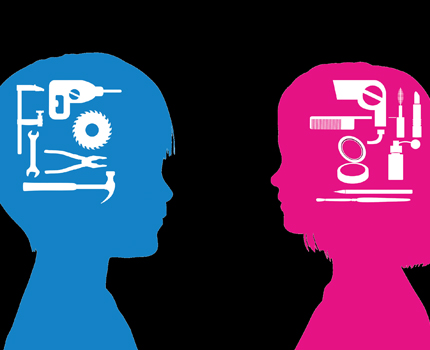
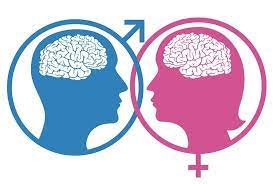
But one of the issues that seems to have been overlooked, or dismissed as being in the ‘too difficult’ corner, is the fact that girls’ cerebellums reach physical maturity at 11 years old, whereas for boys it’s 15. What if we changed the way we educate our future generations to reflect this difference somehow in the structure of the syllabus, the ‘what, when & where’? I wonder whether other developed countries try and address this issue? I thought I was a fan of mixed sex schools, have suffered from being in a male-only environment from my early years until when I left the Armed Forces aged 39 (Note 2), but now, understanding this difference, I am not sure!

More in Part 2 …….

Richard 15th September 2023

Estoril

www.postcardscribbles.co.uk

Note 1 There are guides to masculinity but most promote a rather skewed view, unbalanced and biased. Not ‘good’ guides.

Note 2 Not completely true as gradually female soldiers became more integrated. But for instance in my last job in 32 Guided Weapons Regiment, the only woman among 450 men was the Assistant Adjutant, Rebecca Adams, but it was 1985!

PC 351 The Hope Closes – temporarily

Duncan, the manager of The Hope Café, emailed me, as I hadn’t been in for three weeks or more:

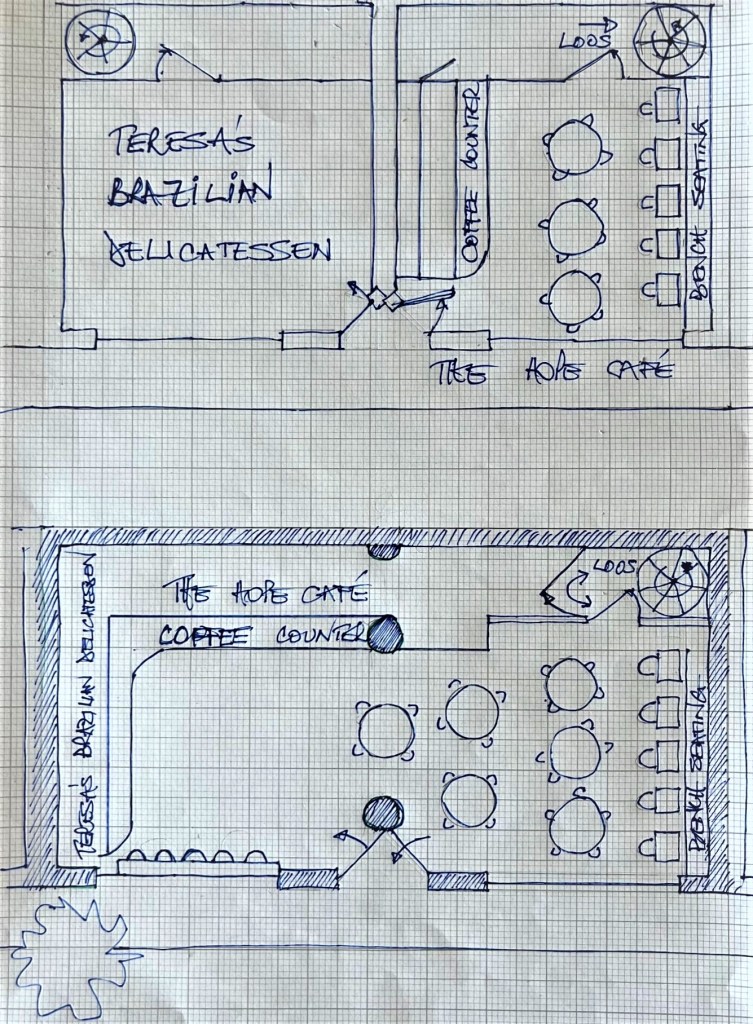
“Hi! Richard. Hope you and Celina are enjoying Portugal and we look forward to seeing you back here soon. This is just to let you know that we closed as planned a fortnight ago, Friday 25th August, for our renovations, initiated with the generosity of the legacy of dear Edith (PC 278 April 2022). We do miss her! Some of our regular customers who have the skills we need are working for free and often in the evening, so I am hoping we will reopen on Friday 22nd September. I have put up in the window two sketches, one of how we were and one showing how it should look! I have attached a photo:

We’ve already got the steel columns in place and the RSJ (Note 1) is now supporting the first floor. I am happy with the progress we’re making and the wonderful support and time my regulars have been giving. I am sure you would have been here if you hadn’t been in Portugal!

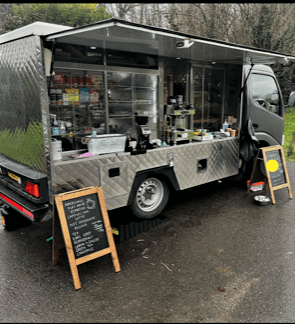
Before we closed we cleared out all the perishable items and took them to the local food bank. Libby took a couple of week’s holidays but she and Josh will between them manage the Coffee Cart that we have hired from Brad Stevens (@cups_coffeevan) for the period. The council gave us permission to station it to the left of the café; it’s open from 0730 to 1630 and so far has proved a God-send to our regulars. We all know that generally people are fickle about stuff and if we’re closed for too long will find somewhere else for their coffee and then may not return, so I am hoping this will keep them loyal.

A photo of Brad’s Coffee Cart in a park somewhere!

Brad gave Josh some useful instruction and he’s using it like a pro! How are you doing? Best wishes Duncan”

“Dear Duncan

Thanks for this; I have been kept vaguely up-to-date by others but now have an even better idea of how it’s going. I guess we’ve all got stories of builders and those who call themselves professionals – just the other day we recommended a good plumber, Henry Rodrigues, to a friend who had an insistent leak in her shower-room, despite the landlord providing someone to fix it. Henry reckoned the guy had no clue whatsoever!! I was reminded that when we first moved into our new apartment; we couldn’t understand why there was a constant smell of drains, until a good plumber looked under the kitchen sink and found the U-bend had been attached incorrectly! So I am delighted to read everyone’s putting their own professional expertise to good use.

Can you ask Libby to email any news she has of Susie as I don’t have her email address? Good luck! Richard”

A couple of days later I got an email from Libby:

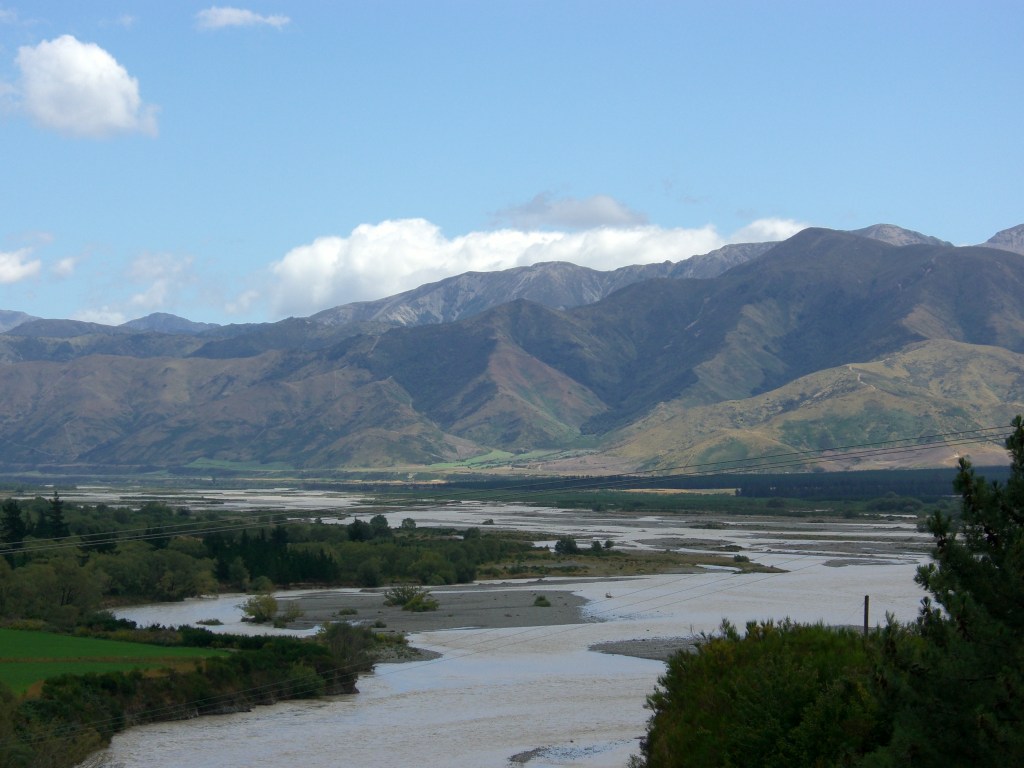
“Hi! Richard. Not sure how much you’ve seen of New Zealand (Note 2) but after her stint as a chalet girl in the snow fields of Queenstown, I had expected Susie to travel up the west coast of South Island before crossing the Cook Strait. I was there many decades ago and think the Haast River valley one of the most beautiful in the whole country, so imagined her going there, on to see the Franz Joseph glacier and then Hokitika etc. But she decided to hitch up the East coast ….

…….. past the Moeraki Boulders Beach

….. then up through Christchurch, over the Waimakariri River

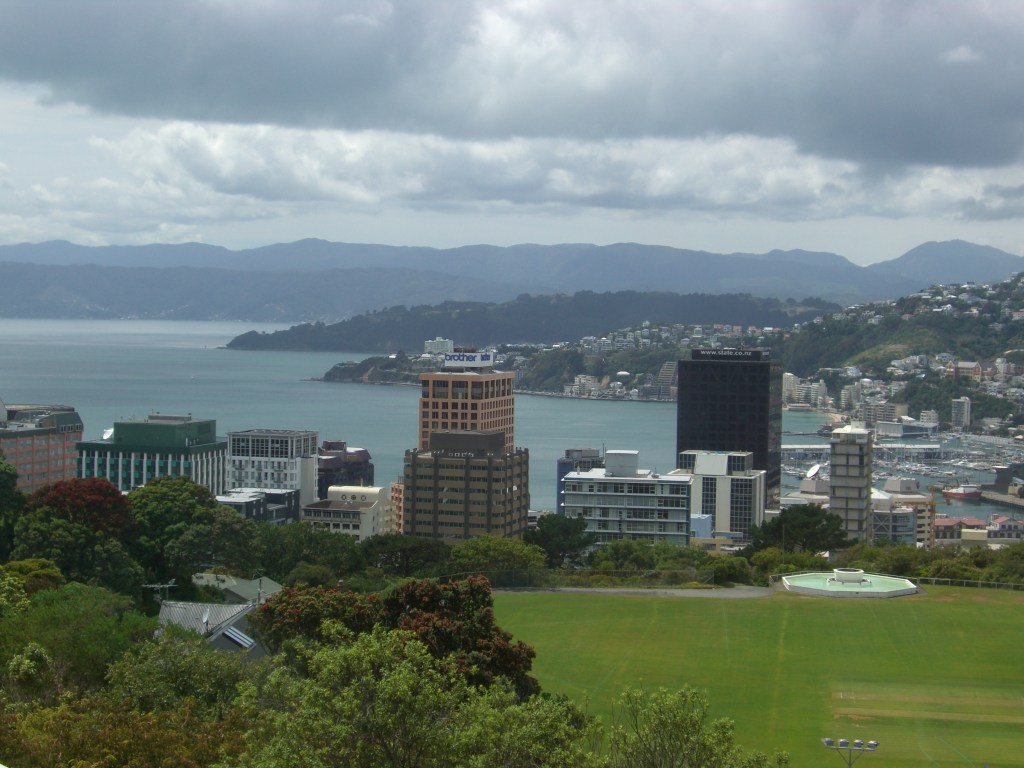
….. across to Wellington and up the middle of North Island

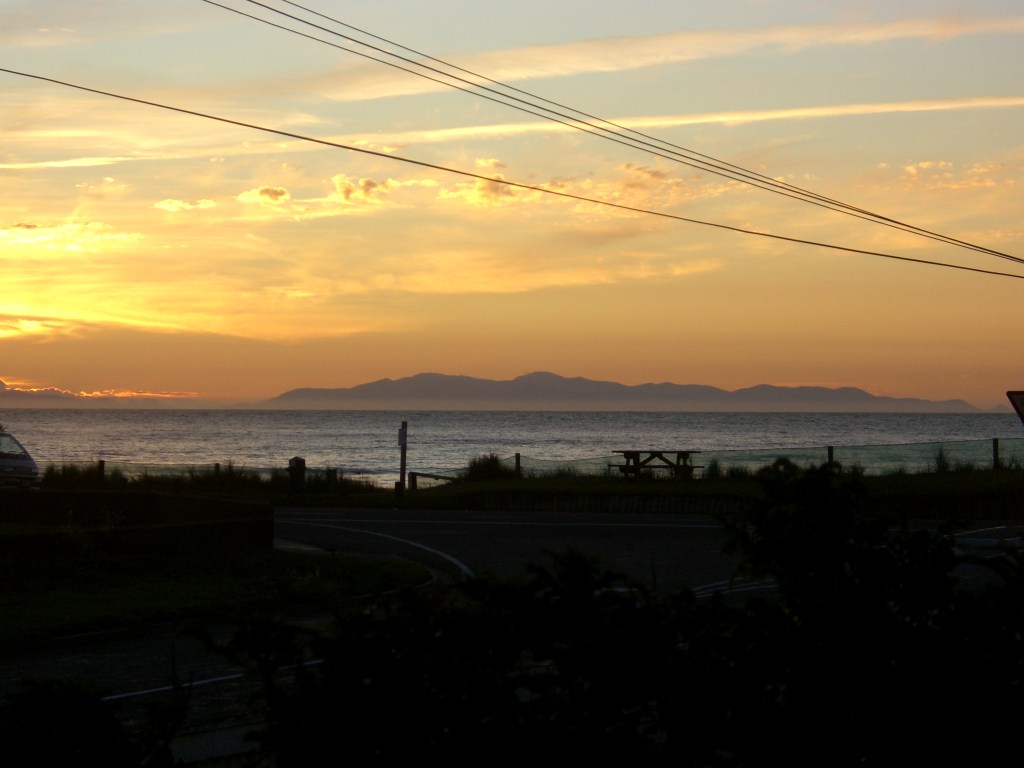
Kapiti Island on the west coast at sunset – far away to the left is the northern tip of South Island

….. and through Rotarua to Auckland. She was planning to find some work there but, on a weekend up in the Bay of Islands, Margie, a niece of mine who lives in Hobart, Tasmania, got in touch via WhatsApp saying she had an opening in her catering business for a couple of months, starting at the beginning of September. So, as far as I can tell, she got a seat on one of the twice-a-week direct flights with Jetstar and is now working for Margie in Hobart, hopefully until the end of October. She asked me to pass on her thanks, via you (!), to Michael in Auckland who had offered help in extremis but all good.

Alright for some, huh! Although between you and me she deserves this: needs to sort out her head and come back to Hove and The Hope. She might, of course, decide not to come back, or maybe bring someone with her! Who knows? Life huh!

Duncan says we’ll reopen on the 22nd September. I’ve been to see the progress and think he’s optimistic; I peeped inside and took this photograph:

but we’ll see. Fingers crossed! Take Care Richard and enjoy the sun. Libby

Without The Hope Café and its customers to provide me with ideas for my postcards, I have fallen back on my file with cuttings from this and notes about that. Some months ago there was some correspondence about Ovaltine.

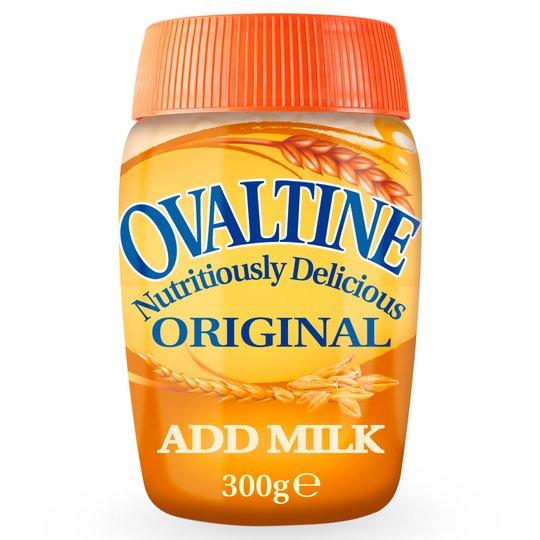
It’s probable only my older readers who will have drunk a cup of Ovaltine, the malted milk drink believed to make you sleep better, but maybe I’m wrong? Personally the best drink to ensure a good night’s sleep was, I thought, a tumbler filled 50:50 with whiskey and hot milk! What I hadn’t appreciated was Ovaltine’s aphrodisiac qualities and this little ditty should be sung to the tune of the Christmas carol ‘Hark! The Herald Angels Sing’:

“Uncle George and Auntie Mabel fainted at the breakfast table. Let this be an awful warning, not to do it in the morning.

But Ovaltine has put them right, now they do it morn and night.

Uncle George is hoping soon, to do it in the afternoon.

Hark! The Herald Angels Sing, Ovaltine’s a damn good thing.”

Roll on the reopening of The Hope Café!

Richard 8th September 2023

Estoril

www.postcardscribbles.co.uk

Note 1 Rolled Steel Joist – often in an ‘I’ shape.

Note 2 Libby doesn’t know of my fairly extensive knowledge of New Zealand.

PC 350 Another Fifty PCs, Another Year

If it was a jubilee, 50 would be golden; nice thought?

There was no plan, no target, no goal, just an initial desire back in 2014 to send the sort of ‘Wish You Were Here’ postcard from Brazil. Quite easy to develop habits and here we are, nine years later, producing a postcard every week about my observations and take on living in the C21st. Reaching the 350th immediately tells you, if you’re numerate, that another year has gone by, well, less two weeks, since the 300th.

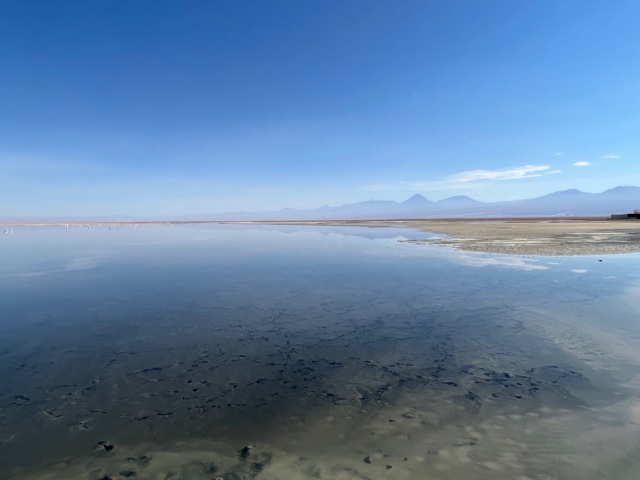
Our major travel adventure this year was five days in the Atacama Desert in northern Chile (PCs 319 and 320), book-ended by time in Rio de Janeiro. We stayed in a wonderful hotel in San Pedro de Atacama, Noi Casa de Atacama, and from there travelled out to various places such as the Atacama Salt Lakes,  

The Atacama Salt Lake, about 165kms by 50kms

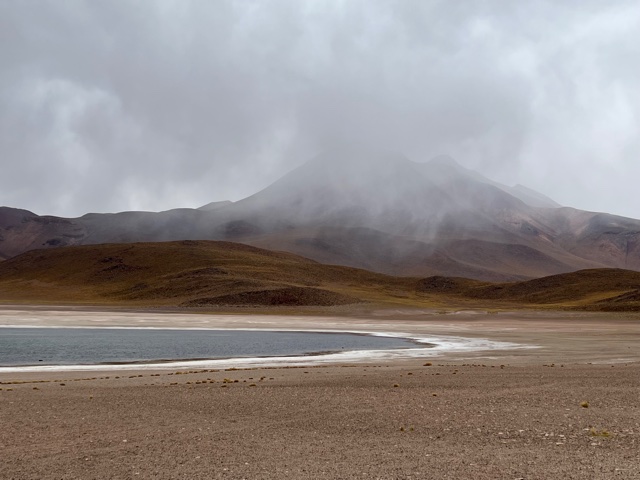
… up to 4150m in the foothills of The Andes to the twin lakes of Miscanti and Miniques

The Miscanti Lake with a rain shower

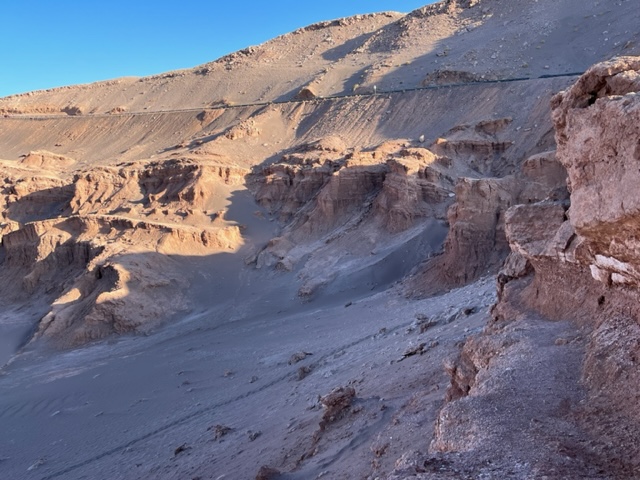
and to Lunar Valley with its unbelievable rock formations.

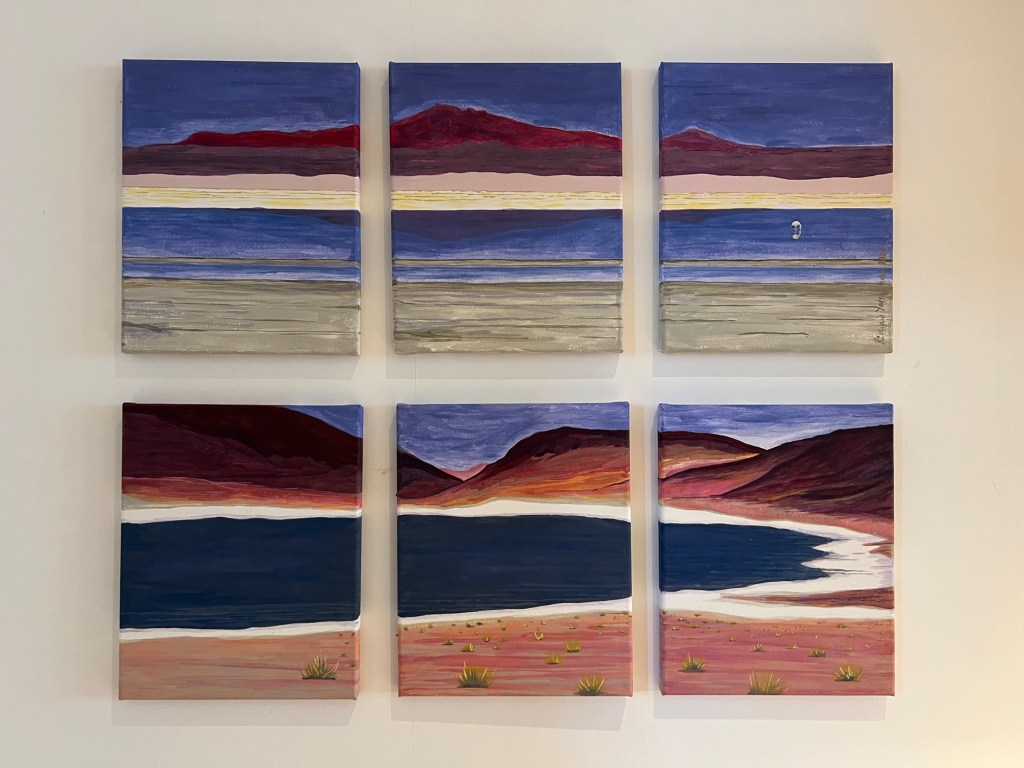
What a strange and wonderful place, one that prompted me to paint a couple of triptychs, which I hung together.

We also made friends with Andreas and Andrea from Berlin and tried to visit in June, but EasyJet cancelled our plans, for now!

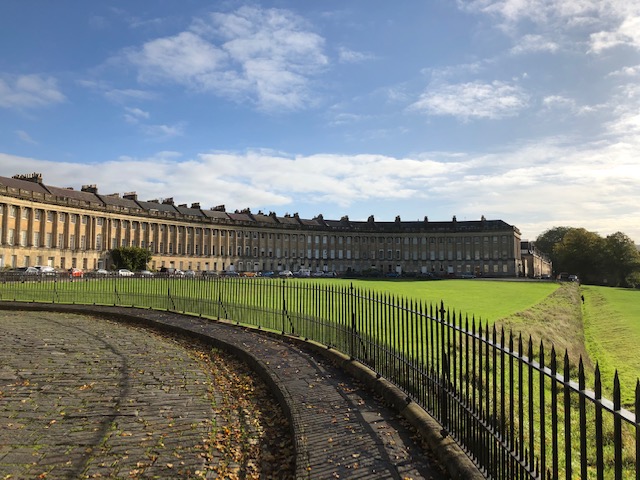
Continental travel was reflected in some memories of driving to Greece with five others in 1965 (PC346 Puds to Greece), an appropriate memory at this time of year as, on our return, we faced our A Level examination results on which our future depended. We have also stayed in Lisbon for a night (PC 349) and PC 339 ‘With a Connecting Door’ had a travelling theme. In the United Kingdom a couple of nights in the City of Bath with my mother-in-law and Toni were covered by ‘An American in Bath’ PC 337

and a rather wet week with my daughter and my three grandchildren in Devon by PC 347 Frogmore, Devon.

Dartmouth from the castle

Our Gaggia machine with some Illy grounds produce our breakfast coffees but, always looking for ‘copy’ for my scribbles, I started going for a coffee in The Hope Café here in Hove in October 2021, almost two years ago. Since then I have got to love this place, its staff, its customers and the ambience. I think fourteen of my posts in this batch of 50 concern goings on in The Hope Café and key has been my relationships with Sami & Lisa, with Mo, with the late Edith and with Josh and Susie behind the counter. Susie has of course gone off with on her much delayed ‘Gap Year’ so I rely on her aunt Libby to keep me up to date; I think she’s still in New Zealand – should have an update next week.

It’s hard to believe that after another year, the final settlements that should mark the end of the Post Office scandal and the subsequent initiation of criminal charges against those responsible remain as unattainable as ever. Because of my relationship with Sami I have remained interested in this dreadful miscarriage of justice; otherwise the story would have faded back into the general ‘news’ pot. Sami, who had gone to India to find his roots, signed up for a tour of the historical sites of the Indian Mutiny (PC 302) while he was there and found Lisa Wallace, a journalist. Sami introduced Lisa to his friends in The Hope Café and subsequently I have learned of Lisa’s awful experiences at the hands of her controlling ex-partner Andrew (See PC 335). Rightly the issue of controlling, coercive, belittling behaviour has been seen for what it is, personal abuse, and HM Government has legislated against it.

In addition to writing about the serious subject of coercive behaviour and its prevalence, one of my postcards concerned a single subject, Sepsis. (PC 334). The more people are aware of this lethal condition the more likelihood less people will die from it.    

Relationships are always part of my life and part of your lives but it was only this year I learned about IRL – meaning ‘in real life’. There is obviously a genuine need to distinguish between a fantasy world and one’s real life, but when an individual can’t see or understand the difference the potential for danger to themselves and to others is apparent.

There are more and more docudramas that have an alternative belief as their framework, religious or otherwise, the top of the list being the beliefs of Ultra-Orthodox Jews. I touched in this in PC 305 exploring in brief the main ideas that run through these groups.

My postcard entitled Tradition (PC 341), prompted by the coronation of the new king, got the prize for the most comments.

‘From Pillar to Post’ (PC 308 ), ‘Bits & Bobs’ (PC 310) and ‘Jottings’ (PC 323) pulled together thoughts and observations about this and that; bits & bobs even!!

In PC 348 I recounted how Mo had asked me why I remembered Bastille Day; I explained of my more recent memory that the storming of the Bastille in 1789. Jonathan commented:

“National myths can run wild, as with Quatorze Juillet. Thus, The Bastille was a rather unimpressive fortification with low walls, not as in the paintings. It contained only 7 prisoners: 4 forgers, ‘an Irish lunatic’, an energetic adept of the Marquis de Sade, and a man who had plotted to kill the King. However, it is generally advisable to leave other people’s national myths well alone – only ours are true.”

Communication, either good or bad, is key to a better understanding of where we are, what we’re at. After reading PC 349 about Facebook’s ability to predict what one’s doing/interested in, you’ll be pleased to know that it’s the iCloud that’s listening, for I have observed it!

… or should it be the ‘ear cloud’?

I wonder what sort of summary I’ll be writing about in PC 400, before I post it on Friday 16th August 2024?

Richard 1st September 2023

http://www.postcardscribbles.co.uk