PC 349 Coincidence? Nah! Big Brother!

I am really not sure what to make of a recent experience of mine? I can smile and yet am concerned in equal measure. But let me explain so that you can offer your own interpretations, if you wish. These scribbles are focused on one particular issue but I have wrapped it with a few layers to make it more interesting!

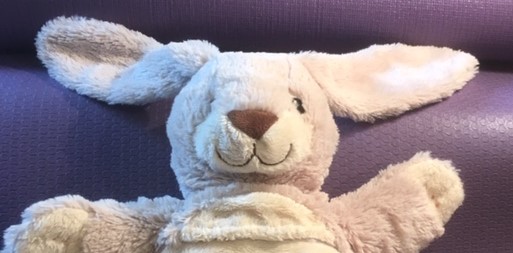
We drove into Lisbon last Wednesday for a night in a hotel. It was only when we were a few kilometres from our destination that we realised we had left Francisquinha behind. (See PCs 172, 217 and 331). Anyone who has had a young child in the rear seat suddenly burst into tears and exclaim that they had left their favourite stuffed animal at home will recognise the situation; worried looks between mother and father and thoughts about how they will soothe the situation without driving home to collect the animal. So it was with Francisquinha, although I think we were more worried about what she might get up to, left alone for 24 hours!
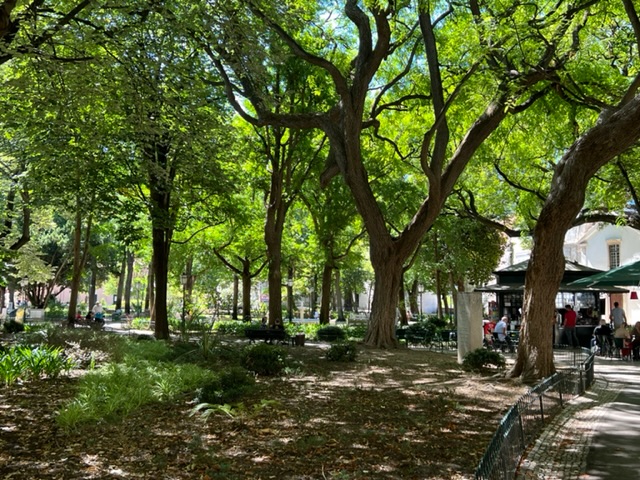
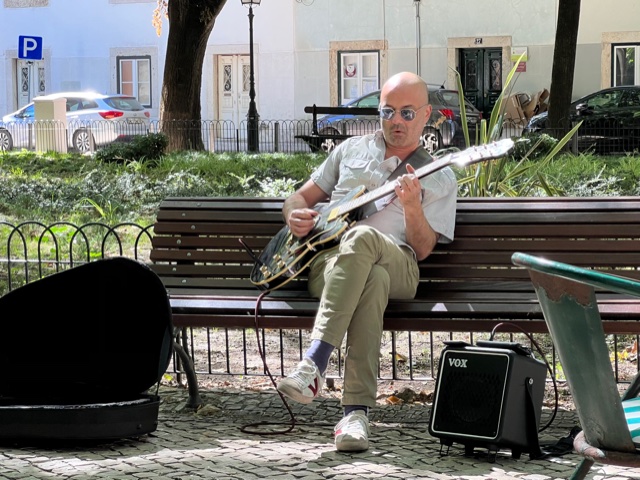
In central Lisbon there is a lovely shaded square called Jardim das Amoreiras, a place where local inhabitants can sit under the Mulberry trees, collect a snack or a drink from the little café and if they’re lucky listen to music from an itinerant guitarist.
The south west side of the square is bounded by part of the magnificent Aqueduto das Aguas Livres, an 18km aqueduct
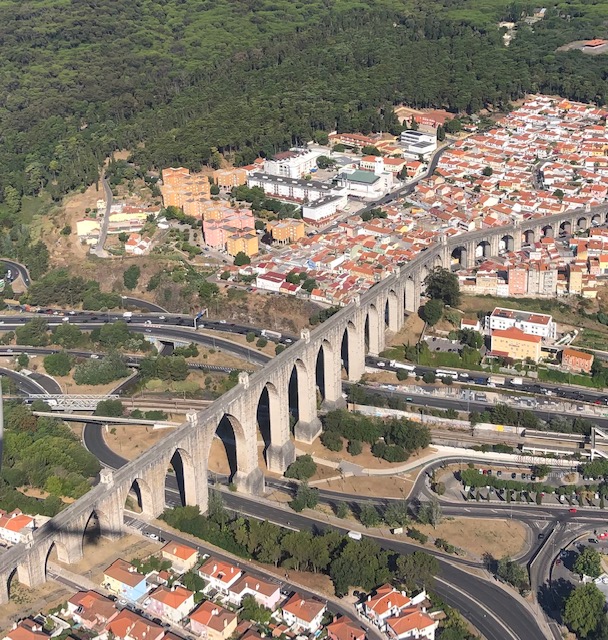
which opened in 1748, survived the 1755 earthquake that destroyed much of the city, and remained the major supplier of the city’s drinking water until 1973. (Note 1)  
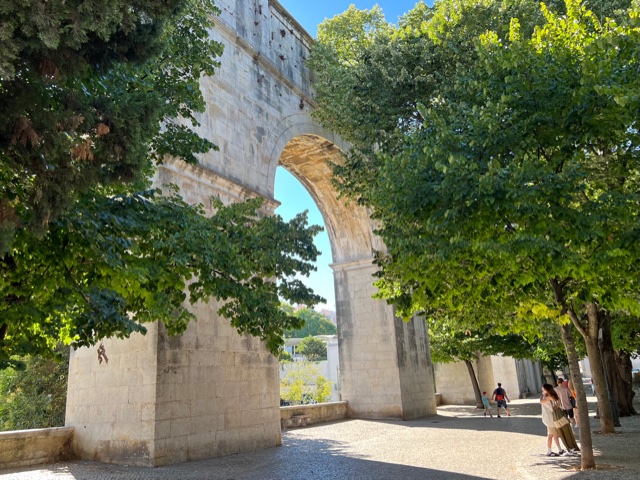
at ground level

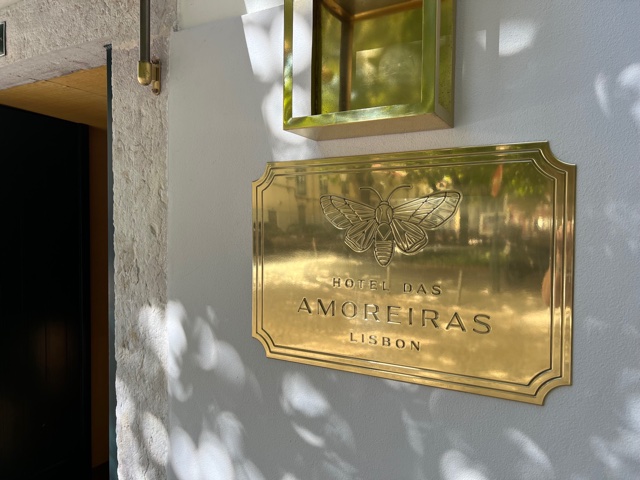
The leaf of the Mulberry tree is essential food for the larvae of the Mulberry silk worm. I read that they will spend about a month chomping their way through lots of leaves before resting in a pupa stage. After some 10 days they emerge as the silk worm moth – for a rather short life of some 5 to 10 days. The Hotel das Amoreiras obviously chose the Mulberry Silk Moth as its motif.
By now you’re probably thinking he better start taking about this coincidence – ‘a remarkable concurrence of events or circumstances without apparent causal connection’ (see PC 328 March 2023) – that isn’t or I’ll stop reading. Patience dear reader!

My mother-in-law had stayed in the Hotel das Amoreiras before, liked it and its friendly staff, and wanted to stay here for the night before her birthday. The booking was made and around 1600hrs on Wednesday afternoon we checked in, without Francisquinha! The reception is at the end of a gloriously furnished room with an open bar at the other; ‘clubby’ was the atmosphere created but definitely not stuffy clubby!

We all went up to my mother-in-law and Toni’s room on the first floor before Celina and I went up to ours. At the end of the corridor was a floor-to-ceiling mirror and in the middle a framed black & white photograph of Sean Connery and Ursula Andress.
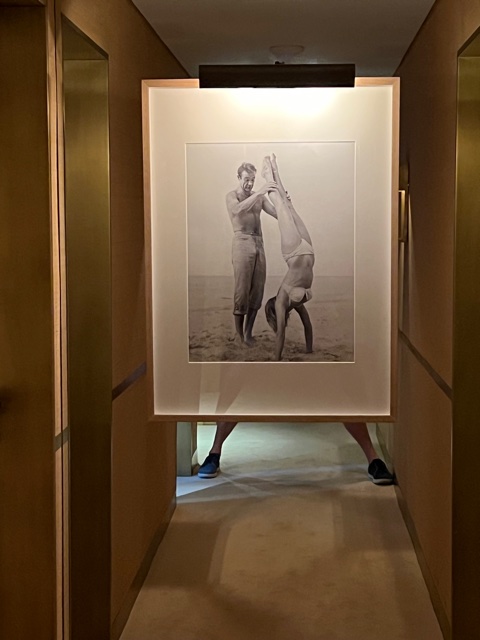
(Note my feet at the edges!)

Those of us of a certain age will instantly recognise the two actors who played starring roles in Dr No, the first cinematic adaption of Ian Fleming’s 1958 book of the same name; Connery as 007 and Andress as Honey Ryder. It was 1962 and this still photograph from some downtime on set has proved an enduring memory. When I saw it I mentioned it to Toni: “Isn’t that great! Good film, Dr No, great actors obviously having some fun!” Toni agreed! At the other end of the corridor was a black & white photograph of Charlie Chaplin so I imagined Pedro & Alicia, the hotel owners, are film aficionados.

We had agreed to meet outside around 1640 and I walked out into the square and sat, listening to a delightful guitar solo from the chap. Still within the internet coverage of the hotel, I checked my emails and clicked on Facebook. We get used to buying something in a store or online and then being inundated with advertisements from the same company, offering more of what you’ve just bought. For example last month I bought an Osprey backpack in the Cotswold shop in Brighton and was then inundated with offers for more backpacks. Why would I want to buy another one right now? In a year or three maybe, but right now?

However the second item that lit up on my Facebook screen was this:
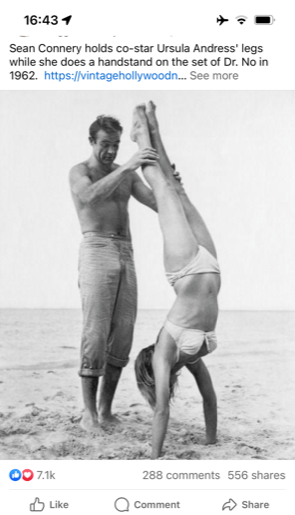
Could someone explain it? My only thought was that my mobile listened to my conversation with Toni in the corridor outside their room, looking at the picture and someone/something thought I/it will make him smile and posted this on my Facebook account. Big brother? Whatever happened I think it’s scary!

Near to the hotel was Avenida Álvares Cabral with Cabral’s statue sitting at the southern end, at the entrance to Jardim da Estrela (The Garden of the Stars). Pedro Álvares Cabral, 1467 – 1520, was a ‘Portuguese nobleman, military commander, navigator and explorer regarded as the European discoverer of Brazil’. Note the use of the adjective European; to those who already lived there, it didn’t need discovering! Brazil is of course the only country in South America to speak Portuguese.
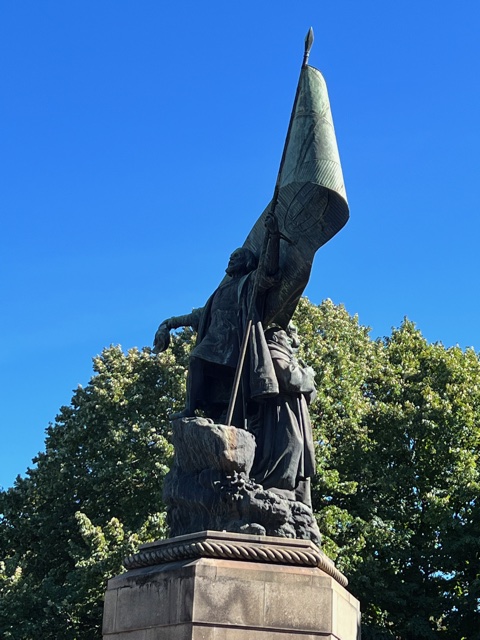
At first glimpse, against the bright sky, I may be forgiven for thinking the statue is of a hooded witch with a staff, bending forward. On closer inspection it’s Cabral with a flag blowing in the wind – well, frozen in bronze wind.

In six days from now, on 31st August the earth will see a bluish tint to the moon. Blue moons occur every two to three years; in 2018 we had two but will have to wait until 2037 for that to reoccur. In the bar after supper we tried to think, as you do, who had sung the Rogers & Hart song ‘Blue Moon’?

Richard 25th August 2023

Estoril Portugal

www.postcardscribbles.co.uk

PS Francisquinha looked somewhat space-out on our return.
Note 1 At the bottom of the square is a large dominant building that was the cistern for the aqueduct (reservatório da Mãe d’Água das Amoreiras) but now houses a museum and is an occasional venue for art exhibitions.
PC 348 Into The Hope

I managed to pop into The Hope Café last week and caught up with my friends. Josh handed me a double espresso and I made my way across to Mo, who was looking tanned and relaxed. It transpired she had just had a couple of weeks in Provence in France with one of her daughters.

“Oh!” I said. “My daughter and family are there now, in France I mean; Paris for a couple of nights, Beaulieu-sur-Dordogne and Royan (Note 1) for a week each and then up to the Channel coast near St Malo.” 

I read your last postcard reporting gossip from here (PC 343) and noticed you added, down at the date, that it was posted on Bastille Day. Why did you add that? You’re not French!”

“Well, that date always makes me think about a sailing adventure. I certainly don’t need to remind you how pivotal the storming of the Bastille Prison in Paris in July 1789 by ‘revolutionaries’ is in French, European and actually global history!”

“Absolutely not, as it led immediately to the revolution and the end of the monarchy.”

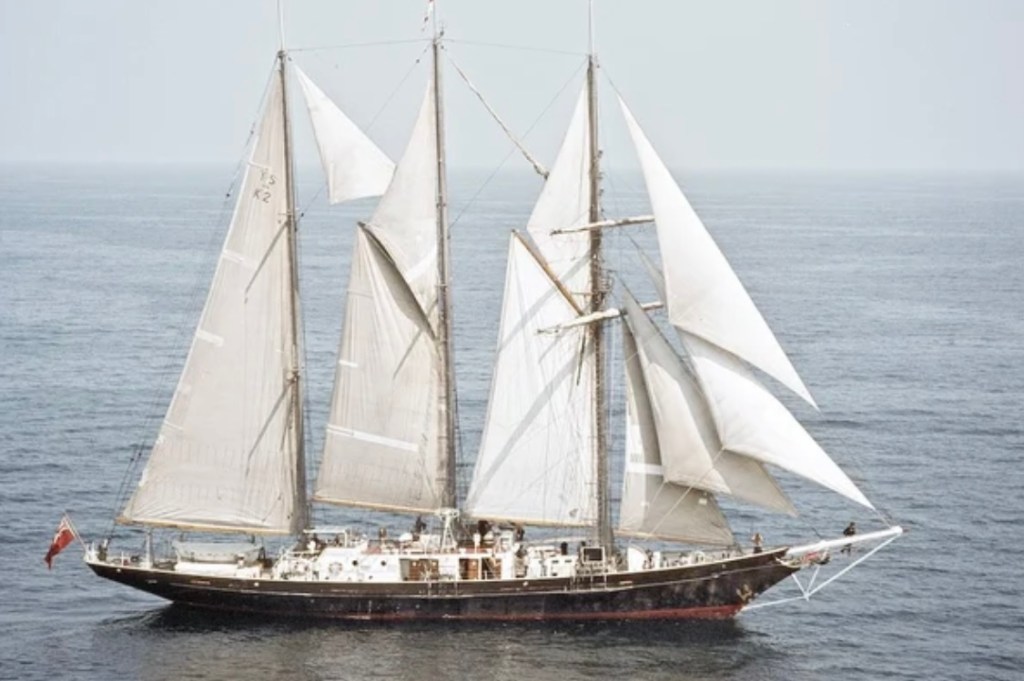
“My memory is more recent! In July 1973 I managed to secure a couple of weeks on the Sail Training Association (Note 2) TS Malcolm Miller, a three-masted Staysail Schooner, which offered an introduction to sailing, team work and all that stuff to some 36 young men from under-privileged backgrounds. I was one of three Watch Officers. Let me see, somewhere in my thousands of photos I might have one of the schooner. Ah Yes!

We sailed from Gosport, opposite Portsmouth, and, via St Peter’s Port in Guernsey, arrived on the 13th July, the day before Bastille Day, in the French town of Douarnenez on the north west tip of France. Our visit was a major attraction for the local population, particularly the young women. I tried to persuade the captain we should stay for the town’s celebrations the following day, but he was unmoved so on Bastille Day we slipped our mooring lines and sailed north west to The Scilly Isles.

After a day or so there we went off to Lundy Island in the Bristol Channel …..

Where? Lundy? I’ve never heard of it!”

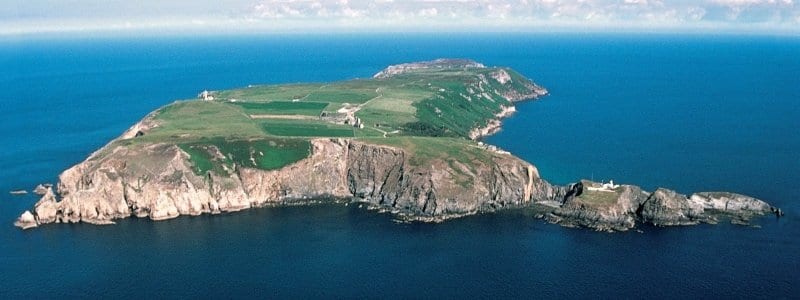
“It’s a very small island off the north Devon coast, northwest of Bideford. Popular with ornithologists, especially those interested in Puffins, and it attracts day trippers from Ilfracombe.

It was given to The Landmark Trust in 1969 by a British billionaire. Anyway, we met up with the Malcolm Miller’s sister ship the Sir Winston Churchill. Looking down from the cliff outside Lundy’s pub, it was a timeless scene, two three-masted ships at anchor. The trip finished in Newport in south Wales.”

The Malcolm Miller’s track

“Lovely memories Richard and I now understand about Bastille Day! Listen, I must dash as I have a dental appointment, but I see Sami’s over there with Lisa.”

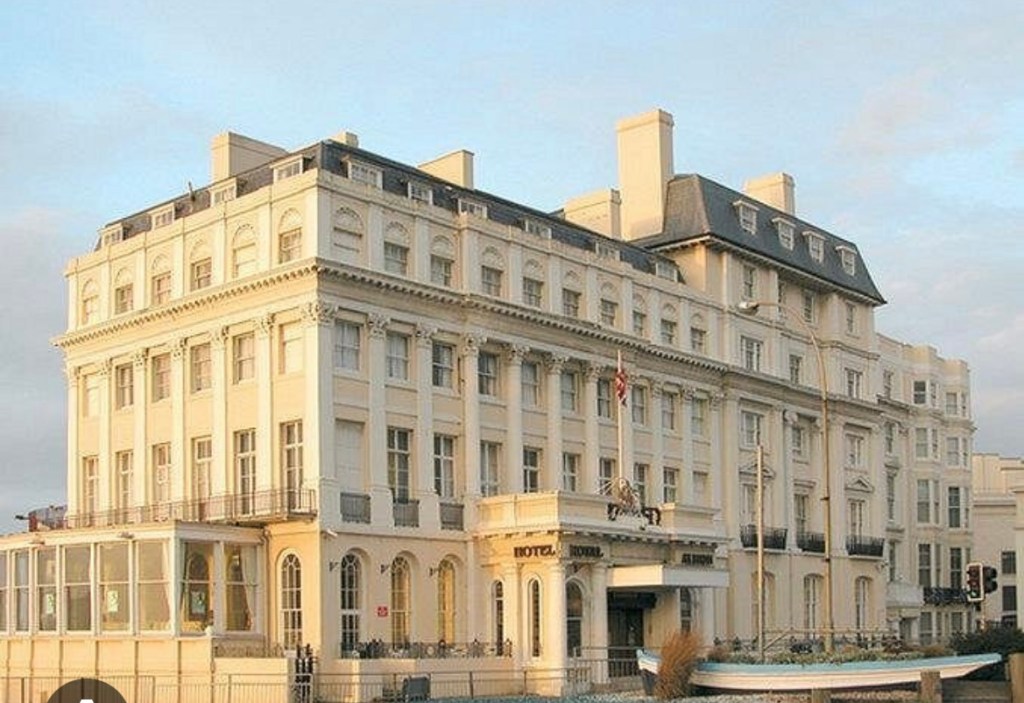
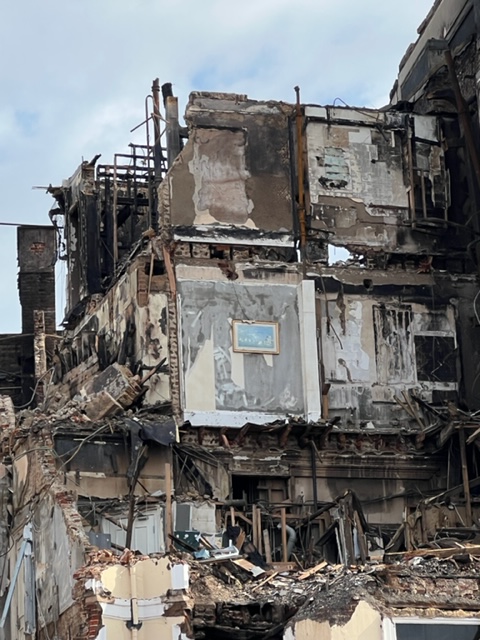
“Good to see you. Hope the dentist is gentle!” and I got up and joined Sami and Lisa. She had succeeded in getting an ad hoc agreement with The Argos, the local Brighton & Hove paper, and has submitted a piece about the fire on 24th July that destroyed fifty per cent of the Royal Albion Hotel here in Brighton, opposite The Palace Pier.

The 208-room hotel was built in 1826 in the Regency Style, popular at the time, and had a 3 star rating. According to those who had stayed there recently, it had seen better days!

Note the sailing painting still in its frame, somewhat untouched!

“That’s great Lisa, I hope it’s the start of a good relationship with The Argus. Now Sami, I imagine you’re up to date about the Post Office scandal but I was moved to write to The Times the other day after Nick Wallis’ piece.

“Why was that?”

“I was mulling over the whole sorry saga again and I thought, have we all missed something? I know the figures are different for you, but to use you as an example, if you had been falsely accused of stealing £10k, ‘falsely’ as in there was no error in your accounts, and charged and ordered to pay the money back – the Post Office is suddenly £10,000 in credit. Multiply this by 736 and you can imagine a conversation between the CFO and the CEO: “We’ve got £7,360,000 in our account that is completely unaccounted for. What should we do?”

“Probably pay out bonuses and keep quiet! But it does beg the question Richard; was the Post Office never audited during this period? How did they explain the huge credits? We will probably never know! Anyway Richard, how are you?

“Actually very good! But I did get fed up a couple of weeks ago when a friend of over 50 years with whom I had lunch sneered at my addiction to the hot yoga series! Why do people do that? It’s obviously not his bailiwick but I don’t ask in a similarly critical way why he does ‘x’ or ‘y’! Maybe I should? Incidentally I realise it’s your 65th birthday in October. Are you planning to do anything special?

Lisa gives me a look as if to say ‘I am organising something but it’s a secret and we haven’t discussed it yet!’

“You know me Richard. Not a great party man so maybe a pizza somewhere.” Whereupon Lisa rolls her eyes to heaven!

“I think I’ll have a quiet word with Lisa and see what we can organise – it could of course be just a pizza!! Hey! I promised to pick up something from The Framing Workshop before they close; must dash! See you!”

Richard 18th August 2023

Estoril, Portugal

www.postcardscribbles.co.uk

Note 1 Royan is at the mouth of the Gironde River; at the river’s southern end is the city of Bordeaux. In early December 1942 six Royal Marine canoes were launched from a submarine off the estuary, for an attack on the Bordeaux docks.  Only two canoes survived to complete the 50 mile paddle but they managed to attach some limpet mines to six ships. Two out of the twelve marines made it back to England, although Operation Frankton was judged a success.

Note 2 Now the Tall Ships Youth Trust, based in Portsmouth

PC 347 Frogmore, Devon

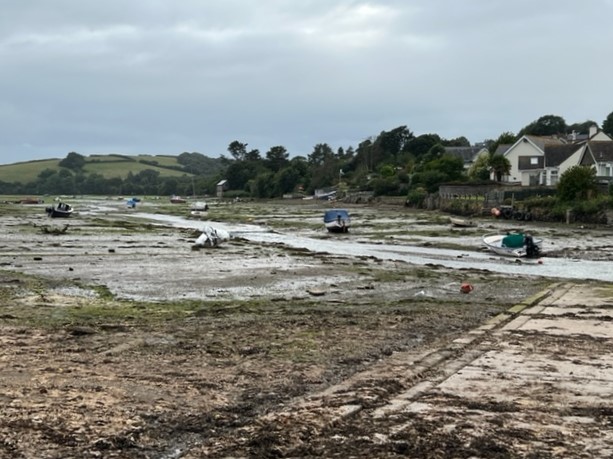
Frogmore Creek at low water

My maternal ancestors, as far back as I have researched, came from villages astride the Devon-Somerset boundary. Matthew Nation, my great-great-great-great-grandfather died in Dulverton, some 25 miles west of Taunton in Somerset and some 75 miles north of Frogmore in Devon, in 1795 aged 47. The following year his eldest son Stephen, aged 16, joined the East India Company as a cadet and sailed for India. (Note 1) Whether Dulverton has changed much in the intervening two hundred years is anyone’s guess, as down here in the West Country life responds to different rhythms to the rest of England.

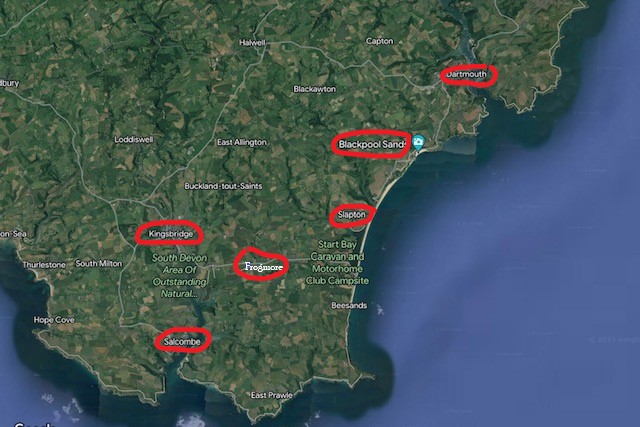
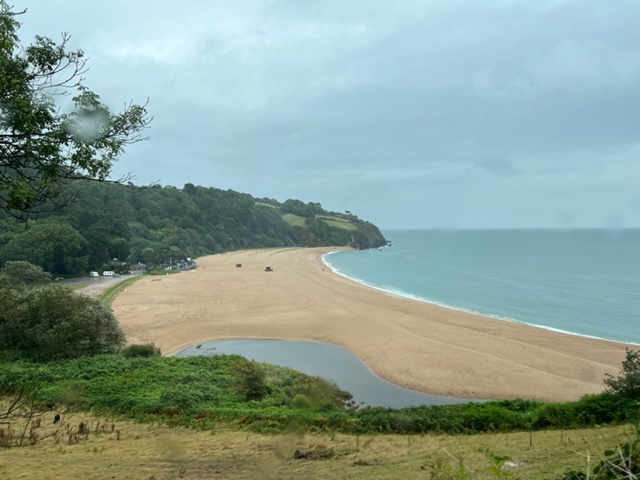
We had booked an AirBnB, The Granary, in the little hamlet of Frogmore (note 2), east of Kingsbridge, Devon for a week, to spend some time with my daughter and her three boys. Securing it months ago, I guess we all imagined sun-drenched days on sandy beaches, the warm after-glow of sun on skin; a period in late July when time would stand still. This year, however, autumn has come early to the United Kingdom and we managed one day on a small shingle and pebble beach, oddly named Blackpool Sands, just north of Slapton Sands. (see PC 308 From Pillar to Post November 2022)

Blackpool Sands

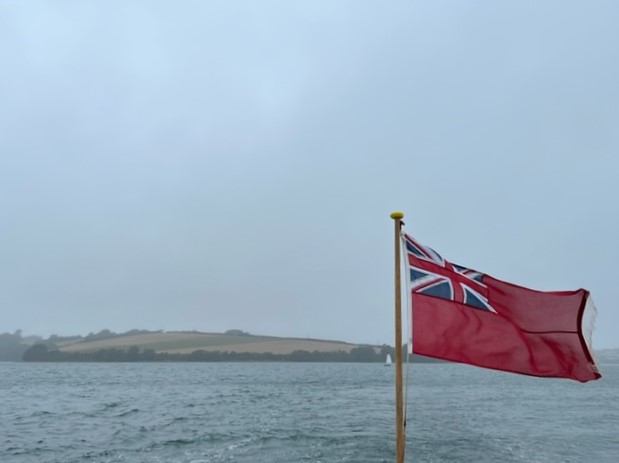
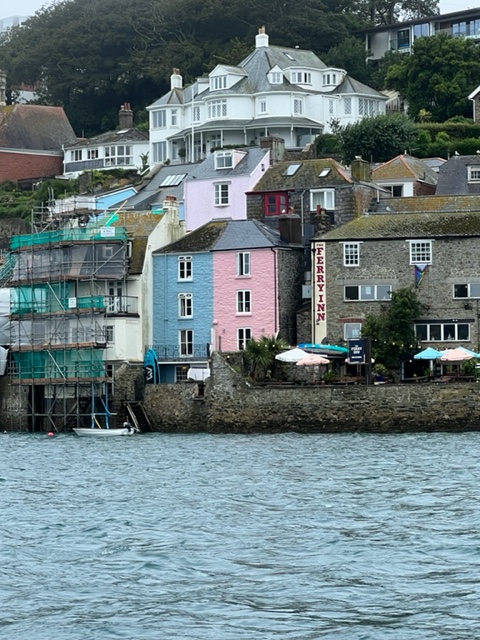
With a light rain forecast to last all of our first day, we took The Lady Mary, a little 50 pax ferry, from Kingsbridge down the estuary to Salcombe; a great way to both be on the water and also see something of the marine-scape.

What I hadn’t counted on was the cost. Three adults and three children cost £48 – one way! Clearly the wet-weather programme for families on holiday is extremely expensive. 

Salcombe caters for the tourists: lots of shops selling nautical clothing and nick-nacks with a nautical theme, local artists displaying their efforts and the inevitable pizzas, burgers, and pasta food options – oh! and ‘Cornish’ pasties in Devon! Later we took the ferry back to Kingsbridge …. in the rain!

I met The Pophams over 30 years ago and, knowing they had moved, many months ago, to Devon and settled in Buckfastleigh, we got ourselves invited for lunch. So good to be warmly-welcomed and bombarded with chat and chat and lunch ….. and then off to Hembry Wood for an afternoon walk with their two dogs along the River Dart.

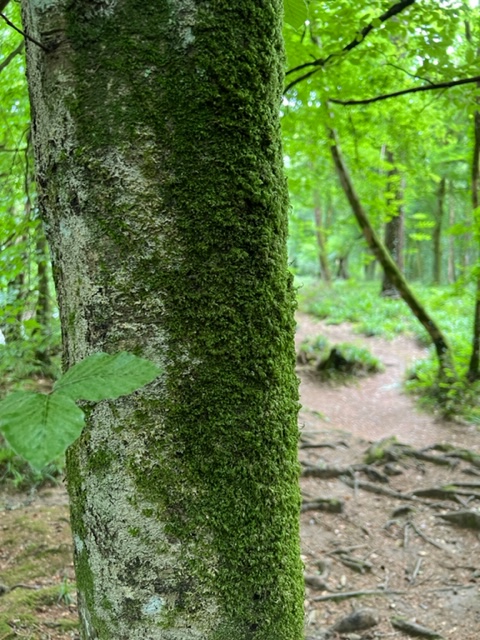
moss grows generally on the north side of trees (in the Northern Hemisphere)

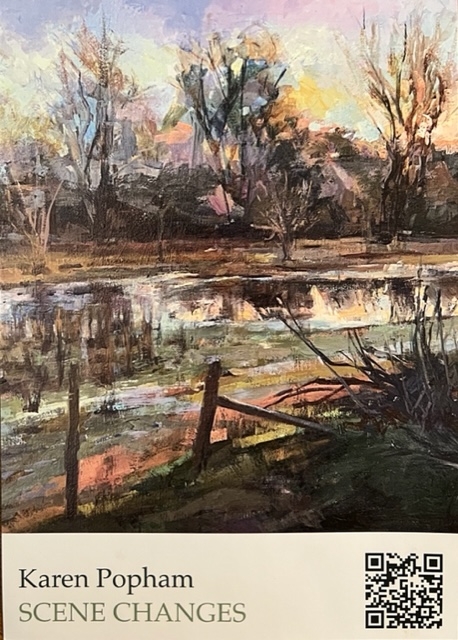
The Pophams are an artistic family, with daughter Ellie an aspiring opera singer and Karen a well-established oil painter and member of The South West Academy. The latter has an exhibition at West Brompton Cemetery Chapel, Fulham Road, London SW10 9UG 9th – 14th September 2023.

Chris, delightfully a regular reader of my PCs, is embarking on a new career in wood sculpting.

No wet-weather holiday programme would be complete without the visit to a cinema. Kingsbridge’s Kings Cinema has three extremely small and cute theatres and in one screened Pixar’s Elemental: “fire, water, land and air residents live together ….. two discover how much they have in common.” The age-old story – female meets male but they are of the wrong tribe, wrong side of the tracks, wrong social level, race, religion, sexual orientation – but love wins! And this aimed at children!

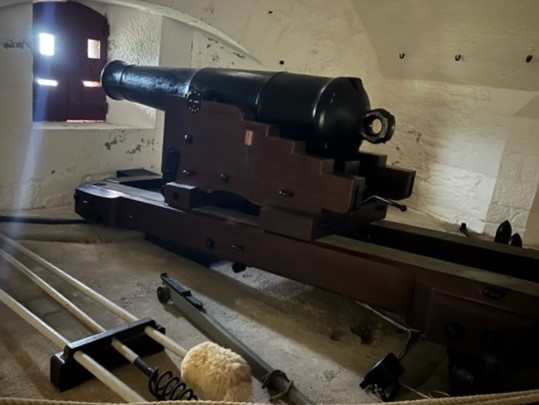
And with children there’s always a thrill in going to a castle, whether it’s Windsor, Cardiff, Corfe, Edinburgh or even Dartmouth.

Large guns faced seaward as it sits across the mouth of the River Dart, which we had encountered as a smaller river back in Hembry Wood.

I have been to Dartmouth before, when my brother was being commissioned from the Royal Naval College, so was aware that in this part of the world roads are often extremely narrow; everyone is tested in their knowledge of the width of their car but fortunately passing spaces are frequent. We live in the city of Brighton & Hove and adore being here. But cities and towns are not everyone’s cup of tea and I am reminded of the contrasts down here in Devon. Little concrete and glass, few high rise apartment blocks, less hard surfaces and grey; replaced by green in the trees and green in the fields and rolling hills, by cattle and wildlife.

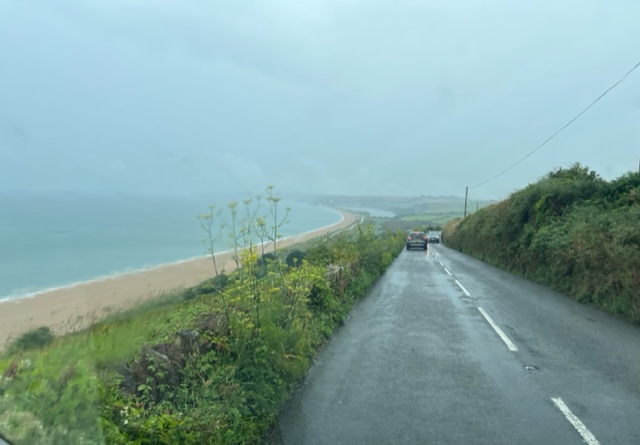
Slapton Sands ahead in the murk!

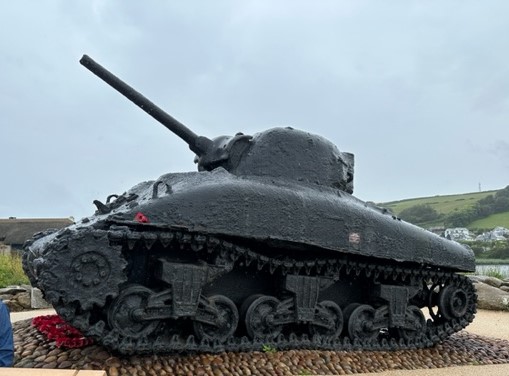
In Torcross at the southern end of Slapton Sands we stopped for some afternoon tea and another chance for the boys to swim in the cool sea, under grey clouds!

A World War II American Sherman Tank

Parents used to use the expression ‘you’ll get square eyes if you look at television for too long’ before laptops, iPads and the plethora of screens which give us access to so much of modern life. My grandchildrens’ iPad use is normally extremely controlled but on a wet holiday they delighted in trying to alter the shape of their eyes! Aside from the odd card game and the completion of a 1000 word jigsaw, I tried to get one of my grandsons to contribute to this postcard. “Oh! It’s so hard! …… I can’t think! ….. Why can’t I …..? ….. So sorry, my mind’s a blank!”

We left a day early. On the day we should have returned it was again blowing a hooley; 40 – 50 mph winds and torrential rain. Lucy, a yoga chum currently not working because of the Writers Guild of America strike and its knock-on effect here, returned from Cornwall – “The worst drive of my life!”

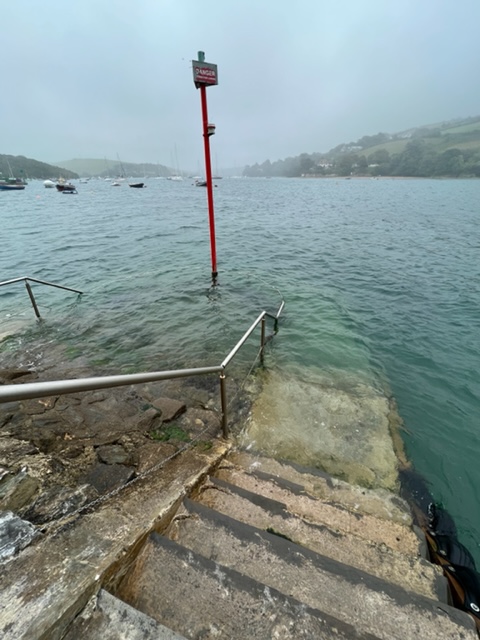
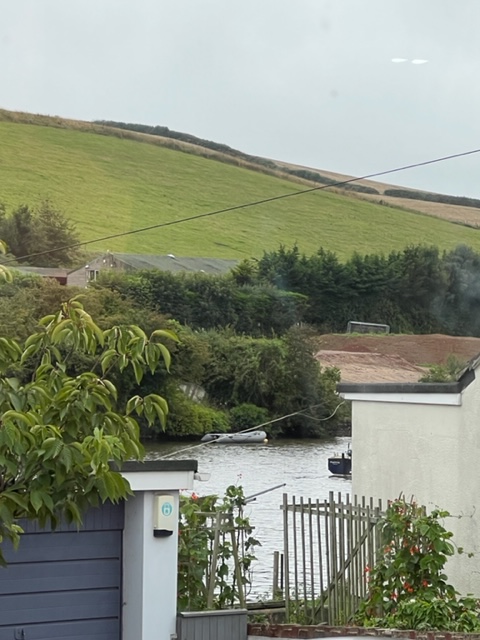
Frogmore Creek at high water

A last view from the AirBnB across the Frogmore Creek reflecting that these rhythms are timeless: the tide goes out, the water recedes and comes back …… and we inhale and exhale, our breathe goes out. We breathe in ……..

Richard 11th August 2023

Hove

http://www.postcardscribbles.co.uk

Note 1 Stephen Nation, then a Brigadier, died of Cholera aged 48 in 1828

Note 2 Not Frogmore Cottage owned by The Crown Estates and recently occupied by Harry & Meghan. 

PC 346 Puds to Greece

Not sure why those who attended Dauntsey’s School in Wiltshire were nicknamed ‘Puds’ as it wasn’t in regular use in the school; maybe it was the school itself that earned the moniker? Maybe ‘Puds’ is a nod to puddings, a term for both sweet and savoury dishes, reflecting the nature of the children that passed through the school’s main entrance. Maybe someone will enlighten me?

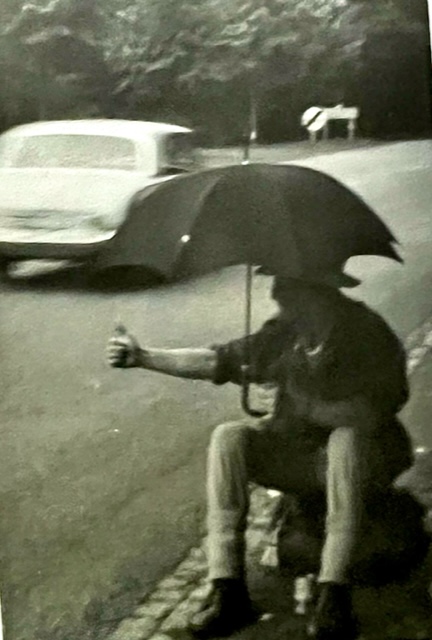
In 1964 I had hitched with Nigel Bond from Ostend down through Belgium to Luxembourg, then back up the Rhine to Koln, Antwerp and home. Other than that I had never been further than Germany to visit an uncle serving with the British Army in Mönchengladbach, unless you call The Isle of Man overseas?

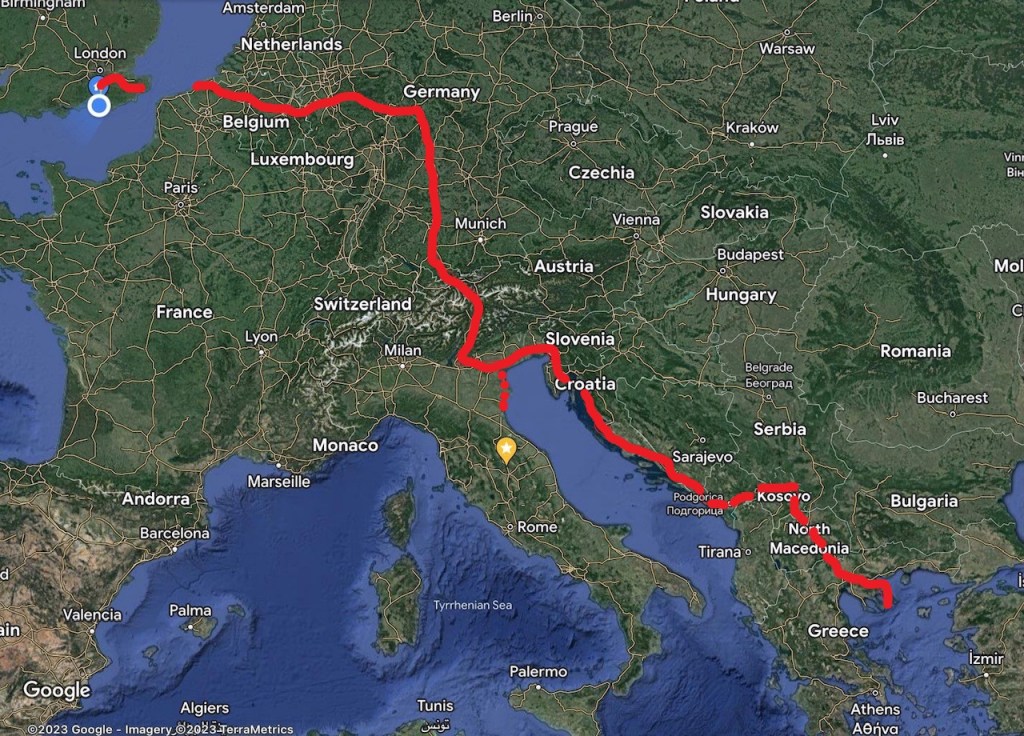
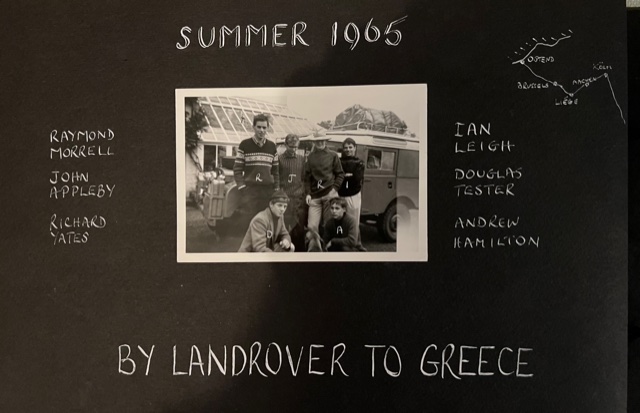
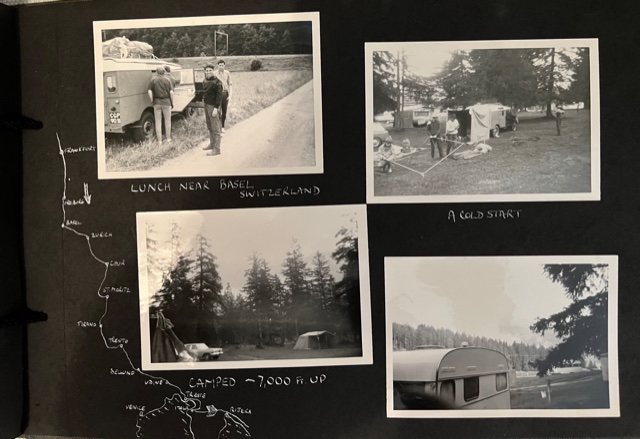
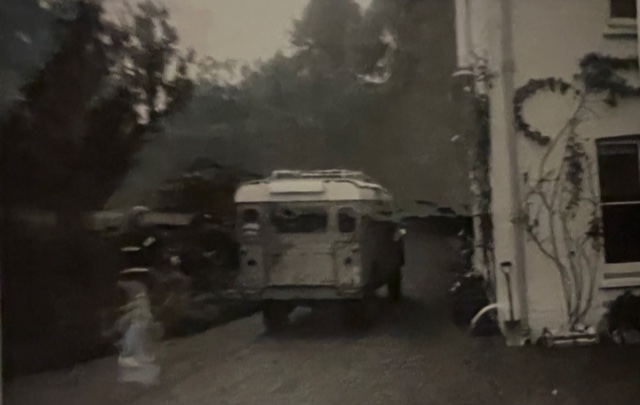
Few of us growing up in the 1960s thought of taking a Gap Year but the nub of an idea of some adventure after taking our A levels took hold. Eventually the plan to drive across Europe to Greece firmed up and in late July 1965 six of us climbed on board a hard-topped Land Rover, complete with tentage and stores, Gaz bottle and stove.

We were Ray Morrell, Andrew Hamilton, Ian Leigh, Jonathan Appleby, Doug Tester and me. Two of us in the front, four in the rear, with ‘stuff’ piled there and on the roof-rack. If you sat in the back, visibility was limited and this, together with the fact that not everyone drove, meant we soon realised we couldn’t simply drive all day, for hours on end. I think it was on our fourth day, the first of August, when we woke up in our Swiss alpine campsite to find it had snowed overnight.

Our route took us down the Adriatic coast of what was Yugoslavia, formed after World War Two as a federation of six republics, Bosnia & Herzegovina, Croatia, Macedonia, Montenegro, Serbia and Slovenia. Communist President Tito’s policies allowed some liberal development within a planned economy and he was remarkably successful. (Note 1) Leaving the coast to go around Albania, we drove into northern Greece.

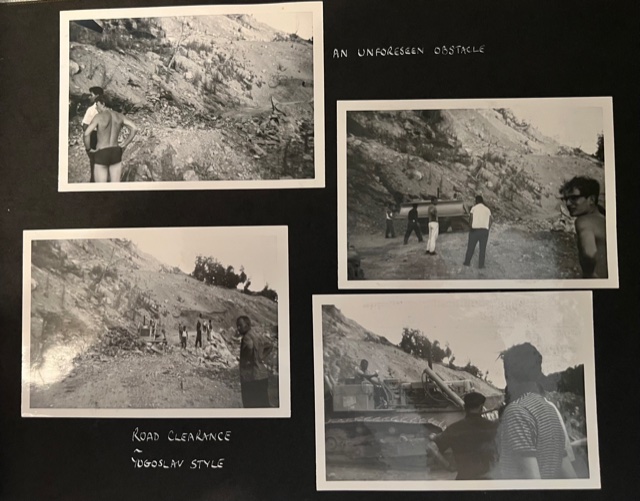
Memories of campsites and putting up the tent and cooking and washing up and sleeping and taking down the tent and loading up the Land Rover and  ….. all tend to merge into a general ‘we drove down to Greece and back’. I had never heard the noise of a Cicada before but now of course the sound brings an instant recall of warm Mediterranean evenings, coastal towns like Split and Dubrovnik, driving inland from the Gulf of Kotor up and around isolated Albania, being delayed by a landslip and finally arriving in Greece.

We had taken much longer than we had imagined to get there so stayed only a few days in Thessaloniki before starting our return! There was another reason. Greece in August 1965 was a country of strife and protest. King Constantine had dismissed the Prime Minister Georgios Papandreou and appointed Georgios Athanasiadis-Novas, who was very unpopular. The streets of Greek cities filled with anti-riot police and student demonstrations and eventually he was voted out of office after 21 days. Not a time to be a tourist!

In amongst ‘we drove to Greece and back’ one particular event remains quite vivid for me, as I was driving! We were on our return journey, making our way around the north of Albania, driving through the suburbs of Pristina, now the capital city of Kosovo, when we realised we had taken a wrong turning. We had lots of road maps but the levels of detail varied enormously and mistakes were easy. The side street was potholed and dusty and, as I started to turn left across the street to execute a U-turn, an unseen motorcyclist on a rumpty-tumpty moped clipped the Landrover’s left wing. He skidded across the street and the bike toppled over. Struggling to his feet, he had the presence of mind to pick up the revolver that had fallen from his jacket, before giving us his opinion of my driving skills. Not being a linguist, I could only judge he was very cross! A small crowd gathered, suspicious and unused to foreigners. The local policeman on his pushbike arrived, my details were taken down, all our passports stuffed in his bag and we were told to appear before the judge at a certain place at 9 o’clock the following day.

Pristina didn’t do camp sites in 1965 so we headed out into the countryside, found a suitable sheltered spot to erect the tent, made a roaring fire and, over supper, contemplated what might happen, wondering what Yugoslavian prisons might be like etc. The following morning we appeared before Judge Kadriu. Contrite and full of apology, driving on the other side, confused, so sorry etc ….. and serendipity came to my aid! We had given a lift out of Greece to a South African girl hitch- hiker named Morgan (Note 2) and our judge had learned his English in South Africa. Chat! Chat! Chat! Fined some 2000 dinars (about £10 in 1965) (Note 3) and told to drive more carefully.

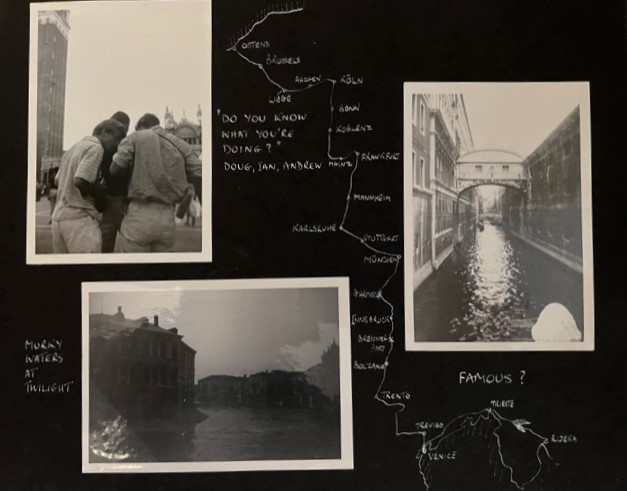
Three days later at Trieste we turned left and settled into a Venetian campsite for a couple of days before driving home. On the way back we had an amusing interlude with a Volkswagen Beetle on the motorway between Basle and Koln. We passed them, they passed us and waved, we passed them and waved and then, as they passed again, they passed us some chocolates and we shared some of our biscuits and then they turned off.

We caught the ferry and, once home, went our separate ways, our adult lives starting.

Richard 4th August 2023

Hove

http://www.postcardscribbles.co.uk

PS We are all still alive. Ray, whose father generously supplied the Land Rover, lives in Toronto, Canada: Andrew is in Surrey, Ian and Doug emigrated to Australia, the former living in Woongarrah, New South Wales, and Doug further down the coast in Sydney; Jonathan lives near Southampton.

Note 1. Typing these names brings back the horrors of the Balkan/Bosnian War that followed his death in 1980 and subsequent violent break-up of Yugoslavia.

Note 2 The only other Morgan I know, apart from the car, is a film titled “Morgan – A Suitable Case for Treatment”  (1966)

Note 3 £10 may seem a trifling amount but my first month’s pay when I joined the Royal Military Academy as an Officer Cadet in September 1965 was £65.